
 A SCHOLARLY BOOK REPOSITORY
114 start with H start with H
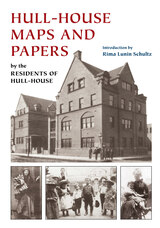
Inspired by their Progressive Era faith in social science solutions to society’s problems, the residents of Hull-House collaborated on this work of sociology based on their experiences as residents of Chicago’s Near West Side. The contributors to this book believed that an enlightened citizenry could be mobilized for reform, and that by publishing maps with explicit information about the wages and conditions of the working poor in Chicago’s Nineteenth Ward they would educate the public and inspire reforms.
In addition to Jane Addams’s own prefatory note and paper on the role of social settlements in the labor movement, contributors provided detailed, real-world analyses of the Chicago Jewish ghetto, garment workers and the sweatshops, child labor, immigrant neighborhoods in the vicinity of Hull-House, and local charities. This edition also contains eight color reproductions of the original Hull-House neighborhood maps. The year 2006 marks the one hundred and eleventh anniversary of the publication of Hull-House Maps and Papers, and the volume remains a dramatic statement about the residents’ shared values as well as a major influence on subsequent social surveys.
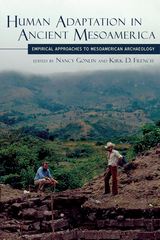
This volume explores the dynamics of human adaptation to social, political, ideological, economic, and environmental factors in Mesoamerica and includes a wide array of topics, such as the hydrological engineering behind Teotihuacan’s layout, the complexities of agriculture and sustainability in the Maya lowlands, and the nuanced history of abandonment among different lineages and households in Maya centers.
The authors aptly demonstrate how culture is the mechanism that allows people to adapt to a changing world, and they address how ecological factors, particularly land and water, intersect with nonmaterial and material manifestations of cultural complexity. Contributors further illustrate the continuing utility of the cultural ecological perspective in framing research on adaptations of ancient civilizations.
This book celebrates the work of Dr. David Webster, an influential Penn State archaeologist and anthropologist of the Maya region, and highlights human adaptation in Mesoamerica through the scientific lenses of anthropological archaeology and cultural ecology.
Contributors include Elliot M. Abrams, Christopher J. Duffy, Susan Toby Evans, Kirk D. French, AnnCorinne Freter, Nancy Gonlin, George R. Milner, Zachary Nelson, Deborah L. Nichols, David M. Reed, Don S. Rice, Prudence M. Rice, Rebecca Storey, Kirk Damon Straight, David Webster, Stephen L. Whittington, Randolph J. Widmer, John D. Wingard, and W. Scott Zeleznik.
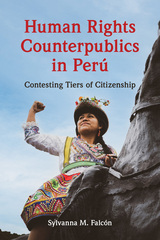
Engaging and intimate, Human Rights Counterpublics in Perú illuminates the power of human rights and memory work.
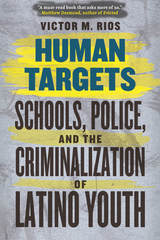
In Human Targets, Rios takes us to the streets of California, where we encounter young men who find themselves in much the same situation as fifteen-year-old Victor. We follow young gang members into schools, homes, community organizations, and detention facilities, watch them interact with police, grow up to become fathers, get jobs, get rap sheets—and in some cases get killed. What is it that sets apart young people like Rios who succeed and survive from the ones who don’t? Rios makes a powerful case that the traditional good kid/bad kid, street kid/decent kid dichotomy is much too simplistic, arguing instead that authorities and institutions help create these identities—and that they can play an instrumental role in providing young people with the resources for shifting between roles. In Rios’s account, to be a poor Latino youth is to be a human target—victimized and considered an enemy by others, viewed as a threat to law enforcement and schools, and burdened by stigma, disrepute, and punishment. That has to change.
This is not another sensationalistic account of gang bangers. Instead, the book is a powerful look at how authority figures succeed—and fail—at seeing the multi-faceted identities of at-risk youths, youths who succeed—and fail—at demonstrating to the system that they are ready to change their lives. In our post-Ferguson era, Human Targets is essential reading.
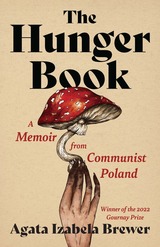
“A searing memoir about growing up behind the Iron Curtain, motherhood, addiction, and finding sustenance in the natural world.” —Kirkus
In The Hunger Book, Agata Izabela Brewer evokes her Polish childhood under Communism, where the warmth of her grandparents’ love and the scent of mushrooms drying in a tiny apartment are as potent as the deprivations and traumas of life with a terrifyingly unstable, alcoholic single mother. Brewer indelibly renders stories of foraging for food, homemade potato vodka (one of the Eastern Bloc’s more viable currencies), blood sausage, sparrows plucked and fried with linseed oil, and the respite of a country garden plot, all amid Stalinist-era apartment buildings, food shortages, martial law, and nuclear disaster in nearby Ukraine.
Brewer reflects on all of this from her immigrant’s vantage point, as she wryly tries to convince her children to enjoy the mushrooms she gathers from a roadside and grieves when they choose to go by Americanized versions of their Polish names. Hunting mushrooms, like her childhood, carried both reward and mortal peril. The Hunger Book, which includes recipes, is an unforgettable meditation on motherhood and addiction, resilience and love.
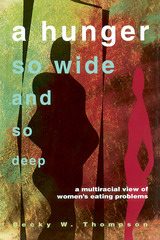
A new feminist classic--now in paper!
Based on in-depth life history interviews with African-American, Latina, and white women-both lesbian and heterosexual-this book chronicles the effects of racism, sexism, acculturation, and sexual abuse on women’s bodies and eating patterns.
“A wonderful book: gripping, creative and profoundly humane. In lucid prose Thompson offers an original explanation for women’s eating problems. She argues that many women turn to food-bingeing, dieting, purging, or starving- as a sensible means of coping with physical and psychic ‘atrocities’ deriving from ‘racism, sexism, homophobia, classism, the stress of acculturation, and emotional, physical, and sexual abuse.’” Women’s Review of Books“Surprising and alarming. . . . Thompson urges a second look at our national obsession with weight and proffers theories and practices that could save the lives of women of all colors and sexual orientations.” Lambda Book Report“Thompson breaks new ground and offers hope for the multitudes of women who have swallowed their pain.” Evelyn C. White, Editor, The Black Women's Health Book
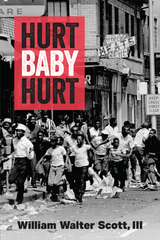
This memoir recounts Scott’s life from his birth up through the Rebellion. It tells the story of how the Rebellion started and provides an on-the-ground account of the Rebellion and its immediate aftermath, including the police detainment of the people involved. Now with a new foreword by Austin McCoy that considers the lasting impact of the rebellion, Hurt, Baby, Hurt offers valuable insight into an important part of Detroit history.
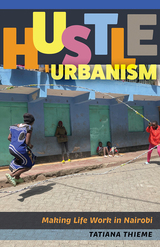
Exploring hustle as a social, cultural, and economic phenomenon in contemporary Nairobi
In Nairobi’s underserved neighborhoods, “hustle” has emerged as both a vital survival strategy and a way of life for youth. Exploring the multiple meanings and manifestations of the hustle economy across different scenarios of provisioning, distribution, exchange, learning, and mobilizing, Hustle Urbanism draws on more than a decade of ethnographic engagement to center the logics, perspectives, and inventive strategies of a group of youth who constantly navigate job scarcity, inadequate basic services, and climate-induced harms.
Tatiana Thieme shows how young people develop tools of resistance against the legacies of colonial violence and uneven urban development while carving out spaces of opportunity for themselves and their peers. The stories she includes bring thick ethnographic detail and longitudinal perspective to the lives and livelihoods of youth whose diverse skill sets and knowledges span from circular economies and eco-activism to hip hop and local leadership. Filling a significant gap in both existing scholarship and popular discussion, Hustle Urbanism offers critical theorization of precarious urban environments and the affirmative modes of making life work in the city against the odds.
While Thieme cautions against fetishizing hustle as a form of social and economic uplift, she calls for a greater recognition of the ingenuity and skill involved in hustle urbanism, arguing that studying hustle narratives and practices opens up timely empirical and theoretical questions about overlapping urban struggles and possibilities that coexist in the everyday city.
Retail e-book files for this title are screen-reader friendly with images accompanied by short alt text and/or extended descriptions.
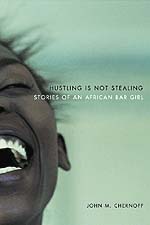
In Hustling Is Not Stealing and its follow-up, Exchange Is Not Robbery, a chronicle of exploitation is transformed by verbal art into an ebullient comedy. In Hustling Is Not Stealing, Hawa is a playful warrior struggling against circumstances in Ghana and Togo. In Exchange Is Not Robbery, Hawa returns to her native Burkina Faso, where she achieves greater control over her life but faces new difficulties. As a woman making sacrifices to live independently, Hawa sees her own situation become more complex as she confronts an atmosphere in Burkina Faso that is in some ways more challenging than the one she left behind, and the moral ambiguities of her life begin to intensify.
Combining elements of folklore and memoir, Hawa’s stories portray the diverse social landscape of West Africa. Individually the anecdotes can be funny, shocking, or poignant; assembled together they offer a sweeping critical and satirical vision.
READERS
Browse our collection.
PUBLISHERS
See BiblioVault's publisher services.
STUDENT SERVICES
Files for college accessibility offices.
RECENTLY PUBLISHED


UChicago Accessibility Resources
home | accessibility | search | about | contact us
BiblioVault ® 2001 - 2026
The University of Chicago Press