
 A SCHOLARLY BOOK REPOSITORY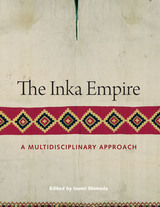
Massive yet elegantly executed masonry architecture and andenes (agricultural terraces) set against majestic and seemingly boundless Andean landscapes, roads built in defiance of rugged terrains, and fine textiles with orderly geometric designs—all were created within the largest political system in the ancient New World, a system headed, paradoxically, by a single, small minority group without wheeled vehicles, markets, or a writing system, the Inka. For some 130 years (ca. A.D. 1400 to 1533), the Inka ruled over at least eighty-six ethnic groups in an empire that encompassed about 2 million square kilometers, from the northernmost region of the Ecuador–Colombia border to northwest Argentina.
The Inka Empire brings together leading international scholars from many complementary disciplines, including human genetics, linguistics, textile and architectural studies, ethnohistory, and archaeology, to present a state-of-the-art, holistic, and in-depth vision of the Inkas. The contributors provide the latest data and understandings of the political, demographic, and linguistic evolution of the Inkas, from the formative era prior to their political ascendancy to their post-conquest transformation. The scholars also offer an updated vision of the unity, diversity, and essence of the material, organizational, and symbolic-ideological features of the Inka Empire. As a whole, The Inka Empire demonstrates the necessity and value of a multidisciplinary approach that incorporates the insights of fields beyond archaeology and ethnohistory. And with essays by scholars from seven countries, it reflects the cosmopolitanism that has characterized Inka studies ever since its beginnings in the nineteenth century.
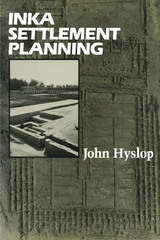
Before the Spanish conquest in the sixteenth century A.D., the Inka Empire stretched along the Pacific side of South America, all the way from Ecuador to northwest Argentina. Though today many Inka researchers focus on the imperial capital of Cuzco, Peru, and surrounding areas, ruins of Inka settlements abound throughout the vast territory of the former empire and offer many clues about how the empire was organized, managed, and defended. These outlying settlements, as well as those in the Cuzco area, form the basis for John Hyslop's detailed study Inka Settlement Planning.
Using extensive aerial photography and detailed site maps, Hyslop studies the design of several dozen settlements spread throughout the empire. In addition to describing their architecture and physical infrastructure, he gives special emphasis to the symbolic aspects of each site's design. Hyslop speculates that the settlement plans incorporate much iconography expressive of Inka ideas about the state, the cosmos, and relationships to non-Inka peoples—iconography perhaps only partially related to the activities that took place within the sites. And he argues that Inka planning concepts applied not only to buildings but also to natural features (stone outcrops, water sources, and horizons) and specialized landscaping (terracing).
Of interest to a wide readership in archaeology, architecture, urbanization, empire building, and Andean travel, Inka Settlement Planning charts one of Native America's greatest achievements.

Inked is a social history of common soldiers of the Song Dynasty, most of whom would have been recognized by their tattooed bodies. Overlooked in the historical record, tattoos were an indelible aspect of the Song world, and their ubiquity was tied to the rise of the penal–military complex, a vast system for social control, warfare, and labor.
Although much has been written about the institutional, strategic, and political aspects of the history of the Song and its military, this book is a first-of-its-kind investigation into the lives of the people who fought for the state. Elad Alyagon examines the army as a meeting place between marginalized social groups and elites. In the process, he shows the military to be a space where a new criminalized lower class was molded in a constant struggle between common soldiers and the agents of the Song state. For the millions of people caught in the orbit of this system—the tattooed soldiers, their families, and their neighbors—the Song period was no age of benevolence, but one of servitude, violence, and resistance. Inked is their story.
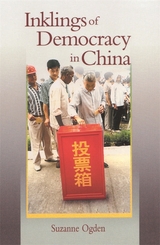
Since 1979 China’s leaders have introduced economic and political reforms that have lessened the state’s hold over the lives of ordinary citizens. By examining the growth in individual rights, the public sphere, democratic processes, and pluralization, the author seeks to answer questions concerning the relevance of liberal democratic ideas for China and the relationship between a democratic political culture and a democratic political system. The author also looks at the contradictory impulses and negative consequences for democracy generated by economic liberalism.
Unresolved issues concerning the relationships among culture, democracy, and socioeconomic development are at the heart of the analysis. Nonideological criteria are used to assess the success of the Chinese approach to building a fair, just, and decent society.
An Open Letters Review Best Book of the Year
“Grafton presents largely unfamiliar material…in a clear, even breezy style…Erudite.”
—Michael Dirda, Washington Post
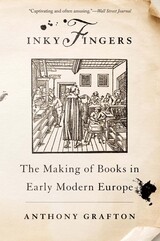
In this celebration of bookmaking in all its messy and intricate detail, Anthony Grafton captures both the physical and mental labors that went into the golden age of the book—compiling notebooks, copying and correcting proofs, preparing copy—and shows us how scribes and scholars shaped influential treatises and forgeries.
Inky Fingers ranges widely, from the theological polemics of the early days of printing to the pathbreaking works of Jean Mabillon and Baruch Spinoza. Grafton draws new connections between humanistic traditions and intellectual innovations, textual learning and the delicate, arduous, error-riddled craft of making books. Through it all, he reminds us that the life of the mind depends on the work of the hands, and the nitty gritty labor of printmakers has had a profound impact on the history of ideas.
“Describes magnificent achievements, storms of controversy, and sometimes the pure devilment of scholars and printers…Captivating and often amusing.”
—Wall Street Journal
“Ideas, in this vivid telling, emerge not just from minds but from hands, not to mention the biceps that crank a press or heft a ream of paper.”
—New York Review of Books
“Grafton upends idealized understandings of early modern scholarship and blurs distinctions between the physical and mental labor that made the remarkable works of this period possible.”
—Christine Jacobson, Book Post
“Scholarship is a kind of heroism in Grafton’s account, his nine protagonists’ aching backs and tired eyes evidence of their valiant dedication to the pursuit of knowledge.”
—London Review of Books
Despite this variety, Inland has an emerging organization that suggests a kind of plot. The family is left behind in the way that families of origin always are, revealed fully only in perspective: “foghorns / in the harbor, two different pitches / at different intervals / repeating so often I didn't hear them / and their accidental harmonies / until I'd left town.” Shifting toward the subject of new relationships, in her diatribe against a past (and passing) lover Alexander gives a new twist to the fact that this subject has been fair game for poets for centuries: “...you could say hello, you canoe-footed fur-faced / musk ox, pockets full of cheese and acorns / and live fish and four-headed winds and sky...”
James Merrill, praising Alexander's first book, called it “a wonderful achievement. Her language is now simple, now playful, now extremely poignant.” This is an apt description of Inland as well, a book that shows Alexander in witty yet serious engagement with the world. The longest poem here, “Swallowing the Anchor” (the title is the sailors' term for giving up the sea), is also the most directly personal. It closes the section of the book in which the poet comes to terms with losses, including the death of the loved one. She does this with grace—and her wit is not jokes, her poignancy is not sentimentality.
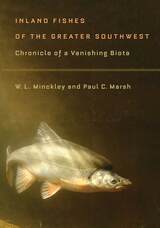
Many native fish species are unique to the Southwest. They possess interesting and unusual adaptations to the challenges of the region, able to survive silt-laden floods as well as extreme water temperatures and highly fluctuating water flows ranging from very low levels to flash floods. However, in spite of being well-adapted, many of the fish described here are threatened or endangered, often due to the acts of humans who have altered the natural habitat. For that reason, Inland Fishes of the Greater Southwest presents a vast amount of information about the ecological relationships between the fishes it describes and their environments, paying particular attention to the ways in which human interactions have modified aquatic ecosystems—and to how humans might work to ensure the survival of rapidly disappearing native species.

Between 1919 and his death by suicide in 1963, Arthur Crew Inman wrote what is surely one of the fullest diaries ever kept by any American. Convinced that his bid for immortality required complete candor, he held nothing back. This abridgment of the original 155 volumes is at once autobiography, social chronicle, and an apologia addressed to unborn readers.
Into this fascinating record Inman poured memories of a privileged Atlanta childhood, disastrous prep-school years, a nervous collapse in college followed by a bizarre life of self-diagnosed invalidism. Confined to a darkened room in his Boston apartment, he lived vicariously: through newspaper advertisements he hired “talkers” to tell him the stories of their lives, and he wove their strange histories into the diary. Young women in particular fascinated him. He studied their moods, bought them clothes, fondled them, and counseled them on their love affairs. His marriage in 1923 to Evelyn Yates, the heroine of the diary, survived a series of melodramatic episodes. While reflecting on national politics, waifs and revolutions, Inman speaks directly about his fears, compulsions, fantasies, and nightmares, coaxing the reader into intimacy with him. Despite his shocking self-disclosures he emerges as an oddly impressive figure.
This compelling work is many things: a case history of a deeply troubled man; the story of a transplanted and self-conscious southerner; a historical overview of Boston illuminated with striking cityscapes; an odd sort of American social history. But chiefly it is, as Inman himself came to see, a gigantic nonfiction novel, a new literary form. As it moves inexorably toward a powerful denouement, The Inman Diary is an addictive narrative.

The Meditations of Marcus Aurelius are treasured today—as they have been over the centuries—as an inexhaustible source of wisdom. And as one of the three most important expressions of Stoicism, this is an essential text for everyone interested in ancient religion and philosophy. Yet the clarity and ease of the work’s style are deceptive. Pierre Hadot, eminent historian of ancient thought, uncovers new levels of meaning and expands our understanding of its underlying philosophy.
Written by the Roman emperor for his own private guidance and self-admonition, the Meditations set forth principles for living a good and just life. Hadot probes Marcus Aurelius’s guidelines and convictions and discerns the hitherto unperceived conceptual system that grounds them. Abundantly quoting the Meditations to illustrate his analysis, the author allows Marcus Aurelius to speak directly to the reader. And Hadot unfolds for us the philosophical context of the Meditations, commenting on the philosophers Marcus Aurelius read and giving special attention to the teachings of Epictetus, whose disciple he was.
The soul, the guiding principle within us, is in Marcus Aurelius’s Stoic philosophy an inviolable stronghold of freedom, the “inner citadel.” This spirited and engaging study of his thought offers a fresh picture of the fascinating philosopher-emperor, a fuller understanding of the tradition and doctrines of Stoicism, and rich insight on the culture of the Roman empire in the second century. Pierre Hadot has been working on Marcus Aurelius for more than twenty years; in this book he distills his analysis and conclusions with extraordinary lucidity for the general reader.

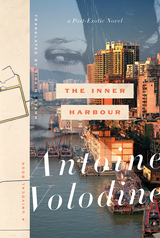
A beguiling, perspective-shifting story of obsession and loss set in the grimy, late-colonial decadence of Macau at the end of the twentieth century
In The Inner Harbour, Antoine Volodine focuses his literary investigations away from dystopian futures to a specific place at a particular historical moment: Macau on the eve of the Portuguese colony’s transfer to China. In a seedy flat in one of the city’s slums, a hired assassin named Kotter interrogates Breughel, a writer on the run from a mysterious organization code-named Paradise. Breughel has been hiding out in Macau with his lover, Gloria Vancouver, and a significant sum of the organization’s money. But Gloria is dead and the money spent—or so Breughel claims—and now he lives alone in humid squalor.
With increasing severity, Kotter extracts Breughel’s confessions, but are they truth or subterfuge? Or are the confessions an elaborate work of fiction by a writer aware that they are no longer able to differentiate between memory and fantasy? Volodine brilliantly blurs the levels of narration—between what Breughel tells his interrogator, what he remembers or invents, and the stories he has written, including his accounts of Gloria’s hallucinatory visions of an apocalyptic war between military forces and the “chrysalids.”
Interweaving threads of fiction and truth, lies and hallucinations, The Inner Harbour evokes many of the themes found in Volodine’s other “post-exotic” works: the slippage between dreams and reality, the nightmares of history, the exhaustion of literature and politics, and questions about what it means to be faithful to people or ideas long since vanished. But Volodine also uses the setting of Macau’s late-colonial decadence to explore new sensations of foreignness, alienation, and resignation, all of which coalesce into a nesting doll of narrative that houses an unconventional and tragic love story.
Retail e-book files for this title are screen-reader friendly.

The only recent English-language work on Spanish-American indigenismo from a literary perspective, Estelle Tarica’s work shows how modern Mexican and Andean discourses about the relationship between Indians and non-Indians create a unique literary aesthetic that is instrumental in defining the experience of mestizo nationalism.
Engaging with narratives by Jesús Lara, José María Arguedas, and Rosario Castellanos, among other thinkers, Tarica explores the rhetorical and ideological aspects of interethnic affinity and connection. In her examination, she demonstrates that these connections posed a challenge to existing racial hierarchies in Spanish America by celebrating a new kind of national self at the same time that they contributed to new forms of subjection and discrimination.
Going beyond debates about the relative merits of indigenismo and mestizaje, Tarica puts forward a new perspective on indigenista literature and modern mestizo identities by revealing how these ideologies are symptomatic of the dilemmas of national subject formation. The Inner Life of Mestizo Nationalism offers insight into the contemporary resurgence and importance of indigenista discourses in Latin America.
Estelle Tarica is associate professor of Latin American literature and culture at the University of California, Berkeley.


By conducting interviews with seven deaf children, ages seven to ten, Martha Sheridan offers a fresh look at their private thoughts and feelings in this watershed book. Each child possesses a unique cultural background, and Sheridan communicated with each in his or her preferred method of communication. Her procedure remained consistent with each: In addition to standard questions, Sheridan asked each child to draw a picture based on his or her life, then tell a story about it. Next, she showed them magazine pictures and asked them to describe what they saw.
The results proved to be as varied as they were engaging. Angie, an adopted deaf girl who communicates in Signed English, expressed a desire to attend a hearing college when she grows up while also stating she hoped her own children will be deaf. Joe, an African-American, hard of hearing boy, drew pictures of deaf people who are teased in a public school, reflecting his own difficult experiences.
Sheridan calls upon her tenure as a social worker as well as her own experience as a deaf child growing up in a hearing family in analyzing her study’s results. She writes, “These children have strengths, they have positive experiences, and they enjoy positive relationships.” Inner Lives of Deaf Children will prove to be an enlightening read for parents and scholars alike.
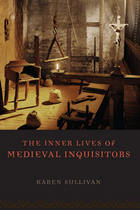
There have been numerous studies in recent decades of the medieval inquisitions, most emphasizing larger social and political circumstances and neglecting the role of the inquisitors themselves. In this volume, Karen Sullivan sheds much-needed light on these individuals and reveals that they had choices—both the choice of whether to play a part in the orthodox repression of heresy and, more frequently, the choice of whether to approach heretics with zeal or with charity.
In successive chapters on key figures in the Middle Ages—Bernard of Clairvaux, Dominic Guzmán, Conrad of Marburg, Peter of Verona, Bernard Gui, Bernard Délicieux, and Nicholas Eymerich—Sullivan shows that it is possible to discern each inquisitor making personal, moral choices as to what course of action he would take. All medieval clerics recognized that the church should first attempt to correct heretics through repeated admonitions and that, if these admonitions failed, it should then move toward excluding them from society. Yet more charitable clerics preferred to wait for conversion, while zealous clerics preferred not to delay too long before sending heretics to the stake. By considering not the external prosecution of heretics during the Middles Ages, but the internal motivations of the preachers and inquisitors who pursued them, as represented in their writings and in those of their peers, The Inner Lives of Medieval Inquisitors explores how it is that the most idealistic of purposes can lead to the justification of such dark ends.
Why did defeat in the Opium War not lead Ch'ing China to a more realistic appreciation of Western might and Chinese weakness? James Polachek's revisionist analysis exposes the behind-the-scenes political struggles that not only shaped foreign-policy decisions in the 1830s and 1840s but have continued to affect the history of Chinese nationalism in modern times.
Polachek looks closely at the networks of literati and officials, self-consciously reminiscent of the late Ming era that sought and gained the ear of the emperor. Challenging the conventional view that Lin Tse-hsu and his supporters were selfless patriots who acted in China's best interests, Polachek agrues that, for reasons having more to do with their own domestic political agenda, these men advocated a futile policy of militant resistance to the West. Linking political intrigue, scholarly debates, and foreign affairs, local notables in Canton and literati lobbyists in Perking this book sets the Opium War for the first times in its "inner," domestic political context.
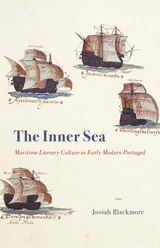
In this book, Josiah Blackmore considers how the sea and seafaring shaped literary creativity in early modern Portugal during the most active, consequential decades of European overseas expansion. Blackmore understands “literary” in a broad sense, including a diverse archive spanning genres and disciplines—epic and lyric poetry, historical chronicles, nautical documents, ship logs, shipwreck narratives, geographic descriptions, and reference to texts of other seafaring powers and literatures of the period—centering on the great Luís de Camões, arguably the sea poet par excellence of early modern Europe.
Blackmore shows that the sea and nautical travel for Camões and his contemporaries were not merely historical realities; they were also principles of cultural creativity that connected to larger debates in the widening field of the maritime humanities. For Blackmore, the sea, ships, and nautical travel unfold into a variety of symbolic dimensions, and the oceans across the globe that were traversed in the fifteenth and sixteenth centuries correspond to vast reaches within the literary self. The sea and seafaring were not merely themes in textual culture but were also principles that created individual and collective subjects according to oceanic modes of perception. Blackmore concludes with a discussion of depth and sinking in shipwreck narratives as metaphoric and discursive dimensions of the maritime subject, foreshadowing empire’s decline.

The papers collected here, from scores of scientists, constitute the proceedings of the first major international conference on research at the interface of particle physics and astrophysics, held in May 1984. The editors have written introductions to each major section that draw out the central themes and elaborate on the primary implications of the papers that follow.
Inner speech, also known as self-talk, is distinct from ordinary language. It has several functions and structures, from everyday thinking and self-regulation to stream of consciousness and daydreaming. Inner Speech and the Dialogical Self provides a comprehensive analysis of this internal conversation that people have with themselves to think about problems, clarify goals, and guide their way through life.
Norbert Wiley shrewdly emphasizes the semiotic and dialogical features of the inner speech, rather than the biological and neurological issues. He also examines people who lack control of their inner speech—such as some autistics and many emotionally disturbed people who use trial and error rather than self-control—to show the power and effectiveness of inner speech.
Inner Speech and the Dialogical Self takes a humanistic social theorist approach to its topic. Wiley acknowledges the contributions of inner speech theorists, Lev Vygotsky and Mikhail Bakhtin, and addresses the classical pragmatism of Charles Sanders Peirce, John Dewey, William James, and George Herbert Mead to show the range and depth of this largely unexplored field.


Finalist, 2025 Georgia Author of the Year Award in Memoir
A stunning account of year-round life on the windswept shores of Cape Cod, threaded with meditations on memory, forgetting, and identity
Raised in a nineteenth-century saltbox house in Wellfleet, Massachusetts, Cynthia Blakeley was both surrounded by generations of immediate and extended family and isolated by the mysteries locked inside her affectionate yet elusive mother and short-fused father. While she and her sisters and cousins roamed the Outer Cape—drinking in the dunes, swimming in kettle ponds, and dancing in Provincetown—Blakeley also turned to the inner world of her journals as she contended with her own secrets and memories.
Over-identifying with her unconventional and artistic mother, Blakeley felt certain that the key to understanding her mother’s drinking and distractions, her generosity and easy forgiveness, was the unexplained absence of two of Blakeley’s half-siblings and their connection to her mother’s unhappy first marriage. Blakeley kept her distance, however, from her disciplinarian father. Though he took his daughters sailing and clamming and beachcombing, he was the chill to their mother’s warmth, the maker, not the breaker, of rules. Slipping through these dynamics in that small house and evocative landscape, Blakeley eventually crossed the bridge and left home, only to return later in search of the family stories that would help her decode her present.
Blakeley’s captivating memoir moves fluidly through time, grappling with the question of who owns a memory or secret and how our narrative choices not only describe but also shape and change us. In this insightful and poignant account of tenacious year-rounders on Cape Cod, Blakeley contends that making sense of ourselves is a collaborative affair, one that begins with understanding those we came from.

Finalist, 2025 Georgia Author of the Year Award in Memoir
A stunning account of year-round life on the windswept shores of Cape Cod, threaded with meditations on memory, forgetting, and identity
Raised in a nineteenth-century saltbox house in Wellfleet, Massachusetts, Cynthia Blakeley was both surrounded by generations of immediate and extended family and isolated by the mysteries locked inside her affectionate yet elusive mother and short-fused father. While she and her sisters and cousins roamed the Outer Cape—drinking in the dunes, swimming in kettle ponds, and dancing in Provincetown—Blakeley also turned to the inner world of her journals as she contended with her own secrets and memories.
Over-identifying with her unconventional and artistic mother, Blakeley felt certain that the key to understanding her mother’s drinking and distractions, her generosity and easy forgiveness, was the unexplained absence of two of Blakeley’s half-siblings and their connection to her mother’s unhappy first marriage. Blakeley kept her distance, however, from her disciplinarian father. Though he took his daughters sailing and clamming and beachcombing, he was the chill to their mother’s warmth, the maker, not the breaker, of rules. Slipping through these dynamics in that small house and evocative landscape, Blakeley eventually crossed the bridge and left home, only to return later in search of the family stories that would help her decode her present.
Blakeley’s captivating memoir moves fluidly through time, grappling with the question of who owns a memory or secret and how our narrative choices not only describe but also shape and change us. In this insightful and poignant account of tenacious year-rounders on Cape Cod, Blakeley contends that making sense of ourselves is a collaborative affair, one that begins with understanding those we came from.
Human beings have lived by very different conceptions of the good life. In this book, Stuart Hampshire argues that no individual and no modern society can avoid conflicts between incompatible moral interests. Philosophers have tried in the past to find some underlying moral idea of justice which could resolve these conflicts and would be valid for any society. Hampshire claims that there can be no such thing. States can be held together, and war between them avoided, only by respect for the political process itself, and it is in these terms that justice must be defined.
The book closely examines the critical relationship between morality and justice, paying particular attention to Hume's moral subjectivism (which Hampshire disputes) and proposing a reply to Machiavelli's claim that the realities of politics inevitably oblige leaders to choose between unavoidable evils.
Most academic and moral philosophy, Hampshire argues, has been a fairy tale, representing ideals of private innocence rather than the realities of public experience. Conflicts between incompatible moral interests are as unavoidable in social and international arenas as they are in the lives of individuals. Philosophers, politicians, and theologians have all looked for an underlying moral consensus that will be valid for any just society. But the diversity of the human species and important differences in how various cultures define the good life militate against the formation of any such consensus. Ultimately, conflicts can be mediated only by respect for procedural justice.
Hampshire believes that themes of moral philosophy come from the writer's own experience, and he has given a brief but compelling account of his own life to help the reader understand the sources of his philosophy. Combining intellectual rigor with imaginative power, in Innocence and Experience Stuart Hampshire vividly illuminates the tensions between justice and other sources of value in society and in the life of the individual.
America believes in individualism—but what is individualism? This question leads into unexpected areas of life and thought. It touches upon almost every intellectual discipline concerned with human life. Any answer, to be taken seriously, must recognize this complexity. A broad understanding of the meaning of individualism can be reached only through the insight of many workers in many different fields.
This volume brings together seven of the United States' most distinguished scholars, representing the fields of anthropology, economics, government, history, literature, and philosophy. The trend of their thinking can be suggested by a few excerpts from their essays:
• "An individual divorced from a cultural milieu would not be a human being; he would be a mere hominid."—Leslie A. White
• "The trouble is that 'individual' is a stop-thought word. It numbs the mind, so that once it has been uttered, inquiry stops."—Clarence E. Ayres
• "Not even an individual's perfections are his alone; like his imperfections, they are group-made."— Paul A. Samuelson
• "The twentieth century has witnessed the emergence of a new kind of American individualism, the individualism of nonconformity, which actually challenges the compulsive democracy of the Lockean individualism by which the nation has centrally and historically lived."—Louis Hartz
• "The individualism of the American frontier was an individualism of personal self-reliance and of hardihood and stamina rather than an individualism of intellectual independence and personal self-expression."—David M. Potter
• "The present conditions in which the self must be preserved are radically different from those of a generation, even a decade ago. . . . The dogmatics of present self-assertion are defined and pursued in an existential circumstance."—Frederick J. Hoffman
• "Individuality means creativity, and 'laws of creativity,' other than statistical ones, are, I hold, a contradiction in terms."—Charles Hartshorne
Since 1988, J. Hillis Miller has traveled to China to lecture on literary theory, especially the role of globalization in literary theory. Over time, he has assisted in the development of distinctively Chinese forms of literary theory, Comparative Literature, and World Literature. The fifteen lectures gathered in An Innocent Abroad span both time and geographic location, reflecting his work at universities across China for more than twenty-five years. More important, they reflect the evolution of Miller’s thinking and of the lectures’ contexts in China as these have markedly changed over the years, especially on either side of Tiananmen Square and in light of China’s economic growth and technological change. A foreword by the leading theorist Fredric Jameson provides additional context.

The Innocent Midwest delves into one of the most enduring stereotypes in American cultural history: the image of the Midwest as a bastion of innocence. Despite its share of social, political, and economic complexities, the region has long been portrayed as wholesome, virtuous, and peace loving—a perception that has persisted from its pastoral beginnings through industrialization and into the digital age.
This book traces the roots and evolution of that myth, arguing that the Midwest’s innocent image has been carefully cultivated through American popular and high culture. From literature and film to music and visual art, the trope of the innocent Midwesterner has shaped national perceptions of the region for over a century. Focusing on literature from 1793 to the 1920s, the book explores how this character type emerged, evolved, and eventually confronted the disillusionment of the machine age.
Organized thematically, the book examines early frontier narratives, stories of Midwesterners abroad, Progressive Era ideals of neighborliness, immigrant and migrant experiences, and the eventual unraveling of the pastoral dream. It reveals how the myth of innocence was underpinned by a constellation of values—agrarianism, Christian morality, and a belief in education—that supported the Jeffersonian vision of a democratic, virtuous citizenry.
Rather than offering a sweeping theory of regional identity, The Innocent Midwest focuses on the recurring literary figure of the innocent Midwesterner—an individual shaped by the land and striving for self-actualization. The book draws both on canonical authors like Mark Twain, William Dean Howells, Booth Tarkington, Sinclair Lewis, Theodore Dreiser, and Willa Cather and on lesser-known voices such as Maria Susanna Cummins, David Graham Phillips, Elia W. Peattie, William Webb, Chief Luther Standing Bear, and Oscar Micheaux, whose works contributed to the cultural construction of the Midwest.
Through its nuanced exploration of literature and culture, this book offers a compelling account of how the Midwest came to symbolize innocence—and why that image continues to resonate in the American imagination.

"The virtues of [Vizinczey's] style are those he finds in Hungarian poetry: the moody ferocity of a locked-up beast, and also a classic clarity and complete lack of self-indulgence."—Thomas D'Evelyn, Christian Science Monitor
"Shows where the true values lie—not in wealth or the rule of law but in that as yet inviolate sector where a man and woman make love. . . . I was entertained but also deeply moved: here is a novel set bang in the middle of our decadent, polluted, corrupt world that, in some curious way, breathes a kind of desperate hope."—Anthony Burgess, Punch (London)
"Bravo!"—Graham Greene
Despite a rich history of Black and postcolonial critiques of racist and imperial feminist politics, racism still exists within contemporary British feminism. To explain why, Terese Jonsson examines the history of feminism over the last forty years. She argues that Black feminism's role in shaping the movement has been marginalised through narratives which repeatedly position white women at the centre of the story, from the women's liberation movement in the 1970s to today.
Analysing the ways in which whiteness continues to pervade feminist literature, as well as feminist debates in the liberal media, Jonsson demonstrates that, despite an increased attention to race, intersectionality and difference, stories told by white feminists are shaped by their desire to maintain an 'innocent' position towards racism.
Soon after, all five men recanted, saying their confessions had been coerced. One was freed after providing an alibi, but the remaining suspects—dubbed “The Tucson Four” by the media—remained in custody even though no physical evidence linked them to the crime.
Seven weeks later, investigators discovered—almost by chance—physical evidence that implicated two entirely new suspects. The Tucson Four were finally freed on November 22 after two teenage boys confessed to the crime, yet troubling questions remained. Why were confessions forced out of innocent suspects? Why and how did legal authorities build a case without evidence? And, ultimately, how did so much go so wrong?
In this first book-length treatment of the Buddhist Temple Massacre, Gary L. Stuart explores the unspeakable crime, the inexplicable confessions, and the troubling behavior of police officials. Stuart’s impeccable research for the book included a review of the complete legal records of the case, an examination of all the physical evidence, a survey of three years of print and broadcast news, and more than fifty personal interviews related to the case. Like In Cold Blood, and The Executioner’s Song, Innocent Until Interrogated is a riveting read that provides not only a striking account of the crime and the investigation but also a disturbing look at the American justice system at its very worst.
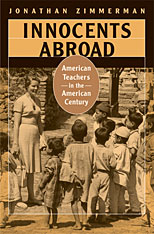
Protestant missionaries in Latin America. Colonial "civilizers" in the Pacific. Peace Corps Volunteers in Africa. Since the 1890s, thousands of American teachers--mostly young, white, middle-class, and inexperienced--have fanned out across the globe. Innocents Abroad tells the story of what they intended to teach and what lessons they learned.
Drawing on extensive archives of the teachers' letters and diaries, as well as more recent accounts, Jonathan Zimmerman argues that until the early twentieth century, the teachers assumed their own superiority; they sought to bring civilization, Protestantism, and soap to their host countries. But by the mid-twentieth century, as teachers borrowed the concept of "culture" from influential anthropologists, they became far more self-questioning about their ethical and social assumptions, their educational theories, and the complexity of their role in a foreign society.
Filled with anecdotes and dilemmas--often funny, always vivid--Zimmerman's narrative explores the teachers' shifting attitudes about their country and themselves, in a world that was more unexpected and unsettling than they could have imagined.
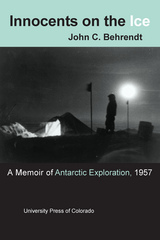
"Adventures in the Antarctic only happen when someone makes a mistake.”
—From the Preface

Innovating with Integrity presents a comprehensive portrait of the local heroes—front-line public servants and middle managers—who are reinventing state and local government, and it offers practical recommendations for innovating successfully.
Based on a study of more than 200 successful government innovations, this book is the first large-scale, systematic analysis of innovation in American government. Sandford Borins identifies the components of integrity that he finds in successful innovators, including the intellectual discipline to plan rigorously and to establish measurable goals; the ability to collaborate with others and accommodate criticism; and a willingness to mobilize both the private sector and the community. In addition to analyzing the common traits driving new initiatives, Borins shows the distinctive differences among six areas of innovation: information technology, organizational redesign, environmental and energy management, policing and community development, social services, and education.
This trenchant analysis of what initiatives actually work and why contributes to both the practice and theory of public management. Its practical advice will be especially valuable for front-line government workers, public managers, union leaders, agency heads, politicians, and all concerned with reforming government.
In advanced economies like the United States, innovation has long been recognized as a central force for increasing economic prosperity and human welfare. Today, the US government promotes innovation through various mechanisms, including tax credits for private-sector research, grant support for basic and applied research, and institutions like the Small Business Innovation Research Program of the National Science Foundation. Drawing on the latest empirical and conceptual research, Innovation and Public Policy surveys the key components of innovation policy and the social returns to innovation investment. It examines mechanisms that can advance the pace of invention and innovative activity, including expanding the research workforce through schooling and immigration policy and funding basic research. It also considers scientific grant systems for funding basic research, including those at institutions like the National Institutes of Health and the National Science Foundation, and investigates the role of entrepreneurship policy and of other institutions that promote an environment conducive to scientific breakthroughs.
Works prior to this book focused on Bede as not only a European, but also as an English scholar, historian, scientist, or a biographer of saints, and have used a traditional approach towards his explanation of the Bible. Bede's interpretation of his work, its continuous progress, and the reasons behind his hurried appointment to an authority almost as high as the Church Fathers are all topics examined within the text. Essays are by Roger Ray, Faith Wallis, Calvin B. Kendall, George Hardin Brown, Scott DeGregorio, Arthur G. Holder, Lawrence T. Martin, Walter Goffart, and Joyce Hill.
Although much has already been written about the rise and fall of Enron, four important questions remain unanswered: What management behavior and practices led Enron down the path from truly innovative to fraudulent management? How could Enron’s board of directors have failed to detect the business, ethical, and legal risks embedded in the company’s aggressive financial strategies and accounting practices? Why did Enron’s external watchdogs—security analysts, credit-rating agencies, and regulatory agencies—fail to bark? What actions can prevent Enron-type breakdowns in the future? Innovation Corrupted addresses each of these questions.
In contrast to the time-line narratives of previous books on Enron that offer interesting but largely unsystematic insight into individual actions and organizational processes, Innovation Corrupted pursues a more methodical analysis of the causes and lessons of Enron’s collapse. Based upon newly available sources, Salter identifies the social pathologies and administrative failures that fostered the company’s ethical drift and inhibited the board of directors from exercising effective governance and control. Salter also goes beyond the work of previous books by proposing practical recommendations for preventing future Enron-type disasters. These prescriptions relate to board oversight, financial incentives for executives, and, most importantly, the maintenance of ethical discipline when operating in the murky borderlands of the law. It was in this shadowed space that Enron’s senior executives lost their way.
In Innovation Equity, Elie Ofek, Eitan Muller, and Barak Libai analyze how a vast array of past innovations performed in the marketplace—from their launch to the moment they became everyday products to the phase where consumers moved on to the “next big thing.” They identify key patterns in how consumers adopt innovations and integrate these with marketing scholarship on how companies manage their customer base by attracting new customers, keeping current customers satisfied, and preventing customers from switching to competitors’ products and services. In doing so, the authors produce concrete models that powerfully predict how the marketplace will respond to innovations, providing a much more authoritative way to estimate their potential monetary value, as well as a framework for making it possible to achieve that value.
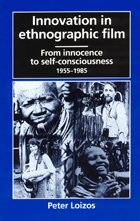
Loizos begins by reviewing works of John Marshall and Timothy Asch in the 1950s and moves through those of Jean Rouch, Robert Gardner, and many more recent filmmakers. He reveals a steady course of innovations along four dimensions: production technology, subject matter, strategies of argument, and ethnographic authentication. His analyses of individual films address questions of realism, authenticity, genre, authorial and subjective voice, and representation of the films' creators as well as their subjects.
Innovation in Ethnographic Film, as a systematic and iluminating review of developments in ethnographic film, will be an important resource for the growing number of anthropologists and other scholars who use such films as tools for research and teaching.
Published by University of Delaware Press. Distributed worldwide by Rutgers University Press.
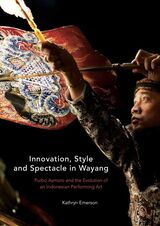
Wayang, the traditional puppet theater form of Java, fascinates and endures thanks to the many ways it works as a medium—bearing the weight of Javanese culture and tradition as a key component of rites of passage, as a medium of ritual and spiritual practice, as public spectacle, and as entertainment of the broadest sort, performed live, broadcast, or streamed. Over the past forty years, the form has been subject to a great deal of experimentation and innovation, pulled in many directions within an ever-changing media landscape. In this book, Kathryn Anne Emerson outlines both significant contributions by a number of key figures and the social and political influences propelling such innovations. She also describes deeper and more lasting changes in wayang, based on what the art form's most accomplished practitioners have to say about it. At the core of the book is one pivotal figure, Purbo Asmoro of the Indonesian Institute of the Arts in Surakarta, who, Emerson argues, has taken the individual and singular innovations of the era and integrated them into a new system of performance practice, one that has shaped the key Surakarta school of performance. Grounded in an unprecedented, decades-long participatory research project involving hundreds of interlocutors, the book is beautifully illustrated and will be of considerable interest in Indonesian studies.


The eighteenth century has been a notable recent growth area in historical studies and related disciplines and is key in university research and teaching. Although widely taught in history departments, the eighteenth century also presents challenges, including new students’ unfamiliarity with the period, the theoretical and interdisciplinary nature of the critical writings, and extensive online source material requiring digital skills for its evaluation.
Focusing on pedagogical innovation and current developments in the discipline, this collection of essays reflects on how we teach the history of the long eighteenth century, exploring current subfields such as histories of material culture, the senses, gender, crime, race, empire, and colonialism. It presents practical case studies showcasing how novel teaching methods can be employed in the classroom that promote active learning and invite students to think critically about the nature of their discipline. Methods covered include decolonizing the curriculum, digital history, transferable skills, engaging with objects, working in non-classroom settings, and multisensory approaches.
Grounded in real academic practice, this is a valuable guide for all history educators, whether specializing in the eighteenth century or beyond.

Amid mounting concern over the loss of jobs to low-wage economies, one fact is clear: America's prosperity hinges on the ability of its businesses to continually introduce new products and services. But what makes for a creative economy? How can the remarkable surge of innovation that fueled the boom of the 1990s be sustained?
For an answer, Richard K. Lester and Michael J. Piore examine innovation strategies in some of the economy's most dynamic sectors. Through eye-opening case studies of new product development in fields such as cell phones, medical devices, and blue jeans, two fundamental processes emerge.
One of these processes, analysis--rational problem solving--dominates management and engineering practice. The other, interpretation, is not widely understood, or even recognized--although, as the authors make clear, it is absolutely crucial to innovation. Unlike problem solving, interpretation embraces and exploits ambiguity, the wellspring of creativity in the economy. By emphasizing interpretation, and showing how these two radically different processes can be combined, Lester and Piore's book gives managers and designers the concepts and tools to keep new products flowing.
But the authors also offer an unsettling critique of national policy. By ignoring the role of interpretation, economic policymakers are drawing the wrong lessons from the 1990s boom. The current emphasis on expanding the reach of market competition will help the analytical processes needed to implement innovation. But if unchecked it risks choking off the economy's vital interpretive spaces. Unless a more balanced policy approach is adopted, warn Lester and Piore, America's capacity to innovate--its greatest economic asset--will erode.
Programs in technical writing, technical communication, and/or professional communication have recently grown in enrollment as the demand among employers for formally prepared technical writers and editors has grown. In response, scholarly treatments of the subject and the teaching of technical writing are also burgeoning, and the body of research and theory being published in this field is many times larger and more accessible than it was even a decade ago.
Although many theoretical and disciplinary perspectives can potentially inform technical communication teaching, administration, and curriculum development, the actual influences on the field's canonical texts have traditionally come from a rather limited range of disciplines. Innovative Approaches to Teaching Technical Communication brings together a wide range of scholars/teachers to expand the existing canon.


In two parts, Innovative Library Workplaces provides the tools you need to make your workplace a good one for your employees.
- Human Resources in Libraries
- Recruiting and Hiring
- Onboarding and Training
- Salary Studies and Unions
- Work Culture and Organization
- Employee Morale
- Flexible Work Arrangements
- Strategic Planning and Reorganizing
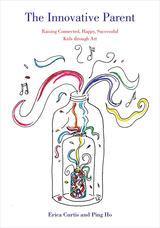
2019 National Parenting Products Award Winner
Even the best talk-based practices in parenting can be limiting. How can art help parents temper storms of emotion, defuse sibling conflicts, get teeth brushed, and raise happy, successful kids? In The Innovative Parent, Erica Curtis and Ping Ho integrate cutting-edge research, years of clinical expertise, and their own parenting experience into a revolutionary yet practical guide to creative parenting. Plentiful illustrations and anecdotes bring concepts to life and show art in action with kids and parents.
Together, Curtis and Ho let parents in on art therapy trade secrets to help children make sense of emotions, build connections with others, develop problem-solving skills, resolve day-to-day conflicts, process and retain information, confront fears and anxiety, and much more. These are complex tasks for something as seemingly simple as making art, yet therein lies the beauty of The Innovative Parent: its down-to-earth approach is simple, doable, and fun.
Researchers now understand interpreting as an active process between two languages and cultures, with social interaction, sociolinguistics, and discourse analysis as more appropriate theoretical frameworks. Roy’s penetrating new book acts upon these new insights by presenting six dynamic teaching practices to help interpreters achieve the highest level of skill.
Jeffrey Davis illustrates the translation skills that form the basis for teaching consecutive and simultaneous interpreting to help students understand the intended meaning of the source message, and also the manner in which listeners understand it. Rico Peterson demonstrates the use of recall protocols, which can be used to teach metacognitive skills and to assess the student’s sign language comprehension. Finally, Janice Humphrey details the use of graduation portfolios, a valuable assessment tool used by faculty to determine a student’s level of competency. These imaginative techniques in Innovative Practices promise gains in sign language interpreting that will benefit teachers, students, and clients alike in the very near future.
Heritage language (HL) learning and teaching presents particularly difficult challenges. Melding cutting-edge research with innovations in teaching practice, the contributors in this volume provide practical knowledge and tools that introduce new solutions informed by linguistic, sociolinguistic, and educational research on heritage learners. Scholars address new perspectives and orientations on designing HL programs, assessing progress and proficiency, transferring research knowledge into classroom practice, and the essential question of how to define a heritage learner. Articles offer analysis and answers on multiple languages, and the result is a unique and essential text—the only comprehensive guide for heritage language learning based on the latest theory and research with suggestions for the classroom.
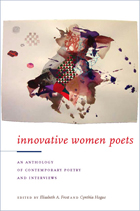
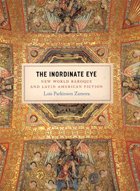
The New World Baroque combines indigenous, African, and European forms of expression, and, in the early decades of the twentieth century, Latin American writers began to recuperate its visual structures to construct an alternative account of modernity, using its hybrid forms for the purpose of creating a discourse of “counterconquest”—a postcolonial self-definition aimed at disrupting entrenched power structures, perceptual categories, and literary forms.
Zamora engages this process, discussing a wide range of visual forms—Baroque façades and altarpieces, portraits of saints and martyrs (including the self-portraits of Frida Kahlo), murals from indigenous artisans to Diego Rivera—to elucidate works of fiction by Borges, Carpentier, Lezama Lima, Sarduy, Garro, García Márquez, and Galeano, and also to establish a critical perspective external to their work. Because visual media are “other” to the verbal economy of modern fiction, they serve these writers (and their readers) as oblique means by which to position their fiction culturally, politically, and aesthetically.
The first study of its kind in scope and ambition, The Inordinate Eye departs radically from most studies of literature by demonstrating how transcultural conceptions of the visual image have conditioned present ways of seeing and reading in Latin America.

Contemporary theory has pushed the boundaries of the concept of the living, urging us to consider a vitality that manifests beyond the human, animal, or even the organic altogether. Recognizing the vast variety of modes of existence and vibrancy entails—such is the claim—a new ethics and politics. In Inorganic Life, the philosopher Eckardt Lindner intervenes in this discussion. He claims that we have not yet properly understood how and to what effect we can break the organo-centrism of philosophy and have neglected to consider the inner contradictions of such novel amalgams of vitalism and materialism.
As an unlikely ally in his critical project, he investigates the inner tension in Deleuze’s works between an overtly vitalist stance and critiques of classical forms of vitalism, bordering on a novel anti-vitalism. Against active forms of vitalism, interested in more immersion in the world, interconnectedness, and ever more efficacious praxis, one can find in Deleuze a passive vitalism. This subterranean thought in the philosophy of immanence highlights the capacity of life to disorient itself, to be out of line with itself, to detach itself from purposeful action and its own inner goals.
Lindner explores this passive vitalism by drawing together thinkers such as Deleuze, Cioran, Laruelle, Kant, and Derrida. Suspicious of the moralistic and enthusiastic tendency of new materialisms, this vitalism would be inherently critical—even of its own commitments to liveliness—and thus gestures to a new politics and ethics of life.

The biological revolution, with its attendant technological powers to alter nature and human nature, demands fundamental and cautionary reflection on questions of the highest ethical importance. In this thoughtful book on contemporary issues in bioethics, Stephen G. Post explores nine major topics ranging from birth and adolescence to aging and death. Using an interdisciplinary approach, Post clearly illuminates the issues, probes the ethical alternatives, and examines the cultural changes that shape current presuppositions about the right and good. This book will be of interest to scholars in bioethics, philosophy, and religious studies; health-care professionals; and the general reader concerned with these pressing questions of life and death.
Within the next twenty years, an unprecedented proportion of Americans will be over sixty-five. New research in the economics of aging is an essential element of understanding what the future holds for this aging population. Inquiries in the Economics of Aging presents both empirical papers that consider questions that are fundamental to public policy and more theoretical contributions that lay new groundwork for future research in the economics of aging.
Inquiries in the Economics of Aging provides a timely overview of some of the most important questions facing researchers on aging and outlines new techniques and models that may help to answer these questions. This important volume will be of great interest to specialists and policy makers as it paves the way for future analysis.
Over the past twenty-five years, Bruno Latour has developed a research protocol different from the actor-network theory with which his name is now associated—a research protocol that follows the different types of connectors that provide specific truth conditions. These are the connectors that prompt a climate scientist challenged by a captain of industry to appeal to the institution of science, with its army of researchers and mountains of data, rather than to “capital-S Science” as a higher authority. Such modes of extension—or modes of existence, Latour argues here—account for the many differences between law, science, politics, and other domains of knowledge.
“Magnificent…An Inquiry into Modes of Existence shows that [Latour] has lost none of his astonishing fertility as a thinker, or his skill and wit as a writer…Latour’s main message—that rationality is ‘woven from more than one thread’—is intended not just for the academic seminar, but for the public square—and the public square today is global as never before.”
—Jonathan Rée, Times Literary Supplement
“Latour’s work makes the world—sorry, worlds—interesting again.”
—Stephen Muecke, Los Angeles Review of Books
Adam Smith's The Wealth of Nations was recognized as a landmark of immediately upon publication in 1776. As the first serious, data-driven argument for the principles of political economy, it is the point of departure for all subsequent economic thought. Smith's argument that human self-interest is the primary driver of economic activity, and that in aggregate that self-interest--acting through a market freed from government intervention-guides markets and economies toward the best outcomes for business and society, remains foundational for contemporary free-market economics.
This edition presents the definitive 1904 version of The Wealth of Nations, painstakingly edited by Edwin Cannan and featuring Cannan's illuminating introduction, and notes, as well as a a full index. An additional preface by distinguished economist George J. Stigler places Smith's book and thought in a contemporary context. The result is the best edition of this classic for students and general readers alike.
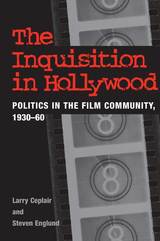
The definitive work on the Hollywood blacklist era
The Inquisition in Hollywood examines the suppression of radical political activity in the film industry from the days of the Great Depression through the tumultuous House Un-American Activities Commission era to the waning days of the infamous blacklist.
Although this thirty-year period of American history is marked by widespread targeting of leftists in all areas of life, those in the film industry–-predominately screenwriters–-were considered to be in positions of great potential indoctrinating power, and found themselves under intense scrutiny as the Cold War hysteria mounted.
Ceplair and Englund trace the history of political struggle in Hollywood back to the formation of the Screen Writers Guild in 1933. Many of the blacklisted filmmakers were members of the Communist Party and all of the graylisted filmmakers had expressed their sympathy with progressive (mainly anti-fascist) causes.
Although no Hollywood Communist has ever been linked to espionage or sabotage, and charges of subversive indoctrination have no basis in documented fact, this book powerfully shows how devastating a mere suspicion or insinuation of guilt could be during the era of the Red Menace.
Twenty-two years after its initial publication, The Inquisition in Hollywood remains the definitive work on the blacklist era, and this new edition features a new introduction by the authors.
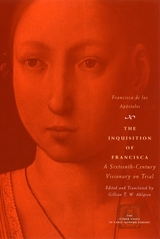
This book contains what little is known about Francisca—the several letters she wrote as well as the transcript of her trial—and offers modern readers a perspective on the unique role and status of religious women in sixteenth-century Spain. Chronicling the drama of Francisca's interrogation and her spirited but ultimately unsuccessful defense, The Inquisition of Francisca—transcribed from more than three hundred folios and published for the first time in any language—will be a valuable resource for both specialists and students of the history and religion of Spain in the sixteenth century.
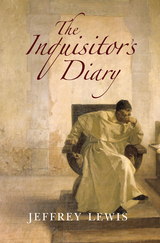
“We follow Alonso’s journey as he is dispatched by the Inquisitor General to the country’s northern frontier to root out ‘heresy, apostasy, backsliding.’ . . . This somber work seeks to uncover those subterranean impulses that surge beneath Alonso’s fate.”—Literary Review
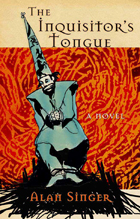
Alan Singer’s riveting new novel, The Inquisitor’s Tongue, reimagines the Spanish Inquisition as a world in which spiritual horrors and acts of violence are the birth pangs of otherwise unimaginable identities.
The book centers on the secret history of Spanish Growth & Development (SGD)—an organization of Latino gangs founded in 1989 and modeled on the Mafia’s nationwide Commission. It also tells a story within a story of the criminal exploits of the C-Note$, the “minor league” team of the Chicago’s Mafia (called the “Outfit”), which influenced the direction of SGD. Hagedorn’s tale is based on three years of interviews with an Outfit soldier as well as access to SGD’s constitution and other secret documents, which he supplements with interviews of key SGD leaders, court records, and newspaper accounts. The result is a stunning, heretofore unknown history of the grand ambitions of Chicago gang leaders that ultimately led to SGD’s shocking collapse in a pool of blood on the steps of a gang-organized peace conference.
The Insane Chicago Way is a compelling history of the lives and deaths of Chicago gang leaders. At the same time it is a sociological tour de force that warns of the dangers of organized crime while arguing that today’s relative disorganization of gangs presents opportunities for intervention and reductions in violence.
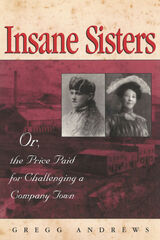
Insane Sisters is the extraordinary tale of two sisters, Mary Alice Heinbach and Euphemia B. Koller, and their seventeen- year property dispute against the nation's leading cement corporation—the Atlas Portland Cement Company.
In 1903, Atlas built a plant on the border of the small community of Ilasco, located just outside Hannibal—home of the infamous cave popularized in Mark Twain's most acclaimed novels. The rich and powerful Atlas quickly appointed itself as caretaker of Twain's heritage and sought to take control of Ilasco. However, its authority was challenged in 1910 when Heinbach inherited her husband's tract of land that formed much of the unincorporated town site. On grounds that Heinbach's husband had been in the advanced stages of alcoholism when she married him the year before, some of Ilasco's political leaders and others who had ties to Atlas challenged the will, charging Heinbach with undue influence.
To help fight against the local lawyers and politicians who wanted Atlas to own the land, Heinbach enlisted the help of her shrewd and combative sister, Euphemia Koller, by making her co-owner of the tract. In a complex case that went to the Missouri Supreme Court four times, the sisters fiercely sought to hang on to the tract. However, in 1921 the county probate court imposed a guardianship over Heinbach and a circuit judge ordered a sheriff's sale of the property. After Atlas purchased the tract, Koller waged a lonely battle to overturn the sale and expose the political conspiracies that had led to Ilasco's conversion into a company town. Her efforts ultimately resulted in her court- ordered confinement in 1927 to Missouri's State Hospital Number One for the Insane, where she remained until her death at age sixty-eight.
Insane Sisters traces the dire consequences the sisters suffered and provides a fascinating look at how the intersection of gender, class, and law shaped the history and politics of Ilasco. The book also sheds valuable new light on the wider consolidation of corporate capitalism and the use of guardianships and insanity to punish unconventional women in the early twentieth century.

Ayella's personal experience fueled her interest in studying the cult phenomenon. This book focuses on her analysis of one community in southern California, The Center for Feeling Therapy, which opened in 1971 as an offshoot of Arthur Janov's Primal Scream approach. The group attracted mostly middle-class, college-educated clients interested in change through intense sessions led by licensed therapists. At the time of the Center's collapse in 1980, there were three hundred individuals living in the therapeutic community and another six hundred outpatients.
Through interviews with twenty-one former patients, the author develops a picture of the positive changes they sought, the pressures of group living, and the allegations of abuse against therapists. Many patients contended that they were beaten, made to strip before the group and to engage in forced sex, forced to have abortions and give up children, and coerced to donate money and to work in business affiliated with the Center.
The close of the Center brought yet more trauma to the patients as they struggled to readjust to mainstream life. Ayella recounts the stories of these individuals, again and again returning to the question of how personal identity is formed and the power of social influences. This book is a key to understanding how "normal" people wind up in cults.
In the Roman and Byzantine Near East, the holy fool emerged in Christianity as a way of describing individuals whose apparent madness allowed them to achieve a higher level of spirituality. Insanity and Sanctity in Byzantium examines how the figure of the mad saint or mystic was used as a means of individual and collective transformation in the period between the birth of Christianity and the rise of Islam. It presents a novel interpretation in revealing the central role that psychology plays in social and historical development.
Early Christians looked to figures who embodied extremes of behavior—like the holy fool, the ascetic, the martyr—to redefine their social, cultural, and mental settings by reading new values in abnormal behavior. Comparing such forms of extreme behavior in early Christian, pagan, and Jewish societies, and drawing on theories of relational psychoanalysis, anthropology, and sociology of religion, Youval Rotman explains how the sanctification of figures of extreme behavior makes their abnormality socially and psychologically functional. The sanctification of abnormal mad behavior created a sphere of ambiguity in the ambit of religious experience for early Christians, which brought about a deep psychological shift, necessary for the transition from paganism to Christianity.
A developing society leaves porous the border between what is normal and abnormal, between sanity and insanity, in order to use this ambiguity as a means of change. Rotman emphasizes the role of religion in maintaining this ambiguity to effect a social and psychological transformation.

In 1875 Robert Todd Lincoln caused his mother, Mary Todd Lincoln, to be committed to an insane asylum. Based on newly discovered manuscript materials, this book seeks to explain how and why.
In these documents—marked by Robert Todd Lincoln as the "MTL Insanity File"—exists the only definitive record of the tragic story of Mary Todd Lincoln’s insanity trial. The book that results from these letters and documents addresses several areas of controversy in the life of the widow of Abraham Lincoln: the extent of her illness, the fairness of her trial, and the motives of those who had her committed for treatment. Related issues include the status of women under the law as well as the legal and medical treatment of insanity.
Speculating on the reasons for her mental condition, the authors note that Mrs. Lincoln suffered an extraordinary amount of tragedy in a relatively few years. Three of her four sons died very young, and Abraham Lincoln was assassinated. After the death of her son Willie she maintained a darkly rigorous mourning for nearly three years, prompting the president to warn her that excessive woe might force him to send her to "that large white house on the hill yonder," the government hospital for the insane.
Mrs. Lincoln also suffered anxiety about money, charting an exceptionally erratic financial course. She had spent lavishly during her husband’s presidency and at his death found herself deeply in debt. She had purchased trunkfuls of drapes to hang over phantom windows. 84 pairs of kid gloves in less than a month, and $3,200 worth of jewelry in the three months preceding Lincoln’s assassination. She followed the same erratic course for the rest of her life, creating in herself a tremendous anxiety. She occasionally feared that people were trying to kill her, and in 1873 she told her doctor that an Indian spirit was removing wires from her eyes and bones from her cheeks.
Her son assembled an army of lawyers and medical experts who would swear in court that Mrs. Lincoln was insane. The jury found her insane and in need of treatment in an asylum. Whether the verdict was correct or not, the trial made Mary Lincoln desperate. Within hours of the verdict she would attempt suicide. In a few months she would contemplate murder. Since then every aspect of the trial has been criticized—from the defense attorney to the laws in force at the time. Neely and McMurtry deal with the trial, the commitment of Mary Todd Lincoln, her release, and her second trial. An appendix features letters and fragments by Mrs. Lincoln from the "Insanity File." The book is illustrated by 25 photographs.
The Insatiability of Human Wants begins during a key transitional moment in aesthetic and economic theory, 1871, when both disciplines underwent a turn from production to consumption models. In economics, an emphasis on the theory of value and the social relations between land, labor, and capital gave way to more individualistic models of consumerism. Similarly, in aesthetics, theories of artistic production or creativity soon bowed to models of taste, pleasure, and reception.
Using these developments as a point of departure, Gagnier deftly traces the shift in Western thought from models of production to consumption. From its exploration of early market logic and Kantian thought to its look at the aestheticization of homelessness and our own market boom, The Insatiability of Human Wants invites us to contemplate alternative interpretations of economics, aesthetics, and history itself.
A history of food in the Crescent City that explores race, power, social status, and labor.
In Insatiable City, Theresa McCulla probes the overt and covert ways that the production of food and the discourse about it both created and reinforced many strains of inequality in New Orleans, a city significantly defined by its foodways. Tracking the city’s economy from nineteenth-century chattel slavery to twentieth-century tourism, McCulla uses menus, cookbooks, newspapers, postcards, photography, and other material culture to limn the interplay among the production and reception of food, the inscription and reiteration of racial hierarchies, and the constant diminishment and exploitation of working-class people. The consumption of food and people, she shows, was mutually reinforced and deeply intertwined. Yet she also details how enslaved and free people of color in New Orleans used food and drink to carve paths of mobility, stability, autonomy, freedom, profit, and joy. A story of pain and pleasure, labor and leisure, Insatiable City goes far beyond the task of tracing New Orleans's culinary history to focus on how food suffuses culture and our understandings and constructions of race and power.
A history of food in the Crescent City that explores race, power, social status, and labor.
In Insatiable City, Theresa McCulla probes the overt and covert ways that the production of food and the discourse about it both created and reinforced many strains of inequality in New Orleans, a city significantly defined by its foodways. Tracking the city’s economy from nineteenth-century chattel slavery to twentieth-century tourism, McCulla uses menus, cookbooks, newspapers, postcards, photography, and other material culture to limn the interplay among the production and reception of food, the inscription and reiteration of racial hierarchies, and the constant diminishment and exploitation of working-class people. The consumption of food and people, she shows, was mutually reinforced and deeply intertwined. Yet she also details how enslaved and free people of color in New Orleans used food and drink to carve paths of mobility, stability, autonomy, freedom, profit, and joy. A story of pain and pleasure, labor and leisure, Insatiable City goes far beyond the task of tracing New Orleans's culinary history to focus on how food suffuses culture and our understandings and constructions of race and power.
Silver medal: Independent Publisher Book Award (Religion category)
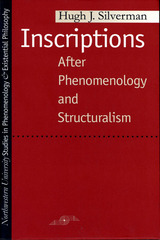
In Inscriptions, Hugh J. Silverman investigates two divergent yet related philosophical movements: phenomenology from the later Husserl through Sartre and Heidegger to Merleau-Ponty, and structuralism from de Saussure through Levi-Strauss and Lacan to Barthes. This reading of the tradition culminates in an assessment of Derrida and Foucault. From this foundation, Silverman moves beyond structuralism and phenomenology, and develops his own philosophical position in the context of semiotics, hermeneutics, and deconstruction. A new preface by the author updates this classic text.
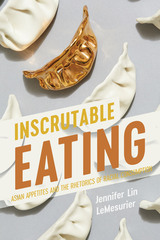
“You are what you eat,” but what if you’re seen as a rat eater, bat lover, or MSG user? In Inscrutable Eating, Jennifer Lin LeMesurier considers how everyday assumptions about Asian food influence the perception of Asian and Asian American identity within the US racial landscape, demonstrating that beliefs about how certain people eat are inseparable from attitudes that support hierarchies around race, gender, and sexuality. Drawing on rhetorical theory, affect theory, and Asian American studies, LeMesurier analyzes messages in US popular culture about Asian eating to develop the concept of gut orientations: rhetorically dominant ways of interacting with food that scale upward to feelings of desire and disgust toward social groups. Looking at examples from fears around MSG to uproar over wet markets as the source of COVID-19, she argues that these “gut” reactions establish certain racial views as common-sense truths rather than cultural biases, reinforcing dominant norms about what belongs on whose plate, or who belongs at what table. In demystifying marginalizing discourse around food and eating, LeMesurier shows how exposing the tacit, felt ideas of consumption is necessary to contest broader forms of discrimination.
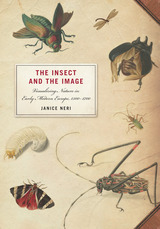
Once considered marginal members of the animal world (at best) or vile and offensive creatures (at worst), insects saw a remarkable uptick in their status during the early Renaissance. This quickened interest was primarily manifested in visual images—in illuminated manuscripts, still life paintings, the decorative arts, embroidery, textile design, and cabinets of curiosity. In The Insect and the Image, Janice Neri explores the ways in which such imagery defined the insect as a proper subject of study for Europeans of the early modern period.
It was not until the sixteenth century that insects began to appear as the sole focus of paintings and drawings—as isolated objects, or specimens, against a blank background. The artists and other image makers Neri discusses deployed this “specimen logic” and so associated themselves with a mode of picturing in which the ability to create a highly detailed image was a sign of artistic talent and a keenly observant eye. The Insect and the Image shows how specimen logic both reflected and advanced a particular understanding of the natural world—an understanding that, in turn, supported the commodification of nature that was central to global trade and commerce during the early modern era.
Revealing how sixteenth- and seventeenth-century artists and image makers shaped ideas of the natural world, Neri’s work enhances our knowledge of the convergence of art, science, and commerce today.
Insects inhabit an often unexamined microcosmos, pursuing lives that are often strange beyond our wildest imaginings. From the dawn of humanity, our six-legged fellow Earthlings have repelled and enthralled us. Humans have exterminated, eaten, domesticated, and even excommunicated insects. We collect them, we curse them, and we have penned a surprising body of literature about them.
Insect Lives: Stories of Mystery and Romance from a Hidden World offers an entertaining and informative survey of the human fascination, dreadful and otherwise, with insects diabolical and divine, from accounts in the Bible and Aristotle to the writings of Charles Darwin and the great nineteenth-century naturalists sending home accounts from the rain forest. Highlighted here are observations from E. O. Wilson, Jean-Henri Fabré, David Quammen, May Berenbaum, Roger Swain, William Wordsworth, A. S. Byatt, Gary Larson and more than sixty other writers who tell of the mystery and romance of that other, hidden world beneath our feet and beyond our rolled-up newspapers.

Through close engagement with the pioneering work of insect ethologists, including Jakob von Uexküll and Karl von Frisch, posthumanist philosophers, media theorists, and contemporary filmmakers and artists, Parikka develops an insect theory of media, one that conceptualizes modern media as more than the products of individual human actors, social interests, or technological determinants. They are, rather, profoundly nonhuman phenomena that both draw on and mimic the alien lifeworlds of insects.
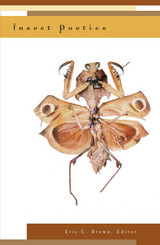
In Insect Poetics, the first book to comprehensively explore the cultural and textual meanings of bugs, editor Eric Brown argues that insects are humanity’s “other.” In order to be experienced, the insect world must be mediated by art or technology (as in the case of an ant farm or Kafka’s Metamorphoses) while humans observe, detached and fascinated.
In eighteen original essays, this book illuminates the ways in which our human intellectual and cultural models have been influenced by the natural history of insects. Through critical readings contributors address such topics as performing insects in Shakespeare’s Coriolanus, the cockroach in the contemporary American novel, the butterfly’s “voyage out” in Virginia Woolf, and images of insect eating in literature and popular culture. In surprising ways, contributors tease out the particularities of insects as cultural signifiers and propose ways of thinking about “insectivity,” suggesting fertile cross-pollinations between entomology and the arts, between insects and the humanities.
Contributors: May Berenbaum, Yves Cambefort, Marion W. Copeland, Nicky Coutts, Bertrand Gervais, Sarah Gordon, Cristopher Hollingsworth, Heather Johnson, Richard J. Leskosky, Tony McGowan, Erika Mae Olbricht, Marc Olivier, Roy Rosenstein, Rachel Sarsfield, Charlotte Sleigh, Andre Stipanovic.
Eric C. Brown is assistant professor of English at the University of Maine at Farmington. He has written previously about insects and eschatology in Edmund Spenser’s Muiopotmos.

The insects are the world's most amazing animals and comprise over eighty-five percent of the known animal species. Insects of the Great Lakes Region is the first comprehensive guide to document the rich and diverse insect fauna of the Great Lakes region. In Insects of the Great Lakes Region, educators, insect enthusiasts, and the general public will find high-quality, well-presented, easy-to-understand information with over 250 illustrations of the insects found in yards, gardens, fields, and forests. Among the topics discussed are the geological, biological, and entomological history of the Great Lakes region, the distributional patterns of insects in the Great Lakes region, and insect classification and identification. Appendixes guide the reader to entomological organizations, entomological periodicals, public insect collections, regulations on collecting insects from public lands in the Great Lakes region, as well as rare, threatened, and endangered insects. This guide shows the amateur entomologist everything he needs to know, from where to collect milkweed bugs to how often to feed his pet tarantula.
Gary Dunn is Executive Director and Editor, Young Entomologists' Society, Inc., International Headquarters, Lansing, Michigan.

READERS
Browse our collection.
PUBLISHERS
See BiblioVault's publisher services.
STUDENT SERVICES
Files for college accessibility offices.
RECENTLY PUBLISHED



UChicago Accessibility Resources
home | accessibility | search | about | contact us
BiblioVault ® 2001 - 2025
The University of Chicago Press