
 A SCHOLARLY BOOK REPOSITORY
Despite the marked influence of Chinese poetry on that of the West in modern times, this book is the first full-length critical study of any major period of Chinese poetry to appear in a Western language. The period here dealt with is neither ancient China nor the medieval T’ang dynasty, from which the most numerous and most familiar previous translations have been drawn, but the era of the Sung dynasty (960–1279), of which the culture and thought were much more complex and “modern.”
The West is fairly familiar with many aspects of Sung civilization—the superb paintings and porcelains, the political and economic experiments, the philosophy of Neo-Confucianism. One vital manifestation of the Sung spirit has remained little studied—its enormous corpus of poetry. Though poets were far more numerous and prolific than their predecessors in any period of Chinese history, only the most famous of them, Su Tung-p’o, has been extensively written about and translated. In recent years attention has been paid to the tz’u lyrics of this period, but Sung accomplishments in the traditional shih form, which remained dominant, have been too long overshadowed by the brilliant T’ang poets who brought this form to classical perfection.
Though often taking its inspiration from T’ang poetry, Sung verse at its best is no mere imitation of its predecessors but a distinct literary development, exploring directions which T’ang writers had shunned or ignored, and striving deliberately for new effects and values. The most significant Sung poets were closer to concerns of daily life and society as a whole; they expressed a wider if less intense view of life and were more explicit in their philosophical ideas. They often had a more astringent, more “modern” tone, and in their diction some made use of colloquialisms and even slang. There may be found deliberate juxtapositions of classicism and vulgarity suggestive of a Laforgue or Eliot.
Kojiro Yoshikawa, one of the world’s outstanding scholars of Chinese literature, begins with an introduction describing the Sung cultural and literary milieu and the salient characteristics of the poetry it produced. He proceeds to discussions of the various schools and of individual poets both major and minor, pointing out their influences on each other. Numerous poems are cited throughout—many here appearing in English for the first time—to illustrate literary, biographical, or social points.
The author wrote this recent study for the Japanese public—which, although more familiar with Chinese poetry than most Western readers, generally needs more explication and background than Chinese scholars give in a book of this sort for their own people. It is thus particularly useful in a version accessible to non-Asians.
An Introduction to Sustainable Development presents the concept and practice of sustainable development as a process that meets the needs of the present generation without compromising the ability of future generations to meet their own needs. This textbook examines the environmental, economic, and social dimensions of sustainable development by focusing on changing patterns of consumption, production, and distribution of resources.
The impact of globalization and the role of the private sector including multinational corporations are discussed. Case materials include domestic and international initiatives and projects; protection of coastal wetlands; development of community-based water supply and sanitation systems; sustainable energy, forest, and industrial development.
A primer and workbook designed either for classroom use or for individual study. The work concentrates on grammar and syntax in the Latin used by Emanuel Swedenborg (1688-1772). It contains brief Latin-English and English-Latin glossaries.

This book is a no-apologies introduction to Detective Fiction. It's written in an aggressive, modern English well-suited to a genre which has traditionally broken ground in terms of aggressive writing, contemporary scenarios, and tough dialogue.
The most influential work on Buddhism to be published in the nineteenth century, Introduction à l’histoire du Buddhisme indien, by the great French scholar of Sanskrit Eugène Burnouf, set the course for the academic study of Buddhism—and Indian Buddhism in particular—for the next hundred years. First published in 1844, the masterwork was read by some of the most important thinkers of the time, including Schopenhauer and Nietzsche in Germany and Emerson and Thoreau in America.
Katia Buffetrille and Donald S. Lopez Jr.’s expert English translation, Introduction to the History of Indian Buddhism, provides a clear view of how the religion was understood in the early decades of the nineteenth century. Burnouf was an impeccable scholar, and his vision, especially of the Buddha, continues to profoundly shape our modern understanding of Buddhism. In reintroducing Burnouf to a new generation of Buddhologists, Buffetrille and Lopez have revived a seminal text in the history of Orientalism.
This comprehensive linguistic survey of the Indo-European groups synthesizes the vast amount of information contained in the specialized handbooks of the individual stocks.
The text begins with an introduction to the concept of the Indo-European language family, the history of its discovery, and the techniques of analysis. The introduction also gives a structural sketch of Proto-Indo-European, the parent language from which the others are descended. Baldi then devotes a chapter to each of the 11 major branches of Indo-European (Italic, Celtic, Indo-Iranian, Greek, Armenian, Albanian, Baltic, Slavic, Germanic, Tocharian, and Anatolian).
Each chapter provides an outline of the external history of the branch, its people, dialects, and other relevant history. This outline is followed by a structural sketch of the most important language or languages of the branch (e.g., Old Irish for Celtic, Sanskrit and Avestan for Indo-Iranian, Latin and Osco-Umbrian for Italic). The sketch also contains the phonology, morphology, and syntax of each language. There is lastly a sample text of each language containing both interlinear and free translation. In those branches where there are special issues (e.g., the relation of Italic to Celtic and Baltic to Slavic, or the problem of archaism in Hittite), additional discussions of these issues are provided. Baldi’s final chapter gives a brief outline of the “minor” Indo-European languages such as Illyrian, Thracian, Raetic, and Phrygian. Adding further to the usefulness of the book are extensive bibliographies, an up-to-date map showing the geographical distribution of the Indo-European languages throughout the world, and a detailed family tree diagram of the members of each subgroup within the Indo-European language family and their interrelationships.
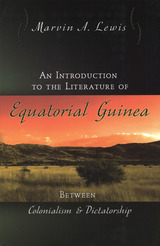
Spain’s only former colony in sub-Saharan Africa, Equatorial Guinea is home to a literature of transition—songs of freedom in which authors reflect on their identity within the context of recent colonialism and dictatorship.
An Introduction to the Literature of Equatorial Guinea is the first book-length critical study of this literature, a multigenre analysis encompassing fifty years of poetry, drama, essays, and prose fiction. Both resident and exiled authors offer insights into the impact of colonialism and dictatorship under Spanish rule and consider the fruits of “independence” under the regimes of Francisco Macías Nguema and Teodoro Obiang Nguema. Examining these works from the perspective of postcolonial theory, Marvin A. Lewis shows how writings from Equatorial Guinea depict the clash of traditional and European cultures and reflect a dictatorship that produced poverty, misery, and oppression. He assesses with particular care the impact of the Macías reafricanization process and its manifestations in literature.
In showing how the views of the nation correspond and diverge in works of writers such as Maria Nsue Angue, Donato Ndongo-Bidyogo, and Juan Tomás Ávila Laurel, Lewis brings to light artists who articulate their concerns in Spanish but are African in their souls. In analyzing the works of both renowned and emerging writers, he marks the themes that contribute to the formation of national identity: Hispanic heritage, the myth of Bantu unity, “bonding in adversity” during the Nguema regime, and the Equatoguinean diaspora.
Lewis provides an accessible introduction to the work of central writers in a new area of literary study and includes the most exhaustive and up-to-date bibliography available on the subject. His is a groundbreaking work that broadens our understanding of African literature and will be the bedrock for future studies of this Hispanic corner of Africa.

This book introduces the study and application of performance art through phenomenology, inviting readers to explore contemporary performance art and activate their own practices. Using queer phenomenology to unpack the importance of a multiplicity of self/s, the book teaches readers how to be academically rigorous when capturing embodied experiences. Through approachable exercises, definitions of key phenomenological terms, and interviews and insights from some of the best examples of transgressive performance art practice, the work enriches the wider scholarship of theater studies. Situated within contemporary phenomenological scholarship, the book will appeal to radical artists, educators, and practitioner-researchers.
Listen to the open source audio companion to this book:
An Introduction to the Shoshoni Language Chapter 1
An Introduction to the Shoshoni Language Chapter 2
An Introduction to the Shoshoni Language Chapter 3
An Introduction to the Shoshoni Language Chapter 4
An Introduction to the Shoshoni Language Chapter 5
An Introduction to the Shoshoni Language Chapter 6
An Introduction to the Shoshoni Language Chapter 7
An Introduction to the Shoshoni Language Chapter 8

Authors Stokes and Smiley first explain the basic principles of tree-ring dating, then describe details of the process, step by step, from the time a sample is collected until it is incorporated into a master chronology.
The book focuses on coniferous evergreens of the Southwest, particularly piñons, because they have wide geographic distribution, constitute a large population, and show excellent growth response to certain controlling factors. The book is specifically concerned with the task of establishing a calendar date for a wood or charcoal specimen.
This concise but thorough explication of an important discipline will make dendrochonology more meaningful to students and professionals in archaeology, forestry, hydrology, and global change.
This is an introduction to Vatican II with a detailed summary of each of its four central documents—the dogmatic constitutions—followed by explanations of how to interpret them. In contrast to other introductions, which pay little attention to the theological soil in which the documents of Vatican II germinated, Levering offers a reading of each conciliar Constitution in light of a key theological author from the era: René Latourelle, SJ for Dei Verbum (persons and propositions); Louis Bouyer, CO for Sacrosanctum Concilium (active participation); Yves Congar, OP for Lumen Gentium (true and false reform); and Henri de Lubac, SJ for Gaudium et Spes (nature and grace).
This theological event is “ongoing,” Levering demonstrates, by tracing in each chapter the theological debates that have stretched from the close of the council till the present, and the difficulties the Church continues to encounter in encouraging an ever deeper participation in Jesus Christ on the part of all believers. In this light, the book’s final chapter compares the historicist (Massimo Faggioli) and Christological (Robert Imbelli) interpretations of Vatican II, arguing that historicism can undermine the Council’s fundamental desire for a reform and renewal rooted in Christ. The conclusion addresses the concerns about secularization and loss of faith raised after the Council by Henri de Lubac, Joseph Ratzinger, and Yves Congar, arguing that contemporary Vatican II scholarship needs to take these concerns more seriously.

This fascinating examination of the development of virtue ethics in the early stages of western civilization deals with a wide range of philosophers and schools of philosophy—from Socrates and the Stoics to Plato, Aristotle, and the Epicureans, among others. This introduction examines those human attributes that we have come to know as the "stuff" of virtue: desire, happiness, the "good," character, the role of pride, prudence, and wisdom, and links them to more current or modern conceptions and controversies.
The tension between viewing ethics and morality as fundamentally religious or as fundamentally rational still runs deep in our culture. A second tension centers on whether we view morality primarily in terms of our obligations or primarily in terms of our desires for what is good. The Greek term arete, which we generally translate as "virtue," can also be translated as "excellence." Arete embraced both intellectual and moral excellence as well as human creations and achievements. Useful, certainly, for classrooms, Virtue Ethics is also for anyone interested in the fundamental question Socrates posed, "What kind of life is worth living?"

This is a textbook for the standard undergraduate econometrics course. Its only prerequisites are a semester course in statistics and one in differential calculus. Arthur Goldberger, an outstanding researcher and teacher of econometrics, views the subject as a tool of empirical inquiry rather than as a collection of arcane procedures. The central issue in such inquiry is how one variable is related to one or more others. Goldberger takes this to mean "How does the average value of one variable vary with one or more others?" and so takes the population conditional mean function as the target of empirical research.
The structure of the book is similar to that of Goldberger's graduate-level textbook, A Course in Econometrics, but the new book is richer in empirical material, makes no use of matrix algebra, and is primarily discursive in style. A great strength is that it is both intuitive and formal, with ideas and methods building on one another until the text presents fairly complicated ideas and proofs that are often avoided in undergraduate econometrics.
To help students master the tools of econometrics, Goldberger provides many theoretical and empirical exercises and real micro-and macroeconomic data sets. The data sets, available for download at www.hup.harvard.edu/features/golint/, deal with earnings and education, money demand, firm investment, stock prices, compensation and productivity, and the Phillips curve.
THE DATA SETS CAN BE FOUND HERE.
What led to the Fourth Amendment’s protection of the people against unreasonable searches and seizures, codified in written law for the first time in history, and are we in danger of losing that protection? Celebrated lawyer Samuel Dash, known for his role as Chief Counsel of the Watergate Committee, explores the struggle for privacy. He does so by telling the dramatic tales of the people who were involved in influential legal battles, including landmark Supreme Court cases.
Covering almost eight-hundred years of history, Dash begins with the time of King John of England and the Magna Carta, then moves to colonial America as colonists resisted searches mandated under King George. These tensions contributed to the birth of the United States and the adoption of our Bill of Rights with its Fourth Amendment, protecting people against unreasonable searches and seizures.
How effective that protection has been is the story of the next two centuries. Dash explores U.S. Supreme Court cases through the sometimes humorous experiences of the people involved, including the unlucky gambler with a shoplifting wife and the police lieutenant turned king of bootleggers. To some extent, judicial safeguarding of Fourth Amendment protections depended on who made up the majority of the Court at any given time.
By 2001 a conservative majority of the Court had given law enforcement agents greater search powers than ever before. Dash challenges the legal justification of the Bush Administration’s grab for greater search, seizure, and wiretap powers after the 9/11 terrorists’ attacks. He reminds us of government abuses of power in prior emergencies in American history. For Dash, the best security is our belief in individual liberty and the enforcement of our Bill of Rights.
Winner of the 2018 Hollis Summers Poetry Prize
Joseph J. Capista’s Intrusive Beauty reckons with reluctant ecstasy and the improbable forms that beauty assumes. In this powerful debut, Capista traverses earth and ether to yield poems that elucidate the space between one’s life and one’s livelihood. While its landscapes range from back-alley Baltimore to the Bitterroot Valley, this book remains close to unbidden beauty and its capacity to sway one’s vision of the world. Whether a young father who won’t lower the volume on the radio or a Victorian farm boy tasked with scaring birds from seed-sown furrows, the inhabitants of Intrusive Beauty are witness to the startling ease with which one’s assorted lives come in time to comprise a singular life. Mortality, love, duty, desire, an acute longing for transcendence: here, old themes resound anew as they’re uttered in a multiplicity of forms and means, holding fast always to the heart.
Intuition is central to discussions about the nature of scientific and philosophical reasoning and what it means to be human. In this bold and timely book, Hillel D. Braude marshals his dual training as a physician and philosopher to examine the place of intuition in medicine.
Appearing in English for the first time, Intuition of the Instant—Bachelard’s first metaphysical meditation on time and its moral implications—was written in 1932 in the wake of Husserl’s lectures on streaming time-consciousness, Heidegger’s Being and Time, and Henri Bergson’s philosophy of the élan vital. A culmination of Bachelard’s earlier studies in scientific epistemology, this work builds the epistemic framework that would lead theorists of all stripes to advance knowledge by breaking with accepted modes of thought. Intuition of the Instant sows the seeds of Bachelard’s future poetics, most notably in the essay “Poetic Instant and Metaphysical Instant” (1939)—included in this volume, along with an excerpt from Jean Lescure’s lecture “Introduction to Bachelard’s Poetics” (1966). Eileen Rizo-Patron’s translation offers a key to Bachelard’s subsequent works on science, time, and imagination, which remain epistemological touchstones.

A Times Higher Education Book of the Week
Approximately 200,000 years ago, as modern humans began to radiate out from their evolutionary birthplace in Africa, Neanderthals were already thriving in Europe—descendants of a much earlier migration of the African genus Homo. But when modern humans eventually made their way to Europe 45,000 years ago, Neanderthals suddenly vanished. Ever since the first Neanderthal bones were identified in 1856, scientists have been vexed by the question, why did modern humans survive while their closest known relatives went extinct?
“Shipman admits that scientists have yet to find genetic evidence that would prove her theory. Time will tell if she’s right. For now, read this book for an engagingly comprehensive overview of the rapidly evolving understanding of our own origins.”
—Toby Lester, Wall Street Journal
“Are humans the ultimate invasive species? So contends anthropologist Pat Shipman—and Neanderthals, she opines, were among our first victims. The relationship between Homo sapiens and Homo neanderthalensis is laid out cleanly, along with genetic and other evidence. Shipman posits provocatively that the deciding factor in the triumph of our ancestors was the domestication of wolves.”
—Daniel Cressey, Nature
Using an array of primary sources, Maria Frawley here constructs a cultural history of invalidism. She describes the ways that Evangelicalism, industrialization, and changing patterns of doctor/patient relationships all converged to allow a culture of invalidism to flourish, and explores what it meant for a person to be designated—or to deem oneself—an invalid. Highlighting how different types of invalids developed distinct rhetorical strategies, her absorbing account reveals that, contrary to popular belief, many of the period's most prominent and prolific invalids were men, while many women found invalidism an unexpected opportunity for authority.
In uncovering the wide range of cultural and social responses to notions of incapacity, Frawley sheds light on our own historical moment, similarly fraught with equally complicated attitudes toward mental and physical disorder.

Recent scientific advances have placed many traditional philosophical concepts under great stress. In this pathbreaking book, the eminent philosopher Robert Nozick rethinks and transforms the concepts of truth, objectivity, necessity, contingency, consciousness, and ethics. Using an original method, he presents bold new philosophical theories that take account of scientific advances in physics, evolutionary biology, economics, and cognitive neuroscience, and casts current cultural controversies (such as whether all truth is relative and whether ethics is objective) in a wholly new light. Throughout, the book is open to, and engages in, the bold exploration of new philosophical possibilities.
Philosophy will never look the same. Truth is embedded in space-time and is relative to it. However, truth is not socially relative among human beings (extraterrestrials are another matter). Objective facts are invariant under specified transformations; objective beliefs are arrived at by a process in which biasing factors do not play a significant role. Necessity's domain is contracted (there are no important metaphysical necessities; water is not necessarily H2O) while the important and useful notion of degrees of contingency is elaborated. Gradations of consciousness (based upon "common registering") yield increasing capacity to fit actions to the world. The originating function of ethics is cooperation to mutual benefit, and evolution has instilled within humans a "normative module": the capacities to learn, internalize, follow norms, and make evaluations. Ethics has normative force because of the connection between ethics and conscious self-awareness. Nozick brings together the book's novel theories to show the extent to which there are objective ethical truths.
The Invasion, a novel originally published in 1932, marked the debut of historical novelist Janet Lewis, who went on to write numerous poems and short stories as well as the novels The Wife of Martin Guerre and The Trial of Soren Quist. Lewis grew up in the Lake country of the Old Northwest and The Invasion is based on family stories she heard as a child.The Invasion displays well-researched historical accuracy, an innate understanding of and feeling for Native American culture enhanced by the author's fluency in the Ojibway language, and an economy of style that is remarkable for a first novel.
In 1790, John Johnston, a cultivated young Irishman, came to the far corner of the Northwest Territory to make his fortune intending to spend only a year. Instead he married Ozhah-guscoday- wayquay (The Woman of the Glade), daughter of the Ojibway chief Waub- ojeeg, and settled on the St. Mary's River. Together they founded a family that was loved, respected, and famous throughout the region for honesty, fairness, and hospitality. Their home was the center of culture for the area and for every visiting traveler, Native American or white. The Invasion chronicles a time when one culture violently supplanted another even as it depicts a family that blends two cultures together.
Henry Rowe Schoolcraft considered the Johnston family his most valued connection to the Native American population. He eventually married Jane Johnston, daughter of John and The Woman of the Glade, and remain close to her entire family. In his diary, Schoolcraft wrote of the Johnstons, "I have in fact stumbled, as it were, on the only family in Northwest America who could in Indian lore have acted as my guide, philosopher, and friend."
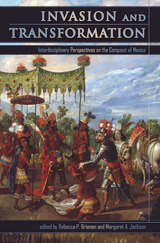
Was Moteuczoma really as weak as history portrayed him? As Susan D. Gillespie instead suggests in "Blaming Moteuczoma," the representation of Moteuczoma as a scapegoat for the Aztec defeat can be understood as a product of indigenous resistance and accommodation following the imposition of Spanish colonialism. Chapters address the various roles (real and imagined) of Moteuczoma, Cortés, and Malinche in the fall of the Aztecs; the representation of history in colonial art; and the complex cultural transformations that actually took place.
Including full-color reproductions of seventeenth-century paintings of the Conquest, Invasion and Transformation will appeal to scholars and students of Latin American history and anthropology, art history, colonial literature, and transatlantic studies. Contributors include Rebecca P. Brienen, Louise M. Burkhart, Ximena Chávez Balderas, Constance Cortez, Viviana Diáz Balsera, Martha Few, Susan D. Gillespie, Margaret A. Jackson, Diana Magaloni Kerpel, Matthew Restall, Michael Schreffler.

In The Invasion of Indian Country in the 20th Century, Donald Fixico details the course of this struggle, providing a wealth of information on the resources possessed by individual tribes and the way in which they were systematically defrauded and stripped of these resources. Fixico contends that federal policies originally devised to protect Indian interests ironically worked against the Indian nations as the tribes employed new tactics with the Council of Energy Resources Tribes, using the law in courts and applying aggressive business leadership to combat the capitalist invasion by mainstream America.
Fixico's analysis of this war being waged throughout the century and today serves as an indispensable reference tool for anyone interested in Native American history and current government policy with regard to Indian lands.

In 1913, the Peter Bent Brigham Hospital in Boston admitted its first patient, Mary Agnes Turner, who suffered from varicose veins in her legs. The surgical treatment she received, under ether anesthesia, was the most advanced available at the time. At the same hospital fifty years later, Nicholas Tilney—then a second-year resident—assisted in the repair of a large aortic aneurysm. The cutting-edge diagnostic tools he used to evaluate the patient’s condition would soon be eclipsed by yet more sophisticated apparatus, including minimally invasive approaches and state-of-the-art imaging technology, which Tilney would draw on in pioneering organ transplant surgery and becoming one of its most distinguished practitioners.
In Invasion of the Body, Tilney tells the story of modern surgery and the revolutions that have transformed the field: anesthesia, prevention of infection, professional standards of competency, pharmaceutical advances, and the present turmoil in medical education and health care reform. Tilney uses as his stage the famous Boston teaching hospital where he completed his residency and went on to practice (now called Brigham and Women's). His cast of characters includes clinicians, support staff, trainees, patients, families, and various applied scientists who push the revolutions forward.
While lauding the innovations that have brought surgeons' capabilities to heights undreamed of even a few decades ago, Tilney also previews a challenging future, as new capacities to prolong life and restore health run headlong into unsustainable costs. The authoritative voice he brings to the ancient tradition of surgical invasion will be welcomed by patients, practitioners, and policymakers alike.

When the first television was demonstrated in 1927, a headline in The New York Times read, “Like a Photo Come to Life.” It was a momentous occasion. But the power of television wasn’t fully harnessed until the 1950s, when the medium was, as Eric Burns says, “At its most preoccupying, its most life-altering.” And Burns, a former NBC News correspondent who is an Emmy-winner for his broadcast writing, knows about the impact of television.
Invasion of the Mind Snatchers chronicles the influence of television that was watched daily by the baby boomer generation. As kids became spellbound by Howdy Doody and The Ed Sullivan Show, Burns reveals, they often acted out their favorite programs. Likewise, they purchased the merchandise being promoted by performers, and became fascinated by the personalities they saw on screen, often emulating their behavior. It was the first generation raised by TV and Burns looks at both the promise of broadcasting as espoused by the inventors, and how that promise was both redefined and lost by the corporations who helped to spread the technology.
Yet Burns also contextualizes the social, cultural, and political events that helped shape the Fifties—from Sputnik and the Rosenberg trial to Senator Joseph McCarthy’s Red Scare. In doing so, he charts the effect of television on politics, religion, race, and sex, and how the medium provided a persuasive message to the young, impressionable viewers.

The American War for Independence was fought in nearly every colony, but some colonies witnessed far more conflict than others. In the first half of the war, the bulk of military operations were concentrated in Massachusetts, New York, New Jersey, and Pennsylvania. A shift in British strategy southward after the Battle of Monmouth in 1778 triggered numerous military engagements in 1779 and 1780 in Georgia and the Carolinas.Surprisingly, Virginia, the largest of the original thirteen colonies, saw relatively little fighting for the first six years of the Revolutionary War. This changed in 1781 when British and American forces converged on Virginia. The war’s arrival did not result from one particular decision or event, but rather, a series of incidents and battles beginning in the fall of 1780 at Kings Mountain, South Carolina.
Benedict Arnold’s sudden appearance in Virginia in early 1781 with 1,600 seasoned British troops and his successful raid up the James River to Richmond and subsequent occupation of Portsmouth, demonstrated Virginia’s vulnerability to attack and the possibility that the colonies could be divided and subdued piecemeal, a strategy Britain had attempted to deploy several times earlier in the war. British General Henry Clinton’s decision to reinforce Arnold in Virginia expanded Britain’s hold on the colony while events in North Carolina, including the battle of Guilford Court House, led British General Charles Cornwallis to conclude that defeating the Patriots in Virginia was the key to ending the war. As a result, Cornwallis marched his army north in May 1781 to assume command of what was now a very powerful British force of over 7,000 troops. The war had returned to Virginia with a vengeance, and how it did so and what happened as a result is the focus of The Invasion of Virginia 1781.

Invasive alien species are among today's most daunting environmental threats, costing billions of dollars in economic damages and wreaking havoc on ecosystems around the world. In 1997, a consortium of scientific organizations including SCOPE, IUCN, and CABI developed the Global Invasive Species Programme (GISP) with the explicit objective of providing new tools for understanding and coping with invasive alien species.
Invasive Alien Species is the final report of GISP's first phase of operation, 1997-2000, in which authorities from more than thirty countries worked to examine invasions as a worldwide environmental hazard. The book brings together the world's leading scientists and researchers involved with invasive alien species to offer a comprehensive summary and synthesis of the current state of knowledge on the subject.
Invasive alien species represent a critical threat to natural ecosystems and native biodiversity, as well as to human economic vitality and health. The knowledge gained to date in understanding and combating invasive alien species can form a useful basis on which to build strategies for controlling or minimizing the effects in the future. Invasive Alien Species is an essential reference for the international community of investigators concerned with biological invasions.

The book brings together contributors from academia, government, and nonprofit organizations, including such experts as Gary Paul Nabhan, Richard Mack, and Alberto Búrquez-Montijo. They review historic and even prehistoric origins of non-native species—not only exotic plants, amphibians, and mammals but also insects, fish, and birds. They then examine significant problems in each major subregion and ecosystem and discuss control efforts. The volume contains the first compiled list of more than 500 naturalized exotic species in the Sonoran region. Invasive species issues are rapidly emerging as major environmental concerns both locally and worldwide. This book assists professionals—ecologists, conservation biologists, and policy makers—involved in invasive species control in the Southwest and will be a rich resource for all concerned with protecting native species and their habitats.
Invasive plants are a growing threat to ecosystems everywhere. Often originating in distant climes, they spread to woodlands, wetlands, prairies, roadsides, and backyards that lack the biological controls which kept these plant populations in check in their homelands.
Invasive Plants of the Upper Midwest includes more than 250 color photos that will help anyone identify problem trees, shrubs, vines, grasses, sedges, and herbaceous plants (including aquatic invaders). The text offers further details of plant identification; manual, mechanical, biological, and chemical control techniques; information and advice about herbicides; and suggestions for related ecological restoration and community education efforts. Also included are literature references, a glossary, a matrix of existing and potential invasive species in the Upper Midwest, an index with both scientific and common plant names, advice on state agencies to contact with invasive plant questions, and other helpful resources.
The information in this book has been carefully reviewed by staffs of the Wisconsin Department of Natural Resources Bureau of Endangered Resources and the University of Wisconsin-Madison Arboretum and other invasive plant experts.

Invasive Species in a Changing World brings together leading scientists from around the world -- including Carla M. D'Antonio, Jeffrey McNeely, Robert Sutherst, David Richardson, and others -- to examine the invasive species phenomenon and to consider the mutual interactions between global change and invasives that are likely to occur over the next century. Invasive Species in a Changing World: offers a comprehensive look at the status of freshwater, marine, and terrestrial ecosystems in relation to invasives; examines physical factors that will influence the future success ofinvading species; considers the tools available to track changing patterns and movements; looks at human dimensions including human health effects, and effects on crops; describes the problem in different parts of the world.
Contributors focus on the proposition that global change will exacerbate the invasive species problem, and set forth the idea that invasives are themselves a global change element that need to be considered in global change scenarios.
Invasive Species in a Changing World provides readers with the background and knowledge they need to begin developing strategies to combat the invasive species problem, and is essential reading for anyone concerned with the impact of invasive species on ecosystem health and functioning.
Yet even though ecological research has led to public conversation and policy recommendations, those recommendations have frequently been ignored, and the efforts to counter invasive species have been largely unsuccessful. Recognizing the need to engage experts across the life, social, and legal sciences as well as the humanities, the editors of this volume have drawn together a wide variety of ecologists, historians, economists, legal scholars, policy makers, and communications scholars, to facilitate a dialogue among these disciplines and understand fully the invasive species phenomenon. Aided by case studies of well-known invasives such as the cane toad of Australia and the emerald ash borer, Asian carp, and sea lampreys that threaten US ecosystems, Invasive Species in a Globalized World offers strategies for developing and implementing anti-invasive policies designed to stop their introduction and spread, and to limit their effects.

Recent years have seen a steep rise in invasions of non-native species in virtually all major ecoregions on Earth. Along with this rise has come a realization that a rigorous scientific understanding of why, how, when, and where species are transported is the necessary foundation for managing biological invasions.
Invasive Species presents extensive information and new analyses on mechanisms of species transfer, or vectors, as the latest contribution from the Global Invasive Species Programme (GISP). Contributors assess invasion vectors and vector management in terrestrial, freshwater, and marine ecosystems for major taxonomic groups in a variety of regions around the world. The book:
- examines invasion causes, routes, and vectors in space and time
- highlights current approaches and challenges to preventing new invasions, both from a geographic and taxonomic point of view
- explores strategies, benefits, and limitations of risk assessment
- offers a synthesis of many facets of vector science and management
- presents recommendations for action
Chapter authors review fungi, plants, invertebrates, and vertebrates, with geographic assessments covering New Zealand, Australia, South Africa, and the United States.
Although the full extent and cumulative impact of nonnative species can only be approximated, biological invasions are clearly a potent force of global change, contributing to a wide range of deleterious effects including disease outbreaks, habitat alteration and loss, declines of native species, increased frequency of fires, and shifts in nutrient cycling. Vectors are the delivery mechanisms, resulting in recent increases in rates of new invasions. Invasive Species brings together in a single volume new information from leading scientists around the world on approaches to controlling and managing invasion vectors. This volume is a timely and essential reference for scientists, researchers, policymakers, and anyone concerned with understanding biological invasions and developing effective responses to them.


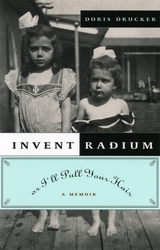
Rothschilds and radium were the horizons of Doris's childhood. Born in Germany in the early twentieth century, she came of age in an upper-middle-class family that struggled to maintain its bourgeois respectability between the two World Wars. Doris Drucker (she met her husband Peter—of management fame—in the 1930s) has penned a lively and charming memoir that brings to life the Germany of her childhood. Rather than focusing on the rise of Hitler, Drucker weaves history into her story of the day-to-day life of a relatively apolitical family. She chronicles here the crowds that gathered to see the Zeppelin, her attempts to negotiate her Prussian mother's plans for her (like marrying well and becoming a famous scientist), ski trips and hikes, the schools she attended, her father's struggles to support the family, and all the stuff and drama that make up a childhood. Drucker's energetic storytelling, eye for the telling detail, and sly humor draw the reader into her portrait of a way of life made forever poignant by its place in history so close to the brutalities of World War II.
From the boarding school that forbade girls to look at their own legs while they bathed to the unfortunate confusion that resulted from Doris's misinterpretation of "Warsaw has fallen" as "The Waschfrau [washerwoman] has fallen," the tales recounted in Invent Radium or I'll Pull Your Hair give dimension and depth to a milieu that has been flattened by the historical events around it.
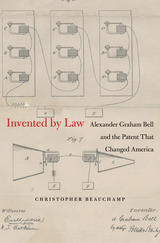
Alexander Graham Bell’s invention of the telephone in 1876 stands as one of the great touchstones of American technological achievement. Bringing a new perspective to this history, Invented by Law examines the legal battles that raged over Bell’s telephone patent, likely the most consequential patent right ever granted. To a surprising extent, Christopher Beauchamp shows, the telephone was as much a creation of American law as of scientific innovation.
Beauchamp reconstructs the world of nineteenth-century patent law, replete with inventors, capitalists, and charlatans, where rival claimants and political maneuvering loomed large in the contests that erupted over new technologies. He challenges the popular myth of Bell as the telephone’s sole inventor, exposing that story’s origins in the arguments advanced by Bell’s lawyers. More than anyone else, it was the courts that anointed Bell father of the telephone, granting him a patent monopoly that decisively shaped the American telecommunications industry for a century to come. Beauchamp investigates the sources of Bell’s legal primacy in the United States, and looks across the Atlantic, to Britain, to consider how another legal system handled the same technology in very different ways.
Exploring complex questions of ownership and legal power raised by the invention of important new technologies, Invented by Law recovers a forgotten history with wide relevance for today’s patent crisis.

Skin is unique to each individual. Acting as a record, it details aspects of a person and a collective memory. Each skin possesses a sensitivity that touches and it is touched by the world. It mediates temperature fluctuations and is marked by cuts, accidents, and its own history. Skin marks us in the world, giving us the outline of individuals. Invented Skins focuses on the skin to consider the social dimension of texts and images throughout cultural memory, showing that skin is a biological reality that occupies a physical and psychic space but also unfolds in the imagination.

Woll analyzes the aesthetic strategies Trifonov deployed to transmit his ideas and opinions to Soviet readers and elucidates the major themes of his late fiction: the moral climate that permitted the triumph of Stalinist immorality, the relationship between the Bolshevik revolutionary past and present-day Soviet amorality, and, finally, art's prismatic interpretation of reality. Drawing on both Western and Soviet scholarship, as well as interviews with many Soviet and emigre writers, literary critics, and personal acquaintances of Trifonov, Woll provides detailed background on the Soviet literary milieu and the rules governing literary production.

Cave paintings of our prehistoric ancestors, elaborate ritual dances of preliterate tribesmen, long lines at the movies, earnest scribbles of the three-year-old next door—evidence of human preoccupation with art is everywhere, and it is overwhelming. But unlike other human universals—language, tool use, the family—art makes no material contribution to mankind’s survival. What impels the artist to the lonely effort at self-expression? What moves the audience to resonate to the work of a master? What accounts for the child’s inherent fascination with pictures and stories and songs?
These questions are among the deepest we can ask about human nature. Freud deemed some of them forever unanswerable, but modern psychology has made new inroads into these old mysteries. Invented Worlds provides a complete, authoritative account of this progress. Dealing with the three major art forms—painting, music, and literature—Ellen Winner shows how the artist fashions a symbolic world that transforms the experience of the observer. She probes the adult’s ability to create and respond to works of art. In addition, she examines children’s art for what it can reveal about the artistic impulse before adult convention becomes a shaping force. Finally, in order to reach a better understanding of the biological bases of artistry, Winner discusses the art of the mentally disturbed and the neurologically impaired patient.
The sum of these discussions is more than an up-to-date handbook to the field; it is nothing less than a new synthesis of our understanding of man’s artistic nature. Written with admirable clarity, Invented Worlds is a book that can be used by professionals and students in psychology, education, and the arts, as well as anyone with reason to be curious about the processes that underlie the creation and enjoyment of art.

Inventing Africa is a critical account of narratives which have selectively interpreted and misinterpreted the continent's deep past.
Writers have created alluring images of lost cities, vast prehistoric migrations and golden ages of past civilisations. Debates continue on the African origins of humankind, the contributions of ancient Egypt to the world and Africa's importance to global history.
Images of 'Africa', simplifying a complex and diverse continent, have existed from ancient Mediterranean worlds, slave trading nations and colonial powers to today's political elites, ecotourists and aid-givers. Robin Derricourt draws on his background as publisher and practitioner in archaeology and history to explore the limits and the dangers of simplifications, arguing - as with Said's concept of 'Orientalism' - that ambitious ideas can delude or oppress as well as inform.
Defending Africa against some of the grand narratives that have been imposed upon its peoples, Inventing Africa will spark new debates in the history of Africa and of archaeology.
Tippen discusses the act of cooking as a way to perform—and therefore reinforce—the identity associated with a recipe, and the complexities inherent in attempts to portray the foodways of a region marked by a sometimes distasteful history. Inventing Authenticity meets this challenge head-on, delving into problems of cultural appropriation and representations of race, thorny questions about authorship, and more. The commonplace but deceptively complex southern cookbook can sustain our sense of where we come from and who we are—or who we think we are.


On March 4, 1789, New York City's church bells pealed, cannons fired, and flags snapped in the wind to celebrate the date set for the opening of the First Federal Congress. In many ways the establishment of Congress marked the culmination of the American Revolution as the ship of state was launched from the foundation of the legislative system outlined in Article I of the Constitution.
Inventing Congress presents the latest scholarship on the interrelated intellectual, institutional, cultural, and political antecedents of the formation of the First Federal Congress. The first section covers the origins of the body, ranging in discussion from the question of how the founders' understanding of classical Greek and Roman republican precedent shaped their thinking, to the political lessons learned during the Continental and Confederation Congresses.
The second section concerns itself with the establishment of the First Federal Congress, examining several heretofore little-treated aspects of the most important Congress in history, including its relationship to the press, morality, the arts and sciences, and economic philosophy.
Inventing Congress represents the papers from the first two conferences sponsored by the United States Capitol Historical Society in its series, “Perspectives on the History of Congress, 1789-1801.”
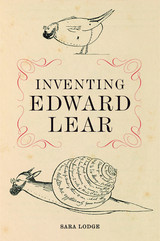
“Inventing Edward Lear is an exceptional, valuable, original study, presenting new materials on aspects of Lear’s life and work.”
—Jenny Uglow, author of Mr. Lear and The Lunar Men
Edward Lear wrote some of the best-loved poems in English, including “The Owl and the Pussycat,” but the father of nonsense was far more than a poet. He was a naturalist, a brilliant landscape painter, an experimental travel writer, and an accomplished composer. Sara Lodge presents the fullest account yet of Lear’s passionate engagement in the intellectual, social, and cultural life of his times.
Lear had a difficult start in life. He was epileptic, asthmatic, and depressive, but even as a child a consummate performer who projected himself into others’ affections. He became, by John James Audubon’s estimate, one of the greatest ornithological artists of the age. Queen Victoria—an admirer—chose him to be her painting teacher. He popularized the limerick, set Tennyson’s verse to music, and opened fresh doors for children and adults to share fantasies of magical escape. Lodge draws on diaries, letters, and new archival sources to paint a vivid picture of Lear that explores his musical influences, his religious nonconformity, his relationship with the Pre-Raphaelite movement, and the connections between his scientific and artistic work. He invented himself as a character: awkward but funny, absurdly sympathetic. In Lodge’s hands, Lear emerges as a dynamic and irreverent polymath whose conversation continues to draw us in.
Inventing Edward Lear is an original and moving account of one of the most intriguing and creative of all Victorians.
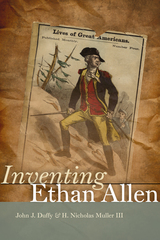
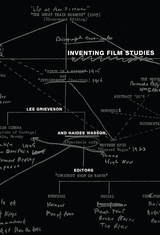
Inventing Film Studies shows how the study of cinema has developed in relation to a constellation of institutions, technologies, practices, individuals, films, books, government agencies, pedagogies, and theories. Contributors illuminate the connections between early cinema and the social sciences, between film programs and nation-building efforts, and between universities and U.S. avant-garde filmmakers. They analyze the evolution of film studies in relation to the Museum of Modern Art, the American Film Council movement of the 1940s and 1950s, the British Film Institute, influential journals, cinephilia, and technological innovations past and present. Taken together, the essays in this collection reveal the rich history and contemporary vitality of film studies.
Contributors: Charles R. Acland, Mark Lynn Anderson, Mark Betz, Zoë Druick, Lee Grieveson, Stephen Groening, Haden Guest, Amelie Hastie, Lynne Joyrich, Laura Mulvey, Dana Polan,
D. N. Rodowick, Philip Rosen, Alison Trope, Haidee Wasson, Patricia White, Sharon Willis,
Peter Wollen, Michael Zryd
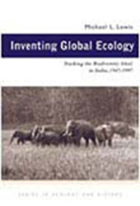
Blue jeans, MTV, Coca-Cola, and… ecology? We don't often think of conservation sciences as a U.S. export, but in the second half of the twentieth century an astounding array of scientists and ideas flowed out from the United States into the world, preaching the gospel of conservation-oriented ecology.
Inventing Global Ecology grapples with how we should understand the development of global ecology in the twentieth century—a science that is held responsible for, literally, saving the world. Is the spread of ecology throughout the globe a subtle form of cultural imperialism, as some claim? Or is it a manifestation of an increasingly globalized world, where ideas, people, and things move about with greater freedom than ever before?
Using India as the case study, Professor Michael Lewis considers the development of conservation policies and conservation sciences since the end of World War II and the role of United States scientists, ideas, and institutions in this process. Was India subject to a subtle form of Americanization, or did Indian ecologists develop their own agenda, their own science, and their own way of understanding (and saving) the natural world? Does nationality even matter when doing ecology?
This readable narrative will carry you through the first fifty years of independent India, from the meadows of the Himalayan Mountains to the rainforests of southern India, from Gandhi and Nehru to Project Tiger. Of equal interest to the general reader, to scientists, and to scholars of history and globalization, Inventing Global Ecology combines ethnographic fieldwork and oral history conducted in India and the United States, as well as traditional archival research.
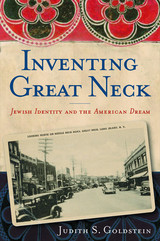
Great Neck, New York, is one of America’s most fascinating suburbs. Since the mid-nineteenth century, generations have been attracted to this once quiet enclave for its easy access to New York City and its tranquil setting by the Long Island Sound. It became an illustrious suburb, home to numerous film and theatrical luminaries, among them Groucho Marx, Eddie Cantor, Oscar Hammerstein II, and Alan King. Famous writers who lived there include Ring Lardner and, of course, F. Scott Fitzgerald, who used Great Neck as the inspiration for his classic novel The Great Gatsby.
Although frequently recognized as home to well-known personalities, Great Neck is also notable for the conspicuous way it transformed itself from a Gentile community, to a mixed one, and, finally, in the 1960s, to one in which Jews were the majority. In Inventing Great Neck, Judith Goldstein recounts these histories in which Great Neck emerges as a leader in the reconfiguration of the American suburb.The book spans four decades of rapid change, beginning with the 1920s. First, the community served as a playground for New York’s socialites and celebrities. In the forties, it developed one of the country’s most outstanding school systems and served as the temporary home to the United Nations. In the sixties it provided strong support to the civil rights movement.
Inventing Great Neck is about the allure of suburbia, including the institutions that bind it together, and the social, economic, cultural, and religious tensions that may threaten its vibrancy. Anyone who has lived in a suburban town, particularly one in the greater metropolitan area, will be intrigued by this rich narrative, which illustrates not only Jewish identity in America but the struggle of the American dream itself through the heart of the twentieth century.
Choosing two historical moments of sweeping material and cultural change in Spanish history, Sieburth reads two novels from the 1880s (by Benito Pérez Galdós) and two from the 1970s (by Juan Goytisolo and Carmen Martín Gaite) as fictional theories about the impact of modernity on culture and politics. Her analysis reveals that the high/low division in the cultural sphere reinforces other kinds of separations—between social classes or between men and women—dear to the elite but endangered by progress. This tension, she shows, is particularly evident in Spain, where modernization has been a contradictory and uneven process, rarely accompanied by political freedom, and where consumerism and mass culture coexist uneasily with older ways of life.
Weaving together a wide spectrum of diverse material, her work will be of interest to readers concerned with Spanish history and literature, literary theory, popular culture, and the relations between politics, economics, gender, and the novel.
2023 ALAA Book Award, Association for Latin American Art/Arvey Foundation
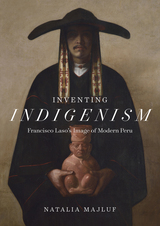
A fascinating account of the modern reinvention of the image of the Indian in nineteenth-century literature and visual culture, seen through the work of Peruvian painter Francisco Laso.
One of the outstanding painters of the nineteenth century, Francisco Laso (1823–1869) set out to give visual form to modern Peru. His solemn and still paintings of indigenous subjects were part of a larger project, spurred by writers and intellectuals actively crafting a nation in the aftermath of independence from Spain. In this book, at once an innovative account of modern indigenism and the first major monograph on Laso, Natalia Majluf explores the rise of the image of the Indian in literature and visual culture. Reading Laso’s works through a broad range of sources, Majluf traces a decisive break in a long history of representations of indigenous peoples that began with the Spanish conquest. She ties this transformation to the modern concept of culture, which redefined both the artistic field and the notion of indigeneity. As an abstraction produced through indigenist discourse, an icon of authenticity, and a densely racialized cultural construct, the Indian would emerge as a central symbol of modern Andean nationalisms.
Inventing Indigenism brings the work and influence of this extraordinary painter to the forefront as it offers a broad perspective on the dynamics of art and visual culture in nineteenth-century Latin America.

Just as Ireland has produced many brilliant writers in the past century, so these writers have produced a new Ireland. In a book unprecedented in its scope and approach, Declan Kiberd offers a vivid account of the personalities and texts, English and Irish alike, that reinvented the country after centuries of colonialism. The result is a major literary history of modern Ireland, combining detailed and daring interpretations of literary masterpieces with assessments of the wider role of language, sport, clothing, politics, and philosophy in the Irish revival.
In dazzling comparisons with the experience of other postcolonial peoples, the author makes many overdue connections. Rejecting the notion that artists such as Wilde, Shaw, Yeats, Joyce, and Beckett became modern to the extent that they made themselves "European," he contends that the Irish experience was a dramatic instance of experimental modernity and shows how the country's artists blazed a trail that led directly to the magic realism of a García Márquez or a Rushdie. Along the way, he reveals the vital importance of Protestant values and the immense contributions of women to the enterprise. Kiberd's analysis of the culture is interwoven with sketches of the political background, bringing the course of modern Irish literature into sharp relief against a tragic history of conflict, stagnation, and change.
Inventing Ireland restores to the Irish past a sense of openness that it once had and that has since been obscured by narrow-gauge nationalists and their polemical revisionist critics. In closing, Kiberd outlines an agenda for Irish Studies in the next century and detects the signs of a second renaissance in the work of a new generation of authors and playwrights, from Brian Friel to the younger Dublin writers.
This groundbreaking biography reveals a woman quite different from the public persona she promoted. In her bestselling memoir, The Woman in Battle, Velasquez claimed she was an emphatic Confederate patriot, but in fact she never saw combat. Instead, during the war she manufactured bullets for the Union and persuaded her Confederate husband to desert the Army.
After the Civil War ended, she wore many masks, masterminding ambitious confidence schemes worth millions, such as creating a phony mining company, conning North Carolina residents to back her financially in a fake immigration scheme, and attracting investors to build a railroad across western Mexico. With various husbands, Velasquez sought her fortune both in the American West and in the Klondike, though her endeavors cost one husband his life. She also became a social reformer advocating on behalf of better prison conditions, the Cuban revolt against Spain, and the plight of Cuban refugees. Further, Velasquez was one of the first women to venture into journalism and presidential politics. Always a sensational press favorite, she displayed throughout her life an uncanny ability to manipulate popular media and to benefit from her fame in a way that prefigured celebrities of our own time, including using her testimony in a Congressional inquiry about Civil War counterfeiting as a means of promoting her latest business ventures.
So little has been known of Velasquez’s real life that some postmodern scholars have glorified her as a “woman warrior” and used her as an example in cross-gender issues and arguments concerning Hispanic nationalism. Davis firmly refutes these notions by bringing the historical Velasquez to the surface. The genuine story of Velasquez’s life is far more interesting than misguided interpretations and her own fanciful inventions.
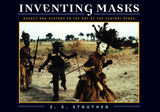
"Its presentation, its exceptionally lively style, the perfection of its illustrations make this a stunning book, perfectly fitting for the study of a performing art and its content is indeed seminal. . . . A breakthrough."—Jan Vansina, African Studies Review
Phenomenology and so-called “continental philosophy” receive scant attention in most American philosophy departments, despite their foundational influence on intellectual movements such as existentialism, post-structuralism, and deconstruction. In Inventing Philosophy’s Other, Jonathan Strassfeld explores this absence, revealing how everyday institutional practices played a determinative role in the development of twentieth-century academic discourse.
Conventional wisdom holds that phenomenology’s absence from the philosophical mainstream in the United States reflects its obscurity or even irrelevance to America’s philosophical traditions. Strassfeld refutes this story as he traces phenomenology’s reception in America, delivering the first systematic historical study of the movement in the United States. He examines the lives and works of Marjorie Grene, Alfred Schütz, Hubert Dreyfus, and Iris Marion Young, among others, while also providing a fresh introduction to phenomenological philosophy.
Divided into five sections corresponding to Texas regions, essays consider aesthetics, buildings, environment, food and alcohol, private and public memory, and race and class. Among the topics covered by contributors are the Imagine Austin urban planning initiative; the terroir of Texas barbecue; the racist past of Grand Saline, Texas; Denton, Texas, and authenticity as rhetorical; negative views of Texas and how the state (or any place) is subject to reinvention; social, historical, and economic networks of place and their relationship to the food we eat; and Texas gun culture and working-class character.

Going as far back as the thirteenth century, Britons mined and burned coal. Britain’s supremacy in the nineteenth century depended in large part on its vast deposits of coal, which powered industry, warmed homes, and cooked food. As coal consumption skyrocketed, the air in Britain’s cities and towns filled with ever-greater and denser clouds of smoke. Yet, for much of the nineteenth century, few people in Britain even considered coal smoke to be pollution.
Inventing Pollution examines the radically new understanding of pollution that emerged in the late nineteenth century, one that centered not on organic decay but on coal combustion. This change, as Peter Thorsheim argues, gave birth to the smoke-abatement movement and to new ways of thinking about the relationships among humanity, technology, and the environment.
Even as coal production in Britain has plummeted in recent decades, it has surged in other countries. This reissue of Thorsheim’s far-reaching study includes a new preface that reveals the book’s relevance to the contentious national and international debates—which aren’t going away anytime soon—around coal, air pollution more generally, and the grave threat of human-induced climate change.
Britain's supremacy in the nineteenth century depended in large part on its vast deposits of coal. This coal not only powered steam engines in factories, ships, and railway locomotives but also warmed homes and cooked food. As coal consumption skyrocketed, the air in Britain's cities and towns became filled with ever-greater and denser clouds of smoke.
In this far-reaching study, Peter Thorsheim explains that, for much of the nineteenth century, few people in Britain even considered coal smoke to be pollution. To them, pollution meant miasma: invisible gases generated by decomposing plant and animal matter. Far from viewing coal smoke as pollution, most people considered smoke to be a valuable disinfectant, for its carbon and sulfur were thought capable of rendering miasma harmless.
Inventing Pollution examines the radically new understanding of pollution that emerged in the late nineteenth century, one that centered not on organic decay but on coal combustion. This change, as Peter Thorsheim argues, gave birth to the smoke-abatement movement and to new ways of thinking about the relationships among humanity, technology, and the environment.

Upending a century of scholarly and popular thinking about stereotype, Martin A. Berger traces our current understanding of it to the 1920s, when American journalist and public intellectual Walter Lippmann borrowed the term from printmaking techniques and defined it as a shared mental picture that simplified a person, event, group, or thing so it could be easily grasped. Berger uncovers stereotype’s intellectual debts to philosophy, psychology, political science, and, in particular, art history and interwar racial theories.
Inventing Stereotype analyzes a series of plays, novels, and paintings from the 1920s and 1930s that sparked fierce debate about whether they employed racial stereotypes in the depiction of Black, Jewish, and other characters. Through careful attention to audience responses—parsed by race, political leanings, religion, and class—the book illustrates how artistic depictions are categorized as either stereotyped or not, relative to current representational norms, rather than to their success in conveying the authentic identities of individuals or racial groups.

The Roman author Pliny the Younger characterizes Christianity as “contagious superstition”; two centuries later the Christian writer Eusebius vigorously denounces Greek and Roman religions as vain and impotent “superstitions.” The term of abuse is the same, yet the two writers suggest entirely different things by “superstition.”
Dale Martin provides the first detailed genealogy of the idea of superstition, its history over eight centuries, from classical Greece to the Christianized Roman Empire of the fourth century C.E. With illuminating reference to the writings of philosophers, historians, and medical teachers he demonstrates that the concept of superstition was invented by Greek intellectuals to condemn popular religious practices and beliefs, especially the belief that gods or other superhuman beings would harm people or cause disease. Tracing the social, political, and cultural influences that informed classical thinking about piety and superstition, nature and the divine, Inventing Superstition exposes the manipulation of the label of superstition in arguments between Greek and Roman intellectuals on the one hand and Christians on the other, and the purposeful alteration of the idea by Neoplatonic philosophers and Christian apologists in late antiquity.
Inventing Superstition weaves a powerfully coherent argument that will transform our understanding of religion in Greek and Roman culture and the wider ancient Mediterranean world.
In Inventing the Addict, Zieger tells the story of how the addict, a person uniquely torn between disease and desire, emerged from a variety of earlier figures such as drunkards, opium-eating scholars, vicious slave masters, dissipated New Women, and queer doctors. Drawing on a broad range of literary and cultural material, including canonical novels such as Uncle Tom's Cabin, The Strange Case of Dr. Jekyll and Mr. Hyde, and Dracula, she traces the evolution of the concept of addiction through a series of recurrent metaphors: exile, self-enslavement, disease, and vampirism. She shows how addiction took on multiple meanings beyond its common association with intoxication or specific habit-forming substances—it was an abiding desire akin to both sexual attraction and commodity fetishism, a disease that strangely failed to meet the requirements of pathology, and the citizen's ironic refusal to fulfill the promise of freedom.
Nor was addiction an ideologically neutral idea. As Zieger demonstrates, it took form over time through specific, shifting intersections of gender, race, class, and sexuality, reflecting the role of social power in the construction of meaning.
Inventing the Alphabet provides the first account of two-and-a-half millennia of scholarship on the alphabet. Drawing on decades of research, Johanna Drucker dives into sometimes obscure and esoteric references, dispelling myths and identifying a pantheon of little-known scholars who contributed to our modern understandings of the alphabet, one of the most important inventions in human history.
Beginning with Biblical tales and accounts from antiquity, Drucker traces the transmission of ancient Greek thinking about the alphabet’s origin and debates about how Moses learned to read. The book moves through the centuries, finishing with contemporary concepts of the letters in alpha-numeric code used for global communication systems. Along the way, we learn about magical and angelic alphabets, antique inscriptions on coins and artifacts, and the comparative tables of scripts that continue through the development of modern fields of archaeology and paleography.
This is the first book to chronicle the story of the intellectual history through which the alphabet has been “invented” as an object of scholarship.
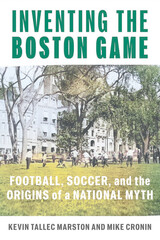
Honorable Mention, 2025 North American Society for Sport History Book Award
On Boston Common stands a monument dedicated to the Oneida Football Club. It honors the site where, in the 1860s, sixteen boys played what was then called the “Boston game”—an early version of football in the United States. The boys were largely the sons of upper-class Boston Brahmins, and they lived through the transformative periods of the Civil War, Reconstruction, and the Gilded Age. Later as they grew old, in the 1920s, a handful of them orchestrated a series of commemorative events about their boyhood game. Benefitting from elite networks developed through the city’s social and educational institutions, including Harvard University, they donated artifacts (such as an oddly shaped, battered black ball) to museums, deposited self-penned histories into libraries and archives, and erected bronze and stone memorials, all to elevate themselves as the inventors of American football (and later, by extension, soccer). But was this origin story of what, by then, had become one of America’s favorite games as straightforward as they made it seem or a myth-making hoax?
In Inventing the Boston Game, Kevin Tallec Marston and Mike Cronin investigate the history of the Oneida Football Club and reveal what really happened. In a compelling, well told narrative that is informed by sports history, Boston history, and the study of memory, they posit that these men engaged in self-memorialization to reinforce their elite cultural status during a period of tremendous social and economic change, and particularly increased immigration. This exploration of the Club’s history provides fascinating insight into how and why origin stories are created in the first place.
Published by University of Delaware Press. Distributed worldwide by Rutgers University Press.

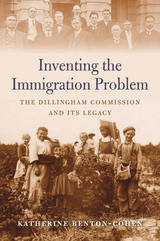
In 1907 the U.S. Congress created a joint commission to investigate what many Americans saw as a national crisis: an unprecedented number of immigrants flowing into the United States. Experts—women and men trained in the new field of social science—fanned out across the country to collect data on these fresh arrivals. The trove of information they amassed shaped how Americans thought about immigrants, themselves, and the nation’s place in the world. Katherine Benton-Cohen argues that the Dillingham Commission’s legacy continues to inform the ways that U.S. policy addresses questions raised by immigration, over a century later.
Within a decade of its launch, almost all of the commission’s recommendations—including a literacy test, a quota system based on national origin, the continuation of Asian exclusion, and greater federal oversight of immigration policy—were implemented into law. Inventing the Immigration Problem describes the labyrinthine bureaucracy, broad administrative authority, and quantitative record-keeping that followed in the wake of these regulations. Their implementation marks a final turn away from an immigration policy motivated by executive-branch concerns over foreign policy and toward one dictated by domestic labor politics.
The Dillingham Commission—which remains the largest immigration study ever conducted in the United States—reflects its particular moment in time when mass immigration, the birth of modern social science, and an aggressive foreign policy fostered a newly robust and optimistic notion of federal power. Its quintessentially Progressive formulation of America’s immigration problem, and its recommendations, endure today in almost every component of immigration policy, control, and enforcement.
“A magnificent work of intellectual, psychological, and spiritual history. It is hard to decide which is more remarkable: the breadth of learning displayed on almost every page, the infectious enthusiasm that suffuses the whole book, the riveting originality of the central argument, or the emotional power and force with which it is deployed.” —David Marquand, New Republic
Here, in a grand narrative spanning 1,800 years of European history, a distinguished political philosopher firmly rejects Western liberalism’s usual account of itself: its emergence in opposition to religion in the early modern era. Larry Siedentop argues instead that liberal thought is, in its underlying assumptions, the offspring of the Church.
“Larry Siedentop has written a philosophical history in the spirit of Voltaire, Condorcet, Hegel, and Guizot…At a time when we on the left need to be stirred from our dogmatic slumbers, Inventing the Individual is a reminder of some core values that are pretty widely shared.”
—James Miller, The Nation
“In this learned, subtle, enjoyable and digestible work [Siedentop] has offered back to us a proper version of ourselves. He has explained us to ourselves…[A] magisterial, timeless yet timely work.”
—Douglas Murray, The Spectator
“Like the best books, Inventing the Individual both teaches you something new and makes you want to argue with it.”
—Kenan Malik, The Independent
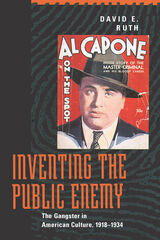
We see efficient criminal executives demonstrating the multifarious uses of organization; dapper, big-spending gangsters highlighting the promises and perils of the emerging consumer society; and gunmen and molls guiding an uncertain public through the shifting terrain of modern gender roles. In this fascinating study, Ruth reveals how the public enemy provides a far-ranging critique of modern culture.
A New Yorker Best Book of 2025
An irreverent new take on the Renaissance, which reveals it as anything but Europe’s golden age.
From the darkness of a plagued and war-torn Middle Ages, the Renaissance (we’re told) heralds the dawning of a new world—a halcyon age of art, prosperity, and rebirth. Hogwash! or so says award-winning novelist and historian Ada Palmer. In Inventing the Renaissance, Palmer turns her witty and irreverent eye on the fantasies we’ve told ourselves about Europe’s not-so-golden age, myths she sets right with sharp clarity.
Palmer’s Renaissance is altogether desperate. Troubled by centuries of conflict, she argues, Europe looked to a long-lost Roman Empire (even its education practices) to save it from unending war. Later historians met their own political challenges with a similarly nostalgic vision, only now they looked to the Renaissance and told a partial story. To right this wrong, Palmer offers fifteen provocative portraits of Renaissance men and women (some famous, some obscure) whose lives reveal a far more diverse, fragile, and wild Renaissance than its glowing reputation suggests.

An irreverent new take on the Renaissance, which reveals it as anything but Europe’s golden age.
From the darkness of a plagued and war-torn Middle Ages, the Renaissance (we’re told) heralds the dawning of a new world—a halcyon age of art, prosperity, and rebirth. Hogwash! or so says award-winning novelist and historian Ada Palmer. In Inventing the Renaissance, Palmer turns her witty and irreverent eye on the fantasies we’ve told ourselves about Europe’s not-so-golden age, myths she sets right with sharp clarity.
Palmer’s Renaissance is altogether desperate. Troubled by centuries of conflict, she argues, Europe looked to a long-lost Roman Empire (even its education practices) to save them from unending war. Later historians met their own political challenges with a similarly nostalgic vision, only now they looked to the Renaissance and told a partial story. To right this wrong, Palmer offers fifteen provocative portraits of Renaissance men and women (some famous, some obscure) whose lives reveal a far more diverse, fragile, and wild Renaissance than its glowing reputation suggests.
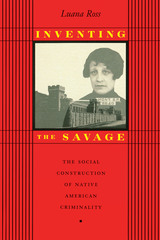
Luana Ross writes, "Native Americans disappear into Euro-American institutions of confinement at alarming rates. People from my reservation appeared to simply vanish and magically return. [As a child] I did not realize what a 'real' prison was and did not give it any thought. I imagined this as normal; that all families had relatives who went away and then returned."
In this pathfinding study, Ross draws upon the life histories of imprisoned Native American women to demonstrate how race/ethnicity, gender, and class contribute to the criminalizing of various behaviors and subsequent incarceration rates. Drawing on the Native women's own words, she reveals the violence in their lives prior to incarceration, their respective responses to it, and how those responses affect their eventual criminalization and imprisonment. Comparisons with the experiences of white women in the same prison underline the significant role of race in determining women's experiences within the criminal justice system.

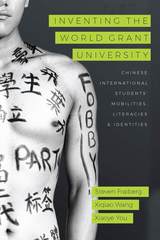
Through an exploration of the literacy practices of undergraduate Chinese international students in the United States and China, Inventing the World Grant University demonstrates the ways in which literacies, mobilities, and transnational identities are constructed and enacted across institutional and geographic borders.
Steven Fraiberg, Xiqiao Wang, and Xiaoye You develop a mobile literacies framework for studying undergraduate Chinese international students enrolling at Western institutions, whose numbers have increased in recent years. Focusing on the literacy practices of these students at Michigan State University and at Sinoway International Education Summer School in China, Fraiberg, Wang, and You draw on a range of mobile methods to map the travel of languages, identities, ideologies, pedagogies, literacies, and underground economies across continents. Case studies of administrators’, teachers’, and students’ everyday literacy practices provide insight into the material and social structures shaping and shaped by a globalizing educational landscape.
Advocating an expansion of focus from translingualism to transliteracy and from single-site analyses to multi-site approaches, this volume situates local classroom practices in the context of the world grant university. Inventing the World Grant University contributes to scholarship in mobility, literacy, spatial theory, transnationalism, and disciplinary enculturation. It further offers insight into the opportunities and challenges of enacting culturally relevant pedagogies.
READERS
Browse our collection.
PUBLISHERS
See BiblioVault's publisher services.
STUDENT SERVICES
Files for college accessibility offices.
RECENTLY PUBLISHED





UChicago Accessibility Resources
home | accessibility | search | about | contact us
BiblioVault ® 2001 - 2025
The University of Chicago Press