
 A SCHOLARLY BOOK REPOSITORY
From 1980 to 1988, Iran and Iraq fought the longest conventional war of the twentieth century. The tragedies included the slaughter of child soldiers, the use of chemical weapons, the striking of civilian shipping in the Gulf, and the destruction of cities. The Iran-Iraq War offers an unflinching look at a conflict seared into the region’s collective memory but little understood in the West. Pierre Razoux shows why this war remains central to understanding Middle Eastern geopolitics, from the deep-rooted distrust between Sunni and Shia Muslims, to Iran’s obsession with nuclear power, to the continuing struggles in Iraq. He provides invaluable keys to decipher Iran’s behavior and internal struggle today.
Razoux’s account is based on unpublished military archives, oral histories, and interviews, as well as audio recordings seized by the U.S. Army detailing Saddam Hussein’s debates with his generals. Tracing the war’s shifting strategies and political dynamics—military operations, the jockeying of opposition forces within each regime, the impact on oil production so essential to both countries—Razoux also looks at the international picture. From the United States and Soviet Union to Israel, Europe, China, and the Arab powers, many nations meddled in this conflict, supporting one side or the other and sometimes switching allegiances.
The Iran-Iraq War answers questions that have puzzled historians. Why did Saddam embark on this expensive, ultimately fruitless conflict? Why did the war last eight years when it could have ended in months? Who, if anyone, was the true winner when so much was lost?
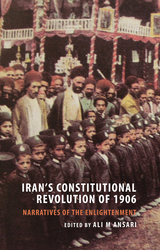
As the authors show, this period was one of unprecedented debate within Iran’s burgeoning press. Many different groups fought to shape the course of the Revolution, which opened up seemingly boundless possibilities for the country’s future and affected nearly every segment of its society. Exploring themes such as the role of women, the use of photography, and the uniqueness of the Revolution as an Iranian experience, the authors tell a story of immense transition, as the old order of the Shah subsided and was replaced by new institutions, new forms of expression, and a new social and political order.
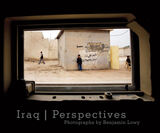
The Center for Documentary Studies / Honickman First Book Prize in Photography
Benjamin Lowy’s powerful and arresting color photographs, taken over a six-year period through Humvee windows and military-issue night vision goggles, capture the desolation of a war-ravaged Iraq as well as the tension and anxiety of both U.S. soldiers and Iraqi civilians. To photograph on the streets unprotected was impossible for Lowy, so he made images that illuminate this difficulty by shooting photographs through the windows and goggles meant to help him, and soldiers, to see. In doing so he provides us with a new way of looking at the war—an entirely different framework for regarding and thinking about the everyday activities of Iraqis in a devastated landscape and the movements of soldiers on patrol, as well as the alarm and apprehension of nighttime raids.
“Iraq was a land of blast walls and barbed wire fences. I made my first image of a concrete blast wall through the window of my armored car. These pictures show a fragment of Iraqi daily life taken by a transient passenger in a Humvee; yet they are a window to a world where work, play, tension, grief, survival, and everything in between are as familiar as the events of our own lives. . . . [In] the ‘Nightvision’ images . . . as soldiers weave through the houses and bedrooms of civilians during nighttime military raids, they encounter the faces of their suspects as well as bystanders, many of whom are parents protecting their children. . . . I hope that these images provide the viewer with momentary illumination of the fear and desperation that is war.”—Benjamin Lowy
In this unprecedented account of the intensive air and ground operations in Iraq, two of America’s most distinguished military historians bring clarity and depth to the first major war of the new millennium. Reaching beyond the blaring headlines, embedded videophone reports, and daily Centcom briefings, Williamson Murray and Robert Scales analyze events in light of past military experiences, present battleground realities, and future expectations.
The Iraq War puts the recent conflict into context. Drawing on their extensive military expertise, the authors assess the opposing aims of the Coalition forces and the Iraqi regime and explain the day-to-day tactical and logistical decisions of infantry and air command, as British and American troops moved into Basra and Baghdad. They simultaneously step back to examine long-running debates within the U.S. Defense Department about the proper uses of military power and probe the strategic implications of those debates for America’s buildup to this war. Surveying the immense changes that have occurred in America’s armed forces between the Gulf conflicts of 1991 and 2003—changes in doctrine as well as weapons—this volume reveals critical meanings and lessons about the new “American way of war” as it has unfolded in Iraq.

Focusing on the 1990 Iraqi invasion of Kuwait, Hamdi Hassan offers a balanced examination of the motivation of the Iraqi polity and the conditions which accelerated and facilitated the decision to invade. Critical of the traditional approach of most Middle East studies, The Iraqi Invasion of Kuwait offers a counterpoint to Western interpretations of this key event in the contemporary history of the Middle East.
Hassan examines how Saddam Hussein assessed and responded to American and Israeli intentions after the invasion, the reaction of other Arab states, and the unprecedented grassroots support for the Iraqi leadership. In this context, the author examines the social structure of Iraqi society – families, clans and regional alliances – and the importance of Ba’athism. Hassan also examines the political structure of the country, relating the identity of Arabism – the religion and language which is associated closely with the Pan Arabist ideals – to Iraqi foreign policy.

The recent advent of postcolonial theory in the Irish academy, which sparked this special issue of SAQ, has had a profound effect on the Irish conversation and the turn it is taking today. As the island writes back, a rising faction in Irish studies is resisting what some see as yet another colonization, insisting that theory accommodate and respond to Ireland’s concerns and questions.
Contributors. Guinn Batten, Joe Cleary, Luke Dodd, Luke Gibbons, Dillon Johnston, David Kellogg, Declan Keberd, Aine O’Brien, Lance Pettitt, Lawrence J. Taylor, John Paul Waters, Clair Wills
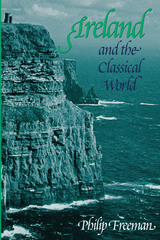
On the boundary of what the ancient Greeks and Romans considered the habitable world, Ireland was a land of myth and mystery in classical times. Classical authors frequently portrayed its people as savages—even as cannibals and devotees of incest—and evinced occasional uncertainty as to the island's shape, size, and actual location. Unlike neighboring Britain, Ireland never knew Roman occupation, yet literary and archaeological evidence prove that Iuverna was more than simply terra incognita in classical antiquity.
In this book, Philip Freeman explores the relations between ancient Ireland and the classical world through a comprehensive survey of all Greek and Latin literary sources that mention Ireland. He analyzes passages (given in both the original language and English) from over thirty authors, including Julius Caesar, Strabo, Tacitus, Ptolemy, and St. Jerome. To amplify the literary sources, he also briefly reviews the archaeological and linguistic evidence for contact between Ireland and the Mediterranean world.
Freeman's analysis of all these sources reveals that Ireland was known to the Greeks and Romans for hundreds of years and that Mediterranean goods and even travelers found their way to Ireland, while the Irish at least occasionally visited, traded, and raided in Roman lands. Everyone interested in ancient Irish history or Classics, whether scholar or enthusiast, will learn much from this pioneering book.

Ireland in the World Order examines Ireland’s development from the medieval to the modern era, comparing its unique trajectory with that of England, Scotland and Wales.
Maurice Coakley focuses on key elements that contributed to Ireland’s development, examining its bloody and violent incorporation into the British state, its refusal to embrace the Protestant Reformation and failure to industrialise in the 19th century. Coakley considers the crucial question of why Ireland’s national identity has come to rest on a mass movement for independence.
Cutting through many of the myths – imperialist and nationalist – which have obscured the real reasons for Ireland's course of development, Ireland in the World Order provides a new perspective for students and academics of Irish history.

Paralleling his friend Alexis de Tocqueville's visit to America, Gustave de Beaumont traveled through Ireland in the mid-1830s to observe its people and society. In Ireland, he chronicles the history of the Irish and offers up a national portrait on the eve of the Great Famine. Published to acclaim in France, Ireland remained in print there until 1914. The English edition, translated by William Cooke Taylor and published in 1839, was not reprinted.
In a devastating critique of British policy in Ireland, Beaumont questioned why a government with such enlightened institutions tolerated such oppression. He was scathing in his depiction of the ruinous state of Ireland, noting the desperation of the Catholics, the misery of repeated famines, the unfair landlord system, and the faults of the aristocracy. It was not surprising the Irish were seen as loafers, drunks, and brutes when they had been reduced to living like beasts. Yet Beaumont held out hope that British liberal reforms could heal Ireland's wounds.
This rediscovered masterpiece, in a single volume for the first time, reproduces the nineteenth-century Taylor translation and includes an introduction on Beaumont and his world. This volume also presents Beaumont's impassioned preface to the 1863 French edition in which he portrays the appalling effects of the Great Famine.
A classic of nineteenth-century political and social commentary, Beaumont's singular portrait offers the compelling immediacy of an eyewitness to history.
With clarity and depth, Gerard McCann explores the complex developments that have shaped Ireland’s economic development, north and south, and led to recurring crises and instability.
The Irish economy has been traditionally portrayed as a product of its political divisions and the colonial legacy, divided and analysed in terms of the hegemonic tensions that exist on the island. Influenced by these divisions, academics have tended to look at a two-region approach to economic development, without adequately acknowledging the interactive nature of the island economy as a source of the crises or as a solution to systemic divergence.
McCann's definitive and dynamic history of the Irish economy circumvents conventional analyses and investigates the economic development of the island economy as a whole, highlighting where aggressive differentiation has been divisive and destabilising. He concludes by considering an alternative integrated and cohesive process of economic development.
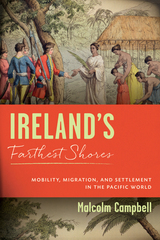
Malcolm Campbell examines the rich history of Irish experiences on land and at sea, offering new perspectives on migration and mobility in the Pacific world and of the Irish role in the establishment and maintenance of the British Empire. This volume investigates the extensive transnational connections that developed among Irish immigrants and their descendants across this vast and unique oceanic space, ties that illuminate how the Irish participated in the making of the Pacific world and how the Pacific world made them.
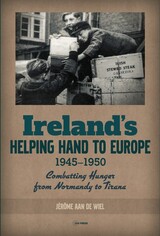
Post-war Marshall Plan aid to Europe and indeed Ireland is well documented, but practically nothing is known about simultaneous Irish aid to Europe. This book provides a full record of the aid – mainly food but also clothes, blankets, medicines, etc. – that Ireland donated to continental Europe, including France, the Netherlands, Hungary, the Balkans, Italy, and zones of occupied Germany.
Starting with Ireland’s neutral wartime record, often wrongly presented as pro-German when Ireland in fact unofficially favoured the western Allies, Jerome aan de Wiel explains why Éamon de Valera’s government sent humanitarian aid to the devastated continent. His book analyses the logistics of collection and distribution of supplies sent abroad as far as the Greek islands.
Despite some alleged Cold-War hijacking of Irish relief – and this humanitarianism was not above the politics of that East-West confrontation – it became mostly a story of hope, generosity and European Christian solidarity. Rich archival records from Ireland and the European beneficiary countries, as well as contemporary local and national newspapers across Europe, allow the author to measure and describe not only the official but also the popular response to Irish relief schemes. This work is illustrated with contemporary photographs and some key graphs and tables that show the extent of the aid programme.
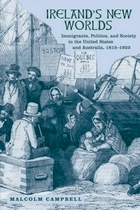
Ireland’s New Worlds is the first book to compare Irish immigrants in the United States and Australia. In a profound challenge to the national histories that frame most accounts of the Irish diaspora, Malcolm Campbell highlights the ways that economic, social, and cultural conditions shaped distinct experiences for Irish immigrants in each country, and sometimes in different parts of the same country. From differences in the level of hostility that Irish immigrants faced to the contrasting economies of the United States and Australia, Campbell finds that there was much more to the experiences of Irish immigrants than their essential “Irishness.” America’s Irish, for example, were primarily drawn into the population of unskilled laborers congregating in cities, while Australia’s Irish, like their fellow colonialists, were more likely to engage in farming. Campbell shows how local conditions intersected with immigrants’ Irish backgrounds and traditions to create surprisingly varied experiences in Ireland’s new worlds.
“Well conceived and thoroughly researched . . . . This clearly written, thought-provoking work fulfills the considerable ambitions of comparative migration studies.”—Choice
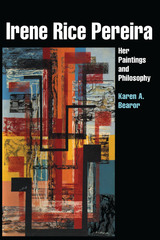
Artist Irene Rice Pereira was a significant figure in the New York art world of the 1930s and 1940s, who shared an interest in Jungianism with the better-known Abstract Expressionists and with various women artists and writers seeking "archetypal" imagery. Yet her artistic philosophy and innovative imagery elude easy classification with her artistic contemporaries. In consequence, her work is rarely included in studies of the period and is almost unknown to the general public. This first intellectual history of the artist and her work seeks to change that.
Karen A. Bearor thoroughly re-creates the artistic and philosophical milieu that nourished Pereira’s work. She examines the options available to Pereira as a woman artist in the first half of the twentieth century and explores how she used those options to contribute to the development of modernism in the United States. Bearor traces Pereira’s interest in the ideas of major thinkers of the period—among them, Spengler, Jung, Einstein, Cassirer, and Dewey—and shows how Pereira incorporated their ideas into her art. And she demonstrates how Pereira’s quest to understand something of the nature of ultimate reality led her from an early utopianism to a later interest in spiritualism and the occult.
This lively intellectual history amplifies our knowledge of a time of creative ferment in American art and society. It will appeal to a wide range of readers interested in the modernist period.
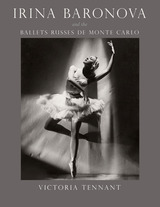
Drawing on letters, correspondence, oral histories, and interviews, Baronova’s daughter, the actress Victoria Tennant, warmly recounts Baronova’s dramatic life, from her earliest aspirations to her grueling time on tour to her later years in Australia as a pioneer of the art. She begins with the Baronov family’s flight from Russia during the Revolution, which led them to Romania and later Paris, where at the age of thirteen, Baronova became a star, chosen by the legendary George Balanchine to join the Ballets Russes, where she danced the lead in Swan Lake. Tennant provides an intimate account of Baronova’s life as a dancer and rare behind-the-scenes stories of life on the road with the stars of the company. Spectacular photographs, a mix of archival images and family snapshots, offer many rare views of rehearsals, costumes, set designs, and the dancers themselves both at their most dazzling and in their most everyday.
The story of Irina Baronova is also the story of the rise of ballet in America thanks to the Ballets Russes, who brought the magisterial beauty and star power of dance to big cities and small towns alike. Irina Baronova and the Ballet Russes de Monte Carlo offers a unique perspective on this history, sure to be treasured by dance patrons and aspiring stars.

Released in conjunction with Nakhova’s first museum retrospective exhibition in the United States, this book includes many full-color illustrations of her work, spanning the entirety of her forty-year career and demonstrating her facility with a variety of media. It also includes essays by a variety of world-renowned curators and art historians, each cataloging Nakhova’s artistic innovations and exploring how she deals with themes of everyday life, memory, viewer engagement, and moral responsibility. It concludes with a new interview with Nakhova herself, giving new insight into her creative process and artistic goals. Irina Nakhova: Museum on the Edge provides a vivid look at the work of a visionary artist. Published in partnership with the Zimmerli Museum.
Inspired by Murdoch's tenacious wrestling with basic questions of human existence, these essays not only clarify her thoughts on human goodness, but also move beyond the academy to reflect on how we can and ought to undertake the human adventure in our daily lives.
Contributors are Charles Taylor, Martha Nussbaum, David Tracy, Cora Diamond, Maria Antonaccio, Elizabeth Dipple, Franklin I. Gamwell, Stanley Hauerwas, and William Schweiker. This volume also includes "Metaphysics and Ethics," a classic essay by Iris Murdoch.

A celebration of the tenacious life of the enduring Irish classics, this book by one of Irish writing's most eloquent readers offers a brilliant and accessible survey of the greatest works since 1600 in Gaelic and English, which together have shaped one of the world's most original literary cultures.
In the course of his discussion of the great seventeenth- and eighteenth-century Gaelic poems of dispossession, and of later work in that language that refuses to die, Declan Kiberd provides vivid and idiomatic translations that bring the Irish texts alive for the English-speaking reader.
Extending from the Irish poets who confronted modernity as a cataclysm, and who responded by using traditional forms in novel and radical ways, to the great modern practitioners of such paradoxically conservative and revolutionary writing, Kiberd's work embraces three sorts of Irish classics: those of awesome beauty and internal rigor, such as works by the Gaelic bards, Yeats, Synge, Beckett, and Joyce; those that generate a myth so powerful as to obscure the individual writer and unleash an almost superhuman force, such as the Cuchulain story, the lament for Art O'Laoghaire, and even Dracula; and those whose power exerts a palpable influence on the course of human action, such as Swift's Drapier's Letters, the speeches of Edmund Burke, or the autobiography of Wolfe Tone. The book closes with a moving and daring coda on the Anglo-Irish agreement, claiming that the seeds of such a settlement were sown in the works of Irish literature.
A delight to read throughout, Irish Classics is a fitting tribute to the works it reads so well and inspires us to read, and read again.


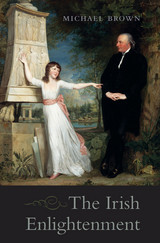
During the eighteenth-century Enlightenment, Scotland and England produced such well-known figures as David Hume, Adam Smith, and John Locke. Ireland’s contribution to this revolution in Western thought has received much less attention. Offering a corrective to the view that Ireland was intellectually stagnant during this period, The Irish Enlightenment considers a range of artists, writers, and philosophers who were full participants in the pan-European experiment that forged the modern world.
Michael Brown explores the ideas and innovations percolating in political pamphlets, economic and religious tracts, and literary works. John Toland, Francis Hutcheson, Jonathan Swift, George Berkeley, Edmund Burke, Maria Edgeworth, and other luminaries, he shows, participated in a lively debate about the capacity of humans to create a just society. In a nation recovering from confessional warfare, religious questions loomed large. How should the state be organized to allow contending Christian communities to worship freely? Was the public confession of faith compatible with civil society? In a society shaped by opposing religious beliefs, who is enlightened and who is intolerant?
The Irish Enlightenment opened up the possibility of a tolerant society, but it was short-lived. Divisions concerning methodological commitments to empiricism and rationalism resulted in an increasingly antagonistic conflict over questions of religious inclusion. This fracturing of the Irish Enlightenment eventually destroyed the possibility of civilized, rational discussion of confessional differences. By the end of the eighteenth century, Ireland again entered a dark period of civil unrest whose effects were still evident in the late twentieth century.

Groves Monographs on Marriage and Family is an edited book series based on the annual meetings of the Groves Conference on Marriage and Family, an interdisciplinary, interprofessional organization of limited invited membership founded in 1934. Groves Monographs publishes work on the leading edges of theory development and empirical research in the field of family studies. Individual volumes are edited by the chairs of the annual Groves Conferences and include peer-reviewed chapters by the conference presenters and invited authors. Topics are timely and provocative with diverse themes.
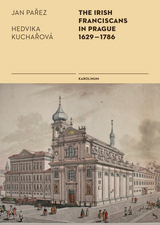
Dealing with a hitherto largely neglected theme, Parez and Kucharová attempt to place the Franciscan College within Bohemian history and to document the activities of its members. This wealth of historical material from the Czech archives, presented in English for the first time, will be of great aid for international researchers, particularly those interested in Bohemia or the Irish diaspora.
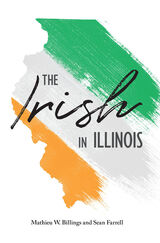
Today over a million people in Illinois claim Irish ancestry and celebrate their love for Ireland. In this concise narrative history, authors Mathieu W. Billings and Sean Farrell bring together both familiar and unheralded stories of the Irish in Illinois, highlighting the critical roles these immigrants and their descendants played in the settlement and the making of the Prairie State. Short biographies and twenty-eight photographs vividly illustrate the significance and diversity of Irish contributions to Illinois.
Billings and Farrell remind us of the countless ways Irish men and women have shaped the history and culture of the state. They fought in the French and Indian War, the American Revolution, the Civil War, and two world wars; built the state’s infrastructure and worked in its factories; taught Illinois children and served the poor. Irish political leaders helped to draw up the state’s first constitution, served in city, county, and state offices, and created a machine that dominated twentieth-century politics in Chicago and the state.
This lively history adds to our understanding of the history of the Irish in the state over the past two hundred fifty years. Illinoisans and Midwesterners celebrating their connections to Ireland will treasure this rich and important account of the state’s history.
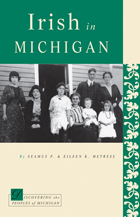
Irish immigration to the United States can be divided into five general periods, from 1640 to the present: the colonial, prestarvation, great starvation, post-starvation, and post- independence periods. Immigration to the Great Lakes region and, more specifically, to Michigan was differentially influenced during each of these times. The oppressive historical roots of the Irish in both Ireland and nineteenth century America are important to understand in gaining an appreciation for their concern with socioeconomic status.
The Irish first entered the Great Lakes by way of the Ohio River and Appalachian passes, spreading north along the expanding frontier. After the War of 1812, the Irish were heavily represented in frontier military garrisons. Many Irish moved into the Detroit metropolitan area as well as to farming areas throughout Michigan. In the 1840s, a number of Irish began fishing in the waters off Beaver Island, Mackinac Island, Bay City, Saginaw, and Alpena. From 1853 to 1854, Irish emigrants from the Great Starvation dug the Ste. Marie Canal while others dug canals in Grand Rapids and Saginaw.
Irish nationalism in both Michigan and the United States has been closely linked with the labor movement in which Irish Americans were among the earliest organizers and leaders. Irish American nationalism forced the Irish regardless of their local Irish origins to assume a larger Irish identity. Irish Americans have a long history of involvement in the struggle for Irish Freedom dating from the 1840s.
As Patrick Ford, editor of Irish World has said, America led the Irish from the "littleness of countyism into a broad feeling of nationalism."
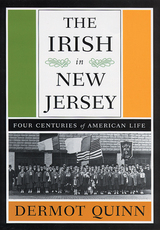
In this richly illustrated history, Dermot Quinn uncovers the story of how the Irish in New Jersey maintained their cultural roots while also laying the foundations for the social, economic, political, and religious landscapes of their adopted country. Quinn chronicles the emigration of families from a conflict-torn and famine-stricken Ireland to the unfamiliar land whose unwelcoming streets often fell far short of being paved with gold.
Using case histories from Paterson, Jersey City, and Newark, Quinn examines the transition of the Irish from a rejected minority to a middle-class, secular, and suburban identity. The Irish in New Jersey will appeal to everyone with an interest in the cultural heritage of a proud and accomplished people.

Examining how Irishness is performed and commodified in the contemporary transnational environment, the contributors explore topics including Van Morrison’s music, Frank McCourt’s writing, the explosion of Irish-themed merchandising, the practices of heritage seekers, the movie The Crying Game, and the significance of red hair. Whether considering the implications of Garth Brooks’s claim of Irishness and his enormous popularity in Ireland, representations of Irish masculinity in the TV series Buffy the Vampire Slayer and Angel, or Americans’ recourse to a consoling Irishness amid the racial and nationalist tensions triggered by the events of September 11, the contributors delve into complex questions of ethnicity, consumerism, and globalization. Ultimately, they call for an increased awareness of the exclusionary effects of claims of Irishness and for the cultivation of flexible, inclusive ways of affiliating with Ireland and the Irish.
Contributors. Natasha Casey, Maeve Connolly, Catherine M. Eagan, Sean Griffin, Michael Malouf, Mary McGlynn, Gerardine Meaney, Diane Negra, Lauren Onkey, Maria Pramaggiore, Stephanie Rains, Amanda Third

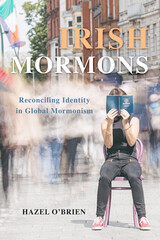
Examining the Latter-day Saint experience against one nation’s rapid social and religious changes, Irish Mormons blends participant observation and interviews with analysis to offer a rare view of the Latter-day Saints in contemporary Ireland.
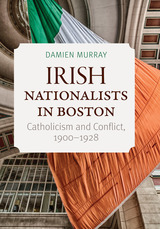
For a brief period after World War I, Irish-American nationalism in Boston became a vehicle for the promotion of wider democratic reform. Though the movement was unable to survive the disagreements surrounding the Anglo-Irish Treaty of 1921, it had been a source of ethnic unity that enabled Boston’s Irish community to negotiate the challenges of the postwar years including the anti-socialist Red Scare and the divisions caused by the Boston Police Strike in the fall of 1919. Furthermore, Boston’s Irish nationalists drew heavily on Catholic Church teachings such that Irish ethnicity came to be more clearly identified with the advocacy of both cultural pluralism and the rights of immigrant and working families in Boston and America.
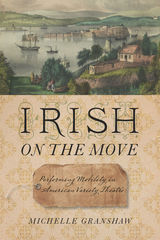
A little over a century ago, the Irish in America were the targets of intense xenophobic anxiety. Much of that anxiety centered on their mobility, whether that was traveling across the ocean to the U.S., searching for employment in urban centers, mixing with other ethnic groups, or forming communities of their own. Granshaw argues that American variety theatre, a precursor to vaudeville, was a crucial battleground for these anxieties, as it appealed to both the fears and the fantasies that accompanied the rapid economic and social changes of the Gilded Age.
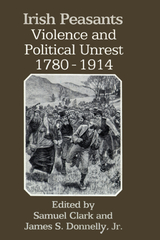
"The strength of this volume cannot be conveyed by an itemisation of its contents; for what it provides is an incisive commentary on the newly-recognised landmarks of Irish agrarian history in the modern period. . . . The importance, even indispensability, of this achievement is compounded by exemplary editing."—Roy Foster, London Times Literary Supplement
"As a whole, the volume demonstrates the wealth, complexity, and sophistication of Irish rural studies. The book is essential reading for anyone involved in modern Irish history. It will also serve as an excellent introduction to this rich field for scholars of other peasant communities and all interested in problems of economic and political developments."—American Historical Review
"A milestone in the evolution of Irish social history. There is a remarkable consistency of style and standard in the essays. . . . This is truly history from the grassroots."—Timothy P. O'Neill, Studia Hibernica
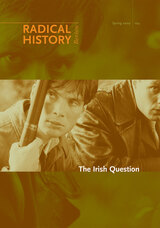
One contributor addresses the issue of constitutional nationalism in late-nineteenth- and early-twentieth-century Ireland, while another looks at the recent history of Irish republicanism in relation to the peace process. Other essays examine Protestant society and Unionist hegemony in nineteenth-century Ulster, immigration and racism as the Irish experienced them in postwar Britain, and the historiography of race and racialization in Ireland. The historical adviser for the award-winning film The Wind That Shakes the Barley reflects on its portrayal of the period of the Irish War of Independence and Civil War and a photographic essay focuses on supporters of the modern Irish republican movement in the United States and Ireland.
Contributors. Kevin Bean, Pauline Collombier-Lakeman, Mary Conley, John Corbally, Steve Garner, Diane George, Van Gosse, Martin Hayes, Bill Kissane, Conor McGrady, Kerby Miller, Kevin Noble, Donal Ó Drisceoil
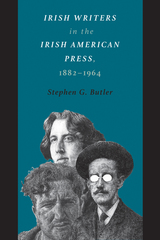
Irish Writers in the Irish American Press spans the period from Oscar Wilde's 1882 American lecture tour to the months following JFK's assassination and covers the century in which Irish American identity was shaped by immigration, religion, politics, and economic advancement. Through a close engagement with Irish American periodicals, Butler offers a more nuanced understanding of the connections between Irish literary studies and Irish American culture during this period.
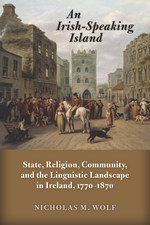
As late as 1840, Ireland had as many as four million Irish speakers—a significant proportion of the total population—who could be found in every county of the island and in all social classes and religious persuasions. Their impact on the modern history of Ireland and the United Kingdom cannot be captured by a simple conclusion that they became anglicized. Rather, Nicholas M. Wolf explores the complex ways in which the transition from Irish to English placed a premium on adaptive bilingualism and shaped beliefs and behavior in the domestic sphere, religious life, and oral culture within the community. An Irish-Speaking Island will interest not only historians but also scholars of linguistics, folklore, politics, literature, and religion.
Winner, Michael J. Durkan Prize for Books on Language and Culture, American Conference for Irish Studies
Winner, Donald Murphy Prize for Distinguished First Books, American Conference for Irish Studies
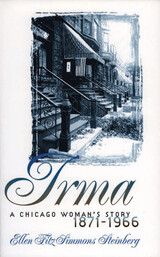
Irma’s journals and diaries were private accounts in which she chronicled the rhythm of her days and the shape of her life. She recorded her thoughts and short quotations from her reading, jotted down her own poems and short stories, constructed dinner-party menus, and wrote biographical sketches of her family. Interspersed among the records of what she did when and with whom are a number of lengthy reflections on Chicago history, her early life, religious beliefs, education, her aspirations, disappointments, sorrows, and successes. She documented her family’s activities during the Chicago Fire, the city’s rebuilding, early educational curricula in the city’s schools, what it was like to participate in the suffrage movement and vote for the first time, the effect of the Great Depression on the middle class, and World War II as seen from her perspective.
In each chapter, Ellen Steinberg has set Irma’s contemporary entries and later memoirs against the context of the Chicago history that Irma knew so well. Irma’s story will fascinate those interested in diaries and autobiography, women’s history, and Chicago history. From a plethora of rich source materials—including over half a million words of Irma’s writings alone—Steinberg has created a seamless, fascinating narrative about a Chicago woman who, although “nobody famous” (in her words), lived a vital life in a vibrant city.

“The scholarship of this book is breathtaking…No one interested in the history of Europe, and of the Germans in particular, can afford not to read this stupendous book.” —Simon Heffer, The Telegraph
“[Iron and Blood’s] long view of Germany’s military history, magisterial detail and acute analysis provide a new understanding of what was once Europe’s warring heart.” —The Economist
“Astonishingly ambitious and detailed…An absorbing overview of how slowly changing societal forces… have transformed the use of military force across modern times.” —Foreign Affairs
German military history is typically viewed as an inexorable march to the rise of Prussia and the two world wars, the road paved by militarism and the result a specifically German way of war. Looking beyond Prussia to German-speaking Europe across the last five centuries, Peter Wilson challenges this narrative. In fact, he finds little unique or preordained in German militarism or warfighting.
Starting with the consolidation of the Holy Roman Empire, which was largely defensive in orientation, Iron and Blood shows that German participation in foreign wars was most often in partnership with allies. The primary aggressor in Central Europe was not Prussia but the Austrian Habsburg monarchy, which owed much of its strength to its ability to secure alliances. Prussia, meanwhile, invested in militarization but maintained a part-time army well into the nineteenth century. Both states, Wilson shows, exemplify the longstanding civilian element within German military power. Only after Prussia’s unexpected victory over France in 1871 did Germans and outsiders come to believe in a German gift for warfare—a special capacity for high-speed, high-intensity combat that could overcome numerical disadvantage.
It took two world wars to expose the fallacy of German military genius. Yet even today, Wilson argues, Germany’s strategic position is misunderstood. The country now seen as a bastion of peace spends heavily on defense in comparison to its peers and is deeply invested in less kinetic contemporary forms of coercive power.
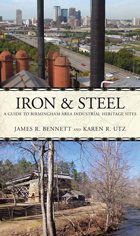
This guidebook of historic iron-production sites is designed to give the reader a factual and illuminating look at the people and events that shaped Birmingham into one of America’s leading steel centers. Iron & Steel is heavily illustrated with both color and historical black-and-white photographs. It can be used while visiting parks or read as a coherent volume before or after a visit.
The book contains chapters devoted to the larger preserved sites open to the public, such as Sloss Furnaces National Historic Landmark and Tannehill Ironworks Historical State Park. It also highlights lesser-known, yet still accessible, sites such as Blocton Coke Ovens Park. The work provides easy-to-follow maps for every site as well as driving directions to the more remote locations, giving visitors easy access to all the notable iron and steel sites in Jefferson, Shelby, Tuscaloosa, and Bibb counties. Each chapter also includes a variety of historical information, with accompanying photographs, in order to present the reader with a detailed and comprehensive account of the Birmingham Iron and Steel District.
Featured sites include: Tannehill Ironworks Historical State Park; Shelby Ironworks Park; Billy Gould Coke Ovens Park; Brierfield Ironworks Historical State Park; Oxmoor Furnace Site; Irondale Furnace Park; Helena Rolling Mill Site; Red Mountain Park, Iron Ore Mines; Lewisburg Coke Ovens Park; Sloss Furnaces National Historic Landmark; Ruffner Mountain Nature Center; Blocton Coke Ovens Park; and Vulcan Park and Museum.


Through vivid vignettes and lyrical prose, The Iron Grasshopper transcends memoir, immersing readers in the poignant and turbulent realities of a Kurdish childhood in mid-twentieth-century Syria.
Kurdish-Syrian poet and novelist Salim Barakat, one of the most distinctive writers in contemporary Arabic literature, has mesmerized the Arab literary scene since his first volume of poetry appeared in 1972. Now, his unique memoir—first published in 1980—is finally available in English translation.
In The Iron Grasshopper, Barakat offers a poignant and evocative portrayal of his childhood. Set against the backdrop of the mid-twentieth century, Barakat’s memoir recounts his formative years in a small town near the Taurus Mountains. Through a series of vivid and often unsettling vignettes, he captures the turbulence and wonder of growing up in a landscape marked by political upheaval, cultural conflicts, and personal discovery. Barakat’s story intertwines childhood innocence with the harsh realities of violence and discrimination against Kurds, shaping his relationship with his homeland, the Arabic language, and his identity as a writer. The memoir’s rich prose and lyrical reflections invite readers into Barakat’s inner world, where the boundaries between past and present blur, and the simplicity of childhood is juxtaposed with profound existential musings.
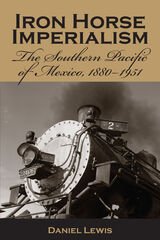
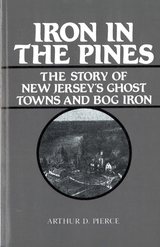
With warmth and accuracy, Arthur D. Pierce tells the story of the years when iron was king, and around it rose a rustic feudal economy. There were glass factories, paper mills, cotton mills, and brickmaking establishments. Here, too, were men who made those years exciting: Benedict Arnold and his first step toward treason; Charles Read, who dreamed of an empire and died in exile; Revolutionary heroes and heroines, privateers, and rogues. The author's vivid pictures of day-to-day life in the old iron communities are based upon careful research. This book proves that the human drama of documented history belies any notion that fiction is stranger than truth.

In the aftermath of World War II, Prussia—a centuries-old state pivotal to Europe’s development—ceased to exist. In their eagerness to erase all traces of the Third Reich from the earth, the Allies believed that Prussia, the very embodiment of German militarism, had to be abolished. But as Christopher Clark reveals in this pioneering history, Prussia’s legacy is far more complex. Though now a fading memory in Europe’s heartland, the true story of Prussia offers a remarkable glimpse into the dynamic rise of modern Europe.
What we find is a kingdom that existed nearly half a millennium ago as a patchwork of territorial fragments, with neither significant resources nor a coherent culture. With its capital in Berlin, Prussia grew from being a small, poor, disregarded medieval state into one of the most vigorous and powerful nations in Europe. Iron Kingdom traces Prussia’s involvement in the continent’s foundational religious and political conflagrations: from the devastations of the Thirty Years War through centuries of political machinations to the dissolution of the Holy Roman Empire, from the enlightenment of Frederick the Great to the destructive conquests of Napoleon, and from the “iron and blood” policies of Bismarck to the creation of the German Empire in 1871, and all that implied for the tumultuous twentieth century.
By 1947, Prussia was deemed an intolerable threat to the safety of Europe; what is often forgotten, Clark argues, is that it had also been an exemplar of the European humanistic tradition, boasting a formidable government administration, an incorruptible civil service, and religious tolerance. Clark demonstrates how a state deemed the bane of twentieth-century Europe has played an incalculable role in Western civilization’s fortunes. Iron Kingdom is a definitive, gripping account of Prussia’s fascinating, influential, and critical role in modern times.
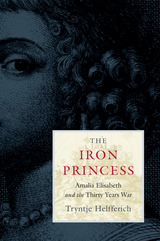
Thrust into power in the midst of the bloodiest conflict Europe had ever experienced, Amalia Elisabeth fought to save her country, her Calvinist church, and her children’s inheritance. Tryntje Helfferich’s vivid portrait reveals how this unique and embattled ruler used her diplomatic gifts to play the great powers of Europe against one another during the Thirty Years War, while raising one of the most powerful and effective fighting forces on the continent.
Stranded in exile after the death of her husband, Amalia Elisabeth stymied the maneuvers of male relatives and advisors who hoped to seize control of the affairs of her tiny German state of Hesse-Cassel. Unshakable in her religious faith and confident in her own capacity to rule, the princess crafted a cunning strategy to protect her interests. Despite great personal tragedy, challenges to her rule, and devastating losses to her people and lands, Amalia Elisabeth wielded her hard-won influence to help shape the new Europe that arose in the war’s wake. She ended her reign in triumph, having secured the birthright of her children and the legalization of her church. The Iron Princess restores to view one of the most compelling political figures of her time, a woman once widely considered the heroine of the seventeenth century.

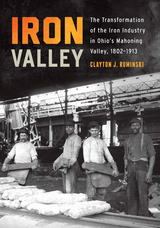
Youngstown, Ohio, and the surrounding Mahoning Valley supplied the iron that helped transform the United States into an industrial powerhouse in the nineteenth century. The story of the Mahoning Valley’s unorthodox rise from mid-scale iron producer to twentieth-century “Steel Valley” is a tale of innovation, stagnation, and, above all, extreme change. Located halfway between Pittsburgh and Cleveland, the Mahoning Valley became a major supplier of pig iron to America’s biggest industrial regions. For much of the nineteenth century, outside consumers relied on the Valley’s pig iron, but this reliance nurtured a reluctance on the part of Youngstown iron companies to diversify or expand their production.
In Iron Valley: The Transformation of the Iron Industry in Ohio’s Mahoning Valley, 1802–1913, Clayton J. Ruminski argues that Youngstown-area iron manufacturers were content to let others in the industry innovate, and only modernized when market conditions forced them to do so. Desperate to find new markets, some Youngstown iron manufacturers eventually looked toward steel and endured a rapid, but successful, industrial transformation that temporarily kept their old enterprises afloat in a rapidly evolving industry. Richly illustrated with rare photographs of Mahoning Valley ironmasters, mills, furnaces, and workers, Iron Valley sheds light on a previously underrepresented and vital region that built industrial America.
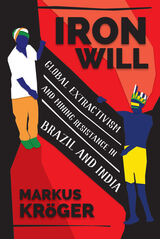
By drawing on a detailed field research and other sources, this book explains precisely which resistance strategies are able to influence both political and economic outcomes. Kröger expands the focus of traditionally Latin American extractivism research to other contexts such as India and the growing extractivist movement in the Global North. In addition, as the book is a multi-sited political ethnography, it will appeal to sociologists, political scientists, anthropologists, geographers, and others using field research among other methods to understand globalization and global political interactions. It is the most comprehensive book on the political economy and ecology of iron ore and steel. This is astonishing, given the fact that iron ore is the second-most important commodity in the world after oil.
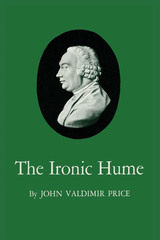
Many of the seemingly bland assertions and bald statements of the eighteenth-century philosopher David Hume contain more than the mind immediately perceives. Author John Valdimir Price contends that an understanding of Hume's writings cannot be separated from an understanding of his life. By examining the works of Hume, Price shows the way in which an ironic way of seeing events and an ironic mode of expression permeated Hume's life and writings.
Price examines Hume's irony as it is exhibited in letters to his friends and in his writings concerned with morality, people, philosophy, politics, history, and above all religion. Hume's opinions on life in general are stated in works ranging from the Treatise of Human Nature and the Essays, Moral and Political, through the Enquiry concerning Human Understanding and the Enquiry concerning Principles of Morals, to the Dialogue and Four Dissertations of his maturity.
Price feels that Hume's recognition of the ironic in life came about from his perception of the disproportion between human hopes and human accomplishments. The rhetorical consequences of applying reason to a duality in human nature creates the ironic mode. Hume conceived man's opposing tendencies as his willingness to commit himself orally to a concept, a dogma, an idea, or an ideology, and his unwillingness to involve himself in the logical and rhetorical implications of articulating those principles.
Hume's use of the ironic mode in his writings provides him with a means of challenging certain dogmatic assumptions common to thought, particularly to traditional religious thought; it acts as a mask for his sceptical intentions, and it is an implied criticism of many ideas. In his political writing, Hume frequently implied that the question under argument was almost too ridiculous to deserve serious treatment. This tactic was effectively employed in the Account of Stewart, in which Hume came to the defense of a friend.
In his most profitable venture, the History of England, Hume not only used irony to advantage, but developed a new approach to the writing of history—the use of narrative. He presented history as a series of more or less connected events, not as a series of "right" or "wrong" attitudes.
The author believes that Hume's initial religious scepticism, combined with the predominant satiric-ironic mode in the literature of his time, led him to seek irony as a method of self expression. This scepticism, which permeated all of Hume's attitudes toward life, reached its most complete expression in the Dialogues concerning Natural Religion, which accepted reason as its guide, but also accepted experience as its master.
Analyzing both the resistance from the Right and the support from the Left, Skrentny brings to light the unique moral culture that has shaped the affirmative action debate, allowing for starkly different policies for different citizens. He also shows, through an analysis of historical documents and court rulings, the complex and intriguing political circumstances which gave rise to these controversial policies.
By exploring the mystery of how it took less than five years for a color-blind policy to give way to one that explicitly took race into account, Skrentny uncovers and explains surprising ironies: that affirmative action was largely created by white males and initially championed during the Nixon administration; that many civil rights leaders at first avoided advocacy of racial preferences; and that though originally a political taboo, almost no one resisted affirmative action.
With its focus on the historical and cultural context of policy elites, The Ironies of Affirmative Action challenges dominant views of policymaking and politics.
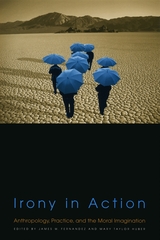
The first group of essays explores the limits to irony's liberating qualities from the constrained use of irony in congressional hearings to its reactive presence amid widening disparities of wealth despite decades of world development. The second section presents irony's more positive dimensions through an array of examples such as the use of irony by Chinese writers and Irish humorists. Framed by the editors' theoretical introduction to the issues posed by irony and responses to the essays by two literary scholars, Irony in Action is a timely contribution in the contemporary reinvention of anthropology.

“The supreme American theologian of the twentieth century.”—Arthur Schlesinger Jr., New York Times
“Niebuhr is important for the left today precisely because he warned about America’s tendency—including the left’s tendency—to do bad things in the name of idealism. His thought offers a much better understanding of where the Bush administration went wrong in Iraq.”—Kevin Mattson, The Good Society
“Irony provides the master key to understanding the myths and delusions that underpin American statecraft. . . . The most important book ever written on US foreign policy.”—Andrew J. Bacevich, from the Introduction

How free is the speech of someone who can't be heard? Not very--and this, Owen Fiss suggests, is where the First Amendment comes in. In this book, a marvel of conciseness and eloquence, Fiss reframes the debate over free speech to reflect the First Amendment's role in ensuring public debate that is, in Justice William Brennan's words, truly "uninhibited, robust, and wide-open."
Hate speech, pornography, campaign spending, funding for the arts: the heated, often overheated, struggle over these issues generally pits liberty, as embodied in the First Amendment, against equality, as in the Fourteenth. Fiss presents a democratic view of the First Amendment that transcends this opposition. If equal participation is a precondition of free and open public debate, then the First Amendment encompasses the values of both equality and liberty.
By examining the silencing effects of speech--its power to overwhelm and intimidate the underfunded, underrepresented, or disadvantaged voice--Fiss shows how restrictions on political expenditures, hate speech, and pornography can be defended in terms of the First Amendment, not despite it. Similarly, when the state requires the media to air voices of opposition, or funds art that presents controversial or challenging points of view, it is doing its constitutional part to protect democratic self-rule from the aggregations of private power that threaten it.
Where most liberal accounts cast the state as the enemy of freedom and the First Amendment as a restraint, this one reminds us that the state can also be the friend of freedom, protecting and fostering speech that might otherwise die unheard, depriving our democracy of the full range and richness of its expression.
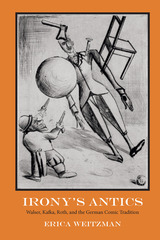
Combining theoretical breadth with close textual analysis, Erica Weitzman shows how irony, a key term for the German romantics, reemerged in the early twentieth century from a postromantic relegation to the nonsensical and the nihilistic in a way that both rethought romantic irony and dramatically extended its reach.
Through readings of works by Robert Walser, Franz Kafka, and Joseph Roth against the rich history of comic theory (particularly Hegel and Freud), Weitzman traces the development of a specifically comic irony in modern German-language literature and philosophy, a play with the irony that is itself the condition for all play. She thus provides a crucial reevaluation of German literary history and offers new insights into the significance of irony and the comic from the Enlightenment to the present day.
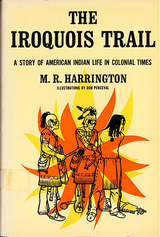
As Dickon and his companions travel the Iroquois Trail in search of his Lenape brother, Little-Bear, they learn the ways of the Onondagas, Senecas, Mohawks, Oneidas, and Cayugas. Dickon tells his own story, describing the day-to-day activities in the villages along the trail—their ways of making clothing, weapons, household articles, and ornaments, and how they hunt, cook, travel, and worship. He meets Hiawatha, Deganawide, Jigonsasay, and other Indian leaders. His tale is accompanied by line drawings that vividly portray the art of making baskets, moccasins, bows and arrows, clothing, and other everday articles. These illustrations are done by Don Perceval, a renowned artist and specialist on Indians.
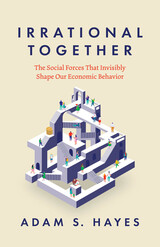
In Irrational Together, economic sociologist Adam S. Hayes takes readers on a fascinating journey to uncover the often-unseen social forces that shape our financial behavior. Drawing on original research and engaging real-world examples, Hayes challenges not only the notion that economic decisions are purely rational but also the prevailing behavioral economics view that irrational choices stem primarily from individual beliefs. Instead, he argues that our economic choices and actions are deeply embedded in our social and cultural contexts and that understanding these influences is crucial to fully grasp the complexities of financial decision-making.
From the impact of social class and cultural capital on risk-taking and the role of social networks and group identities in shaping consumer choices to the gendered dimensions of financial advice and literacy, this book weaves together insights from sociology, behavioral economics, and cultural studies to paint a nuanced picture of how we navigate the economic landscape as inherently social beings. Why, for example, would someone choose to continue paying 20% interest on a large credit card debt rather than taking out a low-interest mortgage on their home to pay off the card? As Hayes makes clear through rigorous analysis, cultural values—like those related to home ownership—hold as much or more sway over us than financial best practices.
Bridging the gap between behavioral economics and sociology, this groundbreaking work paves the way for a more holistic understanding of the social and cultural influences on economic behavior. Hayes also looks to the future and argues that to correct major disparities in our social understanding of wealth and money, we need to construct financial systems that consider a diversity of social backgrounds.
With its accessible language and thought-provoking insights, Irrational Together is an essential guide for anyone seeking to understand the intersection of money, society, and human behavior.
This is the first detailed study, following the recent collapse of political Marxism in Eastern Europe, of twentieth-century Hungarian philosopher Georg Lukács and his position as the leading proponent of the Marxist theory of reason. Lukács's History and Class Consciousness has been called one of the three most influential philosophical works of this century, and he, the outstanding Marxist philosopher. Marxism has long suffered relative neglect in philosophical discussion as a result of its own invidious distinction between itself and the supposed irrationality of what it regards as bourgeois philosophy.
Tom Rockmore offers a uniquely detailed philosophical analysis of Lukács's entire position as a theory of reason, based on the distinction between reason and unreason, or irrationalism. The author gives special emphasis to Lukács's connection to German neo-Kantianism, particularly Lask, and on his last, unfinished work.
Rockmore begins with an account of the roots of Lukács's Marxism, followed by an in-depth analysis of his often mentioned, but still incompletely understood, seminal essay "Reification and the Class Consciousness of the Proletariat." He then traces the evolution and later demise of the distinction between reason and irrationalism in Lukács's final thought. The author thus makes available for the first time in English a strictly philosophical discussion of Georg Lukács's Marxist phase and brings consideration of his thought into the wider philosophical discussion.
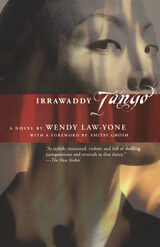
Irrawaddy Tango, a pepper-tongued, tango-dancing Asian beauty rises from a village girlhood to become the wife of her country's dictator and then a leader of the rebel forces arrayed against him. Tango captures the attention of an ambitious colonel --the self-proclaimed Supremo--while dancing at a talent contest. Once married, she is forced to endure the cruelties of a ruthless and foolish husband, is kidnapped by rebel forces, recaptured and brutally punished by her husband's military clique, and eventually exiled to America. Her return to the fictional Republic of Daya (clearly Burma) brings about the destruction of her husband and his dictatorship. Irrawaddy Tango tells the unsettling tale of powerful men and powerless women. It evokes as well the harshness of exile, revealing the misunderstandings between East and West and by doing so captures the intensity of living between the two.
Based on this innovative research approach, key questions are answered regarding the lives of irregular migrants. How can we understand their patterns of economic and social incorporation, the transnational activities they engage in, and the significance of different forms of capital? Drawing on intensive participant observation, as well as more than two hundred in-depth interviews with irregular migrants and representatives of organizations that are involved with them, Irregular Migrants develops much-needed contextualized insights. As such, it sheds new light on previous research findings and various deadlocked scholarly debates on irregular migrants in Western societies.


The most significant conquest of the twentieth century may well have been the triumph of American consumer society over Europe’s bourgeois civilization. It is this little-understood but world-shaking campaign that unfolds in Irresistible Empire, Victoria de Grazia’s brilliant account of how the American standard of living defeated the European way of life and achieved the global cultural hegemony that is both its great strength and its key weakness today.
De Grazia describes how, as America’s market empire advanced with confidence through Europe, spreading consumer-oriented capitalism, all alternative strategies fell before it—first the bourgeois lifestyle, then the Third Reich’s command consumption, and finally the grand experiment of Soviet-style socialist planning. Tracing the peculiar alliance that arrayed New World salesmanship, statecraft, and standardized goods against the Old World’s values of status, craft, and good taste, Victoria de Grazia follows the United States’ market-driven imperialism through a vivid series of cross-Atlantic incursions by the great inventions of American consumer society. We see Rotarians from Duluth in the company of the high bourgeoisie of Dresden; working-class spectators in ramshackle French theaters conversing with Garbo and Bogart; Stetson-hatted entrepreneurs from Kansas in the midst of fussy Milanese shoppers; and, against the backdrop of Rome’s Spanish Steps and Paris’s Opera Comique, Fast Food in a showdown with advocates for Slow Food. Demonstrating the intricacies of America’s advance, de Grazia offers an intimate and historical dimension to debates over America’s exercise of soft power and the process known as Americanization. She raises provocative questions about the quality of the good life, democracy, and peace that issue from the vaunted victory of mass consumer culture.
Whether describing religious art and ritual, suffering, war and disease, the pleasures of love, the wonders of nature, archaeological findings, surfing, volcanoes, or jellyfish, Lingis writes with equal measures of rigor and abandon about the vicissitudes of our practices and beliefs. Knowing that birth, the essential encounters in our lives, crippling diseases and accidents, and even death are all determined by chance, how do we recognize and understand such chance? After facing tragedies, what makes it possible to live on while recognizing our irrevocable losses?
Lingis’s investigations are accompanied by his own vivid photographs from around the world. Balancing the local and the global, and ranging across vast expanses of culture and time, Irrevocable sounds the depths of both our passions and our impassioned bodies and minds.
Of the communal institutions elaborated by medieval Spaniards, the most significant and longest-lived were the irrigation communities which the Muslims had established centuries earlier in the Valencian region.
The objective of these remarkably democratic communities was justice and equity in water distribution; and the irrigators succeeded in combining traditional rules with consensual authority to maintain their systems with a minimum of conflict. Above the community level, however, regional powers including king, nobles, church, and town all sought to derive, at each other's expense, the maximum benefit from the available water supply. The resultant interplay of power politics was a sharp contrast to the democracy of the communities.
Thomas F. Glick has drawn on original documents of the fourteenth and fifteenth centuries to present in this volume a thorough and lively study of Valencian irrigation and society. In Part One Glick describes medieval Valencian irrigation in the epoch of its fullest documentation (1238-4500), focusing on the institutional dynamics of both the local irrigation communities--those irrigating from a single main canal--and the larger regional units, the huertas. He examines the huerta environment and the administration of the irrigation communities and then discusses intracommunity conflict, the city's role in irrigation development, the search for new sources of water, and regional arrangements for irrigation.
Part Two is concerned generally with the spread of Islamic irrigation technology and, more specifically, with cultural diffusion and the persistence of cultural forms during the transition in Spain from Islamic to Christian rule. Here the author examines the antecedents of medieval Valencian irrigation on the basis of Islamic survivals in medieval Christian institutions and of comparative data from other Islamic irrigation systems. He also touches on aspects of acculturation and cultural transition that extend beyond the geographical and temporal bounds of this study, explaining that "the history of Spanish irrigation is but one example of the administrative creativity and genius for cultural synthesis which characterized Iberian culture at the dawn of themodern age."

Rulin waishi (The Unofficial History of the Scholars) is more than a landmark in the history of the Chinese novel. This eighteenth-century work, which was deeply embedded in the intellectual and literary discourses of its time, challenges the reader to come to grips with the mid-Qing debates over ritual and ritualism, and the construction of history, narrative, and lyricism. Wu Jingzi's (1701–54) ironic portrait of literati life was unprecedented in its comprehensive treatment of the degeneration of mores, the predicaments of official institutions, and the Confucian elite's futile struggle to reassert moral and cultural authority. Like many of his fellow literati, Wu found the vernacular novel an expressive and malleable medium for discussing elite concerns.
Through a close reading of Rulin waishi, Shang Wei seeks to answer such questions as What accounts for the literati's enthusiasm for writing and reading novels? Does this enthusiasm bespeak a conscious effort to develop a community of critical discourse outside the official world? Why did literati authors eschew publication? What are the bases for their social and cultural criticisms? How far do their criticisms go, given the authors' alleged Confucianism? And if literati authors were interested solely in recovering moral and cultural hegemony for their class, how can we explain the irony found in their works?
The story of Irvin S. Cobb is a fascinating one for many reasons. His life was not unusual at the time: a Horatio Alger rise from poor boy to world authority through hard work. Associate of celebrities of all kinds for two decades, he died in Hollywood virtually forgotten, having outlived the world he grew up in and which appreciated him.
This profile of the man and the writer is an introduction to the personality behind The Chapman Report and The Fan Club. Through correspondence, diaries, manuscript annotations, interviews and other private sources, the profile reveals the man who began as a sports stringer for a Wisconsin newspaper and is now one of the world's most popular novelists.

More than ever before, the school history textbook in India has become an embattled object and the subject of many contestations from both above and below. It is vulnerable not only to the political vagaries of governments but also to the exclusive claims of myriad communities and groups to their sense of the past. What is the future of India’s textbook, arguably the most important repository of the country’s national past? Is a single teachable past even possible any longer?
In this essay, Janaki Nair uses the Indian predicament to discuss the possibility of building up a “historical temper” in the Indian classroom. Sharing examples from her unique position as a professional historian with sustained experience in the field of pedagogy, Nair invites reflections on the prospect of cultivating a historical temper that can help the teacher equip students to grapple with history.
With Is Administrative Law Unlawful?, Philip Hamburger answers this question in the affirmative, offering a revisionist account of administrative law. Rather than accepting it as a novel power necessitated by modern society, he locates its origins in the medieval and early modern English tradition of royal prerogative. Then he traces resistance to administrative law from the Middle Ages to the present. Medieval parliaments periodically tried to confine the Crown to governing through regular law, but the most effective response was the seventeenth-century development of English constitutional law, which concluded that the government could rule only through the law of the land and the courts, not through administrative edicts. Although the US Constitution pursued this conclusion even more vigorously, administrative power reemerged in the Progressive and New Deal Eras. Since then, Hamburger argues, administrative law has returned American government and society to precisely the sort of consolidated or absolute power that the US Constitution—and constitutions in general—were designed to prevent.
With a clear yet many-layered argument that draws on history, law, and legal thought, Is Administrative Law Unlawful? reveals administrative law to be not a benign, natural outgrowth of contemporary government but a pernicious—and profoundly unlawful—return to dangerous pre-constitutional absolutism.
Alarmists argue that the United States urgently needs more and better-trained scientists to compete with the rest of the world. Their critics counter that, far from facing a shortage, we are producing a glut of young scientists with poor employment prospects. Both camps have issued reports in recent years that predict the looming decline of American science. Drawing on their extensive analysis of national data sets, Yu Xie and Alexandra Killewald have welcome news to share: American science is in good health.
Is American Science in Decline? does reveal areas of concern, namely scientists’ low earnings, the increasing competition they face from Asia, and the declining number of doctorates who secure academic positions. But the authors argue that the values inherent in American culture make the country highly conducive to science for the foreseeable future. They do not see globalization as a threat but rather a potential benefit, since it promotes efficiency in science through knowledge-sharing. In an age when other countries are catching up, American science will inevitably become less dominant, even though it is not in decline relative to its own past. As technology continues to change the American economy, better-educated workers with a range of skills will be in demand. So as a matter of policy, the authors urge that science education not be detached from general education.

If you could pose one question to a dolphin, what would it be? And what might a dolphin ask you? For forty years, researcher and author Denise L. Herzing has investigated these and related questions of marine mammal communication. With the assistance of a friendly community of Atlantic spotted dolphins in the Bahamas, Herzing studies two-way communication between different dolphin species and between humans and dolphins using a variety of cutting-edge experiments. But the dolphins are not the only ones talking, and in this wide-ranging and accessible book, Herzing explores the astonishing realities of interspecies communication, a skill that humans currently lack.
Is Anyone Listening? connects research on dolphin communication to findings from Jane Goodall on chimpanzees, Dian Fossey on mountain gorillas, Cynthia Moss on African elephants, and others driving today’s exploration of possible animal languages. Although humans have long attempted to crack animal communication codes, only now do we have the advanced machine-learning tools to help. As Herzing reveals, researchers are finding fascinating hints of language in nonhuman species, including linguistic structures, vowel equivalents, and complex repeated sequences. By looking at the many ways animals use and manipulate signals, we see that we’ve only just begun to appreciate the diversity of animal intelligence and the complicated and subtle aspects of animal communication.
Considering dolphins and other nonhuman animals as colleagues instead of research subjects, Herzing asks us to meet animals as both speakers and listeners, as mutually curious beings, and to listen to what they are saying.
"Not only does it provide convincing evidence for particular effects of media fragmentation, but it also explores some of the specific mechanisms by which television works its damage. . . . Here is powerful additional evidence for those of us who like to flay television for its contributions to the trivialization of public discourse and the erosion of democratic accountability."—William A. Gamson, Contemporary Sociology
"Iyengar's book has substantial merit. . . . [His] experimental methods offer a precision of measurement that media effects research seldom attains. I believe, moreover, that Iyengar's notion of framing effects is one of the truly important theoretical concepts to appear in recent years."—Thomas E. Patterson, American Political Science Review
After communism collapsed in the former Soviet Union, capitalism seemed to many observers like the only game in town, and questioning it became taboo for academic economists. But the financial crisis, chronic unemployment, and the inexorable rise of inequality have resurrected the question of whether there is a feasible and desirable alternative to capitalism. Against this backdrop of growing disenchantment, Giacomo Corneo presents a refreshingly antidogmatic review of economic systems, taking as his launching point a fictional argument between a daughter indignant about economic injustice and her father, a professor of economics.
Is Capitalism Obsolete? begins when the daughter’s angry complaints prompt her father to reply that capitalism cannot responsibly be abolished without an alternative in mind. He invites her on a tour of tried and proposed economic systems in which production and consumption obey noncapitalistic rules. These range from Plato’s Republic to diverse modern models, including anarchic communism, central planning, and a stakeholder society. Some of these alternatives have considerable strengths. But daunting problems arise when the basic institutions of capitalism—markets and private property—are suppressed. Ultimately, the father argues, all serious counterproposals to capitalism fail to pass the test of economic feasibility. Then the story takes an unexpected turn. Father and daughter jointly come up with a proposal to gradually transform the current economic system so as to share prosperity and foster democratic participation.
An exceptional combination of creativity and rigor, Is Capitalism Obsolete? is a sorely needed work about one of the core questions of our times.
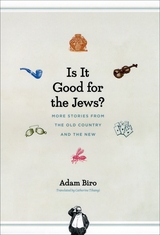
“Jewish stories,” writes Adam Biro, “resemble every people’s stories.” Yet at the same time there is no better way to understand the soul, history, millennial suffering, or, crucially, the joys of the Jewish people than through such tales—“There’s nothing,” writes Biro, “more revelatory of the Jewish being.”
With Is It Good for the Jews? Biro offers a sequel to his acclaimed collection of stories Two Jews on a Train. Through twenty-nine tales—some new, some old, but all finely wrought and rich in humor—Biro spins stories of characters coping with the vicissitudes and reverses of daily life, while simultaneously painting a poignant portrait of a world of unassimilated Jewish life that has largely been lost to the years. From rabbis competing to see who is the most humble, to the father who uses suicide threats to pressure his children into visiting, to three men berated by the Almighty himself for playing poker, Biro populates his stories with memorable characters and absurd—yet familiar—situations, all related with a dry wit and spry prose style redolent of the long tradition of Jewish storytelling.
A collection simultaneously of foibles and fables, adversity and affection, Is It Good for the Jews? reminds us that if in the beginning was the word, then we can surely be forgiven for expecting a punch line to follow one of these days.

By the millennium Americans were spending more than 12 billion dollars yearly on antidepressant medications. Currently, millions of people in the U.S. routinely use these pills. Are these miracle drugs, quickly curing depression? Or is their popularity a sign that we now inappropriately redefine normal life problems as diseases? Are they prescribed too often or too seldom? How do they affect self-images?
David Karp approaches these questions from the inside, having suffered from clinical depression for most of his adult life. In this book he explores the relationship between pills and personhood by listening to a group of experts who rarely get the chance to speak on the matter--those who are taking the medications. Their voices, extracted from interviews Karp conducted, color the pages with their experiences and reactions--humor, gratitude, frustration, hope, and puzzlement. Here, the patients themselves articulate their impressions of what drugs do to them and for them. They reflect on difficult issues, such as the process of becoming committed to medication, quandaries about personal authenticity, and relations with family and friends.
The stories are honest and vivid, from a distraught teenager who shuns antidepressants while regularly using street drugs to a woman who still yearns for a spiritual solution to depression even after telling intimates "I'm on Prozac and it's saving me." The book provides unflinching portraits of people attempting to make sense of a process far more complex and mysterious than doctors or pharmaceutical companies generally admit.
Is It Nation Time? gathers new and classic essays on the Black Power movement and its legacy by renowned thinkers who deal rigorously and unsentimentally with such issues as the commodification of blackness, the piety of cultural recovery, and class tensions within the movement. For anyone who wants to understand the roots of the complex political and cultural desires of contemporary black America, this will be an essential collection.
Contributors:
Eddie S. Glaude Jr.
Farah Jasmine Griffin
Phillip Brian Harper
Gerald Horne
Robin D. G. Kelley
Wahneema Lubiano
Adolph Reed Jr.
Jeffrey Stout
Will Walker
S. Craig Watkins
Cornel West
E. Francis White
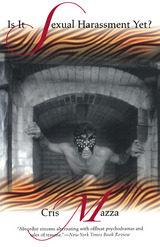
These stories convey a powerful, convincing sense of the bewilderment and excitement of sexual desires. Mazza describes a world that resembles a shopping mall gone mad, populated by ordinary, normal people behaving in ways that mock the very concept of normality. By describing these lives with an acute sense of the absurd, Mazza produces a dark, sometimes hilarious comedy that undercuts the shaky compromise of the consensus we call reality.
READERS
Browse our collection.
PUBLISHERS
See BiblioVault's publisher services.
STUDENT SERVICES
Files for college accessibility offices.
RECENTLY PUBLISHED


UChicago Accessibility Resources
home | accessibility | search | about | contact us
BiblioVault ® 2001 - 2025
The University of Chicago Press