
 A SCHOLARLY BOOK REPOSITORY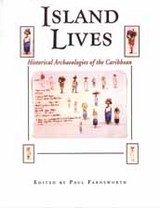
This comprehensive study of the historical archaeology of the Caribbean provides sociopolitical context for the ongoing development of national identities.
Long before the founding of Jamestown in 1607, there were Spanish forts, bustling towns, sugar plantations, and sea trade flourishing in the Caribbean. While richer nations, particularly the United States, may view the Caribbean today as merely a place for sun and fun, the island colonies were at one time far more important and lucrative to their European empire countries than their North American counterparts. From the 15th to the 19th centuries, as competing colonial powers vied with each other for military and economic advantage in the Western Hemisphere, events in the Caribbean directly influenced the American mainland.
This is one rationale for the close study of historical archaeology in the Caribbean. Another is the growing recognition of how archaeological research can support the defining of national identities for the islands, many of them young independent states struggling to establish themselves economically and politically. By looking at cases in the French West Indies, specifically on Guadeloupe, in the Dutch Antilles and Aruba, in the British Bahamas, on Montserrat and St. Eustatius, on Barbados, and the within the U.S. Virgin Islands, the contributors to Island Lives have produced a broad overview of Caribbean historical archaeology.
Island Lives makes clear that historical archaeology in the Caribbean will continue to grow and diversify due to the interest Caribbean peoples have in recording, preserving, and promoting their culture and heritage; the value it adds to their "heritage tourism"; and the connection it has to African American history and archaeology. In addition, the contributors point to the future by suggesting different trajectories that historical archaeology and its practitioners may take in the Caribbean arena. In so doing, they elucidate the problems and issues faced worldwide by researchers working in colonial and post-colonial societies.
Paul Farnsworth is Associate Professor of Anthropology at Louisiana State University.

By February 1862 Confederate forces in Kentucky and Tennessee were falling back in disorder. Fort Henry on the Tennessee River and Fort Donelson on the Cumberland River fell to combined land and naval forces under Brigadier General Ulysses S. Grant and Flag Officer Andrew H. Foote. These losses necessitated the abandonment of the Rebel stronghold of Columbus, Kentucky. The entire upper Mississippi Valley lay open to Federal invasion. Toward that end, a new Union army under Major General John Pope began organizing at Commerce, Missouri.
Confederate Major General John P. McCown was sent to plug the breach by fortifying Island No. 10, a one-mile-long island positioned in a bend in the Mississippi River that straddled the boundaries of Tennessee, Missouri, and Kentucky. Pope's army had to be held in check long enough for the main Confederate force, under generals Albert Sidney Johnston and P. G. T. Beauregard, to concentrate and launch a counterattack against Grant's advancing army.
The ensuing campaign at Island No. 10 created the first extensive siege of the Civil War. The ultimate capture of the garrison resulted in a new army command for Pope in Virginia. As for the Confederates, the campaign pointed to a faulty western strategy. Simply to concede the rivers and their adjoining cities to the Federal navy was politically unacceptable. Garrison after garrison was captured, however, in the attempt to defend the rivers to the last extremity. Between February 1862 and July 1863 the Confederates lost 64,400 troops, some nine divisions, in defending the rivers. This strategy was a significant contributing factor for Confederate defeat in the West.
Located off the west coast of the Mexican state of Baja California, Isla Cedros—Island of Fogs—is site to some of the most extensive and remarkable archeological discoveries on the continent. Two sites dated to before 12,000 cal BP have been excavated, as well as portions of two large village sites dated to the last one thousand years. Among the artifacts discovered are the earliest fishhooks found on the continent.
Drawing on ten years of his own historical, ethnographic, and archaeological research, Matthew Des Lauriers uses Isla Cedros to form hypotheses regarding the ecological, economic, and social nature of island societies. Des Lauriers uses a comparative framework in order to examine both the development and evolution of social structures among Pacific coast maritime hunter-gatherers as well as to track patterns of change.
Because it examines the issue of whether human populations can intensively harvest natural resources without causing ecological collapse, Island of Fogs provides a relevant historical counterpart to modern discussions of ecological change and alternative models for sustainable development.
Winner of the Society for American Archaeology Book Award.


A scandalous and subversive satire, Island of Hermaphrodites skewers the decadence and corruption of early seventeenth-century French society with razor-sharp wit. Published anonymously in 1605, this daring Menippean satire created an uproar for its irreverent portrayal of the French court, critique of absolute monarchy, and radical questioning of gender and power. A blend of political critique and biting humor, the novel follows an imagined land of aristocratic excess, where opulent feasts, elaborate fashion, and absurd rituals mask the deeper instability of a society built on privilege and deception.
Republished throughout the eighteenth century and connected to the intellectual ferment leading up to the French Revolution, Island of Hermaphrodites remains a strikingly modern indictment of unchecked power and economic exploitation. In its first full English translation, Kathleen P. Long offers new audiences a satirical romp through a world of absurdist power—one that feels politically salient today.
the disappeared, the lost children, the Earharts
of modern life. It's your bad luck to die in the cold
wars of certain nations. But in the line at Unclaimed
Baggage, no one mourns for the sorry world
that sent them here . . ."
The abused. The oppressed. The terrified victims of institutionalized insanity. Making daring connections between the personal and the political, Janet McAdams draws new lines in the conflict between the new and old worlds as she redefines the struggle to remain human.
This award-winning collection of poetry forges surprising links among seemingly unrelated forms of violence and resistance in today's world: war in Central America, abuses against Nature, the battleground of the bedroom. McAdams evokes the absurdity of everyday existence as she sends out a new call for social responsibility.
The Island of Lost Luggage is the poetry winner of the 1999 First Book Awards competition of the Native Writers' Circle of the Americas.

Winner of the National Book Critics Circle Award
“Impeccably researched and seductively readable…tells the story of Sam Sharpe’s revolution manqué, and the subsequent abolition of slavery in Jamaica, in a way that’s acutely relevant to the racial unrest of our own time.” —Madison Smartt Bell, author of All Souls’ Rising
The final uprising of enslaved people in Jamaica started as a peaceful labor strike a few days shy of Christmas in 1831. A harsh crackdown by white militias quickly sparked a full-blown revolt, leaving hundreds of plantation houses in smoking ruins. The rebels lost their daring bid for freedom, but their headline-grabbing defiance triggered a decisive turn against slavery.
Island on Fire is a dramatic day-by-day account of these transformative events. A skillful storyteller, Tom Zoellner uses diaries, letters, and colonial records to tell the intimate story of the men and women who rose up and briefly tasted liberty. He brings to life the rebellion’s enigmatic leader, the preacher Samuel Sharpe, and shows how his fiery resistance turned the tide of opinion in London and hastened the end of slavery in the British Empire.
“Zoellner’s vigorous, fast-paced account brings to life a varied gallery of participants…The revolt failed to improve conditions for the enslaved in Jamaica, but it crucially wounded the institution of slavery itself.” —Fergus M. Bordewich, Wall Street Journal
“It’s high time that we had a book like the splendid one Tom Zoellner has written: a highly readable but carefully documented account of the greatest of all British slave rebellions, the miseries that led to it, and the momentous changes it wrought.” —Adam Hochschild, author of Bury the Chains

In Island Time, ethnomusicologist Jessica Swanston Baker examines wylers, a musical form from St. Kitts and Nevis that is characterized by speed. Baker argues that this speed becomes a useful and highly subjective metric for measuring the relationship between Caribbean aspirations and the promises of economic modernity; women’s bodily autonomy and the nationalist fantasies that would seek to curb that autonomy; and the material realities of Kittitian-Nevisian youth living in the disillusionment following postcolonial independence. She traces the wider Caribbean musical, cultural, and media-based resonances of wylers, posing an alternative model to scholarship on Caribbean music that has tended to privilege the big islands—Trinidad, Jamaica, and Haiti—thus neglecting not only the unique cultural worlds of smaller nations but also the unbounded nature of musical exchange in the region. The archipelago emerges as a useful model for apprehending the relationality across scales that governs the temporal and spatial logics that undergird Caribbean performance. The archipelago and its speeds ultimately emerge as a meaningful medium for postcolonial, postmodern world-making.
How did the modern nation of Sri Lanka come to be? In search of an answer to this question, Islanded returns us to the late eighteenth and early nineteenth centuries and to the advance of the British on the kingdom of Kandy. This advance saw the fall of the last foothold of kingly rule, centered in the highlands of the island. The British undertook a process of “islanding” and “partitioning,” which cast the island, its nature and geography, its religious and ethnic character, and its historical traditions and maritime culture as separate from British domains in mainland India and elsewhere.
Kings had seen themselves as rightful rulers of the whole territory of the island. Now, this right was violently extended by British colonists through the application of a model of crown rule and modern bureaucracy that tied ethnicity to language and religion, employing essentialized but not fully realized patterns that would continue to trouble the modern nation. Picking up a range of unusual themes, from migration, orientalism, and ethnography to botany, medicine, and education, Islanded is a groundbreaking text in Sri Lankan history writing, shaping discussions of the imperial transition in South Asia.
JoAnna Poblete's Islanders in the Empire: Filipino and Puerto Rican Laborers in Hawai'i takes an in-depth look at how the two groups fared in a third new colony, Hawai'i. Using plantation documents, missionary records, government documents, and oral histories, Poblete analyzes how the workers interacted with Hawaiian government structures and businesses, how U.S. policies for colonial workers differed from those for citizens or foreigners, and how policies aided corporate and imperial interests.
A rare tandem study of two groups at work on foreign soil, Islanders in the Empire offers a new perspective on American imperialism and labor issues of the era.

Islands and Empires was first published in 1976. Minnesota Archive Editions uses digital technology to make long-unavailable books once again accessible, and are published unaltered from the original University of Minnesota Press editions.
This is the first one-volume account of the massive impact of Western civilization on the Pacific Islands and the Far East, principally China and Japan. The effects on the two areas were very different since, in the case of the islands, contact was with peoples who were still in the Stone Age, while in the Far East Westerners came up against sophisticated civilizations more ancient and mature than their own. Because of these differences, the book is divided into two sections, the first dealing with the Pacific Islands and the second with the East Asian mainland. Reverse influences—those of the Eastern cultures on the West—are also discussed.

Islands at the Edge of Time is the story of one man's captivating journey along America's barrier islands from Boca Chica, Texas, to the Outer Banks of North Carolina. Weaving in and out along the coastlines of Texas, Louisiana, Mississippi, Alabama, South Carolina, and North Carolina, poet and naturalist Gunnar Hansen perceives barrier islands not as sand but as expressions in time of the processes that make them. Along the way he treats the reader to absorbing accounts of those who call these islands home -- their lives often lived in isolation and at the extreme edges of existence -- and examines how the culture and history of these people are shaped by the physical character of their surroundings.

This groundbreaking book brings the cosmos to life like never before. Featuring more than two hundred stunning color photographs from the world’s leading observatories and eighty detailed diagrams, this large-format book offers a mesmerizing journey through the formation, nature, evolution, and classification of galaxies.
Highlights include:
• A look at the universe in three dimensions with Brian May’s patented 3-D viewer,
• Accessible science, offering a non-mathematical review of modern cosmology and astronomy
• An exploration of the chaotic beauty of colliding and merging galaxies,
• A reference section on historical galaxy catalogues, plus a comprehensive index.
Authored by renowned astrophysicist Derek Ward-Thompson and the world’s most famous astronomer Dr Brian May, with ground-breaking stereos by J-P Metsävainio, Islands of Infinity is a must-have for anyone fascinated by the night sky.
Co-published with London Stereoscopic Company. The University of Arizona Press is pleased to offer this title in North America.
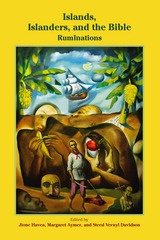
Explore theories, readings and interpretations from island perspectives
In this collection the authors focus on contextual, cultural, and postcolonial criticisms. This work seeks to move beyond simply reacting to, rejecting, or recasting biblical interpretations that misunderstand or mischaracterize island space. Instead it serves as an entry point to thinking biblically through the island. The contributors are Margaret Aymer, Randall C. Bailey, Roland Boer, Steed Vernyl Davidson, Jione Havea, Hisako Kinukawa, Grant Macaskill, Mosese Ma'ilo, J. Richard Middleton, Althea Spencer Miller, Aliou C. Niang, Andrew Mein, Daniel Smith-Christopher, Nasili Vaka'uta, and Elaine M. Wainwright.
Features:
- Sixteen essays by islanders rooted in Asia, America, the Caribbean, Europe, and Oceania
- Essays that invite a conversation on how being islanders and islandedness condition the way islanders read biblical texts
- Three sections of articles, two of which engage the first
We are culturally conditioned to think of war and peace in binary terms of strict opposition. Correspondingly, we tend to focus our attention on conflict prevention or conflict resolution. But as Islands of Agreement demonstrates, peace and war are seldom polar totalities but increasingly can and do coexist within the confines of a single scenario.
Consequently, Gabriella Blum suggests that even where conflict exists, we regard it as only one dimension of an ongoing, multifaceted interstate relationship. The result is a shift in perspective away from the constricting notions of "prevention" or "resolution" toward a more holistic approach of relationship management.
This approach is especially pertinent because conflicts cannot always be prevented or resolved. Through case studies of long-enduring rivalries--India and Pakistan, Greece and Turkey, Israel and Lebanon--Blum shows how international law and politics can function in the battlefield and in everyday life, forming a hybrid international relationship.
Through a strategy she calls "islands of agreement," Blum argues that within the most entrenched and bitter struggles, adversaries can carve out limited areas that remain safe or even prosperous amid a tide of war. These havens effectively reduce suffering and loss and allow mutually beneficial exchanges to take place, offering hope for broader accords.

Since the late 1960s a ubiquitous feature of popular culture in Japan has been the "idol," an attractive young actor, male or female, packaged and promoted as an adolescent role model and exploited by the entertainment, fashion, cosmetic, and publishing industries to market trendy products. This book offers ethnographic case studies regarding the symbolic qualities of idols and how these qualities relate to the conceptualization of selfhood among adolescents in Japan and elsewhere in East Asia. The author explores how the idol-manufacturing industry absorbs young people into its system of production, molds them into marketable personalities, commercializes their images, and contributes to the construction of ideal images of the adolescent self.
Since the relationship between the idols and their consumers is dynamic, the study focuses on the fans of idols as well. Ultimately, Aoyagi argues, idol performances substantiate capitalist values in the urban consumer society of contemporary Japan and East Asia. Regardless of how crude their performances may appear in the eyes of critics, the idols have helped establish the entertainment industry as an agent of public socialization by driving public desires toward the consumption of commoditized fantasies.
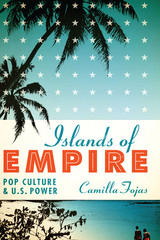
Camilla Fojas explores a broad range of popular culture media—film, television, journalism, advertisements, travel writing, and literature—with an eye toward how the United States as an empire imagined its own military and economic projects. Impressive in its scope, Islands of Empire looks to Cuba, Guam, Hawai‘i, Puerto Rico, and the Philippines, asking how popular narratives about these island outposts expressed the attitudes of the continent throughout the twentieth century. Through deep textual readings of Bataan, Victory at Sea, They Were Expendable, and Back to Bataan (Philippines); No Man Is an Island and Max Havoc: Curse of the Dragon (Guam); Cuba, Havana, and Dirty Dancing: Havana Nights (Cuba); Blue Hawaii, Gidget Goes Hawaiian, and Paradise, Hawaiian Style (Hawai‘i); and West Side Story, Fame, and El Cantante (Puerto Rico), Fojas demonstrates how popular texts are inseparable from U.S. imperialist ideology.
Drawing on an impressive array of archival evidence to provide historical context, Islands of Empire reveals the role of popular culture in creating and maintaining U.S. imperialism. Fojas’s textual readings deftly move from location to location, exploring each island’s relationship to the United States and its complementary role in popular culture. Tracing each outpost’s varied and even contradictory political status, Fojas demonstrates that these works of popular culture mirror each location’s shifting alignment to the U.S. empire, from coveted object to possession to enemy state.

Written by an anthropologist who has direct ties to the Trobriands through marriage and who has been involved in Papua New Guinea's national response to the HIV epidemic since the mid-1990s, Islands of Love, Islands of Risk is an unusual insider ethnography. Katherine Lepani describes in vivid detail the cultural practices of regeneration, from the traditional dance called Wosimwaya to the elaborate exchanges that are part of the mortuary feasts called sagali. Focusing on the sexual freedom of young people, the author reveals the social value of sexual practice. By bringing cultural context and lived experience to the fore, the book addresses the failure of standardized public health programs to bridge the persistent gap between HIV awareness and prevention. The book offers insights on the interplay between global and local understandings of gender, sexuality, and disease and suggests the possibility of viewing sexuality in terms other than risk.
Islands of Love, Islands of Risk illustrates the contribution of ethnographic research methodology in facilitating dialogue between different ways of knowing. As a contemporary perspective on Malinowski's classic accounts of Trobriand sexuality, the book reaffirms the Trobriands' central place in the study of anthropology.
This book is the recipient of the annual Norman L. and Roselea J. Goldberg Prize for the best project in the area of medicine.
Everyone worries about privacy these days. As corporations and governments devise increasingly sophisticated data gathering tools and joining Facebook verges on obligatory, concerns over the use and abuse of personal information are undeniable. But the way privacy functions on the virtual frontier of the Internet is only a subset of the fascinating ways we work to achieve it throughout our everyday lives. In Islands of Privacy, Christena Nippert-Eng pries open the blinds, giving us an intimate view into the full range of ordinary people’s sometimes extraordinary efforts to preserve the border between themselves and the rest of the world.
Packed with stories that are funny and sad, familiar and strange, Islands of Privacy tours the myriad arenas where privacy battles are fought, lost, and won. Nippert-Eng explores how we manage our secrets, our phone calls and e-mail, the perimeters of our homes, and our interactions with neighbors. She discovers that everybody practices the art of selectively concealing and disclosing information on a daily basis. This important balancing act governs a wide range of behaviors, from deciding whether to give our bosses our cell phone numbers to choosing what we carry in our wallets or purses. Violations of privacy and anxiety about how we grant it to each other also come under Nippert-Eng’s microscope as she crafts a compelling argument that successfully managing privacy is critical for successfully maintaining our relationships with each other and our selves.
Roaming from the beach to the bank and from the bathroom to the bus, Nippert-Eng’s keenly observed and vividly told book gives us the skinny on how we defend our shrinking islands of privacy in the vast ocean of accessibility that surrounds us.
Scattered throughout the Great Plains are many isolated areas of varying size and ecology, quite distinct from the surrounding grasslands. Such spaces can be uplands like the Black Hills, low hills like the Nebraska Sand Hills, or linear areas such as shallow river valleys and deeply incised canyons. While the notion of “islands” is not a new one among ecologists, its application in Plains archaeology is.
The contributors to this volume seek to illustrate the different ways that the spatial, structural, and temporal nature of islands conditioned the behavior and adaptation of past Plains peoples. This as a first step toward a more detailed analysis of habitat variation and its effects on Plains cultural dynamics and evolution. Although the emphasis is on ecology, several chapters also address social and ideological islands in the form of sacred sites and special hunting grounds.
Now, a new edition of the classic novel Islay promises to entertain a contemporary audience with its Deaf American dream first conceived by Douglas Bullard in 1986. Islay is the name of an imaginary island state coveted by Lyson Sulla, a Deaf man who is tired of feeling that “hearing think deaf means dumb, pat head.” Sulla signs this to his wife Mary in explanation of his desire to tum Islay into a state solely for Deaf people, with himself as governor. From there, his peripatetic quest begins.
Sulla initiates his plan by driving to Islay to survey the lay of the land. There, he meets Gene Owls, another Deaf man who also has designs on the island. Sulla then embarks on travels around the nation recruiting Deaf people to join his crusade. Along the way, he meets a Deaf doctor, a bowling alley owner, a family of peddlers, a Deaf minister, and a willing businessman. Far from a heroic character, Sulla engages in each encounter in an earthy, self-sewing fashion that sends up all parties involved, hearing and Deaf.
Islay uniquely blends classic English forms of satire with the direct, down-to-earth expression of American Sign Language ingenuously rendered throughout. Deaf himself, Bullard has created a wonderfully amusing story that features Deaf people seeking their American dream in a manner both serious and joyous at the same time.
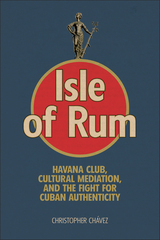
Rather than laying claim to authentic Cuban culture, Chávez explores which aspects of Cuban culture are deemed most compelling and, therefore, most profitable by corporate marketers. As a joint venture between the Cuban state and Pernod Ricard, a global spirits marketer based in Paris, Havana Club embodies the larger process of economic reform, which was meant to reintegrate Cuba into global markets during Cuba’s Special Period in a Time of Peace.

Contributors. Roger E. Backhouse, Mauro Boianovsky, Michael Bordo, David Colander, William Darity Jr., Michel De Vroey, Robert W. Dimand, Kevin D. Hoover, David Laidler, Robert E. Lucas Jr., Edward Nelson, Goulven Rubin, Anna Schwartz, Scott Sumner, Warren Young
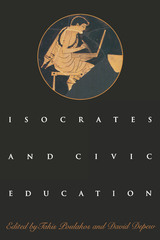
Civic virtue and the type of education that produces publicly minded citizens became a topic of debate in American political discourse of the 1980s, as it once was among the intelligentsia of Classical Athens. Conservatives such as former National Endowment for the Humanities chairman William Bennett and his successor Lynn Cheney held up the Greek philosopher Aristotle as the model of a public-spirited, virtue-centered civic educator. But according to the contributors in this volume, a truer model, both in his own time and for ours, is Isocrates, one of the preeminent intellectual figures in Greece during the fourth century B.C.
In this volume, ten leading scholars of Classics, rhetoric, and philosophy offer a pathfinding interdisciplinary study of Isocrates as a civic educator. Their essays are grouped into sections that investigate Isocrates' program in civic education in general (J. Ober, T. Poulakos) and in comparison to the Sophists (J. Poulakos, E. Haskins), Plato (D. Konstan, K. Morgan), Aristotle (D. Depew, E. Garver), and contemporary views about civic education (R. Hariman, M. Leff). The contributors show that Isocrates' rhetorical innovations carved out a deliberative process that attached moral choices to political questions and addressed ethical concerns as they could be realized concretely. His notions of civic education thus created perspectives that, unlike the elitism of Aristotle, could be used to strengthen democracy.
This is the fourth volume in the Oratory of Classical Greece series. Planned for publication over several years, the series will present all of the surviving speeches from the late fifth and fourth centuries B.C. in new translations prepared by classical scholars who are at the forefront of the discipline. These translations are especially designed for the needs and interests of today's undergraduates, Greekless scholars in other disciplines, and the general public.
Classical oratory is an invaluable resource for the study of ancient Greek life and culture. The speeches offer evidence on Greek moral views, social and economic conditions, political and social ideology, and other aspects of Athenian culture that have been largely ignored: women and family life, slavery, and religion, to name just a few.
This volume contains works from the early, middle, and late career of the Athenian rhetorician Isocrates (436-338). Among the translated works are his legal speeches, pedagogical essays, and his lengthy autobiographical defense, Antidosis. In them, he seeks to distinguish himself and his work, which he characterizes as "philosophy," from that of the sophists and other intellectuals such as Plato. Isocrates' identity as a teacher was an important mode of political activity, through which he sought to instruct his students, foreign rulers, and his fellow Athenians. He was a controversial figure who championed a role for the written word in fourth-century politics and thought.
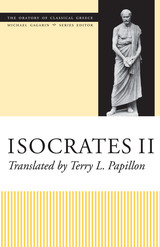
This is the seventh volume in the Oratory of Classical Greece. This series presents all of the surviving speeches from the late fifth and fourth centuries BC in new translations prepared by classical scholars who are at the forefront of the discipline. These translations are especially designed for the needs and interests of today's undergraduates, Greekless scholars in other disciplines, and the general public.
Classical oratory is an invaluable resource for the study of ancient Greek life and culture. The speeches offer evidence on Greek moral views, social and economic conditions, political and social ideology, law and legal procedure, and other aspects of Athenian culture that have been largely ignored: women and family life, slavery, and religion, to name just a few. The Athenian rhetorician Isocrates (436-338) was one of the leading intellectual figures of the fourth century. This volume contains his orations 4, 5, 6, 8, 12, and 14, as well as all of his letters. These are Isocrates' political works. Three of the discourses—Panathenaicus, On the Peace, and the most famous, Panegyricus—focus on Athens, Isocrates' home. Archidamus is written in the voice of the Spartan prince to his assembly, and Plataicus is in the voice of a citizen of Plataea asking Athens for aid, while in To Philip, Isocrates himself calls on Philip of Macedon to lead a unified Greece against Persia.
The sophisticated schoolmaster.
The importance of Isocrates for the study of Greek civilization of the fourth century BC is indisputable. From 403 to 393 he wrote speeches for Athenian law courts, and then became a teacher of composition for would-be orators. After setting up a school of rhetoric in Chios he returned to Athens and established there a free school of “philosophia” involving a practical education of the whole mind, character, judgment, and mastery of language. This school had famous pupils from all over the Greek world, such as the historians Ephorus and Theopompus and orators Isaeus, Lycurgus, and Hypereides. Isocrates also wrote in gifted style essays on political questions, his main idea being a united Greece to conquer the Persian empire. Thus in his fine Panegyricus (written for the 100th Olympiad gathering in 380) he urged that the leadership should be granted to Athens, possibly in conjunction with Sparta. In the end he looked to Philip of Macedon, but died just as Philip’s supremacy in Greece began.
Twenty-one discourses by Isocrates survive; these include political essays, treatises on education and on ethics, and speeches for legal cases. Nine letters are also extant; they are concerned more with public than with private matters. The Loeb Classical Library edition of Isocrates is in three volumes. Volume I contains six discourses: To Demonicus, To Nicocles, Nicocles or The Cyprians, Panegyricus, To Philip, and Archidamus. Five are in Volume II: Areopagiticus, On the Peace, Panathenaicus, Against the Sophists, Antidosis. Volume III contains Evagoras, Helen, Busiris, Plataicus, Concerning the Team of Horses, Trapeziticus, Against Callimachus, Aegineticus, Against Lochites, and Against Euthynus, as well as the nine extant letters and a comprehensive index.
The sophisticated schoolmaster.
The importance of Isocrates for the study of Greek civilization of the fourth century BC is indisputable. From 403 to 393 he wrote speeches for Athenian law courts, and then became a teacher of composition for would-be orators. After setting up a school of rhetoric in Chios he returned to Athens and established there a free school of “philosophia” involving a practical education of the whole mind, character, judgment, and mastery of language. This school had famous pupils from all over the Greek world, such as the historians Ephorus and Theopompus and orators Isaeus, Lycurgus, and Hypereides. Isocrates also wrote in gifted style essays on political questions, his main idea being a united Greece to conquer the Persian empire. Thus in his fine Panegyricus (written for the 100th Olympiad gathering in 380) he urged that the leadership should be granted to Athens, possibly in conjunction with Sparta. In the end he looked to Philip of Macedon, but died just as Philip’s supremacy in Greece began.
Twenty-one discourses by Isocrates survive; these include political essays, treatises on education and on ethics, and speeches for legal cases. Nine letters are also extant; they are concerned more with public than with private matters. The Loeb Classical Library edition of Isocrates is in three volumes. Volume I contains six discourses: To Demonicus, To Nicocles, Nicocles or The Cyprians, Panegyricus, To Philip, and Archidamus. Five are in Volume II: Areopagiticus, On the Peace, Panathenaicus, Against the Sophists, Antidosis. Volume III contains Evagoras, Helen, Busiris, Plataicus, Concerning the Team of Horses, Trapeziticus, Against Callimachus, Aegineticus, Against Lochites, and Against Euthynus, as well as the nine extant letters and a comprehensive index.
The sophisticated schoolmaster.
The importance of Isocrates for the study of Greek civilization of the fourth century BC is indisputable. From 403 to 393 he wrote speeches for Athenian law courts, and then became a teacher of composition for would-be orators. After setting up a school of rhetoric in Chios he returned to Athens and established there a free school of “philosophia” involving a practical education of the whole mind, character, judgment, and mastery of language. This school had famous pupils from all over the Greek world, such as the historians Ephorus and Theopompus and orators Isaeus, Lycurgus, and Hypereides. Isocrates also wrote in gifted style essays on political questions, his main idea being a united Greece to conquer the Persian empire. Thus in his fine Panegyricus (written for the 100th Olympiad gathering in 380) he urged that the leadership should be granted to Athens, possibly in conjunction with Sparta. In the end he looked to Philip of Macedon, but died just as Philip’s supremacy in Greece began.
Twenty-one discourses by Isocrates survive; these include political essays, treatises on education and on ethics, and speeches for legal cases. Nine letters are also extant; they are concerned more with public than with private matters. The Loeb Classical Library edition of Isocrates is in three volumes. Volume I contains six discourses: To Demonicus, To Nicocles, Nicocles or The Cyprians, Panegyricus, To Philip, and Archidamus. Five are in Volume II: Areopagiticus, On the Peace, Panathenaicus, Against the Sophists, Antidosis. Volume III contains Evagoras, Helen, Busiris, Plataicus, Concerning the Team of Horses, Trapeziticus, Against Callimachus, Aegineticus, Against Lochites, and Against Euthynus, as well as the nine extant letters and a comprehensive index.
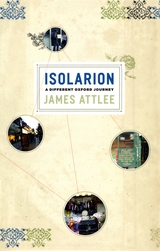
Through the centuries, people from all walks of life have heard the siren call of a pilgrimage, the lure to journey away from the familiar in search of understanding. But is a pilgrimage even possible these days for city-dwellers enmeshed in the pressures of work and family life? Or is there a way to be a pilgrim without leaving one’s life behind? James Attlee answers these questions with Isolarion, a thoughtful, streetwise, and personal account of his pilgrimage to a place he thought he already knew—the Cowley Road in Oxford, right outside his door.
Isolarion takes its title from a type of fifteenth-century map that isolates an area in order to present it in detail, and that’s what Attlee, sharp-eyed and armed with tape recorder and notebook, provides for Cowley Road. The former site of a leper hospital, a workhouse, and a medieval well said to have miraculous healing powers, Cowley Road has little to do with the dreaming spires of the tourist’s or student’s Oxford. What Attlee presents instead is a thoroughly modern, impressively cosmopolitan, and utterly organic collection of shops, restaurants, pubs, and religious establishments teeming with life and reflecting the multicultural makeup of the surrounding neighborhood.
From a sojourn in a sensory-deprivation tank to a furtive visit to an unmarked pornography emporium, Attlee investigates every aspect of the Cowley Road’s appealingly eclectic culture, where halal shops jostle with craft jewelers and reggae clubs pulsate alongside quiet churchyards. But the very diversity that is, for Attlee, the essence of Cowley Road’s appeal is under attack from well-meaning city planners and predatory developers. His pilgrimage is thus invested with melancholy: will the messy glories of the Cowley Road be lost to creeping homogenization?
Drawing inspiration from sources ranging from Robert Burton’s The Anatomy of Melancholy to contemporary art, Attlee is a charming and companionable guide who revels in the extraordinary embedded in the everyday. Isolarion is at once a road movie, a quixotic stand against uniformity, and a rousing hymn in praise of the complex, invigorating nature of the twenty-first-century city.

The volume contains selected papers from an international workshop in 2005, at the Hungarian Academy in Rome. They aim at investigating the registers of fifteenth-century supplications to the Apostolic Penitentiary of the Holy See and to analyze the multiplicity of issues in which a context of the local needs of Western Christians and the central power of the Pope had been occurring.
The contributions make clear that local and individual factors and practice of Christian faith and religion must not be seen as separated from the global power of the Roman curia. The latter’s influence could become directly important for any individual in any local space, also … et usque ad ultimum terrae (Acts 1:8), in the utmost peripheries of the Christian world. The assistance by the Apostolic Penitentiary was indispensable in a large variety of cases. The occupation with such cases happened in the local and regional space as well as in the globalized centre of the Holy See.

The short lyric poems in Larissa Szporluk's new collection, Isolato, search for meaning and beauty—for poetry—in an unpredictable and incomprehensible world. Their voices break from the contemporary preoccupation with autobiography, held together by language rather than a sustained narrative or plot. Yet the narrative fragments clearly evoke certain themes and moods: interaction of and struggle between the human and natural world; violence, particularly against women and children; alienation and betrayal; the mysteries of the universe, God, and death; and, of course, poetry itself.
Variously called a religious, a metaphysical, or a visionary poet, Szporluk has been compared to Emily Dickinson and George Herbert as well as to twentieth-century poets like Sylvia Plath, Mark Strand, and Louise Glück. Her work is concise, experimental, and challenging. Language and syntax are often elusive, the logic that of dreams or music, the imagery mysterious. The poems, once read, are not easily dismissed. Like the poet's “Deer Crossing the Sea,”readers find “the promise of nectar / haunts them forever, the shore pecked out / of their eyes, and there, in its stead, / something greater to catch, / a scent that would paralyze God.”

Following on from their acclaimed book Bad News from Israel, Greg Philo and Mike Berry present a concise guide to the Israel-Palestine conflict. This uniquely accessible book will appeal to anyone looking for an approachable introduction. Uniquely, the authors show how there are many different, competing histories. They offer an overview of the wide range of contending viewpoints, and indicate those which are based on the most considered historical research.
The book covers key events in chronological order, in each case examining the varied historical accounts and presenting the beliefs of key thinkers across the ideological spectrum, from Edward Said to Binyamin Netanyahu. Starting the with emergence of the Zionist movement in the nineteenth century, and the figures who shaped it, the authors go on to cover the founding of Israel and its subsequent history, up to and including the 'roadmap for peace', the construction of the wall, the death of Arafat and the withdrawal from Gaza.
Veracini challenges two important myths: firstly, that the Israeli-Palestinian dispute is unique and defies comparative approaches; and secondly that the struggle is mainly based in nationality and religion and therefore different to typical colonial conflicts. On the contrary, Veracini shows how Israeli society is organised along apartheid lines -- and that apartheid was not unique to South Africa, but a common feature of colonisation. He examines wars of decolonization, and conflicts where whole native populations were all but eradicated -- as in Australia. Comparing and contrasting these with the more recent history of Israel and Palestine, he offers a critical perspective on colonialism as well as important new insights into patterns of imperialism today.

Was Deuteronomy created to be a subversive text based on Assyian treaties?
In this new book Crouch focuses on Deuteronomy’s subversive intent, asking what would be required in order for Deuteronomy to successfully subvert either a specific Assyrian source or Assyrian ideology more generally. The book reconsiders the nature of the relationship between Deuteronomy and Assyria, Deuteronomy’s relationship to ancient Near Eastern and biblical treaty and loyalty oath traditions, and the relevance of Deuteronomy’s treaty affinities to discussions of its date.
Features:
- A thorough investigation of the nature and requirements of subversion
- A focused examination of the context in which Deuteronomy would have functioned
- An appendix focused on redactional questions related to Deuteronoy 13 and 28
Journalist Jonathan Cook explores Israel’s key role in persuading the Bush administration to invade Iraq, as part of a plan to remake the Middle East, and their joint determination to isolate Iran and prevent it from acquiring nuclear weapons that might rival Israel’s own.
This concise and clearly argued book makes the case that Israel's desire to be the sole regional power in the Middle East neatly chimed with Bush’s objectives in the “war on terror”.
Examining a host of related issues, from the ethnic cleansing of Palestinians to the role of Big Oil and the demonisation of the Arab world, Cook argues that the current chaos in the Middle East is the objective of the Bush administration – a policy that is equally beneficial to Israel.

Israel has changed. The country was born in Europe’s shadow, haunted by the Holocaust and inspired by the Enlightenment. But for Israelis today, Europe is hardly relevant, and the country’s ties to the broader West, even to America, are fraying. Where is Israel heading? How do citizens of an increasingly diverse nation see themselves globally and historically?
In this revealing portrait of the new Israel, Diana Pinto presents a country simultaneously moving forward and backward, looking outward and turning in on itself. In business, Israel is forging new links with the giants of Asia, and its booming science and technology sectors are helping define the future for the entire world. But in politics and religion, Israelis are increasingly self-absorbed, building literal and metaphorical walls against hostile neighbors and turning to ancient religious precepts for guidance here and now.
Pinto captures the new moods and mindsets, the anxieties and hopes of Israelis today in sharply drawn sketches of symbolically charged settings. She takes us on the roads to Jerusalem, to border control at Ben Gurion Airport, to a major Israeli conference in Jerusalem, to a hill overlooking the Dome of the Rock and Temple Mount, to the heart of Israel’s high-tech economy, and to sparkling new malls and restaurants where people of different identities share nothing more than a desire to ignore one another.
Vivid and passionate but underpinned by deep analysis, this is a profound and sometimes unsettling account of a country that is no longer where we might think.
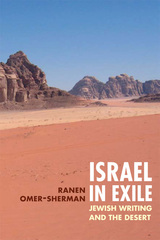
In contrast to other ethnic and national representations, Jewish writers since antiquity have not constructed a neat antithesis between the desert and the city or nation; rather, the desert becomes a symbol against which the values of the city or nation can be tested, measured, and sometimes found wanting. This book examines how the ethical tension between the clashing Mosaic and Davidic paradigms of the desert still reverberate in secular Jewish literature and produce fascinating literary rewards. Omer-Sherman ultimately argues that the ancient encounter with the desert acquires a renewed urgency in response to the crisis brought about by national identities and territorial conflicts.
This edition is an Approved Text of the Center for Editions of American Authors (Modern Language Association of America).
This edition is an Approved Text of the Center for Editions of American Authors (Modern Language Association of America).
Through thirty turbulent years, the United States has been deeply enmeshed in Israel's destiny. Seldom in the history of international relations has such a world power been involved so intensely for so long with such a small power. How this phenomenon came to pass and how it will affect the future are explained in this compelling history of Israel and its relations with the United States—from the 1947 United Nations resolution through Kissinger's shuttle diplomacy to Carter's peace campaign.
To form the backdrop for this extraordinary relationship, Nadav Safran paints a detailed portrait of the historical forces that combined to create the Jewish state. He unfolds panel after panel of Israeli life—its physical environment, people, economy, politics, and religion. He examines Israel's responses to the many security crises it has faced since becoming a nation, and presents a clear and thorough exposition of its defense strategy and descriptions of all its wars.
Safran then presents his brilliant analysis of Israel and America in international politics. Cutting through the tangle of the Arab–Israeli conflict, the East–West struggle, the disagreement among Western powers, the conflicts within and among the Arab states, and the impact of special interest groups in the United States on its foreign policy, Safran deftly pursues fluctuations in the American–Israeli relationship as it moved from simple friendship to an alliance of friends. A concluding chapter recapitulates the highlights of that evolution and projects its relevance for the future of the Middle East and American–Israeli relations.

Raffaella A. Del Sarto examines the creation of Israel's neo-revisionist consensus about security threats and regional order, which took hold of Israeli politics and society after 2000 and persists today. The failed Oslo peace process and the trauma of the Second Palestinian Intifada triggered this shift to the right; conflicts with Hamas and Hezbollah and the inflammatory rhetoric of Iranian President Ahmadinejad additionally contributed to the creation of a general sense of being under siege. While Israel faces real security threats, Israeli governments have engaged in the politics of insecurity, promoting and amplifying a sense of besiegement. Lively political debate has been replaced by a general acceptance of the no-compromise approach to security and the Palestinians. The neo-revisionist right, represented by Benjamin Netanyahu and the Likud, has turned Israel away from the peace process and pushes maximalist territorial ambitions. But they have failed to offer a vision for an end to conflict, and there has been little debate about whether or not the hardline policies toward the region are counterproductive. Del Sarto explains this disappearance of dissent and examines the costs of Israel’s policies. She concludes that Israel’s feeling of being under siege has become entrenched, a two-state solution with the Palestinians is highly unlikely for the foreseeable future, and Israel’s international isolation is likely to increase. Del Sarto’s analysis of this tense political situation will interest scholars and students of the Israeli-Palestinian conflict, Middle East Studies, and International Relations.
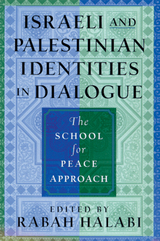
Israeli Palestinians make up about 20 percent of Israeli citizens and, for the most part, live separate lives from their Jewish neighbors—lives fraught with political, social, and economic divisions. Attempts to initiate interactions between Palestinians and Jews outside official frameworks have often dissolved under political and economic pressures.
One lasting effort began when the School for Peace was established in 1976 in Neve Shalom/Wahat al-Salam, a joint model village set up in 1972 by a group of Jewish and Palestinian Israelis. Since its inception, the School for Peace has conducted hundreds of encounter activities to help create a more authentic and egalitarian dialogue between the Palestinian minority and Jewish majority.
This volume is the product of the insight and experiences of both Arabs and Jews at the School for Peace over the last two decades. Essays address topics such as strategies for working with young people, development of effective learning environments for conflict resolution, and language as a bridge and as an obstacle. It is the first book to provide a model for dialogue between Palestinians and Jews that has been used successfully in other ethnic and national conflicts, and should be required reading for everyone interested in Jewish-Palestinian relations.
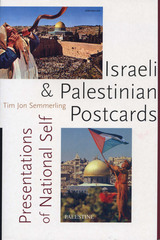
Searing images of suicide bombings and retaliatory strikes now define the Israeli-Palestinian conflict for many Westerners, but television and print media are not the only visual realms in which the conflict is playing out. Even tourist postcards and greeting cards have been pressed into service as vehicles through which Israelis and Palestinians present competing visions of national selfhood and conflicting claims to their common homeland.
In this book, Tim Jon Semmerling explores how Israelis and Palestinians have recently used postcards and greeting cards to present images of the national self, to build national awareness and reinforce nationalist ideologies, and to gain international acceptance. He discusses and displays the works of numerous postcard/greeting card manufacturers, artists, and photographers and identifies the symbolic choices in their postcards, how the choices are arranged into messages, what the messages convey and to whom, and who benefits and loses in these presentations of national self. Semmerling convincingly demonstrates that, far from being ephemeral, Israeli and Palestinian postcards constitute an important arena of struggle over visual signs and the power to produce reality.
Since its release in 2009 Israeli Apartheid: A Beginner's Guide has become an essential primer for undergraduate students and activists getting to grips with the Palestine/Israel conflict for the first time. Ben White skilfully distills the work of academics and experts into a highly accessible introduction.
This new updated and expanded edition includes information on the Israeli blockade and attacks on the Gaza Strip since 2008, new policies targeting Palestinian citizens of Israel and the growth of the global Boycott Divestment Sanctions campaign.
Packed with vital information, quotations and resources, Israeli Apartheid never loses the human touch. The book is rooted in the author's extensive personal experience in Palestine and includes testimonies by Palestinians describing how Israeli apartheid affects their daily lives.
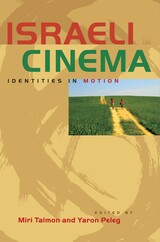
With top billing at many film forums around the world, as well as a string of prestigious prizes, including consecutive nominations for the Best Foreign Film Oscar, Israeli films have become one of the most visible and promising cinemas in the first decade of the twenty-first century, an intriguing and vibrant site for the representation of Israeli realities. Yet two decades have passed since the last wide-ranging scholarly overview of Israeli cinema, creating a need for a new, state-of-the-art analysis of this exciting cinematic oeuvre.
The first anthology of its kind in English, Israeli Cinema: Identities in Motion presents a collection of specially commissioned articles in which leading Israeli film scholars examine Israeli cinema as a prism that refracts collective Israeli identities through the medium and art of motion pictures. The contributors address several broad themes: the nation imagined on film; war, conflict, and trauma; gender, sexuality, and ethnicity; religion and Judaism; discourses of place in the age of globalism; filming the Palestinian Other; and new cinematic discourses. The authors' illuminating readings of Israeli films reveal that Israeli cinema offers rare visual and narrative insights into the complex national, social, and multicultural Israeli universe, transcending the partial and superficial images of this culture in world media.

Over the past two decades, profound changes in Israel opened its society to powerful outside forces and the dominance of global capitalism. As a result, the centrality of Zionism as an organizing ideology waned, prompting expressions of anxiety in Israel about the coming of a post-Zionist age. The fears about the end of Zionism were quelled, however, by the Palestinian uprising in 2000, which spurred at least a partial return to more traditional perceptions of homeland. Looking at Israeli literature of the late twentieth century, Yaron Peleg shows how a young, urban class of Israelis felt alienated from the Zionist values of their forebears, and how they adopted a form of escapist romanticism as a defiant response that replaced traditional nationalism.
One of the first books in English to identify the end of the post-Zionist era through inspired readings of Hebrew literature and popular media, Israeli Culture between the Two Intifadas examines Israel's ambivalent relationship with Jewish nationalism at the end of the twentieth century.
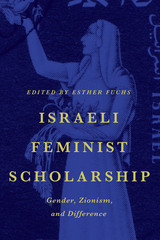
The last two decades have given rise to a proliferation of scholarship by Israeli feminists working in diverse fields, ranging from sociology to literature, anthropology, and history. As the Israeli feminist movement continually decentralizes and diversifies, it has become less Eurocentric and heterocentric, making way for pluralistic concerns. Collecting fifteen previously published essays that give voice to this diversity, Israeli Feminist Scholarship showcases articles on Ashkenazi, Mizrahi, Palestinian, and lesbian identities as well as on Israeli women’s roles as mothers, citizens and activists, and soldiers.
Citing evidence that these scholars have redefined their object of inquiry as an open site of contested and constructed identity, luminary Esther Fuchs traces the history of Israeli feminism. Among the essays are Jewish historian Margalit Shilo’s study of the New Hebrew Woman, sociologist Ronit Lentin’s analysis of gendered representations of the Holocaust in Israeli culture, peace activist Erella Shadmi on lesbianism as a nonissue in Israel, and cultural critic Nitza Berkovitch’s examination of womanhood as constructed in Israeli legal discourse.
Creating a space for a critical examination of the relationship between disparate yet analogous discourses within feminism and Zionism, this anthology reclaims the mobilizing, inclusive role of these multifaceted discourses beyond the postmodern paradigm.
Israeli anthropologist and activist Jeff Halper throws a harsh light on the Israeli-Palestinian conflict from the point of view of a critical insider. While the Zionist founders of Israel created a vibrant society, culture and economy, they did so at a high price: Israel could not maintain its exclusive Jewish character without imposing on the country's Palestinian population policies of ethnic cleansing, occupation and discrimination, expressed most graphically in its ongoing demolition of thousands of Palestinian homes, both inside Israel and in the Occupied Territories.
An Israeli in Palestine records Halper's journey 'beyond the membrane' that shields his people from the harsh realities of Palestinian life to his 'discovery' that he was actually living in another country: Palestine. Without dismissing the legitimacy of his own country, he realises that Israel is defined by its oppressive relationship to the Palestinians.
This second edition is includes an epilogue gauging the chances for peace after the failed Annapolis process.
Israeli women do not enjoy the equality, status, and power often attributed to them by the media and popular culture. Despite significant achievements and progress, as a whole they continue to earn less than their male counterparts, are less visible and influential in the political arena, do not share equal responsibilities or privileges in the military, have unequal rights and freedoms in family life and law, and are less influential in shaping the nation's self image and cultural orientation.
Bringing together classic essays by leading scholars of Israeli culture, this reader exposes the hidden causes of ongoing discrimination and links the restrictions that Israeli women experience to deeply entrenched structures, including colonial legacies, religious traditions, capitalism, nationalism, and ongoing political conflict. In contrast, the essays also explore how women act creatively to affect social change and shape public discourse in less ostensible ways.
Providing balanced perspectives from the social sciences and the humanities, this comprehensive reader reflects both an emerging consensus and exciting diversity in the field. It is the definitive text for courses in Israeli women's studies.
As Schulman learns more, she questions the contradiction between Israel's investment in presenting itself as gay friendly—financially sponsoring gay film festivals and parades—and its denial of the rights of Palestinians. At the same time, she talks with straight Palestinian activists about their position in relation to homosexuality and gay rights in Palestine and internationally. Back in the United States, Schulman draws on her extensive activist experience to organize a speaking tour for some of the Palestinian queer leaders whom she had met and trusted. Dubbed "Al-Tour," it takes the activists to LGBT community centers, conferences, and universities throughout the United States. Its success solidifies her commitment to working to end Israel's occupation of Palestine, and it kindles her larger hope that a new "queer international" will emerge and join other movements demanding human rights across the globe.
In his courageous book, Israel's Dead Soul, Steven Salaita explores the failures of Zionism as a political and ethical discourse. He argues that endowing nation-states with souls is a dangerous phenomenon because it privileges institutions and corporations rather than human beings.
Asserting that Zionism has been normalized--rendered "benign" as an ideology of "multicultural conviviality"—Salaita critiques the idea that Zionism, as an exceptional ideology, leads to a lack of critical awareness of the effects of the Israeli occupation in Palestinian territory and to an unquestioning acceptance of Israel as an ethnocentric state.
Salaita's analysis targets the Anti-Defamation League, films such as Munich and Waltz with Bashir, intellectuals including Cornel West and Michael Eric Dyson, gay rights activists, and other public figures who mourn the decline of Israel's "soul." His pointed account shows how liberal notions of Zionism are harmful to various movements for justice.
The ongoing conflict between Israel and the Lebanese militant group Hezbollah is now in its fourth decade and shows no signs of ending. Raphael D. Marcus examines this conflict since the formation of Hezbollah during Israel’s occupation of Lebanon in the early 1980s. He critically evaluates events including Israel’s long counterguerrilla campaign throughout the 1990s, the Israeli withdrawal in 2000, the 2006 summer war, and concludes with an assessment of current tensions on the border between Israel and Lebanon related to the Syrian civil war.
Israel’s Long War with Hezbollah is both the first complete military history of this decades-long conflict and an analysis of military innovation and adaptation. The book is based on unique fieldwork in Israel and Lebanon, extensive research into Hebrew and Arabic primary sources, and dozens of interviews Marcus conducted with Israeli defense officials, high-ranking military officers of the Israel Defense Forces (IDF), United Nations personnel, a Hezbollah official, and Western diplomats. As an expert on organizational learning, Marcus analyzes ongoing processes of strategic and operational innovation and adaptation by both the IDF and Hezbollah throughout the long guerrilla conflict. His conclusions illuminate the dynamics of the ongoing conflict and illustrate the complexity of military adaptation under fire.
With Hezbollah playing an ongoing role in the civil war in Syria and the simmering hostilities on the Israel-Lebanon border, students, scholars, diplomats, and military practitioners with an interest in Middle Eastern security issues, Israeli military history, and military innovation and adaptation can ill afford to neglect this book.
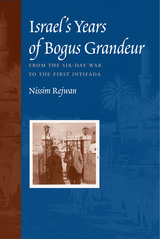
On the eve of the Six-Day War in 1967, Israel was nineteen years old and as much an adolescent as the average nineteen-year-old person. Issues of identity and transition were the talk among Israeli intellectuals, including the writer Nissim Rejwan. Was Israel a Jewish state or a democratic state? And, most frustratingly, who was a Jew? As Nancy Berg's foreword makes clear, these issues became more critical and complex in the two decades after the war as Israel matured into a regional power. Rejwan, an Iraqi-born Jew whose own fate was tied to the answers, addresses the questions of those days in his letters, essays, and remembrances collected in Israel's Years of Bogus Grandeur.
Israel's overwhelming victory in 1967 brought control of the former Palestinian territories; at the same time, Oriental Jews (i.e., those not from Europe) became a majority in the Israeli population. The nation, already surrounded by hostile, recently humiliated Arab neighbors, now had an Arab majority (Jewish, Muslim, Druze, and Christian) within its borders—yet European Jews continued to run the country as their own. Rejwan wrote tirelessly about the second-class status of Arab Israelis (and especially of Arab Jews), encouraging a more inclusive attitude that might eventually help heal the wounds left by the Six-Day War. His studies in sociology at Tel Aviv University informed his work. For his cause, Rejwan lost his job and many of his friends but never his pen. Through Munich, Entebbe, political scandals, economic crises, and the beginning of the Intifada, Rejwan narrates Israel's growing pains with feisty wit and unwavering honesty.


The chapters represent a spectrum of approaches, including theoretical analysis, quantitative measurement, and evaluations of policies and institutions from economic and legal perspectives. The multi-lateral issues cover the analysis of the economic effects of a new WTO negotiating round and the range of issues that are to be addressed there, including reform of Japan's agricultural policies, services liberalization, antidumping, intellectual property rights, and trade and the environment. The regional issues include theoretical and simulation analysis of the benefits of preferential trading arrangements and the policy of open regionalism that is being sought by APEC members. U.S.-Japan bilateral relations are studied by analyzing the major actions and positions taken by the two nations in the context of their national trade laws and policies, how trade policies are implemented, the effects of bilateral trade agreements on the United States and Japan, and the interplay of legal decisions reached in WTO actions with bilateral and unilateral measures undertaken by the two nations.
The book is designed for a broad audience consisting of academic economists, lawyers, policymakers, and students interested in U.S.-Japan international economic relations.
Robert M. Stern is Professor Emeritus of Economics and Public Policy, University of Michigan.
To stay relevant, art curators must keep up with the rapid pace of technological innovation as well as the aesthetic tastes of fickle critics and an ever-expanding circle of cultural arbiters. Issues in Curating Contemporary Art and Performance argues that, despite these daily pressures, good curating work also requires more theoretical attention.
In four thematic sections, a distinguished group of contributors consider curation in light of interdisciplinary and emerging practices, examine conceptions of curation as intervention and contestation, and explore curation’s potential to act as a reconsideration of conventional museum spaces. Against the backdrop of cutting-edge developments in electronic art, art/science collaboration, nongallery spaces, and virtual fields, contributors propose new approaches to curating and new ways of fostering critical inquiry. Now in paperback, this volume is an essential read for scholars, curators, and art enthusiasts alike.


The papers in this volume cover such issues as the interaction of pension-funding decisions and corporate finances; the role of pensions in providing adequate and secure retirement income, including the integration of pension plans with social security and significant drops in the U.S. saving rate; and the incentive effects of pension plans on labor market behavior and the implications of plans on labor market behavior and the implications of plans for different demographic groups.
Issues in Pension Economics offers important empirical studies and makes valuable theoretical contributions to current thinking in an area that will most likely continue to be a source of controversy and debate for some time to come. The volume should prove useful to academics and policymakers, as well as to members of the business and labor communities.
This collection offers new insights into the kinds of economic opportunities and outcomes that immigrant populations might expect for themselves and future generations.
This collection explores current issues in the phonology and morphology of the major Iberian languages: Basque, Catalan, Galician, Portuguese, and Spanish. Most of the essays are based on innovative theoretical frameworks and show how recent revolutions in theoretical ideas have affected the study of these languages.
Distinguished scholars address a diverse range of topics, including: stress assignment, phonological variability, distribution of rhotics, the imperative paradigm, focus, pluralization, spirantization, intonation, prosody, apocope, epenthesis, palatalization, and depalatalization.
Issues in US-EC Trade Relations presents the results of a conference organized by the NBER and the Centre for European Policy Studies. In it, North American and European trade specialists offer theoretical, empirical, and historical analyses of some of the major issues on which American and Community officials disagree and also formulate realistic policies for settling present disputes. Contributors consider such topics as the legal aspects of trade between the two regions, agricultural policy, different ways the United States and members of the European Community use embargoes to attempt to induce foreign countries to change particular political actions, the growing trend toward protectionism and responses to this policy, international trade in services, and trade policy in oligopolistic environments. In most cases, each general subject is approached from both an American and a European perspective.
Part 1, Communication: Signed and Spoken Languages, addresses matters that range from considering critical periods for language acquisition, researched by Susan D. Fischer, to assessing the impact of immigration policies on the ethnic composition of Australia’s deaf community, intriguing work by Jan Branson and Don Miller.
Part 2, Communication: Accessibility to Speech, continues the debate with works on the perception of speech by deaf and hard of hearing children, contributed by Arthur Boothroyd, and automatic speech recognition and its applications, delineated by Harry Levitt.
Educational issues are brought to the forefront in Part 3 in such engrossing studies as Lea Lurie and Alex Kozulin’s discourse on the application of an instrumental-enrichment cognitive intervention program with deaf immigrant children from Ethiopia. Stephen Powers offers another perspective in this section with his retrospective evaluation of a distance education training course for teachers of the deaf.
Part 4, Psychological and Social Adjustment reviews progress in this area, with Anne de Klerk’s exposition on the Rotterdam Deaf Awareness Program, and Corinne J. Lewkowitz and Lynn S. Liben’s research on the development of deaf and hearing children’s sex-role attitudes and self-endorsements. These and the many other contributions by renowned international scholars in the field make Issues Unresolved a compelling new standard for all involved in deaf education.
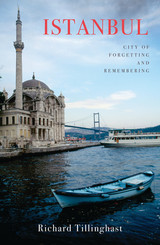
Istanbul was known in Byzantine times as the “Queen of Cities” and to the Ottoman Turks as the “Abode of Felicity.” Steeped in Istanbul’s history, Tillinghast takes his readers on a voyage of discovery through this storied cultural hub, and he is as comfortable talking about Byzantine mosaics and dervish ceremonies as Iznik ceramics and the imperial mosques. His lyrical writing brings Istanbul alive on the page as he accompanies readers to cafés, palaces, and taverns, perfectly conjuring the atmospheric delights, sounds, and senses of the city. Illuminating Istanbul’s great buildings with tales that bring Ottoman and Byzantine history to life, Tillinghast is adept at discovering both what the city remembers and what it chooses to forget.
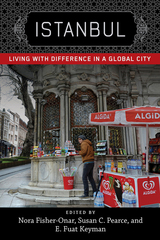
Rather than exploring Istanbul as one place at one time, the contributors to this volume focus on the city’s experience of migration and globalization over the last two centuries. Asking what Istanbul teaches us about living with people whose hopes jostle with one’s own, contributors explore the rise, collapse, and fragile rebirth of cosmopolitan conviviality in a once and future world city. The result is a cogent, interdisciplinary exchange about an urban space that is microcosmic of dilemmas of diversity across time and space.
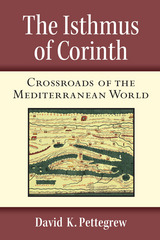
David Pettegrew’s book offers a new history of the Isthmus of Corinth from the Romans’ initial presence in Greece during the Hellenistic era to the epic transformations of the Empire in late antiquity. A new interpretation of the extensive literary evidence outlines how the Isthmus became the most famous land bridge of the ancient world, central to maritime interests of Corinth, and a medium for Rome’s conquest, annexation, and administration in the Greek east. A fresh synthesis of archaeological evidence and the results of a recent intensive survey on the Isthmus describe the physical development of fortifications, settlements, harbors, roads, and sanctuaries in the region. The author includes chapters on the classical background of the concept isthmos, the sacking of Corinth and the defeat of the Achaean League, colonization in the Late Roman Republic, the Emperor Nero’s canal project and its failure, the growth of Roman settlement in the territory, and the end of athletic contests at Isthmia. The Isthmus of Corinth offers a powerful case study in the ways that shifting Mediterranean worlds transformed a culturally significant landscape over the course of a millennium.
A consumer’s guide to iconic celebrity and ageless glamour
“Strikingly original, wickedly witty, and thoroughly learned, Roach’s anatomy of abnormally interesting people and the vicarious pleasure we take in our modern equivalents to gods and royals will captivate its readers from the first page. I dare you to read just one chapter!”
—Felicity Nussbaum, University of California, Los Angeles
“It considers the effect that arises when spectacularly compelling performers and cultural fantasy converge, as in the outpouring of public grief over the death of Princess Diana. . . . An important work of cultural history, full of metaphysical wit . . . It gives us a fresh vocabulary for interpreting how after-images endure in cultural memory.”
—Andrew Sofer, Boston College
“Joseph Roach’s enormous erudition, sharp wit, engaging style, and gift for finding the most telling historical detail or literary quote are here delightfully applied to the intriguing subject of why certain historical and theatrical figures have possessed a special power to fascinate their public.”
—Marvin Carlson, Graduate Center, City University of New York
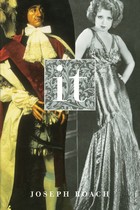
That mysterious characteristic “It”—“the easily perceived but hard-to-define quality possessed by abnormally interesting people”—is the subject of Joseph Roach’s engrossing new book, which crisscrosses centuries and continents with a deep playfulness that entertains while it enlightens.
Roach traces the origins of “It” back to the period following the Restoration, persuasively linking the sex appeal of today’s celebrity figures with the attraction of those who lived centuries before. The book includes guest appearances by King Charles II, Samuel Pepys, Flo Ziegfeld, Johnny Depp, Elinor Glyn, Clara Bow, the Second Duke of Buckingham, John Dryden, Michael Jackson, and Lady Diana, among others.
It All Tastes of Farewell is a frank account of one woman’s life and loves in 1960s East Germany. As a writer, Brigitte Reimann could not help but tell a compelling story, and that is born out here in her diaries, which are gripping as any novel. She recorded only what mattered: telling details, emotional truths, and political realities. Never written for publication and first published in full in German only after the fall of the Berlin Wall, these diaries offer a unique record of what it felt like to live in a country that no longer exists, was represented for years largely through Cold War propaganda, and is still portrayed in fairy-tale Stasi dramas. Here we get a sense of lived experience as if Doris Lessing or Edna O’Brien had been allowed in with their notebooks. This volume continues where her earlier book of diaries, I Have No Regrets, left off, in 1964. It sees Reimann grow wistful and at times bitter, as her love life, her professional life, and her health all suffer. Yet throughout she retains a lively appetite for new experiences and a dedication to writing. Finally, she finds security in a surprising new love, and although she died soon after this volume ends, the novel she was writing was to become a much-read cult hit after her death.
A remarkable document from a time and place that we still struggle to see clearly, It All Tastes of Farewell is unforgettable, a last gift from an essential writer.
Nothing is solved by the end of this book, but much is gained as the quest itself has become a victory of perfectly pitched and furious language. God’s still hidden away, but by now the natural world has evolved to replace the absence Seuss feels. In the book’s erotically charged universe, one paradoxically begins to feel a calm settle over the burned-up panorama of the soul. It Blows You Hollow is a book, rare these days, that feels as if it had to be written. Diane Seuss goes for broke.

“It changed my life.” That’s what Betty Friedan heard over and over from women throughout the United States after the publication of her radical best-seller, The Feminine Mystique, sparked the beginning of contemporary feminism. The first stirring and uncertain years of the women’s movement helped many women put a name to the sense of invisibility, powerlessness, and depression that Friedan famously called “the problem that has no name.”
First published in 1976, “It Changed My Life” is a compellingly readable collection of reports from the front, back in the days less than a generation ago when women were routinely shut out of the professions and higher education, underpaid, condescended to, and harassed without consequences to the harassers. The book describes the political campaigns for equal pay and job opportunities, for the outlawing of sex discrimination, for the Equal Rights Amendment, and for legalized abortion, the creation of National Organization for Women, the National Abortion Rights Action League, and the National Women’s Political Caucus, and analyzes the antifeminist backlashes. Encounters with Simone de Beauvoir and Indira Gandhi are juxtaposed with moving and vivid personal struggles of many ordinary women. Among those women was Friedan herself, who frankly recorded her astonishment, gratification, and anger as the movement she helped create grew beyond all her hopes, and then raced beyond her control into a sexual politics she found disturbing.
A classic of modern feminism, “It Changed My Life” brings back years of struggle for those who were there, and recreates the past for the readers of today who were not yet born during these struggles for the opportunities and respect to which women can now feel entitled. In changing women’s lives, the women’s movement has changed everything.

Proud of her intelligence, Maitreyi Devi's father had provided her with a fine and, for that time, remarkably liberal education — and encouraged his brilliant foreign student, Eliade, to study with her. "We were two good exhibits in his museum," Devi writes. They were also, as it turned out, deeply taken with each other. When their secret romance was discovered, Devi's father banished the young Eliade from their home.
Against a rich backdrop of life in an upper-caste Hindu household, Devi powerfully recreates the confusion of an over-educated child simultaneously confronting sex and the differences, not only between European and Indian cultures, but also between her mother's and father's view of what was right. Amid a tangle of misunderstandings, between a European man and an Indian girl, between student and teacher, husband and wife, father and daughter, she describes a romance unfolding in the face of cultural differences but finally succumbing to cultural constraints. On its own, It Does Not Die is a fascinating story of cultural conflict and thwarted love. Read together with Eliade's Bengal Nights, Devi's "romance" is a powerful study of what happens when the oppositions between innocence and experience, enchantment and disillusion, and cultural difference and colonial arrogance collide.
"In two novels written forty years apart, a man and a woman tell stories of their love. . . . Taken together they provide an unusually touching story of young love unable to prevail against an opposition whose strength was tragically buttressed by the uncertainties of a cultural divide."—Isabel Colegate, New York Times Book Review
"Recreates, with extraordinary vividness, the 16-year-old in love that she had been. . . . Maitreyi is entirely, disarmingly open about her emotions. . . . An impassioned plea for truth."—Anita Desai, New Republic
"Something between a reunion and a duel. Together they detonate the classic bipolarities: East-West, life-art, woman-man."—Richard Eder, New York Newsday
"One good confession deserves another. . . . Both books gracefully trace the authors' doomed love affair and its emotional aftermath."—Nina Mehta, Chicago Tribune
READERS
Browse our collection.
PUBLISHERS
See BiblioVault's publisher services.
STUDENT SERVICES
Files for college accessibility offices.
RECENTLY PUBLISHED






UChicago Accessibility Resources
home | accessibility | search | about | contact us
BiblioVault ® 2001 - 2025
The University of Chicago Press