
 A SCHOLARLY BOOK REPOSITORY
38 start with I start with I
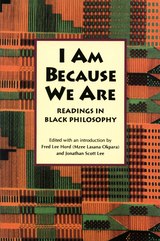
First published in 1995, I Am Because We Are has been recognized as a major, canon-defining anthology and adopted as a text in a wide variety of college and university courses. Bringing together writings by prominent Black thinkers from Africa, the Caribbean, and North America, Fred Lee Hord and Jonathan Scott Lee made the case for a tradition of “relational humanism” distinct from the philosophical preoccupations of the West.
Over the past twenty years, however, new scholarly research has uncovered other contributions to the discipline now generally known as “Africana philosophy” that were not included in the original volume. In this revised and expanded edition, Hord and Lee build on the strengths of the earlier anthology while enriching the selection of readings to bring the text into the twenty-first century. In a new introduction, the editors reflect on the key arguments of the book's central thesis, refining them in light of more recent philosophical discourse. This edition includes important new readings by Kwame Gyekye, Oyeronke Oy ewumi, Paget Henry, Sylvia Wynter, Toni Morrison, Charles Mills, and Tommy Curry, as well as extensive suggestions for further reading.
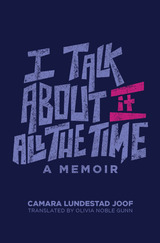
“I regularly decide to quit talking to white people about racism,” writes Joof. Such discussions often feel unproductive, the occasional spark of hope coming at enormous personal cost. But not talking about it is impossible, a betrayal of self. The book is a self-examination as well as societal indictment. It is an open challenge to readers, to hear her as she talks about it, all the time.
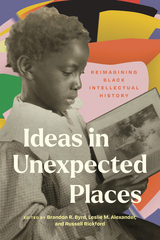
The volume centers on the themes of slavery and sexuality; abolitionism; Black internationalism; Black protest, politics, and power; and the intersections of the digital humanities and Black intellectual history. The essays draw from diverse methodologies and fields to examine the ideas and actions of Black thinkers from the eighteenth century to the present, offering fresh insights while creating space for even more creative approaches within the field.
Timely and incisive, Ideas in Unexpected Places encourages scholars to ask new questions through innovative interpretive lenses—and invites students, scholars, and other practitioners to push the boundaries of Black intellectual history even further.

Racial identity and literary form in the modernist anthology
The Image and the Fire examines the coterie anthology—a small, outsider literary collection—as a key, yet understudied, instrument of literary intervention within American modernism. Whit Frazier Peterson argues that these anthologies, produced outside of institutional or canonical frameworks, served as deliberate challenges to dominant literary paradigms. Distinct from academic anthologies that helped codify the American literary canon, coterie anthologies were used by both white and Black avant-garde movements to disrupt prevailing cultural narratives and assert alternative literary visions.
Through close analysis of three seminal case studies—Des Imagistes, edited by Ezra Pound; Fire!!, a short-lived but groundbreaking magazine from the Harlem Renaissance, co-edited by Wallace Thurman; and Black Fire, compiled by Amiri Baraka and Larry Neal during the Black Arts Movement—Peterson traces a genealogy of the coterie anthology as a politically charged genre. He reveals how Black American writers and editors, particularly during the Harlem Renaissance and the Black Arts Movement, reappropriated and reconfigured this type of anthology format from white modernists.
Ultimately, The Image and the Fire positions the coterie anthology as a site of aesthetic and ideological contestation, one through which marginalized literary communities engaged in acts of cultural self-definition, canon revision, and formal innovation. By foregrounding the coterie anthology’s role in shaping a hybrid American modernism, Peterson contributes to ongoing conversations in literary studies around race, authorship, and the politics of literary form.
Racial identity and literary form in the modernist anthology
The Image and the Fire examines the coterie anthology—a small, outsider literary collection—as a key, yet understudied, instrument of literary intervention within American modernism. Whit Frazier Peterson argues that these anthologies, produced outside of institutional or canonical frameworks, served as deliberate challenges to dominant literary paradigms. Distinct from academic anthologies that helped codify the American literary canon, coterie anthologies were used by both white and Black avant-garde movements to disrupt prevailing cultural narratives and assert alternative literary visions.
Through close analysis of three seminal case studies—Des Imagistes, edited by Ezra Pound; Fire!!, a short-lived but groundbreaking magazine from the Harlem Renaissance, co-edited by Wallace Thurman; and Black Fire, compiled by Amiri Baraka and Larry Neal during the Black Arts Movement—Peterson traces a genealogy of the coterie anthology as a politically charged genre. He reveals how Black American writers and editors, particularly during the Harlem Renaissance and the Black Arts Movement, reappropriated and reconfigured this type of anthology format from white modernists.
Ultimately, The Image and the Fire positions the coterie anthology as a site of aesthetic and ideological contestation, one through which marginalized literary communities engaged in acts of cultural self-definition, canon revision, and formal innovation. By foregrounding the coterie anthology’s role in shaping a hybrid American modernism, Peterson contributes to ongoing conversations in literary studies around race, authorship, and the politics of literary form.
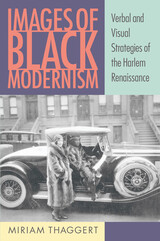
By paying special attention to the contributions of photographers and other visual artists who have not been discussed in previous accounts of black modernism, Thaggert expands the scope of our understanding of the Harlem Renaissance and contributes to a growing recognition of the importance of visual culture as a distinct element within, and not separate from, black literary studies.
Thaggert trains her critical eye on the work of James Weldon Johnson, Nella Larsen, George Schuyler, Carl Van Vechten, James Van Der Zee, and Aaron Siskind—artists who experimented with narrative and photographic techniques in order to alter the perception of black images and to question and reshape how one reads and sees the black body. Examining some of the more problematic authors and artists of black modernism, she challenges entrenched assumptions about black literary and visual representations of the early to mid twentieth century.
Thaggert concludes her study with a close look at the ways in which Harlem and the Harlem Renaissance were reimagined and memorialized in two notable texts—Wallace Thurman's 1932 satire Infants of the Spring and the Metropolitan Museum of Art's controversial 1969 exhibition "Harlem on My Mind: The Cultural Capital of Black America, 1900–1968."
The post–Civil Rights era was marked by an explosion of black political thought and aesthetics. Reflecting a shifting horizon of expectations around race relations, the unconventional sounds of free jazz coupled with experimental literary creation nuanced the push toward racial equality and enriched the possibilities for aesthetic innovation within the Black Arts Movement. In Imagine the Sound, Carter Mathes demonstrates how African American writers used sound to further artistic resistance within a rapidly transforming political and racial landscape.
While many have noted the oral and musical qualities of African American poetry from the post–Civil Rights period, Mathes points out how the political implications of dissonance, vibration, and resonance produced in essays, short stories, and novels animated the ongoing struggle for equality. Situating literary works by Henry Dumas, Larry Neal, and Toni Cade Bambara in relation to the expansive ideas of sound proposed by free jazz musicians such as Marion Brown and Sun Ra, not only does this book illustrate how the presence of sound can be heard and read as political, but it recuperates critically neglected, yet important, writers and musicians. Ultimately, Mathes details how attempts to capture and render sound through the medium of writing enable writers to envision alternate realities and resistance outside of the linear frameworks offered by the Civil Rights and Black Power movements.
In precise and elegant prose, Mathes shows how in conceptualizing sound, African American writers opened up the political imaginations of their readers. By exploring this intellectual convergence of literary artistry, experimental music, and sound theory, Imagine the Sound reveals how taking up radically new forms of expression allows us to speak to the complexities of race and political resistance.

The Immigrant Kitchen describes how these memoirs function as a complex and engaging mass media genre that caters to multiple reading constituencies. Specifically, they entertain readers with personal anecdotes and recollections, teach new culinary skills through recipes, share insight into different cultural mores through ethnographic and reportorial discussions of life in other countries, and attest to the impact that an individual’s legal immigration into the United States continues to have down through the generations of his or her American-born families.
A new critical edition of Sutton Griggs’s turn-of-the-twentieth-century novel, which continues to shed light on understandings of Black politics.
Sutton E. Griggs’s first novel, originally published in 1899, paints a searing picture of the violent enforcement of disfranchisement and Jim Crow racial segregation. Based on events of the time, including US imperial policies, revolutionary movements, and racial protests, Imperium in Imperio introduces the fictional Belton Piedmont and Bernard Belgrave as “future leaders of their race” and uses these characters to make sense of the violence that marked the dawn of the twentieth century. Taking on contemporary battles over separatism and integration, Griggs’s novel continues to play a crucial role in understandings of Black politics.
Edited and introduced by Tess Chakkalakal and Kenneth W. Warren, this new critical edition offers not only an incisive biographical and historical introduction to the novel and its author but also a wealth of references that make the events and characters of Griggs’s Imperium in Imperio, and its aftermath, accessible to readers today.

Edited and introduced by Tess Chakkalakal and Kenneth W. Warren, this new critical edition offers not only an incisive biographical and historical introduction to the novel and its author but also a wealth of references that make the events and characters of Griggs’s Imperium in Imperio, and its aftermath, accessible to readers today.
Taking as his lens the fragment—fragmented bodies, fragments of memories, fragments of texts—Murillo theorizes new directions for Black identity and cultural production. Combining a critical engagement of physics and metaphysics with innovative readings of Gayl Jones’s Corregidora, Octavia Butler’s Kindred, Toni Morrison’s Beloved, Kiese Laymon’s Long Division, Dionne Brand’s A Map to the Door of No Return, and Paul Beatty’s The Sellout, he offers new ways to think about anti-Black racism and practice Black creativity. Ultimately, in his equally creative and analytical responses to depictions of Black people left out of history and barred from spaces, Murillo argues that through Afro-pessimism, Black people can fight the anti-Black cosmos.
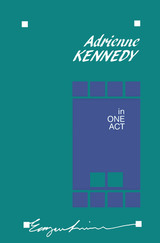
“Since her earliest plays. . . [Adrienne Kennedy] has been creating frightful and seductive theatrical images of her memories and fantasies. Her black, female protagonists enact Kennedy’s nightmares, then make them ours, enveloping the audience in their relentless anger, madness, and fear . . . time and place shift constantly, plot lines are parceled out in bits, and a contextual frame comes clear gradually, like a reflection is stilling waters.”
-Alisa SolomonVillage Voice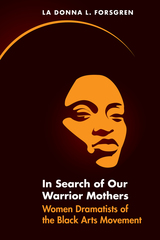
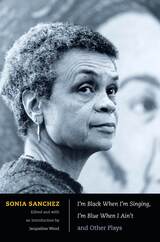
The Black Arts Movement (1965–76) consisted of artists across the United States deeply concerned with the relationship between politics and the black aesthetic. In Search of Our Warrior Mothers examines the ways in which black women playwrights in the movement advanced feminist and womanist perspectives from within black nationalist discourses. La Donna L. Forsgren recuperates the careers, artistic theories, and dramatic contributions of four leading playwrights: Martie Evans-Charles, J.e. Franklin, Sonia Sanchez, and Barbara Ann Teer. Using original interviews, production recordings, playbills, and unpublished manuscripts, she investigates how these women, despite operating within a context that equated the collective well-being of black people with black male agency, created works that validated black women's aspirations for autonomy and explored women's roles in the struggle for black liberation.
In Search of Our Warrior Mothers demonstrates the powerful contributions of women to the creation, interpretation, and dissemination of black aesthetic theory, thus opening an interdisciplinary conversation at the intersections of theater, performance, feminist, and African American studies and identifying and critiquing the gaps and silences within these fields.
REVISED AND EXPANDED EDITION
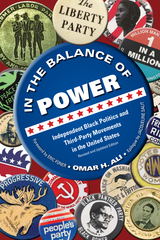
Reveals the multiple independent political tactics and strategies that African Americans have used to expand democracy and uphold civil and political rights since the founding of the nation.
This new edition of Ali’s groundbreaking narrative includes an epilogue by independent political analyst and leader Jacqueline Salit. New material addresses the historic presidencies of both Barack Obama and Donald Trump, as well as the rising tide of independent and anti-party sentiments.
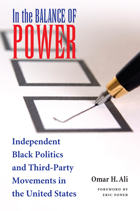
Historically, most black voters in the United States have aligned themselves with one of the two major parties: the Republican Party from the time of the Civil War to the New Deal and, since the New Deal—and especially since the height of the modern civil rights movement—the Democratic Party. However, as In the Balance of Power convincingly demonstrates, African Americans have long been part of independent political movements and have used third parties to advance some of the most important changes in the United States, notably the abolition of slavery, the extension of voting rights, and the enforcement of civil rights.
Since the early nineteenth century, there has been an undercurrent of political independence among African Americans. They helped develop the Liberty Party in the 1840s and have continued to work with third parties to challenge the policies of the two major parties. But despite the legal gains of the modern civil rights movement, elements of Jim Crow remain deeply embedded in our electoral process.
In the Balance of Power presents a history and analysis of African American third-party movements that can help us better understand the growing diversity among black voters today.
“In the Light of Likeness—Transformed”, by Dana A. Williams, looks critically at the work of contemporary African American author Leon Forrest. Not only does she bring to the critical table a well-known but as yet understudied modernist author—an important endeavor in and of itself—but she also explores Forrest’s novels’ cultural dialogue with black ethnic culture and other African American authors, as well as provides in-depth readings of his prose and interpretations of his narrative style. Highly touted by both his literary forebear Ralph Ellison, who wrote the foreword to Forrest’s first novel, and his literary contemporary Toni Morrison, who edited his first three novels and wrote the foreword to his third, Leon Forrest is among the most gifted African American writers of our time. Yet, he is also among our most difficult.
Forrest's highly experimental narrative style, his reinterpretation of modernism, and his transformations of black cultural traditions into literary aesthetics often pose challenges of interpretation for the reader and the scholar alike. As the first single-authored book-length study of Forrest’s novel, this book offers readers pathways into his fiction. What this culturalist approach to the novels reveals is that Forrest’s fiction was foremost concerned with investigating ways for the African American to survive in the contemporary moment. Through a variety of characters, the novels reveal the African American’s art of transformation—the ability to find ways to make the wretchedness of the past work in positive ways.
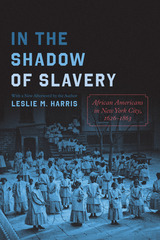
The popular understanding of the history of slavery in America almost entirely ignores the institution’s extensive reach in the North. But the cities of the North were built by—and became the home of—tens of thousands of enslaved African Americans, many of whom would continue to live there as free people after Emancipation.
In the Shadow of Slavery reveals the history of African Americans in the nation’s largest metropolis, New York City. Leslie M. Harris draws on travel accounts, autobiographies, newspapers, literature, and organizational records to extend prior studies of racial discrimination. She traces the undeniable impact of African Americans on class distinctions, politics, and community formation by offering vivid portraits of the lives and aspirations of countless black New Yorkers. This new edition includes an afterword by the author addressing subsequent research and the ongoing arguments over how slavery and its legacy should be taught, memorialized, and acknowledged by governments.
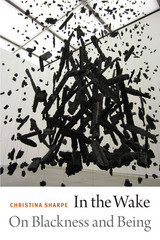

The entanglements between science and art have always been multiple, even if they are not always readily noticeable. In this volume, historian and philosopher of science Hans-Jörg Rheinberger reflects on the work of seven different artists, apprehending artworks not as art-historical exegeses, but rather ongoing research processes with their own character and specificities, more akin to scientific experimentation.
“Utterly captivating and resonant.” —Chicago Review of Books
“Gorgeously told.” —Philadelphia Inquirer
“Resonant. . . . Engagingly delivered, candid reflections on heritage and identity.” —Kirkus Reviews
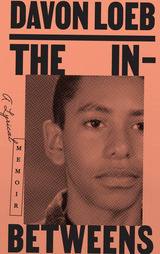
The In-Betweens tells the story of a biracial boy becoming a man, all the while trying to find himself, trying to come to terms with his white family, and trying to find his place in American society. A rich narrative in the tradition of Justin Torres’s We the Animals and Bryan Washington’s Memorial, Davon Loeb’s memoir is relevant to the country’s current climate and is part of the necessary rewrite of the nation’s narrative and identity.
The son of a Black mother with deep family roots in Alabama and a white Jewish man from Long Island, Loeb grows up in a Black family in the Pine Barrens of New Jersey as one of the few nonwhite children in their suburban neighborhood. Despite his many and ongoing efforts to fit in, Loeb acutely feels his difference—he is singled out in class during Black History Month; his hair doesn’t conform to the latest fad; coaches and peers assume he is a talented athlete and dancer; and on the field trip to the Holocaust Museum, he is the Black Jew. But all is not struggle. In lyrical vignettes, Loeb vibrantly depicts the freedom, joys, and wonder of childhood; the awkwardness of teen years, first jobs, first passions. Loeb tells an individual story universally, and readers, regardless of subjectivity and relation, will see themselves throughout The In-Betweens.
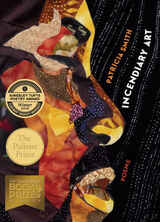
From National Book Award winner Patricia Smith
One of the most magnetic and esteemed poets in today’s literary landscape, Patricia Smith fearlessly confronts the tyranny against the black male body and the tenacious grief of mothers in her compelling new collection, Incendiary Art. She writes an exhaustive lament for mothers of the "dark magicians," and revisits the devastating murder of Emmett Till. These dynamic sequences serve as a backdrop for present-day racial calamities and calls for resistance. Smith embraces elaborate and eloquent language— "her gorgeous fallen son a horrid hidden / rot. Her tiny hand starts crushing roses—one by one / by one she wrecks the casket’s spray. It’s how she / mourns—a mother, still, despite the roar of thorns"— as she sharpens her unerring focus on incidents of national mayhem and mourning. Smith envisions, reenvisions, and ultimately reinvents the role of witness with an incendiary fusion of forms, including prose poems, ghazals, sestinas, and sonnets. With poems impossible to turn away from, one of America’s most electrifying writers reveals what is frightening, and what is revelatory, about history.
Winner, 2017 Los Angeles Times Book Prize
Finalist, 2018 Pulitzer Prize for Poetry
Winner, NAACP Image Award for Outstanding Literary Work in the Poetry category
Winner, 2018 Kingsley Tufts Poetry Award
Winner, 2018 BCALA Best Poetry Award
Winner, Abel Meeropol Award for Social Justice
Finalist, Neustadt International Prize for Literature
Winner, 2021 Ruth Lilly Poetry Prize
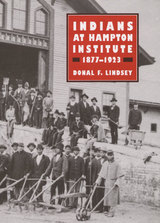
Founded in 1868, Hampton Institute educated almost 1400 members of sixty-five Native American peoples. Donal F. Lindsey examines the interactions among Indigenous people, Blacks, and whites at the nation’s premier industrial school for racial minorities.
Lindsey's analysis traces the rise and decline of the program for Indigenous Americans while analyzing the program’s impact on the campaign for Native education. Lindsey also examines how the two marginalized races at Hampton viewed each other and white society. Though integration prevailed in much of student life, it resulted in even greater accommodation to a racist society. The weaknesses and strengths attributed to one race were used with “tender violence” to remake the other, in a program in which the powerful and the powerless remained so regardless of segregation or integration.
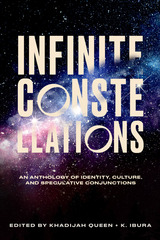
A galaxy of voices. A universe of belonging.
The innovative fictions in Infinite Constellations showcase the voices and visions of 30 remarkable writers, both new and established, from the global majority: Native American/First Nation writers, South Asian writers, East Asian writers, Black American writers, Latinx writers, and Caribbean and Middle Eastern writers. These are visions both familiar and strange, but always rooted in the mystery of human relationships, the deep honoring of memory, and the rootedness to place and the centering of culture.
The writers in this anthology mirror, instruct, bind and unbind, myth-make and myth-invert, transform and transmute, make us belly-laugh or hum our understanding, gasp or whisper gently, and remember that sometimes we need to holler and fight as we grieve. Any dangers herein, imagined or observed in poem and story, transport us: moving from latent to extant, then unleashed.
This work does not presume; it presents and blossoms, creating a constellation of appearances, a symphony of belonging.
“In collecting this work,” note editors Khadijah Queen and K. Ibura, “we felt humbled by the love threaded throughout the voices speaking to us in stories and poems that vault beyond expectation and settle in our consciousness as an expansion of what’s possible when we tend to one another with intention. We felt lifted, held aloft in these arrangements of language. We hope that as you read each story and poem, you will find the same sense of empowerment and celebration that we know has sustained us over countless generations, and in their beauty and humor and intelligence and complexity, continue to enrich us still.”
CONTRIBUTORS
George Abraham / Kenzie Allen / Shreya lla Anasuya / Thea Anderson / Wendy Chin-Tanner / Alton Melvar M. Depanas / Yohanca Delgado / Jennifer Elise Foerster / Aerik Francis / André O. Hoilette / Brian K. Hudson / K. Ibura / Pedro Iniguez / Ruth Ellen Kocher / Ra’Niqua Lee / Tonya Liburd / Kenji C. Liu / Shalewa Mackall / Lucien Darjeun Meadows / Melanie Merle / Juan J. Morales / Thirii Myo Kyaw Myint / Cindy Juyound Ok / Daniel José Older / Soham Patel / Lynn C. Pitts/ Khadijah Queen / Sheree Renée Thomas / Sarah Sophia Yanni / dg nanouk okpik / shakirah peterson


<p>Vivid and engaging, <i>Ink</i> brings to light the extraordinary journey of a Black businessman and athlete.</p>
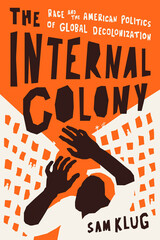
In The Internal Colony, Sam Klug reveals the central but underappreciated importance of global decolonization to the divergence between mainstream liberalism and the Black freedom movement in postwar America. Klug reconsiders what has long been seen as a matter of primarily domestic policy in light of a series of debates concerning self-determination, postcolonial economic development, and the meanings of colonialism and decolonization. These debates deeply influenced the discord between Black activists and state policymakers and formed a crucial dividing line in national politics in the 1960s and 1970s.
The result is a history that broadens our understanding of ideological formation—particularly how Americans conceptualized racial power and political economy—by revealing a much wider and more dynamic network of influences. Linking intellectual, political, and social movement history, The Internal Colony illuminates how global decolonization transformed the terms of debate over race and social class in the twentieth-century United States.

Upending a century of scholarly and popular thinking about stereotype, Martin A. Berger traces our current understanding of it to the 1920s, when American journalist and public intellectual Walter Lippmann borrowed the term from printmaking techniques and defined it as a shared mental picture that simplified a person, event, group, or thing so it could be easily grasped. Berger uncovers stereotype’s intellectual debts to philosophy, psychology, political science, and, in particular, art history and interwar racial theories.
Inventing Stereotype analyzes a series of plays, novels, and paintings from the 1920s and 1930s that sparked fierce debate about whether they employed racial stereotypes in the depiction of Black, Jewish, and other characters. Through careful attention to audience responses—parsed by race, political leanings, religion, and class—the book illustrates how artistic depictions are categorized as either stereotyped or not, relative to current representational norms, rather than to their success in conveying the authentic identities of individuals or racial groups.
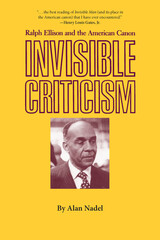
In 1952 Ralph Ellison won the National Book Award for his Kafkaesque and claustrophobic novel about the life of a nameless young black man in New York City. Although Invisible Man has remained the only novel that Ellison published in his lifetime, it is generally regarded as one of the most important works of fiction in our century.
This new reading of a classic work examines Ellison's relation to and critique of the American literary canon by demonstrating that the pattern of allusions in Invisible Man forms a literary-critical subtext which challenges the accepted readings of such major American authors as Emerson, Melville, and Twain.
Modeling his argument on Foucault's analysis of the asylum, Nadel analyzes the institution of the South to show how it moved blacks from "enslavement" to "slavery" to "invisibility"—all in the interest of maintaining an organization of power based on racial caste. He then demonstrates the ways Ellison wrote in the modernist/surreal tradition to trace symbolically the history of blacks in America as they moved not only from the nineteenth century to the twentieth, and from the rural South to the urban North, but as they moved (sometimes unnoticed) through American fiction.
It is on this latter movement that Nadel focuses his criticism, first demonstrating theoretically that allusions can impel reconsideration of the alluded-to text and thus function as a form of literary criticism, and then reading the specific criticism implied by Ellison's allusions to Emerson's essays and Lewis Mumford's The Golden Days, as well as to "Benito Cereno" and The Adventures of Huckleberry Finn. Nadel also considers Ellison's allusions to Whitman, Eliot, Joyce, and the New Testament.
Invisible Criticism will be of interest not only to students of American and Afro-American literature but also to those concerned about issues of literary theory, particularly in the areas of intertextual relationships, canonicity, and rehistoricism.
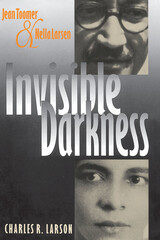
Invisible Darkness offers a striking interpretation of the tortured lives of the two major novelists of the Harlem Renaissance: Jean Toomer, author of Cane (1923), and Nella Larsen, author of Quicksand (1928) and Passing (1929). Charles R. Larson examines the common belief that both writers "disappeared" after the Harlem Renaissance and died in obscurity; he dispels the misconception that they vanished into the white world and lived unproductive and unrewarding lives.
In clear, jargon-free language, Larson demonstrates the opposing views that both writers had about their work vis-à-vis the incipient black arts movement; he traces each writer's troubled childhood and describes the unresolved questions of race that haunted Toomer and Larsen all of their lives. Larson follows Toomer through the wreckage of his personal life as well as the troubled years of his increasingly quirky spiritual quest until his death in a nursing home in 1967. Using previously unpublished letters and documents, Larson establishes for the first time the details of Larsen's life, illustrating that virtually every published fact about her life is incorrect.
With an innovative chronology that breaks the conventions of the traditional biographical form, Larson narrates what happened to both of these writers during their supposed years of withdrawal. He demonstrates that Nella Larsen never really gave up her fight for creative and personal fulfillment and that Jean Toomer's connection to the Harlem Renaissance—and the black world—is at best a dubious one. This strong revisionist interpretation of two major writers will have a major i mpact on African American literary studies.
Is It Nation Time? gathers new and classic essays on the Black Power movement and its legacy by renowned thinkers who deal rigorously and unsentimentally with such issues as the commodification of blackness, the piety of cultural recovery, and class tensions within the movement. For anyone who wants to understand the roots of the complex political and cultural desires of contemporary black America, this will be an essential collection.
Contributors:
Eddie S. Glaude Jr.
Farah Jasmine Griffin
Phillip Brian Harper
Gerald Horne
Robin D. G. Kelley
Wahneema Lubiano
Adolph Reed Jr.
Jeffrey Stout
Will Walker
S. Craig Watkins
Cornel West
E. Francis White
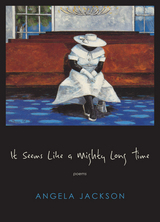
2015 PEN Open Book Award Finalist
Angela Jackson’s latest collection of poetry borrows its title from a lyric in Barbara Lewis’s 1963 hit single “Hello Stranger,” recorded at Chess Records in Chicago. Like the song, Jackson’s poems are a melodic ode to the African American experience, informed by both individual lives and community history, from the arrival of the first African slave in Virginia in 1619 to post-Obama America.
It Seems Like a Mighty Long Time reflects the maturity of Jackson’s poetic vision. The Great Migration, the American South, and Chicago all serve as signposts, but it is the complexity of individual lives—both her own and those who have gone before, walk beside, and come after—that invigorate this collection. Upon surveying so vast a landscape, Jackson finds that sorrow meets delight, and joy lifts up anger and despair. And for all this time, love is the agent, the wise and just rule and guide.
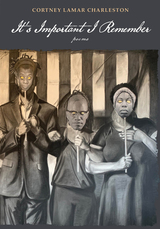
An incantation of strength and solace for persisting in twenty-first-century America
“History doesn’t repeat, it rhymes.” In his sweeping third collection, Charleston brings a poet’s ear for echo and rhythm to bear on American history and life after 2016. For Charleston, these rhymes cut two ways: the long tradition of American racism and fascism, and the steady pulse of Black persistence. The collection’s titular invocation frames each poem, at times an oratory to rally a crowd, in other moments a private prayer whispered as the speaker gathers himself to face another day. Charleston insists that should we cede memory of our national biography—whether to repression or indifference—we will witness the country’s dissolution into something unrecognizable to many, yet all too familiar to its most marginalized people. But with each reiteration and riff, he also invokes a tenuous hope—that if we summon an American history of Black resistance, we might still make a more perfect union.
READERS
Browse our collection.
PUBLISHERS
See BiblioVault's publisher services.
STUDENT SERVICES
Files for college accessibility offices.
RECENTLY PUBLISHED



UChicago Accessibility Resources
home | accessibility | search | about | contact us
BiblioVault ® 2001 - 2025
The University of Chicago Press