
 A SCHOLARLY BOOK REPOSITORY


Metabolics, a book-length poem, borrows the movements of metabolic pathways to consider how nature accomplishes both balance and deep transformation. In visual figures and prose blocks that bridge the divide between poetry and nonfiction, Jessica E. Johnson employs scientific idioms to construct an allegory about a family in the Pacific Northwest. The region becomes a character in its own right, with cedars, moss, and heavy cloud knitting the mother, father, boy, and girl into their setting.
This far-reaching volume also serves as a study of the ecologies of contemporary parenting, with adults and children affected by “feeds” both on screen and off as their bodies metabolize food, the environment, and excess feelings such as rage. From climate change to kombucha to smartphones and curated produce, the smallest details of daily life in “Plasticland” catalyze a larger examination of selfhood: “Despite so many attempts to resolve this tension, sometimes you are you and also sometimes mother just as light can be both particle and wave.”
The rise of the global cloud and the internet-of-things have ushered in a new stage of the internet that marks a transition from the celebrated user-generated content of Web 2.0 to the data-driven networks of Web 3.0. As social media networks have expanded, so has the amount of writing and communication we do online. This has created several valuable sub-layers of data and metadata about consumer-citizens that corporations and governments now routinely collect, store, and monetize. This frenzy to collect more data is contributing to several problematic social and environmental concerns as flows of information and capital dangerously accelerate how energy and matter move through ecosystems at every scale.
This book explores the planetary consequences of Web 3.0 and the vital role that writing and data production play in accelerating capital circulation, from concerns raised by the growing energy demands of the information industries, to growing streams of electronic waste, to the growing socioeconomic tensions arising as a result of information monopolies.
A posthuman, Marxist analysis of digital culture and writing, Metabolizing Capital contributes to and challenges current understandings of rhetorical agency and actor networks. Combining scholarship from writing studies, rhetoric, and composition with research in metabolic ecology, information theory, media studies, cognitive psychology, history, and new materialism, this book should be of interest to scholars in writing studies as well as others who study digital culture, ecological literacies, the history of writing and information, big data, and environmental concerns related to electronics and the information industries.
Metacommunities takes the hallmarks of metapopulation theory to the next level by considering a group of communities, each of which may contain numerous populations, connected by species interactions within communities and the movement of individuals between communities. In examining communities open to dispersal, the book unites a broad range of ecological theories, presenting some of the first empirical investigations and revealing the value of the metacommunity approach.
The collection of empirical, theoretical, and synthetic chapters in Metacommunities seeks to understand how communities work in fragmented landscapes. Encouraging community ecologists to rethink some of the leading theories of population and community dynamics, Metacommunities urges ecologists to expand the spatiotemporal scales of their research.
It is one thing to comprehend how culture makes its way through the world in those cases where something old is reproduced in the same physical shape-where, for example, a song is sung or a story retold. It is another thing altogether, as Greg Urban demonstrates, to think about cultural motion when something new is created-a new song or a new story. And this, the creating of new culture, is the overarching value of the contemporary world, as well as the guiding principle of the capitalist entrepreneur.
From the Declaration of Independence to the movie Babe, from the Amazon River to the film studio, from microscopic studies of the words making up myths and books to the large-scale forces of conquest, conversion, and globalization that drive history, Urban follows the clues to a startling revelation: "metaculture" makes the modern, entrepreneurial form of culture possible. In Urban’s work we see how metaculture, in its relationship to newness, explains the peculiar shape of modern society and its institutions, from the prevalence of taste and choice to the processes of the public sphere, to the centrality of persuasion and hegemony within the nation.
This benchmark text is back in a new edition thoroughly updated to incorporate developments and changes in metadata and related domains. Zeng and Qin provide a solid grounding in the variety and interrelationships among different metadata types, offering a comprehensive look at the metadata schemas that exist in the world of library and information science and beyond. Readers will gain knowledge and an understanding of key topics such as
- the fundamentals of metadata, including principles of metadata, structures of metadata vocabularies, and metadata descriptions;
- metadata building blocks, from modeling to defining properties, from designing application profiles to implementing value vocabularies, and from specification generating to schema encoding, illustrated with new examples;
- best practices for metadata as linked data, the new functionality brought by implementing the linked data principles, and the importance of knowledge organization systems;
- resource metadata services, quality measurement, and interoperability approaches;
- research data management concepts like the FAIR principles, metadata publishing on the web and the recommendations by the W3C in 2017, related Open Science metadata standards such as Data Catalog Vocabulary (DCAT) version 2, and metadata-enabled reproducibility and replicability of research data;
- standards used in libraries, archives, museums, and other information institutions, plus existing metadata standards’ new versions, such as the EAD 3, LIDO 1.1, MODS 3.7, DC Terms 2020 release coordinating its ISO 15396-2:2019, and Schema.org’s update in responding to the pandemic; and
- newer, trending forces that are impacting the metadata domain, including entity management, semantic enrichment for the existing metadata, mashup culture such as enhanced Wikimedia contents, knowledge graphs and related processes, semantic annotations and analysis for unstructured data, and supporting digital humanities (DH) through smart data.
A supplementary website provides additional resources, including examples, exercises, main takeaways, and editable files for educators and trainers.

Since it was first published, LIS students and professionals everywhere have relied on Miller’s authoritative manual for clear instruction on the real-world practice of metadata design and creation. Now the author has given his text a top to bottom overhaul to bring it fully up to date, making it even easier for readers to acquire the knowledge and skills they need, whether they use the book on the job or in a classroom. By following this book’s guidance, with its inclusion of numerous practical examples that clarify common application issues and challenges, readers will
- learn about the concept of metadata and its functions for digital collections, why it’s essential to approach metadata specifically as data for machine processing, and how metadata can work in the rapidly developing Linked Data environment;
- know how to create high-quality resource descriptions using widely shared metadata standards, vocabularies, and elements commonly needed for digital collections;
- become thoroughly familiarized with Dublin Core (DC) through exploration of DCMI Metadata Terms, CONTENTdm best practices, and DC as Linked Data;
- discover what Linked Data is, how it is expressed in the Resource Description Framework (RDF), and how it works in relation to specific semantic models (typically called “ontologies”) such as BIBFRAME, comprised of properties and classes with “domain” and “range” specifications;
- get to know the MODS and VRA Core metadata schemes, along with recent developments related to their use in a Linked Data setting;
- understand the nuts and bolts of designing and documenting a metadata scheme; and
- gain knowledge of vital metadata interoperability and quality issues, including how to identify and clean inconsistent, missing, and messy metadata using innovative tools such as OpenRefine.
Ultimately, Metafilm reframes materialism as a multimodal composing-in-action, or reflexive materialism, focusing on movies that dramatize their entanglement in economic and historical trauma while provoking forms of resistance during and after viewing. Carter contends that even as we recognize the division of social power in the films, we must also recognize how the concept is subversive and eludes control. In looking at the interplay between the films’ content and their production, circulation, and reception, Carter explores how the films persuade us to identify with onscreen worlds before probing our expectations—validating some, rejecting others, and sometimes proposing new ways of watching altogether.
The greatest trick the videogame industry ever pulled was convincing the world that videogames were games rather than a medium for making metagames. Elegantly defined as “games about games,” metagames implicate a diverse range of practices that stray outside the boundaries and bend the rules: from technical glitches and forbidden strategies to Renaissance painting, algorithmic trading, professional sports, and the War on Terror. In Metagaming, Stephanie Boluk and Patrick LeMieux demonstrate how games always extend beyond the screen, and how modders, mappers, streamers, spectators, analysts, and artists are changing the way we play.
Metagaming uncovers these alternative histories of play by exploring the strange experiences and unexpected effects that emerge in, on, around, and through videogames. Players puzzle through the problems of perspectival rendering in Portal, perform clandestine acts of electronic espionage in EVE Online, compete and commentate in Korean StarCraft, and speedrun The Legend of Zelda in record times (with or without the use of vision). Companies like Valve attempt to capture the metagame through international e-sports and online marketplaces while the corporate history of Super Mario Bros. is undermined by the endless levels of Infinite Mario, the frustrating pranks of Asshole Mario, and even Super Mario Clouds, a ROM hack exhibited at the Whitney Museum of American Art.
One of the only books to include original software alongside each chapter, Metagaming transforms videogames from packaged products into instruments, equipment, tools, and toys for intervening in the sensory and political economies of everyday life. And although videogames conflate the creativity, criticality, and craft of play with the act of consumption, we don’t simply play videogames—we make metagames.


Engineering the battlefield—one armored advance at a time.
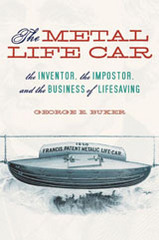
For centuries sailing vessels crept along the coastline, ready to flee ashore in case of danger or trouble; this worked well until weather or poor sailing drove these ships against an unforgiving coast. Saviors and salvors (often the same people) struggled to rescue both humans and cargo, often with results as tragic for them as for the sailors and passengers.
Joseph Francis (b. Boston, Massachusetts, 1801) was an inventor who also had the ability to organize a business to produce his inventions and the salesmanship to sell his products. His metal lifeboats, first used in survey expeditions in Asia Minor and Central America, came into demand among the world’s merchant marine, the U.S. Navy, and the U.S. Revenue Service. His corrugated “life car” was the keystone to development of the U.S. Life-Saving Service. Francis’s metal bateaux and lifeboats played an important role in the Third Seminole War in Florida. His metal pontoon army wagons served in the trans-Mississippi campaigns against the Indians.
In Europe, he was acclaimed as a genius and sold patent rights to shipyards in Liverpool and the Woolwich Arsenal in England, Le Havre seaport in France, in the free city of Hamburg, and in the Russian Empire. But while Francis was busy in Europe, Captain Douglass Ottinger, U.S. Revenue Marine Service, claimed to be the inventor of Francis’s life car and obtained support in the U.S. Congress and the Patent Office for his claim. Francis had to battle for decades to prove his rights, and Americans remained generally unfamiliar with his devices, thereby condemning Civil War armies to inferior copies while Europe was using, and acclaiming, his inventions.

In 1930, a remote corner of southwest Arkansas witnessed the discovery of cinnabar, the ore from which mercury is extracted. Upon the arrival of “the metal of a thousand uses,” a wave of hope and ambition swept through the foothills of the Ouachita Mountains as mercury mining promised economic revival for the struggling state. Despite the known dangers of the industry, Arkansans greeted the prospect of a mercury boom with unbridled enthusiasm, seeing it as a potential solution to their economic woes amid the Great Depression.
In The Metal of a Thousand Uses: Mercury Mining in Arkansas, 1930–1946, Terry S. Reynolds charts the dramatic rise and fall of the state’s mercury mining district, from the euphoria of discovery to the logistical and financial challenges of industrialization. Drawing on deep archival research, Reynolds explores the experiences of the miners and managers whose fates became bound to the companies that sought to commercialize mercury refining in the Ouachita Mountains. The result is a vivid account of a little-known chapter in American mineral-resource history.
Contributors. Idelber Avelar, Albert Bell, Dan Bendrups, Harris M. Berger, Paul D. Greene, Ross Hagen, Sharon Hochhauser, Shuhei Hosokawa, Keith Kahn-Harris, Kei Kawano, Rajko Muršič,Steve Waksman, Jeremy Wallach, Robert Walser, Deena Weinstein, Cynthia P. Wong

language correctly. Later comes the precocious ability to
“reflect” upon and deliberately control its use.
Metalinguistic development, or the emergence of a reflective
attitude to the comprehension and production of oral and
written language, must be distinguished from that of ordinary
verbal communication.
This is the first book to review and analyze what is
known about metacognitive processes in relation to language.
Each of its seven chapters deals systematically with the
relationship between the comprehension and production of the
phonetic, syntactic, semantic, pragmatic, and textual aspects
of language. This material is then related to the
metacognitive principles which govern reflective awareness.
A concluding chapter deals with written language and
metalinguistics.
Jean Émile Gombert's novel description of processes such
as the understanding of metaphor and humor in relation to
pragmatics and his suggestion that metalinguistic knowledge
is intimately connected with literacy contribute to a fuller
understanding of the stages of language acquisition and
mastery. With clarity and insight, Metalinguistic
Development reveals how the capacity for reflection gives
rise to emergent properties of the language system.
“A clear, critical, and interesting book about
an important topic which has not been reviewed properly
before. I particularly like the way that Jean Eacute;mile Gombert
combines a comprehensive account of American work with a very
impressive knowledge of European work.”—Peter Bryant,
University of Oxford
Jean Émile Gombert teaches genetic psychology at the
University of Dijon.

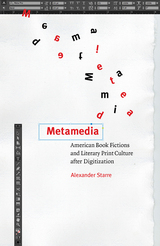
Combining sustained textual analysis with impulses from the fields of book history, media studies, and systems theory, Starre explains the aesthetics and the cultural work of complex material fictions, such as Mark Z.Danielewski’s House of Leaves (2000), Chip Kidd’s The Cheese Monkeys (2001), Salvador Plascencia’s The People of Paper (2005), Reif Larsen’s The Selected Works of T. S. Spivet (2009), and Jonathan Safran Foer’s Tree of Codes (2010). He also broadens his analysis beyond the genre of the novel in an extensive account of the influential literary magazine McSweeney’s Quarterly Concern and its founder, Dave Eggers.
For this millennial generation of writers and publishers, the computer was never a threat to print culture, but a powerful tool to make better books. In careful close readings, Starre puts typefaces, layouts, and cover designs on the map of literary criticism. At the same time, the book steers clear of bibliophile nostalgia and technological euphoria as it follows writers, designers, and publishers in the process of shaping the surprising history of literary bookmaking after digitization.
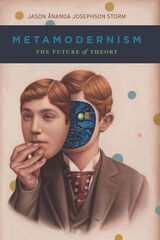
Metamodernism works through the postmodern critiques and uncovers the mechanisms that produce and maintain concepts and social categories. In so doing, Storm provides a new, radical account of society’s ever-changing nature—what he calls a “Process Social Ontology”—and its materialization in temporary zones of stability or “social kinds.” Storm then formulates a fresh approach to philosophy of language by looking beyond the typical theorizing that focuses solely on human language production, showing us instead how our own sign-making is actually on a continuum with animal and plant communication.
Storm also considers fundamental issues of the relationship between knowledge and value, promoting a turn toward humble, emancipatory knowledge that recognizes the existence of multiple modes of the real. Metamodernism is a revolutionary manifesto for research in the human sciences that offers a new way through postmodern skepticism to envision a more inclusive future of theory in which new forms of both progress and knowledge can be realized.
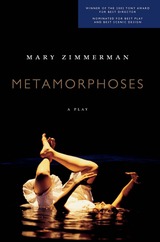
A beautiful and deeply humane reanimation of Ovid's myths
Called by Time the "theater event of the year," Mary Zimmerman's Metamorphoses brings Ovid's tales to stunning visual life. Set in and around a large pool of water onstage, Metamorphoses juxtaposes the ancient and the contemporary in both language and image to reflect the variety and persistence of narrative in the face of inevitable change. Nominated for three 2002 Tony Awards, including "Best Play," Metamorphoses earned Zimmerman a Tony for "Best Direction of a Play."

Born in Alexandria, Egypt, in 1925, and schooled in the British tradition, Anlyan attended Yale University as an undergraduate and medical student before coming to the relatively unknown medical school at Duke University in 1949 for an internship in general and thoracic surgery. He stayed on, first as a resident, then as a staff surgeon. By 1961, he was a full professor of surgery. In 1964, Anlyan was named dean of the medical school, the first in a series of administrative posts at the medical school and hospital. Anlyan’s role in the transformation of the Duke University Medical Center into an internationally renowned health system is manifest: he restructured the medical school and hospital and supervised the addition of almost four million square feet of new or renovated space. He hired outstanding administrators and directed a staff that instituted innovative programs and groundbreaking research centers, such as the Cancer Center and the Physician’s Assistant Program.
Anlyan describes a series of metamorphoses in his own life, in the world of medicine, in Durham, and at Duke. At the time of his prep school upbringing in Egypt, medicine was a matter of controlling infectious diseases like tuberculosis and polio. As he became an immigrant medical student and then a young surgeon, he observed vast advances in medical practice and changes in the financing of medical care. During his tenure at Duke, Durham was transformed from a sleepy mill and tobacco town into the “City of Medicine,” a place where patients routinely travel for open-heart surgery and cutting-edge treatments for cancer and other diseases.
Anyone interested in health care, medical education, and the history of Duke University will find Anlyan’s memoir of interest.
When Apuleius wrote his Metamorphoses, the novel--indeed the very concept of fiction in prose--was new. This study argues that Apuleius' repeated allusions to earlier Latin authors such as Vergil, Ovid, and Seneca represent an exploration on his part of the relationship between the novel and more established genres of the era. Apuleius' struggle with this tradition, Finkelpearl maintains, parallels the protagonist's move from an acceptance of the dominance of traditional forms to a sense of arrival and self- discovery.
An introductory chapter includes general discussion of the theory and practice of allusion. Finkelpearl then revisits the issues of parody in Apuleius. She also includes discussion of Apuleius' use of Vergil's Sinon, the Charite episode in relation to Apuleius' African origins, and the stepmother episode. Finally a new reading of Isis is offered, which emphasizes her associations with writing and matches the multiformity of the goddess with the novel's many voices.
This book will be of interest to scholars of literature and the origins of the novel, multiculturalism, and classical literature.
Ellen D. Finkelpearl is Associate Professor of Classics at Scripps College, Claremont, California.

But underlying recent political transitions are other wrenching social changes and shocks, a set of transformations less clearly mapped out. Relations between ethnic and religious groups, in the context of Burma’s political model of a state composed of ethnic groups, are a particularly important “unsolved equation”.
The editors use the notion of metamorphosis to look at Myanmar today and tomorrow—a term that accommodates linear change, stubborn persistence and the possibility of dramatic transformation. Divided into four sections, on politics, identity and ethnic relations, social change in fields like education and medicine, and the evolutions of religious institutions, the volume takes a broad view, combining an anthropological approach with views from political scientists and historians. This volume is an essential guide to the political and social challenges ahead for Myanmar.
Although the theme of blindness occurs frequently in literature, literary criticism has rarely engaged the experiential knowledge of people with visual impairments. The Metanarrative of Blindness counters this trend by bringing to readings of twentieth-century works in English a perspective appreciative of impairment and disability. Author David Bolt examines representations of blindness in more than forty literary works, including writing by Kipling, Joyce, Synge, Orwell, H. G. Wells, Susan Sontag, and Stephen King, shedding light on the deficiencies of these representations and sometimes revealing an uncomfortable resonance with the Anglo-American science of eugenics.
What connects these seemingly disparate works is what Bolt calls “the metanarrative of blindness,” a narrative steeped in mythology and with deep roots in Western culture. Bolt examines literary representations of blindness using the analytical tools of disability studies in both the humanities and social sciences. His readings are also broadly appreciative of personal, social, and cultural aspects of disability, with the aim of bringing literary scholars to the growing discipline of disability studies, and vice versa. This interdisciplinary monograph is relevant to people working in literary studies, disability studies, psychology, sociology, applied linguistics, life writing, and cultural studies, as well as those with a general interest in education and representations of blindness.

Metapersons begins from a simple yet striking observation: across the world, people live in the company of divinities, ancestors, spirits, sacred mountains, or enlivened statues. They pray with intensity, sense the presence of ghosts, and experience forms of coexistence with beings beyond the human. Drawing on fieldwork in Portugal, China, Mozambique, and Brazil, João Pina-Cabral shows how humans continually move beyond their embodied condition through lived relations with such entities.
Revisiting classic anthropological debates—from Durkheim and Mauss on prayer and the sacred to later critiques of religion—this book argues that a “new anthropological synthesis” has emerged in recent decades: one that understands transcendence as a fundamental feature of life itself. In this light, familiar categories such as “superstition” require reconsideration in new terms. Pina-Cabral develops a scalar model of life’s plurality, seeing personhood as the dynamic source of transcendence.
Engaging with contemporary debates across the life sciences, social sciences, and philosophy, Metapersons offers a groundbreaking, person-centered perspective on transcendence, animism, and spirituality. It challenges disciplinary boundaries while providing an innovative framework for rethinking prayer, religion, and the very conditions of human coexistence with the more-than-human world.
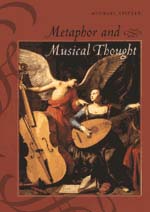
The experience of music is an abstract and elusive one, enough so that we're often forced to describe it using analogies to other forms and sensations: we say that music moves or rises like a physical form; that it contains the imagery of paintings or the grammar of language. In these and countless other ways, our discussions of music take the form of metaphor, attempting to describe music's abstractions by referencing more concrete and familiar experiences.
Michael Spitzer's Metaphor and Musical Thought uses this process to create a unique and insightful history of our relationship with music—the first ever book-length study of musical metaphor in any language. Treating issues of language, aesthetics, semiotics, and cognition, Spitzer offers an evaluation, a comprehensive history, and an original theory of the ways our cultural values have informed the metaphors we use to address music. And as he brings these discussions to bear on specific works of music and follows them through current debates on how music's meaning might be considered, what emerges is a clear and engaging guide to both the philosophy of musical thought and the history of musical analysis, from the seventeenth century to the present day. Spitzer writes engagingly for students of philosophy and aesthetics, as well as for music theorists and historians.
Metaphor and the Slave Trade provides compelling evidence of the hidden but unmistakable traces of the transatlantic slave trade that persist in West African discourse. Through an examination of metaphors that describe the trauma, loss, and suffering associated with the commerce in human lives, this book shows how the horrors of slavery are communicated from generation to generation.
Laura T. Murphy’s insightful new readings of canonical West African fiction, autobiography, drama, and poetry explore the relationship between memory and metaphor and emphasize how repressed or otherwise marginalized memories can be transmitted through images, tropes, rumors, and fears. By analyzing the unique codes through which West Africans have represented the slave trade, this work foregrounds African literary contributions to Black Atlantic discourse and draws attention to the archive that metaphor unlocks for scholars of all disciplines and fields of study.
Only recently have linguists ceased to regard metaphors as mere frills on the periphery of language and begun to recognize them as cornerstones of discourse. Phyllis Wilcox takes this innovation one step further in her fascinating study of metaphors in American Sign Language (ASL).
Such an inquiry has long been obscured by, as Wilcox calls it, “the shroud of iconicity.” ASL’s iconic nature once discouraged people from recognizing it as a language; more recently it has served to confuse linguists examining its metaphors. Wilcox, however, presents methods for distinguishing between icon and metaphor, allowing the former to clarify, not cloud, the latter. “If the iconic influence that surrounds metaphor is set aside, the results will be greater understanding, and interpretations that are less opaque.”
Wilcox concludes her study with a close analysis of the ASL poem, “The Dogs,” by Ella Mae Lentz. In presenting Deaf Americans’, Deaf Germans’, and Deaf Italians’ reactions to the poem, Wilcox manages not only to demonstrate the influence of culture upon metaphors, but also to illuminate the sources of sociopolitical division within the American Deaf community. Metaphor in American Sign Language proves an engrossing read for those interested in linguistics and Deaf culture alike.
Engage compelling arguments that challenge prominent positions in Pauline studies
In this innovative book, William E. W. Robinson takes the reader on a journey through Romans 8:1–17 using Conceptual Metaphor Theory and Conceptual Integration Theory. Robinson delineates the underlying cognitive metaphors, their structure, their function, what they mean, and how Paul’s audiences then and now are able to comprehend their meaning. He examines each metaphor in the light of relevant aspects of the Greco-Roman world and Paul’s Jewish background. Robinson contends that Paul portrays the Spirit as the principal agent in the religious-ethical life of believers. At the same time, his analysis demonstrates that the conceptual metaphors in Romans 8:1–17 convey the integral role of believers in ethical conduct. In the process, he addresses thorny theological issues such as whether Spirit and flesh signal an internal battle within believers or two conflicting ways of life. Finally, Robinson shows how this study is relevant to related Pauline passages and challenges scholars to incorporate these methods into their own investigation of biblical texts.
Features:
- Sustained argument that sheds new light on how Paul communicates with his audiences
- Substantial contribution to current debates about central theological concepts
- Conceptual Metaphor Theory and Conceptual Integration Theory applied to the metaphors in Romans 8:1-17
Metaphorical World Politics argues that language and metaphor are important parts of international political reality. Metaphors and world politics have appeared together many times in recent history. The blended space that results is metaphorical world politics, a real- world game for political and scientific actors. This collection picks up the challenge to unravel the game, to examine its rules, to clarify the mixture of images and facts that is so real in politics but so exceptional in science. Scholars have studied metaphor mostly from a linguistic or a literary point of view. This work forces those primarily interested in metaphors to think about applications and implications beyond the text. Others concerned mainly with world politics may consider how metaphors may help to energize and structure international political thought and action.
Scholars have most often studied world politics embedded in so-called "facts." Metaphorical World Politics shows that facts are misleading in their compactness, that facts are often meaningless, that metaphors in contrast are energetic processors of meaning, and that facts in world politics are nothing more than weak emulsions of metaphor. This work outlines the general place of metaphor on the map of politics and highlights the location of specific metaphors on the political terrain.

To build this model, Müller presents an overview of notions of metaphor from the classical period to the present; studies in detail how metaphors function in speech, text, gesture, and images; and examines the way mixed metaphors sometimes make sense and sometimes do not. This analysis leads her to conclude that metaphors may oscillate between various degrees of sleeping and waking as their status changes depending on context and intention. Bridging the gap between conceptual metaphor theory and more traditional linguistic theories, this book is a major advance for the field and will be vital to novices and initiates alike.
In this updated edition of Lakoff and Johnson's influential book, the authors supply an afterword surveying how their theory of metaphor has developed within the cognitive sciences to become central to the contemporary understanding of how we think and how we express our thoughts in language.
Winner, Senior Book Prize, American Ethnological Society
Starting with the post-structuralist idea that truth systems are lodged in discourse, and that discourse varies from society to society, Greg Urban seeks to discover the nature and extent of that variation. His journey to an Amerindian society in which dreams are more prominent than everyday aspects of the sensible world leads him to radically reformulate one of the main problematics of Western thought: the relationship between our sensations of the world and the understandings we form of them.
Metaphysical Community proposes that this dichotomy comes from the interplay between two sides of discourse-its intelligible side as a carrier of meanings, and its sensible side as thing-in-the-world that must be replicated. This insight leads to the heart of the book-the exploration of the uneasy tension that binds experience and understanding, phenomena and noumena.
Urban challenges basic assumptions that underlie social and cultural anthropology and much of the social sciences and humanities. His provocative insights will be of interest to all those concerned with anthropology, cultural studies, literary criticism, the sociology and politics of culture, and philosophy.
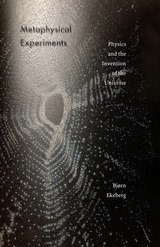
An engaging critique of the science and metaphysics behind our understanding of the universe
The James Webb Space Telescope, when launched in 2021, will be the premier orbital observatory, capable of studying every phase of the history of the universe, from the afterglow of the Big Bang to the formation of our solar system. Examining the theoretical basis for key experiments that have made this latest venture in astrophysics possible, Bjørn Ekeberg reveals that scientific cosmology actually operates in a twilight zone between the physical and metaphysical.
Metaphysical Experiments explains how our current framework for understanding the universe, the Big Bang theory, is more determined by a deep faith in mathematical universality than empirical observation. Ekeberg draws on philosophical insights by Spinoza, Bergson, Heidegger, and Arendt; on the critical perspectives of Latour, Stengers, and Serres; and on cutting-edge physics research at the Large Hadron Collider, to show how the universe of modern physics was invented to reconcile a Christian metaphysical premise with a claim to the theoretical unification of nature.
By focusing on the nonmathematical assumptions underlying some of the most significant events in modern science, Metaphysical Experiments offers a critical history of contemporary physics that demystifies such concepts as the universe, particles, singularity, gravity, blackbody radiation, the speed of light, wave/particle duality, natural constants, black holes, dark matter, and dark energy. Ekeberg’s incisive reading of the metaphysical underpinnings of scientific cosmology offers an innovative account of how we understand our place in the universe.
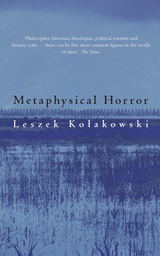
In a trenchant analysis that serves as an introduction to nearly all of Western philosophy, Kolakowski confronts these dilemmas head on through examinations of several prominent philosophers including Descartes, Spinoza, Husserl, and many of the Neo-Platonists. He finds that philosophy may not provide definitive answers to the fundamental questions, yet the quest itself transforms our lives. It may undermine most of our certainties, yet it still leaves room for our spiritual yearnings and religious beliefs.
The final sentence of the book captures the hopefulness that has survived the horror of nothingness when Kolakowski asks: "Is it not reasonable to suspect that if existence were pointless and the universe devoid of meaning, we would never have achieved not only the ability to imagine otherwise, but even the ability to entertain this very thought—to wit, that existence is pointless and the universe devoid of meaning?" The answer, of course, is clear. Now it is up to readers to take up the challenge of his arguments.
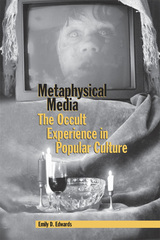
Metaphysical Media focuses on the blurred definitions of topics associated with the occult as they are presented in popular culture to show moving-image media as devices that help structure an understanding of the supernatural world. Edwards examines what media treatment of supernatural subjects and the very characteristics of the media themselves reveal about the persistence of the occult. She maintains that popular art has always had a close association with the paranormal or supernatural— sometimes in illustration of an ideology, sometimes in ridicule of it, and sometimes as invocation itself.
Beginning with an overview of the role of the media in contemporary society and in its use of the occult, Metaphysical Media looks at the properties of media technology that extend human senses beyond biological boundaries. Edwards then discusses specific media treatment of topics related to the occult, including witchcraft, atavism, reincarnation, out-of-body experiences, and lycanthropy. She outlines the interplay of media and folklore regarding taboos about the handling of the dead and investigates media stories about creatures that cross the boundaries between human, beast, and god.

Often, he addresses poetry itself. Among the pieces here are appreciations of Mark Strand, James Merrill, John Ashbery, and James Tate, each evaluated with a keen eye tempered by a generous spirit. Other essays discuss Joseph Brodsky, Czeslaw Milosz, and Vasko Popa; to these writers he brings the understanding available only to those who can read them in the original. In considering Brodsky's translations, for instance, he offers insights regarding not only the poet himself but the very nature of language. Elsewhere, he peers into poetry's past and its future: as a vessel of memory, a witness to history, and a mirror of human experience.
But perhaps the greatest pleasures afforded by The Metaphysician in the Dark, as he styles himself with a beguiling mix of modesty and irony, appear when Simic goes further afield. His look at the deadpan comedy of Buster Keaton is as revealing of the author as of the actor and his craft; his perusal of a Heironymous Bosch altarpiece captures both the painter's sense of apocalypse and a riotous joy in the piling of detail upon detail; his review of a book on Joseph Cornell examines how obsession becomes art. He is fluently familiar with subjects as diverse as Saul Bellow's novels and Aberlardo Morell's extraordinary camera obscura photographs. Yet when he takes the gloves off, as in two essays on the Serbia of Slobodan Milosevic, his outrage is as forceful as his pride is strong in his own Serbian heritage.
Each of the two dozen essays here reflects a sophistication irresistible in its simplicity; taken together, they display a questing intelligence and a panorama of life and art.
Charles Simic is an acclaimed poet, novelist, essayist and teacher. Winner of a MacArthur Fellowship and a Pulitzer Prize, he is the author of more than twenty volumes of poetry and six books of prose, as well as numerous translations. He is Distinguished University Professor of English at the University of New Hampshire, where he has taught since 1973.
Comprehensive introductory survey of the key concepts and problems in traditional and contemporary metaphysics.
A comprehensive introductory study of the key concepts and problems in traditional and contemporary metaphysics. Aune presents and defends a point of view that is naturalistic, nominalistic and pragmatic-an approach that has the overall advantage of providing a coherent, structured view of the topics he discusses.
First published in 1974 as a companion volume to Darwin on Man by Howard E. Gruber, Paul Barrett’s transcriptions of Darwin’s M and N notebooks served to shed new light on the evolutionist’s methods and motivation.
According to Stephen Jay Gould in the New York Times Book Review, “Darwin kept [these notebooks] primarily in 1838, when he was 29 years old. In them, he recorded his early conviction of evolutionary continuity between humans and all other animals. . . . These notebooks display all the features of humanistic intellect that his detractors denied. We find erudition in his comments on Plato, Locke, Hume, Adam Smith, Whewell, Burke, Montaigne, Lessing and Spencer. . . . We appreciate an artistic bent in his delight with nature and her prophet Wordsworth. . . . We grasp the breadth of his bold attempt to clothe all human thought and behaviour in a new evolutionary garb. . . . Charles Darwin was reconstructing the world and he knew exactly what he was doing.”
In addition to its primary audience of philosophers, theologians, and political theorists, the book surprisingly enjoyed a wide general readership in Italy at the time of its publication. It represented an exciting attempt to harmonize medieval philosophy and the insights of personalism that had already had a deep impact on European intellectual life. Buttiglione was able to describe this attempt in a way accessible to a general readership, and in a way that confronted the political challenges Italy had been confronting for the last forty years.
Now, thirty-five years after the book’s initial publication, the conclusions Buttiglione draws from reading Thomas Aquinas’s commentary on Aristotle’s Politics––and the connections he makes between philosophy, theology, and political theory––are more relevant than ever. He argues that the traditional definition of “person” as rationalis naturae individua substantia––an individual substance or substrate (hypokeimenon) of a rational nature––“lacks that certain element that makes Augustine’s approach to personhood so appealing.” Hence Aquinas’s definition “is left wanting since it fails to elaborate on the crucial aspect of interpersonal relationship.”
The ingenuous way in which Buttiglione enlivens Thomistic political thinking with personalist philosophy helps to explain not only why free societies are more stable, tolerant, and respectful of human rights than totalitarian states, but theocratic ones as well. Only by raising the interpersonal aspects of political society to an ontological level—indeed, only by affirming and esteeming the self-transcendence of the human person as evidenced through ontological analysis—do the personal relationships that root and enliven the human person also lead to a realistic, dynamic, and convincing vision of the person’s real existence.
Buttiglione was startlingly prescient of the problems we confront at the beginning of the third millennium. This book will spark new discussions as it explains the importance of both the medieval tradition and twentieth-century personalism. The book also draws on a wide range of secondary sources unavailable to English readers that I and will have the unique ability to introduce readers to the “Italian” way of relating speculative and political philosophy in a relatively slim volume.
In The Metaphysics of Media, award-winning media critic Peter K. Fallon tackles the complicated question of how a succession of dominant forms of media have supported—and even to some extent created—different conceptions of reality. To do so, he starts with the basics: a critical discussion of the very idea of objective reality and the various postmodern responses that have tended to dominate recent philosophical approaches to the subject. From there, he embarks on a survey of the evolution of communication through four major eras: orality; literacy; print; and electricity.
Within each era, Fallon argues, the dominant form of media supported particular ways of understanding the world, from the ascendance of reason that followed the development of alphabets to the obliteration of space and time that we associate with electronic communications. Fallon concludes with a hard look at the mass ignorance that prevails today despite (or perhaps because of) the sea of information with which contemporary life is surrounded.
A stirring, philosophically rich investigation, The Metaphysics of Media offers not only a clear picture of where our society has been but also a road map to a more engaged, informed, and fully human future.

Where sound speaks louder than meaning—Stevens’s poetry as a metaphysical echo.
Wallace Stevens dedicated his poetry to challenging traditional notions about reality, truth, knowledge, and the role of language as a means of representation. Rosu demonstrates that Stevens's experimentation with sound is not only essential to his poetics but also profoundly linked to the pragmatist ideas that informed his way of thinking about language. Her readings of Stevens's poems focus on revealing the dynamic through which meaning emerges in language patterns—a dynamic she calls "images of sound."
Rosu argues that the formal aspects of poetry are deeply ingrained in cultural realities and are, in fact, generated by their context. The sound pattern pervading Stevens's poems at once addresses and violates the reader's assumptions about the functioning of language and, along with them, ideas about reality, knowledge, and subjectivity. Sound is thus the starting point of an argument concerned with Stevens's epistemology and poetics—the way his poems insist on a movement past or through a normal poetic representation of the world to gesture toward a reality that lies outside or beyond systems of representation.
The relationship between sound and meaning isolated and analyzed in The Metaphysics of Sound in Wallace Stevens is firmly situated among critical debates concerning the poet's aesthetic and philosophical convictions. Rosu claims that Stevens's poetry is not ultimately about the powerlessness of language, nor is it a deconstructive enterprise of destabilizing culturally consecrated truths; rather it achieves meaning most frequently through patterns of sound. Sound helps Stevens make a deeply philosophical point in a language unavailable to philosophers.
Jakobsonian poetics provides the framework for this approach, though Finke also draws freely upon a number of contemporary literary theorists. After elucidating the meaning of metapoesis in works by Pushkin, Gogol, and Chernyshevsky, he reveals its covert functioning in such masterpieces of realism as Dostoevsky’s The Idiot, Tolstoy’s Anna Karenina, and Chekhov’s "The Steppe." The result is a new interpretation and deeper understanding of these particular works, which in turn reorient our understanding of linguistic and literary "codes" and of the Russian literary tradition itself.
Of special interest to scholars of Russian literature, Metapoesis will also appeal to a broad range of readers and students of comparative literature, literary theory, and poetics.
Exploring anxieties raised by Atlantic slavery in radical enlightenment literature concerned about political unfreedom in Europe, Metaracial argues that Hegel's philosophy assuages these anxieties for the left. Interpreting Hegel beside Rousseau, Kant, Mary Shelley, and Marx, Terada traces Hegel's transposition of racial hierarchy into a hierarchy of stances toward reality. By doing so, she argues, Hegel is simultaneously antiracist and antiblack. In dialogue with Black Studies, psychoanalysis, and critical theory, Metaracial offers a genealogy of the limits of antiracism.
Through a close look at the aesthetics of Friedrich Schiller and Jean-Jacques Rousseau, and key works by Samuel Taylor Coleridge, Percy and Mary Shelley, John Keats, Sir Walter Scott, Jane Austen, and many others, Hamilton shows how the romantic movement's struggle with its own tenets was not an effort to seek an alternative way of thought, but instead a way of becoming what it already was. And yet, as he reveals, the romanticists were still not content with their own self-consciousness. Pushed to the limit, such contemplation either manifested itself as self-disgust or found aesthetic ideas regenerated in discourses outside of aesthetics altogether.

While various points of view are expressed in these nineteen essays, they have in common several themes, including the comparison of social and natural science, the role of knowledge in meeting the demands of society and its pressing problems, and the nature and role of subjectivity in science. Some authors hold that subjectivity cannot be studied scientifically; others argue that it can and must be if progress in knowledge is to be made. The essays demonstrate the philosophical pluralism they discuss and give a wide range of alternative positions on the future of the social and behavioral sciences in a postpositivist intellectual world.
Exploring how Black youth are reshaping game design to dismantle stereotypes and spark social change
In the early 2000s, digital gaming rose to cultural and economic prominence. Communities of color, however, and especially Black youth, were largely excluded from gaming culture. The rare Black character in games tended to reinforce stereotypes, while racial bias was often surreptitiously embedded in game design platforms—what decolonial scholars call “whitestream” computing. Progressive game design education initiatives and new technologies have recently begun to dismantle these barriers. Yet, because biases remain, historically excluded young people still need to actively reconfigure these digital spaces to fully develop and convey their own perspectives.
In Meta-Tuning Justice, digital rhetoric scholar Laquana Cooke explores how Black youth express cultural identity and challenge dominant narratives through innovative game design. Cooke introduces the Transformative Constructionist Learning (TCL) paradigm and its core theory of “meta-tuning”—the idea that students are better able to adjust to new challenges through trial-and-error and experimentation in educational environments that correspondingly adjust to their evolving learning needs. In contrast to traditional education practices, which assume the neutrality of technology, Cooke approaches it as a tool for social transformation. Drawing on the TCL paradigm, she explores how the unique cultural algorithms and expressions (like popping and locking dance forms) that inform the programming and designs of Black youth represent a powerful form of resistance and creation.
Through rich ethnographic case studies across multiple educational settings, and with gaming as its experimental center, this book presents a compelling vision of how TCL and meta-tuning can help make technologies more equitable. Cooke’s innovative study offers insights crucial to scholars and practitioners in game studies, Science and Technology Studies, STEM education, and racial equity in digital learning.

From the original publication:
Contents 1. Introduction 2. Source Regions 3. Secondary Processing 4. Irradiation Effects 5. Solar System Chronology 6. Chondrites and the Early Solar System 7. Elemental Composition of Chondrites 8. Magnetic Fields in the Early Solar System 9. Chondrules10. Primitive Material Surviving in chondrites11. Micrometeorites12. Inhomogencity of the Nebula13. Survival of Presolar Material in Meteorites14. Nucleosynthesis15. Nucleocosmochronology16. Summary
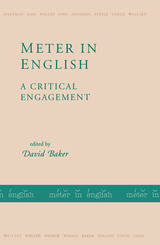
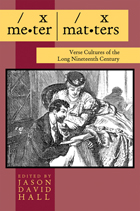
Across the nineteenth century, meter mattered—in more ways and to more people than we might well appreciate today. For the period’s poets, metrical matters were a source of inspiration and often vehement debate. And the many readers, teachers, and pupils encountered meter and related topics in both institutional and popular forms.
The ten essays in Meter Matters showcase the range of metrical practice of poets from Wordsworth and Byron to Hopkins, Swinburne, and Tennyson; at the same time, the contributors bring into focus some of the metrical theorizing that shaped poetic thinking and responses to it throughout the nineteenth century. Paying close attention to the historical contours of Romantic and Victorian meters, as well as to the minute workings of the verse line, Meter Matters presents a fresh perspective on a subject that figured significantly in the century’s literature, and in its culture.

The Methamphetamine Industry in America describes the reality that the methamphetamine industry is a social phenomenon connecting local, national, and international communities and markets. The book details the results of a groundbreaking three-stage study, part of a joint initiative of the National Institute on Drug Abuse and the National Institute of Justice, in which police agencies across the United States were surveyed and their responses used to identify likely areas of study. The authors then visited these areas to observe and interview local participants, from users and dealers to law enforcement officers and clinical treatment workers.
Through the eyes and words of these participants, the book tells the story of the evolution of methamphetamine markets in the United States over the past several years, given changes in public policies and practices and changing public opinion about methamphetamine. The authors look closely at how the markets are part of a larger industry, how they are socially organized, and how they operate. They also consider the relationships among the people involved and those around them, and the national, regional, and local culture of the markets. Their work demonstrates the importance of understanding the business of methamphetamine—and by extension other drugs in society—through a lens that focuses on social behavior, social relationships, and the cultural elements that shape the organization and operation of this illicit but effective industry.

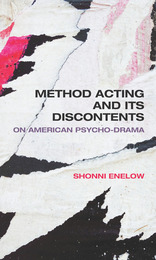
Method Acting and Its Discontents: On American Psycho-Drama provides a new understanding of a crucial chapter in American theater history. Enelow’s consideration of the broader cultural climate of the late 1950s and early 1960s, specifically the debates within psychology and psychoanalysis, the period’s racial and sexual politics, and the rise of mass media, gives us a nuanced, complex picture of Lee Strasberg and the Actors Studio and contemporaneous works of drama. Combining cultural analysis, dramaturgical criticism, and performance theory, Enelow shows how Method acting’s contradictions reveal powerful tensions inside mid-century notions of individual and collective identity.

Method and Perspective in Anthropology was first published in 1954. Minnesota Archive Editions uses digital technology to make long-unavailable books once again accessible, and are published unaltered from the original University of Minnesota Press editions.
The boundaries and goals of anthropology are changing and expanding as scholars recognize and pursue wider opportunities for achieving an understanding of the cultural development of man. The range of interests of the discipline as shown in this book embodies such varied fields as archaeology, human geography, linguistics, and the organization of society. With the broadening and deepening of these concerns, those working and studying in the various areas of anthropology have sought more concise methods and more adequate techniques with which to meet increasingly complex problems.
This volume of papers, published in honor of a scholar who has himself devoted much effort to the refinement of anthropological methods, represents a long step forward toward the solution of some of the problems of methodology. The contributors are outstanding scholars in cultural anthropology, ethnology, and related fields.
The first twelve papers, by as many different authors, present discussions of specific aspects of ethnography, cultural anthropology, prehistory, linguistics, ethnogeography, and sociology. The final paper, by Alfred L. Kroeber, provides a critical summary of the preceding papers. All twelve of the writers answer, in their own way, the questions of how they derive their data, and how they establish their theoretical frame of reference.
The contributors are, in addition to Professor Kroeber, Melville J. Herskovits, Sister M. Inez Hilger, Elizabeth Colson, David G. Mandelbaum, Allan R. Holmberg, Robert F. Spencer, Ralph Linton, Erwin H. Ackerknecht, Lloyd A. Wilford, Joseph H. Greenberg, Omer C. Stewart, and Raymond V. Bowers.
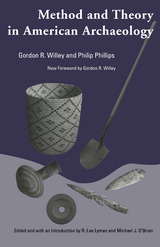
A Dan Josselyn Memorial Publication
This invaluable classic provides the framework for the development of American archaeology during the last half of the 20th century.
In 1958 Gordon R. Willey and Philip Phillips first published Method and Theory in American Archaeology—a volume that went through five printings, the last in 1967 at the height of what became known as the new, or processual, archaeology. The advent of processual archaeology, according to Willey and Phillips, represented a "theoretical debate . . . a question of whether archaeology should be the study of cultural history or the study of cultural process."
Willey and Phillips suggested that little interpretation had taken place in American archaeology, and their book offered an analytical perspective; the methods they described and the structural framework they used for synthesizing American prehistory were all geared toward interpretation. Method and Theory served as the catalyst and primary reader on the topic for over a decade.
This facsimile reprint edition of the original University of Chicago Press volume includes a new foreword by Gordon R. Willey, which outlines the state of American archaeology at the time of the original publication, and a new introduction by the editors to place the book in historical context. The bibliography is exhaustive. Academic libraries, students, professionals, and knowledgeable amateurs will welcome this new edition of a standard-maker among texts on American archaeology.
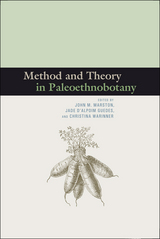
A diverse and highly regarded group of scholars reference a broad array of literature from around the world as they cover their areas of expertise in the practice and theory of paleoethnobotany—starch grain analysis, stable isotope analysis, ancient DNA, digital data management, and ecological and postprocessual theory.
The only comprehensive edited volume focusing on method and theory to appear in the last twenty-five years, Method and Theory in Paleoethnobotany addresses the new areas of inquiry that have become central to contemporary archaeological debates, as well as the current state of theoretical, methodological, and empirical work in paleoethnobotany.
Contributors. Yomi Braester, Hsiao-hung Chang, Margaret Hillenbrand, Chun-kit Ko, Belinda Kong, Petrus Liu, Laikwan Pang, Christopher Rea, Carlos Rojas, Shuang Shen, Robin Visser, Lorraine Wong

In this first sustained critique of current-traditional rhetorical theory, Sharon Crowley uses a postmodern, deconstructive reading to reexamine the historical development of current-traditional rhetoric. She identifies it (as well as the British new rhetoric from which it developed) as a philosophy of language use that posits universal principles of mind and discourse. Crowley argues that these philosophies are not appropriate bases for the construction of rhetorical theories, much less guides for the teaching of composition. She explains that current-traditional rhetoric is not a rhetorical theory, and she argues that its use as such has led to a misrepresentation of invention.
Crowley contends that current-traditional rhetoric continues to prosper because a considerable number of college composition teachers—graduate students, part-time instructors, and teachers of literature—are not involved in the development of the curricula they are asked to teach. As a result, their voices, necessary to create any true representation of the composition teaching experience, are denied access to the scholarly conversations evaluating the soundness of the institutionalized teaching methods derived from the current-traditional approach.
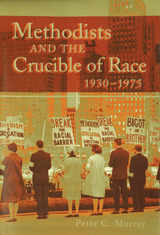
During the Civil Rights movement, American churches confronted issues of racism that they had previously ignored. No church experienced this confrontation more sharply than the Methodist Church. When Methodists reunited their northern and southern halves in 1939, their new church constitution created a segregated church structure that posed significant issues for Methodists during the Civil Rights movement.
Of the six jurisdictional conferences that made up the Methodist Church, only one was not based on a geographic region: the Central Jurisdiction, a separate conference for “all Negro annual conferences.” This Jim Crow arrangement humiliated African American Methodists and embarrassed their liberal white allies within the church. The Supreme Court’s Brown v. Board of Education decision awakened many white Methodists from their complacent belief that the church could conform to the norms of the South without consequences among its national membership.
Murray places the struggle of the Methodist Church within the broader context of the history of race relations in the United States. He shows how the effort to destroy the barriers in the church were mirrored in the work being done by society to end segregation. Immensely readable and free of jargon, Methodists and the Crucible of Race, 1930–1975, will be of interest to a broad audience, including those interested in the Civil Rights movement and American church history.
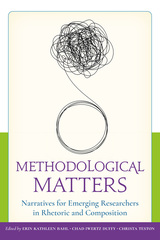
Methodological Matters offers a series of investigative reflections from experienced and emerging researchers to provide guidance for researchers who are navigating important complexities early in their careers. Each chapter explores a larger research-related question by narrating how one researcher negotiated a unique methodological challenge while working on a dissertation in the field of rhetoric and composition.
Given the constraints placed on new researchers’ time and resources, one way to navigate research-related precarities is to learn from others who have successfully traversed the same investigative terrain. This volume curates investigative reflections from researchers who, at the time of writing, were in the process of completing (or had just completed) their dissertations. Three parts explore issues of identity, craft, and practice in conducting research as an emerging scholar in rhetoric and composition, and the collection concludes with critical reflections on the role of precarity in conducting research.
Both a curated series of investigative reflections from emerging researchers and a resource guide with tangible tools for use in graduate seminars and fieldwork, Methodological Matters amplifies voices of those who learned how to do research in precarious contexts while simultaneously situated within the sometimes frustrating developmental phase located between “student” and “practitioner.”
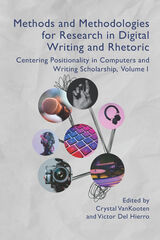
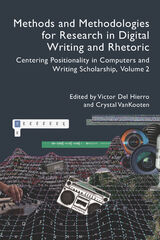
Methods and Methodologies explores how researchers theorize, design, enact, reflect on, and revise digital writing research. The contributors to the two volumes of this edited collection explore how digital technologies can be used to solve problems, challenge the status quo, and address inequities. In some cases, they do so by using familiar digital technologies in novel ways. In other cases, they explain the use of relatively new or less familiar technologies such as digital mapping apps, Twitter bots, audio-visual captions, and computer programming code. By reflecting on the lessons that emerged from their work—and in particular on their own positionality—the authors provide methodological narratives that are personal, professional, and individual yet foundational. By combining attention to human positionality and digital technology, Methods and Methodologies addresses important social issues and questions related to writing and rhetoric.

Methods and Methodologies in Heritage Studies offers succinct and accessible analyses of the current debates, intellectual legacies, and practical innovations on heritage value today. Using archaeology, anthropology, history, and geography, this multidisciplinary textbook is designed to support students, researchers, and practitioners, inviting them to review discussions of key problems and argumentative interventions in heritage studies.

In original essays, fourteen nationally known scholars examine the practical, philosophical, and epistemological implications of a variety of research traditions. Included are discussions of historical, theoretical, and feminist scholarship; case-study and ethnographic research; text and conversation analysis; and cognitive, experimental, and descriptive research. Issues that cross methodological boundaries, such as the nature of collaborative research and writing, methodological pluralism, the classification and coding of research data, and the politics of composition research, are also examined. Contributors reflect on their own research practices, and so reflect the current state of composition research itself.
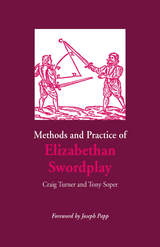
Featuring period drawings and prints of swordplay, this book examines and compares three Elizabethan fencing manuals written in English before 1600: Giacomo Di Grassi’s His True Arte of Defense (1594), Vincentio Saviolo’s His Practice in Two Bookes (1595), and George Silver’s Paradoxes of Defence and Bref Instructions upon My Paradoxes of Defence (1599).
More than a technical manual on swordplay, this book explores the influence of a new form of violence introduced into Elizabethan culture by the invention of the rapier. The authors examine the rapier’s influence on the various social classes, the clash between the traditional English fencing masters and those embracing the new style, the growing concern with unregulated dueling, and the frequent references to rapier play in the works of Shakespeare and his contemporaries.
As producer Joseph Papp notes in his foreword, this is a book that "makes a difference in performance."
The definitive guide to conducting research in this dynamic field.
Citing the critical importance of empirical work to social movement research, the editors of this volume have put together the first systematic overview of the major methods used by social movement theorists. Original chapters cover the range of techniques: surveys, formal models, discourse analysis, in-depth interviews, participant observation, case studies, network analysis, historical methods, protest event analysis, macro-organizational analysis, and comparative politics. Each chapter includes a methodological discussion, examples of studies employing the method, an examination of its strengths and weaknesses, and practical guidelines for its application.
Contributors: Kathleen M. Blee, U of Pittsburgh; Elisabeth S. Clemens, U of Arizona; Donatella della Porta, U of Florence; Mario Diani, U of Trento, Italy; Martin D. Hughes; Hank Johnston, San Diego State U; Ruud Koopmans, Social Science Research Center, Berlin; Paul Lichterman, U of Wisconsin; Debra C. Minkoff, U of Washington; Daniel J. Myers, Notre Dame; Pamela E. Oliver, U of Wisconsin; Dieter Rucht, Social Science Research Center, Berlin; Jackie Smith, SUNY, Stony Brook; David A. Snow, U of California, Irvine; Sidney Tarrow, Cornell U; Verta Taylor, U of California, Santa Barbara; Danny Trom, École des Hautes Études en Sciences Sociales, Paris.
Historically, the largest division between social science methods has been that between quantitative and qualitative measures. For people trained in psychology or sociology, the bias has been toward the former, using surveys and experiments that yield readily comparable numerical results. For people trained in anthropology, it has been toward the latter, using ethnographic observations and interviews that offer richer nuances of meaning but are difficult to compare across societies. Discussing their own endeavors to combine the quantitative with the qualitative, the authors invite readers into a conversation about the best designs and practices of mixed methodologies to stimulate creative ideas and find new pathways of insight. The result is an engaging exploration of a promising new approach to the social sciences.
READERS
Browse our collection.
PUBLISHERS
See BiblioVault's publisher services.
STUDENT SERVICES
Files for college accessibility offices.
RECENTLY PUBLISHED



UChicago Accessibility Resources
home | accessibility | search | about | contact us
BiblioVault ® 2001 - 2026
The University of Chicago Press