
 A SCHOLARLY BOOK REPOSITORY
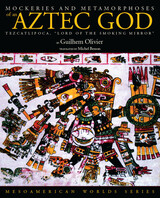
An enigmatic and melodramatic figure, the Lord of the Smoking Mirror was both drunken seducer and mutilated transgressor and although he severely punished those who violated pre-Columbian moral codes, he also received mortal confessions. A patron deity to kings and warriors as well as a protector of slaves, Tezcatlipoca often clashed in epic confrontations with his "enemy brother" Quetzalcoatl, the famed Feathered Serpent. Yet these powers of Mesoamerican mythology collaborated to create the world, and their common attributes hint at a dual character.
In a sophisticated, systematic tour through the sources and problems related to Tezcatlipoca's protean powers and shifting meanings, Olivier guides readers through the symbolic names of this great god, from his representation on skins and stones to his relationship to ritual knives and other deities.
Drawing upon iconographic material, chronicles written in Spanish and in Nahuatl, and the rich contributions of ethnography, Mockeries and Metamorphoses of an Aztec God - like the mirror of Tezcatlipoca in which the fates of mortals were reflected - reveals an important but obscured portion of the cosmology of pre-Columbian Mexico.
Gregor Gradnik, a Slovenian writer, enters the sensual and seething life of New Orleans to teach a creative writing class at a university. Gregor at first acts as only an observer, yet seductive New Orleans soon draws him into a series of bizarre erotic, professional, and social relationships. A profound and entertaining work, Mocking Desire provides the English-speaking world with the perfect introduction to one of Eastern Europe's leading writers.
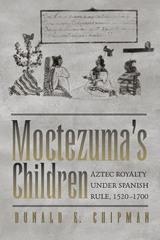
Though the Aztec Empire fell to Spain in 1521, three principal heirs of the last emperor, Moctezuma II, survived the conquest and were later acknowledged by the Spanish victors as reyes naturales (natural kings or monarchs) who possessed certain inalienable rights as Indian royalty. For their part, the descendants of Moctezuma II used Spanish law and customs to maintain and enhance their status throughout the colonial period, achieving titles of knighthood and nobility in Mexico and Spain. So respected were they that a Moctezuma descendant by marriage became Viceroy of New Spain (colonial Mexico's highest governmental office) in 1696.
This authoritative history follows the fortunes of the principal heirs of Moctezuma II across nearly two centuries. Drawing on extensive research in both Mexican and Spanish archives, Donald E. Chipman shows how daughters Isabel and Mariana and son Pedro and their offspring used lawsuits, strategic marriages, and political maneuvers and alliances to gain pensions, rights of entailment, admission to military orders, and titles of nobility from the Spanish government. Chipman also discusses how the Moctezuma family history illuminates several larger issues in colonial Latin American history, including women's status and opportunities and trans-Atlantic relations between Spain and its New World colonies.
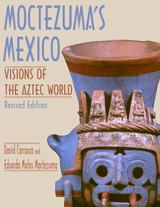
With nearly 150 full-color illustrations, Moctezuma’s Mexico is an important and handsome book that will appeal to scholars and students of Mexico’s indigenous past.
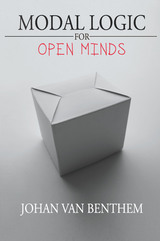
In Modal Logic for Open Minds, Johan van Benthem provides an up-to-date introduction to the field of modal logic, outlining its major ideas and exploring the numerous ways in which various academic fields have adopted it. Van Benthem begins with the basic theories of modal logic, semantics, bisimulation, and axiomatics, and also covers more advanced topics, such as expressive power and computational complexity. The book then moves to a wide range of applications, including new developments in information flow, intelligent agency, and games. Taken together, the chapters show modal logic at the crossroads of philosophy, mathematics, linguistics, computer science, and economics. Most of the chapters are followed by exercises, making this volume ideal for undergraduate and graduate students in philosophy, computer science, symbolic systems, cognitive science, and linguistics.
The difference, Mark Poster argues, is the profound effect electronic mediation exerts on the very way we perceive ourselves and reality. To help decode the linguistic dimensions of our multiple forms of social interaction, he plays upon Marx's theory of the mode of production—the shift to late capitalism has a parallel in the shift from the mode of production to that of information.
Enlisting poststructuralist theory, he links four modes of communication with four poststructuralists: TV ads with Baudrillard, data bases with Foucault, electronic writing with Derrida, and computer science with Lyotard. Mode of Information points the way to a poststructuralist strategy for writing history, a framework well suited to unearthing structures of domination and the means to their disruption.
"An informed, insightful, provocative account of phenomena that have transformed virtually every area of public and private life on our time."—Robert Anchor, American Historical Review
"The importance of Poster's book is unmistakable for he skillfully negotiates between and juxtaposes two wide theoretical domains—electronically mediated communications and poststructuralist theory—about which much has been written, but hardly with the acumen that he brings to bear in a long-awaited critical rapprochement."—Charles J. Stivale, Criticism
Behavior genetics is a particularly challenging field for making a clear-cut case that mouse experiments work, because researchers believe that both the phenomena they are studying and the animal models they are using are complex. These assumptions of complexity change the nature of what laboratory work produces. Whereas historical and ethnographic studies traditionally portray the laboratory as a place where scientists control, simplify, and stabilize nature in the service of producing durable facts, the laboratory that emerges from Nelson’s extensive interviews and fieldwork is a place where stable findings are always just out of reach. The ongoing work of managing precarious experimental systems means that researchers learn as much—if not more—about the impact of the environment on behavior as they do about genetics. Model Behavior offers a compelling portrait of life in a twenty-first-century laboratory, where partial, provisional answers to complex scientific questions are increasingly the norm.
In Model Cases, Monika Krause asks about the concrete material research objects behind shared conversations about classes of objects, periods, and regions in the social sciences and humanities. It is well known that biologists focus on particular organisms, such as mice, fruit flies, or particular viruses when they study general questions about life, development, and disease. Krause shows that scholars in the social sciences and humanities also draw on some cases more than others, selecting research objects influenced by a range of ideological but also mundane factors, such as convenience, historicist ideas about development over time, schemas in the general population, and schemas particular to specific scholarly communities.
Some research objects are studied repeatedly and shape our understanding of more general ideas in disproportionate ways: The French Revolution has profoundly influenced our concepts of revolution, of citizenship, and of political modernity, just like studies of doctors have set the agenda for research on the professions. Based on an extensive analysis of the role of model cases in different fields, Krause argues that they can be useful for scholarly communities if they are acknowledged and reflected as particular objects; she also highlights the importance of research strategies based on neglected research objects and neglected combinations of research objects and scholarly concerns.
Model City Blues tells the story of how regular people, facing a changing city landscape, fought for their own model of the “ideal city” by creating grassroots plans for urban renewal. Filled with vivid descriptions of significant moments in a protracted struggle, it offers a street-level account of organized resistance to institutional plans to transform New Haven, Connecticut in the 1960s. Anchored in the physical spaces and political struggles of the city, it brings back to center stage the individuals and groups who demanded that their voices be heard.
By reexamining the converging class- and race-based movements of 1960s New Haven, Mandi Jackson helps to explain the city's present-day economic and political struggles. More broadly, by closely analyzing particular sites of resistance in New Haven, Model City Blues employs multiple academic disciplines to redefine and reimagine the roles of everyday city spaces in building social movements and creating urban landscapes.
During 1995 and 1996, President Bill Clinton signed into law three bills that altered the rights and responsibilities of immigrants: the Antiterrorism and Effective Death Penalty Act, the Personal Responsibility Act, and the Illegal Immigration Reform and Immigrant Responsibility Act. Model Immigrants and Undesirable Aliens examines the changing debates around immigration that preceded and followed the passage of landmark legislation by the U.S. Congress in the mid-1990s, arguing that it represented a new, neoliberal way of thinking and talking about immigration.
Christina Gerken explores the content and the social implications of the deliberations that surrounded the development and passage of immigration reform, analyzing a wide array of writings from congressional debates and committee reports to articles and human-interest stories in mainstream newspapers. The process, she shows, disguised its underlying racism by creating discursive strategies that shaped and upheld an image of “desirable” immigrants—those who could demonstrate “personal responsibility” and an ability to contribute to the U.S. economy. Gerken finds that politicians linked immigration to complex issues: poverty, welfare reform, so-called family values, measures designed to combat terrorism, and the spiraling costs of social welfare programs.
Although immigrants were often at the center of congressional debates, politicians constructed an elaborate, abstract terminology that appeared to be unrelated to race or gender. Instead, politicians promoted neoliberal policies as the avenue to a postracist, postsexist world of opportunity for every rational consumer with an entrepreneurial spirit. Still, Gerken concludes that the passage of pathbreaking legislation was characterized by a useful tension between neoliberal assumptions and hidden anxieties about race, class, gender, and sexuality.
In the contemporary Western imagination, Asian people are frequently described as automatons, which disavows their humanity. In Model Machines, Long Bui investigates what he calls Asian roboticism or the ways Asians embody the machine and are given robotic characteristics.
Bui offers the first historical overview of the overlapping racialization of Asians and Asian Americans through their conflation with the robot-machine nexus. He puts forth the concept of the “model machine myth,” which holds specific queries about personhood, citizenship, labor, and rights in the transnational making of Asian/America.
The case studies in Model Machines chart the representation of Chinese laborers, Japanese soldiers, Asian sex workers, and other examples to show how Asians are reimagined to be model machines as a product of globalization, racism, and colonialism. Moreover, it offers examples of how artists and everyday people resisted that stereotype to consider different ways of being human. Starting from the early nineteenth century, the book ends in the present with the new millennium, where the resurgence of China presages the “rise of the machines” and all the doomsday scenarios this might spell for global humanity at large.

Social scientists study complex phenomena about which they often propose intricate hypotheses tested with linear-interactive or multiplicative terms. While interaction terms are hardly new to social science research, researchers have yet to develop a common methodology for using and interpreting them. Modeling and Interpreting Interactive Hypotheses in Regression Analysis provides step-by-step guidance on how to connect substantive theories to statistical models and how to interpret and present the results.
"Kam and Franzese is a must-have for all empirical social scientists interested in teasing out the complexities of their data."
---Janet M. Box-Steffensmeier, Ohio State University
"Kam and Franzese have written what will become the definitive source on dealing with interaction terms and testing interactive hypotheses. It will serve as the standard reference for political scientists and will be one of those books that everyone will turn to when helping our students or doing our work. But more than that, this book is the best text I have seen for getting students to really think about the importance of careful specification and testing of their hypotheses."
---David A. M. Peterson, Texas A&M University
"Kam and Franzese have given scholars and teachers of regression models something they've needed for years: a clear, concise guide to understanding multiplicative interactions. Motivated by real substantive examples and packed with valuable examples and graphs, their book belongs on the shelf of every working social scientist."
---Christopher Zorn, University of South Carolina
"Kam and Franzese make it easy to model what good researchers have known for a long time: many important and interesting causal effects depend on the presence of other conditions. Their book shows how to explore interactive hypotheses in your own research and how to present your results. The book is straightforward yet technically sophisticated. There are no more excuses for misunderstanding, misrepresenting, or simply missing out on interaction effects!"
---Andrew Gould, University of Notre Dame
Cindy D. Kam is Assistant Professor, Department of Political Science, University of California, Davis.
Robert J. Franzese Jr. is Associate Professor, Department of Political Science, University of Michigan, and Research Associate Professor, Center for Political Studies, Institute for Social Research, University of Michigan.
For datasets, syntax, and worksheets to help readers work through the examples covered in the book, visit: www.press.umich.edu/KamFranzese/Interactions.html
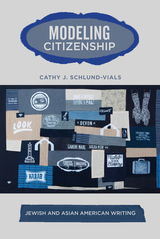
Navigating deftly among historical and literary readings, Cathy Schlund-Vials examines the analogous yet divergent experiences of Asian Americans and Jewish Americans in Modeling Citizenship. She investigates how these model minority groups are shaped by the shifting terrain of naturalization law and immigration policy, using the lens of naturalization, not assimilation, to underscore questions of nation-state affiliation and sense of belonging.
Modeling Citizenship examines fiction, memoir, and drama to reflect on how the logic of naturalization has operated at discrete moments in the twentieth century. Each chapter focuses on two exemplary literary works. For example, Schlund-Vials shows how Mary Antin's Jewish-themed play The Promised Land is reworked into a more contemporary Chinese American context in Gish Jen's Mona in the Promised Land.
In her compelling analysis, Schlund-Vials amplifies the structural, cultural, and historical significance of these works and the themes they address.

In eighteenth-century Europe, connoisseurs, financiers, artists, and aristocrats alike all avidly collected the terracotta vases and statues made by Claude Michel, called Clodion. Yet, despite the widespread enthusiasm for his work, Clodion’s terracottas have since then been largely dismissed as decorative, feminine, or mere luxury. Modeling Sculpture, the first English-language monograph dedicated to Clodion’s terracotta oeuvre, counters such conventional narratives. Against the understanding of “serious” sculpture as works that publicly perpetuate the heroic actions and virtues of great men, author Elizabeth Saari Browne argues instead that philosophically engaged sculpture might be found in materials, forms, and places where one least expects it. Across this richly illustrated, multi-disciplinary study, earthen clay emerges as a medium suited to the flexible modes of thought advocated by some of the period’s most renowned philosophers, naturalists, and even arts reformers. This book therefore foregrounds clay’s potential to challenge the perceived primacy of white figurative statuary in art historiography, emblematic of hierarchical notions of class, power, learning, and prestige.





Detlef Sprinz is a Senior Fellow at the Department of Global Change and Social Systems of the Potsdam Institute for Climate Impact Research and teaches on the Faculty of Social Science at the University of Potsdam, Germany.
Yael Wolinsky-Nahmias is Senior Lecturer and Associate Chair in the Department of Political Science at Northwestern University.
Guillén's study of two liberal-democratic societies (the United States and Great Britain) and two corporatist societies (Germany and Spain) reveals significant differences in the way managerial elites and firms have adopted the three models. His data show that ideas themselves—independent of material interests and technology—can cause organizational change. Throughout the book, contrasts between modernist-technocratic and liberal-humanist mentalities, as well as between Protestant and Catholic religious backgrounds, emerge as decisive factors in determining managerial ideology and practice.
In addition to analyzing management methods in organizations, Guillén explores larger issues: the interaction among managerial, government, and labor elites; the impact of the state and the professions on managerial behavior; and the role that managers play in modern societies.
Models of Resistance for a Democracy in Crisis features three historians who examine how political opposition, anti-racist struggle, and artistic intervention serve as vital blueprints for safeguarding our precarious democracy.
Geoff Eley deconstructs Trump-era politics by identifying a dual crisis: the withering of democratic practices and a pervasive cynicism toward government. By analyzing how Germans of the 1930s might have resisted fascism, he reveals the specific forms of opposition needed to uphold democratic accountability today.
Jamon Jordan traces a lineage of anti-racist protest, from the rebellions of the enslaved to the legal and moral defiance of the abolitionist movement. By weaving public tactics, such as demonstrations and boycotts, with the enduring labor of building Black-led institutions and preserving cultural traditions, Jordan reveals a comprehensive framework for contemporary activists.
Megan Flattley examines how artworks challenge repressive regimes. These creative interventions bear witness to traumatic and unjust conditions, use cultural institutions as cover for political action, and stage provocations in public spaces to reveal latent violence and advocate for social change.

Gedo and Goldberg apply their theory to four classic psychoanalytic case studies to demonstrate its effectiveness: Freud's Rat Man, his Wolf Man, the case of Daniel Paul Schreber, and a case of arrested development. For each of these cases the authors show how it would have been both possible and advantageous to apply a variety of different theories as facts about each continued to accumulate.

In this account, political economy and the novel clearly arise as solutions to a crisis in the notion of value. Exploring the ways in which these different genres responded to the crisis—political economy by reconceptualizing wealth as capital, and the novel by refiguring intrinsic or human worth in the form of courtship narratives—Thompson rereads several literary works, including Defoe’s Roxana, Fielding’s Tom Jones, and Burney’s Cecilia, along with influential contemporary economic texts. Models of Value also traces the discursive consequences of this bifurcation of value, and reveals how history and theory participate in the very novelistic and economic processes they describe. In doing so, the book bridges the opposition between the interests of Marxism and feminism, and the distinctions which, newly made in the eighteenth century, continue to inform our discourse today.
An important reformulation of the literary and cultural production of the eighteenth century, Models of Value will attract students of the novel, political economy, and of literary history and theory.

How making models allows us to recall what was and to discover what still might be
Whether looking inward to the intricacies of human anatomy or outward to the furthest recesses of the universe, expanding the boundaries of human inquiry depends to a surprisingly large degree on the making of models. In this wide-ranging volume, scholars from diverse fields examine the interrelationships between a model’s material foundations and the otherwise invisible things it gestures toward, underscoring the pivotal role of models in understanding and shaping the world around us. Whether in the form of reproductions, interpretive processes, or constitutive tools, models may bridge the gap between the tangible and the abstract.
By focusing on the material aspects of models, including the digital ones that would seem to displace their analogue forebears, these insightful essays ground modeling as a tactile and emphatically humanistic endeavor. With contributions from scholars in the history of science and technology, visual studies, musicology, literary studies, and material culture, this book demonstrates that models serve as invaluable tools across every field of cultural development, both historically and in the present day.
Modelwork is unique in calling attention to modeling’s duality, a dynamic exchange between imagination and matter. This singular publication shows us how models shape our ability to ascertain the surrounding world and to find new ways to transform it.
Contributors: Hilary Bryon, Virginia Tech; Johanna Drucker, UCLA; Seher Erdoğan Ford, Temple U; Peter Galison, Harvard U; Lisa Gitelman, New York U; Reed Gochberg, Harvard U; Catherine Newman Howe, Williams College; Christopher J. Lukasik, Purdue U; Martin Scherzinger, New York U; Juliet S. Sperling, U of Washington; Annabel Jane Wharton, Duke U.
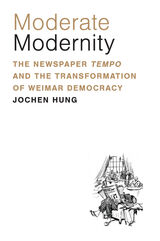
The newspaper’s idea of a modern, democratic Germany was undermined by the political and economic crises that hit Germany at the beginning of the 1930s. The way the newspaper described German democracy changed under these pressures. Flappers, American fridges, and modern music—the things that Tempo had once marshalled as representatives of a German future—were now rejected by the newspaper as emblems of a bygone age. The changes in Tempo’s vision of Germany’s future show that descriptions of Weimar politics as a standoff between upright democrats and rabid extremists do not do justice to the historical complexity of the period. Rather, we need to accept the Nazis as a lethal product of a German democracy itself. The history of Tempo teaches us how liberal democracies can create and nurture their own worst enemies.
The Modern Age examines the discourses that have come to characterize adolescence and argues that commonplace views of adolescents as impulsive, conflicted, and rebellious are constructions inspired by broader cultural anxieties that characterized American society in early-twentieth-century America.
The idea of adolescence, argues Kent Baxter, came into being because it fulfilled specific historical and cultural needs: to define a quickly expanding segment of the population, and to express concerns associated with the movement into a new era. Adolescence—a term that had little currency before 1900 and made a sudden and pronounced appearance in a wide variety of discourses thereafter—is a “modern age” not only because it sprung from changes in American society that are synonymous with modernity, but also because it came to represent all that was threatening about “modern life.”
Baxter provides a preliminary history of adolescence, focusing specifically on changes in the American educational system and the creation of the juvenile justice system that carved out a developmental space between the child and the adult. He looks at the psychological works of G. Stanley Hall and the anthropological works of Margaret Mead and explores what might have inspired their markedly negative descriptions of this new demographic. He examines the rise of the Woodcraft Indian youth movement and its promotion of “red skin” values while also studying the proliferation of off-reservation boarding schools for Native American youth, where educators attempted to eradicate the very “red skin” values promoted by the Woodcraft movement.
Finally Baxter studies reading at the turn of the century, focusing specifically on Horatio Alger (the Ragged Dick series) and Edward Stratemeyer (the Tom Swift, Nancy Drew, and Hardy Boys series) and what those works reveal about the “problem” of adolescence and its solutions in terms of value, both economic and moral.
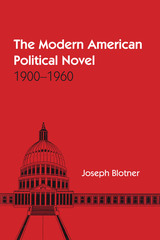
Politics, the workings of government and of people in government, has long been a fertile field for exploration by the novelist. The political arena offers many examples of conflict—between individuals, groups, or the individual and the group, or within the individual. It is natural then that a sizable body of fiction has grown up using politics as a main source of action.
In this study Joseph Blotner attempts "to discover the image of American poIitics as presented in American novels over a sixty-year span." His major discussion is limited to 138 novels dealing directly with candidates, officeholders, party officials, or "individuals performing political acts as they are conventionally understood." He also refers to nineteenth-century predecessors, European analogues, or other twentieth-century American novels as they bear on his discussions.
Blotner gives a thorough examination of certain archetypal figures (the young hero, the political boss, and the Southern demagogue), which appear in central or subordinate positions in the action of many political novels. He finds that the novels reflect certain major movements or upheavals in the political history of the United States or the world (in particular, fascism and McCarthyism), and that they also give the political aspects of universal attitudes or problems (corruption, disillusionment, reaction, and the role of women and of the intellectual). The author presents a detailed analysis of each of these subjects, prefacing each analysis by a survey of the historical background out of which the fiction grew, and including a brief and often pungent assessment of the literary merits of each novel discussed. He also surveys a large body of political fiction which cuts across all of these categories: the novel of the future—both utopian and apocalyptic.
The Modern American Political Novel will be of great interest to the student of twentieth-century literature; the political scientist, the sociologist, and even the practicing politician will also find its analyses useful and illuminating.
Whether the subject is an individual life story, a community study, or an aspect of public policy, these essays illuminate the ways in which individuals in various locales understood the nature of their desires and the possibilities of resisting dominant views of normality and deviance. Theoretically informed, but accessible, the essays shed light too on the difficulties of writing history when documentary evidence is sparse or "coded." Taken together these essays suggest that while some individuals and social networks might never emerge from the shadows, the persistent exploration of the past for their traces is an integral part of the on-going struggle for queer rights.
"Marty writes with the highest standards of scholarship and with his customary stylistic grace. No series of books is likely to tell us as much about the religious condition of our own time as "Modern American Religion."—Robert L. Spaeth, Minneapolis Star Tribune
"The wealth of material and depth of insight are beyond reproach. This book will clearly stand as an important meteorological guide to the storm front of modernity as it swept Americans into the twentieth century."—Belden C. Lane, Review of Religions
"Whatever one thinks about Marty's theological or philosophical position as a historian, the charm of his friendly circumspective approach to American religious history is irresistible."—John E. Wilson, Theological Studies
"Marty attempts to impose historical order on the divergent ways a century of Americans have themselves tried to find order in their worlds. . . . [He] meets the challenge deftly. . . . It is a book relevant to our time. . . . Engages the heart and mind jointly."—Andy Solomon, Houston Post
"He tells the story [of the 1920s and 1930s] with a verve seldom equaled and manages to condense in one volume the results of dozens of specialized monographs. . . . [It] bears the usual hallmarks of a Marty book: a smoothly flowing narrative, passages studded with suggestive insight inviting further research, and apt quotations that capture the gist of complicated issues. . . . [A] splendid book. . . . Deserves a wide readership and undoubtedly will receive it." —James H. Moorhead, Chicago Sunday Tribune
"There is simply no better source, certainly none so engaging, for the interactions of religion and the larger culture in the interwar period." —Robert Booth Fowler, Journal of American History
"[This book is] not merely a history of American religion, but what might better be called a religious history" —David M. Kennedy, New York Times Book Review
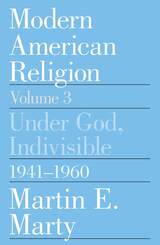
Under God, Indivisible, 1941-1960 is the first book to systematically address religion and the roles it played in shaping the social and political life of mid-century America. A work of exceptional clarity and historical depth, it will interest general readers as well as historians of American and church history.
"The series will become a standard account of the nation's variegated religious culture during the current century. The four volumes, the fruition of decades of research, may rank as much honored Marty's most significant contribution to U.S. studies."—Richard N. Ostling, Time
"When America needs some advice or commentary on the state of modern theology, the person it turns to is Martin Marty."—Publishers Weekly
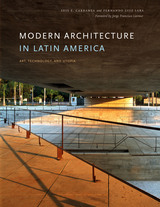
Designed as a survey and focused on key examples and movements arranged chronologically from 1903 to 2003, this is the first comprehensive history of modern architecture in Latin America in any language.
Runner-up, University Co-op Robert W. Hamilton Book Award, 2015
Modern Architecture in Latin America: Art, Technology, and Utopia is an introductory text on the issues, polemics, and works that represent the complex processes of political, economic, and cultural modernization in the twentieth century. The number and types of projects varied greatly from country to country, but, as a whole, the region produced a significant body of architecture that has never before been presented in a single volume in any language. Modern Architecture in Latin America is the first comprehensive history of this important production.
Designed as a survey and focused on key examples/paradigms arranged chronologically from 1903 to 2003, this volume covers a myriad of countries; historical, social, and political conditions; and projects/developments that range from small houses to urban plans to architectural movements. The book is structured so that it can be read in a variety of ways—as a historically developed narrative of modern architecture in Latin America, as a country-specific chronology, or as a treatment of traditions centered on issues of art, technology, or utopia. This structure allows readers to see the development of multiple and parallel branches/historical strands of architecture and, at times, their interconnections across countries. The authors provide a critical evaluation of the movements presented in relationship to their overall goals and architectural transformations.

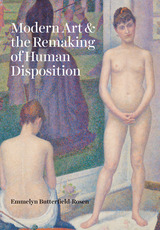
With this book, Emmelyn Butterfield-Rosen brings a new formal and conceptual rubric to the study of turn-of-the-century modernism, transforming our understanding of the era’s canonical works. Butterfield-Rosen analyzes a hitherto unexamined formal phenomenon in European art: how artists departed from conventions for posing the human figure that had long been standard. In the decades around 1900, artists working in different countries and across different media began to present human figures in strictly frontal, lateral, and dorsal postures. The effect, both archaic and modern, broke with the centuries-old tradition of rendering bodies in torsion, with poses designed to simulate the human being’s physical volume and capacity for autonomous thought and movement. This formal departure destabilized prevailing visual codes for signifying the existence of the inner life of the human subject.
Exploring major works by Georges Seurat, Gustav Klimt, and the dancer and choreographer Vaslav Nijinsky— replete with new archival discoveries—Modern Art and the Remaking of Human Disposition combines intensive formal analysis with inquiries into the history of psychology and evolutionary biology. In doing so, it shows how modern understandings of human consciousness and the relation of mind to body were materialized in art through a new vocabulary of postures and poses.
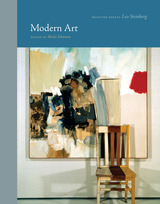
Leo Steinberg was one of the most original art historians of the twentieth century, known for taking interpretive risks that challenged the profession by overturning reigning orthodoxies. In essays and lectures ranging from old masters to modern art, he combined scholarly erudition with eloquent prose that illuminated his subject and a credo that privileged the visual evidence of the image over the literature written about it. His writings, sometimes provocative and controversial, remain vital and influential reading. Steinberg’s perceptions evolved from long, hard looking at his objects of study. Almost everything he wrote included passages of formal analysis that were always put into the service of interpretation.
Following the series publication on Pablo Picasso, this volume focuses on other modern artists, including Cézanne, Monet, Matisse, Max Ernst, Jasper Johns, Robert Rauschenberg, Roy Lichtenstein, Hans Haacke, and Jeff Koons. Included are seven unpublished lectures and essays, Steinberg’s landmark essay “Encounters with Rauschenberg,” a survey of twentieth-century sculpture, and an examination of the role of authorial predilections in critical writing. The final chapter presents a collection of Steinberg’s humorous pieces, witty forays penned for his own amusement.
Modern Art is the fifth and final volume in a series that presents Steinberg’s writings, selected and edited by his longtime associate Sheila Schwartz.

Strongman governments are back. What becomes of their economies?
Autocracy has once again become a rising force. Today, two thirds of the world’s population live under regimes where electoral democracy is either absent or debased. Moreover, even many functioning democracies are now facing a significant share of their citizens who favor switching to authoritarian rule. But as states return to their old authoritarian ways, what happens to their still-modernized economies?
Simon Commander and Saul Estrin examine the scale of this change—and the unevenly distributed economic consequences that will soon accompany it. Modern Autocracy reveals how authoritarian economies generally perform worse than economies in democratic states, in part because many authoritarian states are centralized around a leader whose economic stewardship facilitates political favor and cronyism. In all, these features, combined with the likelihood of repression, sap economic vitality and stymie competition, innovation, and, ultimately, growth.
The exception, the authors reveal, is that autocracies can perform better when they’re built around an institutional framework rather than simply a leader. That is because they can pursue strategic goals, including innovation; even so, their autocratic foundations open up major vulnerabilities and tensions. Brimming with political relevance, Modern Autocracy is a defining taxonomy of economies and their natures in this century.
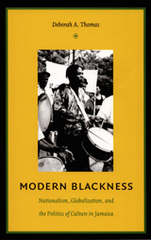
Thomas combines historical research with fieldwork she conducted in Jamaica between 1993 and 2003. Drawing on her research in a rural hillside community just outside Kingston, she looks at how Jamaicans interpreted and reproduced or transformed on the local level nationalist policies and popular ideologies about progress. With detailed descriptions of daily life in Jamaica set against a backdrop of postcolonial nation-building and neoliberal globalization, Modern Blackness is an important examination of the competing identities that mobilize Jamaicans locally and represent them internationally.
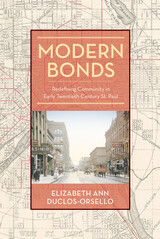
What does community mean, exactly? In this interdisciplinary study, Elizabeth Ann Duclos-Orsello takes seriously the concept of community as an object of historical analysis.
Focusing on St. Paul, Minnesota, from 1900 to 1920, Modern Bonds explores the diverse ways that its people renegotiated private and public affiliations during a period of modernization. The book examines a wide range of subjects and materials, including photographs from an African American family, fictional depictions of middle-class women, built environments that created enclaves of immigrants, and public festivals designed to unite all citizens. As Duclos-Orsello demonstrates, it was in this period that a complex set of activities, policies, and practices led to new understandings of community that continue to shape life today.
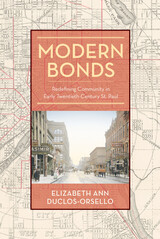
What does community mean, exactly? In this interdisciplinary study, Elizabeth Ann Duclos-Orsello takes seriously the concept of community as an object of historical analysis.
Focusing on St. Paul, Minnesota, from 1900 to 1920, Modern Bonds explores the diverse ways that its people renegotiated private and public affiliations during a period of modernization. The book examines a wide range of subjects and materials, including photographs from an African American family, fictional depictions of middle-class women, built environments that created enclaves of immigrants, and public festivals designed to unite all citizens. As Duclos-Orsello demonstrates, it was in this period that a complex set of activities, policies, and practices led to new understandings of community that continue to shape life today.
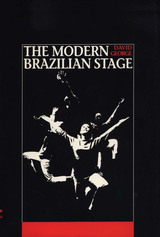
Reading a play and watching it performed onstage are quite different experiences. Likewise, studying a country's theatrical tradition with reference only to playtexts overlooks the vital impact of a play's performance on the audience and on the whole artistic community. In this performance-centered approach to Brazilian theatre since the 1940s, David George explores a total theatrical language—the plays, the companies that produced them, and the performances that set a standard for all future stagings.
George structures the discussion around several important companies. He begins with Os Comediantes, whose revolutionary 1943 staging of Nelson Rodrigues' Vestido de Noiva (Bridal Gown) broke with the outmoded comedy-of-manners formula that had dominated the national stage since the nineteenth century. He considers three companies of the 1950s and 1960s—Teatro Brasileiro de Comédia, Teatro de Arena, and Teatro Oficina—along with the 1967 production of O Rei da Vela (The Candle King) by Teatro Oficina.
The 1970s represented a wasteland for Brazilian theatre, George finds, in which a repressive military dictatorship muzzled artistic expression. The Grupo Macunaíma brought theatre alive again in the 1980s, with its productions of Macunaíma and Nelson 2 Rodrigues.
Common to all theatrical companies, George concludes, was the desire to establish a national aesthetic, free from European and United States models. The creative tension this generated and the successes of modern Brazilian theatre make lively reading for all students of Brazilian and world drama.
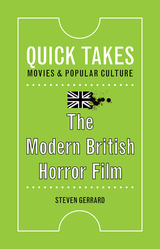
Tracking the revitalization of the British horror film industry over the past two decades, media expert Steven Gerrard also investigates why audiences have flocked to these movies. To answer that question, he focuses on three major trends: “hoodie horror” movies responding to fears about Britain’s urban youth culture; “great outdoors” films where Britain’s forests, caves, and coasts comprise a terrifying psychogeography; and psychological horror movies in which the monster already lurks within us.
Offering in-depth analysis of numerous films, including The Descent, Outpost, and The Woman in Black, this book takes readers on a lively tour of the genre’s highlights, while provocatively exploring how these films reflect viewers’ gravest fears about the state of the nation. Whether you are a horror buff, an Anglophile, or an Anglophobe, The Modern British Horror Film is sure to be a thrilling read.

Modern China's Foreign Policy was first published in 1953. Minnesota Archive Editions uses digital technology to make long-unavailable books once again accessible, and are published unaltered from the original University of Minnesota Press editions.
What are China's objectives in world affairs and what course will she pursue to achieve her goals? These are the questions of vital concern to the Western democracies, questions that can be approached intelligently only from a knowledge of how China's foreign policy has developed.
In this illuminating and carefully documented book, Professor Levi analyzes china's attitudes and actions toward the rest of the world and clarifies many motivations behind her behavior, past and present.
He traces the development of her foreign relations from the beginning of the modern era of Chinese contacts with Westerners, a little more than hundred years ago. The emphasis, however, is on the twentieth century, and particularly on the years since the peace settlements of World War I.
The complex balance of relationships between China and the United States, on the one hand, and China and the Soviet Union, on the other, since the end of World War II is discussed in detail. Communist doctrine, notwithstanding its apparent rigidity, is shown to be a conveniently adjustable tool, capable of adaptation to the needs and strategies of present-day China.
An integral part of the account is the attempt to single out and interpret the internal forces -- cultural, social, and economic -- that have influenced and shaped China's external policies. Thus, it is shown that the determinants of China's foreign policy have often been pressures and complexities within the country and that and understanding of the Chinese people and their traditions is essential to nations in their dealings with China.
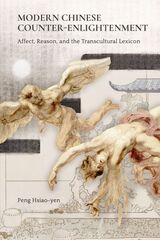
In Modern Chinese Counter-Enlightenment, Peng Hsiao-yen argues that a trend of Counter-Enlightenment had grown from the late Qing to the May Fourth era in the 1910s to the 1920s and continued to the 1940s. She demonstrates how Counter-Enlightenment was manifested with case studies such as Lu Xun’s writings in the late 1900s, the Aesthetic Education movement from the 1910s to 1920s, and the Science and Lifeview debate in the 1920s. During the period, the life philosophy movement, highlighting the epistemic debate on affect and reason, is connected with its counterparts in Germany, France, and Japan. The movement had a widespread and long-term impact on Chinese philosophy and literature. Using the transcultural lexicon as methodology, this book traces how the German term Lebensanschauung (life view), a key concept in Rudolf Eucken’s life philosophy, constituted a global tide of Counter-Enlightenment that influenced the thought of leading Chinese intellectuals in the Republican era. Peng contends that Chinese intellectuals’ transcultural connections with others in the philosophical pursuit of knowledge triggered China’s self-transformation. She successfully reconstructs the missing link in the Chinese theater of the worldwide dialectic of Enlightenment and Counter-Enlightenment.
One of the volume’s provocative suggestions is that the old model of area studies—an offshoot of U.S. Cold War strategy that found its anchorage in higher education—is no longer feasible for the diverse and multifaceted experiences that are articulated under the rubric of “Chineseness.” As Rey Chow argues in her introduction, the notion of a monolithic Chineseness bound ultimately to mainland China is, in itself, highly problematic because it recognizes neither the material realities of ethnic minorities within China nor those of populations in places such as Tibet, Taiwan, and post–British Hong Kong. Above all, this book demonstrates that, as the terms of a chauvinistic sinocentrism become obsolete, the critical use of theory—particularly by younger China scholars whose enthusiasm for critical theory coincides with changes in China’s political economy in recent years—will enable the emergence of fresh connections and insights that may have been at odds with previous interpretive convention.
Originally published as a special issue of the journal boundary 2, this collection includes two new essays and an afterword by Paul Bové that places its arguments in the context of contemporary cultural politics. It will have far-reaching implications for the study of modern China and will be of interest to scholars of theory and culture in general.
Contributors. Stanley K. Abe, Ien Ang, Chris Berry, Paul Bové, Sung-cheng Yvonne Chang, Rey Chow, Dorothy Ko, Charles Laughlin, Leung Ping-kwan, Kwai-cheung Lo, Christopher Lupke, David Der-wei Wang, Michelle Yeh

Examines how India’s cattle underwent profound changes during the years of British colonial rule.
Drawing on extensive, untapped archives, Modern Cowsand Bovine Transformations illustrates the radical remaking of India’s cattle against the backdrop of colonial policies, environmental change, and anticolonial politics. Historian David Arnold examines the history of cows in India from 1790 to 1950, focusing on science, technology, and medicine to provide a secular account of imperial animal husbandry.
Doing justice to the wide variety of Indian cattle breeds, Arnold unpacks “bovine technology” and its subaltern linkages, covering topics such as the role of cattle in agriculture and the military; haulage and transport; breeding strategies; bacteriology and nutrition science, and India’s milk revolution. He also examines the dispersal of Indian cattle around the globe and the role that colonial policies played in spreading knowledge of Indian cattle breeds and facilitating their export. Finally, he addresses the “cattle crisis” brought on by famines, droughts, and disease, and disputes between colonial rulers and Hindu nationalists. He concludes with the impact of World War II and Partition on bovine populations, illustrating the consequences for independent India’s attempts to restore the milk supply and rebuild cattle breeds while also respecting the Hindu cow protection agenda. In the end, Arnold argues, the history of cattle in India provides us with a new way of understanding the power of the colonial state, its ambitions to transform India, its appropriation of the Indian subcontinent’s resources, and the myriad contradictions of its policies.
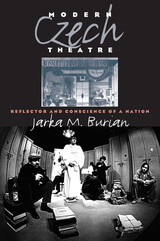
The story of Czech theatre in the twentieth century involves generations of mesmerizing players and memorable productions. Beyond these artistic considerations, however, lies a larger story: a theatre that has resonated with the intense concerns of its audiences acquires a significance and a force beyond anything created by striking individual talents or random stage hits. Amid the variety of performances during the past hundred years, that basic and provocative reality has been repeatedly demonstrated, as Jarka Burian reveals in his extraordinary history of the dramatic world of Czech theatre.
Following a brief historical background, Burian provides a chronological series of perspectives and observations on the evolving nature of Czech theatre productions during this century in relation to their similarly evolving social and political contexts. Once Czechoslovak independence was achieved in 1918, a repeated interplay of theatre with political realities became the norm, sometimes stifling the creative urge but often producing even greater artistry. When playwright Václav Havel became president in 1990, this was but the latest and most celebrated example of the vital engagement between stage and society that has been a repeated condition of Czech theatre for the past two hundred years. In Jarka Burian's skillful hands, Modern Czech Theatre becomes an extremely important touchstone for understanding the history of modern theatre within western culture.
Booth traces the consequences of modernist assumptions through a wide range of inquiry and action: in politics, art, music, literature, and in personal efforts to find "identity" or a "self." In casting doubt on systematic doubt, the author finds that the dogmas are being questioned in almost every modern discipline. Suggesting that they be replaced with a rhetoric of "systematic assent," Booth discovers a vast, neglected reservoir of "good reasons"—many of them known to classical students of rhetoric, some still to be explored. These "good reasons" are here restored to intellectual respectability, suggesting the possibility of widespread new inquiry, in all fields, into the question, "When should I change my mind?"
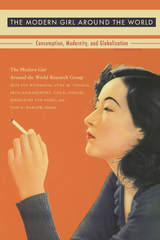
Scholars of history, women’s studies, literature, and cultural studies follow the Modern Girl around the world, analyzing her manifestations in Germany, Australia, China, Japan, France, India, the United States, Russia, South Africa, and Zimbabwe. Along the way, they demonstrate how the economic structures and cultural flows that shaped a particular form of modern femininity crossed national and imperial boundaries. In so doing, they highlight the gendered dynamics of interwar processes of racial formation, showing how images and ideas of the Modern Girl were used to shore up or critique nationalist and imperial agendas. A mix of collaborative and individually authored chapters, the volume concludes with commentaries by Kathy Peiss, Miriam Silverberg, and Timothy Burke.
Contributors: Davarian L. Baldwin, Tani E. Barlow, Timothy Burke, Liz Conor, Madeleine Yue Dong, Anne E. Gorsuch, Ruri Ito, Kathy Peiss, Uta G. Poiger, Priti Ramamurthy, Mary Louise Roberts, Barbara Sato, Miriam Silverberg, Lynn M. Thomas, Alys Eve Weinbaum
In Modern Hamlets and Their Soliloquies (Iowa, 1992), Mary Maher examined how modern actors have chosen to perform Hamlet’s soliloquies, and why they made the choices they made, within the context of their specific productions of the play.
Adding to original interviews with, among others, Derek Jacobi, David Warner, Kevin Kline, and Ben Kingsley, Modern Hamlets and Their Soliloquies: An Expanded Edition offers two new and insightful interviews, one with Kenneth Branagh, focusing on his 1997 film production of the play, and one with Simon Russell Beale, discussing his 2000-2001 run as Hamlet at the Royal National Theatre.
Modern Hebrew for Beginners—which is now revised and updated—and Modern Hebrew for Intermediate Students are the core of a multimedia program for the college-level Hebrew classroom developed at the University of Texas at Austin in the early 2000s. Within an intensive framework of instruction that assumes six weekly hours in the classroom, the program provides for two semesters of instruction, at the end of which most successful students will reach the intermediate-mid or intermediate-high levels of proficiency in speaking and reading, and some will reach advanced-low proficiency, as defined by the American Council on the Teaching of Foreign Languages (ACTFL).
In addition to a variety of written exercises, the workbook includes vocabulary lists, reading selections, discussions of cultural topics, illustrations of grammar points, notes on registers, suggestions for class and individual activities, and glossaries. The workbook is complemented by a website (http://www.laits.utexas.edu/hebrew) that provides short video segments originally scripted and filmed in Israel and the United States, vocabulary flashcards with sound, interactive exercises on topics included in the workbook, sound files parallel to the reading selections in the workbook, and additional materials that enhance the learning experience. The stability of the workbook, combined with the dynamic nature of the website and the internet searches the students are directed to conduct, allows language instructors to reshape the curriculum and adapt it to the needs of their students and the goals of their programs.

Modern Hebrew for Intermediate Students—which is now revised and updated—and Modern Hebrew for Beginners are the core of a multimedia program for the college-level Hebrew classroom developed at the University of Texas at Austin in the early 2000s. Within an intensive framework of instruction that assumes six weekly hours in the classroom, the program provides for two semesters of instruction, at the end of which most successful students will reach the intermediate-mid or intermediate-high levels of proficiency in speaking and reading, and some will reach advanced-low proficiency, as defined by the American Council on the Teaching of Foreign Languages (ACTFL).
In addition to a variety of written exercises, the workbook includes vocabulary lists, reading selections, discussions of cultural topics, illustrations of grammar points, notes on registers, suggestions for class and individual activities, and glossaries. The workbook is complemented by a website (http://www.laits.utexas.edu/hebrew) that provides short video segments originally scripted and filmed in Israel and the United States, vocabulary flashcards with sound, interactive exercises on topics included in the workbook, sound files parallel to the reading selections in the workbook, and additional materials that enhance the learning experience. The stability of the workbook, combined with the dynamic nature of the website and the internet searches the students are directed to conduct, allows language instructors to reshape the curriculum and adapt it to the needs of their students and the goals of their programs.
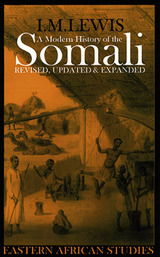
This latest edition of A Modern History of the Somali brings I. M. Lewis’s definitive history up to date and shows the amazing continuity of Somali forms of social organization. Lewis’s history portrays the ingeniousness with which the Somali way of life has been adapted to all forms of modernity.
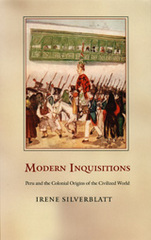
Drawing on extensive research in Peruvian and Spanish archives, Silverblatt uses church records, evangelizing sermons, and missionary guides to explore how the emerging modern world was built, experienced, and understood by colonists, native peoples, and Inquisition officials: Early missionaries preached about world history and about the races and nations that inhabited the globe; Inquisitors, able bureaucrats, defined who was a legitimate Spaniard as they executed heretics for “reasons of state”; the “stained blood” of Indians, blacks, and descendants of Jews and Moors was said to cause their deficient character; and native Peruvians began to call themselves Indian.
In dialogue with Arendt and other theorists of modernity, Silverblatt shows that the modern world’s underside is tied to its origins in colonialism and to its capacity to rationalize violence. Modern Inquisitions forces the reader to confront the idea that the Inquisition was not only a product of the modern world of the sixteenth and seventeenth centuries, but party to the creation of the civilized world we know today.
In The Modern Invention of Information: Discourse, History, and Power, Ronald E. Day provides a historically informed critical analysis of the concept and politics of information. Analyzing texts in Europe and the United States, his critical reading method goes beyond traditional historiographical readings of communication and information by engaging specific historical texts in terms of their attempts to construct and reshape history.
After laying the groundwork and justifying his method of close reading for this study, Day examines the texts of two pre–World War II documentalists, Paul Otlet and Suzanne Briet. Through the work of Otlet and Briet, Day shows how documentation and information were associated with concepts of cultural progress. Day also discusses the social expansion of the conduit metaphor in the works of Warren Weaver and Norbert Wiener. He then shows how the work of contemporary French multimedia theorist Pierre Lévy refracts the earlier philosophical writings of Gilles Deleuze and Félix Guattari through the prism of the capitalist understanding of the “virtual society.”
Turning back to the pre–World War II period, Day examines two critics of the information society: Martin Heidegger and Walter Benjamin. He explains Heidegger’s philosophical critique of the information culture’s model of language and truth as well as Benjamin’s aesthetic and historical critique of mass information and communication. Day concludes by contemplating the relation of critical theory and information, particularly in regard to the information culture’s transformation of history, historiography, and historicity into positive categories of assumed and represented knowledge.
The ideal, Stourzh argues, is a state, and indeed a world, in which individual rights, including the right to participate in politics equally, are clearly defined and possessed by all. Stourzh begins with ancient Greek thought contrasting isonomy—which is associated with the rule of the many—with “gradated societies,” oligarchies, and monarchies. He then discusses the American experiment with the development of representative democracy as well as the French Revolution, which proclaimed that all people are born and remain free and with equal rights. But progress on the creation and protection of rights for all has been uneven. Stourzh discusses specifically the equalization of slaves, peasants, women, Jews, and indigenous people. He demonstrates how deeply intertwined the protection of equal rights is with the development of democracy and gives particular attention to the development of constitutional adjudication, notably the constitutional complaint of individuals. He also discusses the international protection human rights. Timely and thought-provoking, Modern Isonomy is an erudite exploration of political and human rights.
A comparative study of contemporary Israeli and Palestinian diasporas.
Exilic and diasporic experience have become ubiquitous in recent decades. Jews, lacking a homeland, spread to various parts of the world, making the Jewish diaspora paradigmatic. But after the establishment of Israel in 1948, a different kind of diaspora emerged, as more than a tenth of Israeli citizens have chosen to leave their newly established state and resettle. Meanwhile, about half of all Palestinians, including Palestinian citizens of Israel, now reside in exile, predominantly as a result of the ongoing Palestinian-Israeli conflict.
Recognizing that Israeli-Jewish and Palestinian-Arab societies coexist and are engaged in constant relations, Nahum Karlinsky has assembled an impressive array of contributors to explore these diasporas alongside one another and in dialogue with other diasporic communities. The collected essays cover such topics as Palestinian exiles and diasporas, the demographics of today’s Israeli diaspora, immigrant enterprises, transnationalism and development, the unique place of Israeli Jews in the United States, the literature of Palestinian transnationals, and the emergence of Berlin as a queer Israeli-Jewish immigrant enclave.The Modern Israeli and Palestinian Diasporas challenges and reimagines the very notion of a homeland.
Katarzyna J. Cwiertka demonstrates that key shifts in the Japanese diet were, in many cases, a consequence of modern imperialism. Exploring reforms in military catering and home cooking, wartime food management and the rise of urban gastronomy, Cwiertka shows how Japan’s numerous regional cuisines were eventually replaced by a set of foods and practices with which the majority of Japanese today ardently identify.
The result of over a decade of research, Modern Japanese Cuisine is a fascinating look at the historical roots of some of the world’s best cooking and will provide appetizing reading for scholars of Japanese culture and foodies alike.
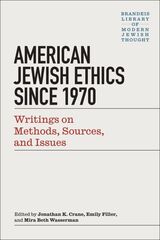
These deliberate juxtapositions are to encourage scholars and students to develop similar meta-ethical analyses on Jewish ethics, broadly construed. Jewish ethics is not just a set of propositions or principles; nor can it be reduced to a single trajectory of thought or abstracted as an elaborate system of ideas. Jewish ethics is the field of study that engages Jewish texts, ideas, history, and experience in conversations about values and virtues, justice and good judgment, human relations and responsibilities. This volume presents some of those conversations to spark many more.
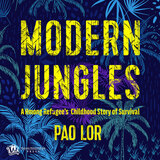
Born in a small farming village, Pao was destined to be a Hmong clan leader, wedding negotiator, or shaman. But the course of his life changed dramatically in the 1970s, when the Hmong faced persecution for their role in helping US forces fighting communism in the region. After more than two years in Thai refugee camps, Pao and his surviving family members boarded the belly of an “iron eagle” bound for the United States, where he pictured a new life of comfort and happiness. Instead, Pao found himself navigating a frightening and unfamiliar world, adjusting to a string of new schools and living situations while struggling to fulfill the hopes his parents had once held for his future. Now in Modern Jungles, Pao Lor shares his inspiring coming-of-age tale about perseverance, grit, and hope.
Included are discussion questions for use by book clubs, in classrooms, or around the dinner table.

Born in a small farming village, Pao was destined to be a Hmong clan leader, wedding negotiator, or shaman. But the course of his life changed dramatically in the 1970s, when the Hmong faced persecution for their role in helping US forces fighting communism in the region. After more than two years in Thai refugee camps, Pao and his surviving family members boarded the belly of an “iron eagle” bound for the United States, where he pictured a new life of comfort and happiness. Instead, Pao found himself navigating a frightening and unfamiliar world, adjusting to a string of new schools and living situations while struggling to fulfill the hopes his parents had once held for his future. Now in Modern Jungles, Pao Lor shares his inspiring coming-of-age tale about perseverance, grit, and hope.
Included are discussion questions for use by book clubs, in classrooms, or around the dinner table.
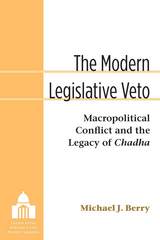
Berry argues that, since the U.S. Supreme Court declared the legislative veto unconstitutional in Immigration and Naturalization Service (INS) v. Chadha (1983), Congress has strategically modified its use of the veto to give more power to appropriations committees. Using an original dataset of legislative veto enactments, Berry finds that Congress has actually increased its use of this oversight mechanism since Chadha, especially over defense and foreign policy issues. Democratic and Republican presidents alike have fought back by vetoing legislation containing legislative vetoes and by using signing statements with greater frequency to challenge the legislative veto’s constitutionality. A complementary analysis of state-level use of the legislative veto finds variation in oversight powers granted to state legislatures, but similar struggles between the legislature and the executive.
This ongoing battle over the legislative veto points to broader efforts by legislative and executive actors to control policy, efforts that continually negotiate how the democratic republic established by the Constitution actually operates in practice.
READERS
Browse our collection.
PUBLISHERS
See BiblioVault's publisher services.
STUDENT SERVICES
Files for college accessibility offices.
RECENTLY PUBLISHED




UChicago Accessibility Resources
home | accessibility | search | about | contact us
BiblioVault ® 2001 - 2026
The University of Chicago Press