
 A SCHOLARLY BOOK REPOSITORY
Examines the role of imagination in the cultural development of our shrinking world.
The world is growing smaller. Every day we hear this idea expressed and witness its reality in our lives-through the people we meet, the products we buy, the foods we eat, and the movies we watch. In this bold look at the cultural effects of a shrinking world, leading cultural theorist Arjun Appadurai places these challenges and pleasures of contemporary life in a broad global perspective.
Offering a new framework for the cultural study of globalization, Modernity at Large shows how the imagination works as a social force in today's world, providing new resources for identity and energies for creating alternatives to the nation-state, whose era some see as coming to an end. Appadurai examines the current epoch of globalization, which is characterized by the twin forces of mass migration and electronic mediation, and provides fresh ways of looking at popular consumption patterns, debates about multiculturalism, and ethnic violence. He considers the way images-of lifestyles, popular culture, and self-representation-circulate internationally through the media and are often borrowed in surprising (to their originators) and inventive fashions.
Appadurai simultaneously explores and explodes boundaries-between how we imagine the world and how that imagination influences our self-understanding, between social institutions and their effects on the people who participate in them, between nations and peoples that seem to be ever more homogeneous and yet ever more filled with differences. Modernity at Large offers a path to move beyond traditional oppositions between culture and power, tradition and modernity, global and local, pointing out the vital role imagination plays in our construction of the world of today-and tomorrow.

Analyzes nineteenth-century seafaring narratives and their importance to ideas of modernity
At once a literary-philosophical meditation on the question of modernity and a manifesto for a new form of literary criticism, Modernity at Sea argues that the nineteenth-century sea narrative played a crucial role in the emergence of a theory of modernity as permanent crisis.
In a series of close readings of such works as Herman Melville’s White-Jacket and Moby Dick, Joseph Conrad’s The Nigger of the "Narcissus” and The Secret Sharer, and Karl Marx’s Grundrisse, Cesare Casarino draws upon the thought of twentieth-century figures including Giorgio Agamben, Louis Althusser, Walter Benjamin, Leo Bersani, Gilles Deleuze, Félix Guattari, and Antonio Negri to characterize the nineteenth-century ship narrative as the epitome of Michel Foucault’s "heterotopia"—a special type of space that simultaneously represents, inverts, and contests all other spaces in culture.Elaborating Foucault’s claim that the ship has been the heterotopia par excellence of Western civilization since the Renaissance, Casarino goes on to argue that the nineteenth-century sea narrative froze the world of the ship just before its disappearance—thereby capturing at once its apogee and its end, and producing the ship as the matrix of modernity.
In Côte d’Ivoire, appearing modern is so important for success that many young men deplete their already meager resources to project an illusion of wealth in a fantastic display of Western imitation, spending far more than they can afford on brand name clothing, accessories, technology, and a robust nightlife. Such imitation, however, is not primarily meant to deceive—rather, as Sasha Newell argues in The Modernity Bluff, it is an explicit performance so valued in Côte d’Ivoire it has become a matter of national pride.
Called bluffeurs, these young urban men operate in a system of cultural economy where reputation is essential for financial success. That reputation is measured by familiarity with and access to the fashionable and expensive, which leads to a paradoxical state of affairs in which the wasting of wealth is essential to its accumulation. Using the consumption of Western goods to express their cultural mastery over Western taste, Newell argues, bluffeurs engage a global hierarchy that is profoundly modern, one that values performance over authenticity—highlighting the counterfeit nature of modernity itself.
Fischer draws on history, literary scholarship, political theory, philosophy, and psychoanalytic theory to examine a range of material, including Haitian political and legal documents and nineteenth-century Cuban and Dominican literature and art. She demonstrates that at a time when racial taxonomies were beginning to mutate into scientific racism and racist biology, the Haitian revolutionaries recognized the question of race as political. Yet, as the cultural records of neighboring Cuba and the Dominican Republic show, the story of the Haitian Revolution has been told as one outside politics and beyond human language, as a tale of barbarism and unspeakable violence. From the time of the revolution onward, the story has been confined to the margins of history: to rumors, oral histories, and confidential letters. Fischer maintains that without accounting for revolutionary antislavery and its subsequent disavowal, Western modernity—including its hierarchy of values, depoliticization of social goals having to do with racial differences, and privileging of claims of national sovereignty—cannot be fully understood.
2022 PROSE Award Finalist in Architecture and Urban Planning
2022 Association for Latin American Art Arvey Foundation Book Award, Honorable Mention
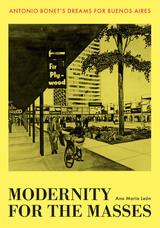
Throughout the early twentieth century, waves of migration brought working-class people to the outskirts of Buenos Aires. This prompted a dilemma: Where should these restive populations be situated relative to the city’s spatial politics? Might housing serve as a tool to discipline their behavior?
Enter Antonio Bonet, a Catalan architect inspired by the transatlantic modernist and surrealist movements. Ana María León follows Bonet's decades-long, state-backed quest to house Buenos Aires's diverse and fractious population. Working with totalitarian and populist regimes, Bonet developed three large-scale housing plans, each scuttled as a new government took over. Yet these incomplete plans—Bonet's dreams—teach us much about the relationship between modernism and state power.
Modernity for the Masses finds in Bonet's projects the disconnect between modern architecture’s discourse of emancipation and the reality of its rationalizing control. Although he and his patrons constantly glorified the people and depicted them in housing plans, Bonet never consulted them. Instead he succumbed to official and elite fears of the people's latent political power. In careful readings of Bonet's work, León discovers the progressive erasure of surrealism's psychological sensitivity, replaced with an impulse, realized in modernist design, to contain the increasingly empowered population.
Modernity in Motion offers a groundbreaking exploration of Anishinaabe writer Gerald Vizenor’s richly layered body of work spanning fiction, nonfiction, and poetry. Through the lens of transnational Indigenous studies, this compelling study reveals how Vizenor’s concept of transmotion, which he defines as the interplay between local and global identities, reconstructs modernity as a dynamic force of transformation.
Close readings illuminate Vizenor’s radical storytelling, which bridges seemingly disparate worlds: the White Earth Reservation, Nazi-occupied Paris, post-Hiroshima Japan, and beyond. By weaving these far-flung geographies into unexpected constellations, Vizenor challenges readers to rethink Indigenous history, sovereignty, and creative expression within a global framework.
Positioned at the intersection of tribal-centric and world literature paradigms, Modernity in Motion is essential reading for scholars of Indigenous studies and comparative literature.
Three areas of Indian life are analyzed: social stratification, charismatic leadership, and law. The authors question whether objective historical conditions, such as advanced industrialization, urbanization, or literacy, are requisites for political modernization.
"Exemplary. . . . It should be celebrated." —Arthur C. Danto, New York Times Book Review
"This book . . . express[es] Kolakowski's thought on God, man, reason, history, moral truth and original sin, prompted by observation of the dramatic struggle among Christianity, the Enlightenment and modern totalitarianism. It is a wonderful collection of topics." —Thomas Nagel, Times Literary Supplement
"No better antidote to bumper-sticker thinking exists than this collection of 24 'appeals for moderation in consistency,' and never has such an antidote been needed more than it is now." —Joseph Coates, Chicago Tribune
"Whether learned or humorous, these essays offer gems in prose of diamond hardness, precision, and brilliance." —Thomas D'Evelyn, The Christian Science Monitor
A "Notable Books of the Year 1991" selection, New York Times Book Review—a "Noted with Pleasure" selection, New York Times Book Review—a "Summer Reading 1991" selection, New York Times Book Review—a "Books of the Year" selection, The Times.
Published together for the first time in one volume are Eric Voegelin's Political Religions, The New Science of Politics, and Science, Politics, and Gnosticism.Political Religions was first published in 1938 in Vienna, the year of Voegelin's forced emigration from Austria to the United States. The New Science of Politics was written in 1952 and established Voegelin's reputation as a political philosopher in America. Science, Politics, and Gnosticism was Voegelin's Inaugural Lecture at the University of Munich in 1958 and introduced him to the West German intellectual public.
Although these books were written during remarkably different historical circumstances of Voegelin's life, all three present an analysis of modern Western civilization that has lost its spiritual foundations and is challenged by various ideological persuasions. Voegelin critiques in these texts a "modernity without restraint." It is a modernity with Hegelian, Marxian, Nietzschean, Heideggerian, positivist, Fascist, and other predominantly German characteristics. The author confronts this modernity with Western meaning as it emerged in ancient Greece, Rome, Israel, and Christianity and became transformed in the European Middle Ages, the Italian Renaissance, and the Anglo- American political formation.
This three-in-one volume delves into the intellectual and spiritual complications of modernity, tracing its evolution from the ancient civilizations to the twentieth century. In his substantial new introduction, Manfred Henningsen explores the experiential background that motivated Voegelin's theoretical analyses and the new relevance that his work has gained in recent years with the unexpected collapse of state socialism in East Germany, Eastern Europe, and the Soviet Union. Modernity without Restraint will be a valuable addition to intellectual history and Voegelin studies.
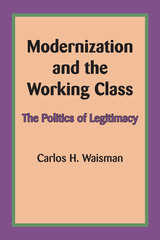
This is a fascinating inquiry into the factors that determine the acceptance or rejection of capitalism by the industrial working class. Combining classical social theory, historical evidence, and survey data, Waisman explores the relationship between the degree of modernization and the legitimacy of the capitalist social order.
Propositions about the interaction between established elites and emerging working classes are illustrated with three typical cases: Disraelian Britain, Bismarckian Germany, and Peronist Argentina. From the contrasting theories of Marx and Bakunin, the author derives hypotheses concerning the position of the working class in the economy and the consequences this has for legitimacy. He finds that countries at middle levels of industrial development—mostly latecomers to industrialization in Southern Europe and advanced areas of Latin America—have the greatest difficulty in establishing capitalism as a legitimate social order. They are advanced enough to have a large working class, yet underdeveloped enough to have a dissatisfied one.

Since its founding in 1930 the Peruvian Aprista party (APRA) has occupied a place of signal importance in the Peruvian political spectrum, and it is one of the most important political parties to appear in twentieth-century Latin America. Modernization, Dislocation, and Aprismo is the first major analysis of the social and political bases of the Aprista movement. Previous studies of APRA had been chiefly descriptive in nature and did not utilize modern social science approaches in analyzing the movement.
Peter F. Klarén’s major thesis is that APRA emerged in the 1930s as a direct political response to the far-reaching dislocative impact of modernization within the Peruvian sugar industry, a process that unfolded over a period of about four decades beginning in the 1890s and that substantially upset and transformed the traditional structure of society along the north coast.
Jolted by the effects of modernization, elements of the old middle and lower sectors grew increasingly hostile to the existing order. Joined by the new proletariat that was beginning to voice its collective grievances by means of the unionization process, this large, alienated segment of northern society responded overwhelmingly in 1931 to the reformist appeal of the new Aprista party. APRA, many of whose leaders were products of this environment, best expressed politically the general mood of alienation and rebellion of the area’s discontented. The eruption of the bloody and abortive Trujillo Revolution of 1932 is considered as the culmination of this process of social and economic dislocation.
In addition to presenting a major new interpretation of the origins of the Aprista movement, this study places the Aprista party in the larger Latin American context by comparing APRA with other political movements in Mexico, Brazil, Argentina, and Cuba that were responding to similar modernization phenomena.
This study is based not only on a large body of official party literature and local newspapers for the period, but also on the newly discovered records of the Archivo de la Cámara de Comercio, Agricultura e Industria of the Department of La Libertad for the years 1904–1932.
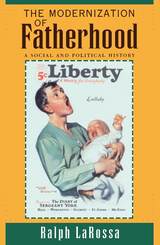
LaRossa explains that during the interwar period the image of the father as economic provider, pal, and male role model, all in one, became institutionalized. Using personal letters and popular magazine and newspaper sources, he explores how the social and economic conditions of the Roaring Twenties and the Great Depression—a period of technical innovation as well as economic hardship—fused these expectations into a cultural ideal. With chapters on the U.S. Children's Bureau, the fathercraft movement, the magazine industry and the development of Parent's Magazine, and the creation of Father's Day, this book is a major addition to the growing literature on masculinity and fatherhood.
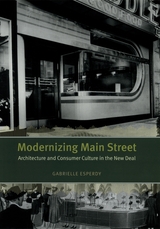
Esperdy argues that these updated storefronts served a range of complex purposes, such as stimulating public consumption, extending the New Deal’s influence, reviving a stagnant construction industry, and introducing European modernist design to the everyday landscape. She goes on to show that these diverse roles are inseparable, woven together not only by the crisis of the Depression, but also by the pressures of bourgeoning consumerism. As the decade’s two major cultural forces, Esperdy concludes, consumerism and the Depression transformed the storefront from a seemingly insignificant element of the built environment into a potent site for the physical and rhetorical staging of recovery and progress.

Combining anthropological, historical, and public health perspectives, Modernizing Medicine in Zimbabwe explores the intersection of African healing traditions and Western health development, emphasizing the role of this historical relationship in current debates about HIV/AIDS. Drawing on diverse sources including colonial records, missionary correspondence, international health policy reports, and interviews with traditional healers, anthropologist David S. Simmons demonstrates the remarkable adaptive qualities of these disparate communities as they try to meet the urgent needs of the people.
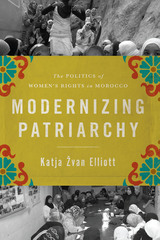
Morocco is hailed by academics, international NGO workers, and the media as a trailblazer in women’s rights and legal reforms. The country is considered a model for other countries in the Middle East and North African region, but has Morocco made as much progress as experts and government officials claim? In Modernizing Patriarchy, Katja Žvan Elliott examines why women’s rights advances are lauded in Morocco in theory but are often not recognized in reality, despite the efforts of both Islamist and secular feminists.
In Morocco, female literacy rates remain among the lowest in the region; many women are victims of gender-based violence despite legal reforms; and girls as young as twelve are still engaged to adult men, despite numerous reforms. Based on extensive ethnographic research and fieldwork in Oued al-Ouliya, Modernizing Patriarchy offers a window into the life of Moroccan Muslim women who, though often young and educated, find it difficult to lead a dignified life in a country where they are expected to have only one destiny: that of wife and mother. Žvan Elliott exposes their struggles with modernity and the legal reforms that are supposedly ameliorating their lives. In a balanced approach, she also presents male voices and their reasons for criticizing the prevailing women’s rights discourse. Compelling and insightful, Modernizing Patriarchy exposes the rarely talked about reality of Morocco’s approach toward reform.
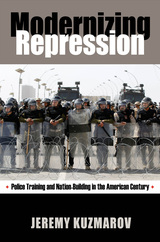
As American troops became bogged down first in Iraq and then Afghanistan, a key component of U.S. strategy was to build up local police and security forces in an attempt to establish law and order. This approach, Jeremy Kuzmarov shows, is consistent with practices honed over more than a century in developing nations within the expanding orbit of the American empire. From the conquest of the Philippines and Haiti at the turn of the twentieth century through Cold War interventions and the War on Terror, police training has been valued as a cost-effective means of suppressing radical and nationalist movements, precluding the need for direct U.S. military intervention and thereby avoiding the public opposition it often arouses.
Unlike the spectacular but ephemeral pyrotechnics of the battlefield, police training programs have had lasting consequences for countries under the American imperial umbrella, fostering new elites, creating powerful tools of social control, and stifling political reform. These programs have also backfired, breeding widespread resistance, violence, and instability—telltale signs of “blowback” that has done more to undermine than advance U.S. strategic interests abroad.
During the nineteenth century, the United States saw radical developments in media and communication that reshaped concepts of spatiality and temporality. As the telegraph, the postal system, and public transportation became commonplace, the country achieved a level of connectedness that was never possible before. At this level, physical isolation no longer equaled psychological separation from the exterior world, and as communication networks proliferated, being disconnected took on negative cultural connotations.
Though solitude, and the lack thereof, is a pressing concern in today’s culture of omnipresent digital connectivity, Yoshiaki Furui shows that solitude has been a significant preoccupation since the nineteenth century. The obsession over solitude is evidenced by many writers of the period, with consequences for many basic notions of creativity, art, and personal and spiritual fulfillment.
In Modernizing Solitude: The Networked Individual in Nineteenth-Century American Literature, Furui examines, among other works, Henry David Thoreau’s Walden, Harriet Jacobs’s Incidents in the Life of a Slave Girl, Herman Melville’s “Bartleby, the Scrivener,” Emily Dickinson’s poetry and letters, and telegraphic literature in the 1870s to identify the virtues and values these writers bestowed upon solitude in a time and place where it was being consistently threatened or devalued. Although each writer has a unique way of addressing the theme, they all aim to reclaim solitude as a positive, productive state of being that is essential to the writing process and personal identity. Employing a cross-disciplinary approach to understand modern solitude and the resulting literature, Furui seeks to historicize solitude by anchoring literary works in this revolutionary yet interim period of American communication history, while also applying theoretical insights into the literary analysis.
In the decades surrounding World War I, religious belief receded in the face of radical new ideas such as Marxism, modern science, Nietzschean philosophy, and critical theology. Modes of Faith addresses both this decline of religious belief and the new modes of secular faith that took religion’s place in the minds of many writers and poets.
Theodore Ziolkowski here examines the motives for this embrace of the secular, locating new modes of faith in art, escapist travel, socialism, politicized myth, and utopian visions. James Joyce, he reveals, turned to art as an escape while Hermann Hesse made a pilgrimage to India in search of enlightenment. Other writers, such as Roger Martin du Gard and Thomas Mann, sought temporary solace in communism or myth. And H. G. Wells, Ziolkowski argues, took refuge in utopian dreams projected in another dimension altogether.
Rooted in innovative and careful comparative reading of the work of writers from France, England, Germany, Italy, and Russia, Modes of Faith is a critical masterpiece by a distinguished literary scholar that offers an abundance of insight to anyone interested in the human compulsion to believe in forces that transcend the individual.


Feltes focuses on five English novels: Dickens's Pickwick Papers, Thackeray's Henry Esmond, Eliot's Middlemarch, Hardy's Tess of the d'Urbervilles, and Forster's Howards End. Published at approximately twenty year intervals between 1836 and 1920, they each represent a different first-publication format: part-issue, three-volume, bimonthly, magazine-serial, and single-volume. Drawing on publishing, economic, and literary history, Feltes offers a broad, synthetic explanation of the relationship between the production and format of each novel, and the way in which these determine, in the last instance, the ideology of the text.
Modes of Production in Victorian Novels provides a Marxist structuralist analysis of historical events and practices described elsewhere only empirically, and traces their relationship to literary texts which have been analyzed only idealistically, thus setting these familiar works firmly and perhaps permanently into a framework of historic materialism.

Modes of Spectating investigates the questions posed by new artistic and technological mediums on the viewer experience. These new visual tools influence not only how spectators view, but also how what they view determines what artists create. Alison Oddey and Christine White analyze how gaming and televisual media and entertainment are used by young people, and the resulting psychological challenges of understanding how viewers navigate these virtual worlds and surroundings. This multidisciplinary approach brings together ideas and examples from gaming art, photography, sculpture, and performance; it will be a valuable text for scholars of both media and art.
Organizing contributions from various anthropological subfields—including economics, business, security, humanitarianism, health, and environment—Limor Samimian-Darash and Paul Rabinow offer new tools with which to consider uncertainty, its management, and the differing modes of subjectivity appropriate to it. Taking up policies and experiences as objects of research and analysis, the essays here seek a rigorous inquiry into a sound conceptualization of uncertainty in order to better confront contemporary problems. Ultimately, they open the way for a participatory anthropology that asks crucial questions about our contemporary state.

Taking a fresh look at the poetry and visual art of the Hellenistic age, from the death of Alexander the Great in 323 B.C. to the Romans’ defeat of Cleopatra in 30 B.C., Graham Zanker makes enlightening discoveries about the assumptions and conventions of Hellenistic poets and artists and their audiences.
Zanker’s exciting new interpretations closely compare poetry and art for the light each sheds on the other. He finds, for example, an exuberant expansion of subject matter in the Hellenistic periods in both literature and art, as styles and iconographic traditions reserved for grander concepts in earlier eras were applied to themes, motifs, and subjects that were emphatically less grand.
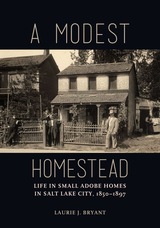
Copublished with the Utah State Historical Society. Affiliated with the Utah Division of State History, Utah Department of Heritage & Arts.
Stories of the ordinary people who helped build Salt Lake City emerge from a study of their often humble adobe houses. Rather than focusing on men and women in positions of power and influence, the emphasis here is on the lives of people who built their sturdy, simple homes from mud.
A Modest Homestead provides architectural descriptions of ninety-four extant adobe houses. These homes are for the most part unremarkable, except for their perhaps unexpected construction material. They are as basic as the people who built them—small tradesmen and farmers, laborers and domestics. Author Laurie Bryant discusses the neighborhoods in Salt Lake City where adobe houses have survived, often much renovated and disguised, and she showcases the houses not just as they appear today but as they were originally built. Almost all the houses now have additions and improvements, and without some dissection, they are not always recognizable. They now appear both comfortable and pleasant, which was not always the case in the nineteenth century. What emerges through closer examination and Bryant’s research is a fuller picture of the roughhewn life of many early Utahns.
Finalist for the Utah State Historical Society Best Book Award.

Does your online instruction program sometimes feel like a constant scramble to keep pace with requests and deadlines? Modular design is the answer. Approaching projects, whether large and small, with an eye towards future uses will put you on the path to accomplishing broader, organizational goals. And by intentionally building documentation and structure into your process, you will create content that can easily be scaled, modified, adapted, and transformed to meet different learner needs. Hess, experienced in online instruction in both K-12 and academic libraries, shows you how, using project examples of various sizes to illustrate each chapter’s concepts. Her resource guides you through such topics as
- the eight components of modular online learning design;
- key considerations for choosing the design model that best fits your organization and project;
- techniques for connecting your online learning goals with institutional strategy;
- using the IDEA process to align OER content with your instructional needs;
- documenting your planning with checklists, scaffolds, and templates;
- ensuring equity of access with all content formats using the Accessibility Inventory Index;
- principles for scaling up, down, or laterally;
- three models for more meaningful and functional collaboration with internal or external partners; and
- formative testing as a foundation for ongoing evaluation and assessment.
A timely synthesis of a crucial topic, Modularity in Development and Evolution shows the invaluable insights modules can give into both developmental complexities and their evolutionary origins.
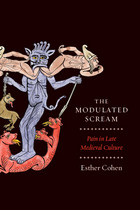
In the late medieval era, pain could be a symbol of holiness, disease, sin, or truth. It could be encouragement to lead a moral life, a punishment for wrong doing, or a method of healing. Exploring the varied depictions and descriptions of pain—from martyrdom narratives to practices of torture and surgery—The Modulated Scream attempts to decode this culture of suffering in the Middle Ages.
Esther Cohen brings to life the cacophony of howls emerging from the written record of physicians, torturers, theologians, and mystics. In considering how people understood suffering, explained it, and meted it out, Cohen discovers that pain was imbued with multiple meanings. While interpreting pain was the province only of the rarified elite, harnessing pain for religious, moral, legal, and social purposes was a practice that pervaded all classes of Medieval life. In the overlap of these contradicting attitudes about what pain was for—how it was to be understood and who should use it—Cohen reveals the distinct and often conflicting cultural traditions and practices of late medieval Europeans. Ambitious and wide-ranging, The Modulated Scream is intellectual history at its most acute.














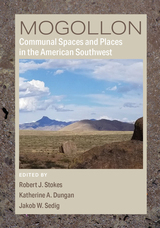
This volume presents the latest research on the development and use of communal spaces and places across the Mogollon region, located in what is now the southwestern United States and northwestern Mexico. New data demonstrate that these spaces and places, though diverse in form and function, were essential to community development and cohesion, particularly during critical formative periods associated with increasing sedentism and farming, and during comparable periods of social change.
The authors ask questions crucial to understanding past communities: What is a communal space or place? How did villagers across the Mogollon region use such places? And how do modern archaeologists investigate the past to learn how ancient people thought about themselves and the world around them? Contributors use innovative approaches to explore the development patterns and properties of communal spaces and places, as well as how and why these places were incorporated into the daily lives of village residents. Buildings and other types of communal spaces are placed into broader cultural and social contexts, acknowledging the enduring importance of the kiva-type structure to many Native American societies of the southwestern United States and northwestern Mexico.
Classic site reports establish the Mogollon on their own cultural track distinct from the Anasazi and also document the earliest known association of tree-ring dates with pottery in the Southwest. The excavations of Mogollon sites reported on in this volume were conducted at the early (1939–1941) field schools in Forestdale, Arizona.

Drawing upon sixty-plus interviews and many archival sources, well-known Philadelphia sports historian Rich Westcott vividly portrays Gottlieb's role in a pivotal era in city sports, in the process offering histories of the SPHAs, Warriors, and Stars and the role of Jews and African Americans in the city's sporting history.
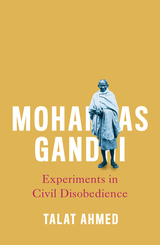
This biography examines his campaigns from South Africa to India to evaluate the successes and failures of non-violent resistance. Seventy years after his death, his legacy remains contested: was he a saint, revolutionary, class conciliator, or self-obsessed spiritual zealot?
The contradictions of Gandhi’s politics are unpicked through an analysis of the social forces at play in the mass movement around him. Entrusted to liberate the oppressed of India, his key support base were industrialists, landlords and the rich peasantry. Gandhi’s moral imperatives often clashed with these vested material interests, as well as with more radical currents to his left.
Today, our world is scarred by permanent wars, racism and violence, environmental destruction and economic crisis. Can non-violent resistance win against state and corporate power? This book explores Gandhi’s experiments in civil disobedience to assess their relevance for struggles today.
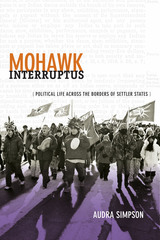
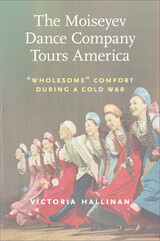
During the Cold War, dancers and musicians from the United States and the USSR were drawn into the battle for hearts and minds, crossing the Iron Curtain to prove their artistic and ideological prowess. After the passage of the Lacy-Zarubin Agreement, direct cultural exchange between the two superpowers opened up, and the Moiseyev Dance Company arrived in the United States in 1958. The first Soviet cultural representatives to tour America, this folk-dance troupe’s repertoire included dances from territories controlled or influenced by the USSR, including Uzbekistan, Crimea, and Poland.
Drawing on contemporary personal and published accounts, Victoria Hallinan explores why the dancers garnered overwhelming acclaim during their multicity tour and Ed Sullivan Show appearance. The “boy-meets-girl” love stories of the dances, and their idealized view of multiple Soviet cultures living together in harmony, presented a comforting image of post–World War II gender norms and race relations for audiences. Americans saw the dancers—their supposed enemies—as humans rather than agents of communist contagion.

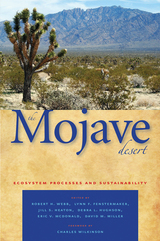
In The Mojave Desert, thirty-eight scientists who are all specialists in desert ecology address the threats to the Mojave, as well as the potential for natural recovery and active restoration. The contributing authors discuss the desert from several perspectives: regional threats such as expanding human populations, climate change, atmospheric nitrogen deposition, and invasive plants; the impact of roads in a desert ecosystem; soils and plant communities; shrinking aquifers; and the monitoring and sustainability of this fragile ecosystem. Finally, they discuss the importance of long-term data and the ways scientists and resource managers can interact to enhance understanding of the processes of change in the Mojave Desert and to advance the preservation and restoration of its precious resources.The Mojave Desert offers the fruits of extensive research in a number of disciplines and a sound assessment of the current state and possible future of one of the world's major deserts. As human intrusion and climate change increasingly threaten the Mojave's ecosystem, studies like this are essential in helping scientists, land managers, and the general public understand what is at risk and what can be done to preserve this austere and hauntingly beautiful region.

In a career that took him from the cotton fields of East Texas to the concert stage at Carnegie Hall and beyond, Lightnin’ Hopkins became one of America’s greatest bluesmen, renowned for songs whose topics effortlessly ranged from his African American roots to space exploration, the Vietnam War, and lesbianism, performed in a unique, eccentric, and spontaneous style of guitar playing that inspired a whole generation of rock guitarists. Hopkins’s music directly and indirectly influenced an amazing range of artists, including Jimi Hendrix, Stevie Ray Vaughan, Miles Davis, John Coltrane, Tom Waits, and Bob Dylan, as well as bands such as the Grateful Dead, Jefferson Airplane, and ZZ Top, with whom Hopkins performed.
Mojo Hand follows Lightin’ Hopkins’s life and music from the acoustic country blues that he began performing in childhood, through the rise of 1950s rock ’n’ roll, which nearly derailed his career, to his reinvention and international success as a pioneer of electric folk blues from the 1960s to the 1980s. The authors draw on 130 vivid oral histories, as well as extensive archival and secondary sources, to provide the fullest account available of the development of Hopkins’s music; his idiosyncratic business practices, such as shunning professional bookers, managers, and publicists; and his durable and indelible influence on modern roots, blues, rock ’n’ roll, singer-songwriter, and folk music. Mojo Hand celebrates the spirit and style, intelligence and wit, and confounding musical mystique of a bluesman who shaped modern American music like no one else.
A bold reconsideration of Hoodoo belief and practice
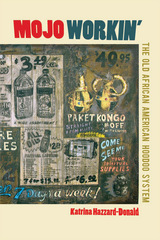
Katrina Hazzard-Donald explores African Americans' experience and practice of the herbal, healing folk belief tradition known as Hoodoo. She examines Hoodoo culture and history by tracing its emergence from African traditions to religious practices in the Americas. Working against conventional scholarship, Hazzard-Donald argues that Hoodoo emerged first in three distinct regions she calls "regional Hoodoo clusters" and that after the turn of the nineteenth century, Hoodoo took on a national rather than regional profile. The spread came about through the mechanism of the "African Religion Complex," eight distinct cultural characteristics familiar to all the African ethnic groups in the United States.
The first interdisciplinary examination to incorporate a full glossary of Hoodoo culture, Mojo Workin': The Old African American Hoodoo System lays out the movement of Hoodoo against a series of watershed changes in the American cultural landscape. Hazzard-Donald examines Hoodoo material culture, particularly the "High John the Conquer" root, which practitioners employ for a variety of spiritual uses. She also examines other facets of Hoodoo, including rituals of divination such as the "walking boy" and the "Ring Shout," a sacred dance of Hoodoo tradition that bears its corollaries today in the American Baptist churches. Throughout, Hazzard-Donald distinguishes between "Old tradition Black Belt Hoodoo" and commercially marketed forms that have been controlled, modified, and often fabricated by outsiders; this study focuses on the hidden system operating almost exclusively among African Americans in the Black spiritual underground.

This moving novel of obsession and difference is the latest masterwork from one of the greatest European writers working today, redolent with the power of desire and alive to the limits of our understanding of others.
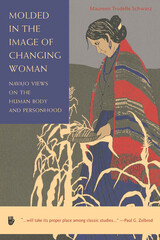
This book focuses on the complex interweaving of the cosmological, social, and bodily realms that Navajo people navigate in an effort alternately to control, contain, or harness the power manifested in various effects. Following the Navajo life-course from conception to puberty, Maureen Trudelle Schwarz explores the complex rules defining who or what can affect what or whom in specific circumstances as a means of determining what these effects tell us about the cultural construction of the human body and personhood for the Navajo.
Schwarz shows how oral history informs Navajo conceptions of the body and personhood, showing how these conceptions are central to an ongoing Navajo identity. She treats the vivid narratives of emergence life-origins as compressed metaphorical accounts, rather than as myth, and is thus able to derive from what individual Navajos say about the past their understandings of personhood in a worldview that is actually a viable philosophical system. Working with Navajo religious practitioners, elders, and professional scholars. Schwarz has gained from her informants an unusually firm grasp of the Navajo highlighted by the foregrounding of Navajo voices through excerpts of interviews. These passages enliven the book and present Schwarz and her Navajo consultants as real, multifaceted human beings within the ethnographic context.

The Molds and Man was first published in 1965. Minnesota Archive Editions uses digital technology to make long-unavailable books once again accessible, and are published unaltered from the original University of Minnesota Press editions.
This highly readable volume on a little-known but important subject has been widely used as a text and reference book by the student as well as the interested layman.
Molds, Mushrooms, and Mycotoxins was first published in 1975. Minnesota Archive Editions uses digital technology to make long-unavailable books once again accessible, and are published unaltered from the original University of Minnesota Press editions.
As Professor Christensen has made evident in his earlier books, including The Molds and Man,fungi are significantly interesting in their life-styles and in the many ways in which they affect man. Here he continues his exploration of the lives of the fungi and their relation to man, focusing on the harmful or dangerous effects which certain molds, mushrooms, and other fungi can have on human beings.
The first several chapters deal with fungi that are toxic in one way or another: either the fungi themselves are toxic when consumed, as with poisonous mushrooms and ergot, or the fungi secrete toxic compounds that diffuse into the substance on which they grow, making that substance toxic when eaten. He discusses hallucinogenic as well as poisonous mushrooms and provides extensive information about mycotoxins in human and animal foods, which are recently discovered health hazards.
Other chapters deal with fungus spores, which are a major cause of respiratory allergies, and with fungi which are predators or parasites of insects and nematodes. A chapter is devoted to fungus infections of man and animals, which at times constitute a serious public health problem. Another chapter discusses the nature, cause, and prevention of wood decay in trees and buildings. In a final chapter the author discusses some aspects of organic evolution in general as a background for presenting theories and facts on the evolution of fungi. He summarizes some of the ways in which fungi enter into our lives and economy, and looks to the role of fungi in the future.
The illustrations, in both black and white and color, show some of the fungi and processes that are discussed.

How computer animation technologies became vital visualization tools in the life sciences
Who would have thought that computer animation technologies developed in the second half of the twentieth century would become essential visualization tools in today’s biosciences? This book is the first to examine this phenomenon. Molecular Capture reveals how popular media consumption and biological knowledge production have converged in molecular animations—computer simulations of molecular and cellular processes that immerse viewers in the temporal unfolding of molecular worlds—to produce new regimes of seeing and knowing.
Situating the development of this technology within an evolving field of historical, epistemological, and political negotiations, Adam Nocek argues that molecular animations not only represent a key transformation in the visual knowledge practices of life scientists but also bring into sharp focus fundamental mutations in power within neoliberal capitalism. In particular, he reveals how the convergence of the visual economies of science and entertainment in molecular animations extends neoliberal modes of governance to the perceptual practices of scientific subjects. Drawing on Alfred North Whitehead’s speculative metaphysics and Michel Foucault’s genealogy of governmentality, Nocek builds a media philosophy well equipped to examine the unique coordination of media cultures in this undertheorized form of scientific media. More specifically, he demonstrates how governmentality operates across visual practices in the biosciences and the popular mediasphere to shape a molecular animation apparatus that unites scientific knowledge and entertainment culture.
Ultimately, Molecular Capture proposes that molecular animation is an achievement of governmental design. It weaves together speculative media philosophy, science and technology studies, and design theory to investigate how scientific knowledge practices are designed through media apparatuses.

In this comparative study of the development of regulatory policy for genetic engineering in the United States and the United Kingdom, Susan Wright analyzes government responses to the struggles among corporations, scientists, universities, trade unions, and public interest groups over regulating this new field. Drawing on archival materials, government records, and interviews with industry executives, politicians, scientists, trade unionists, and others on both sides of the Atlantic, Molecular Politics provides a comprehensive account of a crucial set of policy decisions and explores their implications for the political economy of science.
By combining methods from political science and the history of science, Wright advances a provocative interpretation of the evolution of genetic engineering policy and makes a major contribution to science and public policy studies.
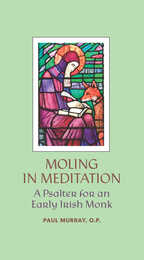
Jeremy Driscoll, O.S.B. Abbot of Mount Angel Abbey
Paul Murray’s poetry is always a miracle of compression and economy without ever seeming sparse or austere. These luminous meditative pieces have the richness that comes from an intent focus on the everyday and the material as carrying immeasurable grace.
Rowan Williams, Former Archbishop of Canterbury
The present work contains poems and meditations voiced by Paul Murray for Moling, an Irish monk and poet of the 7th century. In the Irish tradition, Moling is the figure who most resembles St Francis of Assisi. He is a man, a saint, whose presence resists linear history, who yet walks toward us in wonder and myth. In Moling in Meditation, the poems, though quiet in their form and expression, represent nevertheless a fresh and, at times, bold exploration of states of soul and psyche which, in almost every age, accompany the spiritual journey.
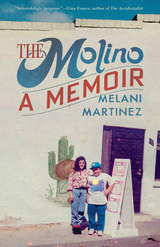
Set in one of Tucson’s first tamal and tortilla factories, The Molino is a hybrid memoir that reckons with one family’s loss of home, food, and faith.
Weaving together history, culture, and Mexican food traditions, Melani Martinez shares the story of her family’s life and work in the heart of their downtown eatery, El Rapido. Opened by Martinez’s great-grandfather, Aurelio Perez, in 1933, El Rapido served tamales and burritos to residents and visitors to Tucson’s historic Barrio Presidio for nearly seventy years. For the family, the factory that bound them together was known for the giant corn grinder churning behind the scenes—the molino. With clear eyes and warm humor, Martinez documents the work required to prepare food for others, and explores the heartbreaking aftermath of gentrification that forces the multigenerational family business to close its doors.
The Molino is also Martinez’s personal story—that of a young Tucsonense coming of age in the 1980s and ’90s. As a young woman she rejects the work in her father’s popular kitchen, but when the business closes, her world shifts and the family disbands. When she finds her way back home, the tortillería’s iconic mural provides a gateway into history and ruin, ancestry and sacrifice, industrial myth and artistic incarnation—revealing a sacred presence still alive in Tucson.
A must-read for foodies, history lovers, and anyone searching for spiritual truth in the desert, this is a story of belonging and transformation in the borderlands.
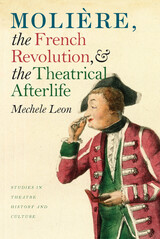
Leon begins by analyzing the performance of Molière’s plays during the Revolution, showing how his privileged position as royal servant was disrupted by the practical conditions of the revolutionary theatre. Next she explores Molière’s relationship to Louis XIV, Tartuffe, and the social function of his comedy, using Rousseau’s famous critique of Molière as well as appropriations of George Dandin in revolutionary iconography to discuss how Moliérean laughter was retooled to serve republican interests. After examining the profusion of plays dealing with his life in the latter years of the Revolution, she looks at the exhumation of his remains and their reentombment as the tangible manifestation of his passage from Ancien Régime favorite to new national icon.
The great Molière is appreciated by theatre artists and audiences worldwide, but for the French people it is no exaggeration to say that the Father of French Comedy is part of their national soul. By showing how he was represented, reborn, and reburied in the new France—how the revolutionaries asserted his relevance for their tumultuous time in ways that were audacious, irreverent, imaginative, and extreme—Leon clarifies the important role of theatrical figures in preserving and portraying a nation’s history.
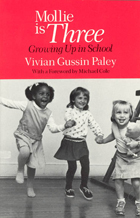
Mollie Is Three describes a year in the life of a little girl and her preschool classmates in a nursery school classroom run by Vivian Gussin Paley, whose groundbreaking ideas about the best way to teach young children continue to be influential today. We first encounter Mollie on the first day of school, just before her third birthday, and we follow her and her classmates for the next year. Alongside her, we go from confusion and uncertainty in new surroundings to growing understanding and confidence, as patterns emerge and Mollie begins to grasp their significance--and her teacher begins to understand how to track her growth and development.
Rather than offer an account of an idealized, all but imaginary child, Paley presents us with one actual kid, in all their complexity and confusion. The result is a landmark contribution to our understanding of child development and the role early education can play in fostering it.

Part I: Zoogeography of Southwestern Nearctic Mollusks
Integrates and evaluates information of interest to students of variation, evolution, zoogeography, and ecology of the fauna of the arid Southwest.
Part II: Annotated Check List of Recent Arizona Mollusks
Treatment of 173 valid species and 46 recognized subspecies gives nomenclature, type localities, distribution in Arizona, occurrence elsewhere in the Southwestern Molluscan Province, general Recent distribution, presence or absence in Late Cenozoic deposits, and synonymy.
The Moment Is Now includes the proceedings of The International Carl Bernhard Wadström Conference on Human Rights and the Abolition of Slavery, which was held in London on June 2–4, 2015. Accessing source materials in different languages that were previously scattered throughout English, French, and Swedish archives, the scholars involved have been able to successfully investigate Wadström’s work and influence in such diverse areas as economics, science, abolitionism, travel writing, African colonial history, Swedenborgianism, philanthropy, utopianism, and human rights.
As its title makes clear, this book not only offers a glimpse into a significant moment in history but also serves as a call to action and a primer to be used in the here and now—a guide from which we can learn how to deal with those horrific forms of human oppression that Wadström and others like him sought to bring to an end.
The Moment Is Now is the twenty-second installment in the Swedenborg Studies scholarly series.

The science of complexity accounts for that inscrutable mix of chaos and order that governs our natural world. Complexity explains how networks emerge and function, how species organize into ecosystems, how stars form into galaxies, and how just a few sequences of DNA can account for so many different life forms. Recently, the idea of complexity has taken the worlds of business and politics by storm. The concept is used to account for phenomena as varied as the behavior of the stock market, the response of voting populations, and the effects of risk management. Even Disney has used complexity theory to manage crowd control at its theme parks.
Given the startling development of new information technologies, we now live in a moment of unprecedented complexity, an era in which change occurs faster than our ability to comprehend it. With The Moment of Complexity, Mark C. Taylor offers a timely map for this unfamiliar terrain opening in our midst, unfolding an original philosophy through a remarkable synthesis of science and culture. According to Taylor, complexity is not just a breakthrough scientific concept, but the defining quality of the post-Cold War era. The flux of digital currents swirling around us, he argues, has created a new network culture with its own distinctive logic and dynamic.
Drawing on resources from information theory and evolutionary biology, Taylor explains the operation of complex adaptive systems in social and cultural processes and captures a whole new zeitgeist in the making. To appreciate the significance of our emerging network culture, he claims, we need not only to understand contemporary scientific and technological transformations, but also to explore the subtle influences of art, architecture, philosophy, religion, and higher education. The Moment of Complexity, then, is a remarkable work of cultural analysis on a scale rarely seen today. To follow its trajectory is to learn how we arrived at this critical moment in our culture, and to know where we might head in the twenty-first century.


"[A] dazzling book. . . . He has turned out one of the most powerful, as well as one of the most ambitious, art-historical works of the last decade." — Anthony Grafton, New Republic
"Rich and splendid. . . . Joseph Koerner's book is a dazzling display of scholarship, enfolding Durer's artistic achievement within the broader issues of self and salvation, and like [Durer's] great Self-
Portrait it holds up a mirror to the modern fable of identity." — Bruce Boucher, The Times
"Remarkable and densely argued." — Marcia Pointon, British Journal of Aesthetics
"Herculean and brilliant. . . . Will echo in fields beyond the Sixteenth-Century and Art History." — Larry Silver, Sixteenth Century Journal
"May be the most ambitious of recent American reflections on the mysteries of German art. His elegantly written book deals with the fateful period in the history of German art when it reached its highest point. . . . Offers deeper and more disturbing insights into German Renaissance art than most earlier scholarship." — Willibald Sauerlander, New York Review of Books

Available for the first time in English, Hungarian writer Edina Szvoren's short story collection gives voice to lives shaped by repression, cruelty, and silence.
Moments from the Life of a Hedgehog and Other Stories introduces English-language readers to the unsettling, exacting fiction of Hungarian author Edina Szvoren. Disturbing yet deliberately modest, these stories evoke a claustrophobic world of compromise and quiet desperation: fractured families warped by history and habit, boarding schools and workplaces ruled by cruelty, and domestic interiors heavy with unspoken dread. Set in the final decades of Hungarian socialism and its immediate aftermath, Szvoren’s sharply observed miniatures are animated by ever-shifting perspectives—outsiders, misfits, refusers—struggling to make sense of lives largely beyond their control. Grotesque without excess, absurd without relief, Szvoren’s narrative voices overlap and collide in ways that recall Franz Kafka and István Örkény. Yet her work remains firmly grounded in the body: queasy, intimate, and insistently physical, with a feminist and existential charge. Among polyester ornaments and unbearable family encounters, these stories offer a powerful, understated testimony to the unheard—and the nearly unhearable.

This book is the next best thing to sitting down with this master storyteller. Coauthor Doug Moe captures the joys of performing—whether at Camp Randall, in the Kohl Center, or along the Rose Bowl Parade route. Reading Leckrone’s story, one comes to understand the mix of discipline, showmanship, work ethic, warmth, toughness, wit, and musical skill that make him a Wisconsin treasure. Even for people who know Leckrone, Moments of Happiness details the stories behind the highlights and the unglamorous work that made his accomplishments possible. It both cements his legend and offers unprecedented insights into a career that will never be equaled.
Moments That Matter offers a fresh perspective on life’s later chapters, transforming them into opportunities for personal growth, meaning, and renewal. With warmth and wisdom, Rabbi Laura Geller and Rabbi Beth Lieberman explore the unique challenges and joys of midlife and beyond, from launching children to launching oneself anew, navigating retirement, downsizing and moving, facing illness and caregiving, and embracing love at any age. The chapters weave Jewish wisdom with practical rituals, interspersed with personal stories and ways to adapt each ceremony for a communal setting. Moments That Matter empowers readers to embrace these milestones with creativity and intention, offering tools to craft personalized and deeply moving rituals that honor the complexity of this rich stage of life.

The genesis for this volume was in the bombing of Japan during World War II, where the author, as a young boy, watched the bombers overhead, speculating about the lives of the pilots and their relationship with those huddled on the ground.
From this disturbing diorama, Professor Hiroshi Kojima, the translator of Martin Buber into Japanese, unfolds a new approach to Buber’s “I-Thou” relation, drawing upon insights from Husserl, Heidegger, and others in the tradition of continental philosophy to extend and deepen Buber’s thought.
In chapters that reflect upon a wide range of phenomena—from religion, science, and technology, to imagination, embodiment, and power—Professor Kojima articulates a conception of what it means to be a human being that stands as an alternative to atomism and alienation of the modern world. Analyses of haiku and other aspects of Japanese culture demonstrate how Kojima’s theory can illuminate the spiritual traditions of both East and West.
Original in its thought and revealing in its insight into Japanese thought and culture, Monad and Thou represents the life’s work of one of Japan’s great thinkers.
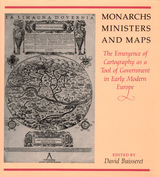
consolidate their power realized that better knowledge of
their lands would strengthen their control over them. By
1550, the cartographer's art had already become an important
instrument for bringing territories under the control of
centralized government; increasing governmental reliance on
maps stimulated the refinement of cartographic techniques
throughout the following century.
This volume, a detailed survey of the political uses of
cartography between 1400 and 1700 in Italy, France, England,
Poland, Austria, and Spain, answers these questions: When
did monarchs and ministers begin to perceive that maps could
be useful in government? For what purposes were maps
commissioned? How accurate and useful were they? How did
cartographic knowledge strengthen the hand of government?
The chapters offer new insights into the development of
cartography and its role in European history.
Contributors to the volume are John Marino, Peter
Barber, David Buisseret, Geoffrey Parker, James Vann, and
Michael J. Mikòs.

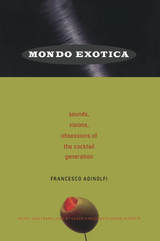
Adinolfi interviewed a number of exotica greats, and Mondo Exotica incorporates material from his interviews with Martin Denny, Esquivel, the Italian film composers Piero Piccioni and Piero Umiliani, and others. It begins with an extended look at the postwar popularity of exotica in the United States. Adinolfi describes how American bachelors and suburbanites embraced the Polynesian god Tiki as a symbol of escape and sexual liberation; how Les Baxter’s album Ritual of the Savage (1951) ushered in the exotica music craze; and how Martin Denny’s Exotica built on that craze, hitting number one in 1957. Adinolfi chronicles the popularity of performers from Yma Sumac, “the Peruvian Nightingale,” to Esquivel, who was described by Variety as “the Mexican Duke Ellington,” to the chanteuses Eartha Kitt, Julie London, and Ann-Margret. He explores exotica’s many sub-genres, including mood music, crime jazz, and spy music. Turning to Italy, he reconstructs the postwar years of la dolce vita, explaining how budget spy films, spaghetti westerns, soft-core porn movies, and other genres demonstrated an attraction to the foreign. Mondo Exotica includes a discography of albums, compilations, and remixes.
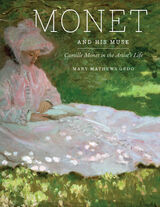
“The mourning never stops, it just changes.” (Edward Albee)
For Claude Monet (1840–1926), the founder of French Impressionist painting, these words are a fitting testament to his lifelong relationship with the female muse, most notably—and most hauntingly—with his first wife, the model Camille Doncieux.
For the esteemed clinical psychologist and art historian Mary Mathews Gedo, Monet and His Muse represents a project twenty years in the making. Artfully interweaving biographical insight with psychoanalytic criticism, Gedo takes us on an exploration of Claude Monet’s conflicted relationships with women, complete with exquisitely researched material never before understood about one of our most popular—and inimitable—artists. Beginning with Monet’s childhood, Gedo delves into his relationships with a distant, unreliable father and his beloved, doting mother—whose death when Monet was just sixteen, the author establishes, inspired a lifetime preoccupation with the sea, its lushly imagined flora, and the figurative landscapes Monet painted to such acclaim.
And then—Camille. Entering Monet’s life when he was still a young man, becoming first his model and then mistress and then—finally—his wife, Camille Doncieux always fulfilled the function of muse, even after her life had ended, as Monet not only painted her one last time on her deathbed, but preserved her memory through the gardens he planted at his home in Giverny. Demonstrating how Monet’s connections with women were exceedingly complex, fraught with abusive impulses and infantile longing, Gedo sensitively uses Monet and Camille as exemplars in order to explore links between artists and muses in our modern age.

"The Edwards's book is an indispensable guide to the policy reforms and mistakes that have taken the [Chilean] economy to its present state."—Philip L. Brock, Money, Credit, and Banking
"This book is a 'must' for anybody interested in development economies and the problems of liberalization."—Hansjorg Blochliger, Journal of International Economics
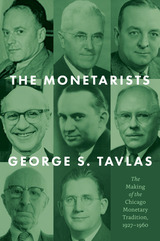
The Chicago School of economic thought has been subject to endless generalizations—and mischaracterizations—in contemporary debate. What is often portrayed as a monolithic obsession with markets is, in fact, a nuanced set of economic theories born from decades of research and debate. The Monetarists is a deeply researched history of the monetary policies—and personalities—that codified the Chicago School of monetary thought from the 1930s through the 1960s. These policies can be characterized broadly as monetarism: the belief that prices and interest rates can be kept stable by controlling the amount of money in circulation.
As economist George S. Tavlas makes clear, these ideas were more than just the legacy of Milton Friedman; they were a tradition in theory brought forth by a crucible of minds and debates throughout campus. Through unprecedented mining of archival material, The Monetarists offers the first complete history of one of the twentieth century’s most formative intellectual periods and places. It promises to elevate our understanding of this doctrine and its origins for generations to come.

A major, new, and comprehensive look at six decades of macroeconomic policies across the region
What went wrong with the economic development of Latin America over the past half-century? Along with periods of poor economic performance, the region’s countries have been plagued by a wide variety of economic crises. This major new work brings together dozens of leading economists to explore the economic performance of the ten largest countries in South America and of Mexico. Together they advance the fundamental hypothesis that, despite different manifestations, these crises all have been the result of poorly designed or poorly implemented fiscal and monetary policies.
Each country is treated in its own section of the book, with a lead chapter presenting a comprehensive database of the country’s fiscal, monetary, and economic data from 1960 to 2017. The chapters are drawn from one-day academic conferences—hosted in all but one case, in the focus country—with participants including noted economists and former leading policy makers. Cowritten with Nobel Prize winner Thomas J. Sargent, the editors’ introduction provides a conceptual framework for analyzing fiscal and monetary policy in countries around the world, particularly those less developed. A final chapter draws conclusions and suggests directions for further research.
A vital resource for advanced undergraduate and graduate students of economics and for economic researchers and policy makers, A Monetary and Fiscal History of Latin America, 1960–2017 goes further than any book in stressing both the singularities and the similarities of the economic histories of Latin America’s largest countries.
Contributors: Mark Aguiar, Princeton U; Fernando Alvarez, U of Chicago; Manuel Amador, U of Minnesota; Joao Ayres, Inter-American Development Bank; Saki Bigio, UCLA; Luigi Bocola, Stanford U; Francisco J. Buera, Washington U, St. Louis; Guillermo Calvo, Columbia U; Rodrigo Caputo, U of Santiago; Roberto Chang, Rutgers U; Carlos Javier Charotti, Central Bank of Paraguay; Simón Cueva, TNK Economics; Julián P. Díaz, Loyola U Chicago; Sebastian Edwards, UCLA; Carlos Esquivel, Rutgers U; Eduardo Fernández Arias, Peking U; Carlos Fernández Valdovinos (former Central Bank of Paraguay); Arturo José Galindo, Banco de la República, Colombia; Márcio Garcia, PUC-Rio; Felipe González Soley, U of Southampton; Diogo Guillen, PUC-Rio; Lars Peter Hansen, U of Chicago; Patrick Kehoe, Stanford U; Carlos Gustavo Machicado Salas, Bolivian Catholic U; Joaquín Marandino, U Torcuato Di Tella; Alberto Martin, U Pompeu Fabra; Cesar Martinelli, George Mason U; Felipe Meza, Instituto Tecnológico Autónomo de México; Pablo Andrés Neumeyer, U Torcuato Di Tella; Gabriel Oddone, U de la República; Daniel Osorio, Banco de la República; José Peres Cajías, U of Barcelona; David Perez-Reyna, U de los Andes; Fabrizio Perri, Minneapolis Fed; Andrew Powell, Inter-American Development Bank; Diego Restuccia, U of Toronto; Diego Saravia, U de los Andes; Thomas J. Sargent, New York U; José A. Scheinkman, Columbia U; Teresa Ter-Minassian (formerly IMF); Marco Vega, Pontificia U Católica del Perú; Carlos Végh, Johns Hopkins U; François R. Velde, Chicago Fed; Alejandro Werner, IMF.
"In a meticulously researched study, David Bearce demonstrates that, contrary to predictions, financial globalization has not resulted in a systematic convergence of national monetary policies. The book is a must-read for students of the political economy of international finance. Highlighting the critical role of partisan politics in determining policy outcomes, Bearce adds a new and important dimension to our understanding of the impacts of international capital mobility in the contemporary era."
—Benjamin Jerry Cohen, University of California, Santa Barbara
"Bearce offers a compelling analysis of partisan economic policy in an open economy. By analyzing both fiscal and monetary policies, Bearce extends our understanding of how the electoral imperative conditions policy behavior. His conclusions will have to be addressed in any
future debate about the topic."
—William Bernhard, University of Illinois at Urbana-Champaign
"Interest group divisions over exchange rates and macroeconomic policy have been at the center of international political economy research for about 20 years. Political scientists have studied these cleavages, focusing on the policy interests of various industry groups. On a separate but parallel track, another group of researchers explored the relationship between partisan politics and macroeconomic policy choices. In this exceptionally well researched book, Bearce integrates these two analytical traditions. Noting that industry groups are typically important organized constituents in left-wing and right-wing political parties, Bearce demonstrates how macroeconomic policy outcomes in advanced countries vary systematically with the alternation of political parties in government."
—J. Lawrence Broz, University of California, San Diego
David H. Bearce is Assistant Professor of Political Science at the University of Pittsburgh.
READERS
Browse our collection.
PUBLISHERS
See BiblioVault's publisher services.
STUDENT SERVICES
Files for college accessibility offices.
RECENTLY PUBLISHED






UChicago Accessibility Resources
home | accessibility | search | about | contact us
BiblioVault ® 2001 - 2026
The University of Chicago Press