
 A SCHOLARLY BOOK REPOSITORY

MP3s are products of compression, a process that removes sounds unlikely to be heard from recordings. Although media history is often characterized as a progression toward greater definition, fidelity, and truthfulness, MP3: The Meaning of a Format illuminates the crucial role of compression in the development of modern media and sound culture. Taking the history of compression as his point of departure, Jonathan Sterne investigates the relationships among sound, silence, sense, and noise; the commodity status of recorded sound and the economic role of piracy; and the importance of standards in the governance of our emerging media culture. He demonstrates that formats, standards, and infrastructures—and the need for content to fit inside them—are every bit as central to communication as the boxes we call "media."
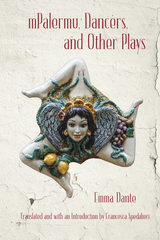
This exquisite first English translation of Emma Dante’s work enables English-speaking readers, theatre scholars, and directors alike to encounter character-driven “civic theatre” with its portraits of individuals existing at the fringes of Italy. Ultimately, it allows us to “listen” to those who are not given a voice anywhere else.

Told with Urs Widmer’s signature humor, genius, and lively imagination, Mr Adamson is a superb story and a spellbinding book. With its vitality and zest for life, it manages to hold at bay that scandal we must all face in our lives: death.
Praise for Widmer
“One of the best representatives of Swiss literature.”—Le Monde

Tom Gola is a Philadelphia Big Five basketball icon. He led La Salle to the NIT championship in 1952 and the NCAA championship in 1954, and holds the NCAA record for most rebounds in a career. Gola also helped the Philadelphia Warriors win the NBA championship as a rookie in 1956 and was named an All-Star five times before retiring in 1966. But Gola also had many amazing achievements as a coach; his La Salle Explorer teams were a large part of the national basketball landscape. He was inducted into the Naismith Memorial Basketball Hall of Fame in 1976.
In Mr. All-Around, avid sports fan and reporter David Grzybowski provides a definitive biography of Gola. He uses exclusive interviews he conducted with Gola in 2013 and features anecdotes by many figures of Philadelphia and basketball history, including John Cheney, Fran Dunphy, and Lionel Simmons.
After the NBA, Gola transitioned to a second career as a politician, serving as Pennsylvania State Representative and Philadelphia City Controller. His dedication to public service involved joining politician Arlen Specter on a campaign that revolutionized political marketing within Philadelphia. Mr. All-Around is an affectionate testament to the life, career, and legacy of one of Philadelphia’s most beloved sports legends.
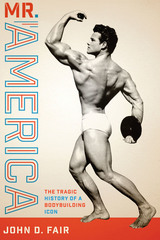
For most of the twentieth century, the “Mr. America” image epitomized muscular manhood. From humble beginnings in 1939 at a small gym in Schenectady, New York, the Mr. America Contest became the world’s premier bodybuilding event over the next thirty years. Rooted in ancient Greek virtues of health, fitness, beauty, and athleticism, it showcased some of the finest specimens of American masculinity. Interviewing nearly one hundred major figures in the physical culture movement (including twenty-five Mr. Americas) and incorporating copious printed and manuscript sources, John D. Fair has created the definitive study of this iconic phenomenon.
Revealing the ways in which the contest provided a model of functional and fit manhood, Mr. America captures the event’s path to idealism and its slow descent into obscurity. As the 1960s marked a turbulent transition in American society—from the civil rights movement to the rise of feminism and increasing acceptance of homosexuality—Mr. America changed as well. Exploring the influence of other bodily displays, such as the Mr. Universe and Mr. Olympia contests and the Miss America Pageant, Fair focuses on commercialism, size obsession, and drugs that corrupted the competition’s original intent. Accessible and engaging, Mr. America is a compelling portrayal of the glory days of American muscle.
- Finalist for the AEJMC Tankard Book Award
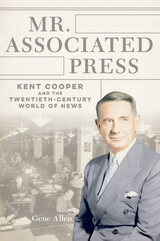
Allen critically assesses the many new approaches and causes that Cooper championed: introducing celebrity news and colorful features to a service previously known for stodgy reliability, pushing through disruptive technological innovations like the instantaneous transmission of news photos, and leading a crusade to bring American-style press freedom--inseparable from private ownership, in Cooper’s view--to every country. His insistence on truthfulness and impartiality presents a sharp contrast to much of today’s fractured journalistic landscape.
Deeply researched and engagingly written, Mr. Associated Press traces Cooper’s career as he built a new foundation for the modern AP and shaped the twentieth-century world of news.
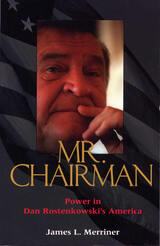
The story of Dan Rostenkowski’s rise and fall provides one of the keys to how power is sought, won, exercised, and distributed in contemporary America, argues political journalist James L. Merriner.
A literal son of the Chicago political machine, Rostenkowski was installed in politics by his father, Alderman Joseph P. Rostenkowski, and by his mentor, Mayor Richard I. Daley. In his thirty-six year congressional career, he served nine presidents, forming close friendships with many of them. His legislative masterpiece was the 1986 tax reform law. Eight years later, he was indicted on federal charges for misusing tax dollars and campaign funds.
In his dealings with the man who tumbled dramatically from his high position as chair of the powerful House Ways and Means Committee all the way down to a cell in a federal prison in Wisconsin, Merriner finds Rostenkowski candid, straightforward, and authentic— "except when it came to his own finances."
Rostenkowski is not a complex man in need of psychoanalysis on the part of his biographer, and Merriner does not indulge in much of that. Purely, simply, and openly, Rostenkowski wanted power. He wanted wealth. He got both, and Merriner shows us how.
Merriner sees mythic qualities in Rostenkowski, characterizing him as the "tall bold slugger" of Carl Sandburg’s 1916 poem about Chicago. Noting that this master politician climbed to fantastic peaks only to fall hard and fast, Merriner points out that "Rostenkowski’s life ascended from power in the political science sense to tragedy in the classical sense." The Justice Department and the electorate sacrificed Rostenkowski as an embodiment of the excesses of big government. Like the Greek chorus of tragedy, major media reported the scandal to the masses.
Yet Merriner does not strain to make his subject fit a classical mold. He tells instead the "story of a great man who was also a little man, a statesman and a crook, an emotional man, an American original." This was also a man unbeaten by his troubles, a man who emerged from prison unabashed.
This illustrated biography is not authorized by Rostenkowski, who declined Merriner’s interview requests after June 1995. His sources are the public record, previous interviews with Rostenkowski and with many other sources before and after 1995, and his own political acumen gained from decades on the political scene.
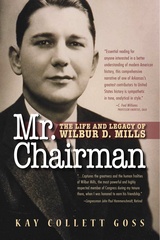
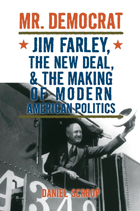
Mr. Democrat tells the story of Jim Farley, Franklin D. Roosevelt's campaign manager. As party boss, Farley experienced unprecedented success in the New Deal years. And like his modern counterpart Karl Rove, Farley enjoyed unparalleled access and power. Unlike Rove, however, Farley was instrumental in the creation of an overwhelming new majority in American politics, as the emergence of the New Deal transformed the political landscape of its time.
Mr. Democrat is timely and indispensable not just because Farley was a fascinating and unduly neglected figure, but also because an understanding of his career advances our knowledge of how and why he revolutionized the Democratic Party and American politics in the age of the New Deal.
Daniel Scroop is Lecturer in American History, University of Liverpool School of History.

As Charlie McCarthy is to Edgar Bergen, so is Martin T. Dooley to newspaper humorist Finley Peter Dunne. Mr. Dooley in Peace and in War, originally published in 1898, collects brief, humorous pieces Dunne wrote for the Chicago Evening Post and the Chicago Journal. In an Irish-American dialect as thick as the foam on a pint of stout, Mr. Dooley and his friends discuss the military "sthrateejy" for American action in Cuba, "iliction" day shenanigans, Queen Victoria's jubilee, the "new woman," and the strange American sport of football, in which a player puts "a pair iv matthresses on his legs, a pillow behind, [and] a mask over his nose" and tries to kill his fellow men. Through his tall tales and speculations, Mr. Dooley reveals the pleasure and pain of being Irish in Chicago at the turn of the twentieth century.
Clothed in the charming hyperbole and mislocution of the unflappable Mr. Dooley, Dunne's incisive social criticism flies unerringly to the target, exposing prejudice, hypocrisy, insensitivity, and plain old-fashioned humbug.
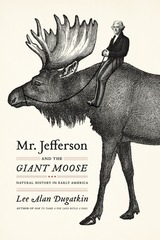
In the years after the Revolutionary War, the fledgling republic of America was viewed by many Europeans as a degenerate backwater, populated by subspecies weak and feeble. Chief among these naysayers was the French Count and world-renowned naturalist Georges-Louis Leclerc de Buffon, who wrote that the flora and fauna of America (humans included) were inferior to European specimens.
Thomas Jefferson—author of the Declaration of Independence, U.S. president, and ardent naturalist—spent years countering the French conception of American degeneracy. His Notes on Virginia systematically and scientifically dismantled Buffon’s case through a series of tables and equally compelling writing on the nature of his home state. But the book did little to counter the arrogance of the French and hardly satisfied Jefferson’s quest to demonstrate that his young nation was every bit the equal of a well-established Europe. Enter the giant moose.
The American moose, which Jefferson claimed was so enormous a European reindeer could walk under it, became the cornerstone of his defense. Convinced that the sight of such a magnificent beast would cause Buffon to revise his claims, Jefferson had the remains of a seven-foot ungulate shipped first class from New Hampshire to Paris. Unfortunately, Buffon died before he could make any revisions to his Histoire Naturelle, but the legend of the moose makes for a fascinating tale about Jefferson’s passion to prove that American nature deserved prestige.
In Mr. Jefferson and the Giant Moose, Lee Alan Dugatkin vividly recreates the origin and evolution of the debates about natural history in America and, in so doing, returns the prize moose to its rightful place in American history.
Late in his career, however, Black's commitment to literalism and intent led him to assume apparently conservative positions in civil liberties cases. In an era characterized by growing acceptance of the belief that judges should adapt the Constitution to changing social and ethical perceptions, many came to regard Black's position as unrealistic and irrelevant.
Tinsley E. Yarbrough analyzes Black's judicial and constitutional philosophy, as well as his approach to specific cases, through the eyes of Black's critics (such as Justices Frankfurter and Harlan) and through an assessment of scholarly opinion of his jurisprudence. The result is a stimulating and provocative addition to the study of Justice Black and the Supreme Court.
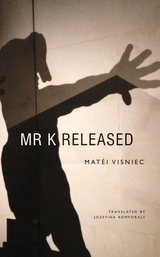
One day, Mr. K finds himself unexpectedly released. Unable to comprehend his sudden liberation, he becomes traumatized by the realities of freedom—more so than the familiar trauma of captivity or imprisonment. In the hope of obtaining some clarification, Mr. K keeps waiting for an appointment with the prison governor, however, their meeting is constantly being delayed. During this endless process of waiting, Mr. K gets caught up in a clinical exploration of his physical surroundings. He does not have the courage or indeed inclination to leave, but can move unrestricted within the prison compound, charting endless series of absurd circles in which readers might paradoxically recognize themselves.
Offering rare insight into the complexities of Indian middle-class society, R. K. Narayan traces life in the fictional town of Malgudi. The Dark Room is a searching look at a difficult marriage and a woman who eventually rebels against the demands of being a good and obedient wife. In Mr. Sampath, a newspaper man tries to keep his paper afloat in the face of social and economic changes sweeping India. Narayan writes of youth and young adulthood in the semiautobiographical Swami and Friends and The Bachelor of Arts. Although the ordinary tensions of maturing are heightened by the particular circumstances of pre-partition India, Narayan provides a universal vision of childhood, early love and grief.
"The experience of reading one of his novels is . . . comparable to one's first reaction to the great Russian novels: the fresh realization of the common humanity of all peoples, underlain by a simultaneous sense of strangeness—like one's own reflection seen in a green twilight."—Margaret Parton, New York Herald Tribune
"Narayan's limits are meticulously imposed and observed but his humor and compassion come from a deep universal well, with the result that he has transformed his imaginary township of Malgudi into a bubbling parish of the world."—Christopher Wordsworth, Observer
Finalist, 2017 Miller Williams Poetry Prize, edited by Billy Collins
“Forces an eye-opening change in perspective.”
—Billy Collins
In Mr. Stevens’ Secretary, a fictional assistant to Wallace Stevens juggles her roles as a mother, a wife, a believer, and a working woman. Privy at times to the famous poet’s personal life, the secretary must balance her curiosity about Stevens with her commitment to her husband, her faith, and the life she desires.
This vivid and compelling character struggles with fears of mental illness and the challenges of working for a prominent, reserved man, all while adjusting to new environs. She leaves her home, and her job, as she contemplates whether her marriage is worth saving and if she can reconcile the Baptist faith of her upbringing with the questions raised by her new place in the world. Throughout, we are witness to her complex relationship with the famous modernist poet, and with writing itself.

“Mr. Taxpayer versus Mr. Tax Spender” presents a comprehensive overview of these grassroots taxpayers’ leagues beginning in the 1860s and shows how they evolved during their heyday in the 1930s. Linda Upham-Bornstein chronicles the ways these taxpayers associations organized as well as the tools they used—constructive economy, political efforts, tax strikes, and tax revolt through litigation—to achieve their objectives.
Taxpayer activity was a direct consequence of—and a response to—the economic crisis of the Great Depression and the expansion of the size and scope of government. “Mr. Taxpayer versus Mr. Tax Spender” connects collective tax resistance in the 1930s to the populist tradition in American politics and to other broad impulses in American political and legal history.
Collected in this thought-provoking and unique work are the considerations and provocations of this squat, park-bench philosopher, giving us a volume of truths and conversations that are clear-cut, skeptical, and fiercely illuminating.
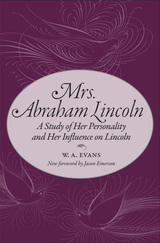
First published in 1932, this was the first thoroughly researched biography of Mary Lincoln ever written, and it remains the most balanced and complete work on this controversial First Lady. Author W. A. Evans challenges the disparaging views of Mary Lincoln that were generally accepted at the time, offering a comprehensive and informed look at a woman whose physical and mental health problems have often been misconstrued or overlooked by other biographers. Evans conducted extensive research, interviewing Mrs. Lincoln’s family members, seeking advice and assistance from numerous Lincoln scholars and historians, scouring thousands of pages of contemporary newspapers and primary resources, reviewing correspondence Mary wrote during her stay at Bellevue Place sanitarium, and consulting with several medical experts. The result of all this research is an objective and detailed portrait of Mrs. Lincoln and her influence on her husband that still has a great deal of historical value for readers today.
A new foreword by Jason Emerson, author of The Madness of Mary Lincoln, provides biographical information on Evans and background on the origins of the book and its reception and influence. Finally back in print, this classic biography is essential reading for all with an interest in the Lincoln family.
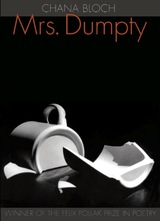
The poems in Mrs. Dumpty are about “a great fall,” the dissolution of a long and loving marriage, but they are not simply documentary or elegiac. What interests Chana Bloch is the inner life: how we are formed by our losses and our parents’ losses, how we learn what we need to know through our intuitions and confusions, how we deny and delay and finally discover who we are.
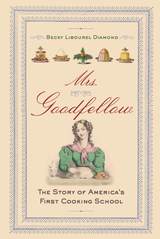
Recovering the Life and Influence of the “Mother of American Cooking,” the Woman Who Changed the Way We Learn How to Prepare Meals
In Philadelphia during the first decades of the nineteenth century, a widow, Mrs. Elizabeth Goodfellow, ran a popular bakery and sweet shop. In addition to catering to Philadelphia’s wealthy families and a reputation of having the finest desserts and sweet dishes in the young country, her business stood out from every other establishment in another way: she ran a small school to learn the art of cooking, the first of its kind in America. Despite her fame—references to her cooking as a benchmark abound in the literature of the period—we know very little about who she was. Since she did not keep a journal and never published any of her recipes, we have to rely on her students, most notably Eliza Leslie, who fortunately recorded many of Goodfellow’s creations and techniques. Goodfellow is known to have made the first lemon meringue pie and for popularizing regional foods, such as Indian (corn) meal. Her students also recall that Mrs. Goodfellow stressed using simple wholesome ingredients that were locally grown, presaging modern culinary fashion.
By assembling the many parts of this puzzle from old recipe books, advertisements, letters, diaries, genealogical records, and other primary sources, researcher and writer Becky Diamond has been able to provide a more complete portrait of this influential figure in cooking history. Mrs. Goodfellow: The Story of America’s First Cooking School begins with what we know about Elizabeth Goodfellow—where she was born, her husbands, her children, where her shop was located. We then travel back in time to discover the kinds of foods that would have been available to Goodfellow and how she may have used them. The book next turns to the rise of both commercial eating establishements and books of recipes. From here, the author explains the rapid expansion of cooking schools, such as the New York Cooking Academy and the Boston Cooking School, made famous through its association with Fannie Farmer, and ends with a discussion of the role of celebrity chefs. Thoroughly researched and including a range of authentic recipes, Mrs. Goodfellow is a delicious exploration of the life and legacy of one of America’s most influential cooks.
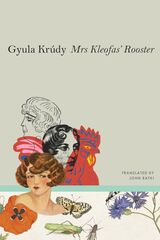
Mrs Kleofas’ Rooster brings together three captivating novellas by Gyula Krúdy, originally written in the 1920s and now available in English for the first time. Each story centers on a woman protagonist: a timeless adventuress, a resilient single mother, and a seductive Budapest femme fatale, respectively. In the title novella, a roguish narrator listens to the thrilling life story of an ageless, mysterious woman whose journey takes her from a childhood of suffering to a career as a cunning accomplice in daring schemes. The next story, NN, follows the life of a steadfast single mother, Juliska, amid the rhythms of village life. In Autumn Meeting, Krudy’s sharp wit unfolds through Rizili, a charming yet ruthless socialite who leads a suspended jockey on an intoxicating night through Budapest’s City Park.



Today, when a single person can turn an airplane into a guided missile, no one objects to rigorous security before flying. But can the state simply declare some people too dangerous to travel, ever and anywhere? Does the Constitution protect a fundamental right to travel? Should the mode of travel (car, plane, or boat) or itinerary (domestic or international) make a constitutional difference? This book explores the legal and policy questions raised by government travel restrictions, from passports and rubber stamps to computerized terrorist watchlists.
In tracing the history and scope of U.S. travel regulations, Jeffrey Kahn begins with the fascinating story of Mrs. Ruth Shipley, a federal employee who almost single-handedly controlled access to passports during the Cold War. Kahn questions how far national security policies should go and whether the government should be able to declare some individuals simply too dangerous to travel. An expert on constitutional law, Kahn argues that U.S. citizens’ freedom to leave the country and return is a fundamental right, protected by the Constitution.
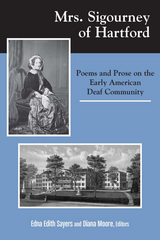
Lydia Huntley was born in 1791 in Norwich, CT, the only child of a poor Revolutionary war veteran. But her father’s employer, a wealthy widow, gave young Lydia the run of her library and later sent her for visits to Hartford, CT. After teaching at her own school for several years in Norwich, Lydia returned to Hartford to head a class of 15 girls from the best families. Among her students was Alice Cogswell, a deaf girl soon to be famous as a student of Thomas Hopkins Gallaudet and Laurent Clerc.
Lydia’s inspiration came from a deep commitment to the education of girls and also for African American, American Indian, and deaf children. She left teaching to marry Charles Sigourney, then turned to writing to support her family, publishing 56 books, 2,000 magazine articles, and popular poetry. Lydia Sigourney never abandoned her passion for deaf education, remaining a supporter of Gallaudet’s school for the deaf until her death. Yet, her contributions to deaf education and her writing have been forgotten until now.
All of Lydia Sigourney’s of Lydia Sigourney’s work on the nascent Deaf community is presented in this new volume. Her writing intertwines her mastery of the sentimentalism form popular in her day with her sharp insights on the best ways to educate deaf children. In the process, Mrs. Sigourney of Hartford reestablishes her rightful place in history.

Since Marvel launched Ms. Marvel in 1977 with the tagline "This female fights back!", the hero has spent nearly five decades battling enemies both external and internal. She's traded blows with a rogues' gallery that includes M.O.D.O.K., Mystique, Hecate, Ronan, and Tiger Shark—all while contending with an unforgiving costume, a sexist boss in J. Jonah Jameson, and the anxieties of being marketed as "This Woman, This Warrior" in an era of second-wave feminism. Yet for all these outside threats, Ms. Marvel's most persistent foe has always been herself. Carol Danvers wrestled with a fractured psyche before facing down alternate-dimension versions of her own identity and the Dark Avenger imposter Karla Sofen. Sharon Ventura battled between two bodies—one she wanted, one society approved of. And when Kamala Khan took up the mantle, she inherited this same war with the self, confronting doppelgängers, the entity Stormranger, and even her own reanimated corpse. This book traces the evolving history of the Ms. Marvel title—from its complicated debut as a feminist icon who often undercut her own feminist and heroic ideals, through its passage from Danvers to Khan—arguing that the character's deepest and most enduring conflict has never been with a supervillain, but with herself.
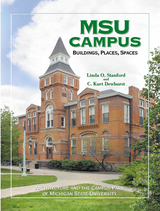
Since its founding in 1855, Michigan State University has emerged from its modest “oak opening” in the wilderness to become a large campus park. This story reflects the commitment of campus leaders since the nineteenth century to develop MSU as a beautiful and educational public resource, as well as a demonstration model, befitting the premier land-grant institution in the United States.
From early landscape gardeners influenced by Ossian Simonds and the nationally known Olmsted Brothers, to the vision of President John Hannah, the consistent intent has been to interrelate architecture and the campus park. The result is a campus whose development reflects major trends in American architecture and whose contributors include local, regional, and nationally known architectural firms. In MSU Campus—Buildings, Places, Spaces, two Michigan State University professors provide a history and way of seeing the campus by offering eight areas to explore.
Each area includes selected historical sites or markers, public art, and natural locations that complement more than one hundred extant buildings, complete with individual stylistic and historical descriptions and photographs. Historical facts about Michigan State University, suggestions for further reading, and an ample glossary of architectural terms make this book a resource for anyone who is interested in Michigan State University, art and architectural history, Michigan history, and visual culture.
The book will continue to serve as a documentary reminder of MSU’s heritage and vital institutional future long after the 2005 sesquicentennial.


In Much Ado About Nothing, a series of miscommunications and misunderstandings spiral out of control, leaving two sets of lovers to untangle their words and their hearts. Ranjit Bolt, an accomplished translator, takes on Shakespeare’s well-loved comedy to update much of the obscure language while maintaining the humor, characterization, and wit that audiences know and love. For modern readers, Beatrice, Benedick, Hero, and Claudio are just as enchanting as always—and perhaps funnier than ever before.
This translation of Much Ado About Nothing was written as part of the Oregon Shakespeare Festival’s Play On! project, which commissioned new translations of thirty-nine Shakespeare plays. These translations present work from “The Bard” in language accessible to modern audiences while never losing the beauty of Shakespeare’s verse. Enlisting the talents of a diverse group of contemporary playwrights, screenwriters, and dramaturges from diverse backgrounds, this project reenvisions Shakespeare for the twenty-first century. These volumes make these works available for the first time in print—a new First Folio for a new era.
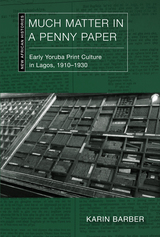
A groundbreaking study of Yoruba-language print culture in colonial Lagos
Much Matter in a Penny Paper offers the first in-depth exploration of the emergence of an African-language print culture in early twentieth-century Lagos, Nigeria. Focusing on the 1910s and 1920s—a period of rapid experimentation and innovation—Karin Barber examines the rise of Yoruba-language newspapers and the vibrant civic sphere they helped create.
The 1910s was notable for an upsurge of local Yoruba-language history books, and during the 1920s entrepreneurial editors and writers launched five Yoruba-language weeklies in quick succession. These publications drew in readers beyond the educated elite, expanding public discourse and experimenting with new genres of writing. From moralizing pamphlets and dramatic sketches to serialized narratives voiced by women, Yoruba print producers reimagined oral and written traditions, blending popular songs, anecdotes, and poetic forms into a dynamic new medium.
This book is about not only what was printed but also how and why. It investigates the material practices of print production, the motivations of its creators, and the expectations of its audiences. Drawing on editorials, reader correspondence, and other paratextual commentary, it reveals how Yoruba writers and readers understood the role of print in capturing the present, preserving the past, projecting the wisdom of the day forward for the benefit of future generations, and generating deep Yoruba texts rich in poetic energy.
Through detailed portraits of key figures—editors, pamphleteers, and a mysterious oral historian—Barber traces the interconnections between publications and genres, showing how they formed an active bilingual sphere of communication. The interplay between Yoruba- and English-language media, as well as the creative exploitation of both languages, emerges as a defining feature of this period’s print culture. By treating the Yoruba print archive as a “transcript of emergence,” this study offers new insights into how cultural innovations take shape. It is essential reading for scholars of African history, media studies, sociolinguistics, and print culture.
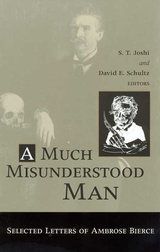


From 1902, when it latched onto such mass circulation magazines as Collier's and McClure's, until it merged into the Progressive movement in 1912, muckraking relentlessly pricked the nation's social conscience by exposing the abuses of industry and politics. Ranging in tone from the scholarly to the sensational, muckraking articles attacked food adulteration, unscrupulous insurance practices, fraudulent claims for patent medicines, and links between government and vice. When muckrakers raised their voices against child labor, graft, monopoly, unsafe mill conditions, and the white slave trade of poor immigrant girls, they found a receptive audience. "I aimed at the public's heart," wrote Upton Sinclair about The Jungle, "and by accident I hit it in the stomach."
Gathering the most significant pieces published during the heyday of the muckraking movement, The Muckrakers brings vividly to life this unique era of exposure and self-examination. For each article, Arthur and Lila Weinberg provide concise commentary on the background of its subject and the specific and long-range repercussions of its publication. The volume features the work of both journalists and fiction writers, including Ida Tarbell, Lincoln Steffens, Upton Sinclair, Ray Stannard Baker, Samuel Hopkins Adams, Thomas W. Lawson, Charles Edward Russell, and Mark Sullivan.
Eloquent and uncompromising, the muckrakers shocked America from a state of lethargy into Progressive reform. This generous volume vividly captures the urgency of their quest.

An award-winning poet writing through violence, solace, and hope
Luiza Flynn-Goodlett’s Mud in Our Mouths illuminates how we are all enmeshed in a web of violence and love. As the speaker of the collection drives cross-country to visit her family of origin in Tennessee, she reckons with the tensions between her current and past selves and the many ways violence—interpersonal, societal, and environmental—has shaped her life. She struggles to find meaning, questioning the ethics of locating faith in a natural world she is unintentionally destroying, and grapples with her complicity in systems of power and oppression as a white Southern woman. Ultimately, she rejects the idea of genetic family as a place of solace; instead, she cleaves to the liberation and joy of connections forged outside those strictures, where intimacy is freely chosen rather than preordained.

William Bradford Huie’s first novel, Mud on the Stars, is largely autobiographical and is set in the years 1929-1942. As in many of his later books, the theme here is of the education of the inexperienced youth, which is, after all, the quintessential American story. Drawing on his own boyhood, Huie gives the reader a detailed account of rural life and race relations in the Tennessee Valley in the early years of this century, including a vivid picture of college life at The University of Alabama during the Great Depression. Through a careful weaving of characters and events, fact and fiction, Huie’s novel captures the tumultuous times before World War II in the urban South, times of social unrest and testing of new political ideologies. The book’s publication in 1942 was a huge financial success, by the economic standards of the day, and not only brought Huie the acclaim his talent warranted but also focused an approving national spotlight on this prolific Alabama writer.
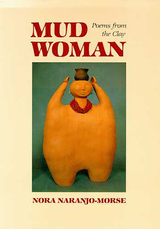
Nineteenth- and twentieth-century Colombian elite intellectuals, Appelbaum contends, mapped race onto their mountainous topography by defining regions in racial terms. They privileged certain places and inhabitants as white and modern and denigrated others as racially inferior and backward. Inhabitants of Riosucio, however, elaborated local narratives about their mestizo and indigenous identities that contested the white mystique of the Coffee Region. Ongoing violent conflicts over land and politics, Appelbaum finds, continue to shape local debates over history and identity. Drawing on archival and published sources complemented by oral history, Muddied Waters vividly illustrates the relationship of mythmaking and racial inequality to regionalism and frontier colonization in postcolonial Latin America.
With stories, encounters, and anecdotes as well as methodological reflections, Nagar grapples with the complexity of working through solidarities, responsibility, and ethics while involved in politically engaged scholarship. Experiences that range from the streets of Dar es Salaam to farms and development offices in North India inform discussion of the labor and politics of coauthorship, translation, and genre blending in research and writing that cross multiple--and often difficult--borders. The author links the implicit assumptions, issues, and questions involved with scholarship and political action, and explores the epistemological risks and possibilities of creative research that bring these into intimate dialogue
Daringly self-conscious, Muddying the Waters reveals a politically engaged researcher and writer working to become ""radically vulnerable,"" and the ways in which such radical vulnerability can allow a re-imagining of collaboration that opens up new avenues to collective dreaming and laboring across sociopolitical, geographical, linguistic, and institutional borders.
A spirited reevaluation of the public moralists who shaped public policy in nineteenth-century America, Mugwumps: Public Moralists of the Gilded Age provides a refreshing look at a group of Americans whose importance to the history of our country has commonly been dismissed.
A public interest group that labeled the generation following the American Civil War as the "Gilded Age," Mugwumps were college-educated individuals who lived the lessons of their moral philosophy—Christian values, republican virtue, and classical liberalism. Tracing Mugwump values back before the term was commonly used, Tucker defines these liberals as benevolent and altruistic, active campaigners against slavery and imperialism, and for sound money, lower tariffs, and civil service reform. The earliest Mugwumps took on the self-assigned task of advocating public principles over private interests.
Evaluations of these public moralists during the 1950s and 1960s, however, did not paint the Mugwumps in so positive a light. Awash in the popular New Deal public policies that advocated positive government intervention and regulation in the economy, these studies dismissed Mugwump liberalism as outdated. More specifically, the reformers were criticized as being self-interested failures.
Tucker obliges readers to look beyond such dismissals to the history and accomplishments of Mugwumps as a whole. Unlike previous historians, Tucker examines the antebellum roots of the Mugwumps and follows their ever-increasing participation in American government throughout the nineteenth century. Tucker portrays Mugwumps not as selfish agents of the middle class but as fascinating practitioners of eighteenth-century public virtue and nineteenth-century social science.
This book forcefully challenges previous studies on the Mugwumps and restores these public moralists to the mainstream of nineteenth-century American history. Their concerns for morality and free-market economics are again fashionable in contemporary politics and deserving of fresh attention from both the general reader and the scholar.
Muhammad Ali (born Cassius Clay) has always engendered an emotional reaction from the public. From his appearance as an Olympic champion to his iconic status as a national hero, his carefully constructed image and controversial persona has always been intensely scrutinized. In Muhammad Ali, Michael Ezra considers the boxer who calls himself “The Greatest” from a new perspective. He writes about Ali’s pre-championship bouts, the management of his career and his current legacy, exploring the promotional aspects of Ali and how they were wrapped up in political, economic, and cultural “ownership.”
Ezra’s incisive study examines the relationships between Ali’s cultural appeal and its commercial manifestations. Citing examples of the boxer’s relationship to the Vietnam War and the Nation of Islam—which serve as barometers of his “public moral authority”—Muhammad Ali analyzes the difficulties of creating and maintaining these cultural images, as well as the impact these themes have on Ali’s meaning to the public.

The early twenty-first century has experienced an unrivaled dissemination of information and misinformation about Islam, its prophet Muhammad, and its followers, largely facilitated by the fact that the tragedy of 9/11 roughly coincided with the advent of the digital age. In the first collection of its kind, Ruqayya Khan has compiled essays that treat Muhammad and the core elements of Islam as focal points in an exploration of how the digital era—including social media and other expressions—have both had an effect on and been affected by Islam.
Scholars from a variety of fields deal with topics such as the 2005 cartoon controversy in Denmark and the infamous 2012 movie trailer “Innocence of Muslims” that some believe sparked the attacks on the US consulate in Benghazi, as well as how the digitization of ancient texts have allowed the origins of Islam to be studied in new ways. Other essays examine how Muhammad’s wives have been represented in various online sources, including a web comic; the contrasting depictions of Muhammad as both a warrior and peacemaker; and how the widespread distribution of “the look” of Islamic terrorists has led to attacks on Sikhs, whose only point of resemblance to them may be a full beard. These findings illuminate the role of the Internet in forms of representation, advocacy, and engagement concerning Islam and Muslims in our world today.

MdM’s political-ethical-spiritual commitments, cultural production, and everyday practices are informed by Indigenous and transnational feminist of color artistic, ceremonial, activist, and intellectual legacies. Contributors fuse stories of celebration, love, and spirit-work with an incisive critique of interlocking oppressions, both intimate and structural, encouraging movement toward “a world where many worlds fit.”
The multidisciplinary, intergenerational, and critical-creative nature of the project coupled with the unique subject matter makes the book a must-have for high school and college students, activist-scholars, artists, community organizers, and others invested in social justice and liberation.
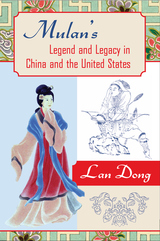
Mulan, the warrior maiden who performed heroic deeds in battle while dressed as a male soldier, has had many incarnations from her first appearance as a heroine in an ancient Chinese folk ballad. Mulan’s story was retold for centuries, extolling the filial virtue of the young woman who placed her father's honor and well-being above her own. With the publication of Maxine Hong Kingston’s The Woman Warrior in the late 1970s, Mulan first became familiar to American audiences who were fascinated with the extraordinary Asian American character. Mulan’s story was recast yet again in the popular 1998 animated Disney film and its sequel.
In Mulan’s Legend and Legacy in China and the United States, Lan Dong traces the development of this popular icon and asks, "Who is the real Mulan?" and "What does authenticity mean for the critic looking at this story?" Dong charts this character’s literary voyage across historical and geographical borders, discussing the narratives and images of Mulan over a long time span—from premodern China to the contemporary United States to Mulan’s counter-migration back to her homeland.
As Dong shows, Mulan has been reinvented repeatedly in both China and the United States so that her character represents different agendas in each retelling—especially after she reached the western hemisphere. The dutiful and loyal daughter, the fierce, pregnant warrior, and the feisty teenaged heroine—each is Mulan representing an idea about female virtue at a particular time and place.
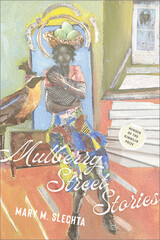

A complete guide to the history, biology, hunting, and management of mule deer in Utah. The author, Dennis D. Austin, is a retired research scientist with more than thirty years of experience working as a wildlife biologist for the Utah Division of Wildlife Resources.
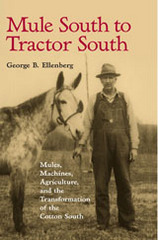
The adoption of the mule as the major agricultural resource in the American South and its later displacement by the mechanical tractor.
The author describes the adoption of the mule as the major agricultural resource in the American South and its later displacement by the mechanical tractor. After describing the surprising slowness of southern farmers to realize the superiority of the mule over the horse for agricultural labor, Ellenberg strives to capture the symbiosis that emerged between animal and man to illuminate why and how the mule became a standard feature in Southern folk culture.
Having been slow to adopt the mule, southern farmers were then reluctant to set it aside in favor of the tractor. Ellenberg describes the transformation as the tractor gradually displaced the mule and the role of the U.S. Department of Agriculture in this process.
The work not only becomes a survey of the development of southern agriculture as revealed through an examination of this premier work animal but also follows the emergence of the animal as a cultural icon, as it figures in southern literature, folklore, and music.
READERS
Browse our collection.
PUBLISHERS
See BiblioVault's publisher services.
STUDENT SERVICES
Files for college accessibility offices.
RECENTLY PUBLISHED


UChicago Accessibility Resources
home | accessibility | search | about | contact us
BiblioVault ® 2001 - 2026
The University of Chicago Press