
 A SCHOLARLY BOOK REPOSITORY
In Mutuality in the Rhetoric and Composition Classroom, David L. Wallace and Helen Rothschild Ewald point out the centrality of rhetoric in the academy, asserting the intimate connection between language and knowledge making. They also stress the need for a change in the roles of teachers and students in today’s classroom. Their goal is mutuality, a sharing of authority among teachers and students in the classroom that would allow everyone an equal voice in the communication of ideas.
Arguing that the impetus to empower students by engaging them in liberatory and emancipatory pedagogies is simply not enough, Wallace and Ewald seek to “help readers identify, theorize, and work through problems faced by teachers who already value alternative approaches but who are struggling to implement them in the classroom." It is not the teacher’s job merely to convey a received body of knowledge, nor is knowledge a prepackaged commodity to be delivered by the teacher. It is “constituted in the classroom through the dialogic interaction between teachers and students alike.”
Wallace and Ewald see mutuality as potentially transformative, but they “do not believe that the nature or that transformation can be designated in advance.” Rather it is located in the interaction between teachers and students. Wallace and Ewald look at how the transformative notion of mutuality can be effected in classrooms in three important ways: reconstituting classroom speech genres, redesigning the architecture of rhetoric and writing courses, and valuing students’ interpretive agency in classroom discourse. Mutuality in alternative pedagogy, they assert, is neither a single approach nor a specific set of valued practices; it is a continuous collaboration between teachers and students.
Although investigations of Hispanic popular culture were approached for decades as part of folklore studies, in recent years scholarly explorations—of lucha libre, telenovelas, comic strips, comedy, baseball, the novela rosa and the detective novel, sci-fi, even advertising—have multiplied. What has been lacking is an overarching canvas that offers context for these studies, focusing on the crucial, framing questions: What is Hispanic pop culture? How does it change over time and from region to region? What is the relationship between highbrow and popular culture in the Hispanic world? Does it make sense to approach the whole Hispanic world as homogenized when understanding Hispanic popular culture? What are the differences between nations, classes, ethnic groups, religious communities, and so on? And what distinguishes Hispanic popular culture in the United States?
In ¡Muy Pop!, Ilan Stavans and Frederick Luis Aldama carry on a sustained, free-flowing, book-length conversation about these questions and more, concentrating on a wide range of pop manifestations and analyzing them at length. In addition to making Hispanic popular culture visible to the first-time reader, ¡Muy Pop! sheds new light on the making and consuming of Hispanic pop culture for academics, specialists, and mainstream critics.
My African Horse Problem recounts the intricacies of this unusual father-son expedition, a sometimes harrowing two-week trip that Samuel joined as "true heir" to the disputed stallion. It relates the circumstances leading up to the dispute and describes the intimacy of a relationship spanning a quarter century between William Miles and the custodians of his family horse—Islamic village friends eking out a precarious existence along the remote sub-Saharan borderline between Nigeria and Niger.
My African Horse Problem is a multi-layered narrative—part memoir, part ethnography—reaching back to Miles's days as a Peace Corps volunteer in Niger in the 1970s and a Fulbright scholar in the 1980s. At a deeper level, the story juxtaposes the idealistic and sometimes irresponsible tendencies of a young university graduate with the parental concerns of a middle-aged, tenured professor. Miles wonders if he was justified in exposing Sam to some of the worst health risks on earth, mainly to restore tenuous ties with long-ago friends in the African bush. Was it reckless to make his son illegally cross international boundaries, in a quixotic quest for justice and family honor? My African Horse Problem is more than an adventurer's tale with a unique story line: it is a father-son travel rumination, leavened by Sam's journal entries that help his father see Africa anew through a child's fresh eyes. In this era of religious and racial tensions, it is also a reaffirmation—within a black Muslim context—of the basic human imperative of trust.

Originally published in 1986, this new edition returns to print a classic, influential work of American fiction
The author of the acclaimed novel Reflex and Bone Structure returns here in My Amputations to the question of identity, the double, adventure, detection, and mystery, but with more hypnotic power and range. In My Amputations he has his protagonist, Mason Ellis (who may just be “a desperate ex-con” or a wronged American novelist out to right the wrong done to him), jump through flaming loops like a trained dog, so to speak. In other words, there seems to be no end to the troubles Mason Ellis faces.
His story takes him from the South Side of Chicago, to New York, with a stint in Attica prison, across America and Europe and into the primal depths of Africa. Mason, all the while, tries to convince the reader that he is the important American writer he says he is. Upon his release from prison he sets out to prove his claim. After an audacious bank-robbery and a couple of burglaries that are hilarious, he goes into hiding to escape the malice of one of his cohorts, and eventually flees to Europe. The irony is that he is now as much the runner as the seeker. After encounters with a Zuni ex-folksinger, kidnappers, the New York underworld, literary groupies, an Italian swordsman, a violent German secret society, and an anti-bellum cotillion in rural Greece, he finds himself face to face (behind a mask) with his own destiny.
A vividly described and intensely personal memoir, My Bayou charts a personal and spiritual transformation along the fabled banks of Bayou Saint John in New Orleans. When Constance Adler moves to New Orleans, she begins what becomes a lasting love affair with the city, and especially the bayou—a living entity and the beating heart of local culture. Rites of passage, celebrations, mysterious accidents, and magic all take place on its banks, leading Adler to a vibrant awareness of the power of being part of a community. That faith is tested in the wake of Hurricane Katrina, and is ultimately proven right, as Bayou Saint John begins to rebuild.

The poems of this collection explore such everyday dualities—how the human need for attachment is as much a source of pain as of vitality and how our longing for transcendence often leads to sinister complicities. The title poem tells the conflicted and devastating story of the poet’s friendship with the now-disgraced Bishop of Phoenix, Arizona, interweaving fragments of his parents’ funerals, which the Bishop concelebrated, with memories of his childhood spiritual leanings and how they were disrupted by a pedophilic priest the Bishop failed to protect him from.
This meditation on spiritual life, physical death, and betrayal is joined by an array of poised, short lyrics and expansive prose poems exploring how the terror and unpredictability of our era intrudes on our most intimate moments. Whether Michael Collier is writing about an airline disaster, Huey Newton’s trial, Thomas Jefferson’s bees, a piano in the woods, or his own fraught friendship with the disgraced Catholic Bishop, his syntactic verve, scrupulously observed detail, and flawless ear bring the felt—and sometimes frightening—dimensions of the mundane to life. Throughout, this collection pursues a quiet but ferocious need to get to the bottom of things.
As Becky M. Nicolaides shows in My Blue Heaven, this ethic of self-reliance and homeownership formed the core of South Gate's identity. With post-World War II economic prosperity, the community's emphasis shifted from building homes to protecting them as residents tried to maintain their standard of living against outside threats—including the growing civil rights movement—through grassroots conservative politics based on an ideal of white homeowner rights. As the citizens of South Gate struggled to defend their segregated American Dream of suburban community, they fanned the flames of racial inequality that erupted in the 1965 Watts riots.
-Daniel Berrigan, S.J.
"The struggles, joys, and political awakening of a firecracker of a narrator. . . . Linton has succeeded in creating a life both rich and enviable. With her crackle, irreverence, and intelligence, it's clear that the author would never be willing to settle. . . . Wholly enjoyable."
-Kirkus Reviews
"Linton is a passionate guide to a world many outsiders, and even insiders, find difficult to navigate. . . . In this volume, she recounts her personal odyssey, from flower child . . . to disability-rights/human rights activist."
-Publishers Weekly
"Witty, original, and political without being politically correct, introducing us to a cast of funny, brave, remarkable characters (including the professional dancer with one leg) who have changed the way that 'walkies' understand disability. By the time Linton tells you about the first time she was dancing in her wheelchair, you will feel like dancing, too."
---Carol Tavris, author of Anger: The Misunderstood Emotion
"This astonishing book has perfect pitch. It is filled with wit and passion. Linton shows us how she learned to 'absorb disability,' and to pilot a new and interesting body. With verve and wonder, she discovers her body's pleasures, hungers, surprises, hurts, strengths, limits, and uses."
-Rosemarie Garland-Thomson, author of Extraordinary Bodies: Figuring Physical Disability in American Culture and Literature
"An extraordinarily readable account of life in the fast lane... a brilliant autobiography and a great read."
-Sander L. Gilman, author of Fat Boys: A Slim Book
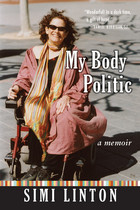
While hitchhiking from Boston to Washington, D.C., in 1971 to protest the war in Vietnam, Simi Linton was involved in a car accident that paralyzed her legs and took the lives of her young husband and her best friend. Her memoir begins with her struggle to regain physical and emotional strength and to resume her life in the world. Then Linton takes us on the road she traveled (with stops in Berkeley, Paris, Havana) and back to her home in Manhattan, as she learns what it means to be a disabled person in America.
Linton eventually completed a Ph.D., remarried, and began teaching at Hunter College. Along the way she became deeply committed to the disability rights movement and to the people she joined forces with. The stories in My Body Politic are populated with richly drawn portraits of Linton's disabled comrades, people of conviction and lusty exuberance who dance, play-and organize--with passion and commitment.
My Body Politic begins in the midst of the turmoil over Vietnam and concludes with a meditation on the U.S. involvement in the current war in Iraq and the war's wounded veterans. While a memoir of the author's gradual political awakening, My Body Politic is filled with adventure, celebration, and rock and roll-Salvador Dali, James Brown, and Jimi Hendrix all make cameo appearances. Linton weaves a tale that shows disability to be an ordinary part of the twists and turns of life and, simultaneously, a unique vantage point on the world.
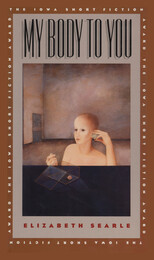
A woman in love with a gay man she calls Sister Kin attempts to escape the bonds of her own body. An eighteen-year-old virgin enters into a passionate affair with an older man who turns out to be a virgin of a different sort. A special education teacher in a school for aggressive teenagers finds herself attracted to another teacher, also female. An intelligent outcast girl bonds with her mindlessly seductive mother to form “one person.”
Searle reveals other characters through inventive and often comic feats of narrative daring. A girl grows into womanhood during a single family dinner that spans twenty years. A middle-aged wife, once dubbed “The First Most Beautiful Woman in the World,” watches her former selves parade before her family in a lively evening of home movies. Two women—one recently divorced, the other a group home resident in love with The Who—join forces as they figure out “What to Do in an Emergency.” An old woman experiences both physical breakdown and spiritual breakdown in a supermarket's vegetable department. A young woman is drawn into the emotional and sexual life of an autistic boy obsessed with the number 8.
Each of these stories is written in a language that strives to match the intensity of Searle's characters; each gives the reader an exceptionally intimate portrait of a unique female and the central, sensual mystery of her body.
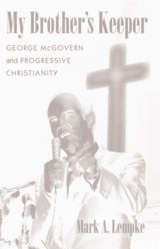
George McGovern is chiefly remembered for his landslide loss to Richard Nixon in 1972. Yet at the time, his candidacy raised eyebrows by invoking the prophetic tradition, an element of his legacy that is little studied. In My Brother's Keeper, Mark A. Lempke explores the influence of McGovern's evangelical childhood, Social Gospel worldview, and conscientious Methodism on a campaign that brought antiwar activism into the mainstream.
McGovern's candidacy signified a passing of the torch within Christian social justice. He initially allied with the ecumenical movement and the mainline Protestant churches during a time when these institutions worked easily with liberal statesmen. But the senator also galvanized a dynamic movement of evangelicals rooted in the New Left, who would dominate subsequent progressive religious activism as the mainline entered a period of decline. My Brother's Keeper argues for the influential, and often unwitting, role McGovern played in fomenting a “Religious Left” in 1970s America, a movement that continues to this day. It joins a growing body of scholarship that complicates the dominant narrative of that era's conservative Christianity.
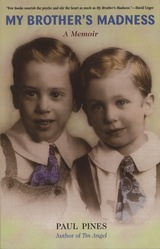
My Brother's Madness is part thriller, part exploration that not only describes the causes, character, and journey of mental illness, but also makes sense of it. It is ultimately a story of our own humanity, and answers the question, Am I my brother's keeper?
p.MsoNormal, li.MsoNormal, div.MsoNormal { margin: 0in 0in 0.0001pt; font-size: 12pt; font-family: "Times New Roman"; }div.Section1 { page: Section1; }
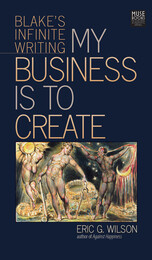
For William Blake, living is creating, conforming is death, and “the imagination . . . is the Human Existence itself.” But why are imagination and creation—so vital for Blake—essential for becoming human? And what is imagination? What is creation? How do we create? Blake had answers for these questions, both in word and in deed, answers that serve as potent teachings for aspiring writers and accomplished ones alike. Eric G. Wilson’s My Business Is to Create emulates Blake, presenting the great figure’s theory of creativity as well as the practices it implies.
In both his life and his art, Blake provided a powerful example of creativity at any cost—in the face of misunderstanding, neglect, loneliness, poverty, even accusations of insanity. Just as Los cries out in Jerusalem: The Emanation of the Giant Albion, “I must Create a System, or be enslav'd by another Man's; / I will not Reason and Compare: my business is to Create,” generations of writers and artists as diverse as John Ruskin, William Butler Yeats, Allen Ginsberg, Philip K. Dick, songwriter Patti Smith, the avant-garde filmmaker Jim Jarmusch, and the underground comic-book artist R. Crumb have taken Blake’s creed as inspiration.
Unwilling to cede his vision, Blake did more than simply produce iconoclastic poems and paintings; he also cleared a path toward spiritual and ethical enlightenment. To fashion powerful art is to realize the God within and thus to feel connected with enduring vitality and abundant generosity. This is Blake’s everlasting gospel, distilled here in an artist’s handbook of interest to scholars, writing teachers, and those who have made writing their way of life. My Business Is to Create is indispensable for all serious artists who want to transform their lives into art and make their art more alive.
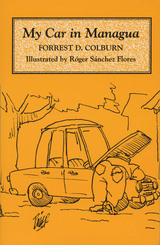
Histories of revolutions often focus on military, political, or economic upheavals but sometimes neglect to connect these larger events to the daily lives of "ordinary" people. Yet the peoples' perception that "things are worse than before" can topple revolutionary governments, as shown by the recent defeat of the Sandinista regime in Nicaragua and the governments of Eastern Europe. Providing the kind of prosaic, revealing details that more formal histories have excluded, My Car in Managua offers an objective, often humorous description of the great difficulties and occasional pleasures of life in Nicaragua during the Sandinista revolution.
During a year's work (1985-1986) at the Instituto Centroamericano de Administración de Empresas (INCAE), Forrest Colburn purchased a dilapidated car—and with it an introduction to everyday life in Nicaragua. His discoveries of the length of time required to register the car (approximately six weeks), the impossibility of finding spare parts (except when U.S. dollars were applied to the search), and the fact that "anyone getting into a car in Managua can be charged a small fee [for car watching] by anyone else" all suggest the difficulties most Nicaraguans faced living in a devastated economy.
Drawing on experiences from visits throughout the revolutionary period (1979-1989), Colburn also sheds light on how the Revolution affected social customs and language, gender roles and family relationships, equality and authority, the availability of goods and services, the status of ethnic minorities, and governmental and other institutions. Illustrations by Nicaragua's celebrated political cartoonist Róger Sánchez Flores enliven the lucid text.
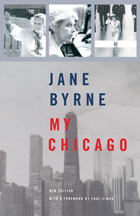
My Chicago is the story of Jane Byrne's rise from young campaign worker to the mayor's office, all within the bruising arena of Chicago politics. Part sociopolitical history, part memoir, it begins with a history of the city and her early life, before she enters politics as a paid staff member of JFK's presidential campaign and, soon after, begins service in the Chicago Machine, but not of it.
Her view from the inside allows Byrne to sketch portraits of Daley, for whom she eventually worked, members of the Kennedy family, and Presidents Carter and Reagan. And, of course, it provides a fascinating perspective on the battle to succeed Daley, which ended with her own triumph over the Machine and a controversial term as mayor, which saw her begin development across the city and (famously) move into the Cabrini-Green housing project. The first memoir by a Chicago mayor in two generations, My Chicago is a valuable history as well as an entertaining look at no-holds-barred city politics.
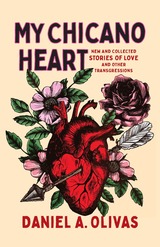
Each story is drawn from Olivas’s nearly twenty-five years of experience writing fiction deeply steeped in Chicano and Mexican culture. Some of the stories are fanciful and full of magic, while others are more realistic, and still others border on noir. All touch upon that most ephemeral and confounding of human emotions: love in all its wondrous forms.
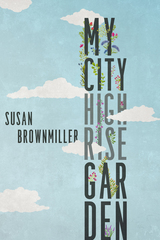
She reports the catastrophes: losing daytime access during building-wide renovations; assaults from a mockingbird during his mating season. And the joys: a peach tree fruited for fifteen years; the windswept birches lasted for twenty-five. Butterflies and bees pay annual visits. She pampers a buddleia, a honeysuckle, roses, hydrangeas, and more. Her adventures celebrate the tenacity of nature, inviting readers to marvel at her garden’s resilience, and her own.
Enhanced by over thirty color photographs, this passionate account of green life in a gritty, urban environment will appeal to readers and gardeners wherever they dwell.
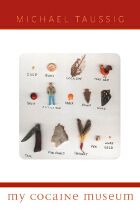
Combining natural history with political history in a filmic, montage style, Taussig deploys the show-and-tell modality of a museum to engage with the inner life of heat, rain, stone, and swamp, no less than with the life of gold and cocaine.
This effort to find a poetry of words becoming things is brought to a head by the explosive qualities of those sublime fetishes of evil beauty, gold and cocaine. At its core, Taussig's museum is about the lure of forbidden things, charged substances that transgress moral codes, the distinctions we use to make sense of the world, and above all the conventional way we write stories.
In her vibrant ethnography My Culture, My Color, My Self, Toby Jenkins provides engrossing, in-depth interviews and poignant snapshots of young adults talking about their lives and culture. She recounts D'Leon's dream to become a positive example for African American men, and Francheska describing how her late mother inspired her appreciation of her Boricua heritage. In these and other portraits, Jenkins considers the role that cultural education and engagement plays in enhancing educational systems, neighborhood programs, and community structures.
My Culture, My Color, My Self also features critical essays that focus on broader themes such as family bonds, education, and religion. Taken together, Jenkins shows how people of color use their culture as both a politic of social survival and a tool for social change.
We stopped, and we heard the biggest racket you ever heard up in the house.
“What’s the matter, son?”
“Why, Maw and Paw are up there fightin’.”
“Who is your Paw, son?”
“Well, that’s what they are fightin’ over.”
Brimming with ballads, stories, riddles, tall tales, and great good humor, My Curious and Jocular Heroes pays homage to four people who guided and inspired Loyal Jones’s own study of Appalachian culture. His sharp-eyed portraits introduce a new generation to Bascom Lunsford, the pioneer behind the “memory collections” of song and story at Columbia University and the Library of Congress; the Sorbonne-educated collector and performer Josiah H. Combs; Cratis D. Williams, the legendary father of Appalachian studies; and the folklorist and master storyteller Leonard W. Roberts. Throughout, Jones highlights the tales, songs, jokes, and other collected nuggets that define the breadth of each man’s research and repertoire.
The island of Cyprus has been a site of global history and conquest, and its strategic position means it has been coveted by one foreign power after another. The Phoenicians, Greeks, Romans, Byzantines, Venetians, Genoese, Ottomans, and British have all left their mark. Along with the Roman and Byzantine ruins of Salamis, the island holds impressive monuments dating from the Frankish and Venetian times: the Abbey of Bellapais, the fortified harbor of Kyrenia, and the magnificent cathedrals of Nicosia and Famagusta, the setting for Shakespeare’s Othello.
Having lived in Cyprus for three years, Joachim Sartorius returns to the island’s cultures and legends and brings to life the colors and lights of the Levant area of the Middle East. He sifts through the sediments of the island’s history, including its division after the Turkish invasion of 1974 and the difficulties that followed. Rather than focusing solely on historical or political factors, this book is the work of a poet, who, with the help of both Greek and Turkish Cypriot friends, tries to understand this unique place.
In looking at themes such as the relationship between activism and desire or how sexuality can be intimately tied to one’s class identity, Hollibaugh fiercely and fearlessly analyzes her own political development as a response to her unique personal history. She explores the concept of labeling and the associated issues of categories such as butch or femme, transgender, bisexual, top or bottom, drag queen, b-girl, or drag king. The volume includes conversations with other writers, such as Deirdre English, Gayle Rubin, Jewelle Gomez, and Cherríe Moraga. From the groundbreaking article “What We’re Rollin’ Around in Bed With” to the radical “Sex Work Notes: Some Tensions of a Former Whore and a Practicing Feminist,” Hollibaugh charges ahead to describe her reality, never flinching from the truth. Dorothy Allison’s moving foreword pays tribute to a life lived in struggle by a working-class lesbian who, like herself, refuses to suppress her dangerous desires.
Having informed many of the debates that have become central to gay and lesbian activism, Hollibaugh’s work challenges her readers to speak, write, and record their desires—especially, perhaps, the most dangerous of them—“in order for us all to survive.”
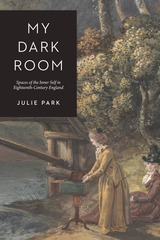
In what kinds of spaces do we become most aware of the thoughts in our own heads? In My Dark Room, Julie Park explores places of solitude and enclosure that gave eighteenth-century subjects closer access to their inner worlds: grottos, writing closets, landscape follies, and the camera obscura, that beguiling “dark room” inside which the outside world in all its motion and color is projected. The camera obscura and its dreamlike projections within it served as a paradigm for the everyday spaces, whether in built environments or in imaginative writing, that generated the fleeting states of interiority eighteenth-century subjects were compelled to experience and inhabit.
My Dark Room illuminates the spatial and physical dimensions of inner life in the long eighteenth century by synthesizing material analyses of diverse media, from optical devices and landscape architecture to women’s intimate dress, with close readings of literary texts not traditionally considered together, among them Andrew Marvell’s country house poem Upon Appleton House, Margaret Cavendish’s experimental epistolary work Sociable Letters, Alexander Pope’s heroic verse epistle Eloisa to Abelard, and Samuel Richardson’s novel Pamela. Park also analyzes letters and diaries, architectural plans, prints, drawings, paintings, and more, drawing our attention to the lively interactions between spaces and psyches in private environments. Park’s innovative method of “spatial formalism” reveals how physical settings enable psychic interiors to achieve vitality in lives both real and imagined.


The fourth novel in James T. Farrell’s pentalogy chronicles Danny O’Neill’s coming of age. Recording his reactions to initiation into college life at the University of Chicago and the imminent death of his grandmother, one of his primary caretakers, Danny realizes the value of time and gains confidence in his writing abilities. As he works on his first novel, he prepares to leave his family, his Catholicism, and his neighborhood in Chicago behind for a new life as a writer in New York.
She was the daughter of a circuit judge and state senator. He was the youngest son of Virginia’s Civil War governor and was a state legislator himself at the age of nineteen. Their courtship and marriage stands as a portrait of a bygone way of life unique to the American South during the first half of the twentieth century. My Dearest Angel is their story, told through their faithful correspondence over the course of their fifty years together.
Piecing together the voluminous letters, their granddaughter, noted author Katie Letcher Lyle, has succeeded in giving us an intimate panorama of the full and oftentimes wrenching lives led by Greenlee and Katie Letcher. Domestic life, family secrets, and visiting luminaries are part of their story. But the abiding appeal of My Dearest Angel is the maturation of a lifelong relationship built on the crest of a changing world.
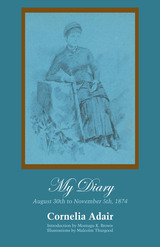
Cornelia Wadsworth Adair’s ancestors had pioneered in western New York, where they opened and developed large, palatial estates; and the life they lived was elegant and aristocratic. Adair too was discreetly cultured; yet she took great personal pleasure in the rough and primitive land of her famed JA Ranch in north Texas. Because of physical discomfort and noisy passengers, she detested traveling by railroad coach; yet she could ride all day on horseback and lie down to sleep on a makeshift cot by a waterhole or on an Indian’s flea-infested buffalo rug. She was a lady of interesting contradictions.
This little Diary is her lively account of a two-month trip which she and her husband made into the western part of the United States in 1874. The ostensible purpose of the trip was to hunt buffalo; however, these large beasts actually play a very small part in the journal. Rather, the book is an interesting and often amusing account, by an observant woman, of the long journey from her husband’s estate in Ireland to New York, to Chicago and on into upper Michigan, across Lake Superior to Minnesota, down the Mississippi for several days, out to the buffalo-hunting grounds in Nebraska, then to Denver and the wonders of the Rocky Mountains, and finally back to New York and the Europe-bound ship.
Adair writes with an easy fluency; and her eye for picturesque detail, her taste for amusing incongruities, her romanticist’s delight in Nature, and her instinct for a “good tale” combine to make her Diary pleasant and entertaining reading, while her powers of keen observation provide valuable insight into life as it was then in the West. First printed for private circulation in 1918, the original book is now a rare collector’s item of Western Americana. Mrs. Adair said that she was allowing its publication for two reasons. First, she was afraid that her grandchildren and young friends would remember her only as “an old lady who sat in an armchair, and whose stick had to be looked for”; she wanted them to know that she had once been “a very lively person . . . [who] did all sorts of exciting things.” Second, she felt it worthwhile to record her experiences because “the world is changing so quickly, ways of travelling especially so . . . and I think it may be interesting to compare what was done in 1874 with what will be done by the time the children are able to travel. No doubt they will do their journeys by air, and do many, many things that I have not been able to do; but they can never see the prairies of America in their wild uncivilised state, or hunt buffalo over them, nor can they pow-wow with the Red Indians in a camp on the Platte River. So every time has its own special joys, and the great thing is to miss as little as possible, and to share as much.”
These witty and poignant short essays explore reasons for diva-worship as diverse as the writers themselves. My Diva offers both depth and glamour as it pays tribute with joy, intelligence, and fierce, fierce love.
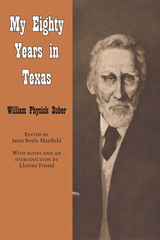
Almost a century and a half went into the making of My Eighty Years in Texas. It began as a diary, kept by fifteen-year-old William Physick Zuber after he joined Sam Houston’s Texas army in 1836, hoping he could emulate the heroism of American Revolutionary patriots. Although his hopes were never realized, Zuber recorded the privations, victories, and defeats of armies on the move during the Texas Revolution, the Indian campaigns, and, as he styled it, the Confederate War.
In 1910, at the age of ninety, Zuber began the enormous task of transcribing his diaries and his memories for publication. After his death in 1913, the handwritten manuscript, 1, was placed in the Texas State Archives, where it was used as a reference source by students and scholars of Texas history. Over a half century after Zuber’s death, Janis Boyle Mayfield finally brought his publication plans to fruition.
Zuber details his early zest for learning and his laborious methods of self-education. He tells of the trials of organizing and teaching schools in the sparsely populated plains. He recalls the day-by-day happenings of a private soldier in the Texas army of 1836, the Texas Militia, and the Confederate army—including the mishaps of army life and the encounters with enemies from San Jacinto to Cape Girardeau. After the Civil War, his interest turns to the politics of Reconstruction, the veterans’ pension, and the founding of the Texas Veterans Association.
This is the story of and by an outspoken Texian, complete with his attitudes, principles, and moralizings, and the nineteenth-century style and flavor of his writing.
Included as an appendix is “An Escape from the Alamo,” the account of Moses Rose for which Zuber, who was a prolific writer, was best known. A historiography of the Rose story, a bibliography of Zuber’s published and unpublished writings, annotation, and an introduction are provided by Llerena Friend.
ANew York Times Book Review Editor's Choice
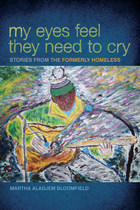
Delicate and assured, the stories in My Escapee illuminate unseen forces in women's lives: the shameful thought, the stifled hope, the subterranean stresses of marriage, friendship, and family. Grappling with lost memories, escaped time, the longing to be loved, and the instinct for autonomy, the stories peer inside their characters' minds to their benign delusions, their triumphs and defeats.
A girl taking a test for admittance to a selective school finds that what she loves most of all is the ordinary. A lonely young woman, sick of being sick, swaps places with her nurse. A college student deploys her more charming roommate to discover the secret rituals of an all-male club on campus. And in the title story, a woman in a nursing home receives mysterious missives from her longtime lover recalling fragments of their old life together.

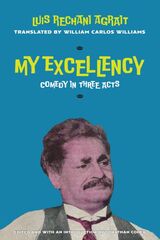
William Carlos Williams’s passion for his matrilineal Puerto Rican roots led him to visit Puerto Rico for the first time in 1941. There at a writers’ conference, he befriended the playwright Luis Rechani Agrait, who gave him his play Mi señoría, staged to acclaim the previous year.
My Excellency, as Williams calls the play in his translation, is a political farce set in an “imaginary country” that resembles Puerto Rico during the Great Depression, with its high unemployment and labor unrest. The play focuses on the plight of an idealistic but naive man, Buenaventura Padilla, in a completely corrupt political system. Through an unscrupulous election, he becomes the nation’s leader.
The play is successful as a satire largely because of Buenaventura’s hilarious language—recreated by Williams—with its pompous style combined with stunning malapropisms and clownish errors in history and grammar. The play’s very title is a laughable malapropism. My Excellency shows the corrupting power of success and the tragic flaw of materialism. Driving the comedy in Williams’s translation is his firm command of the play’s dialogue interwoven with popular idioms in which the charm of pure nonsense abounds. This edition is Luis Rechani Agrait’s debut as a playwright in English.
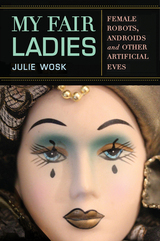
The fantasy of a male creator constructing his perfect woman dates back to the Greek myth of Pygmalion and Galatea. Yet as technology has advanced over the past century, the figure of the lifelike manmade woman has become nearly ubiquitous, popping up in everything from Bride of Frankenstein to Weird Science to The Stepford Wives. Now Julie Wosk takes us on a fascinating tour through this bevy of artificial women, revealing the array of cultural fantasies and fears they embody.
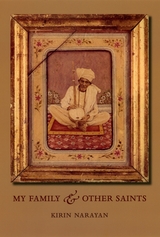
A touching, funny, and always affectionate memoir, My Family and Other Saints traces the reverberations of Rahoul's spiritual journey through the entire family. As their beachside Bombay home becomes a crossroads for Westerners seeking Eastern enlightenment, Kirin’s sari-wearing American mother wholeheartedly embraces ashrams and gurus, adopting her son’s spiritual quest as her own. Her Indian father, however, coins the term “urug”—guru spelled backward—to mock these seekers, while young Kirin, surrounded by radiant holy men, parents drifting apart, and a motley of young, often eccentric Westerners, is left to find her own answers. Deftly recreating the turbulent emotional world of her bicultural adolescence, but overlaying it with the hard-won understanding of adulthood, Narayan presents a large, rambunctious cast of quirky characters. Throughout, she brings to life not just a family but also a time when just about everyone, it seemed, was consumed by some sort of spiritual quest.
“A lovely book about the author's youth in Bombay, India. . . . The family home becomes a magnet for truth-seekers, and Narayan is there to affectionately document all of it.”—Body + Soul
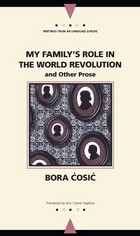
During the German occupation of Belgrade, a family—including an alarmist mother, an eternally drunk father, two young aunts who swoon over American movie stars, and a playboy uncle—attempt to find any kind of work they can do at home. When the postwar Socialist society is being ushered in after the war, the narrator becomes the slogan-spouting ideological leader of the household, while his family tries—and often fails miserably—to take part in the "great change."
This volume also includes several Ćosić short stories, and recent essays on the war in the former Yugoslavia.
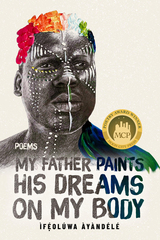
How do our ancestors inhabit the world that they have abandoned? What is the place of our family in our hearts? In this stunning debut collection, Ìfẹ́olúwa Àyàndélé reveals this interior world in which the past sings its lament in the present moment. The father is Àyàndélé’s connection to the deep past and his ancestors, who move through love and the Nigerian-Biafran war, but also through the luxuriant landscape of rivers and forests. How does one person balance the past and the present? Animals can show us the way of nature. Prayer can form a river of the soul as it chants, praises, and reveres the terrible beauty of this world.

My Father Said Yes is the untold story of the Reverend Dunbar Ogden, who became the pro-integration leader in Little Rock's white community. He responded to a call for support from Daisy Bates, co-owner of the town's black newspaper. Both faced fierce opposition from within as well as from outside. Reverend Ogden lost his church and Daisy Bates lost her newspaper.
This memoir is also a moving father-son story. In this frank account, the author discusses the depression his father battled for most of his life, as well as the family tragedy of his brother's suicide.
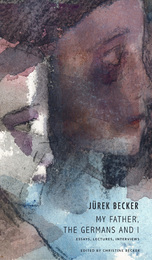
Jürek Becker (1937–97) is best known for his novel Jacob the Liar, which follows the life of a man, who, like Becker, lived in the Lódz ghetto during the German occupation of Poland in World War II. Throughout his career, Becker also wrote nonfiction, and the essays, lectures, and interviews collected in My Father, the Germans and I share a common thread in that they each speak to Becker’s interactions with and opinions on the social, political, and cultural conditions of twentieth-century Germany.
Becker, who had lived in both German states and in unified Germany, was passionately and humorously active in the political debates of his time. Becker never directly aligned himself with either the political ideology of East Germany or the capitalist market forces of West Germany. The remains of fascism in postwar Germany, and the demise of Socialism, as well as racism and xenophobic violence, were topics that perpetually interested Becker. However, his writings, as evidenced in this collection, were never pedantic, but always entertaining, retaining the sense of humor that made his novels so admired.
My Father, the Germans and I gives expression to an exceptional author’s perception of himself and the world and to his tireless attempt to bring his own unique tone of linguistic brevity, irony, and balance to German relations.

Gaza is the frontline in the conflict between Israel and the Palestinians and rarely out of the news, this book explores the daily lives of the people in the region, giving us an insight into what is at risk in each round of violence.
Ramzy Baroud tells his father's fascinating story. Driven out of his village to a refugee camp, he took up arms and fought the occupation at the same time raising a family and trying to do the best for his children. Baroud's vivid and honest account reveals the complex human beings; revolutionaries, great moms and dads, lovers, and comedians that make Gaza so much more than just a disputed territory.
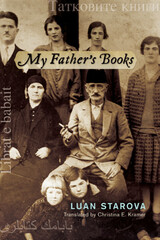
In My Father’s Books, the first volume in Luan Starova’s multivolume Balkan Saga, he explores themes of history, displacement, and identity under three turbulent regimes—Ottoman, Fascist, and Stalinist—in the twentieth century. Weaving a story from the threads of his parents’ lives from 1926 to 1976, he offers a child’s-eye view of personal relationships in shifting political landscapes and an elegiac reminder of the enduring power of books to sustain a literate culture.
Through lyrical waves of memory, Starova reveals his family’s overlapping religious, linguistic, national, and cultural histories. His father left Constantinople as the Ottoman Empire collapsed, and the young family fled from Albania to Yugoslav Macedonia when Luan was a boy. His parents, cosmopolitan and well-traveled in their youth, and steeped in the cultures of both Orient and Occident, find themselves raising their children in yet another stagnant and repressive state. Against this backdrop, Starova remembers the protected spaces of his childhood—his mother’s walled garden, his father’s library, the cupboard holding the rarest and most precious of his father’s books. Preserving a lost heritage, these books also open up a world that seems wide, deep, and boundless.
“Karen McClintock reconstructs the details of her father’s double life with novelistic flair, keen psychological insight, and graceful compassion.” —Alison Bechdel
Thirty years after her father’s death, Karen McClintock sets out to find the gay father she never really knew. As we follow the unraveling family secret, we find ourselves drawn into her story as they stumble into infidelity, grieve heartbreaking losses, and remain loyal in love.
Set in Columbus, Ohio, My Father’s Closet tells the story of how just before the war, McClintock’s parents fell in love and married, while overseas in Germany the man whom she believes became her father’s lover was concealing his Jewish and gay identities in order to escape to America. A set of her father’s journals, letters her parents sent to each other during the Second World War, and a mysterious painting all lead her toward the truth about her gay father. McClintock weaves a complex secret into the fabric of lives we truly care about. And in the process, she leads us out of her father’s closet.
This gripping memoir captures the longing children feel for a distant or hidden parent and taps into the complexity of human connection and abandonment. The characters are resilient and vibrant. The hidden lovers, the nosey neighbors, and surprise lovers all show up. In the end, this extraordinary family finds ways to connect and freedom to love. Anyone who grew up with a family secret will appreciate the dynamics afoot in this fast-paced and compelling story.
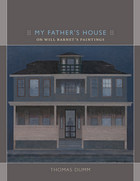
Dumm first became acquainted with Barnet and his paintings in 2008. Given his scholarly focus on the lives of ordinary people, he was immediately attracted to the artist's work. When they met, Dumm and Barnet began a friendship and dialogue that lasted until the painter's death in 2012, at the age of 101. This book reflects the many discussions the two had concerning the series of paintings, Barnet's family, his early life in Beverly, and his eighty-year career as a prominent New York artist. Reading the almost gothic paintings in conversation with the writers and thinkers key to both his and Barnet's thinking—Emerson, Spinoza, Dickinson, Benjamin, Cavell, Nietzsche, Melville—Dumm's haunting meditations evoke broader reflections on family, mortality, the uncanny, and the loss that comes with remembrance.
My Father’s Name is a family story full of twists and turns—and one of haunting familiarity to many Americans, who may question whether the promises of emancipation have ever truly been fulfilled. It is also a resolute look at the duties that come with reclaiming and honoring Americans who survived slavery and a thoughtful meditation on its painful and enduring history.
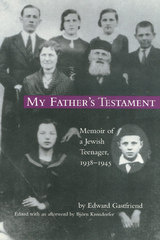
The accelerating Nazi assault on the Jews abruptly shattered Lolek's life. Jews were randomly beaten and arrested, forced out of their homes, deported to slave labor camps, and shot on the streets. During this time, Lolek lost his family, friends, and neighbors, the whole while struggling to hold onto a promise he made to his father before his father was deported. Lolek pledged never to denounce God and to maintain his faith. This covenant proved to be the key to his remarkable survival in several slave labor camps including Auschwitz and several satellite camps of Auschwitz-Birkenau.
My Father's Testament is an intimate portrayal of a teenage boy trying to stay alive without losing his humanity - in hiding, in the camps, and during the death marches at the end of the war.
Embedded in this unique memoir are two other stories of fathers and sons. One lies in the moving Foreword by David R. Gastfriend, Ed's son, now a psychiatrist at Harvard Medical School. The other lies in Bjorn Krondorfer's Afterword. Years after he met Edward Gastfriend, Krondorfer was startled to hear his father mention Blechhammer as one of the places where he was stationed as a young German soldier. Blechhammer was where Lolek was held in a slave labor camp. The coincidence led this German father and son to travel back to the site to confront the Holocaust.
My Father's Testament will engage readers interested in history, the Holocaust, and religion.
With an insightful introduction from translator Dean Krouk, My Father’s War is a contemporary classic of war literature. Committed to genuine understanding without falling into undue sympathizing, this sober and reflective book presents an eye-opening, moving, intense, and necessary account of the allure of fascism in a world at war—and its personal costs.
A compelling story of a unit of Buffalo Soldiers and their white commander fighting on the Italian front during World War II.
The 92nd Division of the Fifth Army was the only African American infantry division to see combat in Europe during 1944 and 1945, suffering more than 3,200 casualties. Members of this unit, known as Buffalo Soldiers, endured racial violence on the home front and experienced racism abroad. Engaged in combat for nine months, they were under the command of southern white infantry officers like their captain, Eugene E. Johnston.
Carolyn Ross Johnston draws on her father’s account of the war and her extensive interviews with other veterans of the 92nd Division to describe the experiences of a naïve southern white officer and his segregated unit on an intimate level. During the war, the protocol that required the assignment of southern white officers to command black units, both in Europe and in the Pacific theater, was often problematic, but Johnston seemed more successful than most, earning the trust and respect of his men at the same time that he learned to trust and respect them. Gene Johnston and the African American soldiers were transformed by the war and upon their return helped transform the nation.
Poignant and revealing stories from one of the Midwest’s leading authors.
Poignant and revealing stories from one of the Midwest’s leading authors.
"A compelling debut. These stories offer leisurely exposition and character development. . . . Their honesty and sensitivity will resonate." Publishers Weekly"These are wonderful stories-images of personal and societal growth that are at once hopeful and skeptical, loving and shrewd." New Orleans Times-Picayune"These magnificent stories are big-hearted and loving in a way I don’t think I’ve ever encountered. With a calm and compassionate hand, Barton Sutter reveals to us the true dignity of humankind, the necessity of heroes and history, and the unerring aim of hope. My Father’s War is a beautiful book." Bret LottIn this collection of stories, Barton Sutter shows us all the ways in which we are shaped by our surroundings. With an unswerving gaze, he portrays the rituals of growing up that we all experience, no matter how old we think we are.
Winner, Midwest Book Award for Poetry, Midwest Independent Publishers Association
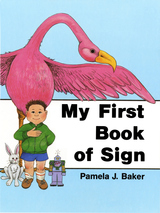
My First Book of Sign, a full-color alphabet book, gives the signs for 150 of the words most frequently used by young children. The vocabulary comes from recognized word list sources such as the Dale List of 769 Easy Words. The proportion of word category choices (nouns, modifiers, and verbs) is based on early language acquisition research.
Readers do not have to know American Sign Language to enjoy My First Book of Sign; the book provides explanations of how to form each sign. This is a very special alphabet book appropriate for all children who are just beginning to read.

The memoir reveals a great deal about the influence of Hull-House on the social and political history of the early twentieth century. An introduction by long-time Addams scholar Anne Firor Scott provides a broader account of women's work in voluntary associations.
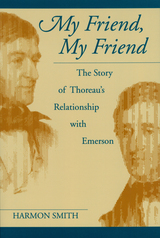
Henry David Thoreau was a twenty-year-old scholarship student at Harvard when he met Ralph Waldo Emerson in 1837. Emerson, fourteen years Thoreau's senior and independently wealthy, had recently shaken the intellectual world of New England with the publication of Nature. Despite the disparity in their circumstances, Thoreau and Emerson quickly formed a close relationship that lasted until Thoreau's death at the age of forty-four. This book tells the story of their friendship. Harmon Smith emphasizes their personal bond, but also shows how their relationship affected their thought and writing, and was in turn influenced by their careers.
Without Emerson's interest and support, it is unlikely that Thoreau could have expended the energy on writing that enabled him to achieve greatness. By inviting Thoreau into his home to live during two different periods in the 1840s, Emerson effectively made Thoreau “one of the family.” He provided him with work, lent him money, and allowed him to build a cabin on the shore of Walden Pond. Emerson also broadened Thoreau's horizon immeasurably by introducing him to an ever-widening circle of friends and colleagues.
Although the bond between Thoreau and Emerson was strong, their needs were often greatly at variance. While this led to a prolonged period of estrangement between them, they were ultimately able to reconcile their differences. Many years after Thoreau died, Emerson could look back over his long life and say that Henry had been his best friend. Since the thoughts and feelings of the two men are so well documented in their journals and letters, Smith is able to trace the pattern of their emotional involvement in great detail. What emerges is both a remarkable portrait of their relationship and an intimate look at the nature of friendship itself.
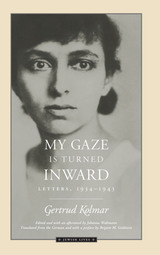
So a picture of Gertrud Kolmar, a gifted Jewish writer struggling to sustain her art and family, emerges from these eloquent and allusive letters. Written in the stolen moments before her day as a forced laborer in a munitions factory began, the letters tell of Kolmar's move from the family home in Finkenkrug to a three-room flat in Berlin, which she and her father must soon share with other displaced Jews. They describe her factory work as a learning experience and assert, in the face of ever worsening conditions, that true art, never dependent on comfort or peace, is "capable of triumphing over . . . time and place."
These letters are a triumph of art, proclaiming the freedom of the human will amidst oppression. Though prevented by Nazi censorship from saying too much too directly, Kolmar still conveys the intensity and determination of her inner world, as well as the relentlessness of the outer world bent on crushing her. For its insight into the mind and soul of a poet submitting to and denying fate, and for its interior vision of one of history's darkest moments, My Gaze Is Turned Inward is a unique document of literary, historical, and spiritual power.
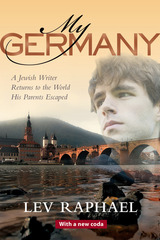
Haunted by his parents’ horrific suffering and traumatic losses under Nazi rule, Lev Raphael grew up loathing everything German. Those feelings shaped his Jewish identity, his life, and his career. While researching his mother’s war years after her death, he discovers a distant relative living in the very city where she had worked in a slave labor camp, found freedom, and met his father. Soon after, Raphael is launched on book tours in Germany and, in the process, redefines himself as someone unafraid to face the past and let it go.
Bookmarks, “Top Ten Nonfiction Titles of 2009”
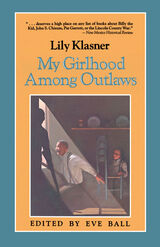
In My Girlhood Among Outlaws, Lily recalls her experiences with Billy the Kid and other desperadoes, and sets the record straight on popular misrepresentations of events. Of particular interest to historians is her preservation of the diary of famous cattleman and family friend John Chisum.

WINNER OF FC2’s RONALD SUKENICK INNOVATIVE FICTION PRIZE
Meditations on the ways grief is felt and harvested—the funny, the sorrowful, the surreal, and the unmentionable
The stories in My Haunted Home delve in startling ways into the lives of the obsessed, the grieving, and the truly haunted. Victoria Hood conjures a shifting range of narrators through an unstable range of worlds where mothers might be dead, girls compulsively shove peanuts inside their ears, agoraphobia traps people inside their houses, and cats won’t eat your soup. In “The Teeth, the Way I Smile,” a daughter who looks like her dead mother manifests grief both in her house and her body. In “Smelly Smelly,” a woman slowly comes to realize her boyfriend has been dead for weeks. In “You, Your Fault,” we explore the unfolding love of two women who love every part of each other—including the parts that fixate on arson and murder.
Each story is a bite-size piece of haunting candy on a necklace of obsession holding them together. Hood probes the worlds of what can be haunted, unpacking the ways in which hauntings can be manifested in physical forms, mentally harvested and lived through, and even a change in what is haunting.

Chonville’s novel is at the vanguard of a new Antillean literature that moves beyond créolité (the last identifiable literary movement in the Antillean canon) in several important ways: First, although it does reflect on the past (as indeed prescribed by the créolistes), it is firmly anchored in the present, which Chonville, a trained social scientist, captures unflinchingly. Second, it complexifies the Antilles gender landscape with characters whose intersectional realities are explored with depth and care.
My Heart Became a Bomb is the first collection of poetry by Syrian-Palestinian poet Ramy al-Asheq to be translated into English. Poignant and raw, these poems take the reader along a path of forced emigration from Bashar al-Assad’s prisons in Syria to Amsterdam to Auschwitz to Berlin, Germany, where Al-Asheq is now creating a new home. By turns melancholy and reflective, celebratory and hopeful, Al-Asheq’s newly translated poems offer the English-reading audience a contemporary perspective on the experience of exile in a world facing the phenomeno of mass migration, whether for political or environmental reasons. The translations are the result of a long collaboration between Al-Asheq and Thompson (who also edited this collection). Raising questions about the nature of love, identity, and the role of poetry in the face of constant flux and great uncertainty, My Heart Became a Bomb introduces an important new voice to the world of contemporary poetry.
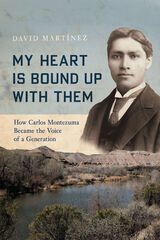
Through his diligent research and transcription of the letters archived in the Carlos Montezuma Collection at Arizona State University Libraries, David Martínez offers a critical new perspective on Montezuma’s biography and legacy. During an attempt to force the Fort McDowell Yavapai community off of their traditional homelands north of Phoenix, the Yavapai community members and leaders wrote to Montezuma pleading for help. It was these letters and personal correspondence from his Yavapai cousins George and Charles Dickens, as well as Mike Burns that sparked Montezuma’s desperate but principled desire to liberate his Yavapai family and community—and all Indigenous people—from the clutches of an oppressive Indian Bureau.
Centering historically neglected Indigenous voices as his primary source material, Martínez elevates Montezuma’s correspondence and interactions with his family and their community and shows how it influenced his advocacy. Martínez argues that Montezuma’s work in Arizona directly contributed to his national projects. For his Yavapai community, Montezuma set an example as a resistance fighter and advocate on behalf of his people and other Indigenous groups. Martínez offers a critical exploration of history, memory, the formation of archival collections, and the art of writing biography.
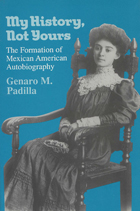
"I am willing to relate all I can remember, but I wish it clearly understood that it must be in my own way, and at my own time. I will not be hurried or dictated to. It is my history and not yours I propose to tell.”—Mariano Guadelupe Vallejo, on “Recuerdos históricos y personales” (1875)
My History, Not Yours is a landmark study of the autobiographical writings of Mexican Americans in the century following the US-Mexican War of 1846-1848. Some 75,000 inhabitants of what is now Texas, New Mexico, Arizona, Nevada, and California were suddenly foreigners on their own lands. Faced with the deliberate obliteration of their history, culture, language, and personal experiences, these women and men set down the stories of their lives and their communities, as a means of both remembering and resisting.
Genaro M. Padilla and other scholars have begun to uncover the huge store of literary materials forgotten in manuscript archives: memoirs long out of print, others unpublished and unread, diaries, family histories, poetry, correspondence, and texts of corridos (ballads). Padilla writes, “Lives are scattered on broken pages, faded, partially lost at the margins, suspended in language unread until there is a reader who opens the file and begins. It is my intention to initiate a recovery of that autobiographical formation that emerged after a war of conquest.”
In providing an overview of this rich literature, Padilla also points out the power relations embedded in the narratives, showing that the reconstruction of the Mexican past was not merely nostalgic idealization, but often an angry and deeply politicized recovery of a world ruptured by American domination.
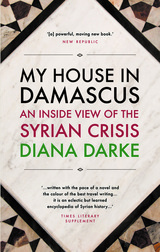
Diana Darke, a fluent Arabic speaker who moved to Damascus in 2004 after decades of regular visits, details how the Assad regime, and its relationship to the people, differs from the regimes in Egypt, Tunisia, and Libya—and why it was thus always less likely to collapse quickly, even in the face of widespread unrest and violence. Through the author’s firsthand experiences of buying and restoring a house in the old city of Damascus, which she later offered as a sanctuary to friends, Darke presents a clear picture of the realities of life on the ground and what hope there is for Syria’s future. Including additional material on topics like the advance of the Islamic State, as well as a new epilogue describing the current turmoil surrounding her house and the refugees she tried to help, this edition of My House in Damascus powerfully documents the human cost of the ongoing civil war.

Philip Hubbard's life story begins in 1921 in Macon, a county seat in the Bible Belt of north central Missouri, whose history as a former slave state permeated the culture of his childhood. When he was four his mother moved her family 140 miles north to Des Moines in search of the greater educational opportunity that Iowa offered African American students. In this recounting of the effects of that journey on the rest of his life, Phil Hubbard merges his private and public life and career into an affectionate, powerful, and important story.
Hubbard graduated from the University of Iowa with a degree in electrical engineering in 1946; by 1954 he had received his Ph.D. in hydraulics. The College of Engineering extended a warm academic welcome, but nonacademic matters were totally different: Hubbard was ineligible for the housing and other amenities offered to white students. Intelligent, patient, keenly aware of discrimination yet willing to work from within the university system, he advanced from student to teacher to administrator, retiring in 1991 after decades of leadership in the classroom and the conference room.
Hubbard's major accomplishments included policies that focused on human rights; these policies transformed the makeup of students, faculty, and staff by seeking to eliminate discrimination based on race, religion, or other nonacademic factors and by substituting affirmative action for the traditional old-boy methods of selecting faculty and administrators. At the same time that he was advancing the cause of human rights and cultural diversity in education, his family was growing and thriving, and his descriptions of home life reveal one source of his strength and inspiration.
The decades that Hubbard covers were vital in the evolution of the nation and its educational institutions. His dedication to the agenda of public higher education has always been matched by his sensitivity to the negative effects of discrimination and his gentle perseverance toward his goals of inclusion, acceptance, and fairness. His vivid personal and institutional story will prove valuable at this critical juncture in America's racial history.
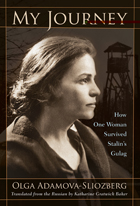
Arrested along with her husband (who, she would much later learn, was shot the next day) in the great purges of the thirties, Adamova-Sliozberg decided to record her Gulag experiences a year after her arrest, and she “wrote them down in her head” (paper and pencils were not available to prisoners) every night for years. When she returned to Moscow after the war in 1946, she composed the memoir on paper for the first time and then buried it in the garden of the family dacha. After her re-arrest and seven more years of banishment to Kazakhstan, she returned to the dacha to dig up the buried memoir, but could not find it. She sat down and wrote it all over again.
In her later years she also added a collection of stories about her family. Concluding on a hopeful note—Adamova-Sliozberg’s record is cleared, she re-marries a fellow former-prisoner, and she is reunited with her children—this story is a stunning account of perseverance in the face of injustice and unimaginable hardship. This vital primary source continues to fascinate anyone interesting in the tumultuous history of Russia and the Soviet Union in the twentieth century.

An institution at the Chicago Sun-Times, his home paper for more than twenty–five years, Pulitzer Prize-winning editorial cartoonist Jack Higgins gathers for the first time in My Kind of ’Toon (Chicago Is) approximately 250 editorial and political cartoons. Over the years, he has filed syndicated cartoons from the Soviet Union, Hungary, Ireland, and Cuba. From his front-row seat he has lately focused on the highs and lows of the Chicago and Illinois politics that produced both the first African American president and a string of corrupt gubernatorial administrations.
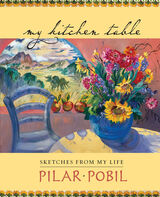
Other stories describe her meeting in Mallorca with the Utah man who would become her husband, her journey to a faraway country, the birth of her children, and her discovery of her artistic impulses and abilities. All are woven with the threads of color and culture of her two homes. Filled with wit and insight, My Kitchen Table reveals foremost the voice of a woman determined to be true to herself and to her art.
Accompanying the narrative are some fifty color reproductions of the paintings and sculptures for which Pilar Pobil has become known. This is a volume that art lovers everywhere will treasure.
"Like her paintings, Pilar’s stories overflow their pages. They fold us into their embrace, so we feel and see her dancing in and out of our minds, a curious and mischievous child, a young woman in love coming to a foreign land with a foreign culture and tongue, the heartbreak of her losses, and the continual renewals that have ripened her art. Pilar’s book, like her house, is a magic kingdom and she is the fairy princess who presides. She paints her shoes for social engagements. The seats of her chairs beam faces. Her electrical wiring metamorphoses into fantastic snakes. The garden that leads to her studio is Salt Lake City’s Giverny. Paintings are everywhere and talk to each other with glittering non sequiturs. At the center of it all is her kitchen table, the place from which she serves the voices and visions of her life. The subtleties of her telling, like the bold clarity of her judgments, are those of an artist whose inspirations are a feast she graciously invites us to share."
— from the Foreword by Robert D. Newman, Dean of the College of Humanities, University of Utah
A finalist for the Utah Book Award in Nonfiction.
My Language Is a Jealous Lover explores the plights and successes of authors who lived and wrote in languages other than their mother tongue, from Samuel Beckett and Vladimir Nabokov to Ágota Kristóf and Joseph Brodsky. Author Adrián N. Bravi weaves their stories in with his own experiences as an Argentinian-Italian, thinking and writing in the language of his new life while recalling that of his childhood. Bravi bears witness to the frustrations, the soul-searching, the pain, and the joys of embracing another language.
In addition to detailed annotations of the autobiography, translator Chia-ning Chang offers a comprehensive introduction to the career and the significance of Yamamoto and his works in the context of Japanese film history. It contextualizes Yamamoto’s life and works in the historical and cultural zeitgeist of prewar, wartime, and postwar Japan before scrutinizing the unique qualities of his narrative voice and social conscience as a film artist.
"Ever since the creators of the animated television show South Park turned their lovingly sardonic gaze on the massively multiplayer online game World of Warcraft for an entire episode, WoW's status as an icon of digital culture has been secure. My Life as a Night Elf Priest digs deep beneath the surface of that icon to explore the rich particulars of the World of Warcraft player's experience."
—Julian Dibbell, Wired
"World of Warcraft is the best representative of a significant new technology, art form, and sector of society: the theme-oriented virtual world. Bonnie Nardi's pioneering transnational ethnography explores this game both sensitively and systematically using the methods of cultural anthropology and aesthetics with intensive personal experience as a guild member, media teacher, and magical quest Elf."
—Lisa Nakamura, University of Illinois
World of Warcraft rapidly became one of the most popular online world games on the planet, amassing 11.5 million subscribers—officially making it an online community of gamers that had more inhabitants than the state of Ohio and was almost twice as populous as Scotland. It's a massively multiplayer online game, or MMO in gamer jargon, where each person controls a single character inside a virtual world, interacting with other people's characters and computer-controlled monsters, quest-givers, and merchants.
In My Life as a Night Elf Priest, Bonnie Nardi, a well-known ethnographer who has published extensively on how theories of what we do intersect with how we adopt and use technology, compiles more than three years of participatory research in Warcraft play and culture in the United States and China into this field study of player behavior and activity. She introduces us to her research strategy and the history, structure, and culture of Warcraft; argues for applying activity theory and theories of aesthetic experience to the study of gaming and play; and educates us on issues of gender, culture, and addiction as part of the play experience. Nardi paints a compelling portrait of what drives online gamers both in this country and in China, where she spent a month studying players in Internet cafes.
Bonnie Nardi has given us a fresh look not only at World of Warcraft but at the field of game studies as a whole. One of the first in-depth studies of a game that has become an icon of digital culture, My Life as a Night Elf Priest will capture the interest of both the gamer and the ethnographer.
Bonnie A. Nardi is an anthropologist by training and a professor in the Department of Informatics in the Donald Bren School of Information and Computer Sciences at the University of California, Irvine. Her research focus is the social implications of digital technologies. She is the author of A Small Matter of Programming: Perspectives on End User Computing and the coauthor of Information Ecologies: Using Technology with Heart and Acting with Technology: Activity Theory and Interaction Design.
Cover art by Jessica Damsky
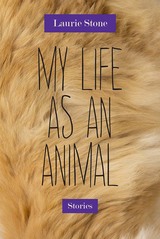
A woman meets a man and falls in love. She is sixty, a writer and lifelong New Yorker raised by garmentos. She thought this kind of thing wouldn’t happen again. He is English, so who knows what he thinks. He is fifty-six, a professor now living in Arizona, the son of a bespoke tailor. As the first of Laurie Stone’s linked stories begins, the writer contemplates what life would be like in the desert with the professor. As we learn how she became the person she is, we also come to know the artists and politics of the downtown scene of the ’70s, ’80s, and ’90s, a cultural milieu that remains alive in her. In sharply etched prose, Stone presents a woman constantly seduced by strangers, language, the streets— even a wildlife trail. Her characters realize that they feel at home in dislocation—in always living in two places at the same time: east and west, past and present, the bed and the grave (or copper urn). Love may not last, the writer knows. Then again, when has anything you thought about the future turned out right?
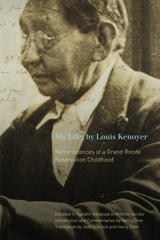

From humble beginnings in Hong Kong, Yuen Kwok-Yung rose to international prominence as a doctor, surgeon, academic, and microbiologist. As an advisor to governments, he and colleagues made discoveries that helped the world cope with unprecedented threats to public health, including the COVID-19 pandemic. In this compelling memoir, Dr. Yuen weaves personal stories with those from his extraordinary medical career to take readers on an inspiring journey about perseverance, courage, faith, and the ongoing peril of infectious diseases.
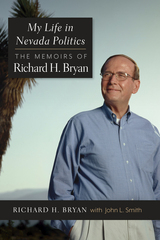
Born in Washington, D.C. in 1937, Bryan grew up in Las Vegas. His interest in politics started early, winning school-class elections and expressing a personal goal of one day becoming Governor of Nevada. He was elected student body president at the University of Nevada.
His career in public service began as a deputy district attorney in Clark County. In 1966, he became the first county public defender in state history. Bryan served in the Nevada Legislature in both the Assembly and Senate before winning the statewide office of Attorney General in 1978. He was elected Nevada Governor in 1982, winning re-election in 1986. Bryan was elected to the U.S. Senate in 1988, reelected in 1994, and served on the committees on Commerce, Banking, Taxation, and Intelligence, and chaired the Ethics Committee. He retired from the Senate in 2001 and returned to Nevada.
Bryan’s list of accomplishments is extensive. He was largely responsible for the early call-to-arms in the fight against the Department of Energy’s attempt to create a nuclear waste repository at Yucca Mountain. As governor, he reorganized state economic development programs, improved environmental protections for Lake Tahoe and other threatened areas, and made unprecedented appointments of women. In the Senate, Bryan authored the Southern Nevada Public Lands Management Act and the National Conservation Area for the High Rock Desert country. He had a front-row seat to the historic buildup to the Iraq War and the impeachment of President Bill Clinton. In retirement, Bryan continues to serve the state through his participation on a wide range of committees.
Throughout his political career, Bryan, with wife Bonnie at his side, traversed Nevada from its tiniest hamlets to the metro areas of Reno and Las Vegas with unrivaled zeal in his efforts to represent the state’s citizens. He is famous for knowing thousands of his constituents not only by their first names, but also recalling details of their lives. The simple fact is, while in service to Nevada, Bryan was in his element in the place he loves best.
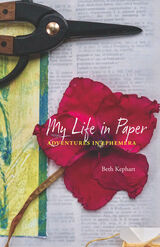
Kephart’s obsession with paper began in the wake of her father’s death, when she began to handcraft books and make and marble paper in his memory. But it was when she read My Life with Paper, an autobiography by the late renowned paper hunter and historian Dard Hunter, that she felt she had found a kindred spirit, someone to whom she might address a series of one-sided letters about life and how we live it. Remembering and crafting, wanting and loving, doubting and forgetting—the spine and weave of My Life in Paper came into view.
Paper, for Kephart, provides proof of our yearning, proof of our failure, proof of the people who loved us and the people we have lost. It offers, too, a counterweight to the fickle state of memory.
My Life in Paper, illustrated by the author herself, is an intimate and poignant meditation on life’s most pressing questions.
This is the inside story of the Palestine Liberation Organisation (PLO), from its beginnings in 1964 to the signing of the Oslo agreement in 1993.
For over three decades, the main goal of the PLO was to achieve a just peace in the Arab-Israeli conflict, and to build a democratic state in Palestine for all its citizens. Shafiq Al-Hout, a high ranking PLO official until his resignation in 1993, provides previously unavailable details on the key events in its history such as its recognition by the UN and the Oslo peace negotiations. Taking us right to the heart of the decision making processes, this book explains the personalities and internal politics that shaped the PLO's actions and the Palestinian experience of the twentieth century.
Although he was an insider, Al-Hout's book does not shy from analysing and criticising decisions and individuals, including Yasser Arafat. This book is an essential piece of history that sheds new light on the significance of the PLO in the Palestinian struggle for justice.

Normal0falsefalsefalseEN-USX-NONEX-NONE
An entertaining record of a life and a time
Ed Lowry joined the vaudeville circuit in 1910 at the age of fourteen. He never achieved stardom equal to the likes of Fred Allen, Jack Benny, George Burns, Buster Keaton, or Eddie Cantor, and he never considered himself an “artiste.” Instead, he saw himself as a hoofer and comic simply trying to make a living on the vaude scene. My Life in Vaudeville recounts Lowry’s long career in entertainment from the viewpoint of a foot soldier with a big dream.
Lowry’s story begins in the heyday of vaudeville in the early twentieth century and follows its gradual decline. Unlike many of his associates, he recognized that movies and other forms of entertainment were the future, and thus branched out into other venues. He took gigs in radio in Philadelphia, Newark, New York, and Los Angeles; explored revues, cabarets, burlesque, and film; and organized USO road shows. With wit and perception, he reveals his stage roots as an entertainer playing to his audience, and editor Paul M. Levitt’s introduction beautifully sets the stage for Lowry’s gags-to-riches tale, providing much-needed historical perspective.
My Life in Vaudeville is an unpretentious record of a time when thousands of young people went into show business to escape the boredom of daily life, and Lowry’s story is a view of vaudeville not often encountered. Lowry does much more than recall the daily life of a working actor, musician, and comedian. His story brings vaudeville to life and places it within the larger narratives of popular culture and popular entertainment of the twentieth century.
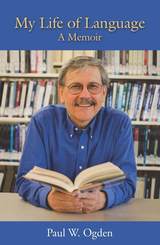
Paul W. Ogden has dedicated his life to educating young deaf and hard of hearing people and raising awareness of what it means to be deaf in a hearing world. He has taught and mentored a generation of teachers, and his classic volume, The Silent Garden, has served as a guide for parents and educators for over thirty years. Now he tells his personal story of challenges faced and lessons learned, revealing that the critical, guiding factors for him have always been language and successful communication.
Born in a time when many deaf children had no access to language, Paul learned spoken and written language skills at a young age through the painstaking efforts of his mother. His tight-knit family, which included one deaf and two hearing older brothers, facilitated open and constant communication using a variety of methods. His father was a pastor who was involved in the civil rights movement. He struggled with depression, an illness that would take the life of one of Paul’s brothers. As a student at a residential deaf school where the use of American Sign Language (ASL) was suppressed, Paul continued to build on the speech and lipreading skills he had learned at home. He returned home for high school and graduated as co-valedictorian—unaware of the standing ovation he received as he walked to the podium.
Following a rewarding experience as an undergraduate at Antioch College, Paul went on to earn a PhD from the University of Illinois, a rare accomplishment for a deaf person at that time. During his graduate studies, he finally had the opportunity to learn ASL. As an award-winning professor of Deaf Studies at California State University, Fresno, he successfully petitioned for the university to recognize ASL as a language, and he established the Silent Garden program, which has grown into a flourishing provider of training and resources to support the Deaf community. In My Life of Language, Paul offers eloquent reflections on both the joyful and difficult periods of his life as he navigated relationships, faced discrimination, questioned his faith, and found great happiness in his marriage.
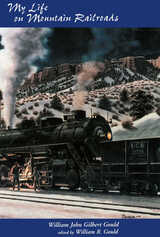
In 1917, Gilbert Gould achieved his dream to be an engineer, and began running engines for the Denver & Rio Grande and later for the Utah Railway. He was a natural storyteller, and his recollections are entertaining and historically rewarding.
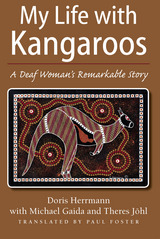
Doris Herrmann was born deaf in 1933 in Basel, Switzerland, and from the age of three, she possessed a mystical attraction to kangaroos. She recalls seeing them at that age for the first time at the Basel Zoo, and spending every spare moment visiting them from then on. Eventually, her fascination grew into passionate study of their behavior. Her dedication caught the attention of the zookeepers who provided her greater access to these extraordinary animals. Despite her challenges with communication, Herrmann wrote a scientific paper about the kangaroo’s pouch hygiene when raising a joey. Soon, experts from around the world came to visit this precocious deaf girl who knew about kangaroos.
Herrmann appreciated the opportunities opening up to her, but her real dream was to travel to Australia to study kangaroos in the wild. For years she worked and yearned, until Dr. Karl H. Winkelsträter a renowned authority on kangaroos, suggested an independent study in Australia at a place called Pebbly Beach. In 1969, at the age of 35, Herrmann finally traveled to the native land of kangaroos. During the next four decades, she would make many more trips to observe and write about kangaroos.
My Life with Kangaroos explores every facet of Herrmann’s connection to these engaging marsupials. Her single-minded devotion not only made her a leading self-made scholar on kangaroos, it transformed her own personality and her relationships with others. As she forged bonds with kangaroos named Dora, Jacqueline, Manuela, and many others, she engendered great affection and respect in the people around her, truly a remarkable story of success.
As its title implies, this book reflects in varying ways the experiences and attitudes of one who came of age in the first half of that now mythical decade, the 1960s. In an unusual combination of history, criticism, and autobiography, one of our best literary and cultural critics explores life and death in the late twentieth century and some of the older worlds that made American culture what it is today.
Sixties survivors, as Christopher Clausen points out, do not necessarily hold more beliefs or tastes in common than any other group. Nevertheless they may be more likely than most people born earlier or later to consider the relations between public and private life—the political and the personal—a problem, sometimes even an unresolvable problem. While this is not primarily a book about the 1960s, most of it occupies the noisy crossroads where public worlds intersect the private, mysterious lives of individuals and families, where ordinary people pursue their own destinies and desires while submitting consciously or unconsciously to the pressures of the public sphere—a set of demands or aspirations common to people in a particular time and place.
In modern America, where most of these essays are set, any individual is likely to live in several worlds at any given moment, as well as to pass through several more over a lifetime. Because of rapid transitions in public life and culture while they were still at an impressionable age, members of the “Kennedy generation” became almost morbidly conscious of the persistence of the past in the present. The often unpredictable effect on individual lives of historical forces is the main subject of Clausen's fascinating account.

Ever wonder what it’s like to interview famous athletes and coaches? For twenty years, sportscaster Jessie Garcia has done just that. In My Life with the Green & Gold she brings fans to the sidelines at Lambeau Field, inside the locker room, aboard the Packers bus, and into the host’s chair at The Mike McCarthy Show.
A self-proclaimed “terrible athlete” born without sports in her blood, Garcia reported on Wisconsin’s beloved Green Bay Packers during the Holmgren, Rhodes, Sherman, and McCarthy years. She’s been a Packers sideline reporter for preseason games and covered the team during their Super Bowl showdowns against the Patriots, Broncos, and Steelers. She’s traveled with the team to Tokyo and the White House and to schools and retirement homes, where the gridiron heroes interacted with their fans. She’s visited the hometowns of players and coaches, she’s met their proud parents and their pets, she’s interviewed the team trainer about their strength exercises. My Life with the Green & Gold also features up-close and personal stories about other teams and athletes she’s covered, from the Badgers and Brewers to Wisconsin Olympians such as Bonnie Blair and Casey FitzRandolph.
Garcia’s expertise is capturing behind-the-scenes, human-interest stories. In My Life with the Green & Gold, she shares a personal and humorous insider’s look at many Wisconsin sports heroes from the perspective of a female sports journalist who has ridden the adrenaline rush to be on the air at 5:00 a.m., 10:00 p.m., and any hour in between, while also juggling the many demands of family life. Not many parents can say they’ve changed their child’s diaper in the tunnel at Lambeau, but Jessie Garcia can.
This edition brings the entirety of this personal and idiosyncratic memoir to English for the first time.
My Lord, What a Morning is a gentle and engrossing memoir, abounding with the tender and inspiring stories of Marian Anderson's life in her own modest words. From her humble but proud beginnings in south Philadelphia to international vocal renown, the legendary contralto writes of triumph and adversity, of being grounded in faith and surrounded by family, and of the music that shaped her career.
Anderson published My Lord, What a Morning in 1956 on the heels of her groundbreaking role as the first African American to perform at the Metropolitan Opera. In it are bittersweet reminiscences of a working-class childhood, from her first job scrubbing the neighbors' steps to the sorrow and upheaval of her father's untimely death. Here are the stories of a young girl with prodigious talent and her warm remembrances of the teachers, managers, friends, accompanists, and fans who worked to foster it. In addition, she provides a veritable travelogue of her concerts across the globe and rare glimpses at the personal life of a woman more concerned with family than celebrity.
With eleven photographs and a touching new foreword by Anderson's nephew, famed conductor and poet James DePreist, this edition of My Lord, What a Morning revives the classic portrait of a musical legend who was resilient in the bullying face of bigotry and gracious in the unfaltering glow of fame.
His memoir, My Many Selves, is both an incisive self-examination and a creative approach to retelling his life. Writing his autobiography became a quest to harmonize the diverse, discordant parts of his identity and resolve the conflicts in what he thought and believed. To see himself clearly and whole, he broke his self down, personified the fragments, uncovered their roots in his life, and engaged his multiple identities and experiences in dialogue. Basic to his story and to its lifelong concerns with ethics and rhetoric was his youth in rural Utah. He valued that background, while acknowledging its ambiguous influence on him, and continued to identify himself as Mormon, though he renounced most Latter-day Saint doctrines.
Wayne Booth died in October 2005, soon after completing work on his autobiography.
By universal acclaim, Diana Kennedy is the world’s authority on the authentic cuisines of Mexico. For decades, she has traveled the length and breadth of the country, seeking out the home cooks, local ingredients, and traditional recipes that make Mexican cuisines some of the most varied and flavorful in the world. Kennedy has published eight classic Mexican cookbooks, including the James Beard Award-winning Oaxaca al Gusto. But her most personal book is My Mexico, a labor of love filled with more than three hundred recipes and stories that capture the essence of Mexican food culture as Kennedy has discovered and lived it. First published in 1998, My Mexico is now back in print with a fresh design and photographs—ready to lead a new generation of gastronomes on an unforgettable journey through the foods of this fascinating and complex country.
READERS
Browse our collection.
PUBLISHERS
See BiblioVault's publisher services.
STUDENT SERVICES
Files for college accessibility offices.
RECENTLY PUBLISHED



UChicago Accessibility Resources
home | accessibility | search | about | contact us
BiblioVault ® 2001 - 2026
The University of Chicago Press