
 A SCHOLARLY BOOK REPOSITORY
73 start with N start with N

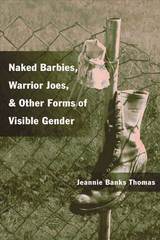
Images of females are often emphasized or sexualized, frequently through nudity or partial nudity, whereas those of the male body are not only clothed but also armored in the trappings of action and aggression. Thomas locates these various objects of folk art within a discussion of the post–women's movement discourse on gender.
In addition to the items themselves, Thomas explores the stories and behaviors they generate, including legends of the supernatural about cemetery statues, oral narratives of yard artists and accounts of pranks involving yard art, narratives about children's play with Barbie, Ken, and G.I. Joe, and the electronic folklore (or "e-lore") about Barbie that circulates on the Internet.

Winner of the Laurence Wylie Prize in French Cultural Studies
One of the first books on “Gays in the Military” published following the historic repeal of “Don't Ask Don't Tell” in 2011, Napoleonic Friendship examines the history of male intimacy in the French military, from Napoleon to the First World War. Echoing the historical record of gay soldiers in the United States, Napoleonic Friendship is the first book-length study on the origin of queer soldiers in modern France. Based on extensive archival research in France, the book traces the development of affectionate friendships in the French Army from 1789 to 1916.
Following the French Revolution, radical military reforms created conditions for new physical and emotional intimacy between soldiers, establishing a model of fraternal affection during the Revolutionary and Napoleonic Wars that would persist amid the ravages of the Franco-Prussian War and World War I. Through readings of Napoleonic military memoirs (and other non-fiction archival material) and French military fiction (from Hugo and Balzac to Zola and Proust), Martin examines a broad range of emotional and erotic relationships, from combat buddies to soldier lovers. He argues that the French Revolution's emphasis on military fraternity evolved into an unprecedented sense of camaraderie in the armies of Napoleon. For many soldiers, the hardships of combat led to intimate friendships. For some, the homosociality of military life inspired mutual affection, lifelong commitment, and homoerotic desire.
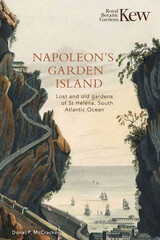
Though the South Atlantic island of St. Helena is best known as the site of Napoleon’s exile following his final defeat in 1815, this remote locale also has a rich gardening heritage and a population of highly diverse flora, both exotic and endemic. This is due to St. Helena’s history as a stopover for the vast East India Company fleets on their way to Europe, whose cargo holds carried not only spices but also plants from China, Malaysia, and India. As a result, St. Helena became a botanical hub and the island’s private plantation houses cultivated a number of extraordinarily varied gardens.
Illustrated throughout with drawings, maps, and archival materials, Napoleon’s Garden Island looks to St. Helena’s past and future alike. McCracken explores the island’s native and introduced flora, ultimately appealing for the establishment of a new permanent garden to showcase this singular botanical blend. Turning away from the military matters that characterize most other books about St. Helena’s history, Napoleon’s Garden Island highights how a dazzling assortment of plants have thrived thousands of miles from their nearest neighbors.

An analysis of the ways film and media create topographies of cities, architecture, and metropolitan experiences.
Narrating the City examines how film and related visual media offer insights and commentary on the city as both a constructed object and a lived social experience. It brings together filmmakers, architects, digital artists, designers, and media journalists who critically read, reinterpret, and create narratives of the city. Analyzing a variety of international films and placing them in dialogue with video art, photographic narratives, and emerging digital image-based technologies, the authors explore the expanding range of “mediated” narratives of contemporary architecture and urban culture from both a media and a sociological standpoint.
The authors explore how moving-image narratives can create cinematic topographies, presenting familiar cities and modes of seeing in unfamiliar ways. The authors then turn to the new age of digital image making and consumption, revealing new techniques of representation, mediation, and augmentation of sensorial reality for city dwellers. The book’s emphasis on narrative also offers insights into critical societal issues including cultural identity, diversity, memory, and spatial politics, as they are both informed by and represented in various media.
In Narrative Interplay in the Digital Era, leading scholars and artists explore how digital narratives, alternate reality games, and AI-driven storytelling reshape how we create, experience, and teach interactive fiction. This collection moves beyond traditional analysis and examines the social and artistic dimensions of interactivity, highlighting how narratives unfold dynamically through player engagement and machine collaboration.
Organized into three sections—alternate realities, digital interactive fiction, and the politics of gaming—this book reveals the evolving role of play and interactivity in contemporary education, creative expression, and online culture. Contributors offer insights from inside the creative process, centering the perspectives of game designers and artists to shed light on how interactive stories emerge at the intersection of technology and human imagination.
A practical resource for researchers in game studies, electronic literature, and digital storytelling, this collection also speaks to educators and creators eager to explore how AI and interactivity are redefining the future of narrative.
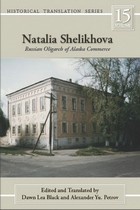
This volume makes available for the first time in English a variety of primary source materials relating to the life and work of Natalia Shelikov, a pioneering nineteenth-century Russian-American businesswoman. As a principal of the Russian-American Company, Shelikov worked in Alaska, and her business acumen and wide-ranging connections—including the empress of Russia and a swathe of northern leaders—were crucial to the growth of Alaska’s economy, as well as to the welfare of the Native people, in whose life and culture she took a strong interest. The letters, petitions, and personal documents presented here will be indispensable for students of Alaska and nineteenth-century women’s history.
“An engaging treatment of a topic of perennial concern and frequent misunderstanding, this lucid tale of the brief moment when the United States was debt-free should be on every Congress member’s bedside table.”—Peter J.Woolley, Professor of Comparative Politics, Fairleigh Dickinson University
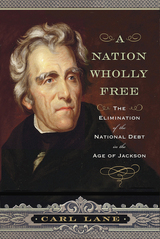
When President James Monroe announced in his 1824 message to Congress that, barring an emergency, the large public debt inherited from the War for Independence, the Louisiana Purchase, and the War of 1812 would be extinguished on January 1, 1835, Congress responded by crafting legislation to transform that prediction into reality. Yet John Quincy Adams,Monroe’s successor, seemed not to share the commitment to debt freedom, resulting in the rise of opposition to his administration and his defeat for reelection in the bitter presidential campaign of 1828. The new president, Andrew Jackson, was thoroughly committed to debt freedom, and when it was achieved, it became the only time in American history when the country carried no national debt. In A Nation Wholly Free: The Elimination of the National Debt in the Age of Jackson, award-winning economic historian Carl Lane shows that the great and disparate issues that confronted Jackson, such as internal improvements, the “war” against the Second Bank of the United States, and the crisis surrounding South Carolina’s refusal to pay federal tariffs, become unified when debt freedom is understood as a core element of Jacksonian Democracy.
The era of debt freedom lasted only two years and ten months. As the government accumulated a surplus, a fully developed opposition party emerged—the beginning of our familiar two-party system—over rancor about how to allocate the newfound money. Not only did government move into an oppositional party system at this time, the debate about the size and role of government distinguished the parties in a pattern that has become familiar to Americans. The partisan debate over national debt and expenditures led to poorly thought out legislation, forcing the government to resume borrowing. As a result, after Jackson left office in 1837, the country fell into a major depression. Today we confront a debt that exceeds $17 trillion. Indeed, we have been borrowing ever since that brief time we freed ourselves from an oversized debt. A thoughtful, engaging account with strong relevance to today, A Nation Wholly Free is the fascinating story of an achievement that now seems fanciful.
Drawing on extensive ethnographic research, Ramos-Zayas shows how the performance of Puerto Rican nationalism in Chicago serves as a critique of social inequality, colonialism, and imperialism, allowing barrio residents and others to challenge the notion that upward social mobility is equally available to all Americans—or all Puerto Ricans. Paradoxically, however, these activists' efforts also promote upward social mobility, overturning previous notions that resentment and marginalization are the main results of nationalist strategies.
Ramos-Zayas's groundbreaking work allows her here to offer one of the most original and complex analyses of contemporary nationalism and Latino identity in the United States.
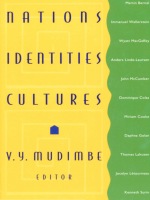
Examining the degree to which twentieth-century representations of colonization, revolution, and modernity are nineteenth-century constructs, Nations, Identities, Cultures locates contemporary political thought in an ethos of exile, nostalgic for bygone places and cultures of the nineteenth century. The contributors interrogate the significance of changes in the way the political is conceptualized and the impact of shifting representations of political society on our understanding of nation, identity, and culture. Approaches to these issues range from broad perspectives on global culture, civil society, liberalism, and dialectical identity to specific case studies on the politics of Quebec, the Russian muzhik, Israel’s borders, the ancient Greek origins of European culture, Kongo nationalism, the women of Lebanon, and the Danish/Swedish border.
Contributors. Martin Bernal, Dominique Colas, Miriam Cooke, Daphna Golan, Thomas Lahusen, Jocelyn Létourneau, Anders Linde-Laursen, Wyatt MacGaffey, John McCumber, V. Y. Mudimbe, Kenneth Surin, Immanuel Wallerstein
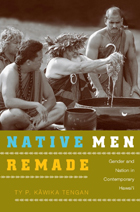
The sharing of personal stories is an integral part of Hale Mua fellowship, and Tengan’s account is filled with members’ first-person narratives. At the same time, Tengan explains how Hale Mua rituals and practices connect to broader projects of cultural revitalization and Hawaiian nationalism. He brings to light the tensions that mark the group’s efforts to reclaim indigenous masculinity as they arise in debates over nineteenth-century historical source materials and during political and cultural gatherings held in spaces designated as tourist sites. He explores class status anxieties expressed through the sharing of individual life stories, critiques of the Hale Mua registered by Hawaiian women, and challenges the group received in dialogues with other indigenous Polynesians. Native Men Remade is the fascinating story of how gender, culture, class, and personality intersect as a group of indigenous Hawaiian men work to overcome the dislocations of colonial history.

Just about everyone loves Mexican food, but should you eat it if you want to manage your weight or diabetes? Yes, absolutely! There are literally hundreds of authentic Mexican dishes that are naturally healthy—moderate in calories, fat, and sugar—and completely delectable. In Naturally Healthy Mexican Cooking, Jim Peyton presents some two hundred recipes that have exceptional nutrition profiles, are easy to prepare, and, most important of all, taste delicious.
Peyton starts from the premise that for any diet to work, you have to enjoy the food you’re eating. Substitutions that alter the taste and pleasure of food, such as nonfat yogurt for mayonnaise, have no place here. Instead, you’ll find tasty, highly nutritious, low-calorie dishes from the various schools of Mexican and Mexican American cooking in Texas, New Mexico, Arizona, and California. From traditional meat, seafood, and vegetarian entrees and antojitos mexicanos, including tacos, enchiladas, and tamales, to upscale alta cocina mexicana such as shrimp ceviche and mango salsa, these recipes are authentic, simple for home cooks to prepare with supermarket ingredients, flavorful, and fully satisfying in moderate portions. Every recipe includes nutritional analysis—calories, protein, carbs, fat, cholesterol, fiber, sugar, and sodium. In addition to the recipes, Peyton offers helpful information on diet and healthy eating, Mexican cooking and nutrition, ingredients, cooking techniques, and cooking equipment.
Try the recipes in Naturally Healthy Mexican Cooking, and you’ll discover that comfort food can be both delicious and good for you. ¡Buen provecho!

"Irving Singer . . . has developed a method of historical analysis flexible enough to deal with all kinds of love, from Greek homosexual love in Plato, to the philia and agape of the New Testament, to the courtly love of medieval romance, to the Romantics, for whom love was magic. . . . [This] final volume brings us to the present. In 'The Modern World,' Singer offers readings of Freud, Proust, and Sartre, among others. He shows how their work was formed in reaction to the 19th-century ideal of 'merging' of the identities of lover and beloved. More often than not, the great modern writers portray love as impossible, as a field of failure and regret. . . . This masterpiece of critical thinking is a timely, eloquent, and scrupulous account of what, after all, still makes the world go round."—Thomas D'Evelyn, Christian Science Monitor
"This is the third of a three-volume history of the philosophy of love. It begins with Kierkegaard, Tolstoy, and Nietzsche in the nineteenth century and treats Freud, Proust, Bergson, D. H. Lawrence, G. B. Shaw, Santayana, Sartre, and others in the twentieth. Although the author's approach is primarily historical, he intersperses critical remarks throughout. Most of the major themes which are discussed by philosophers of love make their way into this history, including friendship, sexual love, and the distinction between love that is based on the value of the beloved and love that bestows value on the beloved. Singer devotes a number of pages to his own views on falling in love, being in love, and staying in love. . . . Singer's exposition is lucid and organized; his criticisms are insightful."—Ethics
"In this third volume of historical overview of the development of the Western conception of love, Singer uses writers, philosophers, and psychologists to provide the reader with an overview of love in the late 19th and 20th century. . . . Analyzing authors such as Tolstoy, Proust, D. H. Lawrence, and Shaw and philosophers such as Nietzsche, Kierkegaard, Sartre, and Santayana, as well as Freud, Singer . . . links each contributor's thoughts to the influence of previous writers and also provides some psycho-historical insight into their personal lives that might have been either a source or direct result of their views. In this final volume, Singer proceeds to look at not just the 'great men' influence but also provides a chapter overviewing scientific contributions to our understanding of love. . . . Singer's work is a significant contribution to understanding the social construction of important, abstract social and personal values. By tracing love through different historical periods through a variety of voices, Singer has created a rich history of the struggle between the ideal and the real, between the dreams of what love should provide and the reality of what relationships have been in each historical period. By personalizing the voice through psychohistorical analysis, Singer also provides insight into the shaping of ideas through the intimate struggles of the shapers."—Mark V. Chaffee, Contemporary Psychology
In Nature's Kindred Spirits James McClintock shows how their mystical experiences with the wild led to dramatic conversions in their thinking and behavior. By embracing the ecstasy of nature, they reject modern alienation and spiritual confusion.
From Aldo Leopold, America’s most important conservationist and author of the classic A Sand County Almanac, to Pulitzer Prize winners Annie Dillard and Gary Snyder and defenders of the desert Joseph Wood Krutch and Edward Abbey, these writers share a common vision that harkens back to Henry David Thoreau and John Muir. To nineteenth-century Romantic ideals, they add the authority of modern ecological science. Collectively they have elevated nature’s importance in American culture, shaping the growth of the environmental movement and influencing American environmental policies.
Widely admired among educated readers but relatively neglected by the literary establishment, these writers unite the experiential with the metaphysical, the ordinary with the sacred, the personal with the public, and the natural with the social. Using ecology as a touchstone, McClintock further draws connections among science, politics, religion, and philosophy to create an enlightening overview of the work of these “kindred spirits.”
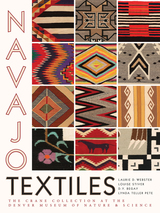
Navajo Textiles provides a nuanced account the Navajo weavings in the Crane Collection at the Denver Museum of Nature & Science—one of the largest collections of Navajo textiles in the world. Bringing together the work of anthropologists and indigenous artists, the book explores the Navajo rug trade in the mid-nineteenth century and changes in the Navajo textile market while highlighting the museum’s important, though still relatively unknown, collection of Navajo textiles.
In this unique collaboration among anthropologists, museums, and Navajo weavers, the authors provide a narrative of the acquisition of the Crane Collection and a history of Navajo weaving. Personal reflections and insights from foremost Navajo weavers D. Y. Begay and Lynda Teller Pete are also featured, and more than one hundred stunning full-color photographs of the textiles in the collection are accompanied by technical information about the materials and techniques used in their creation. An introduction by Ann Lane Hedlund documents the growing collaboration between Navajo weavers and museums in Navajo textile research.
The legacy of Navajo weaving is complex and intertwined with the history of the Diné themselves. Navajo Textiles makes the history and practice of Navajo weaving accessible to an audience of scholars and laypeople both within and outside the Diné community.


“Necessity, Cause and Blame would be counted by all as one of Sorabji’s finest. The book is essential for philosophers—both specialists on the Greeks and modern thinkers about free will—and also compelling for non-specialists.”—Martha Nussbaum
“Original and important . . . The book relates Aristotle’s discussions to both the contemporary debates on determinism and causation and the ancient ones. It is especially detailed on Stoic arguments about necessity . . . and on the social and legal background to Aristotle’s thought.”—Choice
“It is difficult to convey the extraordinary richness of this book. . . . A Greekless philosopher could read it with pleasure . . . At the same time, its learning and scholarship are enormous.”—G. E. M. Anscombe, Times Literary Supplement
Situating Bresson in radical and aesthetic political contexts, from surrealism to situationism, Neither God nor Master shows how his early style was a model for social resistance. We then see how, after May 1968, his films were in fact a series of reflections on the failure of revolution in France—especially as “failure” is understood in relation to Bresson’s chosen literary precursors, Dostoyevsky and Tolstoy, and Russian revolutionary culture of the nineteenth century.
Restoring Bresson to the radical political culture from which he emerged—and to which he remained faithful—Price offers a major revision of the reputation of one of the most celebrated figures in the history of French film. In doing so, he raises larger philosophical questions about the efficacy of revolutionary practices and questions about interpretation and metaphysical tendencies of film historical research that have, until now, gone largely untested.
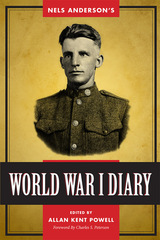
Nels Anderson’s World War I Diary provides a rare glimpse into the wartime experiences of one of the most well-respected sociologists of the twentieth century, the renowned author of The Hobo (1920) and Desert Saints: The Mormon Frontier in Utah (1942). Anderson, a keen observer of people, places, and events his entire life, joined the U.S. Army in 1918 at the age of 29 and was sent to Europe to fight as part of the Allied Expeditionary Force (AEF) under General Pershing. Because keeping a journal was strongly discouraged among American forces during WWI, particularly among the rank-and-file soldiers, Anderson’s diary stands as a rare gem. Furthermore, it is the only known account of war service during WWI by a member of the LDS Church. Anderson joined the Mormon faith after accepting the hospitality of an extended Mormon ranching family during his travels throughout the American West as a working hobo.
Anderson’s accounts of the St. Mihiel and Meuse-Argonne offensives are particularly remarkable given the challenges of keeping a detailed journal amidst the chaos and suffering of the war’s Western Front. His insights into the depravity and callousness of war are buttressed with intimate human portraits of those to whom he was closest. The war years provided many formative experiences that would prove to have a lasting influence on Anderson’s views regarding the working poor, authority, and human values; this would come to bear heavily on his later work as a pioneering sociologist at the University of Chicago, where he helped establish participant observation as a research method. The many introspective entries contained in this volume will be of reat interest to military historians and history buffs as well as to those in the social sciences looking to find the intellectual origins of Anderson’s later work in the burgeoning field of sociology.
Winner of the Army Historical Foundation Distinguished Writing Award for Journals, Memoirs, and Letters.
Orlando illuminates the diverse themes evident in the works of filmmakers such as Ousmane Sembène’s Ceddo (Senegal, 1977), Sarah Maldoror’s Sambizanga (Angola, 1972), Assia Djebar’s La Nouba des femmes de Mont Chenoua (The Circle of women of Mount Chenoua, Algeria, 1978), Zézé Gamboa’s The Hero (Angola, 2004) and Abderrahmane Sissako’s Timbuktu (Mauritania, 2014), among others. Orlando also considers the influence of major African film schools and their traditions, as well as European and American influences on the marketing and distribution of African film. For those familiar with the polemics of African film, or new to them, Orlando offers a cogent analytical approach that is engaging.
With expert knowledge and a wry sense of humor, Aliber demystifies international finance by breaking through the jargon barrier and presenting technical issues in a clear and concise manner. Aliber takes the reader on a tour of a multiplicity of international finance issues, included fixed and floating exchange rates, devaluations, money markets, monetary policy, and the concepts that lie behind the esoteric language of financial economists.
This sixth edition tracks the changes that have taken place in the world economy since the previous editions by exploring financial globalization, postcommunist transition, European integration, and the Asian economic crisis. It is an indispensable and highly readable guide to the complex and increasingly fragile system through which the world's business is financed.



In this compelling look at second-generation Indian Americans, Khyati Y. Joshi draws on case studies and interviews with forty-one second-generation Indian Americans, analyzing their experiences involving religion, race, and ethnicity from elementary school to adulthood. As she maps the crossroads they encounter as they navigate between their homes and the wider American milieu, Joshi shows how their identities have developed differently from their parents’ and their non-Indian peers’ and how religion often exerted a dramatic effect.
The experiences of Joshi’s research participants reveal how race and religion interact, intersect, and affect each other in a society where Christianity and whiteness are the norm. Joshi shows how religion is racialized for Indian Americans and offers important insights in the wake of 9/11 and the backlash against Americans who look Middle Eastern and South Asian.
Through her candid insights into the internal conflicts contemporary Indian Americans face and the religious and racial discrimination they encounter, Joshi provides a timely window into the ways that race, religion, and ethnicity interact in day-to-day life.
As public housing is torn down and money floods back into cities across the United States, countless neighborhoods are being monumentally altered. The New Urban Renewal is a compelling study of the shifting dynamics of class and race at work in the contemporary urban landscape.
This volume presents advanced studies that consider this fundamental difference between New York and Los Angeles while comparing and contrasting politics and culture in each region. An esteemed group of contributors from a wide variety of disciplines considers issues that include immigration, the effects of race and class on residence, the efficacy of public schools, the value of welfare reform, the meaning of mayoral politics, the function of charter reform, and the respective roles of the cinema and art scenes in each city.
Capturing much of what is new and vibrant in urban studies today, New York and Los Angeles will prove to be must reading for scholars in that field, as well as in sociology, political science, and government.
Contributors:
Andrew Beveridge, Mehdi Bozorgmehr, Geoffrey DeVerteuil, Susan S. Fainstein, Robert Gedeon, Saverio Giovacchini, David L. Gladstone, David Halle, Jack Katz, Karen M. Kaufmann, Rebecca Kim, Mark Levitan, Kevin Rafter, Georges Sabagh, David O. Sears, Heidi Sommer, Raphael J. Sonenshein, András Szántó, Lois Takahashi, Susan Weber, Jennifer Wolch, Julia Wrigley, Min Zhou
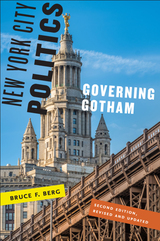
New York City Politics focuses on the impact of these three forces on the governance of New York City’s political system including the need to promote democratic accountability, service delivery equity, as well as the maintenance of civil harmony. This second edition updates the discussion with examples from the Bloomberg and de Blasio administrations as well as current public policy issues including infrastructure, housing and homelessness, land use regulations, and education.
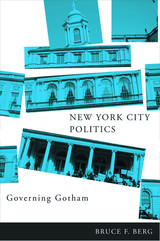
New York City Politics focuses on the impact of these three forces on the governance of New York City’s political system including the need to promote democratic accountability, service delivery equity, as well as the maintenance of civil harmony. This second edition updates the discussion with examples from the Bloomberg and de Blasio administrations as well as current public policy issues including infrastructure, housing and homelessness, land use regulations, and education.
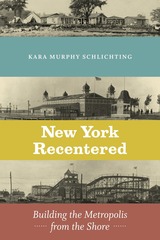
The history of New York City’s urban development often centers on titanic municipal figures like Robert Moses and on prominent inner Manhattan sites like Central Park. New York Recentered boldly shifts the focus to the city’s geographic edges—the coastlines and waterways—and to the small-time unelected locals who quietly shaped the modern city. Kara Murphy Schlichting details how the vernacular planning done by small businessmen and real estate operators, performed independently of large scale governmental efforts, refigured marginal locales like Flushing Meadows and the shores of Long Island Sound and the East River in the late nineteenth and early twentieth centuries. The result is a synthesis of planning history, environmental history, and urban history that recasts the story of New York as we know it.
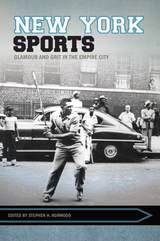
New York has long been both America’s leading cultural center and its sports capital, with far more championship teams, intracity World Series, and major prizefights than any other city. Pro football’s “Greatest Game Ever Played” took place in New York, along with what was arguably history’s most significant boxing match, the 1938 title bout between Joe Louis and Max Schmeling. As the nation’s most crowded city, basketball proved to be an ideal sport, and for many years it was the site of the country’s most prestigious college basketball tournament. New York boasts storied stadiums, arenas, and gymnasiums and is the home of one of the world’s two leading marathons as well as the Belmont Stakes, the third event in horse racing’s Triple Crown.
New York sportswriters also wield national influence and have done much to connect sports to larger social and cultural issues, and the vitality and distinctiveness of New York’s street games, its ethnic institutions, and its sports-centered restaurants and drinking establishments all contribute to the city’s uniqueness.
New York Sports collects the work of fourteen leading sport historians, providing new insight into the social and cultural history of America’s major metropolis and of the United States. These writers address the topics of changing conceptions of manhood and violence, leisure and social class, urban night life and entertainment, women and athletics, ethnicity and assimilation, and more.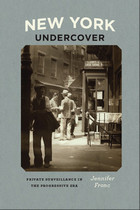
To combat behavior they viewed as sexually promiscuous, politically undesirable, or downright criminal, social activists in Progressive-era New York employed private investigators to uncover the roots of society’s problems. New York Undercover follows these investigators—often journalists or social workers with no training in surveillance—on their information-gathering visits to gambling parlors, brothels, and meetings of criminal gangs and radical political organizations.
Drawing on the hundreds of detailed reports that resulted from these missions, Jennifer Fronc reconstructs the process by which organizations like the National Civic Federation and the Committee of Fourteen generated the knowledge they needed to change urban conditions. This information, Fronc demonstrates, eventually empowered government regulators in the Progressive era and beyond, strengthening a federal state that grew increasingly repressive in the interest of pursuing a national security agenda. Revealing the central role of undercover investigation in both social change and the constitution of political authority, New York Undercover narrates previously untold chapters in the history of vice and the emergence of the modern surveillance state.
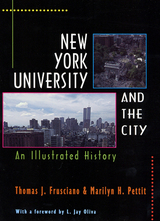
In New York University and the City, Thomas J. Frusciano and Marilyn H. Pettit situate the history of a unique urban university within the context of the social, political, and economic history of New York City. The authors trace the movement northward on Manhattan Island of both university and city, from the commercial hustle and bustle around City Hall, where the first classes were held in 1832, to the rural environs of Greenwich Village, and ultimately even farther north in 1894 to the undergraduate extension on the "secluded hilltop" of University Heights in the Bronx.
Vividly illustrated with both historical and contemporary images, New York University and the City explores various themes in the history of higher education and how NYU responded to changes in urban demographics, curriculum demands, and physical space during critical periods in the city's development. The relationship between university and city is further examined through extensive biographical portraits of the many historical personalities who made contributions to the development of both city and university.
The founding of New York University in 1831 is a watershed in the history of higher education in the United States. Albert Gallatin, former secretary of the treasury, led a group that proposed the creation of an institution of higher learning in New York City that would "correspond with the spirit and wants of the age and country," a nondenominational institution that would enlarge the opportunities of education for those qualified and inclined. NYU was expected to educate not only gentlemen scholars but also the sons of the great commercial metropolis. It also reflected and symbolized the aspirations of the city. By 1931, NYU was the nation's largest private university. Frusciano and Pettit chronicle the university's growth and struggles to its ultimate position as one of the most prestigious academic research institutions in the world.
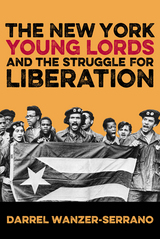
In The New York Young Lords and the Struggle for Liberation, Darrel Wanzer-Serrano details the numerous community initiatives that advanced decolonial sensibilities in El Barrio and beyond. Using archival research and interviews, he crafts an engaging account of the Young Lords’ discourse and activism. He rescues the organization from historical obscurity and makes an argument for its continued relevance, enriching and informing contemporary discussions about Latino/a politics.
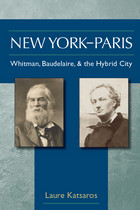
As New York and Paris began to modernize, new modes of entertainment, such as panoramas, dioramas, and photography, seemed poised to take the place of the more complex forms of literary expression. Dioramas and photography were invented in Paris but soon spread to America, forming part of an increasingly universal idiom of the spectacle. This brave new world of technologically advanced but crudely mimetic spectacles haunts both Whitman's vision of New York and Baudelaire's view of Paris. In New York-Paris, Katsaros explores the images of the mid-nineteenth-century city in the poetry of both Whitman and Baudelaire and seeks to demonstrate that, by projecting an image of the other's city onto his own, each poet tried to resist the apparently irresistible forward momentum of modernity rather than create a paradigmatically happy mixture of "high" and "low" culture.
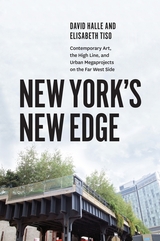
David Halle and Elisabeth Tiso offer a deep analysis of the transforming district in New York’s New Edge, and the result is a new understanding of how we perceive and interpret culture and the city in New York’s gallery district. From individual interviews with gallery owners to the behind-the-scenes politics of preservation initiatives and megaprojects, the book provides an in-depth account of the developments, obstacles, successes, and failures of the area and the factors that have contributed to them.
New Zealand has produced one of the world’s most vibrant film cultures, a reflection of the country’s evolving history and the energy and resourcefulness of its people. From early silent features like The Te Kooti Trail to recent films such as River Queen, this book examines the role of the cinema of New Zealand in building a shared sense of national identity. The works of key directors, including Peter Jackson, Jane Campion, and Vincent Ward, are here introduced in a new light, and select films are given in-depth coverage. Among the most informative accounts of New Zealand’s fascinating national cinema, this will be a must for film scholars around the globe.
Despite challenges arising from a limited population and the difficulty of obtaining adequate funding, both the film and television industries of New Zealand have been the source of significant achievements and profound cultural influence. Charting their emergence and subsequent development through five decades, New Zealand Film and Television looks at these two increasingly vibrant cultural and creative industries. While there is a growing body of academic work on film and television in New Zealand, relatively little exists that examines the specific cultural concerns, local industries, institutions, and policies involved, which this book addresses in full.
For more than ten years, WAW approaches have been emerging in all these sites and scenes of college writing instruction, and Next Steps offers an original look at the breadth of ways WAW pedagogy has been taken up by writing instructors and into an array of writing courses. Organized by some of the key foci of WAW instruction—writerly identity, process, and engagement—the book takes readers into thick classroom descriptions as well as vignettes offering shorter takes on particular strategies. The classroom descriptions are fleshed out in more personal ways by student vignettes, reflections on encountering writing about writing in college writing classes. As its theoretical basis, Next Steps includes chapters on threshold concepts, transfer of writing-related learning, and the history of WAW pedagogies.
As the first extensive look into WAW pedagogies across courses and institutions, Next Steps is ideal for writing instructors looking for new approaches to college composition instruction or curious about what “writing about writing” pedagogy actually is, for graduate students in composition pedagogy and their faculty, and for those researching composition pedagogy, threshold concepts, and learning transfer.
Contributors:
Linda Adler-Kassner, Olga Aksakalova, Joy Arbor, Matthew Bryan, Shawn Casey, Gabriel Cutrufello, Jennifer deWinter, Kristen di Gennaro, Emma Gaier, Christina Grant, Gwen Hart, Kimberly Hoover, Rebecca Jackson, Frances Johnson, Elizabeth Kleinfeld, Katie Jo LaRiviere, Andrew Lucchesi, Cat Mahaffey, Michael Michaud, Rebecca S. Nowacek, Andrew Ogilvie, Sarah Read, Rebecca Robinson, Kevin Roozen, Mysti Rudd, Christian Smith, Nichole Stack, Samuel Stinson, Hiroki Sugimoto, Lisa Tremain, Valerie Vera, Megan Wallace, Elizabeth Wardle, Christy I. Wenger, Nancy Wilson, Dominique Zino
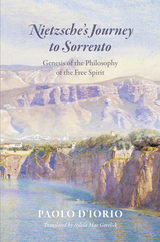
Nietzsche first voyaged to the south in the autumn of 1876, upon the invitation of his friend, Malwida von Meysenbug. The trip was an immediate success, reviving Nietzsche’s joyful and trusting sociability and fertilizing his creative spirit. Walking up and down the winding pathways of Sorrento and drawing on Nietzsche’s personal notebooks, D’Iorio tells the compelling story of Nietzsche’s metamorphosis beneath the Italian skies. It was here, D’Iorio shows, that Nietzsche broke intellectually with Wagner, where he decided to leave his post at Bâle, and where he drafted his first work of aphorisms, Human, All Too Human, which ushered in his mature era. A sun-soaked account of a philosopher with a notoriously overcast disposition, this book is a surprising travelogue through southern Italy and the history of philosophy alike.


"The book and not the title is the thing," James Weldon Johnson insisted with regard to Nigger Heaven, and the book is indeed a nuanced and vibrant portrait of "the great black walled city" of Harlem. Opening on a scene of tawdry sensationalism, Nigger Heaven shifts decisively to a world of black middle-class respectability, defined by intellectual values, professional ambition, and an acute consciousness of class and racial identity.
Here is a Harlem where upper-class elites discuss art in well-appointed drawing rooms; rowdy and lascivious drunks spend long nights in jazz clubs and speakeasies; and politically conscious young intellectuals drink coffee and debate "the race problem" in walk-up apartments. At the center of the story, two young people--a quiet, serious librarian and a volatile aspiring writer--struggle to love each other as their dreams are slowly suffocated by racism.
This reissue is based on the seventh printing, which included poetry composed by Langston Hughes especially for the book. Kathleen Pfeiffer's astute introduction investigates the controversy surrounding the shocking title and shows how the novel functioned in its time as a site to contest racial violence. She also signals questions of racial authenticity and racial identity raised by a novel about black culture written by a white admirer of that culture.
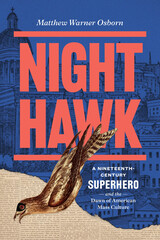
Unmasks the long-forgotten story of how a flying, superhuman vigilante played a pivotal role in the founding of the American labor movement.
On July 5, 1828, more than a century before Superman arrived on Earth, a superhero took flight in Philadelphia’s night sky. Buried on page three of a small local newspaper, the announcement of his arrival appeared under the title “The Night-Hawk, No. 1” with a cryptic epigraph from Romeo and Juliet: “I’ll be a candleholder and look on.” Who and what was the Night Hawk? As Matthew Warner Osborn reveals, this was the sobriquet of a mysterious columnist for the weekly Mechanics’ Free Press, the first radical socialist newspaper in America. Dressed in a mysterious cloak, the Night Hawk soared over Philadelphia, revealing the evil crimes of prominent gentlemen, fighting murderous criminals, and calling out fraudulent moral authorities.
The Night Hawk was the ingenious invention of an impoverished actor, Cornelius A. Logan, who created the character as a public champion of Philadelphia’s Working Men’s movement, the first successful American labor party. The Night Hawk’s nocturnal adventures transformed their socialist ideology into an entertaining fantasy that dramatized the struggle against industrial exploitation and the degradation of working people. The success of the character made Logan into a celebrity, and he went on to become a popular and innovative comedian on the antebellum stage.
A harbinger of the superheroes we know today, the Night Hawk promises to illuminate dark secrets from the past, but he can also shed light on our present. He ignites our need to see corrupt elites unmasked and held accountable for their actions, all while protecting the innocent and oppressed. Americans have always loved to fantasize about powerful superheroes who hide behind masks while chasing bad guys, and Osborn shows in this entertaining history how the Night Hawk was perhaps the first standard bearer for that enduring mystique.
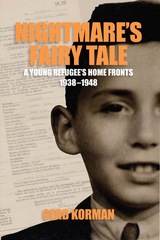
Fleeing the Nazis in the months before World War II, the Korman family scattered from a Polish refugee camp with the hope of reuniting in America. The father sailed to Cuba on the ill-fated St. Louis; the mother left for the United States after sending her two sons on a Kindertransport. One of the sons was Gerd Korman, whose memoir follows his own path—from the family’s deportation from Hamburg, through his time with an Anglican family in rural England, to the family’s reunited life in New York City. His memoir plumbs the depths of twentieth-century history to rescue the remarkable life story of one of its survivors.
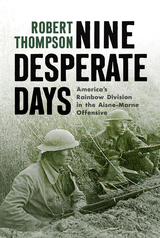
American forces entered World War I combat in October 1917, but it was not until July 1918 that they went on the offensive for the first time. Among the units selected for this operation was the 42nd Division, or the “Rainbow Division” as it was known popularly. This division, which was composed of National Guard units from twenty-six states, including Joyce Kilmer’s 69th New York Infantry, would spend 164 days in combat, a number exceeded by only two other American divisions. However, it was the nine days from July 25 to August 2, 1918 that were the most terrible and heroic in the division’s history. General of the Army Douglas MacArthur, who served as the division’s chief of staff, later said of the Rainbow Division’s fighting during those pivotal days, “There was neither rest nor mercy.” During those nine days, the Rainbow Division would spearhead the Allied attack in the Aisne-Marne region, the final phase of the Second Battle of the Marne, which saw the last major German offensive on the Western Front defeated. Unfortunately, American leadership proved to be completely unprepared for a dynamic war of maneuver. Basing decisions on wildly inaccurate information about the Germans, senior commanders ordered the men of the Rainbow Division to make ill-advised assaults again and again with little support. Facing an enemy who was determined to hold itspositions, these National Guardsmen fought with courage and determination to gain what was often only yards of ground, and did so at a deadly cost.
In Nine Desperate Days: America’s Rainbow Division in the Aisne-Marne Offensive, historian Robert Thompson chronicles the hardships and tenacity of the men from the 42nd Division during this pivotal campaign. The Americans did not break despite heavy losses, and were able to drive the Germans back from territory they initially gained. The efforts of the Rainbow Division during Aisne-Marne were key to the ultimate Allied victory and are a symbol of American valor and sacrifice during the “war to end all wars.”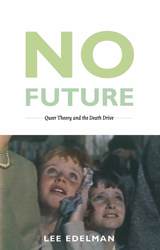
Closely engaging with literary texts, Edelman makes a compelling case for imagining Scrooge without Tiny Tim and Silas Marner without little Eppie. Looking to Alfred Hitchcock’s films, he embraces two of the director’s most notorious creations: the sadistic Leonard of North by Northwest, who steps on the hand that holds the couple precariously above the abyss, and the terrifying title figures of The Birds, with their predilection for children. Edelman enlarges the reach of contemporary psychoanalytic theory as he brings it to bear not only on works of literature and film but also on such current political flashpoints as gay marriage and gay parenting. Throwing down the theoretical gauntlet, No Future reimagines queerness with a passion certain to spark an equally impassioned debate among its readers.

Many claim that the presence and importance of e-books in the library world have reached a saturation point, but the truth is that experimentation with new models, as well as refinement of existing ones, continues apace. Delving into the latest developments among the varied players in the e-book marketplace, including publishers, libraries, and vendors, the latest volume in the best-selling No Shelf Required series is written from a strong international perspective. Such cutting-edge contributors as Michael Blackwell, Mary Minow, Neil Butcher, and Tonya McQuade discuss a range of groundbreaking initiatives that tap into the potential of digital content to be omnipresent. Positive, uplifting, instructive, and goal-oriented, this volume’s coverage includes
- the DPLA national e-book platform;
- ReadersFirst, a movement to improve e-book access from libraries;
- the AudiobookSYNC project, a free summer audiobook program for teens;
- using e-books to teach poetry and publishing processes;
- the Multnomah County Library Library Writers project;
- the Internet Archive and e-books; and
- e-books and sustainable literacy in Africa.
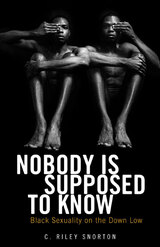
Since the early 2000s, the phenomenon of the “down low”—black men who have sex with men as well as women and do not identify as gay, queer, or bisexual—has exploded in news media and popular culture, from the Oprah Winfrey Show to R & B singer R. Kelly’s hip hopera Trapped in the Closet. Most down-low stories are morality tales in which black men are either predators who risk infecting their unsuspecting female partners with HIV or victims of a pathological black culture that repudiates openly gay identities. In both cases, down-low narratives depict black men as sexually dangerous, duplicitous, promiscuous, and contaminated.
In Nobody Is Supposed to Know, C. Riley Snorton traces the emergence and circulation of the down low in contemporary media and popular culture to show how these portrayals reinforce troubling perceptions of black sexuality. Reworking Eve Sedgwick’s notion of the “glass closet,” Snorton advances a new theory of such representations in which black sexuality is marked by hypervisibility and confinement, spectacle and speculation. Through close readings of news, music, movies, television, and gossip blogs, Nobody Is Supposed to Know explores the contemporary genealogy, meaning, and functions of the down low.
Snorton examines how the down low links blackness and queerness in the popular imagination and how the down low is just one example of how media and popular culture surveil and police black sexuality. Looking at figures such as Ma Rainey, Bishop Eddie L. Long, J. L. King, and Will Smith, he ultimately contends that down-low narratives reveal the limits of current understandings of black sexuality.
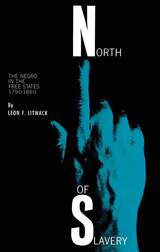
This book was a landmark when it was published in 1965, and it has remained a crucial source for our understanding of American history ever since.
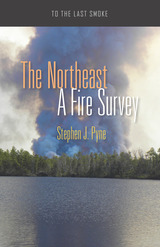
The Northeast has its roster of great fires, beginning with dark days in the late 18th century, followed by a chronicle of conflagrations continuing as late as 1903 and 1908, with a shocking after-tremor in 1947. It hosted the nation’s first forestry schools. It organized the first interstate (and international) fire compact. And it was the Northeast that pioneered the transition to the true Big Burn—industrial combustion—as America went from burning living landscapes to burning lithic ones.
In this new book in the To the Last Smoke series, renowned fire expert Stephen J. Pyne narrates this history and explains how fire is returning to a place not usually thought of in America’s fire scene. He examines what changes in climate and land use mean for wildfire, what fire ecology means for cultural landscapes, and what experiments are underway to reintroduce fire to habitats that need it. The region’s great fires have gone; its influence on the national scene has not.
The Northeast: A Fire Survey samples the historic and contemporary significance of the region and explains how it fits into a national cartography and narrative of fire.
Included in this volume:
How the region shaped America’s understanding and policy toward fire
How fire fits into the region today and what that means for the country overall
What changes in climate, land use, and institutions may mean for northeastern fire, both wild and tame
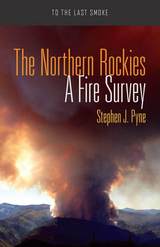
The Northern Rockies remain one of three major hearths for America’s fire culture. They hold a major fire laboratory, an equipment development center, an aerial fire depot, and a social engagement with fire—even a literature. Missoula is to fire in the big backcountry what Tallahassee is to prescribed burning and what Southern California is to urban-wildland hybrids. On its margins, Boise hosts the National Interagency Fire Center. In this structured collection of essays on the region, Stephen J. Pyne explores what makes the Northern Rockies distinctive and what sets it apart from other regions of the country. Surprisingly, perhaps, the story is equally one of big bureaucracies and of generations that encounter the region’s majestic landscapes through flame.
The Northern Rockies is part of a multivolume series describing the nation’s fire scene region by region. The volumes in To the Last Smoke also cover Florida, the Northern Rockies, the Great Plains, the Southwest, and several other critical fire regions. The series serves as an important punctuation point to Pyne’s 50-year career with wildland fire—both as a firefighter and a fire scholar. These unique surveys of regional pyrogeography are Pyne’s way of “keeping with it to the end,” encompassing the directive from his rookie season to stay with every fire “to the last smoke.”
This book allows readers to understand the relationships and memories they often form around games, and music is central to this process. The quest into the past begins with this book, a map that leads to the intersection between nostalgia and videogame music. Informed by research on musicology, memory, and practices of gaming culture, this edited volume discusses different forms of nostalgia, considers how videogames display their relation to those forms, and explores the ways theoretically self-conscious positions can be found in games. An important scholarly addition to the burgeoning field of ludomusicology, this book will appeal to researchers, educators, practitioners, undergraduate and graduate students, and videogame fans and players alike.
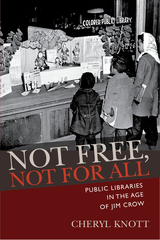
Winner of the 2016 Eliza Atkins Gleason Book Award and the 2016 Lillian Smith Book Award
Americans tend to imagine their public libraries as time-honored advocates of equitable access to information for all. Through much of the twentieth century, however, many black Americans were denied access to public libraries or allowed admittance only to separate and smaller buildings and collections. While scholars have examined and continue to uncover the history of school segregation, there has been much less research published on the segregation of public libraries in the Jim Crow South. In fact, much of the writing on public library history has failed to note these racial exclusions.
In Not Free, Not for All, Cheryl Knott traces the establishment, growth, and eventual demise of separate public libraries for African Americans in the South, disrupting the popular image of the American public library as historically welcoming readers from all walks of life. Using institutional records, contemporaneous newspaper and magazine articles, and other primary sources together with scholarly work in the fields of print culture and civil rights history, Knott reconstructs a complex story involving both animosity and cooperation among whites and blacks who valued what libraries had to offer. African American library advocates, staff, and users emerge as the creators of their own separate collections and services with both symbolic and material importance, even as they worked toward dismantling those very institutions during the era of desegregation.

Following a discussion of Puerto Rican racial prejudice in historical perspective, Kinsbruner describes residential patterns, marriages, births, deaths, occupations, and family and household matters to demonstrate that free people of color were a disadvantaged community whose political, social, and economic status was diminished by racism. He analyzes the complexities and contradictions of Puerto Rican racial prejudice and discrimination, explains the subtleties of “shade discrimination,” and examines the profoundly negative impact on race relations of the U.S. occupation of the island following the Spanish American War.
Looking behind the myth of Puerto Rican racial equity, Not of Pure Blood will be of interest to specialists in Caribbean studies, Puerto Rican history, and Latin America studies, and to scholars in a variety of fields investigating questions of racism and discrimination.

Not Slave, Not Free focuses first on rural southern society before World War II and the role played by African Americans in that setting. The South was the least developed part of the United States, a fact that Mandle considers fundamental in accounting for the poverty of African Americans in the years before the War. At the same time, however, the concentration of the black labor force in plantation work significantly retarded the South’s economic growth. Tracing the postwar migration of blacks from the South, Mandle shifts attention to the problems and opportunities that confronted African Americans in cities. He shows how occupational segregation and income growth accelerated this migration.
Instrumental to an understanding of the history of the political economy of the United States, this book also directs readers and policymakers to the central issues confronting African Americans today.
The 16 essays in this book provide a theoretical underpinning for freewriting.
Sheryl I. Fontaine opens the book with a description of the organization, purpose, and content of students’ 10-minute unfocused freewriting.
Pat Belanoff discusses the relationship between skilled and unskilled student writers.
Richard H. Haswell analyzes forms of freewriting.
Lynn Hammond describes the focused freewriting strategies used in legal writing and in the analysis of poetry.
Joy Marsella and Thomas L. Hilgers suggest ways of teaching freewriting as a heuristic.
Diana George and Art Young show what teachers learned about the writing abilities of three engineering students through freewriting journals.
Anne E. Mullin seeks to determine whether freewriting lives up to claims made for it.
Barbara W. Cheshire assesses the efficacy of freewriting.
James W. Pennebaker checks the short- and long-term effects of freewriting on students’ emotional lives.
Ken Macrorie notes that freewriting means being freed to use certain powers.
Peter Elbow shows how authors use freewriting.
Robert Whitney tells "why I hate to freewrite."
Karen Ferro considers her own freewriting, showing how it leads to a deeper self-understanding.
Chris Anderson discusses the qualities in freewriting that we should maintain in revision.
Burton Hatlen shows the parallels between writing projective verse and freewriting.
Sheridan Blau describes the results of experiments with invisible writing.

READERS
Browse our collection.
PUBLISHERS
See BiblioVault's publisher services.
STUDENT SERVICES
Files for college accessibility offices.
RECENTLY PUBLISHED


UChicago Accessibility Resources
home | accessibility | search | about | contact us
BiblioVault ® 2001 - 2026
The University of Chicago Press