
 A SCHOLARLY BOOK REPOSITORY
35 start with P start with P
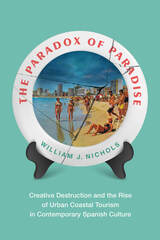
In addition to inserting the coasts into the scope of Iberian urban studies (typically dominated by studies of Madrid and Barcelona), this project breaks new ground by bringing to the fore unexplored cultural artifacts vital to the narrative of development along the coasts in Spain—in particular the ubiquitous tourist postcard, which advances not only the post-Franco economic miracle, but does so by highlighting the transformation of the actual Spanish landscape along its coasts.
The Paradox of Paradise features more than twenty-five striking images of coastal Spain in the throes of its own coming of age. Author William J. Nichols has unlocked a strange, self-conscious archive that tells us as much about our own age of advertising as it does about the hotels and resorts and people on display.
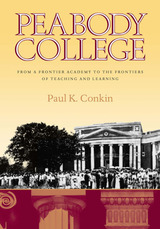
It all began as a small frontier academy in 1785. The institution that would become Peabody experienced its first reinvention two decades later as it became Cumberland College, and then, in 1826, the University of Nashville. The University maintained an elite undergraduate college until 1850, and, despite the success of its medical school and a military institute, it failed in three subsequent efforts to restart its undergraduate program.
In 1875 the University offered its campus and degree-granting authority to the first normal school in the state of Tennessee, a school funded by the Peabody Education Fund. The Peabody Normal College was the best in the South, and, as such, exerted an enormous influence on education in the region.
A new era began in 1909. The trustees of the Peabody Fund, at its liquidation, provided an eventual $1.5 million to establish a graduate-level George Peabody College for Teachers. It opened for classes in 1914, on its present campus, where it quickly became the premier teachers' college in the South. As was the case with many private, independent institutions, Peabody faced intermittent financial struggles, which finally ended with its union with Vanderbilt. Today Peabody is, by almost any criteria, one of the five or six strongest colleges of education in the United States.


--Fred Ross, Cesar Chavez, Dolores Huerta, and the Community Service Organization and National Farm Workers Association
--Nicholas von Hoffman and the Woodlawn Organization
--Tom Gaudette and the Northwest Community Organization
--Ed Chambers, Richard Harmon, and the Industrial Areas Foundation
--Shel Trapp, Gale Cincotta, and National People's Action
--Heather Booth, Midwest Academy, and Citizen Action
--Wade Rathke and ACORN
Weaving classic texts with interviews and their own context-setting commentaries, the editors of People Power provide the first comprehensive history of Alinsky-based organizing in the tumultuous period from 1955 to 1980, when the key organizing groups in the United States took form. Many of these selections--previously available only on untranscribed audiotapes or in difficult-to-read mimeograph or Xerox formats--appear in print here for the first time.
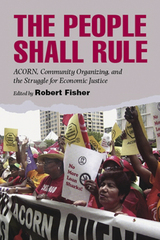
The twelve chapters in this volume present the perspectives of insiders like founder Wade Rathke and leading outside practitioners and academics. The result is a thorough detailing of ACORN's founding and its changing strategies, including vivid accounts and analyses of its campaigns on the living wage, voter turnout, predatory lending, redlining, school reform, and community redevelopment, as well as a critical perspective on ACORN's place in the community organizing landscape.

Central to the occupation was Justin Jones, a student of Fisk University and Vanderbilt Divinity School whose place at the forefront of the protests brought him and the occupation to the attention of the Tennessee state troopers, state and US senators, and Governor Bill Lee. The result was two months of solidarity in the face of rampant abuse, community in the face of state-sponsored terror, and standoff after standoff at the doorsteps of the people's house with those who claimed to represent them. In this, his first book, Jones describes those two revolutionary months of nonviolent resistance against a police state that sought to dehumanize its citizens.
The People's Plaza is a rumination on the abuse of power, and a vision of a more just, equitable, anti-racist Nashville—a vision that kept Jones and those with him posted on the plaza through intense heat, unprovoked arrests, vandalism, theft, and violent suppression. It is a first-person account of hope, a statement of intent, and a blueprint for nonviolent resistance in the American South and elsewhere.
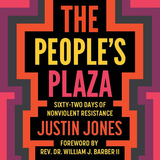
Central to the occupation was Justin Jones, a student of Fisk University and Vanderbilt Divinity School whose place at the forefront of the protests brought him and the occupation to the attention of the Tennessee state troopers, state and US senators, and Governor Bill Lee. The result was two months of solidarity in the face of rampant abuse, community in the face of state-sponsored terror, and standoff after standoff at the doorsteps of the people's house with those who claimed to represent them. In this, his first book, Jones describes those two revolutionary months of nonviolent resistance against a police state that sought to dehumanize its citizens.
The People's Plaza is a rumination on the abuse of power, and a vision of a more just, equitable, anti-racist Nashville—a vision that kept Jones and those with him posted on the plaza through intense heat, unprovoked arrests, vandalism, theft, and violent suppression. It is a first-person account of hope, a statement of intent, and a blueprint for nonviolent resistance in the American South and elsewhere.

The book's first part examines how the 15-M movement created a new way of seeing that in turn led to a new way of doing politics in Spain. Part Two focuses on the multiple ramifications of that new vision once the people stopped marching and the movement became less visible.
From electoral posters to fiction films, documentaries, and internet memes, Performing Populism traces the ways that collective Spanish identities evolved from a period when "the people" seemed to have been willingly subsumed under the apathetic ideation of the middle-class consumer to the moment in 2011 when a crisis of representation forced many into political consciousness. This rude awakening kickstarted the reconstruction of a Spanish "us" that staged exhibitions of popular will on par with and parallel to the Arab Spring, but in a European register that embraced the countercultural through art that disremembered its political past but could not escape the ghostly shadow of its history.

Marcia Welles applies her extensive knowledge of Spanish Golden Age literature and her insightful grasp of current literary theory to synthesize a wide range of material into a uniquely engaging and refreshing interpretation of well-known texts. While the subject of rape and violence has been studied in other European literatures, Persephone's Girdle is the first to do so in the field of early modern Spanish literature.
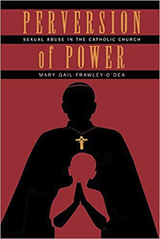
Celibacy, homosexuality in the priesthood, the infiltration into the priesthood of secular moral relativism, too much liberalism in the Church since Vatican II, damaging rollback of Vatican II reforms by conservative prelates--all have been suggested as causes for the crisis. This book, however, begins with the premise that, because the pattern of abuse and cover-up was so similar across the world, there is something fundamentally awry with Church traditions and power structures in relationship to sexuality and sexual abuse.
Specifically, in chapters on suffering and sadomasochism, bodies and gender, desire and sexuality, celibacy and homosexuality, the author concludes that aspects of the Catholic theology of sexuality set the stage for the abuse of minors and its cover-up. Frawley-O'Dea also analyzes the American bishops' lack of pastoral care and tendency towards clerical narcissism--the belief that the needs of the hierarchy represent the needs of the wider Church--as central factors in the scandal. She balances this criticism with a discussion of the backgrounds of the bishops presiding over the crisis and the challenges they faced in their relationships with the Pope and Vatican officials.
Drawing on twenty years of clinical experience, she imagines the dynamics of sexual abuse both from the victim's point of view and from the priest's, and she probes why the Church hierarchy, fellow priests, and lay people were silent for so long. Finally, Frawley-O'Dea examines factors internal to the Church and outside of it that drew this scandal into the public square and kept it there.
Then, based on the project's findings, Demarest presents interpretive reconstructions of the linked histories of the Pasion River kingdoms and correlates these interpretations with the variable evidence and culture-histories of other regions of the Classic Maya lowlands. He points out that only through linking such accurate regional culture-histories can we begin to understand the eighth- through tenth-century changes in Classic Maya civilization. The volume describes how the Petexbatun project addressed this challenge in its research design, structure, and large, multicentered zone of study. Building on the previous twenty years of Harvard research in adjacent zones, the Vanderbilt projects succeeded in reconstructing events and processes throughout the Pasion River Valley, the largest single inland trade route of the ancient Maya world.
In its conclusions, this first of the Petexbatun volumes of multidisciplinary studies, evidence, analyses, and interpretations, provides answers to some long-standing questions about the "Classic Maya collapse," as well as a new, preliminary culture-history of the abandonment, decline, or transformation of the Classic Maya kingdoms of the western Peten. It is an exciting preview and summary of a decade of evidence on the debate over the fate of the Classic Maya civilization, one of the great controversies in the history of Pre-Columbian archaeology. VIMA Series #1

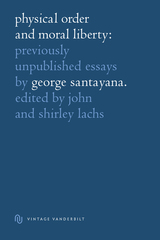
Although the essay included are largely philosophical in nature, none is narrowly technical. The general reader should be able to understand most of the pieces, as well as enjoy their literary quality and profit by the insights and wisdom they provide. The philosopher may draw courage from the speculative spirit of the essays and benefit by Santayana's steadfast vision and his sensitivity to distinctions.
For the serious student of Santayana's thought, this volume will prove indispensable. It contains sustained philosophical studies of causation (the only ones by Santayana anywhere), substantial elaborations of Santayana’s ideas on the relation of sensation to thought, and reflections on the nature of freedom and the spiritual life. In addition, Santayana develops here a new theory of “critical instants” and elaborates on his ideas of the nature of consciousness and its relations to time.
Sections on the philosophy of nature and the philosophy of mind are followed by groups of essays on ethics, the philosophy of politics, and the freedom of mind—in which, according to Santayana, the blessing of the good life consists. The book concludes with brief notes on Bergson, Democritus, and Leibniz and a longer essay on the thought of Vaihinger.

The profiles are edited transcripts of interviews videotaped between 1996 and 2004. They tell of the development of new techniques such as the "blue baby operation," the first heart-lung machine, the first artificial heart valve, and the first coronary bypass operation. They also tell the unusual life stories of the surgeons and allude to professional and institutional rivalries. A particularly valuable part of the book is the author's brief history of cardiac surgery, designed to orient the reader for reading the profiles that follow.


Centrists reject each of these fragmented and polarized approaches to politics. We believe that government has a role to play in structuring social and economic opportunities and in reinforcing basic moral norms, yet we are deeply troubled by ever-expanding government. We reject libertarianism, left-liberalism, and the various schools of conservatism as a model for government.
Part I of The Political Centrist briefly traces the trajectory of the liberal and conservative traditions. It argues that modern liberalism is an unprincipled fusion of classical liberal and socialist ideals while modern conservatism is an untenable hybrid of economic liberalism and social conservatism. Part II offers a centrist approach to many of the most contentious contemporary political and social issues. Those include:
-- abortion
-- affirmative action
-- the death penalty
-- gay marriage
-- illegal immigration
-- judicial activism
-- the relationship of religion and politics
-- the role of government in the economy
Aside from being the namesake of Nashville’s neighboring university, David Lipscomb was one of the central theologians of the Restoration movement during his lifetime. This volume collects three of his most important works regarding Christians’ relationship to the world. Yet the writings in this volume have long been out of print and people are no longer familiar with his ideas—including his belief that Christians should not participate in secular politics.
In the early decades of the Restoration movement, believers argued their positions in person and in print and the direction of the movement was decided by these wide-ranging theological discussions. Dissent was built into the discourse and considered a part of the spiritual well-being of the movement. Followers were expected to read and have opinions on all these discussions. And now most of these books and articles are out of print—not just Lipscomb's but many, many of the Campbellite theologians' writings.
In their introduction, Stringham and Horn explain how Lipscomb’s own writings came to be disregarded by the movement he was so prominent in.

In this challenging new book, Jean Bethke Elshtain, a nationally recognized scholar in political science and philosophy, and J. Timothy Cloyd, a strong new voice in social and political science, have assembled a collection of thought-provoking essays on these issues written by some of the finest minds of our day.
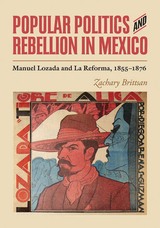
Popular Politics and Rebellion in Mexico also explores the conditions under which a significant segment of Mexican society aligned itself with conservative interests and French interlopers, revealing this constituency to be more than a collection of reactionary traitors to the nation. To the contrary, armed rebellion--or at least the specter of force--protected local commercial interests in the short run and enhanced the long-term prospects for political autonomy. Manuel Lozada's story adds a necessary layer of complexity to our understanding of the practical and ideological priorities that informed the tumultuous conflicts of the mid-nineteenth century.

The book draws the reader into the struggles of the unsung heroes of the transformation, black medical leaders whose stubborn courage helped shape the larger civil rights movement. They demanded an end to federal subsidization of discrimination in the form of Medicare payments to hospitals that embraced the "separate but equal" creed that shaped American life during the Jim Crow era. Faced with this pressure, the Kennedy and Johnson Administrations tried to play a cautious chess game, but that game led to perhaps the biggest gamble in the history of domestic policy. Leaders secretly recruited volunteer federal employees to serve as inspectors, and an invisible army of hospital workers and civil rights activists to work as agents, making it impossible for hospitals to get Medicare dollars with mere paper compliance. These triumphs did not come without casualties, yet the story offers lessons and hope for realizing this transformational dream.
This book is the recipient of the Norman L. and Roselea J. Goldberg Prize from Vanderbilt University Press for the best book in the area of medicine.

Thus came a nearly inevitable shock, as the daily rhythms of life--rising before dawn to prepare for a long day of maintaining livestock and crops; returning for a late lunch and siesta; joining in a game of soccer followed by dinner in the evening--transformed forever in favor of a new tourist industry and the compromises required to support it. As Practically Invisible demonstrates, for Agua Blancans, becoming a supposedly "authentic" version of their own indigenous selves required performing their culture for outsiders, thus becoming these performances within the minds of these visitors. At the heart of this story, then, is a delicate balancing act between tradition and survival, a performance experienced by countless indigenous groups.

Through detailed observations of services such as court procedures, public benefits processes, and community-based IPV programs as well as in-depth interviews with dozens of IPV survivors and practitioners, Shoener describes how our current institutional response to IPV is often not useful--and sometimes quite harmful--for IPV survivors with the least material, social, and cultural capital to spare. For these women, as the interviews vividly record, IPV has long-term economic and social consequences, disrupting career paths and creating social isolation.
Melissa Range’s Printer’s Fist, awarded the 2025 Vanderbilt University Literary Prize, is a collection that tells the story of a political movement—its strides and setbacks, its unity and fractures—with a particular emphasis on print culture. Drawing upon more than a decade’s worth of archival research into nineteenth-century antislavery newspapers, pamphlets, broadsides, and more, Range highlights the expansiveness of the movement by focusing not on one, but a chorus of abolitionist voices. Her investment in celebrating Black and women’s histories, in particular, offers an inclusive account of American history, informed not only by thorough research but through a formal, poetic engagement with the past. In exploring how enslaved people’s self-emancipation was a form of resistance that preceded, operated alongside, and intertwined with organized networks of antislavery activists, Printer’s Fist will help facilitate discussions surrounding race, gender, and activism that are grounded in historical fact and emotional truth.

The author spent over 400 hours observing how first-year students are socialized in two very different environments, Boalt School of Law and the School of Social Welfare at UC Berkeley, watching how they adapted to different expectations of how to speak, dress, and behave in the classroom.
Costello found that students who were female, of color, disabled, or poor were not underqualified compared with their privileged peers. Nor did the research uncover intentional bigotry. Instead, the disproportionate success of white men can be explained by the fact that they are more likely to acquire appropriate professional identities swiftly, with little inner conflict. Students from less privileged backgrounds, however, suffered from "identity dissonance." For example, Jasmine, a Filipino student from Los Angeles, explained, "In the legal culture you have to adopt a different way of being, a different vocabulary and way to carry yourself . . . That's how I got this far. And when I go home, if I act the way I do here, they won't get it. My cousins and my friends say, 'You're kind of whitewashed.' And when I come back here I have to get back my law style."
Hutcheson examines how tensions between the requirements of institutional bureaucracies and the norms of the academic profession resulted in contentiousness and conflict within the national AAUP, between administrators and faculty members on individual campuses, within the ranks of faculties themselves, and even deep in the consciences of many concerned individuals. The book analyzes the association's ability to respond effectively and to balance the values of collegial representation with the powers of collective bargaining. It thus offers a detailed and authoritative examination of the AAUP's search for ways to sustain professionalism while dealing with the fundamental changes in the nature of the professoriate in the post-World War II era.

Intrusive searches for alcohol during Prohibition destroyed middle-class Americans' faith in police and ushered in a new basis for controlling police conduct. State courts in the 1920s began to exclude perfectly reliable evidence obtained in an illegal search. Then, as Prohibition drew to a close, a presidential commission awakened the public to torture in interrogation rooms, prompting courts to exclude coerced confessions irrespective of whether the technique had produced a reliable statement.
Prohibition's scheme lingered long past the Roaring '20s. Racial tensions and police brutality were bigger concerns in the 1960s than illegal searches, yet when the Supreme Court imposed limits on officers' conduct in 1961, searches alone were regulated. Interrogation law during the 1960s, fundamentally reshaped by the Miranda ruling, ensured that suspects who invoked their rights would not be subject to coercive tactics, but did nothing to ensure reliable confessions by those who were questioned. Explicitly recognizing that its decisions excluding evidence had not been well-received, the Court in the 1970s refused to exclude identifications merely because they were made in suggestive lineups. Perhaps a larger project awaits—refocusing our rules of criminal procedure on those concerns from which Prohibition distracted us: conviction accuracy and the use of force by police.
Intrusive searches for alcohol during Prohibition destroyed middle-class Americans' faith in police and ushered in a new basis for controlling police conduct. State courts in the 1920s began to exclude perfectly reliable evidence obtained in an illegal search. Then, as Prohibition drew to a close, a presidential commission awakened the public to torture in interrogation rooms, prompting courts to exclude coerced confessions irrespective of whether the technique had produced a reliable statement.
Prohibition's scheme lingered long past the Roaring '20s. Racial tensions and police brutality were bigger concerns in the 1960s than illegal searches, yet when the Supreme Court imposed limits on officers' conduct in 1961, searches alone were regulated. Interrogation law during the 1960s, fundamentally reshaped by the Miranda ruling, ensured that suspects who invoked their rights would not be subject to coercive tactics, but did nothing to ensure reliable confessions by those who were questioned. Explicitly recognizing that its decisions excluding evidence had not been well-received, the Court in the 1970s refused to exclude identifications merely because they were made in suggestive lineups. Perhaps a larger project awaits—refocusing our rules of criminal procedure on those concerns from which Prohibition distracted us: conviction accuracy and the use of force by police.

Manninen approaches the abortion controversy through a variety of perspectives and ethical frameworks. She addresses the social circumstances that influence many women's decision to abort and considers whether we believe that there are good and bad reasons to abort. Manninen also looks at the call for post-abortion fetal grieving rituals for women who desire them and the attempt to make room in the pro-choice position for the views of prospective fathers.
The author spells out how the two sides demonize each other and proposes ways to find degrees of convergence between the seemingly intractable positions.
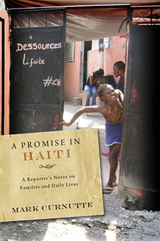
A Promise in Haiti is Curnutte's story of his time, spanning the last decade, living among several families in Gonaives, a city of 200,000 people a hundred kilometers north of Port-au-Prince. He began traveling to Haiti as a volunteer with the aid organization Hands Together, eventually building trust and credibility with many Haitians. Curnutte introduces the reader to the Cenecharles family, strained by entrenched unemployment and the need to continually travel for work. He is invited into the home of the Henrisma family, and is forced to reconcile journalistic detachment with basic compassion as he contributes financially to help them. The reader is confronted with a complicated, conflicted written and photographic record of a worldview that evolves right on the page. As a reporter, Curnutte found parallels between the lives he encountered in Gonaives and the world of the Great Depression recounted in James Agee and Walker Evans's Let Us Now Praise Famous Men. Agee and Evans loom large as a challenge and inspiration to Curnutte.
The result is equal parts homage to that historic chronicle, on-the-ground reporting, and introspective narrative on the lessons Gonaives taught Curnutte about his own life and family. In late February 2010, Curnutte went back to Haiti on assignment, but conditions made it impossible for him to return to Gonaives. The resulting frustration provoked a meditation on the monumental challenges that face Haiti -- and on the destructive cycle of international attention that constantly moves on to "The Next Big Story."
Through a close study of Cadalso, Saavedra, and Larra, Iarocci argues that Spanish writers were intensely concerned with the same issues taken up by more famous Romantics and that the ways in which they address these issues provides us with a richer notion, not only of Spain, but of all of Europe.
READERS
Browse our collection.
PUBLISHERS
See BiblioVault's publisher services.
STUDENT SERVICES
Files for college accessibility offices.
RECENTLY PUBLISHED




UChicago Accessibility Resources
home | accessibility | search | about | contact us
BiblioVault ® 2001 - 2026
The University of Chicago Press