
 A SCHOLARLY BOOK REPOSITORY
10 start with A start with A
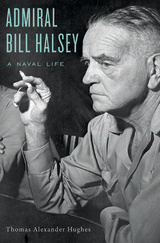
William Halsey was the most famous naval officer of World War II. His fearlessness in carrier raids against Japan, his steely resolve at Guadalcanal, and his impulsive blunder at the Battle of Leyte Gulf made him the “Patton of the Pacific” and solidified his reputation as a decisive, aggressive fighter prone to impetuous errors of judgment in the heat of battle. In this definitive biography, Thomas Hughes punctures the popular caricature of the “fighting admiral” to reveal the truth of Halsey’s personal and professional life as it was lived in times of war and peace.
Halsey, the son of a Navy officer whose alcoholism scuttled a promising career, committed himself wholeheartedly to naval life at an early age. An audacious and inspiring commander to his men, he met the operational challenges of the battle at sea against Japan with dramatically effective carrier strikes early in the war. Yet his greatest contribution to the Allied victory was as commander of the combined sea, air, and land forces in the South Pacific during the long slog up the Solomon Islands chain, one of the war’s most daunting battlegrounds. Halsey turned a bruising slugfest with the Japanese navy into a rout. Skillfully mediating the constant strategy disputes between the Army and the Navy—as well as the clashes of ego between General Douglas MacArthur and Admiral Chester Nimitz—Halsey was the linchpin of America’s Pacific war effort when its outcome was far from certain.
Honorable Mention, 2016 Lyman Awards, presented by the North American Society for Oceanic History
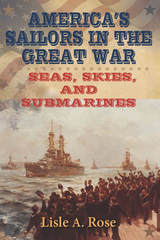
This book is a thrillingly-written story of naval planes, boats, and submarines during World War I.
When the U.S. entered World War I in April 1917, America’s sailors were immediately forced to engage in the utterly new realm of anti-submarine warfare waged on, below and above the seas by a variety of small ships and the new technology of airpower. The U.S. Navy substantially contributed to the safe trans-Atlantic passage of a two million man Army that decisively turned the tide of battle on the Western Front even as its battleship division helped the Royal Navy dominate the North Sea. Thoroughly professionalized, the Navy of 1917–18 laid the foundations for victory at sea twenty-five years later.

Strategy, sea, and swamp—redefining the battle that shaped America’s Gulf frontier.
Amphibious Campaign for West Florida and Louisiana, 1814–1815 is a definitive military history of the Gulf Coast operations that culminated in the Battle of New Orleans, one of the most pivotal engagements of the War of 1812. Written by retired Marine Corps Major General Wilburt S. Brown, this book offers a deeply analytical and interpretive account of the campaign, grounded in a meticulous review of primary sources and informed by modern military doctrine.
Brown examines the strategic decisions, logistical challenges, and tactical maneuvers of both British and American forces as they vied for control of West Florida and Louisiana. He reconstructs the complex amphibious operations, the coordination between naval and land forces, and the leadership of figures such as Andrew Jackson and Sir Edward Pakenham. With military precision and narrative clarity, Brown brings to life the suspense and significance of the campaign, emphasizing its broader implications for American sovereignty and military development.
This volume stands out not only for its scholarly rigor but also for its ability to engage readers with the drama and urgency of historical warfare. It remains one of the most authoritative accounts of the Gulf Coast theater and is essential reading for historians, military scholars, and anyone interested in the evolution of American defense strategy.
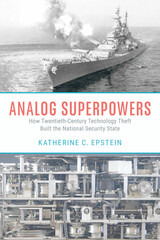
At the beginning of the twentieth century, two British inventors, Arthur Pollen and Harold Isherwood, became fascinated by a major military question: how to aim the big guns of battleships. These warships—of enormous geopolitical import before the advent of intercontinental missiles or drones—had to shoot in poor light and choppy seas at distant moving targets, conditions that impeded accurate gunfire. Seeing the need to account for a plethora of variables, Pollen and Isherwood built an integrated system for gathering data, calculating predictions, and transmitting the results to the gunners. At the heart of their invention was the most advanced analog computer of the day, a technological breakthrough that anticipated the famous Norden bombsight of World War II, the inertial guidance systems of nuclear missiles, and the networked “smart” systems that dominate combat today. Recognizing the value of Pollen and Isherwood’s invention, the British Royal Navy and the United States Navy pirated it, one after the other. When the inventors sued, both the British and US governments invoked secrecy, citing national security concerns.
Drawing on a wealth of archival evidence, Analog Superpowers analyzes these and related legal battles over naval technology, exploring how national defense tested the two countries’ commitment to individual rights and the free market. Katherine C. Epstein deftly sets out Pollen’s and Isherwood’s pioneering achievements, the patent questions raised, the geopolitical rivalry between Britain and the United States, and the legal precedents each country developed to control military tools built by private contractors.
Epstein’s account reveals that long before the US national security state sought to restrict information about atomic energy, it was already embroiled in another contest between innovation and secrecy. The America portrayed in this sweeping and accessible history isn’t yet a global hegemon but a rising superpower ready to acquire foreign technology by fair means or foul—much as it accuses China of doing today.

A gripping history that spans law, international affairs, and top-secret technology to unmask the tension between intellectual property rights and national security.
At the beginning of the twentieth century, two British inventors, Arthur Pollen and Harold Isherwood, became fascinated by a major military question: how to aim the big guns of battleships. These warships—of enormous geopolitical import before the advent of intercontinental missiles or drones—had to shoot in poor light and choppy seas at distant moving targets, conditions that impeded accurate gunfire. Seeing the need to account for a plethora of variables, Pollen and Isherwood built an integrated system for gathering data, calculating predictions, and transmitting the results to the gunners. At the heart of their invention was the most advanced analog computer of the day, a technological breakthrough that anticipated the famous Norden bombsight of World War II, the inertial guidance systems of nuclear missiles, and the networked “smart” systems that dominate combat today. Recognizing the value of Pollen and Isherwood’s invention, the British Royal Navy and the United States Navy pirated it, one after the other. When the inventors sued, both the British and US governments invoked secrecy, citing national security concerns.
Drawing on a wealth of archival evidence, Analog Superpowers analyzes these and related legal battles over naval technology, exploring how national defense tested the two countries’ commitment to individual rights and the free market. Katherine C. Epstein deftly sets out Pollen’s and Isherwood’s pioneering achievements, the patent questions raised, the geopolitical rivalry between Britain and the United States, and the legal precedents each country developed to control military tools built by private contractors.
Epstein’s account reveals that long before the US national security state sought to restrict information about atomic energy, it was already embroiled in another contest between innovation and secrecy. The America portrayed in this sweeping and accessible history isn’t yet a global hegemon but a rising superpower ready to acquire foreign technology by fair means or foul—much as it accuses China of doing today.
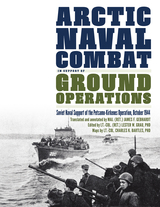
The largest Arctic battle on record, involving 133,500 Soviets and 45,000 Germans and Quisling Norwegians, the Petsamo-Kirkenes Operation sought to liberate the northernmost part of Norway from German occupation during World War II. The Soviet navy played a previously unrecognized crucial role in the operation by providing fire support and transportation, as well as conducting raids and combat landings on the enemy-held coast. The harsh Arctic environment, including extreme cold, ice, and limited daylight, posed significant challenges to the Soviet and German forces. Despite these hardships, the Soviet forces achieved their objectives, defeated the German Army, and successfully liberated the area.
Arctic Naval Combat in Support of Ground Operations is a powerful companion to Gebhardt’s previous translation, The Petsamo-Kirkenes Operation: Soviet Breakthrough and Pursuit in the Arctic, October 1944, which details this operation’s ground offensive. Providing a starting point for the study and understanding of combined arms and services combat in the Arctic, an increasingly important and accessible part of the planet where military concerns are rapidly expanding, this work is a valuable addition to the literature of World War II military history and a significant additional perspective on the Soviet military.
READERS
Browse our collection.
PUBLISHERS
See BiblioVault's publisher services.
STUDENT SERVICES
Files for college accessibility offices.
RECENTLY PUBLISHED






UChicago Accessibility Resources
home | accessibility | search | about | contact us
BiblioVault ® 2001 - 2025
The University of Chicago Press