
 A SCHOLARLY BOOK REPOSITORY
85 start with P start with P
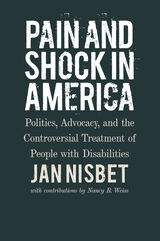
For more than forty years, professionals in the field of disability studies have engaged in debates over the use of aversive interventions (such as electric shock) like the ones used at the Judge Rotenberg Center. Advocates and lawyers have filed complaints and lawsuits to both use them and ban them, scientists have written hundreds of articles for and against them, and people with disabilities have lost their lives and, some would say, lived their lives because of them. There are families who believe deeply in the need to use aversives to control their children’s behavior. There are others who believe the techniques used are torture. All of these families have children who have been excluded from numerous educational and treatment programs because of their behaviors. For most of the families, placement at the Judge Rotenberg Center is the last resort.
This book is a historical case study of the Judge Rotenberg Center, named after the judge who ruled in favor of keeping its doors open to use aversive interventions. It chronicles and analyzes the events and people involved for over forty years that contributed to the inability of the state of Massachusetts to stop the use of electric shock, and other severe forms of punishment on children and adults with disabilities. It is a long story, sad and tragic, complex, filled with intrigue and questions about society and its ability to protect and support its most vulnerable citizens.

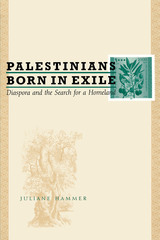
In the decade following the 1993 Oslo Peace Accords, some 100,000 diasporic Palestinians returned to the West Bank and Gaza. Among them were children and young adults who were born in exile and whose sense of Palestinian identity was shaped not by lived experience but rather through the transmission and re-creation of memories, images, and history. As a result, "returning" to the homeland that had never actually been their home presented challenges and disappointments for these young Palestinians, who found their lifeways and values sometimes at odds with those of their new neighbors in the West Bank and Gaza.
This original ethnography records the experiences of Palestinians born in exile who have emigrated to the Palestinian homeland. Juliane Hammer interviews young adults between the ages of 16 and 35 to learn how their Palestinian identity has been affected by living in various Arab countries or the United States and then moving to the West Bank and Gaza. Their responses underscore how much the experience of living outside of Palestine has become integral to the Palestinian national character, even as Palestinians maintain an overwhelming sense of belonging to one another as a people.
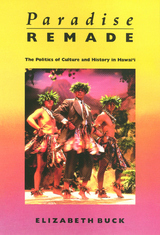
This is a book about the politics of competing cultures and myths in a colonized nation. Elizabeth Buck considers the transformation of Hawaiian culture focusing on the indigenous population rather than on the colonizers. She describes how Hawaii's established religious, social, political, and economic relationships have changed in the past 200 years as a result of Western imperialism. Her account is particularly timely in light of the current Hawaiian demands for sovereignty 100 years after the overthrow of the monarchy in 1893.
Buck examines the social transformation Hawaii from a complex hierarchical, oral society to an American state dominated by corporate tourism and its myths of paradise. She pays particular attention to the ways contemporary Hawaiians are challenging the use of their traditions as the basis for exoticized entertainment.
Buck demonstrates that sacred chants and hula were an integral part of Hawaiian social life; as the repository of the people's historical memory, chants and hula practices played a vital role in maintaining the links between religious, political, and economic relationships. Tracing the ways in which Hawaiian culture has been variously suppressed and constructed by Western explorers, New England missionaries, the tourist industry, ethnomusicologists, and contemporary Hawaiians, Buck offers a fascinating "rereading" of Hawaiian history.

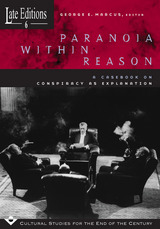
Some pieces develop conversations that reveal the post-Cold War situations of countries such as Italy, Russia, Slovenia, and the United States where conspiratorial explanations of national dramas seem to make sense. Other pieces tackle paranoia as a style of debate in such diverse realms as science, psychotherapy, and popular entertainment, where conspiracy theories emerge as a compelling way to address the inadequacies of rational expertise and organization in the face of immense changes that undermine them. Like all of the volumes in the Late Edition series, Paranoia Within Reason offers a provocative challenge to our ways of understanding the ongoing watershed changes that face us.

By the early twenty-first century, about one woman in twelve could expect to die of a pregnancy or childbirth complication in Malawi. Specific deaths became object lessons. Explanatory stories circulated through hospitals and villages, proliferating among a range of practitioners: nurse-midwives, traditional birth attendants, doctors, epidemiologists, herbalists. Was biology to blame? Economic underdevelopment? Immoral behavior? Tradition? Were the dead themselves at fault?
In Partial Stories, Claire L. Wendland considers these explanations for maternal death, showing how they reflect competing visions of the past and shared concerns about social change. Drawing on extended fieldwork, Wendland reveals how efforts to legitimate a single story as the authoritative version can render care more dangerous than it might otherwise be. Historical, biological, technological, ethical, statistical, and political perspectives on death usually circulate in different expert communities and different bodies of literature. Here, Wendland considers them together, illuminating dilemmas of maternity care in contexts of acute change, chronic scarcity, and endemic inequity within Malawi and beyond.
An illuminating investigation into why some parties evolve with their times while others fall behind.
Around the world, established political parties face mounting pressures: insurgents on the Left and Right, altered media environments, new policy challenges, and the erosion of traditional strongholds, to name just a few. Yet parties have differed enormously in their ability to move with the times and update their offers to voters. This variation matters. While adaptation does not guarantee a party’s electoral success, the failure to modernize can spell its decline, even collapse, and create openings for radical and populist parties that may threaten the future of liberal democracy.
Parties under Pressure examines why some parties adapt meaningfully to social, economic, and political transformations while others flounder, focusing especially on the fate of Western Europe’s Christian democratic parties. Matthias Dilling reveals the under-appreciated importance of party factions. While very high levels of factionalism are counter-productive and create paralysis, more moderate levels of factionalism help parties to adapt by giving visibility to fresh groups and ideas. Dilling draws on extensive archival research in Germany, Italy, and Austria, as well as evidence from France, Japan, and beyond. Taking a comparative-historical approach, Parties under Pressure sheds new light on parties’ varying records of adaptive reforms over more than seventy-five years.
The fulfillment of parties’ election pledges is an essential part of the democratic process. This book is the first major, genuinely comparative study of promises across a broad range of countries and elections, including the United States, Canada, nine Western European countries, and Bulgaria. The book thus adds to the body of literature on the variety of outcomes stemming from alternative democratic institutions.
Passionate Journeys explores the fascinating stories behind the Bhagwan Rajneesh phenomenon of the 1970s and 1980s, focusing on women who left families, careers, and identities to join the community of Rajneeshpuram. Rajneesh was a spiritual leader for thousands of young Americans, and in rural Oregon his devotees established a thriving community. Marion S. Goldman's extensive interviews with women who participated at Rajneeshpuram provide a fascinating picture of the cultural and social climate that motivated successful, established women to join such a movement.
Passionate Journeys will appeal to specialists in feminist theory and women's studies, sociology, religious studies, American studies, and the history of the Northwest.
Marion S. Goldman is Professor of Sociology, University of Oregon. She is also the author of Gold Diggers and Silver Miners: Prostitution and Social Life on the Comstock Lode.

Further, Carrillo shows that sexual globalization must be regarded as a bidirectional, albeit uneven, process of exchange between countries in the global north and the global south. With this approach, Carrillo challenges the view that gay men from countries like Mexico would logically want to migrate to a “more sexually enlightened” country like the United States—a partial and limited understanding, given the dynamic character of sexuality in countries such as Mexico, which are becoming more accepting of sexual diversity. Pathways of Desire also provides a helpful analytical framework for the simultaneous consideration of structural and cultural factors in social scientific studies of sexuality. Carrillo explains the patterns of cross-cultural interaction that sexual migration generates and—at the most practical level—shows how the intricacies of cross-cultural sexual and romantic relations may affect the sexual health and HIV risk of transnational immigrant populations.
In this first-ever ethnography of American gay suburbanites, Wayne H. Brekhus demonstrates that who one is depends at least in part on where and when one is. For many urban gay men, being homosexual is key to their identity because they live, work, and socialize in almost exclusively gay circles. Brekhus calls such men "lifestylers" or peacocks. Chameleons or "commuters," on the other hand, live and work in conventional suburban settings, but lead intense gay social and sexual lives outside the suburbs. Centaurs, meanwhile, or "integrators," mix typical suburban jobs and homes with low-key gay social and sexual activities. In other words, lifestylers see homosexuality as something you are, commuters as something you do, and integrators as part of yourself.
Ultimately, Brekhus shows that lifestyling, commuting, and integrating embody competing identity strategies that occur not only among gay men but across a broad range of social categories. What results, then, is an innovative work that will interest sociologists, psychologists, anthropologists, and students of gay culture.
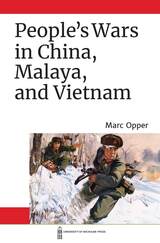
People’s Wars in China, Malaya, and Vietnam explains why some insurgencies collapse after a military defeat while under other circumstances insurgents are able to maintain influence, rebuild strength, and ultimately defeat the government. The author argues that ultimate victory in civil wars rests on the size of the coalition of social groups established by each side during the conflict. When insurgents establish broad social coalitions (relative to the incumbent), their movement will persist even when military defeats lead to loss of control of territory because they enjoy the support of the civilian population and civilians will not defect to the incumbent. By contrast, when insurgents establish narrow coalitions, civilian compliance is solely a product of coercion. Where insurgents implement such governing strategies, battlefield defeats translate into political defeats and bring about a collapse of the insurgency because civilians defect to the incumbent. The empirical chapters of the book consist of six case studies of the most consequential insurgencies of the 20th century including that led by the Chinese Communist Party from 1927 to 1949, the Malayan Emergency (1948–1960), and the Vietnam War (1960–1975). People’s Wars breaks new ground in systematically analyzing and comparing these three canonical cases of insurgency. The case studies of China and Malaya make use of Chinese-language archival sources, many of which have never before been used and provide an unprecedented level of detail into the workings of successful and unsuccessful insurgencies. The book adopts an interdisciplinary approach and will be of interest to both political scientists and historians.

With Phoenix Zones, Dr. Hope Ferdowsian shows us how. Ferdowsian has spent years traveling the world to work with people and animals who have endured trauma—war, abuse, displacement. Here, she combines compelling stories of survivors with the latest science on resilience to help us understand the link between violence against people and animals and the biological foundations of recovery, peace, and hope. Taking us to the sanctuaries that give the book its title, she reveals how the injured can heal and thrive if we attend to key principles: respect for liberty and sovereignty, a commitment to love and tolerance, the promotion of justice, and a fundamental belief that each individual possesses dignity. Courageous tales show us how: stories of combat veterans and wolves recovering together at a California refuge, Congolese women thriving in one of the most dangerous places on earth, abused chimpanzees finding peace in a Washington sanctuary, and refugees seeking care at Ferdowsian’s own medical clinic.
These are not easy stories. Suffering is real, and recovery is hard. But resilience is real, too, and Phoenix Zones shows how we can foster it. It reveals how both people and animals deserve a chance to live up to their full potential—and how such a view could inspire solutions to some of the greatest challenges of our time.

When the pandemic suddenly forced many public libraries to close their doors or limit patron access, library staff redoubled their efforts to serve their communities in every way possible. Demonstrating their resilience by quickly pivoting to new modes of service, public libraries are continuing to offer innovative yet practical ways to connect patrons to the information and services they need and enjoy. Offering real-life examples of what it means to be a 24/7 library, this collection from the Public Library Association (PLA) and ALA Editions shares how several libraries transitioned to virtual and socially-distanced services. No matter your library’s current situation or outlook for the future, you’ll be inspired to adapt their ideas to suit the needs of your own organization. Among the initiatives and topics explored are
- homebound delivery;
- citizen science programs;
- virtual reference advice;
- services to small businesses;
- remote readers' advisory and book chats;
- early literacy storytimes;
- health services outreach;
- tech guidance for patrons;
- wifi hotspot lending; and
- tips for social media and marketing.



Play to Submission shows how Behemoth’s games undermined and manipulated workers. They lost their work-life balance and the constant competition made labor organizing difficult. Nonetheless, many workers embraced management’s games as a chance to show off their “gamer” identities and create a workplace culture with privileged insiders and exiled outsiders, with female and migrant workers usually in the latter group. Moreover, Wu indicates this may be the future of work for high- and low-skilled and, creative workers in an environment where capitalists have heightened demands for technology and creativity.
Drawing from 13 months of ethnographic work, Wu presents a persistent reality in which the company reaps the reward of surplus productivity, leaving employees themselves in a highly competitive and sometimes precarious work position.


With over forty years of experience as a sought after diagnostician, Dr. Stuart Mushlin has cracked his share of medical mysteries, ones in which there are bigger gambles than playing the ponies at the track. Some of his patients show up with puzzling symptoms, calling for savvy medical detective work. Others seem to present cut-and-dry cases, but they turn out to be suffering from rare or serious conditions.
In Playing the Ponies and Other Medical Mysteries Solved, Dr. Mushlin shares some of the most intriguing cases he has encountered, revealing the twists and turns of each patient’s diagnosis and treatment process. Along the way, he imparts the secrets to his success as a medical detective—not specialized high-tech equipment, but time-honored techniques like closely observing, touching, and listening to patients. He also candidly describes cases where he got things wrong, providing readers with honest insights into both the joys and dilemmas of his job.
Dr. Mushlin does not just treat diseases; he treats people. And this is not just a book about the ailments he diagnosed; it is also about the scared, uncertain, ailing individuals he helped in the process. Filled with real-life medical stories you’ll have to read to believe, Playing the Ponies is both a suspenseful page-turner and a heartfelt reflection on a life spent caring for patients.

This beginner’s guide will teach you real-world project management skills for any project and will help prepare you to become a certified Project Management Professional (PMP) or Certified Associate Project Manager (CAPM).
This fourth edition provides up-to-date information on how to effectively manage projects, programs, and portfolios to achieve organizational success. It includes tips and sample questions at the end of each chapter as well as a mock exam to help prepare you for the Project Management Institute (PMI) certification exams.
This text follows the three PMI domains: People, Business Environment, and Processes. A case study with detailed real-world examples, sample templates, and actual project documents guides you through your own projects, from charter to close, using all five project groups (initiating, planning, executing, monitoring and controlling, and closing projects).
This edition takes the standard processes and framework for traditional projects introduced in PMI’s sixth edition Project Management Body of Knowledge (PMBOK) and adds the new focus on Agile (adaptive) project management methods, tools, and techniques in PMBOK’s seventh edition to enhance your knowledge and ability to handle a wide range of projects.
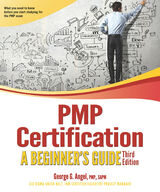
This accessible guide bridges the gap between being a project manager and becoming a globally recognized Project Management Professional (PMP). Aligned with A Guide to the Project Management Body of Knowledge (PMBOK® Guide), Sixth Edition, this book explains the Project Management Institute’s worldwide standard methods, five process groups, ten knowledge areas, and forty-nine processes and includes many tips to help prepare for the latest PMP exam.
Angel includes proven strategies for improving project efficiency and effectiveness, balancing constraints, communicating timely and accurate project status, and successfully bringing a project to completion. Real-world case studies followed throughout the book provide examples, checklists, and proven project results. Designed for easy learning, the book contains chapter-opening lists of specific skills covered in the chapter, Q&A sections filled with bonus information and helpful tips, real-world experiences that show how to apply particular skills, and reminders to help in preparation for the PMP exam.

In this work, Dorothy Guyot asks: What makes a good police department? In analyzing the transformation of the police department in Troy, New York. she explains a set of standards by which the quality of police service can be judged and illustrates a way to improve services over the long run. Throughout her case study and analysis, Guyot asks penetrating questions about the performance of police departments. She maintains that when police officers are treated as professionals by their department, they will act professionally toward citizens. This examination of fifteen years of policymaking within a single department looks at policing as a complex social service in an urban environment.
Rather than accepting the traditional "chain of command" authoritarian model of police administration, Guyot draws an analogy to hospital organization and suggests that the practitioner, whether a physician or a cop on the beat, performs the service with a tremendous amount of discretion. It follows that better management tactics at the police chief level as well as better employment policies will result in more responsible and dedicated policing by officers. The author demonstrates how, under the leadership of George W. O’Connor, the Troy P.D. changed from a backward department to one that promotes competence, as well as concern for citizens, among its individual officers.
The book is organized by issues and provides a full picture of how upgrading can be achieved through clear and specific goals. Throughout this case study, Guyot provides many examples of the behavior of police officers on the street, to illustrate the differences made by restructuring the department.
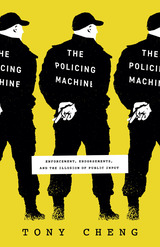
The past few years have seen Americans express passionate demands for police transformation. But even as discussion of no-knock warrants, chokeholds, and body cameras has exploded, any changes to police procedures have only led to the same outcomes. Despite calls for increased accountability, police departments have successfully stonewalled change.
In The Policing Machine, Tony Cheng reveals the stages of that resistance, offering a close look at the deep engagement strategies that NYPD precincts have developed with only subsets of the community in order to counter any truly meaningful, democratic oversight. Cheng spent nearly two years in an unprecedented effort to understand the who and how of police-community relationship building in New York City, documenting the many ways the police strategically distributed power and privilege within the community to increase their own public legitimacy without sacrificing their organizational independence. By setting up community councils that are conveniently run by police allies, handing out favors to local churches that will promote the police to their parishioners, and offering additional support to institutions friendly to the police, the NYPD, like police departments all over the country, cultivates political capital through a strategic politics that involves distributing public resources, offering regulatory leniency, and deploying coercive force. The fundamental challenge with police-community relationships, Cheng shows, is not to build them. It is that they already exist and are motivated by a machinery designed to stymie reform.

Based on two international conferences at Princeton University and the Central European University, this is a handy guide to the problem of corruption in transition countries, with an important comparative content. Political Corruption in Transition is distinguished from similar publications by at least two features: by the quality of the carefully selected and edited essays ans by its original treatment. Instead of the usual preaching and excommunications, this Skeptic`s Handbook represents down-to-earth realism.
Combines general issues with case studies and original research. The geographic coverage is wide, though it is ideas rather than a geography that drive the volume`s organization.
Environmental issues have become increasingly prominent in local struggles, national debates, and international policies. In response, scholars are paying more attention to conventional politics and to more broadly defined relations of power and difference in the interactions between human groups and their biophysical environments. Such issues are at the heart of the relatively new interdisciplinary field of political ecology, forged at the intersection of political economy and cultural ecology.
This volume provides a toolkit of vital concepts and a set of research models and analytic frameworks for researchers at all levels. The two opening chapters trace rich traditions of thought and practice that inform current approaches to political ecology. They point to the entangled relationship between humans, politics, economies, and environments at the dawn of the twenty-first century and address challenges that scholars face in navigating the blurring boundaries among relevant fields of enquiry. The twelve case studies that follow demonstrate ways that culture and politics serve to mediate human-environmental relationships in specific ecological and geographical contexts. Taken together, they describe uses of and conflicts over resources including land, water, soil, trees, biodiversity, money, knowledge, and information; they exemplify wide-ranging ecological settings including deserts, coasts, rainforests, high mountains, and modern cities; and they explore sites located around the world, from Canada to Tonga and cyberspace.
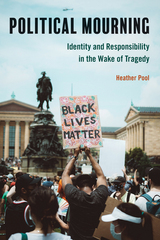
What leads us to respond politically to the deaths of some citizens and not others? This is one of the critical questions Heather Pool asks in Political Mourning. Born out of her personal experiences with the trauma of 9/11, Pool’s astute book looks at how death becomes political, and how it can mobilize everyday citizens to argue for political change.
Pool examines four tragedies in American history—the Triangle Shirtwaist Factory Fire, the lynching of Emmett Till, the September 11 attacks, and the Black Lives Matter movement—that offered opportunities to tilt toward justice and democratic inclusion. Some of these opportunities were taken, some were not. However, these watershed moments show, historically, how political identity and political responsibility intersect and how racial identity shapes who is mourned. Political Mourning helps explain why Americans recognize the names of Trayvon Martin and Sandra Bland; activists took those cases public while many similar victims have been ignored by the news media.
Concluding with an afterword on the coronavirus, Pool emphasizes the importance of collective responsibility for justice and why we ought to respond to tragedy in ways that are more politically inclusive.

This book explores how policy ideas are spread—or diffused—in an age in which policymaking has become increasingly complex and specialized. Using the concept of enterprise zones as a case study in policy diffusion, Karen Mossberger compares the process of their adoption in Virginia, Indiana, Michigan, New York, and Massachusetts over a twelve-year period.
Enterprise zones were first proposed by the Reagan administration as a supply-side effort to reenergize inner cities, and they were eventually embraced by liberals and conservatives alike. They are a compelling example of a policy idea that spread and evolved rapidly. Mossberger describes the information networks and decisionmaking processes in the five states, assessing whether enterprise zones spread opportunistically, as a mere fad, or whether well-informed deliberation preceded their adoption.
Americans find street crime terrifying and repellent. Yet we vicariously seek it out in virtually all of our media: books, newspapers, television, films, and the theatre. Stuart Scheingold confronts this cultural contradiction and asks why street crime is generally regarded in the trivializing and punitive images of cops and robbers that attribute crime to the willful acts of flawed individuals rather than to the structural shortcomings of a flawed society. In his case study of the police and criminal courts in the community he calls "Cedar City," a medium-sized city in the Western United States, Scheingold examines the effects of this cultural contradiction and these punitive predispositions on politics and policy making.
Polities and Power features detailed studies from an intentionally disparate array of regions, including Mesoamerica, Andean South America, southwestern Asia, East Africa, and the Indian subcontinent. Each chapter or pair of chapters is followed by a critical commentary. In concert, these studies strive to infer social, political, and economic meaning from archaeologically discerned landscapes associated with societies that incorporate some expression of state authority. The contributions engage a variety of themes, including the significance of landscapes as they condition and reflect complex polities; the interplay of natural and cultural elements in defining landscapes of state; archaeological landscapes as ever-dynamic entities; and archaeological landscapes as recursive structures, reflected in palimpsests of human activity.
Individually, many of these contributions are provocative, even controversial. Taken together, they reveal the contours of landscape archaeology at this particular evolutionary moment.

Suzannah Biernoff draws on a wide variety of sources mainly from WWI but also contemporary photography and computer games. Each chapter revolves around particular images: Marine Wedding is discussed alongside Stuart Griffiths’ portraits of British veterans; Henry Tonks’ drawings of WWI facial casualties are compared to the medical photographs in the Gillies Archives; the production of portrait masks for the severely disfigured is approached through the lens of documentary film and photography; and finally the haunting image of one of Tonks’s patients reappears in BioShock, a highly successful computer game. The book simultaneously addresses a neglected area in disability studies; puts disfigurement on the agenda for art history and visual studies; and makes a timely and provocative contribution to the literature on the First World War.

The 2008 outcry over the “global land grab” made headlines around the world, leading to a sustained interest in the dynamics and fate of customary land among both academics and development practitioners. In Power/Knowledge/Land, author Laura German profiles the consolidation of a global knowledge regime surrounding land and its governance within international development circles in the decade following this outcry, and the growing enrollment of previously antagonistic actors within it. Drawing theoretical insights on the inseparability of power and knowledge, German reveals the dynamics of knowledge practices that have enabled the longstanding project of commodifying customary land – and the more contemporary interests in acquiring and financializing it – to be advanced and legitimated by capturing the energies of socially progressive forces. By bringing theories of change from the emergent land governance orthodoxy into dialogue with the ethnographic evidence from across the African continent and beyond, concepts masquerading as universal and self-evident truths are provincialized, and their role in commodifying customary land and entrenching colonial futurities put on display. In doing so, the volume brings wider academic debates surrounding productive forms of power into the heart of the land grab debate, while enhancing their accessibility to a wider audience.
Power/Knowledge/Land takes current scholarly debates surrounding land grabs beyond their theoretical moorings in critical agrarian studies, political economy and globalization into contemporary debates surrounding the politics of knowledge—from theories of coloniality to ontological anthropology, thereby enabling new dynamics of the phenomenon to be revealed. The book deploys a pioneering epistemology integrating deconstructionist approaches (to reveal the tactics, truth claims and ontological assumptions of global knowledge brokers), with systematic qualitative reviews and comparative study (to contrast these dominant constructs with the evidence and reveal alternative ways of knowing “land” and practicing “security” from the ethnographic literature). This helps to reveal the Western and modernist biases in the narratives that have been advanced about women, custom, and security, revealing how the coloniality of knowledge works to grease the wheels of land takings by advancing highly provincialized constructs aligned with western interests as universal truths.
The contributions to this volume represent a diverse array of Mesoamerican archaeological studies that are all theo-retically rooted to larger, global debates concerning issues of power and identity—two logically paired concepts. While social identity has been the focus of more critical analysis in recent years, the concept of power has received far less attention. Most studies focus on large-scale, institutional forms of power and the ruling body. Here, the focus is on relations of power, addressing broader segments of society outside the dominant group, that often are ignored in traditional reconstructions of past societies.
Harrison-Buck has compiled works that address a common criticism of social theory in the field of anthropological archaeology—the lack of strong case studies and corroborating facts supporting the abstract and often complex social theoretical concepts presented by scholars. Each contributor offers innovative method and theory and provides alternative and varied approaches to understanding power and identity in the archaeological record. They draw from a wide range of related disciplines and theoretical frameworks, including feminism, queer theory, cognitive studies, and postcolonial theory. The provocative case studies and exciting theoretical applications presented here will stimulate lively debate among scholars working both in and outside of Mesoamerica.

Using Clear Fork Valley in central Appalachia as an empirical example, Gaventa attempts to discern the "hidden faces of power" - those forces which shape actions and consciousness in ways not readily apparent in formal American political processes. He seeks to clarify and expand upon past theories (by such writers as Bachrach and Lukes) on the nature and maintenance of power.
The region studied here is characterized by stark incongruity - the co-existence of massive natural wealth (coal and land) with pervasive human poverty attended by high unemployment, limited education, malnutrition, and the prevalent hazards of mining coal: black lung, dismemberment, death, and ecological ruin. This has been the region's status quo under the decades of domination by a British company and its absentee owners. Despite these departure conditions and frequently violent union struggles, culminating in the 1969 murder of UMW reformist Jock Yablonski, acquiescence to this status quo has been maintained. Gaventa searches out the answers to how and why wealth and poverty continue to coexist and the powerless continue to accede to the powerful. His astute analysis poses broader questions about the politics of poverty, working-class consciousness, and corporate power in America.
Women’s status in rural Java can appear contradictory to those both inside and outside the culture. In some ways, women have high status and broad access to resources, but other situations suggest that Javanese women lack real power and autonomy. Javanese women have major responsibilities in supporting their families and controlling household finances. They may also own and manage their own property. Yet these symbols and potential sources of independence and influence are determined by a culturally prescribed, state-reinforced, patriarchal gender ideology that limits women’s autonomy. Power, Change, and Gender Relations in Rural Java examines this contradiction as well as sources of stability and change in contemporary Javanese gender relations.
The authors conducted their research in two rural villages in Yogyakarta, Indonesia, during three important historical and political periods: the end of the New Order regime; the transitional period of reformation; and the subsequent establishment of a democratic government. Their collaboration brings a unique perspective, analyzing how gender is constructed and reproduced and how power is exercised as Indonesia faces the challenges of building a new social order.
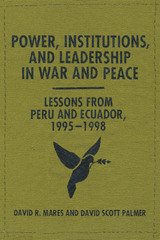
In January 1995, fighting broke out between Ecuadorian and Peruvian military forces in a remote section of the Amazon. It took more than three years and the interplay of multiple actors and factors to achieve a definitive peace agreement, thus ending what had been the region's oldest unresolved border dispute. This conflict and its resolution provide insights about other unresolved and/or disputed land and sea boundaries which involve almost every country in the Western Hemisphere.
Drawing on extensive field research at the time of the dispute and during its aftermath, including interviews with high-ranking diplomats and military officials, Power, Institutions, and Leadership in War and Peace is the first book-length study to relate this complex border dispute and its resolution to broader theories of conflict. The findings emphasize an emerging leadership approach in which individuals are not mere captives of power and institutions. In addition, the authors illuminate an overlap in national and international arenas in shaping effective articulation, perception, and selection of policy.
In the “new” democratic Latin America that emerged in the late 1970s through the early 1990s, historical memory remains influential in shaping the context of disputes, in spite of presumed U.S. post–Cold War influence. This study offers important, broader perspectives on a hemisphere still rife with boundary disputes as a rising number of people and products (including arms) pass through these borderlands.
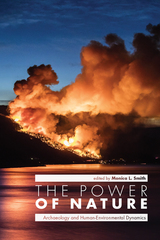
Climatic events, pathogens, and animals as nonhuman agents, ranging in size from viruses to mega-storms, have presented our species with dynamic conditions that overwhelm human capacities. In some cases, people have modified architecture to deal with a constant onslaught of storms, as in Japan or the Caribbean; in other cases, they have welcomed the occasional natural disaster as a chance to start fresh or to put into place new ideas and practices, as in the case of ancient Roman cities. Using the concept of “agency” as one in which multiple sentient and nonhuman actors interact in a landscape, and exploring locations such as the Caribbean, the Pacific, South Asia, the Andes, the Mediterranean, Mesoamerica, North America, and the Arctic, the authors provide compelling explanations of the effect of an entire realm of natural powers that beset human societies past and present—from storms, earthquakes, and fires to vegetation, domestic animals, and wild birds. Throughout, the emphasis is on the philosophical and engineering adjustments that people make to stay resilient when facing the perpetual changes of the natural world.
Using an archaeological perspective, The Power of Nature illustrates and analyzes the many
ways that people do not control their environments. It will be of interest to archaeologists, as well as scholars in science, biology, botany, forestry, urban studies, and disaster management.
Contributors: Steven Ammeran, Traci Ardren, Katelyn J. Bishop, Karen Mohr Chávez, Sergio Chávez, Stanislava Chávez, Emelie Cobb, Jago Cooper, Harper Dine, Chelsea Fisher, Jennifer Huebert, Dale L. Hutchinson, Sara L. Juengst, Kanika Kalra, François Oliva, Matthew C. Peros, Jordan Pickett, Seth Quintus, John Robb, Monica L. Smith, Jillian A. Swift, Silvia Tomášková, Kyungsoo Yoo
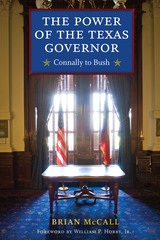
George W. Bush called it "the best job in the world," yet many would argue that the Texas governorship is a weak office. Given few enumerated powers by the Texas Constitution, the governor must build a successful relationship with the state legislature—sometimes led by a powerful lieutenant governor or speaker of the opposing party—to advance his or her policy agenda. Yet despite the limitations on the office and the power of the legislative branch, many governors have had a significant impact on major aspects of Texas's public life—government, economic development, education, and insurance reform among them. How do Texas governors gain the power to govern effectively?
The Power of the Texas Governor takes a fresh look at the state's chief executives, from John Connally to George W. Bush, to discover how various governors have overcome the institutional limitations of the office. Delving into the governors' election campaigns and successes and failures in office, Brian McCall makes a convincing case that the strength of a governor's personality—in particular, his or her highly developed social skills—can translate into real political power. He shows, for example, how governors such as Ann Richards and George W. Bush forged personal relationships with individual legislators to achieve their policy goals. Filled with revealing insights and anecdotes from key players in each administration, The Power of the Texas Governor offers new perspectives on leadership and valuable lessons on the use of power.
Reasserts the centrality of Jewish culture to contemporary discussions of diaspora
Diaspora: the scattering of a people, often described as a condition of helplessness and a pathology to be overcome. It can also be, as Jonathan Boyarin and Daniel Boyarin assert in this provocative work, a unique source of power and strength. Focusing on Jewish experience, Powers of Diaspora forcefully argues that diasporic communities exercise a distinct form of cultural power in order to maintain themselves.
With reference to rabbinic culture and contemporary Jewish ethnography, the authors evoke the cultural strategies of Jewish diaspora—of regeneration through statelessness—that should prove increasingly relevant to the dilemmas and possibilities of the "new diasporas" born in the midst and in the aftermath of the modern world-system. Their work exposes the various methods by which peoples in diaspora "legislate" distinctive ways of life and establish formal communal structures, thus creating fluid yet effective boundaries between themselves and the others who surround them, and critiques the internal power dynamics that can sometimes result.Powers of Diaspora strongly reasserts the place of Jewish culture in contemporary discussions of diaspora, where the cultural politics of postcolonialism have remarginalized Jewish experience; at the same time, it brings insights from studies of other diasporas to bear on the study of Jews. In challenging the equation of diaspora with powerlessness, the book questions the modern nation-state ideal and suggests that diasporic cultural formations offer important clues toward an alternative means of relating culture to polity.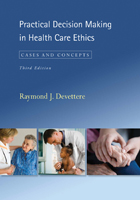
For nearly fifteen years Practical Decision Making in Health Care Ethics has offered scholars and students a highly accessible and teachable alternative to the dominant principle-based theories in the field. Devettere’s approach is not based on an ethics of abstract obligations and duties, but, following Aristotle, on how to live a fulfilled and happy life—in short, an ethics of personal well-being grounded in prudence, the virtue of ethical decision making.
This third edition is revised and updated and includes discussions of several landmark cases, including the tragic stories of Terri Schiavo and Jesse Gelsinger (the first death caused by genetic research). Devettere addresses new topics such as partial-birth abortion law, embryonic stem cell research, infant euthanasia in The Netherlands, recent Vatican statements on feeding tubes, organ donation after cardiac death, new developments in artificial hearts, clinical trials developed by pharmaceutical companies to market new drugs, ghostwritten scientific articles published in major medical journals, and controversial HIV/AIDS research in Africa. This edition also includes a new chapter on the latest social and political issues in American health care.
Devettere’s engaging text relies on commonsense moral concepts and avoids academic jargon. It includes a glossary of legal, medical, and ethical terms; an index of cases; and thoroughly updated bibliographic essays at the end of each chapter that offer resources for further reading. It is a true classic, brilliantly conceived and executed, and is now even more valuable to undergraduates and graduate students, medical students, health care professionals, hospital ethics committees and institutional review boards, and general readers interested in philosophy, medicine, and the rapidly changing field of health care ethics.
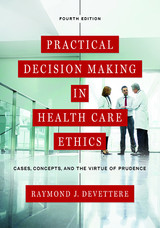
For more than twenty years Practical Decision Making in Health Care Ethics has offered scholars and students a highly accessible and teachable alternative to the dominant principle-based theories in the field. Raymond J. Devettere's approach is not based on an ethics of abstract obligations and duties but, following Aristotle, on how to live a fulfilled and happy life—in short, an ethics of personal well-being grounded in prudence, the virtue of ethical decision making.
New sections added in this revised fourth edition include sequencing whole genomes, even those of newborns; the new developments in genetic testing now provided by online commercial companies such as 23andMe; the genetic testing of fetuses by capturing their DNA circulating in the pregnant woman's blood; the Stanford Prison experiment and its relevance to the abuses at the Abu Graib prison; recent breakthroughs in the diagnosis of consciousness disorders such as PVS; the ongoing controversy generated by the NIH study of premature babies at many NICUs throughout the county, a study known as SUPPORT that the OHRP (Office of Human Research Protections, an office within the department of HHS) deemed unethical.
Devettere updates most chapters. New cases include Marlise Munoz (dead pregnant woman's body kept on life support by a Texas hospital), Jahi McMath (teenager pronounced dead in California but treated as alive in New Jersey), Margot Bentley (nursing home feeding a woman dying of end stage Alzheimer’s despite her advance directive that said no nourishment or liquids if she was dying with dementia), Brittany Maynard (dying 29-year-old California woman who moved to Oregon to commit suicide with a physician's help), and Samantha Burton (woman with two children who suffered rupture of membranes at 25 weeks and whose physician obtained a court order to keep her at the hospital to make sure she stayed on bed rest).
Thoughtfully updated and renewed for a new generation of readers, this classic textbook will be required reading for students and scholars of philosophy and medical ethics.
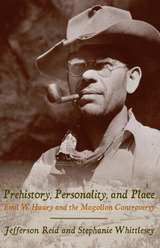
Reid and Whittlesey present the arguments and actions surrounding the Mogollon discovery, definition, and debate. Drawing on extensive interviews conducted with Haury before his death in 1992, they explore facets of the debate that scholars pursued at various times and places and how ultimately the New Archaeology shifted attention from the research questions of cultural affiliation and antiquity that had been at the heart of the controversy. In gathering the facts and anecdotes surrounding the debate, Reid and Whittlesey offer a compelling picture of an academician who was committed to understanding the unwritten past, who believed wholeheartedly in the techniques of scientific archaeology, and who used his influence to assist scholarship rather than to advance his own career.
Prehistory, Personality, and Place depicts a real archaeologist practicing real archaeology, one that fashioned from potsherds and pit houses a true understanding of prehistoric peoples. But more than the chronicle of a controversy, it is a book about places and personalities: the role of place in shaping archaeologists’ intellect and personalities, as well as the unusual intersections of people and places that produced resolutions of some intractable problems in Southwest history.
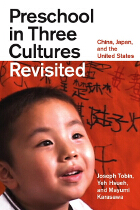
Published twenty years ago, the original Preschool in Three Cultures was a landmark in the study of education: a profoundly enlightening exploration of the different ways preschoolers are taught in China, Japan, and the United States. Here, lead author Joseph Tobin—along with new collaborators Yeh Hsueh and Mayumi Karasawa—revisits his original research to discover how two decades of globalization and sweeping social transformation have affected the way these three cultures educate and care for their youngest pupils. Putting their subjects’ responses into historical perspective, Tobin, Hsueh, and Karasawa analyze the pressures put on schools to evolve and to stay the same, discuss how the teachers adapt to these demands, and examine the patterns and processes of continuity and change in each country.
Featuring nearly one hundred stills from the videotapes, Preschool in Three Cultures Revisited artfully and insightfully illustrates the surprising, illuminating, and at times entertaining experiences of four-year-olds—and their teachers—on both sides of the Pacific.
Comparing national efforts to preserve public lands, William R. Lowry investigates how effectively and under what conditions governments can provide goods for future generations.
Providing intergenerational goods, ranging from balanced budgets to space programs and natural environments, is particularly challenging because most political incentives reward short-term behavior. Lowry examines the effect of institutional structure on the public delivery of these goods. He offers a theoretical framework accounting for both the necessary conditions — public demand, political stability, and official commitment to long-term delivery — and constraining factors — the tensions between public agencies and politicians as well as between different levels of government — that determine the ability of a nation to achieve long-term goals.
In support of this argument, Lowry evaluates data on park systems from more than one hundred countries and provides in-depth case studies of four — he United States, Australia, Canada, and Costa Rica — to show how and why the delivery of intergenerational goods can vary. For each of the cases, he reviews background information, discusses constraints on agency behavior, and assesses expansion of the park systems and restoration of natural conditions at specific locations.
This extensive comparative analysis of the preservation of public lands offers new insights into the capability of nations to pursue long-term goals.
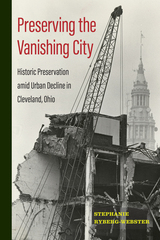
Stephanie Ryberg-Webster uncovers the motivations, strategies, and constraints driving Cleveland’s historic preservation sector, led by the public-sector Cleveland Landmarks Commission, nonprofit Cleveland Restoration Society, and a cadre of advocates. She sheds light on the ways in which preservationists confronted severe, escalating, and sustained urban decline, which plagued Cleveland, a prototypical rust-belt industrial city.
Preserving the Vanishing City chronicles the rise of the historic preservation profession in Cleveland and provides six case studies about targeted projects and neighborhood efforts, including industrial heritage, housing preservation and restoration, commercial district revitalization, securing local historic district designations, as well as grassroots organizing, coalition building, and partnerships. Ryberg-Webster also addresses the complexities of historic preservation within the context of rapid racial change in Cleveland’s neighborhoods.
A comprehensive history of preservation within the context of one city’s urban decline, Preserving the Vanishing Cityrecounts the successes, failures, and creative strategies employed to save Cleveland’s built environment.
From Harry and Louise through the McCaughey septuplets, this book explains stories and issues in health care ethics that have appeared in the news media. Written for the general reader in a pluralistic society, it outlines and applies principles of justice from the Catholic tradition to contemporary problems that increasingly affect us all.
This second edition contains extensive new material and new topics, including physician-assisted suicide, managed care, organ donation, genetic testing, cloning, and the question of futility. Aimed at a wide audience, this book will also be useful for introductory ethics courses in colleges and high schools.
Prisms of the People addresses those questions and more. Using data from six movement organizations—including a coalition that organized a 104-day protest in Phoenix in 2010 and another that helped restore voting rights to the formerly incarcerated in Virginia—Hahrie Han, Elizabeth McKenna, and Michelle Oyakawa show that the power of successful movements most often is rooted in their ability to act as “prisms of the people,” turning participation into political power just as prisms transform white light into rainbows. Understanding the organizational design choices that shape the people, their leaders, and their strategies can help us understand how grassroots groups achieve their goals.
Linking strong scholarship to a deep understanding of the needs and outlook of activists, Prisms of the People is the perfect book for our moment—for understanding what’s happening and propelling it forward.
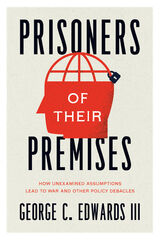
Why do accomplished and stable leaders frequently make calamitous decisions with devastating consequences for their countries—and other nations? We debate debacles such as the American involvement in Vietnam, seeking to understand why leaders pursued disastrous policies. In Prisoners of Their Premises, George C. Edwards III argues that the failure of leaders to examine their premises—the assumptions they make about the world and situation they are dealing with—cause them to ignore real problems or pursue policies that, in costly ways, deal with problems that are different than they think or simply don’t exist. Edwards looks at the role of premises in identifying (or ignoring) a problem in a series of case studies that range from strategic decisions in World War I and the Korean War to the wars in Vietnam and Iraq. Too often, unexamined premises color initial decisions to pursue a policy and shape the strategies leaders employ to achieve their goals, with grave consequences for their countries, organizations, and potentially the world. Timely and important, Prisoners of Their Premises demonstrates the real costs leaders incur by failing to question their assumptions.

Process-tracing in social science is a method for studying causal mechanisms linking causes with outcomes. This enables the researcher to make strong inferences about how a cause (or set of causes) contributes to producing an outcome. Derek Beach and Rasmus Brun Pedersen introduce a refined definition of process-tracing, differentiating it into three distinct variants and explaining the applications and limitations of each. The authors develop the underlying logic of process-tracing, including how one should understand causal mechanisms and how Bayesian logic enables strong within-case inferences. They provide instructions for identifying the variant of process-tracing most appropriate for the research question at hand and a set of guidelines for each stage of the research process.
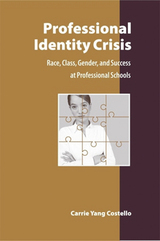
The author spent over 400 hours observing how first-year students are socialized in two very different environments, Boalt School of Law and the School of Social Welfare at UC Berkeley, watching how they adapted to different expectations of how to speak, dress, and behave in the classroom.
Costello found that students who were female, of color, disabled, or poor were not underqualified compared with their privileged peers. Nor did the research uncover intentional bigotry. Instead, the disproportionate success of white men can be explained by the fact that they are more likely to acquire appropriate professional identities swiftly, with little inner conflict. Students from less privileged backgrounds, however, suffered from "identity dissonance." For example, Jasmine, a Filipino student from Los Angeles, explained, "In the legal culture you have to adopt a different way of being, a different vocabulary and way to carry yourself . . . That's how I got this far. And when I go home, if I act the way I do here, they won't get it. My cousins and my friends say, 'You're kind of whitewashed.' And when I come back here I have to get back my law style."
The author has conducted an impressive amount of research in nine countries, including conversations with male and female sex tourists, adult and child prostitutes, procurers, and clients. Through her research, O'Connell Davidson demonstrates the complexity of prostitution, arguing that it is not simply an effect of male oppression and violence or insatiable sexual needs, nor is it an unproblematic economic encounter. The book provides a sophisticated explanation of the economic and political inequalities underlying prostitution, but also shows that while prostitution necessarily implies certain freedoms for the clients, the amount of freedom experienced by individual prostititutes varies greatly.
This highly accessible book will be of great interest to those in gender and women's studies, sexuality and cultural studies, the sociology of work and organizations, and social policy. General readers will also appreciate having new ways of thinking about this age-old social phenomenon.
Julia O'Connell Davidson is Lecturer in Sociology, University of Leicester.

What can neighborhood baseball tell us about class and gender cultures, urban change, and the ways that communities value public space? Through a close exploration of a boys’ baseball league in a gentrifying neighborhood of Philadelphia, sociologist Sherri Grasmuck reveals the accommodations and tensions that characterize multicultural encounters in contemporary American public life. Based on years of ethnographic observation and interviews with children, parents, and coaches, Protecting Home offers an analysis of the factors that account for racial accommodation in a space that was previously known for racial conflict and exclusion. Grasmuck argues that the institutional arrangements and social characteristics of children’s baseball create a cooperative environment for the negotiation of social, cultural, and class differences.
Chapters explore coaching styles, parental involvement, institutional politics, parent-child relations, and children’s experiences. Grasmuck identifies differences in the ways that the mostly white, working-class “old-timers” and the racially diverse, professional newcomers relate to the neighborhood. These distinctions reflect a competing sense of cultural values related to individual responsibility toward public space, group solidarity, appropriate masculine identities, and how best to promote children’s interests—a contrast between “hierarchical communalism” and “child-centered individualism.”
Through an innovative combination of narrative approaches, this book succeeds both in capturing the immediacy of boys’ interaction at the playing field and in contributing to sophisticated theoretical debates in urban studies, the sociology of childhood, and masculinity studies.
The Provisions of War examines how soldiers, civilians, communities, and institutions have used food and its absence as both a destructive weapon and a unifying force in establishing governmental control and cultural cohesion during times of conflict. Historians as well as scholars of literature, regional studies, and religious studies problematize traditional geographic boundaries and periodization in this essay collection, analyzing various conflicts of the nineteenth and twentieth centuries through a foodways lens to reveal new insights about the parameters of armed interactions.
The subjects covered are as varied and inclusive as the perspectives offered—ranging from topics like military logistics and animal disease in colonial Africa, Indian vegetarian identity, and food in the counterinsurgency of the Malayan Emergency, to investigations of hunger in Egypt after World War I and American soldiers’ role in the making of US–Mexico borderlands. Taken together, the essays here demonstrate the role of food in shaping prewar political debates and postwar realities, revealing how dietary adjustments brought on by military campaigns reshape national and individual foodways and identities long after the cessation of hostilities

The authors provide an eye-opening account of recent battles over publicly financed stadiums in some of America’s largest cities. Their interviews with the key decision makers present a behind-the-scenes look at how and why powerful individuals and organizations foist these sports palaces on increasingly unreceptive communities.
Delaney and Eckstein show that in the face of studies demonstrating that new sports facilities don’t live up to their promise of big money, proponents are using a new tactic to win public subsidies¾intangible “social” rewards, such as prestige and community cohesion. The authors find these to be empty promises as well, demonstrating that new stadiums may exacerbate, rather than erase, social problems in cities.
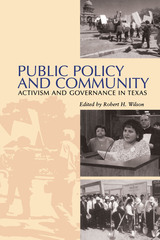
The decentralization of public policy from the federal government to state and local governments offers increased opportunities for ordinary citizens to participate directly in public policymaking. Yet these opportunities may not be equally shared. Due to a variety of factors, low-income citizens have long been denied a meaningful role in the public life and governance of our country.
By contrast, the essays in this volume explore how low-income citizens have successfully affected public policy. The book is built around six case studies, all from Texas, that cover education finance and reform, local infrastructure provision, environmental protection, and indigent health care.
This research illuminates several issues of national importance, including how communities gain standing and recognition for themselves and their issues, how policy agendas are defined, how communities mobilize technical and institutional resources, and how they form coalitions and alliances to accomplish their goals.
A comparison of the faith and politics of former Confederate chaplains with intriguing insights about the evolution of their postwar beliefs and the Lost Cause
Pulpits of the Lost Cause: The Faith and Politics of Former Confederate Chaplains during Reconstruction is the first in-depth study of former chaplains that juxtaposes their religion and politics, thereby revealing important insights about the Lost Cause movement. Steve Longenecker demonstrates that while some former chaplains vigorously defended the Lost Cause and were predictably conservative in the pulpit, embracing orthodoxy and resisting religious innovation, others were unexpectedly progressive and advocated on behalf of evolution, theological liberalism, and modern biblical criticism.
Former Confederate chaplains embodied both the distinctive white, Southern, regional identity and the variation within it. Most were theologically conservative and Lost Cause racists. But as with the larger South, variation abounded. The Lost Cause, which Longenecker interprets as a broad popular movement with numerous versions, meant different things to different chaplains. It ranged from diehard-ism to tempered sectional forgiveness to full reconciliation to a harmless once-a-year Decoration Day ritual.
This volume probes the careers of ten former chaplains, including their childhoods, wartime experiences, Lost Cause personas, and theologies, making use of manuscripts and published sermons as well as newspapers, diaries, memoirs, denominational periodicals, letters, and the books they themselves produced. In theology, many former chaplains were predictably conservative, while others were unexpectedly broad-minded and advocated evolution, theological liberalism, and modern Biblical criticism. One former chaplain became a social-climbing Harvard progressive. Another wrote innovative, liberal theology read by European scholars. Yet another espoused racial equality, at least in theory if not full practice. Additionally, former chaplains often exhibited the fundamental human trait of compartmentalization, most notably by extolling the past as they celebrated the Lost Cause while simultaneously looking to the future as religious progressives or New South boosters. The stereotypical preacher of the Lost Cause—a gray-clad Bible thumper—existed sufficiently to create the image but hardly enough to be universally accurate.
In a society increasingly dominated by zero-tolerance thinking, Punishing Schools argues that our educational system has become both the subject of legislative punishment and an instrument for the punishment of children. William Lyons and Julie Drew analyze the connections between state sanctions against our schools (the diversion of funding to charter schools, imposition of unfunded mandates, and enforcement of dubious forms of teacher accountability) and the schools' own infliction of punitive measures on their students-a vicious cycle that creates fear and encourages the development of passive and dependent citizens.
"Public schools in the United States are no longer viewed as a public good. On the contrary, they are increasingly modeled after prisons, and students similarly have come to mirror the suspicions and fears attributed to prisoners. Punishing Schools is one of the most insightful, thoughtful, and liberating books I have read on what it means to understand, critically engage, and transform the present status and state of schools from objects of fear and disdain to institutions that value young people, teachers, and administrators as part of a broader vision of social justice, freedom, and equality. William Lyons and Julie Drew have done their homework and provide all the necessary elements for understanding and defending schools as public spheres that are foundational to a democracy. This book should be required reading for every student, teacher, parent, and concerned citizen in the United States. In the end, this book is not just about saving schools, it is also about saving democracy and offering young people a future that matters."
--Henry Giroux, McMaster University
"This is an important book . . . a distinctive contribution. The authors move back and forth convincingly between the micropolitics of school discipline and the 'politics writ large' of the liberal left and the utopian right. The result is an expansive, idealistic, and well-grounded book in the spirit of the very best of social control literature."
--Stuart Scheingold, Professor Emeritus, Political Science, University of Washington
William Lyons is Director of Center for Conflict Management and Associate Professor of Political Science, University of Akron.
Julie Drew is Associate Professor of English, University of Akron.
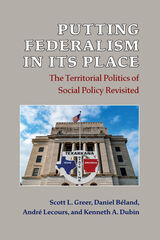
What does federalism do to welfare states? This question arises in scholarly debates about policy design as well as in discussions about the right political institutions for a country. It has frustrated many, with federalism seeming to matter in all sorts of combinations with all sorts of issues, from nationalism to racism to intergovernmental competition. The diffuse federalism literature has not come to compelling answers for very basic questions.
Scott L. Greer, Daniel Béland, André Lecours, and Kenneth A. Dubin argue for a new approach—one methodologically focused on configurations of variables within cases rather than a fruitless attempt to isolate “the” effect of federalism; and one that is substantively engaged with identifying key elements in configurations as well as with when and how their interactions matter. Born out of their work on a multi-year, eleven-country project (published as Federalism and Social Policy: Patterns of Redistribution in Eleven Countries, University of Michigan Press, 2019), this book comprises a methodological and substantive agenda. Methodologically, the authors shift to studies that embraced and understood the complexity within which federal political institutions operate. Substantively, they make an argument for the importance of plurinationalism, changing economic interests, and institutional legacies.
READERS
Browse our collection.
PUBLISHERS
See BiblioVault's publisher services.
STUDENT SERVICES
Files for college accessibility offices.
RECENTLY PUBLISHED




UChicago Accessibility Resources
home | accessibility | search | about | contact us
BiblioVault ® 2001 - 2026
The University of Chicago Press