
 A SCHOLARLY BOOK REPOSITORY
161 start with R start with R
Most of the women immigrated as dependents when their U.S.-educated husbands found professional jobs upon graduation. Constrained by their dependent visas, these women could not work outside of the home during the initial phase of their settlement. The significant contrast of their lives before and after immigration—changing from successful professionals to foreign housewives—generated feelings of boredom, loneliness, and depression. Mourning their lost careers and lacking fulfillment in homemaking, these highly educated immigrant women were forced to redefine the meaning of work and housework, which in time shaped their perceptions of themselves and others in the family, at work, and in the larger community.
Coming from diverse backgrounds in social work, sociology, public administration, literature, history, and education, three modern resolaneros take the twin concepts of resolana and el oro del barrio on a breathtaking journey from their rural roots to their application in an urban setting and on to a holistic view of globalization. The authors offer a humane perspective on transborder cultures and all communities struggling to maintain their cultural and linguistic identities. They share an optimistic view of how ordinary people everywhere can take back control of their own destinies. This book is about uncovering subjugated knowledge—el oro del barrio—through resolana, a dynamic process of thought and action.
Resolana will inspire dialogue and creativity from those interested in sociology, political science, social work, and Chicano studies, as well as public-policy makers and the general public.
Studying a period of German literary history that has been largely ignored by modern readers, Ruth-Ellen Boetcher Joeres demonstrates that these writings offer intriguing opportunities to examine such critical topics as canon formation; the relationship between gender, class, and popular culture; and women, professionalism, and technology. The writers she explores range from Annette von Droste-Hülshoff, who managed to work her way into the German canon, to the popular serial novelist E. Marlitt, from liberal writers such as Louise Otto and Fanny Lewald, to the virtually unknown novelist and journalist Claire von Glümer. Through this investigation, Boetcher Joeres finds ambiguities, compromises, and subversions in these texts that offer an extensive and informative look at the exciting and transformative epoch that so much shaped our own.
Hays draws on the vast knowledge of America's urban and social history that has been developed over the last thirty-eight years to make the second edition an unusually well-rounded study. He enhances the original coverage of politics, labor, and business with new accounts of the growth of cities, the rise of modern values, cultural conflicts with Native Americans and foreign nations, and changing roles for women, African-Americans, education, religion, medicine, law, and leisure. The result is a tightly woven portrait of America in transition that underscores the effects of impersonal market forces and greater personal freedom on individuals and chronicles such changes as the rise of social inequality, shifting power, in the legal system, the expansion of the federal government, and the formation of the Populist, Progressive, and Socialist parties.

Before the 1820s, the vast majority of Americans ate only at home. As the nation began to urbanize and industrialize, home and work became increasingly divided, resulting in new forms of commercial dining.
In this fascinating book, Kelly Erby explores the evolution of such eating alternatives in Boston during the nineteenth century. Why Boston? Its more modest assortment of restaurants, its less impressive—but still significant—expansion in commerce and population, and its growing diversity made it more typical of the nation’s other urban centers than New York. Restaurants, clearly segmented along class, gender, race, ethnic, and other lines, helped Bostonians become more comfortable with deepening social stratification in their city and young republic even as the experience of eating out contributed to an emerging public consumer culture.
Restaurant Republic sheds light on how commercial dining both reflected and helped shape growing fragmentation along lines of race, class, and gender—from the elite Tremont House, which served fashionable French cuisine, to such plebeian and ethnic venues as oyster saloons and Chinese chop suey houses. The epilogue takes us to the opening, in 1929 near Boston, of the nation’s first Howard Johnson’s and that restaurant’s establishment as a franchise in the next decade. The result is a compelling story that continues to shape America.
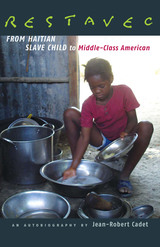
African slaves in Haiti emancipated themselves from French rule in 1804 and created the first independent black republic in the Western Hemisphere. But they reinstituted slavery for the most vulnerable members of Haitian society—the children of the poor—by using them as unpaid servants to the wealthy. These children were—and still are—restavecs, a French term whose literal meaning of "staying with" disguises the unremitting labor, abuse, and denial of education that characterizes the children's lives.
In this memoir, Jean-Robert Cadet recounts the harrowing story of his youth as a restavec, as well as his inspiring climb to middle-class American life. He vividly describes what it was like to be an unwanted illegitimate child "staying with" a well-to-do family whose physical and emotional abuse was sanctioned by Haitian society. He also details his subsequent life in the United States, where, despite American racism, he put himself through college and found success in the Army, in business, and finally in teaching.
Restructuring the Philadelphia Region offers one of the most comprehensive and careful investigations written to date about metropolitan inequalities in America’s large urban regions. Moving beyond simplistic analyses of cities-versus-suburbs, the authors use a large and unique data set to discover the special patterns of opportunity in greater Philadelphia, a sprawling, complex metropolitan region consisting of more than 350 separate localities. With each community operating its own public services and competing to attract residents and businesses, the places people live offer them dramatically different opportunities.
The book vividly portrays the region’s uneven development—paying particular attention to differences in housing, employment and educational opportunities in different communities—and describes the actors who are working to promote greater regional cooperation. Surprisingly, local government officials are not prominent among those actors. Instead, a rich network of “third-sector” actors, represented by nonprofit organizations, quasi-governmental authorities and voluntary associations, is shaping a new form of regionalism.
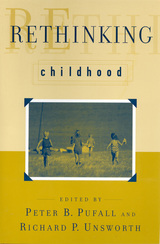
Being a child in American society can be problematic. Twenty percent of American children live in poverty, parents are divorcing at high rates, and educational institutions are not always fulfilling their goals. Against this backdrop, children are often patronized or idealized by adults. Rarely do we look for the strengths within children that can serve as the foundation for growth and development. In Rethinking Childhood, twenty contributors, coming from the disciplines of anthropology, government, law, psychology, education, religion, philosophy, and sociology, provide a multidisciplinary view of childhood by listening and understanding the ways children shape their own futures. Topics include education, poverty, family life, divorce, neighborhood life, sports, the internet, and legal status. In all these areas, children have both voice and agency. They construct their own social networks and social reality, sort out their own values, and assess and cope with the perplexing world around them. The contributors present ideas that lead not only to new analyses but also to innovative policy applications.
Taken together, these essays develop a new paradigm for understanding childhood as children experience these years. This paradigm challenges readers to develop fresh ways of listening to children’s voices that enable both children and adults to cross the barriers of age, experience, and stereotyping that make communication difficult.
A volume in the Rutgers Series in Childhood Studies, edited by Myra Bluebond-Langner.
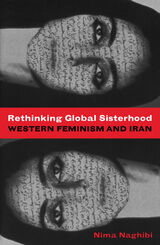
Western women’s involvement in Persia dates from the mid-nineteenth century, when female adventurers and missionaries first encountered their veiled Muslim “sisters.” Twentieth-century Western and state-sponsored Iranian feminists continued to use the image of the veiled woman as the embodiment of backwardness. Yet, following the 1979 revolution, indigenous Iranian feminists became more vocal in their resistance to this characterization.
In Rethinking Global Sisterhood, Nima Naghibi makes powerful connections among feminism, imperialism, and the discourses of global sisterhood. Naghibi investigates topics including the state-sponsored Women’s Organization of Iran and the involvement of feminists such as Betty Friedan and Gloria Steinem in the Iranian feminism movement before and during the 1979 revolution. With a potent analysis of cinema, she examines the veiled woman in the films of Tahmineh Milani, Ziba Mir-Hosseini and Kim Longinotto, and Mahnaz Afzali.
At a time when Western relations with the Muslim world are in crisis, Rethinking Global Sisterhood provides much-needed insights and explores the limitations and possibilities of cross-cultural feminist social and political interventions.
Nima Naghibi is assistant professor of English at Ryerson University in Toronto.

The dominant trend in pastoralist studies has long assumed that pastoralism and pastoral gender relations are inherently patriarchal. The contributors to this collection, in contrast, use diverse analytic approaches to demonstrate that pastoralist gender relations are dynamic, relational, historical, and produced through complex local-translocal interactions. Combining theoretically sophisticated analysis with detailed case studies, this collection will appeal to those doing research and teaching in African studies, gender studies, anthropology, and history. Among the topics discussed are pastoralism, patriarchy, and history among Maasai in Tanganyika; women’s roles in peacemaking in Somali society; the fertility of houses and herds; gender, aging, and postchildbearing experience in a Tuareg community; and milk selling among Fulani women in Northern Burkina Faso.

In a fervent appeal for clearer thinking on social issues, Christopher Jencks reexamines the way Americans think about race, poverty, crime, heredity, welfare, and the underclass. Arguing that neither liberal nor conservative ideas about these issues withstand close scrutiny, he calls for less emphasis on political principles and more attention to specific programs. Jencks describes how welfare policy was dominated in the early 1980s by conservatives who promoted ideas that justified cutting back sharply on the social programs of Lyndon Johnson's Great Society. They believed that a period of sustained economic growth, with low taxes and free markets, would do more to help poor people than coddling them with government assistance.
Despite the economic expansion of the later Reagan years, however, the problems of persistent poverty grew even more serious. The liberals took the initiative in the late 1980s, but their proposals failed to win broad popular support. With clarity and a gift for apt analogy, Jencks analyzes influential books on such subjects as affirmative action (Thomas Sowell), the “safety net” (Charles Murray), the effects of heredity on learning and propensity to commit crime (James Q. Wilson and Richard Herrnstein), ghetto culture and the underclass (William J. Wilson). His intention throughout is “to unbundle the empirical and moral assumptions that traditional ideologies tie together, making the reader's picture of the world more complicated”—in other words, to force us (readers and policymakers) to look at the way various remedial plans actually succeed or fail.
For example, he believes that until we transform AFDC so that it reinforces rather than subverts American ideals about work and marriage, efforts to build a humane welfare state will never succeed. Other prescriptions, initially surprising and sometimes shocking, show demonstrable good sense once they are examined. As the author says, “If this book encourages readers to think about social policy more concretely, it will have served its primary purpose.”
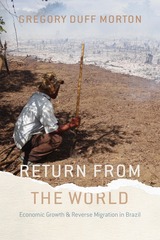
In Return from the World, anthropologist Gregory Duff Morton traces the migrations of Brazilian workers who leave a thriving labor market and return to their home villages to become peasant farmers. Morton seeks to understand what it means to turn one’s back deliberately on the promise of economic growth.
Giving up their positions in factories, at construction sites, and as domestic workers, these migrants travel thousands of miles back to villages without running water or dependable power. There, many take up subsistence farming. Some become activists with the MST, Brazil’s militant movement of landless peasants. Bringing their stories vividly to life, Morton dives into the dreams and disputes at play in finding freedom in the shared rejection of growth.
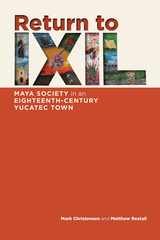
Supplemented with additional archival research, the wills provide new and detailed descriptions of various aspects of life in eighteenth-century Ixil. In each chapter, authors Mark Christensen and Matthew Restall examine a different dimension of Ixil’s colonial history, including the role of notaries, Maya participation in a coastal militia, economy and modes of production, religious life and records, and the structures and patterns of familial relationships. These details offer insight into the complex network of societies in colonial Yucatan, colonial Mesoamerica, and colonial Latin America.
Including an appendix presenting the original Maya texts as well as translations by Christensen and Restall, Return to Ixil not only analyzes the largest body of substantive wills in any Mayan language known today but also provides a rare closeup view of the inner workings of a colonial Maya town and the communal and familial affairs that made up a large part of the Maya colonial experience. It will be of great interest to Mayanists as well as to students and scholars of history, anthropology, ethnohistory, linguistics, and social history.
The publication of this book is supported in part byBrigham Young University and Penn State University.

A Return to Servitude is an ethnography of Maya migration within Mexico that analyzes the foundational role indigenous peoples play in the development of the modern nation-state. Focusing on tourism in the Yucatán Peninsula, M. Bianet Castellanos examines how Cancún came to be equated with modernity, how this city has shaped the political economy of the peninsula, and how indigenous communities engage with this vision of contemporary life. More broadly, she demonstrates how indigenous communities experience, resist, and accommodate themselves to transnational capitalism.
Tourism and the social stratification that results from migration have created conflict among the Maya. At the same time, this work asserts, it is through engagement with modernity and its resources that they are able to maintain their sense of indigeneity and community.

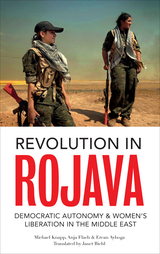
Revolution in Rojava tells the story of Rojava's groundbreaking experiment in what they call democratic confederalism, a communally organized democracy that is fiercely anti-capitalist and committed to female equality, while rejecting reactionary nationalist ideologies.
Rooted in the ideas of imprisoned Kurdish leader Abdullah Ocalan, the system is built on effective gender quotas, bottom-up democratic structures, far-sighted ecological policies, and a powerful militancy that has allowed the region to keep ISIS at bay.
Given the widespread violence and suffering in Syria, it's not unreasonable that outsiders look at the situation as unrelentingly awful. And while the reality of the devastation is undeniable, there is reason for hope in at least one small pocket of the nation: the cantons of Rojava in Syrian Kurdistan, where in the wake of war people are quietly building one of the most progressive societies in the world today. Chapters here include:
*Rojava's Diverse Cultures
*Democratic Confederalism
*The Liberation
*A Women's Revolution
*Democratic Autonomy in Rojava
*Civil Society Associations
*The Theory of the Rose: Defense
*The New Justice System
*Democratization of Education
*Health Care
*The Social Economy
*Ecological Challenges
This first full-length study of democratic developments in Rojava tells an extraordinary and powerfully hopeful story of a little-known battle for true freedom in dark times. With excellent first-hand background information about this important, but little understood struggle, Revolution in Rojava will educate and inspire the reader to learn more about Rojava, Syria, and the fight for change in one of the world’s most dangerous regions.

Is Venezuela’s Bolivarian revolution under Hugo Chávez truly revolutionary? Most books and articles tend to view the Chávez government in an either-or fashion. Some see the president as the shining knight of twenty-first-century socialism, while others see him as an avenging Stalinist strongman. Despite passion on both sides, the Chávez government does not fall easily into a seamless fable of emancipatory or authoritarian history, as these essays make clear.
A range of distinguished authors consider the nature of social change in contemporary Venezuela and explore a number of themes that help elucidate the sources of the nation’s political polarization. The chapters range from Fernando Coronil’s “Bolivarian Revolution,” which examines the relationship between the state’s social body (its population) and its natural body (its oil reserves), to an insightful look at women’s rights by Cathy A. Rakowski and Gioconda Espina. This volume shows that, while the future of the national process is unclear, the principles elaborated by the Chávez government are helping articulate a new Latin American left.

Revolution on My Mind is a stunning revelation of the inner world of Stalin’s Russia. We see into the minds and hearts of Soviet citizens who recorded their lives during an extraordinary period of revolutionary fervor and state terror. Writing a diary, like other creative expression, seems nearly impossible amid the fear and distrust of totalitarian rule; but as Jochen Hellbeck shows, diary-keeping was widespread, as individuals struggled to adjust to Stalin’s regime.
Rather than protect themselves against totalitarianism, many men and women bent their will to its demands, by striving to merge their individual identities with the collective and by battling vestiges of the old self within. We see how Stalin’s subjects, from artists to intellectuals and from students to housewives, absorbed directives while endeavoring to fulfill the mandate of the Soviet revolution—re-creation of the self as a builder of the socialist society. Thanks to a newly discovered trove of diaries, we are brought face to face with individual life stories—gripping and unforgettably poignant.
The diarists’ efforts defy our liberal imaginations and our ideals of autonomy and private fulfillment. These Soviet citizens dreamed differently. They coveted a morally and aesthetically superior form of life, and were eager to inscribe themselves into the unfolding revolution. Revolution on My Mind is a brilliant exploration of the forging of the revolutionary self, a study without precedent that speaks to the evolution of the individual in mass movements of our own time.
Revolutions at Home analyzes a rich set of documents created for and by young Germans to show that children were central to reinventing their own education between 1770 and 1850. Through their reading and writing, they helped construct the modern child subject. The active child who emerged at this time was not simply a consequence of expanding literacy but, in fact, a key participant in defining modern life.
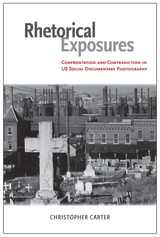
Exposing the politics of seeing: how documentary photographs confront inequality and reshape public understanding.
In Rhetorical Exposures, Christopher Carter explores social documentary photography from the nineteenth century to the present in order to illuminate the political dimensions and consequences of photographs taken and selected to highlight social injustice. Documentary photography aims to capture the material reality of life. Carter demonstrates how the creation and display of documentary photographs—often now called “imagetexts”—both invite analysis and raise persistent questions about the political and social causes for the bleak scenes of poverty and distress captured on film.
Carter’s carefully reasoned monograph examines both formal qualities of composition and the historical contexts of the production and display of documentary photographs. In Rhetorical Exposures, Carter explores Jacob Riis’s heartrending photos of Manhattan’s poor in late nineteenth-century New York, Walker Evans’s iconic images of tenant farmers in west Alabama, Ted Streshinsky’s images of 1960s social movements, Camilo José Vergara’s photographic landscapes of urban dereliction in the 1970s, and Chandra McCormick’s portraits of New Orleans’s Ninth Ward scarred by Hurricane Katrina.
While not ascribing specifically political or Marxist intentions to the photographers discussed, Carter frames his arguments in a class-based dialectic that addresses material want as an ineluctable result of social inequality. Carter argues that social documentary photography has the powerful capacity to disrupt complacent habits of viewing and to prompt viewers to confront injustice. Though photography may induce socially disruptive experiences, it remains vulnerable to the same power dynamics it subverts. Therefore, Carter offers a “rhetoric of exposure” that outlines how such social documentary images can be treated as highly tensioned rhetorical objects. His framework enables the analysis of photographs as heterogeneous records of the interaction of social classes and expressions of specific built environments. Rhetorical Exposures also discusses how photographs interact with oral and print media and relate to creations as diverse as public memorials, murals, and graphic novels.
As the creation and dissemination of new media continues to evolve in an environment of increasing anxiety about growing financial inequality, Rhetorical Exposures offers a very apt and timely discussion of the ways social documentary photography is created, employed, and understood.

Rhetorics of Refusal focuses on a recent public health crisis—Minnesota’s 2017 measles outbreak—to recast vaccine refusals less as products of poor health literacy or disinformation and more as strategic and generative acts of noncompliance. The outbreak, which primarily affected unvaccinated Somali children, occurred at the nexus of declining vaccination rates, spiking autism concerns, antivaccination predation, and a fraying public health infrastructure. However, during a year-long ethnographic study at a Somali health center, Kari Campeau found that personal stories from parents offered a much different picture of vaccine refusal than the one painted by news media. Tracking refusals across four sites, Campeau argues for the importance of approaching refusals as rhetorical and participatory strategies that hold institutions accountable, press for change, and practice care within emergent biosocial communities. Moreover, she views refusal as necessary and potentially transformative in situations where refusers have little access to power or platform. By contextualizing refusals in longer cultural and political histories, Campeau unsettles traditional narratives of medical dissent while offering new entry points into discussions on racialized biopolitics, care, disability, and public health.
Samuels demonstrates that Jewish difference has always been essential to the elaboration of French universalism, whether as its foil or as proof of its reach. He traces the development of this discourse through key moments in French history, from debates over granting Jews civil rights during the Revolution, through the Dreyfus Affair and Vichy, and up to the rise of a “new antisemitism” in recent years. By recovering the forgotten history of a more open, pluralistic form of French universalism, Samuels points toward new ways of moving beyond current ethnic and religious dilemmas and argues for a more inclusive view of what constitutes political discourse in France.
Winner Labriola Center American Indian National Book Award
For thousands of years, humans have lived on the sprawling escarpment in Arizona known as the Mogollon Rim, a stretch that separates the valleys of central Arizona from the mountains of the north. A vast portion of this dramatic landscape is the traditional home of the Dilzhe’e (Tonto Apache) and the Yavapai. Now Daniel Herman offers a compelling narrative of how—from 1864 to 1934—the Dilzhe’e and the Yavapai came to central Arizona, how they were conquered, how they were exiled, how they returned to their homeland, and how, through these events, they found renewal.
Herman examines the complex, contradictory, and very human relations between Indians, settlers, and Federal agents in late nineteenth- and early twentieth-century Arizona—a time that included Arizona’s brutal Indian wars. But while most tribal histories stay within the borders of the reservation, Herman also chronicles how Indians who left the reservation helped build a modern state with dams, hydroelectricity, roads, and bridges. With thoughtful detail and incisive analysis, Herman discusses the complex web of interactions between Apache, Yavapai, and Anglos that surround every aspect of the story.
Rim Country Exodus is part of a new movement in Western history emphasizing survival rather than disappearance. Just as important, this is one of the first in-depth studies of the West that examines race as it was lived. Race was formulated, Herman argues, not only through colonial and scientific discourses, but also through day-to-day interactions between Indians, agents, and settlers. Rim Country Exodus offers an important new perspective on the making of the West.
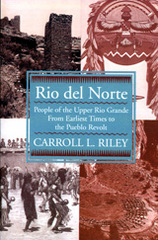
Rio del Norte chronicles the upper Rio Grande region and its divers peoples across twelve thousand years of continuous history. Based on the most up-to-date historical and archaeological research, Rio del Norte is a tour de force, highlighting the unbroken history of the upper Rio Grande.
Beginning with the mammoth hunters of eleven millennia ago, Carroll Riley adeptly eaves the threads of twelve thousand years of continuous history through the introduction of agriculture, the rise of the Basketmaker-Pueblo (Anasazi) people, and the extraordinary "quickening" that occurred along the Rio Grande and its tributaries as the Anasazi era ended.
At that time large towns appeared, some holding several thousand people who practiced irrigation-based agriculture, maintained complex social and political organizations, and had a rich artistry. This "golden age" was continuing when Spaniards contacted, then colonized and missionized the region. In 1680 the Pueblos joined in a powerful record and ousted the invaders. Although the Spanish returned, the Pueblos have maintained important parts of their cultural heritage to the present.

A LitHub Most Anticipated Book of 2022
“Emotional range without consequence,” Negesti Kaudo writes in her debut collection, Ripe, is a privilege of whiteness. In these essays, she fights back, exhorting readers to follow her through fury, grief, love, and hope as she confronts what it means to own her Blackness and her body in contemporary America. A scathing and nuanced cultural critic, she disentangles intersections of race, class, pop culture, size, sexuality, and more in spaces where she always seems to be either too Black or not Black enough. From attending private school as a poor Black student to the evolution of her hair routine to being fat and sexual when society says she should be neither, Kaudo overlooks nothing as she names the ways that white America simultaneously denigrates and steals Black culture. Most of all, she writes against the idea that a Black woman’s anger makes her an “angry Black woman,” claiming full emotional range as her birthright and as a tool against injustice on her quest to find herself no matter how uncomfortable the journey.
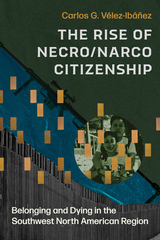
Carlos G. Vélez-Ibáñez’s latest work, The Rise of Necro/Narco Citizenship investigates the intricate and often harrowing dynamics that define the borderlands between the United States, Mexico, and beyond. This groundbreaking book provides a comprehensive cultural, economic, social, and political-ecological analysis, illustrating how various forms of violence and militarization have reshaped the daily lives and identities of the region’s inhabitants. Through meticulous ethnographic fieldwork, extensive archival research, and rigorous statistical data, Vélez-Ibáñez exposes the deeply entrenched networks of exploitation and conflict that have emerged in response to global capitalism’s pressures.
Vélez-Ibáñez builds on theorization about necrocitizenship to introduce the concept of necro/narco citizenship, which argues that pervasive violence and socioeconomic disruptions create a unique form of existence on both sides of the border. The author examines the dislocation of thousands, the persistent threat of violence, and the ways in which these forces compel individuals to navigate a reality steeped in addiction, self-destruction, and civil deterioration. This book reveals the transnational networks and the morally compromised political economies that sustain them, offering readers an unflinching look at the cost of survival in this tumultuous region.
This essential volume is not only a critical addition to the field of anthropology but also an invaluable resource for those interested in the sociopolitical landscape of the U.S.-Mexico border. Vélez-Ibáñez’s insights will resonate with scholars, students, and policymakers alike. The Rise of Necro/Narco Citizenship challenges us to rethink the narratives of violence, militarization, and resistance that define our understanding of the Southwest North American Region.

Since the end of the draft, the U.S. Army has prided itself on its patriotic volunteers who heed the call to “Be All That You Can Be.” But beneath the recruitment slogans, the army promised volunteers something more tangible: a social safety net including medical and dental care, education, child care, financial counseling, housing assistance, legal services, and other privileges that had long been reserved for career soldiers. The Rise of the Military Welfare State examines how the U.S. Army’s extension of benefits to enlisted men and women created a military welfare system of unprecedented size and scope.
America’s all-volunteer army took shape in the 1970s, in the wake of widespread opposition to the draft. Abandoning compulsory conscription, it wrestled with how to attract and retain soldiers—a task made more difficult by the military’s plummeting prestige after Vietnam. The army solved the problem, Jennifer Mittelstadt shows, by promising to take care of its own—the more than ten million Americans who volunteered for active duty after 1973 and their families. While the United States dismantled its civilian welfare system in the 1980s and 1990s, army benefits continued to expand.
Yet not everyone was pleased by programs that, in their view, encouraged dependency, infantilized soldiers, and feminized the institution. Fighting to outsource and privatize the army’s “socialist” system and to reinforce “self-reliance” among American soldiers, opponents rolled back some of the military welfare state’s signature achievements, even as a new era of war began.
Risqué Business serves up the breastaurant industry, where food service, sex appeal, identity, and gender politics mix.
Risqué Business explores the rise and ongoing cultural reckoning of “breastaurants”: sports bar–style restaurants like Hooters and Twin Peaks, which have long relied on the sexualized presentation of female servers to attract a mostly straight, male clientele. Ty Matejowsky, professor of anthropology at the University of Central Florida, is uniquely positioned in America’s foundational, breastaurant-saturated landscape. From this vantage, he offers a well-balanced account that draws on pop culture, media analysis, and contemporary gender politics. He delivers a smart, layered analysis of how breastaurants commodify youth and femininity, uphold retrograde masculinity, and serve as symbolic battlegrounds in today's highly charged political environments including America's deeply polarized Red State/Blue State divide.
With case studies, cultural critique, and a critical lens on labor and sexuality, Matejowsky reveals how these restaurants are more than just risqué marketing gimmicks. They reflect deeper anxieties about gender, identity, and the uneasy fusion of sex and service in American consumer culture. Risqué Business is a high-spirited study of an industry that thrives at the intersection of appetite and identity.
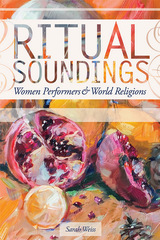
In Ritual Soundings, Sarah Weiss reads deeply into and across the ethnographic details of multiple studies while offering a robust framework for studying music and world religion. Her meta-ethnography reveals surprising patterns of similarity between unrelated cultures. Deftly blending ethnomusicology, the study of gender in religion, and sacred music studies, she invites ethnomusicologists back into comparative work, offering them encouragement to think across disciplinary boundaries. As Weiss delves into a number of less-studied rituals, she offers a forceful narrative of how women assert agency within institutional religious structures while remaining faithful to the local cultural practices the rituals represent.

Megged analyzes these women’s life stories recorded during the Spanish Inquisition, as well as wills and bequests, petitions, parish records, and private letters that describe—in their own words—how they exercised agency in male-dominated and religious spaces. Translations of select documents and accompanying analysis illustrate the conditions in which women dissolved their marriages, remained in long-lasting extramarital cohabitations, and formed female-led households and “sisterhoods” of their own. Megged provides evidence that single women in colonial Mexico played a far more active and central role in economic systems, social organizations, cults, and political activism than has been previously thought, creating spaces for themselves in which they could initiate and maintain autonomy and values distinct from those of elite society.
The institutionalization of female-headed households in mid-colonial Mexico had wide-ranging repercussions and effects on general societal values. Rituals and Sisterhoods details the particular relevance of these changes to the history of emotions, sexuality, gender concepts, perceptions of marriage, life choices, and views of honor and shame in colonial society. This book will be of significant interest to students and scholars of colonial Latin American history, the history of Early Modern Spain and Europe, and gender and women’s studies.
Winner, William P. Clements Prize, Best Non-Fiction Book on Southwestern America, 2004
Not quite the United States and not quite Mexico, La Junta de los Rios straddles the border between Texas and Chihuahua, occupying the basin formed by the conjunction of the Rio Grande and the Rio Conchos. It is one of the oldest continuously inhabited settlements in the Chihuahuan Desert, ranking in age and dignity with the Anasazi pueblos of New Mexico.
In the first comprehensive history of the region, Jefferson Morgenthaler traces the history of La Junta de los Rios from the formation of the Mexico-Texas border in the mid-19th century to the 1997 ambush shooting of teenage goatherd Esquiel Hernandez by U.S. Marines performing drug interdiction in El Polvo, Texas. "Though it is scores of miles from a major highway, I found natives, soldiers, rebels, bandidos, heroes, scoundrels, drug lords, scalp hunters, medal winners, and mystics," writes Morgenthaler. "I found love, tragedy, struggle, and stories that have never been told." In telling the turbulent history of this remote valley oasis, he examines the consequences of a national border running through a community older than the invisible line that divides it.
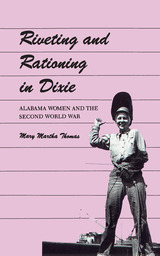
Covers the experience of both black and white Alabama women as defense workers, volunteers, and homemakers. The most important change for women during the war years was their employment in jobs normally held by men, which posed an implicit challenge to traditional notions about femininity and female limitations.
Thomas describes the women employed in the defense industries—how they were recruited and trained, where they worked and under what conditions, and what changes employers made in the workplace to accommodate women, She also discusses the experience of the women who served as volunteers in the Ground Observer Corps, the Citizens’ Service Corps, the Red Cross, and other volunteer agencies. In addition, the author considers how homemakers coped during a time of rationing, housing shortages, lack of schools, and inadequate medical facilities.


Examining a wealth of archaelogical and literary evidence in light of central place theory, and using sound statistical techniques, Engels reconstructs the human geography of the Corinthia, including an estimate of the population. He shows that—given the amount of cultivatable land—rents and taxes levied onthe countryside could not have supported a highly populated city like Corinth. Neither could its inhabitants have supported themselves directly by farming.
Rather, the city constituted a thriving market for domestic, regional, and overseas raw materials, agricultural products, and manufactured goods, at the same time satisfying the needs of those who plied the various land and sea routes that converged there. Corinth provided key governmental and judicial services to the province of Achaea, and its religious festivals, temples, and monuments attracted numerous visitors from all corners of the Roman world. In accounting for the large portion of residents who participated in these various areas outside of the traditional consumer model, Engels reveals the depth and sophistication of the economics of ancient cities.
Roman Corinth is a much-needed critique of the currently dominant approach of ancient urbanism. It will be of crucial interest to scholars and students in classics, ancient history, and urban studies.
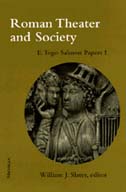
William Slater's new volume Roman Theater and Society brings an important perspective to the much-maligned status of the Roman theater, which has only recently been reappraised and appreciated as uniquely Roman rather than criticized for not being Greek. From this point of embarkation, William Slater and the nine contributors discuss theater in Rome and the Greek east with a definition of performance incorporating not only stage performances but also dinnertime entertainment, sporting events, and political events. Contributors are T. D. Barnes, K. M. Coleman, J. C. Edmonson, E. R. Gebhard, J. R. Green, E. J. Jory, W. D. Lebek, and D. S. Potter.
Individual chapters combine literary evidence with archaeological, thereby engendering a deeper appreciation for the social and political roles of Roman theater. It becomes clear that these roles were of great influence in giving voice to the popular demands of the average Roman. In examining the roles of theater the contributors turn to the players and audience themselves for deeper understanding.
Roman Theater and Society will be of great interest to classicists, theater specialists, and anyone interested in the interplay among plays, theaters, and the people on stage and in the audience.
William J. Slater is Professor of Classics, McMaster University.
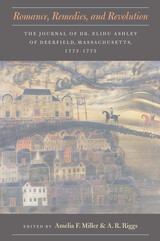
With flashes of humor and close attention to detail, Ashley describes a broad range of activities and experiences in the small village of Deerfield and the surrounding towns of the Connecticut River valley. Articulate as well as observant, this former schoolteacher conveys a sense of immediacy that brings even the most mundane daily events to life. He discusses medical theory and practice, revolutionary politics, farming, his family, his circle of friends, and amusements ranging from singing and dancing to sleigh riding and bouts of drunkenness. He also writes about his love life, including a dalliance with the older sister of his fiancee, Polly Williams, while the latter is away visiting relatives in the Berkshires.
For Ashley, personal relationships and politics were the prominent issues of 1773 and 1774, as events in Massachusetts drew the province toward rebellion. He discusses the gathering of angry mobs in response to the so-called Intolerable Acts, the stoppage of the courts in Hampshire County, the anarchy that ensued, and the persecution of loyalists, with or without the sanction of law. When the revolution breaks out in April 1775, he describes the departure of companies of minutemen as they set out for Boston to challenge the British Army.
Six months later, in November 1775, the journal abruptly ends. By then, however, Elihu Ashley had already bequeathed to posterity an extraordinary firsthand account of life in rural New England in the years immediately preceding the War of Independence.
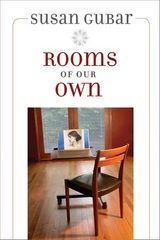
With a little help from Virginia Woolf, Susan Gubar contemplates startling transformations produced by the women's movement in recent decades. What advances have women made and what still needs to be done? Taking Woolf's classic A Room of One's Own as her guide, Gubar engages these questions by recounting one year in the life of an English professor.
A meditation on the teaching of literature and on the state of the humanities today, her chapters also provide a crash course on the challenges and changes in feminist intellectual history over the past several decades: the influence of post-structuralism and of critical race, postcolonial, and cultural studies scholarship; the stakes of queer theory and the institutionalization of women's studies; and the effects of globalism and bioengineering on conversations about gender, sex, and sexuality. Yet Rooms of Our Own eschews a scholarly approach. Instead, through narrative criticism it enlists a thoroughly contemporary cast of characters who tell us as much about the comedies and tragedies of campus life today as they do about the sometimes contentious but invariably liberating feminisms of our future.

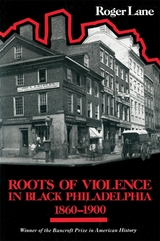
In the late nineteenth century, life became more stable and orderly for most American city dwellers, but not for blacks. Roger Lane offers a historical explanation for the rising levels of black urban crime and family instability during this paradoxical era. Philadelphia serves as test case because of the richness of the data: Du Bois’s classic study, The Philadelphia Negro, newspapers, records of the criminal justice system and other local agencies, and the federal census. The author presents numerical details, along with many examples of the human stories—social and political—behind the statistics.
Lane reveals how social and economic discrimination created a black criminal subculture. This subculture, overlooked by those histories depending on often inaccurate census materials, eroded family patterns, encouraged violence, discouraged efforts at middle-class respectability, and intensified employment problems by adding white fear to the white prejudice that had helped to create it.
Modern crime rates and patterns are shown to be products of a historical culture that can be traced from its formative years to the 1980s. Lane not only charts Philadelphia’s story but also makes suggestions regarding national and international patterns.
Anthropologist Sarah Muir offers a cogent meditation on the limits of critique at this historical moment, drawing on deep experience in Argentina but reflecting on a truly global condition. If we feel things are being upended in a manner that is ongoing, tumultuous, and harmful, what would we need to do—and what would we need to give up—to usher in a revitalized critique for today's world? Routine Crisis is an original provocation and a challenge to think beyond the limits of exhaustion and reimagine a form of criticism for the twenty-first century.
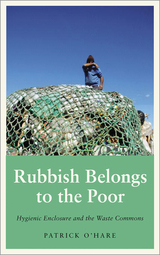

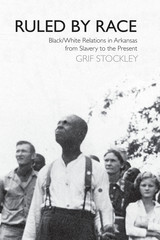
Winner of the 2010 Booker Worthen Literary Prize, and the 2009 Ragsdale Award.
From the Civil War to Reconstruction, the Redeemer period, Jim Crow, and the modern civil rights era to the present, Ruled by Race describes the ways that race has been at the center of much of the state’s formation and image since its founding. Grif Stockley uses the work of published and unpublished historians and exhaustive primary source materials along with stories from authors as diverse as Maya Angelou and E. Lynn Harris to bring to life the voices of those who have both studied and lived the racial experience in Arkansas.
Topics range from the well-known Little Rock Central High Crisis of 1957 to lesser-known events such as the Elaine Race Massacres of 1919 and the shocking yet sadly commonplace attitudes found in newspaper reports and speeches. Through the words of the most powerful Arkansans such as racist Arkansas Govenor Jeff Davis (1901–1906) to the least powerful, including an unflinching look at the narratives of former slaves, readers will come away with increased awareness of the ways that race continues to affect where Arkansans live, send their children to school, work, travel, shop, spend leisure time, worship, and choose their friends and life partners.

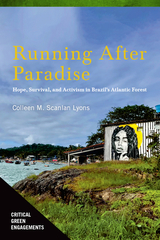
The pressures on this tropical forest are palpable. So are people’s responses to these pressures. What was once the state’s economic mainstay, cacao production, is only now beginning to make a comeback after a disease decimated the crops of large and small farmers alike. Tourism, another economic hope, is susceptible to economic crises and pandemics. And the threat of a massive state-led infrastructure project involving mining, a railroad, and an international port has loomed over the region for well over a decade.
Southern Bahia is at a crossroads: develop a sustainable, forest-based economy or run the risk of losing the identity and soul of this place forevermore. Through the lives of environmentalists, farmers, quilombolas, and nativos—people who are in and of this place—this book brings alive the people who are grappling with this dilemma.
Anthropologist Colleen M. Scanlan Lyons brings the eye of a storyteller to present this complex struggle, weaving in her own challenges of balancing family and fieldwork alongside the stories of the people who live in this dynamic region. Intertwined tales, friendships, and hope emerge as people both struggle to sustain their lives in a biodiversity hotspot and strive to create their paradise.

Since the fall of communism, Russia has witnessed a dramatic struggle between old and new, continuity and change. Corruption and violence have plagued society. Most people have benefited little from the new capitalist order. But positive changes are evident. Russians can speak and act more freely in a state that no longer intrudes on their privacy. They are able to travel abroad, enjoy unprecedented access to information from around the world, and organize and campaign for improvement in their living conditions.
In this engrossing account Robert Service traces the formation of the new Russia from the end of the Soviet Union in 1991 to the present. He paints a fascinating picture of a people in metamorphosis. In wide-ranging discussions on topics from Kremlin politics to rock music and macroeconomics to contemporary poetry, Service takes us inside to witness the changes from both the top down and the bottom up. He examines the reforms of the Yeltsin and Putin administrations in the context of the complex communist legacy, deftly interweaving political history, intellectual thought, and popular consciousness to illuminate the real difficulties Russia has faced on its rocky path to reform.
For the second time in less than a century, the Russians have been engaged in a fundamental reshaping of their society, and the results will prove of vital importance to the global community. Robert Service has provided a valuable and engaging guide to their recent remarkable journey.
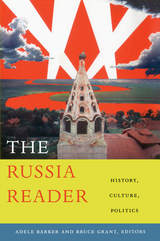
Illustrated with maps, paintings, photographs, posters, and cartoons, The Russia Reader incorporates song lyrics, jokes, anecdotes, and folktales, as well as poems, essays, and fiction by writers including Akhmatova, Dostoyevsky, Pushkin, and Tolstoi. Transcripts from the show trials of major Party figures and an account of how staff at the Lenin Library in Moscow were instructed to interact with foreigners are among the many selections based on personal memoirs and archival materials only recently made available to the public. From a tenth-century emissary’s description of his encounters in Kyivan Rus’, to a scientist’s recollections of her life in a new research city built from scratch in Siberia during the 1950s, to a novelist’s depiction of the decadence of the “New Russians” in the 2000s, The Russia Reader is an extraordinary introduction to a vast and varied country.
READERS
Browse our collection.
PUBLISHERS
See BiblioVault's publisher services.
STUDENT SERVICES
Files for college accessibility offices.
RECENTLY PUBLISHED




UChicago Accessibility Resources
home | accessibility | search | about | contact us
BiblioVault ® 2001 - 2026
The University of Chicago Press