
 A SCHOLARLY BOOK REPOSITORY
100 start with R start with R
In August of 1991, the Brooklyn neighborhood of Crown Heights was engulfed in violence following the deaths of Gavin Cato and Yankel Rosenbaum—a West Indian boy struck by a car in the motorcade of a Hasidic spiritual leader and an orthodox Jew stabbed by a Black teenager. The ensuing unrest thrust the tensions between the Lubavitch Hasidic community and their Afro-Caribbean and African American neighbors into the media spotlight, spurring local and national debates on diversity and multiculturalism. Crown Heights became a symbol of racial and religious division. Yet few have paused to examine the nature of Black-Jewish difference in Crown Heights, or to question the flawed assumptions about race and religion that shape the politics—and perceptions—of conflict in the community.
In Race and Religion among the Chosen Peoples of Crown Heights, Henry Goldschmidt explores the everyday realities of difference in Crown Heights. Drawing on two years of fieldwork and interviews, he argues that identity formation is particularly complex in Crown Heights because the neighborhood’s communities envision the conflict in remarkably diverse ways. Lubavitch Hasidic Jews tend to describe it as a religious difference between Jews and Gentiles, while their Afro-Caribbean and African American neighbors usually define it as a racial difference between Blacks and Whites. These tangled definitions are further complicated by government agencies who address the issue as a matter of culture, and by the Lubavitch Hasidic belief—a belief shared with a surprising number of their neighbors—that they are a “chosen people” whose identity transcends the constraints of the social world.
The efforts of the Lubavitch Hasidic community to live as a divinely chosen people in a diverse Brooklyn neighborhood where collective identities are generally defined in terms of race illuminate the limits of American multiculturalism—a concept that claims to celebrate diversity, yet only accommodates variations of certain kinds. Taking the history of conflict in Crown Heights as an invitation to reimagine our shared social world, Goldschmidt interrogates the boundaries of race and religion and works to create space in American society for radical forms of cultural difference.
A compelling study of the origins of racial conflict and violence in America.
“We’ll just be hanging out, partying. And somebody will say, ‘Hey, let’s go on a mission.’ That’s when you go looking for people who don’t belong in the neighborhood, and you beat ’em up. Sometimes we go out lookin’ for blacks to jump. Sometimes we look for anybody who ain’t supposed to be there.” —Sal, Avenue T Boys
Why are racial conflict and violence among the most enduring problems in American society? Why do some youths express racism violently while others develop tolerance and respect for those who are different? What can we as a society do to foster open-mindedness among children and teenagers? Seeking answers to these questions, Howard Pinderhughes spent two years talking to and studying three groups of New York City adolescents: the predominantly Italian American Avenue T Boys from the Bensonhurst section of Brooklyn; a group of African American teenagers from Schomberg Plaza in East Harlem; and a group of Albanian American youth from Pelham Park in the Bronx. Through the voices of these young people, Pinderhughes examines how racial attitudes and identities develop in communities and are then expressed as either tolerance, resulting in territorial cooperation, or hatred, resulting in racial conflict. Race in the Hood draws a picture of young people who grew up in similar class circumstances, facing remarkably similar problems and issues, with one significant difference in their lives-their race or ethnicity. Pinderhughes argues that the key to success in developing racial tolerance lies in the transformation of racialized grassroots ideologies through community and school-based multicultural education. A sophisticated and nuanced study of race relations in New York City, Race in the Hood points to areas of concern and directions for change in all of our communities.
This deeply researched, clearly written book is a history of black society and its relations with whites in the Bahamas from the close of the American Revolution to emancipation. Whittington B. Johnson examines the communities developed by free, bonded, and mixed-race blacks on the islands as British colonists and American loyalists unsuccessfully tried to establish a plantation economy. The author explores how relations between the races developed civilly in this region, contrasting it with the harsher and more violent experiences of other Caribbean islands and the American South.
Interpreting church documents and Colonial Office papers in a new light, Johnson presents a more favorable conclusion than previously advanced about the conditions endured by victims of the African Diaspora and by Creoles in the Bahama Islands. He makes use of an impressive and important body of archival and secondary research. Race Relations in the Bahamas will be a book of great interest to southern historians, historians of slave societies and black communities, scholars of race relations, and general readers.
Several contributors illuminate ways that Latinos and Asians were historically racialized: by U.S. occupiers of Puerto Rico and the Philippines at the end of the nineteenth century, by public health discourses and practices in early-twentieth-century Los Angeles, by anthropologists collecting physical data—height, weight, head measurements—from Chinese Americans to show how the American environment affected “foreign” body types in the 1930s, and by Los Angeles public officials seeking to explain the alleged criminal propensities of Mexican American youth during the 1940s. Other contributors focus on the coalitions and tensions between Latinos and Asians in the context of the fight to integrate public schools and debates over political redistricting. One addresses masculinity, race, and U.S. imperialism in the literary works of Junot Díaz and Chang-rae Lee. Another looks at the passions, identifications, and charges of betrayal aroused by the sensationalized cases of Elián González, the young Cuban boy rescued off the shore of Florida, and Wen Ho Lee, the Los Alamos physicist accused of spying on the United States. Throughout this volume contributors interrogate many of the assumptions that underlie American and ethnic studies even as they signal the need for a research agenda that expands the purview of both fields.
Contributors. Nicholas De Genova, Victor Jew, Andrea Levine, Natalia Molina, Gary Y. Okihiro, Crystal Parikh, Greg Robinson, Toni Robinson, Leland T. Saito


Radio Free Europe was first published in 1958. Minnesota Archive Editions uses digital technology to make long-unavailable books once again accessible, and are published unaltered from the original University of Minnesota Press editions.
What is radio Free Europe? Where does it broadcast? Who runs it? What are its purposes? Although thousands of Americans are familiar with Radio Free Europe (many have contributed to its support through the Crusade for Freedom campaigns), few know enough about its background to answer these and similar questions. In this book a political scientist with first-hand knowledge gives a detailed account of the organization and development of this unique propaganda enterprise.
Radio Free Europe was established as a private broadcasting project in 1949 by the Free Europe Committee, headed by Joseph C. Grew, as part of the Committee's program of broad, long-range assistance to democratic exiles from totalitarian countries. The operational headquarters are located at Munich, and the broadcasts are directed to the people of five satellite countries: Czechoslovakia, Hungary, Rumania, Bulgaria, and Poland.
Professor Holt tells how Radio Free Europe was established, outlines its basic policies and objectives, describes its organization, personnel, programming, and services, discusses transmission problems, and examines the effectiveness of the propaganda. He describes in detail the role of RFE in connection with the uprisings in Poland and Hungary and analyzes the charges that RFE stimulated the Hungarian revolt.

Returns us to Gertrude Stein’s theater by way of the modernist medium of radio
What happens when we listen to Gertrude Stein’s plays as radio and music theater? This book explores the sound of Stein’s theater and proposes that radio, when approached both historically and phenomenologically, offers technical solutions to her texts’ unique challenges. Adam J. Frank documents the collaborative project of staging Stein’s early plays and offers new critical interpretations of these lesser-known works. Radio Free Stein grapples with her innovative theater poetics from a variety of disciplinary perspectives: sound and media studies, affect and object relations theory, linguistic performativity, theater scholarship, and music composition.
Rage Is the Subtext charts the internal shifts of Holocaust survivors who tell their stories of suffering, loss, and endurance. Susan Derwin locates the healing effect of literary testimony in its capacity to represent the reactions of survivors to traumatic experience, while concealing other more unsettling responses from view. Beneath the explicit concerns of works by Primo Levi, Saul Friedländer, Binjamin Wilkomirski, Imre Kertész and Liliana Cavani, Derwin uncovers unspoken reserves of rage, which then become legible as formal properties of the text.

The final volume in the complete history of Nevada and Eastern California railroads David Myrick's monumental railroad histories have become essential reference works for railroaders, historians, and hobbyists. Volume III contains additional information about the northern roads, including some not covered in previous volumes, and about developments since the publication of the first two volumes in the railroads of the region. It provides new facts gleaned from the correspondence of Collis P. Huntington, one of the builders of the Central Pacific and Southern Pacific railroads. It also covers roads connected with the lumber industry and the construction of electric power plants, and Southern Pacific branch lines, including some that never advanced beyond surveys.

Rain, Wind, Thunder, Fire, Daughter is a story about leaving religion and coming of age in a world of accelerating climate apocalypses and environmental loss. In her debut collection of poems, H. G. Dierdorff interweaves an investigation of wildfires in Eastern Washington with a personal account of growing up in Christian fundamentalism, calling our attention to the violent histories undergirding both.
“I want you to touch the fire / sparking from my lips” the opening sonnet commands, daring the reader to abandon the safety of analytical distance and draw near to the moment of ignition itself. The voice that emerges is incessant, ecstatic, explosive. Fire erupts from every page, multiplying into rage, desire, judgement, responsibility, and renewal.
A love song to the forests of the Pacific Northwest, a dramatic portrait of a daughter struggling to find her place in her family, and a philosophical exploration of the limits of language and belief, this collection demands the necessity of both pleasure and grief as responses to a world on fire.
India, 1943: In a regimental hill station, the ladies of Pankot struggle to preserve the genteel façade of British society amid the debris of a vanishing empire and World War II. A retired missionary, Barbara Batchelor, bears witness to the connections between many human dramas; the love between Daphne Manner and Hari Kumar; the desperate grief an old teacher feels for an India she cannot rescue; and the cruelty of Captain Ronald Merrick, Susan Layton's future husband.

The authors unequivocally demonstrate that, notwithstanding fluctuations in the opinions of individuals, collective public opinion is remarkably coherent: it reflects a stable system of values shared by the majority of Americans and it responds sensitively to new events, arguments, and information reported in the mass media. While documenting some alarming case of manipulation, Page and Shapiro solidly establish the soundness and value of collective political opinion. The Rational Public provides a wealth of information about what we as a nation have wanted from government, how we have changed our minds over the years, and why.
For anyone interested in the short- and long-term trends in Americans' policy preferences, or eager to learn what Americans have thought about issues ranging from racial equality to the MX missile, welfare to abortion, this book offers by far the most sophisticated and detailed treatment available.
These are the choices closed captioners face every day. Captioners must decide whether and how to describe background noises, accents, laughter, musical cues, and even silences. When captioners describe a sound—or choose to ignore it—they are applying their own subjective interpretations to otherwise objective noises, creating meaning that does not necessarily exist in the soundtrack or the script.
Reading Sounds looks at closed-captioning as a potent source of meaning in rhetorical analysis. Through nine engrossing chapters, Sean Zdenek demonstrates how the choices captioners make affect the way deaf and hard of hearing viewers experience media. He draws on hundreds of real-life examples, as well as interviews with both professional captioners and regular viewers of closed captioning. Zdenek’s analysis is an engrossing look at how we make the audible visible, one that proves that better standards for closed captioning create a better entertainment experience for all viewers.
To fully comprehend the emergence of the figural requires a genealogical critique of the aesthetic, Rodowick claims. Seeking allies in this effort to deconstruct the opposition of word and image and to create new concepts for comprehending the figural, he journeys through a range of philosophical writings: Thierry Kuntzel and Marie-Claire Ropars-Wuilleumier on film theory; Jacques Derrida on the deconstruction of the aesthetic; Siegfried Kracauer and Walter Benjamin on the historical image as a utopian force in photography and film; and Gilles Deleuze and Michel Foucault on the emergence of the figural as both a semiotic regime and a new stratagem of power coincident with the appearance of digital phenomena and of societies of control.
Scholars of philosophy, film theory, cultural criticism, new media, and art history will be interested in the original and sophisticated insights found in this book.
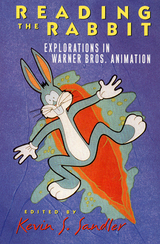
"A wide-ranging inquiry into an important area of contemporary scholarly interest, and also an engaging, well written and intelligently conceived collection." -Eric Smoodin, author of Animating Culture: Hollywood Cartoons From the Sound Era
Despite the success of Bugs Bunny, Daffy Duck, and their Looney cohorts, Warner Bros. animation worked in the shadow of Disney for many years. The past ten years have seen a resurgence in Warner Bros. animation as they produce new Bugs Bunny cartoons and theatrical features like Space Jam as well as television shows like Tiny Toon Adventures and Animaniacs. While Disney's animation plays it safe and mirrors traditional cinema stories, Warner Bros. is known for a more original and even anarchistic style of narration, a willingness to take risks in story construction, a fearlessness in crossing gender lines with its characters, and a freedom in breaking boundaries. This collection of essays looks at the history of Warner Bros. animation, compares and contrasts the two studios, charts the rise and fall of creativity and daring at Warner's, and analyzes the ways in which the studio was for a time transgressive in its treatment of class, race, and gender. It reveals how safety and commercialization have, in the end, triumphed at Warner Bros. just as they much earlier conquered Disney.
The book also discusses fan parodies of Warner Bros. animation on the Internet today, the Bugs Bunny cross-dressing cartoons, cartoons that were censored by the studio, and the merchandising and licensing strategies of the Warner Bros. studio stores. Contributors are Donald Crafton, Ben Fraser, Michael Frierson, Norman M. Klein, Terry Lindvall, Bill Mikulak, Barry Putterman, Kevin S. Sandler, Hank Sartin, Linda Simensky, Kirsten Moana Thompson, Gene Walz, and Timothy R. White.

From 1932 to 1953, during the Black Chicago Renaissance, numerous literary events were held within and for the city’s Black community. In book clubs, public forums, print reviews, little magazines, local programming, and other public venues, Black women in particular debated the role of literature in racial uplift efforts, set literary standards, and acted as community gatekeepers for cultural production during a time known as the Black Chicago Renaissance. Through these inspiring efforts, a mix of publishers, well-known authors, and everyday readers significantly fostered a robust literary culture in the Windy City.
Reading the Renaissance constructs a reception history of the Black women who read and reviewed, published and promoted, and collected and curated literature of the era. Mary Unger interprets how local figures such as Vivian G. Harsh, Ora Morrow, Gwendolyn Brooks, Alice Browning, Fern Gayden, and Margaret Walker cultivated particular literary tastes through collective acts of reading and reception. She does so by recovering a network of readers, book clubs, literary magazines, civic programs, and book businesses that Black women created, led, and transformed during the early 1930s through the early 1950s in Bronzeville, Chicago’s predominantly Black South Side neighborhood.
This illuminating work includes close readings of texts alongside letters, scrapbooks, meeting minutes, reviews, and other ephemera of local reading practices to show how Black women facilitated diverse strategies of reading while instructing community members how to engage a variety of print cultures at the time. Unger demonstrates how Black women readers influenced individual authors as well as the norms and expectations of African American literature more broadly, becoming important (yet too often overlooked) players in American literary history.
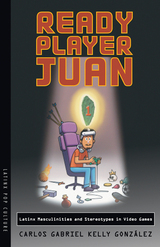
The book employs an intersectional approach through performance theory, border studies, and lived experience to analyze the designed identity “Player Juan.” Player Juan manifests in video game representations through a discourse of criminality that sets expectations of who and what Latinxs can be and do. Developing an original approach to video game experiences, the author theorizes video games as border crossings, and defines a new concept—digital mestizaje—that pushes players, readers, and scholars to deploy a Latinx way of seeing and that calls on researchers to consider a digital object’s constructive as well as destructive qualities.

Cultural stereotypes to the contrary, approximately half of all video game players are now women. A subculture once dominated by men, video games have become a form of entertainment composed of gender binaries. Supported by games such as Diner Dash, Mystery Case Files, Wii Fit, and Kim Kardashian: Hollywood—which are all specifically marketed toward women—the gamer industry is now a major part of imagining what femininity should look like.
In Ready Player Two, media critic Shira Chess uses the concept of “Player Two”—the industry idealization of the female gamer—to examine the assumptions implicit in video games designed for women and how they have impacted gaming culture and the larger society. With Player Two, the video game industry has designed specifically for the feminine ideal: she is white, middle class, heterosexual, cis-gendered, and abled. Drawing on categories from time management and caregiving to social networking, consumption, and bodies, Chess examines how games have been engineered to shape normative ideas about women and leisure.
Ready Player Two presents important arguments about how gamers and game developers must change their thinking about both women and games to produce better games, better audiences, and better industry practices. Ultimately, this book offers vital prescriptions for how one of our most powerful entertainment industries must evolve its ideas of women.
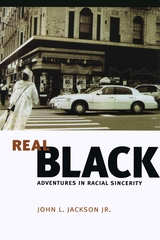
Jackson argues that authenticity caricatures identity as something imposed on people, imprisoning them within stereotypes: an African American high school student who excels in the classroom, for instance, might be dismissed as "acting white." On the other hand, sincerity, as Jackson defines it, imagines authenticity as an incomplete measuring stick, an analytical model that attempts to deny people agency in their search for identity.
Drawing on more than ten years of ethnographic research in and around New York City, Jackson offers a kaleidoscope of subjects and stories that directly and indirectly address how race is negotiated in today's world—including tales of book-vending numerologists, urban conspiracy theorists, corrupt police officers, mixed-race neo-Nazis, and gospel choirs forbidden to catch the Holy Ghost. Jackson records and retells their interconnected sagas, all the while attempting to reconcile these stories with his own crisis of identity and authority as an anthropologist terrified by fieldwork. Finding ethnographic significance where mere mortals see only bricks and mortar, his invented alter ego Anthroman takes to the streets, showing how race is defined and debated, imposed and confounded every single day.
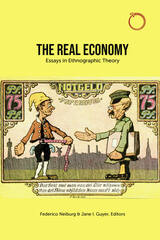
An ambitious anthropology of economy, this volume questions how assemblages of vernacular and scientific realizations and enactments of the economy are linked to ideas of truth and moral value; how these multiple and shifting realities become present and entangle with historically and socially situated lives; and how the formal realizations of the concept of the “real” in the governance of economies engage with the experiential lives of ordinary people. Featuring essays from some of the world’s most prominent economic anthropologists, The Real Economy is a milestone collection in economic anthropology that crosses disciplinary boundaries and adds new life to social studies of the economy.
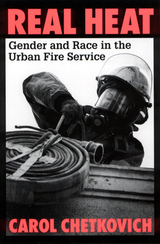
In the struggle over affirmative action, no employment setting has seen more friction than urban fire departments. Thirty years of legal and political efforts have opened the doors of this historically white male preserve, but men of color have yet to consolidate their gains, and women's progress has been even more tenuous. In this unique and compelling account of affirmative action at the "street level," Carol Chetkovich explores the ways in which this program has succeeded and failed.
Chetkovich follows the men and women of the Oakland Fire Department Class 1-91 through their academy training and eighteen-month probation. In vivid and sometimes surprising narratives, newcomers tell of their first battle with a full-fledged fire, their reactions to hazing rituals, and their relationships with veterans and fellow trainees. Real Heat explores how the process of becoming a firefighter interacts with the dimensions of race and gender to support some and discourage others. The book examines the implications of these interactions for public policy and social justice.
". . . a significant contribution to the understanding of collective behavior, protest, and rebellion." --Choice
"The book is interesting and thought-provoking, and its insights extend beyond the narrow subject of rebellion to help illuminate many issues related to organizing groups to undertake collective action." --Public Choice
"[Lichbach's] book is monumental and pivotal. . . . [It] consolidates over three decades of research on collective action problems and sets the agenda for future studies of collective dissent and rebellion. . . . [This] book is a major step forward. It will have an enormous impact in the field of conflict studies and belongs on the shelf of anyone even casually interested in dissent, rebellion, and revolution. . . . [This] book is a major step forward. It will have an enormous impact in the field of conflict studies and belongs on the shelf of anyone even casually interested in dissent, rebellion, and revolution." --American Political Science Review
"For scholars interested in game-theoretic analyses of politics . . . essential reading." --Manus I. Midlarsky, Journal of Politics
"Lichbach has to be praised for providing valuable insight on the logic of collective dissent. . . ." --Political Studies
Mark Irving Lichbach is Professor of Political Science, University of Colorado.
As Gabriella Gutiérrez y Muhs points out in her insightful introduction, not only has Viramontes’s work not yet received the broad critical engagement it richly deserves, but there remains a monumental gap in the interpretations of Chicana literature that reach mainstream audiences. Rebozos de Palabras addresses this void by focusing on how the Chicana image has evolved through Viramontes’s body of work. With a foreword by Sonia Saldívar-Hull, this collection addresses Viramontes entire oeuvre through newly produced articles by major literary critics and emerging scholars who engage Viramontes’s writing from multiple perspectives.

Recalcitrance, Faulkner, and the Professors is a wonderfully fetching book of criticism that presents fairly, coherently, and forcefully the major critical viewpoints operating in literature studies today and puts them into an invigorating conflict. In the framework of a deliberately artificial plot, characters at an imaginary university present a variety of theoretical and critical points of view in a four-day round table discussion. Centering on Faulker's As I Lay Dying, the discussion has at stake the hand of Eve Birdsong, a student whose distress with the conflicts among her professors had inspired these proceedings. The cast also includes a young hero—assistant professor Charlie Mercer—professors representing a variety of contemporary critical positions, and several extraordinary students.
The discussion, presented in turn by speeches, exchanges in dialogue, and short papers, focuses on the concept of recalcitrance in fiction: the resistance that texts offer to the development of formal structures. Recalcitrance, Faulkner, and the Professors is, variously, a pedagogical text, a critical theory text, and a text about a single novel. But Wright's volume breaks the rules of categorization: it refuses to sit neatly in any genre.
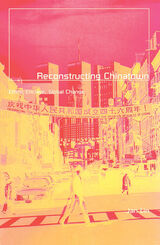
An exploration of this fascinating community as a window on globalization.
In the American popular imagination, Chinatown is a mysterious and dangerous place, clannish and dilapidated, filled with sweatshops, vice, and organized crime. In this well-written and engaging volume, Jan Lin presents a real-world picture of New York City’s Chinatown, countering this “orientalist” view by looking at the human dimensions and the larger forces of globalization that make this vital neighborhood both unique and broadly instructive.
Using interviews with residents, firsthand observation, archival research, and U.S. census data, Lin delivers an informed, reliable picture of Chinatown today. Lin claims that to understand contemporary ethnic neighborhoods like this one we must dispense with notions of monolithic “community.” When he looks at Chinatown, Lin sees a neighborhood that is being rebuilt, both literally and economically. Rather than a clannish and unified peer group, he sees substantial class inequality and internal social conflict. There is also social change, most visibly manifested in dramatic episodes of collective action by sweatshop workers and community activists and in the growing influence of Chinatown’s denizens in electoral politics. Popular portrayals of Chinatown also reflect a new global reality: as American cities change with the international economy, traditional assumptions about immigrant incorporation into U.S. society alter as well. Lin describes the public disquiet and official response regarding immigration, sweatshops, and the influx of Asian capital. He outlines the ways that local, state, and federal governments have directed and gained from globalization in Chinatown through banking deregulation and urban redevelopment policy. Finally, Lin puts forth Chinatown as a central enclave in the “world city” of New York, arguing that globalization brings similar structural processes of urban change to diverse locations. In the end, Lin moves beyond the myth of Chinatown, clarifying the meaning of globalization and its myriad effects within the local context.
Based on work the author has carried out with survivor groups in Northern Ireland and South Africa, Recording Memories from Political Violence draws on written and audiovisual texts to describe and analyze the use of documentary filmmaking in recording experiences of political conflict. A variety of issues relevant to the genre are addressed at length, including the importance of ethics in the collaboration between the filmmaker and the participant and the effect of location on the accounts of participants. Cahal McLaughlin draws on the diverse fields of film and cultural studies, as well as nearly twenty years of production experience, in this informed and instructive contribution to documentary filmmaking and post-conflict studies.
Cowie claims that, as a radical film form, documentary has been a way for filmmakers to acknowledge historical and contemporary realities by presenting images of these realities. If documentary is the desire to know reality through its images and sounds, she asks, what kind of speaking (and speaking about) emerges in documentary, and how are we engaged by it? In considering this and other questions, Cowie examines a range of noteworthy films, including Spike Lee’s When the Levees Broke, John Huston’s Let There Be Light, and Milica Tomic’s Portrait of My Mother.
Recording Reality, Desiring the Real stakes documentary’s central place in cinema as both an art form and a form of social engagement, which together create a new understanding of spectatorship.
A lethal mix of natural disaster, dangerously flawed construction, and reckless human actions devastated San Francisco in 1906 and New Orleans in 2005. Eighty percent of the built environments of both cities were destroyed in the catastrophes, and the poor, the elderly, and the medically infirm were disproportionately among the thousands who perished. These striking similarities in the impacts of cataclysms separated by a century impelled Steve Kroll-Smith to look for commonalities in how the cities recovered from disaster. In Recovering Inequality, he builds a convincing case that disaster recovery and the reestablishment of social and economic inequality are inseparable.
Kroll-Smith demonstrates that disaster and recovery in New Orleans and San Francisco followed a similar pattern. In the immediate aftermath of the flooding and the firestorm, social boundaries were disordered and the communities came together in expressions of unity and support. But these were quickly replaced by other narratives and actions, including the depiction of the poor as looters, uneven access to disaster assistance, and successful efforts by the powerful to take valuable urban real estate from vulnerable people. Kroll-Smith concludes that inexorable market forces ensured that recovery efforts in both cities would reestablish the patterns of inequality that existed before the catastrophes. The major difference he finds between the cities is that, from a market standpoint, New Orleans was expendable, while San Francisco rose from the ashes because it was a hub of commerce.

Tracing identity, law, and legacy in an inheritance dispute that reveals the intersection of two cultural and legal systems: Creek Indian and Euro-American.
In 1846, in the Chancery Court of Mobile, Alabama, William “Red Eagle” Weatherford’s son, by the Indian woman Supalamy, sued his half siblings fathered by Weatherford with two other Creek women, Polly Moniac and Mary Stiggins, for a greater share of Weatherford’s estate. While the court recognized William Jr. as the son of William Sr., he nevertheless lost his petition for inheritance due to the lack of legal evidence concerning the marriage of his biological mother to William Sr. The case, which went to the Alabama Supreme Court in 1851, provides a record of an attempt to interrelate and, perhaps, manipulate differences in cultures as they played out within the ritualized, arcane world of antebellum Alabama jurisprudence.
Although the case has value in the classic mold of salvage ethnography of Creek Indian culture, Red Eagle’s Children, edited by J. Anthony Paredes and Judith Knight, shows that its more enduring value lies in being a source for historical ethnography—that is, for anthropological analyses of cultural dynamics of the past events that complement the narratives of professional historians.
CONTRIBUTORS: David I. Durham / Robbie Ethridge / Judith Knight / J. Anthony Paredes / Paul M. Pruitt Jr. / Nina Gail Thrower / Robert Thrower / Gregory A. Waselkov

Though small among its woodpecker relatives, the Red-cockaded Woodpecker poses a huge dilemma for its human neighbors. Uniquely adapted to live in the old-growth pine forests of the southeastern United States, the Red-cockaded Woodpecker has nearly disappeared as the forests have been cleared for agricultural, commercial, and residential uses over the last two centuries. Today, it waits at a crossroads. Scientific management practices could restore the woodpecker's habitat and population, but the imperative to convert old-growth forests to other uses remains.
In this book, three of the leading experts on the Red-cockaded Woodpecker offer a comprehensive overview of all that is currently known about its biology and natural history and about the ecology of the fire-maintained forests it requires for survival. As the most visible endangered species in the Southeast, and the one whose conservation impacts the largest land area, the Red-cockaded Woodpecker holds a compelling interest not only for ornithologists, but also for wildlife managers, foresters, developers, environmentalists, and government officials. For all of these groups, this book will be the essential resource for learning more about the Red-cockaded Woodpecker and ensuring its survival.
While P'u did not attain his goal of becoming a statesman, having failed exam after exam for fifty years, he was not impeded in his intellectual and literary pursuits. When he died in 1715, he left a body of work including over 500 essays, 1,295 poems, 119 lyrics, 18 encyclopedias and handbooks, 20 operas, 100 folk songs, and 500 short stories. He went on to become one of the most well-known scholar-writers and the best known short-story author in Chinese history. The 500 stories in Liao-chai chih-i, which P'u composed in his self-styled capacity as historian, had the most lasting influence of any single work on the shaping of popular consciousness in China.
Following the life and literature of one man, this study sets out to detail the history of the Ming-Ch'ing dynastic transition in the East Shantung region. It is based on an exhaustive exploration of contemporary Chinese historical and literary sources, including local histories, clan and family records, autobiographical and biographical materials, folklore, essays, poems, and plays: in short, the entire range of literary sources. Using a comprehensive historical approach, the authors cover a broad array of issues relevant to the topic at hand.
Redefining History is an important source for the study of Chinese history and literature and comparative historical studies. It will also appeal to people interested in the relation between history and literature, issues of gender and class, race relations, biographical studies, and popular culture movements.
Chun-shu Chang is Professor of History, University of Michigan, and Honorary Professor of Chinese History, China. Shelley Hsueh-lun Chang is Visiting Associate Professor of History and Research Associate, Center for Chinese Studies, University of Michigan.
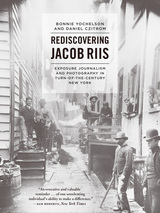
With Rediscovering Jacob Riis, art historian Bonnie Yochelson and historian Daniel Czitrom place Jacob Riis’s images in historical context even as they expose a clear sightline to the present. In the first half of their book, Czitrom explores Riis’s reporting and activism within the gritty specifics of Gilded Age New York: its new immigrants, its political machines, its fiercely competitive journalism, its evangelical reformers, and its labor movement. In delving into Riis’s intellectual education and the lasting impact of How the Other Half Lives, Czitrom shows that though Riis argued for charity, not sociopolitical justice, the empathy that drove his work continues to inspire urban reformers today.
In the second half of the book, Yochelson describes for the first time Riis’s photographic practice: his initial reliance on amateur photographers to take the photographs he needed, his own use of the camera, and then his collecting of photographs by professionals, who by 1900 were documenting social reform efforts for government agencies and charities. She argues that while Riis is rightly considered a revolutionary in the history of photography, he was not a photographic artist. Instead, Riis was a writer and lecturer who first harnessed the power of photography to affect social change.
As staggering inequality continues to be an urgent political topic, this book, illustrated with nearly seventy of Riis’s photographs, will serve as a stunning reminder of what has changed, and what has not.

Lopez investigates how ordinary people, labor activists, journalists, filmmakers, theater managers, and owners all shaped Black film culture. Black girls and women used moviegoing as a means of independence and control over their lives. Race filmmaker Oscar Micheaux fought with New York State’s censorship board to get his films screened with limited edits in local theaters. And Harlem’s Black projectionists battled for unionization and fair pay, while journalists linked cinema to Black New Yorkers’ lived experiences.
In Reel Freedom, Lopez chronicles the wide-ranging and remarkable pervasiveness of Black film culture in New York City, redefining a period and place most associated with the Harlem Renaissance. In doing so, she illustrates how Black New Yorkers leveraged cinema to make the city their own and to enjoy urban living to its fullest.
In the series Urban Life, Landscape, and Policy
Concerned with the connection between the built environment and the passage of time, Reframing Berlin uses film locations in the city to reveal the influence that urban transformation has on memory-making. Covering the city’s history since the beginning of cinema, the book proposes the term urban strategy to understand the range of consequential actions taken by politicians, developers, and other powerful figures to shape the nature and future of buildings, streets, and districts. Organizing these strategies from demolition to memorialization, the authors study the ways these actions forget or recall aspects of place. Using cinematic representations of Berlin as an audiovisual archive, the study details how the city has adjusted to its traumatic twentieth-century history through architectural transformations. Two dissimilar case studies frame each strategy, indicating that an approach that works for one building may not be sufficient for another.

Cambodian history is Cold War history, asserts Y-Dang Troeung in Refugee Lifeworlds. Constructing a genealogy of the afterlife of the Cold War in Cambodia, Troeung mines historical archives and family anecdotes to illuminate the refugee experience, and the enduring impact of war, genocide, and displacement in the lives of Cambodian people.
Troeung, a child of refugees herself, employs a method of autotheory that melds critical theory, autobiography, and textual analysis to examine the work of contemporary artists, filmmakers, and authors. She references a proverb about the Cambodian kapok tree that speaks to the silences, persecutions, and modes of resistance enacted during the Cambodian Genocide, and highlights various literary texts, artworks, and films that seek to document and preserve Cambodian histories nearly extinguished by the Khmer Rouge regime.
Addressing the various artistic responses to prisons and camps, issues of trauma, disability, and aphasia, as well as racism and decolonialism, Refugee Lifeworlds repositions Cambodia within the broader transpacific formation of the Cold War. In doing so, Troeung reframes questions of international complicity and responsibility in ways that implicate us all.
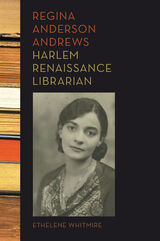
Andrews also played a key role in the Harlem Renaissance, supporting writers and intellectuals with dedicated workspace at her 135th Street Branch Library. After hours she cohosted a legendary salon that drew the likes of Langston Hughes and Zora Neale Hurston. Her work as an actress and playwright helped establish the Harlem Experimental Theater, where she wrote plays about lynching, passing, and the Underground Railroad.
Ethelene Whitmire's new biography offers the first full-length study of Andrews's activism and pioneering work with the NYPL. Whitmire's portrait of her sustained efforts to break down barriers reveals Andrews's legacy and places her within the NYPL's larger history.

This second volume of Relativistic Astrophysics provides a remarkably complete picture of the present state of cosmology. It is a synthesis of the theoretical foundations of contemporary cosmology, which are derived from work in relativity, plasma theory, thermodynamics, hydrodynamics, and particle physics. It presents the theoretical work that explains, describes, and predicts the nature of the universe, the physical process that occur in it, the formation of galaxies, the synthesis of the light elements, and the cosmological singularity and the theory of gravitation.
This book, long and eagerly awaited, is essential for everyone whose work is related to cosmology and astrophysics.
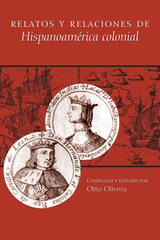
This anthology of foundational sixteenth-century Spanish-language texts presents the European side of the discovery and colonization of the New World. Otto Olivera has chosen representative selections from the works of eighteen authors, including Garcilaso de la Vega, Bartolomé de Las Casas, Bernal Díaz del Castillo, Hernán Cortés, and Alvar Núñez Cabeza de Vaca. Their writings present an impressive panorama of the first years of a real New World that could compete with any portrayed in European novels of chivalry or travel. To put these texts in historical context, Olivera has written an introduction that links the literature of colonization in its first century to the classical and medieval myths that helped shape Spaniards' thinking about the New World. He also provides a brief history of the discovery and conquest and a discussion of the social organization of the Spanish colonies.
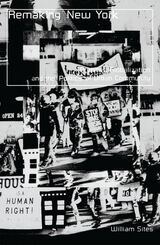
Uses New York City to discuss the ways that policy has mismanaged the effects of globalization
Inequality increases, instability grows, communities fragment: this is the fate of a city in the wake of globalization—but is globalization really the cause? Proposing a new perspective on politics, globalization, and the city, this provocative book argues that such urban problems result in part from U.S. policies that can be changed.
William Sites develops the concept of primitive globalization, identifying a pattern of reactive politics—ad hoc measures to subsidize business, displace the urban poor, and dismantle the welfare state—that uproots social actors (corporations, citizens, urban residents) and facilitates a damaging, short-term-oriented type of international integration. In light of this theory, Sites examines the transformation of New York City since the 1970s, focusing on the logic of political action at national, local, and neighborhood levels. In the process, the story of late twentieth-century New York and its Lower East Side community emerges as something different: not a tale of globalist transformation or of local resurgence but a distinctly American case, one in which urban politics and the state, in their own right, exacerbate inequality and community fragmentation within the city.
“It’s safe to say your relationship is in trouble if the only way you can imagine solving your problems is by borrowing a time machine.”
In this wickedly comic, cross-country, time-bending journey, John confronts his own—and the nation’s—blunders, learning that a second chance at changing things for the better also brings new opportunities to screw them up. Through edgy humor, time travel, and droll one-liners, Bob Smith examines family dysfunction, suicide, New York City, and recent American history while effortlessly blending domestic comedy with science fiction. Part acidic political satire, part wild comedy, and part poignant social scrutiny, Remembrance of Things I Forgot is an uproarious adventure filled with sharp observations about our recent past.
InSight Out Book Club, featured selection
Bob Smith named one of Instinct magazine’s Leading Men 2011
Winner, Barbara Gittings Literature Award/Stonewall Book Awards, American Library Association
Finalist, Over the Rainbow Selection, American Library Association
Finalist, Green Carnation Prize, international prize for LGBT Literature
Amazon Top Ten Gay & Lesbian Books of 2011
Best Books for General Audiences, selected by the American Association of School Librarians
Best Books for General Audiences, selected by the Public Library Reviewers
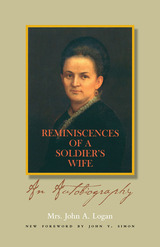
"To tell my own story is to tell that of my famous husband, General John A. Logan," explains Mary S. Logan in the preface to her autobiography.
Married to John A. Logan for thirty-one years, Mary Logan shared in her distinguished husband’s career as a prosecutor in southern Illinois, as a Civil War general, and as a senator from Illinois. She observed firsthand the extraordinary events before, during, and after the Civil War, and she knew personally those world leaders who held the power to shape history. After the death of her husband, she maintained her influence in Washington, D.C. "Under the brightest and darkest skies," she explains, "I have passed than a half-century at the national capital."
Born in 1838, Logan writes of her early days growing up in southern Illinois through 1913, when this book was first published. A skillful observer, she recounts events that are personal, regional, and national in scope. In charming detail, she shares her courtship and subsequent marriage to a young prosecutor from Jackson County and the births of their children. She writes proudly of the Lincoln-Douglas debates in 1858 and her husband’s election to the Thirty-seventh Congress that same year. Logan tells of the coming of the Civil War and of her husband—formerly a Democrat and an enemy of Lincoln—casting his fate with the Union and raising a regiment in southern Illinois. She poignantly describes her brother’s defection to the Confederate Army, her life in war-torn Cairo, Illinois, and her horror at her husband’s severe war wounds. She recounts the battles, the political campaigns, and Lincoln’s reelection and subsequent assassination from her point of view—and, as the wife of a politician and general, hers is a decidedly privileged perspective.
In a position to observe and to participate in events ranging from momentous to minute throughout the latter half of the nineteenth and early twentieth centuries, she reports the essential episodes of history with the flair of journalism, a career she in fact embraced after the death of her husband. She writes movingly of a wounded captain on the road to recovery who suddenly died when the minié shifted next to his lung, amusingly of the excuses soldiers invented to wrangle a pass to town, and elegantly of her trips to Europe and of the pomp and circumstance of the parties attended by the great men and women of the time. Drawing on events grand and small, she re-creates history as only a skillful writer who was in the right place at the right time could.

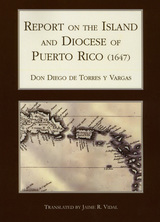
Composed at the request of the Royal Spanish Chronicler of the Indies, Don Diego Torres y Vargas’s Report on the Island & Diocese of Puerto Rico was the first history of Puerto Rico written by a native of the Spanish island colony. Torres y Vargas, a fourth generation Puerto Rican and descendant of Ponce de Leon, records here the history of the Catholic Church in Puerto Rico as well as the political, social, military, economic, and natural history of the island.
This translation—the first ever into English—includes three historical essays by eminent Puerto Rican and Latino Studies scholar Anthony Stevens-Arroyo and extensive translator notes to guide the reader through the realities of seventeenth-century Puerto Rican culture and society.
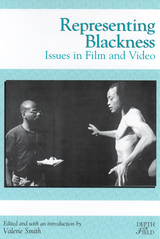
The essays in this collection provide a variety of perspectives on black representation and questions of racial authenticity in mainstream as well as African American independent cinema. This volume includes seminal essays on racial stereotypes, trenchant critiques of that discourse, original essays on important directors such as Haile Gerima and Charles Burnett, and an insightful discussion of black gay and lesbian film and video.
The contributors include Donald Bogle, Thomas Cripps, Jane Gaines, Nathan Grant, Stuart Hall, Tommy L. Lott, Wahneema Lubiano, Mike Murashige, Valerie Smith, James Snead, and David Van Leer. This volume is an important contribution to the Depth of Field series and should be indispensible for courses and individual scholars in film and multicultural studies. The book contains a mix of original and previously published pieces.
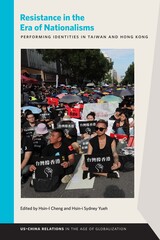
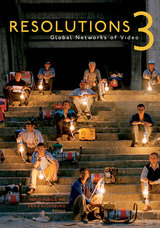
Resolutions 3 explores the wide-ranging implications of video art and video-based production in contemporary media culture. It is the third volume in a series composed of Resolution: A Critique of Video Art (1986) and Resolutions: Contemporary Video Practices (1996). While Resolution was one of the first critical texts on video art in the United States, Resolutions was one of the first books to address video as a medium across disciplines from theoretical, activist, and transnational perspectives.
Resolutions 3 articulates this legacy as a challenge to reengage with the explosive viral reach of moving image–based content and its infiltration into and impact on culture and everyday life. The contributors to this work analyze what is now a fourth decade of video practices as marked within and outside the margins of art production, networked interventions, projected spectacle, museum entombment, or 24/7 streaming. Intending to broaden, contest, and amplify the mediated space that was defined by its two predecessors, this volume investigates the ever-changing state of video’s deployment as examiner, tool, journal reportage, improvisation, witness, riff, leverage, and document.
Contributors: Kathleen Ash-Milby, Smithsonian National Museum of the American Indian; Myriam-Odile Blin, Rouen U, France; Nancy Buchanan, California Institute of the Arts; Derek A. Burrill, U of California, Riverside; Sean Cubitt, U of Melbourne; Faisal Devji, New York U; Jennifer Doyle, U of California, Riverside; Jennifer Friedlander, Pomona College; Kathy High, Rensselaer Polytechnic Institute; Lucas Hilderbrand, U of California, Irvine; Nguyen Tan Hoang, Bryn Mawr College; Kathy Rae Huffman; Amelia Jones, McGill U; David Joselit, Yale U; Alexandra Juhasz, Pitzer College; Jessica Lawless, Santa Fe Community College; Hea Jeong Lee; Jesse Lerner, Pitzer College; Akira Mizuta Lippit, U of Southern California; Lionel Manga; Laurence A. Rickels, U of California, Santa Barbara; Kenneth Rogers, U of California, Riverside; Michael Rush, Eli and Edythe Broad Art Museum, Michigan State U; Freya Schiwy, U of California, Riverside; Beverly R. Singer, U of New Mexico; Yvonne Spielmann, U of the West of Scotland; Catherine Taft, Getty Research Institute; Holly Willis, U of Southern California.

Editors Kathleen J. Ryan, Nancy Myers, and Rebecca Jones identify three rhetorical maneuvers that characterize ethos in the feminist ecological imaginary: ethe as interruption/interrupting, ethe as advocacy/advocating, and ethe as relation/relating. Each section of the book explores one of these rhetorical maneuvers. An afterword gathers contributors’ thoughts on the collection’s potential impact and influence, possibilities for future scholarship, and the future of feminist rhetorical studies.
With its rich mix of historical examples and contemporary case studies, Rethinking Ethos offers a range of new perspectives, including queer theory, transnational approaches, radical feminism, Chicana feminism, and indigenous points of view, from which to consider a feminist approach to ethos.
The third volume of Pierre Nora’s monumental work documenting the history and culture of France turns to French manners, mores, and society. While previous volumes focused on specific historical events, people, and institutions within France, the essays in Legacies are concerned with the kinds of things that make up the heart of French culture: conversation, cafés, songs, wine, gallantry, and places imbued with national symbolism such as Notre Dame and Sacré Coeur cathedrals. Linking these diverse topics together is the idea of patrimony—a term used by the French to designate the collective culture of the country or its national heritage—a concept that has undergone radical changes beginning with the Revolution and corresponding to other dramatic ruptures throughout France’s history.
As a whole, these twelve essays by leading French historians add up to an illuminating and well-rounded portrait of those cherished traditions that together form the basic foundation for the distinctive culture of the French.
“An excellent book. Takagi takes a very complex and sensitive subject—racial politics—and shows, through a careful analysis . . . that changes in the discourse about Asian American admissions have facilitated a 'retreat from race' in the area of affirmative action. . . . This book will appeal to an audience significantly wider than a typical academic one.”— David Karen, Bryn Mawr College
Charges by Asian Americans that the top universities in the United States used quotas to limit the enrollment of Asian-American students developed into one of the most controversial public controversies in higher education since the Bakke case. In Retreat from Race, Dana Takagi follows the debates over Asian-American admissions at Berkeley, UCLA, Brown, Stanford, Harvard, and Princeton. She explains important developments in the politics of race: changes in ethnic coalitions, reconstruction of the debate over affirmative action, and the conservative challenge to the civil rights agenda of the 1960s. Takagi examines the history and significance of the Asian American admissions controversy on American race relations both inside and outside higher education.
Takagi's central argument is that the Asian-American admissions controversy facilitated a subtle but important shift in affirmative action policy away from racial preferences toward class preferences. She calls this development a retreat from race. Takagi suggests that the retreat signals not only an actual policy shift but also the increasing reluctance on the part of intellectuals, politicans, and policy analysts to identify and address social problems as explicitly racial problems.
Moving beyond the university setting, Takagi explores the political significance of the retreat from race by linking Asian-American admissions to other controversies in higher education and in American politics, including the debates over political correctness and multiculturalism. In her assessment, the retreat from race is likely to fail at its promise of easing racial tension and promoting racial equality.
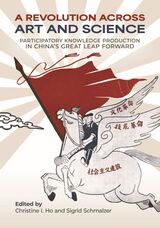
This volume examines the role of mass knowledge production—whether artistic, scientific, or technical—in China’s Great Leap Forward.
A Revolution Across Art and Science examines how laborers reimagined knowledge during a high point of radicalism in modern Chinese history. Encouraged to become curators, historians, writers, artists, technicians, scientists, and other kinds of experts, Chinese workers and peasants were mobilized to produce new knowledge in the humanities and sciences. Moving beyond the economic questions that have dominated most previous scholarship on the Great Leap Forward, this volume explores the cultural dimensions of the movement to establish the significance of mass knowledge production. Through ten case studies authored by emerging scholars, this volume offers a simultaneously empathetic and critical inquiry into PRC history and its impact on ongoing efforts to democratize knowledge around the world.

This is an entirely new collection of Lenin's writing. For the first time it brings together crucial shorter works, to show that Lenin held a life-long commitment to freedom and democracy. Le Blanc has written a comprehensive introduction, which gives an accessible overview of Lenin's life and work, and explains his relevance to political thought today.
Lenin has been much maligned in the mainstream, accused of viewing 'man as modeling clay' and of 'social engineering of the most radical kind.' However, in contrast to today's world leaders, who happily turn to violence to achieve their objectives, Lenin believed it impossible to reach his goals 'by any other path than that of political democracy.'
This collection will be of immense value to students encountering Lenin for the first time, and those looking for a new interpretation of one of the 20th century's most inspiring figures.
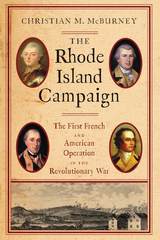
The Marquis de Lafayette and the French Navy join Nathanael Green, John Sullivan, and a Continental Army to Attach a British Stronghold in New England
On July 29, 1778, a powerful French naval squadron sailed confidently to the entrance of Narragansett Bay. Its appearance commenced the first joint French and American campaign of the Revolutionary War. The new allies’ goal was to capture the British garrison at Newport, Rhode Island. With British resolve reeling from the striking patriot victory at Saratoga the previous autumn, this French and American effort might just end the war.
As the French moved into the bay, surprised British captains scuttled or burned many of their vessels rather than risk capture, resulting in the most significant loss of warships suffered by the British navy during the war. French Admiral Comte d’Estaing then turned to sea to engage the main British fleet but his ships were scattered and damaged by a huge storm. After his flagship and two other ships were attacked, d’Estaing’s squadron was taken out of the campaign. The American army under General John Sullivan, meanwhile, was stranded on a small island near Newport without the expected French naval support. When they tried to retreat off the island, British and Hessian regulars were sent to destroy Sullivan’s army; instead of a rout, a running battle ensued that lasted for more than six hours. Continentals, brimming with confidence after their training during the winter of Valley Forge, once more proved that they were an effective fighting force. While the Rhode Island Campaign ended in failure for the Americans and French, there were positive signs for the future of the alliance and the Revolution.
The Rhode Island Campaign: The First French and American Operation of the Revolutionary War unravels one of the most complex and multi-faceted events of the war, one which combined land and sea strategies and featured controversial decisions on both sides. Many prominent patriots participated, including Nathanael Greene, Marquis de Lafayette, John Hancock, and Paul Revere. Most important, while the campaign’s failure led to harsh criticism of the French in some quarters, leaders such as Greene, Lafayette, and George Washington steadfastly worked to ensure that the alliance would remain intact, knowing that the next joint operation could well succeed. Relying on in-depth research from American, French, British, and German original sources, author Christian McBurney has written the most authoritative book on this fascinating episode in American history.


In this sequel to Ellie’s Log: Exploring the Forest Where the Great Tree Fell, Ricky Zamora brings his love of map-making and his boundless curiosity to the arid landscapes east of the Cascades Mountains. He arrives during a wild thunderstorm, and watches his family and their neighbors scramble to deal with a wildfire sparked by lightning. Joined by his friend Ellie, he sees how plants, animals, and people adjust to life with wildfires.
While hiking across a natural prairie, climbing up a fire tower, and studying historical photos and maps, Ricky and Ellie learn about the role of fire in shaping the landscape of the semi-arid plateau east of the mountains. They experience the scary days of wildfire in progress, explore a gritty site after a wildfire, and discover how some plants and animals depend on fire to survive.
Color pen-and-ink drawings accompany the text and vividly illustrate plants, animals, and events encountered in this exciting summer adventure. With his friend Ellie, Ricky creates a brightly colored diary of the fire, with maps, timelines, and sketches of what they see in this fire-prone land. Ricky’s notebook about his summer visit to his uncle’s ranch becomes an atlas of fire ecology, weather patterns, and life in the rain shadow.
Upper elementary kids will enjoy the mixture of amazing adventures with actual historical, physical, and ecological data about the region. Woven into the story are the small pleasures of ranch life, intriguing histories of Native Americans and early settlers, and almost unbelievable views of ancient fossils. Ricky and Ellie’s explorations, accompanied by their hand-written notes, introduce readers to a very special landscape and history east of the mountains.

The spectacle of thoroughbred horses dashing powerfully and gracefully down the track is one of the most stimulating and beautiful of all athletic events. Yet despite its mass appeal, an elite group of men and a few women have traditionally controlled the sport. What are the origins and personalities behind the sport in America?
In The Right Blood, Carole Case examines the history of American thoroughbred racing, in particular the story behind the Jockey Club. Formed in 1894 by the nation’s richest, most powerful, and often most notorious men, the Jockey Club continues to this day to exert a formidable influence on this “sport of kings.”
Using Jockey Club documents and personal interviews, Case traces the history of how club members created and enforced the rules governing racing, from the first decades of the twentieth century to the present day. She tells of how club members once assigned racing dates, issued licenses, appointed judges, and dictated who could train, ride, and own thoroughbred horses. Case also describes how many of them exploited the poor to work their horses, defeated those who posed a threat to their interests, and excluded people of different backgrounds from horse racing ¾ all in the name of improving the breed and promoting the sport. The Jockey Club maintained this stranglehold on the sport until 1950, when an appellate court took away its licensing power. Perhaps most interestingly, the men of the Jockey Club became and continue as keepers of the registry of North American thoroughbred horses, The American Stud Book, determining which horses can ¾ and cannot ¾ be considered thoroughbreds.
Written for the general reader interested in the sport and its culture, The Right Blood is an engaging look behind the scenes of American horse racing.
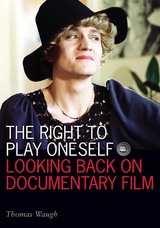
Waugh analyzes an eclectic international selection of films and issues from the 1920s to the present day. The essays provide a transcultural focus, moving from documentaries of the industrialized societies of North America and Europe to those of 1980s India and addressing such canonical directors as Dziga Vertov, Emile de Antonio, Barbara Hammer, Rosa von Praunheim, and Anand Patwardhan. Woven through the volume is the relationship of the documentary with the history of the Left, including discussions of LGBT documentary pioneers and the firebrand collectives that changed the history of documentary, such as Challenge for Change and ACT UP’s Women’s Collective.
Together with the introduction by the author, Waugh’s essays advance a defiantly and persuasively personal point of view on the history and significance of documentary film.

Freedom of expression has long been regarded as the cornerstone of democratic theory, communication law, and human rights. Yet many of the rights that shape contemporary communication, including the right to receive information, the right to be heard, privacy, anonymity, memory, and the governance of digital platforms, sit uneasily within an expression-centred framework. The Rights of Communication: Beyond Free Speech argues that a Right to Communication should instead serve as the normative foundation for rights that sustain communication.
Drawing on philosophy, communication theory, legal scholarship, and media policy, Amit M. Schejter develops a theory of a foundational Right to Communication from which a coherent family of Communication Rights emerges. Rather than treating these rights as isolated doctrines or as extensions of free speech, the book shows how they protect the people, institutions, and conditions that make meaningful human communication possible.
The book examines rights associated with senders, receivers, media and platforms, the integrity of communication, information, privacy, non-communication, and memory, arguing that together they constitute a coherent architecture of Communication Rights. Combining normative theory with constitutional analysis and comparative perspectives from the United States, Europe, and international human rights law, it offers a new way of thinking about the relationship between communication and human rights.
The Rights of Communication: Beyond Free Speech will be of interest to scholars and students of communication, media, law, political science, and human rights, as well as policymakers and legal practitioners concerned with the future of democratic communication.
A balanced appraisal of the bitter debate surrounding the autobiography of Guatemala’s 1992 Nobel Peace Prize recipient.
Guatemalan indigenous rights activist Rigoberta Menchú first came to international prominence following the 1983 publication of her memoir, I, Rigoberta Menchú, which chronicled in compelling detail the violence and misery that she and her people suffered during her country’s brutal civil war. The book focused world attention on Guatemala and led to her being awarded the Nobel Peace Prize in 1992. In 1999, a book by David Stoll challenged the veracity of key details in Menchú’s account, generating a storm of controversy. Journalists and scholars squared off regarding whether Menchú had lied about her past and, if so, what that would mean about the larger truths revealed in her book.
In The Rigoberta Menchú Controversy, Arturo Arias has assembled a casebook that offers a balanced perspective. The first section of this volume collects the primary documents-newspaper articles, interviews, and official statements-in which the debate raged, many translated into English for the first time. In the second section, a distinguished group of international scholars assesses the political, historical, and cultural contexts of the debate and considers its implications for such issues as the “culture wars,” historical truth, and the politics of memory. Included is a new essay by David Stoll in which he responds to his critics.Contributors: Luis Aceituno; Juan Jesús Aznárez; John Beverley, U of Pittsburgh; Allen Carey-Webb, Western Michigan U; Margarita Carrera; Duncan Earle, U of Texas, El Paso; Carolina Escobar Sarti; Claudia Ferman, U of Richmond; Dina Fernández García; Eduardo Galeano; Dante Liano, U of Milan; W. George Lovell, Queen’s U, Canada; Christopher H. Lutz; Octavio Martí; Victor D. Montejo, UC Davis; Rosa Montero; Mario Roberto Morales, U of Northern Iowa; Jorge Palmieri; Daphne Patai, U of Massachusetts, Amherst; Mary Louise Pratt, Stanford U; Danilo Rodríguez; Ileana Rodríguez, Ohio State U; Larry Rohter; Jorge Skinner-Kleé; Elzbieta Sklodowska, Washington U; Carol A. Smith, UC Davis; Doris Sommer, Harvard U; David Stoll, Middlebury College; Manuel Vásquez Montalbán; and Kay B. Warren, Harvard U.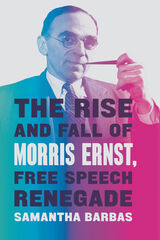
In the 1930s and ’40s, Morris Ernst was one of America’s best-known liberal lawyers. The ACLU’s general counsel for decades, Ernst was renowned for his audacious fights against artistic censorship. He successfully defended Ulysses against obscenity charges, litigated groundbreaking reproductive rights cases, and supported the widespread expansion of protections for sexual expression, union organizing, and public speech. Yet Ernst was also a man of stark contradictions, waging a personal battle against Communism, defending an autocrat, and aligning himself with J. Edgar Hoover’s inflammatory crusades.
Arriving at a moment when issues of privacy, artistic freedom, and personal expression are freshly relevant, The Rise and Fall of Morris Ernst, Free Speech Renegade brings this singularly complex figure into a timely new light. As Samantha Barbas’s eloquent and compelling biography makes ironically clear, Ernst both transformed free speech in America and inflicted damage to the cause of civil liberties. Drawing on Ernst’s voluminous cache of publications and papers, Barbas follows the life of this singular idealist from his pugnacious early career to his legal triumphs of the 1930s and ’40s and his later idiosyncratic zealotry. As she shows, today’s challenges to free speech and the exercise of political power make Morris Ernst’s battles as pertinent as ever.

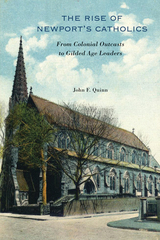
Honorable Mention, 2025 Catholic Media Association Book Awards
Nineteenth-century New England was a hostile place for Catholics. In Massachusetts a mob torched a convent; in Maine a priest was tarred and feathered; and Rhode Island elected an anti-Catholic Know Nothing governor. “No Irish Need Apply” signs were common.
Newport was different. It was a religiously diverse and tolerant city that welcomed Catholic French troops during the American Revolution. Later, as it became the favored summer retreat for America’s Protestant social elite, Irish Catholics arrived to work in construction jobs, the tourist economy, and the grand Gilded Age cottages. By the end of the century, Newport’s Catholic community was flourishing. Moneyed Catholics acquired their own mansions, an Irish Catholic was mayor, and prominent Protestants were helping Catholic neighbors establish new schools and churches. In this deeply researched study, John F. Quinn delves into this rich Catholic history to discover why nineteenth-century Newport was particularly religiously tolerant and accepting.
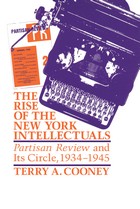
Cosmopolitan visions
Terry A. Cooney traces the evolution of the Partisan Review—often considered to be the most influential little magazine ever published in America—during its formative years, giving a lucid and dispassionate view of the magazine and its luminaries who played a leading role in shaping the public discourse of American intellectuals. Included are Lionel Trilling, Philip Rahv, William Phillips, Dwight Macdonald, F. W. Dupee, Mary McCarthy, Sidney Hook, Harold Rosenberg, and Delmore Schwartz, among others.
“An excellent book, which works at each level on which it operates. It succeeds as a straightforward narrative account of the Partisan Review in the 1930s and 1940s. The magazine’s leading voices—William Phillips, Philip Rahv, Dwight MacDonald, Lionel Trilling, and all the rest—receive their due. . . . Among the themes that engage Cooney. . . . are: how they dealt with ‘modernism’ in culture and radicalism in politics, each on its own and in combination; how Jewishness played a complex and fascinating role in many of the thinkers’ lives; and, especially, how ‘cosmopolitanism’ best explains what the Partisan Review was all about.”—Robert Booth Fowler, Journal of American History
With a new introduction by Pulitzer Prize–winner David I. Kertzer
Arnold van Gennep’s masterwork, The Rites of Passage, has been a staple of anthropological education for more than a century. First published in French in 1909, and translated into English by the University of Chicago Press in 1960, this landmark book explores how the life of an individual in any society can be understood as a succession of transitions: birth, puberty, marriage, parenthood, old age, and, finally, death. Van Gennep’s great insight was discerning a common structure in each of these seemingly different transitions, involving rituals of separation, liminality, and incorporation. With compelling precision, he set out the terms that would both define twentieth-century ritual theory and become a part of our everyday lexicon.
This new edition of his work demonstrates how we can still make use of its enduring critical tools to understand our own social, religious, and political worlds, and even our personal and professional lives. In his new introduction, Pulitzer Prize–winning historian and anthropologist David I. Kertzer sheds new light on van Gennep, on the battles he fought, and on the huge impact the book has had since publication of the first English edition.

In a unique and groundbreaking 2015 presentation of important contemporary art rarely seen in the traditional environs of the Hudson River Valley, the Thomas Cole National Historic Site and Olana, Frederic Edwin Church's Persian-inspired mansion, showcased the work of contemporary American artists such as Chuck Close, Cindy Sherman, Maya Lin, Martin Puryear, and Gregory Crewdson, some of the 30 artists featured in the exhibition. Stephen Hannock, celebrated Luminist painter and one of the exhibition's co-curators, stated that "this is a terrific opportunity to open up contemporary art, as well as these historic properties, to audiences who will see firsthand these shared artistic concerns."
The works of art selected for the exhibition were shown at the two venues to encourage visitors to experience both of the distinguished properties and the grandeur of their surroundings, and to present a complete overview and understanding of these contemporary works in a location where many art historians believe American art was born. The accompanying publication, River Crossings: Contemporary Art Comes Home, provides readers with a lavish record of this extraordinary and innovative exhibition, and offers unique and highly informative perspectives on the continuity of the American artistic tradition in two of the nation's most historic sites.
In addition to an impressive plate section of more than 60 works with brief artist biographies and descriptive narratives for the individual works, this comprehensive presentation features noteworthy, exceptional contributions. Stephen Hannock's preface details the development of this remarkable exhibition, while co-curator Jason Rosenfeld reveals in his essay the exhibition's importance relative to historical perception as he considers Cole's and Church's support of conemporary art in their time. Cultural historian Maurice Berger considers the realities of race and gender from the nineteenth-century Hudson River Valley to the present, and Marvin Heiferman, curator and writer, examines photography in the exhibition and its connections to Church's work and his use of the medium. Award-winning architectural and landscape photographer Peter Aaron generously provided the stunning installation, exterior, and landscape photographs, a gorgeous complement to this outstanding catalogue.
For over four decades, the US federal government has undertaken efforts to police and prosecute environmental crimes to protect public health and the natural environment. Yet, we still know very little about how US federal agencies have monitored and sanctioned water pollution violations and if these actions actually deter crime. In Rivers on Fire and Corporate Liars, Joshua Ozymy and Melissa Jarrell Ozymy examined over one thousand federal water pollution investigations and prosecutions undertaken by the US EPA and Department of Justice from 1983 to 2023 to answer these questions. Their analysis provides the most comprehensive empirical examination to date of how the criminal enforcement of water pollution has evolved over time, patterns in prosecutions, and how criminals were sanctioned.
An absorbing, epic novel, Rivington Street is also suitable for use as a classroom text.
Set amid the violence and social disintegration of the revolutionary period, there is no hatred in Lobodowski's work. Instead, it offers a vivid and nuanced portrayal of the Kuban, a multinational area in the northwestern Caucasus near the Sea of Azov, as a landscape where brutality and compassion coexist. Within spaces marked by deprivation and upheaval, bonds of loyalty, honor, and care emerge in unexpected ways, and strangers become protectors and guides.This volume presents a powerful meditation on endurance, identity, and the persistence of humanity in an age of collapse.
The convention succeeded by uniting powerful elements of the antislavery movement, radical Quakers, and the campaign for legal reform under a common cause. Wellman shows that these three strands converged not only in Seneca Falls, but also in the life of women's rights pioneer Elizabeth Cady Stanton. It is this convergence, she argues, that foments one of the greatest rebellions of modern times.
Rather than working heavy-handedly downward from their official "Declaration of Sentiments," Wellman works upward from richly detailed documentary evidence to construct a complex tapestry of causes that lay behind the convention, bringing the struggle to life. Her approach results in a satisfying combination of social, community, and reform history with individual and collective biographical elements.
The Road to Seneca Falls challenges all of us to reflect on what it means to be an American trying to implement the belief that "all men and women are created equal," both then and now. A fascinating story in its own right, it is also a seminal piece of scholarship for anyone interested in history, politics, or gender.

This book explores Robert Altman’s classic film from a variety of critical perspectives inspired by the archival materials from the Altman archive in the Screen Arts Mavericks and Makers collection at the University of Michigan Special Collections Research Center. Each chapter is centered around materials on Nashville from the Altman archive: stills, contact sheets, advertising artwork (used and unused), Jean Pagliuso photo shoots, Joan Tewkesbury script drafts, contracts, reviews, internal accounting memos, and the Altman scrapbooks. (Each of his films has a scrapbook of reviews, interviews, and notes from fans.) Using these sources as a starting point, the book seeks to explain the relevance and importance of Nashville after more than half a century.
Rosebud Sleds and Horses’ Heads presents incisive discussion of fifty of the most significant objects in cinema history and explores their importance within their films and within the popular imagination. With original full color illustrations, this book surveys objects from a range of genres, from the birth of cinema to the present day.
Curated and written by a prominent film critic who routinely writes for some of the leading publications in the English language, as well as broadcasts for the BBC, Rosebud Sleds and Horses’ Heads is the only book of its kind. With a fascinating, original, and instantly understandable concept, it will find grateful audiences in film buffs around the world.

Beginning its narrative in 1961, when Albanian King Zog I died in a Paris hospital after 22 years in exile, this book tells the colourful story of this Balkan country's first and only monarch. The road to becoming Europe's youngest president in 1925 and then king of Albania in 1928 was paved with feuds and assassinations, a political career-path common in the region. He craved the throne for several reasons; the Balkans were mostly run by kings, and Zog wanted to impress his mother and also give his six sisters an easy social rise.
Once king, his accomplishments were decidedly meagre. He spent most of his time keeping up appearances as a monarch despite the obvious fraud he had imposed on an illiterate and uninterested population. His one great success was that he had almost all his opponents assassinated, usually in broad daylight abroad.
Zog retained his power until his "friend" Mussolini ousted him in 1939. On the surface a Westernizer, this self-proclaimed ruler left Albania almost as he found it, with almost no roads or trains, thoroughly uneducated and utterly impoverished.
In his book, Robert Austin combines Zog’s adventurous life story with a studious analysis of Albania's political history from the fall of the Ottoman Empire to the threshold of Euro-Atlantic integration.
In their seminal 1995 book Making Ends Meet: How Low-Income Single Mothers Survive Welfare and Low-Wage Employment, Kathryn Edin and Laura Lein laid bare the strategies and challenges of low-income single mothers who were struggling to provide for their families. Even in an era when cash welfare was a federal entitlement, these women struggled to get by. In the thirty years since the book’s publication, many single parents wrestle with volatility and precarious resources from work, informal and formal supports. In this double issue of RSF, economist Elizabeth O. Ananat, political scientist and public policy scholar Carolyn Y. Barnes, sociologists Sandra K. Danziger and Kathryn Edin, and an interdisciplinary group of contributors examine how the policy landscape has changed since welfare reform and how it impacts low-income single mothers’ ability to make ends meet today.
Issue 1 has 8 articles that examine how the traditional safety net has evolved and new supports that have been developed since Making Ends Meet. For example, Sarah K. Bruch and colleagues assess changes to the social safety net since welfare reform in the 1990s and find that benefits have become more exclusive, have more constraints, and are less generous. Kelley Fong and Nora McCarthy reveal that, in an attempt to decrease child maltreatment, the child welfare system increasingly provides material resources to system-involved parents, including in-kind donations and assistance accessing childcare. However, parents often avoid obtaining resources through the system because it opens them up to increased state surveillance. Heather D. Hill and colleagues show that access to paid family and medical leave (PFML) varies greatly for single mothers, with two-thirds of single mothers living in states without PMFL. For those who live in states with PFML, the accessibility and generosity of benefits vary greatly.
Issue 2 has 5 articles that look at lessons that can be learned from COVID Era policies, how single mothers currently try to make ends meet, and men’s contributions to families. For example, Natasha V. Pilkauskas and Kevin Bruey find that low-income single mothers, with and without employment, utilize a variety of public and private resources to make ends meet. Despite this, both groups face high levels of material hardship, including food and housing insecurity. Hope Harvey examines how members of doubled up households understand their economic and social relationships and reveals that there are often disagreements about shared resources, such as money and food. However, it is not just the precise contributions that cause conflict, but how the exchanges are interpreted within the context of household members’ relationships. Allison Dwyer Emory and colleagues show that nonresident fathers often have trouble making ends meet themselves and are unable to make up for the loss of cash support post-welfare reform.
This double issue of RSF showcases the persistence of precarity that low-income families face since Making Ends Meet.
Note: This copy refers to both issues of the journal double issue.
In their seminal 1995 book Making Ends Meet: How Low-Income Single Mothers Survive Welfare and Low-Wage Employment, Kathryn Edin and Laura Lein laid bare the strategies and challenges of low-income single mothers who were struggling to provide for their families. Even in an era when cash welfare was a federal entitlement, these women struggled to get by. In the thirty years since the book’s publication, many single parents wrestle with volatility and precarious resources from work, informal and formal supports. In this double issue of RSF, economist Elizabeth O. Ananat, political scientist and public policy scholar Carolyn Y. Barnes, sociologists Sandra K. Danziger and Kathryn Edin, and an interdisciplinary group of contributors examine how the policy landscape has changed since welfare reform and how it impacts low-income single mothers’ ability to make ends meet today.
Issue 1 has 8 articles that examine how the traditional safety net has evolved and new supports that have been developed since Making Ends Meet. For example, Sarah K. Bruch and colleagues assess changes to the social safety net since welfare reform in the 1990s and find that benefits have become more exclusive, have more constraints, and are less generous. Kelley Fong and Nora McCarthy reveal that, in an attempt to decrease child maltreatment, the child welfare system increasingly provides material resources to system-involved parents, including in-kind donations and assistance accessing childcare. However, parents often avoid obtaining resources through the system because it opens them up to increased state surveillance. Heather D. Hill and colleagues show that access to paid family and medical leave (PFML) varies greatly for single mothers, with two-thirds of single mothers living in states without PMFL. For those who live in states with PFML, the accessibility and generosity of benefits vary greatly.
Issue 2 has 5 articles that look at lessons that can be learned from COVID Era policies, how single mothers currently try to make ends meet, and men’s contributions to families. For example, Natasha V. Pilkauskas and Kevin Bruey find that low-income single mothers, with and without employment, utilize a variety of public and private resources to make ends meet. Despite this, both groups face high levels of material hardship, including food and housing insecurity. Hope Harvey examines how members of doubled up households understand their economic and social relationships and reveals that there are often disagreements about shared resources, such as money and food. However, it is not just the precise contributions that cause conflict, but how the exchanges are interpreted within the context of household members’ relationships. Allison Dwyer Emory and colleagues show that nonresident fathers often have trouble making ends meet themselves and are unable to make up for the loss of cash support post-welfare reform.
This double issue of RSF showcases the persistence of precarity that low-income families face since Making Ends Meet.
Note: This copy refers to both issues of the journal double issue.
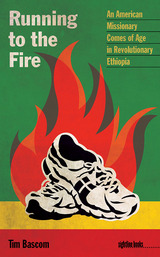
Running to the Fire focuses on the turbulent year the Bascom family experienced upon traveling into revolutionary Ethiopia. The teenage Bascom finds a paradoxical exhilaration in living so close to constant danger. At boarding school in Addis Ababa, where dorm parents demand morning devotions and forbid dancing, Bascom bonds with other youth due to a shared sense of threat. He falls in love for the first time, but the young couple is soon separated by the politics that affect all their lives. Across the country, missionaries are being held under house arrest while communist cadres seize their hospitals and schools. A friend’s father is imprisoned as a suspected CIA agent; another is killed by raiding Somalis.
Throughout, the teenaged Bascom struggles with his faith and his role within the conflict as a white American Christian missionary’s child. Reflecting back as an adult, he explores the historical, cultural, and religious contexts that led to this conflict, even though in doing so he is forced to ask himself questions that are easier left alone. Why, he wonders, did he find such strange fulfillment in being young and idealistic in the middle of what was essentially a kind of holy war?

Rural County, Urban Borough is a history of place, charting the rapid transformation of the Queens landscape. It identifies what drove the borough’s development, from public infrastructure, architecture, and transportation to technological innovation and urban planning. New York historian Jeffrey A. Kroessler takes us inside the backrooms and boardrooms where local powerbrokers shaped the borough’s future, chronicling how its relationship with the city has evolved. He also shows the steps Queens residents from all backgrounds took to care for their neighborhoods and build their communities. Richly illustrated, this book underscores why Queens is integral to New York City and the wider world and reveals how, in its evolution, we see the whole arc of American urban history.
READERS
Browse our collection.
PUBLISHERS
See BiblioVault's publisher services.
STUDENT SERVICES
Files for college accessibility offices.
RECENTLY PUBLISHED
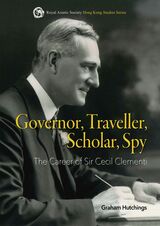


UChicago Accessibility Resources
home | accessibility | search | about | contact us
BiblioVault ® 2001 - 2026
The University of Chicago Press