
 A SCHOLARLY BOOK REPOSITORY
32 start with R start with R
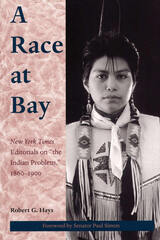
Robert G. Hays chronicles the "Indian problem" precisely as it was explained to Americans through the editorial columns of the New York Times between 1860 and 1900, the years when battles between white settlers and Native Americans split a nation and its spirit apart.
Covering the final forty-one years of the nineteenth century, Hays’s collection of Times editorials gives readers what current accounts cannot: perspectives by contemporary writers with unique insights into the public images of Native Americans and their place in a nation bent on expansion. The authentic voices of a national newspaper’s daily record speak with an urgency both immediate and real.
These editorials express the unbridled bitterness and raw ambition of a nation immersed in an agenda of conquest. They also resonate with the struggle to find a common ground. Some editorials are patronizing and ironic: "Yet it seems pitiful to cage so fine a savage among a herd of vulgar criminals in a penitentiary." Others include a willingness to poke fun: "Many persons on the platform were astonished to find that an ‘illiterate barbarian’ could handle the weapon of sarcasm. The truth is that the Indians spoke far better than ninety-nine out of a hundred members of congress." And yet others evince an attitude of respect, which set the tone for reconciling national ambition with natural rights.
In some instances, the Times allowed Native Americans to tell their own stories, as in this eloquent, moving account of the testimony of Satanta, the warrior chief of the Kiowas: "A certain dim foreboding of the Indians’ fate swept across his mind, and in its passage lit his eyes up with a fierce light, and his voice rose to a pitch of frenzy as he exclaimed: ‘We don’t want to settle—I love to roam over the prairie; there I am free and happy."
History demonstrates that the costs of owning one’s soil and one’s destiny remain without measure. Many of the problems blocking the progress of Native Americans continue unsolved: unemployment, infant mortality, suicide, crime, alcoholism, and poverty. Following such works as Helen Hunt Jackson’s A Century of Dishonor and Dee Brown’s Bury My Heart at Wounded Knee, Hays looks back on the records of national history for the roots of our challenges today.
These engaging words draw us into a workaday world that, magically but never surprisingly, has room for the Diyin Dine’é (the Holy People), Old Salt Woman, and Dawn Boy. When she describes her grandson’s First Laugh Ceremony—explaining that it was originally performed for White Shell Girl, who grew up to be Changing Woman—her account enriches us and we long to hear more. Tapahonso weaves the Navajo language into her work like she weaves “the first four rows of black yarn” into a rug she is making “for my little grandson, who inherited my father’s name: Hastiin Tsétah Naaki Bísóí.”
As readers, we find that we too are surrounded by silent comfort, held lovingly in the confident hands of an accomplished writer who has a great deal to tell us about life.
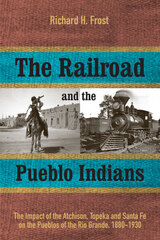
The Pueblo communities responded variously, though mostly conservatively to sustain their traditional communities. This book spotlights two very different responses. Santo Domingo's reaction was hostile, but Laguna chose accommodation. These reactions reveal previously overlooked aspects of these pueblos’ histories that provide compelling reasons behind their varying responses. The book also analyzes the self-contradictory nature of Pueblo constitutional law from 1876 to 1913 and describes conflicted Bureau of Indian Affairs treatment of the Pueblos in the late nineteenth and early twentieth centuries. Each in turn had fateful consequences.
Popol Wujis considered one of the oldest books in the Americas. Various elements of Popol Wuj have appeared in different written forms over the last two millennia and several parts of Popol Wuj likely coalesced in hieroglyphic book form a few centuries before contact with Europeans. Popol Wuj offers a unique interpretation of the Maya world and ways of being from a Maya perspective. However, that perspective is often occluded since the extant Popol Wuj is likely a copy of a copy of a precontact Indigenous text that has been translated many times since the fifteenth century.
Reading Popol Wujoffers readers a path to look beyond Western constructions of literature to engage with this text through the philosophical foundation of Maya thought and culture. This guide deconstructs various translations to ask readers to break out of the colonial mold in approaching this seminal Maya text.
Popol Wuj, or Popol Vuh, in its modern form, can be divided thematically into three parts: cosmogony (the formation of the world), tales of the beings who inhabited the Earth before the coming of people, and chronicles of different ethnic Maya groups in the Guatemala area. Examining thirteen translations of the K’iche’ text, Henne offers a decolonial framework to read between what translations offer via specific practice exercises for reading, studying, and teaching. Each chapter provides a close reading and analysis of a different critical scene based on a comparison of several translations (English and Spanish) of a key K’iche’ word or phrase in order to uncover important philosophical elements of Maya worldviews that resist precise expression in Indo-European languages.
Charts and passages are frontloaded in each chapter so the reader engages in the comparative process before reading any leading arguments. This approach challenges traditional Western reading practices and enables scholars and students to read Popol Wuj—and other Indigenous texts—from within the worldview that created them.

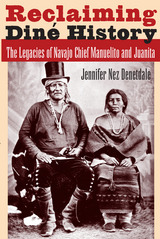
Here she presents a thought-provoking examination of the construction of the history of the Navajo people (Diné, in the Navajo language) that underlines the dichotomy between Navajo and non-Navajo perspectives on the Diné past. Reclaiming Diné History has two primary objectives. First, Denetdale interrogates histories that privilege Manuelito and marginalize Juanita in order to demonstrate some of the ways that writing about the Diné has been biased by non-Navajo views of assimilation and gender. Second, she reveals how Navajo narratives, including oral histories and stories kept by matrilineal clans, serve as vehicles to convey Navajo beliefs and values.
By scrutinizing stories about Juanita, she both underscores the centrality of women’s roles in Navajo society and illustrates how oral tradition has been used to organize social units, connect Navajos to the land, and interpret the past. She argues that these same stories, read with an awareness of Navajo creation narratives, reveal previously unrecognized Navajo perspectives on the past. And she contends that a similarly culture-sensitive re-viewing of the Diné can lead to the production of a Navajo-centered history.
The Red Bird All-Indian Traveling Band is part mystery, part community chronicle. Shaped by a cast of skillfully drawn characters, all of whom at one time or another are potential suspects, at the core of the story is smart and compassionate Sissy. Four years past high school, Sissy’s wry humor punctuates descriptions of reservation life as she learns more about Ames’s potential killer, and as she embarks on a personal search for ways to buck expectations and leave rural South Dakota to attend college.
Ames’s death is just an example of the undercurrents of violence and passions that run through this fast-moving novel of singing, loving, and fighting. Following Sissy as she unravels the mystery of both Buffalo Ames’s death and her own future, The Red Bird All-Indian Traveling Band is the story of Indian Country on the verge of historic change and a woman unwilling to let change pass her by.
Tracing identity, law, and legacy in an inheritance dispute that reveals the intersection of two cultural and legal systems: Creek Indian and Euro-American.
In 1846, in the Chancery Court of Mobile, Alabama, William “Red Eagle” Weatherford’s son, by the Indian woman Supalamy, sued his half siblings fathered by Weatherford with two other Creek women, Polly Moniac and Mary Stiggins, for a greater share of Weatherford’s estate. While the court recognized William Jr. as the son of William Sr., he nevertheless lost his petition for inheritance due to the lack of legal evidence concerning the marriage of his biological mother to William Sr. The case, which went to the Alabama Supreme Court in 1851, provides a record of an attempt to interrelate and, perhaps, manipulate differences in cultures as they played out within the ritualized, arcane world of antebellum Alabama jurisprudence.
Although the case has value in the classic mold of salvage ethnography of Creek Indian culture, Red Eagle’s Children, edited by J. Anthony Paredes and Judith Knight, shows that its more enduring value lies in being a source for historical ethnography—that is, for anthropological analyses of cultural dynamics of the past events that complement the narratives of professional historians.
CONTRIBUTORS: David I. Durham / Robbie Ethridge / Judith Knight / J. Anthony Paredes / Paul M. Pruitt Jr. / Nina Gail Thrower / Robert Thrower / Gregory A. Waselkov
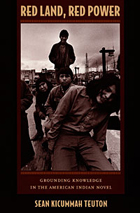
While engaging a wide spectrum of Native American writing, Teuton focuses on three of the most canonized and, he contends, most misread novels of the era—N. Scott Momaday’s House Made of Dawn (1968), James Welch’s Winter in the Blood (1974), and Leslie Marmon Silko’s Ceremony (1977). Through his readings, he demonstrates the utility of tribal realism as an interpretive framework to explain social transformations in Indian Country during the Red Power era and today. Such transformations, Teuton maintains, were forged through a process of political awakening that grew from Indians’ rethought experience with tribal lands and oral traditions, the body and imprisonment, in literature and in life.
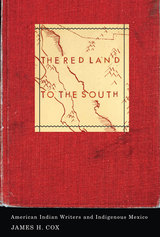
The forty years of American Indian literature taken up by James H. Cox—the decades between 1920 and 1960—have been called politically and intellectually moribund. On the contrary, Cox identifies a group of American Indian writers who share an interest in the revolutionary potential of the indigenous peoples of Mexico—and whose work demonstrates a surprisingly assertive literary politics in the era.
By contextualizing this group of American Indian authors in the work of their contemporaries, Cox reveals how the literary history of this period is far more rich and nuanced than is generally acknowledged. The writers he focuses on—Todd Downing (Choctaw), Lynn Riggs (Cherokee), and D’Arcy McNickle (Confederated Salish and Kootenai)—are shown to be on par with writers of the preceding Progressive and the succeeding Red Power and Native American literary renaissance eras.
Arguing that American Indian literary history of this period actually coheres in exciting ways with the literature of the Native American literary renaissance, Cox repudiates the intellectual and political border that has emerged between the two eras.
"The distinctive contribution of [Red Man's Religion] is the treatment of topics, the insight and the perspective of the author, and her ability to transmit these to the reader. . . . Trais and aspects of religion are not treated as abstract entitites, to be enumerated and summated, assigned a geographic distribution, and then abandoned. No page is a dry recital; each is an illumination. Insight and wisdom are framed in poetic prose. An offering of information in such a medium merits gratitude."—American Anthropologist
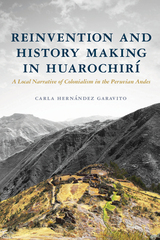
Using archaeological and historical datasets and spatial modeling, this book centers on local memory and experience throughout colonized landscapes as the thread that connects the long history of Indigenous engagement with expanding colonial empires and the emergent Peruvian nation. The author builds on Andean epistemological frameworks to argue that in the face of drastic sociopolitical changes, the people of Huarochirí turned to their own history. They created analogies and shared spaces between local and Inka landscapes and materiality and incorporated written representations and ideas of settled lives to validate their claims.
This exciting new work moves the field of Andean archaeology into conversations with decolonial and decolonizing methodologies and shows how Indigenous communities captured and made sense of their long history, reframing colonialism as a local experience.
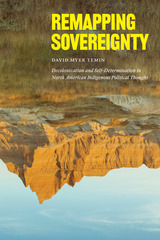
An examination of anticolonial thought and practice across key Indigenous thinkers.
Accounts of decolonization routinely neglect Indigenous societies, yet Native communities have made unique contributions to anticolonial thought and activism. Remapping Sovereignty examines how twentieth-century Indigenous activists in North America debated questions of decolonization and self-determination, developing distinctive conceptual approaches that both resonate with and reformulate key strands in other civil rights and global decolonization movements. In contrast to decolonization projects that envisioned liberation through state sovereignty, Indigenous theorists emphasized the self-determination of peoples against sovereign state supremacy and articulated a visionary politics of decolonization as earthmaking. Temin traces the interplay between anticolonial thought and practice across key thinkers, interweaving history and textual analysis. He shows how these insights broaden the political and intellectual horizons open to us today.
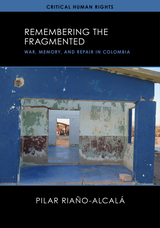
The South American nation of Colombia has been beset by decades of state, guerrilla, and paramilitary violence, creating deep and long-lasting impacts. Many scholars have investigated not only the atrocious events themselves but also the various truth and memory processes that have sought to address this troubling past. Here, Pilar Riaño-Alcalá takes a new approach by applying Black, Indigenous, and memory studies to two emblematic sites of mass violence: Bahia Portete, a Wayuu Indigenous territory in Upper Guajira; and Bojayá, a Black and Embera Indigenous territory in Chocó. By bringing human and nonhuman actors to bear on the ongoing acts of remembering and by centering Indigenous and Black ontologies, Riaño-Alcalá uncovers how these communities repair themselves—how they understand, restore, sustain, and reimagine themselves despite the constant uncertainties of war and racial capitalism. Contributing to human rights studies, memory studies, Indigenous studies, Latin American studies, and anthropologies of social repair, this book offers critical new interventions in a long-studied history.
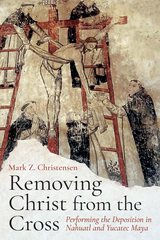
Employed on Good Friday, the texts provided mute actors with roles and props with which to reenact the removal of Christ from his cross, his placement into the arms of his grieving mother, and his burial—his Deposition. Through rare translations, vivid historical accounts, and rich cultural insight, the book uncovers how these ceremonies moved audiences to tears, shaped local Catholicisms, and still have the power to stir hearts today.
Such theatrical reenactments were common among Nahuas and Mayas during the colonial period only to become largely overlooked by the scholarly literature on religion. The texts examined here provide not only examples of performances but also insight into how translation altered their content and meaning. More than simply plays or sermons, these performative sermons merged European tradition with Nahua and Maya storytelling, creating unforgettable moments of faith, grief, and beauty. Familiarized through local worldviews, concerns, preferences, and language, these texts provide additional and important insights into myriad issues including those of gender, agency, and how Christianity adopted its message of the Deposition to accommodate Indigenous audiences of different cultures. Christensen also mines the deep well of existing European literature on the subject to clearly illustrate the aspects derived from the Old World and those from the New.
The first book examining how the Aztec and Maya were taught about and engaged in the Deposition, Removing Christ from the Cross exposes the colonial origins of modern Latin American commemorations, showing the past clearly reflected in the present and making a significant contribution to the larger literature on the evangelization of New Spain. This is more than history—it is the rediscovery of performances that connected worlds.
For three decades, Native American history has been dominated by two major themes. The first is "The Cant of Conquest," the notion that all native peoples who came into contact with Europeans suffered devastating effects due to disease, alcohol, and warfare. However, the argument can be made that in some cases native peoples controlled their own fortunes, at least for awhile. The other dominant theme is the "The Contest of Cultures," the idea that Native American history needs to be examined in the context of dealings with Europeans. Europeans changed the Americas, but this approach concerns colonialism and colonists as well as Native Americans.
The Renewed, the Destroyed, and the Remade examines the changing worldviews of the Huron and the Iroquois in the first half of the seventeenth century, during a period of increasing European contact. From Samuel de Champlain’s armed encounter with the Iroquois, in 1609, to the dispersal of the Huron in the mid-seventeenth century, Carpenter’s book traces the evolving thought worlds of Iroquoian peoples.
The Iroquois and the Huron-peoples with an intertwined history and many cultural similarities-reacted differently to European contact. The Huron thought world began to change when the French initiated intense trade and missionary activity early in the seventeenth century. French missionary efforts resulted in a split within the Huron nation between traditionalists and Christian converts. By contrast, the Iroquois were interested primarily in trade with the newcomers. The Iroquois, like the Huron, accepted European trade goods, but unlike the Huron, they rejected European religion.
The Renewed, the Destroyed, and the Remade differs from other works of Native American history on several counts. Native American historiography has not been overly comparative. This work is a comparative history of two culturally similar Native American nations. It also differs in that, rather than another history of Native-European contacts, it is an Indian-centered history.
The colonizing wars against Native Americans created the template for anticommunist repression in the United States. Tariq D. Khan’s analysis reveals bloodshed and class war as foundational aspects of capitalist domination and vital elements of the nation’s long history of internal repression and social control. Khan shows how the state wielded the tactics, weapons, myths, and ideology refined in America’s colonizing wars to repress anarchists, labor unions, and a host of others labeled as alien, multi-racial, multi-ethnic urban rabble. The ruling classes considered radicals of all stripes to be anticolonial insurgents. As Khan charts the decades of red scares that began in the 1840s, he reveals how capitalists and government used much-practiced counterinsurgency rhetoric and tactics against the movements they perceived and vilified as “anarchist.”
Original and boldly argued, The Republic Shall Be Kept Clean offers an enlightening new history with relevance for our own time.
While the Diné (those from the four sacred mountains in Dinétah in the southwestern United States) are not now politically and economically cohesive with the Dene (who are in Denendeh in Canada), they are ancestral and linguistic relatives. In this book, Watchman turns to literary and visual texts to explore how relations are restored through stories, showing how literary linkages from land-based stories affirm Diné and Dene kinship. She explores the power of story to forge ancestral and kinship ties between the Diné and Dene across time and space through re-storying of relations.
*A complex Diné worldview and philosophy that cannot be defined with one word in the English language. Hózhǫ́ means to continually strive for harmony, beauty, balance, peace, and happiness, but most importantly the Diné have a right to it.
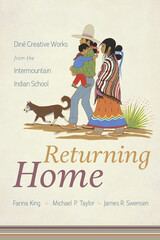
This book works to recover the lived experiences of Native American boarding school students through creative works, student interviews, and scholarly collaboration. It shows the complex agency and ability of Indigenous youth to maintain their Diné culture within the colonial spaces that were designed to alienate them from their communities and customs. Returning Home provides a view into the students’ experiences and their connections to Diné community and land. Despite the initial Intermountain Indian School agenda to send Diné students away and permanently relocate them elsewhere, Diné student artists and writers returned home through their creative works by evoking senses of Diné Bikéyah and the kinship that defined home for them.
Returning Home uses archival materials housed at Utah State University, as well as material donated by surviving Intermountain Indian School students and teachers throughout Utah, Arizona, and New Mexico. Artwork, poems, and other creative materials show a longing for cultural connection and demonstrate cultural resilience. This work was shared with surviving Intermountain Indian School students and their communities in and around the Navajo Nation in the form of a traveling museum exhibit, and now it is available in this thoughtfully crafted volume. By bringing together the archived student arts and writings with the voices of living communities, Returning Home traces, recontextualizes, reconnects, and returns the embodiment and perpetuation of Intermountain Indian School students’ everyday acts of resurgence.
Published in cooperation with the William P. Clements Center for Southwest Studies, Southern Methodist University.
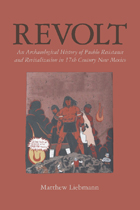
The Pueblo Revolt of 1680 is the most renowned colonial uprisings in the history of the American Southwest. Traditional text-based accounts tend to focus on the revolt and the Spaniards' reconquest in 1692—completely skipping over the years of indigenous independence that occurred in between. Revolt boldly breaks out of this mold and examines the aftermath of the uprising in colonial New Mexico, focusing on the radical changes it instigated in Pueblo culture and society.
In addition to being the first book-length history of the revolt that incorporates archaeological evidence as a primary source of data, this volume is one of a kind in its attempt to put these events into the larger context of Native American cultural revitalization. Despite the fact that the only surviving records of the revolt were written by Spanish witnesses and contain certain biases, author Matthew Liebmann finds unique ways to bring a fresh perspective to Revolt.
Most notably, he uses his hands-on experience at Ancestral Pueblo archaeological sites—four Pueblo villages constructed between 1680 and 1696 in the Jemez province of New Mexico—to provide an understanding of this period that other treatments have yet to accomplish. By analyzing ceramics, architecture, and rock art of the Pueblo Revolt era, he sheds new light on a period often portrayed as one of unvarying degradation and dissention among Pueblos. A compelling read, Revolt's "blood-and-thunder" story successfully ties together archaeology, history, and ethnohistory to add a new dimension to this uprising and its aftermath.
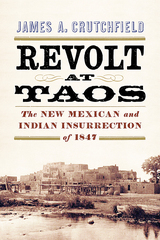
On the morning of January 19, 1847, Charles Bent, the newly appointed governor of the American-claimed territory of New Mexico, was savagely killed at his home in Don Fernando de Taos, a small, remote town located north of Santa Fe. Those responsible for Bent’s murder were New Mexican settlers and Indians from nearby Taos Pueblo who refused to recognize the United States occupation. With emotions rubbed raw, the natives continued their bloodbath until five more leading citizens were massacred in Taos. During the ensuing months, American civilians and soldiers, along with scores of New Mexicans and Taos Indians, were killed and wounded throughout the region. Less than a month following Bent’s murder, in a two-day battle, volunteer and regular elements of an American army under the command of Colonel Sterling Price emerged victorious after bombarding the insurrectionists at their refuge in the church at Taos Pueblo. Surviving participants in the earlier Taos murders were arrested, tried in American-dominated courts, and, within weeks, hanged for their actions. The murder of Bent and the others at Taos and the subsequent trials and executions brought with them misunderstanding, controversy, mistrust, and recrimination on both sides of the issue. The events also subjected President James K. Polk’s administration to censure over what some critics believed was an overextension of presidential authority in claiming New Mexico as a territory.
In Revolt at Taos: The New Mexican and Indian Insurrection of 1847, writer and historian James A. Crutchfield explores the fast-moving events surrounding the bloody revolt which left native inhabitants of New Mexico wondering how their neighbors and kinsmen could be legally tried, found guilty, and executed for acts they considered to have been honorable ones committed in defense of their country. These concerns have never been adequately addressed and their struggle has been all but scrubbed from the history of American expansion.
Winner Labriola Center American Indian National Book Award
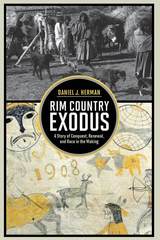
For thousands of years, humans have lived on the sprawling escarpment in Arizona known as the Mogollon Rim, a stretch that separates the valleys of central Arizona from the mountains of the north. A vast portion of this dramatic landscape is the traditional home of the Dilzhe’e (Tonto Apache) and the Yavapai. Now Daniel Herman offers a compelling narrative of how—from 1864 to 1934—the Dilzhe’e and the Yavapai came to central Arizona, how they were conquered, how they were exiled, how they returned to their homeland, and how, through these events, they found renewal.
Herman examines the complex, contradictory, and very human relations between Indians, settlers, and Federal agents in late nineteenth- and early twentieth-century Arizona—a time that included Arizona’s brutal Indian wars. But while most tribal histories stay within the borders of the reservation, Herman also chronicles how Indians who left the reservation helped build a modern state with dams, hydroelectricity, roads, and bridges. With thoughtful detail and incisive analysis, Herman discusses the complex web of interactions between Apache, Yavapai, and Anglos that surround every aspect of the story.
Rim Country Exodus is part of a new movement in Western history emphasizing survival rather than disappearance. Just as important, this is one of the first in-depth studies of the West that examines race as it was lived. Race was formulated, Herman argues, not only through colonial and scientific discourses, but also through day-to-day interactions between Indians, agents, and settlers. Rim Country Exodus offers an important new perspective on the making of the West.
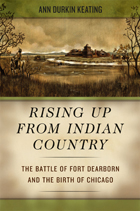
In August 1812, under threat from the Potawatomi, Captain Nathan Heald began the evacuation of ninety-four people from the isolated outpost of Fort Dearborn to Fort Wayne. The group included several dozen soldiers, as well as nine women and eighteen children. After traveling only a mile and a half, they were attacked by five hundred Potawatomi warriors. In under an hour, fifty-two members of Heald’s party were killed, and the rest were taken prisoner; the Potawatomi then burned Fort Dearborn before returning to their villages.
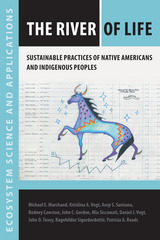
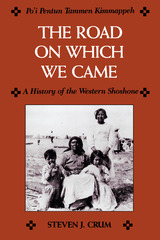
A hundred forty years ago, the Western Shoshone occupied a vast area of present-day Nevada—from Idaho in the north to Death Valley in the south. Today, the Newe hold a fraction of their former territory, still practicing native lifeways while accepting many aspect of American culture. Their story deserves telling.
The Road on Which We Came is the first comprehensive history of the Great Basin Shoshone. Written by historian Steven Crum, an enrolled tribal member, this book presents the Shoshone as an active force in their own history, effectively adapting to harsh physical environment, defending their territory in the nineteenth century, and working to modify or reject assimilationists policy in the present.
Noting that Native American history did not end with Wounded Knee, Crum gives substantial attention to twentieth-century events up to 1990 and emphasizes that in every period tribal actions can be characterized by a plurality of voices and opinions.
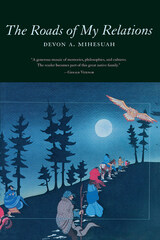
"I've traveled a lot of roads, but never alone. My relations are with me," says Billie McKenney, one of the matriarchs of the complex family of Choctaws searching for peace as the white world rapidly encroaches on their tribal land, politics, and values. In her first collection of stories, Native American writer Devon A. Mihesuah chronicles the lives of several generations of a close-knit Choctaw family as they are forced from their traditional homeland in nineteenth-century Mississippi and endure unspeakable sorrows during their journey before settling in southeastern Oklahoma.
Blending family lore, stark realism, and vivid imagination, The Roads of My Relations relays a strong sense of Choctaw culture and world view in absorbing tales of history and legend. Unfolding through the voices and actions of family members, confused half-bloods, and unlikely heroes—not all of them living or even human—the stories tell of the horrors of forced removal, the turbulence of post Civil War Indian Territory, the terrifying violence suffered at the hands of immortal Crow witches, and the family's ultimate survival against forces of evil. Time-traveling ghosts, mysterious medicine men, and eerie shape-shifters share the pages with proud matriarchs, mischievous schoolgirls, and loving siblings.
Together, these interwoven stories express the strength and persistence of a tribe whose identity and pride have survived the disruptions of colonialism. With The Roads of My Relations, Devon A. Mihesuah has created a universal and timeless exploration of heritage, spirituality, and the importance of preserving and passing on tradition.
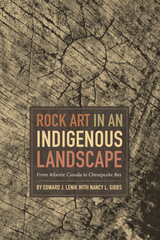
A landmark study of Native American rock art from Atlantic Canada to Chesapeake Bay.
Rock art, petroglyphs, and pictographs have been made by indigenous peoples for thousands of years. Images have been found on bedrock, cliff faces, ridge tops, and boulders and in rock shelters. Some rock surfaces are covered with abstract and geometric designs such as concentric circles, zigzag lines, grids, and cross-hatched and ladder-like patterns. Others depict humans, footprints and handprints, mammals, serpents, and mythic creatures. All were meticulously pecked, incised or painted. This ancient art form connects us to Native Americans’ past, traditions, world views, and sacred places.
Rock Art in an Indigenous Landscape: From Atlantic Canada to Chesapeake Bay is the culmination of the research of preeminent rock art scholar Edward J. Lenik. Here, he profiles more than 64 examples of rock art in varied locations from Nova Scotia to Maryland. Chapters are organized geographically and lead the reader through coastal sites, rivers and streams, lakes and ponds, and upland sites.
Lenik discusses the rock art examples in the context of the indigenous landscape, noting the significance of the place of discovery. Coverage includes a meticulous description of the design or motif and suggestions of time frame, artist-makers, and interpretations. Where possible, indigenous views on the artifacts enrich the narrative. Other invaluable elements are a discussion of how to identify indigenous rock art; a glossary of rock art terms and features and archaeological culture periods; an up-to-date bibliography; and an appendix of a number of reported but unconfirmed petroglyph sites in the regions.

Honorable Mention: Labriola Center American Indian National Book Award
In Roots of Our Renewal, Clint Carroll tells how Cherokee people have developed material, spiritual, and political ties with the lands they have inhabited since removal from their homelands in the southeastern United States. Although the forced relocation of the late 1830s had devastating consequences for Cherokee society, Carroll shows that the reconstituted Cherokee Nation west of the Mississippi eventually cultivated a special connection to the new land—a connection that is reflected in its management of natural resources.
Until now, scant attention has been paid to the interplay between tribal natural resource management programs and governance models. Carroll is particularly interested in indigenous environmental governance along the continuum of resource-based and relationship-based practices and relates how the Cherokee Nation, while protecting tribal lands, is also incorporating associations with the nonhuman world. Carroll describes how the work of an elders’ advisory group has been instrumental to this goal since its formation in 2008.
An enrolled citizen of the Cherokee Nation, Carroll draws from his ethnographic observations of Cherokee government–community partnerships during the past ten years. He argues that indigenous appropriations of modern state forms can articulate alternative ways of interacting with and “governing” the environment.
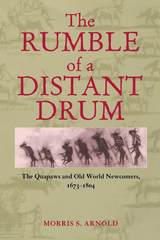
Winner of the 2001 Booker Worthen Literary Prize
Winner of the 2002 S. G. Ragsdale Award for Arkansas History
The Rumble of a Distant Drum opens in 1673 when Marquette and Jolliet sailed down the Mississippi River and found the Quapaw living in the area where the Arkansas River flowed into the Mississippi. In 1686 Henri de Tonti would found Arkansas Post in this same location. It was the first European settlement in this part of the country, established thirty years before New Orleans and eighty before St. Louis.
Morris S. Arnold draws on his many years of archival research and writing on colonial Arkansas to produce this elegant account of the cultural intersections of the French and Spanish with the native American peoples. He demonstrates that the Quapaws and Frenchmen created a highly symbiotic society in which the two disparate peoples became connected in complex and subtle ways—through intermarriage, trade, religious practice, and political/military alliances.
READERS
Browse our collection.
PUBLISHERS
See BiblioVault's publisher services.
STUDENT SERVICES
Files for college accessibility offices.
RECENTLY PUBLISHED




UChicago Accessibility Resources
home | accessibility | search | about | contact us
BiblioVault ® 2001 - 2026
The University of Chicago Press