
 A SCHOLARLY BOOK REPOSITORY
26 start with S start with S

Written a generation apart and rarely treated together by scholars, Little Women (1868) and The House of Mirth (1905) share a deep concern with materialism, moral development, and self-construction. The heroines in both grapple with conspicuous consumption, an aspect of modernity that challenges older beliefs about ethical behavior and core identity.
Placing both novels at the historical intersection of modern consumer culture and older religious discourse on materialism and identity, Sarah Way Sherman analyzes how Alcott and Wharton rework traditional Protestant discourse to interpret their heroines' struggle with modern consumerism. Her conclusion reveals how Little Women's optimism, still buoyed by otherworldly justice, providential interventions, and the notion of essential identity, ultimately gives way to the much darker vision of modern materialistic culture in The House of Mirth.
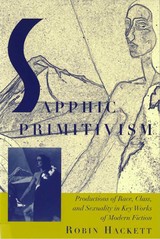
In this book, Robin Hackett examines portrayals of race, class, and sexuality in modernist texts by white women to argue for the existence of a literary device that she calls “Sapphic primitivism.” The works vary widely in their form and content and include Olive Schreiner’s proto-modernist exploration of New Womanhood, The Story of an African Farm; Virginia Woolf’s high modernist “play-poem,” The Waves; Sylvia Townsend Warner’s historical novel, Summer Will Show; and Willa Cather’s Southern pastoral, Sapphira and the Slave Girl. In each, blackness and working-class culture are figured to represent sexual autonomy, including lesbianism, for white women. Sapphic primitivism exposes the ways several classes of identification were intertwined with the development of homosexual identities at the turn of the century. Sapphic primitivism is not, however, a means of disguising lesbian content. Rather, it is an aesthetic displacement device that simultaneously exposes lesbianism and exploits modern, primitivist modes of self-representation. Hackett’s revelations of the mutual interests of those who study early twentieth-century constructions of race and sexuality and twenty-first-century feminists doing anti-racist and queer work are a major contribution to literary studies and identity theory.

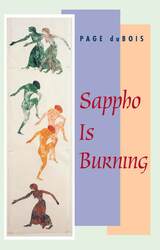
In Sappho is Burning, duBois reads Sappho as a disruptive figure at the very origin of our story of Western civilization. Sappho is beyond contemporary categories, inhabiting a space outside of reductively linear accounts of our common history. She is a woman, but also an aristocrat, a Greek, but one turned toward Asia, a poet who writes as a philosopher before philosophy, a writer who speaks of sexuality that can be identified neither with Michel Foucault's account of Greek sexuality, nor with many versions of contemporary lesbian sexuality. She is named as the tenth muse, yet the nine books of her poetry survive only in fragments. She disorients, troubles, undoes many certitudes in the history of poetry, the history of philosophy, the history of sexuality. DuBois argues that we need to read Sappho again.

Showalter, a highly regarded critic known for her provocative and strongly held opinions, has here established a compelling new Who's Who of women's thought. Certain to spark controversy, the omission of such feminist perennials as Gloria Steinem, Susan B. Anthony, Robin Morgan, Eleanor Roosevelt, and Virginia Woolf will surprise and shock the conventional wisdom.
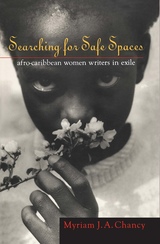
Understanding exile as flight from political persecution or types of oppression that single out women, Chancy concentrates on diasporic writers and filmmakers who depict the vulnerability of women to poverty and exploitation in their homelands and their search for safe refuge. These Afro-Caribbean feminists probe the complex issues of race, nationality, gender, sexuality, and class that limit women's lives. They portray the harsh conditions that all too commonly drive women into exile, depriving them of security and a sense of belonging in their adopted countries -- the United States, Canada, or England.
As they rework traditional literary forms, artists such as Joan Riley, Beryl Gilroy, M. Noubese Philip, Dionne Brand, Makeda Silvera, Audre Lorde, Rosa Guy, Michelle Cliff, and Mari Chauvet give voice to Åfro-Caribbean women's alienation and longing to return home. Whether their return is realized geographically or metaphorically, the poems, fiction, and film considered in this book speak boldly of self-definition and transformation.
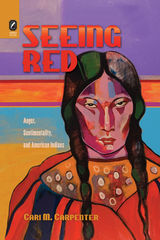

Seven American Women Writers of the Twentieth Century was first published in 1977. Minnesota Archive Editions uses digital technology to make long-unavailable books once again accessible, and are published unaltered from the original University of Minnesota Press editions.
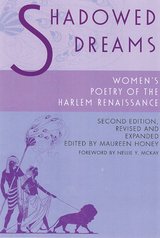
The first edition of Shadowed Dreams was a groundbreaking anthology that brought to light the contributions of women poets to the Harlem Renaissance. This revised and expanded version contains twice the number of poems found in the original, many of them never before reprinted, and adds eighteen new voices to the collection to once again strike new ground in African American literary history. Also new to this edition are nine period illustrations and updated biographical introductions for each poet.
Shadowed Dreams features new poems by Gwendolyn Bennett, Anita Scott Coleman, Mae Cowdery, Blanche Taylor Dickinson, Alice Dunbar-Nelson, Jessie Fauset, Angelina Weld Grimké, Gladys Casely Hayford (a k a Aquah Laluah), Virginia Houston, Georgia Douglas Johnson, Helene Johnson, Effie Lee Newsome, Esther Popel, and Anne Spencer, as well as writings from newly discovered poets Carrie Williams Clifford, Edythe Mae Gordon, Alvira Hazzard, Gertrude Parthenia McBrown, Beatrice Murphy, Lucia Mae Pitts, Grace Vera Postles, Ida Rowland, and Lucy Mae Turner, among others.
Covering the years 1918 through 1939 and ranging across the period’s major and minor journals, as well as its anthologies and collections, Shadowed Dreams provides a treasure trove of poetry from which to mine deeply buried jewels of black female visions in the early twentieth century.
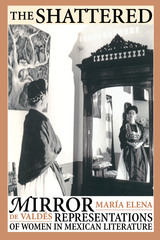
Popular images of women in Mexico—conveyed through literature and, more recently, film and television—were long restricted to either the stereotypically submissive wife and mother or the demonized fallen woman. But new representations of women and their roles in Mexican society have shattered the ideological mirrors that reflected these images. This book explores this major change in the literary representation of women in Mexico.
María Elena de Valdés enters into a selective and hard-hitting examination of literary representation in its social context and a contestatory engagement of both the literary text and its place in the social reality of Mexico. Some of the topics she considers are Carlos Fuentes and the subversion of the social codes for women; the poetic ties between Sor Juana Inés de la Cruz and Octavio Paz; questions of female identity in the writings of Rosario Castellanos, Luisa Josefina Hernández, María Luisa Puga, and Elena Poniatowska; the Chicana writing of Sandra Cisneros; and the postmodern celebration—without reprobation—of being a woman in Laura Esquivel's Like Water for Chocolate.
Outstanding Academic Title, CHOICE
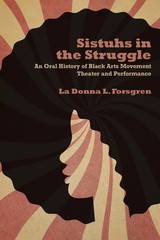
The first oral history to fully explore the contributions of black women intellectuals to the Black Arts Movement, Sistuhs in the Struggle reclaims a vital yet under-researched chapter in African American, women’s, and theater history. This groundbreaking study documents how black women theater artists and activists—many of whom worked behind the scenes as directors, designers, producers, stage managers, and artistic directors—disseminated the black aesthetic and emboldened their communities.
Drawing on nearly thirty original interviews with well-known artists such as Ntozake Shange and Sonia Sanchez as well as less-studied figures including distinguished lighting designer Shirley Prendergast, dancer and choreographer Halifu Osumare, and three-time Tony-nominated writer and composer Micki Grant, La Donna L. Forsgren centers black women’s cultural work as a crucial component of civil rights and black power activism. Sistuhs in the Struggle is an essential collection for theater scholars, historians, and students interested in learning how black women’s art and activism both advanced and critiqued the ethos of the Black Arts and Black Power movements.
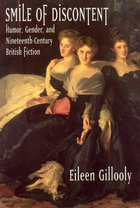
Gillooly shows how such humor became, for mostly female writers at the time, an unobtrusive and prudent means of expressing discontent with a culture that was ideologically committed to restricting female agency and identity. If the aggression and emotional distance of irony and satire mark them as "masculine," then for Gillooly, the passivity, indirection, and sympathy of the humor she discusses render it "feminine." She goes on to disclose how the humorous tactics employed by writers from Burney to Wharton persist in the work of Barbara Pym, Anita Brookner, and Penelope Fitzgerald.
The book won the Barbara Perkins and George Perkins Award given by the Society for the Study of Narrative Literature.
Snow on the Cane Fields was first published in 1995. Minnesota Archive Editions uses digital technology to make long-unavailable books once again accessible, and are published unaltered from the original University of Minnesota Press editions.
In a probing analysis of creole women's writing over the past century, Judith Raiskin explores the workings and influence of cultural and linguistic colonialism. Tracing the transnational and racial meanings of creole identity, Raiskin looks at four English-speaking writers from South Africa and the Caribbean: Olive Schreiner, Jean Rhys, Michelle Cliff, and Zoë Wicomb. She examines their work in light of the discourses of their times: nineteenth-century "race science" and imperialistic rhetoric, turn-of-the-century anti-Semitic sentiment and feminist pacifism, postcolonial theory, and apartheid legislation.
In their writing and in their multiple identities, these women highlight the gendered nature of race, citizenship, culture, and the language of literature. Raiskin shows how each writer expresses her particular ambivalences and divided loyalties, both enforcing and challenging the proprietary British perspective on colonial history, culture, and language. A new perspective on four writers and their uneasy places in colonial culture, Snow on the Cane Fields reveals the value of pursuing a feminist approach to questions of national, political, and racial identity.
Judith Raiskin is assistant professor of women's studies at the University of California, Santa Barbara.
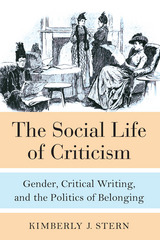
This engaging study begins by looking at the eighteenth century, when critical writing started to assume the institutional and generic structures we associate with it today, and examines a series of case studies that illuminate how women writers engaged with the forms of intellectual sociability that defined nineteenth-century criticism—including critical dialogue, the club, the salon, and the publishing firm. In doing so, it clarifies the fascinating rhetorical and political debates surrounding the figure of the female critic and charts how women writers worked both within and against professional communities. Ultimately, Stern contends that gender was a formative influence on critical practice from the very beginning, presenting the history of criticism as a history of gender politics.
While firmly grounded in literary studies, The Social Life of Criticism combines an attention to historical context with a deep investment in feminist scholarship, social theory, and print culture. The book promises to be of interest not only to professional academics and graduate students in nineteenth-century literature but also to scholars in a wide range of disciplines, including literature, intellectual history, cultural studies, gender theory, and sociology.
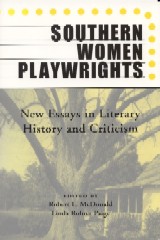
This timely collection addresses the neglected state of scholarship on southern women dramatists by bringing together the latest criticism on some of the most important playwrights of the 20th century.
Coeditors Robert McDonald and Linda Rohrer Paige attribute the neglect of southern women playwrights in scholarly criticism to "deep historical prejudices" against drama itself and against women artists in general, especially in the South. Their call for critical awareness is answered by the 15 essays they include in Southern Women Playwrights, considerations of the creative work of universally acclaimed playwrights such as Beth Henley, Marsha Norman, and Lillian Hellman (the so-called "Trinity") in addition to that of less-studied playwrights, including Zora Neale Hurston, Carson McCullers, Alice Childress, Naomi Wallace, Amparo Garcia, Paula Vogel, and Regina Porter.
This collection springs from a series of associated questions regarding the literary and theatrical heritage of the southern woman playwright, the unique ways in which southern women have approached the conventional modes of comedy and tragedy, and the ways in which the South, its types and stereotypes, its peculiarities, its traditions-both literary and cultural-figure in these women's plays. Especially relevant to these questions are essays on Lillian Hellman, who resisted the label "southern writer," and Carson McCullers, who never attempted to ignore her southernness.
This book begins by recovering little-known or unknown episodes in the history of southern drama and by examining the ways plays assumed importance in the lives of southern women in the early 20th century. It concludes with a look at one of the most vibrant, diverse theatre scenes outside New York today-Atlanta.
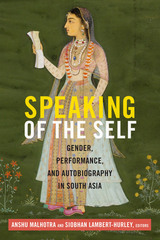
Contributors: Asiya Alam, Afshan Bokhari, Uma Chakravarti, Kathryn Hansen, Siobhan Lambert-Hurley, Anshu Malhotra, Ritu Menon, Shubhra Ray, Shweta Sachdeva Jha, Sylvia Vatuk
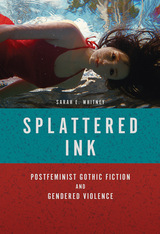
Sarah E. Whitney explores the genre's challenge to postfeminist assumptions of women's equality and empowerment. The authors she examines--Patricia Cornwell, Jodi Picoult, Susanna Moore, Sapphire, and Alice Sebold--construct narratives around socially invisible and physically broken protagonists who directly experience consequences of women's ongoing disempowerment. Their works ask readers to inhabit women's suffering and to face the uncomfortable, all-too-denied fact that today's women must navigate lives fraught with risk. Whitney's analysis places the authors within a female gothic tradition that has long given voice to women's fears of their own powerlessness. But she also reveals the paradox that allows the genre to powerfully critique postfeminism's often sunshiney outlook while uneasily coexisting within the same universe.
READERS
Browse our collection.
PUBLISHERS
See BiblioVault's publisher services.
STUDENT SERVICES
Files for college accessibility offices.
RECENTLY PUBLISHED



UChicago Accessibility Resources
home | accessibility | search | about | contact us
BiblioVault ® 2001 - 2026
The University of Chicago Press