
 A SCHOLARLY BOOK REPOSITORY
In counterterrorism circles, the standard response to questions about the possibility of future attacks is the terse one-liner: “Not if, but when.” This mantra supposedly conveys a realistic approach to the problem, but, as Joseba Zulaika argues in Terrorism, it functions as a self-fulfilling prophecy. By distorting reality to fit their own worldview, the architects of the War on Terror prompt the behavior they seek to prevent—a twisted logic that has already played out horrifically in Iraq. In short, Zulaika contends, counterterrorism has become pivotal in promoting terrorism.
Exploring the blind spots of counterterrorist doctrine, Zulaika takes readers on a remarkable intellectual journey. He contrasts the psychological insight of Truman Capote’s In Cold Blood with The 9/11 Commission Report, plumbs the mindset of terrorists in works by Orianna Fallaci and Jean Genet, maps the continuities between the cold war and the fight against terrorism, and analyzes the case of a Basque terrorist who tried to return to civilian life. Zulaika’s argument is powerful, inventive, and rich with insights and ideas that provide a new and sophisticated perspective on the War on Terror.

An award-winning historian and journalist tells the very human story of apartheid’s afterlife, tracing the fates of South African insurgents, collaborators, and the security police through the tale of the clandestine photo album used to target apartheid’s enemies.
From the 1960s until the early 1990s, the South African security police and counterinsurgency units collected over 7,000 photographs of apartheid’s enemies. The political rogue’s gallery was known as the “terrorist album,” copies of which were distributed covertly to police stations throughout the country. Many who appeared in the album were targeted for surveillance. Sometimes the security police tried to turn them; sometimes the goal was elimination.
All of the albums were ordered destroyed when apartheid’s violent collapse began. But three copies survived the memory purge. With full access to one of these surviving albums, award-winning South African historian and journalist Jacob Dlamini investigates the story behind these images: their origins, how they were used, and the lives they changed. Extensive interviews with former targets and their family members testify to the brutal and often careless work of the police. Although the police certainly hunted down resisters, the terrorist album also contains mug shots of bystanders and even regime supporters. Their inclusion is a stark reminder that apartheid’s guardians were not the efficient, if morally compromised, law enforcers of legend but rather blundering agents of racial panic.
With particular attentiveness to the afterlife of apartheid, Dlamini uncovers the stories of former insurgents disenchanted with today’s South Africa, former collaborators seeking forgiveness, and former security police reinventing themselves as South Africa’s newest export: “security consultants” serving as mercenaries for Western nations and multinational corporations. The Terrorist Album is a brilliant evocation of apartheid’s tragic caprice, ultimate failure, and grim legacy.
Ten years on, Jasbir K. Puar’s pathbreaking Terrorist Assemblages remains one of the most influential queer theory texts and continues to reverberate across multiple political landscapes, activist projects, and scholarly pursuits. Puar argues that configurations of sexuality, race, gender, nation, class, and ethnicity are realigning in relation to contemporary forces of securitization, counterterrorism, and nationalism. She examines how liberal politics incorporate certain queer subjects into the fold of the nation-state, shifting queers from their construction as figures of death to subjects tied to ideas of life and productivity. This tenuous inclusion of some queer subjects depends, however, on the production of populations of Orientalized terrorist bodies. Heteronormative ideologies that the U.S. nation-state has long relied on are now accompanied by what Puar calls homonationalism—a fusing of homosexuality to U.S. pro-war, pro-imperialist agendas.
As a concept and tool of biopolitical management, homonationalism is here to stay. Puar’s incisive analyses of feminist and queer responses to the Abu Ghraib photographs, the decriminalization of sodomy in the wake of the Patriot Act, and the profiling of Sikh Americans and South Asian diasporic queers are not instances of a particular historical moment; rather, they are reflective of the dynamics saturating power, sexuality, race, and politics today.
This Tenth Anniversary Expanded Edition features a new foreword by Tavia Nyong’o and a postscript by Puar entitled “Homonationalism in Trump Times.” Nyong’o and Puar recontextualize the book in light of the current political moment while reposing its original questions to illuminate how Puar’s interventions are even more vital and necessary than ever.
Puar combines transnational feminist and queer theory, Foucauldian biopolitics, Deleuzian philosophy, and technoscience criticism, and draws from an extraordinary range of sources, including governmental texts, legal decisions, films, television, ethnographic data, queer media, and activist organizing materials and manifestos. Looking at various cultural events and phenomena, she highlights troublesome links between terrorism and sexuality: in feminist and queer responses to the Abu Ghraib photographs, in the triumphal responses to the Supreme Court’s Lawrence decision repealing anti-sodomy laws, in the measures Sikh Americans and South Asian diasporic queers take to avoid being profiled as terrorists, and in what Puar argues is a growing Islamophobia within global queer organizing.

The missing act in the late nineteenth-century Russian revolutionary drama is played in this pioneering book. Norman Naimark reinterprets the decade of the 1880s as one full of radical underground circles, grouping and regrouping in kaleidoscopic fashion. Along with later celebrated sects, they laid the foundation of Russian Marxism. Naimark is the first Western historian to research systematically the criminal records of the old Ministry of Justice in the Soviet Union. The political cases and trials of some 5,000 anti-czarists form the backbone of the study. The author patiently sorts out these defendants and relates their many histories, especially those of three groups. In broad outline, they were the narodovol’tsy, who believed in terrorism and state power to introduce socialism; the social democrats, who tried to prepare urban workers for a future role in parliamentary institutions; and the populists, who believed in raising people’s consciousness for change. It was the narodovol’tsy, however, who dominated all the revolutionary movements by hewing closest to the radical spirit of the age, that of realizing the “people’s will” by directly attacking to government.
Naimark has written a master guidebook to hitherto uncharted revolutionary territory and a valuable corrective to earlier histories in several languages. In the tradition of high scholarship pioneered by Franco Venturi in his now classic work Roots of Revolution, which covered an earlier period, Terrorists and Social Democrats will lay claim to a place on the small shelf of books illuminating Russian revolutionary politics.
Immigration politics has been significantly altered by the advent of America’s war on terror and the proliferation of security measures. In her cogent study, Terrorizing Latina/o Immigrants, Anna Sampaio examines how these processes are racialized and gendered and how they impose inequitable burdens on Latina/o immigrants. She interrogates the rise of securitization, restrictive legislation, and the return of large-scale immigration raids and describes how these re-articulate and re-inscribe forms of racial and gender hierarchy.
Terrorizing Latina/o Immigrants demonstrates how the ascendance of America as a security state serves as a template to scrutinize, harass, and encumber immigrants while also reconfiguring citizenship. Sampaio uses intersectional analysis coupled with theoretical and empirical approaches to develop a critical framework for analyzing current immigration politics.
Sampaio provides a sustained and systematic examination of policy and enforcement shifts impacting Latinas/os. Her book concludes with an examination of immigration reform under the Obama administration, contrasting the promise of hope and change with the reality of increased detentions, deportations, and continued marginalization.
Terrorizing Women brings together essays by feminist and human rights activists, attorneys, and scholars from Latin America and the United States, as well as testimonios by relatives of women who were disappeared or murdered. In addition to investigating egregious violations of women’s human rights, the contributors consider feminicide in relation to neoliberal economic policies, the violent legacies of military regimes, and the sexual fetishization of women’s bodies. They suggest strategies for confronting feminicide; propose legal, political, and social routes for redressing injustices; and track alternative remedies generated by the communities affected by gender-based violence. In a photo essay portraying the justice movement in Chihuahua, relatives of disappeared and murdered women bear witness to feminicide and demand accountability.
Contributors: Pascha Bueno-Hansen, Adriana Carmona López, Ana Carcedo Cabañas, Jennifer Casey, Lucha Castro Rodríguez , Angélica Cházaro, Rebecca Coplan, Héctor Domínguez-Ruvalcaba, Marta Fontenla, Alma Gomez Caballero, Christina Iturralde, Marcela Lagarde y de los Ríos, Julia Estela Monárrez Fragoso, Hilda Morales Trujillo, Mercedes Olivera, Patricia Ravelo Blancas, Katherine Ruhl, Montserrat Sagot, Rita Laura Segato, Alicia Schmidt Camacho, William Paul Simmons, Deborah M. Weissman, Melissa W. Wright
Iris Murdoch once suggested that to understand any philosopher's work we must ask what he or she is frightened of. To understand any psychoanalyst's work--both as a clinician and as a writer--we should ask what he or she loves, because psychoanalysis is about the unacceptable and about love, two things that we may prefer to keep apart, but that Freud found to be inextricable. If it is possible to talk about psychoanalysis as a scandal, without spuriously glamorizing it, then one way of doing it is simply to say that Freud discovered that love was compatible, though often furtively, with all that it was meant to exclude. There are, in other words--and most of literature is made up of these words--no experts on love. And love, whatever else it is, is terror.
In a manner characteristically engaging and challenging, charming and maddening, Adam Phillips teases out the complicity between desire and the forbidden, longing and dread. His book is a chronicle of that all-too-human terror, and of how expertise, in the form of psychoanalysis, addresses our fears--in essence, turns our terror into meaning.
It is terror, of course, that traditionally drives us into the arms of the experts. Phillips takes up those topics about which psychoanalysis claims expertise--childhood, sexuality, love, development, dreams, art, the unconscious, unhappiness--and explores what Freud's description of the unconscious does to the idea of expertise, in life and in psychoanalysis itself. If we are not, as Freud's ideas tell us, masters of our own houses, then what kind of claims can we make for ourselves? In what senses can we know what we are doing? These questions, so central to the human condition and to the state of psychoanalysis, resonate through this book as Phillips considers our notions of competence, of a professional self, of expertise in every realm of life from parenting to psychoanalysis. Terrors and Experts testifies to what makes psychoanalysis interesting, to that interest in psychoanalysis--which teaches us the meaning of our ignorance--that makes the terrors of life more bearable, even valuable.

After defeating a segregationist campaign in 1960 to win the governorship, Sanford used his years in office to boost public education and advance race relations. A decade later, at the height of tumult on American campuses, Sanford assumed the presidency of Duke University and led it to its position as one of the top universities in the nation. During his more than fifty years as a public servant he was associated with presidents John F. Kennedy, Lyndon B. Johnson, Richard Nixon, and Jimmy Carter. Sanford was a presidential candidate himself in 1972 and 1976, and he won election to the United States Senate in 1986 where his international commission produced an economic recovery plan for Central America. As one of the last New Deal Democrats in the Senate, he remained passionate about the opportunity for leaders to use government to improve people’s lives.
Terry Sanford draws on Sanford’s considerable private and public archive as well as on the recollections of Sanford himself and his family, colleagues, and friends. This biography offers a unique perspective on North Carolina life, politics, political personalities, and the shifting public allegiances of the second half of the twentieth century that transformed life both in North Carolina and throughout the American South.
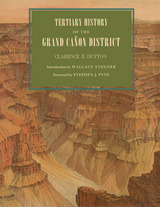
Originally published in 1882, Clarence Dutton’s Tertiary History of the Grand Cañon District has become one of the definitive books on the Grand Canyon. Commissioned as a study of the region’s geology and issued by the fledgling U.S. Geological Survey, it is as much admired today for its literary as its scientific merits. With its beautiful illustrations by Thomas Moran and William Henry Holmes, it is a seminal work on the Canyon that has never been surpassed for its eloquence and authority.
This new edition of Dutton’s magnum opus makes that work available once again. Visitors to the Canyon will gain a new appreciation of its majesty as Dutton takes readers on several excursions among its castellated and cathedral-like peaks and ridges. Along the way, he explains the peculiar characteristics of different rocks, the water-sculpturing process, volcanic cones and outflows, the extent of the river’s erosion, and other geological features.
Dutton’s Tertiary History remains arguably the most evocative and compelling geological writing ever done on the Grand Canyon region. As Stephen J. Pyne observes in his foreword, Dutton “recast a rocky peninsula into geo-poetry, reshaped an amorphous panorama of Time into narrative History, and transformed an American scene into a universal symbol.” No one who has thrilled to the majesty of the Grand Canyon will fail to be moved by this timeless work.

In clear, unsensational style, Willem Middelkoop and Rembrandt Koppelaar offer a layman's tour of the energy landscape, now and to come. They show how rapid technological advances in batteries and solar technologies are already driving large-scale transformations in power supply, while economic and geopolitical changes, combined with a growing political awareness that there are alternatives to fossil fuels will combine in the coming years to bring an energy revolution ever closer. Within in our lifetimes, the authors argue, we will see changes that will reshape economics, the balance of political power, and even the most mundane aspects of our daily lives.
Determinedly forward-looking and optimistic, though never straying from hard facts, The Tesla Revolution paints a striking picture of our global energy future.
World renowned economist and president of Michigan State University, Walter Adams first published The Test in 1971, a year after his tenure as university president ended. Adams recounts the tumultuous nine months of his office: as the first university president to follow the legendary John Hannah, Adams inherited the unease and resentments that had been quietly swelling under seemingly calm administrative waters.
These resentments, coupled with the increased social awareness generated by sixties activism combined in an explosive protest during the fall of 1969. With gripping honesty and clarity, The Test not only chronicles the events, but offers an indictment of those institutional structures that ignored very real social concerns in favor of esoteric academic pursuits. By examining the perspectives of all the participants, Adams presents new directions for the growth and development of university communities. Both a thoughtful analysis and eyewitness account, The Test presents invaluable documentary evidence of one of the most dynamic periods in American history.




test book
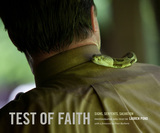
Who are the serpent handlers? What motivates them to continue their potentially lethal practices through the generations? Documentary photographer Lauren Pond traveled to West Virginia in search of answers to these questions. There she met Pastor Randy “Mack” Wolford, one of the best-known Signs Following preachers in the region, and spent the following year documenting Mack and his family. The course of her work changed dramatically in May 2012, when Mack, then forty-four years old, suffered a fatal rattlesnake bite during a worship service she attended. Pond photographed the events that followed and has continued her relationship with Mack’s family.
Test of Faith provides a deeply nuanced, personal look at serpent handling that not only invites greater understanding of a religious practice that has long faced derision and criticism; it also serves as a meditation on the photographic process, its ethics, and its capacity to generate empathy.
Published by Duke University Press and the Center for Documentary Studies at Duke University

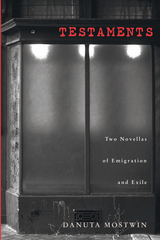
Translated from Polish by Marta Erdman and Nina Dyke.
Polish émigrés have written poignantly about the pain of exile in letters, diaries, and essays; others, more recently, have recreated Polish-American communities in works of fiction. But it is Danuta Mostwin’s fiction, until now unavailable in English translation, that bridges the divide between Poland and America, exile and emigration.
Mostwin and her husband survived the ravages of World War II, traveled to Britain, and then emigrated to the United States. Mostwin devoted her scholarly career to the study of immigrants trapped between cultural worlds. Winner of international awards for her fiction, Danuta Mostwin here offers two novellas, translated by the late Marta Erdman, which are the first of her works published in English in the United States.
Deeply melancholic and moving in its unsentimental depiction of ordinary people trying to make sense of their uprooted lives, Testaments presents two powerful vignettes of life in immigrant America, The Last Will of Blaise Twardowski and Jocasta. This timely publication provides an introduction to Mostwin’s work that will ensure that she is recognized as the creator of one of the most nuanced and deeply moving pictures of emigration and exile in Polish-American literature.


Ancient Rome’s original archconservative.
M. Porcius Cato (234–149 BC), one of the best-known figures of the middle Roman Republic, remains legendary for his political and military career, especially his staunch opposition to Carthage; his modest way of life; his integrity of character and austere morality; his literary works, composed in a style at once sophisticated and down-to-earth; his pithy sayings; and his drive to define and to champion Roman national character and traditions in the face of challenges from Greek culture. Cato’s legend derived to no small degree from his own distinctive and compelling self-presentation, which established a model later developed and elaborated by Cicero and by subsequent literary and historical authors for centuries to come.
This volume and its companion (LCL 552) join the Loeb edition of Cato’s only extant work, On Agriculture (LCL 283), by supplying all testimonia about, and all fragments by or attributed to Cato. Highlights are Origines, the first historical work attested in Latin, a history of Rome from its founding to the onset of the first Punic War, as well as the origins of major Italian cities; his orations, regarded as the beginning of Roman oratory; To His Son Marcus, which inaugurated a Roman tradition of didactic pieces addressed by fathers to their sons; Military Matters; the Poem on Morals; letters; commentaries on civil law; and memorable sayings.
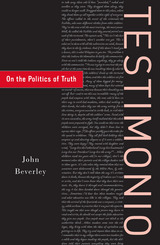
A revealing perspective on the controversial literature of witnessing
These four germinal essays by John Beverley sparked the widespread discussion and debate surrounding testimonio—the socially and politically charged Latin American narrative of witnessing—that culminated with David Stoll’s highly publicized attack on Rigoberta Menchú’s celebrated testimonial text. Challenging Hardt and Negri’s Empire, Beverley’s extensive new introduction examines the broader historical, political, and ethical issues that this literature raises, tracing the development of testimonio from its emergence in the Cold War era to the rise of a globalized economy and U.S. political hegemony.
Informed by postcolonial studies and the current debate over multiculturalism and identity politics, Testimonio reaches across disciplinary boundaries to show how this particular literature at once represents and enacts new forms of agency on the part of previously repressed social subjects, as well as its potential as a new form of “alliance politics” between those subjects and artists, scientists, teachers, and intellectuals in a variety of local, national, and international contexts.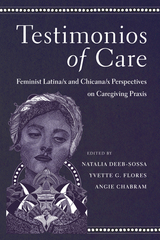
The book opens with an introductory chapter by the three co-editors, and then is divided into three sections exploring the caregiver voice, community caregiving, and reflections that outline a Caregiver Bill of Rights and present a call to action. Throughout, contributors discuss kinship care, including formal and informal adoptions, community care, caregiving in professional health contexts, and the implicit caregiving inherent in teaching BIPOC students, which largely falls upon faculty of color.
Testimonios of Care gives voice to those who often are voiceless in histories of caregiving and is guided by Chicana and Latina feminist principles, which include solidarity between women of color, empathy, willingness to challenge the patriarchal medical health-care systems, questioning traditional gender roles and idealization of familia, and caring for self while caring for loved ones and community.
Contributors
yvonne hurtado allen
Angie Chabram
Natalia Deeb-Sossa
Yvette G. Flores
Inés Hernández-Ávila
ire’ne lara silva
Josie Méndez-Negrete
Maria R. Palacios
Hector Rivera-Lopez
Maria Angelina Soldatenko
Anita Tijerina Revilla
Mónica Torreiro-Casal
Enriqueta Valdez-Curiel
A deeply involving, compassionate, occasionally confrontational blend of practical hands-on experience and dialogic theory, emerging from the author's decade-long work in Europe and Chicago with survivors of the Balkan wars, this book is committed to the proposition that efforts to use testimony to address the consequences of political violence can be strengthened--though by no means guaranteed--if they are based on a fuller acknowledgment of the personal and ethical elements embodied in the narrative essence of testimony. These elements are what Testimony after Catastrophe seeks to reveal.
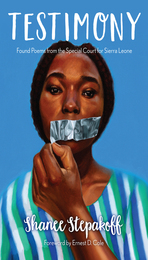
Sierra Leone’s devastating civil war barely caught the attention of Western media, but it raged on for over a decade, bringing misery to millions of people in West Africa from 1991 to 2002. The atrocities committed in this war and the accounts of its survivors were duly recorded by international organizations, but they run the risk of being consigned to dusty historical archives.
Derived from public testimonies at a UN-backed war crimes tribunal in Freetown, this remarkable poetry collection aims to breathe new life into the records of Sierra Leone’s civil war, delicately extracting heartbreaking human stories from the morass of legal jargon. By rendering selected trial transcripts in poetic form, Shanee Stepakoff finds a novel way to communicate not only the suffering of Sierra Leone’s people, but also their courage, dignity, and resilience. Her use of innovative literary techniques helps to ensure that the voices of survivors are not forgotten, but rather heard across the world.
This volume also includes an introduction that explores how the genre of “found poetry” can serve as a uniquely powerful means through which writers may bear witness to atrocity. This book’s unforgettable excavation and shaping of survivor testimonies opens new possibilities for speaking about the unspeakable.
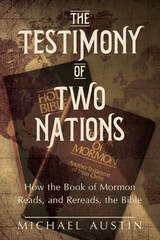
Like the Hebrew Bible and the Christian Bible, the Book of Mormon uses narratives to develop ideas and present instruction. Michael Austin reveals how the Book of Mormon connects itself to narratives in the Christian Bible with many of the same tools that the New Testament used to connect itself to the Hebrew Bible to create the Christian Bible. As Austin shows, the canonical context for interpreting the Book of Mormon includes the Christian Bible, the Book of Mormon itself, and other writings and revelations that hold scriptural status in most Restoration denominations. Austin pays particular attention to how the Book of Mormon connects itself to the Christian Bible both to form a new canon and to use the canonical relationship to reframe and reinterpret biblical narratives. This canonical context provides an important and fruitful method for interpreting the Book of Mormon.
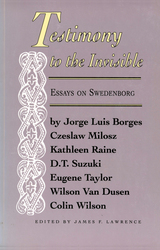
This collection of essays highlights the influence of Swedish visionary Emanuel Swedenborg (1688-1772) on art, spirituality, and culture. Opening with an essay by Spanish-language writer and metaphysician Jorge Luis Borges, from which the collection draws its name, the volume includes a description of Swedenborg's influence on Fyodor Dosteovsky by Czleslaw Mloscz; a look at Swedenborg from a mystical perspective from Wilson Van Dusen; the transcendentalist connection with Ralph Waldo Emerson in an essay by Eugene Taylor; and Buddhist scholar D. T. Suzuki's describes similarities between Swedenborg's philosophy and Buddhism. Essays by Kathleen Raine on Swedenborg's poetic influence and Colin Wilson on the psychological perspective on Swedenborg's visions round out the collection.

Within forty-eight hours after birth, the heel of every baby in the United States has been pricked and the blood sent for compulsory screening to detect or rule out a large number of disorders. Newborn screening is expanding rapidly, fueled by the prospect of saving lives. Yet many lives are also changed by it in ways not yet recognized.
Testing Baby is the first book to draw on parents’ experiences with newborn screening in order to examine its far-reaching sociological consequences. Rachel Grob’s cautionary tale also explores the powerful ways that parents’ narratives have shaped this emotionally charged policy arena. Newborn screening occurs almost always without parents’ consent and often without their knowledge or understanding, yet it has the power to alter such things as family dynamics at the household level, the context of parenting, the way we manage disease identity, and how parents’ interests are understood and solicited in policy debates.
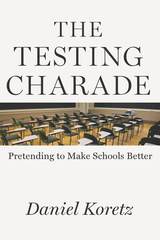
For decades we’ve been studying, experimenting with, and wrangling over different approaches to improving public education, and there’s still little consensus on what works, and what to do. The one thing people seem to agree on, however, is that schools need to be held accountable—we need to know whether what they’re doing is actually working. But what does that mean in practice?
High-stakes tests. Lots of them. And that has become a major problem. Daniel Koretz, one of the nation’s foremost experts on educational testing, argues in The Testing Charade that the whole idea of test-based accountability has failed—it has increasingly become an end in itself, harming students and corrupting the very ideals of teaching. In this powerful polemic, built on unimpeachable evidence and rooted in decades of experience with educational testing, Koretz calls out high-stakes testing as a sham, a false idol that is ripe for manipulation and shows little evidence of leading to educational improvement. Rather than setting up incentives to divert instructional time to pointless test prep, he argues, we need to measure what matters, and measure it in multiple ways—not just via standardized tests.
Right now, we’re lying to ourselves about whether our children are learning. And the longer we accept that lie, the more damage we do. It’s time to end our blind reliance on high-stakes tests. With The Testing Charade, Daniel Koretz insists that we face the facts and change course, and he gives us a blueprint for doing better.
Despite the idealism represented by the No Child Left Behind law’s mandate for accountability in education, deaf students historically and on average have performed far below grade level on standardized tests. To resolve this contradiction in deaf education, this collection presents a spectrum of perspectives from a diverse corps of education experts to suggest a constructive synthesis of worthy ideals, hard realities, and pragmatic solutions. Contributors to this study include volume editors Robert C. Johnson and Ross E. Mitchell, Ed Bosso, Michael Bello, Betsy J. Case, Patrick Costello, Stephanie W. Cawthon, Joseph E. Fischgrund, Courtney Foster, Christopher Johnstone, Michael Jones, Jana Lollis, Pat Moore, Barbara Raimondo, Suzanne Recane, Richard C. Steffan, Jr., Sandra J. Thompson, Martha L. Thurlow, and Elizabeth Towles-Reeves.
These noted educators and researchers employ experiences from Massachusetts, Delaware, Maryland, North Carolina, Illinois and California to support their findings about the dilemma facing deaf students and their teachers. They assess the intent and flexibility of federal law; achievement data regarding deaf students; potential accommodations and universal design to make tests more accessible; possible alternatives for deaf student not ready for conventional assessments; accounts of varying degrees of cooperation and conflict between schools and state education departments; and the day-to-day efforts of teachers and school administrators to help deaf students measure up to the new standards. By presenting these wide-ranging insights together, Testing Deaf Students in an Age of Accountability provides a unique opportunity to create genuine means to educate deaf students for the only test that matters, that of life.
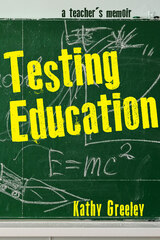
Since the 2002 implementation of No Child Left Behind, the American public education system has been fundamentally changed. Excessive testing, standardized curriculums, destructive demands on children, corporate-style evaluations, and top-down mandates have become the norm. In response, record numbers of demoralized educators have quit, and millions of students have been left educationally impoverished. This troubling transformation has been exhaustively critiqued by scholars and commentators. Yet one crucial voice has been missing, until now.
In Testing Education, Kathy Greeley recounts the impact of education reform from a teacher’s point of view. Based on a teaching career spanning nearly forty years, Greeley details how schools went from learning communities infused with excitement, intellectual stimulation, and joy to sterile spaces of stress, intimidation, and fear. In this ultimately hopeful memoir, Greeley asks us to learn from the past to reimagine the future of public education.

In today’s world, responsible biocitizenship has become a new way of belonging in society. Individuals are expected to make “responsible” medical choices, including the decision to be screened for genetic disease. Paradoxically, we have even come to see ourselves as having the right to be responsible vis-à-vis the proactive mitigation of genetic risk. At the same time, the concept of genetic disease has become a new and powerful way of defining the boundaries between human groups. Tay-Sachs, an autosomal recessive disorder, is a case in point—with origins in the period of Eastern European Jewish immigration to the United States and United Kingdom that spanned the late nineteenth and early twentieth centuries, it has a long and fraught history as a marker of Jewish racial difference.
In Testing Fate, Shelley Z. Reuter asks: Can the biocitizen, especially one historically defined as a racialized and pathologized Other, be said to be exercising authentic, free choice in deciding whether to undertake genetic screening? Drawing on a range of historical and contemporary examples—doctors’ medical reports of Tay-Sachs since the first case was documented in 1881, the medical field’s construction of Tay-Sachs as a disease of Jewish immigrants, YouTube videos of children with Tay-Sachs that frame the disease as tragic disability avoidable through a simple genetic test, and medical malpractice suits since the test for the disease became available—Reuter shows that true agency in genetic decision-making can be exercised only from a place of cultural inclusion. Choice in this context is in fact a kind of unfreedom—a moral duty to act that is not really agency at all.

In this book Ray Fair expounds powerful techniques for estimating and analyzing macroeconometric models. He takes advantage of the remarkable decrease in computational costs that has occurred since the early 1980s by implementing such sophisticated techniques as stochastic simulation. Testing Macroeconometric Models also incorporates the assumption of rational expectations in the estimation, solution, and testing of the models. And it presents the latest versions of Fair's models of the economies of the United States and other countries.
After estimating and testing the U.S. model, Fair analyzes its properties, including those relevant to economic policymakers: the optimal monetary policy instrument, the effect of a government spending reduction on the government deficit, whether monetary policy is becoming less effective over time, and the sensitivity of policy effects to the assumption of rational expectations.
Ray Fair has conducted research on structural macroeconometric models for more than twenty years. With interest increasing in the area, this book will be an essential reference for macroeconomists.
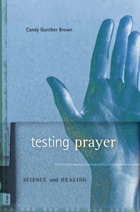
When sickness strikes, people around the world pray for healing. Many of the faithful claim that prayer has cured them of blindness, deafness, and metastasized cancers, and some believe they have been resurrected from the dead. Can, and should, science test such claims? A number of scientists say no, concerned that empirical studies of prayer will be misused to advance religious agendas. And some religious practitioners agree with this restraint, worrying that scientific testing could undermine faith.
In Candy Gunther Brown’s view, science cannot prove prayer’s healing power, but what scientists can and should do is study prayer’s measurable effects on health. If prayer produces benefits, even indirectly (and findings suggest that it does), then more careful attention to prayer practices could impact global health, particularly in places without access to conventional medicine.
Drawing on data from Pentecostal and Charismatic Christians, Brown reverses a number of stereotypes about believers in faith-healing. Among them is the idea that poorer, less educated people are more likely to believe in the healing power of prayer and therefore less likely to see doctors. Brown finds instead that people across socioeconomic backgrounds use prayer alongside conventional medicine rather than as a substitute. Dissecting medical records from before and after prayer, surveys of prayer recipients, prospective clinical trials, and multiyear follow-up observations and interviews, she shows that the widespread perception of prayer’s healing power has demonstrable social effects, and that in some cases those effects produce improvements in health that can be scientifically verified.

Testing Scientific Theories was first published in 1984. Minnesota Archive Editions uses digital technology to make long-unavailable books once again accessible, and are published unaltered from the original University of Minnesota Press editions.
Since much of a scientist's work consists of constructing arguments to show how experiments and observation bear on a particular theory, the methodologies of theory testing and their philosophical underpinnings are of vital concern to philosophers of science. Confirmation of scientific theories is the topic of Clark Glymour's important book Theory and Evidence,published in 1980. His negative thesis is that the two most widely discussed accounts of the methodology of theory testing - hypothetico-deductivism and Bayesianism - are flawed. The issues Glymour raises and his alternative "bootstrapping" method provided the focus for a conference sponsored by the Minnesota Center for Philosophy of Science and for this book. As editor John Earman says in his preface, the papers presented in Testing Scientific Theories germinate so many new ideas that philosophers of science will reap the harvest for years to come.
Topics covered include a discussion of Glymour's bootstrapping theory of confirmation, the Bayesian perspective and the problems of old evidence, evidence and explanation, historical case studies, alternative views on testing theories, and testing particular theories, including psychoanalytic hypotheses and hypotheses about the completeness of the fossil record.
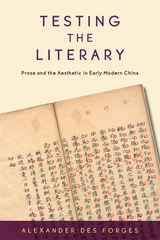
The civil service examination essay known as shiwen (modern or contemporary prose) or bagu wen (eight-legged essay) for its complex structure was the most widely read and written literary genre in early modern China (1450–1850). As the primary mode of expression in which educated individuals were schooled, shiwen epitomized the literary enterprise even beyond the walls of the examination compound. But shiwen suffered condemnation in the shift in discourse on literary writing that followed the fall of the Ming dynasty, and were thoroughly rejected in the May Fourth iconoclasm of the early twentieth century.
Challenging conventional disregard for the genre, Alexander Des Forges reads the examination essay from a literary perspective, showing how shiwen redefined prose aesthetics and transformed the work of writing. A new approach to subjectivity took shape: the question “who is speaking?” resonated through the essays’ involuted prose style, foregrounding issues of agency and control. At the same time, the anonymity of the bureaucratic evaluation process highlighted originality as a literary value. Finally, an emphasis on questions of form marked the aesthetic as a key arena for contestation of authority as candidates, examiners, and critics joined to form a dominant social class of literary producers.
Since the end of World War II, runaway fears of Soviet imperialism, global terrorism, and anarchy have tended to drive American foreign policy toward an imperial agenda. At the same time, uncurbed appetites have wasted the environment and driven the country’s market economy into the ditch. How can we best sustain our identity as a people and resist the distortions of our current anxieties and appetites?
Ethicist William F. May draws on America’s religious and political history and examines two concepts at play in the founding of the country—contractual and covenantal. He contends that the biblical idea of a covenant offers a more promising way than the language of contract, grounded in self-interest alone, to contain our runaway anxieties and appetites. A covenantal sensibility affirms, “We the people (not simply, We the individuals, or We the interest groups) of the United States.” It presupposes a history of mutual giving and receiving and of bearing with one another that undergirds all the traffic in buying and selling, arguing and negotiating, that obtain in the rough terrain of politics. May closes with an account of the covenantal agenda ahead, and concludes with the vexing issue of immigrants and undocumented workers that has singularly tested the covenant of this immigrant nation.
Written tests to evaluate students were a radical and controversial innovation when American educators began adopting them in the 1800s. Testing quickly became a key factor in the political battles during this period that gave birth to America's modern public school system. William J. Reese offers a richly detailed history of an educational revolution that has so far been only partially told.
Single-classroom schools were the norm throughout the United States at the turn of the nineteenth century. Pupils demonstrated their knowledge by rote recitation of lessons and were often assessed according to criteria of behavior and discipline having little to do with academics. Convinced of the inadequacy of this system, the reformer Horace Mann and allies on the Boston School Committee crafted America's first major written exam and administered it as a surprise in local schools in 1845. The embarrassingly poor results became front-page news and led to the first serious consideration of tests as a useful pedagogic tool and objective measure of student achievement.
A generation after Mann's experiment, testing had become widespread. Despite critics' ongoing claims that exams narrowed the curriculum, ruined children's health, and turned teachers into automatons, once tests took root in American schools their legitimacy was never seriously challenged. Testing Wars in the Public Schools puts contemporary battles over scholastic standards and benchmarks into perspective by showcasing the historic successes and limitations of the pencil-and-paper exam.
With all units enlarged or significantly modified, the new and improved edition of Testing Your Grammar features reworked grammatical explanations and more example sentences so grammar points are easier to understand. Other features of the new edition:
- Explanations have been added to the answer key.
- A review test is found at the end of every two units.
- At the end of the book are four examinations that can be used for either pre-testing or post-testing.
An Independent Publisher Book Awards Gold Medal Winner
A Progressive Book of the Year
A TechCrunch Favorite Read of the Year
“Deeply researched and thoughtful.”
—Nature
“An extended exercise in myth busting.”
—Outside
“A critique of both popular and scientific understandings of the hormone, and how they have been used to explain, or even defend, inequalities of power.”
—The Observer
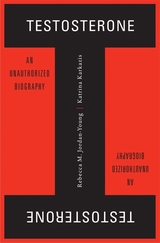
Testosterone is a familiar villain, a ready culprit for everything from stock market crashes to the overrepresentation of men in prisons. But your testosterone level doesn’t actually predict your appetite for risk, sex drive, or athletic prowess. It isn’t the biological essence of manliness—in fact, it isn’t even a male sex hormone. So what is it, and how did we come to endow it with such superhuman powers?
T’s story begins when scientists first went looking for the chemical essence of masculinity. Over time, it provided a handy rationale for countless behaviors—from the boorish to the enviable. Testosterone focuses on what T does in six domains: reproduction, aggression, risk-taking, power, sports, and parenting, addressing heated debates like whether high-testosterone athletes have a natural advantage as well as disagreements over what it means to be a man or woman.
“This subtle, important book forces rethinking not just about one particular hormone but about the way the scientific process is embedded in social context.”
—Robert M. Sapolsky, author of Behave
“A beautifully written and important book. The authors present strong and persuasive arguments that demythologize and defetishize T as a molecule containing quasi-magical properties, or as exclusively related to masculinity and males.”
—Los Angeles Review of Books
“Provides fruitful ground for understanding what it means to be human, not as isolated physical bodies but as dynamic social beings.”
—Science
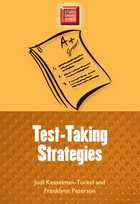
Test taking is a skill apart from learning course material, a skill every student must acquire in order to survive. Test-Taking Strategies is the book for anyone who has ever dreaded an exam.
Strategies for taking every kind of test are dealt with—objective tests (multiple choice, true/false, matching), essay tests, and oral exams. The authors also offer help for handling anxiety, explaining relaxation and desensitization techniques that help students control nervousness and keep it from detracting from performance. There are tips for managing time during the test, knowing when to guess, and for pulling answers out of your memory even when the question drew a blank at first glance.
Essay tests and oral exams are particularly gruesome for most students, and until now there has been very little advice for handling such tests. Test-Taking Strategies includes plenty of advice for developing ideas while under pressure.
Classic astrology.
The Tetrabiblos of the famous astronomer and geographer Claudius Ptolemaeus (ca. AD 100–178) of Egypt consists of four books, the title given in some manuscripts meaning “Mathematical Treatise in Four Books,” in others “The Prognostics addressed to Syrus.” The subject is astrology, which in Ptolemy’s time as down to the Renaissance was fused as a respectable science with astronomy. Translations and commentaries are few, and only three Greek texts had been printed (all in the 16th century) before the present one and the one begun by F. Boll and finished by Emilie Boer in 1940.
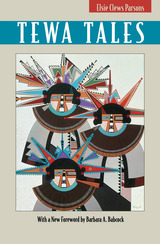
This collection of more than one hundred tales from both New Mexico and Arizona Tewa, first published in 1926, bears witness to their rich cultural history. In addition to emergence and animal stories, these tales also provide an account of many social customs such as wedding ceremonials and relay racing--that show marked differences between the two tribal groups. A comparison of tales from the two divisions of the tribe reveals something of what has happened to both emigrant and home-staying Tewa over two centuries of separation. Yet, while only half of the Arizona tales are distinctly parallel to the New Mexican, additional similarities may be found in such narrative features as the helpfulness of Spider old woman and her possession of medicine, creating life magically under a blanket, or Coyote beguiling girls into marriage.
Elsie Clews Parsons was a pioneering anthropologist in the Southwest whose works included the encyclopedic Pueblo Indian Religion. The Tewa tales she gathered for this volume are thus notable not only as fascinating stories that will delight curious readers, but also as authentic reflections of a people less known to scholars.
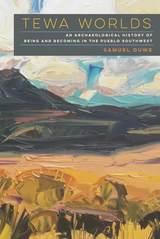
Tewa Worlds tells a history of eight centuries of the Tewa people, set among their ancestral homeland in northern New Mexico. Bounded by four sacred peaks and bisected by the Rio Grande, this is where the Tewa, after centuries of living across a vast territory, reunited and forged a unique type of village life. It later became an epicenter of colonialism, for within its boundaries are both the ruins of the first Spanish colonial capital and the birthplace of the atomic bomb. Yet through this dramatic change the Tewa have endured and today maintain deep connections with their villages and a landscape imbued with memory and meaning.
Anthropologists have long trekked through Tewa country, but the literature remains deeply fractured among the present and the past, nuanced ethnographic description, and a growing body of archaeological research. Samuel Duwe bridges this divide by drawing from contemporary Pueblo philosophical and historical discourse to view the long arc of Tewa history as a continuous journey. The result is a unique history that gives weight to the deep past, colonial encounters, and modern challenges, with the understanding that the same concepts of continuity and change have guided the people in the past and present, and will continue to do so in the future.
Focusing on a decade of fieldwork in the northern portion of the Tewa world—the Rio Chama Valley—Duwe explores how incorporating Pueblo concepts of time and space in archaeological interpretation critically reframes ideas of origins, ethnogenesis, and abandonment. It also allows archaeologists to appreciate something that the Tewa have always known: that there are strong and deep ties that extend beyond modern reservation boundaries.
A history of European immigrants in Texas and how they redefined racial identity.
While the creation of a Black-White racial binary was foundational to most of the United States, nineteenth-century Texas developed a unique tripartite system that acknowledged the role of individuals of Mexican ancestry in a region that was Spanish, Mexican, and an independent nation before becoming a US (and briefly Confederate) state. Yet this framework was fraught, struggling to accommodate new arrivals from beyond North America, in particular the Irish, Germans, and Czechs. Texan Crucible tells the story of these immigrants and how they became Anglo.
Marian Barber reveals the ways language, religion, alcohol use, and attitudes toward slavery distinguished these newcomers to Texas from those arriving from the eastern United States and how they nevertheless created thriving, influential communities. Their status was shaped by events inside and far beyond Texas, including an 1887 prohibition fight, the Civil War, and two world wars that encouraged them to erase their distinctiveness. As segregation was formally outlawed and civil rights activism grew, understandings of race shifted, cementing these groups’ status as Anglo. Texan Crucible recovers the histories of German, Irish, and Czech immigrants and unveils the social construction of racial difference underpinning Texan identity.
READERS
Browse our collection.
PUBLISHERS
See BiblioVault's publisher services.
STUDENT SERVICES
Files for college accessibility offices.
RECENTLY PUBLISHED


UChicago Accessibility Resources
home | accessibility | search | about | contact us
BiblioVault ® 2001 - 2025
The University of Chicago Press