
 A SCHOLARLY BOOK REPOSITORY
30 start with T start with T
Click here to access the Taking the Heat teaching guide (https://d3tto5i5w9ogdd.cloudfront.net/wp-content/uploads/2021/09/02142601/Taking-the-Heat-Questions-for-Instructors.docx).
A twentieth-anniversary edition of this tour de force in feminism and Indigenous studies, now with a new preface
The twentieth anniversary of the original publication of this influential and prescient work is commemorated with a new edition of Talkin’ Up to the White Woman by Aileen Moreton-Robinson. In this bold book, of its time and ahead of its time, whiteness is made visible in power relations, presenting a dialogic of how white feminists represent Indigenous women in discourse and how Indigenous women self-present.
Moreton-Robinson argues that white feminists benefit from colonization: they are overwhelmingly represented and disproportionately predominant, play the key roles, and constitute the norm, the ordinary, and the standard of womanhood. They do not self-present as white but rather represent themselves as variously classed, sexualized, aged, and abled. The disjuncture between representation and self-presentation of Indigenous women and white feminists illuminates different epistemologies and an incommensurability in the social construction of gender.
Not so much a study of white womanhood, Talkin’ Up to the White Woman instead reveals an invisible racialized subject position represented and deployed in power relations with Indigenous women. The subject position occupied by middle-class white women is embedded in material and discursive conditions that shape the nature of power relations between white feminists and Indigenous women—and the unjust structural relationship between white society and Indigenous society.
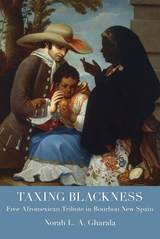
A definitive analysis of the most successful tribute system in the Americas as applied to Afromexicans
During the eighteenth century, hundreds of thousands of free descendants of Africans in Mexico faced a highly specific obligation to the Spanish crown, a tax based on their genealogy and status. This royal tribute symbolized imperial loyalties and social hierarchies. As the number of free people of color soared, this tax became a reliable source of revenue for the crown as well as a signal that colonial officials and ordinary people referenced to define and debate the nature of blackness.
Taxing Blackness: Free Afromexican Tribute in Bourbon New Spain examines the experiences of Afromexicans and this tribute to explore the meanings of race, political loyalty, and legal privileges within the Spanish colonial regime. Norah L. A. Gharala focuses on both the mechanisms officials used to define the status of free people of African descent and the responses of free Afromexicans to these categories and strategies. This study spans the eighteenth century and focuses on a single institution to offer readers a closer look at the place of Afromexican individuals in Bourbon New Spain, which was the most profitable and populous colony of the Spanish Atlantic.
As taxable subjects, many Afromexicans were deeply connected to the colonial regime and ongoing debates about how taxpayers should be defined, whether in terms of reputation or physical appearance. Gharala shows the profound ambivalence, and often hostility, that free people of African descent faced as they navigated a regime that simultaneously labeled them sources of tax revenue and dangerous vagabonds. Some free Afromexicans paid tribute to affirm their belonging and community ties. Others contested what they saw as a shameful imposition that could harm their families for generations. The microhistory includes numerous anecdotes from specific cases and people, bringing their history alive, resulting in a wealth of rural and urban, gender, and family insight.
The first of its kind, Teacher Education across Minority-Serving Institutions brings together innovative work from the family of institutions known as minority-serving institutions: Historically Black Colleges and Universities, Tribal Colleges and Universities, Hispanic Serving Institutions, and Asian American and Native American Pacific Islander Serving Institutions. The book moves beyond a singular focus on teacher racial diversity that has characterized scholarship and policy work in this area. Instead, it pushes for scholars to consider that racial diversity in teacher education is not simply an end in itself but is, a means to accomplish other goals, such as developing justice-oriented and asset-based pedagogies.
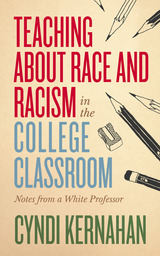
Teaching about race and racism can be a difficult business. Students and instructors alike often struggle with strong emotions, and many people have robust preexisting beliefs about race. At the same time, this is a moment that demands a clear understanding of racism. It is important for students to learn how we got here and how racism is more than just individual acts of meanness. Students also need to understand that colorblindness is not an effective anti-racism strategy.
In this book, Cyndi Kernahan argues that you can be honest and unflinching in your teaching about racism while also providing a compassionate learning environment that allows for mistakes and avoids shaming students. She provides evidence for how learning works with respect to race and racism along with practical teaching strategies rooted in that evidence to help instructors feel more confident. She also differentiates between how white students and students of color are likely to experience the classroom, helping instructors provide a more effective learning experience for all students.


The entanglement of Vancouver’s infrastructure in settler colonialism and racialized exploitation
Vancouver, Canada, has long been held up as an environmentally conscious coastal refuge and model of progressive urban planning. Unpacking the troubling complexities that lie beneath the city’s otherwise tidy self-image, Terminal City reveals the long, recurring patterns of racialized violence and Indigenous dispossession crucial to its formation.
Examining the histories of Vancouver’s infrastructures, including railways, ports, the freeway system, fossil-fuel pipelines, and property, Michael Simpson details the various spatial manifestations of settler colonialism and racial capitalism that constitute the city’s urban environment—using it as a case study to reveal such tendencies around the world. Simpson exposes how the seizure of Indigenous lands and the destruction of Black communities has been foundational to the development of the city, and he highlights its structural dependency on these violent legacies, as well as the ongoing struggles to dismantle them.
Bringing together theoretical insights from the fields of urban geography, political ecology, and Indigenous studies, Simpson provides a distinctive intervention into contemporary debates around the material basis of logistics and circulation. At a time when massive upheavals to urban infrastructure are taking place in the hopes of establishing greater sustainability, Terminal City raises important questions about how this moment of transition might be harnessed to bring about decolonial abolitionist futures that redefine what a city can become.
Retail e-book files for this title are screen-reader friendly with images accompanied by short alt text and/or extended descriptions.
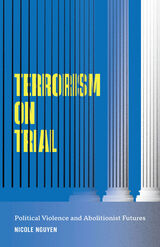
A landmark sociological examination of terrorism prosecution in United States courts
Rather than functioning as a final arbiter of justice, U.S. domestic courts are increasingly seen as counterterrorism tools that can incapacitate terrorists, maintain national security operations domestically, and produce certain narratives of conflict. Terrorism on Trial examines the contemporary role that these courts play in the global war on terror and their use as a weapon of war: hunting, criminalizing, and punishing entire communities in the name of national security.
Nicole Nguyen advocates for a rethinking of popular understandings of political violence and its root causes, encouraging readers to consider anti-imperial abolitionist alternatives to the criminalization, prosecution, and incarceration of individuals marked as real or perceived terrorists. She exposes how dominant academic discourses, geographical imaginations, and social processes have shaped terrorism prosecutions, as well as how our fundamental misunderstanding of terrorism has led to punitive responses that do little to address the true sources of violence, such as military interventions, colonial occupations, and tyrannical regimes. Nguyen also explores how these criminal proceedings bear on the lives of defendants and families, seeking to understand how legal processes unevenly criminalize and disempower communities of color.
A retheorization of terrorism as political violence, Terrorism on Trial invites readers to carefully consider the role of power and politics in the making of armed resistance, addressing the root causes of political violence, with a goal of building toward a less violent and more liberatory world.

In today’s world, responsible biocitizenship has become a new way of belonging in society. Individuals are expected to make “responsible” medical choices, including the decision to be screened for genetic disease. Paradoxically, we have even come to see ourselves as having the right to be responsible vis-à-vis the proactive mitigation of genetic risk. At the same time, the concept of genetic disease has become a new and powerful way of defining the boundaries between human groups. Tay-Sachs, an autosomal recessive disorder, is a case in point—with origins in the period of Eastern European Jewish immigration to the United States and United Kingdom that spanned the late nineteenth and early twentieth centuries, it has a long and fraught history as a marker of Jewish racial difference.
In Testing Fate, Shelley Z. Reuter asks: Can the biocitizen, especially one historically defined as a racialized and pathologized Other, be said to be exercising authentic, free choice in deciding whether to undertake genetic screening? Drawing on a range of historical and contemporary examples—doctors’ medical reports of Tay-Sachs since the first case was documented in 1881, the medical field’s construction of Tay-Sachs as a disease of Jewish immigrants, YouTube videos of children with Tay-Sachs that frame the disease as tragic disability avoidable through a simple genetic test, and medical malpractice suits since the test for the disease became available—Reuter shows that true agency in genetic decision-making can be exercised only from a place of cultural inclusion. Choice in this context is in fact a kind of unfreedom—a moral duty to act that is not really agency at all.
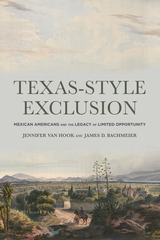
Drawing on census and archival data on the quality of public schooling, Van Hook and Bachmeier find that Industrial Era European immigrants, who were primarily located in the northeastern U.S., benefited from programs and policies championed by the Americanization and Progressive movements. The Americanization movement sought to help acclimate new arrivals and transform “foreigners” into “Americans” by providing night school programs to promote civic integration and basic education, as well as other services. The Progressive movement, which aimed to improve education, work, and health conditions, sought to expand investment in public schools and make primary and secondary schooling mandatory, which kept working class children in school as opposed to entering the workforce. This access to education allowed for integration and astonishing intergenerational mobility.
Mexican immigrants in the 1920s and 1930s, the majority of whom resided in Texas, had radically different experiences from their European counterparts. Mexicans in Texas were subjected to racism, segregation, labor exploitation, and intentional school failures. This resulted in tremendous generational disadvantage that persists to the current day. Mexicans from this cohort who left Texas for states with strong Americanization and Progressive movements saw improved educational outcomes and integration. Additionally, Mexicans who immigrated after the Civil Rights Movement saw significantly greater inter-generational mobility and educational attainment than earlier cohorts due to the protections provided by civil rights laws. Van Hook and Bachmeier conclude that whether one is optimistic or pessimistic about the integration of Mexican Americans depends on when and where one looks.
Texas-Style Exclusion is an engaging examination of policies and practices that have been glossed over and forgotten that promoted mobility and integration for certain immigrant groups and impeded them for others.
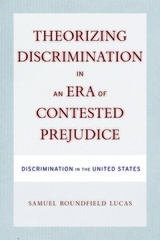
Despite several decades of attention, there is still no consensus on the effects of racial or sexual discrimination in the United States. In this landmark work, the well-known sociologist Samuel Lucas shows how discrimination is not simply an action that one person performs in relation to another individual, but something far more insidious: a pervasive dynamic that permeates the environment in which we live and work.
Challenging existing literature on the subject, Lucas makes a clear distinction between prejudice and discrimination. He maintains that when an era of “condoned exploitation” ended, the era of “contested prejudice,” as he terms it, began. He argues that the great strides made in the 1950s and 1960s repudiated prejudice, but not discrimination. Drawing on critical race theory, feminist theory, and a critique of dominant perspectives in the social sciences and law, Lucas offers a new understanding of racial and sexual discrimination that can guide our actions and laws into a more just future.

A haunting, an obsession, a calling: Tim Z. Hernandez has been searching for people his whole life. Now, in this highly anticipated memoir, he takes us along on an investigative odyssey through personal and collective history to uncover the surprising conjunctions that bind our stories together.
Hernandez’s mission to find the families of the twenty-eight Mexicans who were killed in the 1948 plane wreck at Los Gatos Canyon formed the basis for his acclaimed documentary novel All They Will Call You, which the San Francisco Chronicle dubbed “a stunning piece of investigative journalism,” and the New York Times hailed as “painstaking detective work by a writer who is the descendant of farmworkers.”
In this riveting new work, Hernandez continues his search for the plane crash victims while also turning the lens on himself and his ancestral past, revealing the tumultuous and deeply intimate experiences that have fueled his investigations—a lifelong journey haunted by memory, addiction, generational trauma, and the spirit world.
They Call You Back is the true chronicle of one man’s obsession to restore dignity to an undignified chapter in America’s past, while at the same time making a case for why we must heal our personal wounds if we are ever to heal our political ones.
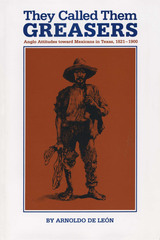
Tension between Anglos and Tejanos has existed in the Lone Star State since the earliest settlements. Such antagonism has produced friction between the two peoples, and whites have expressed their hostility toward Mexican Americans unabashedly and at times violently.
This seminal work in the historical literature of race relations in Texas examines the attitudes of whites toward Mexicans in nineteenth-century Texas. For some, it will be disturbing reading. But its unpleasant revelations are based on extensive and thoughtful research into Texas' past. The result is important reading not merely for historians but for all who are concerned with the history of ethnic relations in our state.
They Called Them Greasers argues forcefully that many who have written about Texas's past—including such luminaries as Walter Prescott Webb, Eugene C. Barker, and Rupert N. Richardson—have exhibited, in fact and interpretation, both deficiencies of research and detectable bias when their work has dealt with Anglo-Mexican relations. De León asserts that these historians overlooled an austere Anglo moral code which saw the morality of Tejanos as "defective" and that they described without censure a society that permitted traditional violence to continue because that violence allowed Anglos to keep ethnic minorities "in their place."
De León's approach is psychohistorical. Many Anglos in nineteenth-century Texas saw Tejanos as lazy, lewd, un-American, subhuman. In De León's view, these attitudes were the product of a conviction that dark-skinned people were racially and culturally inferior, of a desire to see in others qualities that Anglos preferred not to see in themselves, and of a need to associate Mexicans with disorder so as to justify their continued subjugation.

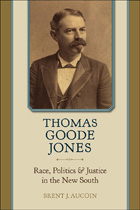
Thomas Goode Jones of Alabama is the first comprehensive biography of a key Alabama politician and federal jurist whose life and times embody the conflicts and transformations in the Deep South between the Civil War and World War I.
A man who both represented and differed from his class, Thomas Goode Jones offers contemporary readers and scholars an ideal subject of study to understand a period of southern history that still shapes American life today. Often overshadowed by the pharaonic antebellum period, the Civil War, and the luminous heights of the civil rights movement, the deceptively placid decades at the turn of the century were, in fact, a period when southerners fiercely debated the course of the South’s future. In tracing Jones’s career, Brent J. Aucoin offers vivid accounts of the great events and trends of that pivotal period: Reconstruction, the birth of the “Solid South,” the Populist Revolt, and the establishment of racial disenfranchisement and segregation.
Born in 1844, Jones served in the Confederate army and after the war identified as a conservative “Bourbon” Democrat. He served as Alabama's governor from 1890 to 1894 and as a federal judge from 1901 until his death in 1914. As a veteran, politician, and judge, Jones embodied numerous roles in the shifting political landscape of the South.
Jones was not, however, a reflexive conformist and sometimes pursued policies at odds with his party. Jones’s rhetoric and support of African American civil rights were exceptional and earned him truculent criticism from unrepentant racist factions in his party. His support was so fearless that it inspired Booker T. Washington to recommend Jones to Republican president Theodore Roosevelt as a federal judge. On the bench, Jones garnered national attention for his efforts to end peonage and lynching, and yet he also enabled the establishment of legalized segregation in Alabama, confounding attempts easily to categorize him as an odious reactionary or fearless progressive.
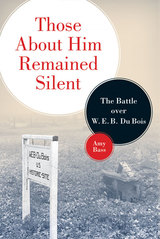
On the eve of Martin Luther King Jr.’s 1963 March on Washington, W. E. B. Du Bois died in exile in Ghana at the age of 95, more than a half century after cofounding the NAACP. Five years after his death, residents of Great Barrington, the small Massachusetts town where Du Bois was born in 1868, proposed recognizing his legacy through the creation of a memorial park on the site of his childhood home. Supported by the local newspaper and prominent national figures including Harry Belafonte and Sydney Poitier, the effort to honor Du Bois set off an acrimonious debate that bitterly divided the town. Led by the local chapter of the Veterans of Foreign Wars, opponents compared Du Bois to Hitler, vilifying him as an anti-American traitor for his communist sympathies, his critique of American race relations, and his pan-Africanist worldview.
In Those About Him Remained Silent, Amy Bass provides the first detailed account of the battle over Du Bois and his legacy, as well as a history of Du Bois’s early life in Massachusetts. Bass locates the roots of the hostility to memorialize Du Bois in a cold war worldview that reduced complicated politics to a vehement hatred of both communism and, more broadly, anti-Americanism. The town’s reaction was intensified, she argues, by the racism encoded within cold war patriotism.
Showing the potency of prevailing, often hidden, biases, Those About Him Remained Silent is an unexpected history of how racism, patriotism, and global politics played out in a New England community divided on how—or even if—to honor the memory of its greatest citizen.
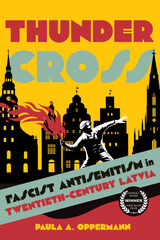
Thunder Cross is the most comprehensive study of Latvia’s fascist movement in English to date, and the only work that investigates the often neglected continuities of fascist antisemitism after World War II. Formulated as an empirical case study, this book draws on international and interdisciplinary secondary literature and sources in seven languages to broaden our understanding of fascism, antisemitism, and mass violence from Germany and Italy to the larger European context.

In 1966, a young rabbinical student named P. Allen Krause conducted interviews with twelve Reform rabbis from southern congregations concerning their thoughts, principles, and activities as they related to the civil rights movement. Perhaps because he was a young seminary student or more likely because the interviewees were promised an embargo of twenty-five years before the interviews would be released to the public, the rabbis were extremely candid about their opinions on and their own involvement with what was still an incendiary subject. Now, in To Stand Aside or Stand Alone: Southern Reform Rabbis and the Civil Rights Movement, their stories help elucidate a pivotal moment in time.
After a distinguished rabbinical career, Krause wrote introductions to and annotated the interviews. When Krause succumbed to cancer in 2012, Mark K. Bauman edited the manuscripts further and wrote additional introductions with the assistance of Stephen Krause, the rabbi’s son. The result is a unique volume offering insights into these rabbis’ perceptions and roles in their own words and with more depth and nuance than hitherto available. This exploration into the lives of these teachers and civic leaders is supported by important contextual information on the local communities and other rabbis, with such background information forming the basis of a demographic profile of the Reform rabbis working in the South.
The twelve rabbis whom Krause interviewed served in Alabama, Georgia, Louisiana, Mississippi, Tennessee, and Virginia, and the substance and scope of their discussions cover some of the most crucial periods in the civil rights movement. Although some have provided accounts that appeared elsewhere or have written about their experiences themselves, several new voices appear here, suggesting that more southern rabbis were active than previously thought. These men functioned within a harsh environment: rabbis’ homes, synagogues, and Jewish community centers were bombed; one rabbi, who had been beaten and threatened, carried a pistol to protect himself and his family. The views and actions of these men followed a spectrum from gradualism to activism; while several of the rabbis opposed the evils of the separate and unequal system, others made peace with it or found reasons to justify inaction. Additionally, their approaches differed from their activist colleagues in the North even more than from each other.
Within these pages, readers learn about the attitudes of the rabbis toward each other, toward their congregants, toward national Jewish organizations, and toward local leaders of black and white and Protestant and Catholic groups. Theirs are dramatic stories of frustration, cooperation, and conflict.
How apparently positive representations of Muslims in U.S. media cast Muslims as a racial population
Portrayals of Muslims as the beneficiaries of liberal values have contributed to the racialization of Muslims as a risky population since the September 11 attacks. These discourses, which hold up some Muslims as worthy of tolerance or sympathy, reinforce an unstable good Muslim/bad Muslim binary where any Muslim might be moved from one side to the other. In Tolerance and Risk, Mitra Rastegar explores these discourses as a component of the racialization of Muslims—where Muslims are portrayed as a highly diverse population that nevertheless is seen to contain within it a threat that requires constant vigilance.
Tolerance and Risk brings together several case studies to examine the interrelation of representations of Muslims abroad and in the United States. These include human-interest stories and opinion polls of Muslim Americans, media representations of education activist Malala Yousafzai, LGBTQ activist discourses, local New York controversies surrounding Muslim-led public projects, and social media discourses of the Syrian refugee crisis. Tolerance and Risk demonstrates how representations of tolerable or sympathetic Muslims produce them as a population with distinct characteristics, capacities, and risks, and circulate standards by which the trustworthiness or threat of individual Muslims must be assessed.
Tolerance and Risk examines the ways that discourses of liberal rights, including feminist and LGBTQ rights discourses, are mobilized to racialize Muslims as uncivilized, even as they garner sympathy and identification with some Muslims.
In this far-ranging and penetrating work, Denise Ferreira da Silva asks why, after more than five hundred years of violence perpetrated by Europeans against people of color, is there no ethical outrage?
Rejecting the prevailing view that social categories of difference such as race and culture operate solely as principles of exclusion, Silva presents a critique of modern thought that shows how racial knowledge and power produce global space. Looking at the United States and Brazil, she argues that modern subjects are formed in philosophical accounts that presume two ontological moments—historicity and globality—which are refigured in the concepts of the nation and the racial, respectively. By displacing historicity’s ontological prerogative, Silva proposes that the notion of racial difference governs the present global power configuration because it institutes moral regions not covered by the leading post-Enlightenment ethical ideals—namely, universality and self-determination.
By introducing a view of the racial as the signifier of globality,Toward a Global Idea of Race provides a new basis for the investigation of past and present modern social processes and contexts of subjection.
Denise Ferreira da Silva is associate professor of ethnic studies at University of California, San Diego.

The ubiquitous presence of food and hunger in Caribbean writing—from folktales, fiction, and poetry to political and historical treatises—signals the traumas that have marked the Caribbean from the Middle Passage to the present day. The Tropics Bite Back traces the evolution of the Caribbean response to the colonial gaze (or rather the colonial mouth) from the late nineteenth century to the twenty-first. Unlike previous scholars, Valérie Loichot does not read food simply as a cultural trope. Instead, she is interested in literary cannibalism, which she interprets in parallel with theories of relation and creolization.
For Loichot, “the culinary” is an abstract mode of resistance and cultural production. The Francophone and Anglophone authors whose works she interrogates—including Patrick Chamoiseau, Suzanne Césaire, Aimé Césaire, Maryse Condé, Edwidge Danticat, Édouard Glissant, Lafcadio Hearn, and Dany Laferrière—“bite back” at the controlling images of the cannibal, the starved and starving, the cunning cook, and the sexualized octoroon with the ultimate goal of constructing humanity through structural, literal, or allegorical acts of ingesting, cooking, and eating.
The Tropics Bite Back employs cross-disciplinary methods to rethink notions of race and literary influence by providing a fresh perspective on forms of consumption both metaphorical and material.
Troubling the Family argues that the emergence of multiracialism during the 1990s was determined by underlying and unacknowledged gender norms. Opening with a germinal moment for multiracialism—the seemingly massive and instantaneous popular appearance of Tiger Woods in 1997—Habiba Ibrahim examines how the shifting status of racial hero for both black and multiracial communities makes sense only by means of an account of masculinity.
Ibrahim looks across historical events and memoirs—beginning with the Loving v. Virginia case in 1967 when miscegenation laws were struck down—to reveal that gender was the starting point of an analytics that made categorical multiracialism, and multiracial politics, possible. Producing a genealogy of multiracialism’s gendered basis allows Ibrahim to focus on a range of stakeholders whose interests often ran against the grain of what the multiracial movement of the 1990s often privileged: the sanctity of the heteronormative family, the labor of child rearing, and more precise forms of racial tabulation—all of which, when taken together, could form the basis for creating so-called neutral personhood.
Ibrahim concludes with a consideration of Barack Obama as a representation of the resurrection of the assurance that multiracialism extended into the 2000s: a version of personhood with no memory of its own gendered legacy, and with no self-account of how it became so masculine that it can at once fill the position of political leader and the promise of the end of politics.
"'Must reading' for civil-rights leaders, leaders of advocacy organizations for the poor, and for elected officials in our major urban centers."—Bernard C. Watson, Journal of Negro Education
"Required reading for anyone, presidential candidate or private citizen, who really wants to address the growing plight of the black urban underclass."—David J. Garrow, Washington Post Book World
Selected by the editors of the New York Times Book Review as one of the sixteen best books of 1987.
Winner of the 1988 C. Wright Mills Award of the Society for the Study of Social Problems.
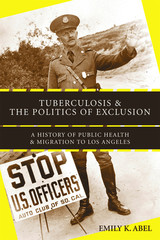
Winner of the 2008 Arthur J. Viseltear Prize from the American Public Health Association and Nominated for the 2008 William H. Welch Medal, AAHM
Though notorious for its polluted air today, the city of Los Angeles once touted itself as a health resort. After the arrival of the transcontinental railroad in 1876, publicists launched a campaign to portray the city as the promised land, circulating countless stories of miraculous cures for the sick and debilitated. As more and more migrants poured in, however, a gap emerged between the city’s glittering image and its dark reality.
Emily K. Abel shows how the association of the disease with “tramps” during the 1880s and 1890s and Dust Bowl refugees during the 1930s provoked exclusionary measures against both groups. In addition, public health officials sought not only to restrict the entry of Mexicans (the majority of immigrants) during the 1920s but also to expel them during the 1930s.
Abel’s revealing account provides a critical lens through which to view both the contemporary debate about immigration and the U.S. response to the emergent global tuberculosis epidemic.
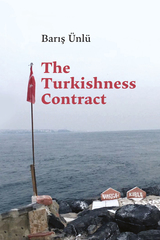
Ünlü uses Critical Race Theory to present a historical–sociological model to examine not only the historical constitution and contemporary functioning of the Turkish nation-state, but also the affective and bodily modalities of being Turkish. He also develops a framework for rethinking the complex relations between the socio-genesis of the Turkish nation and state and the psycho-genesis of the Turkish people, their cognitive habits and emotional orientations, and the structural privileges and unconsciousness strategies of Turkishness.
The Turkishness Contract addresses broader theoretical concerns including histories of colonialism, ethnic/racial social contracts, privilege, Armenian Genocide and the Kurdish question, as well as the unraveling of Turkey’s social contract at a moment of contemporary right-wing authoritarianism.
In the series Critical Race, Indigeneity, and Relationality
The result of work initiated by the Harvard Civil Rights Project, this collection provides an excellent overview of the contemporary racial and ethnic terrain in the United States. The well-respected contributors to Twenty-First Century Color Lines combine theoretical and empirical perspectives, answering fundamental questions about the present and future of multiracialism in the United States: How are racial and ethnic identities promoted and defended across a spectrum of social, geopolitical and cultural contexts? What do two generations of demographic and social shifts around issues of race look like “on the ground?” What are the socio-cultural implications of changing demographics in the U.S.? And what do the answers to these questions portend for our multiracial future?
This illuminating book addresses issues of work, education, family life and nationality for different ethnic groups, including Asians and Latinos as well as African Americans and whites. Such diversity, gathered here in one volume, provides new perspectives on ethnicity in a society marked by profound racial transformations.
Contributors: Luis A. Avilés, Juan Carlos Martínez-Cruzado, Nilanjana Dasgupta, Christina Gómez, Gerald Gurin, Patricia Gurin, Anthony Kwame Harrison, Maria-Rosario Jackson, John Matlock, Nancy McArdle, John Mollenkopf, john a. powell, Doris Ramírez, David Roediger, Anayra Santory-Jorge, Jiannbin Lee Shiao, Mia H. Tuan, Katrina Wade-Golden and the editors.
READERS
Browse our collection.
PUBLISHERS
See BiblioVault's publisher services.
STUDENT SERVICES
Files for college accessibility offices.
RECENTLY PUBLISHED


UChicago Accessibility Resources
home | accessibility | search | about | contact us
BiblioVault ® 2001 - 2026
The University of Chicago Press