
 A SCHOLARLY BOOK REPOSITORY
52 start with V start with V
A funny thing happened on the way to the movies. Instead of heading downtown to a first-run movie palace, or even to a suburban multiplex with the latest high-tech projection capabilities, many people's first stop is now the neighborhood video store. Indeed, video rentals and sales today generate more income than either theatrical releases or television reruns of movies.
This pathfinding book chronicles the rise of home video as a mass medium and the sweeping changes it has caused throughout the film industry since the mid-1970s. Frederick Wasser discusses Hollywood's initial hostility to home video, which studio heads feared would lead to piracy and declining revenues, and shows how, paradoxically, video revitalized the film industry with huge infusions of cash that financed blockbuster movies and massive marketing campaigns to promote them. He also tracks the fallout from the video revolution in everything from changes in film production values to accommodate the small screen to the rise of media conglomerates and the loss of the diversity once provided by smaller studios and independent distributors.
In this concluding volume of The Venture of Islam, Hodgson describes the second flowering of Islam: the Safavi, Timuri, and Ottoman empires. The final part of the volume analyzes the widespread Islamic heritage in today's world.
"This is a nonpareil work, not only because of its command of its subject but also because it demonstrates how, ideally, history should be written."—The New Yorker
But what began as a scientific inquiry into African origins rapidly evolved into an unparalleled interdisciplinary collaboration between historians, literary analysts, geographers, genealogists, anthropologists, political philosophers, genomic biologists, and, perhaps most revealingly, a poet. Their common goal has been to reconstruct the life of an extraordinary African American and to assay its implications for the sprawling, troubled eighteenth-century world of racial exploitation over which he triumphed. This volume displays the rich results of that collaboration.
A highly intelligent, deeply self-motivated and immensely energetic slave transported from Africa, Venture Smith transformed himself through unstinting labor into a respectable Connecticut citizen, a successful entrepreneur, and the liberator of other enslaved African Americans. As James O. Horton emphasizes in his foreword to this volume, "Venture Smith's saga is a gift to all who seek to understand the complex racial beginnings of America. It helps to connect the broad American story with the stories of many Americans whose lives illustrate the national struggle to live out the national ideals."
In addition to Horton and volume editor James Brewer Stewart, contributors include Cameron Blevins, Vincent Carretta, Anna Mae Duane, Robert P. Forbes, Anne L. Hiskes, Paul Lovejoy, Marilyn Nelson, David Richardson, Chandler B. Saint, Linda Strausbaugh, Kevin Tulimieri, and John Wood Sweet.

The three works in this volume offer a rich representative sample of Thompson's writing. The two novels—Venus in Boston and City Crimes—depict the American city as a place of dark mystery, bawdy humor, and near-universal corruption peopled with con artists and criminals of all kinds. In each novel, a complex narrative structure interweaves multiple stories of exploited labor, abuse of power, seduction, intrigue, and crime. Thompson's autobiography, My Life, presents the author's life in terms nearly as lively as his fiction.
Thompson's zestful, unconventional writings fly in the face of the stereotypical view of Victorian America as straitlaced and sentimental. Ideal for use as a classroom text, this new edition includes a scholarly introduction and an extensive bibliography.
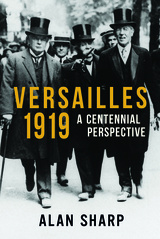
Fully revised and updated for the centennial of the Conference, Versailles 1919 sets the ramifications of the Paris Peace treaties—for good or ill—within a long-term context. Alan Sharp mounts a powerful argument that the responsibility for Europe’s continuing interwar instability cannot be wholly attributed to the peacemakers of 1919–23. Concise and convincing, Versailles 1919 is a clear guide to the global legacy of the Versailles Settlement.

Ranging from cinematic images of Jane Austen's estates to Oscar Wilde's drawing rooms, Dianne F. Sadoff looks at popular heritage films, often featuring Hollywood stars, that have been adapted from nineteenth-century novels.
Victorian Vogue argues that heritage films perform different cultural functions at key historical moments in the twentieth century. According to Sadoff, they are characterized by a double historical consciousness-one that is as attentive to the concerns of the time of production as to those of the Victorian period. If James Whale's Frankenstein and Tod Browning's Dracula exploited post-Depression fear in the 1930s, the horror films of the 1950s used the genre to explore homosexual panic, 1970s movies elaborated the sexuality only hinted at in the thirties, and films of the 1990s indulged the pleasures of consumption.
Taking a broad view of the relationships among film, literature, and current events, Sadoff contrasts films not merely with their nineteenth-century source novels but with crucial historical moments in the twentieth century, showing their cultural use in interpreting the present, not just the past.
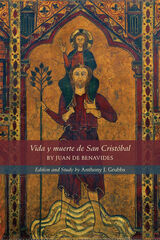
As the patron of travelers, Saint Christopher inspired one of the most popular cults in the medieval era, which spread across Europe and especially the Iberian Peninsula. Artistic renderings of the saint were found near the doors of most Spanish Gothic churches, and paratheatrical representations of Saint Christopher were also commonplace in religious processions. His conversion and martyrdom were often staged between the fifteenth and early eighteenth centuries.
In the theater, Juan de Benavides’s Vida y muerte de San Cristóbal is one of two known comedias dealing with the saint, but it was heavily censored after its premiere. The immense popularity of St. Christopher and other primitive saints first drew the attention of the Council of Trent in the mid-1500s, when the Catholic Church attempted to suppress the influence of the earlier saints due to their fantastical nature. The stories of these saints were censored, rewritten or even omitted in the post-Tridentine martyrologies. This publication is the first critical edition of the only extant copy of Benavides’s playscript. The circumstances surrounding Benavides’s play continue a dialogue about such important topics as censorship and the influence of the church over artistic production.

Written by leading video activists, and staff of the world-renowned human rights organization WITNESS, this practical handbook will appeal to experienced campaigners as well as aspiring video activists. It combines a comprehensive analysis of what's going on in this growing global field with a how-to primer to doing it yourself.
Contributions by Jesse de Vos, Jacob Euteneuer, Monica Evans, Tiffany Funk, René Glas, Eddie Lohmeyer, Evan Meaney, Kieran Nolan, Josuhe Pagliery, Sercan Şengün, Teresa Silva, Christopher W. Totten, and Jasper van Vught.

Contributions by Anna Anthropy , Andrew Bailey, Michael Anthony DeAnda, Luisa Salvador Dias, Tiffany Funk, Elizabeth LaPensée, Treva Michelle Legassie, Michael Paramo, and Martin Zeilinger.
Contributions by Christopher Barney, Enrica Lovaglio Costello, Ross De Vito, Chanelle Mosquera, Zack Ragozzino, Gabriella Santiago, Bobby Schweizer, Christopher W. Totten, Dr. Zöe J. Wood, and Robert Yang.

Contributions by Uche Anomnachi, Andrew Bailey, Chaz Evans, Tiffany Funk, D’An Knowles Ball, Alexandre Paquet, Chris Reeves, and Regina Siewald.
“Signed language interpreting is about access,” states author Jeremy L. Brunson at the outset of his new book, and no manifestation of access for deaf people can be considered more complex than video relay services (VRS). In Video Relay Service Interpreters: Intricacies of Sign Language Access, Brunson delineates exactly how complicated the service can be, first by analyzing sign language interpreting as a profession and its relation to both hearing and deaf clients. He describes how sign language interpreters function in Deaf communities and how regulatory processes imposed by VRS providers can constrain communication access based on each individual’s needs.
Brunson proceeds by acclimating readers to the environment of VRS and how the layout of the typical physical plant alters the practice of interpreting. The focus then falls upon intended VRS users, providing insights into their expectations. Interpreters shared their experiences with Brunson in 21 formal interviews and discussions. Many remarked on the differences between face-to-face interpreting and VRS training, which often runs counter to the concept of relating informally with deaf clients as a way to expand access. This thoughtful, sociological study outlines texts that originate between users and interpreters and how they can be used to develop VRS access. Video Relay Service Interpreters concludes with the implications of VRS interpreting for sign language interpreting in general and suggests where scholarship will lead in the future.
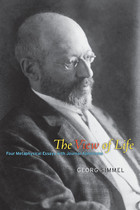
Published in 1918, The View of Life is Georg Simmel’s final work. Famously deemed “the brightest man in Europe” by George Santayana, Simmel addressed diverse topics across his essayistic writings, which influenced scholars in aesthetics, epistemology, and sociology. Nevertheless, certain core issues emerged over the course of his career—the genesis, structure, and transcendence of social and cultural forms, and the nature and conditions of authentic individuality, including the role of mindfulness regarding mortality. Composed not long before his death, The View of Life was, Simmel wrote, his “testament,” a capstone work of profound metaphysical inquiry intended to formulate his conception of life in its entirety.
Now Anglophone readers can at last read in full the work that shaped the argument of Heidegger’s Being and Time and whose extraordinary impact on European intellectual life between the wars was extolled by Jürgen Habermas. Presented alongside these seminal essays are aphoristic fragments from Simmel’s last journal, providing a beguiling look into the mind of one of the twentieth century’s greatest thinkers.
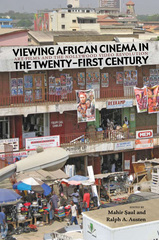
African cinema in the 1960s originated mainly from Francophone countries. It resembled the art cinema of contemporary Europe and relied on support from the French film industry and the French state. Beginning in 1969 the biennial Festival panafricain du cinéma et de la télévision de Ouagadougou (FESPACO), held in Burkina Faso, became the major showcase for these films. But since the early 1990s, a new phenomenon has come to dominate the African cinema world: mass-marketed films shot on less expensive video cameras. These “Nollywood” films, so named because many originate in southern Nigeria, are a thriving industry dominating the world of African cinema.
Viewing African Cinema in the Twenty-first Century is the first book to bring together a set of essays offering a comparison of these two main African cinema modes.
Contributors: Ralph A. Austen and Mahir Şaul, Jonathan Haynes, Onookome Okome, Birgit Meyer, Abdalla Uba Adamu, Matthias Krings, Vincent Bouchard, Laura Fair, Jane Bryce, Peter Rist, Stefan Sereda, Lindsey Green-Simms, and Cornelius Moore

Greenport today boasts a population that is one-third Hispanic. Gordon contends that these immigrants have effectively saved the town’s economy by taking low-skill jobs, increasing the tax base, filling local schools, and patronizing local businesses. Greenport’s seaside beauty still attracts summer tourists, but it is only with the support of the local Latino workforce that elegant restaurants and bed-and-breakfasts are able to serve these visitors. For Gordon the picture is complex, because the wave of immigrants also presents the town with challenges to its services and institutions. Gordon’s portraits of local immigrants capture the positive and the negative, with a cast of characters ranging from a Guatemalan mother of three, including one child who is profoundly disabled, to a Colombian house painter with a successful business who cannot become licensed because he remains undocumented. Village of Immigrants weaves together these people’s stories, fears, and dreams to reveal an environment plagued by threats of deportation, debts owed to coyotes, low wages, and the other bleak realities that shape the immigrant experience—even in the charming seaport town of Greenport.
A timely contribution to the national dialogue on immigration, Gordon’s book shows the pivotal role the American small town plays in the ongoing American immigrant story—as well as how this booming population is shaping and reviving rural communities.


Violent Encounters offers a powerful and original gendered history of colonial rule and warfare in Cameroon from the advent of German imperialism to the end of the First World War. Centering German Cameroon as an understudied but pivotal site of empire and global conflict, George N. Njung demonstrates that violence was a calculated instrument of colonial governance, which was systematically organized along racial and gendered lines to conquer territory, discipline African communities, and suppress resistance.
Drawing on extensive archival research in Africa and Europe, oral traditions, and interdisciplinary gender analysis, Njung reconstructs how empire and war were lived differently by African men and women. He shows that gender-based violence—especially sexual abuse—functioned as a deliberate political strategy embedded in military campaigns, forced labor regimes, and systems of punishment. African women bore disproportionate burdens at the intersection of gender, race, and militarization, even as they acted as resisters, mobilizers, and negotiators. African men, meanwhile, experienced forced recruitment, battlefield violence, and profound challenges to social authority under colonial rule.
Reinterpreting the First World War in Africa as an escalation rather than a rupture, Violent Encounters situates wartime atrocities, mass displacement, and one of the twentieth century’s earliest refugee crises within a longer continuum of imperial violence. By foregrounding gender, the book repositions Cameroon—and Africa more broadly—as central to understanding the global dynamics of empire, militarization, and resistance in the early twentieth century.

The Visceral Screen sets out to articulate alternative ways of appreciating film aesthetics outside the narrative/spectacle continuum. Cassavetes and Cronenberg are established auteurs, but the elements of their films that appear to be barriers to their artistic status—for example, slipshod method and lingering violence or pre-digital special effects—are reassessed here as other indicators of creativity. In this way, Furze encourages debates of what makes a film good or bad—beyond how much it is seen to adhere to particular, established models of filmmaking.
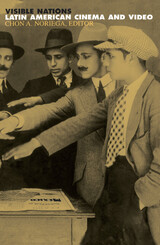
Rewrites Latin American film from the perspective of nationhood.
In the current "global" moment, the study of Latin American cinema has become insistently national—a phenomenon fully explored in this collection of essays by some of the most interesting and innovative scholars of media and Latin American culture working today.
The contributors to Visible Nations consider different national film and video histories in Latin America since the silent period. From the perspectives of feminism, psychoanalysis, new historicism, and reception theory, among others, they consider the styles through which—and the ends toward which—the nation has been represented, desired, and contested in films, film industries, and alternative video work in Mexico, Chile, Venezuela, Brazil, Colombia, and Cuba. The result is nothing less than a rewriting of Latin American film history. Contributors: Patricia Aufderheide, American U; Charles Ramírez Berg, U of Texas at Austin; Gilberto Moises Blasini; Julianne Burton-Carvajal, U of California, Santa Cruz; Seth Fein, Georgia State U; Claire F. Fox, Stanford U; Brian Goldfarb, U of Rochester; Ilene S. Goldman; Monica Hulsbus; Ana M. López, Tulane U; Kathleen Newman, U of Iowa; Laura Podalsky, Bowling Green State U; Harmony H. Wu.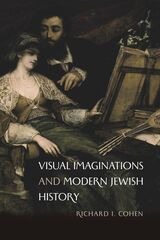
Establishes the centrality of visual culture within Judaism and Jewish history.
Visual Imaginations and Modern Jewish History traces how visual experience reflected and shaped Jewish life from the late seventeenth century onward. Richard I. Cohen shows how images, spaces, and objects were central to the making of modern Jewish identities and how the act of seeing itself became a site of cultural negotiation. Cohen claims that the prominence of visual art in modern Jewish life cannot be overlooked. Visual expression has become such a significant factor in Jewish life that it serves as both a mirror and an agent of Jewish modernity.
Cohen engages with a range of artists, figures like Moses Mendelssohn, Uriel Da Costa, and Baruch Spinoza, and such topics as the visual imaginings of the Mishnah, Jews in the military, and the motif of the Wandering Jew. Taken as a whole, the studies in this book argue that approaching modern Jewish history through images is not to replace the written word, but to restore to it the world of sight that Jews inhabited, created, and transformed.
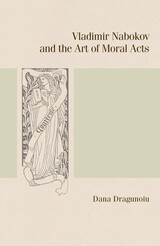
This book shows how ethics and aesthetics interact in the works of one of the most celebrated literary stylists of the twentieth century: the Russian American novelist Vladimir Nabokov. Dana Dragunoiu reads Nabokov’s fictional worlds as battlegrounds between an autonomous will and heteronomous passions, demonstrating Nabokov’s insistence that genuinely moral acts occur when the will triumphs over the passions by answering the call of duty.
Dragunoiu puts Nabokov’s novels into dialogue with the work of writers such as Alexander Pushkin, William Shakespeare, Leo Tolstoy, and Marcel Proust; with Kantian moral philosophy; with the institution of the modern duel of honor; and with the European traditions of chivalric literature that Nabokov studied as an undergraduate at Cambridge University. This configuration of literary influences and philosophical contexts allows Dragunoiu to advance an original and provocative argument about the formation, career, and legacies of an author who viewed moral activity as an art, and for whom artistic and moral acts served as testaments to the freedom of the will.


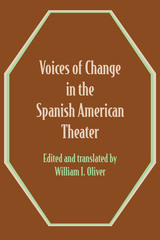
The aim of this anthology is to present a selection of plays that are representative of a fresh spirit and of societal pressures and changes in Spanish American culture. The plays shun the earlier realistic, sentimental, and melodramatic conventions of Spanish American theater. Instead, they reflect the tenor of the dramatic imagination of the mid-to-late twentieth century—an imagination that sought new forms and ways of expressing a new awareness of the Spanish American dilemma.
In selecting these plays, William I. Oliver looked for more than mere illustrations of these changes. As a practicing director and playwright, he sought works that are effective on the stage as well as on the page. As an editor and translator, he sought works “that could be translated culturally as well as linguistically.” The six plays in this varied and vigorous anthology are the measure of his success.
The plays included are The Day They Let the Lions Loose, by Emilio Carballido (Mexico); The Camp, by Griselda Gambaro (Argentina); The Library, by Carlos Maggi (Uruguay); In the Right Hand of God the Father, by Enrique Buenaventura (Colombia); The Mulatto’s Orgy, by Luisa Josefina Hernández (Mexico); and Viña: Three Beach Plays, by Sergio Vodánovic (Chile).
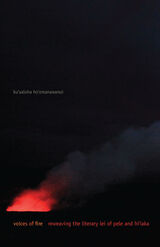
Stories of the volcano goddess Pele and her youngest sister Hi‘iaka, patron of hula, are most familiar as a form of literary colonialism—first translated by missionary descendants and others, then co-opted by Hollywood and the tourist industry. But far from quaint tales for amusement, the Pele and Hi‘iaka literature published between the 1860s and 1930 carried coded political meaning for the Hawaiian people at a time of great upheaval. Voices of Fire recovers the lost and often-suppressed significance of this literature, restoring it to its primary place in Hawaiian culture.
Ku‘ualoha ho‘omanawanui takes up mo‘olelo (histories, stories, narratives), mele (poetry, songs), oli (chants), and hula (dances) as they were conveyed by dozens of authors over a tumultuous sixty-eight-year period characterized by population collapse, land alienation, economic exploitation, and military occupation. Her examination shows how the Pele and Hi‘iaka legends acted as a framework for a Native sense of community. Freeing the mo‘olelo and mele from colonial stereotypes and misappropriations, Voices of Fire establishes a literary mo‘okū‘auhau, or genealogy, that provides a view of the ancestral literature in its indigenous contexts.
The first book-length analysis of Pele and Hi‘iaka literature written by a Native Hawaiian scholar, Voices of Fire compellingly lays the groundwork for a larger conversation of Native American literary nationalism.

READERS
Browse our collection.
PUBLISHERS
See BiblioVault's publisher services.
STUDENT SERVICES
Files for college accessibility offices.
RECENTLY PUBLISHED


UChicago Accessibility Resources
home | accessibility | search | about | contact us
BiblioVault ® 2001 - 2026
The University of Chicago Press