
 A SCHOLARLY BOOK REPOSITORY
Among commentators, it had been an unexamined commonplace that the "young" Boccaccio either did not know well or did not understand sufficiently the texts of Dante (even though the "young" Boccaccio is construed as including the thirty-eight-year-old author of the Decameron.) In Boccaccio's Dante and the Shaping Force of Satire, Robert Hollander offers a valuable synthesis of new material and some previously published essays, addressing the question of Dante's influence on Boccaccio, particularly concerning the Commedia and the Decameron.
Hollander reveals that Boccaccio's writings are heavy with reminiscences of the Dante text, which he believed to be the greatest "modern" work. It was Boccaccio's belief that Dante was the only writer who had achieved a status similar to that reserved for the greatest writers of antiquity. Most of these essays try to show how carefully Boccaccio reflects the texts of Dante in the Decameron. Some essays also turn to the question of Boccaccio's allied reading of Ovid, especially the amatory work, as part of his strategy to base his work primarily on these two great authorities as he develops his own vernacular and satiric vision of human foolishness.
Boccaccio's Dante and the Shaping Force of Satire is a welcome addition to the field of Dante studies and to medieval studies in general.
Robert Hollander is Professor in European Literature and Chair, Department of Comparative Literature, Princeton University. He has received the city of Florence's gold medal for work advancing our understanding of Dante.
Because divergent political, municipal, and literary histories would have made the Italian cities--Genoa, Florence, and Milan--unfamiliar to an English poet from medieval London, Ginsberg argues that we must consider what Chaucer overlooked and mistook from his Italian models alongside the material he did appropriate. To make sense of premises in texts like Dante's Comedy that were peculiarly Italian, Chaucer would look to Boccaccio as a gloss; by reading these authors in conjunction with one another, Chaucer generates an "Italian tradition" that translates into the terms of his English experience works already mediated by a prior stage of transposition.
Ginsberg explores Chaucer's relationship to Italian poets not in terms of the interaction of individual talents with accredited authorities (Chaucer and Dante, Boccaccio and Petrarch, etc.). Rather, he focuses on the shifts in tension that occur when the civic engagements and disengagements of Florence's poets are brought into contact with Chaucer's growing metropolitanism and increasing reluctance to make London the locus of his poetic art.
Beyond its appeal to medievalists and those who study the Renaissance, Chaucer's Italian Tradition will be welcomed by readers interested in theoretical questions about translation and the development of tradition, including individuals who study history, literature, and the nature of the humanities.
Warren Ginsberg is Professor of English, University of Oregon.
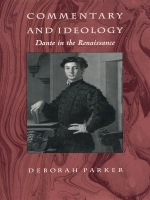
Parker begins by tracing the criticism of Dante commentaries from the nineteenth century to the present and then examines the tradition of commentary from the Middle Ages to the Renaissance. She shows how the civic, institutional, and social commitments of commentators shaped their response to the Comedy, and how commentators tried to use the poem as an authoritative source for various kinds of social legitimation. Parker discusses how different commentators dealt with a deeply political section of the poem: the damnation of Brutus and Cassius.
The scope and importance of Commentary and Ideology will command the attention of a broad group of scholars, including Italian specialists on Dante, late medievalists, students and professionals in early modern European literature, bibliographers, critical theorists, historians of literary criticism and theory, and cultural and intellectual historians.

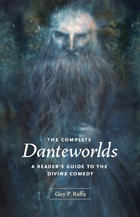
Dante Alighieri’s Divine Comedy has, despite its enormous popularity and importance, often stymied readers with its multitudinous characters, references, and themes. But until the publication in 2007 of Guy Raffa’s guide to the Inferno, students lacked a suitable resource to help them navigate Dante’s underworld. With this new guide to the entire Divine Comedy, Raffa provides readers—experts in the Middle Ages and Renaissance, Dante neophytes, and everyone in between—with a map of the entire poem, from the lowest circle of Hell to the highest sphere of Paradise.
Based on Raffa’s original research and his many years of teaching the poem to undergraduates, The CompleteDanteworlds charts a simultaneously geographical and textual journey, canto by canto, region by region, adhering closely to the path taken by Dante himself through Hell, Purgatory, and Paradise. This invaluable reference also features study questions, illustrations of the realms, and regional summaries. Interpreting Dante’s poem and his sources, Raffa fashions detailed entries on each character encountered as well as on many significant historical, religious, and cultural allusions.
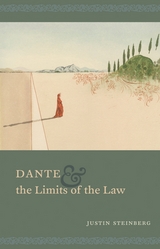
Examining how Dante probes the limits of the law in this juridical otherworld, Steinberg argues that exceptions were vital to the medieval legal order and that Dante’s otherworld represents an ideal “system of exception.” In the real world, Dante saw this system as increasingly threatened by the dual crises of church and empire: the abuses and overreaching of the popes and the absence of an effective Holy Roman Emperor. Steinberg shows that Dante’s imagination of the afterlife seeks to address this gap between the universal validity of Roman law and the lack of a sovereign power to enforce it. Exploring the institutional role of disgrace, the entwined phenomena of judicial discretion and artistic freedom, medieval ideas about privilege and immunity, and the place of judgment in the poem, this cogently argued book brings to life Dante’s sense of justice.
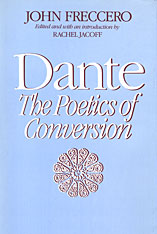
John Freccero enables us to see the Divine Comedy for the bold, poetic experiment that it is. Too many critics have domesticated Dante by separating his theology from his poetics. Freccero argues that to fail to see the convergence of the letter and the spirit, the pilgrim and the poet, is to fail to understand Dante’s poetics of conversion. For Dante, body and soul go together and there is no salvation that’s purely intellectual, no poetry that is simply literary.
The essays that form this book were originally published between 1959 and 1984. They are arranged to follow the order of the Comedy, and they form the perfect companion for a reader of the poem. With these essays assembled for the first time, we can now see Freccero’s stature: he is the best contemporary critic of Dante. Freccero is that rare article, a critic of eclectic and not dogmatic persuasion. Throughout Freccero operates on the fundamental premise that there is always an intricate and crucial dialectic at work between Dante the poet and Dante the pilgrim, and that it is this dialectic that makes the work so profoundly dramatic, one of the great novels of the self.
Thanks to Freccero we readers have the Comedy whole again. Freccero calls upon medieval philosophy, cosmology, science, theology, and poetics to enable us to traverse Dante’s moral landscape without losing our way in the confusions of minute exegeses. In a secular age Freccero enables us to see this poem as what it is, something wholly other than what we might believe or write. In doing so he shows us the most that language can achieve in any age, secular or not.
A Times Literary Supplement Book of the Year
A Marginal Revolution Best Non-Fiction Book of the Year
A Seminary Co-op Notable Book of the Year
A Times Higher Education Book of the Week
A Choice Outstanding Academic Title of the Year
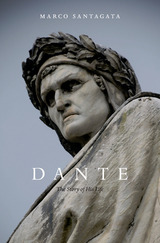
Marco Santagata’s Dante: The Story of His Life illuminates one of the world’s supreme poets from many angles—writer, philosopher, father, courtier, political partisan. Santagata brings together a vast body of Italian scholarship on Dante’s medieval world, untangles a complex web of family and political relationships for English readers, and shows how the composition of the Commedia was influenced by local and regional politics.
“Reading Marco Santagata’s fascinating new biography, the reader is soon forced to acknowledge that one of the cornerstones of Western literature [The Divine Comedy], a poem considered sublime and universal, is the product of vicious factionalism and packed with local scandal.”
—Tim Parks, London Review of Books
“This is a wonderful book. Even if you have not read Dante you will be gripped by its account of one of the most extraordinary figures in the history of literature, and one of the most dramatic periods of European history. If you are a Dantean, it will be your invaluable companion forever.”
—A. N. Wilson, The Spectator
Despite the absence of tracts about beauty and art, aesthetic issues did command the attention of people in the Middle Ages. Whenever poets or philosophers turned their thoughts to the order of the heavens, whenever they delighted in music or art, they contemplated how the pleasure they took in the artistry of the universe was related to the God who created it. For Dante, aesthetics was the discourse of being and could not be narrowly defined. The aesthetic became the domain in which he considered not only form and proportion, but questions of love, identity, and perfection of the self.
Warren Ginsberg expertly guides us through Dante's work. He distinguishes between early texts such as the Vita Nuova, in which the aesthetic offers only a form of knowledge between sensation and reason, and the Comedy, in which the aesthetic is transformed into a language of existence. Among other subjects, Dante's Aesthetics of Being treats poeticism, literary history, language theory, the relation of philosophy to poetry, and of course, aesthetics. Its readers will include not only experts in Dante and medievalists in general, but literary critics of all periods. Indeed, anyone interested in poetic theory, the philosophy of beauty, or interdisciplinary studies will profit from reading Ginsberg's thoughtful offering.
Warren Ginsberg is Professor of English, University at Albany, State University of New York. He is author of The Cast of Character: The Representation of Personality in Ancient and Medieval Literature and editor of two Middle English poems, Wynnere and Wastoure and The Parlement of the Thre Ages.
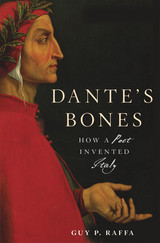
A richly detailed graveyard history of the Florentine poet whose dead body shaped Italy from the Middle Ages and the Renaissance to the Risorgimento, World War I, and Mussolini’s fascist dictatorship.
Dante, whose Divine Comedy gave the world its most vividly imagined story of the afterlife, endured an extraordinary afterlife of his own. Exiled in death as in life, the Florentine poet has hardly rested in peace over the centuries. Like a saint’s relics, his bones have been stolen, recovered, reburied, exhumed, examined, and, above all, worshiped. Actors in this graveyard history range from Lorenzo de’ Medici, Michelangelo, and Pope Leo X to the Franciscan friar who hid the bones, the stone mason who accidentally discovered them, and the opportunistic sculptor who accomplished what princes, popes, and politicians could not: delivering to Florence a precious relic of the native son it had banished.
In Dante’s Bones, Guy Raffa narrates for the first time the complete course of the poet’s hereafter, from his death and burial in Ravenna in 1321 to a computer-generated reconstruction of his face in 2006. Dante’s posthumous adventures are inextricably tied to major historical events in Italy and its relationship to the wider world. Dante grew in stature as the contested portion of his body diminished in size from skeleton to bones, fragments, and finally dust: During the Renaissance, a political and literary hero in Florence; in the nineteenth century, the ancestral father and prophet of Italy; a nationalist symbol under fascism and amid two world wars; and finally the global icon we know today.
In Dante's Epistle to Cangrande Robert Hollander commandingly marshals new evidence to demonstrate that the epistle should be considered authentically Dantean. He further provides enlightening discussion of the nature of tragedy and comedy in the Divine Comedy. The author draws authoritatively on the extensive array of medieval and modern commentaries stored in electronic form by the Dartmouth Dante Project, of which he is the director.
Dante's Epistle to Cangrande makes a signal contribution to Dante studies. Naturally of interest to students of Dante's work, it will also be important reading for those concerned with literary critical questions such as authorial intent, programmatic statements, and allegorical interpretations of literature.
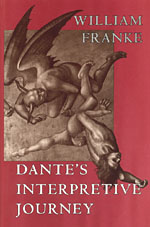
Reading the poem through the lens of hermeneutical theory, Franke focuses particularly on Dante's address to the reader as the site of a disclosure of truth. The event of the poem for its reader becomes potentially an experience of truth both human and divine. While contemporary criticism has concentrated on the historical character of Dante's poem, often insisting on it as undermining the poem's claims to transcendence, Franke argues that precisely the poem's historicity forms the ground for its mediation of a religious revelation. Dante's dramatization, on an epic scale, of the act of interpretation itself participates in the self-manifestation of the Word in poetic form.
Dante's Interpretive Journey is an indispensable addition to the field of Dante studies and offers rich insights for philosophy and theology as well.
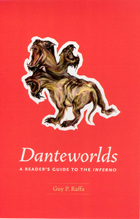
One of the greatest works of world literature, Dante Alighieri’s The Divine Comedy has, despite its enormous popularity and importance, often stymied readers with its multitudinous characters, references, and themes. But until now, students of the Inferno have lacked a suitable resource to guide their reading.
Welcome to Danteworlds, the first substantial guide to the Inferno in English. Guy P. Raffa takes readers on a geographic journey through Dante’s underworld circle by circle—from the Dark Wood down to the ninth circle of Hell—in much the same way Dante and Virgil proceed in their infernal descent. Each chapter—or “region”—of the book begins with a summary of the action, followed by detailed entries, significant verses, and useful study questions. The entries, based on a close examination of the poet’s biblical, classical, and medieval sources, help locate the characters and creatures Dante encounters and assist in decoding the poem’s vast array of references to religion, philosophy, history, politics, and other works of literature.
Written by an established Dante scholar and tested in the fire of extensive classroom experience, Danteworlds will be heralded by readers at all levels of expertise, from students and general readers to teachers and scholars.
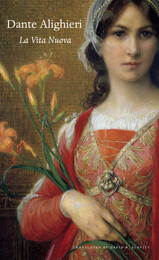
La Vita Nuova (1292–94) has many aspects. Dante’s libello, or “little book,” is most obviously a book about love. In a sequence of thirty-one poems, the author recounts his love of Beatrice from his first sight of her (when he was nine and she eight), through unrequited love and chance encounters, to his profound grief sixteen years later at her sudden and unexpected death. Linked with Dante’s verse are commentaries on the individual poems—their form and meaning—as well as the events and feelings from which they originate. Through these commentaries the poet comes to see romantic love as the first step in a spiritual journey that leads to salvation and the capacity for divine love. He aims to reside with Beatrice among the stars.
David Slavitt gives us a readable and appealing translation of one of the early, defining masterpieces of European literature, animating its verse and prose with a fluid, lively, and engaging idiom and rhythm. His translation makes this first major book of Dante’s stand out as a powerful work of art in its own regard, independent of its “junior” status to La Commedia. In an Introduction, Seth Lerer considers Dante as a poet of civic life. “Beatrice,” he reminds us, “lives as much on city streets and open congregations as she does in bedroom fantasies and dreams.”
In The Revelation of Imagination, William Franke attempts to focus on what is enduring and perennial rather than on what is accommodated to the agenda of the moment. Franke’s book offers re-actualized readings of representative texts from the Bible, Homer, and Virgil to Augustine and Dante. The selections are linked together in such a way as to propose a general interpretation of knowledge. They emphasize, moreover, a way of articulating the connection of humanities knowledge with what may, in various senses, be called divine revelation. This includes the sort of inspiration to which poets since Homer have typically laid claim, as well as that proper to the biblical tradition of revealed religion. The Revelation of Imagination invigorates the ongoing discussion about the value of humanities as a source of enduring knowledge.
Secular Scriptures examines, through its own original speculative outlook, some of the most compelling exemplars of religious-poetic revelation in modern Western literature. The essays taken as an ensemble revolve around and are bookended by Dante, but they also explore the work of Chaucer, Shakespeare, Milton, Blake, Leopardi, Baudelaire, Dickinson, and Yeats. Looking both backward and forward from the vantage of Dante, Franke explores the roots of secularized religious vision in antiquity and the Middle Ages, even as he also looks forward toward its fruits in modern poetry and poetics. Ultimately, Franke’s analyses demonstrate the possibilities opened by understanding literature as secularized religious revelation.
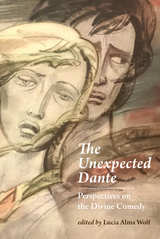
The Unexpected Dante brings together five leading scholars who offer fresh perspectives on the meanings and reception of The Divine Comedy. Some investigate Dante’s intentions by exploring the poem’s esoteric allusions to topics ranging from musical instruments to Roman law. Others examine the poem’s long afterlife and reception in the United States, with chapters showcasing new discoveries about Nicolaus de Laurentii’s 1481 edition of Commedia and the creative contemporary adaptations that have relocated Dante’s visions of heaven and hell to urban American settings.
This study also includes a guide that showcases selected treasures from the extensive Dante collections at the Library of Congress, illustrating the depth and variety of The Divine Comedy’s global influence. The Unexpected Dante is thus a boon to both Dante scholars and aficionados of this literary masterpiece.
Published by Bucknell University Press in association with the Library of Congress. Distributed worldwide by Rutgers University Press.
Receipient, 2013 Guggenheim Fellowship
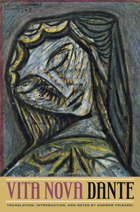
Dante’s Vita Nova (circa 1292–1295) depicts the joys and sorrows, the discoveries and conflicts of Dante’s early love for Beatrice—who would achieve later and even greater fame in Commedia—starting with his first sighting of her and culminating in his prevision of Beatrice among the beatified in heaven. Award-winning translator and poet Andrew Frisardi channels the vigor and nuance of Dante’s first masterpiece for a modern audience.
The “little book,” as Dante calls it, consists of thirty-one lyric poems—mostly sonnets—embedded in a prose narrative, which both recounts an apparently autobiographical set of events also evoked in the poems and offers analysis of the poems’ construction in the medieval critical tradition of divisio textus, or division of the text. Dante selected poetry he had written before age twenty-eight or so and wrote the prose to shape it into a story. The poems anthologize Dante’s growth as a poet, from the influence of his earliest mentors to the stylistic and thematic breakthroughs of his poetic coming-of-age.
The interplay of poetry and prose in Vita Nova, along with the further distinction in the latter between autobiography and critical divisioni, presents a particular challenge for any translator. Frisardi faithfully voices the complex meter and rhyme schemes of the poetry while capturing the tone of each of the prose styles. His introduction and in-depth annotations provide additional context for the twenty-first-century reader.
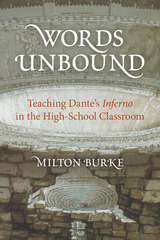
Words Unbound draws on Milton Burke’s thirty years of teaching experience to help educators bring Inferno alive for today’s young reader. In a conversational, “colleague-to-colleague” style, Burke shares the interpretations, questions, and exercises he found effective in his high-school classroom, emphasizing group discussion to help students, no matter their religious or philosophical moorings, engage meaningfully with the notoriously difficult text.
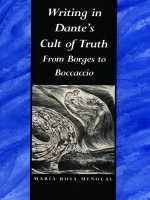
Beginning with a reading of La vita nuova and the Commedia, this literary history of poetic literary histories explores the Dantean poetic experience as it has been limited and rewritten by later poets, particularly Petrarch, Boccaccio, Borges, Pound, Eliot, and the all but forgotten Silvio Pellico, author of Le mie prigioni. By blending discussions of Dante’s own marriage of literature and literary history with those investigations into the imitative qualities of later works, Writing in Dante’s Cult of Truth presents an intertextual literary history, one which seeks to maintain the uncanniness of literature, while imagining history to be neither linear nor clearly distinguishable from literature itself.
READERS
Browse our collection.
PUBLISHERS
See BiblioVault's publisher services.
STUDENT SERVICES
Files for college accessibility offices.
RECENTLY PUBLISHED


UChicago Accessibility Resources
home | accessibility | search | about | contact us
BiblioVault ® 2001 - 2024
The University of Chicago Press