
 A SCHOLARLY BOOK REPOSITORY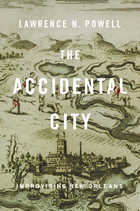
“Should stand for years as the definitive history of New Orleans’s first century.” —Jonathan Yardley, Washington Post
This is the story of a city that shouldn’t exist. In the seventeenth century, what is now America’s most beguiling metropolis was nothing more than a swamp: prone to flooding, infested with snakes, battered by hurricanes. But through the intense imperial rivalries of Spain, France, and England, and the ambitious, entrepreneurial merchants and settlers from four continents who risked their lives to succeed in colonial America, this unpromising site became a crossroads for the whole Atlantic world.
Lawrence N. Powell, a decades-long resident and observer of New Orleans, gives us the full sweep of the city’s history from its founding through Louisiana statehood in 1812. We see the Crescent City evolve from a French village, to an African market town, to a Spanish fortress, and finally to an Anglo-American center of trade and commerce. We hear and feel the mix of peoples, religions, and languages from four continents that make the place electric—and always on the verge of unraveling. The Accidental City is the story of land-jobbing schemes, stock market crashes, and nonstop squabbles over status, power, and position, with enough rogues, smugglers, and self-fashioners to fill a picaresque novel.
Powell’s tale underscores the fluidity and contingency of the past, revealing a place where people made their own history. This is a city, and a history, marked by challenges and perpetual shifts in shape and direction, like the sinuous river on which it is perched.
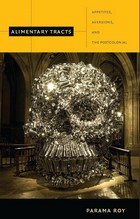
Interpreting texts that have addressed cooking, dining, taste, hungers, excesses, and aversions in South Asia and its diaspora since the mid-nineteenth century, Roy relates historical events and literary figures to tropes of disgust, abstention, dearth, and appetite. She analyzes the fears of pollution and deprivation conveyed in British accounts of the so-called Mutiny of 1857, complicates understandings of Mohandas K. Gandhi’s vegetarianism, examines the “famine fictions” of the novelist-actor Mahasweta Devi, and reflects on the diasporic cookbooks and screen performances of Madhur Jaffrey. This account of richly visceral global modernity furnishes readers with a new idiom for understanding historical action and cultural transformation.

"An original, sensitively told story in which the perspectives of the child are carefully remembered. . . . Bailey's book speaks, with gentle eloquence, not only to those who remember being boys, but to everyone who would seek to protect children from the hurts and ravagings that ordinary life can inflict, to say nothing of war." —Richard Montague, Newsday
"No doubt Tony Bailey owed America something for its hospitality during those anxious years, and with this book he has amply repaid the debt." —Joseph McLellan, Washington Post
"An exquisitely controlled, quietly amusing and moving story." —Publishers Weekly
"As tender as it is truthful, and as amusing as it is unpretentious." —John Russell, New York Times Book Review
American and British Writers in Mexico is the study that laid the foundation upon which subsequent examinations of Mexico’s impact upon American and British letters have built. Chosen by the Mexican government to be placed, in translation, in its public libraries, the book was also referenced by Nobel Laureate Octavio Paz in an article in the New Yorker, “Reflections—Mexico and the United States.” Drewey Wayne Gunn demonstrates how Mexican experiences had a singular impact upon the development of English writers, beginning with early British explorers who recorded their impressions for Hakluyt’s Voyages, through the American Beats, who sought to escape the strictures of American culture.
Among the 140 or so writers considered are Stephen Crane, Ambrose Bierce, Langston Hughes, D. H. Lawrence, Somerset Maugham, Katherine Anne Porter, Hart Crane, Malcolm Lowry, John Steinbeck, Graham Greene, Tennessee Williams, Saul Bellow, William Carlos Williams, Robert Lowell, Ray Bradbury, Allen Ginsberg, William Burroughs, and Jack Kerouac.
Gunn finds that, while certain elements reflecting the Mexican experience—colors, landscape, manners, political atmosphere, a sense of the alien—are common in their writings, the authors reveal less about Mexico than they do about themselves. A Mexican sojourn often marked the beginning, the end, or the turning point in a literary career. The insights that this pioneering study provide into our complex cultural relationship with Mexico, so different from American and British authors’ encounters with Continental cultures, remain vital. The book is essential for anyone interested in understanding the full range of the impact of the expatriate experience on writers.
In this short but powerful book, Stephen Green argues that it is time to acknowledge that underlying all the sound and fury of the Brexit debate were fundamental questions—whether or not fully recognized—about British identity. Are the British different, special, and capable of finding their own way in the world? Who are they, those who call themselves British? Is it all too easy to blame Brexit on post-industrial decline in the traditional heartlands of the Labor Party, or scaremongering by a band of deluded “Little Englanders”? Or is British identity more complex, deep-rooted—and perhaps, in some sense, troubling—than those of other European nations?
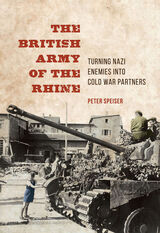
Peter Speiser charts the BAOR's fraught transformation from occupier to ally by looking at the charged nexus where British troops and their families interacted with Germany's civilian population. Examining the relationship on many levels, Speiser ranges from how British mass media representations of Germany influenced BAOR troops to initiatives taken by the Army to improve relations. He also weighs German perceptions, surveying clashes between soldiers and civilians and comparing the popularity of the British services with that of the other occupying powers. As Speiser shows, the BAOR's presence did not improve the relationship between British servicemen and the German populace, but it did prevent further deterioration during a crucial and dangerous period of the early Cold War.
An incisive look at an under-researched episode, The British Army of the Rhine sheds new light on Anglo-German diplomatic, political, and social relations after 1945, and evaluates their impact on the wider context of European integration in the postwar era.

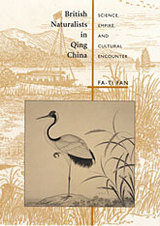
In the eighteenth and nineteenth centuries, Western scientific interest in China focused primarily on natural history. Prominent scholars in Europe as well as Westerners in China, including missionaries, merchants, consular officers, and visiting plant hunters, eagerly investigated the flora and fauna of China. Yet despite the importance and extent of this scientific activity, it has been entirely neglected by historians of science.
This book is the first comprehensive study on this topic. In a series of vivid chapters, Fa-ti Fan examines the research of British naturalists in China in relation to the history of natural history, of empire, and of Sino-Western relations. The author gives a panoramic view of how the British naturalists and the Chinese explored, studied, and represented China's natural world in the social and cultural environment of Qing China.
Using the example of British naturalists in China, the author argues for reinterpreting the history of natural history, by including neglected historical actors, intellectual traditions, and cultural practices. His approach moves beyond viewing the history of science and empire within European history and considers the exchange of ideas, aesthetic tastes, material culture, and plants and animals in local and global contexts. This compelling book provides an innovative framework for understanding the formation of scientific practice and knowledge in cultural encounters.
George Gordon Byron was a superb letter-writer: almost all his letters, whatever the subject or whoever the recipient, are enlivened by his wit, his irony, his honesty, and the sharpness of his observation of people. They provide a vivid self-portrait of the man who, of all his contemporaries, seems to express attitudes and feelings most in tune with the twentieth century. In addition, they offer a mirror of his own time. This first collected edition of all Byron’s known letters supersedes Prothero’s incomplete edition at the turn of the century. It includes a considerable number of hitherto unpublished letters and the complete text of many that were bowdlerized by former editors for a variety of reasons. Prothero’s edition included 1,198 letters. This edition has more than 3,000, over 80 percent of them transcribed entirely from the original manuscripts.
An enchanting epistolary saga ends with the publication of this volume. Volume XI: ‘For freedom’s battle’ contains the letters Byron wrote from Greece between August 1823 and April 9, 1824, ten days before his death. Also included are over fifty letters dating from 1807 to 1820 that have come to light since Leslie A. Marchand began this project ten years ago.
In the letters from Greece a new set of correspondents appears, and a new tone is apparent. Although occasionally playful, Byron is preoccupied with the revolution and his efforts to unite the Greeks in a common cause despite their discord. His chief correspondents are his business agents in the islands and his banker friend in Genoa, Charles Barry, to whom he writes frank accounts of daily affairs. His letters to Hobhouse and to John Bowring attempt to give a realistic picture of the Greek struggle. To Teresa Guiccioli he writes only short, dutiful postscripts in English to the longer letters addressed to her brother.
Among the additional letters that became available too late to take their chronological place in the earlier volumes are those discovered in 1976, locked in a trunk at Barclays Bank; all but one of these fourteen letters were written to Scrope Davies, Byron’s witty friend and drinking companion.
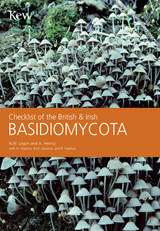
An essential companion for amateur and professional mycologists, and a valuable reference tool for all wildlife recorders, ecologists and conservationists.
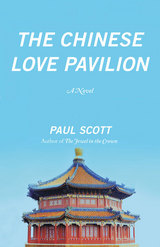
The Chinese Love Pavilion follows a young British clerk, Tom Brent, who must track down a former friend—now suspected of murder—in Malaya. Tom faces great danger, both from the mysterious Malayan jungles and the political tensions between British officers, but the novel is perhaps most memorable for the strange, beautiful romance between Tom and a protean Eurasian beauty whom he meets in the eponymous Chinese Love Pavilion.
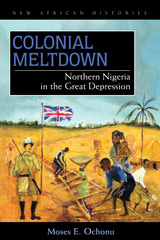
Historians of colonial Africa have largely regarded the decade of the Great Depression as a period of intense exploitation and colonial inactivity. In Colonial Meltdown, Moses E. Ochonu challenges this conventional interpretation by mapping the determined, at times violent, yet instructive responses of Northern Nigeria’s chiefs, farmers, laborers, artisans, women, traders, and embryonic elites to the British colonial mismanagement of the Great Depression. Colonial Meltdown explores the unraveling of British colonial power at a moment of global economic crisis.
Ochonu shows that the economic downturn made colonial exploitation all but impossible and that this dearth of profits and surpluses frustrated the colonial administration which then authorized a brutal regime of grassroots exactions and invasive intrusions. The outcomes were as harsh for Northern Nigerians as those of colonial exploitation in boom years.
Northern Nigerians confronted colonial economic recovery measures and their agents with a variety of strategies. Colonial Meltdown analyzes how farmers, women, laborers, laid-off tin miners, and NorthernNigeria’s emergent elite challenged and rebelled against colonial economic recovery schemes with evasive trickery, defiance, strategic acts of revenge, and criminal self-help and, in the process, exposed the weak underbelly of the colonial system.
Combined with the economic and political paralysis of colonial bureaucrats in the face of crisis, these African responses underlined the fundamental weakness of the colonial state, the brittleness of its economicmission, and the limits of colonial coercion and violence. This atmosphere of colonial collapse emboldened critics of colonial policies who went on to craft the rhetorical terms on which the anticolonial struggle of the post–World War II period was fought out.
In the current climate of global economic anxieties, Ochonu’s analysis will enrich discussions on the transnational ramifications of economic downturns. It will also challenge the pervasive narrative of imperial economic success.
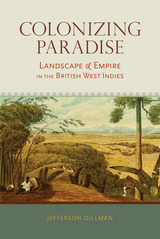
In Colonizing Paradise, historian Jefferson Dillman charts the broad spectrum of sentiments that British citizens and travelers held regarding their colonial possessions in the West Indies. Myriad fine degrees of ambivalence separated extreme views of the region as an idyllic archipelago or a nest of Satanic entrapments. Dillman shows the manner in which these authentic or spontaneous depictions of the environment were shaped to form a narrative that undergirded Britain’s economic and political aims in the region.
Because British sentiments in the Caribbean located danger and evil not just in indigenous populations but in Spanish Catholics as well, Dillman’s work begins with the arrival of Spanish explorers and conquistadors. Colonizing Paradise spans the arrival of English ships and continues through the early nineteenth century and the colonial era. Dillman shows how colonial entrepreneurs, travelers, and settlers engaged in a disquieted dialogue with the landscape itself, a dialogue the examination of which sheds fresh light on the culture of the Anglophone colonial Caribbean.
Of particular note are the numerous mythical, metaphorical, and biblical lenses through which Caribbean landscapes were viewed, from early views of the Caribbean landscape as a New World paradise to later depictions of the landscape as a battleground between the forces of Christ and Satan. The ideal of an Edenic landscape persisted, but largely, Dillman argues, as one that needed to be wrested from the forces of darkness, principally through the work of colonization, planting, cataloguing, and a rational ordering of the environment.
Ultimately, although planters and their allies continued to promote pastoral and picturesque views of the Caribbean landscape, the goal of such narratives was to rationalize British rule as well as to mask and obscure emerging West Indian problems such as diseases, slavery, and rebellions. Colonizing Paradise offers much to readers interested in Caribbean, British, and colonial history.
“I here and there o’heard a Coxcomb cry,
Ah, rot—’tis a Woman’s Comedy.”
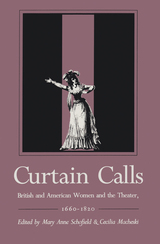
Thus Aphra Behn ushers in a new era for women in the British Theatre (Sir Patient Fancy, 1678). In the hundred years that were to follow—and exactly those years that Curtain Calls examines—women truly took the theater world by storm.
For each woman who chose a career in the theater world of the eighteenth century, there is a unique tale of struggle, insult, success, good or bad fortune, disaster, seduction, or fame. Whether acting, writing, reviewing, or stage managing, women played a major, if frequently unacknowledged, role in the history of the theater from the late seventeenth through the early nineteenth centuries. From Alpha Behn’s earliest plays through the glorious celebrity of Sara Siddons, women molded the taste of the age and carved out in the theater one of the few available opportunities for independence and renown.
Not all the women who tried succeeded, of course, and even the best faced opposition as they challenged the male stronghold of playwriting and theater managing. Curtain Calls maps the new territory as these pioneering women staked it for their own; it chronicles their lives, their triumphs, and their losses.
We begin with Aphra Behn, whose first play was staged in 1670, and conclude in the early decades of the nineteenth century with Inchbald and Siddons. The one hundred and fifty years encompassed by their lives contain the careers of dozens of lesser–known women, a network, as Dr. Johnson would have it, encompassing both talent and tribulation.
Contributors include: Edward Langhans, Linda R. Payne, Pat Rogers, Maureen e. Mulvihill, Deborah Payne, Betty Rizzo, Ellen Donkin, Frances M. Kavenik, Jessica Munns, nancy Cotton, Edna L. Steevs, Doreen Saar, Jean B. Kern, Katherine M. Rogers, Constance Clark, William J. Burling, Judith Phillips Stanton, Douglas Butler, Rose Zimbardo, and the editors.

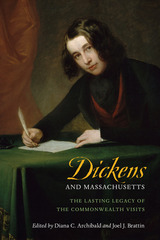
This volume provides insight from leading scholars who have begun to reassess the significance of Massachusetts in the author's life and work. The collection begins with a broad biographical and historical overview taken from the full-length narrative of the award-winning exhibition Dickens and Massachusetts: A Tale of Power and Transformation, which attracted thousands of visitors while on display in Lowell. Abundant images from the exhibition, many of them difficult to find elsewhere, enhance the story of Dickens's relationship with the vibrant cultural and intellectual life of Massachusetts. The second section includes essays that consider the importance of Dickens's many connections to the commonwealth.
In addition to the volume editors, contributors include Chelsea Bray, Iain Crawford, Andre DeCuir, Natalie McKnight, Lillian Nayder, and Kit Polga.
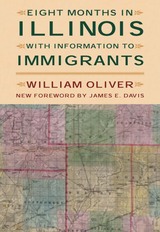
The Illinois frontier offered abundant opportunity, noted English traveler William Oliver after his journey to America in 1841–42, but life there was hard. Accordingly, Oliver advised the wealthy and comfortable to remain in England and counseled the unprosperous to seek their fortunes in America. Written for the poor who would migrate and published in 1843, his Eight Months in Illinois: With Information to Immigrants sought only to provide pertinent, valid, and practical information about what people might encounter in the frontier state. What Oliver actually accomplished, however, was much more: he imparted invaluable insights into and analyses of American life during an era of sweeping social, economic, and political change.
In his new foreword to this edition, James E. Davis stresses Oliver’s sincere desire to help British immigrants succeed in America. Oliver, Davis notes, “devoted dozens of pages of advice on numerous matters: various routes to Illinois and their advantages and disadvantages, processes of settling, qualities of western houses, costs of obtaining a new farm.” Oliver discussed other practical matters, such as the importance of having sons. He also assured his intended readership that “in the West, distinction of classes is little known and seldom recognized.”
As a document covering the middle west in the 1840s, Eight Months in Illinois: With Information to Immigrants has few equals. Its portrayal of farming and trade in relatively primitive times is historically accurate. It paints a plain picture, laying out the essential facts and presenting the typical incidents that enable us to trace the course of a settler’s simple, diligent, laborious day-to-day life. According to Davis, Oliver depicted “accurate and balanced slices of life in Illinois and America, including nasty insects, crude conditions, and the necessity of work.” And he did so without a trace of anti-American bias.
Eight Months in Illinois with Information to Immigrants was reprinted with emendations in 1924 by Walter Hill.
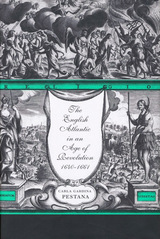
Between 1640 and 1660, England, Scotland, and Ireland faced civil war, invasion, religious radicalism, parliamentary rule, and the restoration of the monarchy. Carla Gardina Pestana offers a sweeping history that systematically connects these cataclysmic events and the development of the infant plantations from Newfoundland to Surinam.
By 1660, the English Atlantic emerged as religiously polarized, economically interconnected, socially exploitative, and ideologically anxious about its liberties. War increased both the proportion of unfree laborers and ethnic diversity in the settlements. Neglected by London, the colonies quickly developed trade networks, especially from seafaring New England, and entered the slave trade. Barbadian planters in particular moved decisively toward slavery as their premier labor system, leading the way toward its adoption elsewhere. When by the 1650s the governing authorities tried to impose their vision of an integrated empire, the colonists claimed the rights of "freeborn English men," making a bid for liberties that had enormous implications for the rise in both involuntary servitude and slavery. Changes at home politicized religion in the Atlantic world and introduced witchcraft prosecutions.
Pestana presents a compelling case for rethinking our assumptions about empire and colonialism and offers an invaluable look at the creation of the English Atlantic world.
@font-face { font-family: "Palatino";}@font-face { font-family: "?????? Pro W3";}p.MsoNormal, li.MsoNormal, div.MsoNormal { margin: 0in 0in 0.0001pt; font-size: 12pt; font-family: "Times New Roman"; }p.FreeForm, li.FreeForm, div.FreeForm { margin: 0in 0in 0.0001pt; font-size: 12pt; font-family: "Times New Roman"; color: black; }div.Section1 { page: Section1; }
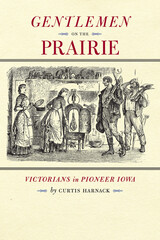
In the 1880s, the well-connected young Englishman William B. Close and his three brothers, having bought thousands of acres of northwest Iowa prairie, conceived the idea of enticing sons of Britain’s upper classes to pursue the life of the landed gentry on these fertile acres. “Yesterday a wilderness, today an empire”: their bizarre experiment, which created a colony for people “of the better class” who were not in line to inherit land but whose fathers would set them up in farming, flourished in Le Mars, Iowa (and later in Pipestone, Minnesota), with over five hundred youths having a go at farming. In Gentlemen on the Prairie, Curtis Harnack tells the remarkable story of this quite unusual chapter in the settling of the Midwest.
Many of these immigrants had no interest in American citizenship but enjoyed or endured the challenging adventure of remaining part of the empire while stranded on the plains. They didn’t mix socially with other Le Mars area residents but enjoyed such sports as horse racing, fox hunts, polo, and an annual derby followed by a glittering grand ball. Their pubs were named the House of Lords, the House of Commons, and Windsor Castle; the Prairie Club was a replica of a London gentlemen’s club, an opera house attracted traveling shows, and their principal hotel was Albion House. In St. George’s Episcopal Church, prayers were offered for the well-being of Queen Victoria.
Problems soon surfaced, however, even for these well-heeled aristocrats. The chief problem was farm labor; there was no native population to exploit, and immigrant workers soon bought their own land. Although sisters might visit the colonists and sometimes marry one of them, appropriate female companionship was scarce. The climate was brutal in its extremes, and many colonists soon sold their acres at a profit and moved to countries affiliated with Britain. When the financial depression in the early 1890s lowered land values and made agriculture less profitable, the colony collapsed. Harnack skillfully draws upon the founder’s “Prairie Journal,” company ledgers, and other records to create an engaging, engrossing story of this quixotic pioneering experiment.
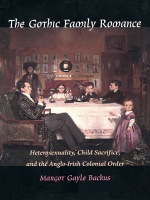
Backus uses contemporary theory, including that of Michel Foucault and Eve Kosofsky Sedgwick, to analyze texts by authors ranging from Richardson, Swift, Burke, Edgeworth, Stoker, and Wilde to contemporary Irish novelists and playwrights.
By charting the changing relations between the family and the British state, she shows how these authors dramatized a legacy of violence within the family cell and discusses how disturbing themes of child sacrifice and colonial repression are portrayed through irony, satire, “paranoid” fantasy, and gothic romance. In a reconceptualization of the Freudian family romance, Backus argues that the figures of the Anglo-Irish gothic embody the particular residue of childhood experiences within a settler colonial society in which biological reproduction represented an economic and political imperative.
Backus’s bold positioning of the nuclear family at the center of post-Enlightenment class and colonial power relations in England and Ireland will challenge and provoke scholars in the fields of Irish literature and British and postcolonial studies. The book will also interest students and scholars of women’s studies, and it has important implications for understanding contemporary conflicts in Ireland.
In 1777 Edmund Burke remarked that for his contemporaries “the Great Map of Mankind is unrolled at once.” The period from the late seventeenth century to the end of the eighteenth century had seen a massive increase in Britain’s knowledge of the non-European peoples of the wider world, and this was reflected in the proliferation of travel accounts of every kind.
This is a history of British perceptions of the exotic peoples and lands of Asia, North America, West Africa, and the Pacific who became well-known during that great age of exploration. It shows how the contours of intellectual and cultural history changed as news poured in. Philosophers contemplated man in a state of nature; the study of religion was broadened as Hinduism, the naturalistic religions of North America, and Chinese rites and ceremonies were revealed. Racial issues like slavery and negritude, questions about advanced versus backward nations, the great Chain of Being argument, and the Unchanging East theory became concerns of educated persons. Along with the impact of explorations on men’s ideas, the use of “sciences” like anthropology, ethnology, archeology, and philology came into vogue. And not incidentally, interest in empire grew, missionary zeal was strengthened, and tolerance and intolerance toward strangers struggled for dominance.
It could be argued that by the end of this age of “enlightenment,” investigation of the inhabitants of these distant lands had reinforced those assumptions of superiority that were an essential feature of British global expansion. To that extent this book is concerned with the intellectual foundations of the second British empire, for it seeks to show how many of the attitudes present in Britain’s dealings with the world in her imperial heyday were formulated during the eighteenth century.
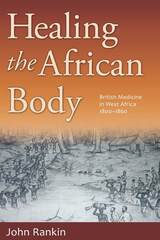
This timely book explores the troubled intertwining of religion, medicine, empire, and race relations in the early nineteenth century. John Rankin analyzes the British use of medicine in West Africa as a tool to usher in a “softer” form of imperialism, considers how British colonial officials, missionaries, and doctors regarded Africans, and explores the impact of race classification on colonial constructs.
Rankin goes beyond contemporary medical theory, examining the practice of medicine in colonial Africa as Britons dealt with the challenges of providing health care to their civilian employees, African soldiers, and the increasing numbers of freed slaves in the general population, even while the imperialists themselves were threatened by a lack of British doctors and western medicines. As Rankin writes, “The medical system sought to not only heal Africans but to ‘uplift’ them and make them more amenable to colonial control . . . Colonialism starts in the mind and can be pushed on the other solely through ideological pressure.”
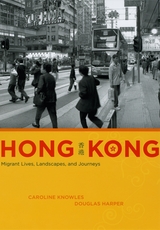
In 1997 the United Kingdom returned control of Hong Kong to China, ending the city’s status as one of the last remnants of the British Empire and initiating a new phase for it as both a modern city and a hub for global migrations. Hong Kong is a tour of the city’s postcolonial urban landscape, innovatively told through fieldwork and photography.
Caroline Knowles and Douglas Harper’s point of entry into Hong Kong is the unusual position of the British expatriates who chose to remain in the city after the transition. Now a relatively insignificant presence, British migrants in Hong Kong have become intimately connected with another small minority group there: immigrants from Southeast Asia. The lives, journeys, and stories of these two groups bring to life a place where the past continues to resonate for all its residents, even as the city hurtles forward into a future marked by transience and transition. By skillfully blending ethnographic and visual approaches, Hong Kong offers a fascinating guide to a city that is at once unique in its recent history and exemplary of our globalized present.

Drawing on research from a variety of academic fields, such as archaeology, history, botany, ecology, and physical science, M. J. Morgan explores the intersection of people and the environment in early eighteenth-century Illinois Country—a stretch of fecund, alluvial river plain along the Mississippi river. Arguing against the traditional narrative that describes Illinois as an untouched wilderness until the influx of American settlers, Morgan illustrates how the story began much earlier.
She focuses her study on early French and Indian communities, and later on the British, nestled within the tripartite environment of floodplain, riverine cliffs and bluffs, and open, upland till plain/prairie and examines the impact of these diverse groups of people on the ecological landscape. By placing human lives within the natural setting of the period—the abundant streams and creeks, the prairies, plants and wildlife—she traces the environmental change that unfolded across almost a century. She describes how it was a land in motion; how the occupying peoples used, extracted, and extirpated its resources while simultaneously introducing new species; and how the flux and flow of life mirrored the movement of the rivers. Morgan emphasizes the importance of population sequences, the relationship between the aboriginals and the Europeans, the shared use of resources, and the effects of each on the habitat.
Land of Big Rivers is a unique, many-themed account of the big-picture ecological change that occurred during the early history of the Illinois Country. It is the first book to consider the environmental aspects of the Illinois Indian experience and to reconsider the role of the French and British in environmental change in the mid-Mississippi Valley. It engagingly recreates presettlement Illinois with a remarkable interdisciplinary approach and provides new details that will encourage understanding of the interaction between physical geography and the plants, animals, and people in the Illinois Country. Furthermore, it exhibits the importance of looking at the past in the context of environmental transformation, which is especially relevant in light of today’s global climate change.
For a British Empire that stretched across much of the globe at the start of the nineteenth century, the interiors of Africa and Australia remained intriguing mysteries. The challenge of opening these continents to imperial influence fell to a proto-professional coterie of determined explorers. They sought knowledge, adventure, and fame, but often experienced confusion, fear, and failure. The Last Blank Spaces follows the arc of these explorations, from idea to practice, from intention to outcome, from myth to reality.
Those who conducted the hundreds of expeditions that probed Africa and Australia in the nineteenth century adopted a mode of scientific investigation that had been developed by previous generations of seaborne explorers. They likened the two continents to oceans, empty spaces that could be made truly knowable only by mapping, measuring, observing, and preserving. They found, however, that their survival and success depended less on this system of universal knowledge than it did on the local knowledge possessed by native peoples.
While explorers sought to advance the interests of Britain and its emigrant communities, Dane Kennedy discovers a more complex outcome: expeditions that failed ignominiously, explorers whose loyalties proved ambivalent or divided, and, above all, local states and peoples who diverted expeditions to serve their own purposes. The collisions, and occasional convergences, between British and indigenous values, interests, and modes of knowing the world are brought to the fore in this fresh and engaging study.
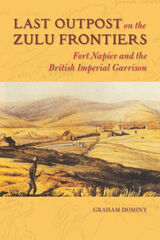
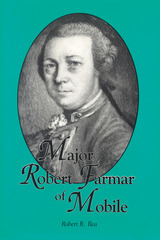
"An engaging biography [and] a colorful tale. . . . Robert Farmar, a son of New Jersey, used his position among that colony's elite to secure a commission as a captain in the British Army during the War of Jenkins' Ear and King George's War, serving in the unsuccessful assaults at Cartegena, Cuba, and Panama and then in the disaster at Fontenoy in Flanders and in the reversals at Rocoux and Laffeldt. . . . During the Seven Years' War he participated in the capture of Havana.
Official British declarations of neutrality in the Caste War were confounded by a variety of political and economic factors, including competing land claims befuddled by a tangled set of treaties, mahogany extraction by British companies in contested territories, Maya rent demands, British trade in munitions to different groups of Maya combatants, and a labor system reliant on debt servitude. All these factors contributed to uneasy alliances and opportunistic crossings of imagined geopolitical borders in both directions, ultimately leading to a new military conflict in the western and northern regions of the territory claimed by Britain. What frequently began as hyper-local disputes spun out into international affairs as actors called upon more powerful groups for assistance. Evading reductionism, this work traces the decisions and actions of key figures as they maneuvered through the miasma of violence, abuse, deception, fear, flight, and glimpses of freedom.
Positioning the historiographic and ethnographic gaze on the English side without adopting the colonialist narratives and objectives found in English repositories, Maya-British Conflict at the Edge of the Yucatecan Caste War is an important and original contribution to a neglected area of study. It will appeal to students, scholars, and general readers interested in anthropology, Latin American cultures and history, Central American history, British imperialism, Indigenous rights, political anthropology, and colonialism and culture.
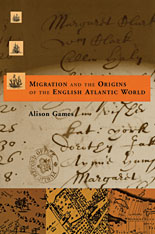
England's seventeenth-century colonial empire in North America and the Caribbean was created by migration. The quickening pace of this essential migration is captured in the London port register of 1635, the largest extant port register for any single year in the colonial period and unique in its record of migration to America and to the European continent. Alison Games analyzes the 7,500 people who traveled from London in that year, recreating individual careers, exploring colonial societies at a time of emerging viability, and delineating a world sustained and defined by migration.
The colonial travelers were bound for the major regions of English settlement--New England, the Chesapeake, the West Indies, and Bermuda--and included ministers, governors, soldiers, planters, merchants, and members of some major colonial dynasties--Winthrops, Saltonstalls, and Eliots. Many of these passengers were indentured servants. Games shows that however much they tried, the travelers from London were unable to recreate England in their overseas outposts. They dwelled in chaotic, precarious, and hybrid societies where New World exigencies overpowered the force of custom. Patterns of repeat and return migration cemented these inchoate colonial outposts into a larger Atlantic community. Together, the migrants' stories offer a new social history of the seventeenth century. For the origins and integration of the English Atlantic world, Games illustrates the primary importance of the first half of the seventeenth century.
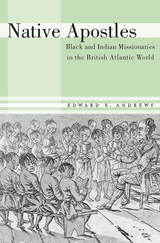
As Protestantism expanded across the Atlantic world in the seventeenth and eighteenth centuries, most evangelists were not white Anglo-Americans, as scholars have long assumed, but members of the same groups that missionaries were trying to convert. Native Apostles offers one of the most significant untold stories in the history of early modern religious encounters, marshalling wide-ranging research to shed light on the crucial role of Native Americans, Africans, and black slaves in Protestant missionary work. The result is a pioneering view of religion’s spread through the colonial world.
From New England to the Caribbean, the Carolinas to Africa, Iroquoia to India, Protestant missions relied on long-forgotten native evangelists, who often outnumbered their white counterparts. Their ability to tap into existing networks of kinship and translate between white missionaries and potential converts made them invaluable assets and potent middlemen. Though often poor and ostracized by both whites and their own people, these diverse evangelists worked to redefine Christianity and address the challenges of slavery, dispossession, and European settlement. Far from being advocates for empire, their position as cultural intermediaries gave native apostles unique opportunities to challenge colonialism, situate indigenous peoples within a longer history of Christian brotherhood, and harness scripture to secure a place for themselves and their followers.
Native Apostles shows that John Eliot, Eleazar Wheelock, and other well-known Anglo-American missionaries must now share the historical stage with the black and Indian evangelists named Hiacoomes, Good Peter, Philip Quaque, John Quamine, and many more.
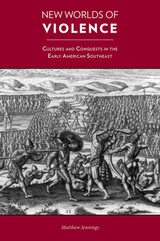
From the early 1500s to the mid-1700s, the American Southeast was the scene of continuous
tumult as European powers vied for dominance in the region while waging war on Native American communities. Yet even before Hernando de Soto landed his expeditionary
force on the Gulf shores of Florida, Native Americans had created their own “cultures of violence”: sets of ideas about when it was appropriate to use violence and what sorts of violence were appropriate to a given situation.
In New Worlds of Violence, Matthew Jennings offers a persuasive new framework for understanding the European–Native American contact period and the conflicts among indigenous peoples that preceded it. This pioneering approach posits that every group present in the Southeast had its own ideas about the use of violence and that these ideas changed over time as they collided with one another. The book starts with the Mississippian era and continues through the successive Spanish and English invasions of the Native South. Jennings argues that the English conquered the Southeast because they were able to force everyone else to adapt to their culture of violence, which, of course, changed over time as well. By 1740, a peculiarly Anglo-American culture of violence was in place that would profoundly influence the expansion of England’s colonies and the eventual southern United States. While Native and African violence were present in this world, they moved in circles defined by the English.
New Worlds of Violence concludes by pointing out that long-lasting violence bears long-lasting consequences. An important contribution to the growing body of work on the early Southeast, this book will significantly broaden readers’ understanding of America’s violent past.
Matthew Jennings is an assistant professor of history at Macon State College in Macon, Georgia. He is the author of “Violence in a Shattered World” in Mapping the Shatter Zone: The European Invasion and the Transformation of the Mississippian World, edited by Robbie Ethridge and Sheri Shuck-Hall. His work has also appeared in The Uniting States, The South Carolina Encyclopedia, A Multicultural History of the United States, and The Encyclopedia of Native American History.
Nicaragua’s Mosquito Shore provides a general history of eastern Nicaragua from the time of the first British entry in 1633 to the present. The territory is populated chiefly by Mosquito Indians, who speak their own language and some Mosquito.
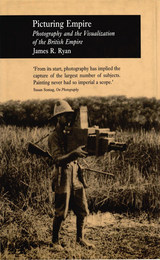
But as James R. Ryan argues in Picturing Empire, Victorian photographs reveal as much about the imaginative landscapes of imperial culture as they do about the "real" subjects captured within their frames. Ryan considers the role of photography in the exploration and domestication of foreign landscapes, in imperial warfare, in the survey and classification of "racial types," in "hunting with the camera," and in teaching imperial geography to British schoolchildren.
Ryan's careful exposure of the reciprocal relation between photographic image and imperial imagination will interest all those concerned with the cultural history of the British Empire.
But as James R. Ryan argues in Picturing Empire, Victorian photographs reveal as much about the imaginative landscapes of imperial culture as they do about the "real" subjects captured within their frames. Ryan considers the role of photography in the exploration and domestication of foreign landscapes, in imperial warfare, in the survey and classification of "racial types," in "hunting with the camera," and in teaching imperial geography to British schoolchildren.
Ryan's careful exposure of the reciprocal relation between photographic image and imperial imagination will interest all those concerned with the cultural history of the British Empire.
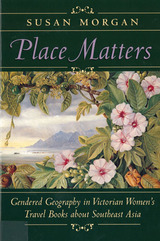
"Morgan has written an important and original work that presents a well-substantiated challenge to many recent studies of 'colonial discourse'."--Nancy L. Paxton,
Susan Morgan's study of materials and regions, previously neglected in contemporary postcolonial studies, begins with the transforming premise that "place matters." Concepts derived from writings about one area of the world cannot simply be transposed to another area, in some sort of global theoretical move. Moreover, place in the discourse of Victorian imperialism is a matter of gendered as well as geographic terms. Taking up works by Anna Forbes and Marianne North on the Malay Archipelago, by Margaret Brooke and Harriette McDougall on Sarawak, by Isabella Bird and Emily Innes on British Malaya, by Anna Leonowens on Siam, Morgan also makes extensive use of theorists whose work on imperialism in Southeast Asia is unfamiliar to most American academics.
This vivid examination of a different region and different writings emphasizes that in Victorian literature there was no monolithic imperialist location, authorial or geographic. The very notion of a ‘colony’ or an ‘imperial presence’ in Southeast Asia is problematic. Morgan is concerned with marking the intersections of particular Victorian imperial histories and constructions of subjectivity. She argues that specific places in Southeast Asia have distinctive, and differing, masculine imperial rhetorics. It is within these specific rhetorical contexts that women’s writings, including their moments of critique, can be read.
Thoughtfully bearing what he presented as a volume of Tennyson with a few trifling revisions in the hand of the poet, Powell was embraced by the slavishly Anglophile New York literary establishment, including a young Herman Melville. In two pot-boilers—The Living Authors of England (1849) and The Living Authors of America (1850)—Powell denounced the most revered American author, Washington Irving, for plagiarism; provoked Charles Dickens to vengeful trans-Atlantic outrage and then panic; and capped his insolence by identified Irving and Melville as the two worst “enemies of the American mind.” For almost four more decades he sniped at Dickens, put words in Melville’s mouth, and survived even the most conscientious efforts to expose him. Long fascinated by this incorrigible rogue, Hershel Parker in The Powell Papers uses a few familiar documents and a mass of freshly discovered material (including a devastating portrait of Powell in a serialized novel) to unfold a captivating tale of skullduggery through the words of great artists and then-admired journalists alike.
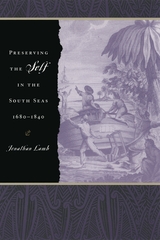
Lamb contends that European exploration of the South Seas was less confident and mindful than we have assumed. It was, instead, conducted in moods of distraction and infatuation that were hard to make sense of and difficult to narrate, and it prompted reactions among indigenous peoples that were equally passionate and irregular. Preserving the Self in the South Seas also examines these common crises of exploration in the context of a metropolitan audience that eagerly consumed narratives of the Pacific while doubting their truth. Lamb considers why these halting and incredible journals were so popular with the reading public, and suggests that they dramatized anxieties and bafflements rankling at the heart of commercial society.
When this Pulitzer Prize–winning biography first appeared in 1976, it rescued T.E. Lawrence from the mythologizing that had seemed to be his fate. In it, John Mack humanely and objectively explores the relationship between Lawrence’s inner life and his historically significant actions.
Extensive interviews, far-flung correspondence, access to War Office dispatches and unpublished letters provide the basis for Mack’s sensitive investigation of the psychiatric dimensions of Lawrence’s personality. In addition, Mack examines the pertinent history, politics, and sociology of the time in order to weigh the real forces with which Lawrence contended and which impinged upon him.
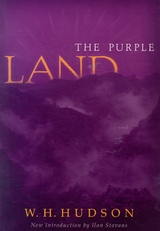
First published in 1885, The Purple Land was the first novel of William Henry Hudson, author of Green Mansions. The Anglo-Argentine naturalist distinguished himself both as one of the finest craftsmen of prose in English literature and as a thinker on ecological matters far ahead of his time.
The Purple Land is the exuberant, often wryly comic, first-person account of a young Englishman’s imprudent adventures, set against a background of political strife in nineteenth-century Uruguay. Eloping with an Argentine girl, young Richard Lamb makes an implacable enemy of his teenage bride’s father. Leaving her behind, he goes ignorantly forth into the interior of the country to seek his fortune and is eventually imprisoned and persecuted by the vengeful father. His narrative closes as he sets off on still another impetuous quest.
This facsimile of the 1904 Three Sirens Press edition includes striking woodcuts by Keith Henderson illustrating the characters in the novel and the fauna of Uruguay. Ilan Stavans’s introduction offers an opportunity to revisit The Purple Land as a "road novel" in which an outsider offers reflections on nationality and diasporic identity.

During combat, soldiers make life-and-death choices dozens of times a day. These individual decisions accumulate to determine the outcome of wars. This work examines the theory and practice of military ethics in counterinsurgency operations. Marcus Schulzke surveys the ethical traditions that militaries borrow from; compares ethics in practice in the US Army, British Army and Royal Marines Commandos, and Israel Defense Forces; and draws conclusions that may help militaries refine their approaches in future conflicts. The work is based on interviews with veterans and military personnel responsible for ethics training, review of training materials and other official publications, published accounts from combat veterans, and observation of US Army focus groups with active-duty soldiers. Schulzke makes a convincing argument that though military ethics cannot guarantee flawless conduct, incremental improvements can be made to reduce war’s destructiveness while improving the success of counterinsurgency operations.
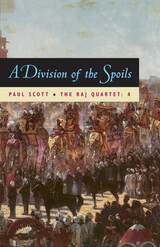
As the scorpian, encircled by a ring of fire, will sting itself to death, so does the British raj hasten its own destruction when threatened by the flames of Indian independence. Brutal repression and imprisonment of India's leaders cannot still the cry for home rule. And in the midst of chaos, the English Laytons withdraw from a world they no longer know to seek solace in denial, drink, and madness.
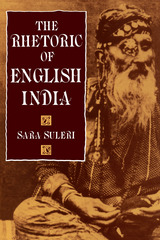
"A dense, witty, and richly allusive book . . . an extremely valuable contribution to postcolonial cultural studies as well as to the whole area of literary criticism."—Jean Sudrann, Choice
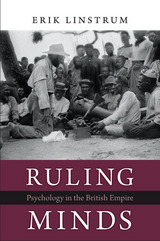
At its zenith in the early twentieth century, the British Empire ruled nearly one-quarter of the world’s inhabitants. As they worked to exercise power in diverse and distant cultures, British authorities relied to a surprising degree on the science of mind. Ruling Minds explores how psychology opened up new possibilities for governing the empire. From the mental testing of workers and soldiers to the use of psychoanalysis in development plans and counterinsurgency strategy, psychology provided tools for measuring and managing the minds of imperial subjects. But it also led to unintended consequences.
Following researchers, missionaries, and officials to the far corners of the globe, Erik Linstrum examines how they used intelligence tests, laboratory studies, and even dream analysis to chart abilities and emotions. Psychology seemed to offer portable and standardized forms of knowledge that could be applied to people everywhere. Yet it also unsettled basic assumptions of imperial rule. Some experiments undercut the racial hierarchies that propped up British dominance. Others failed to realize the orderly transformation of colonized societies that experts promised and officials hoped for. Challenging our assumptions about scientific knowledge and empire, Linstrum shows that psychology did more to expose the limits of imperial authority than to strengthen it.
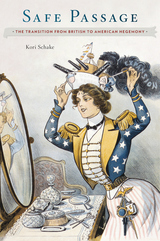
History records only one peaceful transition of hegemonic power: the passage from British to American dominance of the international order. What made that transition uniquely cooperative and nonviolent? Does it offer lessons to guide policy as the United States faces its own challengers to the order it has enforced since the 1940s? To answer these questions, Kori Schake explores nine points of crisis or tension between Britain and the United States, from the Monroe Doctrine in 1823 to the establishment of the unequal “special relationship” during World War II.
Over this period, Safe Passage shows, the United States gradually changed the rules that Britain had established at its imperial height. It was able to do so peacefully because, during the crucial years, Britain and the United States came to look alike to each other and different from other nations. Britain followed America’s lead in becoming more democratic, while the United States, because of its conquest of the American West, developed an imperial cast of mind. Until the end of World War II, both countries paid more attention to their cumulative power relative to other states in the order than to their individual power relative to each other.
The factors that made the Anglo-American transition peaceful, notably the convergence in their domestic ideologies, are unlikely to apply in future transitions, Schake concludes. We are much more likely to see high-stake standoffs among competing powers attempting to shape the international order to reflect the starkly different ideologies that prevail at home.
This 1940 swashbuckler is one of the best examples of the old Hollywood studio system at work. Scholars and film buffs will learn much about collaborative filmmaking on an exceptionally large scale as Rudy Behlmer traces step-by-step the evolution of The Sea Hawk. The very anti-thesis of an auteur film, The Sea Hawk illustrates the ways in which creative input from just about everyone on the Warner Brothers lot—producers, writers, art directors, director, cameraman, special effects team, editor and composer-conductor—resulted in a film in the familiar Warners house style.
This book includes the complete screenplay.
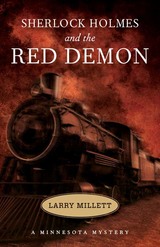
The manuscript contains the story of how Sherlock Holmes and Watson traveled to Minnesota to track a murderous arsonist—known only as the Red Demon—who is threatening both Hill and his Great Northern Railway. Set against the backdrop of the real, devastating Hinckley forest fire of 1894, Sherlock Holmes and the Red Demon is the tense and atmospheric first novel in Larry Millett’s classic series of adventures that brought Sherlock Holmes and Dr. Watson to Minnesota.
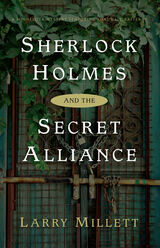
As the city of Minneapolis prepares for a visit from President William McKinley, someone else prepares for murder. On the day before the visit, a union activist is found hanged, naked, outside a ruined mansion. A placard around his neck reads “THE SECRET ALLIANCE HAS SPOKEN.” Who is the alliance? What does it want? How was the victim involved with the city’s corrupt mayor? And why did he possess a photograph of a prominent citizen in a compromising position? Shadwell Rafferty searches for answers, encountering bribery, corruption, union organizers, anarchists, and conspiracy, putting himself in danger. But as luck would have it, his old friends Sherlock Holmes and Dr. John H. Watson are on their way.
In this fourth installment of Larry Millett’s Minnesota Mystery series, Shadwell Rafferty commands center stage in a brand-new city. Packed with Millett’s signature historical and architectural detail, this book is deviously delightful.
(I like the way the English spell it
They’re so clever about some things
Probably smarter generally than we are
Although there is supposed to be something
We have that they don’'t—'don’t ask me
What it is. . . .)
—John Ashbery, “Tenth Symphony”
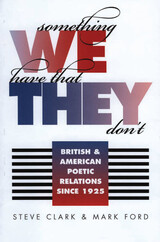
Something We Have That They Don’t presents a variety of essays on the relationship between British and American poetry since 1925. The essays collected here all explore some aspect of the rich and complex history of Anglo-American poetic relations of the last seventy years. Since the dawn of Modernism poets either side of the Atlantic have frequently inspired each other’s developments, from Frost’s galvanizing advice to Edward Thomas to rearrange his prose as verse, to Eliot’s and Auden’s enormous influence on the poetry of their adopted nations (“whichever Auden is,” Eliot once replied when asked if he were a British or an American poet, “I suppose, I must be the other”); from the impact of Charles Olson and other Black Mountain poets on J. H. Prynne and the Cambridge School, to the widespread influence of Frank O'Hara and Robert Lowell on a diverse range of contemporary British poets. Clark and Ford’s study aims to chart some of the currents of these ever-shifting relations. Poets discussed in these essays include John Ashbery, W. H. Auden, Elizabeth Bishop, T. S. Eliot, Mark Ford, Robert Graves, Thom Gunn, Lee Harwood, Geoffrey Hill, Michael Hofmann, Susan Howe, Robert Lowell, and W. B. Yeats.
“Poetry and sovereignty,” Philip Larkin remarked in an interview of 1982, “are very primitive things”: these essays consider the ways in which even seemingly very “unprimitive” poetries can be seen as reflecting and engaging with issues of national sovereignty and self-interest, and in the process they pose a series of fascinating questions about the national narratives that currently dominate definitions of the British and American poetic traditions.
This innovative and exciting new collection will be of great interest to students and scholars of British and American poetry and comparative literature.
A classic resource on the struggle for dominance in southern North America during the colonial period
This volume recounts the clashes and intrigues that played out over the landscape of the Old Southwest and across six decades as the Spanish, French, British, and ultimately Americans vied for control. Rivalry began soon after initial discovery, mapping, and exploration as the world powers, particularly England and France, competed for control of the lucrative fur trade in the Mississippi valley. The French attempted to establish trade networks stretching from the Atlantic Ocean inland to the Mississippi River and northward from ports on the Gulf of Mexico to the Ohio River. But they found the British already entrenched there.
Verner Crane guides us through this multinational struggle and navigates the border wars and diplomatic intrigues that played crucial roles in the settlement of the South by Euro-Americans. In his new introduction, Steven Hahn places the work in the context of its time, sketches its publication history, and provides biographical information on Crane.
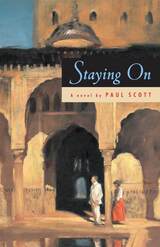
"Staying On far transcends the events of its central action. . . . [The work] should help win for Scott . . . the reputation he deserves—as one of the best novelists to emerge from Britain's silver age."—Robert Towers, Newsweek
"Scott's vision is both precise and painterly. Like an engraver cross-hatching in the illusion of fullness, he selects nuances that will make his characters take on depth and poignancy."—Jean G. Zorn, New York Times Book Review
"A graceful comic coda to the earlier song of India. . . . No one writing knows or can evoke an Anglo-Indian setting better than Scott."—Paul Gray, Time
"Staying On provides a sort of postscript to [Scott's] deservedly acclaimed The Raj Quartet. . . . He has, as it were, summoned up the Raj's ghost in Staying On. . . . It is the story of the living death, in retirement, and the final end of a walk-on character from the quartet. . . . Scott has completed the task of covering in the form of a fictional narrative the events leading up to India's partition and the achievement of independence in 1947. It is, on any showing, a creditable achievement."—Malcolm Muggeridge, New York Times Book Review
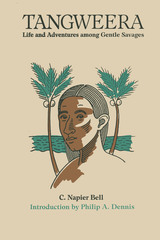
In the 1980s, conflicts between the Miskito people of Nicaragua's eastern coast and the Sandinistas drew international attention. Indeed, the Miskitos' struggle to defend their cultural autonomy and land rights points out a curious historical anomaly. This native group has long had closer ties to British and American culture than to Hispanic Nicaraguan culture. C. Napier Bell, son of a British trader, grew up on the Miskito Coast in the nineteenth century and spoke the Miskito language fluently.
Tangweera, first published in 1899, is Bell's autobiographical account of his boyhood experiences. Rich in ethnographic detail, the book records an idyllic life of hunting, fishing, and trading. Bell describes the social customs and beliefs of the various Indian peoples he knew, as well as the relations among the coastal Miskito, the black creole population, and the tribes of the interior—the latter a subject of continuing importance. Although Bell shared common nineteenth-century ideas about the inferiority of “savage” races, his affection for the Miskito people and his love of their land fill Tangweera. Anthropologists, historians, naturalists, and travelers in the region will find this fascinating reading.
The introduction by Philip A. Dennis, Professor of Anthropology at Texas Tech University, provides a modern observer's view of Miskito culture and discusses important changes and continuities since Bell's time.
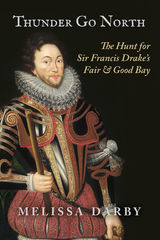
Thunder Go North unravels the mysteries surrounding Drake’s famous voyage and summer sojourn in this bay. Comparing Drake’s observations of the Natives’ houses, dress, foods, language, and lifeways with ethnographic material collected by early anthropologists, Melissa Darby makes a compelling case that Drake and his crew landed not in California but on the Oregon coast. She also uncovers the details of how an early twentieth-century hoax succeeded in maintaining the California landing theory and silencing contrary evidence. Presented here in an engaging narrative, Darby’s research beckons for history to be rewritten.
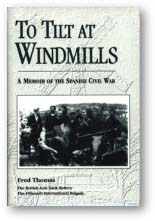
To Tilt at Windmills is the memoir of Briton Fred Thomas who served with the International Brigades in the Spanish Civil War (July 1936-March 1939).
Inspired by a memorable return to Iberian battlefields forty years later, and based on diaries kept during the many months Thomas spent as a gunner with the British Anti-Tank Battery, the narrative moves eloquently along a journey into the war zone, through the several campaigns in which he fought and where he was twice wounded, and finally to the withdrawal of the Brigades from the conflict. What distinguishes Thomas' account is the remarkable detail provided by the diaries and the measured tone of his reminiscence, There is, as well, the poignant inquiry of the veteran into the shape and meaning of experience as a young soldier. The historian Paul Preston has cited the "warmth, directness and deep humanity" of To Tilt at Windmills, "an important contribution to the collective memory of the war.
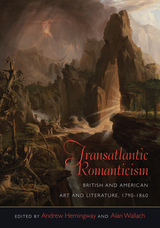
In the book's introduction, Andrew Hemingway—building on the theoretical work of Michael Lowy and Robert Sayre—proposes that we need to remobilize the concept of Weltanschauung, or comprehensive worldview, in order to develop the kind of synthetic history of arts and ideas the phenomenon of Romanticism demands. The essays that follow focus on the London and New York art worlds and such key figures as Benjamin West, Thomas Bewick, John Vanderlyn, Washington Allston, John Martin, J. M. W. Turner, Thomas Cole, James Fenimore Cooper, George Catlin, Edgar Allan Poe, Harriet Beecher Stowe, and Herman Melville. Taken together, these essays plot the rise of a romantic anti-capitalist Weltanschauung as well as the dialectic between Romanticism's national and international manifestations.
In addition to the volume editors, contributors include Matthew Beaumont, David Bindman, Leo Costello, Nicholas Grindle, Wayne Franklin, Janet Koenig, William Pressly, Robert Sayre, William Truettner, Dell Upton, and William Vaughan.

Nicholas R. Clifford argues that, for a variety of reasons, travel accounts during this time claimed a particular kind of veracity that distinguished them from the work of other writers--scholars, journalists, diplomats, policymakers, or memoir-writing expatriates--who also sought to represent an unfamiliar China to the West. Yet even as the genre claims to be a "truthful impression," it contains an implicit warning that the traveler's own sensibility enters into the account and into the representation of the unfamiliar and the exotic.
"A Truthful Impression of the Country" will appeal not only to those interested in the broad phenomenon of imperialism but also to those interested in cultural studies and post-colonialism. It will likewise prove accessible to the general reader exploring Sino-Western interactions or in travel writing as a particular genre.
Nicholas R. Clifford is College Professor Emeritus, Middlebury College. He is also the author of the novel The House of Memory and of the monographs Shanghai, 1925: Urban Nationalism and the Defense of Foreign Privilege and Spoilt Children of Empire: Westerners in Shanghai and the Chinese Revolution of 1925--1927.
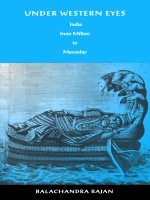
Rajan begins with the Portuguese poet Camões, whose poem celebrating Vasco da Gama’s passage to India becomes, according to its eighteenth-century English translator, the epic of those who would possess India. He closely examines Milton’s treatment of the Orient and Dryden’s Aureng-Zebe, the first English literary work on an Indian subject. Texts by Shelley, Southey, Mill, and Macaulay, among others, come under careful scrutiny, as does Hegel’s significant impact on English imperial discourse. Comparing the initial English representation of its actions in India (as a matter of commerce, not conquest) and its contemporaneous treatment of Ireland, Rajan exposes contradictions that shed new light on the English construction of a subaltern India.
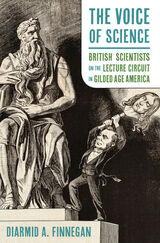
For many in the nineteenth century, the spoken word had a vivacity and power that exceeded other modes of communication. This conviction helped to sustain a diverse and dynamic lecture culture that provided a crucial vehicle for shaping and contesting cultural norms and beliefs. As science increasingly became part of public culture and debate, its spokespersons recognized the need to harness the presumed power of public speech to recommend the moral relevance of scientific ideas and attitudes. With this wider context in mind, The Voice of Science explores the efforts of five celebrity British scientists—John Tyndall, Thomas Henry Huxley, Richard Proctor, Alfred Russel Wallace, and Henry Drummond—to articulate and embody a moral vision of the scientific life on American lecture platforms. These evangelists for science negotiated the fraught but intimate relationship between platform and newsprint culture and faced the demands of audiences searching for meaningful and memorable lecture performances. As Diarmid Finnegan reveals, all five attracted unrivaled attention, provoking responses in the press, from church pulpits, and on other platforms. Their lectures became potent cultural catalysts, provoking far-reaching debate on the consequences and relevance of scientific thought for reconstructing cultural meaning and moral purpose.
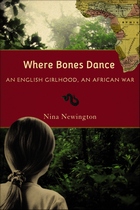
Stories are layered upon stories: Anna's grandmother tells stories about life as a white woman on the Gold Coast; the clairvoyant and closeted "Aunt" Elsie gives Anna a story of transformation to hold onto in the coming tumult of adolescence. Yet Where Bones Dance also spirals down to the stories that are not told—sexual abuse, the myth of benign colonialism, the chaos of postcolonial Africa. Sensual and fantastical by turns, this moving, funny, immensely readable book delivers an understanding of the interplay of sexuality, gender, race, and war that is sophisticated beyond the years of its intrepid narrator.
Best Books for General Audiences, selected by the American Association of School Librarians and the Public Library Association
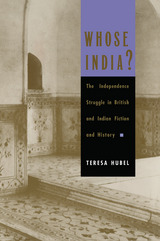
Hubel collapses the boundary between literature and history by emphasizing the selected nature of the “facts” that comprise historical texts, and by demonstrating the historicity of fiction. In analyzing the orthodox construction of the British/Indian encounter, Hubel calls into question assumptions about the end of nationalism implicit in mainstream histories and fiction, which generally describe a battleground on which only ruling-class Indians and British meet. Marginalized texts by women, untouchables, and overt imperialists alike are, therefore, examined alongside the well-known work of figures such as Rudyard Kipling, Jawaharlal Nehru, E. M. Forster, and Mahatma Gandhi.
In Whose India? discursive ownership and resistance to ownership are mutually constructing categories. As a result, the account of Indian nationalism and British imperialism that emerges is much more complicated, multivocal, and even more contradictory than previous studies have imagined. Of interest to students and scholars engaged in literary, historical, colonial/postcolonial, subaltern, and Indian studies, Whose India? will also attract readers concerned with gender issues and the canonization of texts.
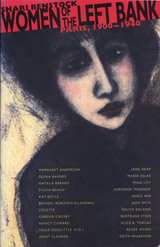
Now available in a durable paperback edition, Shari Benstock's critically acclaimed, best-selling Women of the Left Bank is a fascinating exploration of the lives and works of some two dozen American, English, and French women whose talent shaped the Paris expatriate experience in the century's early years.
This ambitious historical, biographical, and critical study has taken its place among the foremost works of literary criticism. Maurice Beebe calls it "a distinguished contribution to modern literary history." Jane Marcus hails it as "the first serious literary history of the period and its women writers, making along the way no small contribution to our understanding of the relationships between women artists and their male counterparts, from Henry James to Hemingway, Joyce, Picasso, and Pound."
READERS
Browse our collection.
PUBLISHERS
See BiblioVault's publisher services.
STUDENT SERVICES
Files for college accessibility offices.
RECENTLY PUBLISHED


UChicago Accessibility Resources
home | accessibility | search | about | contact us
BiblioVault ® 2001 - 2024
The University of Chicago Press