
 A SCHOLARLY BOOK REPOSITORY
24 start with E start with E
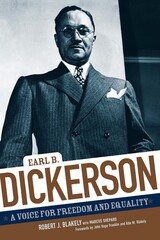
At fifteen, Earl Burrus Dickerson stowed away on a train in Canton, Mississippi, fleeing the racial oppression of his native South. But Chicago, the boy's destination, was no haven of racial fairness and equality. His flight north was in fact the beginning of a journey that would last a lifetime--and would forever pit Dickerson against the forces of racial injustice. Earl B. Dickerson's story, told here for the first time, is one of courage and character, of remarkable accomplishment in the face of terrible odds; it is also emblematic of the twentieth-century struggle for civil rights--a crucial chapter of African American history as it was lived by one uncompromising individual.
In this book, Robert J. Blakely tells how Dickerson (1891-1986) worked his way through preparatory schools and college, a segregated officer's training school, and law school at the University of Chicago. The story follows Dickerson's career as general counsel to the first insurance company owned and operated by African Americans; the first African American Democratic alderman elected to the Chicago City Council; a member of FDR's first Fair Employment Practices Committee; leader of the movement that broke the color barrier to membership in the Illinois Bar Association; and, perhaps most famously, the power behind Hansberry v. Lee, the U.S. Supreme Court case that marked the beginning of the end of restrictive real estate covenants--one of the most pernicious legal tools of segregation in the North. Blakely gives us a sense of the man behind the achievements, the life that defied conventions and statistics, and the world in which "the dean of Chicago's black lawyers" became a pioneering architect for equal opportunity in American life.
In Earning More and Getting Less, sociologist Veronica Jaris Tichenor shows how, historically, men have derived a great deal of power over financial and household decisions by bringing home all (or most) of the family's income. Yet, financial superiority has not been a similar source of power for women. Tichenor demonstrates how wives, instead of using their substantial incomes to negotiate more egalitarian relationships, enable their husbands to perpetuate male dominance within the family.
Weaving personal accounts, in-depth interviews, and compelling narrative, this important study reveals disturbing evidence that the conventional power relations defined by gender are powerful enough to undermine hierarchies defined by money. Earning More and Getting Less is essential reading in sociology, psychology, and family and gender studies.
Through an astute blend of experiments, surveys, and descriptions people offer in their own words, The Economic Other reveals that when less-advantaged Americans compare with the rich, they become more accurate about their own status and want more from government. But American society is structured to prevent upward comparison. In an increasingly divided, anxious nation, opportunities to interact with the country’s richest are shrinking, and people prefer to compare to those below to feel secure. Even when comparison with the rich does occur, many lose confidence in their power to effect change.
Laying bare how social comparisons drive political attitudes, The Economic Other is an essential look at the stubborn plight of inequality and the measures needed to solve it.
Thomas Piketty—whose Capital in the Twenty-First Century pushed inequality to the forefront of public debate—wrote The Economics of Inequality as an introduction to the conceptual and factual background necessary for interpreting changes in economic inequality over time. This concise text has established itself as an indispensable guide for students and general readers in France, where it has been regularly updated and revised. Translated by Arthur Goldhammer, The Economics of Inequality now appears in English for the first time.
Piketty begins by explaining how inequality evolves and how economists measure it. In subsequent chapters, he explores variances in income and ownership of capital and the variety of policies used to reduce these gaps. Along the way, with characteristic clarity and precision, he introduces key ideas about the relationship between labor and capital, the effects of different systems of taxation, the distinction between “historical” and “political” time, the impact of education and technological change, the nature of capital markets, the role of unions, and apparent tensions between the pursuit of efficiency and the pursuit of fairness.
Succinct, accessible, and authoritative, this is the ideal place to start for those who want to understand the fundamental issues at the heart of one of the most pressing concerns in contemporary economics and politics.
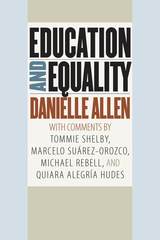
Allen argues that education plays a crucial role in the cultivation of political and social equality and economic fairness, but that we have lost sight of exactly what that role is and should be. Drawing on thinkers such as John Rawls and Hannah Arendt, she sketches out a humanistic baseline that re-links education to equality, showing how doing so can help us reframe policy questions. From there, she turns to civic education, showing that we must reorient education’s trajectory toward readying students for lives as democratic citizens. Deepened by commentaries from leading thinkers Tommie Shelby, Marcelo Suárez-Orozco, Michael Rebell, and Quiara Alegría Hudes that touch on issues ranging from globalization to law to linguistic empowerment, this book offers a critical clarification of just how important education is to democratic life, as well as a stirring defense of the humanities.
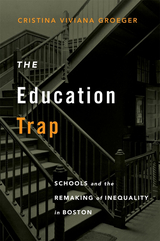
Why—contrary to much expert and popular opinion—more education may not be the answer to skyrocketing inequality.
For generations, Americans have looked to education as the solution to economic disadvantage. Yet, although more people are earning degrees, the gap between rich and poor is widening. Cristina Groeger delves into the history of this seeming contradiction, explaining how education came to be seen as a panacea even as it paved the way for deepening inequality.
The Education Trap returns to the first decades of the twentieth century, when Americans were grappling with the unprecedented inequities of the Gilded Age. Groeger’s test case is the city of Boston, which spent heavily on public schools. She examines how workplaces came to depend on an army of white-collar staff, largely women and second-generation immigrants, trained in secondary schools. But Groeger finds that the shift to more educated labor had negative consequences—both intended and unintended—for many workers. Employers supported training in schools in order to undermine the influence of craft unions, and so shift workplace power toward management. And advanced educational credentials became a means of controlling access to high-paying professional and business jobs, concentrating power and wealth. Formal education thus became a central force in maintaining inequality.
The idea that more education should be the primary means of reducing inequality may be appealing to politicians and voters, but Groeger warns that it may be a dangerous policy trap. If we want a more equitable society, we should not just prescribe more time in the classroom, but fight for justice in the workplace.
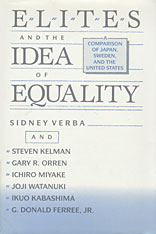
What equality means in three modern democracies, both to leaders of important groups and to challengers of the status quo, is the subject of this wide-ranging canvass of perceptions and policy. It is based on extensive questionnaire data gathered from leaders in various segments of society in each countrybusiness, labor unions, farm organizations, political parties, the media-as well as from groups that are seeking greater equalityfeminists, black leaders in the United States, leaders of the Burakumin in Japan. The authors describe the extent to which the same meanings of equality exist, both within and across nations, and locate the areas of consensus and conflict over equality. No other book has compared data of this sort for these purposes.
The authors address several major substantive and theoretical issues: the role of values in relation to egalitarian outcomes; the comparison of values and perceptions about equality in economics (income equality) and politics (equality of influence); and the difference among the nations in the ways political institutions affect the incorporation of new demands for equality into the policymaking process. They pay particular attention to how policy is set on issues of gender equality.
This book will be controversial, for some see no room in the understanding of political economy for the analysis of values. It will be consulted by a general audience interested in politics and culture as well as by social scientists. Elites and the Idea of Equality is an informative sequel to Equality in America by Sidney Verba and Gary R. Orren (Harvard University Press), which considers similar topics in a national context.
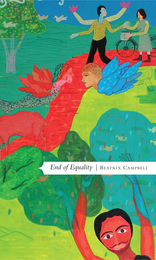
In TheEnd of Equality, renowned feminist Beatrix Campbell argues that even as the patriarchy has lost some of its legitimacy, new inequalities are emerging in our culture. We are living, Campbell writes, in an era of neo-patriarchy in which violence has proliferated; body anxiety and self-hatred have flourished; rape is committed with impunity; sex trafficking thrives, and the struggle for equal pay is at an end. After four decades observing society, Campbell still speaks of the long-sought goal of gender equality. But now she calls for a new revolution.
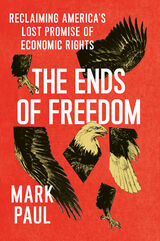
Since the Founding, Americans have debated the true meaning of freedom. For some, freedom meant the provision of life’s necessities, those basic conditions for the “pursuit of happiness.” For others, freedom meant the civil and political rights enumerated in the Bill of Rights and unfettered access to the marketplace—nothing more. As Mark Paul explains, the latter interpretation—thanks in large part to a particularly influential cadre of economists—has all but won out among policymakers, with dire repercussions for American society: rampant inequality, endemic poverty, and an economy built to benefit the few at the expense of the many.
In this book, Paul shows how economic rights—rights to necessities like housing, employment, and health care—have been a part of the American conversation since the Revolutionary War and were a cornerstone of both the New Deal and the Civil Rights Movement. Their recuperation, he argues, would at long last make good on the promise of America’s founding documents. By drawing on FDR’s proposed Economic Bill of Rights, Paul outlines a comprehensive policy program to achieve a more capacious and enduring version of American freedom. Among the rights he enumerates are the right to a good job, the right to an education, the right to banking and financial services, and the right to a healthy environment.
Replete with discussions of some of today’s most influential policy ideas—from Medicare for All to a federal job guarantee to the Green New Deal—The Ends of Freedom is a timely and urgent call to reclaim the idea of freedom from its captors on the political right—to ground America’s next era in the country’s progressive history and carve a path toward a more economically dynamic and equitable nation.
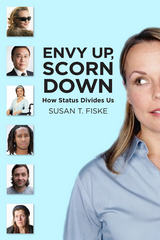
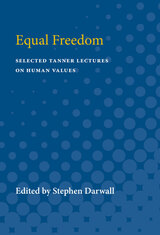
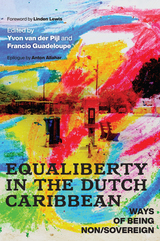

Equality has always been the most powerful political idea in America, and it is becoming the most powerful idea in the world. Observers from Alexis de Tocqueville to the most recent social critics have commented upon the idea's great force. Yet, for all its influence upon popular ideology, the idea of equality becomes a bundle of contradictory impulses once it is applied to public policy and social institutions. As the title of this lively book suggests, equality becomes equalities.
Once inequality is established, there is a deep difference between equal policies and policies that lead to equality. Once people have different needs, there is a sharp difference between treating them equally and treating them in ways that serve them equally. Once people have unequal (or unequally developed) talents, then equal opportunity cannot mean both equal opportunity and an equal prospect of success. Once society is cleaved by differences of race, sex, income, and so on, there is an intense difference between policies and reforms that reduce racial, sexual, and economic inequality and policies that diminish equality among persons. Douglas Rae and his colleagues develop an ingenious “grammar of equality” to explain and explicate the main ways in which equality turns into equalities as it passes from the realm of ideas to the realm of practice.
The book's exciting new method of analysis, based on logic and theories of political economy and political science, is a valuable contribution. Equalities helps us answer such questions as: “Is equality possible?” “How, after so long a period of ostensible egalitarianism, can inequality still dominate so much of the social landscape?” The responses are bound to stir controversy among all those interested in political theory or in social policy or in the attainment of equality.
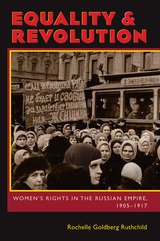
Ruthchild offers a telling examination of the dynamics present in imperialist Russia that fostered a growing feminist movement. Based upon extensive archival research in six countries, she analyzes the backgrounds, motivations, methods, activism, and organizational networks of early Russian feminists, revealing the foundations of a powerful feminist intelligentsia that came to challenge, and eventually bring down, the patriarchal tsarist regime.
Ruthchild profiles the individual women (and a few men) who were vital to the feminist struggle, as well as the major conferences, publications, and organizations that promoted the cause. She documents political party debates on the acceptance of women’s suffrage and rights, and follows each party’s attempt to woo feminist constituencies despite their fear of women gaining too much political power. Ruthchild also compares and contrasts the Russian movement to those in Britain, China, Germany, France, and the United States. Equality and Revolution offers an original and revisionist study of the struggle for women’s political rights in late imperial Russia, and presents a significant reinterpretation of a decisive period of Russian—and world—history.
A model of meticulous and incisive scholarship, Equality in America dissects American attitudes toward equality by placing those beliefs in historical context and demonstrating a relationship between political and economic equality. The book is based on a study of leaders from all significant sectors of American society, including top business and labor leaders, those highest in the media and in political parties, and leaders from the feminist and civil rights movements.
The book takes on the thorny puzzle of how economic inequality, which is the inevitable result of a free economy, coexists with political equality, which is a necessary ingredient of democracy. In the course of their argument, the authors take issue with free market economists and Marxist analysts, both of whom treat self-interest as the driving force behind individual and collective behavior, leaving little place for the role of beliefs and values.

Equality in the City engenders a timely debate about what future cities might look like and what their concerns should be. Using a multi-disciplinary perspective, it features acclaimed scholars whose work investigates the proposed networked, digital technologies that ostensibly affect planning policies, control infrastructures, and deliver and manage city services and systems. The contributors offer insights into how future cities might be envisaged, planned, and executed in order to be more equal.
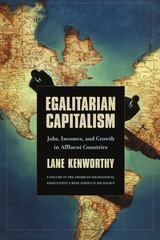
The four types of equality have their origins in unique political compromises made in the twentieth century. The resulting social market economies of these countries affect their growth and levels of equality even today.
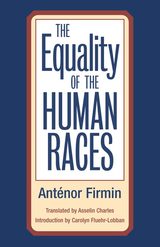
Rediscovering an early scientific challenge to racism
This is the first paperback edition of the only English-language translation of the Haitian scholar Anténor Firmin's The Equality of the Human Races, a foundational text in critical anthropology first published in 1885 when anthropology was just emerging as a specialized field of study. Marginalized for its "radical" position that the human races were equal, Firmin's lucid and persuasive treatise was decades ahead of its time. Arguing that the equality of the races could be demonstrated through a positivist scientific approach, Firmin challenged racist writings and the dominant views of the day. Translated by Asselin Charles and framed by Carolyn Fluehr-Lobban's substantial introduction, this rediscovered text is an important contribution to contemporary scholarship in anthropology, pan-African studies, and colonial and postcolonial studies.
John Roemer points out that there are two views of equality of opportunity that are widely held today. The first, which he calls the nondiscrimination principle, states that in the competition for positions in society, individuals should be judged only on attributes relevant to the performance of the duties of the position in question. Attributes such as race or sex should not be taken into account. The second states that society should do what it can to level the playing field among persons who compete for positions, especially during their formative years, so that all those who have the relevant potential attributes can be considered.
Common to both positions is that at some point the principle of equal opportunity holds individuals accountable for achievements of particular objectives, whether they be education, employment, health, or income. Roemer argues that there is consequently a "before" and an "after" in the notion of equality of opportunity: before the competition starts, opportunities must be equalized, by social intervention if need be; but after it begins, individuals are on their own. The different views of equal opportunity should be judged according to where they place the starting gate which separates "before" from "after." Roemer works out in a precise way how to determine the location of the starting gate in the different views.
Even in impoverished countries lacking material and human resources, P. T. Bauer argues, economic growth is possible under the right conditions. These include a certain amount of thrift and enterprise among the people, social mores and traditions which sustain them, and a firm but limited government which permits market forces to work. Challenging many views about development that are widely held, Bauer takes on squarely the notion that egalitarianism is an appropriate goal. He goes on to argue that the population explosion of less-developed countries has on the whole been a voluntary phenomenon and that each new generation has lived better than its forebears. He also critically examines the notion that the policies and practices of Western nations have been responsible for third world poverty. In a major chapter, he reviews the rationalizations for foreign aid and finds them weak; while in another he shows that powerful political clienteles have developed in the Western nations supporting the foreign aid process and probably benefiting more from it than the alleged recipients. Another chapter explores the link between the issue of Special Drawing Rights by the International Monetary Fund on the one hand and the aid process on the other.
Throughout the book, Bauer carefully examines the evidence and the light it throws on the propositions of development. Although the results of his analysis contradict the conventional wisdom of development economics, anyone who is seriously concerned with the subject must take them into account.
A timely new look at coexisting without assimilating in multicultural cities
If city life is a “being together of strangers,” what forms of being together should we strive for in cities with ethnic and racial diversity? Everyday Equalities seeks evidence of progressive political alternatives to racialized inequality that are emerging from everyday encounters in Los Angeles, Melbourne, Sydney, and Toronto—settler colonial cities that, established through efforts to dispossess and eliminate indigenous societies, have been destinations for waves of immigrants from across the globe ever since.
Everyday Equalities finds such alternatives being developed as people encounter one another in the process of making a home, earning a living, moving around the city, and forming collective actions or communities. Here four leading scholars in critical urban geography come together to deliver a powerful and cohesive message about the meaning of equality in contemporary cities. Drawing on both theoretical reflection and urban ethnographic research, they offer the formulation “being together in difference as equals” as a normative frame to reimagine the meaning and pursuit of equality in today’s urban multicultures.
As the examples in Everyday Equalities indicate, much emotional labor, combined with a willingness to learn from each other, negotiate across differences, and agitate for change goes into constructing environments that foster being together in difference as equals. Importantly, the authors argue, a commitment to equality is not only a hope for a future city but also a way of being together in the present.
Soaring income inequality and unemployment, expanding populations of the displaced and imprisoned, accelerating destruction of land and water bodies: today’s socioeconomic and environmental dislocations cannot be fully understood in the usual terms of poverty and injustice, according to Saskia Sassen. They are more accurately understood as a type of expulsion—from professional livelihood, from living space, even from the very biosphere that makes life possible.
This hard-headed critique updates our understanding of economics for the twenty-first century, exposing a system with devastating consequences even for those who think they are not vulnerable. From finance to mining, the complex types of knowledge and technology we have come to admire are used too often in ways that produce elementary brutalities. These have evolved into predatory formations—assemblages of knowledge, interests, and outcomes that go beyond a firm’s or an individual’s or a government’s project.
Sassen draws surprising connections to illuminate the systemic logic of these expulsions. The sophisticated knowledge that created today’s financial “instruments” is paralleled by the engineering expertise that enables exploitation of the environment, and by the legal expertise that allows the world’s have-nations to acquire vast stretches of territory from the have-nots. Expulsions lays bare the extent to which the sheer complexity of the global economy makes it hard to trace lines of responsibility for the displacements, evictions, and eradications it produces—and equally hard for those who benefit from the system to feel responsible for its depredations.
READERS
Browse our collection.
PUBLISHERS
See BiblioVault's publisher services.
STUDENT SERVICES
Files for college accessibility offices.
RECENTLY PUBLISHED





UChicago Accessibility Resources
home | accessibility | search | about | contact us
BiblioVault ® 2001 - 2024
The University of Chicago Press