
 A SCHOLARLY BOOK REPOSITORY

Malczewski presents foundation leaders as self-conscious state builders and policy entrepreneurs who aimed to promote national ideals through a public system of education—efforts they believed were especially critical in the South. Black education was an important component of this national agenda. Through extensive efforts to create a more centralized and standard system of public education aimed at bringing isolated and rural black schools into the public system, schools became important places for expanding the capacity of state and local governance. Schooling provided opportunities to reorganize local communities and augment black agency in the process. When foundations realized they could not unilaterally impose their educational vision on the South, particularly in black communities, they began to collaborate with locals, thereby opening political opportunity in rural areas. Unfortunately, while foundations were effective at developing the institutional configurations necessary for education reform, they were less successful at implementing local programs consistently due to each state’s distinctive political and institutional context.

Causal Case Study Methods begins with the cohesive, logical foundations for small-n comparative methods, congruence methods, and process tracing, then delineate the distinctive types of causal relationships for which each method is appropriate. Next, the authors provide practical instruction for deploying each of the methods individually and in combination. They walk the researcher through each stage of the research process, starting with issues of concept formation and the formulation of causal claims in ways that are compatible with case-based research. They then develop guidelines for using Bayesian logic as a set of practical questions for translating empirical data into evidence that may or may not confirm causal inferences.
Widely acclaimed instructors, the authors draw upon their extensive experience at the graduate level in university classrooms, summer and winter school courses, and professional workshops, around the globe.
The disabilities covered in this volume include developmental delays, autism spectrum disorder, intellectual and learning disabilities, deafblindness, emotional and behavioral disorders, attention deficit hyperactivity disorder, and a variety of high incidence syndromes. Contributors share best practices using an open-minded, asset-based approach. They examine the literature within each disability category, as well as demographics/characteristics, intervention/identification, placement, communication/language, psychosocial issues, assistive technologies/accommodations, assessments, and transition/post-secondary outcomes. Each chapter begins with learning objectives and concludes with a list of resources and discussion questions. A supplemental instructor’s manual provides valuable material for each chapter, including: (a) sample answers to the discussion questions, (b) investigation activities with grading rubrics, (c) quiz banks, (d) interpreted and captioned summary videos, and (e) PowerPoint slides. Deaf and Hard of Hearing Learners with Disabilities is an essential book for courses at the undergraduate and graduate level, and in workshops and webinars for in-service teachers, professionals, and families.
In the early 1960s, fewer than five percent of Japanese owned automobiles, China’s per capita income was among the lowest in Asia, and living standards in South Korea’s rural areas were on par with some of the world’s poorest countries. Today, these are three of the most powerful economies on earth. Dwight Perkins grapples with both the contemporary and historical causes and consequences of the turnaround, drawing on firsthand experience in the region to explain how Asian countries sustained such rapid economic growth in the second half of the twentieth century.
East Asian Development offers a comprehensive view of the region, from Japan and the “Asian Tigers” (Hong Kong, Singapore, Taiwan, South Korea) to Indonesia, Vietnam, Thailand, Malaysia, and China—a behemoth larger than all the other economies combined. While the overall picture of Asian growth is positive, no single economic policy has been effective regionwide. Interventionist policies that worked well in some countries failed elsewhere. Perkins analyzes income distribution, to uncover why initially egalitarian societies have ended up in very different places, with Japan, for example, maintaining a modest gap between rich and poor while China has become one of Asia’s most unequal economies.
Today, the once-dynamic Japanese and Korean economies are sluggish, and even China shows signs of losing steam. Perkins investigates whether this is a regional phenomenon or typical of all economies at this stage of development. His inquiry reminds us that the uncharted waters of China’s vast economy make predictions of its future performance speculative at best.
This important new work is a major analysis of the foundation of Eric Voegelin's political science. Barry Cooper maintains that the writings Voegelin undertook in the 1940s provide the groundwork for the brilliant book that is one of his best known, The New Science of Politics. At the time of that book's publication, however, few were aware of the enormous knowledge and accomplished scholarship that lay behind its illuminating, although sometimes baffling, formulations.
By focusing on several of the key chapters in Voegelin's eight- volume History of Political Ideas, especially the studies of Bodin, Vico, and Schelling, Cooper shows how those studies provide the basis for Voegelin's thought. Investigating Voegelin's study of Oriental influences on Western political "ideas," especially Mongol constitutional law, and his study of Toynbee, Cooper seeks to demonstrate the vast range of materials Voegelin used.
Cooper contends that, as with other great thinkers, political crisis, specifically the world war of 1939-1945, stimulated Voegelin's intellectual and spiritual achievement. He provides an analysis of Voegelin's immediate concern with the course of World War II, his ability to understand those dramatic events in a large context, and his ability to provide an insightful account of the causes, the significance, and the consequences of the spiritual and political disorder that was evident all around him.
In Eric Voegelin and the Foundations of Modern Political Science, Cooper makes the connection between Voegelin's political writings of the 1940s and the meditative interpretations that began to appear with the publication of Anamnesis and with the later volumes of Order and History much more intelligible than does any existing discussion of Voegelin. Scholars in intellectual history and political science will benefit enormously from this valuable new addition to Voegelin studies.

From his arrival in Britain in the 1950s and involvement in the New Left, to founding the field of cultural studies and examining race and identity in the 1990s and early 2000s, Stuart Hall has been central to shaping many of the cultural and political debates of our time. Essential Essays—a landmark two volume set—brings together Stuart Hall's most influential and foundational works. Spanning the whole of his career, these volumes reflect the breadth and depth of his intellectual and political projects while demonstrating their continued vitality and importance.
Volume 1: Foundations of Cultural Studies focuses on the first half of Hall's career, when he wrestled with questions of culture, class, representation, and politics. This volume's stand-out essays include his field-defining “Cultural Studies and Its Theoretical Legacies;” the prescient “The Great Moving Right Show,” which first identified the emergent mode of authoritarian populism in British politics; and “Encoding and Decoding in the Television Discourse,” one of his most influential pieces of media criticism. As a whole, Volume 1 provides a panoramic view of Hall's fundamental contributions to cultural studies.
Volume 2: Identity and Diaspora draws from Hall's later essays, in which he investigated questions of colonialism, empire, and race. It opens with “Gramsci's Relevance for the Study of Race and Ethnicity,” which frames the volume and finds Hall rethinking received notions of racial essentialism. In addition to essays on multiculturalism and globalization, black popular culture, and Western modernity's racial underpinnings, Volume 2 contains three interviews with Hall, in which he reflects on his life to theorize his identity as a colonial and diasporic subject.

Volume 1: Foundations of Cultural Studies focuses on the first half of Hall's career, when he wrestled with questions of culture, class, representation, and politics. This volume's stand-out essays include his field-defining “Cultural Studies and Its Theoretical Legacies"; the prescient “The Great Moving Right Show,” which first identified the emergent mode of authoritarian populism in British politics; and “Encoding and Decoding in the Television Discourse,” one of his most influential pieces of media criticism. As a whole, Volume 1 provides a panoramic view of Hall's fundamental contributions to cultural studies.

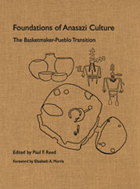
This major synthesis of work explores new evidence gathered at Basketmaker III sites on the Colorado Plateau in search of further understanding of Anasazi development.
Since the 1960s, large-scale cultural resource management projects have revealed the former presence of Anasazi within the entire northern Southwest. These discoveries have resulted in a greatly expanded view of the BMIII period (A.D. 550-750) which immediately proceeds the Pueblo phase. Particularly noteworthy are finding of Basketmaker remains under those of later periods and in sites with open settings, as opposed to the more classic Basketmaker cave and rock shelter sites.
Foundations of Anasazi Culture explores this new evidence in search of further understanding of Anasazi development. Several chapters address the BMII-BMIII transition, including the initial production and use of pottery, greater reliance on agriculture, and the construction of increasingly elaborate structures. Other chapters move beyond the transitional period to discuss key elements of the Anasazi lifestyle, including the use of gray-,red-, and white-ware ceramics, pit structures, storage cists, surface rooms, full dependence on agriculture, and varying degrees of social specialization and differentiation. A number of contributions address one or more of these issues as they occur at specific sites. Other contributors consider the material culture of the period in terms of common elements in architecture, ceramics, lithic technology, and decorative media.
This work on BMIII sites on the Colorado Plateau will be useful to anyone with an interest in the earliest days of Anasazi civilization.

The papers are divided into six sections, each introduced by prominent researchers. Sections one and two cover the origins and history of the field and the emergence of basic methods and approaches. They provide a background for sections three through six, which focus on development and learning; neural and hormonal mechanisms of behavior; sensory processes, orientation, and communication; and the evolution of behavior.
This outstanding collection will serve as the basis for undergraduate and graduate seminars and as a reference for researchers in animal behavior, whether they focus on ethology, behavioral ecology, comparative psychology, or anthropology.
Published in association with the Animal Behavior Society

List of Contributors
John C. Briggs, James H. Brown, Vicki A. Funk, Paul S. Giller, Nicholas J. Gotelli, Lawrence R. Heaney, Robert Hengeveld, Christopher J. Humphries, Mark V. Lomolino, Alan A. Myers, Brett R. Riddle, Dov F. Sax, Geerat J. Vermeij, Robert J. Whittaker



adaptive management approaches to ecosystem and resource management.
The papers span nearly nine decades of ecological research, from 1887 on, and are organized in six sections: foundational papers, theoretical advances, synthetic statements, methodological developments, field studies, and ecological experiments. Selections range from Connell's elegant account of experiments with barnacles to Watt's encyclopedic natural history, from a visionary exposition by Grinnell of the concept of niche to a seminal essay by Hutchinson on diversity.
Six original essays by contemporary ecologists and a historian of ecology place the selections in context and discuss their continued relevance to current research. This combination of classic papers and fresh commentaries makes Foundations of Ecology both a convenient reference to papers often cited today and an essential guide to the intellectual and conceptual roots of the field.
Published with the Ecological Society of America.
The period of 1970 to 1995 was a time of tremendous change in all areas of ecology—from an increased rigor for experimental design and analysis to the reevaluation of paradigms, new models for understanding, and theoretical advances. Edited by ecologists Thomas E. Miller and Joseph Travis, Foundations of Ecology II includes facsimiles of forty-six papers from this period alongside expert commentaries that discuss a total of fifty-three key studies, addressing topics of diversity, predation, complexity, competition, coexistence, extinction, productivity, resources, distribution, abundance, and conservation. The result is more than a catalog of historic firsts; this book offers diverse perspectives on the foundational papers that led to today’s ecological work. Like this book’s 1991 predecessor, Foundations of Ecology edited by Leslie A. Real and James H. Brown, Foundations of Ecology II promises to be the essential primer for graduate students and practicing ecologists for decades to come.
What effects do laws have? Do individuals drive more cautiously, clear ice from sidewalks more diligently, and commit fewer crimes because of the threat of legal sanctions? Do corporations pollute less, market safer products, and obey contracts to avoid suit? And given the effects of laws, which are socially best? Such questions about the influence and desirability of laws have been investigated by legal scholars and economists in a new, rigorous, and systematic manner since the 1970s. Their approach, which is called economic, is widely considered to be intellectually compelling and to have revolutionized thinking about the law.
In this book Steven Shavell provides an in-depth analysis and synthesis of the economic approach to the building blocks of our legal system, namely, property law, tort law, contract law, and criminal law. He also examines the litigation process as well as welfare economics and morality. Aimed at a broad audience, this book requires neither a legal background nor technical economics or mathematics to understand it. Because of its breadth, analytical clarity, and general accessibility, it is likely to serve as a definitive work in the economic analysis of law.

Throughout its chapters, the text asks students to apply key concepts to current data (which they are required to locate using the Internet and other sources) to get a clearer picture of the most pressing issues in environmental science. The text begins by exploring how changes in world population impact all aspects of the environment, particularly with respect to energy use. It then discusses what the first and second laws of thermodynamics tell us about renewable and nonrenewable energy; how current energy use is changing the global climate; and how alternative technologies can be evaluated through scientific risk assessment. In approaching real-world problems, students come to understand the physical principles that underlie scientific findings.
This informative and engaging textbook offers what prospective scientists, managers, and policymakers need most: the knowledge to understand environmental threats and the skills to find solutions.

2024 Best Indigenous Studies Award, The Mormon History Association
2024 Southwest Book of the Year, Pima County Public Library
A history of how the construction of the Glen Canyon Dam was built and sustained by social inequalities
The second highest concrete-arch dam in the United States, Glen Canyon Dam was built to control the flow of the Colorado River throughout the Western United States. Completed in 1966, the dam continues to serve as a water storage facility for residents, industries, and agricultural use across the American West. The dam also generates hydroelectric power for residents in Colorado, Wyoming, New Mexico, Utah, Nevada, Arizona, and Nebraska. More than a massive piece of physical infrastructure and an engineering feat, the dam exposes the cultural structures and complex regional power relations that relied on Indigenous knowledge and labor while simultaneously dispossessing the Indigenous communities of their land and resources across the Colorado Plateau.
Erika Marie Bsumek reorients the story of the dam to reveal a pattern of Indigenous erasure by weaving together the stories of religious settlers and Indigenous peoples, engineers and biologists, and politicians and spiritual leaders. Infrastructures of dispossession teach us that we cannot tell the stories of religious colonization, scientific exploration, regional engineering, environmental transformation, or political deal-making as disconnected from Indigenous history. This book is a provocative and essential piece of modern history, particularly as water in the West becomes increasingly scarce and fights over access to it continue to unfold.
The author's purpose is to understand the philosophical foundations of Hegel's social theory by articulating the normative standards at work in his claim that the three central social institutions of the modern era--the nuclear family, civil society, and the constitutional state--are rational or good. Its central question is: what, for Hegel, makes a rational social order rational? In addressing this question the book aspires to be faithful to Hegel's texts and to articulate a compelling theory of rational social institutions; its aim is not only to interpret Hegel correctly but also to demonstrate the richness and power that his vision of the rational social order possesses.
Frederick Neuhouser's task is to understand the conceptions of freedom on which Hegel's theory rests and to show how they ground his arguments in defense of the modern social world. In doing so, the author focuses on Hegel's most important and least understood contribution to social philosophy, the idea of "social freedom."
Neuhouser's strategy for making sense of social freedom is to show its affinities with Rousseau's conception of the general will. The main idea that Hegel appropriates from Rousseau is that rational social institutions must satisfy two conditions: first, they must furnish the basic social preconditions of their members' freedom; and, second, all social members must be able subjectively to affirm their freedom-conditioning institutions as good and thus to regard the principles that govern their social participation as coming from their own wills.

The most thorough and engaging survey of high-energy astrophysics available today, Foundations of High-Energy Astrophysics introduces the main physical processes relevant to the field in a rigorous yet accessible way, while paying careful attention to observational issues. Vietri’s book will quickly become a classic text for students and active researchers in astronomy and astrophysics. Those in adjoining fields will also find it a valuable addition to their personal libraries.

As discussions about the roles played by information in economic, political, and social arenas continue to evolve, the need for an intellectual primer on information ethics that also functions as a solid working casebook for LIS students and professionals has never been more urgent. This text, written by a stellar group of ethics scholars and contributors from around the globe, expertly fills that need. Organized into twelve chapters, making it ideal for use by instructors, this volume from editors Burgess and Knox
- thoroughly covers principles and concepts in information ethics, as well as the history of ethics in the information professions;
- examines human rights, information access, privacy, discourse, intellectual property, censorship, data and cybersecurity ethics, intercultural information ethics, and global digital citizenship and responsibility;
- synthesizes the philosophical underpinnings of these key subjects with abundant primary source material to provide historical context along with timely and relevant case studies;
- features contributions from John M. Budd, Paul T. Jaeger, Rachel Fischer, Margaret Zimmerman, Kathrine A. Henderson, Peter Darch, Michael Zimmer, and Masooda Bashir, among others; and
- offers a special concluding chapter by Amelia Gibson that explores emerging issues in information ethics, including discussions ranging from the ethics of social media and social movements to AI decision making.
This important survey will be a key text for LIS students and an essential reference work for practitioners
- discusses information law as part of a continuum of interrelated issues rather than an assortment of discrete topics;
- examines information law in the context of different types of libraries;
- delves into the manifold legal issues raised when interacting with patrons and communities, from intellectual freedom topics like censorship and public activities in the library to the legal issues surrounding materials and information access;
- elucidates operational and management legal issues, including library security, interacting with law enforcement, advocacy, lobbying, funding, human resources, and liability;
- promotes literacy of the law, its structures, and its terminology as a professional skill;
- gives readers the tools to find and understand different sources of legal authority and demonstrates how to interpret them when they conflict; and
- explores information law as a national and cross-national issue.
It’s not hyperbole to conclude that in today’s world, information literacy is essential for survival and success; and also that, if left unchecked, the social consequences of widespread misinformation and information illiteracy will only continue to grow more dire. Thus its study must be at the core of every education. But while many books have been written on information literacy, this text is the first to examine information literacy from a cross-national, cross-cultural, and cross-institutional perspective. From this book, readers will
- learn about information literacy in a wide variety of contexts, including academic and school libraries, public libraries, special libraries, and archives, through research and literature that has previously been siloed in specialized publications;
- come to understand why information literacy is not just an issue of information and technology, but also a broader community and societal issue;
- get an historical overview of advertising, propaganda, disinformation, misinformation, and illiteracy;
- gain knowledge of both applied strategies for working with individuals and for addressing the issues in community contexts;
- find methods for combating urgent societal ills caused and exacerbated by misinformation; and
- get tools and techniques for advocacy, activism, and self-reflection throughout one’s career.
Foreword by Alan S. Inouye; Afterword by Nancy Kranich
The first of its kind, this important new text provides a much-needed introduction to the myriad information policy issues that impact information professionals, information institutions, and the patrons and communities served by those institutions. In this key textbook for LIS students and reference text for practitioners, noted scholars Jaeger and Taylor
- draw from current, authoritative sources to familiarize readers with the history of information policy;
- discuss the broader societal issues shaped by policy, including access to infrastructure, digital literacy and inclusion, accessibility, and security;
- elucidate the specific laws, regulations, and policies that impact information, including net neutrality, filtering, privacy, openness, and much more;
- use case studies from a range of institutions to examine the issues, bolstered by discussion questions that encourage readers to delve more deeply;
- explore the intersections of information policy with human rights, civil rights, and professional ethics; and
- prepare readers to turn their growing understanding of information policy into action, through activism, advocacy, and education.
- the historical and legal roots of intellectual freedom, with an in-depth examination of John Stuart Mill’s “On Liberty” and Article 19 of the U.N Declaration of Human Rights, and its central concepts and principles;
- the intersection of intellectual freedom, freedom of expression, and social justice;
- professional values, codes of ethics, ALA’s Library Bill of Rights, and Freedom to Read/View Statements;
- pro- and anti- censorship arguments and their use in impeding and facilitating access to information;
- book banning and internet filtering;
- privacy and its relationship to information services;
- U.S. case law and precedents;
- the basics of U.S. copyright law, including fair use, and how it differs from international copyright law; and
- emerging global issues and their impact on future intellectual freedom.
The Foundations of Knowing was first published in 1982. Minnesota Archive Editions uses digital technology to make long-unavailable books once again accessible, and are published unaltered from the original University of Minnesota Press editions.
This collection of essays on the foundations of empirical knowledge brings together ten of Roderick M. Chisholm's most important papers in epistemology, three of them published for the first time, the others significantly revised and expanded for this edition. The essays in Part I constitute a thoroughgoing defense of foundationalism—the doctrine that our justification for believing always rests upon a self-evident basis. In Part II, Chisholm applies foundationalist principles to various areas within the theory of knowledge, and in part III he presents a history of twentieth-century American epistemology.
"Roderick M. Chisholm's work has been most influential both in the development of epistemology and in the widespread application of his analytic method. I am sure this publication featuring the unification of his views will be of great value to those working on the central issues of philosophy." Hector-Neri Castañeda, Indiana University
Roderick Chisholm is Andrew W. Mellon Professor of the Humanities in the department of philosophy at Brown University. Among his books are Perceiving: A Philosophical Study, Theory of Knowledge, Person and Object,and The First Person (Minnesota, 1981).

Richard E. Rubin’s book has served as the authoritative introductory text for generations of library and information science practitioners, with each new edition taking in its stride the myriad societal, technological, political, and economic changes affecting our users and institutions and transforming our discipline. Rubin teams up with his daughter, Rachel G. Rubin, a rising star in the library field in her own right, for the fifth edition. Spanning all types of libraries, from public to academic, school, and special, it illuminates the major facets of LIS for students as well as current professionals. Continuing its tradition of excellence, this text addresses
- the history and mission of libraries from past to present, including the history of service to African Americans;
- critical contemporary social issues such as services to marginalized communities, tribal libraries, and immigrants;
- the rise of e-government and the crucial role of political advocacy;
- digital devices, social networking, digital publishing, e-books, virtual reality, and other technology;
- forces shaping the future of libraries, including Future Ready libraries, and sustainability as a core value of librarianship;
- the values and ethics of the profession, with new coverage of civic engagement, combatting fake news, the importance of social justice, and the role of critical librarianship;
- knowledge infrastructure and organization, including Resource Description and Access (RDA), linked data, and the Library Research Model;
- the significance of the digital divide and policy issues related to broadband access and net neutrality;
- intellectual freedom, legal issues, and copyright-related topics;
- contemporary issues in LIS education such as the ongoing tensions between information science and library science; and
- the changing character of collections and services including the role of digital libraries, preservation, and the digital humanities.
In its newest edition, Foundations of Library and Information Science remains the field’s essential resource.
This book provides a concise but detailed account of modern logic's three cornerstones: the completeness of first-order logic, Gödel's Incompleteness Theorems, and Turing's analysis of computability. In addition to the central text, an appendix explains the required technical terminology and facts. The main ideas behind the three cornerstones are explained in a simple, easy-to-grasp manner, and it is possible to select among the chapters and sections so that the reader becomes familiar with these ideas, even if some technicalities are skipped or postponed. A wealth of exercises accompany a wide selection of materials, including the histories and philosophical implications of the three main premises, making it useful as a textbook for undergraduate or graduate courses focusing on any of the three main themes. The material is rigorous and detailed but keeps the main ideas in sight, and there are numerous excursions into more advanced material for curious readers to explore.
Foundations of Macroecology charts the evolutionary trajectory of these concepts—from the species-area relationship and the latitudinal gradient of species richness to the relationship between body size and metabolic rate—through forty-six landmark papers originally published between 1920 and 1998. Divided into two parts—“Macroecology before Macroecology” and “Dimensions of Macroecology”—the collection also takes the long view, with each paper accompanied by an original commentary from a contemporary expert in the field that places it in a broader context and explains its foundational role. Providing a solid, coherent assessment of the history, current state, and potential future of the field, Foundations of Macroecology will be an essential text for students and teachers of ecology alike.
With The Foundations of Natural Morality, S. Adam Seagrave addresses this controversy, offering an entirely new account of natural morality that compellingly unites the concepts of natural law and natural rights. Seagrave agrees with Strauss that the idea of natural rights is distinctly modern and does not derive from traditional natural law. Despite their historical distinctness, however, he argues that the two ideas are profoundly compatible and that the thought of John Locke and Thomas Aquinas provides the key to reconciling the two sides of this long-standing debate. In doing so, he lays out a coherent concept of natural morality that brings together thinkers from Plato and Aristotle to Hobbes and Locke, revealing the insights contained within these disparate accounts as well as their incompleteness when considered in isolation. Finally, he turns to an examination of contemporary issues, including health care, same-sex marriage, and the death penalty, showing how this new account of morality can open up a more fruitful debate.
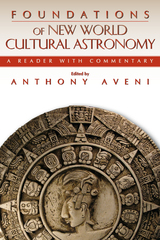
Cultural astronomy, first called archaeoastronomy, has evolved at ferocious speed since its genesis in the 1960s, with seminal essays and powerful rebuttals published in far-flung, specialized journals. Until now, only the most closely involved scholars could follow the intellectual fireworks. In Foundations of New World Cultural Astronomy, Anthony Aveni, one of cultural astronomy's founders and top scholars, offers a selection of the essays that built the field, from foundational works to contemporary scholarship.
Including four decades of research throughout the Americas by linguists, archaeologists, historians, ethnologists, astronomers, and engineers, this reader highlights the evolution of the field through thematic organization and point-counterpoint articles. Aveni - an award-winning author and former National Professor of the Year - serves up incisive commentary, background for the uninitiated, and suggested reading, questions, and essay topics. Students, readers, and scholars will relish this collection and its tour of a new field in which discoveries about ancient ways of looking at the skies cast light on our contemporary views.

In this volume, Michael Jensen and his collaborators present the foundations of an integrated theory of organizations. The theory assumes that organizations are equilibrium systems that, like markets, can be influenced, but cannot be told what to do; that human beings are rational and self-interested for the most part; and that information is costly to produce and transfer among agents. The theory also treats business organizations as entities existing in a system of markets (including financial, product, labor, and materials markets) that must be considered in the formulation of organizational strategy.
Jensen argues that the cost of transferring information makes it necessary to decentralize some decision rights in organizations and in the economy. This decentralization in turn requires organizations to solve the control problem that results when self-interested persons do not behave as perfect agents.
Capitalist economies solve these control problems through the institution of alienable decision rights. But because organizations must suppress the alienability of decision rights, they must devise substitute mechanisms that perform its functions. Jensen argues that three critical systems, which he calls the organizational rules of the game, are necessary to substitute for alienability in organizations: (1) a system for allocating decision rights among agents in the firm, (2) a system for measuring and evaluating performance in the firm, and (3) a system for rewarding and punishing individuals for their performance. These concepts offer a major competitive advantage for organizations.
This book brings together forty-four classic papers published between 1924 and 1999 that trace the origins and development of paleoecology. The articles cross taxonomic groups, habitat types, geographic areas, and time and have made substantial contributions to our knowledge of the evolution of life. Encompassing the full breadth of paleoecology, the book is divided into six parts: community and ecosystem dynamics, community reconstruction, diversity dynamics, paleoenvironmental reconstruction, species interaction, and taphonomy. Each paper is also introduced by a contemporary expert who gives context and explains its importance to ongoing paleoecological research. A comprehensive introduction to the field, Foundations of Paleoecology will be an essential reference for new students and established paleoecologists alike.

This is the first primer on financing urban redevelopment written for practicing planners and public administrators. In easy-to-understand language, it will inform readers of the natural cycle of urban development, explain how to overcome barriers to efficient redevelopment, what it takes for the private sector to justify its redevelopment investments, and the role of public and nonprofit sectors to leverage private sector redevelopment where the market does not generate sufficient rates of return.
This is a must read for practicing planners and planning students, economic development officials, public administrators, and others who need to understand how to leverage public and non-profit resources to leverage private funds for redevelopment.

This new edition of Foundations of Restoration Ecology provides the latest emerging theories and ideas in the science of restoration ecology. Fully one-third longer than the first edition and comprehensive in scope, it has been dramatically updated to reflect new research. Included are new sections devoted to concepts critical to all restoration projects as well as restoration of specific ecosystem processes, including hydrology, nutrient dynamics, and carbon. Also new to this edition are case studies that describe real-life restoration scenarios in North and South America, Europe, and Australia. They highlight supporting theory for restoration application and other details important for assessing the degree of success of restoration projects in a variety of contexts. Lists at the end of each chapter summarize new theory introduced in that chapter and its practical application.
Written by acclaimed researchers in the field, this book provides practitioners as well as graduate and undergraduate students with a solid grounding in the newest advances in ecological science and theory.
Each chapter addresses a particular area of ecological theory, covering traditional levels of biological hierarchy (such as population genetics, demography, community ecology) as well as topics of central relevance to the challenges of restoration ecology (such as species interactions, fine-scale heterogeneity, successional trajectories, invasive species ecology, ecophysiology). Several chapters focus on research tools (research design, statistical analysis, modeling), or place restoration ecology research in a larger context (large-scale ecological phenomena, macroecology, climate change and paleoecology, evolutionary ecology).
The book makes a compelling case that a stronger connection between ecological theory and the science of restoration ecology will be mutually beneficial for both fields: restoration ecology benefits from a stronger grounding in basic theory, while ecological theory benefits from the unique opportunities for experimentation in a restoration context.
Foundations of Restoration Ecology advances the science behind the practice of restoring ecosystems while exploring ways in which restoration ecology can inform basic ecological questions. It provides the first comprehensive overview of the theoretical foundations of restoration ecology, and is a must-have volume for anyone involved in restoration research, teaching, or practice.

The Foundations of Science and the Concepts of Psychology and Psychoanalysis was first published in 1956. Minnesota Archive Editions uses digital technology to make long unavailable books once again accessible, and are published unaltered from the original University of Minnesota Press editions.
This first volume of Minnesota Studies in the Philosophy of Science presents some of the relatively more consolidated research of the Minnesota Center for Philosophy of Science. The work of the Center, which was established in 1953 through a grant from the Louis W. and Maud Hill Family Foundation, has so far been devoted largely to the philosophical, logical, and methodological problems of psychology. Some of the twelve papers in this volume are concerned with broad philosophical foundations; others consider specific problems of method or interpretation. The contributors, some of whom are represented in the authorship of more than one paper, are Herbert Feigl, director of the Center; Rudolf Carnap; B.F. Skinner; Michael Scriven; Albert Ellis; Antony Flew; L. J. Cronbach; Paul E. Meehl; R. C. Buck; and Wilfrid Sellars.
Not since Ernest Nagel’s 1939 monograph on the theory of probability has there been a comprehensive elementary survey of the philosophical problems of probablity and induction. This is an authoritative and up-to-date treatment of the subject, and yet it is relatively brief and nontechnical.
Hume’s skeptical arguments regarding the justification of induction are taken as a point of departure, and a variety of traditional and contemporary ways of dealing with this problem are considered. The author then sets forth his own criteria of adequacy for interpretations of probability. Utilizing these criteria he analyzes contemporary theories of probability , as well as the older classical and subjective interpretations.
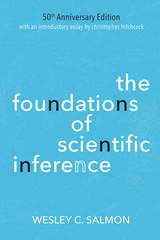
After its publication in 1967, The Foundations of Scientific Inference taught a generation of students and researchers about the problem of induction, the interpretation of probability, and confirmation theory. Fifty years later, Wesley C. Salmon’s book remains one of the clearest introductions to these fundamental problems in the philosophy of science. With The Foundations of Scientific Inference, Salmon presented a coherent vision of the nature of scientific reasoning, explored the philosophical underpinnings of scientific investigation, and introduced readers to key movements in epistemology and to leading philosophers of the twentieth century—such as Karl Popper, Rudolf Carnap, and Hans Reichenbach—offering a critical assessment and developing his own distinctive views on topics that are still of central importance today.
This anniversary edition of Salmon’s foundational work in the philosophy of science features a detailed introduction by Christopher Hitchcock, which examines the book’s origins, influences, and major themes, its impact and enduring effects, the disputes it raised, and its place in current studies, revisiting Salmon’s ideas for a new audience of philosophers, historians, scientists, and students.
Combining principles of individual rational choice with a sociological conception of collective action, James Coleman recasts social theory in a bold new way. The result is a landmark in sociological theory, capable of describing both stability and change in social systems.
This book provides for the first time a sound theoretical foundation for linking the behavior of individuals to organizational behavior and then to society as a whole. The power of the theory is especially apparent when Coleman analyzes corporate actors, such as large corporations and trade unions. He examines the creation of these institutions, collective decision making, and the processes through which authority is revoked in revolts and revolutions.
Coleman discusses the problems of holding institutions responsible for their actions as well as their incompatibility with the family. He also provides a simple mathematical analysis corresponding to and carrying further the verbal formulations of the theory. Finally, he generates research techniques that will permit quantitative testing of the theory.
From a simple, unified conceptual structure Coleman derives, through elegant chains of reasoning, an encompassing theory of society. It promises to be the most important contribution to social theory since the publication of Talcott Parsons' Structure of Social Action in 1936.
Foundations of Space-Time Theories was first published in 1977. Minnesota Archive Editions uses digital technology to make long-unavailable books once again accessible, and are published unaltered from the original University of Minnesota Press editions.
The essays in this volume are based on the papers given at a conference on the philosophical aspects of the space-time theory held under the auspices of the Minnesota Center for Philosophy of Science.
The study of streams and rivers combines ecology, chemistry, hydrology, and geology to reveal factors that control the biological diversity and functioning of these unique ecosystems. Although stream ecology is a relatively young discipline, foundational papers published over the past half-century have shaped our current understanding of these ecosystems and have informed our efforts to manage and protect them. Organized thematically, each chapter of this book—on topics including the physical template, communities, food webs, ecosystem energetics, and nutrient dynamics—offers summaries of the key literature, history and context on the topic, and forward-looking discussions that examine how past research has influenced current studies and may shape future efforts.

In the wake of Jean Piaget’s work on children’s understanding of reality, it is generally accepted that by age two, children assume that an object hidden in a box will remain there unchanged until someone tampers with it. Eugene Subbotsky persuasively demonstrates that many children—and some adults—will often accept mysterious disappearances and creations, perceiving them not as tricks or illusions but as actual occurrences. His analysis clearly shows that alongside our everyday belief in object permanence, we also have a set of quasi-magical beliefs that can be activated by appropriate situations and behaviors. The acceptability of these beliefs will vary from culture to culture, and will be widespread among preliterate peoples but less obvious in advanced industrial countries. The author, a Russian psychologist, draws on his own extensive research and examines other taken-for-granted concepts, such as the distinction between animate and inanimate.
Foundations of the Mind, amply illustrated with experimental material, has enormous implications for the study of both child development and the psychology of human beliefs. It attacks our complacent and often culturally biased faith in the nature of reality, and as such will become required reading for all psychologists.
Foundations of the Portuguese Empire, 1415-1580 was first published in 1977. Minnesota Archive Editions uses digital technology to make long-unavailable books once again accessible, and are published unaltered from the original University of Minnesota Press editions.
This account traces the history of the Portuguese overseas discoveries, following the expansion into the Atlantic island, the Madeiras, and the Azores. It continues the account with the history of Portuguese discoveries along the African coast, at Guinea, the Congo, and Good Hope, then follows the voyages of Vasco da Gama to India and to Cabra, Brazil, and the expansion in the early years of the sixteen century to Malacca, China, and the East Indies. The volume presents not only a useful narrative of the spread of Portuguese empire but also new interpretations and analyses of the Portuguese overseas history.

Foundations of Tropical Forest Biology makes essential works in the development of tropical biology available in a convenient form to both senior scholars interested in the roots of their discipline and to students encountering the field for the first time, as well as to everyone concerned with tropical conservation.

Although both the League of Nations and the Permanent Court of International Justice were rejected by the U.S. Senate, Boyle shows how the early governance of these institutions—precursors, respectively, to the United Nations and the International Court of Justice—informed later efforts to reduce and regulate transnational threats and the use of military force. Delving into such topics as the United States and its initial stance of neutrality in World War I and its imperial policy toward Latin America and the Caribbean, Boyle offers detailed readings of the relevant treaties, tribunals, and conferences, and assesses the political actors involved. Taking up the legalist point of view, he discusses the codification of customary international law, the obligatory arbitration of international disputes, and the creation of a new regime for the settlement of such disputes.
Boyle has provided in Foundations of World Order a compelling portrait of the relationship between political power and law, and of the impact of these forces on U.S. diplomacy. This volume will serve as a valuable resource to students, scholars, and practitioners of international law; it will also be of great interest to historians and political scientists engaged with issues of U.S. foreign policy and diplomatic history.
No one has figured more prominently in the study of the German philosopher Gottlob Frege than Michael Dummett. His magisterial Frege: Philosophy of Language is a sustained, systematic analysis of Frege's thought, omitting only the issues in philosophy of mathematics. In this work Dummett discusses, section by section, Frege's masterpiece The Foundations of Arithmetic and Frege's treatment of real numbers in the second volume of Basic Laws of Arithmetic, establishing what parts of the philosopher's views can be salvaged and employed in new theorizing, and what must be abandoned, either as incorrectly argued or as untenable in the light of technical developments.
Gottlob Frege (1848-1925) was a logician, mathematician, and philosopher whose work had enormous impact on Bertrand Russell and later on the young Ludwig Wittgenstein, making Frege one of the central influences on twentieth-century Anglo-American philosophy; he is considered the founder of analytic philosophy. His philosophy of mathematics contains deep insights and remains a useful and necessary point of departure for anyone seriously studying or working in the field.
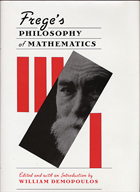
Widespread interest in Frege’s general philosophical writings is, relatively speaking, a fairly recent phenomenon. But it is only very recently that his philosophy of mathematics has begun to attract the attention it now enjoys. This interest has been elicited by the discovery of the remarkable mathematical properties of Frege’s contextual definition of number and of the unique character of his proposals for a theory of the real numbers.
This collection of essays addresses three main developments in recent work on Frege’s philosophy of mathematics: the emerging interest in the intellectual background to his logicism; the rediscovery of Frege’s theorem; and the reevaluation of the mathematical content of The Basic Laws of Arithmetic. Each essay attempts a sympathetic, if not uncritical, reconstruction, evaluation, or extension of a facet of Frege’s theory of arithmetic. Together they form an accessible and authoritative introduction to aspects of Frege’s thought that have, until now, been largely missed by the philosophical community.
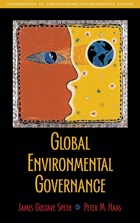
Global Environmental Governance offers the essential information, theory, and practical insight needed to tackle this critical challenge. It examines ten major environmental threats-climate disruption, biodiversity loss, acid rain, ozone depletion, deforestation, desertification, freshwater degradation and shortages, marine fisheries decline, toxic pollutants, and excess nitrogen-and explores how they can be addressed through treaties, governance regimes, and new forms of international cooperation.
Written by Gus Speth, one of the architects of the international environmental movement, and accomplished political scientist Peter M. Haas, Global Environmental Governance tells the story of how the community of nations, nongovernmental organizations, scientists, and multinational corporations have in recent decades created an unprecedented set of laws and institutions intended to help solve large-scale environmental problems. The book critically examines the serious shortcomings of current efforts and the underlying reasons why disturbing trends persist. It presents key concepts in international law and regime formation in simple, accessible language, and describes the current institutional landscape as well as lessons learned and new directions needed in international governance. Global Environmental Governance is a concise guide, with lists of key terms, study questions, and other features designed to help readers think about and understand the concepts discussed.

"With keen insight into the common law mind, Edlin argues that there are rich resources within the law for judges to ground their opposition to morally outrageous laws, and a legal obligation on them to overturn it, consequent on the general common law obligation to develop the law. Thus, seriously unjust laws pose for common law judges a dilemma within the law, not just a moral challenge to the law, a conflict of obligations, not just a crisis of conscience. While rooted firmly in the history of common law jurisprudence, Edlin offers an entirely fresh perspective on an age-old jurisprudential conundrum. Edlin's case for his thesis is compelling."
---Gerald J. Postema, Cary C. Boshamer Professor of Philosophy and Professor of Law, University of North Carolina at Chapel Hill, and author of Bentham and the Common Law Tradition
"Douglas Edlin builds a powerful historical, conceptual, and moral case for the proposition that judges on common law grounds should refuse to enforce unjust legislation. This is sure to be controversial in an age in which critics already excoriate judges for excessive activism when conducting constitutional judicial review. Edlin's challenge to conventional views is bold and compelling."
---Brian Z. Tamanaha, Chief Judge Benjamin N. Cardozo Professor of Law, St. John's University, and author of Law as a Means to an End: Threat to the Rule of Law
"Professor Edlin's fascinating and well-researched distinction between constitutional review and common law review should influence substantially both scholarship on the history of judicial power in the United States and contemporary jurisprudential debates on the appropriate use of that power."
---Mark Graber, Professor of Law and Government, University of Maryland, and author of Dred Scott and the Problem of Constitutional Evil
Is a judge legally obligated to enforce an unjust law?
In Judges and Unjust Laws, Douglas E. Edlin uses case law analysis, legal theory, constitutional history, and political philosophy to examine the power of judicial review in the common law tradition. He finds that common law tradition gives judges a dual mandate: to apply the law and to develop it. There is no conflict between their official duty and their moral responsibility. Consequently, judges have the authority---perhaps even the obligation---to refuse to enforce laws that they determine unjust. As Edlin demonstrates, exploring the problems posed by unjust laws helps to illuminate the institutional role and responsibilities of common law judges.
Douglas E. Edlin is Associate Professor of Political Science at Dickinson College.
This volume is a collects papers originally presented at the 7th Conference on Logic and the Foundations of Game and Decision Theory (LOFT), held at the University of Liverpool in July 2006. LOFT is a key venue for presenting research at the intersection of logic, economics, and computer science, and this collection gives a lively and wide-ranging view of an exciting and rapidly growing area.

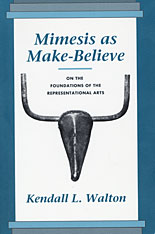
Representations—in visual arts and in fiction—play an important part in our lives and culture. Kendall Walton presents here a theory of the nature of representation, which illuminates its many varieties and goes a long way toward explaining its importance. Drawing analogies to children’s make believe activities, Walton constructs a theory that addresses a broad range of issues: the distinction between fiction and nonfiction, how depiction differs from description, the notion of points of view in the arts, and what it means for one work to be more “realistic” than another. He explores the relation between appreciation and criticism, the character of emotional reactions to literary and visual representations, and what it means to be caught up emotionally in imaginary events.
Walton’s theory also provides solutions to the thorny philosophical problems of the existence—or ontological standing—of fictitious beings, and the meaning of statements referring to them. And it leads to striking insights concerning imagination, dreams, nonliteral uses of language, and the status of legends and myths.
Throughout Walton applies his theoretical perspective to particular cases; his analysis is illustrated by a rich array of examples drawn from literature, painting, sculpture, theater, and film. Mimesis as Make-Believe is important reading for everyone interested in the workings of representational art.
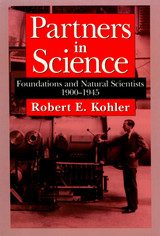
"This book is a rich historical tapestry of people, institutions and scientific ideas. It will stand for a long time as a source of precise and detailed information about an important aspect of the scientific enterprise. . .It also contains many valuable lessons for the coming years."—John Ziman, Times Higher Education Supplement
Process-tracing in social science is a method for studying causal mechanisms linking causes with outcomes. This enables the researcher to make strong inferences about how a cause (or set of causes) contributes to producing an outcome. Derek Beach and Rasmus Brun Pedersen introduce a refined definition of process-tracing, differentiating it into three distinct variants and explaining the applications and limitations of each. The authors develop the underlying logic of process-tracing, including how one should understand causal mechanisms and how Bayesian logic enables strong within-case inferences. They provide instructions for identifying the variant of process-tracing most appropriate for the research question at hand and a set of guidelines for each stage of the research process.
"A most encouraging example of a sustained attempt to bring together information, inference, and hypothesis in the several fields of biology, psychology, and philosophy."—Quarterly Review of Biology
F. A. Hayek (1899-1992), recipient of the Medal of Freedom in 1991 and co-winner of the Nobel Memorial Prize in Economics in 1974, taught at the University of London, the University of Chicago, and the University of Freiburg.
The latest addition to the University of Chicago Press’s Collected Works of F. A. Hayek series, The Sensory Order and Other Writings on the Foundations of Theoretical Psychology pairs the book, originally published in 1952, with additional essays related to The Sensory Order’s key themes, including a student paper from 1920 in which Hayek outlined the basic ideas he fully developed in the 1952 book. Rounding out the volume is an insightful introduction by editor Viktor Vanberg that sketches out the central problems Hayek was grappling with when he wrote The Sensory Order and the influential role this early thinking on theoretical psychology would play over the next six decades of his career. The book also features ample footnotes and citations for further reading, making this an essential contribution to the series.
Plato’s Parmenides and Aristotle’s Metaphysics initiated the discussion of the “First Philosophy” in the Western canon. Here, David Shwayder continues this debate by considering statements as the fundamental bearers of truth-values. Systematically moving from action to utterance, Shwayder argues that the category of “bodies” is fundamental to the human scheme of conceptualization and that if we had no capacity to refer to bodies then we would be unable to address referents from other categories.

When we talk about the economy, “the market” is often just an abstraction. While the exchange of goods was historically tied to a particular place, capitalism has gradually eroded this connection to create our current global trading systems. In Trading Spaces, Emma Hart argues that Britain’s colonization of North America was a key moment in the market’s shift from place to idea, with major consequences for the character of the American economy.
Hart’s book takes in the shops, auction sites, wharves, taverns, fairs, and homes of seventeenth- and eighteenth-century America—places where new mechanisms and conventions of trade arose as Europeans re-created or adapted continental methods to new surroundings. Since those earlier conventions tended to rely on regulation more than their colonial offspring did, what emerged in early America was a less-fettered brand of capitalism. By the nineteenth century, this had evolved into a market economy that would not look too foreign to contemporary Americans. To tell this complex transnational story of how our markets came to be, Hart looks back farther than most historians of US capitalism, rooting these markets in the norms of seventeenth- and eighteenth-century Britain. Perhaps most important, this is not a story of specific commodity markets over time but rather is a history of the trading spaces themselves: the physical sites in which the grubby work of commerce occurred and where the market itself was born.

Contributors. Jafari Sinclair Allen, Tom Boellstorff, Erin L. Durban, Elijah Adiv Edelman, Lyndon K. Gill, K. Marshall Green, Brian A. Horton, Nikki Lane, Martin F. Manalansan IV, Shaka McGlotten, Scott L. Morgensen, Kwame Otu, Juno Salazar Parreñas, Lucinda Ramberg, Sima Shakhsari, Savannah Shange, Anne Spice, Margot Weiss, Ara Wilson
He sat on a chair in the middle of the room, with some of the class sitting in chairs, some on the floor. He never used notes. He paused frequently, sometimes for several minutes, while he puzzled out a problem. He often asked his listeners questions and reacted to their replies. Many meetings were largely conversation.
These lectures were attended by, among others, D. A. T. Gasking, J. N. Findlay, Stephen Toulmin, Alan Turing, G. H. von Wright, R. G. Bosanquet, Norman Malcolm, Rush Rhees, and Yorick Smythies. Notes taken by these last four are the basis for the thirty-one lectures in this book.
The lectures covered such topics as the nature of mathematics, the distinctions between mathematical and everyday languages, the truth of mathematical propositions, consistency and contradiction in formal systems, the logicism of Frege and Russell, Platonism, identity, negation, and necessary truth. The mathematical examples used are nearly always elementary.
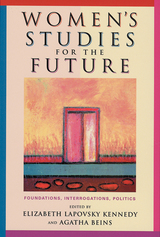
Established as an academic field in the 1970s, women’s studies is a relatively young but rapidly growing area of study. Not only has the number of scholars working in this subject expanded exponentially, but women’s studies has become institutionalized, offering graduate degrees and taking on departmental status in many colleges and universities. At the same time, this field—formed in the wake of the feminist movement—is finding itself in a precarious position in what is now often called a “post-feminist” society. This raises challenging issues for faculty, students, and administrators. How must the field adjust its goals and methods to continue to affect change in the future?
Bringing together essays by newcomers as well as veterans to the field, this essential volume addresses timely questions including:
- Without a unitary understanding of the subject, woman, what is the focus of women’s studies?
- How can women’s studies fulfill the promise of interdisciplinarity?
- What is the continuing place of activism in women’s studies?
- What are the best ways to think about, teach, and act upon the intersections of race, class, gender, disability, nation, and sexuality?
Offering innovative models for research and teaching and compelling new directions for action, Women’s Studies for the Future ensures the continued relevance and influence of this developing field.
READERS
Browse our collection.
PUBLISHERS
See BiblioVault's publisher services.
STUDENT SERVICES
Files for college accessibility offices.
RECENTLY PUBLISHED






UChicago Accessibility Resources
home | accessibility | search | about | contact us
BiblioVault ® 2001 - 2024
The University of Chicago Press