
 A SCHOLARLY BOOK REPOSITORY
Lazear and Michael also explore the implications their study may hold for the process of determining child support payments in households that dissolve. They argue that, unless the spending of every dollar can be monitored, alimony cannot be disentangled from child support. They also develop several criteria by which income might be distributed among family members, and, using one of those criteria, they present a series of tables that suggest the appropriate payment from one parent to another given family size, structure, and income level. Their model is particularly useful because it takes account of the ways other family members who were not part of the original household may contribute income to the new household. Other issues considered include the appropriate way to deal with children with special needs and the timing of transfer payments.
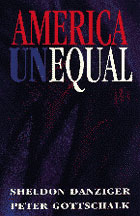
America Unequal demonstrates how powerful economic forces have diminished the prospects of millions of Americans and why "a rising tide no longer lifts all boats." Changes in the economy, public policies, and family structure have contributed to slow growth in family incomes and rising economic inequality. Poverty remains high because of an erosion of employment opportunities for less-skilled workers, not because of an erosion of the work ethic; because of a failure of government to do more for the poor and the middle class, not because of social programs.
There is nothing about a market economy, the authors say, that ensures that a rising standard of living will reduce inequality. If a new technology, such as computerization, leads firms to hire more managers and fewer typists, then the wages of lower-paid secretaries will decline and the wages of more affluent managers will increase. Such technological changes as well as other economic changes, particularly the globalization of markets, have had precisely this effect on the distribution of income in the United States.
America Unequal challenges the view, emphasized in the Republicans' "Contract with America," that restraining government social spending and cutting welfare should be our top domestic priorities. Instead, it proposes a set of policies that would reduce poverty by supplementing the earnings of low-wage workers and increasing the employment prospects of the jobless. Such demand-side policies, Sheldon Danziger and Peter Gottschalk argue, are essential for correcting a labor market that has been increasingly unable to absorb less-skilled and less-experienced workers.
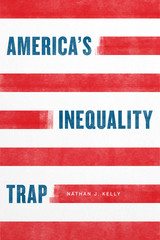
Nathan J. Kelly argues that a key reason for this is that rising concentrations of wealth create a politics that makes reducing economic inequality more difficult. Kelly convincingly shows that, when a small fraction of the people control most of the economic resources, they also hold a disproportionate amount of political power, hurtling us toward a self-perpetuating plutocracy, or an “inequality trap.” Among other things, the rich support a broad political campaign that convinces voters that policies to reduce inequality are unwise and not in the average voter’s interest, regardless of the real economic impact. They also take advantage of interest groups they generously support to influence Congress and the president, as well as state governments, in ways that stop or slow down reform. One of the key implications of this book is that social policies designed to combat inequality should work hand-in-hand with political reforms that enhance democratic governance and efforts to fight racism, and a coordinated effort on all of these fronts will be needed to reverse the decades-long trend.
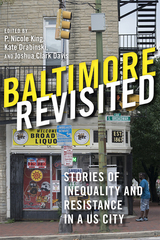
To help untangle these apparent paradoxes, the editors of Baltimore Revisited have assembled a collection of over thirty experts from inside and outside academia. Together, they reveal that Baltimore has been ground zero for a slew of neoliberal policies, a place where inequality has increased as corporate interests have eagerly privatized public goods and services to maximize profits. But they also uncover how community members resist and reveal a long tradition of Baltimoreans who have fought for social justice.
The essays in this collection take readers on a tour through the city’s diverse neighborhoods, from the Lumbee Indian community in East Baltimore to the crusade for environmental justice in South Baltimore. Baltimore Revisited examines the city’s past, reflects upon the city’s present, and envisions the city’s future.

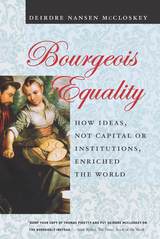
Why? Most economists—from Adam Smith and Karl Marx to Thomas Piketty—say the Great Enrichment since 1800 came from accumulated capital. McCloskey disagrees, fiercely. “Our riches,” she argues, “were made not by piling brick on brick, bank balance on bank balance, but by piling idea on idea.” Capital was necessary, but so was the presence of oxygen. It was ideas, not matter, that drove “trade-tested betterment.” Nor were institutions the drivers. The World Bank orthodoxy of “add institutions and stir” doesn’t work, and didn’t. McCloskey builds a powerful case for the initiating role of ideas—ideas for electric motors and free elections, of course, but more deeply the bizarre and liberal ideas of equal liberty and dignity for ordinary folk. Liberalism arose from theological and political revolutions in northwest Europe, yielding a unique respect for betterment and its practitioners, and upending ancient hierarchies. Commoners were encouraged to have a go, and the bourgeoisie took up the Bourgeois Deal, and we were all enriched.
Few economists or historians write like McCloskey—her ability to invest the facts of economic history with the urgency of a novel, or of a leading case at law, is unmatched. She summarizes modern economics and modern economic history with verve and lucidity, yet sees through to the really big scientific conclusion. Not matter, but ideas. Big books don’t come any more ambitious, or captivating, than Bourgeois Equality.
A New York Times #1 Bestseller
An Amazon #1 Bestseller
A Wall Street Journal #1 Bestseller
A USA Today Bestseller
A Sunday Times Bestseller
A Guardian Best Book of the 21st Century
Winner of the Financial Times and McKinsey Business Book of the Year Award
Winner of the British Academy Medal
Finalist, National Book Critics Circle Award
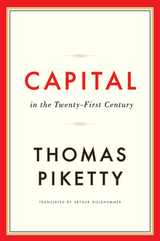
What are the grand dynamics that drive the accumulation and distribution of capital? Questions about the long-term evolution of inequality, the concentration of wealth, and the prospects for economic growth lie at the heart of political economy. But satisfactory answers have been hard to find for lack of adequate data and clear guiding theories. In Capital in the Twenty-First Century, Thomas Piketty analyzes a unique collection of data from twenty countries, ranging as far back as the eighteenth century, to uncover key economic and social patterns. His findings will transform debate and set the agenda for the next generation of thought about wealth and inequality.
Piketty shows that modern economic growth and the diffusion of knowledge have allowed us to avoid inequalities on the apocalyptic scale predicted by Karl Marx. But we have not modified the deep structures of capital and inequality as much as we thought in the optimistic decades following World War II. The main driver of inequality—the tendency of returns on capital to exceed the rate of economic growth—today threatens to generate extreme inequalities that stir discontent and undermine democratic values. But economic trends are not acts of God. Political action has curbed dangerous inequalities in the past, Piketty says, and may do so again.
A work of extraordinary ambition, originality, and rigor, Capital in the Twenty-First Century reorients our understanding of economic history and confronts us with sobering lessons for today.
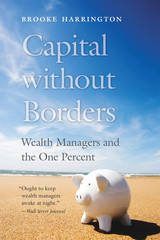
“A timely account of how the 1% holds on to their wealth…Ought to keep wealth managers awake at night.”
—Wall Street Journal
“Harrington advises governments seeking to address inequality to focus not only on the rich but also on the professionals who help them game the system.”
—Richard Cooper, Foreign Affairs
“An insight unlike any other into how wealth management works.”
—Felix Martin, New Statesman
“One of those rare books where you just have to stand back in awe and wonder at the author’s achievement…Harrington offers profound insights into the world of the professional people who dedicate their lives to meeting the perceived needs of the world’s ultra-wealthy.”
—Times Higher Education
How do the ultra-rich keep getting richer, despite taxes on income, capital gains, property, and inheritance? Capital without Borders tackles this tantalizing question through a groundbreaking multi-year investigation of the men and women who specialize in protecting the fortunes of the world’s richest people. Brooke Harrington followed the money to the eighteen most popular tax havens in the world, interviewing wealth managers to understand how they help their high-net-worth clients dodge taxes, creditors, and disgruntled heirs—all while staying just within the letter of the law. She even trained to become a wealth manager herself in her quest to penetrate the fascinating, shadowy world of the guardians of the one percent.
Drawing on the work of the classical-Marxian economists and their modern successors, Capitalists, Workers, and Fiscal Policy sets forth a new model of economic growth and distribution, and applies it to two major policy issues: public debt and social security.
The book homes in specifically on the problem of fiscal policy, examining the ways that taxation and government spending affect the distribution of wealth and income as well as the rate of economic growth. Thomas Michl’s model shows that public debt has a regressive effect on wealth distribution. It also demonstrates that the accumulation of wealth by public authorities, for example, in the form of a pension reserve such as the U.S. social security trust fund, can have a progressive effect on wealth distribution, both directly (since it represents ownership by the citizenry) and indirectly through its general equilibrium effects on the structure of accumulation. The book’s findings provide an analytical foundation for a macroeconomic policy of using fiscal surpluses to accumulate a public pension reserve fund that serves to effect a progressive redistribution of wealth.
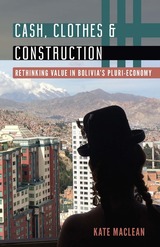
A groundbreaking feminist perspective on Movimiento al Socialismo (MAS) rule in Bolivia and the country’s radical transformation under Evo Morales
The presidency of Evo Morales in Bolivia (2006–2019) has produced considerable academic scholarship, much of it focused on indigenous social movements or extractivism, and often triumphalist about the successes of Morales’s Movimiento al Socialismo (MAS). Turning a new lens on the movement, Cash, Clothes, and Construction presents the first gender-based analysis of “pluri-economy,” a central pillar of Bolivia’s program under Morales, evaluating the potential of this vision of “an economy where all economies fit” to embrace feminist critiques of capitalism and economic diversity.
Based on more than twelve years of empirical research exploring the remarkable transformations in Bolivia since 2006, this book focuses on three sectors—finance, clothing, and construction—in which indigenous women have defied gendered expectations. Kate Maclean presents detailed case studies of women selling secondhand high street clothes from the United States in the vast, peri-urban markets of Bolivian cities; Aymaran designers of new pollera (traditional Andean dress) fashions, one of whom exhibited her collection in New York City; and the powerful and rich chola paceña, whose real estate investments have transformed the cultural maps of La Paz and El Alto.
Cash, Clothes, and Construction offers a gendered analysis of the mission of MAS to dismantle neoliberalism and decolonize politics and economy from the perspective of the Indigenous women who have radically transformed Bolivia’s economy from the ground up.

This volume draws together a panel of distinguished scholars who address these issues in terms comprehensible to noneconomists. Their findings are surprising, suggesting that factors such as trade imbalances, immigration rates, and differences in educational resources do not account for recent increases in the inequality of wealth and earnings. Rather, the contributors maintain that these discrepancies can be attributed to workplace demand for high-skilled labor. They also insist that further research must examine the organization of industry in order to better understand the concurrent devaluation of manual labor.
Addressing a topic that is of considerable public interest, this collection helps move the issue of increasing economic inequality in America to the center of the public policy arena.
Contributors: Donald R. Deere, Claudia Goldin, Lawrence F. Katz, James P. Smith, Franco Peracchi, Gary Solon, Eric A. Hanushek, Julie A. Somers, Marvin H. Kosters, William Cline, Finis Welch, Angus Deaton, Charles Murray, Kevin Murphy
Challenges to Globalization evaluates the arguments of pro-globalists and anti-globalists regarding issues such as globalization's relationship to democracy, its impact on the environment and on labor markets including the brain drain, sweat shop labor, wage levels, and changes in production processes, and the associated expansion of trade and its effects on prices. Baldwin, Winters, and the contributors to this volume look at multinational firms, foreign investment, and mergers and acquisitions and present surprising findings that often run counter to the claim that multinational firms primarily seek countries with low wage labor. The book closes with papers on financial opening and on the relationship between international economic policies and national economic growth rates.
Recent battles in Washington over how to fix America’s fiscal failures strengthened the widespread impression that economic issues sharply divide average citizens. Indeed, many commentators split Americans into two opposing groups: uncompromising supporters of unfettered free markets and advocates for government solutions to economic problems. But such dichotomies, Benjamin Page and Lawrence Jacobs contend, ring false. In Class War? they present compelling evidence that most Americans favor free enterprise and practical government programs to distribute wealth more equitably.
At every income level and in both major political parties, majorities embrace conservative egalitarianism—a philosophy that prizes individualism and self-reliance as well as public intervention to help Americans pursue these ideals on a level playing field. Drawing on hundreds of opinion studies spanning more than seventy years, including a new comprehensive survey, Page and Jacobs reveal that this worldview translates to broad support for policies aimed at narrowing the gap between rich and poor and creating genuine opportunity for all. They find, for example, that across economic, geographical, and ideological lines, most Americans support higher minimum wages, improved public education, wider access to universal health insurance coverage, and the use of tax dollars to fund these programs.
In this surprising and heartening assessment, Page and Jacobs provide our new administration with a popular mandate to combat the economic inequity that plagues our nation.
"Created Unequal is not light reading, but Galbraith's elegant arguments, passionate exposition, and profound conclusions make it worth the trouble. . . . [Galbraith] remind[s] us that the economy is and ought to be run by humans, not humans by the economy."—Joanna Ciulla, Los Angeles Times Book Review
"Created Unequal is a lucid and wise explanation of why America seems to be prospering while most Americans aren't. James Galbraith takes steady aim at a variety of widely accepted economic myths and hits most of them dead center. This book will tell you a lot about the way your economic world really works."—Jeff Faux, President of the Economic Policy Institute
"[A] brilliant and iconoclastic examination of the major social trend of our time."—Michael Lind, Washington Monthly
Although inequality in Latin America ranks among the worst in the world, it has notably declined over the last decade, offset by improvements in health care and education, enhanced programs for social assistance, and increases in the minimum wage.

Since the introduction of the income tax in 1913, controversy has raged about how heavily to tax the rich. Opponents of high tax rates claim that heavy assessments have negative incentives on the productivity of some of our most talented citizens; supporters stress the importance of the rich shouldering their "fair share," and decry the loopholes that permit many to escape their obligations. Notably absent from this debate is hard evidence about the actual impact of taxes on the behavior of the affluent.
This book presents evidence by leading economists of the effects of taxes on the formation of businesses, the supply of labor, the form of executive compensation, the accumulation of wealth, the allocation of portfolios, and the realization of capital gains. Among its findings are that the labor supply of the rich remained unchanged in the face of large tax cuts in 1986, and that in late 1992 executives exercised billions of dollars' worth of stock options in order to beat the tax increases expected in 1993. The book also presents a history of efforts to tax the rich, a demographic snapshot of the financially affluent, and a road map to widely used tax-avoidance strategies.
Does Atlas Shrug? will be of great interest to policymakers and interested citizens who want to know how much tax revenue could really be gained by increasing tax rates on the rich, or whether low capital gains tax rates really spur economic growth.
Through an astute blend of experiments, surveys, and descriptions people offer in their own words, The Economic Other reveals that when less-advantaged Americans compare with the rich, they become more accurate about their own status and want more from government. But American society is structured to prevent upward comparison. In an increasingly divided, anxious nation, opportunities to interact with the country’s richest are shrinking, and people prefer to compare to those below to feel secure. Even when comparison with the rich does occur, many lose confidence in their power to effect change.
Laying bare how social comparisons drive political attitudes, The Economic Other is an essential look at the stubborn plight of inequality and the measures needed to solve it.
Social security, private pension benefits, housing, and health care are traditional kinds of transfers. Accurate measurements of the degree and effect of these and of other, newly interpreted transfers are vital to economic policy making. Though this volume is not directly concerned with policy-making issues, it does impinge on many areas of current public concern; methods of transfer valuation, for example, may affect how we view the status of the aged.
Researchers, policy analysts, and those who compile statistics on which social programs are based on will value the diverse approaches of these ten papers and their accompanying comments. Taken together the essays give great insight into the complexities of defining transfers and provide a wealth of new analytic methods. They were developed from material presented at the Income and Wealth Conference on Social Accounting for Transfers held at Madison, Wisconsin, in 1982.
Thomas Piketty—whose Capital in the Twenty-First Century pushed inequality to the forefront of public debate—wrote The Economics of Inequality as an introduction to the conceptual and factual background necessary for interpreting changes in economic inequality over time. This concise text has established itself as an indispensable guide for students and general readers in France, where it has been regularly updated and revised. Translated by Arthur Goldhammer, The Economics of Inequality now appears in English for the first time.
Piketty begins by explaining how inequality evolves and how economists measure it. In subsequent chapters, he explores variances in income and ownership of capital and the variety of policies used to reduce these gaps. Along the way, with characteristic clarity and precision, he introduces key ideas about the relationship between labor and capital, the effects of different systems of taxation, the distinction between “historical” and “political” time, the impact of education and technological change, the nature of capital markets, the role of unions, and apparent tensions between the pursuit of efficiency and the pursuit of fairness.
Succinct, accessible, and authoritative, this is the ideal place to start for those who want to understand the fundamental issues at the heart of one of the most pressing concerns in contemporary economics and politics.
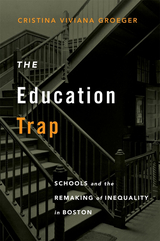
Why—contrary to much expert and popular opinion—more education may not be the answer to skyrocketing inequality.
For generations, Americans have looked to education as the solution to economic disadvantage. Yet, although more people are earning degrees, the gap between rich and poor is widening. Cristina Groeger delves into the history of this seeming contradiction, explaining how education came to be seen as a panacea even as it paved the way for deepening inequality.
The Education Trap returns to the first decades of the twentieth century, when Americans were grappling with the unprecedented inequities of the Gilded Age. Groeger’s test case is the city of Boston, which spent heavily on public schools. She examines how workplaces came to depend on an army of white-collar staff, largely women and second-generation immigrants, trained in secondary schools. But Groeger finds that the shift to more educated labor had negative consequences—both intended and unintended—for many workers. Employers supported training in schools in order to undermine the influence of craft unions, and so shift workplace power toward management. And advanced educational credentials became a means of controlling access to high-paying professional and business jobs, concentrating power and wealth. Formal education thus became a central force in maintaining inequality.
The idea that more education should be the primary means of reducing inequality may be appealing to politicians and voters, but Groeger warns that it may be a dangerous policy trap. If we want a more equitable society, we should not just prescribe more time in the classroom, but fight for justice in the workplace.
What equality means in three modern democracies, both to leaders of important groups and to challengers of the status quo, is the subject of this wide-ranging canvass of perceptions and policy. It is based on extensive questionnaire data gathered from leaders in various segments of society in each countrybusiness, labor unions, farm organizations, political parties, the media-as well as from groups that are seeking greater equalityfeminists, black leaders in the United States, leaders of the Burakumin in Japan. The authors describe the extent to which the same meanings of equality exist, both within and across nations, and locate the areas of consensus and conflict over equality. No other book has compared data of this sort for these purposes.
The authors address several major substantive and theoretical issues: the role of values in relation to egalitarian outcomes; the comparison of values and perceptions about equality in economics (income equality) and politics (equality of influence); and the difference among the nations in the ways political institutions affect the incorporation of new demands for equality into the policymaking process. They pay particular attention to how policy is set on issues of gender equality.
This book will be controversial, for some see no room in the understanding of political economy for the analysis of values. It will be consulted by a general audience interested in politics and culture as well as by social scientists. Elites and the Idea of Equality is an informative sequel to Equality in America by Sidney Verba and Gary R. Orren (Harvard University Press), which considers similar topics in a national context.
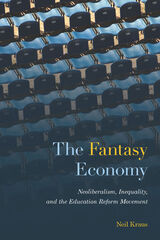
The Fantasy Economy challenges the basic assumptions of the education reform movement of the last few decades. Kraus insists that education cannot control the labor market and unreliable corporate narratives fuel this misinformation. Moreover, misguided public policies, such as accountability and school choice, along with an emphasis on workforce development and STEM over broad-based liberal arts education, have only produced greater inequality.
Ultimately, The Fantasy Economy argues that education should be understood as a social necessity, not an engine of the neoliberal agenda. Kraus’ book advocates for a change in conventional thinking about economic opportunity and the purpose of education in a democracy.
Since the early 1980s, Korea’s financial development has been a tale of liberalization and opening. After the 1997 financial crisis, great strides were made in building a market-oriented financial system through sweeping reforms for deregulation and the opening of financial markets. However, the new system failed to steer the country away from a credit card boom and bust in 2003, a liquidity crisis in 2008, and a run on its savings banks in 2011, and has been severely tested again by the ongoing COVID-19 pandemic crisis. Financial liberalization, clearly, has been no panacea.
This study analyzes the deepening of and structural changes in Korea’s financial system since the early 1980s and presents the empirical results of the effects of financial development on economic growth, stability, and the distribution of income. It finds that, contrary to conventional wisdom, financial liberalization has contributed little to fostering the growth and stability of the Korean economy and has exacerbated income distribution problems. Are there any merits in financial liberalization? The authors answer this query through empirical examinations of the theories of finance and growth. They point to a clear need to further improve the efficiency, soundness, and stability of Korean financial institutions and markets.
Winner of the Bruno Kreisky Prize, Karl Renner Institut
A Financial Times Best Economics Book of the Year
An Economist Best Book of the Year
A Livemint Best Book of the Year
One of the world’s leading economists of inequality, Branko Milanovic presents a bold new account of the dynamics that drive inequality on a global scale. Drawing on vast data sets and cutting-edge research, he explains the benign and malign forces that make inequality rise and fall within and among nations. He also reveals who has been helped the most by globalization, who has been held back, and what policies might tilt the balance toward economic justice.
“The data [Milanovic] provides offer a clearer picture of great economic puzzles, and his bold theorizing chips away at tired economic orthodoxies.”
—The Economist
“Milanovic has written an outstanding book…Informative, wide-ranging, scholarly, imaginative and commendably brief. As you would expect from one of the world’s leading experts on this topic, Milanovic has added significantly to important recent works by Thomas Piketty, Anthony Atkinson and François Bourguignon…Ever-rising inequality looks a highly unlikely combination with any genuine democracy. It is to the credit of Milanovic’s book that it brings out these dangers so clearly, along with the important global successes of the past few decades.
—Martin Wolf, Financial Times
One of the world’s leading experts on international trade explains that we must look beyond globalization to explain rising inequality.
Globalization is not the primary cause of rising inequality. This may come as a surprise. Inequality within nations has risen steadily in recent decades, at a time when countries around the world have eased restrictions on the movement of goods, capital, and labor. Many assume a causal relationship, which has motivated opposition to policies that promote freer trade. Elhanan Helpman shows, however, in this timely study that this assumption about the effects of globalization is more myth than fact.
Globalization and Inequality guides us through two decades of research about the connections among international trade, offshoring, and changes in income, and shows that the overwhelming conclusion of contemporary research is that globalization is responsible for only a small rise in inequality. The chief causes remain difficult to pin down, though technological developments favoring highly skilled workers and changes in corporate and public policies are leading suspects. As Helpman makes clear, this does not mean that globalization creates no problems. Critics may be right to raise concerns about such matters as cultural autonomy, child labor, and domestic sovereignty. But if we wish to curb inequality while protecting what is best about an interconnected world, we must start with a clear view of what globalization does and does not do and look elsewhere to understand our troubling and growing divide.
The redistribution of income has been a key element in Peruvian governmental policy. Both the Belaunde and Velasco regimes professed a deep concern with economic injustice, and they have been regarded as models of peaceful progress toward social justice. Despite its good intentions, Richard Webb shows, the government has had little impact on the rigid imbalance of wealth in Peru. The rich have continued to get richer faster than the poor have got less poor. Inequality has grown, and those most in need of improvement have benefited least. The tax structure has actually become more regressive. with taxes raised most on middle-income groups and least on the very rich.
Overall, the Peruvian government's economic policy has been mildly progressive, but not progressive enough to have an appreciable effect on the widespread poverty. What is needed, Webb argues, are movements of capital from the modern sector of the economy to the traditional sector to create new jobs for the poor. "Finally, substantial redistribution seems to require changes in attitude. The elimination of poverty must precede a concern for equity per se, and the needs of the very poor must acquire the status of rights rather than claims to compassion."
An Economist Best Book of the Year
A Financial Times Best Economics Book of the Year
A Fast Company “7 Books Microsoft CEO Satya Nadella Says You Need to Lead Smarter”
Between 1820 and 1990, the share of world income going to today’s wealthy nations soared from twenty percent to almost seventy. Since then, that share has plummeted to where it was in 1900. As the renowned economist Richard Baldwin reveals, this reversal of fortune reflects a new age of globalization that is drastically different from the old. The nature of globalization has changed, but our thinking about it has not.
Baldwin argues that the New Globalization is driven by knowledge crossing borders, not just goods. That is why its impact is more sudden, more individual, more unpredictable, and more uncontrollable than before—which presents developed nations with unprecedented challenges as they struggle to maintain reliable growth and social cohesion. It is the driving force behind what Baldwin calls “The Great Convergence,” as Asian economies catch up with the West.
“In this brilliant book, Baldwin has succeeded in saying something both new and true about globalization.”
—Martin Wolf, Financial Times
“A very powerful description of the newest phase of globalization.”
—Larry Summers, former U.S. Secretary of the Treasury
“An essential book for understanding how modern trade works via global supply chains. An antidote to the protectionist nonsense being peddled by some politicians today.”
—The Economist
“[An] indispensable guide to understanding how globalization has got us here and where it is likely to take us next.”
—Alan Beattie, Financial Times

Growth and Distribution is the first text designed to support a comprehensive advanced undergraduate or graduate course on the theory, measurement, and history of economic growth. The book, which presents Classical and Keynesian in parallel with Neoclassical approaches to growth theory, introduces students to advanced tools of intertemporal economic analysis through carefully developed treatments of land- and resource-limited growth, and covers money and growth, the impact of government debt and social security systems on growth, and theories of endogenous growth and endogenous technical change. The models emphasize rigorous reasoning from basic economic principles and insights without excessive formal complication, and respond to students' interest in the history and policy dilemmas of real-world economies. Surveys of data and discussion of empirical controversies are closely integrated with the development of theoretical tools. The book includes access to a comprehensive data set extending the Penn World Tables in a form suitable for exploration in hands-on student projects.
In addition to carefully worked examples showing how to use the analytical techniques presented, the book contains many problems suitable for inclusion in problem sets and examinations. Detailed answers to these problems are also provided.
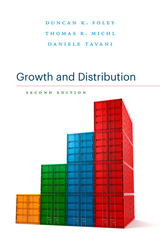
A major revision of an established textbook on the theory, measurement, and history of economic growth, with new material on climate change, corporate capitalism, and innovation.
Authors Duncan Foley, Thomas Michl, and Daniele Tavani present Classical and Keynesian approaches to growth theory, in parallel with Neoclassical ones, and introduce students to advanced tools of intertemporal economic analysis through carefully developed treatments of land- and resource-limited growth. They cover corporate finance, the impact of government debt and social security systems, theories of endogenous technical change, and the implications of climate change. Without excessive formal complication, the models emphasize rigorous reasoning from basic economic principles and insights, and respond to students’ interest in the history and policy dilemmas of real-world economies.
In addition to carefully worked out examples showing how to use the analytical techniques presented, Growth and Distribution presents many problems suitable for inclusion in problem sets and examinations. Detailed answers to these problems are available. This second edition includes fresh data throughout and new chapters on climate change, corporate capitalism, models of wealth inequality, and technical change.
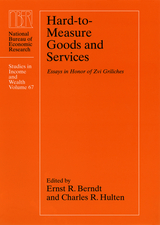
The celebrated economist Zvi Griliches’s entire career can be viewed as an attempt to advance the cause of accuracy in economic measurement. His interest in the causes and consequences of technical progress led to his pathbreaking work on price hedonics, now the principal analytical technique available to account for changes in product quality.
Hard-to-Measure Goods and Services, a collection of papers from an NBER conference held in Griliches’s honor, is a tribute to his many contributions to current economic thought. Here, leading scholars of economic measurement address issues in the areas of productivity, price hedonics, capital measurement, diffusion of new technologies, and output and price measurement in “hard-to-measure” sectors of the economy. Furthering Griliches’s vital work that changed the way economists think about the U.S. National Income and Product Accounts, this volume is essential for all those interested in the labor market, economic growth, production, and real output.

White identity in the United States is place bound, asserts George Lipsitz in How Racism Takes Place. An influential scholar in American and racial studies, Lipsitz contends that racism persists because a network of practices skew opportunities and life chances along racial lines. That is, these practices assign people of different races to different spaces and therefore allow grossly unequal access to education, employment, transportation, and shelter.
Revealing how seemingly race-neutral urban sites contain hidden racial assumptions and imperatives, Lipsitz examines the ways in which urban space and social experience are racialized and emphasizes that aggrieved communities do not passively acquiesce to racism. He recognizes the people and communities that have reimagined segregated spaces in expressive culture as places for congregation.
How Racism Takes Place not only exposes the degree to which this white spatial imagining structures our society but also celebrates the black artists and activists who struggle to create a just and decent society.
In the early 1990s, South Korea was showcased as a country that had combined extraordinary economic growth with a narrowing of income distribution, achieving remarkably low rates of unemployment and poverty. In the years following the financial crisis of 1997–1998, however, these rates ballooned to pre-crisis levels, giving rise to the perception that the gap between the rich and the poor in Korea had once again widened.
Income Inequality in Korea explores the relationship between economic growth and social developments in Korea over the last three decades. Analyzing the forces behind the equalizing trends in the 1980s and early 1990s, and the deterioration evident in the post-crisis years, Chong-Bum An and Barry Bosworth investigate the macroeconomic conditions, gains in educational attainment, demographic changes and conditions in labor markets, and social welfare policies that have contributed to the evolution of income inequality over time.
The authors also raise fundamental questions about whether the pre-crisis pattern of combining strong economic growth with improving equality can be restored, as well as how government policies might be designed to promote that objective. The book concludes with a discussion of some proposals for improving the efficacy of redistributive policies in Korea.
Inequality, per se, has been with us for millennia. With the creation, growth and deepening of Capitalism across the globe, inequalities take on new dimensions, unknown in previous eras. As Capitalism has spread its wings across the globe over the last 200 or so years, so inequalities have deepened and widened, both inside Nation Sates, between nation States. These inequalities are of income, wealth and of power.
This book, written by the widely respected economic historian Douglas Dowd at the age of 90, is notable for his own experience and vivid memory, of the 1929-31 recession. Since the 1980s, and the predominance of the present neo-liberal ideology, all of the inequalities that the book presents have grown rapidly. Written as a critique of the counter-productivity of growing economic inequality and vindicated by the present world banking crisis, Dowd presents a strong argument against capitalist expansion, exploitation and oligarchic rule.
Dowd's conclusions, that the globalization and growth of the financial sector will impact painfully upon hundreds of millions of people, unknown to most of us in our lifetime, Dowd's book deals with these issues from the unique perspective of inequality. Presenting both a history of the current crisis and an overview of it's, Inequality will appeal to both a broad general readership, and provides an extremely useful reference point for students of political economy, economic history, contemporary economics and global politics.
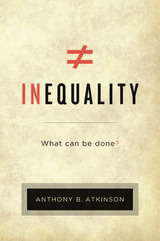
Winner of the Richard A. Lester Award for the Outstanding Book in Industrial Relations and Labor Economics, Princeton University
An Economist Best Economics and Business Book of the Year
A Financial Times Best Economics Book of the Year
Inequality is one of our most urgent social problems. Curbed in the decades after World War II, it has recently returned with a vengeance. We all know the scale of the problem—talk about the 99% and the 1% is entrenched in public debate—but there has been little discussion of what we can do but despair. According to the distinguished economist Anthony Atkinson, however, we can do much more than skeptics imagine.
“[Atkinson] sets forth a list of concrete, innovative, and persuasive proposals meant to show that alternatives still exist, that the battle for social progress and equality must reclaim its legitimacy, here and now… Witty, elegant, profound, this book should be read.”
—Thomas Piketty, New York Review of Books
“An uncomfortable affront to our reigning triumphalists. [Atkinson’s] premise is straightforward: inequality is not unavoidable, a fact of life like the weather, but the product of conscious human behavior.
—Owen Jones, The Guardian
Economic research is increasingly focused on inequality in the distribution of personal resources and outcomes. One aspect of inequality is mobility: are individuals locked into their respective places in this distribution? To what extent do circumstances change, either over the lifecycle or across generations? Research not only measures inequality and mobility, but also analyzes the historical, economic, and social determinants of these outcomes and the effect of public policies. This volume explores the latest developments in the analysis of income and wealth distribution and mobility. The collection of twenty-three studies is divided into five sections. The first examines observed patterns of income inequality and shifts in the distribution of earnings and in other factors that contribute to it. The next examines wealth inequality, including a substantial discussion of the difficulties of defining and measuring wealth. The third section presents new evidence on the intergenerational transmission of inequality and the mechanisms that underlie it. The next section considers the impact of various policy interventions that are directed at reducing inequality. The final section addresses the challenges of combining household-level data, potentially from multiple sources such as surveys and administrative records, and aggregate data to study inequality, and explores ways to make survey data more comparable with national income accounts data.
The surprising finding of this book is that, contrary to conventional wisdom, global income inequality is decreasing. Critics of globalization and others maintain that the spread of consumer capitalism is dramatically polarizing the worldwide distribution of income. But as the demographer Glenn Firebaugh carefully shows, income inequality for the world peaked in the late twentieth century and is now heading downward because of declining income inequality across nations. Furthermore, as income inequality declines across nations, it is rising within nations (though not as rapidly as it is declining across nations). Firebaugh claims that this historic transition represents a new geography of global income inequality in the twenty-first century.
This book documents the new geography, describes its causes, and explains why other analysts have missed one of the defining features of our era—a transition in inequality that is reducing the importance of where a person is born in determining his or her future well-being.
Hayek Book Prize Finalist
An Economist Best Book of the Year
A Foreign Affairs Best Book of the Year
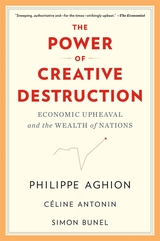
From one of the world’s leading economists and his coauthors, a cutting-edge analysis of what drives economic growth and a blueprint for prosperity under capitalism.
Crisis seems to follow crisis. Inequality is rising, growth is stagnant, the environment is suffering, and the COVID-19 pandemic has exposed every crack in the system. We hear more and more calls for radical change, even the overthrow of capitalism. But the answer to our problems is not revolution. The answer is to create a better capitalism by understanding and harnessing the power of creative destruction—innovation that disrupts, but that over the past two hundred years has also lifted societies to previously unimagined prosperity.
To explain, Philippe Aghion, Céline Antonin, and Simon Bunel draw on cutting-edge theory and evidence to examine today’s most fundamental economic questions, including the roots of growth and inequality, competition and globalization, the determinants of health and happiness, technological revolutions, secular stagnation, middle-income traps, climate change, and how to recover from economic shocks. They show that we owe our modern standard of living to innovations enabled by free-market capitalism. But we also need state intervention with the appropriate checks and balances to simultaneously foster ongoing economic creativity, manage the social disruption that innovation leaves in its wake, and ensure that yesterday’s superstar innovators don’t pull the ladder up after them to thwart tomorrow’s. A powerful and ambitious reappraisal of the foundations of economic success and a blueprint for change, The Power of Creative Destruction shows that a fair and prosperous future is ultimately ours to make.
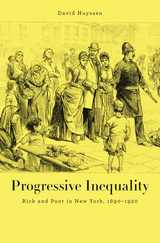
The Progressive Era has been depicted as a seismic event in American history—a landslide of reform that curbed capitalist excesses and reduced the gulf between rich and poor. Progressive Inequality cuts against the grain of this popular consensus, demonstrating how income inequality’s growth prior to the stock market crash of 1929 continued to aggravate class divisions. As David Huyssen makes clear, Progressive attempts to alleviate economic injustice often had the effect of entrenching class animosity, making it more, not less, acute.
Huyssen interweaves dramatic stories of wealthy and poor New Yorkers at the turn of the twentieth century, uncovering how initiatives in charity, labor struggles, and housing reform chafed against social, economic, and cultural differences. These cross-class actions took three main forms: prescription, in which the rich attempted to dictate the behavior of the poor; cooperation, in which mutual interest engendered good-faith collaboration; and conflict, in which sharply diverging interests produced escalating class violence. In cases where reform backfired, it reinforced a set of class biases that remain prevalent in America today, especially the notion that wealth derives from individual merit and poverty from lack of initiative.
A major contribution to the history of American capitalism, Progressive Inequality makes tangible the abstract dynamics of class relations by recovering the lived encounters between rich and poor—as allies, adversaries, or subjects to inculcate—and opens a rare window onto economic and social debates in our own time.
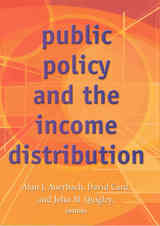
From the Republican Party's "Southern Strategy" in the U.S. to the rise of Le Pen's National Front in France, conservative politicians in the last thirty years have capitalized on voters' resentment of ethnic minorities to win votes and undermine government aid to the poor. In this book, the authors construct a theoretical model to calculate the effect of voters' attitudes about race and immigration on political parties' stances on income distribution.
Drawing on empirical data from the U.S., Britain, Denmark, and France, they use their model to show how parties choose their platforms and compete for votes. They find that the Right is able to push fiscal policies that hurt working and middle class citizens by attracting voters who may be liberal on economic issues but who hold conservative views on race or immigration. The authors estimate that if all voters held non-racist views, liberal and conservative parties alike would have proposed levels of redistribution 10 to 20 percent higher than they did. Combining historical analysis and empirical rigor with major theoretical advances, the book yields fascinating insights into how politicians exploit social issues to advance their economic agenda.
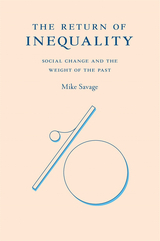
A pioneering book that takes us beyond economic debate to show how inequality is returning us to a past dominated by empires, dynastic elites, and ethnic divisions.
The economic facts of inequality are clear. The rich have been pulling away from the rest of us for years, and the super-rich have been pulling away from the rich. More and more assets are concentrated in fewer and fewer hands. Mainstream economists say we need not worry; what matters is growth, not distribution. In The Return of Inequality, acclaimed sociologist Mike Savage pushes back, explaining inequality’s profound deleterious effects on the shape of societies.
Savage shows how economic inequality aggravates cultural, social, and political conflicts, challenging the coherence of liberal democratic nation-states. Put simply, severe inequality returns us to the past. By fracturing social bonds and harnessing the democratic process to the strategies of a resurgent aristocracy of the wealthy, inequality revives political conditions we thought we had moved beyond: empires and dynastic elites, explosive ethnic division, and metropolitan dominance that consigns all but a few cities to irrelevance. Inequality, in short, threatens to return us to the very history we have been trying to escape since the Age of Revolution.
Westerners have been slow to appreciate that inequality undermines the very foundations of liberal democracy: faith in progress and trust in the political community’s concern for all its members. Savage guides us through the ideas of leading theorists of inequality, including Marx, Bourdieu, and Piketty, revealing how inequality reimposes the burdens of the past. At once analytically rigorous and passionately argued, The Return of Inequality is a vital addition to one of our most important public debates.
Scheming for the Poor is the first comparative analysis of redistributive policymaking in Latin America. William Ascher examines the success or failure of progressive policies launched by nine governments grouped into three regime types—populist, reformist, and radical—over the course of the postwar history of Argentina, Chile, and Peru.
His findings challenge the conventional views that redistribution in Latin America is either doomed to failure or else is the inevitable consequence of a balance of pro-redistributive and anti-redistributive forces. Ascher shows that tactics and careful attention to practical politics and policy implementation are far more important than regime type and professed political objectives and credos. The adept policymakers—from the Argentine authoritarian populist Juan Perón to the Chilean reformist Eduardo Frei—delivered more as redistributionists than did the economic romantics.
Integrating the political and economic aspects of redistribution, Ascher shows that in political terms success stems from subtlety rather than stridency, perceptions rather than economic realities, the astute formation of coalitions, and aversion of the mobilization of the opposition. Ultimately, of course, economic pressures impose a limit on what is politically possible, and Ascher demonstrates how economic requirements constrain the politics of income redistribution.
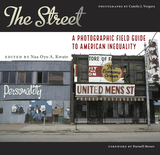
Using MacArthur fellow Camilo José Vergara’s intimate street photographs of Camden, New Jersey as reference points, the essays in this collection analyze these images within the context of troubled histories and misguided policies that have exacerbated racial and economic inequalities. Rather than blaming Camden’s residents for the blighted urban landscape, the multidisciplinary array of scholars contributing to this guide reveal the oppressive structures and institutional failures that have led the city to this condition. Tackling topics such as race and law enforcement, gentrification, food deserts, urban aesthetics, credit markets, health care, childcare, and schooling, the contributors challenge conventional thinking about what we should observe when looking at neighborhoods.

Equally at home in economic theory and political philosophy, John Roemer has written a unique book that critiques economists’ conceptions of justice from a philosophical perspective and philosophical theories of distributive justice from an economic one. He unites the economist’s skill in constructing precise, axiomatic models with the philosopher’s in exploring the assumptions of those models. His synthesis will enable philosophers and economists to engage each other’s ideas more fruitfully.
Roemer first shows how economists’ understanding of the fairness of various resource allocation mechanisms can be enriched. He extends the economic theory of social choice to show how individual preferences can be aggregated into social preferences over various alternatives. He critiques the standard applications of axiomatic bargaining theory to distributive justice, showing that they ignore information on available resources and preference orderings. He puts these variables in the models, which enable him to generate resource allocation mechanisms that are more consonant with our intuitions about distributive justice. He then critiques economists’ theories of utilitarianism and examines the question of the optimal population size in a world of finite resources.
Roemer explores the major new philosophical concepts of the theory of distributive justice—primary goods, functionings and capability, responsibility in its various forms, procedural versus outcome justice, midfare—and shows how they can be sharpened and clarified with the aid of economic analysis. He critiques and extends the ideas of major contemporary theories of distributive justice, including those of Rawls, Sen, Nozick, and Dworkin. Beginning from the recent theories of Arneson and G. A. Cohen, he constructs a theory of equality of opportunity. Theories of Distributive Justice contains important and original results, and it can also be used as a graduate-level text in economics and philosophy.
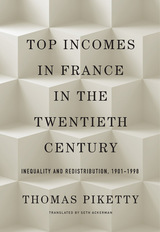
A landmark in contemporary social science, this pioneering work by Thomas Piketty explains the facts and dynamics of income inequality in France in the twentieth century. On its publication in French in 2001, it helped launch the international program led by Piketty and others to explore the grand patterns and causes of global inequality—research that has since transformed public debate. Appearing here in English for the first time, this stunning achievement will take its place alongside Capital in the Twenty-First Century as a modern classic of economic analysis.
Top Incomes in France in the Twentieth Century is essential in part because of Piketty’s unprecedented efforts to uncover, untangle, and present in clear form data about patterns in tax and inheritance in France dating back to 1900. But it is also an exceptional work of analysis, tracking and explaining with Piketty’s characteristically lucid prose the effects of political conflict, war, and social change on the economic pressures and public policies that determined the lives of millions. A work of unusual intellectual power and ambition, Top Incomes in France in the Twentieth Century is a vital resource for anyone concerned with the economic, political, and social history of France, and it is central to ongoing debates about social justice, inequality, taxation, and the evolution of capitalism around the world.
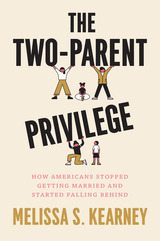
In The Two-Parent Privilege, Melissa S. Kearney makes a provocative, data-driven case for marriage by showing how the institution’s decline has led to a host of economic woes—problems that have fractured American society and rendered vulnerable populations even more vulnerable. Eschewing the religious and values-based arguments that have long dominated this conversation, Kearney shows how the greatest impacts of marriage are, in fact, economic: when two adults marry, their economic and household lives improve, offering a host of benefits not only for the married adults but for their children. Studies show that these effects are today starker, and more unevenly distributed, than ever before. Kearney examines the underlying causes of the marriage decline in the US and draws lessons for how the US can reverse this trend to ensure the country’s future prosperity.
Based on more than a decade of economic research, including her original work, Kearney shows that a household that includes two married parents—holding steady among upper-class adults, increasingly rare among most everyone else—functions as an economic vehicle that advantages some children over others. As these trends of marriage and class continue, the compounding effects on inequality and opportunity grow increasingly dire. Their effects include not just children’s behavioral and educational outcomes, but a surprisingly devastating effect on adult men, whose role in the workforce and society appears intractably damaged by the emerging economics of America’s new social norms.
For many, the two-parent home may be an old-fashioned symbol of the idyllic American dream. But The Two-Parent Privilege makes it clear that marriage, for all its challenges and faults, may be our best path to a more equitable future. By confronting the critical role that family makeup plays in shaping children’s lives and futures, Kearney offers a critical assessment of what a decline in marriage means for an economy and a society—and what we must do to change course.
A Financial Times Book of the Year
“The strongest documentation I have seen for the many ways in which inequality is harmful to economic growth.”
—Jason Furman
“A timely and very useful guide…Boushey assimilates a great deal of recent economic research and argues that it amounts to a paradigm shift.”
—New Yorker
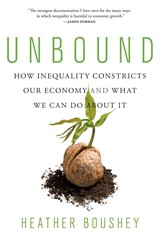
Do we have to choose between equality and prosperity? Decisions made over the past fifty years have created underlying fragilities in our society that make our economy less effective in good times and less resilient to shocks, such as today’s coronavirus pandemic. Many think tackling inequality would require such heavy-handed interference that it would stifle economic growth. But a careful look at the data suggests nothing could be further from the truth—and that reducing inequality is in fact key to delivering future prosperity.
Presenting cutting-edge economics with verve, Heather Boushey shows how rising inequality is a drain on talent, ideas, and innovation, leading to a concentration of capital and a damaging under-investment in schools, infrastructure, and other public goods. We know inequality is fueling social unrest. Boushey shows persuasively that it is also a serious drag on growth.
“In this outstanding book, Heather Boushey…shows that, beyond a point, inequality damages the economy by limiting the quantity and quality of human capital and skills, blocking access to opportunity, underfunding public services, facilitating predatory rent-seeking, weakening aggregate demand, and increasing reliance on unsustainable credit.”
—Martin Wolf, Financial Times
“Think rising levels of inequality are just an inevitable outcome of our market-driven economy? Then you should read Boushey’s well-argued, well-documented explanation of why you’re wrong.”
—David Rotman, MIT Technology Review
The contributors to this important study—Thai scholars, reformers and civil servants—shed light on the many dimensions of inequality in Thailand, looking beyond simple income measures to consider land ownership, education, finance, business structures and politics. The contributors propose a series of reforms in taxation, spending and institutional reform that can address growing inequality.
Inequality is among the biggest threats to social stability in Southeast Asia, and this close study of a key Southeast Asian country will be relevant to regional policy-makers, economists and business decision-makers, as well as students of oligarchy and inequality more generally.
From workers’ wages to presidential elections, labor unions once exerted tremendous clout in American life. In the immediate post–World War II era, one in three workers belonged to a union. The fraction now is close to one in ten, and just one in twenty in the private sector—the lowest in a century. The only thing big about Big Labor today is the scope of its problems. While many studies have attempted to explain the causes of this decline, What Unions No Longer Do lays bare the broad repercussions of labor’s collapse for the American economy and polity.
Organized labor was not just a minor player during the “golden age” of welfare capitalism in the middle decades of the twentieth century, Jake Rosenfeld asserts. Rather, for generations it was the core institution fighting for economic and political equality in the United States. Unions leveraged their bargaining power to deliver tangible benefits to workers while shaping cultural understandings of fairness in the workplace. The labor movement helped sustain an unprecedented period of prosperity among America’s expanding, increasingly multiethnic middle class.
What Unions No Longer Do shows in detail the consequences of labor’s decline: curtailed advocacy for better working conditions, weakened support for immigrants’ economic assimilation, and ineffectiveness in addressing wage stagnation among African-Americans. In short, unions are no longer instrumental in combating inequality in our economy and our politics, and the result is a sharp decline in the prospects of American workers and their families.
The search for equality has been an enduring one in the United States. Yet there has been little significant change in the distribution of wealth over the generations, while the political ideology of socialism has been rejected outright by most people. In a sensitive rendering of data, Jennifer Hochschild discovers that it is the nonrich themselves who do not support the downward redistribution of wealth.
Using a long questionnaire and in-depth interviews, she examines the ideals and contemporary practices of Americans on the subject of distributive justice. She finds that both rich and poor Americans perceive three realms in their lives: the private, the political, and the economic. People tend to support equality in two of the realms: the private, where fundamental socialization takes place in the family, school, and neighborhood, and the political, where issues arise about taxes, private property, rights, political representation, social welfare policies, and visions of utopia. But in the economic realm of the workplace, class structure, and opportunity, Americans favor maintaining material differences among people.
Hochschild shows how divergence between ideals and practices, and especially between Americans’ views of political and economic justice, produces ambivalence. Issues involving redistribution of wealth force people to think about whether they prefer political equalization or economic differentiation. Uncertain, Americans sometimes support equality, sometimes inequality, sometimes are torn between these two beliefs. As a result, they are often tense, helpless, or angry.
It is not often that Americans are allowed to talk so candidly and within rigorous social science sampling about their lives. Hochschild gives us a new combination of oral history and political theory that political scientists, philosophers, sociologists, and policymakers can read with profit and pleasure.
World Inequality Report 2018 is the most authoritative and up-to-date account of global trends in inequality. Researched, compiled, and written by a team of the world’s leading economists of inequality, it presents—with unrivaled clarity and depth—information and analysis that will be vital to policy makers and scholars everywhere.
Inequality has taken center stage in public debate as the wealthiest people in most parts of the world have seen their share of the economy soar relative to that of others, many of whom, especially in the West, have experienced stagnation. The resulting political and social pressures have posed harsh new challenges for governments and created a pressing demand for reliable data. The World Inequality Lab at the Paris School of Economics and the University of California, Berkeley, has answered this call by coordinating research into the latest trends in the accumulation and distribution of income and wealth on every continent. This inaugural report analyzes the Lab’s findings, which include data from major countries where information has traditionally been difficult to acquire, such as China, India, and Brazil. Among nations, inequality has been decreasing as traditionally poor countries’ economies have caught up with the West. The report shows, however, that inequality has been steadily deepening within almost every nation, though national trajectories vary, suggesting the importance of institutional and policy frameworks in shaping inequality.
World Inequality Report 2018 will be a key document for anyone concerned about one of the most imperative and contentious subjects in contemporary politics and economics.
READERS
Browse our collection.
PUBLISHERS
See BiblioVault's publisher services.
STUDENT SERVICES
Files for college accessibility offices.
RECENTLY PUBLISHED







UChicago Accessibility Resources
home | accessibility | search | about | contact us
BiblioVault ® 2001 - 2024
The University of Chicago Press