
 A SCHOLARLY BOOK REPOSITORY
281 start with A start with A
Each of the twelve essays that comprise this collection sparks new insights about the phenomenon of writing. A must-read for rhetoric and composition scholars and students, Abducting Writing Studies is sure to foster vibrant discussions about what is possible in writing research and instruction.
Examines three areas in which abductive reasoning is especially important: medicine, science, and law. The reader is introduced to abduction and shown how it has evolved historically into the framework of conventional wisdom in logic. Discussions draw upon recent techniques used in artificial intelligence, particularly in the areas of multi-agent systems and plan recognition, to develop a dialogue model of explanation. Cases of causal explanations in law are analyzed using abductive reasoning, and all the components are finally brought together to build a new account of abductive reasoning.
By clarifying the notion of abduction as a common and significant type of reasoning in everyday argumentation, Abductive Reasoning will be useful to scholars and students in many fields, including argumentation, computing and artificial intelligence, psychology and cognitive science, law, philosophy, linguistics, and speech communication and rhetoric.
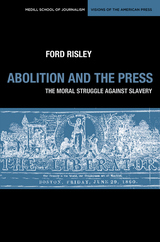
This examination of nineteenth-century journalism explores the specific actions and practices of the publications that provided a true picture of slavery to the general public. From Boston's strident <i>Liberator</i> to Frederick Douglass' <i>North Star</i>, the decades before the Civil War saw more than forty newspapers founded with the specific aim of promoting emancipation. Not only did these sheets provide a platform for discourse, but they also gave slavery a face for a wider audience. The reach of the abolitionist press only grew as the fiery publications became objects of controversy and targets of violence in both South and North. These works kept the issue of slavery in the public eye even as mainstream publications took up the call for emancipation, as the nation went to war, up to the end of slavery. Their legacy has endured, as dedicated reform writers and editors continue to view the press as a vital tool in the fight for equality.

Absinthe 24 pushes and prods Hellenism beyond its geographic and cultural comfort zones, and sets it tumbling off beyond both internal and external borders of its nation-state, in a wide-ranging but always site-specific and localized itinerary. At each stop along the way, this Greekness finds its plurals—hence the “Hellenisms” of the title. While they present no unified topography, tongue or even topic, these Hellenisms map out the contours of a shared conversation. Today’s Hellenism isn’t limited to Hellas, nor to the Hellenic language. The selected texts in this volume explore Greece from the perspective of visitors, displaced persons, and marginalized people looking in, or, conversely, from the perspective of locals striving to break out.
Absinthe: A Journal of World Literature in Translation publishes foreign literature in English translation, with a particular focus on previously untranslated contemporary fiction, poetry, and creative non-fiction by living authors. The magazine has its home in the Department of Comparative Literature at the University of Michigan and is edited by graduate students in the Department, as well as by occasional guest editors.
The first two essays in the book provide a history of the academic and professional writing program at the University of Maryland. Subsequent essays explore successes and challenges in the establishment and development of writing programs at four other major institutions, identify the features of language that facilitate academic and professional communication, look at the ways digital practices in academic and professional writing have shaped how writers compose and respond to texts, and examine the role of assessment in curriculum and pedagogy. An afterword by distinguished rhetoric and composition scholars Jessica Enoch and Scott Wible offers perspectives on the future of academic and professional writing.
This collection takes stock of the historical, rhetorical, linguistic, digital, and evaluative aspects of the teaching of writing in higher education. Among the critical issues addressed are how university writing programs were first established and what early challenges they faced, where writing programs were housed and who administered them, how the language backgrounds of composition students inform the way writing is taught, the ways in which current writing technologies create new digital environments, and how student learning and programmatic outcomes should be assessed.

Bizzell begins from the assumption that democratic education requires us to attempt to educate all students, including those whose social or ethnic backgrounds may have offered them little experience with academic discourse. Over the ten-year period chronicled in these essays, she has seen herself primarily as an advocate for such students, sometimes called “basic writers.”
Bizzell’s views on education for “critical consciousness,” widely discussed in the writing field, are represented in most of the essays in this volume. But in the last few chapters, and in the intellectual autobiography written as the introduction to the volume, she calls her previous work into question on the grounds that her self-appointment as an advocate for basic writers may have been presumptous, and her hopes for the politically liberating effects of academic discourse misplaced. She concludes by calling for a theory of discourse that acknowledges the need to argue for values and pedagogy that can assist these arguements to proceed more inclusively than ever before.
The essays in this volume constitute the main body of work in which Bizzell developed her influential and often cited ideas. Organized chronologically, they present a picture of how she has grappled with major issues in composition studies over the past decade. In the process, she sketches a trajectory for the development of composition studies as an academic discipline.
As sign language interpreting has emerged and evolved in the last 20 years as an academic field of study, the scope of learning has broadened to include fields beyond the language and culture of deaf people. This text surveys six disciplines that have informed the study of sign language interpreting: history, translation, linguistics, sociology, social psychology, and cognitive psychology, along with their major ideas, principal scholars, and ways of viewing human interaction. Each chapter includes clear learning goals, definitions, discussion questions, and images to aid understanding. The Academic Foundations of Interpreting Studies is required reading for upper-level undergraduate or first-year graduate students in interpreting, Deaf studies, and sign language programs.
Academic Librarian Burnout can help librarians develop the agency to challenge the assumptions and practices that have led to so much professional burnout. In five thorough parts, it offers ways to discuss burnout in our work environments, studies burnout’s nature and causes, and provides preventative intervention and mitigation strategies:
- Reframing Burnout
- Conditions that Promote Burnout
- Lived Experiences
- Individual Responses to Burnout
- Organizational Responses to Burnout
Academic Librarian Faculty Status: CLIPP #47 contains a thorough literature review and bibliography, analysis and discussion of survey results, and sample criteria, policies, and guidelines for appointment, promotion, and tenure for librarians with and without faculty status.
No other group of employees in higher education has occupied quite the same ambivalent status on campus as librarians. The debate over granting librarians the same rights and responsibilities as faculty has generated a substantial body of literature over the years. Most of this research has tended to focus on either a mix of institutional sizes or on large universities, with a surprising dearth of studies of smaller institutions. The results of the survey reported in CLIPP #47 fills this gap, as well as offering practical information and sample tenure and promotion documents and policies.
Ideal for practitioners looking to advance their careers and for use in LIS programs, this "comprehensive overview" (Journal of Access Services) has been thoroughly revised and updated to provide a timely exploration of the characteristics of academic librarianship and its place in the ever-changing environment of higher education. Evans and new coauthor Greenwell guide readers towards understanding what is required to have a successful career in academic librarianship, explaining why academic libraries are distinct from other types of libraries and lending practical insight into their unique political and operational characteristics. The text offers comprehensive coverage of such key issues as
- teaching faculty roles and the status of the academic librarian;
- governance and the growing tension on some campuses between faculty and administration;
- curriculum, with a discussion of the balance between general education requirements and applied courses;
- the student body;
- collections, data management, digitization, and metadata;
- scholarly communication, plus alternative models such as open educational resources (OERs);
- providing quality service, and the role of user experience (UX) in assessment;
- ACRL's Information Literacy Framework;
- funding, including how and where to find detailed higher education expenditure data;
- classrooms, common learning spaces, and other facilities;
- staffing and professional development;
- technology and IT support;
- career development, with advice on preparing a vita and undergoing a successful interview; and
- the future of academic librarianship.
This updated edition enables readers to understand how academic libraries deliver information, offer services, and provide learning spaces in new ways to better meet the needs of today's students, faculty, and other communities of academic library users.

Academic Library Mentoring: Fostering Growth and Renewal presents a cross-section of mentoring thought and practice in college and university libraries, including mentoring definitions, practice fundamentals, models, program development, surveys, and analysis. Across three volumes, it explores library mentoring programs and the lived experiences of library faculty, librarians, library staff members, graduate library and information science students, and library student employees.
Volume 1, Fundamentals and Controversies, details effective mentoring skills and behaviors, mentoring models, dysfunctional mentoring relationships, conflicts of interest in mentoring, and, through a feminist lens, power differentials in mentoring. Chapters on diversity, equity, and inclusion call for library personnel to understand the exclusion some experience in the profession and to implement more inclusive mentoring practices.
Mentoring of Library Faculty and Librarians, Volume 2, explores mentorship skills, models, purposes and issues, and program development. Mentoring purposes include support for the pursuit of tenure and promotion, other career goals, and psychosocial concerns. Issues incorporate understanding and addressing diversity, equity, and inclusion in mentoring. Chapter methodologies include surveys, program assessments, analysis of practices against standards, case studies of mentor and mentee lived experiences, and case studies of libraries and affiliated entities.
In Volume 3, Mentoring of Students and Staff, we hear the voices of library science students and library student employees as they describe their library school and library employment mentoring experiences. Also presented are mentoring programs for recruiting individuals to the profession, practices supporting all library employees regardless of formal employee classification, and methods for enhancing the skills of consortial members. The volume ends with a look to the future of mentoring and organizational development and with a tool any library employee at any career stage can use in forming their own mentoring constellation.
Intentional, effective, committed mentorships can help mentees understand their roles and develop their identities as librarians, library workers, or library science students. Mentorships also help mentees understand and meet performance standards, broaden their skills, shift to new specializations, and discern options for contributing to the larger institution and the profession. Through mentoring, mentors may be invigorated by contributing to the growth of mentees and by encountering ideas and approaches different from their own. Academic Library Mentoring: Fostering Growth and Renewal addresses the many dimensions of contemporary academic library mentoring and how best to engage in inclusive, effective mentoring.
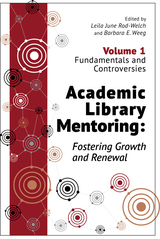
Academic Library Mentoring: Fostering Growth and Renewal presents a cross-section of mentoring thought and practice in college and university libraries, including mentoring definitions, practice fundamentals, models, program development, surveys, and analysis. Across three volumes, it explores library mentoring programs and the lived experiences of library faculty, librarians, library staff members, graduate library and information science students, and library student employees.
Volume 1, Fundamentals and Controversies, details effective mentoring skills and behaviors, mentoring models, dysfunctional mentoring relationships, conflicts of interest in mentoring, and, through a feminist lens, power differentials in mentoring. Chapters on diversity, equity, and inclusion call for library personnel to understand the exclusion some experience in the profession and to implement more inclusive mentoring practices.
Mentoring of Library Faculty and Librarians, Volume 2, explores mentorship skills, models, purposes and issues, and program development. Mentoring purposes include support for the pursuit of tenure and promotion, other career goals, and psychosocial concerns. Issues incorporate understanding and addressing diversity, equity, and inclusion in mentoring. Chapter methodologies include surveys, program assessments, analysis of practices against standards, case studies of mentor and mentee lived experiences, and case studies of libraries and affiliated entities.
In Volume 3, Mentoring of Students and Staff, we hear the voices of library science students and library student employees as they describe their library school and library employment mentoring experiences. Also presented are mentoring programs for recruiting individuals to the profession, practices supporting all library employees regardless of formal employee classification, and methods for enhancing the skills of consortial members. The volume ends with a look to the future of mentoring and organizational development and with a tool any library employee at any career stage can use in forming their own mentoring constellation.
Intentional, effective, committed mentorships can help mentees understand their roles and develop their identities as librarians, library workers, or library science students. Mentorships also help mentees understand and meet performance standards, broaden their skills, shift to new specializations, and discern options for contributing to the larger institution and the profession. Through mentoring, mentors may be invigorated by contributing to the growth of mentees and by encountering ideas and approaches different from their own. Academic Library Mentoring: Fostering Growth and Renewal addresses the many dimensions of contemporary academic library mentoring and how best to engage in inclusive, effective mentoring.
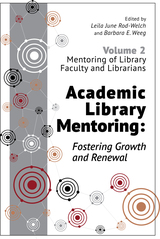
Academic Library Mentoring: Fostering Growth and Renewal presents a cross-section of mentoring thought and practice in college and university libraries, including mentoring definitions, practice fundamentals, models, program development, surveys, and analysis. Across three volumes, it explores library mentoring programs and the lived experiences of library faculty, librarians, library staff members, graduate library and information science students, and library student employees.
Volume 1, Fundamentals and Controversies, details effective mentoring skills and behaviors, mentoring models, dysfunctional mentoring relationships, conflicts of interest in mentoring, and, through a feminist lens, power differentials in mentoring. Chapters on diversity, equity, and inclusion call for library personnel to understand the exclusion some experience in the profession and to implement more inclusive mentoring practices.
Mentoring of Library Faculty and Librarians, Volume 2, explores mentorship skills, models, purposes and issues, and program development. Mentoring purposes include support for the pursuit of tenure and promotion, other career goals, and psychosocial concerns. Issues incorporate understanding and addressing diversity, equity, and inclusion in mentoring. Chapter methodologies include surveys, program assessments, analysis of practices against standards, case studies of mentor and mentee lived experiences, and case studies of libraries and affiliated entities.
In Volume 3, Mentoring of Students and Staff, we hear the voices of library science students and library student employees as they describe their library school and library employment mentoring experiences. Also presented are mentoring programs for recruiting individuals to the profession, practices supporting all library employees regardless of formal employee classification, and methods for enhancing the skills of consortial members. The volume ends with a look to the future of mentoring and organizational development and with a tool any library employee at any career stage can use in forming their own mentoring constellation.
Intentional, effective, committed mentorships can help mentees understand their roles and develop their identities as librarians, library workers, or library science students. Mentorships also help mentees understand and meet performance standards, broaden their skills, shift to new specializations, and discern options for contributing to the larger institution and the profession. Through mentoring, mentors may be invigorated by contributing to the growth of mentees and by encountering ideas and approaches different from their own. Academic Library Mentoring: Fostering Growth and Renewal addresses the many dimensions of contemporary academic library mentoring and how best to engage in inclusive, effective mentoring.
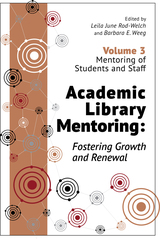
Academic Library Mentoring: Fostering Growth and Renewal presents a cross-section of mentoring thought and practice in college and university libraries, including mentoring definitions, practice fundamentals, models, program development, surveys, and analysis. Across three volumes, it explores library mentoring programs and the lived experiences of library faculty, librarians, library staff members, graduate library and information science students, and library student employees.
Volume 1, Fundamentals and Controversies, details effective mentoring skills and behaviors, mentoring models, dysfunctional mentoring relationships, conflicts of interest in mentoring, and, through a feminist lens, power differentials in mentoring. Chapters on diversity, equity, and inclusion call for library personnel to understand the exclusion some experience in the profession and to implement more inclusive mentoring practices.
Mentoring of Library Faculty and Librarians, Volume 2, explores mentorship skills, models, purposes and issues, and program development. Mentoring purposes include support for the pursuit of tenure and promotion, other career goals, and psychosocial concerns. Issues incorporate understanding and addressing diversity, equity, and inclusion in mentoring. Chapter methodologies include surveys, program assessments, analysis of practices against standards, case studies of mentor and mentee lived experiences, and case studies of libraries and affiliated entities.
In Volume 3, Mentoring of Students and Staff, we hear the voices of library science students and library student employees as they describe their library school and library employment mentoring experiences. Also presented are mentoring programs for recruiting individuals to the profession, practices supporting all library employees regardless of formal employee classification, and methods for enhancing the skills of consortial members. The volume ends with a look to the future of mentoring and organizational development and with a tool any library employee at any career stage can use in forming their own mentoring constellation.
Intentional, effective, committed mentorships can help mentees understand their roles and develop their identities as librarians, library workers, or library science students. Mentorships also help mentees understand and meet performance standards, broaden their skills, shift to new specializations, and discern options for contributing to the larger institution and the profession. Through mentoring, mentors may be invigorated by contributing to the growth of mentees and by encountering ideas and approaches different from their own. Academic Library Mentoring: Fostering Growth and Renewal addresses the many dimensions of contemporary academic library mentoring and how best to engage in inclusive, effective mentoring.

Accessibility is about equitable access to resources for all people, regardless of physical ability. Scholarly publishing is about quality and impact — quality of content and impact of research.
Accessibility & Publishing addresses the intersections between scholarly publishing and equitable access for users. This briefing explores how the practices that promote accessibility in publishing can also advance — and potentially transform — publishing itself.
This briefing traces the diversity of activities that currently go into making publications accessible to readers with print disabilities — from retroactive conversion of print into braille and recorded sound, to the more radical incorporation of accessibility standards directly into digital publishing platforms. As scholarly communication is transformed by the shift to digital publishing, building accessible practices directly into the flow of publishing has the potential to become the industry norm.
Accessibility & Publishing offers an essential orientation to a complex landscape for anyone interested in the scholarly publishing ecosystem.



While the work opens with an introduction on the methods and aims of the study, the following chapter immediately moves to a detailed discussion of distinctive vowel sounds called phonemes, characterizing each variant of sound listed within the cited reference literature. The remaining chapters provide explanatory descriptions of the variants of each dialect, reviewing past research specific to that dialect. While the United States English, Canadian English, and Caribbean varieties are featured in various chapters throughout the work, individual chapters are devoted to African-American, Mexican-American, and Native American English, emphasizing not only ethnic variation but delving into the historical development of each dialect.
This monograph is an essential reference on vowel variation for all sociolinguists, phoneticians, phonologists, creolists, and historical linguists.

In 1968 Margaret K. Omar (Nydell) spent four months in a small Egyptian village called Sheikh Mubarak. Located in Middle Egypt near Al-Minya, residents of Sheik Mubarak speak in a dialect closer to Sa'eedi, not the dialect spoken in Cairo. Omar spent time there conducting interviews, examinations, and taping sessions with children and families to study primary language acquisition in non-Western languages.
Based on her fieldwork, Omar describes the physical and social environment in which the native language was learned, the development of early communication and speech, and when and how children learn the phonology, vocabulary, morphology, and syntactical patterns of Egyptian Arabic. Omar makes comparisons with aspects of language acquisition of other languages, primarily English, and explores implications for the theory of language acquisition.
Originally published in 1973, this book is the most thorough and complete analysis of the stages in which children learn Arabic as a first language. The Arabic in this book is presented in transcription, making the information accessible to all linguists interested in language acquisition.
Candace Spigelman investigates the dynamics of ownership in small group writing workshops, basing her findings on case studies involving two groups: a five-member creative writing group meeting monthly at a local Philadelphia coffee bar and a four-member college-level writing group meeting in their composition classroom. She explores the relationship between particular notions of intellectual property within each group as well as the effectiveness of writing groups that embrace these notions. Addressing the negotiations between the public and private domains of writing within these groups, she discovers that for both the committed writers and the novices, “values associated with textual ownership play a crucial role in writing group performance.”
Spigelman discusses textual ownership, intellectual property, and writing group processes and then reviews theories relating to authorship and knowledge making. After introducing the participants in each group, discussing their texts, and describing their workshop sessions, she examines the writers’ avowed and implied beliefs about exchanging ideas and protecting individual property rights.
Spigelman stresses the necessary tension between individual and social aspects of writing practices: She argues for the need to foster more collaborative activity among student writers by replicating the processes of writers working in nonacademic settings but also contends that all writers must be allowed to imagine their individual agency and authority as they compose.
Unlike the “tomboy” or the American frontierswoman, this more encompassing figure has been understudied until now. The action-adventure heroine has special relevance today, as scholars are forcefully challenging the once-dominant separate-spheres paradigm and offering alternative interpretations of gender conventions in nineteenth-century America. The hard-body action heroine in our contemporary popular culture is often assumed to be largely a product of the twentieth-century television and film industries (and therefore influenced by the women’s movement); however, physically strong, agile, sometimes violent female figures have appeared in American popular culture and literature for a very long time.
Smith analyzes captivity narratives, war narratives, stories of manifest destiny, dime novels, and tales of seduction to reveal the long literary history of female protagonists who step into traditionally masculine heroic roles to win the day. Smith’s study includes such authors as Herman Mann, Mercy Otis Warren, Catharine Maria Sedgwick, E.D.E.N. Southworth, Edward L. Wheeler, and many more who are due for critical reassessment. In examining the female hero—with her strength, physicality, and violence—in eighteenth-and nineteenth-century American narratives, The Action-Adventure Heroine represents an important contribution to the field of American studies.
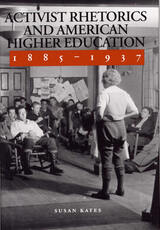
In this study of the history of rhetoric education, Susan Kates focuses on the writing and speaking instruction developed at three academic institutions founded to serve three groups of students most often excluded from traditional institutions of higher education in late-nineteenth-and early-twentieth-century America: white middle-class women, African Americans, and members of the working class.
Kates provides a detailed look at the work of those students and teachers ostracized from rhetorical study at traditional colleges and universities. She explores the pedagogies of educators Mary Augusta Jordan of Smith College in Northhampton, Massachusetts; Hallie Quinn Brown of Wilberforce University in Wilberforce, Ohio; and Josephine Colby, Helen Norton, and Louise Budenz of Brookwood Labor College in Katonah, New York.
These teachers sought to enact forms of writing and speaking instruction incorporating social and political concerns in the very essence of their pedagogies. They designed rhetoric courses characterized by three important pedagogical features: a profound respect for and awareness of the relationship between language and identity and a desire to integrate this awareness into the curriculum; politicized writing and speaking assignments designed to help students interrogate their marginalized standing within the larger culture in terms of their gender, race, or social class; and an emphasis on service and social responsibility.
Drawing on recent developments in framing theory and the resurgent traditions of progressive organizers, Linda Adler-Kassner calls upon composition teachers and administrators to develop strategic programs of collective action that do justice to composition’s best principles. Adler-Kassner argues that the “story” of college composition can be changed only when writing scholars bring the wonders down, to articulate a theory framework that is pragmatic and intelligible to those outside the field--and then create messages that reference that framework. In The Activist WPA, she makes a case for developing a more integrated vision of outreach, English education, and writing program administration.

A vital contribution to legal theory and media and civic discourse
In the 1860s, northern newspapers attacked Abraham Lincoln's policies by attacking his character, using the terms "drunk," "baboon," "too slow," "foolish," and "dishonest." Steadily on the increase in political argumentation since then, the argumentum ad hominem, or personal attack argument, has now been carefully refined as an instrument of "oppo tactics" and "going negative" by the public relations experts who craft political campaigns at the national level. In this definitive treatment of one of the most important concepts in argumentation theory and informal logic, Douglas Walton presents a normative framework for identifying and evaluating ad hominem or personal attack arguments.
Personal attack arguments have often proved to be so effective, in election campaigns, for example, that even while condemning them, politicians have not stopped using them. In the media, in the courtroom, and in everyday confrontation, ad hominem arguments are easy to put forward as accusations, are difficult to refute, and often have an extremely powerful effect on persuading an audience.
Walton gives a clear method for analyzing and evaluating cases of ad hominem arguments found in everyday argumentation. His analysis classifies the ad hominem argument into five clearly defined subtypes—abusive (direct), circumstantial, bias, "poisoning the well," and tu quoque ("you're just as bad") arguments—and gives methods for evaluating each type. Each subtype is given a well-defined form as a recognizable type of argument. The numerous case studies show in concrete terms many practical aspects of how to use textual evidence to identify and analyze fallacies and to evaluate argumentation as fallacious or not in particular cases.
In Addressing Postmodernity, Barbara Biesecker examines the relationship between rhetoric and social change and the ways human beings transform social relations through the purposeful use of symbols. In discerning the conditions of possibility for social transformation and the role of human beings and rhetoric in it, Biesecker turns to the seminal work of Kenneth Burke.
Through a close reading of Burke's major works, A Grammar of Motives, A Rhetoric of Motives, and The Rhetoric of Religion: Studies in Logology, the author addresses the critical topic of the
fragmentation of the contemporary lifeworld revealing postmodernity will have a major impact on Burkeian scholarship and on the rhetorical critique of social relations in general.
Directly confronting the challenges posed by postmodernity to social theorists and critics alike and juxtaposing the work of Burke and Jurgen Habermas, Biesecker argues that a radicalized rereading of Burke's theory of the negative opens the way toward a resolutely rhetorical theory of social change and human agency.
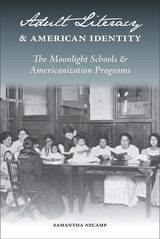
The release of U.S. census data in 1910 sparked rhetoric declaring the nation had a literacy crisis and proclaiming illiterate citizens a threat to democratic life. While newspaper editors, industrialists, and officials in the federal government frequently placed the blame on newly arrived immigrants, a smaller but no less vocal group of rural educators and clubwomen highlighted the significant number of native-born illiterate adults in the Appalachian region. Author Samantha NeCamp looks at the educational response to these two distinct literacy narratives—the founding of the Moonlight Schools in eastern Kentucky, focused on native-born nonliterate adults, and the establishment of the Americanization movement, dedicated to the education of recent immigrants.
Drawing on personal correspondence, conference proceedings, textbooks, and speeches, NeCamp demonstrates how the Moonlight Schools and the Americanization movement competed for public attention, the interest of educators, and private and governmental funding, fueling a vibrant public debate about the definition of literacy. The very different pedagogical practices of the two movements—and how these practices were represented to the public—helped shape literacy education in the United States. Reading the Moonlight Schools and the Americanization movement in relation to one another, Adult Literacy and American Identity expands the history and theory of literacy and literacy education in the United States. This book will be of interest to scholars in literacy, Appalachian studies, and rhetoric and composition.
Winston and Fitzmaurice argue massive systemic paradigm shifts in interpreted educations are as needed now as they were when the first volume was published, and that these changes require the collaborative efforts of everyone on the educational team, including: administrators, general education teachers, teachers of the deaf, interpreters, and counselors. The contributors to this volume address research-based challenges and make recommendations for how interpreting practitioners, and all members of the educational team, can enact meaningful changes in their work towards becoming part of a more comprehensive solution to deaf education.
Picking up where Innovative Practices in Teaching Sign Language Interpreters left off, this new collection presents the best new interpreter teaching techniques proven in action by the eminent contributors assembled here. In the first chapter, Dennis Cokely discusses revising curricula in the new century based upon experiences at Northeastern University. Jeffrey E. Davis delineates how to teach observation techniques to interpreters, while Elizabeth Winston and Christine Monikowski suggest how discourse mapping can be considered the Global Positioning System of translation.
In other chapters, Laurie Swabey proposes ways to handle the challenge of referring expressions for interpreting students, and Melanie Metzger describes how to learn and recognize what interpreters do in interaction. Jemina Napier contributes information on training interpreting students to identify omission potential. Robert G. Lee explains how to make the interpreting process come alive in the classroom. Mieke Van Herreweghe discusses turn-taking and turn-yielding in meetings with Deaf and hearing participants in her contribution. Anna-Lena Nilsson defines “false friends,” or how contextually incorrect use of facial expressions with certain signs in Swedish Sign Language can be detrimental influences on interpreters. The final chapter by Kyra Pollitt and Claire Haddon recommends retraining interpreters in the art of telephone interpreting, completing Advances in Teaching Sign Language Interpreters as the new authoritative volume in this vital communication profession.
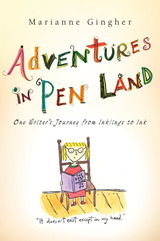
Featuring guest appearances by other writers such as Fred Chappell, Max Steele, and Annie Dillard plus cameos by the likes of Patty Hearst, Richard Nixon, and Bon Jovi, Adventures in Pen Land celebrates writing as a form of play that Gingher has never outgrown. The lighthearted illustrations by novelist Daniel Wallace (author of Big Fish) serve to reinforce this refreshing message as they depict one writer and her imagination growing up together.
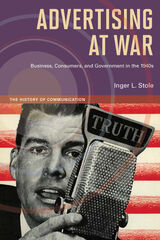
Using archival sources, newspapers accounts, and trade publications, Stole demonstrates that the war elevated and magnified the seeming contradictions of advertising and allowed critics of these practices one final opportunity to corral and regulate the institution of advertising. Exploring how New Dealers and consumer advocates such as the Consumers Union battled the advertising industry, Advertising at War traces the debate over two basic policy questions: whether advertising should continue to be a tax-deductible business expense during the war, and whether the government should require effective standards and labeling for consumer products, which would render most advertising irrelevant. Ultimately the postwar climate of political intolerance and reverence for free enterprise quashed critical investigations into the advertising industry. While advertising could be criticized or lampooned, the institution itself became inviolable.

Folktales from the African American Appalachian tradition. Told by Lyn Ford, one of America’s busiest touring storytellers. The power of Lyn's storytelling comes straight out of her family heritage, which is the content of this, her first book. Here she tells how she learned stories from her father and grandfather—and she includes many of the stories they told her.
This pioneering study of African American students in the composition classroom lays the groundwork for reversing the cycle of underachievement that plagues linguistically diverse students. African American Literacies Unleashed: Vernacular English and the Composition Classroom approaches the issue of African American Vernacular English (AAVE) in terms of teacher knowledge and prevailing attitudes, and it attempts to change current pedagogical approaches with a highly readable combination of traditional academic discourse and personal narratives.
Realizing that composition is a particular form of social practice that validates some students and excludes others, Arnetha Ball and Ted Lardner acknowledge that many African American students come to writing and composition classrooms with talents that are not appreciated. To empower and inform practitioners, administrators, teacher educators, and researchers, Ball and Lardner provide knowledge and strategies that will help unleash the potential of African American students and help them imagine new possibilities for their successes as writers.
African American Literacies Unleashed asserts that necessary changes in theory and practice can be addressed by refocusing attention from teachers’ knowledge deficits to the processes through which teachers engage information relevant to culturally informed pedagogy. Providing strategies for unlearning racism in the classroom and changing the status quo, this volume stresses the development and maintenance of a real sense of teaching efficacy—teachers’ beliefs in their abilities to connect with and work effectively with all students—and reflective optimism—teachers’ informed expectations that all students have the potential to succeed.

This dialect presents phenomena that offer a real challenge to current linguistic theory. The Afro-Bolivian Spanish Determiner Phrase elaborates on the importance of enhancing a stronger dialogue between formal generative theory and sociolinguistic methodology, in line with recent work in the field of minimalist syntax. Sessarego’s study combines sociolinguistic techniques of data collection with generative models of data analysis to obtain more fine-grained, empirically testable generalizations.
After Disruption posits that we are no longer planning for a digital future, but instead living in a digital present. In this context, Owens asks how we plan for and develop a more just, sustainable, and healthy future for cultural memory. The first half of the book draws on critical scholarship on the history of technology and business to document and expose the sources of tech startup ideologies and their pernicious results, revealing that we need powerful and compelling counter frameworks and values to replace these ideologies. The second half of the book makes the case for the centrality of maintenance, care, and repair as interrelated frameworks to build a better future in which libraries, archives, and museums can thrive as sites of belonging and connection through collections.
After Plato redefines the relationships of rhetoric for scholars, teachers, and students of rhetoric and writing in the twenty-first century. Featuring essays by some of the most accomplished scholars in the field, the book explores the diversity of ethical perspectives animating contemporary writing studies—including feminist, postmodern, transnational, non-Western, and virtue ethics—and examines the place of ethics in writing classrooms, writing centers, writing across the curriculum programs, prison education classes, and other settings.
When truth is subverted, reason is mocked, racism is promoted, and nationalism takes center stage, teachers and scholars of writing are challenged to articulate the place of rhetorical ethics in the writing classroom and throughout the field more broadly. After Plato demonstrates the integral place of ethics in writing studies and provides a roadmap for future conversations about ethical rhetoric that will play an essential role in the vitality of the field.
Contributors: Fred Antczak, Patrick W. Berry, Vicki Tolar Burton, Rasha Diab, William Duffy, Norbert Elliot, Gesa E. Kirsch, Don J. Kraemer, Paula Mathieu, Robert J. Mislevy, Michael A. Pemberton, James E. Porter, Jacqueline Jones Royster, Xiaoye You, Bo Wang
Aware that categorical thinking imposes restrictions on the ways we communicate, Stephen R. Yarbrough proposes discourse studies as an alternative to rhetoric and philosophy, both of which are structuralistic systems of inquiry.
Discourse studies, Yarbrough argues, does not support the idea that languages, cultures, or conceptual schemes in general adequately describe linguistic competence. He asserts that a belief in languages and cultures "feeds a false dichotomy: either we share the same codes and conventions, achieving community but risking exclusivism, or we proliferate differences, achieving choice and freedom but risking fragmentation and incoherence." Discourse studies, he demonstrates, works around this dichotomy.
Drawing on philosopher Donald Davidson, Yarbrough establishes the idea that community can be a consequence of communication but is not a prerequisite for it. By disassociating our thinking from conceptual schemes, we can avoid the problems that come with believing in an abstract structure that predates any utterance.
Yarbrough also draws on Mikhail Bakhtin's dialogism to define how utterances operate in life and to show how utterances are involved with power and how power relates to understanding. His discussion of Michel Meyer's problematology treats the questions implied by a statement as the meaning of the statement.
Yarbrough introduces readers to a credible theoretical framework for focusing on discourse rather than on conceptual schemes that surround it and to the potential advantages of our using this approach in daily life.
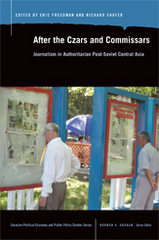
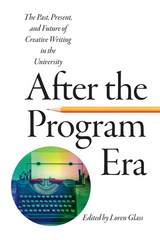
After the Program Era explores the consequences and implications, as well as the lacunae and liabilities, of McGurl’s foundational intervention. Glass focuses only on American fiction and the traditional MFA program, and this collection aims to expand and examine its insights in terms of other genres and sites. Postwar poetry, in particular, has until now been neglected as a product of the Program Era, even though it is, arguably, a “purer” example, since poets now depend almost entirely on the patronage of the university. Similarly, this collection looks beyond the traditional MFA writing program to explore the pre-history of writing programs in American universities, as well as alternatives to the traditionally structured program that have emerged along the way.
Taken together, the essays in After the Program Era seek to answer and explore many of these questions and continue the conversations McGurl only began.
CONTRIBUTORS
Seth Abramson, Greg Barnhisel, Eric Bennett, Matthew Blackwell, Kelly Budruweit, Mike Chasar, Simon During, Donal Harris, Michael Hill, Benjamin Kirbach, Sean McCann, Mark McGurl, Marija Rieff, Juliana Spahr, Stephen Voyce, Stephanie Young
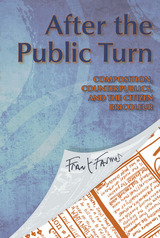
Farmer examines two very different kinds of publics, cultural and disciplinary, and discusses two counterpublics within those broad categories: zine discourses and certain academic discourses. By juxtaposing these two significantly different kinds of publics, Farmer suggests that each discursive world can be seen, in its own distinct way, as a counterpublic, an oppositional social formation that has a stake in widening or altering public life as we know it.
Drawing on major figures in rhetoric and cultural theory, Farmer builds his argument about composition teaching and its relation to the public sphere, leading to a more sophisticated understanding of public life and a deeper sense of what democratic citizenship means for our time.
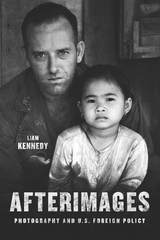
Liam Kennedy here maps the evolving relations between the American way of war and photographic coverage of it. Organized in its first section around key US military actions over the last fifty years, the book then moves on to examine how photographers engaged with these conflicts on wider ethical and political grounds, and finally on to the genre of photojournalism itself. Illustrated throughout with examples of the photographs being considered, Afterimages argues that photographs are important means for critical reflection on war, violence, and human rights. It goes on to analyze the high ethical, sociopolitical, and legalistic value we place on the still image’s ability to bear witness and stimulate action.

A suspicious mind.
Sextus Empiricus (ca. AD 160–210), exponent of scepticism and critic of the Dogmatists, was a Greek physician and philosopher, pupil and successor of the medical sceptic Herodotus (not the historian) of Tarsus. He probably lived for years in Rome and possibly also in Alexandria and Athens. His three surviving works are Outlines of Pyrrhonism (three books on the practical and ethical scepticism of Pyrrho of Elis, ca. 360–275 BC, as developed later, presenting also a case against the Dogmatists); Against the Dogmatists (five books dealing with the Logicians, the Physicists, and the Ethicists); and Against the Professors (six books: Grammarians, Rhetors, Geometers, Arithmeticians, Astrologers, and Musicians). These two latter works might be called a general criticism of professors of all arts and sciences. Sextus’ work is a valuable source for the history of thought especially because of his development and formulation of former sceptic doctrines.
The Loeb Classical Library edition of Sextus Empiricus is in four volumes.
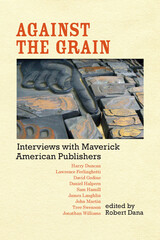
Against the Grain is a collection of interviews with nine small press publishers, each one characterized by strength of resolve and a dedication to good books. Each press reflects, perhaps more directly than any large trade publisher could, the character of its founder; and each has earned its own place in the select group of important small presses in America.
This collection is the first of its kind to explore with the publishers themselves the historical, aesthetic, practical, and personal impulses behind literary publishing. The publishers included are Harry Duncan (the Cummington Press), Lawrence Ferlinghetti (City Lights), David Godine (David R. Godine), Daniel Halpern (the Ecco Press), Sam Hamill and Tree Swenson (Copper Canyon Press), James Laughlin (New Directions), John Martin (Black Sparrow), and Jonathan Williams (the Jargon Society). Their passion for books, their belief in their individual visions of what publishing is or could be, their inspired mulishness crackle on the page.
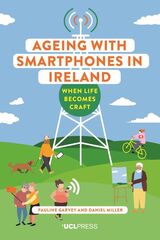
This volume documents a radical change in the experience of aging. Based on two ethnographies in Dublin, Ireland, the book illustrates how smartphones enable old people to focus on crafting a new life in retirement. For some, the smartphone is an intimidating burden linked to being on the wrong side of a new digital divide. But for most, however, it has become integral to a new trajectory towards a more sustainable life, both for themselves and their environment. The smartphone has reunited extended family and old friends, helped resolve intergenerational conflicts though new forms of grandparenting, and has become a health resource. This is a book about acknowledging late middle age in contemporary Ireland and examines how older people in Ireland experience life today.

Ageing with Smartphones in Uganda is based on a sixteen-month ethnography about experiences of aging in a neighborhood in central Kampala, Uganda. Taking a convivial approach, which celebrates multiple ways of knowing about social life, Charlotte Hawkins draws from these expressions about cooperative morality and modernity to consider the everyday mitigation of profound social change. “Dotcom” is understood to encompass everything from the influence of information and communications technologies to urban migration and lifestyles in the city to shifts in ways of knowing and relating. At the same time, dotcom tools such as mobile phones and smartphones facilitate elder care through, for example, regular mobile money remittances.
This book explores how dotcom relates to older people’s health, their care norms, their social standing, their values of respect and relatedness, and their intergenerational relationships—both political and personal. It also re-frames the youth-centricity of research on the city and work, new media and technology, and politics and service provision in Uganda. Through ethnographic consideration of everyday life and self-formation in this context, this monograph seeks to contribute to an ever-incomplete understanding of how we relate to each other and to the world around us.

With people living longer all over the world, aging has begun to be framed as a socioeconomic problem. In Brazil, older people are expected to remain healthy and autonomous while actively participating in society. Based on ethnographic research in São Paulo, this book shows how older people in a middle-class neighborhood try to reconcile these expectations with the freedom and pleasures reserved for old age by using smartphones. Smartphones have become of great importance to the residents as they search for and engage in new forms of work and hobbies. Connected by a digital network, they work as content curators, sharing activities that fill their schedules. Managing multiple WhatsApp groups is a job in itself, as well as a source of solidarity and hope. Friendship groups help each to download new apps, search for medical information and guidance, and navigate the city. Together, the author shows, older people are reinventing themselves as volunteers, entrepreneurs, and influencers, or they are finding a new interest that gives their later life a purpose. The smartphone, which enables the residents to share and discuss their busy lives, is also helping them, and us, to rethink aging.

What does it mean to be aging in Chile as a migrant? Drawing on extensive ethnographic fieldwork, Ageing with Smartphones in Urban Chile analyzes the experience of aging for Peruvian migrants aged around sixty who have lived in Chile for more than twenty years. Their lives, we discover, are informed by a series of experiences of being ‘in between’. They live between two countries, two generations, and two different stages in life, between giving care and not wanting care, and between a continuing legacy and not transmitting legacy. By focusing on the entanglement of aging, migration, and technology, this book is an ethnographic contribution to an unexplored subject in the vast literature on migration studies in Chile.

The current oldest generation in Shanghai was born at a time when the average household could not afford electric lights, but today they can turn their lights off using smartphone apps. Grounded in extensive ethnographic fieldwork in Shanghai, Ageing with Smartphones in Urban China tackles the intersection between the “two revolutions” experienced by the older generation in Shanghai: the contemporary smartphone-based digital revolution and the earlier communist revolutions and argues that we can only understand the smartphone revolution if we first appreciate the long-term consequences of these people’s experiences during the communist revolutions. Supported by detailed ethnographic material, the observations and analysis here provide a panorama view of the social landscape of contemporary China, addressing such topics the digital and everyday life, aging and healthcare, intergenerational relations and family development, community building and grassroots organizations, collective memories, and political attitudes among ordinary Chinese people.

This book is an anthropological account of the experience of age and ageing in an inner-city neighborhood in Milan, exploring the relationship between ageing and technology amidst a backdrop of rapid global technological innovation, including the advent of mobile health, smart cities, and a number of wider socioeconomic and technological transformations. Through extensive urban and digital ethnographic research in Milan, Shireen Walton shows how the smartphone has become a “constant companion” in contemporary life, accompanying people throughout the day and through individual and collective experiences. The volume argues that ageing with smartphones in the contemporary urban Italian context is about living with ambiguity, change, and contradiction, as well as developing curiosities about a changing world, our changing selves, and changing relationships with others.
While many studies of transfer are longitudinal, with data collected over several years, Nowacek’s is synchronous, a rich cross-section of the writing and classroom discussions produced by a team-taught learning community—three professors and eighteen students enrolled in a one-semester general education interdisciplinary humanities seminar that consisted of three linked courses in history, literature, and religious studies. With extensive field notes, carefully selected student and teacher self-reports in the form of interviews and focus groups, and thorough examinations of recorded classroom discussions, student papers with professor comments, and student notebooks, Nowacek presents a nuanced and engaging analysis that outlines how transfer is not simply a cognitive act but a rhetorical one that involves both seeing connections and presenting them to the instructors who are institutionally positioned to recognize and value them.
Considering the challenges facing instructors teaching for transfer and the transfer of writing-related knowledge, Nowacek develops and outlines a new theoretical framework and methodological model of transfer and illustrates the practical implications through case studies and other classroom examples. She proposes transfer is best understood as an act of recontextualization, and she builds on this premise throughout the book by drawing from previous work in cognitive psychology, activity theory, and rhetorical genre theory, as well as her own analyses of student work.
This focused examination complements existing longitudinal studies and will help readers better understand not only the opportunities and challenges confronting students as they work to become agents of integration but also the challenges facing instructors as they seek to support that student work.
The paramount historian of the early Roman empire.
Tacitus (Cornelius), famous Roman historian, was born in AD 55, 56 or 57 and lived to about 120. He became an orator, married in 77 a daughter of Julius Agricola before Agricola went to Britain, was quaestor in 81 or 82, a senator under the Flavian emperors, and a praetor in 88. After four years’ absence he experienced the terrors of Emperor Domitian’s last years and turned to historical writing. He was a consul in 97. Close friend of the younger Pliny, with him he successfully prosecuted Marius Priscus.
Works: (i) Life and Character of Agricola, written in 97–98, specially interesting because of Agricola’s career in Britain. (ii) Germania (98–99), an equally important description of the geography, anthropology, products, institutions, and social life and the tribes of the Germans as known to the Romans. (iii) Dialogue on Oratory (Dialogus), of unknown date; a lively conversation about the decline of oratory and education. (iv) Histories (probably issued in parts from 105 onwards), a great work originally consisting of at least twelve books covering the period AD 69–96, but only Books 1–4 and part of Book 5 survive, dealing in detail with the dramatic years 69–70. (v) Annals, Tacitus’s other great work, originally covering the period AD 14–68 (Emperors Tiberius, Gaius, Claudius, Nero) and published between 115 and about 120. Of sixteen books at least, there survive Books 1–4 (covering the years 14–28); a bit of Book 5 and all Book 6 (31–37); part of Book 11 (from 47); Books 12–15 and part of Book 16 (to 66).
Tacitus is renowned for his development of a pregnant concise style, character study, and psychological analysis, and for the often terrible story which he brilliantly tells. As a historian of the early Roman empire he is paramount.
The Loeb Classical Library edition of Tacitus is in five volumes.
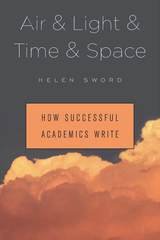
From the author of Stylish Academic Writing comes an essential new guide for writers aspiring to become more productive and take greater pleasure in their craft. Helen Sword interviewed one hundred academics worldwide about their writing background and practices. Relatively few were trained as writers, she found, and yet all have developed strategies to thrive in their publish-or-perish environment.
So how do these successful academics write, and where do they find the “air and light and time and space,” in the words of poet Charles Bukowski, to get their writing done? What are their formative experiences, their daily routines, their habits of mind? How do they summon up the courage to take intellectual risks and the resilience to deal with rejection?
Sword identifies four cornerstones that anchor any successful writing practice: Behavioral habits of discipline and persistence; Artisanal habits of craftsmanship and care; Social habits of collegiality and collaboration; and Emotional habits of positivity and pleasure. Building on this “BASE,” she illuminates the emotional complexity of the writing process and exposes the lack of writing support typically available to early-career academics. She also lays to rest the myth that academics must produce safe, conventional prose or risk professional failure. The successful writers profiled here tell stories of intellectual passions indulged, disciplinary conventions subverted, and risk-taking rewarded. Grounded in empirical research and focused on sustainable change, Air & Light & Time & Space offers a customizable blueprint for refreshing personal habits and creating a collegial environment where all writers can flourish.
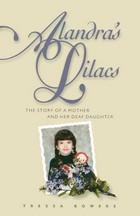
When, in 1968, 19-year-old Tressa Bowers took her baby daughter to an expert on deaf children, he pronounced that Alandra was “stone deaf,” she most likely would never be able to talk, and she probably would not get much of an education because of her communication limitations. Tressa refused to accept this stark assessment of Alandra’s prospects. Instead, she began the arduous process of starting her daughter’s education.
Economic need forced Tressa to move several times, and as a result, she and Alandra experienced a variety of learning environments: a pure oralist approach, which discouraged signing; Total Communication, in which the teachers spoke and signed simultaneously; a residential school for deaf children, where Signed English was employed; and a mainstream public school that relied upon interpreters. Changes at home added more demands, from Tressa’s divorce to her remarriage, her long work hours, and the ongoing challenge of complete communication within their family. Through it all, Tressa and Alandra never lost sight of their love for each other, and their affection rippled through the entire family. Today, Tressa can triumphantly point to her confident, educated daughter and also speak with pride of her wonderful relationship with her deaf grandchildren. Alandra’s Lilacs is a marvelous story about the resiliency and achievements of determined, loving people no matter what their circumstances might be.
Al-cArabiyya is the annual journal of the American Association of Teachers of Arabic and serves scholars in the United States and abroad. Al-cArabiyya includes scholarly articles and reviews that advance the study, research, and teaching of Arabic language, linguistics, literature, and pedagogy.
Al-cArabiyya is the annual journal of the American Association of Teachers of Arabic and serves scholars in the United States and abroad. Al-cArabiyya includes scholarly articles and reviews that advance the study, research, and teaching of Arabic language, linguistics, literature, and pedagogy.
Al-cArabiyya is the annual journal of the American Association of Teachers of Arabic and serves scholars in the United States and abroad. Al-cArabiyya includes scholarly articles and reviews that advance the study, research, and teaching of Arabic language, linguistics, literature, and pedagogy.
Al-'Arabiyya is the annual journal of the American Association of Teachers of Arabic and serves scholars in the United States and abroad. Al-'Arabiyya includes scholarly articles and reviews that advance the study, research, and teaching of Arabic language, linguistics, literature, and pedagogy.
READERS
Browse our collection.
PUBLISHERS
See BiblioVault's publisher services.
STUDENT SERVICES
Files for college accessibility offices.
RECENTLY PUBLISHED



UChicago Accessibility Resources
home | accessibility | search | about | contact us
BiblioVault ® 2001 - 2024
The University of Chicago Press