
 A SCHOLARLY BOOK REPOSITORY
A capacious analysis of a legendary intellectual friendship and the material legacies it left behind
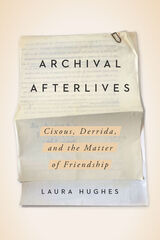
Over the course of their decades-long friendship, Hélène Cixous and Jacques Derrida assembled overlapping archives of written experiments and exchanges that document a shared interest in their literary afterlives. In this incisive account, Laura Hughes shows how pushing against the limits of writing and of life itself means not only imagining but manifesting a community of future readers.
Archival Afterlives: Cixous, Derrida, and the Matter of Friendship examines the embodied nature of literary creation, taking letters, fragments, notes, and other ephemera as objects of critical analysis and care. Combining close readings of key texts and previously unexamined archival materials, Hughes traces critical connections between Cixous and Derrida, between the theoretical and the autobiographical, and between life writing and its limits. In putting deconstruction into dialogue with new material analyses and archive studies, Archival Afterlives positions this historical and intellectual relationship as a lens through which to reexamine the legacy of critical theory itself.
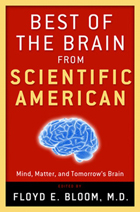
We hear about a woman with an artificial arm controlled by her mind, read stories about the creative potential of “right-brain” and “left-brain” people, and watch science fiction films featuring characters with implanted mind chips. Yet few of us understand the science behind these and other visionary advances being made today in brain research. Leading neuroscientists and scholars have charted the stream of new findings in Scientific American and Scientific American Mind, and their articles from the past eight years, compiled here in a comprehensive volume, offer diverse and provocative perspectives on various cutting-edge brain science projects.
Scientific American, the oldest continuously published magazine in the United States, has long been the standard bearer of science journalism, and the brain science articles published in its pages offer unparalleled insights into the world of neuroscience. The expert articles assembled here, divided into three sections, reveal the latest developments of brain research in a compelling and wholly readable fashion and explore the range of fields and topics now included under the umbrella of neuroscience.
Consciousness and creativity are the focus of the “Mind” section, which features such compelling essays as science writer Carl Zimmer’s examination of how the brain creates a sense of self. Steven E. Hyman, Harvard Provost and former director of the National Institute of Mental Health, proposes new ways of diagnosing psychiatric disorders in “Matter,” a section that also features articles on psychological disorders, addictions, and other topics related to the interaction between body and brain. And “Tomorrow’s Brain” reveals the intriguing future potential of man-machine interactions, as well as pioneering new methods of brain treatment. Eminent neuroscientist Floyd E. Bloom also contributes an engaging introduction that situates these pieces on the front lines of brain research.
In today’s technologically driven world, our lives are changing faster than ever, and neuroscience is becoming an integral part of that transformation. Best of the Brain from Scientific American gathers the very best writings on this sea change, providing an invaluable guide to the exhilarating possibilities of neuroscience.
Krieger's lucid discussions will help readers to appreciate the larger physical issues behind the mathematical detail of modern physics and gain deeper insights into how theoretical physicists work. Constitutions of Matter is a rare, behind-the-scenes glimpse into the world of modern physics.
"[Krieger] provides students of physics and applied mathematics with a view of the physical forest behind the mathematical trees, historians and philosophers of science with insights into how theoretical physicists go about their work, and technically advanced general readers with a glimpse into the discipline."—Scitech Book News

In this critically acclaimed book, first published in 1988 and now reprinted in paperback, scientist and author Paul Davies explains how recent scientific advances are transforming our understanding of the emergence of complexity and organization in the universe.
Melding a variety of ideas and disciplines from biology, fundamental physics, computer science, mathematics, genetics, and neurology, Davies presents his provocative theory on the source of the universe's creative potency. He explores the new paradigm (replacing the centuries-old Newtonian view of the universe) that recognizes the collective and holistic properties of physical systems and the power of self-organization. He casts the laws in physics in the role of a "blueprint," embodying a grand cosmic scheme that progressively unfolds as the universe develops.
Challenging the viewpoint that the physical universe is a meaningless collection of particles, he finds overwhelming evidence for an underlying purpose: "Science may explain all the processes whereby the universe evolves its own destiny, but that still leaves room for there to be a meaning behind existence."
We are connected to distant space and time not only by our imaginations but also through a common cosmic heritage. Emerging now from modern science is a unified scenario of the cosmos, including ourselves as sentient beings, based on the time-honored concept of change. From galaxies to snowflakes, from stars and planets to life itself, we are beginning to identify an underlying ubiquitous pattern penetrating the fabric of all the natural sciences--a sweepingly encompassing view of the order and structure of every known class of object in our richly endowed universe.
This is the subject of Eric Chaisson's new book. In Cosmic Evolution Chaisson addresses some of the most basic issues we can contemplate: the origin of matter and the origin of life, and the ways matter, life, and radiation interact and change with time. Guided by notions of beauty and symmetry, by the search for simplicity and elegance, by the ambition to explain the widest range of phenomena with the fewest possible principles, Chaisson designs for us an expansive yet intricate model depicting the origin and evolution of all material structures. He shows us that neither new science nor appeals to nonscience are needed to understand the impressive hierarchy of the cosmic evolutionary story, from quark to quasar, from microbe to mind.
Garber achieves a philosophically rigorous reading of Descartes that is sensitive to the historical and intellectual context in which he wrote. What emerges is a novel view of this familiar figure, at once unexpected and truer to the historical Descartes.
The book begins with a discussion of Descartes' intellectual development and the larger project that frames his natural philosophy, the complete reform of all the sciences. After this introduction Garber thoroughly examines various aspects of Descartes' physics: the notion of body and its identification with extension; Descartes' rejection of the substantial forms of the scholastics; his relation to the atomistic tradition of atoms and the void; the concept of motion and the laws of motion, including Descartes' conservation principle, his laws of the persistence of motion, and his collision law; and the grounding of his laws in God.

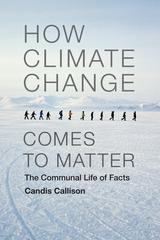
The disparate efforts of these groups illuminate the challenge of maintaining fidelity to scientific facts while transforming them into ethical and moral calls to action. Callison investigates the different vernaculars through which we understand and articulate our worlds, as well as the nuanced and pluralistic understandings of climate change evident in different forms of advocacy. As she demonstrates, climate change offers an opportunity to look deeply at how issues and problems that begin in a scientific context come to matter to wide publics, and to rethink emerging interactions among different kinds of knowledge and experience, evolving media landscapes, and claims to authority and expertise.
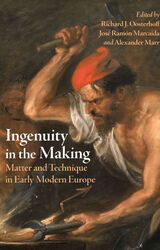
Ingenuity in the Making explores the myriad ways in which ingenuity shaped the experience and conceptualization of materials and their manipulation in early modern Europe. Contributions range widely across the arts and sciences, examining objects and texts, professions and performances, concepts and practices. The book considers subjects such as spirited matter, the conceits of nature, and crafty devices, investigating the ways in which ingenuity acted in and upon the material world through skill and technique. Contributors ask how ingenuity informed the “maker’s knowledge” tradition, where the perilous borderline between the genius of invention and disingenuous fraud was drawn, charting the ambitions of material ingenuity in a rapidly globalizing world.

“The greenhouse effect is us, and it is specifically us in the Western world.” This is one of the messages at the beginning of Anita Gordon and David Suzuki’s startling view of our future on Earth. More than any other time in history, the 1990s have marked a turning point for human civilization. Not only are we facing ecological disasters that will affect our ability to survive, but the crisis is forcing us to reexamine the entire value system that has governed our lives for the past two thousand years.
Gordon and Suzuki warn us of the transition we will need to make if we are to arrive safely in the next century. More than a book on the environment, this is a book about us as a species: our shortsightedness, our failure to read the warnings, our inability to grasp the significance of our actions-and the tough decisions we have to make in order to save ourselves.
The power of the book lies in the consensus of the many voices, those of scientists and other scholars, that speak through it. The components of our predicament—global warming, soil erosion, acid rain, species depletion, ozone damage, rainforest destruction, overpopulation—are quantified with authority. And never before has such a strong consensus been expressed in a single warning. The message we receive is that our actions are taking place in a political and economic world that demands radical change.
In an effort to counteract this blueprint for disaster, Gordon and Suzuki present a resounding rebuttal of technological optimism and the belief that continued economic growth is a prerequisite for environmental reform. The intellectual fog of sustainable development is incisively dispelled, and in its place the authors suggest practical contributions that individuals as well as governments can make toward creating a “conserver society.”
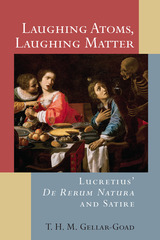
Gellar-Goad aims to track De Rerum Natura along two paths of satire: first, the broad boulevard of satiric literature from the beginnings of Greek poetry to the plays, essays, and broadcast media of the modern world; and second, the narrower lane of Roman verse satire, satura, beginning with early authors Ennius and Lucilius and closing with Flavian poet Juvenal. Lucilius is revealed as a major, yet overlooked, influence on Lucretius.
By examining how Lucretius’ poem employs the tools of satire, we gain a richer understanding of how it interacts with its purported philosophical program.
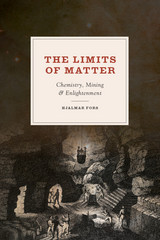
Fors reveals how, early in the eighteenth century, chemists began to view metals no longer as the ingredients for “chrysopoeia”—or gold making—but as elemental substances, or the basic building blocks of matter. At the center of this emerging idea, argues Fors, was the Bureau of Mines of the Swedish State, which saw the practical and profitable potential of these materials in the economies of mining and smelting.
By studying the chemists at the Swedish Bureau of Mines and their networks, and integrating their practices into the wider European context, Fors illustrates how they and their successors played a significant role in the development of our modern notion of matter and made a significant contribution to the modern European view of reality.
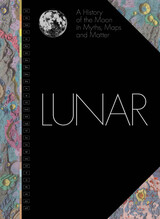
President John F. Kennedy’s rousing “We will go to the Moon” speech in 1961 before the US Congress catalyzed the celebrated Apollo program, spurring the US Geological Survey’s scientists to map the Moon. Over the next eleven years a team of twenty-two, including a dozen illustrator-cartographers, created forty-four charts that forever changed the path of space exploration.
For the first time, each of those beautifully hand-drawn, colorful charts is presented together in one stunning book. In Lunar, National Air and Space Museum curator Matthew Shindell’s expert commentary accompanies each chart, along with the key geological characteristics and interpretations that were set out in the original Geologic Atlas of the Moon. Interwoven throughout the book are contributions from scholars devoted to studying the multifaceted significance of the Moon to humankind around the world. Traveling from the Stone Age to the present day, they explore a wide range of topics: the prehistoric lunar calendar; the role of the Moon in creation myths of Ancient Egypt, Greece, and Rome; the role of the Moon in astrology; the importance of the Moon in establishing an Earth-centered solar system; the association of the Moon with madness and the menstrual cycle; how the Moon governs the tides; and the use of the Moon in surrealist art.
Combining a thoughtful retelling of the Moon’s cultural associations throughout history with the beautifully illustrated and scientifically accurate charting of its surface, Lunar is a stunning celebration of the Moon in all its guises.
“When I was a saint,” begins the first poem, “I did not have visions but I could see and did note the color of the world.” Matter is an examination of and a report on the world’s variable colors and possibilities for, if not sanctity, then a certain sanity, a kindness, and some form of salvation.
Maimonides’ Guide of the Perplexed has traditionally been read as an attempt to harmonize reason and revelation. Another, more recent interpretation takes the contradiction between philosophy and religion to be irreconcilable, and concludes that the Guide prescribes religion for the masses and philosophy for the elite. Moving beyond these familiar debates, Josef Stern argues that the perplexity addressed in this famously enigmatic work is not the conflict between Athens and Jerusalem but the tension between human matter and form, between the body and the intellect.
Maimonides’ philosophical tradition takes the perfect life to be intellectual: pure, undivided contemplation of all possible truths, from physics and cosmology to metaphysics and God. According to the Guide, this ideal cannot be realized by humans. Their embodied minds cannot achieve scientific knowledge of metaphysics, and their bodily impulses interfere with exclusive contemplation. Closely analyzing the arguments in the Guide and its original use of the parable as a medium of philosophical writing, Stern articulates Maimonides’ skepticism about human knowledge of metaphysics and his heterodox interpretations of scriptural and rabbinic parables. Stern shows how, in order to accommodate the conflicting demands of the intellect and the body, Maimonides creates a repertoire of spiritual exercises, reconceiving the Mosaic commandments as training for the life of the embodied mind. By focusing on the philosophical notions of matter and form, and the interplay between its literary form and subject matter, Stern succeeds in developing a unified, novel interpretation of the Guide.
Take a deep breath. Air—without it, life on Earth would cease to exist. Though not usually seen, its presence is relied upon. At once both ethereal and physical, air has been associated with flight and spirit, and yet it has progressively become a territory that can be claimed through communications, warfare, travel, and scientific exploration. At the same time, air is no longer a completely reliable part of our daily life: like water, it has become an environmental element that must be watched closely for quality and purity.
A Matter of Air investigates the meanings of air over the last three centuries, including our modern concern over emissions and climate change. Steven Connor looks at the human relationship with air, both positive and negative. His explorations include the dangers posed by radio atmospherics, poison gas, and haze as well as our continued fascination with effervescence and explosives. Drawing ideas from religion, science, art, literature, and philosophy, A Matter of Air creates a comprehensive history of the human perception of air. Thoroughly researched and written with wit and quirky enthusiasm, the book will appeal to a wide range of general readers interested in the environment, human history, and our most essential aspects of life.
As the nineteenth century came to a close and questions concerning the future of African American life reached a fever pitch, many social scientists and reformers approached post-emancipation Black life as an empirical problem that could be systematically solved with the help of new technologies like the social survey, photography, and film. What ensued was nothing other than a “racial data revolution,” one which rendered African American life an inanimate object of inquiry in the name of social order and racial regulation. At the very same time, African American cultural producers and intellectuals such as W. E. B. Du Bois, Kelly Miller, Sutton Griggs, and Zora Neale Hurston staged their own kind of revolution, un-disciplining racial data in ways that captured the dynamism of Black social life.
The Matter of Black Living excavates the dynamic interplay between racial data and Black aesthetic production that shaped late nineteenth-century social, cultural, and literary atmosphere. Through assembling previously overlooked archives and seemingly familiar texts, Womack shows how these artists and writers recalibrated the relationship between data and Black life. The result is a fresh and nuanced take on the history of documenting Blackness. The Matter of Black Living charts a new genealogy from which we can rethink the political and aesthetic work of racial data, a task that has never been more urgent.
In this highly original reexamination of North American poetry in English from Ezra Pound to the present day, Christopher Nealon demonstrates that the most vital writing of the period is deeply concerned with capitalism. This focus is not exclusive to the work of left-wing poets: the problem of capitalism’s effect on individuals, communities, and cultures is central to a wide variety of poetry, across a range of political and aesthetic orientations. Indeed, Nealon asserts, capitalism is the material out of which poetry in English has been created over the last century.
Much as poets of previous ages continually examined topics such as the deeds of King Arthur or the history of Troy, poets as diverse as Jack Spicer, John Ashbery, and Claudia Rankine have taken as their “matter” the dynamics and impact of capitalism—not least its tendency to generate economic and political turmoil. Nealon argues persuasively that poets’ attention to the matter of capital has created a corresponding notion of poetry as a kind of textual matter, capable of dispersal, retrieval, and disguise in times of crisis. Offering fresh readings of canonical poets from W. H. Auden to Adrienne Rich, as well as interpretations of younger writers like Kevin Davies, The Matter of Capital reorients our understanding of the central poetic project of the last century.

Ajzenberg-Selove came to America at the age of 15 after narrowly escaping the Nazi takeover of France. She had planned to become an engineer like her father, but switched to physics after she was told the only engineering jobs open to women were in drafting: Marie Curie's example proved to her that women could do physics. Her first attempt at graduate work at Columbia University was a disaster, but she was sturck with the intellectual beauty of the field. After taking a Ph.D. in physics at University of Wisconsin, she did post-doctoral work with Thomas Lauritsen at the California Institute of Technology, where she began writing the first of a series of major review papers on the nuclear spectroscopy of the light nuclei, a subject of fundamental importance to nuclear physics, astrophysics, and applied physics. She continued this work and experimental research for thirty-eight years while teaching at Boston University, Haverford College, and the University of Pennsylvania.
During her early career, Ajzenberg-Selove was shielded by her male mentors from experiencing much of the discrimination directed against women in science. Her simultaneous battles to become a tenured professor and to overcome breast cancer opened her eyes and confirmed her as a feminist.
The lay reader and the scientist alike will be fascinated by Ajzenberg-Selove's clear portrayal of her interlinked lives as physicist, teacher, wife of particle physicist, Walter Selove, and a woman who relishes both competition and friendship in a male-dominated field. An invaluable book for anyone contemplating a career in science.
In this radical reconsideration of ethical reasoning in contemporary European philosophy, Drew M. Dalton makes the case for an absolutely grounded account of ethical normativity developed from a scientifically informed and purely materialistic metaphysics. Expanding on speculative realist arguments, Dalton argues that the limits placed on the nature of ethical judgments by Kant’s critique can be overcome through a moral evaluation of the laws of nature—specifically, the entropic principle that undergirds the laws of physics, chemistry, and biology. In order to extract a moral meaning from this simple material fact, Dalton scrutinizes the presumptions of classical accounts and traditional understandings of good and evil within the history of Western philosophy and ultimately asserts that ethical normativity can be reestablished absolutely without reverting to dogmatism.
By overturning our assumptions about the nature and value of reality, The Matter of Evil: From Speculative Realism to Ethical Pessimism presents a provocative new model of ethical responsibility that is both logically justifiable and scientifically sound. Dalton argues for “ethical pessimism,” a position previously marginalized in the West, as a means to cultivate an account of ethical responsibility and political activism that takes seriously the unbecoming of being and the moral horror of existence.

The safeguarding of authentic facts is essential, especially in this disruptive Orwellian age, where digital technologies have opened the door to a post-truth world in which “alternative facts” can be so easily accepted as valid. And because facts matter, evidence matters. In this urgent manifesto, archives luminary Millar makes the case that authentic and accurate records, archives, data, and other sources of documentary proof are crucial in supporting and fostering a society that is respectful, democratic, and self-aware. An eye-opening treatise for the general public, an invaluable resource for archives students, and a provocative call-to-arms for information and records professionals, Millar’s book
- explains the concept of evidence and discusses the ways in which records, archives, and data are not just useful tools for our daily existence but also essential sources of evidence both today and in the future;
- includes plentiful examples that illustrate the critical role evidence plays in upholding rights, enforcing responsibilities, tracing family or community stories, and capturing and sharing memories; and
- examines the impact of digital technologies on how records and information are created and used.
With documentary examples ranging from Mesopotamian clay tablets to World War II photographs to today’s Twitter messages and Facebook posts, Millar’s stirring book will encourage readers to understand more fully the importance of their own records and archives, for themselves and for future generations.
If the twentieth century was the century in which language was at the center of thought, the twenty-first century has, so far, been the century of matter. The Matter of Language is a critical intervention that aims to return to the relationship between language and matter to think of our present moment as one dominated by abstractions that rule our lives. In a series of dated chapters, that form punctual moments of intervention, this book both rehabilitates key thinkers, like Marx, Freud, and Saussure, and engages with poetic thinking on matter in David Jones, Diane di Prima, William Blake, Leslie Kaplan, and others. It is a matter of understanding language as a site of struggle, which is intimately bound to the material but also crucial in formulating and expressing the material and the abstractions that shape language and matter. Working between theory and poetry, The Matter of Language reconceives notions of alienation and class struggle as essential modes of reading and analysis for our fractured present.

In A Matter of Life and Death, anthropologist Marc Boglioli puts a human face on a group widely regarded as morally suspect, one that currently stands in the crossfire of America's so-called culture wars. Drawing on extensive ethnographic fieldwork in Addison County, Vermont, which took him from hunting camps and sporting goods stores to local bars and kitchen tables, Boglioli focuses on how contemporary hunters, women as well as men, understand their relationship to their prey. He shows how hunters' attitudes toward animals flow directly from the rural lifeways they have continued to maintain in the face of encroaching urban sensibilities. The result is a rare glimpse into a culture that experiences wild animals in a way that is at once violent, consumptive, and respectful, and that regards hunting as an enduring link to a vanishing past. It is a book that will challenge readers—hunters, non-hunters, and anti-hunters alike—to reconsider what constitutes a morally appropriate relationship with the non-human residents of this planet.

Like thousands of African American women, Charlotte Adelmond and Dollie Robinson worked in New York’s power laundry industry in the 1930s. Jenny Carson tells the story of how substandard working conditions, racial and gender discrimination, and poor pay drove them to help unionize the city’s laundry workers. Laundry work opened a door for African American women to enter industry, and their numbers allowed women like Adelmond and Robinson to join the vanguard of a successful unionization effort. But an affiliation with the powerful Congress of Industrial Organizations (CIO) transformed the union from a radical, community-based institution into a bureaucratic organization led by men. It also launched a difficult battle to secure economic and social justice for the mostly women and people of color in the plants. As Carson shows, this local struggle highlighted how race and gender shaped worker conditions, labor organizing, and union politics across the country in the twentieth century.
Meticulous and engaging, A Matter of Moral Justice examines the role of African American and radical women activists and their collisions with labor organizing and union politics.
This is a book about the interplay of urgent political issues and hotly debated questions of moral philosophy. The controversies it joins are old; but history has given them fresh shape. For example, whether judges should and do make law is now of more practical importance than ever before, as recent presidents have appointed enough justices to the Supreme Court to set its character for a generation.
With forceful style, Ronald Dworkin addresses questions about the Anglo-American legal system as protector of individual rights and as machinery for furthering the common good. He discusses whether judges should make political decisions in hard cases; the balancing of individual rights versus the good of the community; whether a person has the right to do what society views as wrong; and the meaning of equality in any framework of social justice. Dworkin strongly opposes the idea that judges should aim at maximizing social wealth. It is his conviction that the area of discretion for judges is severely limited, that in a mature legal system one can always find in existing law a “right answer” for hard cases.
Dworkin helps us thread our way through many timely issues such as the rights and privileges of the press under the First Amendment. He reviews the Bakke case, which tested affirmative action programs. These essays also examine civil disobedience, especially in nuclear protests, and bring new perspective to the debate over support of the arts.
Above all, this is a book about the interplay between two levels of our political consciousness: practical problems and philosophical theory, matters of urgency and matters of principle. The concluding essay on press freedom expands the discussion of conflict between principle and policy into a warning. Though some defenders of the press blend the two in order to expand freedom of speech, the confusion they create does disservice to their aim and jeopardizes the genuine and fragile right of free speech. We stand in greater danger of compromising that right than of losing the most obvious policy benefits of powerful investigative reporting and should therefore beware the danger to liberty of confusing the two. The caution is general. If we care so little for principle that we dress policy in its colors when this suits our purpose, we cheapen principle and diminish its authority.
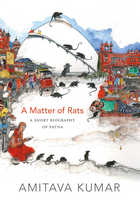
Kumar's ruminations on one of the world's oldest cities, the capital of India's poorest province, are also a meditation on how to write about place. His memory is partial. All he has going for him is his attentiveness. He carefully observes everything that surrounds him in Patna: rats and poets, artists and politicians, a girl's picture in a historian's study, and a sheet of paper on his mother's desk. The result is this unique book, as cutting as it is honest.
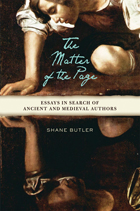
Ancient and medieval literary texts often call attention to their existence as physical objects. Shane Butler helps us to understand why. Arguing that writing has always been as much a material struggle as an intellectual one, The Matter of the Page offers timely lessons for the digital age about how creativity works and why literature moves us.
Butler begins with some considerations about the materiality of the literary text, both as a process (the draft) and a product (the book), and he traces the curious history of “the page” from scroll to manuscript codex to printed book and beyond. He then offers a series of unforgettable portraits of authors at work: Thucydides struggling to describe his own diseased body; Vergil ready to burn an epic poem he could not finish; Lucretius wrestling with words even as he fights the madness that will drive him to suicide; Cicero mesmerized by the thought of erasing his entire career; Seneca plumbing the depths of the soul in the wax of his tablets; and Dhuoda, who sees the book she writes as a door, a tunnel, a womb. Butler reveals how the work of writing transformed each of these authors into his or her own first reader, and he explains what this metamorphosis teaches us about how we too should read.
All Greek and Latin quotations are translated into English and technical matters are carefully explained for general readers, with scholarly details in the notes.


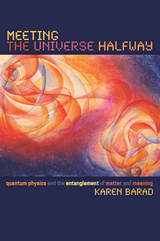
In an agential realist account, the world is made of entanglements of “social” and “natural” agencies, where the distinction between the two emerges out of specific intra-actions. Intra-activity is an inexhaustible dynamism that configures and reconfigures relations of space-time-matter. In explaining intra-activity, Barad reveals questions about how nature and culture interact and change over time to be fundamentally misguided. And she reframes understanding of the nature of scientific and political practices and their “interrelationship.” Thus she pays particular attention to the responsible practice of science, and she emphasizes changes in the understanding of political practices, critically reworking Judith Butler’s influential theory of performativity. Finally, Barad uses agential realism to produce a new interpretation of quantum physics, demonstrating that agential realism is more than a means of reflecting on science; it can be used to actually do science.

Mind, Matter, and Method was first published in 1966. Minnesota Archive Editions uses digital technology to make long-unavailable books once again accessible, and are published unaltered from the original University of Minnesota Press editions.
This volume of twenty-six essays by as many contributors is published in honor of Herbert Feigl, professor of philosophy at the University of Minnesota and director of the Minnesota Center for the Philosophy of Science. Though the majority of the contributors are philosophers, there are also -- as benefits Mr. Feigl's varied intellectual interests -- representatives of psychology, psychoanalysis, and physics.
The first group of ten essays deals with the philosophy of mind, particularly with the mind-body problem, to which Mr. Feigl has devoted much attention. The eleven essays in the second part are concerned with problems of philosophical method, especially with induction and confirmation. The third part is comprised of five essays on the philosophy of the physical sciences. A biographical sketch of Mr. Feigl and a bibliography of his writings are also provided.
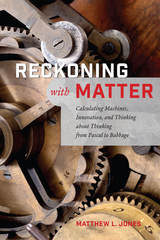
In Reckoning with Matter, Matthew L. Jones draws on the remarkably extensive and well-preserved records of the quest to explore the concrete processes involved in imagining, elaborating, testing, and building calculating machines. He explores the writings of philosophers, engineers, and craftspeople, showing how they thought about technical novelty, their distinctive areas of expertise, and ways they could coordinate their efforts. In doing so, Jones argues that the conceptions of creativity and making they exhibited are often more incisive—and more honest—than those that dominate our current legal, political, and aesthetic culture.
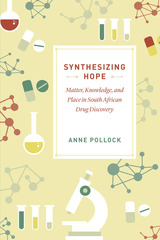
Consideration of this case exposes the limitations of global health frameworks that implicitly posit rich countries as the only sites of knowledge production. Analysis of iThemba identifies the problems inherent in global north/south divides at the same time as it highlights what is at stake in who makes knowledge and where. It also provides a concrete example for consideration of the contexts and practices of postcolonial science, its constraints, and its promise.
Synthesizing Hope explores the many legacies that create conditions of possibility for South African drug discovery, especially the specific form of settler colonialism characterized by apartheid and resource extraction. Paying attention to the infrastructures and laboratory processes of drug discovery underscores the materiality of pharmaceuticals from the perspective of their makers, and tracing the intellectual and material infrastructures of South African drug discovery contributes new insights about larger social, political, and economic orders.
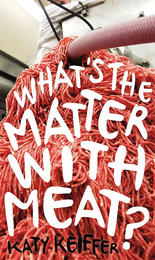
What’s the Matter with Meat? explores everything from labor issues to genetic manipulation to animal welfare to environmental degradation, illustrating just how the industrial model for meat production conjures up huge quantities of cheap meat even as it shifts many of the real costs onto the taxpayer. She describes practices few of us know about, such as land grabs in which predator companies acquire property in foreign countries for meat production, often driving out local farmers. She shows how industry consolidation entrenches cost-effective but harmful practices, creating monopolies that force competitors out of business, drive down labor costs, erode workers’ rights, and exert extraordinary power over nearby communities.
Keiffer demonstrates with irrefutable force that the current model for meat production—adopted worldwide—is simply not sustainable and will soon exhaust the planet’s resources. A hard-hitting critique of the meat industry and its harmful effects, this book shows us just how important it is to care about where our food comes from, to support alternative production systems, and to stop those practices that are ruining our planet in the service of the burger and the nugget.

READERS
Browse our collection.
PUBLISHERS
See BiblioVault's publisher services.
STUDENT SERVICES
Files for college accessibility offices.
RECENTLY PUBLISHED




UChicago Accessibility Resources
home | accessibility | search | about | contact us
BiblioVault ® 2001 - 2024
The University of Chicago Press