
 A SCHOLARLY BOOK REPOSITORY
That movement—in which the personal and political were inextricably linked—effectively challenged midcentury norms of sexuality, gender, and consumption, and articulated early environmental concerns about chemical and nuclear contamination of foods, bodies, and breast milk. In its groundbreaking chronicle of the breastfeeding movement, Back to the Breast provides a welcome and vital account of what it has meant, and what it means today, to breastfeed in modern America.
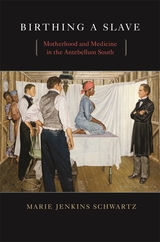
The deprivations and cruelty of slavery have overshadowed our understanding of the institution's most human dimension: birth. We often don't realize that after the United States stopped importing slaves in 1808, births were more important than ever; slavery and the southern way of life could continue only through babies born in bondage.
In the antebellum South, slaveholders' interest in slave women was matched by physicians struggling to assert their own professional authority over childbirth, and the two began to work together to increase the number of infants born in the slave quarter. In unprecedented ways, doctors tried to manage the health of enslaved women from puberty through the reproductive years, attempting to foster pregnancy, cure infertility, and resolve gynecological problems, including cancer.
Black women, however, proved an unruly force, distrustful of both the slaveholders and their doctors. With their own healing traditions, emphasizing the power of roots and herbs and the critical roles of family and community, enslaved women struggled to take charge of their own health in a system that did not respect their social circumstances, customs, or values. Birthing a Slave depicts the competing approaches to reproductive health that evolved on plantations, as both black women and white men sought to enhance the health of enslaved mothers--in very different ways and for entirely different reasons.
Birthing a Slave is the first book to focus exclusively on the health care of enslaved women, and it argues convincingly for the critical role of reproductive medicine in the slave system of antebellum America.

The death of a youngest child. An alcoholic and distant father. A grief-stricken family. A tentative faith. These are the building blocks of Boy, a sequence of poems that explores how death and loss color memory and influence the ways family members relate to each other and to their shared history.
Inspired by the death of her own younger brother, Tracy Youngblom has written a poetry collection that serves as a companion to grief. This book is for those who love poetry and those who are intimidated by it, those interested in the way childhood experience shapes life, and those interested in the psychology of addiction.
Carrying On investigates the origin stories of prevailing prenatal health norms by exploring the evolution of issues at the center of pregnancy, ranging from morning sickness and weight gain to ultrasounds and induction. When did women start taking prenatal vitamins, and why? When did the notion that pregnant women should “eat for two” originate? Where did exercise guidelines come from? And when did women start formulating birth plans?
A learning project with one foot in the past and the other in the present, Carrying On considers what history and medicine together can teach us about how and why we treat pregnancy–and pregnant women–the way we do. In a world of information overload, Carrying On offers expecting parents the context and background they need to approach pregnancy and prenatal health from a new place of understanding.
Through interviews with thirty-four childfree women and analysis of childfree rhetorics circulating in historical and contemporary texts and events, this book demonstrates how childfree women individually and collectively try to speak back to common beliefs about their reproductive experiences, even as they struggle to make their identities legible in a sociocultural context that centers motherhood. Childfree and Happy theorizes how affect and rhetoric work together to circulate reproductive doxa by using Sara Ahmed’s theories of gendered happiness scripts to analyze what reproductive doxa is embedded in those scripts and how they influence rhetoric by, about, and around childfree women.
Delving into how childfree women position their decision not to have children and the different types of interactions they have with others about this choice, including family members, friends, colleagues, and medical professionals, Childfree and Happy also explores how communities that make space for alternative happiness scripts form between childfree women and those who support them. It will be of interest to scholars in the fields of the rhetoric of motherhood/mothering, as well as feminist rhetorical studies.
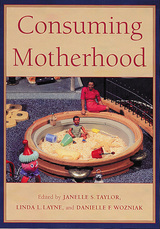
Consuming Motherhood addresses the provocative question of how motherhood and consumption—as ideologies and as patterns of social action—mutually shape and constitute each other in contemporary North American and European social life. Ideologically, motherhood and consumption are often constructed in opposition to each other, with motherhood standing in as a naturalized social relation that is thought to be uniquely free of the calculating instrumentality that dominates commercial relations. Yet, in social life, motherhood and consumption are inseparable. Whether shopping for children’s clothing or childbirth services, or making decisions about adopting children, becoming a mother (and maternal practice more generally) is deeply influenced by consumption. How can the relationship between motherhood and consumption be revealed, and critically analyzed? Consuming Motherhood brings together a group of sociologists, anthropologists, and religious studies scholars to address this question through carefully grounded ethnographic studies. This insightful book reveals how mothers negotiate the contradictory forces that position them as both immune from and the target of consumerist tendencies in contemporary global society.

Having a baby is surely one of the pinnacle events of a woman's life, full of joy, serenity, and contentment--or so society tells a new mother, who thus finds herself ill-prepared for the exhaustion, boredom, and isolation that can follow childbirth. The resulting depression--how it is experienced, and how it might be relieved--is the subject of Natasha Mauthner's insightful and compassionate book, which recounts the stories of new mothers caught between a cultural ideal and a far more complex reality.
In Mauthner's interviews with thirty-five new mothers in Britain and America, we see how women contend with images of motherhood as a state of bliss for everyone but themselves. The British women tend to view their depression as a personal failure of strength; American women, as a result of hormonal fluctuation. But all vividly describe a similar state of paralysis and loneliness, with alternating love, resentment, and guilt toward their babies.
Most usefully, these women reveal the positive impact that other new mothers had on their depression. Far more important than their own family's support or understanding, the sense of not being alone in their trials emerges as a key source of strength and healing for women struggling with postpartum depression.


“Expecting Teryk is a rich and sumptuous work that speaks to the deeper realities and represents a unique viewpoint of experiences shared by all individuals who choose the path to parenthood.”—Disability, Pregnancy, and Parenthood
The period just prior to the birth of a child is a time of profound personal transformation for expectant parents. Expecting Teryk: An Exceptional Path to Parenthood is an intimate exploration, written in the form of a letter from a parent to her future son, that reclaims a rite of passage that modern society would strip of its magic.
Dawn Prince-Hughes, renowned author of Songs of the Gorilla Nation: My Journey through Autism, considers the ways being autistic might inform her parenting. She also candidly narrates her experience of becoming a parent as part of a lesbian couple—from meeting her partner to the questions they ask about their readiness to become parents and the practical considerations of choosing a sperm donor.
Expecting Teryk is viewed through the lens of autism as Prince-Hughes shares the unique way she sees and experiences the world—as well as her aching will to be fully present for her son. Contemplating the evolutionary traditions of parenting from both animal and human perspectives and the reassurances that nature offers, Expecting Teryk is a work of sensuous wonder that speaks to the deeper realities and archetypal experiences shared by all who embark on the journey of parenthood.
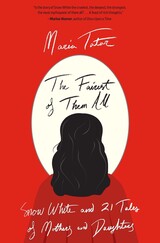
“With her trademark brio and deep-tissue understanding, Maria Tatar opens the glass casket on this undying story, which retains its power to charm twenty-one times, and counting.”
—Gregory Maguire, author of Wicked
The story of the rivalry between a beautiful, innocent girl and her cruel and jealous mother has been endlessly repeated and refashioned all over the world. The Brothers Grimm gave this story the name by which we know it best, and in 1937 Walt Disney sweetened their somber version to make the first feature-length, animated fairy tale, Snow White and the Seven Dwarfs. Since then, the Disney film has become our cultural touchstone—the innocent heroine, her evil stepmother, the envy that divides them, and a romantic rescue from domestic drudgery and maternal persecution. But each culture has its own way of telling this story of jealousy and competition. An acclaimed folklorist, Maria Tatar brings to life a global melodrama of mother-daughter rivalries that play out in unforgettable variations across countries and cultures.
“Fascinating…A strange, beguiling history of stories about beauty, jealousy, and maternal persecution.”
—Wall Street Journal
“Is the story of Snow White the cruelest, the deepest, the strangest, the most mythopoeic of them all?…Tatar trains a keen eye on the appeal of the bitter conflict between women at the heart of the tale…a feast of rich thoughts…An exciting and authoritative anthology from the wisest good fairy in the world of the fairy tale.”
—Marina Warner
“The inimitable Maria Tatar offers us a maze of mothers and daughters and within that glorious tangle an archetype with far more meaning than we imagine when we say ‘Snow White.’”
—Honor Moore
“Shocking yet familiar, these stories…retain the secret whisper of storytelling. This is a properly magical, erudite book.”
—Literary Review

European historians have noted the prominent role of the maternal ethic -- the idea that woman's role as mother extends into society as a whole -- in the theory and practice of German feminism from 1840 to 1914. This body of ideas, however, has seldom been taken seriously. German feminism has been interpreted as a political strategy, not as an intellectual tradition. Historians have portrayed German feminists as conservative, in contrast to their liberal counterparts in other countries who were more likely to campaign for equal rights. Ann Allen revises these views by analyzing German feminism as an attempt to create a symbolic framework for understanding the world rather than simply to attain practical results. She examines the relationship between the experiences of individual female activists and the evolving intellectual traditions of German culture and of international feminism.
Women thought their maternal role led to empowerment and ethical authority. The role gave them the legitimacy to give speeches, to organize reform movements, and to build feminist institutions. They campaigned for infant welfare and the expansion of state responsibility for the welfare of mothers and children. German feminists responded to central public issues, including revolution, national unification, and urbanization. They worked to transform both public and private worlds by extending their ethical values, developed in the family, to political and social issues.
To make her argument, Allen examines the lives and work of the women who were important to the history of German feminism. They centered their careers on issues relating to motherhood and childcare. Allen relates their stories to a broader theme: the relationship of women's experience, under specific historical conditions, to the development of feminist ideology and practice.
Allen assesses the historical significance of German feminism in the context of German history and of similar feminist movements in other countries, particularly the U.S. Allen calls for the ideas of German feminists to be judged with reference to the specific, local conditions under which they developed, rather than to essentialist notions of feminism. Some historians have identified equal rights ideologies as progressive and maternalist ones as conservative. But the women themselves did not perceive the antithesis between these two forms of ideology.
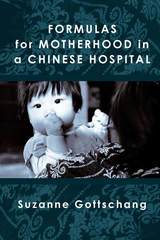
Formulas for Motherhood follows a group of women over eighteen months as they visited a Beijing Baby- Friendly Hospital over the course of their pregnancies and throughout their postpartum recoveries. The book shows how the space of the hospital operates as a microcosm of the larger social, political, and economic forces that urban Chinese women navigate in the process of becoming a mother. Relations between biomedical practices, heightened expectations of femininity and sexuality demanded by a consumer culture, alongside international and national agendas to promote maternal and child health, reveal new agents of maternal governance emerging at the very moment China’s economy heats up. This ethnography provides insight into how women’s creative pragmatism in a rapidly changing society leads to their views and decisions about motherhood.
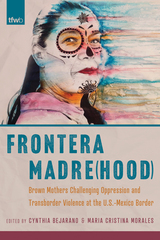
Thirty contributors discuss their lived experiences, research, or community work challenging multiple layers of oppression, including militarization of the border, border security propaganda, feminicides, drug war and colonial violence, grieving and loss of a child, challenges and forms of resistance by Indigenous mothers, working mothers in maquiladoras, queer mothering, academia and motherhood, and institutional barriers by government systems to access affordable health care and environmental justice. Also central to this collection are questions on how migration and detention restructure forms of mothering. Overall, this collection encapsulates how mothering is shaped by the geopolitics of border zones, which also transcends biological, sociological, or cultural and gendered tropes regarding ideas of motherhood, who can mother, and what mothering personifies.
Contributors
Elva M. Arredondo
Cynthia Bejarano
Bertha A. Bermúdez Tapia
Margaret Brown Vega
Macrina Cárdenas Montaño
Claudia Yolanda Casillas
Luz Estela (Lucha) Castro
Marisa Elena Duarte
Taide Elena
Sylvia Fernández Quintanilla
Paula Flores Bonilla
Judith Flores Carmona
Sandra Gutiérrez
Ma. Eugenia Hernández Sánchez
Irene Lara
Leticia López Manzano
Mariana Martinez
Maria Cristina Morales
Paola Isabel Nava Gonzales
Olga Odgers-Ortiz
Priscilla Pérez
Silvia Quintanilla Moreno
Cirila Quintero Ramírez
Felicia Rangel-Samponaro
Coda Rayo-Garza
Shamma Rayo-Gutierrez
Marisol Rodríguez Sosa
Brenda Rubio
Ariana Saludares
Victoria M. Telles
Michelle Téllez
Marisa S. Torres
Edith Treviño Espinosa
Mariela Vásquez Tobon
Hilda Villegas
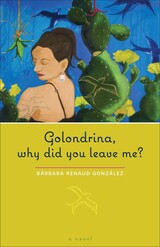
Runner-up, Best Popular Fiction in English, Latino Book Awards Competition, 2010
The golondrina is a small and undistinguished swallow. But in Spanish, the word has evoked a thousand poems and songs dedicated to the migrant's departure and hoped-for return. As such, the migrant becomes like the swallow, a dream-seeker whose real home is nowhere, everywhere, and especially in the heart of the person left behind.
The swallow in this story is Amada García, a young Mexican woman in a brutal marriage, who makes a heart-wrenching decision—to leave her young daughter behind in Mexico as she escapes to el Norte searching for love, which she believes must reside in the country of freedom. However, she falls in love with the man who brings her to the Texas border, and the memories of those three passionate days forever sustain and define her journey in Texas. She meets and marries Lázaro Mistral, who is on his own journey—to reclaim the land his family lost after the U.S.-Mexican War. Their opposing narratives about love and war become the legacy of their first-born daughter, Lucero, who must reconcile their stories into her struggle to find "home," as her mother, Amada, finally discovers the country where love beats its infinite wings.
Bárbara Renaud González, a native-born Tejana and acclaimed journalist, has written a lyrical story of land, love, and loss, bringing us the first novel of a working-class Tejano family set in the cruelest beauty of the Texas panhandle. Her story exposes the brutality, tragedy, and hope of her homeland and helps to fill a dearth of scholarly and literary works on Mexican and Mexican American women in post–World War II Texas.


More than 2.5 million Americans are addicted to opioids, some half-million of these to heroin. For many of them, their drug addiction leads to lives of demoralization, homelessness, and constant peril. For parents, a child’s addiction upends family life, catapulting them onto a path no longer prescribed by Dr. Spock, but by Dante’s Inferno. Within this ten-year crucible, Paula is transformed by an excruciating, inescapable truth: the difference between what she can do and what she cannot do.
Dayna Patterson has produced a book obsessed with motherhood and daughterhood, ancestry, and transition—of home, family, faith, and the narratives woven to uphold the Self. In her debut collection of poetry and lyric essay, Patterson grapples with a patriarchal and polygamous heritage. After learning about her mother’s bisexuality, Patterson befriends doubt while simultaneously feeling the urge to unearth a feminist theology, one that envisions God the Mother taking pride in her place at the banquet table.
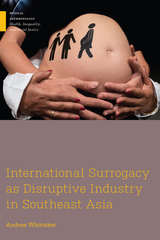
In International Surrogacy as Disruptive Industry in Southeast Asia, Andrea Whittaker traces the development of this industry and its movement across Southeast Asia following a sequence of governmental bans in India, Nepal, Thailand, and Cambodia. Through a case study of the industry in Thailand, the book offers a nuanced and sympathetic examination of the industry from the perspectives of the people involved in it: surrogates, intended parents, and facilitators. The industry offers intended parents the opportunity to form much desired families, but also creates vulnerabilities for all people involved. These vulnerabilities became evident in cases of trafficking, exploitation, and criminality that emerged in southeast Asia, leading to greater scrutiny on the industry as a whole. Yet the trade continues in new flexible hybrid forms, involving the circulation of reproductive gametes, embryos, surrogates, and ova donors across international borders to circumvent regulations. The book demonstrates the need for new forms of regulation to protect those involved in international surrogacy arrangements.
Sophfronia Scott turns an unflinching eye on her life to deliver a poignant collection of essays ruminating on faith, motherhood, race, and the search for meaningful connection in an increasingly disconnected world.
In Love’s Long Line, Scott contemplates what her son taught her about grief after the shootings at his school, Sandy Hook Elementary; how a walk with Lena Horne became a remembrance of love for Scott’s illiterate and difficult steelworker father; the unexpected heartache of being a substitute school bus driver; and the satisfying fantasy of paying off a mortgage. Scott’s road is also a spiritual journey ignited by an exploration of her first name, the wonder of her physical being, and coming to understand why her soul must dance like Saturday Night Fever’s Tony Manero.
Inspired by Annie Dillard’s observation in Holy the Firm that we all “reel out love’s long line alone . . . like a live wire loosed in space to longing and grief everlasting,” Scott’s essays acknowledge the loneliness, longing, and grief exacted by a fearless engagement with the everyday world. But she shows that by holding the line, there is an abundance of joy and forgiveness and grace to be had as well.
Amid these disadvantages, what is a Mama, PhD to do? This literary anthology brings together a selection of deeply felt personal narratives by smart, interesting women who explore the continued inequality of the sexes in higher education and suggest changes that could make universities more family-friendly workplaces.
The contributors hail from a wide array of disciplines and bring with them a variety of perspectives, including those of single and adoptive parents. They address topics that range from the level of policy to practical day-to-day concerns, including caring for a child with special needs, breastfeeding on campus, negotiating viable maternity and family leave policies, job-sharing and telecommuting options, and fitting into desk/chair combinations while eight months pregnant.
Candid, provocative, and sometimes with a wry sense of humor, the thirty-five essays in this anthology speak to and offer support for any woman attempting to combine work and family, as well as anyone who is interested in improving the university's ability to live up to its reputation to be among the most progressive of American institutions.
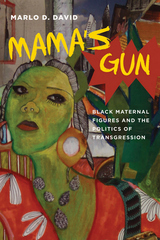
Taking inspiration from African American fiction, historical accounts of black life, Afrofuturism, and black popular culture in music and on screen, David turns her attention to Sapphire’s Push, Octavia Butler’s Dawn, and Suzan-Lori Parks’s Getting Mother’s Body as well as the performance art of Erykah Badu and the films of Tyler Perry. She draws out the implications of black maternal figures in these texts who balk at tradition and are far from “ideal.” David’s study shows how representations of blackness are deeply embedded in the neoliberal language of contemporary American politics and how black writers and performers resist such mainstream ideologies with their own transgressive black maternal figures.
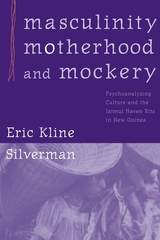
Throughout this work, Eric Silverman details the dialogics of mothering and manhood throughout Eastern Iatmul culture, including in his analysis cosmology and myth; food- and childraising; architecture and canoes; ethnophysiology and sexuality; shame and hygiene; marriage and kinship; and perhaps most significantly, a ceremonial locus classicus in anthropology: the famous Iatmul naven rite. This book provides the first sustained examination of naven since Bateson, presenting new data and interpretations that are based entirely on original, first-hand ethnographic research.
The sustained engagement with anthropological and psychoanalytic theory coupled with a refreshing examination of a famous and still-enigmatic ritual is sure to make multiple contributions to pressing debates in contemporary anthropology and social theory.
Eric Silverman is Associate Professor of Anthropology, DePauw University.
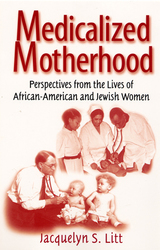
When Jacquelyn S. Litt interviewed African-American and Jewish women who raised their children in the 1930s and 1940s, she found that these women responded to experts' advice in ways uniquely shaped by their ethnicity, race, and class. For middle-class African-American and Jewish women, medicalization took place in ethnically/racially segregated networks and functioned as a collectively held strategy for social advance as much as a set of technical practices for raising healthy children. For poor, single African-American mothers, everyday networks offered limited access to medical institutions or mainstream norms. Medical discourse was largely controlled by white women and men, which left these women disempowered in medical institutions and marginal to dominant definitions of acceptable mothering.
Litt's book is enriched with many narratives from the mothers themselves. Both the women's voices and her acute sociological research bring to light how medicalized motherhood, while not the single cause of difference and inequality among the women, was a site where they were produced.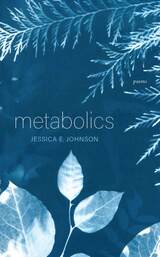
Metabolics, a book-length poem, borrows the movements of metabolic pathways to consider how nature accomplishes both balance and deep transformation. In visual figures and prose blocks that bridge the divide between poetry and nonfiction, Jessica E. Johnson employs scientific idioms to construct an allegory about a family in the Pacific Northwest. The region becomes a character in its own right, with cedars, moss, and heavy cloud knitting the mother, father, boy, and girl into their setting.
This far-reaching volume also serves as a study of the ecologies of contemporary parenting, with adults and children affected by “feeds” both on screen and off as their bodies metabolize food, the environment, and excess feelings such as rage. From climate change to kombucha to smartphones and curated produce, the smallest details of daily life in “Plasticland” catalyze a larger examination of selfhood: “Despite so many attempts to resolve this tension, sometimes you are you and also sometimes mother just as light can be both particle and wave.”
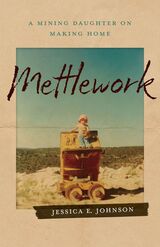
In the weeks after her first child is born, Jessica E. Johnson receives an email from her mother that contains artifacts of the author’s early childhood: scans of Polaroids and letters her mother wrote in mountain west mining camps and ghost towns—places without running water, companions, or help. Awash in love and restlessness, Johnson begins to see how the bedrock images of her isolated upbringing have stayed with her, even when she believed she was removing herself from their logic.
As she copes with the swirling pressures of parenting, teaching at an urban community college, and a partnership shaped by chronic illness, Johnson starts digging through her mother’s keepsakes and the histories of the places her family passed through, uncovering the linked misogyny and disconnection that characterized her childhood world—a world with uncomfortable echoes in the present and even in the act of writing itself. The resulting journey encompasses Johnson’s early memories, the story of the earth told in the language of geology, bits of vivid correspondence, a mothering manual from the early twentieth century, and the daily challenges of personal and collective care in a lonesome-crowded Pacific wonderland. Mettlework traces intergenerational failures of homemaking, traveling toward presence and relationship amid the remains of extractive industry and unsustainable notions of family.
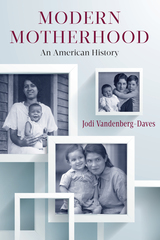
Modern Motherhood travels through redefinitions of motherhood over time, as mothers encountered a growing cadre of medical and psychological experts, increased their labor force participation, gained the right to vote, agitated for more resources to perform their maternal duties, and demonstrated their vast resourcefulness in providing for and nurturing their families. Navigating rigid gender role prescriptions and a crescendo of mother-blame by the middle of the twentieth century, mothers continued to innovate new ways to combine labor force participation and domestic responsibilities. By the 1960s, they were poised to challenge male expertise, in areas ranging from welfare and abortion rights to childbirth practices and the confinement of women to maternal roles. In the twenty-first century, Americans continue to struggle with maternal contradictions, as we pit an idealized role for mothers in children’s development against the social and economic realities of privatized caregiving, a paltry public policy structure, and mothers’ extensive employment outside the home.
Building on decades of scholarship and spanning a wide range of topics, Vandenberg-Daves tells an inclusive tale of African American, Native American, Asian American, working class, rural, and other hitherto ignored families, exploring sources ranging from sermons, medical advice, diaries and letters to the speeches of impassioned maternal activists. Chapter topics include: inventing a new role for mothers; contradictions of moral motherhood; medicalizing the maternal body; science, expertise, and advice to mothers; uplifting and controlling mothers; modern reproduction; mothers’ resilience and adaptation; the middle-class wife and mother; mother power and mother angst; and mothers’ changing lives and continuous caregiving. While the discussion has been part of all eras of American history, the discussion of the meaning of modern motherhood is far from over.
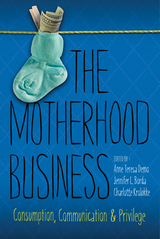
The Motherhood Business follows the harried mother’s path into the anxious maelstrom of intelligent toys, healthy foods and meals, and educational choices. It also traces how some enterprising mothers leverage cultural capital and rhetorical vision to create thriving baby- and child-based businesses of their own, as evidenced by the rise of mommy bloggers and “mompreneurs”over the last decade.
Starting with the rapidly expanding global fertility market, The Motherhood Business explores the intersection of motherhood, consumption, and privilege in the context of fertility tourism, international adoption, and transnational surrogacy. The synergy between motherhood and the marketplace demonstrated across the essays affirms the stronghold of “intensive mothering ideology” in decisions over what mothers buy and how they brand their businesses even as that ideology evolves. Across diverse contexts, the volume also identifies how different forms or privilege shape how mothers construct their identities through their consumption and entrepreneurship.
Although social observers have long commented on the link between motherhood and consumerism, little has been written within the field of rhetoric. Penetrating and interdisciplinary, The Motherhood Business illuminates how consumer culture not only shapes contemporary motherhood but also changes in response to mothers who constitute a driving force of the economy.

In Motherhood in Bondage, first published in 1928, Sanger reproduced letters written to her from women and sometimes men from all over the country, in both urban and rural areas, who were seeking advice on reproductive matters and marital relations, but mostly imploring her to help them find ways to avoid more pregnancies. The letters are grouped by theme into sixteen chapters, and Sanger wrote an introduction to each chapter. With clear relevance to the current post-Roe moment, these pleas to Sanger for advice on avoiding unwanted pregnancy dramatically detail the desperation for reproductive agency when birth control was unknown, withheld, or otherwise inaccessible.
In her foreword for this edition, Margaret Marsh describes the controversies surrounding these letters and places them in their historical context.
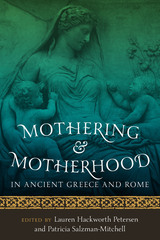
Motherhood played a central role in ancient Greece and Rome, despite the virtual absence of female participation in the public spheres of life. Mothers could wield enormous influence as the reproductive bodies of society and, in many cases, of culture. Yet motherhood and acts of mothering have received relatively little focused and sustained attention by modern scholars, who have concentrated almost exclusively on analyzing depictions of ancient women more generally.
In this volume, experts from across the humanities present a wealth of evidence from legal, literary, and medical texts, as well as art, architecture, ritual, and material culture, to reveal the multilayered dimensions of motherhood in both Greece and Rome and to confront the fact that not all mothers and acts of mothering can be easily categorized. The authors consider a variety of mothers—from the mythical to the real, from empress to prostitute, and from citizen to foreigner—to expose both the mundane and the ideologically charged lives of mothers in the Classical world. Some essays focus on motherhood as a largely private (emotional, intimate) experience, while others explore the ramifications of public, oftentimes politicized, displays of motherhood. This state-of-the art look at mothers and mothering in the ancient world also takes on a contemporary relevance as the authors join current debates on motherhood and suggest links between the lives of ancient mothers and the diverse, often conflicting roles of women in modern Western society.
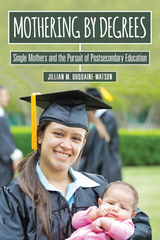
In Mothering by Degrees, Jillian Duquaine-Watson shows how single mothers pursuing college degrees must navigate a difficult course as they attempt to reconcile their identities as single moms, college students, and in many cases, employees. They also negotiate a balance between what they think a good mother should be, and what society is telling them, and how that affects their choices to go to college, and whether to stay in college or not.
The first book length study to focus on the lives and experiences of single mothers who are college students, Mothering by Degrees points out how these women are influenced by dominant American ideologies of motherhood, and the institutional parameters of the schools they attend, and argues for increased attention to the specific ways in which the choices, challenges, and opportunities available to mothers are shaped within their specific environments, as well as the ways in which mothers help shape those environments...
Mothering from the Field offers both a mosaic of perspectives from current women scientists’ experiences of conducting field research across a variety of sub-disciplines while raising children, and an analytical framework to understand how we can redefine methodological and theoretical contributions based on mothers’ experiences in order not just to promote healthier, more inclusive, nurturing, and supportive environments in physical, life, and social sciences, but also to revolutionize how we conceptualize research.
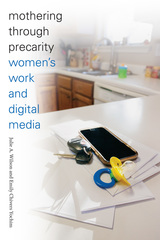
Feldman-Savelsberg introduces readers to several Cameroonian mothers, each with her own unique history, concerns, and voice. Through scenes of their lives—at a hometown association’s year-end party, a celebration for a new baby, a visit to the Foreigners’ Office, and many others—as well as the stories they tell one another, Feldman-Savelsberg enlivens our thinking about migrants’ lives and the networks and repertoires that they draw on to find stability and, ultimately, belonging. Placing women’s individual voices within international social contexts, this book unveils new, intimate links between the geographical and the generational as they intersect in the dreams, frustrations, uncertainties, and resolve of strong women holding families together across continents.
Lady Mary Carey (c. 1609–c. 1680) was a noblewoman who examined her life and expressed her views in a handwritten manuscript that she intended for self-reflection and for sharing with restricted audiences of family and friends, rather than for print publication. Her poetry and prose, composed and revised between 1650 and 1658, were important enough to her inner circle, however, that her autograph manuscript was carefully copied by another hand in 1681. In addition to providing us with key insights into women’s multidimensional roles as wives, widows, and mothers during the seventeenth century in England, Carey’s work teaches us a great deal about a woman’s deepest emotional and spiritual states while confronting the hardships of life—from the fears of childbearing to the sorrows over child loss to the terrors of war.
Early in the twentieth century, maternal and child welfare evolved from a private family responsibility into a matter of national policy. Molly Ladd-Taylor explores both the private and public aspects of child-rearing, using the relationship between them to cast new light on the histories of motherhood, the welfare state, and women's activism in the United States.
Ladd-Taylor argues that mother-work, "women's unpaid work of reproduction and caregiving," motivated women's public activism and "maternalist" ideology. Mothering experiences led women to become active in the development of public health, education, and welfare services. In turn, the advent of these services altered mothering in many ways, including the reduction of the infant mortality rate.
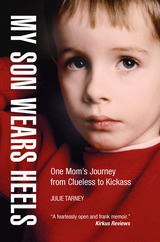
Julie had no idea what that meant. She felt disoriented. Wasn’t it her role to encourage and support her child? Surely she had to set some limits to his self-expression—or did she? Would he be bullied? Could she do the right thing? What was the right thing?
The internet was no help, because there was no internet. And there were zero books for a mom scrambling to understand a toddler who had definite ideas about his gender, regardless of how Nature had endowed him. Terms such as transgender, gender nonconforming, and gender creative were rare or nonexistent.
There were, however, mainstream experts who theorized that a “sissy” boy was the result of a domineering mother. Julie couldn’t believe it. She didn’t want to care what her neighbors thought, but she did care. “Domineering mother” meant controlling mother. It meant bad mother. It meant her mother.
Lacking a positive role model of her own, and fearful of being judged as a mom who was making her son “too feminine,” Julie embarked on an unexpected parenting path. Despite some missteps, and with no map to guide her, she learned to rely on her instincts. She listened carefully, kept an open mind, and as long as Harry was happy, she let him lead the way. Julie eventually realized that Harry knew who he was all along. Her job was simply to love and support him unconditionally, allowing him to be his authentic self. This story of a mother embracing her child’s uniqueness and her own will resonate with all families.
Winner, inaugural BeOUT Award for LGBTQ Visibility, awarded by Milwaukee Pride
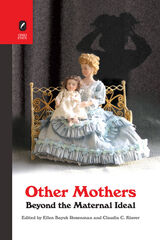
This collection addresses this void, revealing the extraordinary diversity of Victorian motherhood. Exploring diaries, novels, and court cases, with contexts ranging from London to Egypt to Australia, these varied accounts take the collection “beyond the maternal ideal” to consider the multiple, unpredictable ways in which motherhood was experienced and imagined in this formative historical period.
Other Mothers joins revisionist approaches to femininity that now characterize Victorian studies. Its contents trace intersections among gender, race, and class; question the power of separate spheres ideology; and insist on the context-specific nature of social roles. The fifteen essays in this volume contribute to the fields of literary criticism, history, cultural studies, and history.
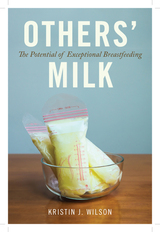
Exceptional breastfeeders find creative ways to feed and care for their children—such as by inducing lactation, sharing milk, or exclusively pumping. They want to adhere to the societal ideal of giving them “the best” but sometimes have to face off with dogmatic authorities in order to do so. Kristin J. Wilson argues that while breastfeeding is never going to be the feasible choice for everyone, it should be accessible to anyone.
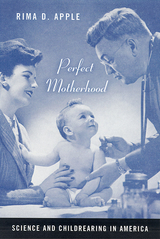
Parenting today is virtually synonymous with worry. We want to ensure that our children are healthy, that they get a good education, and that they grow up to be able to cope with the challenges of modern life. In our anxiety, we are keenly aware of our inability to know what is best for our children. When should we toilet train? What is the best way to encourage a fussy child to eat? How should we protect our children from disease and injury?
Before the nineteenth century, maternal instinct—a mother’s “natural know-how”—was considered the only tool necessary for effective childrearing. Over the past two hundred years, however, science has entered the realm of motherhood in increasingly significant ways. In Perfect Motherhood, Rima D. Apple shows how the growing belief that mothers need to be savvy about the latest scientific directives has shifted the role of expert away from the mother and toward the professional establishment. Apple, however, argues that most women today are finding ways to negotiate among the abundance of scientific recommendations, their own knowledge, and the reality of their daily lives.
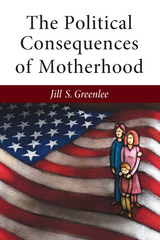
From civically and politically engaged women linking their identity as “mothers” to their fight for prohibition, public sanitation, and protective labor laws to the general call to arms of “mama grizzlies” issued by Sarah Palin in 2010, American political activists and candidates have used motherhood to rally women’s interest, support, and participation throughout American history. Politicized motherhood persists, and motherhood continues to inspire women’s participation and direct their concerns.
In The Political Consequences of Motherhood, Jill S. Greenlee investigates the complex relationship between motherhood and women’s political attitudes. Combining a historical overview of the ways motherhood has been used for political purposes with recent political opinion surveys and individual-level analysis, she explains how and when motherhood shapes women’s thoughts and preferences. Greenlee argues that two mechanisms account for the durability of motherhood politics. First, women experience attitudinal shifts when they become mothers. Second, “mother” is a broad-based identity, widely shared and ideologically unconstrained, that lends itself to appeals across the political spectrum to build support for candidates and policy issues.
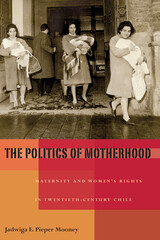
Chronicling an era of unprecedented modernization and political transformation, Jadwiga E. Pieper Mooney examines the negotiations over women's rights and the politics of gender in Chile throughout the twentieth century. Centering her study on motherhood, Pieper Mooney explores dramatic changes in health policy, population paradigms, and understandings of human rights, and reveals that motherhood is hardly a private matter defined only by individual women or couples. Instead, it is intimately tied to public policies and political competitions on nation-state and international levels.
The increased legitimacy of women's demands for rights, both locally and globally, has led to some improvements in gender equity. Yet feminists in contemporary Chile continue to face strong opposition from neoconservatism in the Catholic Church and a mixture of public apathy and legal wrangling over reproductive rights and health.
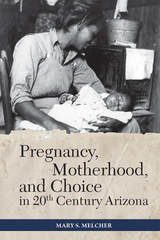
Early twentieth-century Arizona was a life-threatening place for new and expectant mothers. Towns were small and very far apart, and the weather and harsh landscape often delayed midwives. It was not uncommon for a woman to give birth without medical care and with the aid of only family members. By the 1920s, Arizona was at the top of the list for the highest number of infant deaths.
Mary Melcher’s Pregnancy, Motherhood, and Choice in Twentieth-Century Arizona provides a deep and diverse history of the dramatic changes in childbirth, birth control, infant mortality, and abortion over the course of the last century. Using oral histories, memoirs, newspaper accounts, government documents, letters, photos, and biographical collections, this fine-grained study of women’s reproductive health places the voices of real women at the forefront of the narrative, providing a personal view into some of the most intense experiences of their lives.
Tackling difficult issues such as disparities in reproductive health care based on race and class, abortion, and birth control, this book seeks to change the way the world looks at women’s health. An essential read for both historians and public health officials, this book reveals that many of the choices and challenges that women once faced remain even today.
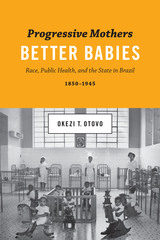
In Bahia, Brazil, the decades following emancipation saw the rise of reformers who sought to reshape the citizenry by educating Bahian women in methods for raising “better babies.” The idealized Brazilian would be better equipped to contribute to the labor and organizational needs of a modern nation. Backed by many physicians, politicians, and intellectuals, the resulting welfare programs for mothers and children mirrored complex debates about Brazilian nationality. Examining the local and national contours of this movement, Progressive Mothers, Better Babies investigates families, medical institutions, state-building, and social stratification to trace the resulting policies, which gathered momentum in the aftermath of abolition (1888) and the declaration of the First Republic (1889), culminating during the administration of President Getúlio Vargas (1930–1945).
Exploring the cultural discourses on race, gender, and poverty that permeated medical knowledge and the public health system for almost a century, Okezi T. Otovo draws on extensive archival research to reconstruct the implications for Bahia, where family patronage politics governed poor women’s labor as the mothers who were the focus of medical interventions were often the nannies and nursemaids of society’s wealthier families. The book reveals key transition points as the state of Bahia transformed from being a place where poor families could expect few social services to becoming the home of numerous programs targeting the poorest mothers and their children. Negotiating crucial questions of identity, this history sheds new light on larger debates about Brazil’s past and future.
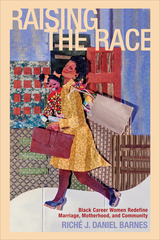
Popular discussions of professional women often dwell on the conflicts faced by the woman who attempts to “have it all,” raising children while climbing up the corporate ladder. Yet for all the articles and books written on this subject, there has been little work that focuses on the experience of African American professional women or asks how their perspectives on work-family balance might be unique.
Raising the Race is the first scholarly book to examine how black, married career women juggle their relationships with their extended and nuclear families, the expectations of the black community, and their desires to raise healthy, independent children. Drawing from extensive interviews with twenty-three Atlanta-based professional women who left or modified careers as attorneys, physicians, executives, and administrators, anthropologist Riché J. Daniel Barnes found that their decisions were deeply rooted in an awareness of black women’s historical struggles. Departing from the possessive individualistic discourse of “having it all,” the women profiled here think beyond their own situation—considering ways their decisions might help the entire black community.
Giving a voice to women whose perspectives have been underrepresented in debates about work-family balance, Barnes’s profiles enable us to perceive these women as fully fledged individuals, each with her own concerns and priorities. Yet Barnes is also able to locate many common themes from these black women’s experiences, and uses them to propose policy initiatives that would improve the work and family lives of all Americans.
Selling “genetically gifted” human eggs on the free market for a hefty price. In vitro fertilization. Fetal rights. Prenatal diagnosis. Surrogacy. All are instances of biomedical and social “advancements” with which we have become familiar in recent years. Yet these issues are often regarded as distinct or only loosely related under the rubric of reproduction.
Barbara Katz Rothman demonstrates how they form a complex whole that demands of us in response a woman-centered, class-sensitive way of understanding motherhood. We need a social policy for dealing with mothers and motherhood that is consistent with feminist politics and feminist theory. Her book show how we as a society must first recognize that the real needs of mother, father, and children have been swept aside in an attempt to reduce the complex process of human reproduction to a clinical event that can be controlled by medical technology. Rothman suggests ways to accomplish social and legal change that would allow technological advances to affirm motherhood and the mother-child relationship without cost to women’s identity.
This new edition of Recreating Motherhood contains exciting updates. Rothman shows how this material is key in understanding the family, not just motherhood. And a new chapter, “Reflections on a Decade,” explores how new reproductive technologies combine with new marketing and new genetics to pose troubling social questions.
Becoming a mother profoundly alters one’s perception of the world, as Lindal Buchanan learned firsthand when she gave birth. Suddenly attentive to representations of mothers and mothering in advertisements, fiction, film, art, education, and politics, she became intrigued by the persuasive force of the concept of motherhood, an interest that unleashed a host of questions: How is the construct defined? How are maternal appeals crafted, presented, and performed? What do they communicate about gender and power? How do they affect women? Her quest for answers has produced Rhetorics of Motherhood, the first book-length consideration of the topic through a feminist rhetorical lens.
Although both male and female rhetors employ motherhood to promote themselves and their agendas, Buchanan argues it is particularly slippery terrain for women—on the one hand, affording them authority and credibility but, on the other, positioning them disadvantageously within the gendered status quo. Rhetorics of Motherhood investigates that paradox by detailing the cultural construction and performance of the Mother in American public discourse, tracing its use and impact in three case studies, and by theorizing how, when, and why maternal discourses work to women’s benefit or detriment. In the process, the reader encounters a fascinating array of issues—including birth control, civil rights, and abortion—and rhetors, ranging from Diane Nash and Margaret Sanger to Sarah Palin and Michelle Obama.
As Buchanan makes clear, motherhood is a rich site for investigating the interrelationships among gender, power, and public discourse. Her latest book contributes to the discipline of rhetoric by attending to and making a convincing case for the significance of this understudied subject. With its examination of timely controversies, contemporary and historical figures, and powerful women, Rhetorics of Motherhood will appeal to a wide array of readers in rhetoric, communications, American studies, women’s studies, and beyond.

Winner of the Agha Shahid Ali Poetry Prize
In The Rival, Sara Wallace takes her readers on an intimate journey through a woman’s solitary, surreal rural childhood and her brutal, sexually fraught first marriage to the conflicted redemption she finds in motherhood and a second chance at love. In this debut poetry collection, Wallace reveals how closely emotional devastation and transcendence can coexist. The Rival is sensuous, darkly humorous, and frequently luminous in its unflinching exploration of the inner life.
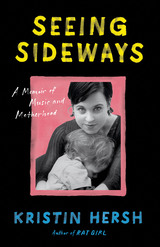
Doony, Ryder, Wyatt, Bodhi. The names of Kristin Hersh’s sons are the only ones included in her new memoir, Seeing Sideways. As the book unfolds and her sons’ voices rise from its pages, it becomes clear why: these names tell the story of her life.
This story begins in 1990, when Hersh is the leader of the indie rock group Throwing Muses, touring steadily, and the mother of a young son, Doony. The chapters that follow reveal a woman and mother whose life and career grow and change with each of her sons: the story of a custody battle for Doony is told alongside that of Hersh’s struggles with her record company and the resulting PTSD; the tale of breaking free from her record label stands in counterpoint to her recounting of her pregnancy with Ryder; a period of writer’s block coincides with the development of Wyatt as an artist and the family’s loss of their home; and finally, soon after Bodhi’s arrival, Hersh and her boys face crises from which only strange angels can save them. Punctuated with her own song lyrics, Seeing Sideways is a memoir about a life strange enough to be fiction, but so raw and moving that it can only be real.
This book is the first to offer a combined social science and psychoanalytic perspective on reproductive behavior. The author emphasizes the personal histories of his subjects within their cultural environment, and takes into account the setting of the interview and the subjective responses of both interviewee and interviewer. The study reveals how Jamaicans, particularly women, relate to their own parents, learn about sex, experience sexual maturity and first intercourse, and perceive their relations with subsequent partners. Other themes examined are the significance of pregnancy, childbirth, and parenthood and the folk context of Jamaican beliefs about reproduction and contraception.
All of these are aspects of what the author terms a “culture of motherhood.” His unique approach illuminates the many complex factors that influence this population's use or nonuse of contraceptive methods. In his concluding chapter, Eugene Brody offers suggestions for reconciling the private needs of individuals and the public goals of Jamaican population policy. Although his research centers on one Caribbean island, his ideas are applicable to other developing countries. In Sex, Contraception, and Motherhood in Jamaica, family planning professionals, psychologists, psychiatrists, and social scientists will find an intriguing new approach to reproductive policy.
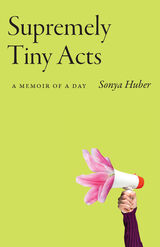
“I think we have to get to the real, to catch the facts we have, to hold on to what we see. . . .in this time where lies are currency,” Sonya Huber writes in her book-length essay Supremely Tiny Acts: A Memoir of a Day. On the theory that naming the truths of quotidian experience can counter the dangerous power of lies, she carefully recounts two anxiety-fueled days one fall. On the first, she is arrested as part of a climate protest in Times Square. On the other, she must make it to her court appearance while also finding time to take her son to get his learner's permit. Paying equal attention to minor details, passing thoughts, and larger political concerns around activism and parenting in the Trump-era United States, Huber asks: How can one simultaneously be a good mother, a good worker, and a good citizen? As she reflects on the meaning of protest and on whiteness and other forms of privilege within political activism, Huber offers a wry, self-aware, and stirring testament to the everyday as a seedbed for meaningful change.
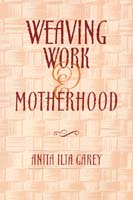
A sociologist and work and family expert, Garey situates her research in the health service industry. Interviewing a racially and ethnically diverse group of women hospital workers -- clerical workers, janitorial workers, nurses, and nurse's aids -- Garey analyzes what it means to be at once a mother who is employed and a worker with children. Within the limits of the resources available to them, women integrate their identities as workers and their identities as mothers by valuing their relation to work while simultaneously preserving cultural norms about what it means to be a good mother. Some of these women work non-day shifts in order to have the right blocks of time at home, including, for example, a registered nurse who explains how working the night shift enables her to see her children off to school, greet them when they return, and attend school events in the way she feels "good mothers" should -- even if she finds little time for sleep.
Moving beyond studies of women, work, and family in terms of structural incompatibilities, Garey challenges images of the exclusively "work-oriented" or exclusively "family-oriented" mother. As women talk about their lives, Garey focuses on the meanings of motherhood and of work that underlie their strategies for integrating employment and motherhood. She replaces notions of how women "balance" work and family with a better understanding of how women integrate, negotiate, and weave together their identities as both workers and mothers.
Breaking new ground in the study of work and family, Weaving Work and Motherhood offers new insights for those interested in sociology, gender and women's studies, social policy, child care, social welfare, and health care.
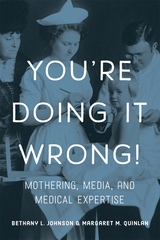
You’re Doing it Wrong! investigates the storied history of mothering advice in the media, from the newspapers, magazines, doctors’ records and personal papers of the nineteenth-century to today’s websites, Facebook groups, and Instagram feeds. Johnson and Quinlan find surprising parallels between today’s mothering experts and their Victorian counterparts, but they also explore how social media has placed unprecedented pressures on new mothers, even while it may function as social support for some. They further examine the contentious construction of prenatal and baby care expertise itself, as individuals such as everyone from medical professionals to experienced moms have competed to have their expertise acknowledged in the public sphere.
Exploring potential health crises from infertility treatments to “better babies” milestones, You’re Doing it Wrong! provides a provocative look at historical and contemporary medical expertise during conception, pregnancy, childbirth, postpartum, and infant care stages.
READERS
Browse our collection.
PUBLISHERS
See BiblioVault's publisher services.
STUDENT SERVICES
Files for college accessibility offices.
RECENTLY PUBLISHED




UChicago Accessibility Resources
home | accessibility | search | about | contact us
BiblioVault ® 2001 - 2024
The University of Chicago Press