
 A SCHOLARLY BOOK REPOSITORY
Architecture is often thought to be a diary of a society, filled with symbolic representations of specific cultural moments. However, as Craig L. Wilkins observes, that diary includes far too few narratives of the diverse cultures in U.S. society. Wilkins states that the discipline of architecture has a resistance to African Americans at every level, from the startlingly small number of architecture students to the paltry number of registered architects in the United States today.
Working to understand how ideologies are formed, transmitted, and embedded in the built environment, Wilkins deconstructs how the marginalization of African Americans is authorized within the field of architecture. He then outlines how activist forms of expression shape and sustain communities, fashioning an architectural theory around the site of environmental conflict constructed by hip-hop culture.
Wilkins places his concerns in a historical context, and also offers practical solutions to address them. In doing so, he reveals new possibilities for an architecture that acknowledges its current shortcomings and replies to the needs of multicultural constituencies.
Craig L. Wilkins, a registered architect, teaches architecture and urban planning at the University of Michigan.
In 2015, members of the philosophy department at the University of Madrid conducted an interview with Alberto Moreiras for the university’s digital archive. The resulting dialogues and the Spanish edition of this work, Marranismo e inscripción, o el abandono de la conciencia desdichada, are the basis for Against Abstraction, supplemented with an interview conducted for the Chilean journal Papel máquina. In these landmark conversations, Moreiras describes how, though he was initially committed to Latin American literary studies, he eventually transitioned to become an eminent scholar of critical theory, existential philosophy, and ultimately infrapolitics and posthegemony.
Blending intellectual autobiography with a survey of Hispanism as practiced in universities in the United States (including the schisms in Latin American subaltern studies that eventually led to Moreiras’s departure from Duke University), these narratives read like a picaresque and a polemic on the symbolic power of scholars. Drawing on the concept of marranism (originally a term for Iberian Jews and Muslims forced to convert to Christianity during the Middle Ages) to consider the situations and allegiances he has navigated over the years, Moreiras has produced a multifaceted self-portrait that will surely spark further discourse.
Abū al-Walīd Muḥammad ibn Aḥmad ibn Rushd (d. 1198 AD), known as Averroes in the West, wrote one of the most significant medieval Arabic commentaries on Aristotle’s famous treatise, Rhetoric. Averroes worked within a tradition that included the Muslim philosophers Al-Farabi (d. 950) and Avicenna (d. 1037), who together built an early canon introducing Aristotle’s writings to the academies of medieval Europe. Here, for the first time, Lahcen El Yazghi Ezzaher translates Averroes’ Middle Commentary into English, with analysis highlighting its shaping of philosophical thought.
Ibn Rushd was born into a prominent family living in Córdoba and Seville during the reign of the Almoḥad dynasty in the Maghreb and al-Andalus. At court, he received support to write a body of rhetorical commentaries extending the work of his Arabic-Muslim predecessors, a critical step in fostering Aristotle’s influence on European scholasticism and Western education. Ezzaher’s meticulous translation of Averroes’ Middle Commentary reflects the depth and breadth of this engagement, incorporating a discussion of the Arabic-Muslim commentary tradition and Averroes’ contribution to it. His research illuminates the complexity of Averroes’ position, articulating the challenges Muslim scholars faced in making non-Muslim texts available to their community. Through his work, we see how people at different historical moments have adapted intellectual concepts to preserve rhetoric’s vitality and relevance in new contexts.
Averroes’ Middle Commentary exemplifies the close connections between ancient Greece and medieval Muslim scholarship and the ways Muslim scholars navigated an appreciation for Aristotelian philosophy alongside a commitment to their cultural and religious systems.
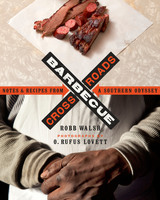
In stories, recipes, and photographs, James Beard Award–winning writer Robb Walsh and acclaimed documentary photographer O. Rufus Lovett take us on a barbecue odyssey from East Texas to the Carolinas and back. In Barbecue Crossroads, we meet the pitmasters who still use old-fashioned wood-fired pits, and we sample some of their succulent pork shoulders, whole hogs, savory beef, sausage, mutton, and even some barbecued baloney. Recipes for these and the side dishes, sauces, and desserts that come with them are painstakingly recorded and tested.
But Barbecue Crossroads is more than a cookbook; it is a trip back to the roots of our oldest artisan food tradition and a look at how Southern culture is changing. Walsh and Lovett trace the lineage of Southern barbecue backwards through time as they travel across a part of the country where slow-cooked meat has long been part of everyday life. What they find is not one story, but many. They visit legendary joints that don’t live up to their reputations—and discover unknown places that deserve more attention. They tell us why the corporatizing of agriculture is making it difficult for pitmasters to afford hickory wood or find whole hogs that fit on a pit.
Walsh and Lovett also remind us of myriad ways that race weaves in and out of the barbecue story, from African American cooking techniques and recipes to the tastes of migrant farmworkers who ate their barbecue in meat markets, gas stations, and convenience stores because they weren’t welcome in restaurants. The authors also expose the ways that barbecue competitions and TV shows are undermining traditional barbecue culture. And they predict that the revival of the community barbecue tradition may well be its salvation.
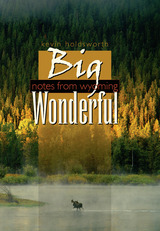
Growing up in Utah, Holdsworth couldn't wait to move away. Once ensconced on the East Coast, however, he found himself writing westerns and dreaming of the mountains he'd skied and climbed. Fed up with city life, he moved to a small Wyoming town.
In Big Wonderful, he writes of a mountaineering companion's death, the difficult birth of his son, and his father's terminal illness - encounters with mortality that sharpened his ideas about risk, care, and commitment. He puts a new spin on mountaineering literature, telling wild tales from his reunion with the mountains but also relating the surprising willpower it took to turn back from risks he would have taken before he became a father. He found he needed courage to protect and engage deeply with his family, his community, and the wild places he loves.
Holdsworth's essays and poems are rich with anecdotes, characters, and vivid images. Readers will feel as if they themselves watched a bear destroy an entire expedition's food, walked with his great-great-grandmother along the icy Mormon Trail, and tried to plant a garden in Wyoming's infamous wind.
Readers who love the outdoors will enjoy this funny and touching take on settling down and adventuring in the West's most isolated country.
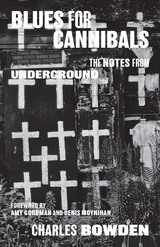
Cultivated from the fierce ideas seeded in Blood Orchid, Blues for Cannibals is an elegiac reflection on death, pain, and a wavering confidence in humanity’s own abilities for self-preservation. After years of reporting on border violence, sex crimes, and the devastation of the land, Bowden struggles to make sense of the many ways in which we destroy ourselves and whether there is any way to survive. Here he confronts a murderer facing execution, sex offenders of the most heinous crimes, a suicidal artist, a prisoner obsessed with painting portraits of presidents, and other people and places that constitute our worst impulses and our worst truths. Painful, heartbreaking, and forewarning, Bowden at once tears us apart and yearns for us to find ourselves back together again.
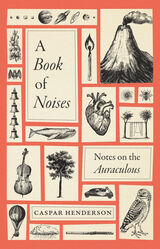
The crackling of a campfire. The scratch, hiss, and pop of a vinyl record. The first glug of wine as it is poured from a bottle. These are just a few of writer Caspar Henderson’s favorite sounds. In A Book of Noises, Henderson invites readers to use their ears a little better—to tune in to the world in all its surprising noisiness.
Describing sounds from around the natural and human world, the forty-eight essays that make up A Book of Noises are a celebration of all things “auraculous.” Henderson calls on his characteristic curiosity to explore sounds related to humans (anthropophony), other life (biophony), the planet (geophony), and space (cosmophony). Henderson finds the beauty in everyday sounds, like the ringing of a bell, the buzz of a bee, or the “earworm” songs that get stuck in our heads. A Book of Noises also explores the marvelous, miraculous sounds we may never get the chance to hear, like the deep boom of a volcano or the quiet, rustling sound of the Northern Lights.
A Book of Noises will teach readers to really listen to the sounds of the world around them, to broaden and deepen their appreciation of the humans, animals, rocks, and trees simultaneously broadcasting across the whole spectrum of sentience.
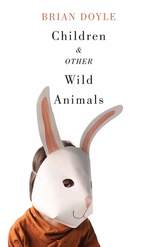
In these short vignettes, Doyle explores the seethe of life on this startling planet, the astonishing variety of our riveting companions, and the joys available to us when we pause, see, savor, and celebrate the small things that are not small in the least.
Doyle’s trademark quirky prose is at once lyrical, daring, and refreshing; his essays poignant but not pap, sharp but not sermons, and revelatory at every turn. Throughout there is humor and humility and a palpable sense of wonder, with passages of reflection so true and hard earned they make you stop and reread a line, a paragraph, a page.
Children & Other Wild Animals gathers previously unpublished work with selections that have appeared in Orion, The Sun, Utne Reader, High Country News, and The American Scholar, as well as Best American Essays (“The Greatest Nature Essay Ever”) and Best American Nature and Science Writing (“Fishering”). “The Creature Beyond the Mountain,” Doyle’s paean to the mighty and mysterious sturgeon of the Pacific Northwest, won the John Burroughs Award for Outstanding Nature Essay. As he notes in that tribute to all things “sturgeonness”:
“Sometimes you want to see the forest and not the trees. Sometimes you find yourself starving for what’s true, and not about a person but about all people. This is how religion and fascism were born, but it’s also why music is the greatest of arts, and why stories matter, and why we all cannot help staring at fires and great waters.”
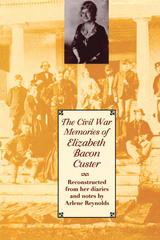
In her first year of marriage (1864-1865) to General George Armstrong Custer, Libbie Custer witnessed the Civil War firsthand. Her experiences of danger, hardship, and excitement made ideal material for a book, one that she worked on for years in later life but ultimately never published.
In this volume, Arlene Reynolds has produced a readable narrative of Libbie Custer's life during the war years by chronologically reconstructing Libbie's original, unpublished notes and diaries found in the archives of the Little Big Horn Battlefield National Monument. In these reminiscences, Libbie Custer adds striking, eloquent details to the Civil War story as she describes her life both in camp and in Washington. Her stories of incidents such as fording a swollen river sidesaddle on horseback, dancing at the Inaugural Ball near President Lincoln, and watching the massive review of the Army of the Potomac after the surrender have the engrossing quality of a well-written novel.
For general readers and students of women's history, this book tells a fascinating story of a sheltered girl's maturation into a courageous woman in the crucible of war. And for both devotees and detractors of her husband, it offers an intimate glimpse into his youth, West Point years, and early military service.

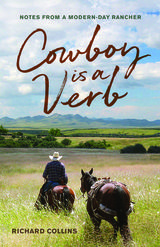
A born storyteller with a flair for words, Collins breathes life into the geology, history, and interdependency of land, water, and native and introduced plants and animals. He conjures indelible portraits of the hardworking, dedicated people he comes to know. With both humor and humility, he recounts the day-to-day challenges of ranch life such as how to build a productive herd, distribute your cattle evenly across a rough and rocky landscape, and establish a grazing system that allows pastures enough time to recover. He also intimately recounts a battle over the endangered Gila topminnow and how he and his neighbors worked with university range scientists, forest service conservationists, and funding agencies to improve their ranches as well as the ecological health of the Redrock Canyon watershed.
Ranchers who want to stay in the game don’t dominate the landscape; instead, they have to continually study the land and the animals it supports. Collins is a keen observer of both. He demonstrates that patience, resilience, and a common-sense approach to conservation and range management are what counts, combined with an enduring affection for nature, its animals, and the land. Cowboy is a Verb is not a romanticized story of cowboy life on the range, rather it is a complex story of the complicated work involved with being a rancher in the twenty-first-century West.
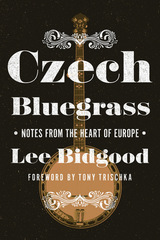
Lee Bidgood offers a fascinating study of the Czech bluegrass phenomenon that merges intimate immersion in the music with on-the-ground fieldwork informed by his life as a working musician. Drawing on his own close personal and professional interactions, Bidgood charts how Czech bluegrass put down roots and looks at its performance as a uniquely Czech musical practice. He also reflects on “Americanist” musical projects and the ways Czech musicians use them to construct personal and social identities. Bidgood sees these acts of construction as a response to the Czech Republic’s postsocialist environment but also to US cultural prominence within our global mediascape.
The medicinal properties of plants have been of interest to society for centuries and continue to be a subject of modern research. Yet too often research has been predicated upon poorly identified plant material and secondary sources of information. Much of what we know about the use of plants as drugs, poisons, foods, and as instruments of magical or religious practice derives from lore inherited from the clay tablets and papyri of the ancients and from compilations of early Greek, Arabic, and Indian physicians. Meanwhile, information pertaining to plant parts used even now in the daily life of peoples far removed from the influence of modern medical and health practices has been largely overlooked.
With the encroachment of civilized cultures on primitive societies, unique traditions—often unwritten—are being destroyed. In many instances, the very plants involved are disappearing. Not infrequently, the only record, where one exists at all, of these vanishing pools of knowledge is that of the botanical field worker. For no matter what chemical or biological investigations may follow, the botanist can affix to an actual specimen, as he collects it in the field, the local terms applied to the plant and a description of native medicinal or other uses.
Dr. Altschul has compiled field notes of health and medical interest on over 5,000 species of plants, culled from some 2,500,000 specimens of higher plants collected by field botanists from all over the world and deposited in the combined collections of the Arnold Arboretum and Gray Herbarium of Harvard University. The resulting catalogue represents a unique approach to supplying new investigational leads to researchers seeking biologically active plant principles. Dr. Altschul's meticulous sheet&ndashby–sheet examination of the Harvard collections provides the pharmacognosist, pharmacologist, and others in the medical and health sciences with an extensive firsthand survey of the domestic medicines of many cultures.
These previously unpublished botanists' notes are here made available in a comprehensive publication that should become an important resource for every investigation into the area of medicinal phytochemistry. Indexes to families and genera are provided, as well as a medical index referring to diseases and to therapeutic properties for researchers intent on locating plants with special medicinal capacities. The author is a Research Fellow at the Botanical Museum of Harvard University.

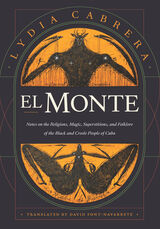

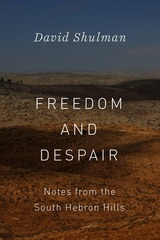
David Shulman knows intimately what it takes to live your beliefs, to return, day after day, to the struggle, despite knowing you are often more likely to lose than win. Interweaving powerful stories and deep meditations, Freedom and Despair offers vivid firsthand reports from the occupied West Bank in Palestine as seen through the eyes of an experienced Israeli peace activist who has seen the Israeli occupation close up as it impacts on the lives of all Palestinian civilians.
Alongside a handful of beautifully written and often shocking tales from the field, Shulman meditates deeply on how to understand the evils around him, what it means to persevere as an activist decade after decade, and what it truly means to be free. The violent realities of the occupation are on full display. We get to know and understand the Palestinian shepherds and farmers and Israeli volunteers who face this situation head-on with nonviolent resistance. Shulman does not hold back on acknowledging the daily struggles that often leave him and his fellow activists full of despair. Inspired by these committed individuals who are not prepared to be silent or passive, Shulman suggests a model for ordinary people everywhere. Anyone prepared to take a risk and fight their oppressive political systems, he argues, can make a difference—if they strive to act with compassion and to keep hope alive.
This is the moving story of a man who continues to fight for good in the midst of despair. An indispensable book in our era of reactionary politics and refugee crises, political violence and ecological devastation, Freedom and Despair is a gripping memoir of struggle, activism, and hope for peace.
From Notes to Narrative picks up where methodological training leaves off. Kristen Ghodsee, an award-winning ethnographer, addresses common issues that arise in ethnographic writing. Ghodsee works through sentence-level details, such as word choice and structure. She also tackles bigger-picture elements, such as how to incorporate theory and ethnographic details, how to effectively deploy dialogue, and how to avoid distracting elements such as long block quotations and in-text citations. She includes excerpts and examples from model ethnographies. The book concludes with a bibliography of other useful writing guides and nearly one hundred examples of eminently readable ethnographic books.
Engaging with the thought of Michel Foucault, Michel Rolph-Trouillot, Achille Mbembe, Henri Lefebvre, Margaret Archer, Saskia Sassen, Pierre Bourdieu, and others, Crichlow argues for understanding creolization as a continual creative remaking of past and present moments to shape the future. She draws on sociology, philosophy, postcolonial studies, and cultural studies to illustrate how national histories are lived personally and how transnational experiences reshape individual lives and collective spaces. Critically extending Bourdieu’s idea of habitus, she describes how contemporary Caribbean subjects remake themselves in and beyond the Caribbean region, challenging, appropriating, and subverting older, localized forms of creolization. In this book, Crichlow offers a nuanced understanding of how Creole citizens of the Caribbean have negotiated modern economies of power.

A New York Times Best Seller
2019 National Book Award Longlist, Nonfiction
2019 Kirkus Book Prize Finalist, Nonfiction
A February IndieNext Pick
Named A Most Anticipated Book of 2019 by Buzzfeed, Nylon, The A. V. Club, CBC Books, and The Rumpus, and a Winter's Most Anticipated Book by Vanity Fair and The Week
Starred Reviews: Kirkus and Booklist
"Warm, immediate and intensely personal."—New York Times
How does one pay homage to A Tribe Called Quest? The seminal rap group brought jazz into the genre, resurrecting timeless rhythms to create masterpieces such as The Low End Theory and Midnight Marauders. Seventeen years after their last album, they resurrected themselves with an intense, socially conscious record, We Got It from Here . . . Thank You 4 Your Service, which arrived when fans needed it most, in the aftermath of the 2016 election. Poet and essayist Hanif Abdurraqib digs into the group’s history and draws from his own experience to reflect on how its distinctive sound resonated among fans like himself. The result is as ambitious and genre-bending as the rap group itself.
Abdurraqib traces the Tribe's creative career, from their early days as part of the Afrocentric rap collective known as the Native Tongues, through their first three classic albums, to their eventual breakup and long hiatus. Their work is placed in the context of the broader rap landscape of the 1990s, one upended by sampling laws that forced a reinvention in production methods, the East Coast–West Coast rivalry that threatened to destroy the genre, and some record labels’ shift from focusing on groups to individual MCs. Throughout the narrative Abdurraqib connects the music and cultural history to their street-level impact. Whether he’s remembering The Source magazine cover announcing the Tribe’s 1998 breakup or writing personal letters to the group after bandmate Phife Dawg’s death, Abdurraqib seeks the deeper truths of A Tribe Called Quest; truths that—like the low end, the bass—are not simply heard in the head, but felt in the chest.
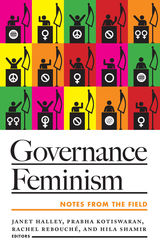
An interdisciplinary, multifaceted look at feminist engagements with governance across the global North and global South
Governance Feminism: Notes from the Field brings together nineteen chapters from leading feminist scholars and activists to critically describe and assess contemporary feminist engagements with state and state-like power. Gathering examples from North America, South America, Europe, Asia, and the Middle East, it complements and expands on the companion volume Governance Feminism: An Introduction. Its chapters argue that governance feminism (GF) is institutionally diverse and globally distributed—emerging from traditional sites of state power as well as from various forms of governance and operating at the grassroots level, in the private sector, in civil society, and in international relations.
The book begins by confronting the key role that crime and punishment play in GFeminist projects. Here, contributors explore the ideological and political conditions under which this branch of GF became so robust and rethink the carceral turn. Other chapters speak to another face of GFeminism: feminists finding, in mundane and seemingly unspectacular bureaucratic tools, leverage to bring about change in policy and governance practices. Several contributions highlight the political, strategic, and ethical challenges that feminists and LGBT activists must negotiate to play on the governmental field. The book concludes with a focus on feminist interventions in postcolonial legal and political orders, looking at new policy spaces opened up by conflict, postconflict, and occupation.
Providing a clear, cross-cutting, critical lens through which to map developments in feminist governance around the world, Governance Feminism: Notes from the Field makes sense of the costs and benefits of current feminist realities to reimagine feminist futures.
Contributors: Libby Adler, Northeastern U; Aziza Ahmed, Northeastern U; Elizabeth Bernstein, Barnard College; Amy J. Cohen, Ohio State U; Karen Engle, U of Texas at Austin; Jacob Gersen, Harvard U; Leigh Goodmark, U of Maryland; Aeyal Gross, Tel Aviv U; Aya Gruber, U of Colorado, Boulder; Janet Halley, Harvard U; Rema Hammami, Birzeit U, Palestine; Vanja Hamzić, U of London; Isabel Cristina Jaramillo-Sierra; Prabha Kotiswaran, King’s College London; Maleiha Malik, King’s College London; Vasuki Nesiah, New York U; Dianne Otto, Melbourne Law School; Helen Reece; Darren Rosenblum, Pace U; Jeannie Suk Gersen, Harvard U; Mariana Valverde, U of Toronto.
p.MsoNormal, li.MsoNormal, div.MsoNormal { margin: 0in 0in 0.0001pt; font-size: 12pt; font-family: "Times New Roman"; }div.Section1 { page: Section1; }
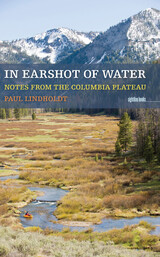
Whether the subject is the plants that grow there, the animals that live there, the rivers that run there, or the people he has known there, Paul Lindholdt’s In Earshot of Water illuminates the Pacific Northwest in vivid detail. Lindholdt writes with the precision of a naturalist, the critical eye of an ecologist, the affection of an apologist, and the self-revelation and self-awareness of a personal essayist in the manner of Annie Dillard, Loren Eiseley, Derrick Jensen, John McPhee, Robert Michael Pyle, and Kathleen Dean Moore.
Exploring both the literal and literary sense of place, with particular emphasis on environmental issues and politics in the far Northwest, Lindholdt weds passages from the journals of Lewis and Clark, the log of Captain James Cook, the novelized memoir of Theodore Winthrop, and Bureau of Reclamation records growing from the paintings that the agency commissioned to publicize its dams in the 1960s and 1970s, to tell ecological and personal histories of the region he knows and loves.
In Lindholdt’s beautiful prose, America’s environmental legacies—those inherited from his blood relatives as well as those from the influences of mass culture—and illuminations of the hazards of neglecting nature’s warning signs blur and merge and reemerge in new forms. Themes of fathers and sons layer the book, as well—the narrator as father and as son—interwoven with a call to responsible social activism with appeals to reason and emotion. Like water itself, In Earshot of Water cascades across boundaries and blends genres, at once learned and literary.
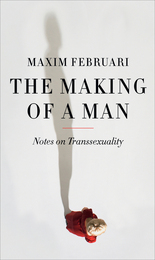
Februari contemplates the many questions that sexual transitions entail: the clinical effects of testosterone, the alteration of sexual organs, and its effects on sexual intimacy; how transsexuality figures in the law; and how it challenges the way we talk about sex and gender, such as the seemingly minor—but crucially important—difference between the terms “transsexual” and “transgender.” He analyzes our impressions of effeminate men and butch women, separating apparent acceptance from actual prejudice, and critically examines the curious requirement in many countries that one must demonstrate a psychological disturbance—a “gender identity disorder”—in order to be granted sex change therapies. From there he explores the seemingly endless minutiae changing genders or sex effect, from the little box with an M or an F on passports to the shockingly sudden way testosterone can adjust physical features.
With his characteristically clear voice combined with intimate—sometimes moving, sometimes funny—ruminations, Februari wakes readers up to all the ways, big and small, our world is structured by sex and gender.
When William James died in 1910 he left a large body of manuscript material that has never appeared in print. Much of it is of biographical interest only, but the largest part is concerned with James's work. The present volume, the first of two that will bring The Works of William James to completion, includes the manuscripts devoted to work in progress on philosophical and psychological subjects. The last volume will bring together the manuscripts relating to James's public lectures and teaching.
The most important of these manuscripts are those of the years 1903 and 1904 called "The Many and the One." This was material for the book that James hoped would be the full technical exposition of his philosophy of radical empiricism. It contains discussions of problems and concepts that are not found in his published work. Closely related to this are his responses to the so-called Miller-Bode objections, which charged that his philosophy of pure experience could not solve the problem of the many and the one or the question "How can two minds know the same thing?" James's notes record his offers to work his way out of the impasse, which eventually led to his formulation of radical empiricism and his total rejection of the mind-body dualism that had dominated Western philosophy since Descartes.
The manuscripts in the rest of the volume contain James's reflections over a period of forty years in the form of drafts, memoranda, and notebook entries. The diverse subjects are arranged under the headings of Philosophy, Psychology, Aesthetics, Ethics, and Religion. Of special interest are the early notes in which James began to work out his own philosophical point of view.
Urban Los Angeles is the setting in which Elaine Miller has collected her narratives from Mexican-Americans. The Mexican folk tradition, varied and richly expressive of the inner life not only of a people but also of the individual as each lives it and personalizes it, is abundantly present in the United States. Since it is in the urban centers that most Mexican-Americans have lived, this collection represents an important contribution to the study of that tradition and to the study of the changes urban life effects on traditional folklore.
The collection includes sixty-two legendary narratives and twenty traditional tales. The legendary narratives deal with the virgins and saints as well as with such familiar characters as the vanishing hitchhiker, the headless horseman, and the llorona. Familiar characters appear in the traditional tales—Juan del Oso, Blancaflor, Pedro de Ordimalas, and others. Elaine Miller concludes that the traditional tales are dying out in the city because tale telling itself is not suited to the fast pace of modern urban life, and the situations and characters in the tales are not perceived by the people to be meaningfully related to the everyday challenges and concerns of that life. The legendary tales survive longer in an urban setting because, although containing fantastic elements, they are related to the beliefs and hopes of the narrator—even in the city one may be led to buried treasure on some dark night by a mysterious woman.
The penchant of the informants for the fantastic in many of their tales often reflects their hopes and fears, such as their dreams of suddenly acquiring wealth or their fears of being haunted by the dead. Miller closely observes the teller's relation to the stories—to the duendes, the ánimas, Death, God, the devil—and she notes the tension on the part of the informant in his relation to their religion.
The material is documented according to several standard tale and motif indices and is placed within the context of the larger body of Hispanic folk tradition by the citation of parallel versions throughout the Hispanic world. The tales, transcribed from taped interviews, are presented in colloquial Spanish accompanied by summaries in English.
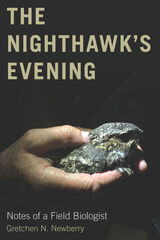
This acrobatic, night-flying bird nests on rooftops and flocks in the thousands as it migrates from Alaska to Argentina and back every year. Nighthawks are strange animals, reptiles with feathers, sleepy during the day, but quick, agile, and especially adept at survival. They have the ability to withstand extreme temperatures and adapt to many habitats, but they are struggling for survival in the Anthropocene.
Newberry’s story focuses on the bird itself—its complex conservation status and cultural significance—and the larger, often hidden world of nocturnal animals. Along the way, she gives readers insight into the daily life of a scientist, especially one who works primarily at night. The Nighthawk’s Evening uses one scientist and one species to explore the challenges, disappointments, and successes of scientific research and conservation efforts. An accessible work of science, it will appeal to birders, students, wildlife managers, and anyone who is fascinated by urban wildlife.
In No Place Like Home, Linda Hasselstrom ponders the changing nature of community in the modern West, where old family ranches are being turned into subdivisions and historic towns are evolving into mean, congested cities. Her scrutiny, like her life, moves back and forth between her ranch on the South Dakota prairie and her house in an old neighborhood at the edge of downtown Cheyenne, Wyoming. The vignettes that form the foundation of her consideration are drawn from the communities she has known during her life in the West, reflecting on how they have grown, thrived, failed, and changed, and highlighting the people and decisions that shaped them. Hasselstrom’s ruminations are both intensely personal and universal. She laments the disappearance of the old prairie ranches and the rural sense of community and mutual responsibility that sustained them, but she also discovers that a spirit of community can be found in unlikely places and among unlikely people. The book defines her idea of how a true community should work, and the kind of place she wants to live in. Her voice is unique and honest, both compassionate and cranky, full of love for the harsh, hauntingly beautiful short-grass prairie that is her home, and rich in understanding of the intricacies of the natural world around her and the infinite potentials of human commitment, hope, and greed. For anyone curious about the state of the contemporary West, Hasselstrom offers a report from the front, where nature and human aspirations are often at odds, and where the concepts of community and mutual responsibility are being redefined.
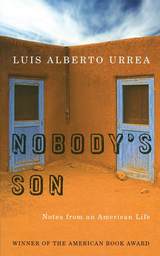
. . . I'm not saying it's our story. I'm not saying it isn't. It might be yours. "How do you tell a story that cannot be told?" writes Luis Alberto Urrea in this potent memoir of a childhood divided. Born in Tijuana to a Mexican father and an Anglo mother from Staten Island, Urrea moved to San Diego when he was three. His childhood was a mix of opposites, a clash of cultures and languages. In prose that seethes with energy and crackles with dark humor, Urrea tells a story that is both troubling and wildly entertaining. Urrea endured violence and fear in the black and Mexican barrio of his youth. But the true battlefield was inside his home, where his parents waged daily war over their son's ethnicity. "You are not a Mexican!" his mother once screamed at him. "Why can't you be called Louis instead of Luis?" He suffers disease and abuse and he learns brutal lessons about machismo. But there are gentler moments as well: a simple interlude with his father, sitting on the back of a bakery truck; witnessing the ultimate gesture of tenderness between the godparents who taught him the magical power of love. "I am nobody's son. I am everybody's brother," writes Urrea. His story is unique, but it is not unlike thousands of other stories being played out across the United States, stories of other Americans who have waged war—both in the political arena and in their own homes—to claim their own personal and cultural identity. It is a story of what it means to belong to a nation that is sometimes painfully multicultural, where even the language both separates and unites us. Brutally honest and deeply moving, Nobody's Son is a testament to the borders that divide us all.
This third edition of Jon Ericson’s Notes and Comments on Robert’s Rules updates all references and page numbers to the tenth edition of Robert’s Rules of Order Newly Revised, published in 2000. Ericson’s guide to the authoritative parliamentary resource clarifies many of the concepts and rules that intimidate or confuse the members of organizations who use it, stressing that they have a choice in—and may, in fact, modify—the rules by which they are bound.
Ericson begins with the Order of Precedence, which he defines as the key concept in understanding and utilizing parliamentary procedure. He then uses a question-and-answer format in which a logical progression of essential parliamentary questions is explicitly answered, with a rationale for each rule. Throughout, he provides specific page references to Robert’s Rules. Through these three elements, he makes classic doctrine intelligible and workable, leading the reader step-by-step through the rules and their applications and, in the process, encouraging people to feel more positive about parliamentary procedure and their ability to use it.
“Far too many members, armed—or more accurately disarmed—with a misconception of parliamentary procedure, choose to spend a lifetime wondering what is going on and lamenting or blaming others when things fail to go their way,” writes Ericson in the Introduction. “Understanding parliamentary procedure also allows a person to have more fun—not just the fun of socializing outside the business meeting—but the fun of performing in the public arena.”
A popular, concise, and clear handbook, Notes and Comments on Robert’s Rules emphasizes the simple machinery of the system, relates its concepts to the procedures most commonly used in meetings and conventions, and encourages members to obtain and study, rather than shy away from Robert’s Rules of Order Newly Revised. This new edition also expands the number of question-and-answer sections and surveys the research in and commentary on the field since 1991. A laminated, removable card featuring simplified charts of parliamentary motions serves as an additional resource and is included with the volume.
While Robert’s Rules of Order has long been the standard guide to parliamentary procedure, many readers find the manual too daunting and complex to utilize its full potential. In Notes and Comments on "Robert’s Rules", fourth edition, authors Jim Slaughter, Gaut Ragsdale, and Jon Ericson skillfully guide users through the intricate pathways of the latest edition of Robert’s Rules, transforming the often intimidating parliamentary guidebook into an easy-to-use tool. Notes and Comments explains in simple terms the individual motions found in Robert’s Rules, presents extensive tips and suggestions regarding possible modifications to Robert’s practices; allows readers to witness the vigorous debate about the rules within the notes section; and compares major parliamentary authorities. A reader-friendly question-and-answer format provides immediate solutions to the most common quandaries that arise during the meeting process, and a card featuring simplified charts of parliamentary motions is available for the user’s quick reference.
An essential volume for members of nonprofits, voluntary associations, unions, condo and homeowner associations, student organizations, and government bodies, Notes and Comments on “Robert’s Rules” makes parliamentary procedure accessible to meeting participants as never before. Each section of this authoritative, straightforward guide is designed to empower participants with the confidence and knowledge necessary to navigate any meeting, large or small, with the utmost efficiency.
2013 Winner of the Phifer Award from the National Communication Association
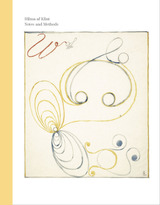
Hilma af Klint studied at the Royal Swedish Academy in Stockholm where she was part of the first generation of female students. Up until the beginning of the century, she painted mainly landscapes and detailed botanical studies. Her work from this period was that of a young artist of her time who meticulously observed the world around her. But, like many of her contemporaries, af Klint was also interested in the invisible relationships that shape our world, believing strongly in a spiritual dimension. She joined the Theosophical Society, and, with four fellow female members who together called themselves “The Five,” began to study mediumship. Between 1906 and 1915, purportedly guided by a higher power, af Klint created 193 individual works that, in both scale and scope of imagery, are like no other art created at that time. Botanically inspired images and mystical symbols, diagrams, words, and geometric series, all form part of af Klint’s abstract language. These abstract techniques would not be seen again until years later.
Notes and Methods presents facsimile reproductions of a wide array of af Klint’s early notebooks accompanied by the first English translation of af Klint’s extensive writings. It contains the rarely seen “Blue Notebooks,” hand-painted and annotated catalogues af Klint created of her most famous series “Paintings for the Temple,” and a dictionary compiled by af Klint of the words and letters found in her work. This extraordinary collection is edited by and copublished with Christine Burgin, and features an introduction by Iris Müller-Westermann. It will stand as an important and timely contribution to the legacy of Hilma af Klint.

In this compelling and often startling account, Robert Werman chronicles his experiences as an Israeli citizen living in Jerusalem during the Gulf War. On January 19, 1991, he began writing daily reports on his computer, sending them to friends and a few computer networks that dealt with Jewish culture and the politics of the Middle East. To Werman’s surprise, he received numerous electronic responses to his entries, sometimes as many as one hundred a day. As a result, his "war diary" was born, a diary that he continued until February 22, 1991, when, near the end of the war, he was hospitalized for a heart condition.
In the early entries, Werman notes each Iraqi Scud attack, describing in detail the sealed room in which he and his family sought shelter during the expected chemical attacks. "Sitting in the antigas room, members of the family try to put on a brave face, make jokes. . . . Only the dog, a rather stately collie, sits quietly and does not appear at all excited. We pity the dog, for he is the only one without a mask. But then we remember that—without a mask—he is our canary in the coal mine." Futilely, Werman seeks patterns to the attacks, attempting to predict when they might occur. He writes of the nation’s response to war: joggers running with their gas masks in hand, schools temporarily disbanded while children meet in small groups to continue their education, city streets emptied by six o'clock each evening as people wait in their homes for the sound of the sirens that herald an assault. He discusses the varying opinions concerning retaliation against Iraq, the fluctuating morale of the country, the damage produced by Iraqi missiles, and the widespread speculation of Israeli citizens concerning their country’s survival. Yet Werman’s daily reports, digressions, and explanations not only include his observations and impressions; they also poignantly reveal his own personal story and political, religious, and philosophical views.
Werman’s journal gives a singular view of a country under siege, recounting in detail the pressures, conflicts, and dangers existing during a war. It is a distinctive book, a fascinating personal and political account of a man, his family, their nation, and a war.

Through portraiture, oral history, writing, and family archives, the contributors explore childhood, geography, immigration, education, and family relationships, recovering misunderstood or overlooked moments. In the process of making this work, the group found old family photos, returned to sites of significance, and made new friendships, discovering the transformational potential of this kind of storytelling to reframe hardship, loss, and uncertainty. In the words of one contributor, “I felt like this process was a necessary step that allowed me to acknowledge and comprehend what I was experiencing at the time. It allowed me to create a more coherent understanding that I am who I am because of my past and because I was the one who had control of molding my own, better path.” Each chapter, encompassing one person’s story, is strikingly unique in its vision and approach.
Notes of a Provincial Wildfowler is filled with precise descriptions of bird behavior, observations of their life cycles, and lyrical discourses on the habitats of the Russian steppe. Aksakov's nostalgic fondness for his homeland permeates his Notes, and his passion for the habits of his subjects provides a stark contrast with his enthusiasm for the shooting--and eating--of his quarry.
James Madison’s record of the Constitutional Convention traces day by day the debates held from May to September 1787 and presents the only complete picture we have of the strategy, interests, and ideas of the Founders at the convention itself.
In this indispensable primary document, Madison not only provides detailed insights into one of the great events of US history, but clearly sets forth his own position on such issues as the balance of powers, the separation of functions, and the general role of the federal government. More than in Federalist, which shows the carefully formalized conclusions of his political thought, we see in Debates his philosophy in action, evolving in daily tension with the viewpoints of the other delegates. It is for this reason that Debates is invaluable for placing in perspective the incomplete records of such well-known figures as Rufus King and Alexander Hamilton, and the constitutional plans of such men as Edmund Randolph and Charles Pinckney.
Madison’s contemporaries regarded him as the chief statesmen at the Philadelphia convention; in addition to this, his record outranks in importance all the other writings of the founders of the American republic. He is thus identified, as no other man is, with the making of the Constitution and the correct interpretation of the intentions of its drafters.
New to this edition of Debates is a thorough, scholarly index of some two thousand entries.
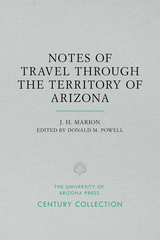
“A valuable and well written document, now made available to the general public and enhanced by the addition of an introduction and notes by Mr. Powell. . . . the publication will be of value to serious students of Arizona history.”—Journal of Arizona History
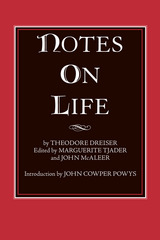
"It has long been known that Dreiser devoted much effort during the final two decades of his lfe to the preparation of a major philosophical work which remained unfinished at his death....The best evidence of Dreiser's later thought would appear to be [t]his treatise, and it is appropriate that Marguerite Tjader and John J. McAleer--the two Dreiserians most sympathetic to the mystical religiosity of the later Dreiser--should make it available in published form." --American Literary Realism

Notes on Nowhere was first published in 1997. Minnesota Archive Editions uses digital technology to make long-unavailable books once again accessible, and are published unaltered from the original University of Minnesota Press editions.
The term utopia implies both "good place" and "nowhere." Since Sir Thomas More wrote Utopia in 1516, debates about utopian models of society have sought to understand the implications of these somewhat contradictory definitions. In Notes on Nowhere, author Jennifer Burwell uses a cross section of contemporary feminist science fiction to examine the political and literary meaning of utopian writing and utopian thought.
Burwell provides close readings of the science fiction novels of five feminist writers-Marge Piercy, Sally Gearhart, Joanna Russ, Octavia Butler, and Monique Wittig-and poses questions central to utopian writing: Do these texts promote a tradition in which narratives of the ideal society have been used to hide rather than reveal violence, oppression, and social divisions? Can a feminist critical utopia offer a departure from this tradition by using utopian narratives to expose contradiction and struggle as central aspects of the utopian impulse? What implications do these questions have for those who wish to retain the utopian impulse for emancipatory political uses?
As one way of answering these questions, Burwell compares two "figures" that inform utopian writing and social theory. The first is the traditional abstract "revolutionary" subject who contradicts existing conditions and who points us to the ideal body politic. The second, "resistant," subject is partial, concrete, and produced by conditions rather than operating outside of them. In analyzing contemporary changes in the subject's relationship to social space, Burwell draws from and revises "standpoint approaches" that tie visions of social transformation to a group's position within existing conditions.
By exploring the dilemmas, antagonisms, and resolutions within the critical literary feminist utopia, Burwell creates connections to a similar set of problems and resolutions characterizing "nonliterary" discourses of social transformation such as feminism, gay and lesbian studies, and Marxism. Notes on Nowhere makes an original, significant, and persuasive contribution to our understanding of the political and literary dimensions of the utopian impulse in literature and social theory.
Jennifer Burwell teaches in the Department of English at Wesleyan University in Connecticut.
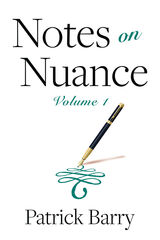
To succeed in law, business, education, government, health care, and many other fields, it is becoming increasingly important to distinguish yourself as a savvy communicator. Social media has only accelerated the ways in which we all must learn to use our words to connect, compete, and create. There are features of the English language, however, that many of us haven’t taken full advantage of yet. Notes on Nuance is designed to help change that.
Drawing on a diverse collection of authors—from novelists to physicists, from ancient Greek historians to modern-day CEOs—it reveals the hidden mechanics that skilled writers use to add style and sophistication to their sentences and slogans. It’s the perfect resource for people who are looking to do more with their written words.
This book includes materials from a popular course called “Good with Words: Writing and Editing” that Professor Patrick Barry created at both the University of Michigan Law School and the University of Chicago Law School. An online version of that course is now available through the educational platform Coursera.
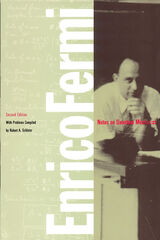
At the close of each lecture, Fermi created a single problem for his students. These challenging exercises were not included in Fermi's notes but were preserved in the notes of his students. This second edition includes a set of these assigned problems as compiled by one of his former students, Robert A. Schluter.
Enrico Fermi was awarded the Nobel Prize for Physics in 1938.
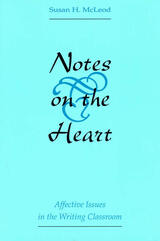
It has long been recognized that affect (that is, the noncognitive aspect of mental activity) plays a large role in writing and in learning to write. According to Susan H. McLeod, however, the model that has been most used for empirical research on the writing process is based on cognitive psychology and does not take into account affective phenomena. Nor does the social constructionist view of the writing process acknowledge the affective realm except in a very general way. To understand the complete picture, McLeod insists, we need to explore how cognitive, affective, and social elements interact as people write.
In this book, McLeod follows a group of students through a semester of writing assignments, tracking the students’ progress and examining the affective elements relevant to their writing. To facilitate future discussion of these phenomena, McLeod also provides suggested definitions for terms in the affective domain.
In a very real sense, this book is the result of a collaboration of three Susans: Susan McLeod, who researched and wrote the book; Sue Hallett, an instructor in Washington State University’s composition program whose classes McLeod observed and who helped provide much of the data; and Susan Parker, a graduate student who observed Hallett’s class and who ran a tutorial connected to that class. To provide a narrative structure, McLeod and her two collaborators have constructed a simulated semester, conflating the year and a half of the study into one semester and creating a class that is a composite drawn from seven classrooms over three semesters.
Although philosophers have had much to say about the affective domain, Notes on the Heart is based for the most part on research from the social sciences. Discussions of pedagogy, while meant to have practical value, are suggestive rather than prescriptive. The goal is to help teachers see their practice in new way.
Teachers will be particularly interested in McLeod’s discussion of teacher affect/effect. This section examines both the issue of the "Pygmalion effect" (students becoming better because the teacher believes they are) and perhaps the more common opposite, the "golem effect" (students becoming less capable because their teachers view them that way).
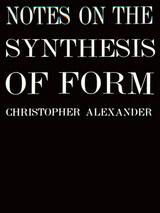
“These notes are about the process of design: the process of inventing things which display new physical order, organization, form, in response to function.” This book, opening with these words, presents an entirely new theory of the process of design.
In the first part of the book, Christopher Alexander discusses the process by which a form is adapted to the context of human needs and demands that has called it into being. He shows that such an adaptive process will be successful only if it proceeds piecemeal instead of all at once. It is for this reason that forms from traditional un-self-conscious cultures, molded not by designers but by the slow pattern of changes within tradition, are so beautifully organized and adapted. When the designer, in our own self-conscious culture, is called on to create a form that is adapted to its context he is unsuccessful, because the preconceived categories out of which he builds his picture of the problem do not correspond to the inherent components of the problem, and therefore lead only to the arbitrariness, willfulness, and lack of understanding which plague the design of modern buildings and modern cities.
In the second part, Mr. Alexander presents a method by which the designer may bring his full creative imagination into play, and yet avoid the traps of irrelevant preconception. He shows that, whenever a problem is stated, it is possible to ignore existing concepts and to create new concepts, out of the structure of the problem itself, which do correspond correctly to what he calls the subsystems of the adaptive process. By treating each of these subsystems as a separate subproblem, the designer can translate the new concepts into form. The form, because of the process, will be well-adapted to its context, non-arbitrary, and correct.
The mathematics underlying this method, based mainly on set theory, is fully developed in a long appendix. Another appendix demonstrates the application of the method to the design of an Indian village.


Notes on Vermin is an atlas of the literary vermin that appear in modern and contemporary literature, from Franz Kafka’s gigantic insect to Richard Wright’s city rats to Namwali Serpell’s storytelling mosquitoes. As parasites, trespassers, and collectives, vermin animals prove useful to writers who seek to represent life in the margins of power. Drawing on psychoanalysis, cultural studies, eco-Marxism, and biopolitics, this book explores four uses for literary vermin: as figures for the repressed thought, the uncommitted fugitive, the freeloading parasite, and the surplus life. In a series of short, accessible, interlinked essays, Notes on Vermin explores what animal pests can show us about our cultures, our environments, and ourselves.
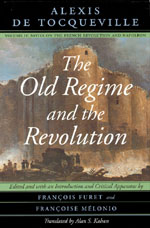
With his monumental work The Old Regime and the Revolution, Alexis de Tocqueville (1805–59)—best known for his classic Democracy in America—envisioned a multivolume philosophical study of the origins of modern France that would examine the implications of French history on the nature and development of democratic society. Volume I, which covered the eighteenth-century background to the Revolution, was published to great acclaim in 1856. On the continuation of this project, he wrote: "When this Revolution has finished its work, [this volume] will show what that work really was, and what the new society which has come from that violent labor is, what the Revolution has taken away and what it has preserved from that old regime against which it was directed."
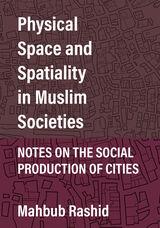
Mahbub Rashid embarks on a fascinating journey through urban space in all of its physical and social aspects, using the theories of Foucault, Bourdieu, Lefebvre, and others to explore how consumer capitalism, colonialism, and power disparity consciously shape cities. Using two Muslim cities as case studies, Algiers (Ottoman/French) and Zanzibar (Ottoman/British), Rashid shows how Western perceptions can only view Muslim cities through the lens of colonization—a lens that distorts both physical and social space. Is it possible, he asks, to find a useable urban past in a timeline broken by colonization? He concludes that political economy may be less relevant in premodern cities, that local variation is central to the understanding of power, that cities engage more actively in social reproduction than in production, that the manipulation of space is the exercise of power, that all urban space is a conscious construct and is therefore not inevitable, and that consumer capitalism is taking over everyday life. Ultimately, we reconstruct a present from a fragmented past through local struggles against the homogenizing power of abstract space.
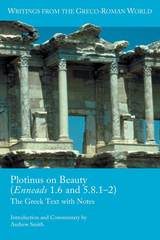
A Greek edition of Plotinus's philosophical works with notes for students of Classical Greek
Plotinus, the father of Neoplatonism, composed the treatise On Beauty (Ennead 1.6) as the first of a series of philosophical essays devoted to interpreting and elucidating Platonic ideas. This treatise is one of the most accessible and influential of Plotinus's works, and it provides a stimulating entrée into the many facets of his philosophical activity. In this volume Andrew Smith first introduces readers to the Greek of Plotinus and to his philosophy in general, then provides the Greek text of and English notes on Plotinus's systematic argument and engaging exhortation to foster the inner self. The volume ends with the text of and notes on Plotinus's complementary statements in On Intelligible Beauty (Ennead 5.8.1–2).
Features:
- An overview of Plotinus's life
- Background discussion of Plotinus's thought and outline of his philosophical system
- Analysis of the relationship of Plotinus's thought to Plato’s

At the heart of the book is a coming-of-age story about Goodwin’s relationship with his older brother Randy—a heavy drinker, chain smoker, and expert sawyer. Gruff but kind, Randy tutors Raymond in the ways of the blue-collar world even as he struggles with the demons that mask his own melancholy.
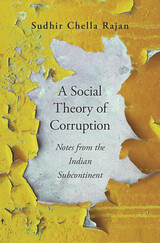
A social theory of grand corruption from antiquity to the twenty-first century.
In contemporary policy discourse, the notion of corruption is highly constricted, understood just as the pursuit of private gain while fulfilling a public duty. Its paradigmatic manifestations are bribery and extortion, placing the onus on individuals, typically bureaucrats. Sudhir Chella Rajan argues that this understanding ignores the true depths of corruption, which is properly seen as a foundation of social structures. Not just bribes but also caste, gender relations, and the reproduction of class are forms of corruption.
Using South Asia as a case study, Rajan argues that syndromes of corruption can be identified by paying attention to social orders and the elites they support. From the breakup of the Harappan civilization in the second millennium BCE to the anticolonial movement in the late nineteenth and early twentieth centuries, elites and their descendants made off with substantial material and symbolic gains for hundreds of years before their schemes unraveled.
Rajan makes clear that this grander form of corruption is not limited to India or the annals of global history. Societal corruption is endemic, as tax cheats and complicit bankers squirrel away public money in offshore accounts, corporate titans buy political influence, and the rich ensure that their children live lavishly no matter how little they contribute. These elites use their privileged access to power to fix the rules of the game—legal structures and social norms—benefiting themselves, even while most ordinary people remain faithful to the rubrics of everyday life.



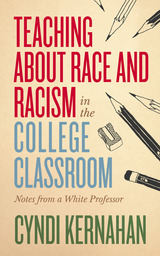
Teaching about race and racism can be a difficult business. Students and instructors alike often struggle with strong emotions, and many people have robust preexisting beliefs about race. At the same time, this is a moment that demands a clear understanding of racism. It is important for students to learn how we got here and how racism is more than just individual acts of meanness. Students also need to understand that colorblindness is not an effective anti-racism strategy.
In this book, Cyndi Kernahan argues that you can be honest and unflinching in your teaching about racism while also providing a compassionate learning environment that allows for mistakes and avoids shaming students. She provides evidence for how learning works with respect to race and racism along with practical teaching strategies rooted in that evidence to help instructors feel more confident. She also differentiates between how white students and students of color are likely to experience the classroom, helping instructors provide a more effective learning experience for all students.

This Book Is Free and Yours to Keep presents a captivating collection of letters and artwork by people in prison that highlights the crucial work done by the Appalachian Prison Book Project (APBP), a nonprofit that provides books to incarcerated people in West Virginia, Virginia, Tennessee, Kentucky, Ohio, and Maryland. Through the words of people directly impacted by the criminal punishment system, the collection provides uncommon insight into reading practices and everyday life in prisons and jails while being an inspiration for prison book projects, prison reform, and abolition.
Simultaneously communicating the vital importance of access to books and education, and conveying the power of community, the letters sent to APBP by incarcerated people spark conversations about race, poverty, and incarceration and shed light on the movement for accountability for state violence. This Book Is Free and Yours to Keep elucidates the violence and neglect perpetuated by carceral systems and offers a way forward based on solidarity and collaboration.
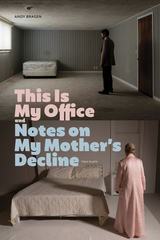
These plays by Andy Bragen examine the intimacies and shadows that exist between parents and children. In This Is My Office, a guided tour through an empty office becomes the unexpected portal to a forgotten New York and a father’s legacy. This play brings you face-to-face with a narrator who finds his way through doubt, soul-sickness, and doughnut cravings by telling you a story. Not the one he meant to tell, but a richer one about family, redemption, and love.
The autobiographical Notes on My Mother’s Decline evokes the final days of a woman’s life. Late at night, while his baby daughter sleeps, a son takes notes on his mother’s daily life and scenes from their complicated relationship. He is shaping a play, as well as a perspective. Two blocks away, his mother naps, smokes, reads, and drinks coffee. She is shaping her existence within encroaching confines. Bragen plumbs silences and one-sided conversations to ask how we come to know one another as parents and as children. How do we care for those we love, and what does it take to live with—and without—them?
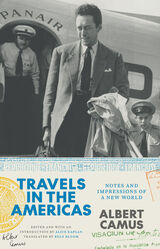
In March 1946, the young Albert Camus crossed from Le Havre to New York. Though he was virtually unknown to American audiences at the time, all that was about to change—The Stranger, his first book translated into English, would soon make him a literary star. By 1949, when he set out on a tour of South America, Camus was an international celebrity. Camus’s journals offer an intimate glimpse into his daily life during these eventful years and showcase his thinking at its most personal—a form of observational writing that the French call choses vues (things seen).
Camus’s journals from these travels record his impressions, frustrations, joys, and longings. Here are his unguarded first impressions of his surroundings and his encounters with publishers, critics, and members of the New York intelligentsia. Long unavailable in English, the journals have now been expertly retranslated by Ryan Bloom, with a new introduction by Alice Kaplan. Bloom’s translation captures the informal, sketch-like quality of Camus’s observations—by turns ironic, bitter, cutting, and melancholy—and the quick notes he must have taken after exhausting days of travel and lecturing. Bloom and Kaplan’s notes and annotations allow readers to walk beside the existentialist thinker as he experiences changes in his own life and the world around him, all in his inimitable style.
READERS
Browse our collection.
PUBLISHERS
See BiblioVault's publisher services.
STUDENT SERVICES
Files for college accessibility offices.
RECENTLY PUBLISHED





UChicago Accessibility Resources
home | accessibility | search | about | contact us
BiblioVault ® 2001 - 2025
The University of Chicago Press