
 A SCHOLARLY BOOK REPOSITORY
98 start with A start with A
Hahnel explains the origins of the financial crisis of 2008, the ensuing “Great Recession,” and why government policies in Europe and North America over the past six years have failed to improve matters for the majority of their citizens. It also helps explain the economic causes of climate change and what will be required if it is to be resolved effectively and fairly. The ABCs of Political Economy is perfect for anyone who wants to equip themselves with the ability to grasp as well as challenge existing preconceptions of political economy.

Messner’s analysis is based on extensive reviews of the literature on early historic, prehistoric native plant use, and the collation of all available archaeobotanical data, a review of which also guided the author in selecting contemporary botanical specimens to identify and in interpreting starch residues recovered from ancient plant-processing technologies. The evidence presented here sheds light on many local ecological and cultural developments as ancient people shifted their subsistence focus from estuarine to riverine settings. These archaeobotanical datasets, Messner argues, illuminate both the conscious and unintentional translocal movement of ideas and ecologies throughout the Eastern Woodlands.

Amid the policy gridlock that characterizes most environmental debates, a new conservation movement has emerged. Known as “collaborative conservation,” it emphasizes local participation, sustainability, and inclusion of the disempowered, and focuses on voluntary compliance and consent rather than legal and regulatory enforcement. Encompassing a wide range of local partnerships and initiatives, it is changing the face of resource management throughout the western United States.
Across the Great Divide presents a thoughtful exploration of this new movement, bringing together writing, reporting, and analysis of collaborative conservation from those directly involved in developing and implementing the approach. Contributors examine:
- the failure of traditional policy approaches
- recent economic and demographic changes that serve as a backdrop for the emergence of the movement
- the merits of, and drawbacks to, collaborative decision-making
- the challenges involved with integrating diverse voices and bringing all sectors of society into the movement
In addition, the book offers in-depth stories of eight noteworthy collaborative initiatives -- including the Quincy Library Group, Montana's Clark Fork River, the Applegate Partnership, and the Malpai Borderlands -- that explore how different groups have organized and acted to implement their goals.
Among the contributors are Ed Marston, George Cameron Coggins, David Getches, Andy Stahl, Maria Varela, Luther Propst, Shirley Solomon, William Riebsame, Cassandra Moseley, Lynn Jungwirth, and others. Across the Great Divide is an important work for anyone involved with collaborative conservation or the larger environmental movement, and for all those who care about the future of resource management in the West.
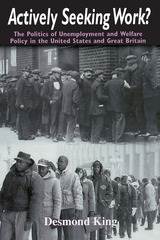
The goal of work-welfare policy in both countries has been to provide financial aid, training, and placement services for the unemployed. In order to muster support for these programs, however, work-welfare programs had to incorporate liberal requirements that they not interfere with private market forces, and that they prevent the "undeserving" from obtaining benefits. For King, the attempt to integrate these incompatible functions is the defining feature of British and American policies as well as the cause of their failure.

Ancestral Puebloans farmed and grazed within the limits of nature. Early settlers adjusted their cultivation methods through trial and error, while later agriculturists relied on research and technical advice from the Colorado Agricultural College. As part of wartime mobilization, the federal government prompted farmers to efficiently increase yields. To meet the demand for food and fiber scientific and technical innovations led to the development of new plant cultivars and livestock breeds, advances in mechanization, and widespread use of synthetic amendments. Increasing concern over soil fertility and the loss of irrigation water to urbanization contributed to more changes. Despite, or perhaps because of, what we see today along the Front Range, Colorado may still have a chance to slow or even reverse its seemingly unrestrained growth, creating a more vibrant, earth-friendly society in which agriculture plays an increasingly significant part. Scientific discoveries and innovations in regenerative cultivation are clearing the path to a more sustainable future.
Adapting to the Land adds an ecological and horticultural perspective to historical interpretations of recurring agricultural issues in the state and tracks the concept of stewardship, suggesting that spiritual beliefs continue to contribute to debates over acceptable agricultural practices and the effects of urbanization upon the land. This book will be a key resource for students, scholars, and general readers interested in agricultural and Colorado history, sustainability, and rural sociology.

Winner of the 2020 Outstanding Book Award Presented by the Public and Nonprofit Section of the National Academy of Management
Winner of the 2019 Louis Brownlow Book Award from the National Academy of Public Administration
Through in-depth case studies of federal programs and controversial legislation, the authors show that administrative burdens are the nuts-and-bolts of policy design. Regarding controversial issues such as voter enfranchisement or abortion rights, lawmakers often use administrative burdens to limit access to rights or services they oppose. For instance, legislators have implemented administrative burdens such as complicated registration requirements and strict voter-identification laws to suppress turnout of African American voters. Similarly, the right to an abortion is legally protected, but many states require women seeking abortions to comply with burdens such as mandatory waiting periods, ultrasounds, and scripted counseling. As Herd and Moynihan demonstrate, administrative burdens often disproportionately affect the disadvantaged who lack the resources to deal with the financial and psychological costs of navigating these obstacles.
However, policymakers have sometimes reduced administrative burdens or shifted them away from citizens and onto the government. One example is Social Security, which early administrators of the program implemented in the 1930s with the goal of minimizing burdens for beneficiaries. As a result, the take-up rate is about 100 percent because the Social Security Administration keeps track of peoples’ earnings for them, automatically calculates benefits and eligibility, and simply requires an easy online enrollment or visiting one of 1,200 field offices. Making more programs and public services operate this efficiently, the authors argue, requires adoption of a nonpartisan, evidence-based metric for determining when and how to institute administrative burdens, with a bias toward reducing them. By ensuring that the public’s interaction with government is no more onerous than it need be, policymakers and administrators can reduce inequality, boost civic engagement, and build an efficient state that works for all citizens.

In Advancing Immigrant Rights in Houston, Els de Graauw and Shannon Gleeson recount how local and multi-level contexts shape the creation, contestation, and implementation of immigrant rights policies and practices in the city. They examine the development of a city immigrant affairs office, interactions between local law enforcement and federal immigration enforcement officials, local public-private partnerships around federal immigration benefits, and collaborations between labor, immigrant rights, faith, and business leaders to combat wage theft.
The case study of Houston provides a bellwether for how other U.S. cities will deal with their growing immigrant populations and underscores the importance of public-private collaborations to advance immigrant rights.
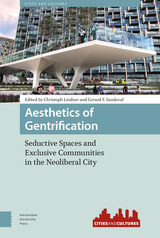
In this context, how do contemporary creative practices in art, architecture, and related fields help to produce or resist gentrification? What does gentrification look and feel like in specific sites and communities around the globe, and how is that appearance or feeling implicated in promoting stylized renewal to a privileged public? In what ways do the aesthetics of gentrification express contested conditions of migration and mobility? Addressing these questions, this book examines the relationship between aesthetics and gentrification in contemporary cities from multiple, comparative, global, and transnational perspectives.

The United States boasts scores of organizations that offer crucial representation for groups that are marginalized in national politics, from women to racial minorities to the poor. Here, in the first systematic study of these organizations, Dara Z. Strolovitch explores the challenges and opportunities they face in the new millennium, as waning legal discrimination coincides with increasing political and economic inequalities within the populations they represent.
Drawing on rich new data from a survey of 286 organizations and interviews with forty officials, Strolovitch finds that groups too often prioritize the interests of their most advantaged members: male rather than female racial minorities, for example, or affluent rather than poor women. But Strolovitch also finds that many organizations try to remedy this inequity, and she concludes by distilling their best practices into a set of principles that she calls affirmative advocacy—a form of representation that aims to overcome the entrenched but often subtle biases against people at the intersection of more than one marginalized group. Intelligently combining political theory with sophisticated empirical methods, Affirmative Advocacy will be required reading for students and scholars of American politics.

Should government try to remedy persistent racial and ethnic inequalities by establishing and enforcing quotas and other statistical goals? Here is one of the most incisive books ever written on this difficult issue. Nathan Glazer surveys the civil rights tradition in the United States; evaluates public policies in the areas of employment, education, and housing; and questions the judgment and wisdom of their underlying premises—their focus on group rights, rather than individual rights. Such policies, he argues, are ineffective, unnecessary, and politically destructive of harmonious relations among the races.
Updated with a long, new introduction by the author, Affirmative Discrimination will enable citizens as well as scholars to better understand and evaluate public policies for achieving social justice in a multiethnic society.
Shane Phillips believes that effectively tackling the housing crisis requires that cities support both tenant protections and housing abundance. He offers readers more than 50 policy recommendations, beginning with a set of principles and general recommendations that should apply to all housing policy. The remaining recommendations are organized by what he calls the Three S’s of Supply, Stability, and Subsidy. Phillips makes a moral and economic case for why each is essential and recommendations for making them work together.
There is no single solution to the housing crisis—it will require a comprehensive approach backed by strong, diverse coalitions. The Affordable City is an essential tool for professionals and advocates working to improve affordability and increase community resilience through local action.
Throughout the 1960s and 1970s, Ivory Coast was touted as an African miracle, a poster child for modernization and the ways that Western aid and multinational corporations would develop the continent. At the same time, Marxist scholars—most notably Samir Amin—described the capitalist activity in Ivory Coast as empty, unsustainable, and incapable of bringing real change to the lives of ordinary people. To some extent, Amin’s criticisms were validated when, in the 1980s, the Ivorian economy collapsed.
In African Miracle, African Mirage, Abou B. Bamba incorporates economics, political science, and history to craft a bold, transnational study of the development practices and intersecting colonial cultures that continue to shape Ivory Coast today. He considers French, American, and Ivorian development discourses in examining the roles of hydroelectric projects and the sugar, coffee, and cocoa industries in the country’s boom and bust. In so doing, he brings the agency of Ivorians themselves to the fore in a way not often seen in histories of development. Ultimately, he concludes that the “maldevelopment” evident by the mid-1970s had less to do with the Ivory Coast’s “insufficiently modern” citizens than with the conflicting missions of French and American interests within the context of an ever-globalizing world.


Disasters like earthquakes are known as focusing events—sudden calamities that cause both citizens and policymakers to pay more attention to a public problem and often to press for solutions. This book, the first comprehensive analysis of these dramatic events, explains how and why some public disasters change political agendas and, ultimately, public policies.
Thomas A. Birkland explores important successes and failures in the policy process by analyzing the political outcomes of four types of events: earthquakes, hurricanes, oil spills, and nuclear accidents. Using this empirical data to go beyond an intuitive understanding of focusing events, he presents a theory of where and when these events will gain attention and how they trigger political reactions. Birkland concludes that different types of disasters result in different kinds of agenda politics. Public outrage over the highly visible damage caused by the Exxon Valdez oil spill, for example, ended a fourteen-year logjam holding back Congressional legislation to regulate oil spill cleanups. On the other hand, the intangible effects of Three Mile Island had less concrete results in a political arena that was already highly polarized.
Integrating a variety of theories on the policy process, including agenda setting, policy communities, advocacy coalitions, the political aspects of the news media, and the use of symbols in political debate, Birkland illuminates the dynamics of event-driven policy activity. As the first extensive study of its kind, this book offers new insights into the policy process.

An Artforum Best Book of the Year
A Legal Theory Bookworm Book of the Year
“After Nature argues that we will deserve the future only because it will be the one we made. We will live, or die, by our mistakes.” —Christine Smallwood, Harper’s
Nature no longer exists apart from humanity. Henceforth, the world we will inhabit is the one we have made. Geologists have called this new planetary epoch the Anthropocene, the Age of Humans. The geological strata we are now creating record industrial emissions, industrial-scale crop pollens, and the disappearance of species driven to extinction. Climate change is planetary engineering without design. These facts of the Anthropocene are scientific, but its shape and meaning are questions for politics—a politics that does not yet exist. After Nature develops a politics for this post-natural world.
“Dazzling…Purdy hopes that climate change might spur yet another change in how we think about the natural world, but he insists that such a shift will be inescapably political…For a relatively slim volume, this book distills an incredible amount of scholarship—about Americans’ changing attitudes toward the natural world, and about how those attitudes might change in the future.”
—Ross Andersen, The Atlantic
A Foreign Affairs Best Book of the Year
“An intellectual excursion of a kind rarely offered by modern economics.”
—Foreign Affairs
Thomas Piketty’s Capital in the Twenty-First Century is the most widely discussed work of economics in recent years. But are its analyses of inequality and economic growth on target? Where should researchers go from there in exploring the ideas Piketty pushed to the forefront of global conversation? A cast of leading economists and other social scientists—including Emmanuel Saez, Branko Milanovic, Laura Tyson, and Michael Spence—tackle these questions in dialogue with Piketty.
“A fantastic introduction to Piketty’s main argument in Capital, and to some of the main criticisms, including doubt that his key equation…showing that returns on capital grow faster than the economy—will hold true in the long run.”
—Nature
“Piketty’s work…laid bare just how ill-equipped our existing frameworks are for understanding, predicting, and changing inequality. This extraordinary collection shows that our most nimble social scientists are responding to the challenge.”
—Justin Wolfers, University of Michigan

An alternative history of capitalist urbanization through the lens of the commons
Characterized by shared, self-managed access to food, housing, and the basic conditions for a creative life, the commons are essential for communities to flourish and protect spaces of collective autonomy from capitalist encroachment. In a narrative spanning more than three centuries, Against the Commons provides a radical counterhistory of urban planning that explores how capitalism and spatial politics have evolved to address this challenge.
Highlighting episodes from preindustrial England, New York City and Chicago between the 1850s and the early 1900s, Weimar-era Berlin, and neoliberal Milan, Álvaro Sevilla-Buitrago shows how capitalist urbanization has eroded the egalitarian, convivial life-worlds around the commons. The book combines detailed archival research with provocative critical theory to illuminate past and ongoing struggles over land, shared resources, public space, neighborhoods, creativity, and spatial imaginaries.
Against the Commons underscores the ways urbanization shapes the social fabric of places and territories, lending particular awareness to the impact of planning and design initiatives on working-class communities and popular strata. Projecting history into the future, it outlines an alternative vision for a postcapitalist urban planning, one in which the structure of collective spaces is ultimately defined by the people who inhabit them.
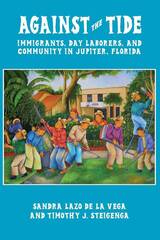
At the beginning of the twenty-first century, Jupiter was in the throes of immigration debates. A decade earlier, this small town had experienced an influx of migrants from Mexico and Guatemala. Immigrants seeking work gathered daily on one of the city’s main streets, creating an ad-hoc, open-air labor market that generated complaints and health and human safety concerns. What began as a local debate rapidly escalated as Jupiter’s situation was thrust into the media spotlight and attracted the attention of state and national anti-immigrant groups. But then something unexpected happened: immigrants, neighborhood residents, university faculty and students, and town representatives joined together to mediate community tensions and successfully moved the informal labor market to the new El Sol Neighborhood Resource Center.
Timothy J. Steigenga, who helped found the center, and Lazo de la Vega, who organized students in support of its mission, describe how El Sol engaged the residents of Jupiter in a two-way process of immigrant integration and helped build trust on both sides. By examining one city’s search for a positive public policy solution, Against the Tide offers valuable practical lessons for other communities confronting similar challenges.
Nearly every middle-aged and older worker, at some time during his or her career, will suffer age discrimination in the workplace. Employers too often use early-retirement plans, restructurings, and downsizings to dismiss older workers. Many of these individuals are unwillingly ushered into earlier-than-planned retirements, are denied promotions, or are terminated. The baby-boomer generation now accounts for just under 50 percent of the entire workforce. A vast army of workers now stands ready to contest employer acts of age discrimination.
Attorney Raymond Gregory addresses himself to the millions of workers who think they might be facing age discrimination and traces the history of the federal measures enacted to assist workers in contesting unlawful employer conduct. He explains how the law works and presents actual court cases to demonstrate the ways that workers have challenged their employers. The cases help to illustrate legal principles in real-life experiences and many of the cases relate compelling stories of workers caught up in a web of employer discriminatory conduct. Gregory has eliminated all legal jargon, ensuring that all concepts are clear to his readers. Individuals will turn to this book again and again to obtain authoritative background on this important topic.
A New York Times Book Review Editors’ Choice
Responsibility—which once meant the moral duty to help and support others—has come to be equated with an obligation to be self-sufficient. This has guided recent reforms of the welfare state, making key entitlements conditional on good behavior. Drawing on political theory and moral philosophy, Yascha Mounk shows why this re-imagining of personal responsibility is pernicious—and suggests how it might be overcome.
“This important book prompts us to reconsider the role of luck and choice in debates about welfare, and to rethink our mutual responsibilities as citizens.”
—Michael J. Sandel, author of Justice
“A smart and engaging book… Do we so value holding people accountable that we are willing to jeopardize our own welfare for a proper comeuppance?”
—New York Times Book Review
“An important new book… [Mounk] mounts a compelling case that political rhetoric…has shifted over the last half century toward a markedly punitive vision of social welfare.”
—Los Angeles Review of Books
“A terrific book. The insight at its heart—that the conception of responsibility now at work in much public rhetoric and policy is both punitive and ill-conceived—is very important and should be widely heeded.”
—Jedediah Purdy, author of After Nature: A Politics for the Anthropocene
Agenda Setting and Political Attention brings together essays on eleven countries and two broad themes. Contributors to the first section analyze the extent to which party and electoral changes and shifts in the partisan composition of government have led—or not led—to policy changes in the United States, the United Kingdom, the Netherlands, Denmark, Switzerland, and France. The second section turns the focus on changing institutional structures in Germany, Italy, Belgium, Spain, and Canada, including the German reunification and the collapse of the Italian party system. Together, the essays make clear the efficacy of the agenda-setting approach for understanding not only how policies evolve, but also how political systems function.

Short-term, single-issue analyses of public policy, the authors contend, give a narrow and distorted view of public policy as the result of a cozy arrangement between politicians, interest groups, and the media. Baumgartner and Jones upset these notions by focusing on several issues—including civilian nuclear power, urban affairs, smoking, and auto safety—over a much longer period of time to reveal patterns of stability alternating with bursts of rapid, unpredictable change.
A welcome corrective to conventional political wisdom, Agendas and Instability revises our understanding of the dynamics of agenda-setting and clarifies a subject at the very center of the study of American politics.
When Agendas and Instability in American Politics appeared fifteen years ago, offering a profoundly original account of how policy issues rise and fall on the national agenda, the Journal of Politics predicted that it would “become a landmark study of public policy making and American politics.” That prediction proved true and, in this long-awaited second edition, Bryan Jones and Frank Baumgartner refine their influential argument and expand it to illuminate the workings of democracies beyond the United States.
The authors retain all the substance of their contention that short-term, single-issue analyses cast public policy too narrowly as the result of cozy and dependable arrangements among politicians, interest groups, and the media. Jones and Baumgartner provide a different interpretation by taking the long view of several issues—including nuclear energy, urban affairs, smoking, and auto safety—to demonstrate that bursts of rapid, unpredictable policy change punctuate the patterns of stability more frequently associated with government. Featuring a new introduction and two additional chapters, this updated edition ensures that their findings will remain a touchstone of policy studies for many years to come.
This book provides a comprehensive analysis of federal programs for the aging, and their origins. Landmark federal legislation affecting the aging was enacted in the 1930s, and the intervening decades have witnesses a dramatic increase in the number and scope of programs. But far from constituting a cohesive national policy for the elderly, the many programs reflect the particular political and social conditions surrounding their origin and implementation. The multiplicity and complexity of resources and services available make achieving even a reasonable grasp of this field extremely difficult. This study offers a coherent and readable summary of this important area of federal legislation.
Aging and Old Age offers fresh insight into a wide range of social and political issues relating to the elderly, such as health care, crime, social security, and discrimination. From the dread of death to the inordinate law-abidingness of the old, from their loquacity to their penny-pinching, Posner paints a surprisingly rich, revealing, and unsentimental portrait of the millions of elderly people in the United States. He explores issues such as age discrimination in employment, creativity and leadership as functions of age, and the changing social status of the elderly. Why are old people, presumably with less to lose, more unwilling to take risks than young people? Why don't the elderly in the United States command the respect and affection they once did and still do in other countries? How does aging affect driving and criminal records? And how does aging relate to creativity across different careers?

Although much has been written on agrarian reforms in India, there are few in-depth studies of specific states and none concerning the relevance of agrarian reforms to the economic development and political stability of Bihar— a state containing one-tenth of the people of India, a population comparable in magnitude to that of the United Kingdom or France. F. Tomasson Jannuzi's field research in Bihar, beginning with village-level surveys and interviews in 1956 and extending through repeated visits through August 1970, has enabled him to provide a unique perspective on events and issues associated with the continuing struggle to transform Bihar's agrarian structure.
Agrarian Crisis in India is at once a history of post-independence agrarian reforms in an important state of India, a detailed critique of the statutory loopholes that have frustrated successive land-reform measures, and a penetrating analysis of the economic, political, and social implications of the failure of agrarian reforms to be implemented in twentieth-century Bihar. The author's analysis of the case of Bihar provides insights not only into the agrarian crisis in Bihar but also into other agrarian societies in the midst of social and economic transformation.
Experts in the field of economic development traditionally have held that the goals of increased production and distributive justice must be approached in sequence. It has been considered almost axiomatic that economic growth will result initially in growing inequalities among classes within a region and among regions within a country. Professor Jannuzi suggests that in Bihar a compelling alternative to this conventional wisdom is an economic-development strategy based on the recognition that the agricultural-production and distributive-justice goals are inseparable and must be addressed simultaneously. He suggests that economic growth in rural Bihar may become impossible if distributive justice continues to be denied to significant sections of the peasantry and, conversely, that distributive justice will prove an illusory target unless economic growth can be assured. Professor Jannuzi recommends the implementation of specified agrarian reforms in Bihar as the prerequisite for meeting the agricultural-production and distributive-justice goals.
Specifically, as a measure of state intervention, Wegren analyzes how the state has influenced urban-rural relations, rural-rural relations, and the nonstate (private) agricultural sector. Several dilemmas arose that have complicated successful agrarian reform as a result of the nature of state interventions, how reform policies were defined, and the incentives rhar arose from state-sponsored policies. During contemporary Russian agrarian reform, urban-rural differences have widened, marked by a deterioration in rural standards of living and increased alienation of rural political groups from urban alliances. At the same time, within the rural sector, reform failed to reverse rural egalitarianism. In addition, the nature of state interventions has undermined attempts to create a vibrant, productive private rural sector based on private farming.
Wegren’s research is based upon extensive field work, interviews, archival documents, and published and unpublished source material conducted over a six-year period, and he demonstrates the link between agrarian reform and the success of overall reform in Russia. This learned and often controversial volume will interest political scientists, policy makers, and scholars and students of contemporary Russia.
In Ailing in Place, Michele Morrone explores the relationship between environmental conditions in Appalachia and health outcomes that are too often ascribed to individual choices only. She applies quantitative data to observations from environmental health professionals to frame the ways in which the environment, as a social determinant of health, leads to health disparities in Appalachian communities. These examples—these stories of place—trace the impacts of water quality, waste disposal, and natural resource extraction on the health and quality of life of Appalachian people.
Public health is inextricably linked to place. Environmental conditions such as contaminated water, unsafe food, and polluted air are as important as culture, community, and landscape in characterizing a place and determining the health outcomes of the people who live there. In some places, the state of the environment is a consequence of historical activities related to natural resources and cultural practices. In others, political decisions to achieve short-term economic objectives are made with little consideration of long-term public health consequences.

Alaska Codfish Chronicle is the first comprehensive history of this fishery. It looks at the early decades of the fishery’s history, a period marked by hardship and danger, as well as the dominance of foreign fishermen. And the modern era, beginning in 1976 when the United States claimed an exclusive economic zone around the Alaska coasts, “Americanizing” the fishery and replacing the foreign fleets that had been ravaging the resources in the Gulf of Alaska and the Bering Sea. Today, the Pacific cod fishery is, in terms of poundage, the second largest fishery in Alaska, and considered among the best-managed fisheries in the world.
This history is extremely well documented, does not spare details, and is accessible to general readers. It incorporates nearly a hundred photographs and illustrations and is sprinkled with numerous observations from fishing industry journals and reports, even incorporating poems and recipes, making this an especially thorough and unique account of one of Alaska’s most iconic and important industries.
This book, the most comprehensive on the subject to date, focuses on the question of how beliefs, institutions, personalities, and power interact to shape Alaska politics and public policy. Drawing on these interactions, the contributors explain how and why certain issues get dealt with successfully and others unsuccessfully, and why some issues are taken up quickly while others are not addressed at all. This comprehensive guide to the political climate of Alaska will be essential to anyone studying the politics of America’s largest—and in some ways most unusual—state.
Alcohol in Ancient Mexico reconstructs the variety and extent of distillation traditions in the ancient cultures of Mexico, describing in detail the various plants and processes used to make such beverages, their prevalence, and their significance for local culture.
The art of distillation arrived in Mexico with the Spaniards in the sixteenth century. However, well before that time, native skills and available resources had contributed to a well-developed tradition of intoxicating beverages, many of which are still produced and consumed.
In the 1930’s Henry Bruman visited various Mexican and Central American Indian tribes to reconstruct the variety and extent of these ancient traditions. He discerned five distinct areas defined by the culturally most significant beverages, all superimposed over the great mescal wine region. Within these five areas he noted wine made from cactus, cactus fruit, cornstalks, and mesquite pods; beer from sprouted maize; and fermented sap from pulque agaves.
Outside the mescal region he observed widespread consumption in the Yucatan of a wine made from fermented honey and balché bark, plus lesser-known beverages in other regions. He also observed the frequent inclusion in the fermentation process of alkaloid-bearing ingredients such as peyote and tobacco, plants whose roots or bark contain saponins—which act as cardiac poisons—and even poisons from certain toads.
Alcohol in Ancient Mexico also considers the relative absence of alcoholic drink in the southwestern United States, the introduction of sills following the Spanish conquest, and possible sources for the introduction of coconut wine.
Previously unpublished, the research presented here retains its relevance today, and the photographs offer a fascinating glimpse at a traditional world that has now almost vanished.

Alt-labor groups have long offered their members services and organizing opportunities to contest their unfair treatment on the job. But many groups have grown frustrated by the limited impact of these traditional strategies and have turned to public policy to scale up their work. They have successfully led campaigns to combat wage theft, raise the minimum wage, improve working conditions, strengthen immigrants’ rights, and more. These successes present something of a puzzle: relative to their larger, wealthier, and better-connected opponents, alt-labor groups are small, poor, and weak. Their members are primarily low-wage immigrant workers and workers of color who are often socially, economically, and politically marginalized. With few exceptions, the groups lack large dues-paying memberships and are dependent on philanthropic foundations and other unpredictable sources of funding. How, given their myriad challenges, have alt-labor groups managed to make gains for their members?
Galvin reveals that alt-labor groups are leveraging their deep roots in local communities, their unique position in the labor movement, and the flexibility of their organizational forms to build their collective power and extend their reach. A growing number of groups have also become more politically engaged and have set out to alter their political environments by cultivating more engaged citizens, influencing candidate selection processes, and expanding government capacities. These efforts seek to enhance alt-labor groups’ probabilities of success in the near term while incrementally shifting the balance of power over the long term.
Alt-Labor and the New Politics of Workers’ Rights comprehensively details alt-labor’s turn to policy and politics, provides compelling insights into the dilemmas the groups now face, and illuminates how their efforts have both invigorated and complicated the American labor movement.
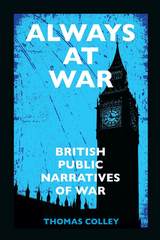
Compelling narratives are integral to successful foreign policy, military strategy, and international relations. Yet often narrative is conceived so broadly it can be hard to identify. The formation of strategic narratives is informed by the stories governments think their people tell, rather than those they actually tell. This book examines the stories told by a broad cross-section of British society about their country’s past, present, and future role in war, using in-depth interviews with 67 diverse citizens. It brings to the fore the voices of ordinary people in ways typically absent in public opinion research.
Always at War complements a significant body of quantitative research into British attitudes to war, and presents an alternative case in a field dominated by US public opinion research. Rather than perceiving distinct periods between war and peace, British citizens see their nation as so frequently involved in conflict that they consider the country to be continuously at war. At present, public opinion appears to be a stronger constraint on Western defense policy than ever.
Zahariadis offers a theory that explains policymaking when "ambiguity" is present—a state in which there are many ways, often irreconcilable, of thinking about an issue. Expanding and extending John Kingdon's influential "multiple streams" model that explains agenda setting, Zahariadis argues that manipulation, the bending of ideas, process, and beliefs to get what you want out of the policy process, is the key to understanding the dynamics of policymaking in conditions of ambiguity. He takes one of the major theories of public policy to the next step in three different ways: he extends it to a different form of government (parliamentary democracies, where Kingdon looked only at what he called the United States's presidential "organized anarchy" form of government); he examines the entire policy formation process, not just agenda setting; and he applies it to foreign as well as domestic policy.
This book combines theory with cases to illuminate policymaking in a variety of modern democracies. The cases cover economic policymaking in Britain, France, and Germany, foreign policymaking in Greece, all compared to the U.S. (where the model was first developed), and an innovative computer simulation of the policy process.

“This book is both powerful and important. Powerful for the testimony it provides from Americans of many different (and even mixed races) about their experiences. And important because there is a racial revolution underway that will upend race as we know it during the twenty-first century.”
—John Kenneth White, Catholic University of America
America Beyond Black and White is a call for a new way of imagining race in America. For the first time in U.S. history, the black-white dichotomy that has historically defined race and ethnicity is being challenged, not by a small minority, but by the fastest-growing and arguably most vocal segment of the increasingly diverse American population—Mexicans, Chinese, Japanese, Koreans, Indians, Arabs, and many more—who are breaking down and recreating the very definitions of race.
Drawing on interviews with hundreds of Americans who don’t fit conventional black/white categories, the author invites us to empathize with these “doubles” and to understand why they may represent our best chance to throw off the strictures of the black/white dichotomy.
The revolution is already underway, as newcomers and mixed-race “fusions” refuse to engage in the prevailing Anglo- Protestant culture. Americans face two choices: understand why these individuals think as they do, or face a future that continues to define us by what divides us rather than by what unites us.
So begins Lawrence Lessig's sweeping indictment of contemporary American institutions and the corruption that besets them. We can all see it—from the selling of Congress to special interests to the corporate capture of the academy. Something is wrong. It’s getting worse.
And it’s our fault. What Lessig shows, brilliantly and persuasively, is that we can’t blame the problems of contemporary American life on bad people, as our discourse all too often tends to do. Rather, he explains, “We have allowed core institutions of America’s economic, social, and political life to become corrupted. Not by evil souls, but by good souls. Not through crime, but through compromise.” Every one of us, every day, making the modest compromises that seem necessary to keep moving along, is contributing to the rot at the core of American civic life. Through case studies of Congress, finance, the academy, the media, and the law, Lessig shows how institutions are drawn away from higher purposes and toward money, power, quick rewards—the first steps to corruption.
Lessig knows that a charge so broad should not be levied lightly, and that our instinct will be to resist it. So he brings copious, damning detail gleaned from years of research, building a case that is all but incontrovertible: America is on the wrong path. If we don’t acknowledge our own part in that, and act now to change it, we will hand our children a less perfect union than we were given. It will be a long struggle. This book represents the first steps.

America Unequal demonstrates how powerful economic forces have diminished the prospects of millions of Americans and why "a rising tide no longer lifts all boats." Changes in the economy, public policies, and family structure have contributed to slow growth in family incomes and rising economic inequality. Poverty remains high because of an erosion of employment opportunities for less-skilled workers, not because of an erosion of the work ethic; because of a failure of government to do more for the poor and the middle class, not because of social programs.
There is nothing about a market economy, the authors say, that ensures that a rising standard of living will reduce inequality. If a new technology, such as computerization, leads firms to hire more managers and fewer typists, then the wages of lower-paid secretaries will decline and the wages of more affluent managers will increase. Such technological changes as well as other economic changes, particularly the globalization of markets, have had precisely this effect on the distribution of income in the United States.
America Unequal challenges the view, emphasized in the Republicans' "Contract with America," that restraining government social spending and cutting welfare should be our top domestic priorities. Instead, it proposes a set of policies that would reduce poverty by supplementing the earnings of low-wage workers and increasing the employment prospects of the jobless. Such demand-side policies, Sheldon Danziger and Peter Gottschalk argue, are essential for correcting a labor market that has been increasingly unable to absorb less-skilled and less-experienced workers.

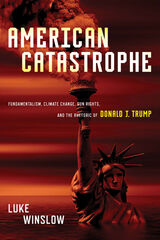
Luke Winslow introduces the rhetorical homology as a critical tool useful for understanding how catastrophic appeals unite Americans across disparate religious, ecological, cultural, and political spheres. More specifically, the four case study chapters examining Christian fundamentalism, anti-environmentalism, gun rights messaging, and the administration of Donald Trump reveal a consistent formal pattern oriented toward catastrophe. In teasing out this orientation toward catastrophe, Winslow offers a fresh, provocative, and insightful contribution to our most pressing social challenges.
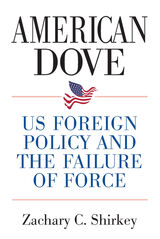
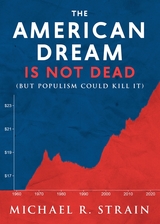
Populists on both sides of the political aisle routinely announce that the American Dream is dead. According to them, the game has been rigged by elites, workers can’t get ahead, wages have been stagnant for decades, and the middle class is dying.
Michael R. Strain, director of economic policy studies at the American Enterprise Institute, disputes this rhetoric as wrong and dangerous. In this succinctly argued volume, he shows that, on measures of economic opportunity and quality of life, there has never been a better time to be alive in America. He backs his argument with overwhelming—and underreported—data to show how the facts favor realistic optimism.
He warns, however, that the false prophets of populism pose a serious danger to our current and future prosperity. Their policies would leave workers worse off. And their erroneous claim that the American Dream is dead could discourage people from taking advantage of real opportunities to better their lives. If enough people start to believe the Dream is dead, they could, in effect, kill it. To prevent this self-fulfilling prophecy, Strain’s book is urgent reading for anyone feeling the pull of the populists.
E. J. Dionne and Henry Olsen provide spirited responses to Strain’s argument.

Jennifer Helgren argues that a new internationalist girl citizenship took root in the country in the years following World War II in youth organizations such as Camp Fire Girls, Girl Scouts, YWCA Y-Teens, schools, and even magazines like Seventeen. She shows the particular ways that girls’ identities and roles were configured, and reveals the links between internationalist youth culture, mainstream U.S. educational goals, and the U.S. government in creating and marketing that internationalist girl, thus shaping the girls’ sense of responsibilities as citizens.
Among other themes, the discussions in this volume explore the relevance of diplomacy in resolving global crises, the use of military policy and force as diplomatic tools, skills diplomats should possess, and current obstacles facing US foreign policy. Through the lens of their professional service as US diplomats, the authors examine American mistakes and successes of the past seventy years to assess how the role of diplomacy within US foreign policy has changed over time and how it must continue to evolve to meet future challenges. One conclusion proves recurrent: the US can no longer afford to rely only on might and force but must rededicate itself to diplomatic strategies to achieve its long-term goals.
American Global Leadership is not just a valuable resource for scholars of diplomatic history and political science; it is also an important work for current diplomats and those aspiring to careers in the US Foreign Service.
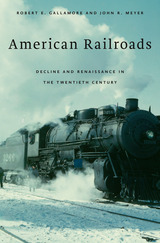
Once an icon of American industry, railroads fell into a long decline beginning around the turn of the twentieth century. Overburdened with regulation and often displaced by barge traffic on government-maintained waterways, trucking on interstate highways, and jet aviation, railroads measured their misfortune in lost market share, abandoned track, bankruptcies, and unemployment. Today, however, as Robert Gallamore and John Meyer demonstrate, rail transportation is reviving, rescued by new sources of traffic and advanced technology, as well as less onerous bureaucracy.
In 1970, Congress responded to the industry's plight by consolidating most passenger rail service nationwide into Amtrak. But private-sector freight service was left to succeed or fail on its own. The renaissance in freight traffic began in 1980 with the Staggers Rail Act, which allowed railroad companies to contract with customers for services and granted freedom to set most rates based on market supply and demand. Railroads found new business hauling low-sulfur coal and grain long distances in redesigned freight cars, while double-stacked container cars moved a growing volume of both international and domestic goods. Today, trains have smaller crews, operate over better track, and are longer and heavier than ever before.
Near the end of the twentieth century, after several difficult but important mergers, privately owned railroads increased their investments in safe, energy-efficient, environmentally friendly freight transportation. American Railroads tells a riveting story about how this crucial U.S. industry managed to turn itself around.

A sobering portrait of the United States’ divided racial politics.
For nearly two decades, Rogers M. Smith and Desmond King have charted the shifting racial policy alliances that have shaped American politics across different eras. In America’s New Racial Battle Lines, they show that US racial policy debates are undergoing fundamental change. Disputes over colorblind versus race-conscious policies have given way to new lines of conflict. Today’s conservatives promise to protect traditionalist, predominantly white, Christian Americans against what they call the “radical” Left. Meanwhile, today’s progressives seek not just to integrate American institutions but to more fully transform and “repair” pervasive systemic racism.
Drawing on interviews with activists, surveys, social network analyses, and comprehensive reviews of federal, state, and local policies and advocacy groups, Smith and King map the memberships and goals of two rival racial policy alliances and delineate the contrasting stories each side tells. They also show that these increasingly polarized racial policy alliances are substantially funded on both the Left and Right.
Placing today’s conflicts in theoretical and historical perspectives, Smith and King analyze where these intensifying clashes may take the nation in the years ahead. They highlight the great potential for mounting violence, as well as the remaining possibilities for finding common ground.
In this study of the A & P. the author inquires into cost and price policy in one of America's large corporations, and examines the fact–finding process in government regulation of an industry.
The first part of the book treats the history of The Great Atlantic & Pacific Tea Company from 1919 to 1951 as a case study of a business management which is seeking to understand its market, formulate a rational price policy, and enforce the policy despite the inarticulate but effective opposition of subordinate executives. The second part deals with the buying methods of the company and A & P's relations with large and small suppliers. Particular attention is given to price discrimination.
In the final part of his study, Mr. Adelman discusses in detail the antitrust suit of the 1940's against the company and the goals and values implicit in that suit. He shows the way in which these goals predetermined the "facts" that purportedly were found. The author shows how a standard inductive–deductive method of economic research would have improved on the process of ”trial by slogan and cliché.“

New essays from foodways archaeology related to cuisine in social, cultural, and environmental contexts
A new and urgently needed guide to making the American economy more competitive at a time when tech giants have amassed vast market power.
The U.S. economy is growing less competitive. Large businesses increasingly profit by taking advantage of their customers and suppliers. These firms can also use sophisticated pricing algorithms and customer data to secure substantial and persistent advantages over smaller players. In our new Gilded Age, the likes of Google and Amazon fill the roles of Standard Oil and U.S. Steel.
Jonathan Baker shows how business practices harming competition manage to go unchecked. The law has fallen behind technology, but that is not the only problem. Inspired by Robert Bork, Richard Posner, and the “Chicago school,” the Supreme Court has, since the Reagan years, steadily eroded the protections of antitrust. The Antitrust Paradigm demonstrates that Chicago-style reforms intended to unleash competitive enterprise have instead inflated market power, harming the welfare of workers and consumers, squelching innovation, and reducing overall economic growth. Baker identifies the errors in economic arguments for staying the course and advocates for a middle path between laissez-faire and forced deconcentration: the revival of pro-competitive economic regulation, of which antitrust has long been the backbone.
Drawing on the latest in empirical and theoretical economics to defend the benefits of antitrust, Baker shows how enforcement and jurisprudence can be updated for the high-tech economy. His prescription is straightforward. The sooner courts and the antitrust enforcement agencies stop listening to the Chicago school and start paying attention to modern economics, the sooner Americans will reap the benefits of competition.
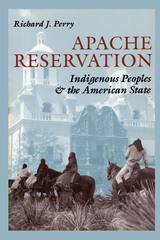
"Indian reservations" were the United States' ultimate solution to the "problem" of what to do with native peoples who already occupied the western lands that Anglo settlers wanted. In this broadly inclusive study, Richard J. Perry considers the historical development of the reservation system and its contemporary relationship to the American state, with comparisons to similar phenomena in Canada, Australia, and South Africa.
The San Carlos Apache Reservation of Arizona provides the lens through which Perry views reservation issues. One of the oldest and largest reservations, its location in a minerals- and metals-rich area has often brought it into conflict with powerful private and governmental interests. Indeed, Perry argues that the reservation system is best understood in terms of competition for resources among interest groups through time within the hegemony of the state. He asserts that full control over their resources—and hence, over their lives—would address many of the Apache's contemporary economic problems.
Who are the innovators who have built a contraption that can turn the energy of a simple wave off the Oregon coast into burnt toast in Idaho? Who are the scientists in Massachusetts who have invented a battery that now runs your hand drill and will soon run your car? Readers will meet them all in this book. They will learn how the new energy economy will grow, the research that is required, and the legislation that must be passed to make the vision a reality.
This is a thoughtful, optimistic book, based on sound facts. No one before has tied together the concepts of economic growth and greenhouse gas reductions with such concrete examples. No one has previously told the real stories of the people who are right now on the front lines of the energy revolution. The co-authors, one a U.S. Congressman who is the primary sponsor of the New Apollo Energy Act, and the other the founder of the Apollo Alliance, have joined their experience, expertise, and passion for a clean energy future to lay out the path to stop global warming and gain energy independence.
Who are the innovators who have built a contraption that can turn the energy of a simple wave off the Oregon coast into burnt toast in Idaho? Who are the scientists in Massachusetts who have invented a battery that now runs your hand drill and will soon run your car? Readers will meet them all in this book. They will learn how the new energy economy will grow, the research that is required, and the legislation that must be passed to make the vision a reality.
This is a thoughtful, optimistic book, based on sound facts. No one before has tied together the concepts of economic growth and greenhouse gas reductions with such concrete examples. No one has previously told the real stories of the people who are right now on the front lines of the energy revolution. The co-authors, one a U.S. Congressman who is the primary sponsor of the New Apollo Energy Act, and the other the founder of the Apollo Alliance, have joined their experience, expertise, and passion for a clean energy future to lay out the path to stop global warming and gain energy independence.
It’s time for America to move beyond zoning, argues city planner M. Nolan Gray in Arbitrary Lines: How Zoning Broke the American City and How to Fix It. With lively explanations and stories, Gray shows why zoning abolition is a necessary—if not sufficient—condition for building more affordable, vibrant, equitable, and sustainable cities.
The arbitrary lines of zoning maps across the country have come to dictate where Americans may live and work, forcing cities into a pattern of growth that is segregated and sprawling.
The good news is that it doesn’t have to be this way. Reform is in the air, with cities and states across the country critically reevaluating zoning. In cities as diverse as Minneapolis, Fayetteville, and Hartford, the key pillars of zoning are under fire, with apartment bans being scrapped, minimum lot sizes dropping, and off-street parking requirements disappearing altogether. Some American cities—including Houston, America’s fourth-largest city—already make land-use planning work without zoning.
In Arbitrary Lines, Gray lays the groundwork for this ambitious cause by clearing up common confusions and myths about how American cities regulate growth and examining the major contemporary critiques of zoning. Gray sets out some of the efforts currently underway to reform zoning and charts how land-use regulation might work in the post-zoning American city.
Despite mounting interest, no single book has pulled these threads together for a popular audience. In Arbitrary Lines, Gray fills this gap by showing how zoning has failed to address even our most basic concerns about urban growth over the past century, and how we can think about a new way of planning a more affordable, prosperous, equitable, and sustainable American city.
Displaced before they were born, children living in long-term refugee camps along the East African Rift grow and learn surrounded by ready-made structures. Architecture as a Way of Seeing and Learning explores what these built environments teach us about both childhood development and refugee assistance. With an eye toward architecture, Nerea Amorós Elorduy models how a more empathetic approach to refugee relief might both decolonize humanitarian aid and nurture the learning of young children.
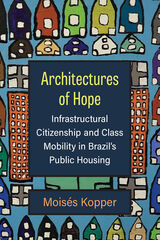
Architectures of Hope examines how communal idealism, electoral politics, and low-income consumer markets made first-time homeownership a reality for millions of low-income Brazilians over the last ten years.
Drawing on a five-year-long ethnography among city planners, architects, street-level bureaucrats, politicians, market and bank representatives, community leaders, and past, present, and future beneficiaries, Moisés Kopper tells the story of how a group of grassroots housing activists rose from oblivion to build a model community. He explores the strategies set forth by housing activists as they waited and hoped for—and eventually secured—homeownership through Minha Casa Minha Vida’s public-private infrastructure. By showing how these efforts coalesced in Porto Alegre—Brazil’s once progressive hotspot—he interrogates the value systems and novel arrangements of power and market that underlie the country’s post-neoliberal project of modern and inclusive development.
By chronicling the making and remaking of material hope in the aftermath of Minha Casa Minha Vida, Architectures of Hope reopens the future as a powerful venue for ethnographic inquiry and urban development.
The new volume in the Urban Agenda series examines the technological questions still surrounding autonomous vehicles and the uncertain societal and legislative impact of widespread AV adoption. Assessing both short- and long-term concerns, the authors probe how autonomous vehicles might change transportation but also land use, energy consumption, mass transit, commuter habits, traffic safety, job markets, the freight industry, and supply chains. At the same time, the essays discuss opportunities for industry, researchers, and policymakers to make the autonomous future safer, more efficient, and more mobile.
Contributors: Austin Brown, Stan Caldwell, Chris Hendrickson, Kazuya Kawamura, Taylor Long, and P. S. Srira.
The contributors, scholars of international renown who range across the theoretical spectrum, emphasize the political nature of the policy planner's work and stress the role of persuasive arguments in practical decision making. Recognizing the rhetorical, communicative character of policy and planning deliberations, they show that policy arguments are necessarily selective, both shaping and being shaped by relations of power. These essays reveal the practices of policy analysts and planners in powerful new ways--as matters of practical argumentation in complex, highly political environments. They also make an important contribution to contemporary debates over postempiricism in the social and policy sciences.
Contributors. John S. Dryzek, William N. Dunn, Frank Fischer, John Forester, Maarten Hajer, Patsy Healey, Robert Hoppe, Bruce Jennings, Thomas J. Kaplan, Duncan MacRae, Jr., Martin Rein, Donald Schon, J. A. Throgmorton
The approach speaks in particular to the limits of rationalistic, technoscientific policy making in the complex, unpredictable world of the early twenty-first century. These limits have been starkly illustrated by responses to events such as the environmental crisis, the near collapse of the world economy, and the disaster at the nuclear power plant in Fukushima, Japan. Addressing topics including deliberative democracy, collaborative planning, new media, rhetoric, policy frames, and transformative learning, the essays shed new light on the ways that policy is communicatively created, conveyed, understood, and implemented. Taken together, they show argumentative policy inquiry to be an urgently needed approach to policy analysis and planning.
Contributors. Giovanni Attili, Hubertus Buchstein, Stephen Coleman, John S. Dryzek, Frank Fischer, Herbert Gottweis, Steven Griggs, Mary Hawkesworth, Patsy Healey, Carolyn M. Hendriks, David Howarth, Dirk Jörke, Alan Mandell, Leonie Sandercock, Vivien A. Schmidt, Sanford F. Schram

Over sixty percent of all infectious human diseases, including tuberculosis, influenza, cholera, and hundreds more, are shared with other vertebrate animals. Arresting Contagion tells the story of how early efforts to combat livestock infections turned the United States from a disease-prone nation into a world leader in controlling communicable diseases. Alan Olmstead and Paul Rhode show that many innovations devised in the fight against animal diseases, ranging from border control and food inspection to drug regulations and the creation of federal research labs, provided the foundation for modern food safety programs and remain at the heart of U.S. public health policy.
America’s first concerted effort to control livestock diseases dates to the founding of the Bureau of Animal Industry (BAI) in 1884. Because the BAI represented a milestone in federal regulation of commerce and industry, the agency encountered major jurisdictional and constitutional obstacles. Nevertheless, it proved effective in halting the spread of diseases, counting among its early breakthroughs the discovery of Salmonella and advances in the understanding of vector-borne diseases.
By the 1940s, government policies had eliminated several major animal diseases, saving hundreds of thousands of lives and establishing a model for eradication that would be used around the world. Although scientific advances played a key role, government interventions did as well. Today, a dominant economic ideology frowns on government regulation of the economy, but the authors argue that in this case it was an essential force for good.
Intended to inspire public servants of all kinds to reconnect fearlessly with their fundamental humanity, the three conversations in Art, Imagination and Public Service present a way of thinking about imaginative, compassionate, and intelligent public service. The book consists of three dialogues: between former UK Home Secretary David Blunkett and poet Micheal O’Siadhail, former UK Supreme Court president Brenda Hale and painter Hughie O’Donoghue, and UK Permanent Secretary Clare Moriarty and musician James O’Donnell. Together they explore how art and imagination can sustain public servants and enable them to find new ways of addressing the problems facing government, parliament, and the law—problems that resist utilitarian responses in which people end up being treated only as statistics in a target-driven world. Through these conversations, the speakers discover surprising connections in approaches to their work.
A world-leading military strategist and an IDF insider explain the improbable success of the Israeli armed forces.
When the Israel Defense Forces was established in May 1948, it was small, poorly equipped, and already at war. Lacking sufficient weaponry or the domestic industrial base to produce it, the newborn military was forced to make do with whatever it could get its hands on. That spirit of improvisation carried the IDF to a decisive victory in the First Arab-Israeli War.
Today the same spirit has made the IDF the most powerful military in the Middle East and among the most capable in the world. In The Art of Military Innovation, Edward N. Luttwak and Eitan Shamir trace the roots of this astounding success. What sets the IDF apart, they argue, is its singular organizational structure. From its inception, it has been the world’s only one-service military, encompassing air, naval, and land forces in a single institutional body. This unique structure, coupled with a young officer corps, allows for initiative from below. The result is a nimble organization inclined toward change rather than beholden to tradition.
The IDF has fostered some of the most significant advances in military technology of the past seventy years, from the first wartime use of drones to the famed Iron Dome missile defense system, and now the first laser weapon, Iron Beam. Less-heralded innovations in training, logistics, and human resources have been equally important. Sharing rich insights and compelling stories, Luttwak and Shamir reveal just what makes the IDF so agile and effective.

Take an economically and racially diverse urban school district emerging from a long history of segregation. Add an energetic, capable, bridge-building superintendent with ambitious district-wide goals to improve graduation rates, school attendance, and academic performance. Consider that he was well funded and strongly supported by city leaders, teachers, and parents, and ask how much changed in a decade of his tenure—and what remained unchanged?
Larry Cuban takes this richly detailed history of the Austin, Texas, school district, under Superintendent Pat Forgione, to ask the question that few politicians and school reformers want to touch. Given effective use of widely welcomed reforms, can school policies and practices put all children at the same academic level? Are class and ethnic differences in academic performance within the power of schools to change?
Cuban argues that the overall district has shown much improvement—better test scores, more high school graduates, and more qualified teachers. But the improvements are unevenly distributed. The elementary schools improved, as did the high schools located in affluent, well-educated, largely white neighborhoods. But the least improvement came where it was needed most: the predominantly poor, black, and Latino high schools. Before Forgione arrived, over 10 percent of district schools were failing, and after he left office, roughly the same percentage continued to fail. Austin’s signal successes amid failure hold answers to tough questions facing urban district leaders across the nation.
In words that eerily echo current U.S. debates, Mesa-Lago analyzes virtually all social insurance programs: old age, disability and survivors' pensions; health care; occupational hazards; family allowances; and unemployment. For social security specialists, this impressive study will serve as a comprehensive regional handbook on the legal, administrative, and financial features of Latin America's programs. Students of comparative policy and applied economics will find Mesa-Lago's methodology, analytical framework, and policy recommendations invaluable.

He describes an almost continual parade of garish and grandiose plans: some, like the destruction of the glorious marketplace of les Halles for him the heart of the city, were realized; others, like the superhighway along the left bank of the Seine, were bitterly and successfully resisted.
Almost twenty years later, we find it difficult to remember the city as it was. And while Paris looks to many much the way it always has, behind the carefully sandblasted stone and restored shop fronts is a city radically transformed—emptied of centuries of popular life; of entire neighborhoods and the communities they housed engineered out to desolate suburban slums. The battle over the soul and spirit of the city continues.
This book is not entirely about the loss of physical places. Or a romance about a world that never really was. It is a cautionary tale filled with lessons for all who struggle to protect the human scale, the diversity, and the welcoming public life that are the threatened gifts of all great cities.
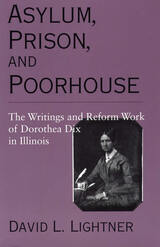
This illustrated collection of annotated newspaper articles and memorials by Dorothea Dix provides a forum for the great mid-nineteenth-century humanitarian and reformer to speak for herself.
Dorothea Lynde Dix (1802–87) was perhaps the most famous and admired woman in America for much of the nineteenth century. Beginning in the early 1840s, she launched a personal crusade to persuade the various states to provide humane care and effective treatment for the mentally ill by funding specialized hospitals for that purpose. The appalling conditions endured by most mentally ill inmates in prisons, jails, and poorhouses led her to take an active interest also in prison reform and in efforts to ameliorate poverty.
In 1846–47 Dix brought her crusade to Illinois. She presented two lengthy memorials to the legislature, the first describing conditions at the state penitentiary at Alton and the second discussing the sufferings of the insane and urging the establishment of a state hospital for their care. She also wrote a series of newspaper articles detailing conditions in the jails and poorhouses of many Illinois communities.
These long-forgotten documents, which appear in unabridged form in this book, contain a wealth of information on the living conditions of some of the most unfortunate inhabitants of Illinois. In his preface, David L. Lightner describes some of the vivid images that emerge from Dorothea Dix's descriptions of social conditions in Illinois a century and a half ago: "A helpless maniac confined throughout the bitter cold of winter to a dark and filthy pit. Prison inmates chained in hallways and cellars because no more men can be squeezed into the dank and airless cells. Aged paupers auctioned off by county officers to whoever will maintain them at the lowest cost."
Lightner provides an introduction to every document, placing each memorial and newspaper article in its proper social and historical context. He also furnishes detailed notes, making these documents readily accessible to readers a century and a half later. In his final chapter, Lightner assesses both the immediate and the continuing impact of Dix's work.

Based on 260 surveys and 47 in-depth interviews, this study combines quantitative and qualitative research to explore the level and characteristics of immigrant incorporation in Beardstown and Monmouth. It assesses the advancement of immigrants in the immigration/ residency/citizenship process, the immigrants’ level of cultural integration (via language, their connectedness with other members of society, and their relationships with neighbors), the degree and characteristics of discrimination against immigrants in these two towns, and the extent to which immigrants participate in different social and political activities and trust government institutions.
Immigrants in new destinations are likely to be poorer, to be less educated, and to have weaker English-language skills than immigrants in traditional destinations. Studying how this population negotiates the obstacles to and opportunities for incorporation is crucial.

In At the Table, Miller shares the essential techniques she developed for the James Beard Foundation’s Chefs Boot Camp for Policy and Change. Readers will learn how to focus their philanthropic efforts; pinpoint their audience and develop their argument; recruit allies and support action; and maybe most importantly, grab people’s attention in a crowded media landscape.
Miller also shares the moving stories of chefs who used these skills to create lasting change. Tom Colicchio became one of the word’s most respected voices on ending hunger. Bakers Against Racism recruited more than 3,000 people to participate in their global bake sales. Chefs from around the country pushed Congress to provide financial relief to the restaurant industry at the height of the COVID-19 pandemic.
At the Table is filled with inspiration for anyone who has ever wanted to make a difference outside the four walls of their restaurant. And most importantly, it offers proven methods to become a successful advocate. You don’t have to be a celebrity chef to change the food system; you just need the will and the tools in this unique guide.
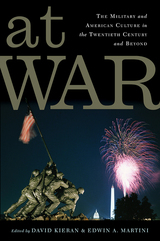
At War offers short, accessible essays addressing the central issues in the new military history—ranging from diplomacy and the history of imperialism to the environmental issues that war raises and the ways that war shapes and is shaped by discourses of identity, to questions of who serves in the U.S. military and why and how U.S. wars have been represented in the media and in popular culture.
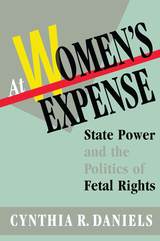
Some say the fetus is the “tiniest citizen.” If so, then the bodies of women themselves have become political arenas—or, recent cases suggest, battlefields. A cocaine-addicted mother is convicted of drug trafficking through the umbilical cord. Women employees at a battery plant must prove infertility to keep their jobs. A terminally ill woman is forced to undergo a cesarean section. No longer concerned with conception or motherhood, the new politics of fetal rights focuses on fertility and pregnancy itself, on a woman’s relationship with the fetus. How exactly, Cynthia Daniels asks, does this affect a woman’s rights? Are they different from a man’s? And how has the state helped determine the difference? The answers, rigorously pursued throughout this book, give us a clear look into the state’s paradoxical role in gender politics—as both a challenger of injustice and an agent of social control.
In benchmark legal cases concerned with forced medical treatment, fetal protectionism in the workplace, and drug and alcohol use and abuse, Daniels shows us state power at work in the struggle between fetal rights and women’s rights. These cases raise critical questions about the impact of gender on women’s standing as citizens, and about the relationship between state power and gender inequality. Fully appreciating the difficulties of each case, the author probes the subtleties of various positions and their implications for a deeper understanding of how a woman’s reproductive capability affects her relationship to state power. In her analysis, the need to defend women’s right to self-sovereignty becomes clear, but so does the need to define further the very concepts of self-sovereignty and privacy.
The intensity of the debate over fetal rights suggests the depth of the current gender crisis and the force of the feelings of social dislocation generated by reproductive politics. Breaking through the public mythology that clouds these debates, At Women’s Expense makes a hopeful beginning toward liberating woman’s body within the body politic.
"The most belated of nations," Theodore Roosevelt called his country during the workmen's compensation fight in 1907. Earlier reformers, progressives of his day, and later New Dealers lamented the nation's resistance to models abroad for correctives to the backwardness of American social politics. Atlantic Crossings is the first major account of the vibrant international network that they constructed--so often obscured by notions of American exceptionalism--and of its profound impact on the United States from the 1870s through 1945.
On a narrative canvas that sweeps across Europe and the United States, Daniel Rodgers retells the story of the classic era of efforts to repair the damages of unbridled capitalism. He reveals the forgotten international roots of such innovations as city planning, rural cooperatives, modernist architecture for public housing, and social insurance, among other reforms. From small beginnings to reconstructions of the new great cities and rural life, and to the wide-ranging mechanics of social security for working people, Rodgers finds the interconnections, adaptations, exchanges, and even rivalries in the Atlantic region's social planning. He uncovers the immense diffusion of talent, ideas, and action that were breathtaking in their range and impact.
The scope of Atlantic Crossings is vast and peopled with the reformers, university men and women, new experts, bureaucrats, politicians, and gifted amateurs. This long durée of contemporary social policy encompassed fierce debate, new conceptions of the role of the state, an acceptance of the importance of expertise in making government policy, and a recognition of a shared destiny in a newly created world.
In Atomic Environments: Nuclear Technologies, the Natural World, and Policymaking, 1945–1960, Neil S. Oatsvall examines how top officials in the Truman and Eisenhower administrations used environmental science to develop nuclear strategy at the beginning of the Cold War. While many people were involved in research and analysis during the period in question, it was at highest levels of executive decision-making where environmental science and nuclear science most clearly combined to shape the nation’s policies.
Oatsvall clearly demonstrates how the natural world and the scientific disciplines that study it became integral parts of nuclear science rather than adversarial fields of knowledge. But while nuclear technologies heavily depended on environmental science to develop, those same technologies frequently caused great harm to the natural world. Moreover, while some individuals expressed real anxieties about the damage wrought by nuclear technologies, policymakers as a class consistently made choices that privileged nuclear boosterism and secrecy, prioritizing institutional values over the lives and living systems that they were ostensibly charged to protect.
By scrutinizing institutional policymaking practices and agendas at the birth of the nuclear age, a constant set of values becomes clear. Oatsvall reveals an emerging technocratic class that routinely valued knowledge about the environment to help create and maintain a nuclear arsenal, despite its existential threat to life on earth and the negative effects many nuclear technologies had on ecosystems and the American people alike. Although policymakers took their charge to protect and advance the welfare of the United States and its people seriously, Atomic Environments demonstrates how they often failed to do so because their allegiance to the US nuclear hierarchy blinded them to the real risks and dangers of the nuclear age.


From the 1920s through the 1940s, American kitchens had a welcome guest in “Aunt Sammy,” a creation of the US Department of Agriculture and its Bureau of Home Economics. Through the radio program Housekeeper’s Chat, Aunt Sammy gave lively advice on food preparation, household chores, parenting and children, and gender dynamics as she encouraged women to embrace the radio and a host of modern consumer household products. The recipes she shared were gathered, in 1927, into a cookbook that became a valuable household manual for tens of thousands of Americans.
Aunt Sammy’s Radio Recipes revives the famous cookbook and joins it with extensive excerpts from the accompanying radio broadcasts, providing a fascinating study of how a witty and charming fictionalized personae became one of the early celebrity chefs of the radio age.

In Austerity Ireland, Kieran Allen challenges this official image and argues that the Irish state's response to the crash has primarily been designed to protect economic privilege. The resulting austerity has been a failure and is likely to produce a decade of hardship.
The book offers a deeply informed and penetrating diagnosis of Ireland's current socio-economic and political malaise, suggesting that a political earthquake is underway which may benefit the left. Austerity Ireland is essential reading for all students of Irish politics and economics, as well as those interested in the politics of austerity and the eurozone crisis.
READERS
Browse our collection.
PUBLISHERS
See BiblioVault's publisher services.
STUDENT SERVICES
Files for college accessibility offices.
RECENTLY PUBLISHED





UChicago Accessibility Resources
home | accessibility | search | about | contact us
BiblioVault ® 2001 - 2024
The University of Chicago Press