
 A SCHOLARLY BOOK REPOSITORY
Schwartz draws on a wide array of materials—painting and sculpture, popular magazines and school textbooks, newspapers and oratory—to examine the role that Lincoln's memory has played in American life. He explains, for example, how dramatic funeral rites elevated Lincoln's reputation even while funeral eulogists questioned his presidential actions, and how his reputation diminished and grew over the next four decades. Schwartz links transformations of Lincoln's image to changes in the society. Commemorating Lincoln helped Americans to think about their country's development from a rural republic to an industrial democracy and to articulate the way economic and political reform, military power, ethnic and race relations, and nationalism enhanced their conception of themselves as one people.
Lincoln's memory assumed a double aspect of "mirror" and "lamp," acting at once as a reflection of the nation's concerns and an illumination of its ideals, and Schwartz offers a fascinating view of these two functions as they were realized in the commemorative symbols of an ever-widening circle of ethnic, religious, political, and regional communities. The first part of a study that will continue through the present, Abraham Lincoln and the Forge of National Memory is the story of how America has shaped its past selectively and imaginatively around images rooted in a real person whose character and achievements helped shape his country's future.
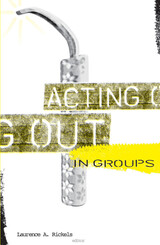
Examines outrageous public behavior and what it can tell us about cultural and political change.
The International Psychoanalytic Congress gathered in 1967 to define the clinical concept of “acting out.” Thirty years later, our society, which once labeled those who exhibited excessive aggression as delinquent, celebrates outrageous public behavior. In Acting Out in Groups, writers, literary theorists, and cultural critics explore therapeutic descriptions of acting out in relation to the conduct condoned, even encouraged, on daytime TV talk shows, at political rallies, and in performance.
Through a deconstruction of “acting out,” this collection seeks a new, performative style of critical discourse that incorporates the exuberance and intensity of acting out for analytical ends. Topics include the Jenny Jones murder trial; the response of psychoanalysts to the acclaimed documentary Crumb; the place of the Berlin Wall and other national symbols in German life; and the roles of aggression and discipline in childhood development.Contributors: Kathy Acker; Peter Canning; Julie Carlson, U of California, Santa Barbara; Susan Derwin, U of California, Santa Barbara; Andrew Hewitt, SUNY Buffalo; Gary Indiana; Rhonda Lieberman; Catherine Liu, U of Minnesota; Fred Moten, NYU; John Mowitt, U of Minnesota; Klaus Theweleit; Elisabeth Weber, U of California, Santa Barbara.
Moving beyond the identification of aggressive behaviors to an analysis of how and why we have arrived at a culture that thrives on humiliation, she critiques the social forces that gave rise to, and help maintain, bullying. Martocci’s analysis of gossip, laughter, stereotyping, and competition—dynamics that foment bullying and prompt responses of shame, violence, and depression—is positioned within a larger social narrative: the means by which we negotiate damaged social bonds and the role that bystanders play in the possibility of atonement, forgiveness, and redemption.
Martocci’s fresh perspective on bullying positions shame as pivotal. She urges us to acknowledge the pain and confusion caused by social disgrace; to understand its social, psychological, and neurological nature; and to address it through narratives of loss, grief, and redemption—cultural supports that are already in place.
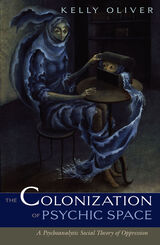
Reveals the psychic and social costs of racial and sexual oppression
We are, Julia Kristeva writes, strangers to ourselves; and indeed much of contemporary theory, whether psychoanalytic, historical, social, or critical, describes the human condition as one of alienation. Eloquently arguing that we cannot explain the development of individuality or subjectivity apart from its social context, Kelly Oliver makes a powerful case for recognizing the social aspects of alienation and the psychic aspects of oppression.
Oliver’s work shows how existentialist and psychoanalytic notions of alienation cover up specific forms of racist and sexist alienation that serve as the underside of the human condition. She reveals that such notions are actually symptomatic of the subject’s anxiety and guilt over the oppression on which his privileged position rests. Not only does such alienation not embody subjectivity and humanity, it in fact undermines them.Asserting that sublimation and forgiveness—and not alienation—constitute subjectivity, Oliver explores the complex ways in which the alienation unique to oppression leads to depression, shame, anger, or violence; and how these affects, now often misread and misdiagnosed, can be transformed into agency, individuality, solidarity, and community.
Joas argues for adding a third model of action to the two predominant models of rational and normative action—one that emphasizes the creative character of human action. This model encompasses the other two, allowing for a more comprehensive theory of action. Joas elaborates some implications of his model for theories of social movements and social change and for the status of action theory in sociology in the face of competition from theories advanced by Luhmann and Habermas.
The problem of action is of crucial importance in both sociology and philosophy, and this book—already widely debated in Germany—will add fresh impetus to the lively discussions current in the English-speaking world.


What we don't know about learning could fill a book--and it might be a schoolbook. In a masterly commentary on the possibilities of education, the eminent psychologist Jerome Bruner reveals how education can usher children into their culture, though it often fails to do so. Applying the newly emerging "cultural psychology" to education, Bruner proposes that the mind reaches its full potential only through participation in the culture--not just its more formal arts and sciences, but its ways of perceiving, thinking, feeling, and carrying out discourse. By examining both educational practice and educational theory, Bruner explores new and rich ways of approaching many of the classical problems that perplex educators.
Education, Bruner reminds us, cannot be reduced to mere information processing, sorting knowledge into categories. Its objective is to help learners construct meanings, not simply to manage information. Meaning making requires an understanding of the ways of one's culture--whether the subject in question is social studies, literature, or science. The Culture of Education makes a forceful case for the importance of narrative as an instrument of meaning making. An embodiment of culture, narrative permits us to understand the present, the past, and the humanly possible in a uniquely human way.
Going well beyond his earlier acclaimed books on education, Bruner looks past the issue of achieving individual competence to the question of how education equips individuals to participate in the culture on which life and livelihood depend. Educators, psychologists, and students of mind and culture will find in this volume an unsettling criticism that challenges our current conventional practices--as well as a wise vision that charts a direction for the future.

Why is fear a dominant emotion in contemporary society? Why are politicians using words like 'terror', 'evil' and 'fundamentalism', and what effect is it having on public consciousness?
Answering these questions, Walter A. Davis taps into the cultural psyche to explore the link between ideology and emotional and psychological manipulation. Starting with the three topics that have preoccupied social discourse since 9-11 -- terror, evil and fundamentalism -- he shows that the Bush administration has been hugely successful in controlling and developing a new political climate through the creation of an almost hypnotic mass consciousness.
Davis's findings take us to the heart of the ideological paralysis of the Left, while offering an innovative approach to understanding contemporary history.
Davis fuses a psychoanalytic and philosophical framework to explain the relation between culture and political events, from the sado-masochist hysteria of Mel Gibson's The Passion of the Christ' to the atrocities at Abu Ghraib prison; and from the genocidal use of depleted uranium in Iraq to the apocalyptic language driving the Christian Right's assault on basic human rights.
He exposes the motives and belief-systems of this new American psyche and shows how it sustains the Bush administration's agenda. Illuminating how psychological needs govern political action, Davis reveals why the relationship between politics and public consciousness has massive implications for all of us beyond America's borders.
Walter A. Davis is Professor Emeritus in the Department of English at Ohio State University. He is the author of six previous books, including Inwardness and Existence: Subjectivity in/and Hegel, Heidegger, Marx and Freud (University of Wisconsin Press, 1989) and Deracination: Historicity, Hiroshima, and the Tragic Imperative (SUNY Press, 2001).


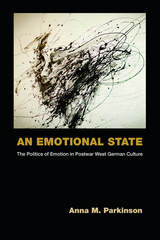
One of the book’s major contributions is that it offers an analytical distinction between emotion and affect, finding a compelling way to talk about affect and emotion that is informed by affect theory but that integrates psychoanalysis. The study draws on the psychoanalytic writings of Freud, Margarete and Alexander Mitscherlich, and André Green, while engaging with interdisciplinary theorists of affect including Barbara Rosenwein, Lauren Berlant, Ann Cvetkovich, and Eve Kosofsky Sedgwick among many others.


Half of the material included in this edition of Simmel's writings represents new translations. This includes Simmel's important, lengthy, and previously untranslated "Group Expansion and Development of Individuality," as well as three selections from his most neglected work, Philosophy of Money; in addition, the introduction to Probleme der Geschichtsphilosophie, chapter one of the Lebensanschauung, and three essays are translated for the first time.

The essays contained within the volume--by scholars from a wide range of disciplines including American studies, art history, political science, psychology, and sociology--each engage a particular instance of the practices of memory as they are complicated by globalization.
Subjects include the place of nostalgia in post-Yugoslavia Serbian national memory, Russian identity after the collapse of the Soviet Union, political remembrance in South Africa’s Truth and Reconciliation Commissions, the role of Chilean mass media in forging national identity following the arrest of Augusto Pinochet, American debates over memorializing Japanese internment camps, and how the debate over the Iraq war is framed by memories of opposition to the Vietnam War.
Arguing that relationships between the two realms range from those that are highly "integrating" to those that are highly "segmenting," Nippert-Eng examines the ways people sculpt the boundaries between home and work. With remarkable sensitivity to the symbolic value of objects and actions, Nippert-Eng explores the meaning of clothing, wallets, lunches and vacations, and the places and ways in which we engage our family, friends, and co-workers. Commuting habits are also revealing, showing how we make the transition between home and work selves though ritualized behavior like hellos and goodbyes, the consumption of food, the way we dress, our choices of routes to and from work, and our listening, working, and sleeping habits during these journeys.
The ways each of us manages time, space, and people not only reflect but reinforce lives that are more "integrating" or "segmenting" at any given time. In clarifying what we take for granted, this book will leave you thinking in different ways about your life and work.

Do cities work anymore? How did they get to be such sprawling conglomerations of lookalike subdivisions, megafreeways, and "big box" superstores surrounded by acres of parking lots? And why, most of all, don't they feel like real communities? These are the questions that Alex Marshall tackles in this hard-hitting, highly readable look at what makes cities work.
Marshall argues that urban life has broken down because of our basic ignorance of the real forces that shape cities-transportation systems, industry and business, and political decision making. He explores how these forces have built four very different urban environments-the decentralized sprawl of California's Silicon Valley, the crowded streets of New York City's Jackson Heights neighborhood, the controlled growth of Portland, Oregon, and the stage-set facades of Disney's planned community, Celebration, Florida.
To build better cities, Marshall asserts, we must understand and intelligently direct the forces that shape them. Without prescribing any one solution, he defines the key issues facing all concerned citizens who are trying to control urban sprawl and build real communities. His timely book will be important reading for a wide public and professional audience.
Why do men talk and women gossip, and which is better for you? Why is monogamy a drain on the brain? And why should you be suspicious of someone who has more than 150 friends on Facebook?
We are the product of our evolutionary history, and this history colors our everyday lives—from why we joke to the depth of our religious beliefs. In How Many Friends Does One Person Need? Robin Dunbar uses groundbreaking experiments that have forever changed the way evolutionary biologists explain how the distant past underpins our current behavior.
We know so much more now than Darwin ever did, but the core of modern evolutionary theory lies firmly in Darwin’s elegantly simple idea: organisms behave in ways that enhance the frequency with which genes are passed on to future generations. This idea is at the heart of Dunbar’s book, which seeks to explain why humans behave as they do. Stimulating, provocative, and immensely enjoyable, his book invites you to explore the number of friends you have, whether you have your father’s brain or your mother’s, whether morning sickness might actually be good for you, why Barack Obama’s 2008 victory was a foregone conclusion, what Gaelic has to do with frankincense, and why we laugh. In the process, Dunbar examines the role of religion in human evolution, the fact that most of us have unexpectedly famous ancestors, and why men and women never seem able to see eye to eye on color.

Everyone worries about privacy these days. As corporations and governments devise increasingly sophisticated data gathering tools and joining Facebook verges on obligatory, concerns over the use and abuse of personal information are undeniable. But the way privacy functions on the virtual frontier of the Internet is only a subset of the fascinating ways we work to achieve it throughout our everyday lives. In Islands of Privacy, Christena Nippert-Eng pries open the blinds, giving us an intimate view into the full range of ordinary people’s sometimes extraordinary efforts to preserve the border between themselves and the rest of the world.
Packed with stories that are funny and sad, familiar and strange, Islands of Privacy tours the myriad arenas where privacy battles are fought, lost, and won. Nippert-Eng explores how we manage our secrets, our phone calls and e-mail, the perimeters of our homes, and our interactions with neighbors. She discovers that everybody practices the art of selectively concealing and disclosing information on a daily basis. This important balancing act governs a wide range of behaviors, from deciding whether to give our bosses our cell phone numbers to choosing what we carry in our wallets or purses. Violations of privacy and anxiety about how we grant it to each other also come under Nippert-Eng’s microscope as she crafts a compelling argument that successfully managing privacy is critical for successfully maintaining our relationships with each other and our selves.
Roaming from the beach to the bank and from the bathroom to the bus, Nippert-Eng’s keenly observed and vividly told book gives us the skinny on how we defend our shrinking islands of privacy in the vast ocean of accessibility that surrounds us.


"If philosophical eminence be measured by the extent to which a man's writings anticipate the focal problems of a later day and contain a point of view which suggests persuasive solutions to many of them, then George Herbert Mead has justly earned the high praise bestowed upon him by Dewey and Whitehead as a 'seminal mind of the very first order.'"—Sidney Hook, The Nation
This collection gets to the heart of Mead’s meditations on social psychology and social philosophy. Its penetrating, conversational tone transports the reader directly into Mead’s classroom as he teases out the genesis of the self and the nature of the mind. The book captures his wry humor and shrewd reasoning, showing a man comfortable quoting Aristotle alongside Alice in Wonderland.
Included in this edition are an insightful foreword from leading Mead scholar Hans Joas, a revealing set of textual notes by Dan Huebner that detail the text’s origins, and a comprehensive bibliography of Mead’s other published writings. While Mead’s lectures inspired hundreds of students, much of his brilliance has been lost to time. This new edition ensures that Mead’s ideas will carry on, inspiring a new generation of thinkers.

What our response to the Bosnian crisis can tell us about multiculturalism in the United States and beyond.
How did Bosnia, once a polity of intersecting and overlapping identities, come to be understood as an intractable ethnic problem? David Campbell pursues this question-and its implications for the politics of community, democracy, justice, and multiculturalism-through readings of media and academic representations of the conflict in Bosnia. National Deconstruction is a rethinking of the meaning of “ethnic/nationalist” violence and a critique of the impoverished discourse of identity politics that crippled the international response to the Bosnian crisis.
Rather than assuming the preexistence of an entity called Bosnia, Campbell considers the complex array of historical, statistical, cartographic, and other practices through which the definitions of Bosnia have come to be. These practices traverse a continuum of political spaces, from the bodies of individuals and the corporate body of the former Yugoslavia to the international bodies of the world community. Among the book’s many original disclosures, arrived at through a critical reading of international diplomacy, is the shared identity politics of the peacemakers and paramilitaries. Equally significant is Campbell’s conclusion that the international response to the Bosnian war was hamstrung by the poverty of Western thought on the politics of heterogeneous communities. Indeed, he contends that Europe and the United States intervened in Bosnia not to save the ideal of multiculturalism abroad but rather to shore up the nationalist imaginary so as to contain the ideal of multiculturalism at home.By bringing to the fore the concern with ethics, politics, and responsibility contained in more traditional accounts of the Bosnian war, this book is a major statement on the inherently ethical and political assumptions of deconstructive thought-and the reworkings of the politics of community it enables.Awarded “Book of the Year 1999” by the International Forum Bosnia (Sarajevo) and the Human Rights Review (USA).ISBN 0-8166-2936-6 Cloth $62.95xxISBN 0-8166-2937-4 Paper $24.95x382 pages 5 7/8 x 9 SeptemberTranslation inquiries: University of Minnesota Press
People—especially Americans—are by and large optimists. They're much better at imagining best-case scenarios (I could win the lottery!) than worst-case scenarios (A hurricane could destroy my neighborhood!). This is true not just of their approach to imagining the future, but of their memories as well: people are better able to describe the best moments of their lives than they are the worst.
Though there are psychological reasons for this phenomenon, Karen A.Cerulo, in Never Saw It Coming, considers instead the role of society in fostering this attitude. What kinds of communities develop this pattern of thought, which do not, and what does that say about human ability to evaluate possible outcomes of decisions and events?
Cerulo takes readers to diverse realms of experience, including intimate family relationships, key transitions in our lives, the places we work and play, and the boardrooms of organizations and bureaucracies. Using interviews, surveys, artistic and fictional accounts, media reports, historical data, and official records, she illuminates one of the most common, yet least studied, of human traits—a blatant disregard for worst-case scenarios. Never Saw It Coming, therefore, will be crucial to anyone who wants to understand human attempts to picture or plan the future.
“In Never Saw It Coming, Karen Cerulo argues that in American society there is a ‘positive symmetry,’ a tendency to focus on and exaggerate the best, the winner, the most optimistic outcome and outlook. Thus, the conceptions of the worst are underdeveloped and elided. Naturally, as she masterfully outlines, there are dramatic consequences to this characterological inability to imagine and prepare for the worst, as the failure to heed memos leading up to both the 9/11 and NASA Challenger disasters, for instance, so painfully reminded us.”--Robin Wagner-Pacifici, Swarthmore College
“Katrina, 9/11, and the War in Iraq—all demonstrate the costliness of failing to anticipate worst-case scenarios. Never Saw It Coming explains why it is so hard to do so: adaptive behavior hard-wired into human cognition is complemented and reinforced by cultural practices, which are in turn institutionalized in the rules and structures of formal organizations. But Karen Cerulo doesn’t just diagnose the problem; she uses case studies of settings in which people effectively anticipate and deal with potential disaster to describe structural solutions to the chronic dilemmas she describes so well. Never Saw It Coming is a powerful contribution to the emerging fields of cognitive and moral sociology.”--Paul DiMaggio, Princeton University
Cultural changes over the past two decades have led to a proliferation of new social movements in Europe and the United States. New social movements such as ecology, peace, ethnicity, New Age philosophies, alternative medicine, and gender and sexual identity are among those that are emerging to challenge traditional categories in social movement theory. Synthesizing classic and modern perspectives the contributors help to redefine the field of social movements and advance an understanding of them through cross-cultural research, comparison with older movements, and an examination of the dimensions of identity—individual, collective, and melding of the two.

Cooley's work relating self and community is now more relevant than ever to the problems of understanding and directing modern democratic societies. Cooley applied the ideas of pragmatism to developing a systematic way of approaching social action, social change, and social order; he used these interrelated theories to analyze the social problems and cultural crises of the age. According to Cooley, social change is a fragile, interactive process that, due to constantly arising problems of action, requires ongoing scrutiny by the public. This collection of Cooley's best work is an important contribution not only to the history of ideas—especially to the origin of modern sociological theory— but also to the current public debate on civil society, community, and democracy.

Stewart refrains from positing an overarching system—whether it’s called globalization or neoliberalism or capitalism—to describe the ways that economic, political, and social forces shape individual lives. Instead, she begins with the disparate, fragmented, and seemingly inconsequential experiences of everyday life to bring attention to the ordinary as an integral site of cultural politics. Ordinary affect, she insists, is registered in its particularities, yet it connects people and creates common experiences that shape public feeling. Through this anecdotal history—one that poetically ponders the extremes of the ordinary and portrays the dense network of social and personal connections that constitute a life—Stewart asserts the necessity of attending to the fleeting and changeable aspects of existence in order to recognize the complex personal and social dynamics of the political world.
The Performer-Audience Connection is a pioneering foray into one of the major puzzles of human communication: the communication of emotion in dance. It is the first attempt of its kind systematically to investigate what performers wish to convey and what audiences perceive in the performance of dance.
The centerpiece of this provocative book is an examination of performer intentions and audience response at eight dance performances in Washington, D.C. Part of the Smithsonian Institution Division of Performing Arts Dance Series, these concerts featured a variety of dance genres and cultures: American tap dance, Kathakali dance-drama from Kerala, India, Japanese Kabuki, contemporary avant-garde dance, Philippine folk dance, the Indian classical tradition of Kuchipudi, and modern dance to an AfroAmerican spiritual.
How did dancer and audience interact at the emotional level on these eight occasions? What affected performer-audience rapport? Through interviews of both spectators and dancers, Judith Lynne Hanna explores the performers' ways of imparting emotion through movement and audience members' expectations and responses. In doing so she casts new light on important issues of cultural identity, sex role, historic attitudes toward dance, and even marketing the arts today.
A landmark work not only for performers who wish to reach their audiences more effectively but also for choreographers, anthropologists, specialists in nonverbal communication, behavioral scientists, educators, and all who are fascinated by the arts and the special magic of the "performer-audience connection."

“Monkey see, monkey do” may sound simple, but how an individual perceives and processes the behavior of another is one of the most complex and fascinating questions related to the social life of humans and other primates. In The Primate Mind, experts from around the world take a bottom-up approach to primate social behavior by investigating how the primate mind connects with other minds and exploring the shared neurological basis for imitation, joint action, cooperative behavior, and empathy.
In the past, there has been a tendency to ask all-or-nothing questions, such as whether primates possess a theory of mind, have self-awareness, or have culture. A bottom-up approach asks, rather, what are the underlying cognitive processes of such capacities, some of which may be rather basic and widespread. Prominent neuroscientists, psychologists, ethologists, and primatologists use methods ranging from developmental psychology to neurophysiology and neuroimaging to explore these evolutionary foundations.
A good example is mirror neurons, first discovered in monkeys but also assumed to be present in humans, that enable a fusing between one’s own motor system and the perceived actions of others. This allows individuals to read body language and respond to the emotions of others, interpret their actions and intentions, synchronize and coordinate activities, anticipate the behavior of others, and learn from them. The remarkable social sophistication of primates rests on these basic processes, which are extensively discussed in the pages of this volume.



Bonhomme argues that the public belief in sex thieves cannot be considered a superstition or form of mass hysteria. Rather, he brings to light multiple factors that explain the rumor’s success and shows how the cultural dynamic can operate on a vast scale. Analyzing the rumor on both transnational and local levels, he demonstrates how it arises from the ambiguities and dangers of anonymity, and thus that it reveals an occult flipside to everyday social interaction. Altogether, this book provides both richly ethnographic and theoretical understandings of urban sociality and the dynamics of human communication in contemporary Africa and beyond.

Human beings evolved in the company of others and flourish in proportion to their positive social ties. To understand the human brain, we must situate its biology in the wider context of society. To understand society, we must also consider how the brains and minds of individuals shape interactions with other human beings. Social Neuroscience offers a comprehensive new framework for studying the brain, human development, and human behavior.
In this book, leading researchers in the fields of neurobiology, psychiatry, psychology, and sociology elucidate the connections between brain biology and the brain’s functioning in the social world, providing a state-of-the-art interdisciplinary explanation of how humans think and act, as well as the ways we define and treat pathological behavior. Synthesizing the insights and perspectives of these experts, Social Neuroscience examines how neural processes make the brain sensitive to social experience, how cognition shapes social behavior, and how social networks create a range of responses among different individuals to the same environmental stimuli.
The mutually reinforcing connections between brain, mind, and society have profound implications for human health, from the emotionally damaging effects of severe social deprivation to the neurological impact of parental abuse and neighborhood violence. The authors explore these connections, with special focus on mental illnesses, including schizophrenia—a disorder characterized by marked social deficits in which a neurological basis is now well established.

The experience of the Stoners and Traders is a profound testament to human sociality. Even in the form of simulation, even as a game, the participants found themselves quickly—and with real conviction—bound to the ideologies and practices of their in-group. The Stoners enjoyed their days lounging, chatting, and making crafts, while the Traders—through a complex market of playing cards—competed for the highest bankrolls. When they came into contact, misunderstanding, competition, and even manipulation prevailed, to the point that each group became so convinced of its own superiority that even after the simulation’s end the students could not reconcile.
Throughout her riveting narrative, Downing Wilson interweaves fascinating discussions on the importance of play, emotions, and intergroup interaction in the formation and maintenance of group identities, as well as on the dynamic social processes at work when different cultural groups interact. A fascinating account of social experimentation, the book paints a vivid portrait of our deepest social tendencies and the powers they have over how we make friends and enemies alike.

In Germany, the years immediately following World War II call forward images of obliterated cities, hungry refugees, and ghostly monuments to Nazi crimes. The temptation of despair was hard to resist, and to contemporary observers the road toward democracy in the Western zones of occupation seemed rather uncertain. Drawing on a vast array of American, German, and other sources—diaries, photographs, newspaper articles, government reports, essays, works of fiction, and film—Werner Sollors makes visceral the experiences of defeat and liberation, homelessness and repatriation, concentration camps and denazification.
These tales reveal writers, visual artists, and filmmakers as well as common people struggling to express the sheer magnitude of the human catastrophe they witnessed. Some relied on traditional images of suffering and death, on Biblical scenes of the Flood and the Apocalypse. Others shaped the mangled, nightmarish landscape through abstract or surreal forms of art. Still others turned to irony and black humor to cope with the incongruities around them. Questions about guilt and complicity in a totalitarian country were raised by awareness of the Holocaust, making “After Dachau” a new epoch in Western history.
The Temptation of Despair is a book about coming to terms with the mid-1940s, the contradictory emotions of a defeated people—sorrow and anger, guilt and pride, despondency and resilience—as well as the ambiguities and paradoxes of Allied victory and occupation.

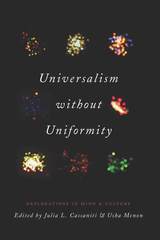
The contributors to Universalism without Uniformity offer tools for bridging silos that have historically separated anthropology’s attention to culture and psychology’s interest in universal mental processes. Throughout, they seek to answer intricate yet fundamental questions about why we are motivated to find meaning in everything around us and, in turn, how we constitute the cultural worlds we inhabit through our intentional involvement in them. Laying bare entrenched disciplinary blind spots, this book offers a trove of insights on issues such as morality, emotional functioning, and conceptions of the self across cultures. Filled with impeccable empirical research coupled with broadly applicable theoretical reflections on taking psychological diversity seriously, Universalism without Uniformity breaks new ground in the study of mind and culture.

Ethnocentrism—our tendency to partition the human world into in-groups and out-groups—pervades societies around the world. Surprisingly, though, few scholars have explored its role in political life. Donald Kinder and Cindy Kam fill this gap with Us Against Them, their definitive explanation of how ethnocentrism shapes American public opinion.
Arguing that humans are broadly predisposed to ethnocentrism, Kinder and Kam explore its impact on our attitudes toward an array of issues, including the war on terror, humanitarian assistance, immigration, the sanctity of marriage, and the reform of social programs. The authors ground their study in previous theories from a wide range of disciplines, establishing a new framework for understanding what ethnocentrism is and how it becomes politically consequential. They also marshal a vast trove of survey evidence to identify the conditions under which ethnocentrism shapes public opinion. While ethnocentrism is widespread in the United States, the authors demonstrate that its political relevance depends on circumstance. Exploring the implications of these findings for political knowledge, cosmopolitanism, and societies outside the United States, Kinder and Kam add a new dimension to our understanding of how democracy functions.

In this award-winning book, David Berreby describes how twenty-first-century science is addressing these age-old questions. Ably linking neuroscience, social psychology, anthropology, and other fields, Us and Them investigates humanity’s “tribal mind” and how this alters our thoughts, affects our health, and is manipulated for good and ill. From the medical effects of stress to the rhetoric of politics, our perceptions of group identity affect every part of our lives. Science, Berreby argues, shows how this part of human nature is both unexpectedly important and surprisingly misunderstood.
Humans need our tribal sense—it tells us who we are, how we should behave, and links us to others as well as the past and future. Some condemn this instinct, while others celebrate it. Berreby offers in Us and Them a third alternative: how we can accept and understand our inescapable tribal mind.
“[A] brave book. . . . Berreby’s quest is to understand what he sees as a fundamental human urge to classify and identify with ‘human kinds.’”—Henry Gee, Scientific American
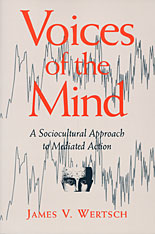
In Voices of the Mind, James Wertsch outlines an approach to mental functioning that stresses its inherent cultural, historical, and institutional context. A critical aspect of this approach is the cultural tools or “mediational means” that shape both social and individual processes. In considering how these mediational means—in particular, language—emerge in social history and the role they play in organizing the settings in which human beings are socialized, Wertsch achieves fresh insights into essential areas of human mental functioning that are typically unexplored or misunderstood.
Although Wertsch’s discussion draws on the work of a variety of scholars in the social sciences and the humanities, the writings of two Soviet theorists, L. S. Vygotsky (1896–1934) and Mikhail Bakhtin (1895–1975), are of particular significance. Voices of the Mind breaks new ground in reviewing and integrating some of their major theoretical ideas and in demonstrating how these ideas can be extended to address a series of contemporary issues in psychology and related fields.
A case in point is Wertsch’s analysis of “voice,” which exemplifies the collaborative nature of his effort. Although some have viewed abstract linguistic entities, such as isolated words and sentences, as the mechanism shaping human thought, Wertsch turns to Bakhtin, who demonstrated the need to analyze speech in terms of how it “appropriates” the voices of others in concrete sociocultural settings. These appropriated voices may be those of specific speakers, such as one’s parents, or they may take the form of “social languages” characteristic of a category of speakers, such as an ethnic or national community. Speaking and thinking thus involve the inherent process of “ventriloquating” through the voices of other socioculturally situated speakers. Voices of the Mind attempts to build upon this theoretical foundation, persuasively arguing for the essential bond between cognition and culture.

“In your country,” Ignacio Martín-Baró remarked to a North American colleague, “it’s publish or perish. In ours, it’s publish and perish.” In November 1989 a Salvadoran death squad extinguished his eloquent voice, raised so often and so passionately against oppression in his adopted country. A Spanish-born Jesuit priest trained in psychology at the University of Chicago, Martín-Baró devoted much of his career to making psychology speak to the community as well as to the individual. This collection of his writings, the first in English translation, clarifies Martín-Baró’s importance in Latin American psychology and reveals a major force in the field of social theory.
Gathering essays from an array of professional journals, this volume introduces readers to the questions and concerns that shaped Martín-Baró’s thinking over several decades: the psychological dimensions of political repression, the impact of violence and trauma on child development and mental health, the use of psychology for political ends, religion as a tool of ideology, and defining the “real” and the “normal” under conditions of state-sponsored violence and oppression, among others. Though grounded in the harsh realities of civil conflict in Central America, these essays have broad relevance in a world where political and social turmoil determines the conditions of daily life for so many. In them we encounter Martín-Baró’s humane, impassioned voice, reaffirming the essential connections among mental health, human rights, and the struggle against injustice. His analysis of contemporary social problems, and of the failure of the social sciences to address those problems, permits us to understand not only the substance of his contribution to social thought but also his lifelong commitment to the campesinos of El Salvador.
READERS
Browse our collection.
PUBLISHERS
See BiblioVault's publisher services.
STUDENT SERVICES
Files for college accessibility offices.
RECENTLY PUBLISHED







UChicago Accessibility Resources
home | accessibility | search | about | contact us
BiblioVault ® 2001 - 2024
The University of Chicago Press