
 A SCHOLARLY BOOK REPOSITORY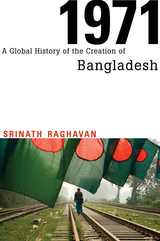
The war of 1971 was the most significant geopolitical event in the Indian subcontinent since its partition in 1947. At one swoop, it led to the creation of Bangladesh, and it tilted the balance of power between India and Pakistan steeply in favor of India. The Line of Control in Kashmir, the nuclearization of India and Pakistan, the conflicts in Siachen Glacier and Kargil, the insurgency in Kashmir, the political travails of Bangladesh—all can be traced back to the intense nine months in 1971.
Against the grain of received wisdom, Srinath Raghavan contends that far from being a predestined event, the creation of Bangladesh was the product of conjuncture and contingency, choice and chance. The breakup of Pakistan and the emergence of Bangladesh can be understood only in a wider international context of the period: decolonization, the Cold War, and incipient globalization. In a narrative populated by the likes of Nixon, Kissinger, Zhou Enlai, Indira Gandhi, Zulfikar Ali Bhutto, Sheikh Mujibur Rahman, Tariq Ali, George Harrison, Ravi Shankar, and Bob Dylan, Raghavan vividly portrays the stellar international cast that shaped the origins and outcome of the Bangladesh crisis.
This strikingly original history uses the example of 1971 to open a window to the nature of international humanitarian crises, their management, and their unintended outcomes.
Drawing on archival sources and fieldwork, the contributors explore aspects of modernity within societies of South Asia, the Middle East, and Africa. Whether considering how European ideas of Orientalism became foundational myths of Indian nationalism; how racial caste systems between blacks, South Asians, and whites operate in post-apartheid South Africa; or how Indian immigrants to the United States negotiate their identities, these essays demonstrate that the contours of cultural and identity politics did not simply originate in metropolitan centers and get adopted wholesale in the colonies. Colonial and postcolonial modernisms have emerged via the active appropriation of, or resistance to, far-reaching European ideas. Over time, Orientalism and nationalist and racialized knowledges become indigenized and acquire, for all practical purposes, a completely "Third World" patina. Antinomies of Modernity shows that people do make history, constrained in part by political-economic realities and in part by the categories they marshal in doing so.
Contributors. Neville Alexander, Andrew Barnes, Vasant Kaiwar, Sucheta Mazumdar, Minoo Moallem, Mohamad Tavakoli-Targhi, A. R. Venkatachalapathy, Michael O. West
The first critical analysis of contemporary arranged marriage among South Asians in a global context
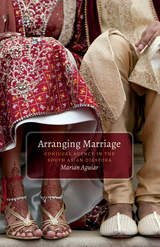
Arranged marriage is an institution of global fascination—an object of curiosity, revulsion, outrage, and even envy. Marian Aguiar provides the first sustained analysis of arranged marriage as a transnational cultural phenomenon, revealing how its meaning has been continuously reinvented within the South Asian diaspora of Britain, the United States, and Canada. Aguiar identifies and analyzes representations of arranged marriage in an interdisciplinary set of texts—from literary fiction and Bollywood films, to digital and print media, to contemporary law and policy on forced marriage.
Aguiar interprets depictions of South Asian arranged marriage to show we are in a moment of conjugal globalization, identifying how narratives about arranged marriage bear upon questions of consent, agency, state power, and national belonging. Aguiar argues that these discourses illuminate deep divisions in the processes of globalization constructed on a fault line between individualist and collectivist agency and in the process, critiques neoliberal celebrations of “culture as choice” that attempt to bridge that separation. Aguiar advocates situating arranged marriage discourses within their social and material contexts so as to see past reductive notions of culture and grasp the global forces mediating increasingly polarized visions of agency.
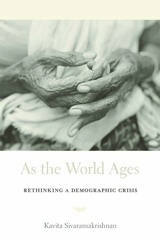
People are living longer, creating an unexpected boom in the elderly population. Longevity is increasing not only in wealthy countries but in developing nations as well. In response, many policy makers and scholars are preparing for a global crisis of aging. But for too long, Western experts have conceived of aging as a universal predicament—one that supposedly provokes the same welfare concerns in every context. In the twenty-first century, Kavita Sivaramakrishnan writes, we must embrace a new approach to the problem, one that prioritizes local agendas and values.
As the World Ages is a history of how gerontologists, doctors, social scientists, and activists came to define the issue of global aging. Sivaramakrishnan shows that transnational organizations like the United Nations, private NGOs, and philanthropic foundations embraced programs that reflected prevailing Western ideas about development and modernization. The dominant paradigm often assumed that, because large-scale growth of an aging population happened first in the West, developing societies will experience the issues of aging in the same ways and on the same terms as their Western counterparts. But regional experts are beginning to question this one-size-fits-all model and have chosen instead to recast Western expertise in response to provincial conditions. Focusing on South Asia and Africa, Sivaramakrishnan shows how regional voices have argued for an approach that responds to local needs and concerns. The research presented in As the World Ages will help scholars, policy makers, and advocates appreciate the challenges of this recent shift in global demographics and find solutions sensitive to real life in diverse communities.
Winner of the Theodore Saloutos Memorial Book Award
Winner of the Association for Asian American Studies Book Award for History
A Times Literary Supplement Book of the Year
A Saveur “Essential Food Books That Define New York City” Selection
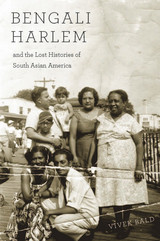
In the final years of the nineteenth century, small groups of Muslim peddlers arrived at Ellis Island every summer, bags heavy with embroidered silks from their home villages in Bengal. The American demand for “Oriental goods” took these migrants on a curious path, from New Jersey’s beach boardwalks into the heart of the segregated South. Two decades later, hundreds of Indian Muslim seamen began jumping ship in New York and Baltimore, escaping the engine rooms of British steamers to find less brutal work onshore. As factory owners sought their labor and anti-Asian immigration laws closed in around them, these men built clandestine networks that stretched from the northeastern waterfront across the industrial Midwest.
The stories of these early working-class migrants vividly contrast with our typical understanding of immigration. Vivek Bald’s meticulous reconstruction reveals a lost history of South Asian sojourning and life-making in the United States. At a time when Asian immigrants were vilified and criminalized, Bengali Muslims quietly became part of some of America’s most iconic neighborhoods of color, from Tremé in New Orleans to Detroit’s Black Bottom, from West Baltimore to Harlem. Many started families with Creole, Puerto Rican, and African American women.
As steel and auto workers in the Midwest, as traders in the South, and as halal hot dog vendors on 125th Street, these immigrants created lives as remarkable as they are unknown. Their stories of ingenuity and intermixture challenge assumptions about assimilation and reveal cross-racial affinities beneath the surface of early twentieth-century America.
This ground-breaking collection of new interviews, critical essays, and commentary explores South Asian identity and culture. Sensitive to the false homogeneity implied by "South Asian," "diaspora," "postcolonial," and "Asian American," the contributors attempt to unpack these terms. By examining the social, economic, and historical particularities of people who live "between the lines"—on and between borders—they reinstate questions of power and privilege, agency and resistance. As South Asians living in the United States and Canada, each to some degree must reflect on the interaction of the personal "I," the collective "we," and the world beyond.
The South Asian scholars gathered together in this volume speak from a variety of theoretical perspectives; in the essays and interviews that cross the boundaries of conventional academic disciplines, they engage in intense, sometimes contentious, debate.
Contributors: Meena Alexander, Gauri Viswanathan, Gayatri Chakravorty Spivak, Amritjit Singh, M. G. Vassanji, Sohail Inayatullah, Ranita Chatterjee, Benita Mehta, Sanjoy Majumder, Mahasveta Barua, Sukeshi Kamra, Samir Dayal, Pushpa Naidu Parekh, Indrani Mitra, Huma Ibrahim, Amitava Kumar, Shantanu DuttaAhmed, Uma Parameswaran.
In the series Asian American History and Culture, edited by Sucheng Chan, David Palumbo-Liu, Michael Omi, K. Scott Wong, and Linda Trinh Võ.
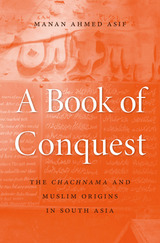
The question of how Islam arrived in India remains markedly contentious in South Asian politics. Standard accounts center on the Umayyad Caliphate’s incursions into Sind and littoral western India in the eighth century CE. In this telling, Muslims were a foreign presence among native Hindus, sowing the seeds of a mutual animosity that presaged the subcontinent’s partition into Pakistan and India many centuries later.
But in a compelling reexamination of the history of Islam in India, Manan Ahmed Asif directs attention to a thirteenth-century text that tells the story of Chach, the Brahmin ruler of Sind, and his kingdom’s later conquest by the Muslim general Muhammad bin Qasim in 712 CE. The Chachnama has long been a touchstone of Indian history, yet it is seldom studied in its entirety. Asif offers a close and complete analysis of this important text, untangling its various registers and genres in order to reconstruct the political vision at its heart.
Asif challenges the main tenets of the Chachnama’s interpretation: that it is a translation of an earlier Arabic text and that it presents a history of conquest. Debunking both ideas, he demonstrates that the Chachnama was originally Persian and, far from advancing a narrative of imperial aggression, is a subtle and sophisticated work of political theory, one embedded in both the Indic and Islamic ethos. This social and intellectual history of the Chachnama is an important corrective to the divisions between Muslim and Hindu that so often define Pakistani and Indian politics today.
Contributors. Jason Cons, Rosalind Evans, Nicholas Farrelly, David N. Gellner, Radhika Gupta, Sondra L. Hausner, Annu Jalais, Vibha Joshi, Nayanika Mathur, Deepak K. Mishra, Anastasia Piliavsky, Jeevan R. Sharma, Willem van Schendel
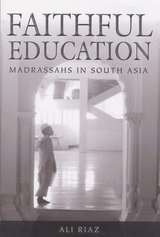
Ali Riaz responds to these questions through an in-depth examination of the madraassahs in Pakistan, Bangladesh, and India. In Faithful Education, he examines these institutions and their roles in relation to current international politics.
"[The six-volume set] is certain to be the standard reference for all subsequent scholarship. The editors . . . have assembled and analyzed a vast collection of knowledge. . . . If the first volume is an indication, the complete set will be comprehensive and judicious." —John Noble Wilford, New York Times Book Review
"As well as enlarging the mind and lifting the spirits through the sheer magnitude of its endeavor, the collection delights the senses. The illustrations are exquisite: browsing fingers will instinctively alight on the sheaf of maps reproduced on stock slightly thicker than that of the text. The maps are so beguiling in the tantalizing glimpses they offer of other, seemingly incomprehensible, worlds, that the sight of them will stir the connoisseur in even the most-guarded scholar." —Ronald Rees, Geographical Review
"The corpus it brings to light, along with the extensive references, bibliography, and exhaustive appendices containing valuable comments about many of the pieces discussed, together make this book an important resource for the scholar."—Robert Provin, Professional Geographer
"This volume is a landmark of new research and will certainly contribute to further discoveries, translations, interpretations, inventories, more precise dating and the construction of stemmata." —Christian Jacob, Cartographica
"In seeking to characterize the cartography of premodern Islamic and south Asian societies, the editors offer the image of an archipelago of cartographically conscious islands in a silent sea. The research potential which they have revealed is clearly vast and underappreciated, with many islands still to be discovered or enlarged. This important book, does more, therefore, than plug a huge gap in cartographic historiography. It provides the foundation for crosscultural cartographic research in two major world regions."-Jeffrey Stone, Ecumene
This pathbreaking collection builds on recent examinations of identity in the postcolonial states of South and Southeast Asia by investigating the ways in which domestic workers and their employers come to know and depict one another and themselves through their interactions inside and outside of the home. This setting provides a particularly apt arena for examining the daily negotiations of power and hegemony.
Contributors to the volume, all anthropologists, provide rich ethnographic analyses that avoid a narrow focus on either workers or employers. Rather, they examine systems of power through specific topics that range from the notion of "nurture for sale" to the roles of morality and humor in the negotiation of hierarchy and the dilemmas faced by foreign employers who find themselves in life-and-death dependence on their servants.
With its provocative theoretical and ethnographic contributions to current debates, this collection will be of interest to scholars in Asian studies, women's studies, anthropology, sociology, and cultural studies.
Kathleen M. Adams is Associate Professor of Anthropology, Loyola University of Chicago. Sara Dickey is Associate Professor of Anthropology, Bowdoin College.
India’s Rise as an Asian Power examines India’s rise to power and the obstacles it faces in the context of domestic governance and security, relationships and security issues with its South Asian neighbors, and international relations in the wider Asian region. Instead of a straight-line projection based on traditional measures of power such as population size, economic growth rates, and military spending, Sandy Gordon’s nuanced view of India’s rise focuses on the need of any rising power to develop the means to deal with challenges in its domestic, neighborhood (South Asia), and regional (continental) spheres.
Terrorism, insurgency, border disputes, and water conflict and shortages are examples of some of India’s domestic and regional challenges. Gordon argues that before it can assume the mantle of a genuine Asian power or world power, India must improve its governance and security; otherwise, its economic growth and human development will continue to be hindered and its vulnerabilities may be exploited by competitors in its South Asian neighborhood or the wider region. This book will appeal to students and scholars of India and South Asia, security studies, foreign policy, and comparative politics, as well as country and regional specialists.

An unsparing indictment of an international system of terror that is fully countenanced by the West, Jallad presents close-up, detailed accounts of incidents of state terror and targeted violence throughout South Asia. Khalil, a reporter who himself endured torture at the hands of agents in Bangladesh, and whose remarkable story was featured in the New York Times, draws on countless hours of on-the-ground reporting and a broad network of activists and human rights advocates to build an undeniable portrait of the domination and repression that lies at the very core of statecraft in South Asia. Shielded by their protectors in the developed world, the perpetrators of these abuses deploy them strategically to silence dissent and crush opposition.
A brave, essential work of reporting and investigation, Jallad brings these horrific acts to prominence in order to make it impossible for Western governments to continue turning a blind eye to the human rights violations of their erstwhile allies.
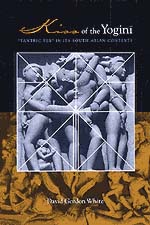
Kiss of the Yogini focuses on what White identifies as the sole truly distinctive feature of South Asian Tantra: sexualized ritual practices, especially as expressed in the medieval Kaula rites. Such practices centered on the exchange of powerful, transformative sexual fluids between male practitioners and wild female bird and animal spirits known as Yoginis. It was only by "drinking" the sexual fluids of the Yoginis that men could enter the family of the supreme godhead and thereby obtain supernatural powers and transform themselves into gods. By focusing on sexual rituals, White resituates South Asian Tantra, in its precolonial form, at the center of religious, social, and political life, arguing that Tantra was the mainstream, and that in many ways it continues to influence contemporary Hinduism, even if reformist misunderstandings relegate it to a marginal position.
Kiss of the Yogini contains White's own translations from over a dozen Tantras that have never before been translated into any European language. It will prove to be the definitive work for persons seeking to understand Tantra and the crucial role it has played in South Asian history, society, culture, and religion.

Distinguished historians of the ancient world analyze the earliest developments in human history and the rise of the first major civilizations, from the Middle East to India and China.
In this volume of the six-part History of the World series, Hans-Joachim Gehrke, a noted scholar of ancient Greece, leads a distinguished group of historians in analyzing prehistory, the earliest human settlements, and the rise of the world’s first advanced civilizations.
The Neolithic period—sometimes called the Agrarian Revolution—marked a turning point in human history. People were no longer dependent entirely on hunting animals and gathering plants but instead cultivated crops and reared livestock. This led to a more settled existence, notably along rivers such as the Nile, Tigris, Euphrates, Ganges, and Yangzi. Increased mastery of metals, together with innovations in tools and technologies, led to economic specialization, from intricate crafts to deadlier weapons, which contributed to the growth of village communities as well as trade networks. Family was the fundamental social unit, its relationships and hierarchies modeled on the evolving relationship between ruler and ruled. Religion, whether polytheist or monotheist, played a central role in shaping civilizations from the Persians to the Israelites. The world was construed in terms of a divinely ordained order: the Chinese imperial title Huangdi expressed divinity and heavenly splendor, while Indian emperor Ashoka was heralded as the embodiment of moral law.
From the latest findings about the Neanderthals to the founding of imperial China to the world of Western classical antiquity, Making Civilizations offers an authoritative overview of humanity’s earliest eras.
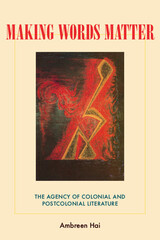
Why should Salman Rushdie describe his truth telling as an act of swallowing impure “haram” flesh from which the blood has not been drained? Why should Rudyard Kipling cast Kim, the imperial child–agent, as a body/text written upon and damaged by empire? Why should E. M. Forster evoke through the Indian landscape the otherwise unspeakable racial or homosexual body in his writing? In Making Words Matter: The Agency of Colonial and Postcolonial Literature, Ambreen Hai argues that these writers focus self–reflectively on the unstable capacity of words to have material effects and to be censored, and that this central concern with literary agency is embedded in, indeed definitive of, colonial and postcolonial literature.
Making Words Matter contends that the figure of the human body is central to the self–imagining of the text in the world because the body uniquely concretizes three dimensions of agency: it is at once the site of autonomy, instrumentality, and subjection. Hai’s work exemplifies a new trend in postcolonial studies: to combine aesthetics and politics and to offer a historically and theoretically informed mode of interpretation that is sophisticated, lucid, and accessible.
This is the first study to identify and examine the rich convergence of issues and to chart their dynamic. Hai opens up the field of postcolonial literary studies to fresh questions, engaging knowledgeably with earlier scholarship and drawing on interdisciplinary theory to read both well known and lesser–known texts in a new light. It should be of interest internationally to students and scholars in a variety of fields including British, Victorian, modernist, colonial, or postcolonial literary studies, queer or cultural studies, South Asian studies, history, and anthropology.
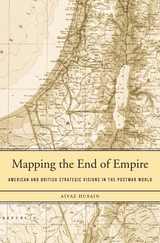
By the end of World War II, strategists in Washington and London looked ahead to a new era in which the United States shouldered global responsibilities and Britain concentrated its regional interests more narrowly. The two powers also viewed the Muslim world through very different lenses. Mapping the End of Empire reveals how Anglo–American perceptions of geography shaped postcolonial futures from the Middle East to South Asia.
Aiyaz Husain shows that American and British postwar strategy drew on popular notions of geography as well as academic and military knowledge. Once codified in maps and memoranda, these perspectives became foundations of foreign policy. In South Asia, American officials envisioned an independent Pakistan blocking Soviet influence, an objective that outweighed other considerations in the contested Kashmir region. Shoring up Pakistan meshed perfectly with British hopes for a quiescent Indian subcontinent once partition became inevitable. But serious differences with Britain arose over America’s support for the new state of Israel. Viewing the Mediterranean as a European lake of sorts, U.S. officials—even in parts of the State Department—linked Palestine with Europe, deeming it a perfectly logical destination for Jewish refugees. But British strategists feared that the installation of a Jewish state in Palestine could incite Muslim ire from one corner of the Islamic world to the other.
As Husain makes clear, these perspectives also influenced the Dumbarton Oaks Conference and blueprints for the UN Security Council and shaped French and Dutch colonial fortunes in the Levant and the East Indies.
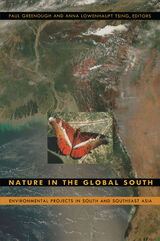
With contributors based in anthropology, ecology, sociology, history, and environmental and policy studies, Nature in the Global South features some of the most innovative and influential work being done in the social studies of nature. While some of the essays look at how social and natural landscapes are created, maintained, and transformed by scientists, officials, monks, and farmers, others analyze specific campaigns to eradicate smallpox and save forests, waterways, and animal habitats. In case studies centered in the Philippines, India, Pakistan, Thailand, Indonesia, and South and Southeast Asia as a whole, contributors examine how the tropics, the jungle, tribes, and peasants are understood and transformed; how shifts in colonial ideas about the landscape led to extremely deleterious changes in rural well-being; and how uneasy environmental compromises are forged in the present among rural, urban, and global allies.
Contributors:
Warwick Anderson
Amita Baviskar
Peter Brosius
Susan Darlington
Michael R. Dove
Ann Grodzins Gold
Paul Greenough
Roger Jeffery
Nancy Peluso
K. Sivaramakrishnan
Nandini Sundar
Anna Lowenhaupt Tsing
Charles Zerner
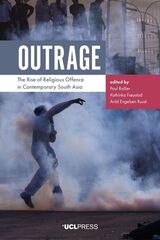
An interdisciplinary study of this trend, Outrage brings together researchers in anthropology, religious studies, and South Asian studies with rich experience in the varied ways religion and politics intersect in this region. Each chapter focuses on a recent case of alleged blasphemy or desecration in India, Pakistan, Bangladesh and Myanmar, unpacking the religious sensitivities and political concerns. Collectively, the chapters explore common denominators across national and religious differences, such as the introduction of social media and smartphones, the possible political gains of initiating blasphemy accusations, and the growing self-assertion of marginal communities.
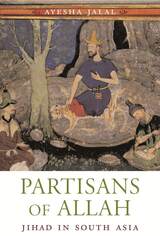
The idea of jihad is central to Islamic faith and ethics, and yet its meanings have been highly contested over time. They have ranged from the philosophical struggle to live an ethical life to the political injunction to wage war against enemies of Islam. Today, more than ever, jihad signifies the political opposition between Islam and the West. As the line drawn between Muslims and non-Muslims becomes more rigid, Ayesha Jalal seeks to retrieve the ethical meanings of this core Islamic principle in South Asian history.
Drawing on historical, legal, and literary sources, Jalal traces the intellectual itinerary of jihad through several centuries and across the territory connecting the Middle East with South Asia. She reveals how key innovations in modern Islamic thought resulted from historical imperatives. The social and political scene in India before, during, and after British colonial rule forms the main backdrop. We experience the jihad as armed warfare waged by Sayyid Ahmad of Rai Bareilly between 1826 and 1831, the calls to jihad in the great rebellion of 1857, the fusion of jihad with a strand of anti-colonial nationalism in the early twentieth century, and the contemporary politics of self-styled jihadis in Pakistan, waging war to liberate co-religionists in Afghanistan and Kashmir.
Partisans of Allah surveys this rich and tumultuous history of South Asian Muslims and its critical contribution to the intellectual development of the key concept of jihad. Analyzing the complex interplay of ethics and politics in Muslim history, the author effectively demonstrates the preeminent role of jihad in the Muslim faith today.
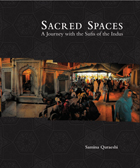
Sufism, the mystical path of Islam, is a key feature of the complex Islamic culture of South Asia today. Influenced by philosophies and traditions from other Muslim lands and by pre-Islamic rites and practices, Sufism offers a corrective to the image of Islam as monolithic and uniform.
In Sacred Spaces, Pakistani artist and educator Samina Quraeshi provides a locally inflected vision of Islam in South Asia that is enriched by art and by a female perspective on the diversity of Islamic expressions of faith. A unique account of a journey through the author’s childhood homeland in search of the wisdom of the Sufis, the book reveals the deeply spiritual nature of major centers of Sufism in the central and northwestern heartlands of South Asia. Illuminating essays by Ali S. Asani, Carl W. Ernst, and Kamil Khan Mumtaz provide context to the journey, discussing aspects of Sufi music and dance, the role of Sufism in current South Asian culture and politics, and the spiritual geometry of Sufi architecture.
Quraeshi relies on memory, storytelling, and image making to create an imaginative personal history using a rich body of photographs and works of art to reflect the seeking heart of the Sufi way and to demonstrate the diversity of this global religion. Her vision builds on the centuries-old Sufi tradition of mystical messages of love, freedom, and tolerance that continue to offer the promise of building cultural and spiritual bridges between peoples of different faiths.

This information is organized in accord with indigenous South Asian concepts and categories within the threefold dimensions of time, space, and topic. These units and their interrelationships are first laid out in an outline of headings that constitutes, in the aggregate, a self-contained reference outline of Indic civilization. Each unit and its subdivisions are then presented as the headings for the bibliographic sections that form the main body of the book. This conceptual structure, in combination with the author and subject indexes, offers the reader several means of access to the entries themselves, making South Asian Civilizations a work that will be of great use to a wide audience.
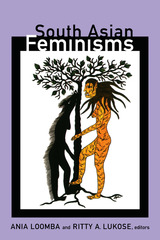
Contributors. Flavia Agnes, Anjali Arondekar, Firdous Azim, Anannya Bhattacharjee, Laura Brueck, Angana P. Chatterji, Malathi de Alwis, Toorjo Ghose, Amina Jamal, Ratna Kapur, Lamia Karim, Ania Loomba, Ritty A. Lukose, Vasuki Nesiah, Sonali Perera, Atreyee Sen, Mrinalini Sinha, Ashwini Sukthankar
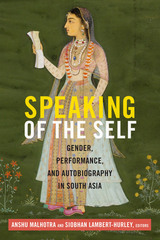
Contributors: Asiya Alam, Afshan Bokhari, Uma Chakravarti, Kathryn Hansen, Siobhan Lambert-Hurley, Anshu Malhotra, Ritu Menon, Shubhra Ray, Shweta Sachdeva Jha, Sylvia Vatuk
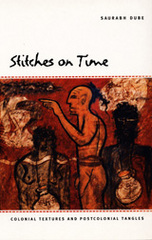
Dube provides incisive accounts of the interactions between North American evangelical missionaries and Christian converts of central India, and between colonial legal systems and Indian popular laws. He reflects on the difficulties of history writing by considering the production and reception of recent Hindu nationalist histories. Assessing the work of the South Asian Subaltern Studies Collective, he offers substantial critical readings of major writings by Ranajit Guha, Dipesh Chakrabarty, Partha Chatterjee, and others. Dube develops the concept and practice of a “history without warranty” as a means of rigorously rethinking categories such as modernity, colonialism, the West, the postcolonial, and the nation.
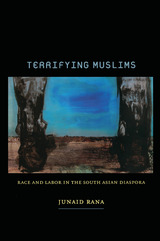
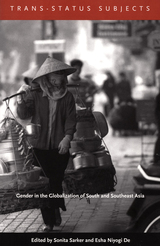
The contributors—including literary and film theorists, geographers, historians, sociologists, and anthropologists—show how the dominant colonial powers prefigured the ideologies of gender and sexuality that neocolonial nation-states have later refigured; investigate economic and artistic production; and explore labor, capital, and social change. The essays cover a range of locales—including Sri Lanka, Vietnam, Thailand, Singapore, Borneo, Indonesia, and the United States. In investigating issues of power, mobility, memory, and solidarity in recent eras of globalization, the contributors—scholars and activists from South Asia, Southeast Asia, England, Australia, Canada, and the United States—illuminate various facets of the new concept of trans-status subjects.
Trans-Status Subjects carves out a new area of inquiry at the intersection of feminisim and critical geography, as well as globalization, postcolonial, and cultural studies.
Contributors. Anannya Bhattacharjee, Esha Niyogi De, Karen Gaul, Ketu Katrak, Karen Leonard, Philippa Levine, Kathryn McMahon, Andrew McRae, Susan Morgan, Nihal Perera, Sonita Sarker, Jael Silliman, Sylvia Tiwon, Gisele Yasmeen
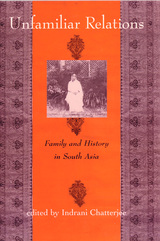
Unfamiliar Relations restores the family and its many forms and meanings to a central place in the history of South Asia between the seventeenth and nineteenth centuries.
In her incisive introduction, Indrani Chatterjee argues that the recent wealth of scholarship on ethnicity, sexuality, gender, imperialism, and patriarchy in South Asia during the colonial period often overlooks careful historical analysis of the highly contested concept of family. Together, the essays in this book demolish "family" as an abstract concept in South Asian colonial history, demonstrating its exceedingly different meanings across temporal and geographical space.
The scholarship in this volume reveals a far more complex set of dynamics than a simple binary between indigenous and colonial forms and structures. It approaches this study from the pre-colonial period on, rather than backwards as has been the case with previous scholarship. Topics include a British colonial officer who married a Mughal noblewoman and converted to Islam around the turn of the nineteenth century, the role gossip and taboo play in the formation of Indian family history, and an analysis of social relations in the penal colony on the Andaman Islands.
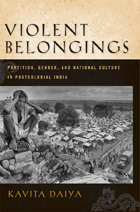
In addition to challenging the official narratives of independence and Partition, these narratives challenge our contemporary understanding of gender and ethnicity in history and politics. Violent Belongings argues that both male and female bodies, and heterosexual coupledom, became symbols of the nation in public life. In the newly independent Indian nation both men and women were transformed into ideal citizens or troubling bodies, immigrants or refugees, depending on whether they were ethnically Hindu, Muslim, Jewish or Sikh. The divisions set in motion during Partition continue into our own time and account for ethnic violence in South Asia.
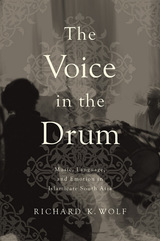
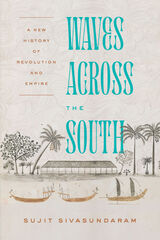
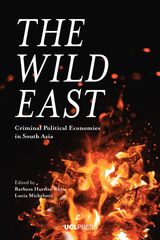
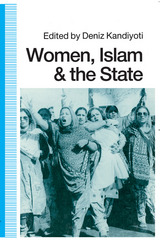

Can we write women’s authorial roles into the history of industrial cinema in South Asia? How can we understand women’s creative authority and access to the film business infrastructure in this postcolonial region? Esha Niyogi De draws on rare archival and oral sources to explore these questions from a uniquely comparative perspective, delving into examples of women holding influential positions as stars, directors, and producers across the film industries in India, Pakistan, and Bangladesh.
De uses film tropes to examine the ways women directors and film entrepreneurs claim creative control within the contexts of anti-colonial nationalism and global capitalism. The region’s fictional cinemas have become staging grounds for postcolonialism, with colonial and local hierarchies merged into new imperial formations. De’s analysis shows how the gendered intersections of inequity and opportunity shape women’s fiction filmmaking while illuminating the impact of state and market formations on the process.
Innovative and essential, Women’s Transborder Cinema examines the works of South Asia’s women filmmakers from a regional perspective.
READERS
Browse our collection.
PUBLISHERS
See BiblioVault's publisher services.
STUDENT SERVICES
Files for college accessibility offices.
RECENTLY PUBLISHED






UChicago Accessibility Resources
home | accessibility | search | about | contact us
BiblioVault ® 2001 - 2024
The University of Chicago Press