
 A SCHOLARLY BOOK REPOSITORY
Watch an animated book trailer here: http://www.youtube.com/watch?v=GjPhTQ9zi5Q

American Values, Religious Voices: 100 Days, 100 Letters is a collection of letters written by some of America’s most accomplished and thoughtful scholars of religion during the first 100 days of the Trump presidency. While the letters are addressed to the president, vice president, and members of the 115th Congress and Trump administration, they speak to a broad audience of Americans looking for wisdom and encouragement at this tumultuous time in our nation’s history.
This unique volume assembles the 100 letters, plus four new supplemental essays and many of the graphic illustrations that enhanced the campaign.
Published near the midway point of the Trump presidency, this book showcases a wide range of ancient sacred texts that pertain to our most pressing contemporary issues. At a time of great division in our country, this post-election project models how people of different backgrounds can listen to and learn from one another. The letters offer insight and inspiration, reminding us of the enduring values that make our nation great.


Some of humankind's greatest tools have been forged in the research laboratory. Who could argue that medical advances like antibiotics, blood transfusions, and pacemakers have not improved the quality of people's lives? But with each new technological breakthrough there comes an array of consequences, at once predicted and unpredictable, beneficial and hazardous.
Outcry over recent developments in the reproductive and genetic sciences has revealed deep fissures in society's perception of biotechnical progress. Many are concerned that reckless technological development, driven by consumerist impulses and greedy entrepreneurialism, has the potential to radically shift the human condition—and not for the greater good. Biotechnology and the Human Good builds a case for a stewardship deeply rooted in Judeo-Christian theism to responsibly interpret and assess new technologies in a way that answers this concern.
The authors jointly recognize humans not as autonomous beings but as ones accountable to each other, to the world they live in, and to God. They argue that to question and critique how fields like cybernetics, nanotechnology, and genetics might affect our future is not anti-science, anti-industry, or anti-progress, but rather a way to promote human flourishing, common sense, and good stewardship.
A synthetic work drawing on the thought of a physician, ethicists, and a theologian, Biotechnology and the Human Good reminds us that although technology is a powerful and often awe-inspiring tool, it is what lies in the heart and soul of who wields this tool that truly makes the difference in our world.
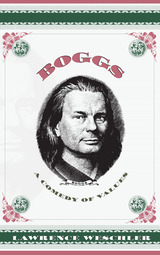
"Lawrence Weschler, who evidently admires [Boggs]-something not difficult to do-has written what may be the most extraordinary biography imaginable: "weird," to use a favourite Boggs word. It does something towards changing our entire outlook on money and its uses. And the reader is left with an uneasy feeling that anything in this world can be created by drawing it." —Ruth Rendell, Daily Telegraph
"As ideal a subject matter as money is for Boggs' genius, Boggs is as ideal a topic for Weschler's considerable talents. . . . A writer any less lucid than Weschler would smudge the lines, making of Boggs a counterculture caricature or a high-art huckster. And a writer any less confident would knock the balance, making academic mud pies of Boggs' enlightened chaos." —Jonathon Keats, San Francisco Chronicle Book Review
"[A] witty and engaging chronicle. . . . Weschler's fascinating account of the artist as agent provocateur demonstrates both the significance of Boggs's art and his determination to continue his unusual critique of the idea of money." —Henry Wessells, Washington Post Book World
"[A] witty, excellently written account of a bizarre and fascinating snippet of modern life." —Paul Ormerod, Times Higher Education Supplement
"The book, like the artist, challenges people to pause and consider the extent to which the economic bedrock of everyday life is in part a confusing welter of artistic abstractions. It's a work that is at once informative, entertaining, and provocative-a reading experience, one might say, of rather good value." —Toby Lester, Atlantic Monthly
"[A] fascinating tale, especially in these days of fluctuating currency rates, the euro, and inexplicable Net-stock valuations." —Paul Lukas, Fortune
Lawrence Weschler, a recipient of the prestigious Lannan Literary Award for 1998, is the author of numerous books, including Calamities of Exile: Three Nonfiction Novellas, and Mr. Wilson's Cabinet of Wonder, which was a finalist for both the Pulitzer Prize and the National Book Critics Circle Award.
If philosophy has any business in the world, it is the clarification of our thinking and the clearing away of ideas that cloud the mind. In this book, one of the world's preeminent philosophers takes issue with an idea that has found an all-too-prominent place in popular culture and philosophical thought: the idea that while factual claims can be rationally established or refuted, claims about value are wholly subjective, not capable of being rationally argued for or against. Although it is on occasion important and useful to distinguish between factual claims and value judgments, the distinction becomes, Hilary Putnam argues, positively harmful when identified with a dichotomy between the objective and the purely "subjective."
Putnam explores the arguments that led so much of the analytic philosophy of language, metaphysics, and epistemology to become openly hostile to the idea that talk of value and human flourishing can be right or wrong, rational or irrational; and by which, following philosophy, social sciences such as economics have fallen victim to the bankrupt metaphysics of Logical Positivism. Tracing the problem back to Hume's conception of a "matter of fact" as well as to Kant's distinction between "analytic" and "synthetic" judgments, Putnam identifies a path forward in the work of Amartya Sen. Lively, concise, and wise, his book prepares the way for a renewed mutual fruition of philosophy and the social sciences.
Charges of abandoned standards issue from government offices; laments for the loss of the best that has been thought and said resound through university corridors. While revisionists are perplexed by questions of value, critical theory—haunted by the heresy of relativism—remains captive to classical formulas. Barbara Herrnstein Smith’s book confronts the conceptual problems and sociopolitical conflicts at the heart of these issues and raises their discussion to a new level of sophistication.
Polemical without being rancorous, Contingencies of Value mounts a powerful critique of traditional conceptions of value, taste, judgment, and justification. Through incisive discussions of works by, among others, David Hume, Immanuel Kant, Northrop Frye, Georges Bataille, Jacques Derrida, Richard Rorty, and Jürgen Habermas, Smith develops an illuminating alternative framework for the explanation of these topics.
All value, she argues, is radically contingent. Neither an objective property of things nor merely a subjective response to them, it is the variable effect of numerous interacting economies that is, systems of apportionment and circulation of “goods.” Aesthetic value, moral value, and the truth-value of judgments are no exceptions, though traditional critical theory, ethics, and philosophy of language have always tried to prove otherwise.
Smith deals in an original way with a wide variety of contemporary issues—from the relation between popular and high culture to the conflicting conception of human motives and actions in economic theory and classical humanism. In an important final chapter, she addresses directly the crucial problem of relativism and explains why a denial of the objectivity of value does not—as commonly feared and charged—produce either a fatuous egalitarianism or moral and political paralysis.
French historian Alexis de Tocqueville observed that the conflict between the ideals of individualism and community defines American culture. In this groundbreaking new work, anthropologist Charles Nuckolls discovers that every culture consists of such paradoxes, thus making culture a problem that cannot be solved. He does, however, find much creative tension in these unresolvable opposites.
Nuckolls presents three fascinating case studies that demonstrate how values often are expressed in the organization of social roles. First he treats the Micronesian Ifaluks’ opposition between cooperation and self-gratification by examining the nature versus nurture debate. Nuckolls then shifts to the values of community and individual adventure by looking at the conflicts in the identities of public figures in Oklahoma. Finally, he investigates the cultural significance in the diagnostic system and practices of psychiatry in the United States. Nuckolls asserts that psychiatry treats genders differently, assigning dependence to women and independence to men and, in some cases, diagnoses the extreme forms of these values as disorders.
Nuckolls elaborates on the theory of culture that he introduced in his previous book, The Cultural Dialectics of Knowledge and Desire, which proposed that the desire to resolve conflicts is central to cultural knowledge. In Culture: A Problem that Cannot Be Solved, Nuckolls restores the neglected social science concept of values, which addresses both knowledge and motivation. As a result, he brings together cognition and psychoanalysis, as well as sociology and psychology, in his study of cultural processes.

This book takes a critical look at the notion of well-being by examining what well-being means, or could mean, to people living in a number of different regions including Sudan, Nepal, Papua New Guinea, India, Sierra Leone, and the UK.
The contributors take issue with some of the assumptions behind Western concepts of well-being. They explore what characterizes a "good life" and how this idea has been affected by globalization and neoliberalism.
The book makes a major contribution to social theory by presenting new analytical models that make sense of the changing shapes of people's life and ethical values.
Ecological Restoration offers for the first time a unified vision of ecological restoration as a field of study, one that clearly states the discipline’s precepts and emphasizes issues of importance to those involved at all levels. In a lively, personal fashion, the authors discuss scientific and practical aspects of the field as well as the human needs and values that motivate practitioners. The book:
-identifies fundamental concepts upon which restoration is based
-considers the principles of restoration practice
-explores the diverse values that are fulfilled with the restoration of ecosystems
-reviews the structure of restoration practice, including the various contexts for restoration work, the professional development of its practitioners, and the relationships of restoration with allied fields and activities
A unique feature of the book is the inclusion of eight “virtual field trips,” short photo essays of project sites around the world that illustrate various points made in the book and are “led” by those who were intimately involved with the project described.
Throughout, ecological restoration is conceived as a holistic endeavor, one that addresses issues of ecological degradation, biodiversity loss, and sustainability science simultaneously, and draws upon cultural resources and local skills and knowledge in restoration work.
In Educational Goods, two philosophers and two social scientists address this very question. They begin by broadening the language for talking about educational policy: “educational goods” are the knowledge, skills, and attitudes that children develop for their own benefit and that of others; “childhood goods” are the valuable experiences and freedoms that make childhood a distinct phase of life. Balancing those, and understanding that not all of them can be measured through traditional methods, is a key first step. From there, they show how to think clearly about how those goods are distributed and propose a method for combining values and evidence to reach decisions. They conclude by showing the method in action, offering detailed accounts of how it might be applied in school finance, accountability, and choice. The result is a reimagining of our decision making about schools, one that will sharpen our thinking on familiar debates and push us toward better outcomes.
Statistics on the American family are sobering. From 1975 to 2000, one-third of all children were born to single mothers, and one-half of all marriages ended in divorce. While children from broken homes are two to three times more likely to develop behavioral and learning difficulties, two-parent families are not immune to problems. The cost of raising children has increased dramatically, and married couples with children are now twice as likely as childless couples to file for bankruptcy. Clearly, the American family is in trouble. But how this trouble started, and what should be done about it, remain hotly contested.
In a multifaceted analysis of the current state of a complex institution, Family Transformed brings together outstanding scholars from the fields of anthropology, demography, ethics, history, law, philosophy, primatology, psychology, sociology, and theology. Demonstrating that the family is both distinctive in its own right and deeply interwoven with other institutions, the authors examine the roles of education, work, leisure, consumption, legal regulation, public administration, and biology in shaping the ways we court and marry, bear and raise children, and make and break family bonds.
International in approach, this wide-ranging volume situates current American debates over sex, marriage, and family within a global framework. Weighing mounting social science evidence that supports a continued need for the nuclear family while assessing the challenges posed by new advocacy for same-sex marriage, and delegalized coupling, the authors argue that only by reintegrating the family into a just moral order of the larger community and society can we genuinely strengthen it. This means not simply upholding traditional family values but truly grasping the family's growing diversity, sustaining its coherence, and protecting its fragility for our own sake and for the common good of society.
Concern about our food system is growing, from the costs of industrial farming to the dominant role of supermarkets and recurring scandals about the origins and content of what we eat.
Food for Change documents the way alternative food movements respond to these concerns by trying to create more closed economic circuits within which people know where, how, and by whom their food is produced.
Jeff Pratt, Peter Luetchford and other contributors explore the key political and economic questions of food through the everyday experience and vivid insights of farmers and consumers, using fieldwork from case studies in four European countries (France, Spain, Italy and England). Food for Change is an insightful consideration of connections between food and wider economic relations and draws on a rich vein of anthropological writing on the topic.
In this era in which more women are running for public office—and when there is increased activism among women—understanding gender differences on political issues has become critical. In her cogent study, Mary-Kate Lizotte argues that assessing the gender gap in public support for policies through a values lens provides insight into American politics today. There is ample evidence that men and women differ in their value endorsements—even when taking into account factors such as education, class, race, income, and party identification.
In Gender Differences in Public Opinion, Lizotte utilizes nationally representative data, mainly from the American National Election Study, to study these gender gaps, the explanatory power of values, and the political consequences of these differences. She examines the gender differences in several policy areas such as equal rights, gun control, the death penalty, and the environment, as well as social welfare issues. The result is an insightful and revealing study of how men and women vary in their policy positions and political attitudes.

What are the ends of economic activity? According to neoclassical theory, efficient interaction of the profit-maximizing "ideal producer" and the utility-maximizing "ideal consumer" will eventually lead to some sort of social optimum. But is that social optimum the same as human well-being? Human Well-Being and Economic Goals addresses that issue, considering such questions as:
- Does the maximization of individual welfare really lead to social welfare?
- How can we deal with questions of relative welfare and of equity?
- How do we define, or at least understand, individual and social welfare?
- And how can these things be measured, or even assessed?
Human Well-Being and Economic Goals brings together more than 75 concise summaries of the most significant literature in the field that consider issues of present and future individual and social welfare, national development, consumption, and equity. Like its predecessors in the Frontier Issues in Economic Thought series, it takes a multidisciplinary approach to economic concerns, examining their sociological, philosophical, and psychological aspects and implications as well as their economic underpinnings.
Human Well-Being and Economic Goals provides a powerful introduction to the current and historical writings that examine the concept of human well-being in ways that can help us to set goals for economic activity and judge its success. It is a valuable summary and overview for students, economists, and social scientists concerned with these issues.
With Humanism Challenges Materialism in Economics and Economic History, Roderick Floud, Santhi Hejeebu, and David Mitch have brought together a distinguished group of scholars in economics, economic history, political science, philosophy, gender studies, and communications who synthesize and build on McCloskey’s work. The essays in this volume illustrate the ways in which the humanistic approach to economics that McCloskey pioneered can open up new vistas for the study of economic history and cultivate rich synergies with a wide range of disciplines. The contributors show how values and beliefs become embedded in the language of economics and shape economic outcomes. Chapters on methodology are accompanied by case studies discussing particular episodes in economic history.
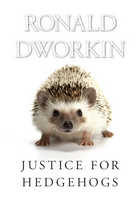
The fox knows many things, the Greeks said, but the hedgehog knows one big thing. In his most comprehensive work, Ronald Dworkin argues that value in all its forms is one big thing: that what truth is, life means, morality requires, and justice demands are different aspects of the same large question. He develops original theories on a great variety of issues very rarely considered in the same book: moral skepticism, literary, artistic, and historical interpretation, free will, ancient moral theory, being good and living well, liberty, equality, and law among many other topics. What we think about any one of these must stand up, eventually, to any argument we find compelling about the rest.
Skepticism in all its forms—philosophical, cynical, or post-modern—threatens that unity. The Galilean revolution once made the theological world of value safe for science. But the new republic gradually became a new empire: the modern philosophers inflated the methods of physics into a totalitarian theory of everything. They invaded and occupied all the honorifics—reality, truth, fact, ground, meaning, knowledge, and being—and dictated the terms on which other bodies of thought might aspire to them, and skepticism has been the inevitable result. We need a new revolution. We must make the world of science safe for value.
Leadership and Values provides new material in two key areas. First, it is an in-depth study of the organization and administration of large-scale Chinese enterprises, with considerable detail on Chinese behavior in such settings. Second, the author constructs from the Chinese data a framework for the cross-cultural analysis of large-scale organizations. This framework identifies key variables that, when considered systematically, permit a clearer understanding of the role of cultural factors in organizational behavior and design.
The data for this study were gathered by participant-observer techniques at firms in Taiwan, and many of the findings are assumed to apply in large part to behavioral patterns on the mainland and in other areas of Chinese culture.
Facts are facts, we often say with certainty; but values--well, they're relative. But every day we are confronted with situations where these simple distinctions begin to blur--whether our concerns are the roots of crime and violence, the measure of intelligence, the causes of disease, the threat and promise of genetic engineering. Where do our "facts" end and our "values" begin?
Recent developments in neuroscience have begun to shed light on this confusion, by radically revising our notions of where human nature ends and human nurture begins. As Edward Hundert--a philosopher, psychiatrist, and award-winning educator--makes clear in this eloquent interdisciplinary work, the newly emerging model for the interactions of brain and environment has enormous implications for our understanding of who we are, how we know, and what we value.
Lessons from an Optical Illusion is a bold modern recasting of the age-old nature-nurture debate, informed by revolutionary insights from brain science, artificial intelligence, psychiatry, linguistics, evolutionary biology, child development, ethics, and even cosmology. As this radical new synthesis unfolds, we are introduced to characters ranging from Immanuel Kant to Gerald Edelman, from Charles Darwin to Sigmund Freud, from Jean Piaget to Stephen Hawking, from Socrates to Jonas Salk. Traversing the nature-nurture terrain, we encounter simulated robots, optical illusions, game theory, the anthropic principle, the prisoner's dilemma, and the language instinct. In the course of Hundert's wide-ranging exploration, the comfortable dichotomies that once made sense (objectivity-subjectivity, heredity-environment, fact-value) break down under sharp analysis, as he reveals the startling degree to which facts are our creations and values are woven into the fabric of the world. Armed with an updated understanding of how we became who we are and how we know what we know, readers are challenged to confront anew the eternal question of what it means to live a moral life.

In an era when many organizations are focused on principles of responsibility, Harvard Business School has long tried to promote better business standards. Anteby’s rich account reveals the surprising role of silence and ambiguity in HBS’s process of codifying morals and business values. As Anteby describes, at HBS specifics are often left unspoken; for example, teaching notes given to faculty provide much guidance on how to teach but are largely silent on what to teach. Manufacturing Morals demonstrates how faculty and students are exposed to a system that operates on open-ended directives that require significant decision-making on the part of those involved, with little overt guidance from the hierarchy. Anteby suggests that this model—which tolerates moral complexity—is perhaps one of the few that can adapt and endure over time.
Manufacturing Morals is a perceptive must-read for anyone looking for insight into the moral decision-making of today’s business leaders and those influenced by and working for them.

Governments throughout the industrialized world make decisions that fundamentally affect the quality and accessibility of medical care. In the United States, despite the absence of universal health insurance, these decisions have great influence on the practice of medicine.
In Medical Governance, David Weimer explores an alternative regulatory approach to medical care based on the delegation of decisions about the allocation of scarce medical resources to private nonprofit organizations. He investigates the specific development of rules for the U.S. organ transplant system and details the conversion of a voluntary network of transplant centers to one private rulemaker: the Organ Procurement and Transplantation Network (OPTN).
As the case unfolds, Weimer demonstrates that the OPTN is more efficient, nimble, and better at making evidence-based decisions than a public agency; and the OPTN also protects accountability and the public interest more than private for-profit organizations. Weimer addresses similar governance arrangements as they could apply to other areas of medicine, including medical records and the control of Medicare expenditures, making this timely and useful case study a valuable resource for debates over restructuring the U.S. health care system.
A new perspective on how beliefs about abortion and gay rights reshaped American politics.
Many believe that religious and partisan identities undergird American public opinion. However, when it comes to abortion and gay rights, the reverse may be closer to the truth.
Drawing on wide-ranging evidence, Paul Goren and Christopher Chapp show that views on abortion and gay rights are just as durable and politically impactful—and often more so—than political and religious identities. Goren and Chapp locate the lasting strength of stances on abortion and gay rights in the automatic, visceral emotions that the media has primed since the late 1980s. Moral Issues examines how attitudes toward these moralized issues affect, and can sometimes even disrupt, religious and partisan identities. Indeed, over the last thirty years, these attitudes have accelerated the rise of the religious “nones,” who have no religious affiliation, and promoted moral sorting into the Democratic and Republican parties.

This meticulously researched and elegantly written book is the most authoritative study of the emergence of modern Romanian identity in Transylvania during the eighteenth and nineteenth centuries. Based upon a plethora of contemporary published sources, Mitu approaches national identity from a variety of perspectives - from within the Romanian community itself and their reaction to the image others had of them.
The author sheds new light on the problems of self-evaluation using a method he describes as "functional analysis" to examine a complex set of ideologies and propaganda. This approach helps the reader to understand the intricate web of contemporary Romanian nationalism.
National Identity of Romanians in Transylvania appeals to scholars of modern Romanian history, those focusing on the Habsburg Monarchy and the study of modern nationalism. The book is an important contribution to the expanding debate on nationalism and national identity from an East European perspective.

In this highly original work, Robert Nozick develops new views on philosophy’s central topics and weaves them into a unified philosophical perspective. It is many years since a major work in English has ranged so widely over philosophy’s fundamental concerns: the identity of the self, knowledge and skepticism, free will, the question of why there is something rather than nothing, the foundations of ethics, the meaning of life.
Writing in a distinctive and personal philosophical voice, Mr. Nozick presents a new mode of philosophizing. In place of the usual semi-coercive philosophical goals of proof, of forcing people to accept conclusions, this book seeks philosophical explanations and understanding, and thereby stays truer to the original motivations for being interested in philosophy.
Combining new concepts, daring hypotheses, rigorous reasoning, and playful exploration, the book exemplifies how philosophy can be part of the humanities.
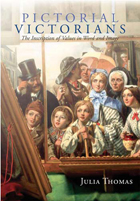
The Victorians were image obsessed. The middle decades of the nineteenth century saw an unprecedented growth in the picture industry. Technological advances enabled the Victorians to adorn with images the pages of their books and the walls of their homes. But this was not a wholly visual culture. Pictorial Victorians focuses on two of the most popular mid-nineteenth-century genres—illustration and narrative painting—that blurred the line between the visual and textual.
Illustration negotiated text and image on the printed page, while narrative painting juxtaposed the two media in its formulation of pictorial stories. Author Julia Thomas reassesses mid-nineteenth-century values in the light of this interplay. The dialogue between word and image generates meanings that are intimately related to the Victorians' image of themselves. Illustrations in Victorian publications and the narrative scenes that lined the walls of the Royal Academy reveal the Victorians' ideas about the world in which they lived and their notions of gender, class, and race.
Pictorial Victorians surveys a range of material, from representations of the crinoline, to the illustrations that accompanied Harriet Beecher Stowe’s novel Uncle Tom's Cabin and Tennyson's poetry, to paintings of adultery. It demonstrates that the space between text and image is one in which values are both constructed and questioned.
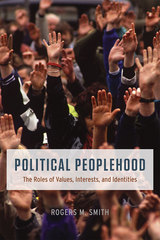
This book gathers Smith’s most important writings on peoplehood to build a coherent theoretical and historical account of what peoplehood has meant in American political life, informed by frequent comparisons to other political societies. From the revolutionary-era adoption of individual rights rhetoric to today’s battles over the place of immigrants in a rapidly diversifying American society, Smith shows how modern America’s growing embrace of overlapping identities is in tension with the providentialism and exceptionalism that continue to make up so much of what many believe it means to be an American.
A major work that brings a lifetime of thought to bear on questions that are as urgent now as they have ever been, Political Peoplehood will be essential reading for social scientists, political philosophers, policy analysts, and historians alike.
Based on his novel understanding of the American political system, Roelofs presents a devastating and closely reasoned critique that traces our nation's political ills to fundamental flaws in the very design of its founding principles, the character of its major institutions, and the basic pattern of its processes. Dissecting our political and societal problems, he explains the limitations and basic contributions arising from the social democratic/liberal democratic dichotomy that result in our current political poverty.
While Roelofs's analysis remains the same as in the earlier edition, in this revised edition he has sharpened and extended the argument and expanded and updated his illustrative materials. Improved bibliographical citations and new diagrams make the book an even more useful teaching tool.

A provocative history of the changing values that have given rise to our present discontents.
We pursue power, pleasure, and profit. We want as much as we can get, and we deploy instrumental reasoning—cost-benefit analysis—to get it. We judge ourselves and others by how well we succeed. It is a way of life and thought that seems natural, inevitable, and inescapable. As David Wootton shows, it is anything but. In Power, Pleasure, and Profit, he traces an intellectual and cultural revolution that replaced the older systems of Aristotelian ethics and Christian morality with the iron cage of instrumental reasoning that now gives shape and purpose to our lives.
Wootton guides us through four centuries of Western thought—from Machiavelli to Madison—to show how new ideas about politics, ethics, and economics stepped into a gap opened up by religious conflict and the Scientific Revolution. As ideas about godliness and Aristotelian virtue faded, theories about the rational pursuit of power, pleasure, and profit moved to the fore in the work of writers both obscure and as famous as Hobbes, Locke, and Adam Smith. The new instrumental reasoning cut through old codes of status and rank, enabling the emergence of movements for liberty and equality. But it also helped to create a world in which virtue, honor, shame, and guilt count for almost nothing, and what matters is success.
Is our world better for the rise of instrumental reasoning? To answer that question, Wootton writes, we must first recognize that we live in its grip.
Rapid development of sophisticated new techniques has vastly increased physicians' ability to detect congenital disorders before birth. Yet advances in treatment, before or after birth, have been very modest. This discrepancy leads to ethical and social problems that require serious attention by professionals and patients alike. This innovative book tackles such problems in the case of prenatal screening for neural tube defects. Afflicting about 7,000 newborn babies each year in the United States, neural tube defects are serious abnormalities in the development of the brain and spinal cord that have grave consequences for the child and family.
The editors, Elena O. Nightingale, a geneticist, physician, and expert in health policy, and Susan B. Meister, a specialist in parent-child nursing, social and developmental psychology, and quantitative methods, led a multidisciplinary effort by distinguished Harvard faculty, including economist Richard Zeckhauser and clinical decision analyst Barbara J. McNeil. Other contributors include Donald S. Shepard, Mary L. Kiely, and Stephen G. Pauker. The book examines the impact of technology assessment, cost effectiveness analysis, and decision analysis on reaching decisions about prenatal screening. The book includes a discussion of the results of formal analyses against a backdrop of our basic ethical and societal values, as well as the analyses themselves. Health care workers, policymakers, and concerned individuals will find this volume informative and thought provoking.
Property and Values offers a fresh look at property rights issues, bringing together scholars, attorneys, government officials, community development practitioners, and environmental advocates to consider new and more socially equitable forms of ownership. Based on a Harvard Law School conference organized by the Equity Trust, Inc., in cooperation with the American Bar Association's Commission on Homelessness and Poverty, the book:
- explains ownership as an evolving concept, determined by social processes and changing social relations
- challenges conventional public-private ownership categories
- surveys recent studies on the implications of public policy on property values
- offers examples from other cultures of ownership realities unfamiliar or forgotten in the United States
- compares experiments in ownership/equity allocation affecting social welfare and environmental conservation
Property and Values is a thought-provoking contribution to the literature on property for planners, lawyers, government officials, resource economists, environmental managers, and social scientists as well as for students of planning, environmental law, geography, or public policy.
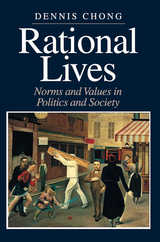
Chong's book yields insights about the circumstances under which preferences, beliefs, values, norms and group identifications are formed. It offers a provocative explanation of how ingrained social norms and values can change over time despite the forces maintaining the status quo.
"Going beyond the tired polemics on both sides, [Chong] constructs a new interpretation of human behavior in which culture and individual rationality both matter. The synthesis is a more comprehensive and powerful explanatory framework than either side could have produced, and Chong's creativity should influence subsequent interpretations of our social life in fundamental ways."—Christopher H. Achen, University of Michigan
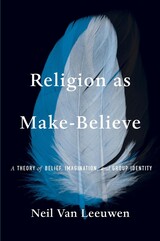
To understand the nature of religious belief, we must look at how our minds process the world of imagination and make-believe.
We often assume that religious beliefs are no different in kind from ordinary factual beliefs—that believing in the existence of God or of supernatural entities that hear our prayers is akin to believing that May comes before June. Neil Van Leeuwen shows that, in fact, these two forms of belief are strikingly different. Our brains do not process religious beliefs like they do beliefs concerning mundane reality; instead, empirical findings show that religious beliefs function like the imaginings that guide make-believe play.
Van Leeuwen argues that religious belief—which he terms religious “credence”—is best understood as a form of imagination that people use to define the identity of their group and express the values they hold sacred. When a person pretends, they navigate the world by consulting two maps: the first represents mundane reality, and the second superimposes the features of the imagined world atop the first. Drawing on psychological, linguistic, and anthropological evidence, Van Leeuwen posits that religious communities operate in much the same way, consulting a factual-belief map that represents ordinary objects and events and a religious-credence map that accords these objects and events imagined sacred and supernatural significance.
It is hardly controversial to suggest that religion has a social function, but Religion as Make-Believe breaks new ground by theorizing the underlying cognitive mechanisms. Once we recognize that our minds process factual and religious beliefs in fundamentally different ways, we can gain deeper understanding of the complex individual and group psychology of religious faith.

“My interest in [Max] Scheler’s critique of Kant runs back nearly a decade…. The more I read of Scheler, the more I began to see the value of a project dealing with his critique of Kant in Der Formalismus in der Ethik und die Materiale Wetethik, which would possess the virtue of focusing in a single project three important strands of philosophical interest: phenomenology, Kantianism, and ethics….
“The study is divided into six chapters and two appendices. Each of the chapters constituting the body of the work contains a brief analysis of the Kantian position or discussion of the basic questions at issue in it, an exposition of Scheler’s critique of the Kantian position and its presuppositions, and a detailed appraisal of Scheler’s critique.”—from the introduction by the author

Leading social scientists, empirical analysts, and policy practitioners demonstrate the various ways in which the insights of János Kornai, a renowned early analyst and critic of the command economies of Eastern European communist states, are stirring academic and policy discussions about current challenges. While dissecting the economic theories and practices in the Soviet Bloc, Kornai devised and applied concepts such as soft-budget constraints, rush versus harmonic growth, surplus versus shortage economy, non-Walrasian equilibrium, bureaucratic coordination, and the invisible power of the communist party. These concepts are commonly applied to a variety of issues in the contexts of fundamental transformation. The cases discussed in this volume include the transitional paths of post-communist economies, the pitfalls of East European market-building, economic repercussions of the dissolution of Yugoslavia, and the process of integration in the Eurozone.
In conclusion János Kornai’s thoughts on a variety of research topics as well as the value of democracy are included as he delivered at the conference celebrating his 90th birthday in 2018.
The standard way of thinking about decisions is backwards, says Ralph Keeney: people focus first on identifying alternatives rather than on articulating values. A problem arises and people react, placing the emphasis on mechanics and fixed choices instead of on the objectives that give decisionmaking its meaning. In this book, Keeney shows how recognizing and articulating fundamental values can lead to the identification of decision opportunities and the creation of better alternatives. The intent is to be proactive and to select more attractive decisions to ponder before attempting any solutions.
Keeney describes specific procedures for articulating values by identifying and structuring objectives qualitatively, and he shows how to apply these procedures in various cases. He then explains how to quantify objectives using simple models of values. Such value analysis, Keeney demonstrates, can yield a full range of alternatives, thus converting decision problems into opportunities. This approach can be used to uncover hidden objectives, to direct the collection of information, to improve communication, to facilitate collective decisionmaking, and to guide strategic thinking. To illustrate these uses, Keeney shows how value-focused thinking works in many business contexts, such as designing an integrated circuit tester and managing a multibillion-dollar utility company; in government contexts, such as planning future NASA space missions and deciding how to transport nuclear waste to storage sites; and in personal contexts, such as choosing career moves and making wise health and safety decisions.
An incisive, applicable contribution to the art and science of decisionmaking, Value-Focused Thinking will be extremely useful to anyone from consultants and managers to systems analysts and students.
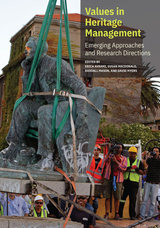
Over the last fifty years, conservation professionals have confronted increasingly complex political, economic, and cultural dynamics. This volume, with contributions by leading international practitioners and scholars, reviews how values-based methods have come to influence conservation, takes stock of emerging approaches to values in heritage practice and policy, identifies common challenges and related spheres of knowledge, and proposes specific areas in which the development of new approaches and future research may help advance the field.
The free online edition of this open-access book is available at www.getty.edu/publications/heritagemanagement/ and includes zoomable illustrations. Also available are free PDF, EPUB, and Kindle/MOBI downloads of the book.

The contributors explore how happiness intersects with dominant social values as well as an array of aims and aspirations that are potentially conflicting, demonstrating that not every kind of happiness is seen as a worthwhile aim or evaluated in positive moral terms. In tracing this link between different conceptions of happiness and their evaluations, the book engages some of the most fundamental questions concerning human happiness: What is it and how is it achieved? Is happiness everywhere a paramount value or aim in life? How does it relate to other ideas of the good? What role does happiness play in orienting peoples’ desires and life choices? Taking these questions seriously, the book draws together considerations of meaning, values, and affect, while recognizing the diversity of human ends.
A concise introduction to Christian ethics, this book surveys the moral values of the Catholic tradition and applies them to contemporary issues. Prominent authors address such topics as scriptural sources, reverence for human life, sexuality and intimacy, family responsibilities, the concept of peace in the modern world, economics, and Catholic higher education.
Vision and Values is both an overview of the major perspectives which inform moral decisions and a guide to how these principles interrelate. It can help readers determine how to make complex moral judgments in a Christian context as it demonstrates the vitality of the Catholic theological tradition.
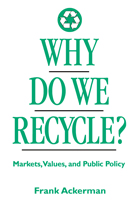
The earnest warnings of an impending "solid waste crisis" that permeated the 1980s provided the impetus for the widespread adoption of municipal recycling programs. Since that time America has witnessed a remarkable rise in public participation in recycling activities, including curbside collection, drop-off centers, and commercial and office programs. Recently, however, a backlash against these programs has developed. A vocal group of "anti-recyclers" has appeared, arguing that recycling is not an economically efficient strategy for addressing waste management problems.
In Why Do We Recycle? Frank Ackerman examines the arguments for and against recycling, focusing on the debate surrounding the use of economic mechanisms to determine the value of recycling. Based on previously unpublished research conducted by the Tellus Institute, a nonprofit environmental research group in Boston, Massachusetts, Ackerman presents an alternative view of the theory of market incentives, challenging the notion that setting appropriate prices and allowing unfettered competition will result in the most efficient level of recycling. Among the topics he considers are:
- externality issues -- unit pricing for waste disposal, effluent taxes, virgin materials subsidies, advance disposal fees
- the landfill crisis and disposal facility siting
- container deposit ("bottle bill") legislation
- environmental issues that fall outside of market theory
- calculating costs and benefits of municipal recycling programs
- life-cycle analysis and packaging policy -- Germany's "Green Dot" packaging system and producer responsibility
- the impacts of production in extractive and manufacturing industries
- composting and organic waste management
- economics of conservation, and material use and long-term sustainability
Backed by empirical data and replete with specific examples, the book offers valuable guidance for municipal planners, environmental managers, and policymakers responsible for establishing and implementing recycling programs. It is also an accessible introduction to the subject for faculty, students, and concerned citizens interested in the social, economic, and ethical underpinnings of recycling efforts.
READERS
Browse our collection.
PUBLISHERS
See BiblioVault's publisher services.
STUDENT SERVICES
Files for college accessibility offices.
RECENTLY PUBLISHED




UChicago Accessibility Resources
home | accessibility | search | about | contact us
BiblioVault ® 2001 - 2025
The University of Chicago Press