
 A SCHOLARLY BOOK REPOSITORY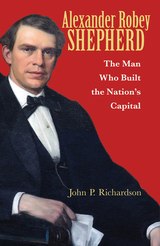
With Alexander Robey Shepherd, John P. Richardson gives us the first full-length biography of his subject, who as Washington, D.C.’s, public works czar (1871–74) built the infrastructure of the nation’s capital in a few frenetic years after the Civil War. The story of Shepherd is also the story of his hometown after that cataclysm, which left the city with churned-up streets, stripped of its trees, and exhausted.
An intrepid businessman, Shepherd became president of Washington’s lower house of delegates at twenty-seven. Garrulous and politically astute, he used every lever to persuade Congress to realize Peter L’Enfant’s vision for the capital. His tenure produced paved and graded streets, sewer systems, trees, and gaslights, and transformed the fetid Washington Canal into one of the city’s most stately avenues. After bankrupting the city, a chastened Shepherd left in 1880 to develop silver mines in western Mexico, where he lived out his remaining twenty-two years.
In Washington, Shepherd worked at the confluence of race, party, region, and urban development, in a microcosm of the United States. Determined to succeed at all costs, he helped force Congress to accept its responsibility for maintenance of its stepchild, the nation’s capital city.

Mildred and Robert Woods Bliss, the founders of Dumbarton Oaks, were not, per se, collectors of American art. Nevertheless, they acquired interesting and, at times, important examples of American paintings, drawings, etchings, and sculptures. Such acquisitions were but a part of an overall collection which comprised ancient Chinese, Greek, Roman, Byzantine, Pre-Columbian, and European old master artworks as well as rare books, literary manuscripts and correspondence, important furnishings, unusual bibelots, and concert-quality instruments. The American artworks that remain at Dumbarton Oaks offer an important insight into the Blisses’ remarkable breadth of vision for their collection.
This volume catalogues the American art collection at Dumbarton Oaks and is published in conjunction with an exhibition, “American Art at Dumbarton Oaks.” An introductory essay describes the formation of this collection by Mildred and Robert Woods Bliss and their parents Anna and William H. Bliss, while the subsequent catalogue entries elaborate on nineteen artworks by James Abbott McNeill Whistler, Elihu Vedder, Walter Gay, Childe Hassam, Albert Edward Sterner, Henry Golden Dearth, and Bernice Cross. Richly illustrated with color plates and comparative illustrations, this catalogue will be an important and enduring reference for scholars, students, and admirers of American art.
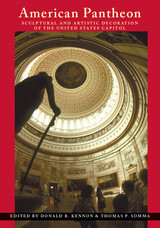
Like the ancient Roman Pantheon, the U.S. Capitol was designed by its political and aesthetic arbiters to memorialize the virtues, events, and persons most representative of the nation's ideals—an attempt to raise a particular version of the nation's founding to the level of myth.
American Pantheon examines the influences upon not only those virtues and persons selected for inclusion in the American pantheon, but also those excluded. Two chapters address the exclusion of slavery and African Americans from the art in the Capitol, a silence made all the more deafening by the major contributions of slaves and free black workers to the construction of the building. Two other authors consider the subject of women emerging as artists, subjects, patrons, and proponents of art in the Capitol, a development that began to emerge only in the second half of the nineteenth century.
The Rotunda, the Capitol's principal ceremonial space, was designed in part as an art museum of American history—at least the authorized version of it. It is explored in several of the essays, including discussions of the influence of the early-nineteenth-century Italian sculptors who provided the first sculptural reliefs for the room and the contributions of the mid-nineteenth-century Italian American artist Constantino Brumidi, to the mix of allegory, mythology, and history that permeates the space and indeed the Capitol itself.

Andean Art at Dumbarton Oaks presents the Andean portion of the Robert Woods Bliss Collection of Pre-Columbian Art. It superbly illustrates all 133 Andean objects in color plates, and includes many complementary and comparative black-and-white illustrations and drawings. The body of Pre-Columbian art that Robert Bliss carefully assembled over a half-century between 1912 and 1963, and which has been amplified slightly since his death, is a remarkably significant collection. These works of art are among the finest examples of the visual arts produced by Andean cultures.
This Andean volume is the first in a series of four catalogues that will treat the entirety of the Bliss Pre-Columbian collection; the others planned will focus on objects from eastern Mesoamerica (Olmec and Maya), western Mesoamerica (Teotihuacan, Veracruz, Mixtec, and Aztec), and Lower Central America.
Andean Art is composed of five topical essays, shorter essays on the Andean cultures represented in the collection, and discussions of the individual objects. These were written by specialists in Pre-Columbian art, presenting the latest in scholarly thinking on Andean cultures and the objects. All thirteen authors bring broad perspectives from Andean culture history, archaeology, and art history to their contributions, but they focus their attentions primarily on the objects themselves, in order to provide meaningful contexts for them and to highlight how these objects, as works of art created and used purposefully, reveal special qualities of Andean culture.
The reader is provided with a fine sense of how the creators and original owners of the pieces in the Bliss collection used and valued these artworks on many levels. The authors also place individual objets alongside others of their type in so far as possible. An extraordinary feature of this volume is the technical descriptions of the metal objects provided by metals specialist Heather Lechtman.

In 1790, two events marked important points in the development of two young American institutions—Congress decided that the new nation's seat of government would be on the banks of the Potomac, and John Carroll of Maryland was consecrated as America's first Catholic bishop. This coincidence of events signalled the unexpectedly important role that Maryland's Catholics, many of them by then fifth- and sixth-generation Americans, were to play in the growth and early government of the national capital. In this book, William W. Warner explores how Maryland's Catholics drew upon their long-standing traditions—advocacy of separation of church and state, a sense of civic duty, and a determination "to live at peace with all their neighbors," in Bishop Carroll's phrase—to take a leading role in the early government, financing, and building of the new capital.
Beginning with brief histories of the area's first Catholic churches and the establishment of Georgetown College, At Peace with All Their Neighbors explains the many reasons behind the Protestant majority's acceptance of Catholicism in the national capital in an age often marked by religious intolerance. Shortly after the capital moved from Philadelphia in 1800, Catholics held the principal positions in the city government and were also major landowners, property investors, and bankers. In the decade before the 1844 riots over religious education erupted in Philadelphia, the municipal government of Georgetown gave public funds for a Catholic school and Congress granted land in Washington for a Catholic orphanage.
The book closes with a remarkable account of how the Washington community, Protestants and Catholics alike, withstood the concentrated efforts of the virulently anti-immigrant and anti-Catholic American nativists and the Know-Nothing Party in the last two decades before the Civil War.
This chronicle of Washington's Catholic community and its major contributions to the growth of the nations's capital will be of value for everyone interested in the history of Washington, D.C., Catholic history, and the history of religious toleration in America.

In Avocado Dreams, Ana Patricia Rodríguez draws from her own positionality as a Salvadoran transplant to examine the construction of the unique Salvadoran cultural imaginary made in the greater D.C. area. Through a careful reading of the creative works of local writers, performers, artists, and artivists, Rodríguez demonstrates how the people have remade themselves in relation to the cultural, ethnoracial, and sociolinguistic diversity of the area. She discusses how Salvadoran people have developed unique, intergenerational Salvadoreñidades, manifested in particular speech and symbolic acts, ethnoracial embodiments, and local identity formations in relation to the diverse communities, most notably Black Washingtonians, who co-inhabit the region.
This timely and relevant work not only enriches our understanding of Salvadoran diasporic experiences but also contributes significantly to broader discussions on migration, identity, and cultural production in the United States.
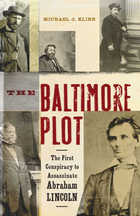
The Complete Story of the First Attempt to Assassinate President Abraham Lincoln
"In a thrilling detective story of conspiracy, treachery and assassination, Michael J. Kline suggests how close the Baltimore plotters came to achieving their goal, and reveals how Lincoln and a few guards outwitted them. Meticulously researched and written with verve, "The Baltimore Plot" takes readers aboard Lincoln's inaugural train for a perilous and unforgettable journey." —James L. Swanson, author of the Edgar Award-winning New York Times bestseller Manhunt: The 12-Day Chase for Lincoln's Killer
On February 11, 1861, the "Lincoln Special" - Abraham Lincoln's private train—began its journey from Springfield, Illinois, to the City of Washington, carrying the president-elect to his inauguration as the sixteenth president of the United States. Considered a "sectional candidate" by the South, and winning the election without the popular vote, Lincoln was so despised that seven states immediately seceded from the Union. Over the next twelve days, Lincoln would speak at numerous stops, including Indianapolis, Columbus, Cleveland, Pittsburgh, Buffalo, Albany, New York, and Philadelphia, expressing his desire to maintain the Union. But as Lincoln made his way east, America's first private detective, Allan Pinkerton, and a separate undercover operation by New York City detectives, uncovered startling evidence of a conspiracy to assassinate Lincoln during his next-to-last stop in Baltimore. Long a site of civil unrest—even Robert E. Lee's father, Henry "Light Horse Harry" Lee, was nearly beaten to death in its streets—Baltimore provided the perfect environment for a strike. The largest city of a border state with secessionist sympathies, Baltimore had been infiltrated by paramilitary groups bent on killing Lincoln, the "Black Republican." The death of the president-elect would, it was supposed, throw the nation into chaos and allow the South to establish a new nation and claim Washington as its capital. Warned in time, Lincoln outfoxed the alleged conspirators by slipping through Baltimore undetected, but at a steep price. Ridiculed by the press for "cowardice" and the fact that no conspirators were charged, Lincoln would never hide from the public again. Four years later, when he sat unprotected in the balcony of Ford's Theatre, the string of conspiracies against his life finally succeeded. One of the great presidential mysteries and long a source of fascination among Lincoln scholars, the Baltimore Plot has never been fully investigated until now. In The Baltimore Plot: The First Conspiracy to Assassinate Abraham Lincoln, Michael J. Kline turns his legal expertise to evaluating primary sources in order to discover the extent of the conspiracy and culpability of the many suspects surrounding the case. Full of memorable characters, including Kate Warne, the first female undercover agent, and intriguing plot twists, the story is written as an unfolding criminal proceeding in which the author allows the reader to determine whether there was a true plot to kill Lincoln and if the perpetrators could have been brought to trial.

An original history of six generations of an African American family living in Washington, DC
Between Freedom and Equality begins with the life of Capt. George Pointer, an enslaved African who purchased his freedom in 1793 while working for George Washington’s Potomac Company. It follows the lives of six generations of his descendants as they lived and worked on the banks of the Potomac, in the port of Georgetown, and in a rural corner of the nation’s capital. By tracing the story of one family and their experiences, Between Freedom and Equality offers a moving and inspiring look at the challenges that free African Americans have faced in Washington, DC, since the district’s founding.
The story begins with an 1829 letter from Pointer that is preserved today in the National Archives. Inspired by Pointer’s letter, authors Barbara Boyle Torrey and Clara Myrick Green began researching this remarkable man who was a boat captain and supervisory engineer for the Potomac canal system. What they discovered about the lives of Pointer and his family provides unique insight across two centuries of Washington, DC, history.
The Pointer family faced many challenges—the fragility of freedom in a slaveholding society, racism, wars, floods, and epidemics—but their refuge was the small farm they purchased in what is now Chevy Chase. However, in the early twentieth century, the DC government used eminent domain to force the sale of their farm and replaced it with an all-white school. Between Freedom and Equality grants Pointer and his descendants their long-overdue place in American history.
This book includes a foreword by historian Maurice Jackson exploring the significance of the Pointer family’s unique history in the capital. In another very personal foreword, James Fisher, an eighth-generation descendant of George Pointer, shares his complex emotions when he learned about his ancestors. Also featured in this important history is a facsimile and transcription of George Pointer’s original letter and a family tree.
Royalties from the sale of the book will go to Historic Chevy Chase DC (HCCDC), which has established a fund for promoting the legacy of George Pointer and his descendants.

Rodney grew up during the crack epidemic, with guns, drugs, and the threat of incarceration an accepted part of daily life for nearly everyone he knew. To rent his own apartment, he needed a paycheck—something the money from dealing drugs didn’t provide. For that, he took a position in 1992 with a new nonprofit, the Earth Conservation Corps. Gradually, Rodney fell in love with the work to restore and conserve the polluted Anacostia River that flows through D.C. As conditions along the river improved, he helped to reintroduce bald eagles to the region and befriended an injured Eurasian Eagle Owl named Mr. Hoots, the first of many birds whose respect he would work hard to earn.
Bird Brother is a story about pursuing dreams against all odds, and the importance of second chances. Rodney’s life was nearly upended when he was arrested on drug charges in 2002. The jail sentence sharpened his resolve to get out of the hustling life. With the fierceness of the raptors he had admired for so long, he began to train to become a master falconer and to develop his own raptor education program and sanctuary. Rodney’s son Mike, a D.C. firefighter, has also begun his journey to being a master falconer, with his own kids cheering him along the way.
Eye-opening, witty, and moving, Bird Brother is a love letter to the raptors and humans who transformed what Rodney thought his life could be. It is an unflinching look at the uphill battle Black children face in pursuing stable, fulfilling lives, a testament to the healing power of nature, and a reminder that no matter how much heartbreak we’ve endured, we still have the capacity to give back to our communities and follow our wildest dreams.
Georgetown's little-known black heritage shaped a Washington, DC, community long associated with white power and privilege.
Black Georgetown Remembered reveals a rich but little-known history of the Georgetown black community from the colonial period to the present. Drawing on primary sources, including oral interviews with past and current residents and extensive research in church and historical society archives, the authors record the hopes, dreams, disappointments, and successes of a vibrant neighborhood as it persevered through slavery and segregation, war and peace, prosperity and depression.
This beautifully redesigned 25th anniversary edition of Black Georgetown Remembered, first published in 1991, includes a foreword by Maurice Jackson and more than two hundred illustrations, including portraits of prominent community leaders, sketches, maps, and nineteenth-century and contemporary photographs. Kathleen Menzie Lesko's new introduction describes the impact the book and its companion documentary video have had since publication and updates readers on recent changes in this Washington, DC, neighborhood.
Black Georgetown Remembered is a compelling and inspiring journey through more than two hundred years of history. A one-of-a-kind book, it invites readers to share in the lives, dreams, aspirations, struggles, and triumphs of real people, to join them in their churches, at home, and on the street, and to consider how the unique heritage of this neighborhood intersects and contributes to broader themes in African American and Washington, DC, history and urban studies.
Georgetown's little-known Black heritage shaped a Washington, DC, community long associated with white power and privilege.
Black Georgetown Remembered reveals a rich but little-known history of the Georgetown Black community from the colonial period to the present. Drawing on primary sources, including oral interviews with past and current residents and extensive research in church and historical society archives, the authors record the hopes, dreams, disappointments, and successes of a vibrant neighborhood as it persevered through slavery and segregation, war and peace, prosperity and depression.
This thirtieth anniversary edition of Black Georgetown Remembered, first published in 1991, features more than two hundred illustrations, including portraits of prominent community leaders, sketches, maps, and nineteenth-century and contemporary photographs. A new chapter includes a conversation with former and current Georgetown residents reflecting on the community, past and present.
Black Georgetown Remembered is a compelling and inspiring journey through more than two hundred years of history. A one-of-a-kind book, it invites readers to share in the lives, dreams, aspirations, struggles, and triumphs of real people, to join them in their churches, at home, and on the street, and to consider how the unique heritage of this neighborhood intersects and contributes to broader themes in African American and Washington, DC, history and urban studies.
An insightful exploration of the impact of urban change on Black culture, identity, and language
Across the United States, cities are changing. Gentrification is transforming urban landscapes, often pushing local Black populations to the margins. As a result, communities with rich histories and strong identities grapple with essential questions. What does it mean to be from a place in flux? What does it mean to be a specific kind of person from that place? What does gentrification mean for the fabric of a community?
In The Black Side of the River, sociolinguist Jessi Grieser draws on ten years of interviews with dozens of residents of Anacostia, a historically Black neighborhood in Washington, DC, to explore these ideas through the lens of language use. Grieser finds that residents use certain speech features to create connections among racial, place, and class identities; reject negative characterizations of place from those outside the community; and negotiate ideas of belonging. In a neighborhood undergoing substantial class gentrification while remaining decisively Black, Grieser finds that Anacostians use language to assert a positive, hopeful place identity that is inextricably intertwined with their racial one.
Grieser’s work is a call to center Black lived experiences in urban research, confront the racial effects of urban change, and preserve the rich culture and community in historic Black neighborhoods, in Washington, DC, and beyond.

Books Like Sapphires showcases a wide range of Hebraic treasures from the storied collection at the Library of Congress, many of them for the first time. Tracing the history of Judaica collecting in the twentieth-century United States, the book illuminates varied works, telling their stories alongside vibrant color images. These include a unique manuscript about a betrothal scandal in Renaissance Crete, an illustrated Esther Scroll, a poem from 1477 celebrating the new technology of printing, amusing rhymed couplets in sixteenth-century Padua, and the Washington Haggadah. This book also tells the story of the patrons and collectors, first among them Jacob Schiff, as well as archivists and curators, who made the storied Judaica archive at the Library of Congress the precious resource that it is today.
The celebration of Washington D.C. basketball is long overdue. The D.C. metro area stands second to none in its contributions to the game. Countless figures who have had a significant impact on the sport over the years have roots in the region, including E.B. Henderson, the first African-American certified to teach public school physical education, and Earl Lloyd, the first African-American to take the court in an actual NBA game. The city's Spingarn High School produced two players – Elgin Baylor and Dave Bing – recognized among the NBA’s 50 greatest at the League’s 50th anniversary celebration. No other high school in the country can make that claim.
These figures and many others are chronicled in this book, the first-ever comprehensive look at the great high school players, teams and coaches in the D.C. metropolitan area.
Based on more than 150 interviews, The Capital of Basketball is first and foremost a book about basketball. But in discussing the trends and evolution of the game, McNamara also uncovers the turmoil in the lives of the players and area residents as they dealt with prejudice, educational inequities, politics, and the ways the area has changed through the years.
An investigation of the practice of “commoning” in urban housing and its necessity for challenging economic injustice in our rapidly gentrifying cities
Provoked by mass evictions and the onset of gentrification in the 1970s, tenants in Washington, D.C., began forming cooperative organizations to collectively purchase and manage their apartment buildings. These tenants were creating a commons, taking a resource—housing—that had been used to extract profit from them and reshaping it as a resource that was collectively owned by them.
In Carving Out the Commons, Amanda Huron theorizes the practice of urban “commoning” through a close investigation of the city’s limited-equity housing cooperatives. Drawing on feminist and anticapitalist perspectives, Huron asks whether a commons can work in a city where land and other resources are scarce and how strangers who may not share a past or future come together to create and maintain commonly held spaces in the midst of capitalism. Arguing against the romanticization of the commons, she instead positions the urban commons as a pragmatic practice. Through the practice of commoning, she contends, we can learn to build communities to challenge capitalism’s totalizing claims over life.


This catalogue highlights the fifty-two sculptures in the Byzantine Collection at Dumbarton Oaks. The objects range from the third-century BC miniature portrait head of a Ptolemaic emperor to the sixteenth-century lindenwood “Queen of Heaven” by Tilmann Riemenschneider.
These sculptures are not representative of any one culture or period, but rather are characteristic of the Blisses’ wide-ranging tastes and extraordinary connoisseurship. About a quarter of the objects are Greco-Roman in date, and nearly two-thirds of the remainder are Late Antique, predominantly limestone carvings from Early Byzantine Egypt. Sculpture from the Middle Byzantine period is very rare, making the four pieces in this collection especially significant.
Americans’ current trust in journalists is at a dismayingly low ebb, particularly on the subject of national and international politics. For some, it might be tempting to look back to the mid-twentieth century, when the nation’s press corps was a seemingly venerable and monolithic institution that conveyed the official line from Washington with nary a glint of anti-patriotic cynicism. As Kathryn McGarr’s City of Newsmen shows, however, the real story of what Cold War–era journalists did and how they did it wasn’t exactly the one you’d find in the morning papers.
City of Newsmen explores foreign policy journalism in Washington during and after World War II—a time supposedly defined by the press’s blind patriotism and groupthink. McGarr reveals, though, that DC reporters then were deeply cynical about government sources and their motives, but kept their doubts to themselves for professional, social, and ideological reasons. The alliance and rivalries among these reporters constituted a world of debts and loyalties: shared memories of harrowing wartime experiences, shared frustrations with government censorship and information programs, shared antagonisms, and shared mentors. McGarr ventures into the back hallways and private clubs of the 1940s and 1950s to show how white male reporters suppressed their skepticism to build one of the most powerful and enduring constructed realities in recent US history—the Washington Cold War consensus. Though by the 1960s, this set of reporters was seen as unduly complicit with the government—failing to openly critique the decisions and worldviews that led to disasters like the Vietnam War—McGarr shows how self-aware these reporters were as they negotiated for access, prominence, and, yes, the truth—even as they denied those things to their readers.
Treva B. Lindsey presents New Negro womanhood as a multidimensional space that included race women, blues women, mothers, white collar professionals, beauticians, fortune tellers, sex workers, same-gender couples, artists, activists, and innovators. Drawing from these differing but interconnected African American women's spaces, Lindsey excavates a multifaceted urban and cultural history of struggle toward a vision of equality that could emerge and sustain itself. Upward mobility to equal citizenship for African American women encompassed challenging racial, gender, class, and sexuality status quos. Lindsey maps the intersection of these challenges and their place at the core of New Negro womanhood.
Using a case study from a predominantly Black, urban high school in Washington, D.C., Youniss and Yates build on the insights of Erik Erikson on the social and historical nature of identity development. They show that service at a soup kitchen as part of a course on social justice gives youth the opportunity to reflect on their status in society, on how society is organized, on how government should use its power, and on moral principles related to homelessness and poverty. Developing a sense of social responsibility and a civic commitment, youth come to see themselves as active agents in society.
The most authoritative work to date on the subject, this book challenges negative stereotypes of contemporary adolescents and illustrates how youth, when given the opportunity, can use their talents for social good. It will interest readers concerned with the development of today's youth and tomorrow's society.
Bravin recounts the discussions and decision-making that happened behind the scenes leading up to and following the ill-fated announcement. He reflects on the integrity of the process and the internal conflict he experienced as a deaf person who supported a deaf president yet felt compelled to abide by his duties as a board member. After the protests, his leadership was recognized when he was selected as the first deaf chair of the board. Photographs and documents add depth to Bravin’s account, many of which will be seen by the public for the first time. I. King Jordan, the first deaf president of Gallaudet, provides a foreword in which he shares his own unique insight into these events.
Controlling Our Destiny captures the energy and the urgency of DPN. Readers will understand the complexities of the presidential search process and the cultural and historical contexts that triggered the protest. Bravin’s memoir contemplates power, access, community, and the enduring legacy of a movement that inspired deaf people around the world.
“As is well known, Pete is an outstanding storyteller, and this book is no exception."
—Claire Strom, Journal of Southern History
In addition to chronicling significant exhibit work at the Smithsonian National Museum of American History, Curating the American Past, captures the excitement inherent in researching and writing history and Pete Daniel’s efforts to prevent diluted celebratory stories from replacing the red meat of the American past.
In Curating the American Past, Pete Daniel reveals how curators collect objects, plan exhibits, and bring alive the country’s complex and exciting history. In vivid detail, Daniel recounts the exhilaration of innovative research, the joys of collaboration, and the rewards of mentoring new generations of historians. In a career distinguished by prize-winning publications and pathbreaking exhibitions, Daniel also confronted the challenges of serving as a public historian tasked with protecting a definitive American museum from the erosion of scholarly standards. Curating the American Past offers a wealth of museum wisdom, illuminating the crucial role that dedicated historians and curators serve within our most important repositories of cultural memory.
The familiar history of jazz music in the United States begins with its birth in New Orleans, moves upstream along the Mississippi River to Chicago, then by rail into New York before exploding across the globe. That telling of history, however, overlooks the pivotal role the nation's capital has played for jazz for a century. Some of the most important clubs in the jazz world have opened and closed their doors in Washington, DC, some of its greatest players and promoters were born there and continue to reside in the area, and some of the institutions so critical to national support of this uniquely American form of music, including Congress, the Smithsonian Institution, the Kennedy Center, the Library of Congress and the Historical Society of Washington, D.C., are rooted in the city. Closer to the ground, a network of local schools like the Duke Ellington High School for the Performing Arts, jazz programs at the University of the District of Columbia and Howard University, churches, informal associations, locally focused media, and clubs keeps the music alive to this day.
Noted historians Maurice Jackson and Blair Ruble, editors of this book, present a collection of original and fascinating stories about the DC jazz scene throughout its history, including a portrait of the cultural hotbed of Seventh and U Streets, the role of jazz in desegregating the city, a portrait of the great Edward "Duke" Ellington’s time in DC, notable women in DC jazz, and the seminal contributions of the University of District of Columbia and Howard University to the scene. The book also includes three jazz poems by celebrated Washington, DC, poet E. Ethelbert Miller. Collectively, these stories and poems underscore the deep connection between creativity and place. A copublishing initiative with the Historical Society of Washington, DC, the book includes over thirty museum-quality photographs and a guide to resources for learning more about DC jazz.
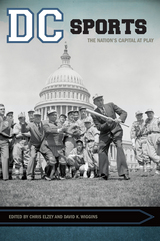
A southern city at heart, Washington drew a strong color line in every facet of people’s lives. Race informed how sport was played, written about, and watched in the city. In 1962, the Redskins became the final National Football League team to integrate. That same year, a race riot marred the city’s high-school championship game in football. A generation later, race as an issue resurfaced after Georgetown’s African American head coach John Thompson Jr. led the Hoyas to national prominence in basketball.
DC Sports takes a hard look at how sports in one city has shaped culture and history, and how culture and history inform sports. This informative and engaging collection will appeal to fans and students of sports and those interested in the rich history of the nation’s capital.
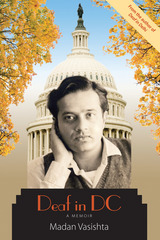
In his first memoir, Madan Vasishta described being a deaf boy in his homeland India, where “deaf” meant someone who is not human. After rising from herding cattle to being a respected photographer in Delhi, his first memoir concluded with his acceptance at Gallaudet College far away in America. Vasishta’s new memoir begins with his arrival in Washington, DC in 1967 with $40.00 in his pocket and very little knowledge of the new worlds he was entering.
Vasishta faced myriad challenges from the outset— he knew no American Sign Language and could not speech read, yet he found himself thrust into classes at Gallaudet two weeks into the semester. Cultural differences mystified him, such as how all American car accidents were someone else’s fault even when one’s car hits a stationary object. He was amazed that his fellow students did not deride him for his mistakes, unlike in India where he would have been scorned for his weakness. After five years, he returned home to India for a visit and was stunned to learn that he no longer fit in, that “even if you do not have an American Dream, the American Dream will have you.”
Deaf in DC follows Vasishta through half a century living in America. He witnessed the transformation from facing bias as a deaf, foreign man of color who could not get a job despite having a Ph.D., to receiving five offers as a school superintendent in the wake of the Civil Rights movement and Deaf President Now. His new memoir reflects a genuine worldview informed by the sage perceptions of a person who has lived widely in many worlds.
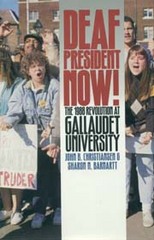
Deaf President Now! reveals the groundswell leading up to the history-making week in 1988 when the students at Gallaudet University seized the campus and closed it down until their demands were met. To research this probing study, the authors interviewed in-depth more than 50 of the principal players.
This telling book reveals the critical role played by a little-known group called the "Ducks," a tight-knit band of six alumni determined to see a deaf president at Gallaudet. Deaf President Now! details how they urged the student leaders to ultimate success, including an analysis of the reasons for their achievement in light of the failure of many other student movements. This fascinating study also scrutinizes the lasting effects of this remarkable episode in "the civil rights movement of the deaf." Deaf President Now! tells the full story of the insurrection at Gallaudet University, an exciting study of how deaf people won social change for themselves and all disabled people everywhere through a peaceful revolution.
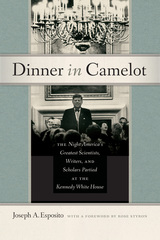

Amin Ghaziani ably puts these demonstrations into their cultural context, chronicling gay and lesbian life at the time and the political currents that prompted the protests. He then turns to each march in detail, focusing on the role that internal dissent played in its organization. Ultimately, Ghaziani concludes that infighting can contribute positively to the development of social movements, and that the debates over the marches helped define what it means to be gay in the United States.

Dumbarton Oaks houses the extraordinary art collection begun by Mildred and Robert Woods Bliss. In this book the museum publishes the specialist collections in Byzantine and Pre-Columbian art, along with examples from the Blisses’ superb European collection, for the first time.
When Robert Bliss recalled handling a jade Olmec figurine in 1913, he said, “That day, the collector’s microbe took root in—it must be confessed—very fertile soil.” The Blisses’ passion for art bore fruit in a remarkably diverse collection: Flemish tapestries, Renaissance furniture, and paintings by the likes of El Greco, Renoir, and Degas. The celebrated Byzantine collection includes floor mosaics from late antique Antioch, sumptuous jewelry, carved ivory reliefs, liturgical silver, and a comprehensive coin and seals collection. The Pre-Columbian collection showcases fine jade carvings, gold jewelry, monumental sculpture, ritual weaponry, colorful ceramics, and intricately woven textiles.
The publication of this new guidebook coincides with the complete refurbishment of Dumbarton Oaks and the creative reinstallation of the galleries. The curators offer highlights of the collection, accompanied by a lucid and thought-provoking text. Dumbarton Oaks: The Collections is intended as a valuable resource and a pleasure to read for scholars and nonspecialists alike.
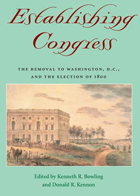
Establishing Congress: The Removal to Washington, D.C., and the Election of 1800 focuses on the end of the 1790s, when, in rapid succession, George Washington died, the federal government moved to Washington, D.C., and the election of 1800 put Thomas Jefferson and the Democratic-Republican Party in charge of the federal government.
Establishing Congress dispels the myths and misinformation that surround the federal government’s move to Washington and demonstrates that the election of 1800 changed American party politics forever, establishing the success of the American experiment in government and completing the founding of the Republic. It also contends that the lame-duck session of Congress had far-reaching implications for the governance of the District of Columbia. Later chapters examine aspects of the political iconography of the Capitol—one illuminating Jefferson’s role in turning the building into a temple for the legislature and an instrument for nation-building, another analyzing the fascinating decades-long debate over whether to bury George Washington in the Capitol.
The book considers as well the political implications of social life in early Washington, examining the political lobbying by Washington women within a social context and detailing the social and political life in the city’s homes, hotels, boardinghouses, and eating messes. Establishing Congress is an invaluable reference work for anyone interested in these pivotal moments in American history.
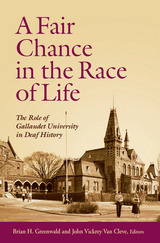
Despite its prominence as a world cultural center and a locus of research on deaf culture, history, education, and language for more than 150 years, Gallaudet University has only infrequently been the focal point of historical study. Eminent historians Brian H. Greenwald and John Vickrey Van Cleve have remedied this scarcity with A Fair Chance in the Race of Life: The Role of Gallaudet University in Deaf History. In this collection, a remarkable cast of scholars examine the university and its various roles through time, many conducting new research in the Gallaudet University Archives, an unsurpassed repository of primary sources of deaf history.
Pulitzer-Prize-winning historian James M. McPherson sets the stage in his essay “A Fair Chance in the Race of Life,” President Abraham Lincoln’s statement when he chartered the first college for deaf students. The papers that follow scrutinize Gallaudet’s long domination by hearing presidents, its struggle to find a place within higher education, its easy acquiescence to racism, its relationship with the federal government, and its role in creating, shaping, and nurturing the deaf community.
These studies do more than simply illuminate the university, however. They also confront broad issues that deal with the struggles of social conformity versus cultural distinctiveness, minority cohesiveness, and gender discrimination. “Deaf” themes, such as the role of English in deaf education, audism, and the paternalism of hearing educators receive analysis as well.
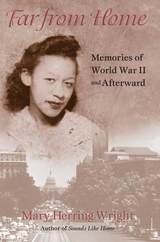
“She’s got no more business there than a pig has with a Bible.” That’s what her father said when Mary Herring announced that she would be moving to Washington, DC, in late 1942. Recently graduated from the North Carolina School for Black Deaf and Blind Students, Mary had been invited to the nation’s capital by a cousin to see a specialist about her hearing loss. Though nothing could be done about her deafness, Mary quickly proved her father wrong by passing the civil service examination with high marks. Far from Home: Memories of World War II and Afterward, the second installment of her autobiography, describes her life from her move to Washington to the present.
Mary soon became a valued employee for the Navy, maintaining rosters for the many servicemen in war theaters worldwide. Her remarkable gift for detail depicts Washington in meticulous layers, a sleepy Southern town force-grown into a dynamic geopolitical hub. Life as a young woman amid the capital’s Black middle class could be warm and fun, filled with visits from family and friends, and trips home to Iron Mine for tearful, joyous reunions. But the reality of the times was never far off. On many an idyllic afternoon, she and her friends found somber peace in Arlington Cemetery, next to the grave of the sole Unknown Soldier at that time. During an evening spent at the U.S.O., one hearing woman asked how people like her could dance, and Mary answered, “With our feet.” She became a pen pal to several young servicemen, but did not want to know why some of them suddenly stopped writing.
Despite the close friends and good job that she had in Washington, the emotional toll caused Mary to return to her family home in Iron Mine, NC. There, she rejoined her family and resumed her country life. She married and raised four daughters, and recounts the joys and sorrows she experienced through the years, particularly the loss of her parents. Her blend of the gradual transformation of Southern rural life with momentous events such as Hurricane Hazel creates an extraordinary narrative history. The constant in Far from Home remains the steady confidence that Mary Herring Wright has in herself, making her new memoir a perfect companion to her first.

Garden as Art: Beatrix Farrand at Dumbarton Oaks features essays and photographs of this remarkable landscape as a living and breathing work of art. Published on the occasion of the centennial of the Dumbarton Oaks Gardens in 2021, the book illuminates the stewardship of one of the most beautiful gardens on earth.
Edited by Thaïsa Way, this volume includes essays from scholars and practitioners as well as photographs by landscape photographer Sahar Coston-Hardy. The essays place the garden in the context of its historical surroundings, explore its archival significance, and reflect on its effects on the world of contemporary design. Accompanying the essays is a collection of newly commissioned photographs by Coston-Hardy that document the seasons and growth in the gardens over the course of a year and that invite the reader to contemplate the art of garden design and the remarkable beauty of the natural world. Archival images of the gardens offer a chronicle of evolving design concepts as well as illustrate how gardens change over time as living works of art. Garden as Art offers an inspiring view of a place that has been remarkably influential in design and the art of landscape architecture.
George Washington is remembered for leading the Continental Army to victory, presiding over the Constitution, and forging a new nation, but few know the story of his involvement in the establishment of a capital city and how it nearly tore the United States apart.
In George Washington’s Final Battle, Robert P. Watson brings this tale to life, telling how the country's first president tirelessly advocated for a capital on the shores of the Potomac. Washington envisioned and had a direct role in planning many aspects of the city that would house the young republic. In doing so, he created a landmark that gave the fledgling democracy credibility, united a fractious country, and created a sense of American identity.
Although Washington died just months before the federal government's official relocation, his vision and influence live on in the city that bears his name.
This little-known story of founding intrigue throws George Washington’s political acumen into sharp relief and provides a historical lesson in leadership and consensus-building that remains relevant today. This book will fascinate anyone interested in the founding period, the American presidency, and the history of Washington, DC.
An invaluable primary resource for understanding nineteenth-century America.
As a Georgetown resident for nearly a century, Britannia Wellington Peter Kennon (1815 – 1911) was close to the key political events of her time. Born into the prominent Peter family, Kennon came into contact with the many notable historical figures of the day who often visited Tudor Place, her home for over ninety years. Now published for the first time, the record of her experiences offers a unique insight into nineteenth-century American history.
Housed in the Tudor Place archives, "The Reminiscences of Britannia Wellington Peter Kennon" is a collection of Kennon’s memories solicited and recorded by her grandchildren in the 1890s. The text includes Kennon’s memories of her mother Martha Custis Peter and spending time at Mount Vernon with her grandparents George and Martha Washington. It also includes her recollections of childhood in Georgetown, life during the Civil War, the people enslaved at Tudor Place, and daily life in Washington, DC.
Edited by Grant Quertermous, this richly illustrated and annotated edition gives readers a greater appreciation of life in early Georgetown. It includes a guide to the city's streets then and now, a detailed family tree, and an appendix of the many people Britannia encountered—a who's who of the period. Readers will also find Britannia's narrative an essential companion to the incredible collection of objects preserved at Tudor Place. Notable for both its breadth and level of detail, A Georgetown Life brings a new dimension to the study of nineteenth-century America.
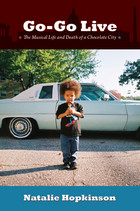
Go-Go Live is a social history of black Washington told through its go-go music and culture. Encompassing dance moves, nightclubs, and fashion, as well as the voices of artists, fans, business owners, and politicians, Natalie Hopkinson's Washington-based narrative reflects the broader history of race in urban America in the second half of the twentieth century and the early twenty-first. In the 1990s, the middle class that had left the city for the suburbs in the postwar years began to return. Gentrification drove up property values and pushed go-go into D.C.'s suburbs. The Chocolate City is in decline, but its heart, D.C.'s distinctive go-go musical culture, continues to beat. On any given night, there's live go-go in the D.C. metro area.
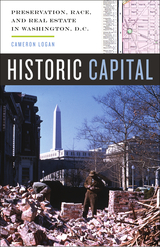
Washington, D.C. has long been known as a frustrating and sometimes confusing city for its residents to call home. The monumental core of federal office buildings, museums, and the National Mall dominates the city’s surrounding neighborhoods and urban fabric. For much of the postwar era, Washingtonians battled to make the city their own, fighting the federal government over the basic question of home rule, the right of the city’s residents to govern their local affairs.
In Historic Capital, urban historian Cameron Logan examines how the historic preservation movement played an integral role in Washingtonians’ claiming the city as their own. Going back to the earliest days of the local historic preservation movement in the 1920s, Logan shows how Washington, D.C.’s historic buildings and neighborhoods have been a site of contestation between local interests and the expansion of the federal government’s footprint. He carefully analyzes the long history of fights over the right to name and define historic districts in Georgetown, Dupont Circle, and Capitol Hill and documents a series of high-profile conflicts surrounding the fate of Lafayette Square, Rhodes Tavern, and Capitol Park, SW before discussing D.C. today.
Diving deep into the racial fault lines of D.C., Historic Capital also explores how the historic preservation movement affected poor and African American residents in Anacostia and the U Street and Shaw neighborhoods and changed the social and cultural fabric of the nation’s capital. Broadening his inquiry to the United States as a whole, Logan ultimately makes the provocative and compelling case that historic preservation has had as great an impact on the physical fabric of U.S. cities as any other private or public sector initiative in the twentieth century.
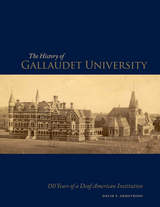
At first a tiny college of fewer than 200 students, Gallaudet’s growth paralleled the emergence of the American Deaf Community and the history of the nation in general. In the same way that the country’s land-grant universities brought higher education to more American students than ever before, Gallaudet offered the same opportunities to deaf students for the first time. Gallaudet mirrored other institutions in addressing major issues of the time, from legislated segregation to the Civil Rights movement that inspired the struggle by deaf people to gain control of the governance of their university. Most critically, this volume details poignantly the evolution of American Sign Language as a language of scholarship at Gallaudet during a time when its use in educational institutions was largely discouraged or prohibited. Through story and image, it traces the historic path that Gallaudet traveled to be recognized as the finest institution of higher education for deaf people in the world.

Mildred and Robert Woods Bliss were consummate collectors and patrons. After purchasing Dumbarton Oaks in 1920, they significantly redesigned the house and its interiors, built important new structures, added over fifty acres of planned gardens, hosted important musical evenings and intellectual discussions in their Music Room, and acquired a world-class art collection and library.
The illustrated essays in this volume reveal how the Blisses’ wide-ranging interests in art, music, gardens, architecture, and interior design resulted in the creation of the Dumbarton Oaks Research Library and Collection. Their collections of Byzantine and Pre-Columbian art and rare garden books and drawings are examined by Robert Nelson, Julie Jones, and Therese O’Malley, respectively. James Carder provides the Blisses’ biography and discusses their patronage of various architects, including Philip Johnson, and the interior designer Armand Albert Rateau. The Blisses’ collaboration with Beatrix Farrand on the creation of the Dumbarton Oaks Gardens is recounted by Robin Karson, and their commission of Igor Stravinsky’s Dumbarton Oaks Concerto and its premiere by Nadia Boulanger is examined by Jeanice Brooks. The volume demonstrates that every aspect of the Blisses’ collecting and patronage had a place in the creation of what they came to call their “home of the humanities.”
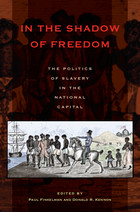
Few images of early America were more striking, and jarring, than that of slaves in the capital city of the world’s most important free republic. Black slaves served and sustained the legislators, bureaucrats, jurists, cabinet officials, military leaders, and even the presidents who lived and worked there. While slaves quietly kept the nation’s capital running smoothly, lawmakers debated the place of slavery in the nation, the status of slavery in the territories newly acquired from Mexico, and even the legality of the slave trade in itself.
This volume, with essays by some of the most distinguished historians in the nation, explores the twin issues of how slavery made life possible in the District of Columbia and how lawmakers in the district regulated slavery in the nation.
Contributors: David Brion Davis, Mary Beth Corrigan, A. Glenn Crothers, Jonathan Earle, Stanley Harrold, Mitch Kachun, Mary K. Ricks, James B. Stewart, Susan Zaeske, David Zarefsky

While the majority of scholarship on early Washington focuses on its political and physical development, in Incidental ArchitectGordon S. Brown describes the intellectual and social scene of the 1790s and early 1800s through the lives of a prominent couple whose cultural aspirations served as both model and mirror for the city’s own.
When William and Anna Maria Thornton arrived in Washington, D.C., in 1794, the new nation’s capital was little more than a raw village. The Edinburgh–educated Thornton and his accomplished wife brought with them the values of the Scottish Enlightenment, an enthusiasm for the arts, and a polished urbanity that was lacking in the little city emerging from the swamps along the Potomac. Thornton’s talents were manifold: He is perhaps best known as the original architect of the Capitol building, but he also served as a city commissioner and as director of the Patent Office, where his own experimentation in steam navigation embroiled him in a long-running dispute with inventor Robert Fulton.
In spite of their general preoccupation with politics and real estate development, Washington’s citizens gradually created a network of cultural institutions—theaters, libraries and booksellers, music venues, churches, schools, and even colleges and intellectual associations—that began to satisfy their aspirations.
Incidental Architect is a fascinating account of how the city’s cultural and social institutions were shaped by its earliest citizens.
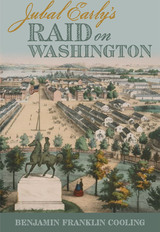
Amid an air of stalemate, the Confederates planned a bold move to strike at Washington, DC and capture or scatter Lincoln and his cabinet. In command of the operation was the colorful and unpredictable Jubal “Old Jube” Anderson Early, brought in to replace the fallen Stonewall Jackson. Less well known than the bloodier Antietam and Gettysburg, Early's campaign, Cooling argues, had greater significance.
In addition to the persnickety bachelor Anderson, this account introduces many colorful participants, including railroad president John W. Garrett, the politically influential Blair family, and Elizabeth “Aunt Betty” Thomas, a free Black woman, who was said to have saved Lincoln’s life by shouting at him: “Get down, you fool!” when he came under fire at Fort Stevens. Exciting and comprehensive, Civil War scholars and readers will delight in this masterful account.

Margaret Fuchs was thirteen in June 1955 when she learned that her parents had been Communists while working for the U.S. government in the 1930s and '40s. This book chronicles the years during which her parents were exposed and her father was subpoenaed before the House Un-American Activities Committee. Eventually he named names, and subsequently lost his job as a law professor at American University, and was blacklisted from teaching ever again. Legacy of a False Promise also details the author's quest as an adult to learn whether or not her parents ever spied for the Soviet Union.
Based on eight years of research using family records, FBI files, American University archives, personal interviews, and the recently declassified Venona cables, Legacy of a False Promise offers unique insights into the McCarthy Era. Most "red-diaper babies" who have written on the subject had parents who refused to give in to HUAC's demands. Singer's work instead recounts the shame and series of betrayals that her father's decision to name names brought to her family. Furthermore, it explores the campaign of the liberal anti-Communist movement to publicize its political position while defending a fired ex-Communist professor, the nature and activities of secret Communist underground cells, and the motivation of New Deal government workers who spied for the Soviets.
This is a poignant meditation on family secrets, father-daughter relationships in times of crisis, teenage loneliness in the midst of trauma, and the effects of parents' actions on the lives of their children. It also serves as a timely reminder of the dangers of sacrificing civil liberties in the name of national security.
Additional images, videos, and supplemental readings are available at the Gallaudet University Press/Manifold online platform.
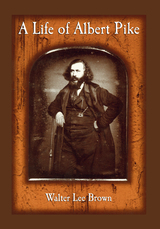
Drawing on original documents, Pike’s copious writings, and interviews with Pike’s descendants, Walter Lee Brown presents a fascinating personal history that also serves as a rich compendium of Arkansas’s antebellum history.
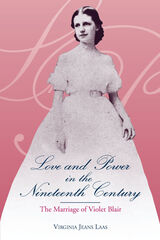
Winner, 1999 Missouri Conference on History Book Award
This fascinating biography of a marriage in the Gilded Age closely examines the dynamic flow of power, control, and love between Washington blue blood Violet Blair and New Orleans attorney Albert Janin. Based on their voluminous correspondence as well as Violet’s extensive diaries, it offers a thoroughly intimate portrait of a fifty-four-year union which, in many ways, conformed to societal strictures, yet always created its own definition of itself in order to fit the flux of needs of both husband and wife.
Central to their story is Violet’s fierce determination to maintain her autonomy within the patriarchic institution of marriage. An enduring belle who thought, talked, and acted with the assurance and self-confidence of one whose wishes demanded obedience, she rejected the Victorian ideal of women as silent, submissive consorts. Yet her feminism was a private one, not played out on a public stage but kept to the confines of her own daily life and marriage.
With abundant documentary evidence to draw upon, Laas ties this compelling story to broader themes of courtiship behavior, domesticity, gender roles, extended family bonds, elitism, and societal stereotyping. Deeply researched and beautifully written, Love and Power in the Nineteenth Century has the dual virtue of making an important historical contribution while also appealing to a broad popular audience.
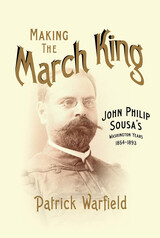
Warfield examines Sousa's wide-ranging experience composing, conducting, and performing in the theater, opera house, concert hall, and salons, as well as his leadership of the United States Marine Band and the later Sousa Band, early twentieth-century America's most famous and successful ensemble. Sousa composed not only marches during this period but also parlor, minstrel, and art songs; parade, concert, and medley marches; schottisches, waltzes, and polkas; and incidental music, operettas, and descriptive pieces. Warfield's examination of Sousa's output reveals a versatile composer much broader in stylistic range than the bandmaster extraordinaire remembered as the March King.
In particular, Making the March King demonstrates how Sousa used his theatrical training to create the character of the March King. The exuberant bandmaster who pleased audiences was both a skilled and charismatic conductor and a theatrical character whose past and very identity suggested drama, spectacle, and excitement. Sousa's success was also the result of perseverance and lessons learned from older colleagues on how to court, win, and keep an audience. Warfield presents the story of Sousa as a self-made business success, a gifted performer and composer who deftly capitalized on his talents to create one of the most entertaining, enduring figures in American music.
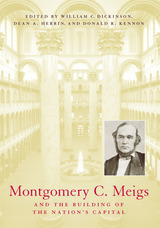
At the age of thirty-six, in 1852, Lt. Montgomery Cunningham Meigs of the Army Corps of Engineers reported to Washington, D.C., for duty as a special assistant to the chief army engineer, Gen. Joseph G. Totten. It was a fateful assignment, both for the nation’s capital and for the bright, ambitious, and politically connected West Point graduate.
Meigs's forty-year tenure in the nation's capital was by any account spectacularly successful. He surveyed, designed, and built the Washington water supply system, oversaw the extension of the U.S. Capitol and the erection of its massive iron dome, and designed and supervised construction of the Pension Building, now the home of the National Building Museum. The skills he exhibited in supervising engineering projects were carefully noted by political leaders, including president-elect Abraham Lincoln, who named Meigs quartermaster general of the Union Army, the most important position he held during his long and active military career.
Meigs believed Washington, D.C., should be the reincarnation of Rome, the ancient capital of the Roman Empire. He endeavored to memorialize the story of the American nation in all the structures he built, expressing these ideas in murals, sculpture, and monumental design.
Historians have long known Meigs for the organizational genius with which he fulfilled his duty as quartermaster general during the Civil War and for his unwavering loyalty to Lincoln and Secretary of War Edwin Stanton. This volume establishes his claim as one of the major nineteenth-century contributors to the built environment of the nation's capital.
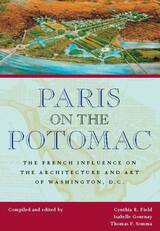
In 1910 John Merven Carrère, a Paris-trained American architect, wrote, “Learning from Paris made Washington outstanding among American cities.” The five essays in Paris on the Potomac explore aspects of this influence on the artistic and architectural environment of Washington, D.C., which continued long after the well-known contributions of Peter Charles L’Enfant, the transplanted French military officer who designed the city’s plan.
Isabelle Gournay’s introductory essay provides an overview and examines the context and issues involved in three distinct periods of French influence: the classical and Enlightenment principles that prevailed from the 1790s through the 1820s, the Second Empire style of the 1850s through the 1870s, and the Beaux-Arts movement of the early twentieth century. William C. Allen and Thomas P. Somma present two case studies: Allen on the influence of French architecture, especially the Halle aux Blés, on Thomas Jefferson’s vision of the U.S. Capitol; and Somma on David d’Angers’s busts of George Washington and the Marquis de Lafayette. Liana Paredes offers a richly detailed examination of French-inspired interior decoration in the homes of Washington’s elite in the late nineteenth and early twentieth centuries. Cynthia R. Field concludes the volume with a consideration of the influence of Paris on city planning in Washington, D.C., including the efforts of the McMillan Commission and the later development of the Federal Triangle complex.
The essays in this collection, the latest addition to the series Perspectives on the Art and Architectural History of the United States Capitol, originated in a conference held by the U.S. Capitol Historical Society in 2002 at the French Embassy’s Maison Française.

A fascinating analysis of a punk rock hotbed, Politics as Sound tells the story of how a generation created music that produced--and resisted--politics and power.
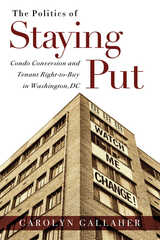
When cities gentrify, it can be hard for working-class and low-income residents to stay put. Rising rents and property taxes make buildings unaffordable, or landlords may sell buildings to investors interested in redeveloping them into luxury condos.
In her engaging study The Politics of Staying Put, Carolyn Gallaher focuses on a formal, city-sponsored initiative—The Tenant Opportunity to Purchase Act (TOPA)—that helps people keep their homes. This law, unique to the District of Columbia, allows tenants in apartment buildings contracted for sale the right to refuse the sale and purchase the building instead. In the hands of tenants, a process that would usually hurt them—conversion to a condominium or cooperative—can instead help them.
Taking a broad, city-wide assessment of TOPA, Gallaher follows seven buildings through the program’s process. She measures the law’s level of success and its constraints. Her findingshave relevance for debates in urban affairs about condo conversion, urban local autonomy, and displacement.
Despite widespread agreement that the District of Columbia's political system has collapsed, there is a serious lack of thoughtful proposals addressing the political future of the nation's capital. In this book, Edward M. Meyers examines the opinions of average Americans about Washington, D.C., in order to understand how many Americans are likely to approach the question of what reforms are needed.
Meyers first explores the political, economic, and social conditions of the District, providing an informed context for understanding and evaluating its political options. Presenting the results of in-depth qualitative research with focus groups held across the country, Meyers reveals that regardless of the participants' knowledge about the District, their beliefs in six basic concepts or schemata—such as respect for democratic rights, attitudes about race, and aversion to an intrusive federal government—molded their opinions about various options for District self-governance.
The book concludes with insights into the District by local and national political leaders, including OMB Director Alice Rivlin, Jesse Jackson, Representatives Eleanor Holmes Norton, Thomas Davis, and James Walsh, and Marion Barry.
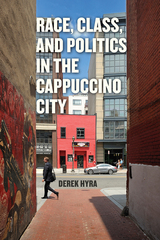
Race, Class, and Politics in the Cappuccino City is an in-depth ethnography of this gilded ghetto. Derek S. Hyra captures here a quickly gentrifying space in which long-time black residents are joined, and variously displaced, by an influx of young, white, relatively wealthy, and/or gay professionals who, in part as a result of global economic forces and the recent development of central business districts, have returned to the cities earlier generations fled decades ago. As a result, America is witnessing the emergence of what Hyra calls “cappuccino cities.” A cappuccino has essentially the same ingredients as a cup of coffee with milk, but is considered upscale, and is double the price. In Hyra’s cappuccino city, the black inner-city neighborhood undergoes enormous transformations and becomes racially “lighter” and more expensive by the year.
In interviews with Central American youth, their sponsors, and social services practitioners in and around Washington, D.C., Castañeda and Jenks find that Central American minors migrate on their own mainly for three reasons: gang violence, lack of educational and economic opportunity, and a longing for family reunification. The authors note that youth who feel comfortable leaving and have feelings of belonging upon arrival integrate quickly and easily while those who experience trauma in their home countries and on their way to the United States face more challenges.
Castañeda and Jenks recount these young migrants’ journey from Central America to the U.S. border, detailing the youths’ difficulties passing through Mexico, proving to U.S. Customs and Border Protection officials that they have a legitimate fear of returning or are victims of trafficking, and staying in shelters while their sponsorship, placement, and departure are arranged. The authors also describe the tensions the youth face when they reunite with family members they may view as strangers. Despite their biological, emotional, and financial bonds to these relatives, the youth must learn how to relate to new authority figures and decide whether or how to follow their rules.
The experience of migrating can have a lasting effect on the mental health of young migrants, Castañeda and Jenks note. Although the authors find that Central American youths’ mental health improves after migrating to the United States, the young migrants remain at risk of further problems. They are likely to have lived through traumatizing experiences that inhibit their integration. Difficulty integrating, in turn, creates new stressors that exacerbate PTSD, depression, and anxiety. Consequently, schools and social service organizations are critical, the authors argue, for enhancing youth migrants’ sense of belonging and their integration into their new communities. Bilingual programs, Spanish-speaking PTA groups, message boards, mentoring of immigrant children, and after-school programs for members of reunited families are all integral in supporting immigrant youth as they learn English, finish high school, apply to college, and find jobs.
Offering a complex exploration of youth migration and family reunification, Reunited provides a moving account of how young Central American migrants make the journey north and ultimately reintegrate with their families in the United States.

On the final day of its 2008 term, a sharply divided U.S. Supreme Court issued a 5-to-4 decision striking down the District of Columbia's stringent gun control laws as a violation of the Second Amendment. Reversing almost seventy years of settled precedent, the high court reinterpreted the meaning of the “right of the people to keep and bear arms” to affirm an individual right to own a gun in the home for purposes of self-defense. The landmark ruling not only opened a new chapter in the contentious history of gun rights and gun control but also revealed both the strengths and problems of originalist constitutional theory and jurisprudence.
This volume brings together some of the best scholarship on the Heller case, with essays by legal scholars and historians representing a range of ideological viewpoints and applying different interpretive frameworks. Following the editors' introduction, which describes the issues involved and the arguments on each side, the essays are organized into four sections. The first includes two of the most important historical briefs filed in the case, while the second offers different views of the role of originalist theory. Section three presents opposing interpretations of the ruling and its relationship to modern constitutional doctrine. The final section explores historical research post-Heller, including new findings on patterns of gun ownership in colonial and Revolutionary America.
In addition to the editors, contributors include Nelson Lund, Joyce Lee Malcolm, Jack Rakove, Reva B. Siegel, Cass R. Sunstein, Kevin M. Sweeney, and J. Harvie Wilkinson III.
Former golf pro Amy Kellen, recently widowed and the mother of a three-year-old daughter, hoped that her new job as a video relay service interpreter for deaf clients would bring stability into her life. She also wished to stay close to the Deaf community that meant so much to her late husband, who was deaf. Little did she know, however, that her new profession would cause her to witness the vicious killing of a deaf client during a video call. In this way author T. J. Waters thrusts Amy into a murder mystery that catches her up in intersecting worlds of intrigue—Internet scams, burglaries, and presidential politics—all connected through the rich Deaf community in Washington, DC.
During the investigation, Amy meets local detective Mike Seer and Secret Service agent Heath Rasco. Despite Seer’s insistence, she refuses to violate her professional ethics and discuss the content of the fatal call. Agent Rasco, who is hard of hearing, admires her commitment to her deaf clients. Amy admits her own attraction to the agent, but her first concern is to learn more about how her client, a respected deaf political strategist, was killed. Her pursuit causes her to witness two more murders and discover a third. She also finds herself and her daughter the targets of assassins. Secret Signs brings these extraordinary elements together in an electrifying combination that promises to surprise and satisfy.

A richly illustrated architectural “biography” of one of DC’s most important boulevards
Sixteenth Street NW in Washington, DC, has been called the Avenue of the Presidents, Executive Avenue, and the Avenue of Churches. From the front door of the White House, this north-south artery runs through the middle of the District and extends just past its border with Maryland. The street is as central to the cityscape as it is to DC’s history and culture.
In Sixteenth Street NW: Washington, DC’s Avenue of Ambitions, John DeFerrari and Douglas Peter Sefton depict the social and architectural history of the street and immediate neighborhoods, inviting readers to explore how the push and pull between ordinary Washingtonians and powerful elites has shaped the corridor—and the city. This highly illustrated book features notable buildings along Sixteenth Street and recounts colorful stories of those who lived, worked, and worshipped there. Maps offer readers an opportunity to create self-guided tours of the places and people that have defined this main thoroughfare over time.
What readers will find is that both then and now, Sixteenth Street NW has been shaped by a diverse array of people and communities. The street, and the book, feature a range of sites—from Black Lives Matter Plaza to the White House, from mansions and rowhomes to apartment buildings, from Meridian Hill (Malcolm X) Park with its drum circles to Rock Creek Park with its tennis tournaments, and from hotels to houses of worship. Sixteenth Street, NW reveals a cross section of Washington, DC, that shows the vibrant makeup of our nation’s capital.
After fifteen years of full participation in a church that is open not only to skeptics but also to gay men and lesbians, blacks and Jews, where members are invited to critique Sunday sermons, and where hymns are rewritten to reflect feminist concerns, Kelley found that his agnosticism remained but his skepticism about church participation had disappeared. Modern urban life can be a sterile, isolating experience. Yet in St. Mark's Kelley discovered a place of vibrant community, honest inquiry, and support over the hard places in life.
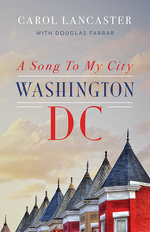
This deeply felt memoir is a love letter to Washington, DC. Carol Lancaster, a third-generation Washingtonian who knew the city like few others, takes readers on a tour of the nation’s capital from its swamp-infested beginnings to the present day, with an insider’s view of the gritty politics, environment, society, culture, and larger-than-life heroes that characterize her beloved hometown. The former dean of Georgetown University’s School of Foreign Service, a friend of presidents and dignitaries all over the globe, Lancaster colorfully describes the city’s three near-death experiences and the many triumphs and tribulations that emerged as the city took shape. Along the way she provides brief biographies of three of the most influential figures in the city’s history: urban designer Pierre Charles L’Enfant, whose vision for the city was realized only after his death; civic leader “Boss” Shepherd, whose strong-arm tactics cleaned up the downtown area and helped create the walking mall we know today; and controversial mayor Marion Barry, whose rise and fall and resurrection underscored the contemporary challenges of home rule.
Teeming with informative anecdotes and two dozen illustrations of landmarks and key characters, Lancaster’s memoir is a personal and passionate paean to the most powerful city in the world—from one of its most illustrious native daughters.
Originally published 35 years ago, Soulside became an urban anthropological classic. The book helped to dispel many false impressions about ghetto life and questioned the idea, precipitated in the influential Moynihan Report and in notions of a "culture of poverty," that the poor had chosen to lead the lives they do. Raising central moral and political questions about American society in a turbulent period, Soulside became an example of public engagement in anthropology. In a new afterword, Ulf Hannerz discusses the book's place in the debates of the time and its relevance to current arguments in anthropology.

While we often approach gardens as things to be seen—thus engaging the rational, intellectual part of the human brain—Sound and Scent in the Garden explores the more elusive experiences of sound and smell. These senses are important dimensions of garden design and performance and often have a powerful effect on the human body, yet they may also be ephemeral and difficult to study.
The contributors to the volume explore the sensory experience of gardens specifically as places where people encounter landscape in a staged manner, as a result of intentional design. How do the senses shape the experience of those places? In what ways are plants, gardens, and landscapes produced so as to stimulate the senses? What evidence do we have of historical sensory experiences? What is lost when we forget to acknowledge the sensory environment of the past or simply overlook its traces?
The volume demonstrates a wide variety of approaches to apply to the study of sensory history and illuminates this important dimension of the experience of gardens—past and present, East and West.
Washington Post Bestseller
Washington, DC, stands at the epicenter of world espionage. Mapping this history from the halls of government to tranquil suburban neighborhoods reveals scores
of dead drops, covert meeting places, and secret facilities—a constellation of
clandestine sites unknown to even the most avid history buffs. Until now.
Spy Sites of Washington, DC traces more than two centuries of secret history from the Mount Vernon study of spymaster George Washington to the Cleveland Park apartment of the “Queen of Cuba.” In 220 main entries as well as listings for dozens more spy sites, intelligence historians Robert Wallace and H. Keith Melton weave incredible true stories of derring-do and double-crosses that put even the best spy fiction to shame. Maps and more than three hundred photos allow readers to follow in the winding footsteps of moles and sleuths, trace the covert operations that influenced wars hot and cold, and understand the tradecraft traitors and spies alike used in the do-or-die chess games that have changed the course of history.
Informing and entertaining, Spy Sites of Washington, DC is the comprehensive guidebook to the shadow history of our nation’s capital.
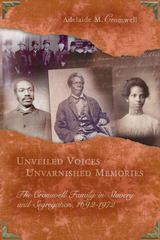
In an analysis of recent immigration patterns in Washington, D.C., Terry A. Repak documents the unusual predominance of women among Central American immigrants. Two thirds of the arriving immigrants in earlier decades have been women, many of them recruited by international diplomats and U.S. government employees to work as housekeepers and nannies. Repak considers the labor force participation patterns for women compared to men, the effect of immigration laws—particularly the IRCA's uneven impact on women versus men—and the profound adjustments in gender roles and identities that accompany migration.
Showing an extraordinary amount of autonomy, most of these immigrant women decided to migrate without consulting either fathers or partners, and they gained even greater independence once settled. Repak plots the career trajectories of numerous Central American immigrant women and men to illustrate the array of the women's responses, gender differences in the migration and assimilation experience, the availability of work, and the possibility for upward mobility and higher wages. Providing social, economic and political context, she looks at the conditions that set the stage for this migration, including the rapid expansion of service jobs in the 1960s and 1970s in Washington, D. C. and the political strife in such Central American countries as war-torn El Salvador, Nicaragua, and Guatemala.


At the confluence of the Potomac and Anacostia rivers, President Washington chose a diamond-shaped site for the city that would bear his name, along with the burdens and blessings of democracy. Situated midway between North and South, the capital was also a gateway to the West--a contested wilderness where rough frontiersmen were already carving a divided nation.
With Indians on their borders and black slaves in their midst, the country's white founders struggled to embody, in bricks and stone, the paradoxical republic they had invented. Inspired by Greek and Roman models, city planners and designers scoured the Western world--from Hadrian's Pantheon to Palladio's Vicenza to the French Royal Academy--for an architectural language to capture the elusive principles of liberty, equality, and union.
Washington from the Ground Up tells the story of a nation whose Enlightenment ideals were tested in the fires of rebellion, removal, and resistance. It is also a tale of two cities: official Washington, whose stately neoclassical buildings expressed the government's power and global reach; and DC, whose minority communities, especially African Americans, lived in the shadows of poverty. Moving chronologically and geographically throughout the District, James McGregor reads this complex history from monuments and museums, libraries and churches, squares and neighborhoods that can still be seen today. His lucid narrative, accompanied by detailed maps and copious illustrations, doubles as a visitor's guide to this uniquely American city.

Pulitzer Prize-winning author and former Washington Post reporter Leon Dash spent a year living in one of the poorest ghettos in Washington, D.C., and a total of seventeen months conducting interviews examining the causes and effects of the ever-lowering age of teenage parents among poor black youths.
Dash had expected to find inadequate sex education and lack of birth control to be the root cause of the growing trend toward early motherhood, but his conversations with the mothers themselves revealed the truth to be more complex.
A riveting account of the human stories behind the statistics, When Children Want Children allows readers to hear the voices of young adults struggling with poverty and parenthood and gets to the heart of teenage parents’ cultural values and motivations.
Women of the Washington Press argues that for nearly two centuries women journalists have persisted in their efforts to cover politics in the nation’s capital in spite of blatant prejudice and restrictive societal attitudes. They have been held back by the difficulties of combining two competing roles – those of women and journalists. As a group they have not agreed among themselves on feminist goals, while declaring that they aspire to be seen as professional journalists, not as advocates of a particular ideology. Still, they have brought a different perspective to the news, as they have fought hard to prove that they are capable of covering political issues just like male journalists. Over the years women have networked with each other and carved out areas of expertise – such as reporting of politically-oriented social events and coverage of first ladies – that men disdained, while they pressed to gain entrance to sex-segregated institutions like the National Press Club. Attempting to merge the personal and the political, they have raised issues like sexual harassment that men journalists left untouched. At a point today where they represent about half of accredited correspondents, women still face shifting barriers that make it difficult to combine the roles of both women and journalists in Washington, but they are continuing to broaden the definition of political journalism.
READERS
Browse our collection.
PUBLISHERS
See BiblioVault's publisher services.
STUDENT SERVICES
Files for college accessibility offices.
RECENTLY PUBLISHED




UChicago Accessibility Resources
home | accessibility | search | about | contact us
BiblioVault ® 2001 - 2025
The University of Chicago Press