Results by title
28167 books match the query 'History' and 150 start with a non-letter
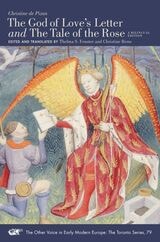
"The God of Love’s Letter" and "The Tale of the Rose"
A Bilingual Edition. With Jean Gerson, “A Poem on Man and Woman,” Translated from the Latin by Thomas O’DonnellChristine de Pizan
Iter Press, 2020
The God of Love’s Letter (1399), Christine de Pizan’s first defense of women, is arguably her most succinct statement about gender. It also rebukes the thirteenth-century Romance of the Rose and anticipates Christine’s City of Ladies. The Tale of the Rose (1402) responds to the growth in chivalric orders for the defense of women by arguing that women, not men, should choose members of the “Order of the Rose.” Both poems are freshly edited here from their earliest manuscripts and each is newly translated into English.
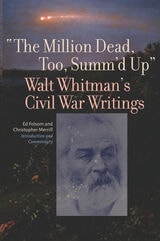
"The Million Dead, Too, Summ'd Up"
Walt Whitman's Civil War WritingsWalt Whitman
University of Iowa Press, 2021
The real democratic reader, Whitman said, “must himself or herself construct indeed the poem, argument, history, metaphysical essay—the text furnishing the hints, the clue, the start or frame-work,” because what is needed for democracy to flourish is “a nation of supple and athletic minds.” Folsom and Merrill model this kind of active reading and encourage both seasoned and new readers of Whitman’s war writings to enter into the challenging and exhilarating mode of talking back to Whitman, arguing with him, and learning from him.
"The One Who Sows Bountifully"
Essays in Honor of Stanley K. StowersCaroline Johnson Hodge
SBL Press, 2014
This festschrift honors the work of Stanley K. Stowers, a renowned specialist in the field of Pauline studies and early Christianity, on the occasion of his sixty-fifth birthday and retirement from Brown University. The collection includes twenty-eight essays on theory and history of interpretation, Israelite religion and ancient Judaism, the Greco-Roman world, and early Christinity, a preface honoring Stowers, and a select bibliography of his publications.
Contributors include: Adriana Destro, John T. Fitzgerald, John G. Gager, Caroline Johnson Hodge, Ross S. Kraemer, Saul M. Olyan, Mauro Pesce, Daniel Ullucci, Debra Scoggins Ballentine, William K. Gilders, David Konstan, Nathaniel B. Levtow, Jordan D. Rosenblum, Michael L. Satlow, Karen B. Stern, Emma Wasserman, Nathaniel DesRosiers, John S. Kloppenborg, Luther H. Martin, Arthur P. Urbano, L. Michael White, William Arnal, Pamela Eisenbaum, Troels Engberg-Pedersen, Karen L. King, Christopher R. Matthews, Erin Roberts, and Richard Wright.
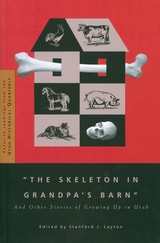
"The Skeleton in Grandpa's Barn"
And Other Stories of Growing Up in UtahStanford J. Layton
Signature Books, 2008
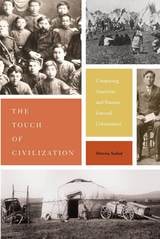
"The Touch of Civilization"
Comparing American and Russian Internal ColonizationSteven Sabol
University Press of Colorado, 2017
This critical examination of internal colonization—a form of contiguous continental expansion, imperialism, and colonialism that incorporated indigenous lands and peoples—draws a corollary between the westward-moving American pioneer and the eastward-moving Russian peasant. Sabol examines how and why perceptions of the Sioux and Kazakhs as ostensibly uncivilized peoples and the Northern Plains and the Kazakh Steppe as “uninhabited” regions that ought to be settled reinforced American and Russian government sedentarization policies and land allotment programs. In addition, he illustrates how both countries encountered problems and conflicts with local populations while pursuing their national missions of colonization, comparing the various forms of Sioux and Kazakh martial, political, social, and cultural resistance evident throughout the nineteenth century.
Presenting a nuanced, in-depth history and contextualizing US and Russian colonialism in a global framework, The Touch of Civilization will be of significant value to students and scholars of Russian history, American and Native American history, and the history of colonization.

"The Whorehouse Bells Were Ringing" and Other Songs Cowboys Sing
Collected and edited by Guy Logsdon
University of Illinois Press, 1995
Winner of the Westerners International Co-Founders Awards of the Western History Association, 1990.
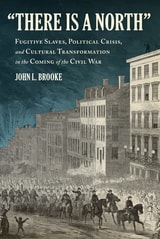
"There Is a North"
Fugitive Slaves, Political Crisis, and Cultural Transformation in the Coming of the Civil WarJohn L. Brooke
University of Massachusetts Press, 2019
How does political change take hold? In the 1850s, politicians and abolitionists despaired, complaining that the "North, the poor timid, mercenary, driveling North" offered no forceful opposition to the power of the slaveholding South. And yet, as John L. Brooke proves, the North did change. Inspired by brave fugitives who escaped slavery and the cultural craze that was Uncle Tom's Cabin, the North rose up to battle slavery, ultimately waging the bloody Civil War.
While Lincoln's alleged quip about the little woman who started the big war has been oft-repeated, scholars have not fully explained the dynamics between politics and culture in the decades leading up to 1861. Rather than simply viewing the events of the 1850s through the lens of party politics, “There Is a North” is the first book to explore how cultural action—including minstrelsy, theater, and popular literature—transformed public opinion and political structures. Taking the North's rallying cry as his title, Brooke shows how the course of history was forever changed.
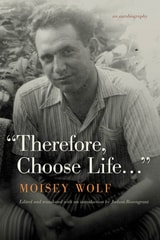
"Therefore, Choose Life..."
An AutobiographyMoisey Wolf
Oregon State University Press, 2014
Wolf describes his Jewish childhood and youth in pre-war Poland, his escape from the Holocaust and subsequent medical service in the Soviet Army during World War II and the following decade, his distinguished career in psychiatry in post-Stalinist Soviet Russia, and his final years in Portland, Oregon, after his departure from the Soviet Union in 1992.
Wolf’s narrative skill and evocative personal insights, combined with Judson Rosengrant’s judicious editing and annotation and elegant translation, provide the reader with direct access to a world that has seemingly ceased to exist, yet continues to resonate and inform our own lives in powerful ways.
“Therefore, Choose Life…” will appeal to readers interested in the history of the East-European twentieth century, pre-Holocaust Jewish family life in Poland, and in the survival of a man of deep religious faith and cultivation in the face of the catastrophes and vicissitudes of his time and place.
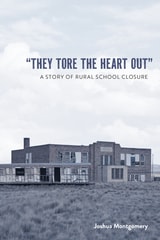
"They Tore the Heart Out"
A Story of Rural School ClosureJoshua Montgomery
University of Wyoming Press, 2027
What does a school mean in rural space? What happens when, despite the protests of a community, a school is closed? How does school closure uncover the cracks in the stories we tell about ourselves and our world? In “They Tore the Heart Out” Joshua Montgomery describes the impact of multiple rounds of school closure and school consolidation in the rural Wyoming community of Medicine Bow, reconstructing the story of the closure and the forces behind it through meeting minutes and other primary sources as well as interviews with past and present residents.
High schools in many small communities act as a surrogate identity and signifier of community success. The school building and the complex community it engenders play roles both prosaic, through school lunches, curriculum, and nurses, and productive, as an economic, political, social, and cultural engine. Montgomery illustrates the long-term impacts of school closure on Medicine Bow and tracks the existential tensions that persist to this day. The story that emerges exists in a rapidly changing cultural context that complicates not only the telling but also the interpreting. School closure, and its aftermath, forced community members to confront issues related to their ability to preserve and control their own destinies.
Told with a strong narrative flair that brings the story to life through dramatic events driven by colorful local characters, “They Tore the Heart Out” allows for a better understanding of the rural educational experience, leads to fundamental questions about who and what we are as a culture, and underscores the importance of maintaining rural space.
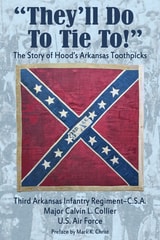
"They'll Do to Tie To!"
The Story of Hood's Arkansas ToothpicksCalvin C. Collier
Butler Center for Arkansas Studies, 2015
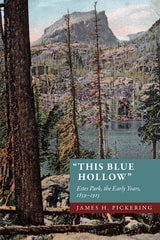
"This Blue Hollow"
Estes Park, the Early Years, 1859-1915James H. Pickering
University Press of Colorado, 2005
Based on Pickering's extensive use of primary sources, This Blue Hollow details the lives of such characters as Joel Estes and Griffith J. Evans, the valley's first residents; the "notorious" James Nugent ("Rocky Mountain Jim") and his short but tempestuous relationship with the celebrated English traveler Isabella Lucy Bird; and the Earl of Dunraven, a wealthy Irishman who was successful in his (illegal) attempt to secure control of as much of the park as possible for his own uses. The book also explores such significant events as the coming of the first pioneer families and permanent settlers, as well as their development of Estes Park as a place to farm, ranch, and entertain tourists; the conquest of Longs Peak and the first explorations of other high and remote places; and the people and circumstances that led to the establishment of the town of Estes Park in 1905 and Rocky Mountain National Park a decade later.
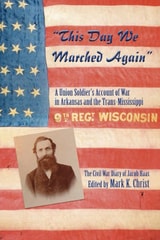
"This Day We Marched Again"
A Union Soldier's Account of War in Arkansas and the Trans-MississippiMark K. Christ
Butler Center for Arkansas Studies, 2014
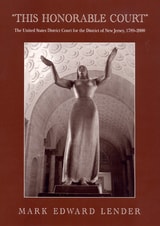
"This Honorable Court"
The United States District Court for the District of New Jersey, 1789-2000Lender, Mark E
Rutgers University Press, 2006
In this first historical account of the District of New Jersey, Mark Edward Lender traces its evolution from its origins through the turn of the twenty-first century. Drawing on extensive original records, including those in the National Archives, he shows how it was at the district court level that the new nation first tested the role of federal law and authority. From these early decades through today, the cases tried in New Jersey stand as prime examples of the legal and constitutional developments that have shaped the course of federal justice. At critical moments in our history, the courts participated in the Alien and Sedition Acts, the transition from Federalist to Jeffersonian political authority, the balancing of state and federal roles during the Civil War and Reconstruction, and modern controversies over civil rights and affirmative action.
Situating the District of New Jersey in the broader context of U.S. history, Lender shows how the state's federal courts have long reflected the ebb and flow of American legal, social, political, and economic developments.
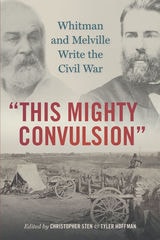
"This Mighty Convulsion"
Whitman and Melville Write the Civil WarChristopher Sten and Tyler Hoffman
University of Iowa Press, 2019
This is the first book exclusively devoted to the Civil War writings of Walt Whitman and Herman Melville, arguably the most important poets of the war. The essays brought together in this volume add significantly to recent critical appreciation of the skill and sophistication of these poets; growing recognition of the complexity of their views of the war; and heightened appreciation for the anxieties they harbored about its aftermath. Both in the ways they come together and seem mutually influenced, and in the ways they disagree, Whitman and Melville grapple with the casualties, complications, and anxieties of the war while highlighting its irresolution. This collection makes clear that rather than simply and straightforwardly memorializing the events of the war, the poetry of Whitman and Melville weighs carefully all sorts of vexing questions and considerations, even as it engages a cultural politics that is never pat.
Contributors: Kyle Barton, Peter Bellis, Adam Bradford, Jonathan A. Cook, Ian Faith, Ed Folsom, Timothy Marr, Cody Marrs, Christopher Ohge, Vanessa Steinroetter, Sarah L. Thwaites, Brian Yothers
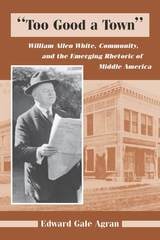
"Too Good a Town"
William Allen White, Community, and the Emerging Rhetoric of Middle AmericaEdward G. Agran
University of Arkansas Press, 1999
For fifty years, William Allen White, first as a reporter and later as the long-time editor of the Emporia Gazette, wrote of his small town and its Mid-American values. By tailoring his writing to the emerging urban middle class of the early twentieth century, he won his “gospel of Emporia” a nationwide audience and left a lasting impact on he way America defines itself.
Investigating White’s life and his extensive writings, Edward Gale Agran explores the dynamic thought of one of America’s best-read and most-respected social commentators. Agran shows clearly how White honed his style and transformed the myth of conquering the western frontier into what became the twentieth-century ideal of community building.
Once a confidante of and advisor to Theodore Roosevelt, White addressed, and reflected in his work, all the great social and political oscillations of his time—urbanization and industrialism, populism, and progressivism, isolationism internationalism, Prohibition, and New Deal reform. Again and again, he asked the question “What’s the matter?” about his times and townspeople, then found the middle ground. With great care and discernment, Agran gathers the man strains of White’s messages, demonstrating one writer’s pivotal contribution to our idea of what it means to be an American.
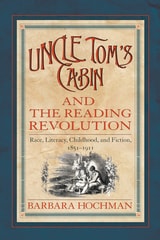
"Uncle Tom's Cabin" and the Reading Revolution
Race, Literacy, Childhood, and Fiction, 1851-1911Barbara Hochman
University of Massachusetts Press, 2011
"Uncle Tom's Cabin" and the Reading Revolution explores a transformation in the cultural meaning of Stowe's influential book by addressing changes in reading practices and a shift in widely shared cultural assumptions. These changes reshaped interpretive conventions and generated new meanings for Stowe's text in the wake of the Civil War.
During the 1850s, men, women, and children avidly devoured Stowe's novel. White adults wept and could not put the book down, neglecting work and other obligations to complete it. African Americans both celebrated and denounced the book. By the 1890s, readers understood Uncle Tom's Cabin in new ways. Prefaces and retrospectives celebrated Stowe's novel as a historical event that led directly to emancipation and national unity. Commentaries played down the evangelical and polemical messages of the book.
Illustrations and children's editions projected images of entertaining and devoted servants into an open-ended future. In the course of the 1890s, Uncle Tom's Cabin became both a more viciously racialized book than it had been and a less compelling one. White readers no longer consumed the book at one sitting; Uncle Tom's Cabin was now more widely known than read. However, in the growing silence surrounding slavery at the turn of the century, Stowe's book became an increasingly important source of ideas, facts, and images that the children of ex-slaves and other free-black readers could use to make sense of their position in U.S. culture.
"We Are All Leaders"
The Alternative Unionism of the Early 1930sEdited by Staughton Lynd
University of Illinois Press, 1996
Contains the Bryant Spann Memorial Prize in Literature for 1997, an award-winning essay, "The Very Last Hurrah" by Eric Leif Davin
This collection of articles delves into the little-known community-based unionism of the 1930s. Worlds apart from bureaucratic business unions like the AFL-CIO, these organizations emerged from workers involved in many kinds of labor, from African American nutpickers in St. Louis to chemical and rubber workers in Akron, and from bootleg miners in Pennsylvania to tenant farmers in the Mississippi Delta.
The contributors draw on eyewitness interviews, first-person narratives, trade union documents, and other primary sources to describe experimental forms of worker activism during the period. This alternative unionism was democratic, deeply rooted in mutual aid among workers in different crafts and work sites, and politically independent. The key to it was a value system based on egalitarianism. The cry, "We are all leaders!" resonated among rank-and-file activists. Their struggle, though often overlooked by historians, has much to teach us about union organizing today.
Contributors: John Borsos, Eric Leif Davin, Elizabeth Faue, Rosemary Feurer, Janet Irons, Michael Kozura, Mark D. Naison, Peter Rachleff, and Stan Weir
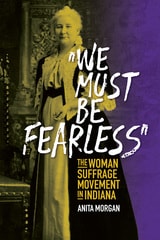
"We Must Be Fearless"
The Woman Suffrage Movement in IndianaAnita Morgan
Indiana Historical Society Press, 2020
"What Country, Friends, is This?"
Shakespeare and the Staging of ExileEdited by Vanessa I. Corredera, Stephanie E. Chamberlain, and James M. Sutton
Arizona Center for Medieval and Renaissance Studies, 2026
This compelling collection of fourteen essays explores the enduring theme of exile in Shakespeare’s works and their global afterlives, offering a timely and thought-provoking response to the modern age of displacement. Building on Edward Said’s observation that exile today is marked by its unprecedented scale—driven by war, imperialism, totalitarianism, climate change, and systemic injustice—this volume traces the ideological and cultural forces that shape experiences of exile across time and geography.
Shakespeare’s plays, deeply haunted by exile in its many guises—political, religious, cultural, and gendered—serve as a rich site for interrogating identity, belonging, and otherness.
"What the Railroad Will Bring Us"
The Legacy of the Transcontinental Railroad CorporationsRichard White
Utah State University Press, 2020
The Arrington Lecture series, established by one of the twentieth-century West's most distinguished historians, Leonard Arrington, has become a leading forum for prominent historians to address topics related to Mormon history. Utah State University hosts the Leonard J. Arrington Mormon History Lecture Series through the Merrill-Cazier Library Special Collections and Archives department.
"Wish You Were Here"
Arkansas Postcard Past, 1900–1925HANLEY RAY & STEVE
University of Arkansas Press, 1997
"With the Help of God and a Few Marines"
The Battles of Chateau Thierry and Belleau WoodAlbertus W. Catlin
Westholme Publishing, 2013
“The story of the marines in France is told with authority and interest.”—Booklist
“It is one of the books about the American war effort which is well worth keeping as well as reading.”—Outlook
“A well-written and complete account.”—Library Bulletin
In an area of woods smaller than New York City’s Central Park, the United States Marines made a desperate and dramatic stand against the might of the Imperial Germany Army’s final offensive in June 1918. Had the Germans broken through the lines as planned, there would have been no Allied forces between them and Paris. World War I had stagnated for nearly four years, and this last German push was a desperate, but powerful gamble to finally bring the war to a close. As at Guadalcanal during World War II, the enemy had not anticipated the ferocity and doggedness of the United States Marines. Leading this small expeditionary force was Brigadier General Albertus Wright Catlin. For most of the month of June the marines fought the Germans at close range, using their rifles effectively and engaging in hand-to-hand combat. Toward the end of the battle, Catlin was shot in the chest by a sniper and removed from the field. While recuperating, he began “With the Help of God and a Few Marines”, his account of the marines’ experience in France, including what became known as the Battle of Belleau Wood. First published in 1919, and considered among the finest American memoirs from World War I, it is notable for its description of what it means to be a United States Marine—an account as relevant today as it was nearly a century ago—and its straightforward depiction of life and death on the Western Front in the last months of the war.
"Without Blare of Trumpets"
Walter Drew, The National Erectors' Association, and the Open Shop Movement, 1903-1957Sidney Fine
University of Michigan Press, 1995
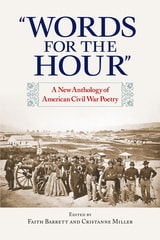
"Words for the Hour"
A New Anthology of American Civil War PoetryFaith Barrett
University of Massachusetts Press, 2005
“Words for the Hour” presents a readable and illuminating account of the Civil War, told through the words of poets North and South. From bathos to profound philosophical meditation and sorrow, the range of these poems illuminates the complexity of their era while also revealing the continuing power of this turning point in American history to speak to readers in the present day.
The volume is divided into three parts, each offering a different perspective on the poetry generated by the war. Part I samples the extraordinary range of poems written immediately preceding and during the war and published in popular periodicals, providing a kind of poetic newspaper account as one might have read it then—from the early days of optimistically heralded victory on both sides, through the mounting casualties and brutal deaths of the long middle years, to the war's conclusion and President Lincoln's assassination. Viewing the struggle from many different vantage points gives the reader access to the ways that people from various backgrounds experienced the trajectory of the war. Civilians and soldiers, free blacks and proponents of slavery, women and men from Massachusetts and Virginia and from recently admitted states and barely developed territories, writers with their eyes on the national political stage and those focused on personal domestic issues: these are the multiple voices of America responding to the war.
Part II includes substantial selections of poems by writers who published extensively in response to the conflict, providing more complex and comprehensive perceptions of the war. These poets include not just well-known figures such as Walt Whitman, Herman Melville, and John Greenleaf Whittier, but also African American poets George Moses Horton and Frances Ellen Watkins Harper and Southern poets Henry Timrod and Sarah Piatt.
Part III offers poems by two poets who did not publish during their lifetimes, but had strong imaginative responses to the conflict, thus giving a sense of the long reach of the war as a defining national experience. One of these two poets (Emily Dickinson) is now renowned while the other (Obadiah Ethelbert Baker) is first published in this volume.
“Words for the Hour” is indeed “new” among anthologies of Civil War poetry not only in its wide range of poems by popular, anonymous, and now canonical poets but also in its informational apparatus. A historical timeline listing major battles and events of the war begins the volume, and historical photographs or lithographs introduce each section of poems. The book also includes a substantial introduction, a glossary of important names and terminology relevant to understanding the poems, and biographical sketches for all the poets whose work is included.
"Write Nothing about Politics"
A Portrait of Hans Bernd von HaeftenBarbara von Haeften
Michigan State University Press, 2018
' Ulama', Politics, and the Public Sphere
An Egyptian PerspectiveMeir Hatina
University of Utah Press, 2010
The status of the Sunni Ulama (religious scholars) in modern times has attracted renewed academic interest, in light of their assertiveness regarding moral and sociopolitical issues on the Arab-Muslim agenda. This has led to a reassessment of the narrative of historians and social scientists, who usually depicted the Ulama as marginal players in comparison with the new lay Islamists, and certainly with the Shia Ulama. The Sunni 'Ulama'’s vitality is undoubtedly related to the continuing Islamic resurgence, which since the 1970s has forced the political elites to rely increasingly on the religious establishment in order to neutralize the Islamist challenge, thus allowing the Ulama greater freedom of activity.
Hatina’s study returns to an earlier period and shows that such vitality has its roots in the second half of the nineteenth and the early twentieth centuries. Hatina traces the diverse Ulama reactions to this period of accelerated state building and national cohesion.
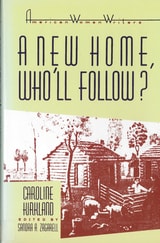
'A New Home, Who Will Follow?' by Caroline Kirkland
Zagarell, Sandra A
Rutgers University Press, 1990
A New Home is a vivid contribution to a new kind of narrative developed during the antebellum period, ethnographic fiction. Kirkland highlights the importance and the drama of local practices and everyday life in Montacute. She traces the way two groups of settlers slowly adjust to each other - the old hands and the newcomers from the East;. Dramatizing differences of class and culture, she also shows how the groups finally form a genuine community and a new, diverse culture. Kirkland also gives ethnographic fiction an original twist: she satirizes the provincialism and the rigidity of both groups of settlers.
After writing A New Home, Kirkland became a professional literary woman, working as an editor as well as a writer. In her introduction, Sandra Zagarell explores the implications of Kirkland's writing and professional career for our understanding of women, writing, and the world of literature in antebellum America.

'Avant-garde' Art Groups in China, 1979-1989
Paul Gladston
Intellect Books, 2013
'ReCapricorning' the Atlantic
Special Issue of Luso-Brazilian Review 45:1 (2008)Edited by Peter M. Beattie
University of Wisconsin Press, 2010
This special issue of Luso-Brazilian Review includes articles on the Lusophone South Atlantic by historians of Africa and Brazil originally presented in May of 2006 at the Michigan State University and University of Michigan’s Atlantic History Workshop “ReCapricorning the Atlantic: Luso-Brazilian and Luso-African Perspectives on the Atlantic World.” Workshop participants set out to “ReCapricorn the Atlantic” by assessing how new research on the Lusophone South Atlantic modifies, challenges, or confirms major trends and paradigms in the expanding scholarship on Atlantic History.

'She said she was in the family way'
Pregnancy and Infancy in Modern IrelandEdited by Elaine Farrell
University of London Press, 2012
'Twas Only an Irishman's Dream
The Image of Ireland and the Irish in American Popular Song Lyrics, 1800-1920William H. A. Williams
University of Illinois Press, 1996
Over time, the image of the Irish in the United States changed from that of hard-drinking Paddies to genial working-class citizens.
In 'Twas Only an Irishman's Dream, William H. A. Williams traces the change in this image through more than seven hundred pieces of sheet music--popular songs from the stage and for the parlor--to show how Americans' opinions of Ireland and the Irish swung from one extreme to the other.
As Williams shows, sheet music's place as a commercial item meant it had to be acceptable to the broadest possible song-buying public. Negotiations about the image of the Irish and Irish Americans involved Irish songwriters, performers, and pressured groups on one side, and non-Irish writers, publishers, and audiences on the other. Williams ties the contents of song lyrics to the history of the Irish diaspora, revealing how societies create ethnic stereotypes and how such stereotypes evolve, and even disappear, from mainstream popular culture.
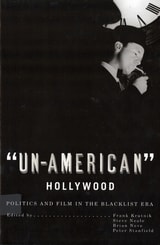
'Un-American' Hollywood
Politics and Film in the Blacklist EraStanfield, Peter
Rutgers University Press, 2007
The concept of “un-Americanism,” so vital to the HUAC crusade of the 1940s and 1950s, was resoundingly revived in the emotional rhetoric that followed the September 11th terrorist attacks. Today’s political and cultural climate makes it more crucial than ever to come to terms with the consequences of this earlier period of repression and with the contested claims of Americanism that it generated.
“Un-American” Hollywood reopens the intense critical debate on the blacklist era and on the aesthetic and political work of the Hollywood Left. In a series of fresh case studies focusing on contexts of production and reception, the contributors offer exciting and original perspectives on the role of progressive politics within a capitalist media industry.
Original essays scrutinize the work of individual practitioners, such as Robert Rossen, Joseph Losey, Jules Dassin, and Edward Dmytryk, and examine key films, including The Robe, Christ in Concrete, The House I Live In, The Lawless, The Naked City, The Prowler, Body and Soul, and FTA.
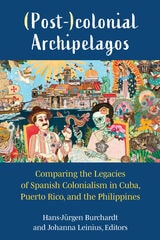
(Post-)colonial Archipelagos
Comparing the Legacies of Spanish Colonialism in Cuba, Puerto Rico, and the PhilippinesHans-Jürgen Burchardt and Johanna Leinius, Editors
University of Michigan Press, 2022
The Puerto Rican debt crisis, the challenges of social, political, and economic transition in Cuba, and the populist politics of Duterte in the Philippines—these topics are typically seen as disparate experiences of social reality. Though these island territories were colonized by the same two colonial powers—by the Spanish Empire and, after 1898, by the United States—research in the fields of history and the social sciences rarely draws links between these three contexts.
Located at the intersection of Postcolonial Studies, Latin American Studies, Caribbean Studies, and History, this interdisciplinary volume brings together scholars from the US, Europe, Latin America, the Caribbean, and the Philippines to examine the colonial legacies of the three island nations of Cuba, Puerto Rico, and the Philippines. Instead of focusing on the legacies of US colonialism, the continuing legacies of Spanish colonialism are put center-stage. The analyses offered in the volume yield new and surprising insights into the study of colonial and postcolonial constellations that are of interest not only for experts, but also for readers interested in the social, political, economic, and cultural dynamics of Cuba, Puerto Rico, and the Philippines during Spanish colonization and in the present. The empirical material profits from a rigorous and systematic analytical framework and is thus easily accessible for students, researchers, and the interested public alike.
(Re)viewing Creative, Critical and Commercial Practices in Contemporary Spanish Cinema
Edited by Duncan Wheeler and Fernando Canet
Intellect Books, 2014
... And Heaven Shed No Tears
Henry Armin Herzog
University of Wisconsin Press, 2005
1995 paperback, Saga Publishers / Folio Private
......And the Dogs Were Silent/......Et les chiens se taisaient
Aimé Césaire. Translated and with an introduction by Alex Gil. With a foreword by Brent Hayes Edwards.
Duke University Press, 2024
1,001 Days in the Bleachers
A Quarter Century of Chicago SportsTed Cox
Northwestern University Press, 2013
Loyal sports fans follow their teams through peaks and valleys, but in no other city have fans experienced the highs and lows of Chicagoans in the past generation. This collection of Ted Cox’s greatest hits writing "The Sports Section" for the Chicago Reader from 1983 to 2008 constitutes an intimate history of Chicago teams during these years. From the triumphs—the six titles won by the Bulls, the Super Bowl champion 1985 Bears, and the White Sox winning the World Series in 2005—to the regularly occurring collapses of the Cubs, Cox puts his audience on the scene. He evokes the fan’s experience with a level of vivid detail now nearly extinct from sports journalism. Cox writes like an ordinary observer who just happens to have excellent seats and easy access to the players and coaches. 1,001 Days in the Bleachers stands not only as a chronicle of Chicago’s teams but also as a portrait of the evolution of professional sports and their place in the life of the city.
100 Campeones
Latino Groundbreakers Who Paved the Way in SportRichard Lapchick
FiT Publishing, 2011
This is much more than a group of stories that feature the talents, triumphs, and tempests of the careers of Latinos in sport. It is a book of living history, rich in culture and tradition. It is a collection of firsts, of legends, and of names that will soon become familiar to the world. The book is a treasure box of inspiring stories that were, at times, created out of dire hardship and oppression.
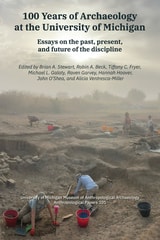
100 Years of Archaeology at the University of Michigan
Essays on the Past, Present, and Future of the DisciplineEdited by Brian A. Stewart, Robin A. Beck, Tiffany C. Fryer, Michael L. Galaty, Raven Garvey, Hannah Hoover, John O’Shea, and Alicia Ventresca-Miller
University of Michigan Press, 2025
The University of Michigan has been at the forefront of archaeological research for more than 100 years, since 1922, when the Museum of Anthropology (now the Museum of Anthropological Archaeology) was established on the Ann Arbor campus. The goal of its curators for many decades was to create a research and teaching program that emphasized methodological rigor in the analysis of archaeological materials, attempting to solve grand questions about human behavior through fieldwork, collections, and laboratory work. About fifty years ago, the Museum's emphasis shifted to developing archaeological theory when a new generation of curators with processualist leanings made Ann Arbor a testing ground for the so-called New Archaeology.
Now, archaeology stands at a crossroads. Some archaeologists refer to the death of archaeological theory. Others stake out opposed camps of generalists and particularists. At U-M, as at many other universities, the past decade has seen a new commitment to collaborative archaeology, working with descendant communities and acknowledging the discipline's roots in colonialism and extraction.
In 2022, to celebrate a century of existence, the University of Michigan Museum of Anthropological Archaeology (UMMAA) hosted an international conference to explore possibilities for a middle way: an archaeology for the next 100 years, combining humanistic and scientific approaches, which allows for both agents and systems, description and explanation, science and heritage. This volume is meant to be a snapshot of that conference and this moment in the development of the discipline. Included are most of the papers and posters presented, as well as photographs of the panels and the proceedings.

100 Years of Permanent Revolution
Results and ProspectsEdited by Bill Dunn and Hugo Radice
Pluto Press, 2006
One hundred years after their first appearance in Leon Trotsky's Results and Prospects, this book critically reevaluates two key Marxist theories: uneven and combined development, and permanent revolution. It brings together a formidable array of Marxist intellectuals from across the world including Daniel Bensaid, Michael Löwy, Hillel Ticktin and Patrick Bond.
Marx saw societies progressing through distinct historical stages feudal, bourgeois and communist. Trotsky advanced this model by considering how countries at different stages of development influence each other. Developed countries colonise less developed countries and exploit their people and resources. Elsewhere, even as many were kept in poverty, the influence of foreign capital and state-led industrialisation produced novel economic forms and prospects for political alliances and change. The contributors show how, 100 years on from its original publication, Trotsky's theories are hugely useful for understanding today's globalised economy, dominated by US imperialism. The book makes an ideal introduction to Trosky's thinking, and is ideal for students of political theory and development economics.
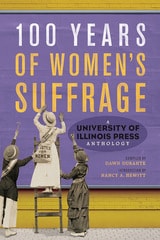
100 Years of Women's Suffrage
A University of Illinois Press AnthologyCompiled by Dawn Durante. Introduction by Nancy A. Hewitt
University of Illinois Press, 2019
A curation of important scholarship on a pivotal historical moment, 100 Years of Women’s Suffrage captures the complex and enduring struggle for fair and equal voting rights.
Contributors: Laura L. Behling, Erin Cassese, Mary Chapman, M. Margaret Conway, Carolyn Daniels, Bonnie Thornton Dill, Ellen Carol DuBois, Julie A. Gallagher, Barbara Green, Nancy A. Hewitt, Leonie Huddy, Kimberly Jensen, Mary-Kate Lizotte, Lady Constance Lytton, and Andrea G. Radke-Moss

1001 Most Asked Questions American West
Harry E. Chrisman
Ohio University Press, 1982
Chrisman first encountered many of these questions in his monthly column "Roundup Time," which appeared in The West, a national monthly magazine.
Concentrating on the puzzlers, Chrisman has gathered in his illustrated volume over one thousand of the most frequently asked questions about the American West. Readers will find chapters devoted to the people of the West (cowboys, Indians, lawmen, outlaws, and gunfighters), chapters on the Western lifestyle (culture, pioneer life, folklore, and business and commerce), as well as chapters on the land (geography and geology, and towns and territories).
Here, then, is an entertaining volume to which readers can turn for information and recreation and which will remain a constant source for the younger generations who wish to learn of their forefathers and of the many problems they encountered and resolved during the settlement of the Great American West.
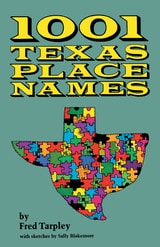
1001 Texas Place Names
By Fred Tarpley
University of Texas Press, 1980
From Notrees to Pine Island, from Scotland to Moscow, from Dickens to Tennyson, from Spur to Lariat, from Buck Naked to Bald Prairie—Texans are unsurpassed for the imaginative names they give their towns and cities. Fred Tarpley has chosen 1001 of the most unusual and interesting of the 75,000 place names that dot the Texas map.
The names of Texas communities and places can be traced to a number of basic sources, including people; landscapes; the Bible; literature and mythology; misunderstandings and errors; backward spellings and blends; and anecdotes and events. Each entry in 1001 Texas Place Names gives the official spelling of the name, phonetic pronunciation where necessary, dates of post office operation, and a short narrative about the origin of the name and the history of the place. Each of Texas's 254 counties is represented by at least two entries.
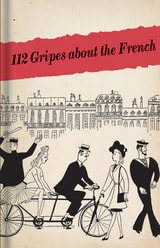
112 Gripes about the French
The 1945 Handbook for American GIs in Occupied FranceEdited by the Bodleian Library
Bodleian Library Publishing, 2013
To bridge the cultural divide, the War Department commissioned humorist Leo Rosten to write this surprisingly candid guide that paired common complaints about the French with answers aimed at promoting understanding. From the fascinations of French nightlife to Gallic grooming and fashions, the guide sought to correct the misconceptions behind a litany of common complaints: Laissez-faire is not in fact a call to laziness, and the French do not play checkers in cafés all day—though they do extol the virtues of a leisurely lunch. The moral principles of the Frenchwoman ought not to be drawn from the few one might find loitering on the fringes of the camp.
Beyond their intended instructive purposes, the grievances included in the guide are at times as revealing of the preconceptions of the American servicemen as they are of the French, as well as offering fascinating insight into the details of daily life immediately after the war, including the acute poverty, the shortage of food and supplies, and the scale of destruction suffered by France during the six years of conflict. Illustrated throughout with charming cartoons and written in a direct, no-nonsense style, 112 Gripes about the French is by turns amusing and thought-provoking in its valiant stand against prejudice and stereotype.
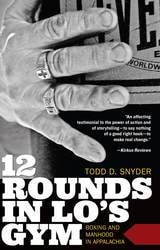
12 Rounds in Lo's Gym
Boxing and Manhood in AppalachiaTodd D. Snyder
West Virginia University Press, 2018
Part love letter to Appalachia, part rigorous social critique, readers may find 12 Rounds in Lo’s Gym—and its narrative of individual and community strength in the face of globalism’s headwinds—a welcome corrective to popular narratives that blame those in the region for their troubles.
1650-1850
Ideas, Aesthetics, and Inquiries in the Early Modern Era (Volume 25)Kevin L. Cope
Bucknell University Press, 2020
About the annual journal 1650-1850
1650-1850 publishes essays and reviews from and about a wide range of academic disciplines—literature (both in English and other languages), philosophy, art history, history, religion, and science. Interdisciplinary in scope and approach, 1650-1850 emphasizes aesthetic manifestations and applications of ideas, and encourages studies that move between the arts and the sciences—between the “hard” and the “humane” disciplines. The editors encourage proposals for “special features” that bring together five to seven essays on focused themes within its historical range, from the Interregnum to the end of the first generation of Romantic writers. While also being open to more specialized or particular studies that match up with the general themes and goals of the journal, 1650-1850 is in the first instance a journal about the artful presentation of ideas that welcomes good writing from its contributors.
First published in 1994, 1650-1850 is currently in its 25th volume.
ISSN 1065-3112.
Published by Bucknell University Press. Distributed worldwide by Rutgers University Press.
1650-1850
Ideas, Aesthetics, and Inquiries in the Early Modern Era (Volume 26)Kevin L. Cope
Bucknell University Press, 2021
Volume 26 of 1650–1850: Ideas, Aesthetics, and Inquiries in the Early Modern Era travels beyond the usual discussions of power, identity, and cultural production to visit the purlieus and provinces of Britain’s literary empire. Bulging at its bindings are essays investigating out-of-the-way but influential ensembles, whether female religious enthusiasts, annotators of Maria Edgeworth’s underappreciated works, or modern video-based Islamic super-heroines energized by Mary Wollstonecraft’s irreverance. The global impact of the local is celebrated in studies of the personal pronoun in Samuel Johnson’s political writings and of the outsize role of a difficult old codger in catalyzing the literary career of Charlotte Smith. Headlining a volume that peers into minute details in order to see the outer limits of Enlightenment culture is a special feature on metaphor in long-eighteenth-century poetry and criticism. Five interdisciplinary essays investigate the deep Enlightenment origins of a trope usually associated with the rise of Romanticism. Volume 26 culminates in a rich review section containing fourteen responses to current books on Enlightenment religion, science, literature, philosophy, political science, music, history, and art.
About the annual journal 1650-1850
1650-1850 publishes essays and reviews from and about a wide range of academic disciplines: literature (both in English and other languages), philosophy, art history, history, religion, and science. Interdisciplinary in scope and approach, 1650-1850 emphasizes aesthetic manifestations and applications of ideas, and encourages studies that move between the arts and the sciences—between the “hard” and the “humane” disciplines. The editors encourage proposals for special features that bring together five to seven essays on focused themes within its historical range, from the Interregnum to the end of the first generation of Romantic writers. While also being open to more specialized or particular studies that match up with the general themes and goals of the journal, 1650-1850 is in the first instance a journal about the artful presentation of ideas that welcomes good writing from its contributors.
ISSN 1065-3112.
Published by Bucknell University Press. Distributed worldwide by Rutgers University Press.
1650-1850
Ideas, Aesthetics, and Inquiries in the Early Modern Era (Volume 27)Kevin L. Cope
Bucknell University Press, 2022
ISSN 1065-3112
1650-1850
Ideas, Aesthetics, and Inquiries in the Early Modern Era (Volume 28)Kevin L. Cope
Bucknell University Press, 2023
ISSN: 1065-3112
Published by Bucknell University Press, distributed worldwide by Rutgers University Press.
1650-1850
Ideas, Aesthetics, and Inquiries in the Early Modern Era (Volume 29)Kevin L. Cope
Bucknell University Press, 2024
Exploratory, investigative, and energetically analytical, 1650–1850 covers the full expanse of long-eighteenth-century thought, writing, and art while delivering abundant revelatory detail. Essays on well-known cultural figures combine with studies of emerging topics to unveil a vivid rendering of a dynamic period, simultaneously committed to singular genius and universal improvement. Welcoming research on all nations and language traditions, 1650–1850 invites readers into a truly global Enlightenment. Topics in volume 29 include Samuel Johnson’s notions about the education of women and a refreshing account of Sir Joseph Banks’s globetrotting. A guest-edited, illustration-rich, interdisciplinary special feature explores the cultural implications of water. As always, 1650–1850 culminates in a bevy of full-length book reviews critiquing the latest scholarship on long-established specialties, unusual subjects, and broad reevaluations of the period.
ISSN 1065-3112
Published by Bucknell University Press, distributed worldwide by Rutgers University Press.