Results by title
905 books match the query 'Literary' and 81 start with a

A Bad and Stupid Girl
Jean McGarry
University of Michigan Press, 2006
Brought together by chance, the girls soon become partners in a struggle to find their way in a world where neither Esther’s brains nor Siri’s beauty is enough. Never having been forced to work hard at anything, Siri must rely on Esther to teach her to learn and attend class. But as Siri wakes from her dream world to discover the life of the mind, Esther begins shedding her rational bonds to explore the mysteries of the soul. For both, some of the most devastating lessons in the attainment of worldly knowledge come from love.
Deadpan funny and bittersweet, A Bad and Stupid Girl is above all else a moving portrait of two friends helping each other to uncover the potential splendor of their lives.
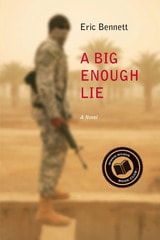
A Big Enough Lie
A NovelEric Bennett
Northwestern University Press, 2015
Awaiting a TV talk show appearance, John Townley is quaking with dread. He has published a best-selling memoir about the Iraq War, a page-turner climaxing in atrocity. In a green room beyond the soundstage, he braces himself to confront the charismatic soldier at the violent heart of it. But John has never actually seen the man before—nor served in Iraq, nor the military. Even so, and despite the deception, he knows his fabricated memoir contains stunning truths.
By turns comic, suspenseful, bitingly satirical, and emotionally potent, A Big Enough Lie pits personal mistruths against national ones of life-and-death consequence. Tracking a writer from the wilds of Florida to New York cubicles to Midwestern workshops to the mindscapes of Baghdad—and from love to heartbreak to solitary celebrity—Bennett’s novel probes our endlessly frustrated desire to grab hold of something (or somebody) true.
A Blue Tale and Other Stories
Marguerite Yourcenar
University of Chicago Press, 1995
Published to great acclaim in France in 1993, this collection is not only a delight for Marguerite Yourcenar fans but a welcome port of entry for any reader not yet familiar with the author's lengthier, more demanding works. This collection includes three stories written between 1927 and 1930 when the author was in her mid-twenties. These stories cover a range of themes, from an allegory on greed and a scene from the war of the sexes to a witch hunt that obsessively creates its own quarry.
For the devoted readers of Yourcenar, this collection allows a rare glimpse at the beginnings of a writer's craft. In these accomplished but forgotten pieces, edited and introduced by her biographer, Josyane Savigneau, readers will find the blend of fable and fairy tale of Oriental Tales, the psychological chronicle of Dear Departed, and the ironic realism of A Coin in Nine Hands. Read as an introduction to Yourcenar's work, the stories take us into the writer's workshop, as it were, to the early days of creation. A Blue Tale and Other Stories carries the unmistakable voice of a formidable and vastly talented writer.
Marguerite Yourcenar (her pseudonym was an anagram of her family name, Crayencour) was born in Brussels in 1903 and died in Maine in 1987. One of the most respected writers in the French language, she is best known as the author of the acclaimed Memoirs of Hadrian and The Abyss. She was awarded many literary honors, most notably election to the Académie Française in 1980, the first woman so honored.
A Bohemian Youth
Josef Hirsal
Northwestern University Press, 1997
Josef Hiršal's experimental novel is a Dada-like romp through the life of a young man born into a Bohemian peasant family. Told in five parts, A Bohemian Youth begins with a word to the wise, moves on to the text, continues with notes and with notes to the note, and ends with a note on the notes to the notes.
More than just a tongue-in-cheek parody of a literary memoir, A Bohemian Youth is a glimpse of the First Czechoslovak Republic as seen through the eyes of a young peasant from the provinces. Abounding in intimate details--the manners of a servant girl, the habits of the town homosexual, the sounds of popular music; the way people eat in wartime—Hiršal's novel is a wrenching and hilarious tale of a young man's emotional and sexual awakening.
A Brief Alphabet of Torture
StoriesVi Khi Nao
University of Alabama Press, 2017
An unflinching and riveting meditation on the pain that attends every facet of existence—love and sacrifice and intimacy and beauty—a biography of torture.
Like all of Vi Khi Nao’s acclaimed and award-winning work, A Brief Alphabet of Torture bleeds across many modes and genres—poetry, essay, fiction, drama—and itself almost constitutes a novel of a different kind. Each tale captures the emotional, physical, psychological, political, and artistic concerns that pervade life like breath and which, even when very beautiful, are filled with pain.
These stories are all facets of Nao’s imagination that define the way she views creation, sexuality, violence, and the role of life in an ontological system that relies heavily on cultural, social, and artistic duress. Some stories like “Winter Rose” and “I Love You Me Neither” rise above the boundaries of pain to places of beauty and grace and love, where pain has no place, but make clear how rare such moments appear in life.
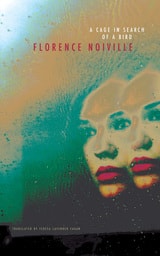
A Cage in Search of a Bird
Florence Noiville
Seagull Books, 2016
Laura Wilmote is a television journalist living in Paris. Her life couldn’t be better—a stimulating job, a loving boyfriend, interesting friends—until her phone rings in the middle of one night. It is C., an old school friend whom Laura recently helped find a job at the same television station: “My phone rang. I knew right away it was you.”
Thus begins the story of C.’s unrelenting, obsessive, incurable love/hatred of Laura. She is convinced that Laura shares her love, but cannot—or will not—admit it. C. begins to dress as Laura, to make her friends and family her own, and even succeeds in working alongside Laura on the unique program that is Laura’s signature achievement. The obsession escalates, yet is artfully hidden. It is Laura who is perceived as the aggressor at work, Laura who appears unwell, Laura who is losing it. Even Laura’s adoring boyfriend begins to question her. Laura seeks the counsel of a psychiatrist who diagnoses C. with De Clérambault syndrome—she is convinced that Laura is in love with her. And worse, the syndrome can only end in one of two ways: the death of the patient, or that of the object of the obsession.
A Cage in Search of a Bird is the gripping story of two women caught in the vise of a terrible delusion. Florence Noiville brilliantly narrates this story of obsession and one woman’s attempts to escape the irrational love of another—an inescapable, never-ending love, a love that can only end badly.
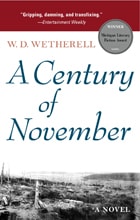
A Century of November
A NovelW. D. Wetherell
University of Michigan Press, 2009
Across western Canada the Spanish flu rages - the very disease that claimed Marden's wife three weeks earlier. Upon arriving in England, he learns that his son left behind a pregnant girlfriend. Soon his search widens to include locating the girl, too. Nearing the front lines, Marden seems to descend into the fires of hell as he navigates the mine-strewn killing fields of the trenches, still reeking with poison gas. Will he find the girl, and will he find an answer to the forces that drove him halfway around the world?
Author W. D. Wetherell has given us a novel of terrifying beauty, one that seems to occupy the place between waking and dreams. Its haunting words will linger long after the book is shut.
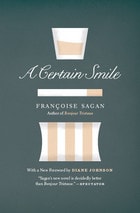
A Certain Smile
A NovelFrançoise Sagan
University of Chicago Press, 2011
A neglected classic about a young French woman in the 1950s risking romance, from the author of Bonjour Tristesse
Françoise Sagan is best known for her first novel, Bonjour Tristesse, which caused a scandal when she first published it at the age of eighteen in 1953. But her second novel, A Certain Smile, less shocking and more psychologically convincing, was preferred by many critics. Like Bonjour Tristesse, this story is set in Paris in the 1950s and told by a young student bored by her law books, restless and curious about love and sex. She is fond of her loyal boyfriend, but he, too, bores her. His worldly uncle strikes her as more exciting, appealingly risky and forbidden. Frank and spontaneous, vulnerable and cruel, thoughtless and insightful, Sagan's young narrator explores such perennial themes as unrequited love and the precarious balance of irrational emotions and self-restraint.
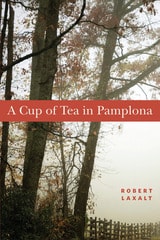
A Cup of Tea in Pamplona
Robert Laxalt
University of Nevada Press, 1993

A Czech Dreambook
Ludvík Vaculík
Karolinum Press, 2018
Fifty-four weeks later, what Vaculík turns out to have written is a unique mixture of diary, dream journal, and outright fiction—an inverted roman à clef in which the author, his family, his mistresses, and the real leaders of the Czech underground play major roles. Undisputedly the most debated novel among the Prague dissident community of the 1980s, it is a work that Vaculík himself described as an amalgam of “hard-boiled documentary” and “magic fiction,” while Václav Havel called it “a truly profound and perceptive account. . . . A great novel about modern life and the crisis of contemporary humanity.”
A Czech Dreambook has been hailed as the most important work of Czech literature in the past forty years. And yet it has never before been available in English. Flawlessly translated by Gerald Turner, Vaculík’s masterpiece is a brilliant exercise in style, dry humor, and irony—an important portrait of the lives and longings of the dissidents and post-Communist elites.
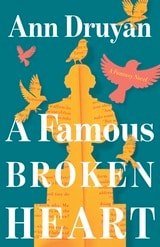
A Famous Broken Heart
A Fantasy NovelAnn Druyan
University of Minnesota Press, 2025
A whimsical journey into the realm of off-duty literary characters—and an ode to the power of reading
At twenty-four, Marina is at a crux in life. “I’m just at the age when time speeds up in an odd way. . . . The winters come closer together and you begin to accept that you’re not special anymore.” She’s cautious of her imaginative tendencies, unsure how she might make a difference in a world that feels increasingly big and small at the same time. At this uncertain precipice, nothing could come as a stranger surprise than waking up one sunny morning on a park bench in an entirely different world. Yet that’s where Marina finds herself: at a place called In The Beginning, populated by characters from literature waiting to be read—or, in some cases, written.
Although Marina is bewildered by her sudden and unexpected arrival in this bustling realm of overlapping possibilities, she soon learns that In The Beginning is facing an existential threat, and she is uniquely positioned to help. So begins her quest to find Pearl, the one person who may hold the key to saving everyone. Delving deeper into this unusual world in pursuit of answers, Marina’s journey leads her into the heart of herself and to a shocking truth.
Ann Druyan packs this compelling adventure story with characters both familiar and new, offering a profound testament to the cosmic powers of imagination and curiosity. First published in 1977, A Famous Broken Heart resounds with wit and wisdom that continue to connect with readers.
A Heart Beating Hard
Lauren Foss Goodman
University of Michigan Press, 2014
A History of Hazardous Objects
A NovelYxta Maya Murray
University of Nevada Press, 2024
Simultaneously, Laura is trying to write the history section of a Congressional report titled the National Near-Earth Object Preparedness Strategy and Action Plan. This report will advise Congress that it must develop a system to detect and deflect PHOs, and the section Laura is working on cites several historical meteorite impacts as proof that the Earth is now undefended against a significant impact event.
A story about family, love, risk, and science, A History of Hazardous Objects contemplates how experiencing trauma and pain may help us secure a safer and more just world.

A Hundred Acres of America
The Geography of Jewish American Literary HistoryHoberman, Michael
Rutgers University Press, 2019
Jewish writers have long had a sense of place in the United States, and interpretations of American geography have appeared in Jewish American literature from the colonial era forward. But troublingly, scholarship on Jewish American literary history often limits itself to an immigrant model, situating the Jewish American literary canon firmly and inescapably among the immigrant authors and early environments of the early twentieth century. In A Hundred Acres of America, Michael Hoberman combines literary history and geography to restore Jewish American writers to their roles as critical members of the American literary landscape from the 1850s to the present, and to argue that Jewish history, American literary history, and the inhabitation of American geography are, and always have been, contiguous entities.
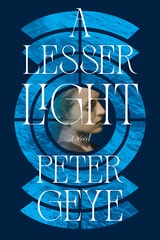
A Lesser Light
A NovelPeter Geye
University of Minnesota Press, 2025
On the rocky shores of Lake Superior, a piercing story of selfhood and determinism develops: is the future what we’re handed or what we make of it?
It’s 1910, and Theodulf Sauer has finally achieved a position befitting his ego: master lighthouse keeper at a newly commissioned station towering above Lake Superior. When his new wife, Willa, arrives on the first spring ferry, it’s clear her life has taken the opposite turn: after being summoned home from college to Duluth when her father dies, she and her scheming mother find themselves destitute, and Willa is rushed into this ill-suited arranged marriage before she can comprehend her fate.
As the lighthouse station establishes, the new relationship teeters between tense and hostile, with little mutual understanding or tenderness. Willa takes solace in her learned fascination with the cosmos, especially (despite her husband’s suspicion of the event) in viewing the imminent Halley’s Comet. Under ominous night skies, Theodulf stands sentry over the lake, clinging to long-ago and faraway memories of happiness that fill him with longing and shame.
Into this impasse, a clairvoyant girl and her resolute uncle emerge from across the cove. They see through the Sauers’ thin façade and, by turns and in different ways, convey promise, sympathy, and insight that counter Willa’s despair. Armed with renewed self-determination, Willa forges a path to happiness. But before she can grasp it, tragedy comes to their remote beacon, and her future plunges toward a dark unknown.
Set against a brooding and beautiful landscape, A Lesser Light is a story about industry and calamity, science versus superstition, inner desire countered with societal expectations—and the consequences when these forces collide in the wilderness of rapid social change.
A Man in the Wheatfield
Robert Laxalt
University of Nevada Press, 2002
A Matter of Time
Alex Capus
Haus Publishing, 2009

A Naked Singularity
A NovelSergio De La Pava
University of Chicago Press, 2012
The mind-bending, brilliant, often hilarious PEN Award-winning classic novel of justice, the law, and the brutal gap between the two.
A Naked Singularity tells the story of Casi, a child of Colombian immigrants who lives in Brooklyn and works in Manhattan as a public defender--one who, tellingly has never lost a trial. Never. In the book, we watch what happens when his sense of justice and even his sense of self begin to crack--and how his world then slowly devolves. It’s a huge, ambitious novel clearly in the vein of DeLillo, Foster Wallace, Pynchon, and even Melville, and it's told in a distinct, frequently hilarious voice, with a striking human empathy at its center. Its panoramic reach takes readers through crime and courts, immigrant families and urban blight, media savagery and media satire, scatology and boxing, and even a breathless heist worthy of any crime novel. If InfiniteJest stuck a pin in the map of mid-90s culture and drew our trajectory from there, A Naked Singularity does the same for the feeling of surfeit, brokenness, and exhaustion that permeates our civic and cultural life today. In the opening sentence of William Gaddis’s A Frolic of His Own, a character sneers, "Justice? You get justice in the next world. In this world, you get the law." A Naked Singularity reveals the extent of that gap, and lands firmly on the side of those who are forever getting the law.
A Near-Perfect Gift
R.M. Kinder
University of Michigan Press, 2005
A Place Called Milagro de la Paz
Manlio Argueta, translated from the Spanish by Michael B. Miller
Northwestern University Press, 2000
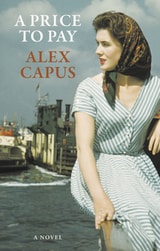
A Price to Pay
Alex Capus
Haus Publishing, 2014
A Price to Pay, the fourth of Capus’s novels to be published in English, tells the interwoven stories of three disparate figures from interwar Switzerland: pacifist Felix Bloch, who ends up working on the Manhattan Project; Laura d’Oriano, who wants to become a singer but instead becomes an Allied spy in fascist Italy; and Emile Gillieron, who accompanies Heinrich Schliemann to Troy and becomes one of art’s greatest forgers. Taking off from the only moment in history when all three were in the same place—a November day in 1924 at Zürich Station—Capus traces their diverging paths as they secure their places in the annals of history—but at what price?
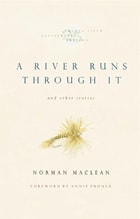
A River Runs Through It and Other Stories, Twenty-fifth Anniversary Edition
Norman Maclean
University of Chicago Press, 2001
Maclean grew up in the western Rocky Mountains in the first decades of the twentieth century. As a young man he worked many summers in logging camps and for the United States Forest Service. The two novellas and short story in this collection are based on his own experiences—the experiences of a young man who found that life was only a step from art in its structures and beauty. The beauty he found was in reality, and so he leaves a careful record of what it was like to work in the woods when it was still a world of horse and hand and foot, without power saws, "cats," or four-wheel drives. Populated with drunks, loggers, card sharks, and whores, and set in the small towns and surrounding trout streams and mountains of western Montana, the stories concern themselves with the complexities of fly fishing, logging, fighting forest fires, playing cribbage, and being a husband, a son, and a father.
By turns raunchy, poignant, caustic, and elegiac, these are superb tales which express, in Maclean's own words, "a little of the love I have for the earth as it goes by." A first offering from a 70-year-old writer, the basis of a top-grossing movie, and the first original fiction published by the University of Chicago Press, A River Runs through It and Other Stories has sold more than a million copies. As Proulx writes in her foreword to this new edition, "In 1990 Norman Maclean died in body, but for hundreds of thousands of readers he will live as long as fish swim and books are made."

A River Runs through It
Norman Maclean
University of Chicago Press, 1989
Based on Norman Maclean's childhood experiences, A River Runs through It has established itself as one of the most moving stories of our time; it captivates readers with vivid descriptions of life along Montana's Big Blackfoot River and its near magical blend of fly fishing with the troubling affections of the heart.
This handsome edition is designed and illustrated by Barry Moser. There are thirteen two-color wood engravings.
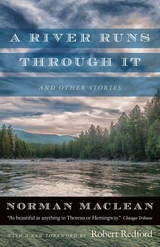
A River Runs through It and Other Stories
Norman Maclean
University of Chicago Press, 2017
Elegantly redesigned, A River Runs through It includes a new foreword by Robert Redford, director of the Academy Award-winning 1992 film adaptation of River. Based on Maclean’s own experiences as a young man, the book’s two novellas and short story are set in the small towns and mountains of western Montana. It is a world populated with drunks, loggers, card sharks, and whores, but also one rich in the pleasures of fly-fishing, logging, cribbage, and family. By turns raunchy and elegiac, these superb tales express, in Maclean’s own words, “a little of the love I have for the earth as it goes by.”

A Singular Man
Emmanuel Bove
Northwestern University Press, 1995
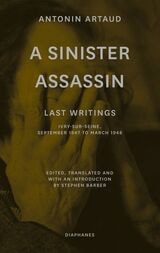
A Sinister Assassin
Last Writings, Ivry-Sur-Seine, September 1947 to March 1948Antonin Artaud
Diaphanes, 2022
A Sinister Assassin presents translations of Antonin Artaud’s largely unknown final work of 1947–48, revealing new insights into his obsessions with human anatomy, sexuality, societal power, creativity, and ill-will—notably, preoccupations of the contemporary world.
Artaud’s last conception of performance is that of a dance-propelled act of autopsy, generating a ”body without organs” which negates malevolent microbial epidemics. This book assembles Artaud’s crucial writings and press interviews from September 1947 to March 1948, undertaken at a decrepit pavilion in the grounds of a convalescence clinic in Ivry-sur-Seine, on the southern edge of Paris, as well as in-transit through Paris’s streets. It also draws extensively on Artaud’s manuscripts and original interviews with his friends, collaborators, and doctors throughout the 1940s, illuminating the many manifestations of Artaud’s final writings: the contents of his last, death-interrupted notebook; his letters; his two final key texts; his glossolalia; the magazine issue which collected his last fragments; and the two extraordinary interviews he gave to national newspaper journalists in the final days of his life, in which he denounces and refuses both his work’s recent censorship and his imminent death.
Edited, translated, and with an introduction by Stephen Barber, A Sinister Assassin illuminates Artaud’s last, most intensive, and terminal work for the first time.

A Slap in the Face
Abbas Khider
Seagull Books, 2018
In our era of mass migration, much of it driven by war and its aftermath, A Slap in the Face could not be more timely. It tells the story of Karim, an Iraqi refugee living in Germany whose right to asylum has been revoked in the wake of Saddam Hussein’s defeat. But Hussein wasn’t the only reason Karim left, and as Abbas Khider unfolds his story, we learn both the secret struggles he faced in his homeland and the battles with prejudice, distrust, poverty, and bureaucracy he has to endure in his attempts to make a new life in Germany. As he erupts in frustration at his caseworker and finally forces her to listen to his story, we get an account of a contemporary life upended by politics and violence, told with warmth and humor that, while surprising us, does nothing to lessen the outrages Karim describes.
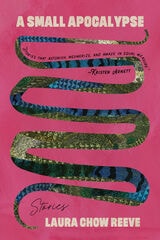
A Small Apocalypse
StoriesLaura Chow Reeve
Northwestern University Press, 2024
In her debut short-story collection A Small Apocalypse, Laura Chow Reeve examines cultural inheritance, hybridity, queerness, and the stickiness of home with an eye for both the uncanny and the realistic: human bodies become reptilian, queer ghosts haunt their friends, a young woman learns to pickle memories, and a theater floods during an apocalyptic movie marathon. The characters in A Small Apocalypse weave in and out of its fourteen stories, confronting their sense of otherness and struggling to find new ways of being and belonging. Heavily steeped in the swampy, feral heat of Florida, these stories venture beyond the problems of constructing an identity to the frontier of characters living their truth in a world that doesn’t yet have a place for them.
A Small-Town Marriage
La Marchesa Colombi, translated from the Italian by Paula Spurlin Paige
Northwestern University Press, 2002
Denza Dellara is a clumsy Cinderella too big for her hand-me-downs, saddled with a family that frustrates her hopes, and in love with a gargantuan Prince Charming who woos and then betrays her. An engaging Frog Prince appears, and though he has an enormous wart on his forehead, he can end her daydreaming and save her from impending spinsterhood . . . if she lets him.
A Solar Flare
Candace R. Nunag
University of Alabama Press, 2025
A hybrid of short works exploring the 1859 Carrington solar flare
A flood of illumination, a cosmic cataclysm frozen in time—the Carrington Event of 1859 was the most disruptive solar flare in recorded history, an electromagnetic storm that wiped out telegraph systems across the world and which, if it were to occur today, might well destroy anything on the planet with an electrical circuit.
Candace Nunag’s A Solar Flare is a hybrid of short essays, research notes, poems, graphite rubbings, and instant photographs, as well as bits of flash fiction, all simultaneously contemplating technology and memory, while preoccupied with the 1859 solar flare. The ghost of the Carrington Event haunts A Solar Flare with the promise of definitive answers about the narrator’s many severed connections: her digital, supernatural, eastern, western, and analog past. It is an attempt to illuminate the path of thought, wending its way through the tangles of rumination and irreconcilable spaces of wonder.
A Soldier's Legacy
Heinrich Boll
Northwestern University Press, 1994
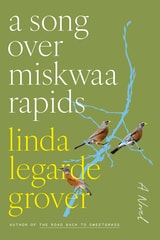
A Song over Miskwaa Rapids
A NovelLinda LeGarde Grover
University of Minnesota Press, 2023
A fifty-year-old mystery converges with a present-day struggle over family, land, and history—now available in paperback
When a rock is dislodged from its slope by mischievous ancestors, the past rises to meet the present, and Half-Dime Hill gives up a gruesome secret it has kept for half a century. Some people of Mozhay Point have theories about what happened; others know—and the discovery stirs memories long buried, reviving a terrible story yet to be told.
Returning to the fictional Ojibwe reservation in northern Minnesota she has so deftly mapped in her award-winning books, Linda LeGarde Grover reveals traumas old and new as Margie Robineau, in the midst of a fight to keep her family’s long-held allotment land, uncovers events connected to a long-ago escape plan across the Canadian border, and the burial—at once figurative and painfully real—of not one crime but two. While Margie is piecing the facts together, Dale Ann is confronted by her own long-held secrets and the truth that the long ago and the now, the vital and the departed are all indelibly linked, no matter how much we try to forget.
As the past returns to haunt those involved, Margie prepares her statement for the tribal government, defending her family’s land from a casino development and sorting the truths of Half-Dime Hill from the facts that remain there. Throughout the narrative, a chorus of spirit women gather in lawn chairs with coffee and cookies to reminisce, reflect, and speculate, spinning the threads of family, myth, history, and humor—much as Grover spins another tale of Mozhay Point, weaving together an intimate and complex novel of a place and its people.
Retail e-book files for this title are screen-reader friendly.
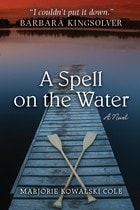
A Spell on the Water
Marjorie Kowalski Cole
University of Michigan Press, 2011
"I couldn't put it down."
---Barbara Kingsolver
In 1955, Mary and Jim Leader have the American dream: careers in medicine; a young and healthy family; and even a vacation home---a shabby resort far from bustling Chicago. But one hot afternoon changes everything. Mary, now a widow, must find a path out of her grief into a future for herself and five small children.
In Michigan to sell the resort, Mary sees seven hawks riding the storm winds over the lake. This place, she thinks, can heal them with its wild beauty, so she moves her family to the northern lakeshore.
But Mary has forgotten what it's like to live in a tiny rural community, where almost everyone has a stake in maintaining the status quo. Secrets are kept at great cost as Mary's children often struggle to raise themselves. A coming-of-age story for each member of the family, this is a novel of quiet heroism and the power of personal freedom.
Praise for Marjorie Kowalski Cole and her previous novel, Correcting the Landscape:
". . . her writing is simple, vivid and gorgeous."
---Eugene Register-Guard
". . . a remarkable new talent. Critics have lined up to praise the book."
---Tucson Citizen
"Cole's style is subtle but engrossing . . . It is quite a debut."
---Booklist
Cover illustration: ©iStockphoto.com/ImagineGolf

A Spy in the House of Love
Anaïs Nin
Ohio University Press, 2014
Although Anaïs Nin found in her diaries a profound mode of self-creation and confession, she could not reveal this intimate record of her experiences during her lifetime. Instead, she turned to literary fiction, transforming her private writings into artfully crafted novels that explore female desire, identity, and emotional complexity.
A Spy in the House of Love is a classic of psychological and women’s fiction, centered on Sabina, a woman torn between her longing for artistic freedom, romantic adventure, and sensual fulfillment, and the social expectations that constrain her. Moving through a bohemian, Parisian-inspired world, Sabina navigates multiple relationships in her search for passion, meaning, and self-understanding.
Written at a time when Nin’s own life was shaped by conflicting loyalties and intense relationships, the novel offers a deeply introspective exploration of love, infidelity, erotic longing, and self-discovery. As Sabina confronts her inner divisions, she asks a timeless question: can one indulge the fantasies and restless pursuit of desire without facing profound emotional consequences?
A landmark of modernist literature and feminist writing, A Spy in the House of Love remains a powerful, evocative portrait of a woman’s inner life—ideal for readers of classic literary fiction, experimental narrative, and character-driven novels about relationships and desire.
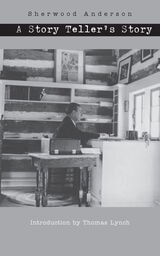
A Story Teller's Story
A MemoirSherwood Anderson
University of Michigan Press, 2005
"The voice of the soliloquist . . . amplifies the drama of A Story Teller's Story, as does the persistent theme of escape, from an America of fact and factories, marketing and manufacturing, to the borderless Ohios of imagination and creation."
—From the introduction by Thomas Lynch
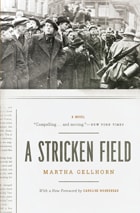
A Stricken Field
A NovelMartha Gellhorn
University of Chicago Press, 2011
Martha Gellhorn was one of the first—and most widely read—female war correspondents of the twentieth century. She is best known for her fearless reporting in Europe before and during WWII and for her brief marriage to Ernest Hemingway, but she was also an acclaimed novelist.
A Tale of Two Worlds
Vjenceslav Novak
Central European University Press, 2014
A Thousand Cranes for India
Reclaiming Plurality Amid HatredEdited by Pallavi Aiyar
Seagull Books, 2020
This anthology uses origami cranes as a way for some of India’s best-known writers, poets, and artists to form a shared civic space for a conversation about the fault lines in India at a time of darkness. The twenty-three pieces collected here encompass reportage, stories, poems, memoir, and polemic—the kind of complex and enriching diversity that India demands and deserves. The paper crane becomes a motif of connection, beauty, and reclamation in an otherwise degraded country, enabling those who fight with words to become the best army they can be.
A Thousand Souls
A Novel in StoriesCatherine Tudish
Acre Books, 2026
Catching sight of the village of Neptune nestled in a remote Vermont valley, a traveler likens it to “a lost kingdom.” The fourteen stories in Catherine Tudish’s gorgeously crafted volume interweave the lives of three generations in this “embarrassingly pretty town” of “upward of a thousand souls” as they inevitably touch the outside world. A boy born of a secret affair travels by train to South Carolina for a first-time meeting with his respected father. A recent widow and Boston transplant solves the mystery of a teen girl gone missing. A beloved sheriff breaks up a drug operation, only to get busted himself for helping undocumented workers evade ICE. The disappointed wife of a rural mail driver presents him with a nude portrait—of herself. A shy girl with a speech impediment loses her stutter when she befriends and speaks to a black bear. Another boy has nightmares that seem to be the memories of a distant stranger’s tragedy.
Even as their loyalties and traditions are tested through loss, betrayal, and startling discovery, the characters in A Thousand Souls embody the belonging that comes from a close-knit community. Sharply observed, wry, and deeply tender, these stories resonate with both the intricacy and cost of interconnection as the years pass, and ordinary lives take unexpected turns.
A Watch of Nightingales
Liza Wieland
University of Michigan Press, 2010
A modest, quiet woman, Mara Raynor never dreamed she'd one day find herself in charge of the small private school in Washington, D.C., where for many years she taught music and choir. But after the unexpected death of her husband, the school's headmaster, Mara finds herself thrust into the public eye, burdened not just with the responsibilities of acting headmaster---a role she never wanted---but also with a potentially explosive political and religious controversy that tests parents' and school administrators' spirit of tolerance.
When a Sikh student is caught wearing a ceremonial knife on school grounds, fear spreads among parents and the school board. Coming at the same moment as the disappearance of Mara's teenage daughter, the controversy quickly assumes a far more personal nature. Not just any student, the Sikh boy is both the son of a woman with whom Mara shares a complicated past and---as Mara soon discovers---her own daughter's boyfriend.
As it moves back and forth in time between the school in contemporary Washington and a girls' boarding school in the British countryside in 1977, A Watch of Nightingales weaves a rich and textured exploration of fear and remorse, the mysteries of love, and the complicated tensions that ring down the generations from parent to child.
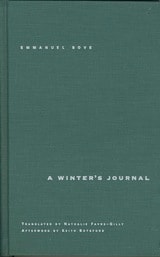
A Winter's Journal
Emmanuel Bove, translated by Nathalie Favre-Gilly and with an afterword by Keith Botsford
Northwestern University Press, 1997
Every few days for one winter, Louis writes down the details of his unhappy marriage. Although his wife, Madeleine, is the focal point of his journal, his painstakingly rendered analyses of her behavior tell us more about him than her, and about the harm two people can do to one another. Unsparing and insightful, A Winter's Journal remains one of the most devastating novels ever written on the self-destructive impulse present in all marriages.
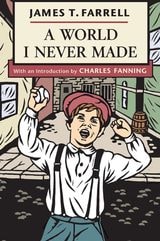
A World I Never Made
James T. Farrell, with an Introduction by Charles Fanning
University of Illinois Press, 2006
The first book in Farrell's five-volume series to be republished by the University of Illinois Press, A World I Never Made introduces three generations from two families, the working-class O'Neills and the lower-middle-class O'Flahertys. The lives of the O'Neills in particular reflect the tragic consequences of poverty, as young Danny O'Neill's parents--unable to sustain their large family--send him to live with his grandmother. Seen here at the age of seven, Danny is fraught with feelings of anxiety and dislocation as he learns the ins and outs of life on the street, confronting for the first time a world he never made.
Absent without Leave
Heinrich Boll
Northwestern University Press, 1995
Absinthe
Christophe Bataille
Northwestern University Press, 2023
Absinthe
World Literature in Translation: Vol. 24: World HellenismsAli Bolcakan, Will Stroebel and Peter Vorissis
Michigan Publishing Services, 2018
Absinthe 24 pushes and prods Hellenism beyond its geographic and cultural comfort zones, and sets it tumbling off beyond both internal and external borders of its nation-state, in a wide-ranging but always site-specific and localized itinerary. At each stop along the way, this Greekness finds its plurals—hence the “Hellenisms” of the title. While they present no unified topography, tongue or even topic, these Hellenisms map out the contours of a shared conversation. Today’s Hellenism isn’t limited to Hellas, nor to the Hellenic language. The selected texts in this volume explore Greece from the perspective of visitors, displaced persons, and marginalized people looking in, or, conversely, from the perspective of locals striving to break out.
Absinthe: A Journal of World Literature in Translation publishes foreign literature in English translation, with a particular focus on previously untranslated contemporary fiction, poetry, and creative non-fiction by living authors. The magazine has its home in the Department of Comparative Literature at the University of Michigan and is edited by graduate students in the Department, as well as by occasional guest editors.
Acceleration Hours
StoriesJesse Goolsby
University of Nevada Press, 2020
2020 Foreword INDIE awards, longlist
From the author of the critically-acclaimed novel, I’d Walk with My Friends If I Could Find Them, Jesse Goolsby’s Acceleration Hours is a haunting collection of narratives about families, life, and loss during America’s twenty-first-century forever wars. Set across the mountain west of the United States, these fierce, original, and compelling stories illuminate the personal search for human connection and intimacy. From a stepfather’s grief to an AWOL soldier and her journey of reconciliation to a meditation on children, violence, and hope, Acceleration Hours is an intense and necessary portrayal of the many voices living in a time of perpetual war.
After the Divorce
Grazia Deledda
Northwestern University Press, 1995
Winner of the 1926 Nobel Prize for Literature
The novel begins with Costantino Ledda's conviction and sentencing for the murder of his cruel uncle. Though innocent of the crime, he accepts the guilty verdict as punishment for marrying Giovanna Era through a civil ceremony rather than an expensive church wedding. When her husband is taken away, Giovanna has no way to provide for herself, her mother, and her son, who soon dies of malnutrition. Out of desperation she divorces Costantino, according to a new law for wives of convicts, and marries a wealthy but brutish landowner. When the true murderer confesses and Costantino returns, he and Giovanna begin a forbidden and ultimately destructive affair.
Deleda's tragic story of poverty, passion, and guilt portrays the primitive and remote world of the church, pre-Christian superstitions, and laws dictated from the mainland, in her native Sardinia, where society hangs in a delicate balance. Once this order is disrupted, none of these characters can escape the spiral of destruction dictated by fate, God, and society.
After-Dinner Conversation
The Diary of a DecadentBy José Asunción Silva
University of Texas Press, 2005
Lost in a shipwreck in 1895, rewritten before the author's suicide in 1896, and not published until 1925, José Asunción Silva's After-Dinner Conversation (De sobremesa) is one of Latin America's finest fin de siècle novels and the first one to be translated into English. Perhaps the single best work for understanding turn-of-the-twentieth-century writing in South America, After-Dinner Conversation is also cited as the continent's first psychological novel and an outstanding example of modernista fiction and the Decadent sensibility.
Semi-autobiographical and more important for style than plot, After-Dinner Conversation is the diary of a Decadent sensation-collector in exile in Paris who undertakes a quest to find his beloved Helen, a vision whom his fevered imagination sees as his salvation. Along the way, he struggles with irreconcilable urges and temptations that pull him in every direction while he endures an environment indifferent or hostile to spiritual and intellectual pursuits, as did the modernista writers themselves. Kelly Washbourne's excellent translation preserves Silva's lush prose and experimental style. In the introduction, one of the most wide-ranging in Silva criticism, Washbourne places the life and work of Silva in their literary and historical contexts, including an extended discussion of how After-Dinner Conversation fits within Spanish American modernismo and the Decadent movement. Washbourne's perceptive comments and notes also make the novel accessible to general readers, who will find the work surprisingly fresh more than a century after its composition.
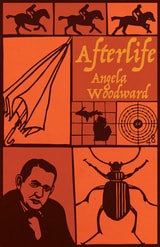
Afterlife
Angela Woodward
University of Alabama Press, 2026
A kaleidoscopic meditation on grief, memory, and the uncanny, where dreams, histories, and forgotten encyclopedias blur the line between life and afterlife.
In this luminous novel, Angela Woodward chronicles the meaning of death, the illusions of truth, and the strange, shimmering persistence of the self beyond the ordinary boundaries of life. Through fictional encyclopedia entries, surreal vignettes, and personal narratives, Afterlife blurs fact and imagination, the material and the ghostly, with poetic precision and biting wit.
Woodward’s speaker journeys through museums of bird art, cults and conformity, environmental chemicals, and lost loves. What emerges is an elegiac, deeply intelligent inquiry into how we continue to haunt the world—and how the world haunts us back.
A work of literary art that will appeal to readers of experimental fiction, creative nonfiction, and lyric essay, Afterlife invites comparison to writers like Jenny Boully, W. G. Sebald, and Anne Carson. This book is ideal for readers drawn to feminist, hybrid, and formally inventive literature; for those fascinated by the interplay between language and grief; and for anyone who has ever felt the uncanny persistence of the past in corners of the present.
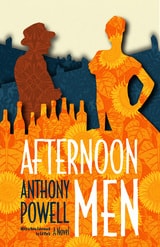
Afternoon Men
A NovelAnthony Powell
University of Chicago Press, 1931
More explorations of relationships and vanity than plot-driven narratives, Powell’s early works reveal the stirrings of the unequaled style, ear for dialogue, and eye for irony that would reach their caustic peak in his epic, A Dance to the Music of Time.
In Afternoon Men, the earliest and perhaps most acid of Powell’s novels, we meet the museum clerk William Atwater, a young man stymied in both his professional and romantic endeavors. Immersed in Atwater’s coterie of acquaintances—a similarly unsatisfied cast of rootless, cocktail-swilling London sophisticates—we learn of the conflict between his humdrum work life and louche social scene, of his unrequited love, and, during a trip to the country, of the absurd contrivances of proper manners.
A satire that verges on nihilism and a story touched with sexism and equal doses self-loathing and self-medication, AfternoonMen has a grim edge to it. But its dialogue sparks and its scenes grip, and for aficionados of Powell, this first installment in his literary canon will be a welcome window onto the mind of a great artist learning his craft.