Results by title
3369 books match the query 'Cultural & Social' and 286 start with a
A Vital Frontier
Water Insurgencies in EuropeAndrea Muehlebach
Duke University Press, 2023
A Witch's Hand
Curing, Killing, Kinship, and Colonialism among the Lujere of New GuineaWilliam E. Mitchell
HAU, 2024
From 1971 to 1972, William E. Mitchell undertook fieldwork on suffering and healing among the Lujere of Papua New Guinea’s Upper Sepik River Basin. At a time when it was not yet common to make colonial agencies a subject of anthropological study, Mitchell carefully located his research on Lujere practices in the framework of a history of colonization that surrounded the Lujere with a shifting array of Western institutions, dramatically changing their society forever. Mitchell’s work has been well known among anthropologists of Oceania, but the material in this book has remained unpublished until now.
In this major new work, Mitchell revisits his early fieldwork with a three-part study of the history of colonial rule in the region, the social organization of Lujere life at the time, and the forms of affliction, witchcraft, and curing that preoccupied them. Furthermore, Mitchell offers the first sweeping cross-cultural survey of sanguma (magical murder) in Oceania. The book presents a vivid portrait of a society that has since changed dramatically as well as an approach to anthropology that was typical of the era. This is a significant contribution to the ethnography of Papua New Guinea and is sure to be an invaluable source for researchers of Melanesia, medical anthropologists, and scholars of kinship, myth, and ritual.
A World Engraved
Archaeology of the Swift Creek CultureEdited by Mark Williams and Daniel T. Elliott
University of Alabama Press, 1998
This major summary of the current state of archaeological research on the Swift Creek culture is the first comprehensive collection ever published concerning the Swift Creek people.
The Swift Creek people, centered in Georgia and surrounding states from A.D. 100 to 700, are best known from their pottery, which was decorated before firing with beautiful paddle-stamped designs--some of the most intricate and fascinating in the world.
Comprehensive in scope, this volume details the discovery of this culture, summarizes what is known about it at the present time, and shows how continued improvements in the collection and analysis of archaeological data are advancing our knowledge of this extinct society.
Although they know nothing of Swift Creek language and little about its society, archaeologists have collected valuable information about the
economic strategies of Swift Creek inhabitants. What archaeologists know best, however, is that the Swift Creek people were some of the best wood carvers the world has seen, and their pottery will stand as their lasting legacy for all time. This book presents and preserves their legacy.
A World of Many Worlds
Marisol de la Cadena and Mario Blaser, editors
Duke University Press, 2018
Contributors. Mario Blaser, Alberto Corsín Jiménez, Déborah Danowski, Marisol de la Cadena, John Law, Marianne Lien, Isabelle Stengers, Marilyn Strathern, Helen Verran, Eduardo Viveiros de Castro
A World of Many
Ontology and Child Development among the Maya of Southern MexicoNorbert Ross
Rutgers University Press, 2023
A Year in White
Cultural Newcomers to Lukumi and Santería in the United StatesCarr, C. Lynn
Rutgers University Press, 2016
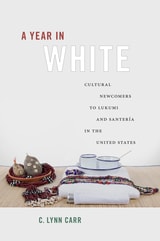
In her intimate investigation of the “year in white,” Carr draws on fifty-two in-depth interviews with other participants, an online survey of nearly two hundred others, and almost a decade of her own ethnographic fieldwork, gathering stories that allow us to see how cultural newcomers and natives thought, felt, and acted with regard to their initiation. She documents how, during the iyawo year, the ritual slowly transforms the initiate’s identity. For the first three months, for instance, the iyawo may not use a mirror, even to shave, and must eat all meals while seated on a mat on the floor using only a spoon and their own set of dishes. During the entire year, the iyawo loses their name and is simply addressed as “iyawo” by family and friends.
Carr also shows that this year-long religious ritual—which is carried out even as the iyawo goes about daily life—offers new insight into religion in general, suggesting that the sacred is not separable from the profane and indeed that religion shares an ongoing dynamic relationship with the realities of everyday life. Religious expression happens at home, on the streets, at work and school.
Offering insight not only into Santería but also into religion more generally, A Year in White makes an important contribution to our understanding of complex, dynamic religious landscapes in multicultural, pluralist societies and how they inhabit our daily lives.
A Zapotec Natural History
Trees, Herbs, and Flowers, Birds, Beasts, and Bugs in the Life of San Juan GbëëEugene S. Hunn
University of Arizona Press, 2008
The contents of Part 2 are available online.

A return to the village
community ethnographies and the study of Andean culture in retrospectiveEdited by Francisco Ferreira and Billie Jean Isbell
University of London Press, 2016

AIDS Doesn't Show Its Face
Inequality, Morality, and Social Change in NigeriaDaniel Jordan Smith
University of Chicago Press, 2014
Drawing on twenty years of fieldwork in Nigeria, Smith tells a story of dramatic social changes, ones implicated in the same inequalities that also factor into local perceptions about AIDS—inequalities of gender, generation, and social class. Nigerians, he shows, view both social inequality and the presence of AIDS in moral terms, as kinds of ethical failure. Mixing ethnographies that describe everyday life with pointed analyses of public health interventions, he demonstrates just how powerful these paired anxieties—medical and social—are, and how the world might better alleviate them through a more sensitive understanding of their relationship.
Abalone Tales
Collaborative Explorations of Sovereignty and Identity in Native CaliforniaLes W. Field
Duke University Press, 2008
Tales about abalone and their historical and contemporary meanings are related by Field and his coauthors, who include the chair and other members of the Muwekma Ohlone Tribe; a Point Arena Pomo elder; the chair of the Wiyot tribe and her sister; several Hupa Indians; and a Karuk scholar, artist, and performer. Reflecting the divergent perspectives of various Native groups and people, the stories and analyses belie any presumption of a single, unified indigenous understanding of abalone. At the same time, they shed light on abalone’s role in cultural revitalization, struggles over territory, tribal appeals for federal recognition, and connections among California’s Native groups. While California’s abalone are in danger of extinction, their symbolic power appears to surpass even the environmental crises affecting the state’s vulnerable coastline.
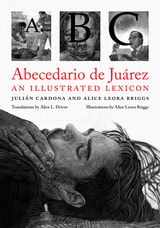
Abecedario de Juárez
An Illustrated LexiconJulián Cardona and Alice Leora Briggs, with translations by Alice L. Driver; illustrations by Alice Leora Briggs
University of Texas Press, 2022
Uses key words and striking images to explore violence and everyday life in Juárez, Mexico.
Juárez, Mexico, is known for violence. The femicides of the 1990s, and the cartel mayhem that followed, made it one of the world's most dangerous cities. Along with the violence came a new lexicon that traveled from person to person, across rivers and borders—wherever it was needed to explain the horrors taking place. From personal interviews, media accounts, and conversations on the street, Julián Cardona and Alice Leora Briggs have collected the words and slang that make up the brutal language of Juárez, creating a glossary that serves as a linguistic portrait of the city and its violence. Organized alphabetically, the entries consist of Spanish and Spanglish, accompanied by short English definitions. Some also feature a longer narrative drawn from interviews—stories that put the terms in context and provide a personal counterpoint to media reports of the same events. Letters, and many of the entries, are supplemented with Briggs’s evocative illustrations, which are reminiscent of Hans Holbein’s famous Alphabet of Death. Together, the words, drawings, and descriptions in ABCedario de Juárez both document and interpret the everyday violence of this vital border city.
Aberrations of Mourning
Laurence A. Rickels
University of Minnesota Press, 2011
Rickels studies mourning and melancholia within and around psychoanalysis, analyzing the writings of such thinkers as Freud, Nietzsche, Lessing, Heinse, Artaud, Keller, Stifter, Kafka, and Kraus. Rickels maintains that we must shift the way we read literature, philosophy, and psychoanalysis to go beyond traditional Oedipal structures.
Aberrations of Mourning argues that the idea of the crypt has had a surprisingly potent influence on psychoanalysis, and Rickels shows how society’s disturbed relationship with death and dying, our inability to let go of loved ones, has resulted in technology to form more and more crypts for the dead by preserving them—both physically and psychologically—in new ways.

Abject Animals
Discomfort in Human–Animal CompanionshipJulien Dugnoille
Michigan State University Press, 2027
Abject Animals: Discomfort in Human–Animal Companionship explores the emotional contradictions and ethical tensions at the heart of human–animal relationships through a cross-cultural, multispecies ethnography of cats and dogs in the UK, France, and South Korea. Framing cats and dogs as “abject animals,” Julien Dugnoille examines how the treatment of animals can generate discomfort—emotional, moral, and bodily—through their commodification in cafés, markets, shelters, and homes. Drawing on Kristeva’s theory of abjection alongside the ideas of Bataille, Blanchot, and Weil, the book interrogates the commodified intimacy of contemporary human–animal companionship, revealing how labor, cuteness, and care mask underlying hierarchies and exploitation. Through richly detailed fieldwork and autoethnographic reflection, it critiques normative ideas of “healthy” companionship, arguing instead for forms of interspecies attunement that embrace discomfort and resist instrumentalization. Abject Animals is both a theoretical intervention and a call for more ethical, ego-disrupting relationships with the nonhuman.

Aby Warburg and America
The Art Historian as EthnographerHorst Bredekamp
Bard Graduate Center, 2021
Accompaniment with Im/migrant Communities
Engaged EthnographyKristin E. Yarris and Whitney L. Duncan
University of Arizona Press, 2024
This collection brings together the experiences and voices of anthropologists whose engaged work with im/migrant communities pushes the boundaries of ethnography toward a feminist, care-based, decolonial mode of ethnographic engagement called “accompaniment.”
Accompaniment as anthropological research and praxis troubles the boundaries of researcher-participant, scholar-activist, and academic-community to explicitly address issues of power, inequality, and the broader social purpose of the work. More than two dozen contributors show how accompaniment is not merely a mode of knowledge production but an ethical commitment that calls researchers to action in solidarity with those whose lives we seek to understand. The volume stands as a collective conversation about possibilities for caring and decolonial forms of ethnographic engagement with im/migrant communities.
This volume is ideal for scholars, students, immigrant activists, instructors, and those interested in social justice work.
Contributors
Carolina Alonso Bejarano
Anna Aziza Grewe
Alaska Burdette
Whitney L. Duncan
Carlos Escalante Villagran
Christina M. Getrich
Tobin Hansen
Lauren Heidbrink
Dan Heiman
Josiah Heyman
Sarah Horton
Nolan Kline
Alana M. W. LeBrón
Lupe López
William D. Lopez
Aida López Huinil
Mirian A. Mijangos García
Nicole L. Novak
Mariela Nuñez-Janes
Ana Ortez-Rivera
Juan Edwin Pacay Mendoza
Salvador Brandon Pacay Mendoza
María Engracia Robles Robles
Delmis Umanzor
Erika Vargas Reyes
Kristin E. Yarris

Accounting for Violence
Marketing Memory in Latin AmericaKsenija Bilbija and Leigh A. Payne, eds.
Duke University Press, 2011
Contributors. Rebecca J. Atencio, Ksenija Bilbija, Jo-Marie Burt, Laurie Beth Clark, Cath Collins, Susana Draper, Nancy Gates-Madsen, Susana Kaiser, Cynthia E. Milton, Alice A. Nelson, Carmen Oquendo Villar, Leigh A. Payne, José Ramón Ruisánchez Serra, Maria Eugenia Ulfe

Acid Revival
The Psychedelic Renaissance and the Quest for Medical LegitimacyDanielle Giffort
University of Minnesota Press, 2020
A vivid analysis of the history and revival of clinical psychedelic science
Psychedelic drugs are making a comeback. In the mid-twentieth century, scientists actively studied the potential of drugs like LSD and psilocybin for treating mental health problems. After a decades-long hiatus, researchers are once again testing how effective these drugs are in relieving symptoms for a wide variety of psychiatric conditions, from depression and obsessive–compulsive disorder to posttraumatic stress disorder and substance addiction. In Acid Revival, Danielle Giffort examines how this new generation of researchers and their allies are working to rehabilitate psychedelic drugs and to usher in a new era of psychedelic medicine.
As this team of researchers and mental health professionals revive the field of psychedelic science, they are haunted by the past and by one person in particular: psychedelic evangelist Timothy Leary. Drawing on extensive archival research and interviews with people working on scientific psychedelia, Giffort shows how today’s researchers tell stories about Leary as an “impure” scientist and perform his antithesis to address a series of lingering dilemmas that threaten to rupture their budding legitimacy. Acid Revival presents new information about the so-called psychedelic renaissance and highlights the cultural work involved with the reassembly of dormant areas of medical science.
This colorful and accessible history of the rise, fall, and reemergence of psychedelic medicine is infused with intriguing narratives and personalities—a story for popular science aficionados as well as for scholars of the history of science and medicine.
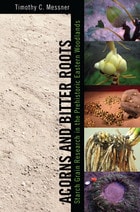
Acorns and Bitter Roots
Starch Grain Research in the Prehistoric Eastern WoodlandsTimothy C. Messner
University of Alabama Press, 2011
Messner’s analysis is based on extensive reviews of the literature on early historic, prehistoric native plant use, and the collation of all available archaeobotanical data, a review of which also guided the author in selecting contemporary botanical specimens to identify and in interpreting starch residues recovered from ancient plant-processing technologies. The evidence presented here sheds light on many local ecological and cultural developments as ancient people shifted their subsistence focus from estuarine to riverine settings. These archaeobotanical datasets, Messner argues, illuminate both the conscious and unintentional translocal movement of ideas and ecologies throughout the Eastern Woodlands.

Action=Vie
A History of AIDS Activism and Gay Politics in FranceChristophe Broqua
Temple University Press, 2026
Act Up-Paris became one of the most notable protest groups in France in the mid-1990s. Founded in 1989, and following the New York model, it became a confrontational voice representing the interests of those affected by HIV through openly political activism. Action=Vie, the English-language translation of Christophe Broqua’s study of the grassroots activist branch, explains the reasons for the group’s success and sheds light on Act Up's defining features—such as its unique articulation between AIDS and gay activism.
Featuring numerous accounts by witnesses and participants, Broqua traces the history of Act Up-Paris and shows how thousands of gay men and women confronted the AIDS epidemic by mobilizing with public actions. Act Up-Paris helped shape the social definition not only of HIV-positive persons but also of sexual minorities. Broqua analyzes the changes brought about by the group, from the emergence of new treatments for HIV infection to normalizing homosexuality and a controversy involving HIV-positive writers’ remarks about unprotected sex. This rousing history ends in the mid-2000s before marriage equality and antiretroviral treatments caused Act Up-Paris to decline.
Activist Affordances
How Disabled People Improvise More Habitable WorldsArseli Dokumaci
Duke University Press, 2023
Activist Archives
Youth Culture and the Political Past in IndonesiaDoreen Lee
Duke University Press, 2016

Acts of Possession
Collecting in AmericaDilworth, Leah
Rutgers University Press, 2003
Drawing upon the body of theoretical work on collecting and focusing on individual as opposed to museum collections, the contributors investigate how, what, and why Americans have collected and explore the inherent meanings behind systems of organization and display. Essays consider the meanings of Thomas Jefferson's Indian Hall at Monticello; the pedagogical theories behind nineteenth-century children's curiosity cabinets; collections of Native American artifacts; and the ability of the owners of doll houses to construct meaning within the context of traditional ideals of domesticity.
The authors also consider some darker aspects of collecting-hoarding, fetishism, and compulsive behavior-scrutinizing collections of racist memorabilia and fascist propaganda. The final essay posits the serial killer as a collector, an investigation into the dangerous objectification of humans themselves.
By bringing fresh, interdisciplinary critical perspectives to bear on these questions, Dilworth and her coauthors weave a fascinating cultural history of collecting in America.

Acts of Resistance
Antibiotic Use and Prescribing Culture in the United StatesKatharina Rynkiewich
Vanderbilt University Press, 2026
In Acts of Resistance, Katharina Rynkiewich explores the fight to save the utility of antibiotic medicines amid global antimicrobial resistance. This engaging ethnography follows bacteria, patients, and practitioners as they weave in and out of North American medical institutions. Through an examination of the social dynamics and ethical challenges of everyday antibiotic use, the author expands on the limitations of good intentions in current antibiotic stewardship policy. Her ethnographic account shows the lived experience of multiple central figures as she shifts setting and tone, ultimately deepening our understanding of the global antimicrobial resistance crisis as emergency.
Due to the global scale of impact related to antimicrobial resistance, holding industries and institutions accountable is difficult but essential. With new and reemerging multidrug-resistant organisms making their homes within institutions and in the community, tracing the origins of an infection can be an insurmountable challenge. Rynkiewich demonstrates how “microbial highways” coexist along human highways, providing an apt example of how multidrug-resistant organisms spread across hospitals, communities, and entire regions.
Addiction Trajectories
Eugene Raikhel and William Garriott, eds.
Duke University Press, 2013
Contributors. Nancy D. Campbell, E. Summerson Carr, Angela Garcia, William Garriott, Helena Hansen, Anne M. Lovell, Emily Martin, Todd Meyers, Eugene Raikhel, A. Jamie Saris, Natasha Dow Schüll
Adopted Territory
Transnational Korean Adoptees and the Politics of BelongingEleana J. Kim
Duke University Press, 2010
Adoptive Migration
Raising Latinos in SpainJessaca B. Leinaweaver
Duke University Press, 2013
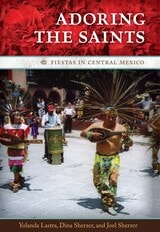
Adoring the Saints
Fiestas in Central MexicoBy Yolanda Lastra, Dina Sherzer, and Joel Sherzer
University of Texas Press, 2009
Mexico is famous for spectacular fiestas that embody its heart and soul. An expression of the cult of the saint, patron saint fiestas are the centerpiece of Mexican popular religion and of great importance to the lives and cultures of people and communities. These fiestas have their own language, objects, belief systems, and practices. They link Mexico's past and present, its indigenous and European populations, and its local and global relations.
This work provides a comprehensive study of two intimately linked patron saint fiestas in the state of Guanajuato, near San Miguel de Allende—the fiesta of the village of Cruz del Palmar and that of the town of San Luis de la Paz. These two fiestas are related to one another in very special ways involving both religious practices and their respective pre-Hispanic origins.
A mixture of secular and sacred, patron saint fiestas are multi-day affairs that include many events, ritual specialists, and performers, with the participation of the entire community. Fiestas take place in order to honor the saints, and they are the occasion for religious ceremonies, processions, musical performances, dances, and dance dramas. They feature spectacular costumes, enormous puppets, masked and cross-dressed individuals, dazzling fireworks, rodeos, food stands, competitions, and public dances. By encompassing all of these events and performances, this work displays the essence of Mexico, a lens through which this country's complex history, religion, ethnic mix, traditions, and magic can be viewed.

Adorned in Dreams
Fashion and ModernityElizabeth Wilson
Rutgers University Press, 2003

Adventures in Africa
Gianni Celati
University of Chicago Press, 2000
In 1997 the celebrated Italian novelist and essayist Gianni Celati accompanied his friend, filmmaker Jean Talon, on a journey to West Africa which took them from Mali to Senegal and Mauritania. The two had been hoping to research a documentary about Dogon priests, but frustrated by red tape, their voyage became instead a touristic adventure. The vulnerable, prickly, insightful Celati kept notebooks of the journey, now translated by Adria Bernardi as Adventures in Africa. Celati is the privileged traveler, overwhelmed by customs he doesn't understand, always at the mercy of others who are trying to sell him something he doesn't want to buy, and aware of himself as the Tourist who is always a little disoriented and at the center of the continual misadventures that are at the heart of travel.
Celati's book is both a travelogue in the European tradition and a trenchant meditation on what it means to be a tourist. Celati learns to surrender to the chaos of West Africa and in the process produces a work of touching and comic descriptions, in the lucid and ironic prose that is his hallmark. Hailed as one of the best travelogues on Africa ever written and awarded the first Zerilli-Marimó prize, Adventures in Africa is a modest yet profound account of the utter discombobulation of travel.
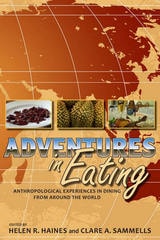
Adventures in Eating
Anthropological Experiences in Dining from Around the WorldHelen R. Haines
University Press of Colorado, 2010
Whether sago grubs, jungle rats, termites, or the pungent durian fruit are on the table, participating in the act of sharing food can establish relationships vital to anthropologists' research practices and knowledge of their host cultures. Using their own experiences with unfamiliar-and sometimes unappealing-food practices and customs, the contributors explore such eating moments and how these moments can produce new understandings of culture and the meaning of food beyond the immediate experience of eating it. They also address how personal eating experiences and culinary dilemmas can shape the data and methodologies of the discipline.
The main readership of Adventures in Eating will be students in anthropology and other scholars, but the explosion of food media gives the book additional appeal for fans of No Reservations and Bizarre Foods on the Travel Channel.
Adventures in the Archaic
Primitivism, Degrowth, and the French Social Sciences, 1945–1975Ryan L. Allen
University of Chicago Press, 2026
We tend to associate primitivism with the nostalgic idealization of origins, often aimed at parts of the world that are viewed as closer to that idealized past than modern post-industrial society. Primitivist impulses still exist in popular culture, whether in paleo diets or returns to foraging, and they can also be seen in intellectual and political circles in debates around the possibility of degrowth. In this book, historian Ryan L. Allen examines primitivism anew through four fascinating figures: Georges Bataille, Henri Lefebvre, Georges Devereux, and Mircea Eliade.
In the postwar period, Allen shows, the French social sciences reappraised the primitive and archaic from anthropological, sociological, psychiatric, and religious angles. These four thinkers sought past alternatives to midcentury hypermodernization and capitalist excess. They put forth trenchant critiques of contemporary society and sought in the archaic past a way to imagine a more sustainable future. Adventures in the Archaic rehabilitates these thinkers, showing how their critique of growth and consumerism was nourished by an engagement with primitive cultures as potential sources of cultural and ecological wisdom. As we confront planetary crisis, Allen suggests, there is still much we can learn from these iconoclastic approaches.
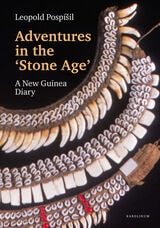
Adventures in the Stone Age
A New Guinea DiaryLeopold Pospíšil
Karolinum Press, 2021
When Leopold Pospíšil first arrived in New Guinea in 1954 to investigate the legal systems of the local tribes, he was warned about the Kapauku, who reputedly had no laws. Skeptical of the idea that any society could exist without laws, Pospíšil immediately decided to live among and study the Kapauku. Learning the language and living as a participant-observer among them, Pospíšil discovered that the supposedly primitive society possessed laws, rules, and social structures that were as sophisticated as they were logical. Drawing on his research and experiences among the Kapauku—he would stay with them five times between 1954 and 1979—Pospíšil broke new ground in the field of legal anthropology, holding a professorship at Yale, serving as the anthropology curator of the Peabody Museum of Natural History, and publishing three books of scholarship on Kapauku law.
This memoir of Pospíšil’s experience is filled with charming anecdotes and thrilling stories of trials, travels, and war told with humor and humility and accompanied by a wealth of the author’s personal photos from the time.
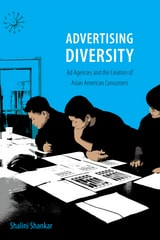
Advertising Diversity
Ad Agencies and the Creation of Asian American ConsumersShalini Shankar
Duke University Press, 2015
Aesop's Anthropology
A Multispecies ApproachJohn Hartigan Jr.
University of Minnesota Press, 0
Forerunners: Ideas First is a thought-in-process series of breakthrough digital publications. Written between fresh ideas and finished books, Forerunners draws on scholarly work initiated in notable blogs, social media, conference plenaries, journal articles, and the synergy of academic exchange. This is gray literature publishing: where intense thinking, change, and speculation take place in scholarship.
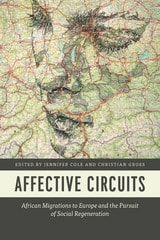
Affective Circuits
African Migrations to Europe and the Pursuit of Social RegenerationEdited by Jennifer Cole and Christian Groes
University of Chicago Press, 2016
The contributors point to the intersecting streams of goods, people, ideas, and money as they circulate between African migrants and their kin who remain back home. They also show the complex ways that emotions become entangled in these exchanges. Examining how these circuits operate in domains of social life ranging from child fosterage to binational marriages, from coming-of-age to healing and religious rituals, the book also registers the tremendous impact of state officials, laws, and policies on migrant experience. Together these essays paint an especially vivid portrait of new forms of kinship at a time of both intense mobility and ever-tightening borders.

Affective Justice
The International Criminal Court and the Pan-Africanist PushbackKamari Maxine Clarke
Duke University Press, 2019
Affective Trajectories
Religion and Emotion in African CityscapesHansjörg Dilger, Astrid Bochow, Marian Burchardt, and Matthew Wilhelm-Solomon, editors
Duke University Press, 2019
Contributors. Astrid Bochow, Marian Burchardt, Rafael Cazarin, Hansjörg Dilger, Alessandro Gusman, Murtala Ibrahim, Peter Lambertz, Isabelle L. Lange, Isabel Mukonyora, Benedikt Pontzen, Hanspeter Reihling, Matthew Wilhelm-Solomon
African American Foodways
Explorations of History and CultureEdited by Anne L. Bower
University of Illinois Press, 2006
Ranging from seventeenth-century West African fare to contemporary fusion dishes using soul food ingredients, the essays in this book provide an introduction to many aspects of African American foodways and an antidote to popular misconceptions about soul food. Examining the combination of African, Caribbean, and South American traditions, the volume's contributors offer lively insights from history, literature, sociology, anthropology, and African American studies to demonstrate how food's material and symbolic values have contributed to African Americans' identity for centuries. Individual chapters examine how African foodways survived the passage into slavery, cultural meanings associated with African American foodways, and the contents of African American cookbooks, both early and recent.
Contributors are Anne L. Bower, Robert L. Hall, William C. Whit, Psyche Williams-Forson, Doris Witt, Anne Yentsch, Rafia Zafar.
African Art Reframed
Reflections and Dialogues on Museum CultureBennetta Jules-Rosette and J. R. Osborn; Foreword by Simon Njami
University of Illinois Press, 2020
The authors take a three-pronged approach. Part One ranges from curiosity cabinets to virtual websites to offer a history of ethnographic and art museums and look at their organization and methods of reaching out to the public. In the second part, the authors examine museums as ecosystems and communities within communities, and they use semiotic methods to analyze images, signs, and symbols drawn from the experiences of curators and artists. The third part introduces innovative strategies for displaying, disseminating, and reclaiming African art. The authors also propose how to reinterpret the art inside and outside the museum and show ways of remixing the results.
Drawing on extensive conversations with curators, collectors, and artists, African Art Reframed is an essential guide to building new exchanges and connections in the dynamic worlds of African and global art.

African Fractals
Modern Computing and Indigenous DesignEglash, Ron
Rutgers University Press, 1999
Anthropologists have observed that the patterns produced in different cultures can be characterized by specific design themes. In Europe and America, we often see cities laid out in a grid pattern of straight streets and right-angle corners. In contrast, traditional African settlements tend to use fractal structures-circles of circles of circular dwellings, rectangular walls enclosing ever-smaller rectangles, and streets in which broad avenues branch down to tiny footpaths with striking geometric repetition. These indigenous fractals are not limited to architecture; their recursive patterns echo throughout many disparate African designs and knowledge systems.
Drawing on interviews with African designers, artists, and scientists, Ron Eglash investigates fractals in African architecture, traditional hairstyling, textiles, sculpture, painting, carving, metalwork, religion, games, practical craft, quantitative techniques, and symbolic systems. He also examines the political and social implications of the existence of African fractal geometry. His book makes a unique contribution to the study of mathematics, African culture, anthropology, and computer simulations.
African Masks and Emotions
In Theory and in PracticeZ. S. Strother
J. Paul Getty Trust, The, 0
In this groundbreaking book, Z. S. Strother, inspired by dialogues with African masquerade patrons and performers, disputes assumptions that masks universally hide, reveal, or transform.
In Western European languages, the word mask exerts a powerful presence as a figure of speech. To masquerade is to pretend to be someone or something one is not. By extension, unmasking is a heroic metaphor for exposing a hidden truth. In this volume, art historian Z. S. Strother counters that narrative, using African case studies to offer an alternative vision of masquerading. She explores the aesthetic emotions aroused by masks, or more precisely, by “dances of masks”: joy, wonder, awe, fear, and the release of laughing out loud. She also investigates the uncanny—a sensation of “delicious shiveriness” triggered when familiar spaces and individuals become strange and changeable. Inspired by Strother’s studies in DR Congo, African Masks and Emotions takes a comparative perspective and moves emotion from the periphery to the center of analysis.
Reflecting Getty's commitment to open content, African Masks and Emotions is available for free download in ePub and PDF formats at: https://www.getty.edu/publications-reports/item/2F27A4. This paperback edition is available for sale for readers who wish to have a bound reference copy.
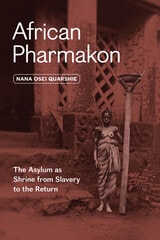
African Pharmakon
The Asylum as Shrine from Slavery to the ReturnNana Osei Quarshie
University of Chicago Press, 2025
For centuries, mental distress in West Africa has been subject to a mix of healing, harming, ritual, and regulation. In African Pharmakon, Nana Osei Quarshie questions conventional narratives about colonial psychiatry. Instead of displacing African therapeutic traditions, he argues, European psychiatric institutions in fact built upon them, adapting long-standing techniques of social control and healing.
With a focus on Ghana, Quarshie explores the shifting landscape of West African mental health practices, tracking their transformation from shrine-based rituals to colonial asylums and modern psychiatric institutions. Combining extensive archival research and ethnographic fieldwork, including the first scholarly examination of patient records from the Accra Psychiatric Hospital, Quarshie identifies five enduring techniques that have shaped the treatment of mental distress: spiritual pawning, logging, manhunting, mass expulsion, and pharmacotherapy.
Rejecting the simplistic opposition of Indigenous healing versus colonial oppression, African Pharmakon provides a nuanced account of how psychiatric care in Ghana became a tool of empowerment as well as exclusion. This pioneering study reframes our understanding of psychiatry and mental health governance in West Africa, past and present.
African Philosophy, Culture, and Traditional Medicine
MIS AF#53M. Akin Makinde
Ohio University Press, 1988
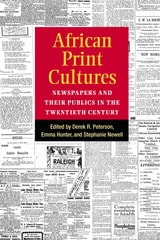
African Print Cultures
Newspapers and Their Publics in the Twentieth CenturyEdited by Derek R. Peterson, Emma Hunter, and Stephanie Newell
University of Michigan Press, 2016
The essays collected in African Print Cultures claim African newspapers as subjects of historical and literary study. Newspapers were not only vehicles for anticolonial nationalism. They were also incubators of literary experimentation and networks by which new solidarities came into being. By focusing on the creative work that African editors and contributors did, this volume brings an infrastructure of African public culture into view.
The first of four thematic sections, “African Newspaper Networks,” considers the work that newspaper editors did to relate events within their locality to happenings in far-off places. This work of correlation and juxtaposition made it possible for distant people to see themselves as fellow travellers. “Experiments with Genre” explores how newspapers nurtured the development of new literary genres, such as poetry, realist fiction, photoplays, and travel writing in African languages and in English. “Newspapers and Their Publics” looks at the ways in which African newspapers fostered the creation of new kinds of communities and served as networks for public interaction, political and otherwise. The final section, “Afterlives, ” is about the longue durée of history that newspapers helped to structure, and how, throughout the twentieth century, print allowed contributors to view their writing as material meant for posterity.
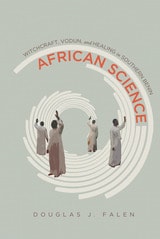
African Science
Witchcraft, Vodun, and Healing in Southern BeninDouglas J. Falen
University of Wisconsin Press, 2020
Although the Beninese understanding of àze reflects positive scientific properties in its use of specialized knowledge to harness nature's energy and realize economic success, its boundless power is inherently ambivalent because it can corrupt its users, who dispense death and destruction. Witches and healers are equivalent to supervillains and superheroes, locked in epic battles over malevolent and benevolent human desires. Beninese people's discourse about such mystical confrontations expresses a philosophy of moral duality and cosmic balance. Falen demonstrates how a deep engagement with another lived reality opens our minds and contributes to understanding across cultural difference.

Africana Studies
Theoretical FuturesEdited by Grant Farred
Temple University Press, 2022
As Africana Studies celebrates its fiftieth anniversary throughout the United States, this invigor ating collection presents possibilities for the future of the discipline’s theoretical paths. The essays in Africana Studies focus on philosophy, science, and technology; poetry, literature, and music; the crisis of the state; issues of colonialism, globalization, and neoliberalism; and the ever-expanding diaspora. The editor and contributors to this volume open exciting avenues for new narratives, philosophies, vision, and scale in this critical field of study—formed during the 1960s around issues of racial injustice in America—to show what Africana Studies is already in the process of becoming.
Africana Studies recognizes how the discipline has been shaped, changing over the decades as scholars have opened new modes of theoretical engagement such as addressing issues of gender and sexuality, politics, and cultural studies. The essays debate and (re)consider black and diasporic life to sustain, provoke, and cultivate Africana Studies as a singular yet polyvalent mode of thinking.
Contributors: Akin Adeṣọkan, John E. Drabinski, Zeyad El Nabolsy, Pierre-Philippe Fraiture, Kasareka Kavwahirehi, Gregory Pardlo, Radwa Saad, Sarah Then Bergh, and the editor
Africanizing Anthropology
Fieldwork, Networks, and the Making of Cultural Knowledge in Central AfricaLyn Schumaker
Duke University Press, 2001
Schumaker shows how local conditions and local ideas about culture and history, as well as previous experience of outsiders’ interest, shape local people’s responses to anthropological fieldwork and help them, in turn, to influence the construction of knowledge about their societies and lives. Bringing to the fore a wide range of actors—missionaries, administrators, settlers, the families of anthropologists—Schumaker emphasizes the daily practices of researchers, demonstrating how these are as centrally implicated in the making of anthropological knowlege as the discipline’s methods. Selecting a prominent group of anthropologists—The Manchester School—she reveals how they achieved the advances in theory and method that made them famous in the 1950s and 1960s.
This book makes important contributions to anthropology, African history, and the history of science.
Africans to Spanish America
Expanding the DiasporaEdited by Sherwin K. Bryant, Rachel Sarah O’Toole, & Ben Vinson III
University of Illinois Press, 2014
Contributors are Joan C. Bristol, Nancy E. van Deusen, Leo J. Garofalo, Herbert S. Klein, Charles Beatty-Medina, Karen Y. Morrison, Rachel Sarah O'Toole, Frank "Trey" Proctor III, and Michele Reid-Vazquez.
Afro-Paradise
Blackness, Violence, and Performance in BrazilChristen A. Smith
University of Illinois Press, 2016
Christen A. Smith argues that the dialectic of glorified representations of black bodies and subsequent state repression reinforces Brazil's racially hierarchal society. Interpreting the violence as both institutional and performative, Smith follows a grassroots movement and social protest theater troupe in their campaigns against racial violence. As Smith reveals, economies of black pain and suffering form the backdrop for the staged, scripted, and choreographed afro-paradise that dazzles visitors. The work of grassroots organizers exposes this relationship, exploding illusions and asking unwelcome questions about the impact of state violence performed against the still-marginalized mass of Afro-Brazilians.
Based on years of field work, Afro-Paradise is a passionate account of a long-overlooked struggle for life and dignity in contemporary Brazil.
Afro-Sweden
Becoming Black in a Color-Blind CountryRyan Thomas Skinner
University of Minnesota Press, 2022
A compelling examination of Sweden’s African and Black diaspora
Contemporary Sweden is a country with a worldwide progressive reputation, despite an undeniable tradition of racism within its borders. In the face of this contradiction of culture and history, Afro-Swedes have emerged as a vibrant demographic presence, from generations of diasporic movement, migration, and homemaking. In Afro-Sweden, Ryan Thomas Skinner uses oral histories, archival research, ethnography, and textual analysis to explore the history and culture of this diverse and growing Afro-European community.
Skinner employs the conceptual themes of “remembering” and “renaissance” to illuminate the history and culture of the Afro-Swedish community, drawing on the rich theoretical traditions of the African and Black diaspora. Remembering fosters a sustained meditation on Afro-Swedish social history, while Renaissance indexes a thriving Afro-Swedish public culture. Together, these concepts illuminate significant existential modes of Afro-Swedish being and becoming, invested in and contributing to the work of global Black studies.
The first scholarly monograph in English to focus specifically on the African and Black diaspora in Sweden, Afro-Sweden emphasizes the voices, experiences, practices, knowledge, and ideas of these communities. Its rigorously interdisciplinary approach to understanding diasporic communities is essential to contemporary conversations around such issues as the status and identity of racialized populations in Europe and the international impact of Black Lives Matter.