Results by title
3258 books match the query 'Performing Arts' and 266 start with a
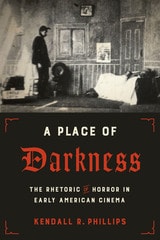
A Place of Darkness
The Rhetoric of Horror in Early American CinemaBy Kendall R. Phillips
University of Texas Press, 2018
Horror is one of the most enduringly popular genres in cinema. The term “horror film” was coined in 1931 between the premiere of Dracula and the release of Frankenstein, but monsters, ghosts, demons, and supernatural and horrific themes have been popular with American audiences since the emergence of novelty kinematographic attractions in the late 1890s. A Place of Darkness illuminates the prehistory of the horror genre by tracing the way horrific elements and stories were portrayed in films prior to the introduction of the term “horror film.”
Using a rhetorical approach that examines not only early films but also the promotional materials for them and critical responses to them, Kendall R. Phillips argues that the portrayal of horrific elements was enmeshed in broader social tensions around the emergence of American identity and, in turn, American cinema. He shows how early cinema linked monsters, ghosts, witches, and magicians with Old World superstitions and beliefs, in contrast to an American way of thinking that was pragmatic, reasonable, scientific, and progressive. Throughout the teens and twenties, Phillips finds, supernatural elements were almost always explained away as some hysterical mistake, humorous prank, or nefarious plot. The Great Depression of the 1930s, however, constituted a substantial upheaval in the system of American certainty and opened a space for the reemergence of Old World gothic within American popular discourse in the form of the horror genre, which has terrified and thrilled fans ever since.
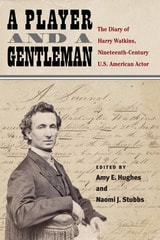
A Player and a Gentleman
The Diary of Harry Watkins, Nineteenth-Century U.S. American ActorEdited by Amy E. Hughes and Naomi J. Stubbs
University of Michigan Press, 2018
Hardworking actor, playwright, and stage manager Harry Watkins (1825–94) was also a prolific diarist. For fifteen years Watkins regularly recorded the plays he saw, the roles he performed, the books he read, and his impressions of current events. Performing across the U.S., Watkins collaborated with preeminent performers and producers, recording his successes and failures as well as his encounters with celebrities such as P. T. Barnum, Junius Brutus Booth, Edwin Forrest, Anna Cora Mowatt, and Lucy Stone. His is the only known diary of substantial length and scope written by a U.S. actor before the Civil War—making Watkins, essentially, the antebellum equivalent of Samuel Pepys. Theater historians Amy E. Hughes and Naomi J. Stubbs have selected, edited, and annotated excerpts from the diary in an edition that offers a vivid glimpse of how ordinary people like Watkins lived, loved, struggled, and triumphed during one of the most tumultuous periods in U.S. history. The selections in A Player and a Gentleman are drawn from a more expansive digital archive of the complete diary. The book, like its digital counterpart, will richly enhance our knowledge of antebellum theater culture and daily life in the U.S. during this period.
A Poetics for Screenwriters
By Lance Lee
University of Texas Press, 2001
Writing successful screenplays that capture the public imagination and richly reward the screenwriter requires more than simply following the formulas prescribed by the dozens of screenwriting manuals currently in print. Learning the "how-tos" is important, but understanding the dramatic elements that make up a good screenplay is equally crucial for writing a memorable movie. In A Poetics for Screenwriters, veteran writer and teacher Lance Lee offers aspiring and professional screenwriters a thorough overview of all the dramatic elements of screenplays, unbiased toward any particular screenwriting method.
Lee explores each aspect of screenwriting in detail. He covers primary plot elements, dramatic reality, storytelling stance and plot types, character, mind in drama, spectacle and other elements, and developing and filming the story. Relevant examples from dozens of American and foreign films, including Rear Window, Blue, Witness, The Usual Suspects, Virgin Spring, Fanny and Alexander, The Godfather, and On the Waterfront, as well as from dramas ranging from the Greek tragedies to the plays of Shakespeare and Ibsen, illustrate all of his points.
This new overview of the dramatic art provides a highly useful update for all students and professionals who have tried to adapt the principles of Aristotle's Poetics to the needs of modern screenwriting. By explaining "why" good screenplays work, this book is the indispensable companion for all the "how-to" guides.
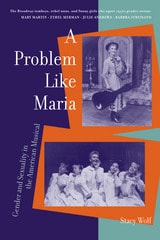
A Problem Like Maria
Gender and Sexuality in the American MusicalStacy Wolf
University of Michigan Press, 2002
Chapter by chapter, the book analyzes the stars' best-known and best-loved roles, including Martin as Nellie in South Pacific, Merman as Momma Rose in GypsyAndrews as Eliza in My Fair Lady and Guinevere in Camelot, and Streisand as Fanny Brice in Funny Girl. The final chapter scrutinizes the Broadway and film versions of The Sound of Music, illuminating its place in the hearts of lesbian spectators and the "delicious queerness" of Andrews's troublesome nun. As the first feminist and lesbian study of the American Broadway musical, A Problem Like Maria is a groundbreaking contribution to feminist studies, queer studies, and American studies and a delight for fans of musical theater.
Stacy Wolf is Associate Professor of Theatre and Dance, University of Texas, Austin.
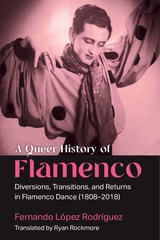
A Queer History of Flamenco
Diversions, Transitions, and Returns in Flamenco Dance (1808–2018)Fernando López Rodríguez, translation by Ryan Rockmore
University of Michigan Press, 2024
Tracing flamenco’s development from its birth up to the contemporary era, the book places flamenco within significant historical periods such as the Spanish Civil War, Franco’s dictatorship, the transition to democracy, and the economic crisis of 2008, up to contemporary performances of the late 2010s. In taking a queer approach to History, the author abandons antiquated debates about purities and impurities; anecdotes about the lives of artists that are completely detached from their processes of creation; and myths about geniuses who seem to make art alone and completely detached from their collaborators and the historical, social, economic and artistic moment in which they lived. A Queer History of Flamenco is not only about the present and the queerness of people living, performing, or creating in it, but also about flamenco’s past in which so many queer artists and practices and their lives have remained unearthed and unaddressed.
A Queer Sort of Materialism
Recontextualizing American TheaterDavid Savran
University of Michigan Press, 2003
The selections presented here are by turns entertaining, informative, sophisticated, and polemical, reflecting the author's dual citizenship as rigorous scholar and engaging theater critic. This book also provides a model for a kind of queer historical materialism that will prove useful to a wide range of disciplines, including theater and performance, gender and sexuality, queer/gay/lesbian/transgender studies, American studies, and popular culture.
David Savran is Professor of Theater, the Graduate Center, the City University of New York, and author of Cowboys, Communists, and Queers and Taking It Like a Man.
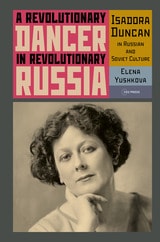
A Revolutionary Dancer in Revolutionary Russia
Isadora Duncan in Russian and Soviet CultureElena Yushkova
Central European University Press, 2026
This monograph offers a compelling exploration of Duncan’s Russian years—both before and after the October Revolution—drawing on rare archival sources and never-before-published Russian materials. It illuminates her artistic vision, her role in shaping early Soviet cultural debates, and the shifting political and aesthetic landscapes she navigated. From Silver Age reimaginations of antiquity to the rise of Socialist Realism and the modern revival of Duncan’s dance, this book traces the enduring legacy of a revolutionary artist in a world undergoing radical transformation.
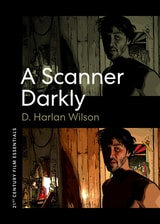
A Scanner Darkly
D. Harlan Wilson
University of Texas Press, 0
An in-depth analysis of Richard Linklater’s film adaptation of the semi-autobiographical Philip K. Dick novel, examining the film’s importance in the history of science fiction cinema.
From Blade Runner and Minority Report to The Man in the High Castle, the works of Philip K. Dick have been fertile ground for screen adaptation. Among the most visually and intellectually compelling, however, is the release that has received the least attention: Richard Linklater’s A Scanner Darkly.
In this revelatory work of criticism, scholar-novelist D. Harlan Wilson burrows deep inside Linklater’s meditation on identity and surveillance, addiction and the instability of perception. A Scanner Darkly features groundbreaking use of rotoscopy—filming live-action scenes, then drawing over the footage to animate it. Wilson argues that the technique captures the splintered consciousness of Dick’s protagonist and extends this psychological disintegration beyond the world on screen, inviting viewers into a fractured sense of self. More broadly, Wilson places the film in conversation with Linklater’s oeuvre, the history of science fiction cinema, and contemporary debates about technology, identity, and surveillance. A Scanner Darkly—the novel, the film, and now the critical interpretation—yields powerful insight into the forms of social control that define our era of digital selfhood, algorithmic monitoring, and artificial intelligence.
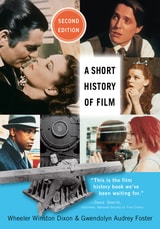
A Short History of Film
Dixon, Wheeler Winston
Rutgers University Press, 2013
Wheeler Winston Dixon and Gwendolyn Audrey Foster present new and amended coverage of the industry in addition to updating the birth and death dates and final works of notable directors. Their expanded focus on key films brings the book firmly into the digital era and chronicles the death of film as a production medium.
The book takes readers through the invention of the kinetoscope, the introduction of sound and color between the two world wars, and ultimately the computer-generated imagery of the present day. It details significant periods in world cinema, including the early major industries in Europe, the dominance of the Hollywood studio system in the 1930s and 1940s, and the French New Wave of the 1960s. Attention is given to small independent efforts in developing nations and the more personal independent film movement that briefly flourished in the United States, the significant filmmakers of all nations, and the effects of censorship and regulation on production everywhere. In addition, the authors incorporate the stories of women and other minority filmmakers who have often been overlooked in other texts.
Engaging and accessible, this is the best one-stop source for the history of world film available for students, teachers, and general audiences alike.
A Short History of Film
Dixon, Wheeler Winston
Rutgers University Press, 2008
Beginning with precursors of what we call moving pictures, Wheeler Winston Dixon and Gwendolyn Audrey Foster lead a fast-paced tour through the invention of the kinetoscope, the introduction of sound and color between the two world wars, and ultimately the computer generated imagery of the present day. They detail significant periods in world cinema, including the early major industries in Europe, the dominance of the Hollywood studio system in the 1930s and 1940s, and the French New Wave of the 1960s. Special attention is also given to small independent efforts in developing nations and the corresponding more personal independent film movement that briefly flourished in the United States, the significant filmmakers of all nations, censorship and regulation and how they have affected production everywhere, and a wide range of studios and genres. Along the way, the authors take great care to incorporate the stories of women and other minority filmmakers who have often been overlooked in other texts.
Compact and easily readable, this is the best one-stop source for the history of world film available to students, teachers, and general audiences alike.
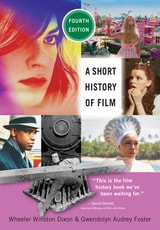
A Short History of Film, Fourth Edition
Wheeler Winston Dixon
Rutgers University Press, 2026
This updated and expanded edition of A Short History of Film provides an accessible overview of the major movements, directors, studios, and genres from the 1880s to the present. Succinct yet comprehensive, with more than 250 rare stills and illustrations, this edition provides new information on contemporary horror, comic book, and franchise films; issues surrounding women and minority filmmakers; the effects of the COVID-19 pandemic on movies worldwide; the shift from film to digital production; the rising use of artificial intelligence in cinema; and the impact of streaming on the industry.
Beginning with the precursors of moving pictures, Wheeler Winston Dixon and Gwendolyn Audrey Foster lead a fast-paced tour through the invention of the kinetoscope, the introduction of sound and color between the two world wars, and ultimately the computer-generated imagery of the present day. They detail significant periods in world cinema, including the creation of early major industries in Europe, the dominance of the Hollywood studio system in the 1930s and 1940s, and the French New Wave of the 1960s. They also highlight independent efforts in developing nations and the corresponding more personal independent film movement that briefly flourished in the United States.
Compact and easily readable, this is a vital history of international cinema is a one-stop resource for students, teachers, and general readers alike.
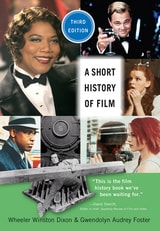
A Short History of Film, Third Edition
Dixon, Wheeler Winston
Rutgers University Press, 2018
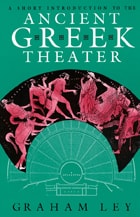
A Short Introduction to the Ancient Greek Theater
Graham Ley
University of Chicago Press, 1991
Reexamining the surviving plays of the tragic writers Aeschylus, Sophocles, and Euripides and of the comedian Aristophanes, Graham Ley discusses the actor's technique, the power and range of the chorus, the use of theatrical space, and parody in the plays. A series of diagrams relates the theater to the city and political life of ancient Athens, and photographic illustrations of scenes from Greek vases document the visualization of theatrical performance.
An ideal companion to The Complete Greek Tragedies (University of Chicago Press), Ley's work is a valuable user's guide to the critical assessment of modern translations and adaptations of tragedy and comedy. It is designed for all students of Greek drama with an interest in performance, and for theatrical practitioners who require a concise but informative introduction to one of the great periods of world drama.
A Short Introduction to the Ancient Greek Theater
Revised EditionGraham Ley
University of Chicago Press, 2007
Reexamining the surviving plays of Aeschylus, Sophocles, Euripides, and Aristophanes, Graham Ley here discusses acting technique, scenery, the power and range of the chorus, the use of theatrical space, and parody in their plays. In addition to photos of scenes from Greek vases that document theatrical performance, this new edition includes notes on ancient mime and puppetry and how to read Greek playtexts as scripts, as well as an updated bibliography. An ideal companion to The Complete Greek Tragedies, also published by the University of Chicago Press, Ley’s work is a concise and informative introduction to one of the great periods of world drama.
"Anyone faced with Athenian tragedy or comedy for the first time, in or out of the classroom, would do well to start with A Short Introduction to Ancient Greek Theater."—Didaskalia
A Social History of Iranian Cinema, Volume 1
The Artisanal Era, 1897-1941Hamid Naficy
Duke University Press, 2011
Volume 1 depicts and analyzes the early years of Iranian cinema. Film was introduced in Iran in 1900, three years after the country’s first commercial film exhibitor saw the new medium in Great Britain. An artisanal cinema industry sponsored by the ruling shahs and other elites soon emerged. The presence of women, both on the screen and in movie houses, proved controversial until 1925, when Reza Shah Pahlavi dissolved the Qajar dynasty. Ruling until 1941, Reza Shah implemented a Westernization program intended to unite, modernize, and secularize his multicultural, multilingual, and multiethnic country. Cinematic representations of a fast-modernizing Iran were encouraged, the veil was outlawed, and dandies flourished. At the same time, photography, movie production, and movie houses were tightly controlled. Film production ultimately proved marginal to state formation. Only four silent feature films were produced in Iran; of the five Persian-language sound features shown in the country before 1941, four were made by an Iranian expatriate in India.
A Social History of Iranian Cinema
Volume 1: The Artisanal Era, 1897–1941
Volume 2: The Industrializing Years, 1941–1978
Volume 3: The Islamicate Period, 1978–1984
Volume 4: The Globalizing Era, 1984–2010
A Social History of Iranian Cinema, Volume 2
The Industrializing Years, 1941–1978Hamid Naficy
Duke University Press, 2011
Volume 2 spans the period of Mohammad Reza Shah’s rule, from 1941 until 1978. During this time Iranian cinema flourished and became industrialized, at its height producing more than ninety films each year. The state was instrumental in building the infrastructures of the cinema and television industries, and it instituted a vast apparatus of censorship and patronage. During the Second World War the Allied powers competed to control the movies shown in Iran. In the following decades, two distinct indigenous cinemas emerged. The more popular, traditional, and commercial filmfarsi movies included tough-guy films and the “stewpot” genre of melodrama, with plots reflecting the rapid changes in Iranian society. The new-wave cinema was a smaller but more influential cinema of dissent, made mostly by foreign-trained filmmakers and modernist writers opposed to the regime. Ironically, the state both funded and censored much of the new-wave cinema, which grew bolder in its criticism as state authoritarianism consolidated. A vital documentary cinema also developed in the prerevolutionary era.
A Social History of Iranian Cinema
Volume 1: The Artisanal Era, 1897–1941
Volume 2: The Industrializing Years, 1941–1978
Volume 3: The Islamicate Period, 1978–1984
Volume 4: The Globalizing Era, 1984–2010
A Social History of Iranian Cinema, Volume 3
The Islamicate Period, 1978–1984Hamid Naficy
Duke University Press, 2012
In Volume 3, Naficy assesses the profound effects of the Islamic Revolution on Iran's cinema and film industry. Throughout the book, he uses the term Islamicate, rather than Islamic, to indicate that the values of the postrevolutionary state, culture, and cinema were informed not only by Islam but also by Persian traditions. Naficy examines documentary films made to record events prior to, during, and in the immediate aftermath of the revolution. He describes how certain institutions and individuals, including prerevolutionary cinema and filmmakers, were associated with the Pahlavi regime, the West, and modernity and therefore perceived as corrupt and immoral. Many of the nation's moviehouses were burned down. Prerevolutionary films were subject to strict review and often banned, to be replaced with films commensurate with Islamicate values. Filmmakers and entertainers were thrown out of the industry, exiled, imprisoned, and even executed. Yet, out of this revolutionary turmoil, an extraordinary Islamicate cinema and film culture emerged. Naficy traces its development and explains how Iran's long war with Iraq, the gendered segregation of space, and the imposition of the veil on women encouraged certain ideological and aesthetic trends in film and related media. Finally, he discusses the structural, administrative, and regulatory measures that helped to institutionalize the new evolving cinema.
A Social History of Iranian Cinema
Volume 1: The Artisanal Era, 1897–1941
Volume 2: The Industrializing Years, 1941–1978
Volume 3: The Islamicate Period, 1978–1984
Volume 4: The Globalizing Era, 1984–2010
A Social History of Iranian Cinema, Volume 4
The Globalizing Era, 1984–2010Hamid Naficy
Duke University Press, 2012
The extraordinary efflorescence in Iranian film, TV, and the new media since the consolidation of the Islamic Revolution animates Volume 4. During this time, documentary films proliferated. Many filmmakers took as their subject the revolution and the bloody eight-year war with Iraq; others critiqued postrevolution society. The strong presence of women on screen and behind the camera led to a dynamic women's cinema. A dissident art-house cinema—involving some of the best Pahlavi-era new-wave directors and a younger generation of innovative postrevolution directors—placed Iranian cinema on the map of world cinemas, bringing prestige to Iranians at home and abroad. A struggle over cinema, media, culture, and, ultimately, the legitimacy of the Islamic Republic, emerged and intensified. The media became a contested site of public diplomacy as the Islamic Republic regime as well as foreign governments antagonistic to it sought to harness Iranian popular culture and media toward their own ends, within and outside of Iran. The broad international circulation of films made in Iran and its diaspora, the vast dispersion of media-savvy filmmakers abroad, and new filmmaking and communication technologies helped to globalize Iranian cinema.
A Social History of Iranian Cinema
Volume 1: The Artisanal Era, 1897–1941
Volume 2: The Industrializing Years, 1941–1978
Volume 3: The Islamicate Period, 1978–1984
Volume 4: The Globalizing Era, 1984–2010

A Spectacle of Suffering
Clara Morris on the American StageBarbara Wallace Grossman
Southern Illinois University Press, 2009
Once called "America's greatest actress," renowned for the passion and power of her performances, Clara Morris (1847-1925) has been largely forgotten. A Spectacle of Suffering: Clara Morris on the American Stage is the first full-length study of the actress's importance as a feminist in the late nineteenth and early twentieth centuries. Detailing her daunting health problems and the changing tastes in entertainment that led to her retirement from the stage, Barbara Wallace Grossman explores Morris's dramatic reinvention as an author. During a second robust career, she published hundreds of newspaper and magazine articles and nine books—six works of fiction and three memoirs.
Grossman draws on the fifty-four-volume diary that Morris kept from 1868 until 1924, as well as on the manuscript fragments and notes of journalist George T. MacAdam, who died in 1929 before completing the actress's biography. Grossman provides a dramatic account of Morris's life and work from her troubled early years, through an unhappy marriage, morphine addiction, and invalidism, to the challenges of touring, the decline of her artistic reputation, and the demands of the writing career she pursued so tenaciously. A Spectacle of Suffering reveals how Morris, even after experiencing blindness and the loss of her home, livelihood, and family, did not succumb to despair and found comfort in the small pleasures of her circumscribed life.
A Spectacle of Suffering recovers an important figure in American theatre and ensures that Morris will be remembered not simply as an actress but as a respected writer and beloved public figure, admired for her courage in dealing with adversity. The book, which is enhanced by twenty-four illustrations, is the only published biography of Clara Morris. It is as much a tribute to the power of the human spirit as it is an effective means of exploring American theatre and society in the Gilded Age.
A Stage of Their Own
Feminist Playwrights of the Suffrage EraSheila Stowell
University of Michigan Press, 1994
A Student Guide to Play Analysis
David Rush
Southern Illinois University Press, 2005
With the skills of a playwright, the vision of a producer, and the wisdom of an experienced teacher, David Rush offers a fresh and innovative guide to interpreting drama in A Student Guide to Play Analysis, the first undergraduate teaching tool to address postmodern drama in addition to classic and modern. Covering a wide gamut of texts and genres, this far-reaching and user-friendly volume is easily paired with most anthologies of plays and is accessible even to those without a literary background.
Contending that there are no right or wrong answers in play analysis, Rush emphasizes the importance of students developing insights of their own. The process is twofold: understand the critical terms that are used to define various parts and then apply these to a particular play. Rush clarifies the concepts of plot, character, and language, advancing Aristotle’s concept of the Four Causes as a method for approaching a play through various critical windows. He describes the essential difference between a story and a play, outlines four ways of looking at plays, and then takes up the typical structural devices of a well-made play, four primary genres and their hybrids, and numerous styles, from expressionism to postmodernism.
For each subject, he defines critical norms and analyzes plays common to the canon. A Student Guide to Play Analysis draws on thoughtful examinations of such dramas as The Cherry Orchard, The Good Woman of Setzuan, Fences, The Little Foxes, A Doll House, The Glass Menagerie, and The Emperor Jones. Each chapter ends with a list of questions that will guide students in further study.
A Theater of Our Own
A History and a Memoir of 1,001 Nights in ChicagoRichard Christiansen, with a foreword by Brian Dennehy
Northwestern University Press, 2004
A Theater of Our Own is a fascinating, fast-paced, and fact-filled chronicle of Chicago's legendary theater scene by the long-time chief critic for the Chicago Tribune. Who produced the first stage adaptation of "The Wizard of Oz" in 1902-nearly forty years before the movie classic? What entertainment juggernaut began in a converted Chinese laundry on Wells Street in 1959? Where did Louis (Studs) Terkel make his stage debut? When did the original production of "Grease" open at Kingston Mines Theater? Richard Christiansen, former chief critic for the Chicago Tribune, answers these and many more questions about the rich role of the theater in Chicago, from its earliest days in 1837 to its present state as a diverse community of artists with international stature.
In A Theater of Our Own, he draws upon his exclusive interviews, insights, and memories gathered over a period of more than forty years of reviewing the arts. This history and memoir traces the evolution of the Chicago theater scene from small theaters to major institutions such as the Steppenwolf Theatre Company, the Goodman Theater, and The Second City. Along the way, Richard Christiansen relates his behind-the-scenes conversations with some of Chicago's most acclaimed writers, directors, and actors--David Mamet, Frank Galati, Mary Zimmerman, John Malkovich, Laurie Metcalf, Harold Ramis, Gary Sinise, and Joe Mantegna--all a part of Chicago's theater renaissance from the 1970s onward. To this day, Chicago remains a city known for its imaginative, innovative, and influential theaters and artists. A Theater of Our Own, a valuable contribution to the history of theater, is a book written for anyone who enjoys the theater and its people as well as the story of Chicago.
A Theory of Regret
Brian Price
Duke University Press, 2017
A Thousand Screenplays
The French Imagination in a Time of CrisisSabine Chalvon-Demersay
University of Chicago Press, 1999
The time of crisis presented by the amateur writers was not one of war, famine, or disease—it was the millennial dilemma of representation. In a world plagued by alienation, individualization, and a lack of mobility, how can members of a society combat their declining senses of self?
Although the contestants wrote about life in France, their concerns and struggles have a distinctly universal ring. A lucid, witty writer, Chalvon-Demersay offers a clear, if still developing, photograph of the contemporary imagination.

A Triptych from the Russian Theatre
An Artistic Biography of the Komissarzhevsky FamilyVictor Borovsky
University of Iowa Press, 2001
A View from the Bottom
Asian American Masculinity and Sexual RepresentationNguyen Tan Hoang
Duke University Press, 2014
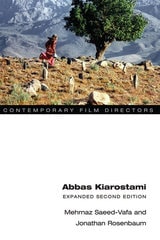
Abbas Kiarostami
Expanded Second EditionMehrnaz Saeed-Vafa and Jonathan Rosenbaum
University of Illinois Press, 2018
In this expanded second edition, award-winning Iranian filmmaker Mehrnaz Saeed-Vafa and film critic Jonathan Rosenbaum renew their illuminating cross-cultural dialogue on Kiarostami's work. The pair chart the filmmaker's late-in-life turn toward art galleries, museums, still photography, and installations. They also bring their distinct but complementary perspectives to a new conversation on the experimental film Shirin. Finally, Rosenbaum offers an essay on watching Kiarostami at home while Saeed-Vafa conducts a deeply personal interview with the director on his career and his final feature, Like Someone in Love.
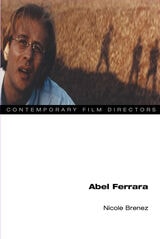
Abel Ferrara
Nicole Brenez. Translated from the French by Adrian Martin
University of Illinois Press, 2006
Nicole Brenez argues for Abel Ferrara’s place in a line of grand inventors who have blurred distinctions between industry and avant-garde film, including Orson Welles, Monte Hellman, and Nicholas Ray. Rather than merely reworking genre film, Brenez understands Ferrara’s oeuvre as formulating new archetypes that depict the evil of the modern world. Focusing as much on the human figure as on elements of storytelling, she argues that films such as Bad Lieutenant express this evil through visionary characters struggling against the inadmissible (inadmissible behavior, morality, images, and narratives).
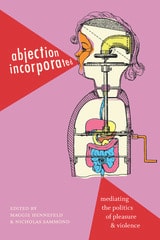
Abjection Incorporated
Mediating the Politics of Pleasure and ViolenceMargaret Hennefeld and Nicholas Sammond, editors
Duke University Press, 2019
Contributors. Meredith Bak, Eugenie Brinkema, James Leo Cahill, Michelle Cho, Maggie Hennefeld, Rob King, Thomas Lamarre, Sylvère Lotringer, Rijuta Mehta, Mark Mulroney, Nicholas Sammond, Yiman Wang, Rebecca Wanzo
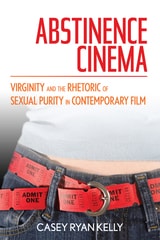
Abstinence Cinema
Virginity and the Rhetoric of Sexual Purity in Contemporary FilmCasey Ryan Kelly
Rutgers University Press, 2016
From the perspective of cultural conservatives, Hollywood movies are cesspools of vice, exposing impressionable viewers to pernicious sexually-permissive messages. Offering a groundbreaking study of Hollywood films produced since 2000, Abstinence Cinema comes to a very different conclusion, finding echoes of the evangelical movement’s abstinence-only rhetoric in everything from Easy A to Taken.
Acoustic Properties
Radio, Narrative, and the New Neighborhood of the AmericasTom McEnaney
Northwestern University Press, 2017
Based on original archival research in Buenos Aires, Havana, Paris, and the United States, the book develops a literary media theory that understands sound as a transmedial phenomenon and radio as a transnational medium. Analyzing the construction of new social and political relations in the wake of the United States’ 1930s Good Neighbor Policy, Acoustic Properties challenges standard narratives of hemispheric influence through new readings of Richard Wright’s cinematic work in Argentina, Severo Sarduy’s radio plays in France, and novels by John Dos Passos, Manuel Puig, Raymond Chandler, and Carson McCullers. Alongside these writers, the book also explores Che Guevara and Fidel Castro’s Radio Rebelde, FDR’s fireside chats, Félix Caignet’s invention of the radionovela in Cuba, Evita Perón’s populist melodramas in Argentina, Orson Welles’s experimental New Deal radio, Cuban and U.S. “radio wars,” and the 1960s African American activist Robert F. Williams’s proto–black power Radio Free Dixie.
From the doldrums of the Great Depression to the tumult of the Cuban Revolution, Acoustic Properties illuminates how novelists in the radio age converted writing into a practice of listening, transforming realism as they struggled to channel and shape popular power.
Act Like a Man
Challenging Masculinities in American DramaRobert Vorlicky
University of Michigan Press, 1995
In the first comprehensive study of plays written for male characters only, Robert Vorlicky offers a new theory that links cultural codes governing gender and the conventions determining dramatic form. Act Like a Manlooks at a range of plays, including those by O'Neill, Albee, Mamet, Baraka, and Rabe as well as new works by Philip Kan Gotanda, Alonzo Lamont, and Robin Swados, to examine how dialogue within these works reflects the social codes of male behavior and inhibits individualization among men.
Plays in which women are absent are often characterized by the location of a male "other"—a female presence who distances himself from the dominant, impersonal masculine ethos and thereby becomes a facilitator of personal communication. The potential authority of this figure is so powerful that its presence becomes the primary determinant of the quality of men's interaction and of the range of male subjectivities possible. This formulation becomes the basis of an alternative theory of American dramatic construction, one that challenges traditional dramaturgical notions of realism.
The book will appeal to scholars and students interested in drama, gender, race, sexuality, and American culture, as well as playwrights, teachers of playwrights, and artistic directors. It includes an extensive bibliography of more than four hundred male-cast plays and monodramas, the first such compilation and one that points to further research into a previously unexplored area.
Acting
Springer, Claudia
Rutgers University Press, 2015
The chapters in Acting provide a fascinating, in-depth look at the history of film acting, from its inception in 1895 when spectators thrilled at the sight of vaudeville performers, Wild West stars, and athletes captured in motion, to the present when audiences marvel at the seamless blend of human actors with CGI. Experts in the field take readers behind the silver screen to learn about the craft of film acting in six eras: the silent screen (1895–1928), classical Hollywood (1928–1946), postwar Hollywood (1947–1967), the auteur renaissance (1968–1980), the New Hollywood (1981–1999), and the modern entertainment marketplace (2000–present). The contributors pay special attention to definitive performances by notable film stars, including Lillian Gish, Dick Powell, Ginger Rogers, Beulah Bondi, Marilyn Monroe, Marlon Brando, Jack Nicholson, Robert De Niro, Nicholas Cage, Denzel Washington, and Andy Serkis.
Acting Egyptian
Theater, Identity, and Political Culture in Cairo, 1869–1930By Carmen M. K. Gitre
University of Texas Press, 2019
In the late nineteenth and early twentieth centuries, during the “protectorate” period of British occupation in Egypt—theaters and other performance sites were vital for imagining, mirroring, debating, and shaping competing conceptions of modern Egyptian identity. Central figures in this diverse spectrum were the effendis, an emerging class of urban, male, anticolonial professionals whose role would ultimately become dominant. Acting Egyptian argues that performance themes, spaces, actors, and audiences allowed pluralism to take center stage while simultaneously consolidating effendi voices.
From the world premiere of Verdi’s Aida at Cairo’s Khedivial Opera House in 1871 to the theatrical rhetoric surrounding the revolution of 1919, which gave women an opportunity to link their visibility to the well-being of the nation, Acting Egyptian examines the ways in which elites and effendis, men and women, used newly built performance spaces to debate morality, politics, and the implications of modernity. Drawing on scripts, playbills, ads, and numerous other sources, the book brings to life provocative debates that fostered a new image of national culture and performances that echoed the events of urban life in the struggle for independence.
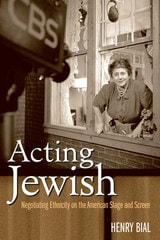
Acting Jewish
Negotiating Ethnicity on the American Stage and ScreenHenry Bial
University of Michigan Press, 2005
Acting Jewish documents this history, looking at the work of Jewish writers, directors, and actors in the American entertainment industry with particular attention to the ways in which these artists offer behavioral models for Jewish-American audiences. The book spans the period from 1947 to the present and takes a close look at some of America's favorite plays (Death of a Salesman, Fiddler on the Roof, Angels in America), films (Gentleman's Agreement, AnnieHall), and television shows (The Goldbergs, Seinfeld), identifying a double-coding by which performers enact, and spectators read, Jewishness in contemporary performance-and, by extension, enact and read other minority identities. The book thus explores and illuminates the ever-changing relationship between Jews and mainstream American culture.
"Fascinating and original . . . Bial's command of sources is impressive, and his concept of 'double-coding' is convincing . . . the book should have no trouble finding a large audience."
-Barbara Grossman, author of Funny Woman: The Life and Times of Fanny Brice
Acting Like Men
Gender, Drama, and Nostalgia in Ancient GreeceKaren Bassi
University of Michigan Press, 1999

Acting Now
Conversations on Craft and CareerVilga, Edward
Rutgers University Press, 1997
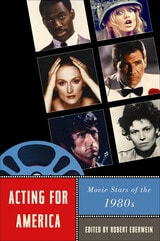
Acting for America
Movie Stars of the 1980sEberwein, Robert
Rutgers University Press, 2010
Scholars employing a variety of useful approaches explore how these movie stars' films speak to an increased audience awareness of advances in feminism, new ideas about masculinity, and the complex political atmosphere in the Age of Reagan. The essays demonstrate the range of these stars' contributions to such conversations in a variety of films, including blockbusters and major genres.
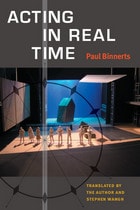
Acting in Real Time
Paul Binnerts
University of Michigan Press, 2012
Acting in Real Timeby renowned Dutch director and acting teacher Paul Binnerts describes his method for Real-Time Theater, which authorizes actors to actively determine how a story is told---they are no longer mere vehicles for delivering the playwright's message or the director's interpretations of the text. This level of involvement allows actors to deepen their grasp of the material and amplify their stage presence, resulting in more engaged and nuanced performances.
The method offers a postmodern challenge to Stanislavski and Brecht, whose theories of stage realism dominated the twentieth century. In providing a new way to consider the actor's presence on stage, Binnerts advocates breaking down the "fourth wall" that separates audiences and actors and has been a central tenet of acting theories associated with realism. In real-time theater, actors forgo attempts to become characters and instead understand their function to be storytellers who are fully present on stage and may engage the audience and their fellow actors directly.
Paul Binnerts analyzes the ascendance of realism as the dominant theater and acting convention and how its methods can hinder the creation of a more original, imaginative theater. His description of the techniques of real-time theater is illuminated by practical examples from his long experience in the stage. The book then offers innovative exercises that provide training in the real-time technique, including physical exercises that help the actor become truly present in performance. Acting in Real Time also includes a broad overview of the history of acting and realism's relationship to the history of theater architecture, offering real-time theater as an alternative. The book will appeal to actors and acting students, directors, stage designers, costume designers, lighting designers, theater historians, and dramaturgs.
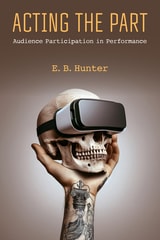
Acting the Part
Audience Participation in PerformanceE. B. Hunter
University of Michigan Press, 2025
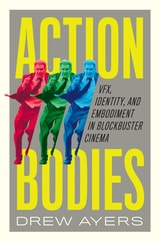
Action Bodies
VFX, Identity, and Embodiment in Blockbuster CinemaDrew Ayers
University of Texas Press, 2026
Exploring how digital visual effects have changed the representations of the body and identity in action films.
When Harrison Ford appeared digitally de-aged in Indiana Jones and the Dial of Destiny, audiences witnessed more than a technical feat; they saw how visual effects are reshaping what bodies can be on screen. In Action Bodies, Drew Ayers examines how the contemporary action genre redefines embodiment across human, superhuman, animal, and machine forms. Ayers argues that action films are a crucial site for understanding how popular media both reflect and shape cultural debates about identity, citizenship, disability, and ethics in the era of big data and algorithmic culture.
Through case studies including Top Gun: Maverick, The Woman King, The Fast & the Furious franchise, and Avatar: The Way of Water, Ayers explores how VFX-altered bodies carry ideological weight. While the action genre has long leaned conservative in its politics of identity, its digitally mediated bodies also generate unexpected opportunities: glimpses of more inclusive and flexible modes of embodiment. As artificial intelligence and synthetic imagery continue to transform film production, Action Bodies demonstrates why careful attention to action cinema is essential for understanding how contemporary culture imagines and engineers the future of the body.
Actors and American Culture, 1880-1920
Benjamin Mcarthur
University of Iowa Press, 2000
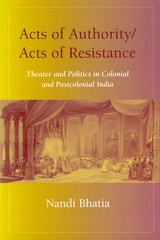
Acts of Authority/Acts of Resistance
Theater and Politics in Colonial and Postcolonial IndiaNandi Bhatia
University of Michigan Press, 2004
Nandi Bhatia argues that Indian theater was a significant force in the struggle against oppressive colonial and postcolonial structures, as it sought to undo various schemes of political and cultural power through its engagement with subjects derived from mythology, history, and available colonial models such as Shakespeare. Bhatia's attention to local histories within a postcolonial framework places performance in a global and transcultural context. Drawing connections between art and politics, between performance and everyday experience, Bhatia shows how performance often intervened in political debates and even changed the course of politics.
One of the first Western studies of Indian theater to link the aesthetics and the politics of that theater, Acts of Authority/Acts of Resistance combines in-depth archival research with close readings of dramatic texts performed at critical moments in history. Each chapter amplifies its themes against the backdrop of specific social conditions as it examines particular dramatic productions, from The Indigo Mirror to adaptations of Shakespeare plays by Indian theater companies, illustrating the role of theater in bringing nationalist, anticolonial, and gendered struggles into the public sphere.
Nandi Bhatia is Associate Professor of English at the University of Western Ontario.
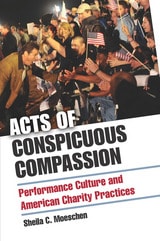
Acts of Conspicuous Compassion
Performance Culture and American Charity PracticesSheila C. Moeschen
University of Michigan Press, 2016
Sheila C. Moeschen sheds new light on the legacy and involvement of disabled people within charity—specifically, the articulation of performance culture as a vital theoretical framework for discussing issues of embodiment and identity, a framework that dislodges previously held notions of the disabled existing as passive “objects” of pity. This work gives rise to a more complicated and nuanced discussion of the participation of the disabled community in the charity industry, of the opportunities afforded by performance culture for disabled people to act as critical agents of charity, and of the new ethical and political issues that arise from employing performance methodology in a culture with increased appetites for voyeurism, display, and complex spectacle.

Acts of Dramaturgy
The Shakespeare TrilogyMichael Pinchbeck
Intellect Books, 2020
Acts of Dramaturgy is a critical frame for Michael Pinchbeck’s The Shakespeare Trilogy, a recent touring project comprising three performances—The Beginning, The Middle, and The End—that explored the role of the dramaturg. This book sets the playtexts in dialogue with reflexive essays and provocations on contemporary dramaturgy from a range of contributors.
Weaving together different modes of writing, the volume reflects on the politics of dramaturgy, authorship, adaptation, performance, and the use of Shakespeare as a stimulus for making contemporary theater. The resulting work is as much a reflection on the entanglements of processes, lineages, and relations that have shaped the work and its reception as it is an exploration of ways of reflecting and being with practice now. A valuable new contribution to the study of contemporary dramaturgy, the book will be of interest to makers and scholars of theater and performance and anyone interested in practice research and creative critical writing.
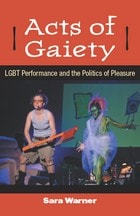
Acts of Gaiety
LGBT Performance and the Politics of PleasureSara Warner
University of Michigan Press, 2013
Acts of Gaiety explores the mirthful modes of political performance by LGBT artists, activists, and collectives that have inspired and sustained deadly serious struggles for revolutionary change. The book explores antics such as camp, kitsch, drag, guerrilla theater, zap actions, rallies, manifestos, pageants, and parades alongside more familiar forms of "legitimate theater." Against queer theory's long-suffering romance with mourning and melancholia and a national agenda that urges homosexuals to renounce pleasure if they want to be taken seriously by mainstream society, Acts of Gaiety seeks to reanimate notions of "gaiety" as a political value for LGBT activism.
The book mines the archives of lesbian-feminist activism of the 1960s-70s, highlighting the outrageous gaiety that lay at the center of the social and theatrical performances of the era and uncovering original documents long thought to be lost. Juxtaposing historical figures such as Valerie Solanas and Jill Johnston with more recent performers and activists (including Hothead Paisan, Bitch & Animal, and the Five Lesbian Brothers), Warner shows how reclaiming this largely discarded and disavowed past elucidates possibilities for being and belonging. Acts of Gaiety explores the mutually informing histories of gayness as politics and as joie de vivre, along with the centrality of liveliness to queer performance and protest.
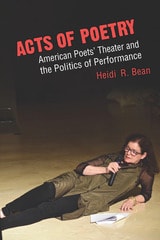
Acts of Poetry
American Poets' Theater and the Politics of PerformanceHeidi R. Bean
University of Michigan Press, 2019
American poets’ theater emerged in the postwar period alongside the rich, performance-oriented poetry and theater scenes that proliferated on the makeshift stages of urban coffee houses, shared apartments, and underground theaters, yet its significance has been largely overlooked by critics. Acts of Poetry shines a spotlight on poets’ theater’s key groups, practitioners, influencers, and inheritors, such as the Poets’ Theatre, the Living Theatre, Gertrude Stein, Bunny Lang, Frank O’Hara, Amiri Baraka, Carla Harryman, and Suzan-Lori Parks. Heidi R. Bean demonstrates the importance of poets’ theater in the development of twentieth-century theater and performance poetry, and especially evolving notions of the audience’s role in performance, and in narratives of the relationship between performance and everyday life. Drawing on an extensive archive of scripts, production materials, personal correspondence, theater records, interviews, manifestoes, editorials, and reviews, the book captures critical assessments and behind-the-scenes discussions that enrich our understanding of the intertwined histories of American theater and American poetry in the twentieth century.
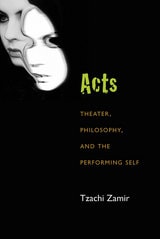
Acts
Theater, Philosophy, and the Performing SelfTzachi Zamir
University of Michigan Press, 2014
Why do people act? Why are other people drawn to watch them? How is acting as a performing art related to role-playing outside the theater? As the first philosophical study devoted to acting, Acts: Theater, Philosophy, and the Performing Selfsheds light on some of the more evasive aspects of the acting experience— such as the import of the actor's voice, the ethical unease sometimes felt while embodying particular sequences, and the meaning of inspiration. Tzachi Zamir explores acting’s relationship to everyday role-playing through a surprising range of examples of “lived acting,” including pornography, masochism, and eating disorders. By unearthing the deeper mobilizing structures that underlie dissimilar forms of staged and non-staged role-playing, Acts offers a multi-layered meditation on the percolation from acting to life.
The book engages questions of theatrical inspiration, the actor’s “energy,” the difference between acting and pretending, the special role of repetition as part of live acting, the audience and its attraction to acting, and the unique significance of the actor’s voice. It examines the embodied nature of the actor’s animation of a fiction, the breakdown of the distinction between what one acts and who one is, and the transition from what one performs into who one is, creating an interdisciplinary meditation on the relationship between life and acting.
Adapting Performance Between Stage and Screen
Victoria Lowe
Intellect Books, 2020
Provides a new foundation for discussions about theater, film, and translations between the two mediums.
Adapting Performance Between Stage and Screen provides an introduction to adaptations between theater and film, establishing a framework for considering these as distinct from literary adaptation. The book places emphasis on performance and event, opening new avenues of exploration to include non-literary issues such as the treatment of space and place, mis en scène, acting styles, and star personas. The recent growth of digital theater is examined to foreground the “events” of theater and cinema—largely ignored in adaptation studies—with phenomena such as National Theatre Live analyzed for the different ways that “liveness” is adapted.
Drawing from case studies that explore distinct periods in British film and theater history, the volume looks at issues surrounding theatrical naturalism and cinematic realism and illustrates the principle that adaptations can't be divorced from the historical and cultural moment in which they are produced. Adapting Performance Between Stage and Screen explores how cultural values can be articulated in the act of translating between media, providing a new framework for the discussion of theater and film as dramatic works.
Adapturgy
The Dramaturg's Art and Theatrical AdaptationJane Barnette
Southern Illinois University Press, 2018
The dual nature of dramaturgy and adaptation as both process and product is reflected in the structure and organization of the book. Part 1 explores the ways that linking adaptation to dramaturgy advances our understanding of both practices. Part 2 demonstrates three different methods—each grounded in a detailed case study—for analyzing theatrical adaptations. Part 3 offers concrete strategies for the dramaturg: dramaturgy for the adapted script; the production dramaturgy of stage adaptations; and the role of the dramaturg in the postmortem for a production. Rounding out the book are two appendixes containing interviews with adapters and theatre-makers and representative program notes from different play adaptations.
Plays adapted from literature and other media represent a rapidly growing part of the theatre. This book offers both practical and theoretical tools for understanding and creating these new works.