Results by title
967 books match the query 'Theater' and 90 start with a
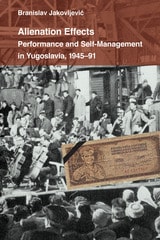
Alienation Effects
Performance and Self-Management in Yugoslavia, 1945-91Branislav Jakovljevic
University of Michigan Press, 2016
The case studies include mass performances organized during state holidays; proto-performance art, such as the 1954 production of Waiting for Godot in a former concentration camp in Belgrade; student demonstrations in 1968; and body art pieces by Gina Pane, Joseph Beuys, Marina Abramovic, and others. Alienation Effects sheds new light on the work of well-known artists and scholars, including early experimental poetry by Slavoj Žižek, as well as performance and conceptual artists that deserve wider, international attention.
All Play and No Work
American Work Ideals and the Comic Plays of the Federal Theatre ProjectGagliardi, Paul
Temple University Press, 2024
All Play and No Work directly contradicts the promoted ideals of work found in American society, culture, and within the broader New Deal itself. Gagliardi shows how comedies of the Great Depression engaged questions of labor, labor history, and labor ethics. He considers the breadth of the FTP’s production history, staging plays including Ah, Wilderness!, Help Yourself, and Mississippi Rainbow.
Gagliardi examines backstage comedies, middle-class comedies, comedies of chance, and con-artist comedies that employed diverse casts and crew and contained radical economic and labor ideas. He contextualizes these plays within the ideologically complicated New Deal, showing how programs like the Social Security Act straddled progressive ideals and conservative, capitalist norms. Addressing topics including the politicization of theatrical labor and the real dangers of unchecked economic con artists, the comic plays of the FTP reveal acts of political resistance and inequality that reflected the concerns of their audiences.
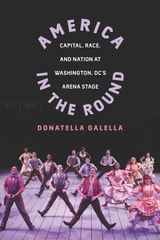
America in the Round
Capital, Race, and Nation at Washington D.C.'s Arena StageDonatella Galella
University of Iowa Press, 2019
Washington D.C.’s Arena Stage was the first professional regional theatre in the nation’s capital to welcome a racially integrated audience; the first to perform behind the Iron Curtain; and the first to win the Tony Award for best regional theatre. This behind-the-scenes look at one of the leading theatres in the United States shows how key financial and artistic decisions were made, using a range of archival materials such as letters and photographs as well as interviews with artists and administrators. Close-ups of major productions from The Great White Hope to Oklahoma! illustrate how Arena Stage navigated cultural trends.
More than a chronicle, America in the Round is a critical history that reveals how far the theatre could go with its budget and racially liberal politics, and how Arena both disputed and duplicated systems of power. With an innovative “in the round” approach, the narrative simulates sitting in different parts of the arena space to see the theatre through different lenses—economics, racial dynamics, and American identity.
America's Japan and Japan's Performing Arts
Cultural Mobility and Exchange in New York, 1952-2011Barbara E. Thornbury
University of Michigan Press, 2013
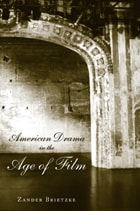
American Drama in the Age of Film
Zander Brietzke
University of Alabama Press, 2007
Is theater really dead? Does the theater, as its champions insist, really provide a more intimate experience than film? If so, how have changes in cinematic techniques and technologies altered the relationship between stage and film? What are the inherent limitations of representing three-dimensional spaces in a two-dimensional one, and vice versa?
American Drama in the Age of Film examines the strengths and weaknesses of both the dramatic and cinematic arts to confront the standard arguments in the film-versus-theater debate. Using widely known adaptations of ten major plays, Brietzke seeks to highlight the inherent powers of each medium and draw conclusions not just about how they differ, but how they ought to differ as well. He contrasts both stage and film productions of, among other works, David Mamet’s Glengarry Glen Ross, Sam Shepard’s True West, Edward Albee’s Who’s Afraid of Virginia Woolf, Margaret Edson’s Wit, Tony Kushner’s Angels in America, Tennessee Williams’s Cat on a Hot Tin Roof, Arthur Miller’s Death of a Salesman, and August Wilson’s The Piano Lesson. In reading the dual productions of these works, Brietzke finds that cinema has indeed stolen much of theater’s former thunder, by making drama more intimate, and visceral than most live events.
But theater is still vital and matters greatly, Brietzke argues, though for reasons that run counter to many of the virtues traditionally attributed to it as an art form, such as intimacy and spontaneity. Brietzke seeks to revitalize perceptions of theater by challenging those common pieties and offering a new critical paradigm, one that champions spectacle and simultaneity as the most, not least, important elements of drama.
American Political Plays after 9/11
Edited by Allan Havis
Southern Illinois University Press, 2010
American Political Plays after 9/11 is a diverse collection of bold, urgent, and provocative plays that respond to the highly charged, post 9/11 political landscape. Sparked by the terrorist attacks of September 11, 2001, and subsequently fueled by a series of controversial events—the Iraq war, the passing and enforcement of the U.S.A. Patriot Act, and the revelation of torture and other scandals at the Abu Ghraib prison—American political theater is currently experiencing a surge in activity. The plays in this collection include The Guys by Anne Nelson, At the Vanishing Point by Naomi Iizuka, The Venus de Milo Is Armed by Kia Corthron, Back of the Throat by Yusseff El Guindi, Three Nights in Prague by Allan Havis, and Question 27, Question 28 by Chay Yew.
The characters range from a New York City fire captain trying to respectfully memorialize eight of his lost comrades, to the citizens of a hog-killing Louisville neighborhood who poignantly exemplify the underside of the economic crisis, to an Arab American citizen being harshly (and possibly unfairly) interrogated by two officers as a “person of interest.” Though not all of the plays deal explicitly with the Al Qaeda attacks, they collectively reveal themes of sorrow and anxiety, moral indignation, alarmist self-preservation, and economic and social insecurity stemming from the United States’ fairly sudden shift from cold war superpower to vulnerable target.
The lively introduction by Allan Havis includes a brief history of political theater in the United States, an extensive discussion about how theater communities responded to 9/11, and an informative analysis of the six plays in the book. A collection of dramatic material framed by this significant historical event, AmericanPolitical Plays after 9/11 will be indispensable for theater and cultural studies scholars and students.
American Political Plays
AN ANTHOLOGYEdited by Allan Havis
University of Illinois Press, 2001
The American Play by Suzan-Lori Parks features an Abraham Lincoln impersonator trapped in an outrageous, Beckett-like world, while Naomi Wallace's In the Heart of America centers on a Palestinian American from Atlanta who is caught up in the Persian Gulf conflict. Kokoro by Velina Hasu Houston chillingly depicts the stark predicament of a Japanese mother caught between two impossible worlds; Marisol by José Rivera reveals the dark fairytale life of a young Latin woman in a wartorn, apocalyptic New York. The Gift by Allan Havis confronts overwhelming moral ambiguity in the farcical realm of university politics, while Nixon's Nixon by Russell Lees offers an adroit treatment of the fascinating, tortured Nixon/Kissinger relationship. The collection closes with Mac Wellman's 7 Blowjobs, a wicked send-up of the compromise politics that determined the fate of the National Endowment for the Arts.
Taken together, these seven plays present an eclectic web of social thought and imagination that are uniquely American, offering the reader a splendid, honest study of a rich society in search of itself.
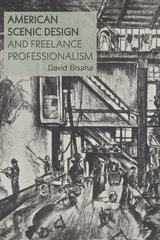
American Scenic Design and Freelance Professionalism
David Bisaha
Southern Illinois University Press, 2022
The figure of the American theatrical scenic designer first emerged in the early twentieth century. As productions moved away from standardized, painted scenery and toward individualized scenic design, the demand for talented new designers grew. Within decades, scenic designers reinvented themselves as professional artists. They ran their own studios, proudly displayed their names on Broadway playbills, and even appeared in magazine and television profiles.
American Scenic Design and Freelance Professionalism tells the history of the field through the figures, institutions, and movements that helped create and shape the profession. Taking a unique sociological approach, theatre scholar David Bisaha examines the work that designers performed outside of theatrical productions. He shows how figures such as Lee Simonson, Norman Bel Geddes, Jo Mielziner, and Donald Oenslager constructed a freelance, professional identity for scenic designers by working within their labor union (United Scenic Artists Local 829), generating self-promotional press, building university curricula, and volunteering in wartime service.
However, while new institutions provided autonomy and intellectual property rights for many, women, queer, and Black designers were not always welcome to join the organizations that protected freelance designers’ interests. Among others, Aline Bernstein, Emeline Roche, Perry Watkins, Peggy Clark, and James Reynolds were excluded from professional groups because of their identities. They nonetheless established themselves among the most successful designers of their time. Their stories expand the history of American scenic design by showing how professionalism won designers substantial benefits, yet also created legacies of exclusion with which American theatre is still reckoning.
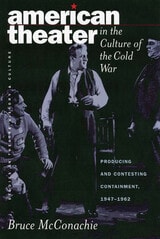
American Theater in the Culture of the Cold War
Producing and Contesting Containment, 1947-1962Bruce A. Mcconachie
University of Iowa Press, 2003
McConachie reconstructs these cognitive processes by relying on scripts, set designs, reviews, memoirs, and other evidence. After establishing his theoretical framework, he focuses on three archtypal figures of containment significant in Cold War culture, Empty Boys, Family Circles, and Fragmented Heroes. McConachie uses a range of plays, musicals, and modern dances from the dominant culture of the Cold War to discuss these figures, including The Seven Year Itch, Cat on a Hot Tin Roof; The King and I,A Raisin in the Sun, Night Journey, and The Crucible. In an epilogue, he discusses the legacy of Cold War theater from 1962 to 1992.
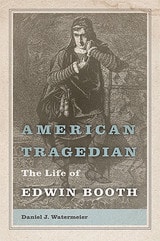
American Tragedian
The Life of Edwin BoothDaniel J. Watermeier
University of Missouri Press, 2015
Daniel J. Watermeier has, through decades of tireless research paired with his own sharp insight, put together the most complete Edwin Booth biography to date. Drawing on a wealth of archival materials and contemporary theatrical scholarship, American Tragedian: The Life of Edwin Booth gives more attention than previous biographies to Booth’s apprentice and journeyman years; his rise in antebellum America to stardom with a new, acclaimed style of acting; his work as an innovative theater builder and theatrical producer; his several foreign tours; and his nationwide tours in the late 1880s. It also addresses Booth’s critical reception in dozens of cities in America and abroad and situates his professional activities within the events and trends of the time.
As interesting as it is informative, Watermeier’s book offers an in-depth look at the triumphal career and tumultuous life of one of the American stage’s most celebrated figures.
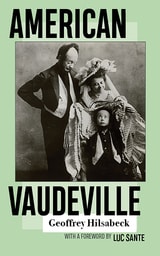
American Vaudeville
Geoffrey Hilsabeck
West Virginia University Press, 2021
At the heart of American Vaudeville is one strange, unsettling fact: for nearly fifty years, from the late nineteenth century to the 1930s, vaudeville was everywhere—then, suddenly, it was nowhere. This book tells the story of what was once the most popular form of entertainment in the country using lists, creation myths, thumbnail biographies, dreams, and obituaries. A lyric history—part social history, part song—American Vaudeville sits at the nexus between poetry, experimental nonfiction, and, because it includes historic images, art books.
Geoffrey Hilsabeck’s book grows out of extensive archival research. Rather than arranging that research—the remains of vaudeville—into a realistic picture or tidy narrative, Hilsabeck dreams vaudeville back into existence, drawing on photographs, letters, joke books, reviews, newspaper stories, anecdotes, and other material gathered from numerous archives, as well as from memoirs by vaudeville performers like Buster Keaton, Eva Tanguay, and Eddie Cantor. Some of this research is presented as-is, a letter from a now forgotten vaudeville performer to her booking agent, for example; some is worked up into brief scenes and biographies; and some is put to even more imaginative uses, finding new life in dialogues and prose poems.
American Vaudeville pulls the past into the present and finds in the beauty and carnivalesque grotesqueness of vaudeville a fitting image of American life today.
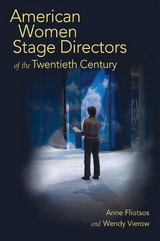
American Women Stage Directors of the Twentieth Century
Anne Fliotsos and Wendy Vierow
University of Illinois Press, 2007
Presenting a historical overview of female stage directors in the United States, this valuable reference tool focuses on fifty women who have made significant contributions to professional directing during the twentieth century. Anne Fliotsos and Wendy Vierow collect biographical details and important directing data on each woman, including information on training and career path, notable productions, critical reception, directing style, major awards, and bibliographic materials. Insightful commentary from the directors themselves also provides rich details on the theatre business and working process. This collection recognizes the much overlooked contributions of women directors and is an essential introductory tool for students and researchers of American theatre.

Amplifying Theatrical Horizons
Rethinking the Value of Waste in PerformanceLisa Hall
Intellect Books, 2026
A reexamination of the role of waste in theatrical practices, from escape rooms to traditional proscenium theater.
Amplifying Theatrical Horizons reimagines live performance through the lens of economy, value, excess, and waste, asking what it means to shower resources—material, sensory, and symbolic—on audiences beyond utilitarian calculation. It examines how waste operates within the theatrical relationship between audience, performer, genre, and space, focusing on excessive deployments of value.
Drawing on scholarship in theater studies, economics, philosophy, and performance practice, Lisa Hall proposes what she calls the Wasteful Theatre Equation, distinguishing waste as a surplus that amplifies experience rather than diminishing it. Case studies span immersive environments, haunted attractions, escape rooms, site-specific productions, and traditional proscenium theater, demonstrating how space, participation, sensation, and fear operate as sites of wasteful excess.
Key chapters pose practical questions for makers, reframing contracts of performance, proximity, and risk as tools for creating singular experiences. Across examples from Robert Wilson to Punchdrunk, Grand-Guignol to theme parks, the book positions waste as both disruptive and generative. Ultimately, it argues that wasteful excess enchants, reorienting theater toward presence, wonder, and transformative exchange.
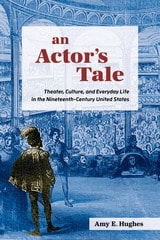
An Actor's Tale
Theater, Culture, and Everyday Life in the Nineteenth-Century United StatesAmy Hughes
University of Michigan Press, 2025
Ultimately, Hughes reveals how this actor’s tale illuminates the widespread tendency to ignore, deny, and forgive White male mediocrity in US culture, and how a deeper understanding of people like Watkins can transform our understanding of the past—and our understanding of ourselves.
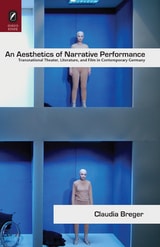
An Aesthetics of Narrative Performance
Transnational Theater, Literature, and Film in Contemporary GermanyClaudia Breger
The Ohio State University Press, 2012
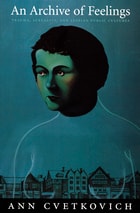
An Archive of Feelings
Trauma, Sexuality, and Lesbian Public CulturesAnn Cvetkovich
Duke University Press, 2003
An Archive of Feelings brings together oral histories from lesbian activists involved in act up/New York; readings of literature by Dorothy Allison, Leslie Feinberg, Cherríe Moraga, and Shani Mootoo; videos by Jean Carlomusto and Pratibha Parmar; and performances by Lisa Kron, Carmelita Tropicana, and the bands Le Tigre and Tribe 8. Cvetkovich reveals how activism, performance, and literature give rise to public cultures that work through trauma and transform the conditions producing it. By looking closely at connections between sexuality, trauma, and the creation of lesbian public cultures, Cvetkovich makes those experiences that have been pushed to the peripheries of trauma culture the defining principles of a new construction of sexual trauma—one in which trauma catalyzes the creation of cultural archives and political communities.

An Introduction to Richard Wagner’s Der Ring des Nibelungen
A HandbookWilliam O. Cord
Ohio University Press, 1995
Today, more than a century after its first performance, Richard Wagner’s The Ring of Nibelung endures as one of the most significant artistic creations in the history of opera. This monumental work not only altered previously accepted concepts of music and drama but also inspired creative and intellectual efforts far beyond the field of opera.
Previous studies of the Ring have appealed only to those already acquainted in some way with the Wagnerian art. For the uninitiated, Wagner and his landmark creation have seemed forbidding, and those eager to learn about the masterpiece have faced a vast and frequently esoteric body of commentary. Professor Cord addresses the interests of the non-specialist by taking the reader first into Wagner’s unique intent, and then through the complete history of the Ring.
Cord, who has attended forty performances of the Ring, considers the conception of the poem, its development into a music-drama exemplifying Wagnerian thought, its introduction to the world, and the reactions and interpretation it elicits.
An Introduction to the Phenomenology of Performance Art
SELF/sT. J. Bacon
Intellect Books, 2022
This book introduces the study and application of performance art through phenomenology, inviting readers to explore contemporary performance art and activate their own practices. Using queer phenomenology to unpack the importance of a multiplicity of self/s, the book teaches readers how to be academically rigorous when capturing embodied experiences. Through approachable exercises, definitions of key phenomenological terms, and interviews and insights from some of the best examples of transgressive performance art practice, the work enriches the wider scholarship of theater studies. Situated within contemporary phenomenological scholarship, the book will appeal to radical artists, educators, and practitioner-researchers.
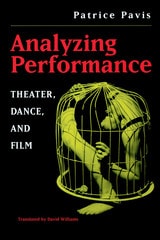
Analyzing Performance
Theater, Dance, and FilmPatrice Pavis
University of Michigan Press, 2003
Angels in the American Theater
Patrons, Patronage, and PhilanthropyEdited by Robert A. Schanke
Southern Illinois University Press, 2007
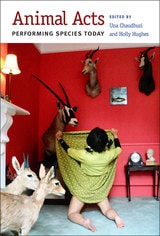
Animal Acts
Performing Species TodayEdited by Una Chaudhuri and Holly Hughes
University of Michigan Press, 2014
We all have an animal story—the pet we loved, the wild animal that captured our childhood imagination, the deer the neighbor hit while driving. While scientific breakthroughs in animal cognition, the effects of global climate change and dwindling animal habitats, and the exploding interdisciplinary field of animal studies have complicated things, such stories remain a part of how we tell the story of being human. Animal Acts collects eleven exciting, provocative, and moving stories by solo performers, accompanied by commentary that places the works in a broader context.
Work by leading theater artists Holly Hughes, Rachel Rosenthal, Deke Weaver, Carmelita Tropicana, and others joins commentary by major scholars including Donna Haraway, Jane Desmond, Jill Dolan, and Nigel Rothfels. Una Chaudhuri’s introduction provides a vital foundation for understanding and appreciating the intersection of animal studies and performance. The anthology foregrounds questions of race, gender, sexuality, class, nation, and other issues central to the human project within the discourse of the “post human,” and will appeal to readers interested in solo performance, animal studies, gender studies, performance studies, and environmental studies.
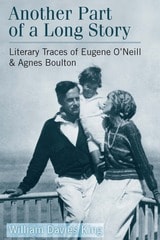
Another Part of a Long Story
Literary Traces of Eugene O'Neill and Agnes BoultonWilliam Davies King
University of Michigan Press, 2010
---Stephen Wilmer, Trinity College, Dublin
Biographers of American playwright Eugene O'Neill have been quick to label his marriage to actress Carlotta Monterey as the defining relationship of his illustrious career. But in doing so, they overlook the woman whom Monterey replaced---Agnes Boulton, O'Neill's wife of over a decade and mother to two of his children. O'Neill and Boulton were wed in 1918---a time when she was a successful pulp novelist and he was still a little-known writer of one-act plays. During the decade of their marriage, he gained fame as a Broadway dramatist who rejected commercial compromise, while she mapped that contentious territory known as the literary marriage. His writing reflected her, and hers reflected him, as they tried to realize progressive ideas about what a marriage should be. But after O'Neill left the marriage, he and new love Carlotta Monterey worked diligently to put Boulton out of sight and mind---and most O'Neill biographers have been quick to follow suit.
William Davies King has brought Agnes Boulton to light again, providing new perspectives on America's foremost dramatist, the dynamics of a literary marriage, and the story of a woman struggling to define herself in the early twentieth century. King shows how the configuration of O'Neill and Boulton's marriage helps unlock many of O'Neill's plays. Drawing on more than sixty of Boulton's published and unpublished writings, including her 1958 memoir, Part of a Long Story, and an extensive correspondence, King rescues Boulton from literary oblivion while offering the most radical revisionary reading of the work of Eugene O'Neill in a generation.
William Davies King is Professor of Theater at the University of California, Santa Barbara, and author of several books, most recently Collections of Nothing, chosen by Amazon.com as one of the Best Books of 2008.
Illustration: Eugene O'Neill, Shane O'Neill, and Agnes Boulton ca. 1923. Eugene O'Neill Collection, Beinecke Rare Book and Manuscript Library, Yale University.
Applied Drama
A Facilitator’s Handbook for Working in CommunityMonica Prendergast and Juliana Saxton
Intellect Books, 2013
Applied Theatre, Third Edition
International Case Studies and Challenges for PracticeEdited by Monica Prendergast, Juliana Saxton, and Yasmine Kandil
Intellect Books, 2024
Applied Theatre was the first collection to assist practitioners and students in developing critical frameworks for their own community-based theatrical projects. The editors draw on thirty case studies in applied theater from fifteen countries—covering a wide range of disciplines, from theater studies to education, medicine, and law—and collect essential readings to provide a comprehensive survey of the field.
This third edition offers refreshed case studies from many countries worldwide that provide exemplars for the practice of applied theater. The book will be useful to both instructors and students, in its focus on providing clear introductory chapters that lay out the scope of the field, dozens of case studies in all areas of the field, and a new chapter on responses to the global pandemic of 2020.
Applied Theatre
International Case Studies and Challenges for Practice - Second EditionEdited by Monica Prendergast and Juliana Saxton
Intellect Books, 2016
Editors Monica Prendergast and Juliana Saxton have updated the book to reflect shifts in practice over the last few years in the world of applied theater. With their background in drama education and pedagogy, the contributors offer introductory chapters and dozens of case studies on applied theater projects around the globe. This new edition of Applied Theatre will encourage students and practitioners to acquire a deeper, more concrete understanding of the field and its best practice.
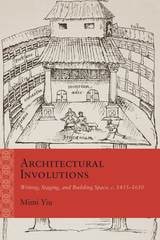
Architectural Involutions
Writing, Staging, and Building Space, c. 1435-1650Mimi Yiu
Northwestern University Press, 2014
Winner of the MLA Prize for Independent Scholars
Taking the reader on an inward journey from façades to closets, from physical to psychic space, Architectural Involutions offers an alternative genealogy of theater by revealing how innovations in architectural writing and practice transformed an early modern sense of interiority. The book launches from a matrix of related “platforms”—a term that in early modern usage denoted scaffolds, stages, and draftsmen’s sketches—to situate Alberti, Shakespeare, Jonson, and others within a landscape of spatial and visual change.
As the English house underwent a process of inward folding, replacing a logic of central assembly with one of dissemination, the subject who negotiated this new scenography became a flashpoint of conflict in both domestic and theatrical arenas. Combining theory with archival findings, Mimi Yiu reveals an emergent desire to perform subjectivity, to unfold an interior face to an admiring public. Highly praised for its lucid writing, comprehensive supplementary material, and engaging tone, Architectural Involutions was the winner of the 2016 MLA Prize for Independent Scholars.
Aristophanes and the Cloak of Comedy
Affect, Aesthetics, and the CanonMario Telò
University of Chicago Press, 2016
Telò boldly traces Aristophanes’s rise, ironically, to the defeat of his play Clouds at the Great Dionysia of 423 BCE. Close readings of his revised Clouds and other works, such as Wasps, uncover references to the earlier Clouds, presented by Aristophanes as his failed attempt to heal the audience, who are reflected in the plays as a kind of dysfunctional father. In this proto-canonical narrative of failure, grounded in the distinctive feelings of different comic modes, Aristophanic comedy becomes cast as a prestigious object, a soft, protective cloak meant to shield viewers from the debilitating effects of competitors’ comedies and restore a sense of paternal responsibility and authority. Associations between afflicted fathers and healing sons, between audience and poet, are shown to be at the center of the discourse that has shaped Aristophanes’s canonical dominance ever since.
Arnold Wesker
Fragments and VisionsEdited by Anne Etienne and Graham Saunders
Intellect Books, 2021
Edited by leading scholars in the field and with contributions from important scholars of postwar theater, this volume considers, for the first time, the whole body of Wesker’s work. It includes chapters on Wesker’s reception in Europe, his representation of and attitude towards women, his relationship to his Jewish origins and identity, and his attitude toward politics and community. Building on existing scholarship, drawing extensively from the Arnold Wesker archive at the Harry Ransom Center at the University of Texas at Austin, and introducing new insights and perspectives, this important new essay collection remedies the recent critical neglect of the dramatist.
Art Isn't Easy
The Achievement of Stephen SondheimJoanne Gordon
Southern Illinois University Press, 1990
The new musical theatre of Stephen Sondheim shuns the traditional story of love triumphant, probing instead the more disturbing issues of contemporary life.
Confident that the musical is America’s greatest original contribution to theatre, Joanne Gordon explicates the works of Sondheim to repudiate the common perception of the genre as mere escapist entertainment.
Gordon notes that Sondheim tackles real themes, that he has no fear of introducing pain, trauma, and complex ideas onto the Broadway stage. Tracing Sondheim’s career from his initial success as lyricist for West Side Story and Gypsy to the opening of Into the Woods, Gordon demonstrates that the value of Sondheim’s work obviously lies in its seriousness of theme coupled with its disturbing content; less obvious, but equally important, is Sondheim’s innovative use of form.
From A Funny Thing Happened on the Way to the Forum through Anyone Can Whistle, Company, Follies, A Little Night Music, Pacific Overtures, Sweeney Todd, Merrily We Roll Along, Sunday in the Park with George, and Into the Woods, Sondheim’s music and lyrics prove to be inextricably woven into the fabric of the entire work. Both music and lyrics, Gordon stresses, "grow out of the dramatic idea inherent in the show’s concept and themselves become part of the drama that previous theatre songs would only reflect."
Sondheim, Gordon notes, asks much of an audience that may not want to be challenged. In short, to enjoy a Sondheim play, the audience must participate intellectually. The audience willing to expend the effort will not be cheated, Gordon insists, because Sondheim, throughout his career, has demonstrated that "musical theatre can be serious, poignant, and still exhilarating."
Art Music Activism
Aesthetics and Politics in 1930s New York CityMaria Cristina Fava
University of Illinois Press, 2024
Maria Cristina Fava explores the rich creative milieu shaped by artists dedicated to using music and theater to advance the promotion, circulation, and acceptance of leftist ideas in 1930s New York City. Despite tensions between aesthetic and pragmatic goals, the people and groups produced works at the center of the decade’s sociopolitical and cultural life. Fava looks at the Composers’ Collective of New York and its work on proletarian music and workers’ songs before turning to the blend of experimentation and vernacular idioms that shaped the political use of music within the American Worker’s Theater Movement. Fava then reveals how composers and theater practitioners from these two groups achieved prominence within endeavors promoted by the Works Project Administration.
Fava’s history teases out fascinating details from performances and offstage activity attached to works by composers such as Marc Blitzstein, Charles Seeger, Ruth Crawford Seeger, Elie Siegmeister, and Harold Rome. Endeavors encouraged avant-garde experimentation while nurturing innovations friendly to modernist approaches and an interest in non-western music. Blitzstein’s The Cradle Will Rock offered a memorable example that found popular success, but while the piece achieved its goals, it became so wrapped up in myths surrounding workers’ theater that critics overlooked Blitzstein’s musical ingenuity.
Provocative and original, Art Music Activism considers how innovative classical composers of the 1930s balanced creative aims with experimentation, accessible content, and a sociopolitical message to create socially meaningful works.

Art and Politics
Psychoanalysis, Ideology, TheatreWalter A. Davis
Pluto Press, 2006
Starting with an analysis of the censorship of the play My Name is Rachel Corrie, which was withdrawn from production by a major New York theater due to a political pressure, Davis shows how all art that challenges the mainstream is either suppressed or distorted to suit the politics of our time---one that will not recognize the truth of human experience and the disorder at the heart of all civilization.
Artaud and His Doubles
Kimberly Jannarone
University of Michigan Press, 2012
Artaud and His Doublesis a radical re-thinking of one of the most influential theater figures of the twentieth century. Placing Artaud's writing within the specific context of European political, theatrical, and intellectual history, the book reveals Artaud's affinities with a disturbing array of anti-intellectual and reactionary writers and artists whose ranks swelled catastrophically between the wars in Western Europe.
Kimberly Jannarone shows that Artaud's work reveals two sets of doubles: one, a body of peculiarly persistent received interpretations from the American experimental theater and French post-structuralist readings of the 1960s; and, two, a darker set of doubles—those of Artaud's contemporaries who, in the tumultuous, alienated, and pessimistic atmosphere enveloping much of Europe after World War I, denounced the degradation of civilization, yearned for cosmic purification, and called for an ecstatic loss of the self. Artaud and His Doubleswill generate provocative new discussions about Artaud and fundamentally challenge the way we look at his work and ideas.
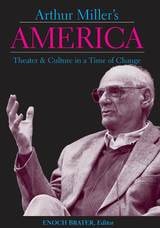
Arthur Miller's America
Theater and Culture in a Time of ChangeEnoch Brater, Editor
University of Michigan Press, 2005
Arthur Miller's America collects new writing by leading international critics and scholars that considers the dramatic world of icon, activist, and playwright Arthur Miller's theater as it reflects the changing moral equations of his time. Written on the occasion of Miller's 85th year, the original essays and interviews in Arthur Miller's America treat the breadth of Miller's work, including his early political writings for the campus newspaper at the University of Michigan, his famous work with John Huston, Clark Gable and Marilyn Monroe on The Misfits, and his signature plays like Death of a Salesman and All My Sons.
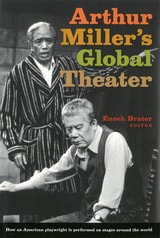
Arthur Miller's Global Theater
Enoch Brater, Editor
University of Michigan Press, 2010
No American playwright is more revered on the international stage than Arthur Miller. In Arthur Miller’s Global Theater—a fascinating collection of new essays by leading international critics and scholars—readers learn how and why audiences around the world have responded to the work of the late theatrical icon. With perspectives from diverse corners of the globe, from Israel to Japan to South Africa, this groundbreaking volume explores the challenges of translating one of the most American of American playwrights and details how disparate nations have adapted meaning in Miller’s most celebrated dramas.
An original and engaging collection that will appeal to theater aficionados, scholars, students, and all those interested in Miller and his remarkable oeuvre, Arthur Miller’s Global Theater illustrates how dramas such as Death of a Salesman,The Crucible, and A View from the Bridge developed a vigorous dialogue with new audiences when they crossed linguistic and national borders. In these times when problems of censorship, repressive regimes, and international discord are increasingly in the news, Arthur Miller’s voice has never been more necessary as it continues to be heard and celebrated around the world.
Enoch Brater is the Kenneth T. Rowe Collegiate Professor of Dramatic Literature at the University of Michigan. His other books include Arthur Miller: A Playwright’s Life and Works and Arthur Miller’s America.
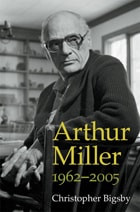
Arthur Miller
1962-2005Christopher Bigsby
University of Michigan Press, 2013
Christopher Bigsby's masterful two-volume biography of Arthur Miller sheds new light on one of the twentieth century's most acclaimed literary figures. Plays such as Death of a Salesman, A View from the Bridge, and The Crucible brought Miller an international following, and events such as his refusal to provide information to the House Un-American Activities Committee and his marriage to Marilyn Monroe kept him in the public eye. The second half of his life, the focus of this volume, proved no less fascinating. In 1962, Monroe died, and he married photographer Inge Morath, a relationship that transformed him as a writer and as a person. His activism in support of political and social causes only increased during the period, including criticism of U.S. foreign policy in Vietnam and contemporary conflicts in the Middle East. In this period of his life, he also became renowned for his work in support of dissident writers in Russia, Czechoslovakia, China, and elsewhere.
The second volume of this magisterial biography offers a compelling narrative of a singular American life, a life story enriched by the biographer's uncommon access to Miller and his unpublished papers while researching this book. The result is an authoritative biography that provides illuminating detail and invaluable insights into the Miller the artist and Miller the man.
Arts Integration in Education
Teachers and Teaching Artists as Agents of ChangeEdited by Gail Humphries Mardirosian and Yvonne Pelletier Lewis
Intellect Books, 2018
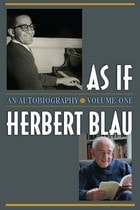
As If
An AutobiographyHerbert Blau
University of Michigan Press, 2012
As If: An Autobiography traces the complex life and career of director, scholar, and theorist Herbert Blau, one of the most innovative voices in the American theater. From his earliest years on the streets of Brooklyn, with gang wars there, to the often embattled, now-legendary Actor's Workshop of San Francisco, the powerfully told story of Blau's first four decades is also a social history, moving from the Great Depression to the cold war, with fallout from "the balance of terror" on what he once described in an incendiary manifesto as The Impossible Theater.
Blau has always forged his own path, from his activist resistance to the McCarthy witch hunts to his emergence as a revolutionary director whose work included the controversial years at The Workshop, which introduced American audiences to major playwrights of the European avant-garde, including Brecht, Beckett, Genet, and Pinter. There is also an account here of that notorious production of Waiting for Godot at the maximum-security prison at San Quentin, which became the insignia of the Theater of the Absurd.
Blau went on from The Workshop to become codirector of the Repertory Theater of Lincoln Center, and then founding provost of California Institute of the Arts, where he developed and became artistic director of the experimental group KRAKEN. Currently Byron W. and Alice L. Lockwood Professor of the Humanities at the University of Washington, Blau has been visionary in the passage from theater to theory, and his many influential and award-winning books include The Dubious Spectacle: Extremities of Theater, 1976–2000; Sails of the Herring Fleet: Essays on Beckett; Nothing in Itself: Complexions of Fashion; To All Appearances: Ideology and Performance; The Audience; The Eye of Prey: Subversions of the Postmodern; and Take Up the Bodies: Theater at the Vanishing Point.
This richly evocative book includes never-before-published photographs of the author, his family and friends, collaborators in the theater, and theater productions.
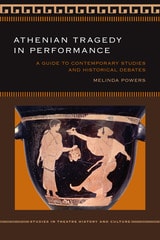
Athenian Tragedy in Performance
A Guide to Contemporary Studies and Historical DebatesMelinda Powers
University of Iowa Press, 2014
A case study of Euripides’s Bacchae, which provides more information about performance than any other extant tragedy, demonstrates possible methods for reconstructing the play’s historical performance and also the inevitable challenges inherent in that task, from the limited sources and the difficulty of interpreting visual material, to the risks of conflating actor with character and extrapolating backward from contemporary theatrical experience.
As an inquiry into the study of theatre and performance, an introduction to historical writing, a reference for further reading, and a clarification of several general misconceptions about Athenian tragedy and its performance, this historiographical analysis will be useful to specialists, practitioners, and students alike.
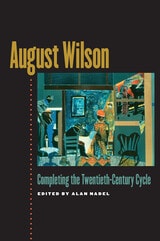
August Wilson
Completing the Twentieth-Century CycleAlan Nadel
University of Iowa Press, 2010
Just prior to his death in 2005, August Wilson, arguably the most important American playwright of the last quarter-century, completed an ambitious cycle of ten plays, each set in a different decade of the twentieth century. Known as the Twentieth-Century Cycle or the Pittsburgh Cycle, the plays, which portrayed the struggles of African-Americans, won two Pulitzer Prizes for Drama, a Tony Award for Best Play, and seven New York Drama Critics Circle Awards. August Wilson: Completing the Twentieth-Century Cycle is the first volume devoted to the last five plays of the cycle individually—Jitney,Seven Guitars, King Hedley II, Gem of the Ocean, and Radio Golf—and in the context of Wilson's entire body of work.
Editor Alan Nadel's May All Your Fences Have Gates: Essays on the Drama of August Wilson, a work Henry Louis Gates called definitive, focused on the first five plays of Wilson's cycle. This new collection examines from myriad perspectives the way Wilson's final works give shape and focus to his complete dramatic opus. It contains an outstanding and diverse array of discussions from leading Wilson scholars and literary critics. Together, the essays in Nadel's two volumes give Wilson's work the breadth of analysis and understanding that this major figure of American drama merits.
Contributors
Herman Beavers
Yvonne Chambers
Soyica Diggs Colbert
Harry J. Elam, Jr.
Nathan Grant
David LaCroix
Barbara Lewis
Alan Nadel
Donald E. Pease
Sandra Shannon
Vivian Gist Spencer
Anthony Stewart
Steven C. Tracy
Dana Williams
Kimmika L. H. Williams-Witherspoon

Avant-Garde Performance and the Limits of Criticism
Approaching the Living Theatre, Happenings/Fluxus, and the Black Arts MovementMike Sell
University of Michigan Press, 2005
Mike Sell's study is groundbreaking in its consideration of the avant-garde in relationship to a crucial but rarely considered agent: the scholar and critic. The book examines the role of the scholar and critic in the cultural struggles of radical artists and activists and reveals how avant-garde performance identifies the very limits of critical consideration. The book also explores the popularization of the avant-garde: how formerly subversive art is eventually discovered by the mass media, is gobbled up by the marketplace, and eventually finds its way onto the syllabi of college and university courses. Avant-Garde Performance and the Limits of Criticism is a timely and significant book that will become a standard reference for scholars in the fields of avant-garde literary criticism, theater history, critical theory, and performance studies.
"A provocative exploration of relations between the historical avant-garde and Cold War vanguard art and theatre. Sell's compelling historical and cultural narrative shows how the connections between the two exist at a very deep level of radical politics and aesthetics--an amazing concoction of rigorous scholarship, interdisciplinary learning, and progressive theorizing."
--Michael Vanden Heuvel, University of Wisconsin, Madison
"One of the most sophisticated, engaged, and engaging studies of the avant-garde in the United States that I've read-an important study that will raise the bar not only on scholarship of the Black Arts Movement, but on U.S. avant-gardism generally."
--James Smethurst, University of Massachusetts
A volume in the series Theater: Theory/Text/Performance. A list of recent titles in the series appears at the front of this volume.