Results by title
3388 books match the query 'Fiction' and 293 start with a
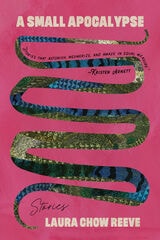
A Small Apocalypse
StoriesLaura Chow Reeve
Northwestern University Press, 2024
In her debut short-story collection A Small Apocalypse, Laura Chow Reeve examines cultural inheritance, hybridity, queerness, and the stickiness of home with an eye for both the uncanny and the realistic: human bodies become reptilian, queer ghosts haunt their friends, a young woman learns to pickle memories, and a theater floods during an apocalyptic movie marathon. The characters in A Small Apocalypse weave in and out of its fourteen stories, confronting their sense of otherness and struggling to find new ways of being and belonging. Heavily steeped in the swampy, feral heat of Florida, these stories venture beyond the problems of constructing an identity to the frontier of characters living their truth in a world that doesn’t yet have a place for them.

A Small-Town Marriage
La Marchesa Colombi, translated from the Italian by Paula Spurlin Paige
Northwestern University Press, 2002
Denza Dellara is a clumsy Cinderella too big for her hand-me-downs, saddled with a family that frustrates her hopes, and in love with a gargantuan Prince Charming who woos and then betrays her. An engaging Frog Prince appears, and though he has an enormous wart on his forehead, he can end her daydreaming and save her from impending spinsterhood . . . if she lets him.
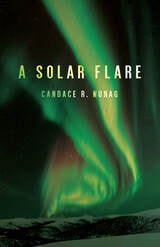
A Solar Flare
Candace R. Nunag
University of Alabama Press, 2025
A hybrid of short works exploring the 1859 Carrington solar flare
A flood of illumination, a cosmic cataclysm frozen in time—the Carrington Event of 1859 was the most disruptive solar flare in recorded history, an electromagnetic storm that wiped out telegraph systems across the world and which, if it were to occur today, might well destroy anything on the planet with an electrical circuit.
Candace Nunag’s A Solar Flare is a hybrid of short essays, research notes, poems, graphite rubbings, and instant photographs, as well as bits of flash fiction, all simultaneously contemplating technology and memory, while preoccupied with the 1859 solar flare. The ghost of the Carrington Event haunts A Solar Flare with the promise of definitive answers about the narrator’s many severed connections: her digital, supernatural, eastern, western, and analog past. It is an attempt to illuminate the path of thought, wending its way through the tangles of rumination and irreconcilable spaces of wonder.
A Soldier's Legacy
Heinrich Boll
Northwestern University Press, 1994
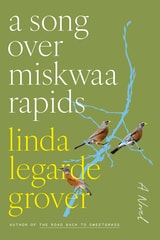
A Song over Miskwaa Rapids
A NovelLinda LeGarde Grover
University of Minnesota Press, 2023
A fifty-year-old mystery converges with a present-day struggle over family, land, and history—now available in paperback
When a rock is dislodged from its slope by mischievous ancestors, the past rises to meet the present, and Half-Dime Hill gives up a gruesome secret it has kept for half a century. Some people of Mozhay Point have theories about what happened; others know—and the discovery stirs memories long buried, reviving a terrible story yet to be told.
Returning to the fictional Ojibwe reservation in northern Minnesota she has so deftly mapped in her award-winning books, Linda LeGarde Grover reveals traumas old and new as Margie Robineau, in the midst of a fight to keep her family’s long-held allotment land, uncovers events connected to a long-ago escape plan across the Canadian border, and the burial—at once figurative and painfully real—of not one crime but two. While Margie is piecing the facts together, Dale Ann is confronted by her own long-held secrets and the truth that the long ago and the now, the vital and the departed are all indelibly linked, no matter how much we try to forget.
As the past returns to haunt those involved, Margie prepares her statement for the tribal government, defending her family’s land from a casino development and sorting the truths of Half-Dime Hill from the facts that remain there. Throughout the narrative, a chorus of spirit women gather in lawn chairs with coffee and cookies to reminisce, reflect, and speculate, spinning the threads of family, myth, history, and humor—much as Grover spins another tale of Mozhay Point, weaving together an intimate and complex novel of a place and its people.
Retail e-book files for this title are screen-reader friendly.
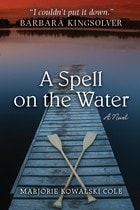
A Spell on the Water
Marjorie Kowalski Cole
University of Michigan Press, 2011
"I couldn't put it down."
---Barbara Kingsolver
In 1955, Mary and Jim Leader have the American dream: careers in medicine; a young and healthy family; and even a vacation home---a shabby resort far from bustling Chicago. But one hot afternoon changes everything. Mary, now a widow, must find a path out of her grief into a future for herself and five small children.
In Michigan to sell the resort, Mary sees seven hawks riding the storm winds over the lake. This place, she thinks, can heal them with its wild beauty, so she moves her family to the northern lakeshore.
But Mary has forgotten what it's like to live in a tiny rural community, where almost everyone has a stake in maintaining the status quo. Secrets are kept at great cost as Mary's children often struggle to raise themselves. A coming-of-age story for each member of the family, this is a novel of quiet heroism and the power of personal freedom.
Praise for Marjorie Kowalski Cole and her previous novel, Correcting the Landscape:
". . . her writing is simple, vivid and gorgeous."
---Eugene Register-Guard
". . . a remarkable new talent. Critics have lined up to praise the book."
---Tucson Citizen
"Cole's style is subtle but engrossing . . . It is quite a debut."
---Booklist
Cover illustration: ©iStockphoto.com/ImagineGolf

A Spy in the House of Love
Anaïs Nin
Ohio University Press, 2014
Although Anaïs Nin found in her diaries a profound mode of self-creation and confession, she could not reveal this intimate record of her experiences during her lifetime. Instead, she turned to literary fiction, transforming her private writings into artfully crafted novels that explore female desire, identity, and emotional complexity.
A Spy in the House of Love is a classic of psychological and women’s fiction, centered on Sabina, a woman torn between her longing for artistic freedom, romantic adventure, and sensual fulfillment, and the social expectations that constrain her. Moving through a bohemian, Parisian-inspired world, Sabina navigates multiple relationships in her search for passion, meaning, and self-understanding.
Written at a time when Nin’s own life was shaped by conflicting loyalties and intense relationships, the novel offers a deeply introspective exploration of love, infidelity, erotic longing, and self-discovery. As Sabina confronts her inner divisions, she asks a timeless question: can one indulge the fantasies and restless pursuit of desire without facing profound emotional consequences?
A landmark of modernist literature and feminist writing, A Spy in the House of Love remains a powerful, evocative portrait of a woman’s inner life—ideal for readers of classic literary fiction, experimental narrative, and character-driven novels about relationships and desire.
A Story Teller's Story
A MemoirSherwood Anderson
University of Michigan Press, 2005
"The voice of the soliloquist . . . amplifies the drama of A Story Teller's Story, as does the persistent theme of escape, from an America of fact and factories, marketing and manufacturing, to the borderless Ohios of imagination and creation."
—From the introduction by Thomas Lynch
A Stricken Field
A NovelMartha Gellhorn
University of Chicago Press, 2011
Martha Gellhorn was one of the first—and most widely read—female war correspondents of the twentieth century. She is best known for her fearless reporting in Europe before and during WWII and for her brief marriage to Ernest Hemingway, but she was also an acclaimed novelist.

A Tale of Two Maidens
A Medieval French Story of Fate, Adventure, and the Hundred Years' WarAnne Echols
Arizona Center for Medieval and Renaissance Studies, 2000
A Tale of Two Worlds
Vjenceslav Novak
Central European University Press, 2014
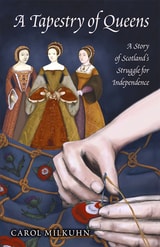
A Tapestry of Queens
A Story of Scotland's Struggle for IndependenceCarol Milkuhn
Arizona Center for Medieval and Renaissance Studies, 2014
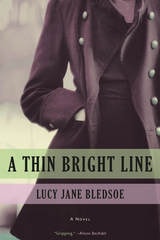
A Thin Bright Line
Lucy Jane Bledsoe
University of Wisconsin Press, 2016
Leaving behind the wreckage of a relationship, Lucybelle finds solace in working for the visionary scientist who is extracting the first-ever polar ice cores. The lucidity of ice is calming and beautiful. But the joyful pangs of a new love clash with the impossible compromises of queer life. If exposed, she could lose everything she holds dear.
Based on the hidden life of the author’s aunt and namesake, A Thin Bright Line is a love story set amid Cold War intrigue, the origins of climate research, and the nascent civil rights movement. Poignant, brilliant, and moving, it reminds us to act on what we love, not just wish for it.
"It triumphs as an intimate and humane evocation of day-to-day life under inhumane circumstances."—New York Times Book Review
“Bledsoe covers a lot of ground here, imagining her intellectual aunt’s relationship to the queer cultural transformations of the 1950s, as well as the paranoia of the Cold War era.”—San Francisco Chronicle
A Thing Is Only Known When It Is Gone
Joe Baumann
University of Wisconsin Press, 2025
The stories in A Thing Is Only Known When It Is Gone are told in lyrical, often startling prose. Baumann’s experimentation with the surreal avoids gimmick and easy metaphor, keeping the complexity of the characters at the center. The strange worlds of these protagonists distort and reflect our own back to us, like the funhouse mirrors in “Morphology” that begin to change the fabric of reality.
Ultimately, we may not want to live in a world in which our broken hearts are on display in external cages. But Baumann’s sophisticated, nuanced storytelling makes us wonder, however briefly, whether such a world might be preferable to ours.
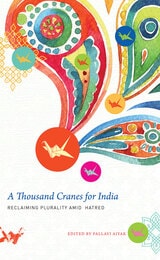
A Thousand Cranes for India
Reclaiming Plurality Amid HatredEdited by Pallavi Aiyar
Seagull Books, 2020
This anthology uses origami cranes as a way for some of India’s best-known writers, poets, and artists to form a shared civic space for a conversation about the fault lines in India at a time of darkness. The twenty-three pieces collected here encompass reportage, stories, poems, memoir, and polemic—the kind of complex and enriching diversity that India demands and deserves. The paper crane becomes a motif of connection, beauty, and reclamation in an otherwise degraded country, enabling those who fight with words to become the best army they can be.
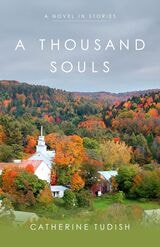
A Thousand Souls
A Novel in StoriesCatherine Tudish
Acre Books, 2026
Catching sight of the village of Neptune nestled in a remote Vermont valley, a traveler likens it to “a lost kingdom.” The fourteen stories in Catherine Tudish’s gorgeously crafted volume interweave the lives of three generations in this “embarrassingly pretty town” of “upward of a thousand souls” as they inevitably touch the outside world. A boy born of a secret affair travels by train to South Carolina for a first-time meeting with his respected father. A recent widow and Boston transplant solves the mystery of a teen girl gone missing. A beloved sheriff breaks up a drug operation, only to get busted himself for helping undocumented workers evade ICE. The disappointed wife of a rural mail driver presents him with a nude portrait—of herself. A shy girl with a speech impediment loses her stutter when she befriends and speaks to a black bear. Another boy has nightmares that seem to be the memories of a distant stranger’s tragedy.
Even as their loyalties and traditions are tested through loss, betrayal, and startling discovery, the characters in A Thousand Souls embody the belonging that comes from a close-knit community. Sharply observed, wry, and deeply tender, these stories resonate with both the intricacy and cost of interconnection as the years pass, and ordinary lives take unexpected turns.
A Time Far Past
A Novel of Viet NamLe Luu
University of Massachusetts Press, 1997
In its intricate sketching of complicated alliances, personal debts, and human interactions, A Time Far Past explores the complex layering of family and village history and Party and feudal authority. It also paints a vivid picture of the vast dislocations in Vietnamese culture caused by the political and military turmoil of the Indochina wars.
A Time Far Past was enormously popular in Vietnam, where it was first published in 1986, selling more than 120,000 copies and winning that country's national prize for fiction.

A Trauma Artist
Tim O'Brien and the Fiction of VietnamMark A. Heberle
University of Iowa Press, 2001
A Trauma Artist examines how O'Brien's works variously rewrite his own traumatization during the war in Vietnam as a never-ending fiction that paradoxically "recovers" personal experience by both recapturing and (re)disguising it. Mark Heberle considers O'Brien's career as a writer through the prisms of post-traumatic stress disorder, postmodernist metafiction, and post-World War II American political uncertainties and public violence.
Based on recent conversations with O'Brien, previously published interviews, and new readings of all his works through 1999, this book is the first study to concentrate on the role and representation of trauma as the central focus of all O'Brien's works, whether situated in Vietnam, in post-Vietnam America, or in the imagination of protagonists suspended between the two. By doing so, Heberle redefines O'Brien as a major U.S. writer of the late twentieth century whose representations of self-damaging experiences and narratives of recovery characterize not only the war in Vietnam but also relationships between fathers and sons and men and women in the post-traumatic culture of the contemporary United States.
A Trip to Salto / Un viaje a Salto
Circe Maia
Swan Isle Press, 2004
What happens on that trip to Salto opens this moving narrative by Uruguayan writer and poet Circe Maia. It begins with a mother and her young daughter desperately trying to catch an overnight train to Salto that they hope carries their husband and father, a physician and political prisoner who is traveling to the Salto prison accompanied by military guards after being interrogated in Montevideo. Their ensuing trip reveals the effects of a totalitarian regime on families and social relationships.
The tale of their journey is followed by a series of diary entries written by the mother between 1972 and 1974. The diary complements the opening account as each entry sensitively chronicles the family’s struggle to cope with daily life under prolonged separation, fear, and uncertainty. The diarist questions how one’s sense of community and love for country change when basic human rights can no longer be taken for granted.
Presented here in a bilingual edition, A Trip to Salto ultimately provides an intimate glimpse into Uruguayan history while it explores the deeper truths about an individual’s capacity to resist, adapt, and hope.
A User's Guide to Postcolonial and Latino Borderland Fiction
By Frederick Luis Aldama
University of Texas Press, 2009
Why are so many people attracted to narrative fiction? How do authors in this genre reframe experiences, people, and environments anchored to the real world without duplicating "real life"? In which ways does fiction differ from reality? What might fictional narrative and reality have in common—if anything?
By analyzing novels such as Arundhati Roy's The God of Small Things, Amitav Ghosh's The Glass Palace, Zadie Smith's White Teeth, and Hari Kunzru's The Impressionist, along with selected Latino comic books and short fiction, this book explores the peculiarities of the production and reception of postcolonial and Latino borderland fiction. Frederick Luis Aldama uses tools from disciplines such as film studies and cognitive science that allow the reader to establish how a fictional narrative is built, how it functions, and how it defines the boundaries of concepts that appear susceptible to limitless interpretations.
Aldama emphasizes how postcolonial and Latino borderland narrative fiction authors and artists use narrative devices to create their aesthetic blueprints in ways that loosely guide their readers' imagination and emotion. In A User's Guide to Postcolonial and Latino Borderland Fiction, he argues that the study of ethnic-identified narrative fiction must acknowledge its active engagement with world narrative fictional genres, storytelling modes, and techniques, as well as the way such fictions work to move their audiences.
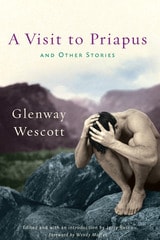
A Visit to Priapus and Other Stories
Glenway Wescott; Edited and with an introduction by Jerry Rosco; Foreword by Wendy Moffat
University of Wisconsin Press, 2013
Finalist, Gay General Fiction, Lambda Literary Awards
A Voice from the River
A NovelDan Gerber
Michigan State University Press, 2005
This novel is one of Dan Gerber's triumphs. From the author of American Atlas, Out of Control, and Grass Fires, Gerber's A Voice From the River followed Grass Fires to prominence on national bestseller lists. This novel once again affirms the Gerber's solid reputation for writing about the confrontation of the Spirit World and what some consider to be the Last of Days.
A Walk in the Night and Other Stories
Alex La Guma
Northwestern University Press, 1967
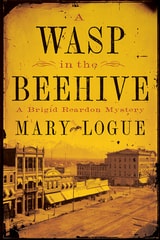
A Wasp in the Beehive
A Brigid Reardon MysteryMary Logue
University of Minnesota Press, 2026
Salt Lake City, 1881: Brigid Reardon is again on the case when her new employer—a leader in the Church of Latter-day Saints—is murdered in his home
Still reeling from the violence she encountered in Cheyenne, Wyoming, Brigid Reardon presses on alone to Salt Lake City, where she decides to settle down in what she hopes is a safe community. Things look promising when she’s hired to work at the Deseret Bookstore and offered a room in the home of her employer, Mr. Cutter, a high-ranking member of the Church of Latter-day Saints, and his five wives.
Despite Brigid’s conflicting feelings about polygamy, she finds the Cutter wives warm and welcoming, and she thinks she may finally be happy here. As she settles in, Brigid learns that Mr. Cutter wants yet another wife, and he is set on Amelia, the daughter of one of his wives from a previous marriage. When Mr. Cutter is found apparently murdered in the women’s sewing room, each of the wives (plus Amelia and Mr. Cutter’s son) is a suspect, and Brigid knows it’s up to her to figure out just who did it. As she continues to work in the bookstore and live with the grieving family, Brigid teams up with the local coroner to investigate—and with her undeniable knack for detection, it’s not long before she discovers a telltale clue.
A Wasp in the Beehive continues Brigid’s trek west in the United States after immigrating from Ireland with her brother, following her time in Deadwood, South Dakota, in The Streel and in Cheyenne in The Big Sugar. But with everything that has happened, will she stay in Salt Lake City, or will she move on again?
Retail e-book files for this title are screen-reader friendly.
A Watch of Nightingales
Liza Wieland
University of Michigan Press, 2010
A modest, quiet woman, Mara Raynor never dreamed she'd one day find herself in charge of the small private school in Washington, D.C., where for many years she taught music and choir. But after the unexpected death of her husband, the school's headmaster, Mara finds herself thrust into the public eye, burdened not just with the responsibilities of acting headmaster---a role she never wanted---but also with a potentially explosive political and religious controversy that tests parents' and school administrators' spirit of tolerance.
When a Sikh student is caught wearing a ceremonial knife on school grounds, fear spreads among parents and the school board. Coming at the same moment as the disappearance of Mara's teenage daughter, the controversy quickly assumes a far more personal nature. Not just any student, the Sikh boy is both the son of a woman with whom Mara shares a complicated past and---as Mara soon discovers---her own daughter's boyfriend.
As it moves back and forth in time between the school in contemporary Washington and a girls' boarding school in the British countryside in 1977, A Watch of Nightingales weaves a rich and textured exploration of fear and remorse, the mysteries of love, and the complicated tensions that ring down the generations from parent to child.
A Winsome Murder
James DeVita
University of Wisconsin Press, 2015
In this fast-paced novel we meet a gorgeous waitress with a haunted past, an author juggling a failing career and motherhood, and a hard-bitten detective with unexpected inspiration from William Shakespeare’s bloodiest plays—and nobody escapes the nightmare created by a psychotic killer of women.
Best books for public & secondary school libraries from university presses, American Library Association
Outstanding Achievement Award, Wisconsin Library Association (one of ten 2015 books chosen)
“A page-turner from beginning to end. . . . Certain to be an enduringly popular addition to community library Mystery/Suspense collections.”—Midwest Book Review
“In addition to a unique detective, a wholly original story, and some literary flair, DeVita has filled these pages with timely and biting social commentary, which does much to add to the real feel of this creative whodunit.”—Chicago Book Review
A Winter's Journal
Emmanuel Bove, translated by Nathalie Favre-Gilly and with an afterword by Keith Botsford
Northwestern University Press, 1997
Every few days for one winter, Louis writes down the details of his unhappy marriage. Although his wife, Madeleine, is the focal point of his journal, his painstakingly rendered analyses of her behavior tell us more about him than her, and about the harm two people can do to one another. Unsparing and insightful, A Winter's Journal remains one of the most devastating novels ever written on the self-destructive impulse present in all marriages.
A Wolf by the Ears
Wayne Karlin
University of Massachusetts Press, 2020
—Thomas Jefferson
During the War of 1812, thousands of enslaved people from plantations across the Tidewater rallied to the British side, turning against an American republic that had barred them from the promises of freedom and democracy. Set against the backdrop of rebellion and war, Wayne Karlin's A Wolf by the Ears follows the interconnected stories of Towerhill and Sarai, two African slaves, and their master, Jacob Hallam. Educated side-by-side and inseparable as children, the three come of age as they are forced to grapple with—and break free of—the fraught linkage of black and white Americans and how differently each defines what it means to fight for freedom. Sarai and Jacob are caught in the tension between the dream of equality, the reality of slavery, and their own hearts, while Towerhill sits at the head of a company of black marines that is part of the force that takes Washington and watches the White House burn.
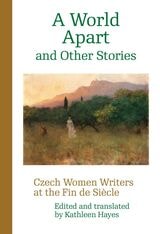
A World Apart and Other Stories
Czech Women Writers at the Fin de SiècleEdited and Translated by Kathleen Hayes
Karolinum Press, 2021
A World Apart brings together translations of eight stories by Czech women from the turn of the twentieth century—a period of female political emancipation and impressive literary development in Czechoslovakia. Though they’re little known to an English-language public today, all of the writers featured in the book were recognized in their own day and constitute a cross-section of the literary styles of the period. Anna Maria Tilschová’s “A Sad Time” is written in a naturalist style, while Růžena Jesenská’s “A World Apart” presents themes and motifs that appealed to the Decadents. Helena Malířová’s “The Sylph” is both diaristic and satirical, whereas Růžena Svobodová’s ironical “A Great Passion,” with its rural setting and folklore motifs, calls to mind the writings of Karel Jaromír Erben. Gabriela Preissová’s short story “Eva” may be read as a celebration of folk culture, and Božena Benešová’s “Friends” is interesting for its psychological presentation of a child’s point of view and its implicit criticism of anti-Semitism. The book is accompanied by the biographies of each author and an introduction by editor and translator Kathleen Hayes.
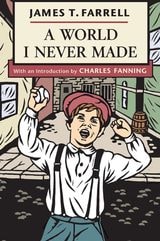
A World I Never Made
James T. Farrell, with an Introduction by Charles Fanning
University of Illinois Press, 2006
The first book in Farrell's five-volume series to be republished by the University of Illinois Press, A World I Never Made introduces three generations from two families, the working-class O'Neills and the lower-middle-class O'Flahertys. The lives of the O'Neills in particular reflect the tragic consequences of poverty, as young Danny O'Neill's parents--unable to sustain their large family--send him to live with his grandmother. Seen here at the age of seven, Danny is fraught with feelings of anxiety and dislocation as he learns the ins and outs of life on the street, confronting for the first time a world he never made.

A World Outside
The Fiction of Paul BowlesBy Richard F. Patteson
University of Texas Press, 1987
Expatriation, the sense of being "outside" or exposed, is a central theme in the life and work of Paul Bowles. Beginning with Bowles' account of a frightening childhood memory, A World Outside explores how the dichotomies of inside and outside, safety and danger, enclosure and exposure—fundamental dualities in Bowles' fiction—have their deepest origin in the fabric of Bowles' own life and also mark his kinship with other twentieth-century writers. Like V. S. Naipaul, Paul Bowles is one of those writers who have an uncanny grasp of what it is like never to feel "at home."
In this much-needed study, Richard Patteson explores how this sense of "outsidedness" characterizes one's experience in a world in which many of the traditional shelters—social, familial, religious—seem to have lost their ability to protect. He discovers that storytelling is the vehicle by which both Bowles and his characters attempt to domesticate inchoate experience, bringing it into the familiar interior of human comprehension.
The music world has for decades recognized Paul Bowles' stature as a composer, but his fiction is only recently receiving the close attention it has long deserved from students of American and contemporary literature. Bowles is an author who neither sought nor received the kind of publicity often lavished on his contemporaries but one whom an ever-growing audience regards as a commanding figure of twentieth-century American literature.

A World for Julius
A NovelAlfredo Bryce Echenique
University of Wisconsin Press, 2004
Julius was born in a mansion on Salaverry Avenue, directly across from the old San Felipe Hippodrome. Life-size Disney characters and cowboy movie heroes romp across the walls of his nursery. Out in the carriage house, his great-grandfather’s ornate, moldering carriage takes him on imaginary adventures. But Julius’s father is dead, and his beautiful young mother passes through her children’s lives like an ephemeral shooting star. Despite the soft shelter of family and money, hard realities overshadow Julius’s expanding world, just as the rugged Andes loom over his home in Lima.
This lyrical, richly textured novel, first published in 1970 as Un mundo para Julius, opens new territory in Latin American literature with its focus on the social elite of Peru. In this postmodern novel Bryce Echenique incisively charts the decline of an influential, centuries-old aristocratic family faced with the invasion of foreign capital in the 1950s.
Winner of the Outstanding Translation Award of the American Literary Translators Association and the Columbia University Translation Center Award.
A World of Fiction
Digital Collections and the Future of Literary HistoryKatherine Bode
University of Michigan Press, 2018

Abduction
Anouar Benmalek
Haus Publishing, 2011
Abecedary
Goffredo Parise
Northwestern University Press, 1998
Above Time
Emerson's and Thoreau's Temporal RevolutionsJames R. Guthrie
University of Missouri Press, 2001
In Above Time, James R. Guthrie explores the origins of the two preeminent transcendentalists' revolutionary approaches to time, as well as to the related concepts of history, memory, and change. Most critical discussions of this period neglect the important truth that the entire American transcendentalist project involved a transcendence of temporality as well as of materiality. Correspondingly, both writers call in their major works for temporal reform, to be achieved primarily by rejecting the past and future in order to live in an amplified present moment.
Emerson and Thoreau were compelled to see time in a new light by concurrent developments in the sciences and the professions. Geologists were just then hotly debating the age of the earth, while zoologists were beginning to unravel the mysteries of speciation, and archaeologists were deciphering the Egyptian hieroglyphs. These discoveries worked collectively to enlarge the scope of time, thereby helping pave the way for the appearance of Darwin's Origin of Species in 1859.
Well aware of these wider cultural developments, Emerson and Thoreau both tried (although with varying degrees of success) to integrate contemporary scientific thought with their preexisting late-romantic idealism. As transcendentalists, they already believed in the existence of "correspondences"—affinities between man and nature, formalized as symbols. These symbols could then be decoded to discover the animating presence in the world of eternal laws as pervasive as the laws of science. Yet unlike scientists, Emerson and Thoreau hoped to go beyond merely understanding nature to achieving a kind of passionate identity with it, and they believed that such a union might be achieved only if time was first recognized as being a purely human construct with little or no validity in the rest of the natural world. Consequently, both authors employ a series of philosophical, rhetorical, and psychological strategies designed to jolt their readers out of time, often by attacking received cultural notions about temporality.
Abracadabra
A NovelDavid Kranes
University of Nevada Press, 2017
Magicians and misdirection, gambling, down-on-one’s-luck, the crazed sense of possibility and impossibility, mistaken identity, impersonators and body doubles, people acting bizarrely with all sorts of chaos, collisions, and overlaps thrown in for good measure. Again and again the reader is swept into treacherous waters, always confident that the writer is in control of his material. Because the many twists and turns the plot takes are all but impossible to anticipate, the experience of reading Abracadabra is deliciously magical.
Absent without Leave
Heinrich Boll
Northwestern University Press, 1995
Absinthe
Christophe Bataille
Northwestern University Press, 2023

Absinthe
World Literature in Translation: Vol. 23 Unscripted: An Armenian PalimpsestEdited by Tamar M. Boyadjian
Michigan Publishing Services, 2017
Absinthe 23, guest-edited by Tamar M. Boyadjian, invites translators to move beyond purely prescriptive applications of translation, interpretation, and the localization of national literatures—and the mere translation of a “minor” literature into a major language—to consider their translations of contemporary Armenian literature as part of larger, non-compartmentalized cultural and theoretical frameworks and disciplines such as comparative literature, Mediterranean studies, Postcolonial studies, Diaspora studies, Trauma studies, and others. The issue includes contemporary Armenian texts from living authors, chosen as significant works that challenge, shape, and complicate conversations on transcultural analysis, and theories and practices related to translating.
Absinthe: A Journal of World Literature in Translation publishes foreign literature in English translation, with a particular focus on previously untranslated contemporary fiction, poetry, and creative non-fiction by living authors. The magazine has its home in the Department of Comparative Literature at the University of Michigan and is edited by graduate students in the Department, as well as by occasional guest editors.
Absinthe
World Literature in Translation: Vol. 24: World HellenismsAli Bolcakan, Will Stroebel and Peter Vorissis
Michigan Publishing Services, 2018
Absinthe 24 pushes and prods Hellenism beyond its geographic and cultural comfort zones, and sets it tumbling off beyond both internal and external borders of its nation-state, in a wide-ranging but always site-specific and localized itinerary. At each stop along the way, this Greekness finds its plurals—hence the “Hellenisms” of the title. While they present no unified topography, tongue or even topic, these Hellenisms map out the contours of a shared conversation. Today’s Hellenism isn’t limited to Hellas, nor to the Hellenic language. The selected texts in this volume explore Greece from the perspective of visitors, displaced persons, and marginalized people looking in, or, conversely, from the perspective of locals striving to break out.
Absinthe: A Journal of World Literature in Translation publishes foreign literature in English translation, with a particular focus on previously untranslated contemporary fiction, poetry, and creative non-fiction by living authors. The magazine has its home in the Department of Comparative Literature at the University of Michigan and is edited by graduate students in the Department, as well as by occasional guest editors.
Absinthe
World Literature in Translation: Vol. 25: Barings // Bearings: Contemporary Women's Writing in CatalanMegan Berkobien and María Cristina Hall
Michigan Publishing Services, 2018
Edited by Megan Berkobien and María Cristina Hall, Barings // Bearings collects sixteen pieces of contemporary women’s writing in Catalan together with the brilliantly understated illustrations of the artist Elisa Monsó.
This special issue of Absinthe witnesses a living, Catalan language through the emotional labor of translation. It is also a testament to the thriving worlds of women’s writing in Catalan, with time-travelling fiction by Bel Olid (tr. Bethan Cunningham), regrets on pregnancy sublimated into an airborne taxi ride in a story by Tina Vallès (tr. Jennifer Arnold), Mireia Vidal-Conte’s poetry reflecting on Virginia Woolf’s suicide (tr. María Cristina Hall), a story of revenge on an abusive elderly woman by Anna Maria Villalonga (tr. Natasha Tanna), as well as reflections on war, bookstores, and generational conflict in post-Franco Spain. These often surreal pieces of Catalan fiction are informed by several essays and works of literary memoir, including those by Marta Rojals (tr. Alicia Meier) on the state of the Catalan language and Najat El Hachmi (tr. Julia Sanches) on the conditions of growing up in Catalonia as the daughter of Moroccan parents. These latter pieces resist and explore the contours of multilingualism, highlighting the intra- and interlingual reality of spoken Catalan alongside Spanish and Amazigh. Barings // Bearings invokes the feeling of a people through the work of a new generation of translators.
Absinthe
World Literature in Translation: Volume 30: Brazil with an SEdited by Julia Irion Martins
Michigan Publishing Services, 2024
The 2024 issue of Absinthe: World Literature in Translation is a celebration of contemporary Brazilian literature, including short fiction and poetry, as well as excerpts from novels and sections from a recently published—but never produced—cinema novo screenplay.
Absinthe 30: Brazil with an ‘S' features English-language translations of work by several acclaimed Brazilian writers, including the likes of Caio Fernando Abreu, Joaquim Pedro de Andrade, Maria Valéria Rezende, and Clarah Averbuck, as well as that of more emergent voices in the Brazilian literary scene, such as Natalia Timerman, Natércia Pontes, and Maria Esther Maciel, among others. Each contribution follows a critical reflection written by its translator, and many of the contributions are accompanied by an original illustration by São Paulo-based artist Thereza Nardelli.
Guest-edited by Júlia Irion Martins, Absinthe 30 sheds light on Brazil’s regional diversity, presenting an image of Brazil beyond samba and soccer. The contents of this issue run the gamut, from deals with the capital-D Devil to encounters with lowercase-d devils on dating apps, from reflections on everyday malaise and COVID-era anxieties to snapshots of life during the AIDS crisis. The issue broadly confronts questions of belonging, mourning, family, gender, and sexuality, with many of its pieces—written between the early-20th century and as recently as 2024—demonstrating a preoccupation with formal experimentation, genre, and literary style.
Abundant Light
Short FictionValerie Miner
Michigan State University Press, 2004
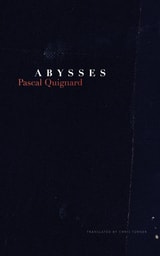
Abysses
Pascal Quignard
Seagull Books, 2015
In Abysses, the newest addition to the series, Quignard brings us yet more of his troubling, questing characters—souls who are fascinated by what preceded and conceived them. He writes with a rich mix of anecdote and reflection, aphorism and quotation, offering enigmatic glimpses of the present, and confident, pointed borrowings from the past. But when he raids the murkier corners of the human record, he does so not as a historian but as an antiquarian. Quignard is most interested in the pursuit of those stories that repeat and echo across the seasons in their timelessness.

Academic Tribes
Hazard Adams
University of Illinois Press, 1988
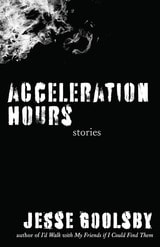
Acceleration Hours
StoriesJesse Goolsby
University of Nevada Press, 2020
2020 Foreword INDIE awards, longlist
From the author of the critically-acclaimed novel, I’d Walk with My Friends If I Could Find Them, Jesse Goolsby’s Acceleration Hours is a haunting collection of narratives about families, life, and loss during America’s twenty-first-century forever wars. Set across the mountain west of the United States, these fierce, original, and compelling stories illuminate the personal search for human connection and intimacy. From a stepfather’s grief to an AWOL soldier and her journey of reconciliation to a meditation on children, violence, and hope, Acceleration Hours is an intense and necessary portrayal of the many voices living in a time of perpetual war.
Accident
A Day's News: A NovelChrista Wolf
University of Chicago Press, 2001
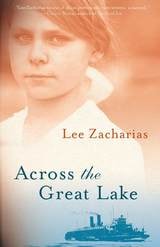
Across the Great Lake
Lee Zacharias
University of Wisconsin Press, 2020
As his wife lies dying in the brutally cold winter of 1936, Henrik Halvorsen takes his daughter Fern away with him. He captains a great coal-fired vessel, the Manitou, transporting railroad cars across the icy lake. The five-year-old girl revels in the freedom of the ferry, making friends with a stowaway cat and a gentle young deckhand. The sighting of a ghost ship, though, presages danger for all aboard.

ActivAmerica
Meagan Cass
University of North Texas Press, 2018