Results by title
22279 books match the query 'Social Science' and 1819 start with a

Argentina
Stories for a NationAmy K. Kaminsky
University of Minnesota Press, 2008
By the end of the twentieth century, Argentina’s complex identity-tango and chimichurri, Eva Perón and the Mothers of the Plaza de Mayo, the Falklands and the Dirty War, Jorge Luis Borges and Maradona, economic chaos and a memory of vast wealth-has become entrenched in the consciousness of the Western world.
In this wide-ranging and at times poetic new work, Amy K. Kaminsky explores Argentina’s unique national identity and the place it holds in the minds of those who live beyond its physical borders. To analyze the country’s meaning in the global imagination, Kaminsky probes Argentina’s presence in a broad range of literary texts from the United States, Poland, England, Western Europe, and Argentina itself, as well as internationally produced films, advertisements, and newspaper features.
Kaminsky’s examination reveals how Europe consumes an image of Argentina that acts as a pivot between the exotic and the familiar. Going beyond the idea of suffocating Eurocentrism as a theory of national identity, Kaminsky presents an original and vivid reading of national myths and realities that encapsulates the interplay among the many meanings of “Argentina” and its place in the world’s imagination.
Amy Kaminsky is professor of gender, women, and sexuality studies and global studies at the University of Minnesota and author of After Exile (Minnesota, 1999).

Argentine, Mexican, and Guatemalan Photography
Feminist, Queer, and Post-Masculinist PerspectivesBy David William Foster
University of Texas Press, 2014
One of the important cultural responses to political and sociohistorical events in Latin America is a resurgence of urban photography, which typically blends high art and social documentary. But unlike other forms of cultural production in Latin America, photography has received relatively little sustained critical analysis. This pioneering book offers one of the first in-depth investigations of the complex and extensive history of gendered perspectives in Latin American photography through studies of works from Argentina, Mexico, and Guatemala.
David William Foster examines the work of photographers ranging from the internationally acclaimed artists Graciela Iturbide, Pedro Meyer, and Marcos López to significant photographers whose work is largely unknown to English-speaking audiences. He grounds his essays in four interlocking areas of research: the experience of human life in urban environments, the feminist matrix and gendered cultural production, Jewish cultural production, and the ideological principles of cultural works and the connections between the works and the sociopolitical and historical contexts in which they were created. Foster reveals how gender-marked photography has contributed to the discourse surrounding the project of redemocratization in Argentina and Guatemala, as well as how it has illuminated human rights abuses in both countries. He also traces photography’s contributions to the evolution away from the masculinist-dominated post–1910 Revolution ideology in Mexico. This research convincingly demonstrates that Latin American photography merits the high level of respect that is routinely accorded to more canonical forms of cultural production.
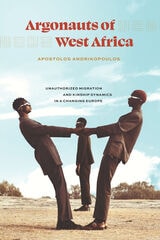
Argonauts of West Africa
Unauthorized Migration and Kinship Dynamics in a Changing EuropeApostolos Andrikopoulos
University of Chicago Press, 2023
In rapidly changing and highly precarious contexts, unauthorized African migrants turn to kinship in search of security, stability, and predictability. Through the exchange of identity documents between “siblings,” assistance in obtaining such documentation through kinship networks, and marriages that provide access to citizenship, new assemblages of kinship are continually made and remade to navigate the shifting demands of European states. These new kinship relations, however, often prove unreliable, taking on new, unexpected dynamics in the face of codependency; they become more difficult to control than those who enter into such relations can imagine. Through unusually close ethnographic work in West African migrant communities in Amsterdam, Apostolos Andrikopoulos reveals the unseen dynamics of kinship through shared papers, the tensions of race and gender that develop in mutually beneficial marriages, and the vast, informal networks of people, information, and documentation on which migrants rely. Throughout Argonauts of West Africa, Andrikopoulos demonstrates how inequality, exclusionary practices, and the changing policies of an often-violent state demand innovative ways of doing kinship to successfully navigate complex migration routes.
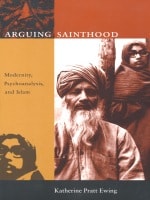
Arguing Sainthood
Modernity, Psychoanalysis, and IslamKatherine Pratt Ewing
Duke University Press, 1997
Ewing critiques Eurocentric cultural theorists and Orientalist discourse while also taking issue with expatriate postcolonial thinkers Homi Bhabha and Gayatri Spivak. She challenges the notion of a monolithic Islamic modernity in order to explore the lived realities of individuals, particularly those of Pakistani saints and their followers. By examining the continuities between current Sufi practices and earlier popular practices in the Muslim world, Ewing identifies in the Sufi tradition a reflexive, critical consciousness that has usually been associated with the modern subject. Drawing on her training in clinical and theoretical psychoanalysis as well as her anthropological fieldwork in Lahore, Pakistan, Ewing argues for the value of Lacan in anthropology as she provides the basis for retheorizing postcolonial studies.

Arguing it Out
Discussion in Twelfth-Century ByzantiumAveril Cameron
Central European University Press, 2016
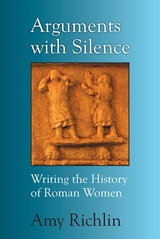
Arguments with Silence
Writing the History of Roman WomenAmy Richlin
University of Michigan Press, 2014
Women in ancient Rome challenge the historian. Widely represented in literature and art, they rarely speak for themselves. Amy Richlin, among the foremost pioneers in ancient studies, gives voice to these women through scholarship that scours sources from high art to gutter invective.
In Arguments with Silence, Richlin presents a linked selection of her essays on Roman women’s history, originally published between 1981 and 2001 as the field of “women in antiquity” took shape, and here substantially rewritten and updated. The new introduction to the volume lays out the historical methodologies these essays developed, places this process in its own historical setting, and reviews work on Roman women since 2001, along with persistent silences. Individual chapter introductions locate each piece in the social context of Second Wave feminism in Classics and the academy, explaining why each mattered as an intervention then and still does now.
Inhabiting these pages are the women whose lives were shaped by great art, dirty jokes, slavery, and the definition of adultery as a wife’s crime; Julia, Augustus’ daughter, who died, as her daughter would, exiled to a desert island; women wearing makeup, safeguarding babies with amulets, practicing their religion at home and in public ceremonies; the satirist Sulpicia, flaunting her sexuality; and the praefica, leading the lament for the dead.
Amy Richlin is one of a small handful of modern thinkers in a position to consider these questions, and this guided journey with her brings surprise, delight, and entertainment, as well as a fresh look at important questions.
Arijana Lekic-Fridrih
All Art Is a Political Statement / Svaka Umjetnost Je Politicka IzavaRebekah Modrak
Disobedience Press, 2024
Arijana Lekić-Fridrih: All Art is a Political Statement introduces audiences to the work of Croatian artist Arijana Lekić-Fridrih and, in particular, to her Silent Mass, a performance resisting the “Be Manly” movement, a series of mass prayer events held in Croatian public squares by a battalion of men who pray for the abolition of women’s rights, for women’s “chastity,” and for men’s “masculine authority.” All Art is a Political Statement links the erosion of women’s rights across intercontinental boundaries and offers Lekić-Fridrih’s multimedia art as a guide for activism against retrograde restrictions on the freedom of women.
Arijana Lekić-Fridrih: Svaka umjetnost je politička izjava upoznaje publiku s radom hrvatske umjetnice Arijane Lekić-Fridrih, a posebno s njezinom Tihom misom, performansom otpora pokretu “Budi muško”, nizu masovnih molitvenih događanja koje na hrvatskim javnim trgovima održava bataljun muškaraca moleći za ukidanje ženskih prava, za žensku “čednost”, a za muškarce “muški autoritet”. Svaka umjetnost je politička izjava spaja eroziju ženskih prava preko interkontinentalnih granica i nudi multimedijsku umjetnost Lekić-Fridrih kao vodič za aktivizam protiv nazadnih ograničenja slobode žena.

Arikara Agriculture
Mother Corn’s Gift to the Sahnish PeopleArikara Agriculture Project; With collaborators Kelly Kindscher, Loren Yellow Bird, Michael Yellow Bird, Logan Sutton, Loren White, and Lisa Castle
University of Arizona Press, 2027
Drawing on a remarkable combination of early twentieth-century field notes, archaeological evidence, historical accounts, and the voices of Arikara collaborators, Arikara Agriculture: Mother Corn’s Gift to the Sahnish People offers a richly layered account of one of the Plains’ most accomplished agricultural societies.
Living along the Missouri River in present-day North and South Dakota, the Sahnish (Arikara) people cultivated expansive fields of corn, beans, squash, sunflowers, and other crops, sustaining vibrant communities and extensive trade networks. At the heart of this remarkable book are the invaluable records of ethnobotanist Melvin Gilmore, who documented the knowledge of Arikara elders between 1916 and 1924, capturing a lifeway on the cusp of profound change.
More than a historical study, this volume foregrounds the cultural, spiritual, and ecological significance of agriculture in Sahnish life. The contributors discuss how corn was the center of the Arikaras’ world and how it, and other agricultural crops, were important not just as food but also for the culture. The book illuminates traditional horticultural methods, food preparation techniques, and the enduring relevance of these practices today.
Both a vital contribution to ethnobiology and a community-centered preservation of knowledge, this work speaks to ongoing conversations about Indigenous foodways, resilience, and the revitalization of traditional ecological knowledge.

Aristocratic Inclusion
Hiring the Academic Eliteprabhdeep singh kehal
Duke University Press, 2027

Aristocrats of Color
The Black Elite, 1880–1920Willard B. Gatewood
University of Arkansas Press, 2000
Every American city had a small, self-aware, and active black elite, who felt it was their duty to set the standard for the less fortunate members of their race and to lead their communities by example. Rank within this black upper class rested on such issues as the status of one’s forebears as either house servants or field hands, the darkness of one’s skin, and the level of one’s manners and education.
Professor Gatewood’s study examines this class of African Americans by looking at the genealogies and occupations of specific families and individuals throughout the United States and their roles in their various communities. The resulting narrative is a full and illuminating account of a most influential segment of the African-American population. It explores fully the distinctive background, prestige, attitudes, behavior, power, and culture of this class. The Black Community Studies series from the University of Arkansas Press, edited by Professor Gatewood, continues to examine many of the same themes first explored in this important study.
Arkansas Travelers
Geographies of Exploration and Perception, 1804-1834Andrew J. Milson
University of Arkansas Press, 2023
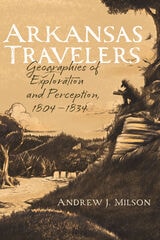
“I reckon stranger you have not been used much to traveling in the woods,” a hunter remarked to Henry Rowe Schoolcraft as he trekked through the Ozark backcountry in late 1818. The ensuing exchange is one of many compelling encounters between Arkansas travelers and settlers depicted in Arkansas Travelers: Geographies of Exploration and Perception, 1804–1834. This book is the first to integrate the stories of four travelers who explored Arkansas during the transformative period between the Louisiana Purchase of 1803 and statehood in 1836: William Dunbar, Thomas Nuttall, Henry Rowe Schoolcraft, and George William Featherstonhaugh.
In addition to gathering their tales of treacherous rivers, drunken scoundrels, and repulsive food, historian and geographer Andrew J. Milson explores the impact such travel narratives have had on geographical understandings of Arkansas places. Using the language in each traveler’s narrative, Milson suggests, and the book includes, new maps that trace these perceptions, illustrating not just the lands traversed, but the way travelers experienced and perceived place. By taking a geographical approach to the history of these spaces, Arkansas Travelers offers a deeper understanding—a deeper map—of Arkansas.

Arkansas, 1800-1860
Remote and RestlessS. Charles Bolton
University of Arkansas Press, 1998
Often thought of as a primitive backwoods peopled by rough hunters and unsavory characters, early Arkansas was actually productive and dynamic in the same manner as other American territories and states. In this, the second volume in the Histories of Arkansas, S. Charles Bolton describes the emigration, mostly from other southern states, that carried Americans into Arkansas; the growth of an agricultural economy based on cotton, corn, and pork; the dominance of evangelical religion; and the way in which women coped with the frontier and made their own contributions toward its improvement. He closely compares the actual lifestyles of the settlers with the popularly held, uncomplimentary image.
Separate chapters deal with slavery and the lives of the slaves and with Indian affairs, particularly the dispossession of the native Quapaws and the later-arriving Cherokees. Political chapters explore opportunism in Arkansas Territory, the rise of the Democratic Party under the control of the Sevier-Johnson group known as the Dynasty, and the forces that led Arkansas to secede from the Union. In addition, Arkansas’s role in the Mexican War and the California gold rush is treated in detail.
In truth, geographic isolation and a rugged terrain did keep Arkansas underpopulated, and political violence and a disastrous experience in state banking tarnished its reputation, but the state still developed rapidly and successfully in this period, playing an important role on the southwestern frontier.
Winner of the 1999 Booker Worthen Literary Prize

Arkansas/Arkansaw
How Bear Hunters, Hillbillies, and Good Ol' Boys Defined a StateBrooks Blevins
University of Arkansas Press, 2009
Winner, 2011 Ragsdale Award
Armed Forces
Masculinity and Sexuality in the American War FilmEberwein, Robert
Rutgers University Press, 2007
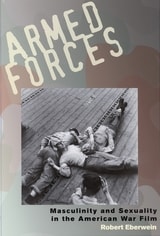
In war films, the portrayal of deep friendships between men is commonplace. Given the sexually anxious nature of the American imagination, such bonds are often interpreted as carrying a homoerotic subtext. In Armed Forces , Robert Eberwein argues that an expanded conception of masculinity and sexuality is necessary in order to understand more fully the intricacy of these intense and emotional human relationships. Drawing on a range of examples from silent films such as What Price Glory and Wings to sound era works like The Deer Hunter, Platoon, Three Kings, and Pearl Harbor , he shows how close readings of war films, particularly in relation to their cultural contexts, demonstrate that depictions of heterosexual love, including those in romantic triangles, actually help to define and clarify the nonsexual nature of male love. The book also explores the problematic aspects of masculinity and sexuality when threatened by wounds, as in The Best Years of Our Lives, and considers the complex and persistent analogy between weapons and the male body, as in Full Metal Jacket and Saving Private Ryan .
Armies of the Young
Child Soldiers in War and TerrorismRosen, David M
Rutgers University Press, 2005
Children have served as soldiers throughout history. They fought in the American Revolution, the Civil War, and in both world wars. They served as uniformed soldiers, camouflaged insurgents, and even suicide bombers. Indeed, the first U.S. soldier to be killed by hostile fire in the Afghanistan war was shot in ambush by a fourteen-year-old boy.
Does this mean that child soldiers are aggressors? Or are they victims? It is a difficult question with no obvious answer, yet in recent years the acceptable answer among humanitarian organizations and contemporary scholars has been resoundingly the latter. These children are most often seen as especially hideous examples of adult criminal exploitation.
In this provocative book, David M. Rosen argues that this response vastly oversimplifies the child soldier problem. Drawing on three dramatic examples-from Sierra Leone, Palestine, and Eastern Europe during the Holocaust-Rosen vividly illustrates this controversial view. In each case, he shows that children are not always passive victims, but often make the rational decision that not fighting is worse than fighting.
With a critical eye to international law, Armies of the Young urges readers to reconsider the situation of child combatants in light of circumstance and history before adopting uninformed child protectionist views. In the process, Rosen paints a memorable and unsettling picture of the role of children in international conflicts.
Arms And The Enlisted Woman
Judith Hicks Stiehm
Temple University Press, 1989
Army of Hope, Army of Alienation
Culture and Contradiction in the American Army Communities of Cold War GermanyJohn P. Hawkins
University of Alabama Press, 2004
An inside look at the promises, pressures, and paradoxes of American military life in Cold War Germany.
Army life has always been known as a life of sacrifice, challenge, and frustration, yet one filled also with deep satisfactions. This is so for the soldiers’ families as much as for the soldiers themselves. Over the years, military and civilian leaders of the US Army have tried to reduce the hardships of military life by creating an array of community services designed to provide social support for soldiers and families and help them live satisfying lives in military communities.
Unfortunately, this effort has not been particularly successful, and frustration, dissatisfaction, and alienation persist among soldiers and family member in the US Army communities in Germany. Discontent continues because the underlying sources of alienation in the Army and among its families are highly complex, poorly understood, and therefore hardly addressed by the Army’s quality-of-life programs that are intended to make soldier and family life more bearable.
In Army of Hope, Army of Alienation: Culture and Contradiction in the American Army Communities of Cold War Germany, the author seeks to penetrate the logic, social structure, and daily practice of life in the American military communities that lay scattered along the frontier between East and West Germany during the final years of the Cold War. In coming to understand the life and thought of these American soldiers and families, ordinary American citizens can learn much about their military forces and about their own society and culture. In addition, a greater understanding about how people work and live around an institution that is at once so important and yet tasked with a mission so different from that of ordinary pursuits can stimulate social scientists and concerned citizens to think differently about culture, society, and behavior in general.
Around Quitting Time
Work and Middle-Class Fantasy in American FictionRobert Seguin
Duke University Press, 2001
Tracing connections between the reconstruction of the labor process and the aesthetic dilemmas of modernism, between the emergence of the modern state and the structure of narrative, Seguin analyzes the work of Nathanael West, Ernest Hemingway, Willa Cather, John Barth, and others. These fictional narratives serve to demonstrate for Seguin the pattern of social sites and cultural phenomenon that have emerged where work and leisure, production and consumption, and activity and passivity coincide. He reveals how, by creating pathways between these seemingly opposed domains, the middle-class imaginary at once captures and suspends the dynamics of social class and opens out onto a political and cultural terrain where class is both omnipresent and invisible.
Around Quitting Time will interest critics and historians of modern U.S. culture, literary scholars, and those who explore the interaction between economic and cultural forms.
Around the Day in Eighty Worlds
Politics of the PluriverseMartin Savransky
Duke University Press, 2021
Arranged Marriage
The Politics of Tradition, Resistance, and ChangePéter Berta
Rutgers University Press, 2023

Arranging Marriage
Conjugal Agency in the South Asian DiasporaMarian Aguiar
University of Minnesota Press, 2018
The first critical analysis of contemporary arranged marriage among South Asians in a global context
Arranged marriage is an institution of global fascination—an object of curiosity, revulsion, outrage, and even envy. Marian Aguiar provides the first sustained analysis of arranged marriage as a transnational cultural phenomenon, revealing how its meaning has been continuously reinvented within the South Asian diaspora of Britain, the United States, and Canada. Aguiar identifies and analyzes representations of arranged marriage in an interdisciplinary set of texts—from literary fiction and Bollywood films, to digital and print media, to contemporary law and policy on forced marriage.
Aguiar interprets depictions of South Asian arranged marriage to show we are in a moment of conjugal globalization, identifying how narratives about arranged marriage bear upon questions of consent, agency, state power, and national belonging. Aguiar argues that these discourses illuminate deep divisions in the processes of globalization constructed on a fault line between individualist and collectivist agency and in the process, critiques neoliberal celebrations of “culture as choice” that attempt to bridge that separation. Aguiar advocates situating arranged marriage discourses within their social and material contexts so as to see past reductive notions of culture and grasp the global forces mediating increasingly polarized visions of agency.
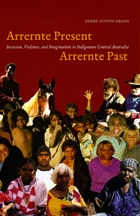
Arrernte Present, Arrernte Past
Invasion, Violence, and Imagination in Indigenous Central AustraliaDiane J. Austin-Broos
University of Chicago Press, 2008
Employing ethnographic and archival research, Diane Austin-Broos traces the history of the Arrernte as they have transitioned from a society of hunter-gatherers to members of the Hermannsburg Mission community to their present, marginalized position in the modern Australian economy. While she concludes that these wrenching structural shifts led to the violence that now marks Arrernte communities, she also brings to light the powerful acts of imagination that have sustained a continuing sense of Arrernte identity.
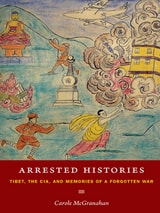
Arrested Histories
Tibet, the CIA, and Memories of a Forgotten WarCarole McGranahan
Duke University Press, 2010
Drawing on rich ethnographic and historical research, McGranahan tells the story of the Tibetan resistance and the social processes through which this history is made and unmade, and lived and forgotten in the present. Fulfillment of veterans’ desire for recognition hinges on the Dalai Lama and “historical arrest,” a practice in which the telling of certain pasts is suspended until an undetermined time in the future. In this analysis, struggles over history emerge as a profound pain of belonging. Tibetan cultural politics, regional identities, and religious commitments cannot be disentangled from imperial histories, contemporary geopolitics, and romanticized representations of Tibet. Moving deftly from armed struggle to nonviolent hunger strikes, and from diplomatic offices to refugee camps, Arrested Histories provides powerful insights into the stakes of political engagement and the cultural contradictions of everyday life.

Arresting Citizenship
The Democratic Consequences of American Crime ControlAmy E. Lerman and Vesla M. Weaver
University of Chicago Press, 2014
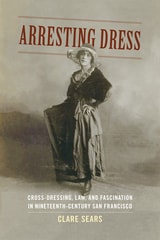
Arresting Dress
Cross-Dressing, Law, and Fascination in Nineteenth-Century San FranciscoClare Sears
Duke University Press, 2015

Arretium (Arezzo)
Edited by Ingrid Edlund-Berry and Cristiana Zaccagnino
University of Texas Press, 2024
A comprehensive examination of the history and excavation of the Etruscan city of Arretium.
Beneath the Italian city of Arezzo lie the remains of Etruscan Arretium. This volume, the first comprehensive treatment of excavations at Arretium, gathers the most up-to-date scholarship on the city and delves into key archaeological discoveries and the stories they tell about life in the Etruscan world.
Chapters explore local history—including the city’s complex political exchanges with Rome—Etruscan religion, Arretium’s role as a center of the arts, and the challenges of excavation amid the bustle of European urban modernity. Editors Ingrid Edlund-Berry and Cristiana Zaccagnino have gathered chapters by expert contributors that detail Arretium’s material culture, including the city’s famed pottery, Arretine ware, which was known across the Mediterranean; terracotta pieces depicting gods and other supernatural beings; and exquisite bronze-work, most notably the piece now known as the Chimaera of Arezzo. One of the few Etruscan cities that continued flourishing after the Roman takeover, Arretium proves to be a trove of archaeological riches and of the historical insights they reveal.
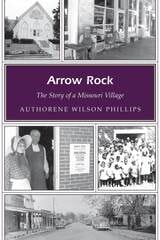
Arrow Rock
The Story of a Missouri VillageAuthorene Wilson Phillips
University of Missouri Press, 2005
Arrows Tipped with Flowers
Threshold Theory for Transformative LearningJulie Geredien
University of Illinois Press, 2026
Threshold theory challenges unexamined mental habits and exposes absolutisms that hold social order by impeding the comprehension process. As those learning at the threshold approach transition and the unknown, they participate in transformations that illuminate hidden developmental patterns and ecological relationships. Geredien’s threshold theorizing brings together realities at the heart of creativity, relational worldview, and anti-oppression work to forge the philosophical and psychological foundations necessary to reshape policies and practices.
Innovative and expansive, Arrows Tipped with Flowers reveals the psychology of integrity that underpins truly global learning and explains the need to develop more inclusive and reflective approaches to knowledge formation.
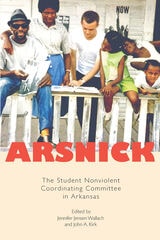
Arsnick
The Student Nonviolent Coordinating Committee in ArkansasJennifer Jensen Wallach
University of Arkansas Press, 2011
Art History and Anthropology
Modern Encounters, 1870–1970Peter Probst
J. Paul Getty Trust, The, 2023
While today we are experiencing a revival of world art and the so-called global turn of art history, encounters between art historians and anthropologists remain rare. Even after a century and a half of interactions between these epistemologies, a skeptical distance prevails with respect to the disciplinary other. This volume is a timely exploration of the roots of this complex dialogue, as it emerged worldwide in the colonial and early postcolonial periods, between 1870 and 1970.
Exploring case studies from Australia, Austria, Brazil, France, Germany, and the United States, this volume addresses connections and rejections between art historians and anthropologists—often in the contested arena of “primitive art.” It examines the roles of a range of figures, including the art historian–anthropologist Aby Warburg, the modernist artist Tarsila do Amaral, the curator-impresario Leo Frobenius, and museum directors such as Alfred Barr and René d’Harnoncourt. Entering the current debates on decolonizing the past, this collection of essays prompts reflection on future relations between these two fields.

Art Works
Part 1, Volume 12Richard Meyer and David Román, eds.
Duke University Press, 0
Arguing for the primacy of the arts in queer life, the contributors show how art and performance can constitute a form of critical theorizing rather than simply an illustration of it. In different ways, each author demonstrates how art works to invigorate queer critique. The first issue includes a special dossier on AIDS activist film and video, marking the twenty-fifth year of the AIDS pandemic, and essays on late-nineteenth-century male nudes, lesbian surrealism, homoerotic photography in the Deep South, and the transnational, transgender contexts of the Pulitzer Prize–winning play I Am My Own Wife. Essays in the second issue focus on a series of queer case studies, including gay power graphics and psychedelia, female duets on the Broadway stage, Keith Haring and racial politics, British Vogue in the 1920s, and lesbian-feminist magazines of the 1970s. The issue concludes with a dossier of three shorter pieces on queer art and performance: an interview with the Chicano drag street performer Robert Legoretta (“Cyclona”), an essay on blogs and the Five Lesbian Brothers, and a discussion of a rarely exhibited work about cruising and public space by the contemporary artist Glenn Ligon.
Contributors. Deborah Bright, Jill Dolan, Jens Giersdorf, Jason Goldman, Scott Herring, Lucas Hilderbrand, Alexandra Juhasz, Tirza Latimer, Glenn Ligon, Richard Meyer, Rachel Middleman, Ricardo Montez, Erica Rand, Christopher Reed, David Román, Jennifer Flores Sternad, Margo Hobbs Thompson, Stacy Wolf

Art Works
Part 2, Volume 12Richard Meyer and David Román, eds.
Duke University Press, 0
Arguing for the primacy of the arts in queer life, the contributors show how art and performance can constitute a form of critical theorizing rather than simply an illustration of it. In different ways, each author demonstrates how art works to invigorate queer critique. The first issue includes a special dossier on AIDS activist film and video, marking the twenty-fifth year of the AIDS pandemic, and essays on late-nineteenth-century male nudes, lesbian surrealism, homoerotic photography in the Deep South, and the transnational, transgender contexts of the Pulitzer Prize–winning play I Am My Own Wife. Essays in the second issue focus on a series of queer case studies, including gay power graphics and psychedelia, female duets on the Broadway stage, Keith Haring and racial politics, British Vogue in the 1920s, and lesbian-feminist magazines of the 1970s. The issue concludes with a dossier of three shorter pieces on queer art and performance: an interview with the Chicano drag street performer Robert Legoretta (“Cyclona”), an essay on blogs and the Five Lesbian Brothers, and a discussion of a rarely exhibited work about cruising and public space by the contemporary artist Glenn Ligon.
Contributors. Deborah Bright, Jill Dolan, Jens Giersdorf, Jason Goldman, Scott Herring, Lucas Hilderbrand, Alexandra Juhasz, Tirza Latimer, Glenn Ligon, Richard Meyer, Rachel Middleman, Ricardo Montez, Erica Rand, Christopher Reed, David Román, Jennifer Flores Sternad, Margo Hobbs Thompson, Stacy Wolf

Art and Activism
Jazz Artists and Writers in the Civil Rights VanguardJack Marchbanks
Ohio University Press, 2026
Explore how jazz legends and literary icons united art and activism, shaping the civil rights movement and transforming American culture during the pivotal period between 1955 and 1965.
Art and Activism explores the powerful, symbiotic relationships among artists such as Nina Simone, Abbey Lincoln, and Lena Horne and their literary counterparts—Lorraine Hansberry, Maya Angelou, and Langston Hughes. These creative figures positioned themselves as cultural thought leaders within the evolving civil rights movement. While the Jim Crow South was the movement’s operational front, Jack Marchbanks argues that New York City’s intellectual, cultural, and fundraising communities functioned as its strategic command center.
Readers who admire jazz legends like Duke Ellington, Dave Brubeck, Miles Davis, and Charles Mingus—and those fascinated by prominent African American writers like James Baldwin and Ralph Ellison—will discover how these artists intertwined their work with the civil rights struggle. The book examines their involvement in pivotal confrontations and their connections with key leaders such as the Reverend Dr. Martin Luther King Jr., Daisy Bates, Ella Baker, and Malcolm X.
By illuminating the intersection of art and activism, this study offers a fresh perspective on the pivotal decade from 1955 to 1965. It is an essential resource for undergraduate courses and an engaging read for anyone seeking to understand the civil rights era through a cultural lens.

Art and Archaeology of Challuabamba, Ecuador
By Terence Grieder
University of Texas Press, 2009
Challuabamba (chī-wa-bamba)—now a developing suburb of Cuenca, the principal city in the southern highlands of Ecuador—has been known for a century as an ancient site that produced exceptionally fine pottery in great quantities. Suspecting that Challuabamban ceramics might provide a link between earlier, preceramic culture and later, highly developed Formative period art, Terence Grieder led an archaeological investigation of the site between 1995 and 2001. In this book, he and the team of art historians and archaeologists who excavated at Challuabamba present their findings, which establish the community's importance as a center in a network of trade and artistic influence that extended to the Amazon River basin and the Pacific Coast.
Art and Archaeology of Challuabamba, Ecuador presents an extensive analysis of ceramics dating to 2100-1100 BC, along with descriptions of stamps and seals, stone and shell artifacts, burials and their offerings, human remains, and zooarchaeology. Grieder and his coauthors demonstrate that the pottery of Challuabamba fills a gap between early and late Formative styles and also has a definite connection with later highland styles in Peru. They draw on all the material remains to reconstruct the first clear picture of Challuabamba's prehistory, including agriculture and health, interregional contacts and exchange, red-banded incised ware and ceramic production, and shamanism and cosmology.
Because southern Ecuador has received relatively little archaeological study, Art and Archaeology of Challuabamba, Ecuador offers important baseline data for what promises to be a key sector of the prehistoric Andean region.
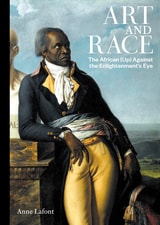
Art and Race
The African (Up) Against the Enlightenment’s EyeAnne Lafont
J. Paul Getty Trust, The, 2026
In this text, French art historian Anne Lafont examines the complexities and contradictions in Enlightenment-era ideas about race, focusing on the figurations of Africans and other people of color. Through studies of a wide range of eighteenth-century art, Lafont grounds her analysis in the objects themselves and, by doing so, highlights how visual works can reveal the values of the culture that produced them.
While Lafont locates—unsurprisingly—instances of the marginalization and objectification of Black people, she also draws attention to depictions that present African sitters as subjects in their own right. For example, Anne-Louis Girodet’s Portrait of Jean-Baptiste Belley (1797) offers a dignified, individualized representation of this formerly enslaved French politician from Saint-Domingue; and portraits of anonymous sitters show them as actual persons whose costumes and poses demonstrate their agency.
Ultimately, Lafont moves beyond artworks to consider the broader intellectual context of the Enlightenment, particularly ideas about freedom, equality, and universal human rights, which were anchored in visual culture and indexed by it. She reveals how these ideals often conflicted with the realities of colonialism and the shifting status of Black people during this era.
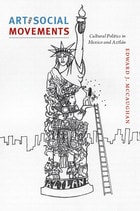
Art and Social Movements
Cultural Politics in Mexico and AztlánEdward J. McCaughan
Duke University Press, 2012
McCaughan argues that the social power of activist artists emanates from their ability to provoke people to see, think, and act in innovative ways. Artists, he claims, help to create visual languages and spaces through which activists can imagine and perform new collective identities and forms of meaningful citizenship. The artists' work that he discusses remains vital today—in movements demanding fuller democratic rights and social justice for working people, women, ethnic communities, immigrants, and sexual minorities throughout Mexico and the United States. Integrating insights from scholarship on the cultural politics of representation with structural analyses of specific historical contexts, McCaughan expands our understanding of social movements.
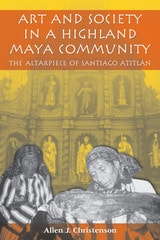
Art and Society in a Highland Maya Community
The Altarpiece of Santiago AtitlánBy Allen J. Christenson
University of Texas Press, 2001
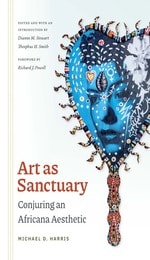
Art as Sanctuary
Conjuring an Africana AestheticMichael D. Harris. Edited and with an introduction by Dianne M. Stewart and Theophus H. Smith. Foreword by Richard J. Powell.
Duke University Press, 2026
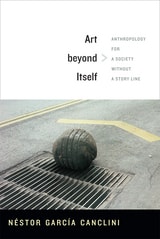
Art beyond Itself
Anthropology for a Society without a Story LineNéstor García Canclini
Duke University Press, 2014
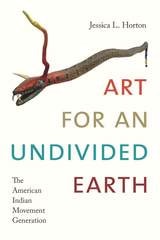
Art for an Undivided Earth
The American Indian Movement GenerationJessica L. Horton
Duke University Press, 2017
Art from Start to Finish
Jazz, Painting, Writing, and Other ImprovisationsEdited by Howard S. Becker, Robert R. Faulkner, and Barbara Kirshenblatt-Gimblett
University of Chicago Press, 2006
Art from Start to Finish gathers a unique group of contributors from the worlds of sociology, musicology, literature, and communications—many of them practicing artists in their own right—to discuss how artists from jazz musicians to painters work: how they coordinate their efforts, how they think, how they start, and, of course, how they finish their productions.
Specialists in the arts have much to say about the works themselves, which are often neglected by scholarsi n other fields. Art from Start to Finish takes a different tack by exploring the creative process itself and its social component. Any reader who makes art or has an interest in it will value this book.
Art in Cinema
Documents Toward a History of the Film SocietyScott MacDonald
Temple University Press, 2006
Scott MacDonald's Art in Cinema presents complete programs presented by the legendary society; dozens of previously unavailable letters between Stauffacher, his collaborators, and filmmakers including Maya Deren, Hans Richter, Vincent Minelli, and Man Ray; a reprint of the society's original catalog, which features essays by Henry Miller and others; and a wide range of other remarkable historical documents.
A companion to Cinema 16 (Temple), a documentary history of the first west coast film society, Art in Cinema provides cineastes, students, teachers, and scholars with extensive and fascinating documentation of one of the most important film societies in American history. Together or separately, the books provide an indispensable reference source for the beginning of this country's love affair with independent film.
Art in the Lives of Immigrant Communities in the United States
DiMaggio, Paul
Rutgers University Press, 2010

Art, Activism, and Oppositionality
Essays from AfterimageGrant Kester, ed.
Duke University Press, 1998
Forging a style of criticism where aesthetic, critical, theoretical, and activist concerns converge, Afterimage has shaped American debates around the politics of visual production and arts education while offering a voice to politically involved artists and scholars. Art, Activism, and Oppositionality insists not only on the continuing relevance of an activist stance to contemporary art practice and criticism, but also on the significance of an engaged art practice that is aligned with social or political activism. With essays that span fifteen years—roughly from Ronald Reagan’s 1980 presidential win to the 1994 Republican victories in Congress, a period marked by waning public support for the arts and growing antagonism toward activist art—Art, Activism, and Oppositionality confronts issues ranging from arts patronage, pedagogy, and the very definitions of art and activism to struggles involving AIDS, reproductive rights, sexuality, and racial identity.
Contributors. Maurice Berger, Richard Bolton, Ann Cvetkovich, Coco Fusco, Brian Goldfarb, Mable Haddock, Grant H. Kester, Ioannis Mookas, Chiquita Mullins Lee, Darrell Moore, Lorraine O’Grady, Michael Renov, Martha Rosler, Patricia Thomson, David Trend, Charles A. Wright Jr., Patricia R. Zimmerman
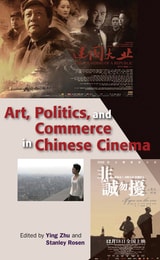
Art, Politics, and Commerce in Chinese Cinema
Edited by Ying Zhu and Stanley Rosen
Hong Kong University Press, 2010
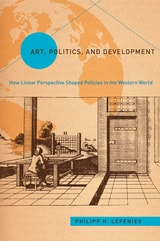
Art, Politics, and Development
Philipp H Lepenies
Temple University Press, 2013
In the series Politics, History and Social Change, edited by John C. Torpey

Artery
Racial Ecologies on Colombia's Magdalena RiverAustin Zeiderman
Duke University Press, 2025

Artful Assassins
Murder as Art in Modern MexicoFernando Fabio Sanchez
Vanderbilt University Press, 2010
Sanchez argues that the seemingly hopeless cycle of violence experienced by Mexico in the 20th century, as reflected in its "crime genre," reveals a broader intrinsic cultural and political failure that suggests grave implications for the current state of crisis. Tracing the development of a national Mexican identity from the 1910 Mexican Revolution onward, Sanchez focuses on the indelible presence of violence and crime underlying the major works that contributed to a larger communal narrative.
Artful Assassins ultimately offers a panoramic overview of the evolution of Mexican arts and letters, as well as nationalism, by claiming murder and assassination as literary and cinematic motifs. The collapse of post-revolutionary political unity was presaged all along in Mexican culture, Sanchez argues. It need only to have been sought in the art of the nation.

Artful Lives
The Francis Watts Lee Family and Their TimesPatricia J. Fanning
University of Massachusetts Press, 2016
Francis Watts Lee and his family hold a special place in the history of American photography. F. Holland Day completed a series of remarkable photographs of Lee's daughter Peggy, and the striking portrait of the child and her mother titled Blessed Art Thou among Women is one of Gertrude Käsebier's most iconic compositions. In Artful Lives, Patricia J. Fanning uses these and other significant images as guideposts to explore the Lee family and the art and culture of their age.
A social reform advocate, Francis Watts Lee was an artistic photographer and a talented printer, part of the circle of avant-garde artists and intellectuals who formed Boston's bohemia. He married twice, first Agnes Rand, an award-winning poet and children's book author, and later, after their divorce, Marion Lewis Chamberlain, a librarian and MIT-trained architect. Francis and Agnes's eldest daughter, Peggy, who was so integral to the work of pioneer Pictorialists, died at age seven of juvenile diabetes. Her sister, Alice, who lost her hearing in infancy, became a wood carver and sculptor.
Utilizing previously unknown family archives and institutional sources, Fanning traces the Lee family's story in the context of major artistic, political, social, and religious trends, including the Arts and Crafts movement, Christian Socialism, and Aestheticism, while also showing how their experiences reflected the national culture's evolving conceptions of family, gender, childhood, medicine, deaf education, and mourning. This richly drawn and gracefully written account of one family informs our understanding of this vibrant era, in Boston and well beyond.

Articulating Dissent
Protest and the Public SpherePollyanna Ruiz
Pluto Press, 2014
Articulating Dissent analyses the new communicative strategies of coalition protest movements and how these impact on a mainstream media unaccustomed to fractured articulations of dissent.
Pollyanna Ruiz shows how coalition protest movements against austerity, war and globalisation build upon the communicative strategies of older single issue campaigns such as the anti-criminal justice bill protests and the women’s peace movement. She argues that such protest groups are dismissed in the mainstream for not articulating a ‘unified position’ and explores the way in which contemporary protesters stemming from different traditions maintain solidarity.
Articulating Dissent investigates the ways in which this diversity, so inherent in coalition protest, affects the movement of ideas from the political margins to the mainstream. In doing so this book offers an insightful and original analysis of the protest coalition as a developing political form.