Results by title
28167 books match the query 'History' and 2536 start with a
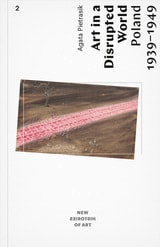
Art in a Disrupted World
Poland 1939–1949Agata Pietrasik
Museum of Modern Art in Warsaw, 2020
Employing an accessible, essayistic style, Pietrasik offers a new look at life in the ten years following the outbreak of World War II and features artists—including Marian Bogusz, Jadwiga Simon-Pietkiewicz, and Józef Szajna—whose work has not yet found substantial audiences in the English-speaking world. Her reading of the art and artists of this period strives to capture their autonomous artistic language and poses critical questions about the ability of traditional art history writing to properly accommodate artworks created in direct response to traumatic experiences.
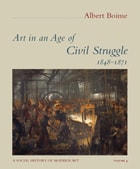
Art in an Age of Civil Struggle, 1848-1871
Albert Boime
University of Chicago Press, 2008
Tracing the various movements of realism through the major metropolitan centers of Europe and America, Boime strikingly evokes the milieus that shaped the lives and works of Gustave Courbet, Edouard Manet, Émile Zola, Honoré Daumier, Walt Whitman, Abraham Lincoln, and the earliest photographers, among countless others. In doing so, he spearheads a powerful new way of reassessing how art emerges from the welter of cultural and political events and the artist’s struggle to interpret his surroundings. Boime supports this multifaceted approach with a wealth of illustrations and written sources that demonstrate the intimate links between visual culture and social change. Culminating at the transition to impressionism, Art in an Age of Civil Struggle makes historical sense of a movement that paved the way for avant-garde aesthetics and, more broadly, of how a particular style emerges at a particular moment.
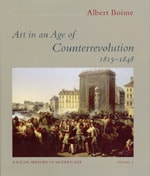
Art in an Age of Counterrevolution, 1815-1848
Albert Boime
University of Chicago Press, 2004
This volume focuses on the astonishing range of art forms currently understood to fall within the broad category of Romanticism. Drawing on visual media and popular imagery of the time, this generously illustrated work examines the art of Romanticism as a reaction to the social and political events surrounding it. Boime reinterprets canonical works by such politicized artists as Goya, Delacroix, Géricault, Friedrich, and Turner, framing their work not by personality but by its sociohistorical context. Boime's capacious approach and scope allows him to incorporate a wide range of perspectives into his analysis of Romantic art, including Marxism, social history, gender identity, ecology, structuralism, and psychoanalytic theory, a reach that parallels the work of contemporary cultural historians and theorists such as Edward Said, Pierre Bourdieu, Eric Hobsbawm, Frederic Jameson, and T. J. Clark.
Boime ultimately establishes that art serves the interests and aspirations of the cultural bourgeoisie. In grounding his arguments on their work and its scope and influence, he elucidates how all artists are inextricably linked to history. This book will be used widely in art history courses and exert enormous influence on cultural studies as well.
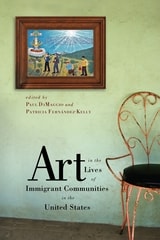
Art in the Lives of Immigrant Communities in the United States
DiMaggio, Paul
Rutgers University Press, 2010
Art of Darkness
A Poetics of GothicAnne Williams
University of Chicago Press, 1995
Building on the psychoanalytic and feminist theory of Julia Kristeva, Williams argues that Gothic conventions such as the haunted castle and the family curse signify the fall of the patriarchal family; Gothic is therefore "poetic" in Kristeva's sense because it reveals those "others" most often identified with the female. Williams identifies distinct Male and Female Gothic traditions: In the Male plot, the protagonist faces a cruel, violent, and supernatural world, without hope of salvation. The Female plot, by contrast, asserts the power of the mind to comprehend a world which, though mysterious, is ultimately sensible. By showing how Coleridge and Keats used both Male and Female Gothic, Williams challenges accepted notions about gender and authorship among the Romantics. Lucidly and gracefully written, Art of Darkness alters our understanding of the Gothic tradition, of Romanticism, and of the relations between gender and genre in literary history.
Art of War
Niccolò Machiavelli
University of Chicago Press, 2003
Machiavelli scholar Christopher Lynch offers a sensitive and entirely new translation of the Art of War, faithful to the original but rendered in modern, idiomatic English. Lynch's fluid translation helps readers appreciate anew Machiavelli's brilliant treatments of the relationships between war and politics, civilians and the military, and technology and tactics. Clearly laying out the fundamentals of military organization and strategy, Machiavelli marshals a veritable armory of precepts, prescriptions, and examples about such topics as how to motivate your soldiers and demoralize the enemy's, avoid ambushes, and gain the tactical and strategic advantage in countless circumstances.
To help readers better appreciate the Art of War, Lynch provides an insightful introduction that covers its historical and political context, sources, influence, and contemporary relevance. He also includes a substantial interpretive essay discussing the military, political, and philosophical aspects of the work, as well as maps, an index of names, and a glossary.
Art of the Islands
Celtic, Pictish, Anglo-Saxon and Viking Visual Culture, c. 450-1050Michelle P. Brown
Bodleian Library Publishing, 2015
Michelle P. Brown remedies this oversight, presenting an extensively illustrated art historical overview of this formative period in the region’s history. Describing the interactions between the region’s inhabitants, she also explores the formation of national and regional identities. Brown ranges across works as diverse as the Book of Kells, the Tara Brooch, the Aberlemno Stone, the Lindisfarne Gospels, the Alfred Jewel, and the Benedictional of St. Ethelwold, showing how their complex imagery can be best interpreted. She also considers the impact of the art of this period upon the history of art in general, exploring how it has influenced many movements since, from the Carolingian Renaissance and the Romanesque style to the nineteenth-century Arts and Crafts movement.
Art of the United States, 1750–2000
John Davis and Michael Leja
Terra Foundation for American Art, 2020
A sourcebook of unprecedented breadth and depth, Art of the United States brings together multiple voices throughout the ages to provide a framework for learning and critical thinking on US art.
Art on the Edge
Creators and SituationsHarold Rosenberg
University of Chicago Press, 1983
Art to Come
Histories of Contemporary ArtTerry Smith
Duke University Press, 2019
Art without Boundaries
The World of Modern DanceJack Anderson
University of Iowa Press, 1999
Art, Culture, and Cuisine
Ancient and Medieval GastronomyPhyllis Pray Bober
University of Chicago Press, 1999
Bober draws on archaeology and art history to examine prehistoric eating customs in ancient Turkey; traditions of the great civilizations of Egypt, Mesopotamia, Greece, and Rome; and rituals of the Middle Ages. Both elegant and entertaining, Art, Culture, and Cuisine reveals cuisine and dining's place at the heart of cultural, religious, and social activities that have shaped Western sensibilities.
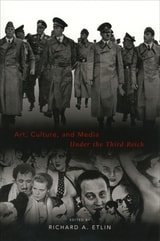
Art, Culture, and Media Under the Third Reich
Edited by Richard A. Etlin
University of Chicago Press, 2002
Contributors address nearly every facet of the arts and mass media under the Third Reich—efforts to define degenerate music and art; the promotion of race hatred through film and public assemblies; views of the racially ideal garden and landscape; race as portrayed in popular literature; the reception of art and culture abroad; the treatment of exiled artists; and issues of territory, conquest, and appeasement. Familiar subjects such as the Munich Accord, Nuremberg Party Rally Grounds, and Lebensraum (Living Space) are considered from a new perspective. Anyone studying the history of Nazi Germany or the role of the arts in nationalist projects will benefit from this book.
Contributors:
Ruth Ben-Ghiat
David Culbert
Albrecht Dümling
Richard A. Etlin
Karen A. Fiss
Keith Holz
Kathleen James-Chakraborty
Paul B. Jaskot
Karen Koehler
Mary-Elizabeth O'Brien
Jonathan Petropoulos
Robert Jan van Pelt
Joachim Wolschke-Bulmahn and Gert Gröning

Art, Intellect and the State
Cultural Histories of Late Pahlavi IranEdited by Bianca Devos and Robert Steele
Gingko, 2026
A cross-disciplinary volume on the intersections of—and tensions between—culture and government in Iran's late Pahlavi period.
In recent years, scholarly interest in Iran's late Pahlavi period (1941–1979) has grown significantly and historians are increasingly approaching the era not merely as a prelude to the Iranian Revolution, but as a period worthy of study in its own right. New generations of scholars have uncovered fresh sources and offered original perspectives on the cultural and social life of this era. Yet opportunities for cross-disciplinary engagement among scholars from different fields who are exploring similar questions remain limited. This volume, the product of two international workshops at the Austrian Academy of Sciences in Vienna and the University of Marburg, respectively, is a collection of the work of scholars at various stages of their careers from various disciplines investigating the cultural history of late Pahlavi Iran from a multiplicity of perspectives, including: archaeology, architecture, scholarship, media, art, film, literature, politics, religion, museums, music, philosophy, education, and theater.
Chapters explore the interactions between state ideology and the sociocultural sphere, exploring ideas such as: the influence of the press and literature on social discourses; the culturally strategic and identity-forming role of the performing arts; the relationship between state education policy and culture; the employment of foreign artists, architects, scholars, and musicians in the context of Iran’s cultural diplomacy; and the dynamics of (state) religion, spirituality, nationalism, and psychology in modern media or through their dissemination in the media. The volume explores not only the Pahlavi state’s direct participation in facilitating cultural activity or scholarly endeavors, but also how artists, writers, historians, and other cultural actors flourished independent of (sometimes in spite of) the state apparatus.
The volume does not seek to provide an encyclopaedic collection detailing every aspect of culture in the Pahlavi period, but the case studies explored demonstrate the breadth and complexities of this field in the historiography. Moreover, by shedding light on the various features of culture in the late Pahlavi era and encouraging multidisciplinary discussions, the volume aims to contribute to a greater understanding of the vibrant cultural life in Iran during this period.
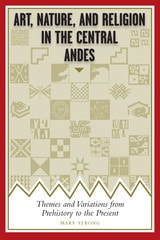
Art, Nature, and Religion in the Central Andes
Themes and Variations from Prehistory to the PresentBy Mary Strong
University of Texas Press, 2012
From prehistory to the present, the Indigenous peoples of the Andes have used a visual symbol system—that is, art—to express their sense of the sacred and its immanence in the natural world. Many visual motifs that originated prior to the Incas still appear in Andean art today, despite the onslaught of cultural disruption that native Andeans have endured over several centuries. Indeed, art has always been a unifying power through which Andeans maintain their spirituality, pride, and culture while resisting the oppression of the dominant society.
In this book, Mary Strong takes a significantly new approach to Andean art that links prehistoric to contemporary forms through an ethnographic understanding of Indigenous Andean culture. In the first part of the book, she provides a broad historical survey of Andean art that explores how Andean religious concepts have been expressed in art and how artists have responded to cultural encounters and impositions, ranging from invasion and conquest to international labor migration and the internet. In the second part, Strong looks at eight contemporary art types—the scissors dance (danza de tijeras), home altars (retablos), carved gourds (mates), ceramics (ceramica), painted boards (tablas), weavings (textiles), tinware (hojalateria), and Huamanga stone carvings (piedra de Huamanga). She includes prehistoric and historic information about each art form, its religious meaning, the natural environment and sociopolitical processes that help to shape its expression, and how it is constructed or performed by today’s artists, many of whom are quoted in the book.
Art, Politics, and Commerce in Chinese Cinema
Edited by Ying Zhu and Stanley Rosen
Hong Kong University Press, 2010
Art, Politics, and Development
Philipp H Lepenies
Temple University Press, 2013
In the series Politics, History and Social Change, edited by John C. Torpey
Art, Theory, Revolution
The Turn to Generality in Contemporary LiteratureMitchum Huehls
The Ohio State University Press, 2022
Artaud and His Doubles
Kimberly Jannarone
University of Michigan Press, 2012
Artaud and His Doublesis a radical re-thinking of one of the most influential theater figures of the twentieth century. Placing Artaud's writing within the specific context of European political, theatrical, and intellectual history, the book reveals Artaud's affinities with a disturbing array of anti-intellectual and reactionary writers and artists whose ranks swelled catastrophically between the wars in Western Europe.
Kimberly Jannarone shows that Artaud's work reveals two sets of doubles: one, a body of peculiarly persistent received interpretations from the American experimental theater and French post-structuralist readings of the 1960s; and, two, a darker set of doubles—those of Artaud's contemporaries who, in the tumultuous, alienated, and pessimistic atmosphere enveloping much of Europe after World War I, denounced the degradation of civilization, yearned for cosmic purification, and called for an ecstatic loss of the self. Artaud and His Doubleswill generate provocative new discussions about Artaud and fundamentally challenge the way we look at his work and ideas.
Arte Programmata
Freedom, Control, and the Computer in 1960s ItalyLindsay Caplan
University of Minnesota Press, 2022
Tracing the evolution of the Italian avant-garde’s pioneering experiments with art and technology and their subversion of freedom and control
In postwar Italy, a group of visionary artists used emergent computer technologies as both tools of artistic production and a means to reconceptualize the dynamic interrelation between individual freedom and collectivity. Working contrary to assumptions that the rigid, structural nature of programming limits subjectivity, this book traces the multifaceted practices of these groundbreaking artists and their conviction that technology could provide the conditions for a liberated social life.
Situating their developments within the context of the Cold War and the ensuing crisis among the Italian left, Arte Programmata describes how Italy’s distinctive political climate fueled the group’s engagement with computers, cybernetics, and information theory. Creating a broad range of immersive environments, kinetic sculptures, domestic home goods, and other multimedia art and design works, artists such as Bruno Munari, Enzo Mari, and others looked to the conceptual frameworks provided by this new technology to envision a way out of the ideological impasses of the age.
Showcasing the ingenuity of Italy’s earliest computer-based art, this study highlights its distinguishing characteristics while also exploring concurrent developments across the globe. Centered on the relationships between art, technology, and politics, Arte Programmata considers an important antecedent to the digital age.
Artful Assassins
Murder as Art in Modern MexicoFernando Fabio Sanchez
Vanderbilt University Press, 2010
Sanchez argues that the seemingly hopeless cycle of violence experienced by Mexico in the 20th century, as reflected in its "crime genre," reveals a broader intrinsic cultural and political failure that suggests grave implications for the current state of crisis. Tracing the development of a national Mexican identity from the 1910 Mexican Revolution onward, Sanchez focuses on the indelible presence of violence and crime underlying the major works that contributed to a larger communal narrative.
Artful Assassins ultimately offers a panoramic overview of the evolution of Mexican arts and letters, as well as nationalism, by claiming murder and assassination as literary and cinematic motifs. The collapse of post-revolutionary political unity was presaged all along in Mexican culture, Sanchez argues. It need only to have been sought in the art of the nation.

Arthur M. Schlesinger Jr. and the Ideological History of American Liberalism
Stephen P. Depoe
University of Alabama Press, 1994
Arthur M. Schlesinger, Jr., is a historian and political advocate whose ideas and activities have significantly influenced the shape and direction of American liberalism during the past fifty years. A central feature of Schlesinger’s ideological perspective is his belief that American history has been marked by alternating periods of conservative and liberal dominance, which he has termed the “tides of national politics.” Throughout his career, Schlesinger has used the “tides of national politics” to defend the legitimacy and superiority of active liberal government and leadership.
The study investigates how the “tides” concept has functioned in both Schlesinger’s historical scholarship and his partisan political discourse. Depoe also explores the ways in which the “tides” concept has shaped and channeled Schlesinger’s political thought over time, leading him toward certain definitions of situations and away from others. Finally, Depoe offers Schlesinger’s life and work as a case study of the highs and lows of postwar American liberalism. By tracing Schlesinger’s responses to Eisenhower-era conservatism, Kennedy’s New Frontier, and the problems of Vietnam and violence during the 1960s, and the gradual delegitimation of liberalism from the 1970s to the present, this book offers a road map that can guide the reader toward a better understanding of the past, present, and future of liberalism in America.
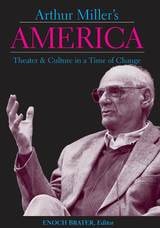
Arthur Miller's America
Theater and Culture in a Time of ChangeEnoch Brater, Editor
University of Michigan Press, 2005
Arthur Miller's America collects new writing by leading international critics and scholars that considers the dramatic world of icon, activist, and playwright Arthur Miller's theater as it reflects the changing moral equations of his time. Written on the occasion of Miller's 85th year, the original essays and interviews in Arthur Miller's America treat the breadth of Miller's work, including his early political writings for the campus newspaper at the University of Michigan, his famous work with John Huston, Clark Gable and Marilyn Monroe on The Misfits, and his signature plays like Death of a Salesman and All My Sons.
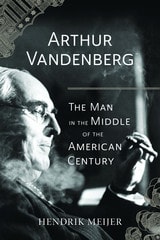
Arthur Vandenberg
The Man in the Middle of the American CenturyHendrik Meijer
University of Chicago Press, 2017
Originally the editor and publisher of the Grand Rapids Herald, Vandenberg was appointed and later elected to the Senate in 1928, where he became an outspoken opponent of the New Deal and a leader among the isolationists who resisted FDR’s efforts to aid European allies at the onset of World War II. But Vandenberg soon recognized the need for unity at the dawn of a new world order; and as a Republican leader, he worked closely with Democratic administrations to build the strong bipartisan consensus that established the Marshall Plan, the United Nations, and NATO. Vandenberg, as Meijer reveals, was instrumental in organizing Congressional support for these monumental twentieth-century foreign policy decisions.
Vandenberg’s life and career offer powerful lessons for today, and Meijer has given us a story that suggests an antidote to our current democratic challenges. After reading this poignant biography, many will ask: Where is the Vandenberg of today?
Articulating Difference
Sex and Language in the German Nineteenth CenturySophie Salvo
University of Chicago Press, 2024
Drawing on a wide range of texts, from understudied ethnographic and scientific works to canonical literature and philosophy, Sophie Salvo uncovers the prehistory of the inextricability of gender and language. Taking German discourses on language as her focus, she argues that we are not the inventors but, rather, the inheritors and adapters of the notion that gender and language are interrelated. Particularly during the long nineteenth century, ideas about sexual differences shaped how language was understood, classified, and analyzed. As Salvo explains, philosophers asserted the patriarchal origins of language, linguists investigated “women’s languages” and grammatical gender, and literary Modernists imagined “feminine” sign systems, and in doing so they not only deemed sex-based divisions to be necessary categories of language but also produced a plethora of gendered tropes and fictions, which they used both to support their claims and delimit their disciplines.
Articulating Difference charts new territory, revealing how gendered conceptions of language make possible the misogynistic logic of exclusion that underlies arguments claiming, for example, that women cannot be great orators or writers. While Salvo focuses on how male scholars aligned language study with masculinity, she also uncovers how women responded, highlighting the contributions of understudied nineteenth-century works on language that women wrote even as they were excluded from academic opportunities.

Articulating Dissent
Protest and the Public SpherePollyanna Ruiz
Pluto Press, 2014
Articulating Dissent analyses the new communicative strategies of coalition protest movements and how these impact on a mainstream media unaccustomed to fractured articulations of dissent.
Pollyanna Ruiz shows how coalition protest movements against austerity, war and globalisation build upon the communicative strategies of older single issue campaigns such as the anti-criminal justice bill protests and the women’s peace movement. She argues that such protest groups are dismissed in the mainstream for not articulating a ‘unified position’ and explores the way in which contemporary protesters stemming from different traditions maintain solidarity.
Articulating Dissent investigates the ways in which this diversity, so inherent in coalition protest, affects the movement of ideas from the political margins to the mainstream. In doing so this book offers an insightful and original analysis of the protest coalition as a developing political form.
Artifact and Artifice
Classical Archaeology and the Ancient HistorianJonathan M. Hall
University of Chicago Press, 2013
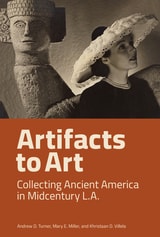
Artifacts to Art
Collecting Ancient America in Midcentury L.A.Andrew D. Turner
J. Paul Getty Trust, The, 2026
By the mid-twentieth century, ancient Mexican artifacts had undergone a striking transformation. Once dismissed as anthropological curiosities, sought after more for their ethnographic value than aesthetic merit, they had become prized artworks that were prominently displayed in major US museums, featured in advertisements and Hollywood films, and shown adorning the homes of celebrities.
At the center of this shift was Earl Stendahl, a savvy Los Angeles art dealer who played a pivotal role in shaping public and institutional perceptions of these objects. Through strategic marketing and a keen eye for opportunity, he repositioned these artifacts, selling them to an elite clientele that included movie stars, wealthy collectors, and museum curators. In doing so, he helped define a new canon of “ancient American art.”
Beneath this glamorous facade, however, lies a darker narrative of the looting, smuggling, and forgery that fueled this midcentury craze, exposing how the desire for authenticity and prestige often came at the expense of ethical collecting practices and cultural heritage. This book brings together art history, museum studies, and the politics of the antiquities trade, offering both a social history and a critical examination of how ancient Mexico’s past was sold in twentieth-century America.
This volume is published to accompany an exhibition on view at the Getty Research Institute at the Getty Center from June 23 to October 18, 2026.
Artifactual
Forensic and Documentary KnowingElizabeth Anne Davis
Duke University Press, 2023

Artifice and Illusion
The Art and Writing of Samuel van HoogstratenCeleste Brusati
University of Chicago Press, 1995
Analyzing van Hoogstraten's painting treatise, illusionistic pictures, ingenious perspective boxes, and witty trompe-l'oeil images, Brusati reveals the crucial role these endeavors played in the forging of van Hoogstraten's professional and social identity. Brusati looks at the historical circumstances of van Hoogstraten's career, which he fashioned from a convergence of Dutch cultural practices, family genealogy, and his considerable entrepreneurial acumen. She shows how Van Hoogstraten exploited the court patronage system to secure the worth of his work in the newer market culture of the Dutch Republic.
Brusati explores Van Hoogstraten's use of illusionistic artifice in his art and writing to shed new light on the much-disputed nature of Dutch "realism", and she discusses how a notion of "experimental artistry", which linked representational craft to the production of knowledge, informed Van Hoogstraten's many projects and framed the terms within which he and his colleagues understood artistic achievement during this period.
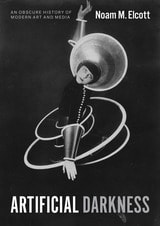
Artificial Darkness
An Obscure History of Modern Art and MediaNoam M. Elcott
University of Chicago Press, 2016
In exploring how artificial darkness shaped modern art, film, and media, Noam M. Elcott addresses seminal and obscure works alongside their sites of production—such as photography darkrooms, film studios, and laboratories—and their sites of reception, including theaters, cinemas, and exhibitions. He argues that artists, scientists, and entertainers like Étienne-Jules Marey, Richard Wagner, Georges Méliès, and Oskar Schlemmer revolutionized not only images but also everything surrounding them: the screen, the darkness, and the experience of bodies and space. At the heart of the book is “the black screen,” a technology of darkness that spawned today’s blue and green screens and has undergirded numerous advanced art and film practices to this day.
Turning familiar art and film narratives on their heads, Artificial Darkness is a revolutionary treatment of an elusive, yet fundamental, aspect of art and media history.
Artificial Paradise
Science Fiction and American RealitySharona Ben-Tov
University of Michigan Press, 1995
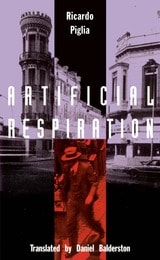
Artificial Respiration
Ricardo Piglia
Duke University Press, 1994
As a prize winning detective novel, Artificial Respiration reaches through many levels of mystery to explore the forces that have been at play in Argentina throughout its violent history. The narrator, a writer named Renzi, begins to look for an uncle who has vanished, a man he knows only through a web of contradictory family stories and an exchange of letters. Through these letters he learns about his uncle’s research into the life of Enrique Ossario, secretary to the 19th-century Argentine dictator Rosas and spy for the dictator’s enemy. As Renzi’s search leads further into his uncle’s work and to conversations with his literary and chess-playing friends, the reader is led by Piglia to consider the nature of Argentine identity, its literature and history, and its relation, for example, to Europe, exile, and democracy. Finally, and made most vividly appreciable by the retelling of a story in which Kafka meets Hitler, it is the encounter between literature and history that is explored.
Artificial Southerner
Equivocations and Love SongsPhilip Martin
University of Arkansas Press, 2001
Artisan/Practitioners and the Rise of the New Sciences, 1400-1600
Pamela O. Long
Oregon State University Press, 2011

Artisans into Workers
LABOR IN NINETEENTH-CENTURY AMERICABruce Laurie
University of Illinois Press, 1989
history, Bruce Laurie examines the character of working-class factionalism, plebian expectations of government, and relations between the organized few and the unorganized many. Laurie also examines the republican tradition and the movements that drew on it, from the General Trades Unions in the age of Jackson to the Knights of Labor later in the century.

Artist Animal
Steve Baker
University of Minnesota Press, 2013
Animals have always been compelling subjects for artists, but the rise of animal advocacy and posthumanist thought has prompted a reconsideration of the relationship between artist and animal. In this book, Steve Baker examines the work of contemporary artists who directly confront questions of animal life, treating animals not for their aesthetic qualities or as symbols of the human condition but rather as beings who actively share the world with humanity.
The concerns of the artists presented in this book—Sue Coe, Eduardo Kac, Lucy Kimbell, Catherine Chalmers, Olly and Suzi, Angela Singer, Catherine Bell, and others—range widely, from the ecological to the philosophical and from those engaging with the modification of animal bodies to those seeking to further the cause of animal rights. Drawing on extensive interviews he conducted with the artists under consideration, Baker explores the vital contribution that contemporary art can make to a broader conception of animal life, emphasizing the importance of creativity and trust in both the making and understanding of these artworks.
Throughout, Baker is attentive to issues of practice, form, and medium. He asks, for example, whether the animal itself could be said to be the medium in which these artists are working, and he highlights the tensions between creative practice and certain kinds of ethical demands or expectations. Featuring full-color, vivid examples of their work, Artist Animal situates contemporary artists within the wider project of thinking beyond the human, asserting art’s power to open up new ways of thinking about animals.
Artist as Author
Action and Intent in Late-Modernist American PaintingChrista Noel Robbins
University of Chicago Press, 2021
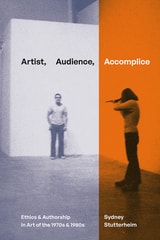
Artist, Audience, Accomplice
Ethics and Authorship in Art of the 1970s and 1980sSydney Stutterheim
Duke University Press, 2024
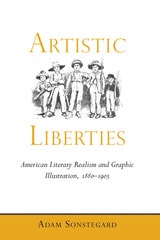
Artistic Liberties
American Literary Realism and Graphic Illustration, 1880-1905Adam Sonstegard
University of Alabama Press, 2013
Though today we commonly read major works of nineteenth-century American literature in unillustrated paperbacks or anthologies, many of them first appeared as magazine serials, accompanied by ample illustrations that sometimes made their way into the serials’ first printings as books. The graphic artists creating these illustrations often visually addressed questions that the authors had left for the reader to interpret, such as the complexions of racially ambiguous characters in Uncle Tom’s Cabin. The artists created illustrations that depicted what outsiders saw in Huck and Jim in Adventures of Huckleberry Finn, rather than what Huck and Jim learned to see in one another. These artists even worked against the texts on occasion—for instance, when the illustrators reinforced the same racial stereotypes that writers such as Paul Laurence Dunbar had intended to subvert in their works.
Authors of American realism commonly submitted their writing to editors who allowed them little control over the aesthetic appearance of their work. In his groundbreaking Artistic Liberties, Adam Sonstegard studies the illustrations from these works in detail and finds that the editors employed illustrators who were often unfamiliar with the authors’ intentions and who themselves selected the literary material they wished to illustrate, thereby taking artistic liberties through the tableaux they created.
Sonstegard examines the key role that the appointed artists played in visually shaping narratives—among them Mark Twain’s Pudd’nhead Wilson, Stephen Crane’s The Monster, and Edith Wharton’s The House of Mirth—as audiences tended to accept their illustrations as guidelines for understanding the texts. In viewing these works as originally published, received, and interpreted, Sonstegard offers a deeper knowledge not only of the works, but also of the realities surrounding publication during this formative period in American literature.
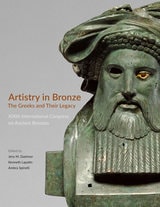
Artistry in Bronze
The Greeks and Their Legacy XIXth International Congress on Ancient BronzesJens M Daehner
J. Paul Getty Trust, The, 2017
www.getty.edu/publications/artistryinbronze
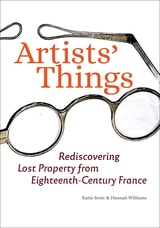
Artists' Things
Rediscovering Lost Property from Eighteenth-Century FranceKatie Scott
J. Paul Getty Trust, The, 2024
Artists are makers of things. Yet it is a measure of the disembodied manner in which we generally think about artists that we rarely consider the everyday items they own. This innovative book looks at objects that once belonged to artists, revealing not only the fabric of the eighteenth-century art world in France but also unfamiliar—and sometimes unexpected—insights into the individuals who populated it, including Jean-Antoine Watteau, François Boucher, Jean-Baptiste Greuze, and Elisabeth Vigée-LeBrun.
From the curious to the mundane, from the useful to the symbolic, these items have one thing in common: they have all been eclipsed from historical view. Some of the objects still exist, like Jean-Honoré Fragonard’s color box and Jacques-Louis David’s table. Others survive only in paintings, such as Jean-Siméon Chardin’s cistern in his Copper Drinking Fountain, or in documents, like François Lemoyne’s sword, the instrument of his suicide. Several were literally lost, including pastelist Jean-Baptiste Perronneau’s pencil case. In this fascinating book, the authors engage with fundamental historical debates about production, consumption, and sociability through the lens of material goods owned by artists.
The free online edition of this open-access publication is at www.getty.edu/publications/artists-things/ and includes zoomable illustrations. Free PDF and EPUB downloads of the book are also available.
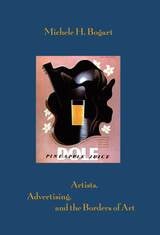
Artists, Advertising, and the Borders of Art
Michele H. Bogart
University of Chicago Press, 1995
From the turn of the century through the 1950s, the explosive growth of popular magazines and national advertising offered artists new sources of income and new opportunities for reaching huge audiences. Bogart shows how, at the same time, this change in the marketplace also forced a rethinking of the purpose of the artistic enterprise itself. She examines how illustrators such as Howard Pyle, Charles Dana Gibson, and Norman Rockwell claimed their identities as artists within a market-oriented framework. She looks at billboard production and the growing schism between "art" posters and billboard advertisements; at the new roles of the art director; at the emergence of photography as the dominant advertising medium; and at the success of painters in producing "fine art" for advertising during the 1930s and 1940s.
Artists, Intellectuals, and World War II
The Pontigny Encounters at Mount Holyoke College, 1942-1944Christopher E. G. Benfey
University of Massachusetts Press, 2006
Sixty years ago, at the height of World War II, an extraordinary series of gatherings took place at Mount Holyoke College in western Massachusetts. During the summers of 1942–1944, leading European figures in the arts and sciences met at the college with their American counterparts for urgent conversations about the future of human civilization in a precarious world.
Two Sorbonne professors, the distinguished medievalist Gustave Cohen and the existentialist philosopher Jean Wahl, organized these “Pontigny” sessions, named after an abbey in Burgundy where similar symposia had been held in the decades before the war. Among the participants—many of whom were Jewish or had Jewish backgrounds—were the philosophers Hannah Arendt and Rachel Bespaloff, the poets Marianne Moore and Wallace Stevens, the anthropologist Claude Lévi-Strauss and the linguist Roman Jakobson, and the painters Marc Chagall and Robert Motherwell.
In this collection of original essays, Stanley Cavell and Jacques Derrida lead an international group of scholars—including Jed Perl, Mary Ann Caws, Jeffrey Mehlman, and Elisabeth Young-Bruehl—in assessing the lasting impact and contemporary significance of Pontigny-en- Amérique. Rachel Bespaloff, a tragic figure who wrote a major work on the Iliad, is restored to her rightful place beside Arendt and Simone Weil. Anyone interested in the “intellectual resistance” of Francophone intellectuals and artists, and the inspiring support from such American figures as Stevens and Moore, will want to read this pioneering work of scholarship and historical re-creation.
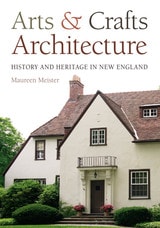
Arts and Crafts Architecture
History and Heritage in New EnglandMaureen Meister
University Press of New England, 2014
Arts of Dying
Literature and Finitude in Medieval EnglandD. Vance Smith
University of Chicago Press, 2020
Covering the emergence of English literature from the Old English to the late medieval periods, Arts of Dying argues that the problem of how to designate death produced a long tradition of literature about dying, which continues in the work of Heidegger, Blanchot, and Gillian Rose. Philosophy’s attempt to designate death’s impossibility is part of a literature that imagines a relationship with death, a literature that intensively and self-reflexively supposes that its very terms might solve the problem of the termination of life. A lyrical and elegiac exploration that combines medieval work on the philosophy of language with contemporary theorizing on death and dying, Arts of Dying is an important contribution to medieval studies, literary criticism, phenomenology, and continental philosophy.
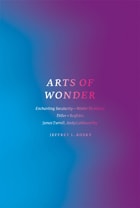
Arts of Wonder
Enchanting Secularity - Walter De Maria, Diller + Scofidio, James Turrell, Andy GoldsworthyJeffrey L. Kosky
University of Chicago Press, 2012
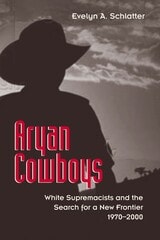
Aryan Cowboys
White Supremacists and the Search for a New Frontier, 1970–2000By Evelyn A. Schlatter
University of Texas Press, 2006
During the last third of the twentieth century, white supremacists moved, both literally and in the collective imagination, from midnight rides through Mississippi to broadband-wired cabins in Montana. But while rural Montana may be on the geographical fringe of the country, white supremacist groups were not pushed there, and they are far from "fringe elements" of society, as many Americans would like to believe. Evelyn Schlatter's startling analysis describes how many of the new white supremacist groups in the West have co-opted the region's mythology and environment based on longstanding beliefs about American character and Manifest Destiny to shape an organic, home-grown movement.
Dissatisfied with the urbanized, culturally progressive coasts, disenfranchised by affirmative action and immigration, white supremacists have found new hope in the old ideal of the West as a land of opportunity waiting to be settled by self-reliant traditional families. Some even envision the region as a potential white homeland. Groups such as Aryan Nations, The Order, and Posse Comitatus use controversial issues such as affirmative action, anti-Semitism, immigration, and religion to create sympathy for their extremist views among mainstream whites—while offering a "solution" in the popular conception of the West as a place of freedom, opportunity, and escape from modern society. Aryan Cowboys exposes the exclusionist message of this "American" ideal, while documenting its dangerous appeal.
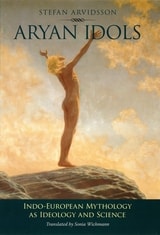
Aryan Idols
Indo-European Mythology as Ideology and ScienceStefan Arvidsson
University of Chicago Press, 2006
Stefan Arvidsson traces the evolution of the Aryan idea through the nineteenth century—from its roots in Bible-based classifications and William Jones’s discovery of commonalities among Sanskrit, Latin, and Greek to its use by scholars in fields such as archaeology, anthropology, folklore, comparative religion, and history. Along the way, Arvidsson maps out the changing ways in which Aryans were imagined and relates such shifts to social, historical, and political processes. Considering the developments of the twentieth century, Arvidsson focuses on the adoption of Indo-European scholarship (or pseudoscholarship) by the Nazis and by Fascist Catholics.
A wide-ranging discussion of the intellectual history of the past two centuries, Aryan Idols links the pervasive idea of the Indo-European people to major scientific, philosophical, and political developments of the times, while raising important questions about the nature of scholarship as well.
Aryan and Non-Aryan in India
Madhav M. Deshpande and Peter E. Hook, Editors
University of Michigan Press, 1979