Results by title
4413 books match the query 'Anthropology' and 363 start with a
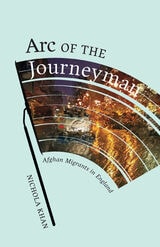
Arc of the Journeyman
Afghan Migrants in EnglandNichola Khan
University of Minnesota Press, 2021
A monumental account of one migrant community’s everyday lives, struggles, and aspirations
Forty years of continuous war and conflict have made Afghans the largest refugee group in the world. In this first full-scale ethnography of Afghan migrants in England, Nichola Khan examines the imprint of violence, displacement, kinship obligations, and mobility on the lives and work of Pashtun journeyman taxi drivers in Britain. Khan’s analysis is centered in the county of Sussex, site of Brighton’s orientalist Royal Pavilion and the former home of colonial propagandist Rudyard Kipling. Her nearly two decades of relationships and fieldwork have given Khan a deep understanding of the everyday lives of Afghan migrants, who face unrelenting pressures to remit money to their struggling relatives in Pakistan and Afghanistan, adhere to traditional values, and resettle the wives and children they have left behind.
This kaleidoscopic narrative is enriched by the migrants’ own stories and dreams, which take on extra significance among sleep-deprived taxi drivers. Khan chronicles the way these men rely on Pashto poems and aphorisms to make sense of what is strange or difficult to bear. She also attests to the pleasures of local family and friends who are less demanding than kin back home—sharing connection and moments of joy in dance, excursions, picnics, and humorous banter. Khan views these men’s lives through the lenses of movement—the arrival of friends and family, return visits to Pakistan, driving customers, even the journey to remit money overseas—and immobility, describing the migrants who experience “stuckness” caused by unresponsive bureaucracies, chronic insecurity, or struggles with depression and other mental health conditions.
Arc of the Journeyman is a deeply humane portrayal that expands and complicates current perceptions of Afghan migrants, offering a finely analyzed description of their lives and communities as a moving, contingent, and fully contemporary force.
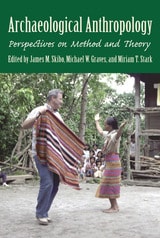
Archaeological Anthropology
Perspectives on Method and TheoryEdited by James M. Skibo, Michael W. Graves, and Miriam T. Stark
University of Arizona Press, 2014
In this collection of twelve new chapters, four generations of Longacre protégés show how they are building upon and developing but also modifying the theoretical paradigm that remains at the core of Americanist archaeology. The contributions focus on six themes prominent in Longacre’s career: the intellectual history of the field in the late twentieth century, archaeological methodology, analogical inference, ethnoarchaeology, cultural evolution, and reconstructing ancient society.
More than a comprehensive overview of the ideas developed by one of the most influential scholars in the field, however, Archaeological Anthropology makes stimulating contributions to contemporary research. The contributors do not unequivocally endorse Longacre’s ideas; they challenge them and expand beyond them, making this volume a fitting tribute to a man whose robust research and teaching career continues to resonate.
Archaeological Approaches to Market Exchange in Ancient Societies
Christopher P. Garraty
University Press of Colorado, 2010
Drawing from historical documents and archaeological records from Mesoamerica, the U.S. Southwest, East Africa, and the Andes, this volume reveals the complexity of ancient marketplace development and economic behavior both in hierarchical and non-hierarchical societies. Highlighting four principal themes-the defining characteristics of market exchange; the recognition of market exchange archaeologically; the relationship among market, political, and other social institutions; and the conditions in which market systems develop and change-the book contains a strong methodological and theoretical focus on market exchange.
Diverse contributions from noted scholars show the history of market exchange and other activities to be more dynamic than scholars previously appreciated. Archaeological Approaches to Market Exchange in Ancient Societies will be of interest to archaeologists, anthropologists, material-culture theorists, economists, and historians.
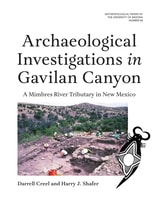
Archaeological Investigations in Gavilan Canyon
A Mimbres River Tributary in New MexicoDarrell Creel and Harry J. Shafer
University of Arizona Press, 2027
In the 1980s, Texas A&M University’s NAN Ranch Project included surveys and excavations in Gavilan Canyon, a major tributary of the Mimbres River. Uniquely, these excavations documented water control systems and their uses. Collected and now made available for the first time, Archaeological Investigations in Gavilan Canyon shares results from the excavations that were conducted primarily at Pueblo Vinegaroon, a Classic Period Mimbres pueblo of about twenty rooms, and at nearby Cholla Village.
During the NAN Ranch Project, researchers conducted extensive surveys of the canyon from its confluence with the Mimbres River and documented numerous sites dating to as early as Early Archaic through Classic Mimbres. The results also document pithouse sites as well as numerous small masonry pueblos. Analysis shows that the ebb and flow of late prehistoric occupation in Gavilan Canyon largely matches the occurrence of wet periods and prolonged droughts.
The book reveals that the changes in occupation in Gavilan Canyon help explain changes seen in the Mimbres River Valley, including the extensively excavated NAN Ranch and Swarts sites.
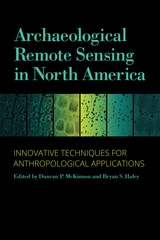
Archaeological Remote Sensing in North America
Innovative Techniques for Anthropological ApplicationsEdited by Duncan P. McKinnon and Bryan S. Haley
University of Alabama Press, 2017
Updating the highly praised 2006 publication Remote Sensing in Archaeology, edited by Jay K. Johnson, Archaeological Remote Sensing in North America: Innovative Techniques for Anthropological Applications is a must-have volume for today’s archaeologist. Targeted to practitioners of archaeological remote sensing as well as students, this suite of current and exemplary applications adheres to high standards for methodology, processing, presentation, and interpretation.
The use of remote sensing technologies to address academic and applied archaeological and anthropological research problems is growing at a tremendous rate in North America. Fueling this growth are new research paradigms using innovative instrumentation technologies and broader-area data collection methods. Increasingly, investigators pursuing these new approaches are integrating remote sensing data collection with theory-based interpretations to address anthropological questions within larger research programs.
In this indispensable volume, case studies from around the country demonstrate the technically diverse and major remote sensing methods and their integration with relevant technologies, such as geographic information systems (GIS) and global positioning systems (GPS), and include various uses of the “big four”: magnetometry, resistivity, ground-penetrating radar (GPR), and electromagnetic induction.
The study explores four major anthropological themes: site structure and community organization; technological transformation and economic change; archaeological landscapes; and earthen mound construction and composition. Concluding commentary from renowned expert Kenneth L. Kvamme overviews the practices, advances, and trends of geophysics and remote sensing in the past decade.
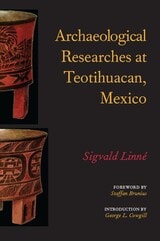
Archaeological Researches at Teotihuacan, Mexico
Sigvald Linne, with a foreword by Staffan Brunius and introduction by George L.
University of Alabama Press, 2003
In 1932, the Ethnographical Museum of Sweden sent an archaeological expedition to Mexico under the direction of Sigvald Linné to determine the full extent of this ancient Teotihuacan occupation and to collect exhibit-quality artifacts. Of an estimated 2,000-plus residential compounds at Teotihuacan, only 20 apartment-like structures were excavated at the time. Yet Linné’s work revealed residential patterns that have been confirmed later in other locations.
Some of the curated objects from the Valley of Mexico and the adjacent state of Puebla are among the most rare and unique artifacts yet found. Another important aspect of this research was that, with the aid of the Museum of Natural History in Washington, Linné’s team conducted ethnographic interviews with remnant native Mexican peoples whose culture had not been entirely destroyed by the Conquest, thereby collecting and preserving valuable information for later research.
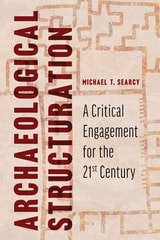
Archaeological Structuration
A Critical Engagement for the Twenty-First CenturyMichael T. Searcy
University of Arizona Press, 2025
To illustrate the usefulness of structuration theory, archaeologist Michael T. Searcy deploys it to uncover new understandings of ancient societies, particularly focusing on the Casas Grandes civilization in precolonial northern Mexico. Spanning more than seven hundred years, this society exemplifies the rise of social complexity in the Western Hemisphere. Searcy reexamines previous hypotheses about major structural shifts during the twelfth and thirteenth centuries CE, providing fresh insights and updated perspectives.
This book not only revisits the foundational influence of structuration theory but also introduces new methodologies to study the longue durée, the long-term historical trajectories of ancient societies. Searcy deftly bridges the gap between theoretical frameworks and practical archaeological applications, providing a thorough analysis of how structuration can address real-world problems through the lens of ancient societal transformations.
Archaeology As Anthropology
A Case StudyWilliam A. Longacre
University of Arizona Press, 1970

Archaeology and Its Avatars
Science and Culture in Latin AmericaJorge Coronado, Alexander Herrera Wassilowsky
Northwestern University Press, 2026
Illuminating the impact of archaeology on the culture and politics of Latin America
Since the mid-nineteenth century, archaeology has played a critical role in historicizing space and shaping cultural imaginaries. It has brought modern scientific practices into structured contact with ancient objects and landscapes, on the one hand, and modern Indigenous cultures in their material and historical complexity, on the other. Archaeology has thus served a variety of disciplines and practices, from history and anthropology to literary and social criticism and critical theory, and has actively animated practices quite distinct from itself, such as public policy, tourism, urban planning, art, literature, and nation-building.
This volume provides a unique analysis of a disciplinary formation crucial to the study of cultural history and theory in Latin America. The contributors represent archaeologists and scholars from a variety of disciplines within the humanities, each of whom approaches archaeology as theory and praxis. Collectively, they map the differences and similarities between archaeological interventions and the ways in which the materiality, practice, and discourse of archaeology have been taken up as analytic, metaphor, and discursive strategy.
Archaeology of Minnesota
The Prehistory of the Upper Mississippi River RegionGuy Gibbon
University of Minnesota Press, 2012
Histories of Minnesota typically begin with seventeenth-century French fur traders exploring the western shores of Lake Superior. And yet, archaeology reveals that Native Americans lived in the region at least 13,000 years before such European incursions. Archaeology of Minnesota tells their story—or as much as the region’s wealth of artifacts, evidence of human activity, and animal and plant remains can convey.
From archaeological materials, Guy Gibbon reconstructs the social, economic, and political systems—the lifeways—of those who inhabited what we now call Minnesota for thousands of years before the first contact between native peoples and Europeans. From the boreal coniferous forests to the north, to the tall grass prairie to the west and southwest, to the deciduous forest to the east and southeast, the richly diverse land of the upper Mississippi River region, crossed and bordered by all manner of waterways, was a virtual melting pot of prehistoric cultures.
Demonstrating how native cultures adapted and evolved over time, Gibbon provides an explanation that is firmly rooted in the nature of local environments. In doing so, he shows how the study of Minnesota archaeology is relevant to a broader understanding of long-term patterns of change in human development throughout the world.

Archaeology of North Pacific Fisheries
Edited by Madonna L. Moss and Aubrey Cannon
University of Alaska Press, 2011
For thousands of years, fisheries were crucial to the sustenance of the First Peoples of the Pacific Coast. Yet human impact has left us with a woefully incomplete understanding of their histories prior to the industrial era. Covering Alaska, British Columbia, and Puget Sound, The Archaeology of North Pacific Fisheries illustrates how the archaeological record reveals new information about ancient ways of life and the histories of key species. Individual chapters cover salmon, as well as a number of lesser-known species abundant in archaeological sites, including pacific cod, herring, rockfish, eulachon, and hake. In turn, this ecological history informs suggestions for sustainable fishing in today’s rapidly changing environment.
Architecture Of Grasshopper Pueblo, The
Charles Riggs
University of Utah Press, 2011
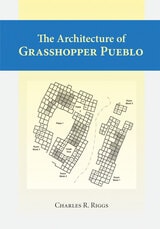
The long history of field research at Grasshopper, a massive, 500-room pueblo in an isolated mountain meadow in east-central Arizona, has produced a wealth of architectural information. Drawing on this extensive research, Charles Riggs reconstructs the pueblo, and provides a glimpse into the everyday life of the community at a critical time in Southwest prehistory.
Between AD 1300 and 1330, a group consisting mainly of newcomers to the area established and then enlarged Grasshopper. From the architectural remnants excavated by the University of Arizona Archaeological Field School it is possible to determine that the earliest arrivals settled Grasshopper relatively quickly and that subsequent groups from the region and the Colorado Plateau built their houses next to kinsmen. The houses of locals and immigrants remained separate in discrete room blocks despite their occupants’ participation in communal groups.
Ultimately short-lived, by AD 1330 the influx of immigrants tapered and the architecture came to reflect a more seasonal, less intensive use of the area. Eventually the community was abandoned and the walls were left to crumble. In The Architecture of Grasshopper Pueblo, Riggs gives us a new view of community life at this ancient Puebloan site.
Architecture of Migration
The Dadaab Refugee Camps and Humanitarian SettlementAnooradha Iyer Siddiqi
Duke University Press, 2024
Architectures of Hope
Infrastructural Citizenship and Class Mobility in Brazil's Public HousingMoisés Kopper
University of Michigan Press, 2022
Architectures of Hope examines how communal idealism, electoral politics, and low-income consumer markets made first-time homeownership a reality for millions of low-income Brazilians over the last ten years.
Drawing on a five-year-long ethnography among city planners, architects, street-level bureaucrats, politicians, market and bank representatives, community leaders, and past, present, and future beneficiaries, Moisés Kopper tells the story of how a group of grassroots housing activists rose from oblivion to build a model community. He explores the strategies set forth by housing activists as they waited and hoped for—and eventually secured—homeownership through Minha Casa Minha Vida’s public-private infrastructure. By showing how these efforts coalesced in Porto Alegre—Brazil’s once progressive hotspot—he interrogates the value systems and novel arrangements of power and market that underlie the country’s post-neoliberal project of modern and inclusive development.
By chronicling the making and remaking of material hope in the aftermath of Minha Casa Minha Vida, Architectures of Hope reopens the future as a powerful venue for ethnographic inquiry and urban development.
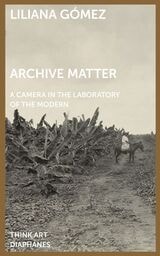
Archive Matter
A Camera in the Laboratory of the ModernLiliana Gómez
Diaphanes, 2023
A journey through the United Fruit Company’s photo archive and its documentation of corporate expansion into the Caribbean.
The establishment of the United Fruit Company as a global political agent with its banana plantations was met with considerable resistance. Now the company’s photographic records are the focal point of Archive Matter as it examines photography’s historical and political impact through the argument that this overlooked, but important, archive made capitalist expansion into the Caribbean possible.
Author Liliana Gómez examines the images from within their “optical unconscious” and via the archive’s silences and omissions. The implication of these silences, Gómez argues, is the attempt to conceal the violence embedded within the realities of the plantations’ daily operations and corporate efforts to “modernize” the Caribbean.

Archives of the Insensible
Of War, Photopolitics, and Dead MemoryAllen Feldman
University of Chicago Press, 2015
Excavating a scenography of trials—formal or covert, orchestrated or improvised, criminalizing or criminal—Feldman shows how the will to truth disappears into the very violence it interrogates. He maps the sensory inscriptions and erasures of war, highlighting war as a media that severs factuality from actuality to render violence just. He proposes that war promotes an anesthesiology that interdicts the witness of a sensory and affective commons that has the capacity to speak truth to war. Feldman uses layered deconstructive description to decelerate the ballistical tempo of war to salvage the embodied actualities and material histories that war reduces to the ashes of collateral damage, the automatism of drones, and the opacities of black sites. The result is a penetrating work that marries critical visual theory, political philosophy, anthropology, and media archeology into a trenchant dissection of emerging forms of sovereignty and state power that war now makes possible.
Arctic Adaptations
Native Whalers and Reindeer Herders of Northern EurasiaIgor Krupnik
Dartmouth College Press, 2002

Arctic Madness
The Anthropology of a DelusionPierre Déléage
HAU, 2020

Arctic Wars, Animal Rights, Endangered Peoples
Finn. Lynge
Dartmouth College Press, 2002
Arcticness
Power and Voice from the NorthIlan Kelman
University College London, 2017

Arguing Sainthood
Modernity, Psychoanalysis, and IslamKatherine Pratt Ewing
Duke University Press, 1997
Ewing critiques Eurocentric cultural theorists and Orientalist discourse while also taking issue with expatriate postcolonial thinkers Homi Bhabha and Gayatri Spivak. She challenges the notion of a monolithic Islamic modernity in order to explore the lived realities of individuals, particularly those of Pakistani saints and their followers. By examining the continuities between current Sufi practices and earlier popular practices in the Muslim world, Ewing identifies in the Sufi tradition a reflexive, critical consciousness that has usually been associated with the modern subject. Drawing on her training in clinical and theoretical psychoanalysis as well as her anthropological fieldwork in Lahore, Pakistan, Ewing argues for the value of Lacan in anthropology as she provides the basis for retheorizing postcolonial studies.

Arguing it Out
Discussion in Twelfth-Century ByzantiumAveril Cameron
Central European University Press, 2016

Arikara Agriculture
Mother Corn’s Gift to the Sahnish PeopleArikara Agriculture Project; With collaborators Kelly Kindscher, Loren Yellow Bird, Michael Yellow Bird, Logan Sutton, Loren White, and Lisa Castle
University of Arizona Press, 2027
Drawing on a remarkable combination of early twentieth-century field notes, archaeological evidence, historical accounts, and the voices of Arikara collaborators, Arikara Agriculture: Mother Corn’s Gift to the Sahnish People offers a richly layered account of one of the Plains’ most accomplished agricultural societies.
Living along the Missouri River in present-day North and South Dakota, the Sahnish (Arikara) people cultivated expansive fields of corn, beans, squash, sunflowers, and other crops, sustaining vibrant communities and extensive trade networks. At the heart of this remarkable book are the invaluable records of ethnobotanist Melvin Gilmore, who documented the knowledge of Arikara elders between 1916 and 1924, capturing a lifeway on the cusp of profound change.
More than a historical study, this volume foregrounds the cultural, spiritual, and ecological significance of agriculture in Sahnish life. The contributors discuss how corn was the center of the Arikaras’ world and how it, and other agricultural crops, were important not just as food but also for the culture. The book illuminates traditional horticultural methods, food preparation techniques, and the enduring relevance of these practices today.
Both a vital contribution to ethnobiology and a community-centered preservation of knowledge, this work speaks to ongoing conversations about Indigenous foodways, resilience, and the revitalization of traditional ecological knowledge.
Army of Hope, Army of Alienation
Culture and Contradiction in the American Army Communities of Cold War GermanyJohn P. Hawkins
University of Alabama Press, 2004
An inside look at the promises, pressures, and paradoxes of American military life in Cold War Germany.
Army life has always been known as a life of sacrifice, challenge, and frustration, yet one filled also with deep satisfactions. This is so for the soldiers’ families as much as for the soldiers themselves. Over the years, military and civilian leaders of the US Army have tried to reduce the hardships of military life by creating an array of community services designed to provide social support for soldiers and families and help them live satisfying lives in military communities.
Unfortunately, this effort has not been particularly successful, and frustration, dissatisfaction, and alienation persist among soldiers and family member in the US Army communities in Germany. Discontent continues because the underlying sources of alienation in the Army and among its families are highly complex, poorly understood, and therefore hardly addressed by the Army’s quality-of-life programs that are intended to make soldier and family life more bearable.
In Army of Hope, Army of Alienation: Culture and Contradiction in the American Army Communities of Cold War Germany, the author seeks to penetrate the logic, social structure, and daily practice of life in the American military communities that lay scattered along the frontier between East and West Germany during the final years of the Cold War. In coming to understand the life and thought of these American soldiers and families, ordinary American citizens can learn much about their military forces and about their own society and culture. In addition, a greater understanding about how people work and live around an institution that is at once so important and yet tasked with a mission so different from that of ordinary pursuits can stimulate social scientists and concerned citizens to think differently about culture, society, and behavior in general.

Around the Day in Eighty Worlds
Politics of the PluriverseMartin Savransky
Duke University Press, 2021
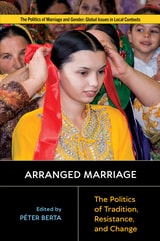
Arranged Marriage
The Politics of Tradition, Resistance, and ChangePéter Berta
Rutgers University Press, 2023
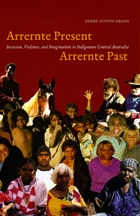
Arrernte Present, Arrernte Past
Invasion, Violence, and Imagination in Indigenous Central AustraliaDiane J. Austin-Broos
University of Chicago Press, 2008
Employing ethnographic and archival research, Diane Austin-Broos traces the history of the Arrernte as they have transitioned from a society of hunter-gatherers to members of the Hermannsburg Mission community to their present, marginalized position in the modern Australian economy. While she concludes that these wrenching structural shifts led to the violence that now marks Arrernte communities, she also brings to light the powerful acts of imagination that have sustained a continuing sense of Arrernte identity.
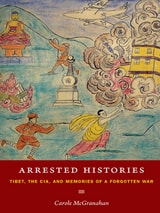
Arrested Histories
Tibet, the CIA, and Memories of a Forgotten WarCarole McGranahan
Duke University Press, 2010
Drawing on rich ethnographic and historical research, McGranahan tells the story of the Tibetan resistance and the social processes through which this history is made and unmade, and lived and forgotten in the present. Fulfillment of veterans’ desire for recognition hinges on the Dalai Lama and “historical arrest,” a practice in which the telling of certain pasts is suspended until an undetermined time in the future. In this analysis, struggles over history emerge as a profound pain of belonging. Tibetan cultural politics, regional identities, and religious commitments cannot be disentangled from imperial histories, contemporary geopolitics, and romanticized representations of Tibet. Moving deftly from armed struggle to nonviolent hunger strikes, and from diplomatic offices to refugee camps, Arrested Histories provides powerful insights into the stakes of political engagement and the cultural contradictions of everyday life.
Art History and Anthropology
Modern Encounters, 1870–1970Peter Probst
J. Paul Getty Trust, The, 2023
While today we are experiencing a revival of world art and the so-called global turn of art history, encounters between art historians and anthropologists remain rare. Even after a century and a half of interactions between these epistemologies, a skeptical distance prevails with respect to the disciplinary other. This volume is a timely exploration of the roots of this complex dialogue, as it emerged worldwide in the colonial and early postcolonial periods, between 1870 and 1970.
Exploring case studies from Australia, Austria, Brazil, France, Germany, and the United States, this volume addresses connections and rejections between art historians and anthropologists—often in the contested arena of “primitive art.” It examines the roles of a range of figures, including the art historian–anthropologist Aby Warburg, the modernist artist Tarsila do Amaral, the curator-impresario Leo Frobenius, and museum directors such as Alfred Barr and René d’Harnoncourt. Entering the current debates on decolonizing the past, this collection of essays prompts reflection on future relations between these two fields.
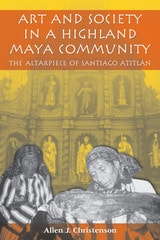
Art and Society in a Highland Maya Community
The Altarpiece of Santiago AtitlánBy Allen J. Christenson
University of Texas Press, 2001
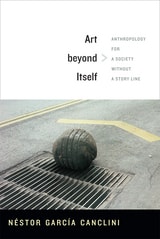
Art beyond Itself
Anthropology for a Society without a Story LineNéstor García Canclini
Duke University Press, 2014

Art, Politics, and Commerce in Chinese Cinema
Edited by Ying Zhu and Stanley Rosen
Hong Kong University Press, 2010

Artery
Racial Ecologies on Colombia's Magdalena RiverAustin Zeiderman
Duke University Press, 2025

Artifactual
Forensic and Documentary KnowingElizabeth Anne Davis
Duke University Press, 2023
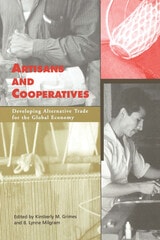
Artisans and Cooperatives
Developing Alternative Trade for the Global EconomyKimberly M. Grimes
University of Arizona Press, 2000
With new markets opening up for goods produced by artisans from all parts of the world, craft commercialization and craft industries have become key components of local economies. Now with the emergence of the Fair Trade movement and public opposition to sweatshop labor, many people are demanding that artisans in third world countries not be exploited for their labor.
Bringing together case studies from the Americas and Asia, this timely collection of articles addresses the interplay among subsistence activities, craft production, and the global market. It contributes to current debates on economic inequality by offering practical examples of the political, economic, and cultural issues surrounding artisan production as an expressive vehicle of ethnic and gender identity.
Striking a balance between economic and ethnographic analyses, the contributors observe what has worked and what hasn't in a range of craft cooperatives and show how some artisans have expanded their entrepreneurial role by marketing crafts in addition to producing them. Among the topics discussed are the accommodation of craft traditions in the global market, fair trade issues, and the emerging role of the anthropologist as a proactive agent for artisan groups.
As the gap between rich and poor widens, the fate of subsistence economies seems more and more uncertain. The artisans in this book show that people can and do employ innovative opportunities to develop their talents, and in the process strengthen their ethnic identities.
ContentsIntroduction: Facing the Challenges of Artisan Production in the Global Market / Kimberly M. Grimes and B. Lynne Milgram
Democratizing International Production and Trade: North American Alternative Trading Organizations / Kimberly M. Grimes
Building on Local Strengths: Nepalese Fair Trade Textiles / Rachel MacHenry
"That They Be in the Middle, Lord": Women, Weaving, and Cultural Survival in Highland Chiapas, Mexico / Christine E. Eber
The International Craft Market: A Double-Edged Sword for Guatemalan Maya Women / Martha Lynd
Of Women, Hope, and Angels: Fair Trade and Artisan Production in a Squatter Settlement in Guatemala City / Brenda Rosenbaum
Reorganizing Textile Production for the Global Market: Women’s Craft Cooperatives in Ifugao, Upland Philippines / B. Lynne Milgram
Textile Production in Rural Oaxaca, Mexico, and the Complexities of the Global Market for Handmade Crafts / Jeffrey H. Cohen
"Part-Time for Pin Money": The Legacy of Navajo Women’s Craft Production / Kathy M’Closkey
The Hard Sell: Anthropologists as Brokers of Crafts in the Global Marketplace / Andrew Causey
Postscript: To Market, To Market / June Nash
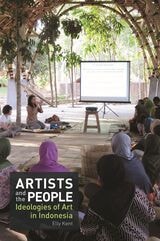
Artists and the People
Ideologies of Art in IndonesiaElly Kent
National University of Singapore Press, 2022
Exploring the work of established and emerging artists in Indonesia’s vibrant art world, this book examines why so many artists in the world’s largest archipelagic nation choose to work directly with people in their art practices. While the social dimension of Indonesian art makes it distinctive in the globalized world of contemporary art, Elly Kent is the first to explore this engagement in Indonesian terms. What are the historical, political, and social conditions that lie beneath these polyvalent practices? How do formal and informal institutions, communities, and artist-run initiatives contribute to the practices and discourses behind socially engaged art in Indonesia? Drawing on interviews with artists, translations of archival material, visual analyses, and participation in artists’ projects, this book presents a unique, interdisciplinary examination of ideologies of art in Indonesia.

Aryan Cowboys
White Supremacists and the Search for a New Frontier, 1970–2000By Evelyn A. Schlatter
University of Texas Press, 2006
During the last third of the twentieth century, white supremacists moved, both literally and in the collective imagination, from midnight rides through Mississippi to broadband-wired cabins in Montana. But while rural Montana may be on the geographical fringe of the country, white supremacist groups were not pushed there, and they are far from "fringe elements" of society, as many Americans would like to believe. Evelyn Schlatter's startling analysis describes how many of the new white supremacist groups in the West have co-opted the region's mythology and environment based on longstanding beliefs about American character and Manifest Destiny to shape an organic, home-grown movement.
Dissatisfied with the urbanized, culturally progressive coasts, disenfranchised by affirmative action and immigration, white supremacists have found new hope in the old ideal of the West as a land of opportunity waiting to be settled by self-reliant traditional families. Some even envision the region as a potential white homeland. Groups such as Aryan Nations, The Order, and Posse Comitatus use controversial issues such as affirmative action, anti-Semitism, immigration, and religion to create sympathy for their extremist views among mainstream whites—while offering a "solution" in the popular conception of the West as a place of freedom, opportunity, and escape from modern society. Aryan Cowboys exposes the exclusionist message of this "American" ideal, while documenting its dangerous appeal.
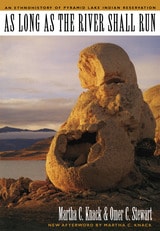
As Long As The River Shall Run
An Ethnohistory Of Pyramid Lake Indian ReservationMartha C. Knack
University of Nevada Press, 1999
Asian Biotech
Ethics and Communities of FateAihwa Ong and Nancy N. Chen, eds.
Duke University Press, 2010
Contributors
Vincanne Adams
Nancy N. Chen
Stefan Ecks
Kathleen Erwin
Phuoc V. Le
Jennifer Liu
Aihwa Ong
Margaret Sleeboom-Faulkner
Kaushik Sunder Rajan
Wen-Ching Sung
Charis Thompson
Ara Wilson
Aspiring in Later Life
Movements across Time, Space, and GenerationsMegha Amrith
Rutgers University Press, 2023
This book is also freely available online as an open-access digital edition.
Download the open access book here.
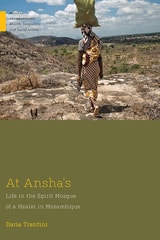
At Ansha's
Life in the Spirit Mosque of a Healer in MozambiqueDaria Trentini
Rutgers University Press, 2021

At Play in Belfast
Children's Folklore and Identities in Northern IrelandLanclos, Donna M
Rutgers University Press, 2003
For Lanclos, children's experiences stimulate discussions about culture and society. In her words, "Children's everyday lives are more than just preparation for their futures, but are life itself."
At Play in Belfast is a volume in the Rutgers Series in Childhood Studies, edited by Myra Bluebond-Langner.
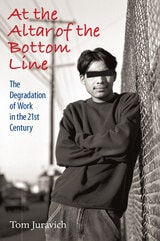
At the Altar of the Bottom Line
The Degradation of Work in the 21st CenturyThomas Juravich
University of Massachusetts Press, 2009
Tom Juravich combines oral history with social and economic analysis to provide a vivid account of the multiple challenges presented in today's workplaces.
Based on extensive interviews with workers in four different industries, this book takes us behind the statistics of the economic collapse and into the lives of Americans who are struggling to make ends meet and support their families.
At a Verizon call center in Andover, Massachusetts, customer service reps find themselves overwhelmed by the pace of work and the constant monitoring. They describe a daily routine marked by regimentation, intense pressure to sell, and unrelenting stress. In New Bedford, undocumented Guatemalans in the fish-processing industry are fired if they don't work fast enough, cheated out of wages, and mistreated by supervisors. Juravich describes a brutal immigration raid by U.S. Immigration and Customs Enforcement that divided families and forced workers further underground.
Juravich then takes us inside the operating rooms at the Boston Medical Center, where hospital consolidation has brought a new “bottom line” philosophy that has fundamentally altered the way patient care is delivered. Surgery takes place almost non-stop, driving some nurses from their chosen profession and leaving those who remain exhausted.
The final case study looks at the shuttering of the Jones Beloit plant, an internationally known manufacturer of machinery for the paper industry. Despite the best efforts of highly skilled and productive workers to save their plant, it was abruptly closed and they were abandoned after their CEO recklessly became involved in a shaky foreign investment.
Juravich argues that workers face a series of paradoxes in the contemporary American workplace. They can no longer assume that large established firms create good jobs. The new working conditions often resemble what was traditionally associated with marginal and low-wage employers. He concludes that we must bring a discussion about the quality of jobs back into the public discourse and that a “good jobs” strategy is a fundamental building block to economic recovery.
Workers' voices are front and center in this highly readable book. It includes striking photographs by Paul Shoul and a CD that presents a series of audio documentaries with excerpts from the interviews, as well as four original songs written and performed by Juravich.

At the Edge of the Pampas
Land and Longing in ArgentinaRachel Cypher
University of Arizona Press, 2027
Industrial agriculture has transformed vast stretches of the Earth, but few places reveal its contradictions more clearly than the Pampas of Argentina.
In At the Edge of the Pampas, anthropologist Rachel Cypher traces the explosive rise of genetically modified soybeans across one of the world’s great agricultural heartlands. Drawing on immersive long-term fieldwork, the book moves from soybean fields and cattle feedlots to dryland forests to show that industrial agriculture takes many forms. Soy—one of the world’s most standardized commodities—must first pass through local ecologies, informal economies, inherited obligations, and intimate relations of trust before it can circulate as a global asset.
Urgent and deeply original, At the Edge of the Pampas offers a major rethinking of how value is gathered within industrial capitalism and how unruly social and ecological life persists inside even the most engineered landscapes.
At the Heart of the State
The Moral World of InstitutionsDidier Fassin, et al.
Pluto Press, 2015
The state is often regarded as an abstract and neutral bureaucratic entity. Against this common sense idea, At the Heart of the State argues that it is also a concrete and situated reality, embodied in the work of its agents and inscribed in the issues of its time.
The result of a five-year investigation conducted by ten scholars, this book describes and analyses the police, the court system, the prison apparatus, the social services, and mental health facilities in France. Combining genealogy and ethnography, its authors show that these state institutions do not simply implement laws, rules and procedures: they mobilise values and affects, judgements and emotions. In other words, they reflect the morality of the state.
Of immense interest to both social scientists and political theorists, this work will make an important contribution to the ever expanding literature on the contemporary state.

At the Limits of Cure
Bharat Jayram Venkat
Duke University Press, 2021
At the Pivot of East and West
Ethnographic, Literary, and Filmic ArtsMichael M. J. Fischer
Duke University Press, 2023
At the Risk of Being Heard
Identity, Indigenous Rights, and Postcolonial StatesBartholomew Dean and Jerome M. Levi, Editors
University of Michigan Press, 2003
Combining rich ethnographic descriptions with clear theoretical analyses, At the Risk of Being Heard considers the paradoxical challenges and opportunities confronting indigenous peoples at the dawn of the twenty-first century. In the face of state-sanctioned violence, indigenous peoples encounter considerable risks when asserting their rights, especially to self-determination. Yet, if they remain silent or absent from new arenas of power, hiding in marginalized homelands or cultural practices, they risk being invisible to those allies that would aid them in their struggles for survival.
At the Risk of Being Heard offers needed insights for individuals working on issues of governance, sustainable development, resource management, globalization, and indigenous affairs. It will undoubtedly appeal to undergraduate and graduate students in anthropology, sociology, history, political science, peace studies, and to those students in courses that explore relationships among postcolonial states, indigenous peoples, and human rights.
Bartholomew Dean is Assistant Professor of Anthropology, University of Kansas. Jerome M. Levi is Associate Professor of Anthropology, Carleton College.
Atlantis, an Autoanthropology
Nathaniel Tarn
Duke University Press, 2022

Atlas, or the Anxious Gay Science
Georges Didi-Huberman
University of Chicago Press, 2018
In this illustrated exploration of Warburg and his great work, Georges Didi-Huberman leaps from Mnemosyne Atlas into a set of musings on the relation between suffering and knowledge in Western thought, and on the creative results of associative thinking. Deploying writing that delights in dramatic jump cuts reminiscent of Warburg’s idiosyncratic juxtapositions, and drawing on a set of sources that ranges from ancient Babylon to Walter Benjamin, Atlas, or the Anxious Gay Science is rich in Didi-Huberman’s trademark combination of elan and insight.