Results by title
4154 books match the query 'State & Local' and 398 start with a
Arkansas and the New South, 1874–1929
Carl Moneyhon
University of Arkansas Press, 1997
This study is the first published in the Histories of Arkansas, a new series that will build a complete chronological history of the state from the colonial period through modern times. Under the general editorship of noted historian Elliott West, this series will include various thematic histories as well as the chronologically arranged core volumes.
In Arkansas and the New South, 1874–1929 Carl Moneyhon examines the struggle of Arkansas’s people to enter the economic and social mainstreams of the nation in the years from the end of Reconstruction to the beginning of the Great Depression. Economic changes brought about by development of the timber industry, exploitation of the rich coal fields in the western part of the state, discovery of petroleum, and building of manufacturing industries transformed social institutions and fostered a demographic shift from rural to urban settings.
Arkansans were notably successful in bringing the New South to their state, relying on individual enterprise and activist government as they integrated more fully into the national economy and society. But by 1929 persistent problems in the still dominant agricultural sector, the onset of the depression, and heightening social tensions arrested progress and dealt the state a major economic setback that would only be overcome in the years following World War II.
Expanding upon scholarly articles that merely touch on this era in Arkansas history and delving into pertinent primary sources, Moneyhon offers not only an overall look at the state but also an explanation for the singular path it took during these momentous years.
Arkansas in Ink
Gunslingers, Ghosts, and Other Graphic TalesGuy Lancaster
Butler Center for Arkansas Studies, 2014
Arkansas in Modern America since 1930
Ben F. Johnson III
University of Arkansas Press, 2019
Particularly impressive for the breadth of its scope, Arkansas in Modern America since 1930 offers an overview of the factors that moved Arkansas from a primarily rural society to one more in step with the modern economy and perspectives of the nation as a whole. The narrative covers the roles of Daisy Bates, Sam Walton, Don Tyson, Bill Clinton, and other influential figures in the state’s history to reveal a state shaped by global as much as by local forces. The second edition of this important book will continue to set the standard for analysis and interpretation of Arkansas’s place in the contemporary world.
Arkansas in Modern America, 1930–1999
Ben F. Johnson III
University of Arkansas Press, 2000
Arkansas, 1800-1860
Remote and RestlessS. Charles Bolton
University of Arkansas Press, 1998
Often thought of as a primitive backwoods peopled by rough hunters and unsavory characters, early Arkansas was actually productive and dynamic in the same manner as other American territories and states. In this, the second volume in the Histories of Arkansas, S. Charles Bolton describes the emigration, mostly from other southern states, that carried Americans into Arkansas; the growth of an agricultural economy based on cotton, corn, and pork; the dominance of evangelical religion; and the way in which women coped with the frontier and made their own contributions toward its improvement. He closely compares the actual lifestyles of the settlers with the popularly held, uncomplimentary image.
Separate chapters deal with slavery and the lives of the slaves and with Indian affairs, particularly the dispossession of the native Quapaws and the later-arriving Cherokees. Political chapters explore opportunism in Arkansas Territory, the rise of the Democratic Party under the control of the Sevier-Johnson group known as the Dynasty, and the forces that led Arkansas to secede from the Union. In addition, Arkansas’s role in the Mexican War and the California gold rush is treated in detail.
In truth, geographic isolation and a rugged terrain did keep Arkansas underpopulated, and political violence and a disastrous experience in state banking tarnished its reputation, but the state still developed rapidly and successfully in this period, playing an important role on the southwestern frontier.
Winner of the 1999 Booker Worthen Literary Prize
Arkansas
A Concise HistoryJeannie M. Whayne
University of Arkansas Press, 2019
Distilled from Arkansas: A Narrative History, the definitive work on the subject since its original publication in 2002, Arkansas: A Concise History is a succinct one-volume history of the state from the prehistory period to the present. Featuring four historians, each bringing his or her expertise to a range of topics, this volume introduces readers to the major issues that have confronted the state and traces the evolution of those issues across time.
After a brief review of Arkansas’s natural history, readers will learn about the state’s native populations before exploring the colonial and plantation eras, early statehood, Arkansas’s entry into and role in the Civil War, and significant moments in national and global history, including Reconstruction, the Gilded Age, the Progressive Era, the Elaine race massacre, the Great Depression, both world wars, and the Civil Rights Movement. Linking these events together, Arkansas: A Concise History offers both an understanding of the state’s history and a perspective on that history’s implications for the political, economic, and social realities of today.
Arkansas
A Narrative HistoryJeannie M. Whayne
University of Arkansas Press, 2013
Arkansas: A Narrative History is a comprehensive history of the state that has been invaluable to students and the general public since its original publication. Four distinguished scholars cover prehistoric Arkansas, the colonial period, and the nineteenth and twentieth centuries and incorporate the newest historiography to bring the book up to date for 2012.
A new chapter on Arkansas geography, new material on the civil rights movement and the struggle over integration, and an examination of the state’s transition from a colonial economic model to participation in the global political economy are included. Maps are also dramatically enhanced, and supplemental teaching materials are available.
“No less than the first edition, this revision of Arkansas: A Narrative History is a compelling introduction for those who know little about the state and an insightful survey for others who wish to enrich their acquaintance with the Arkansas past.”
—Ben Johnson, from the Foreword
Arkansas’s Gilded Age
The Rise, Decline, and Legacy of Populism and Working-Class ProtestMatthew Hild
University of Missouri Press, 2018
The story of farmer and labor protest in Arkansas during the late nineteenth century offers lessons relevant to contemporary
working-class Americans in what some observers have called the “new Gilded Age.”
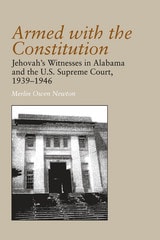
Armed with the Constitution
Jehovah's Witnesses in Alabama and the U.S Supreme Court, 1939-1946Merlin Owen Newton
University of Alabama Press, 1995
Armed with the Constitution stresses the courage of a black man, Rosco Jones, and a white woman, Grace Marsh, who dared to challenge the status quo in Alabama in the early 1940s. These two Jehovah’s Witnesses helped to lay a foundation for testing the constitutionality of state and local laws, establishing precedents that the Civil Rights movement, the feminist movement, and similar forces could follow. Newton has prepared a finely woven tale of oral, legal, and social history that opens a window on the world of the Jehovah’s Witnesses in Alabama.
More than a legal study, this book is also a dramatic history of two powerful personalities whose total commitment to their faith enabled them to carry the Jehovah’s Witnesses’ battle from rural Alabama to the halls of the U.S. Supreme Court.
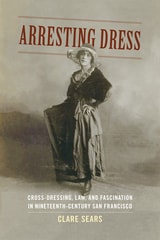
Arresting Dress
Cross-Dressing, Law, and Fascination in Nineteenth-Century San FranciscoClare Sears
Duke University Press, 2015
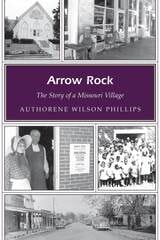
Arrow Rock
The Story of a Missouri VillageAuthorene Wilson Phillips
University of Missouri Press, 2005
Art and Life of Merritt Dana Houghton in the Northern Rockies, 1878-1919
by Michael A. Amundson
University of Wyoming Press, 2022
This lavishly illustrated biography details Houghton’s life and work from his birth in Michigan in 1846 to his death in 1919 in Spokane through extensive genealogical records, newspaper accounts, and his illustrations—including historic ranches and bird’s-eye views of Fort Collins, Colorado; Dillon, Montana; and Spokane, Washington and the only known illustrations of long-lost places like Pearl, Colorado, and Rambler, Wyoming. Also included is reproduction of a four-foot-by-eight-foot view of Sheridan, Wyoming and a sixty-image sample portfolio of his best-preserved illustrations organized by type.
Houghton’s work depicts the infrastructure of the new settler society that was remaking the West in the late nineteenth century and early twentieth century, and Amundson demonstrates how Houghton’s vision of the American West remains active today.

Art and the Subway
New York UndergroundFitzpatrick, Tracy
Rutgers University Press, 2009
Fitzpatrick captures the emotions of artists and riders alike, as she explores paintings, photographs, performance art, graffiti, and public art by artists such as Walker Evans, Bruce Davidson, DONDI, Keith Haring, Yayoi Kusama, Jacob Lawrence, Reginald Marsh, Elizabeth Murray, and many others. She also considers representations of the subway in film, on song sheet covers, and in illustration. By examining the cultural, technological, and social contexts for these creative interpretations, Fitzpatrick illuminates in fresh ways the contradictions and harmonies between public and private space.
Featuring 17 color plates and 80 black-and-white images, Art and the Subway takes readers on a fascinating ride through the visual history of one of the twentieth century's greatest urban planning endeavors as it grew, changed form, and reinvented itself with passion and vitality.
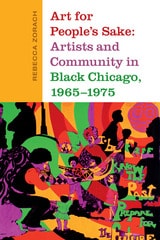
Art for People's Sake
Artists and Community in Black Chicago, 1965-1975Rebecca Zorach
Duke University Press, 2019

Art in Chicago
A History from the Fire to NowEdited by Maggie Taft and Robert Cozzolino
University of Chicago Press, 2018
Now that art is getting its due. Art in Chicago is a magisterial account of the long history of Chicago art, from the rupture of the Great Fire in 1871 to the present, Manierre Dawson, László Moholy-Nagy, and Ivan Albright to Chris Ware, Anne Wilson, and Theaster Gates. The first single-volume history of art and artists in Chicago, the book—in recognition of the complexity of the story it tells—doesn’t follow a single continuous trajectory. Rather, it presents an overlapping sequence of interrelated narratives that together tell a full and nuanced, yet wholly accessible history of visual art in the city. From the temptingly blank canvas left by the Fire, we loop back to the 1830s and on up through the 1860s, tracing the beginnings of the city’s institutional and professional art world and community. From there, we travel in chronological order through the decades to the present. Familiar developments—such as the founding of the Art Institute, the Armory Show, and the arrival of the Bauhaus—are given a fresh look, while less well-known aspects of the story, like the contributions of African American artists dating back to the 1860s or the long history of activist art, finally get suitable recognition. The six chapters, each written by an expert in the period, brilliantly mix narrative and image, weaving in oral histories from artists and critics reflecting on their work in the city, and setting new movements and key works in historical context. The final chapter, comprised of interviews and conversations with contemporary artists, brings the story up to the present, offering a look at the vibrant art being created in the city now and addressing ongoing debates about what it means to identify as—or resist identifying as—a Chicago artist today. The result is an unprecedentedly inclusive and rich tapestry, one that reveals Chicago art in all its variety and vigor—and one that will surprise and enlighten even the most dedicated fan of the city’s artistic heritage.
Part of the Terra Foundation for American Art’s year-long Art Design Chicago initiative, which will bring major arts events to venues throughout Chicago in 2018, Art in Chicago is a landmark publication, a book that will be the standard account of Chicago art for decades to come. No art fan—regardless of their city—will want to miss it.
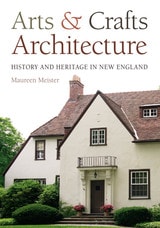
Arts and Crafts Architecture
History and Heritage in New EnglandMaureen Meister
University Press of New England, 2014
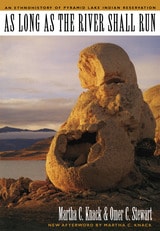
As Long As The River Shall Run
An Ethnohistory Of Pyramid Lake Indian ReservationMartha C. Knack
University of Nevada Press, 1999

As Others See Chicago
Impressions of Visitors, 1673-1933Bessie Louise Pierce
University of Chicago Press, 2004
First published in 1933 by the University of Chicago Press to mark the occasion of the Century of Progress Exhibition, As Others See Chicago consists of writings culled from over a thousand men and women who visited the city and commented on the best and worst it had to offer, from the skyscrapers to the stockyards. Originally compiled by Bessie Louise Pierce, the first major historian of Chicago, and featuring her own incisive commentary, the volume brings together the impressions of visitors to Chicago over two and a half centuries, from the early years of Westward Expansion to the height of the Great Depression. In addition to writings from better known personalities such as Rudyard Kipling and Waldo Frank, the book collects the opinions of missionaries, aristocrats, journalists, and politicians—observers who were perfectly placed to comment on the development of the city, its inhabitants, and well known events that would one day define Chicago history, such as the Great Fire of 1871 and the 1893 World's Fair.
Taking us back to a time when Chicago was "more astonishing than the wildest visions of the most vagrant imaginations," As Others See Chicago offers an enthralling portrait of an enduring American metropolis.
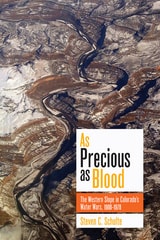
As Precious as Blood
The Western Slope in Colorado's Water Wars, 1900-1970Steven C. Schulte
University Press of Colorado, 2016
The diversion of water from Colorado’s Western Slope to meet the needs of the rest of the state has been a contentious issue throughout Colorado’s history. The source of Colorado’s water is in the snow that accumulates west of the Continental Divide, but the ever-growing population on the Front Range continues to require more municipal water. In As Precious as Blood, Steven C. Schulte examines the water wars between these two regions and how the western part of the state fits into Colorado’s overall water story, expanding the account of water politics he began in Wayne Aspinall and the Shaping of the American West.
Slow to build its necessary water infrastructure and suffering from a small population, little political power, and distance from sources of capital, the Western Slope of Colorado has struggled to maintain its water supply in the face of challenges from the Eastern Slope as well as from surrounding states. Schulte explains in detail the reasons, rationalizations, and resources involved in the multimillion-dollar dams and reclamation projects that divert much-needed water to the Front Range and elsewhere. He draws from archives, newspapers, and oral histories to show the interrelationships among twentieth-century Colorado water law, legislators from across the state, and powerful members of congress from the Western Slope, who have influenced water policy throughout the American West.
As Precious as Blood provides context for one of the most contentious legal, political, and economic periods in the state’s history. Schulte puts a human face on Colorado’s water wars by exploring their social and political dimensions alongside the technical and scientific perspectives.

As the Twig Is Bent
A MemoirWallace Byron Grange, Edited by Joseph L. Breitenstein and Richard P. Thiel
University of Wisconsin Press, 2020
Written when Grange was in his sixties, As the Twig Is Bent conveys how a leading conservationist was formed through his early relationship to nature. In beautifully composed vignettes, he details encounters both profound and minute, from the white-footed mice attracted by cookie crumbs in his boyhood clubhouse to the sounds of great horned owls echoing through the wintry woods. As he develops his own understanding of the natural world, he comes to an awareness of the dramatic and devastating role of humankind on ecosystems. Grange’s poignant observations still resonate today amid global conversations about the fate of our natural resources and climate change.
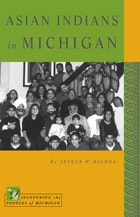
Asian Indians in Michigan
Arthur W. Helweg
Michigan State University Press, 2002
Since 1970, a growing number of Asian Indians have called Michigan home. Representative of the “new immigration,” Asian Indians come from a democratic country, are well-educated, and come from middle- and upper-class families. Unlike older immigrant groups, Asian Indians do not form urban ethnic enclaves or found their own communities to meet the challenges of living in a new society. As Arthur W. Helweg shows, Asian Indians contribute to the richness and diversity of Michigan’s culture through active participation in local institutions, while maintaining a strong ethnic identity rooted in India.

Aspen
The History of a Silver Mining Town, 1879 - 1893Malcolm J. Rohrbough
University Press of Colorado, 2000
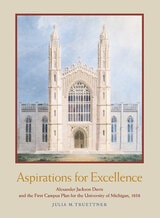
Aspirations for Excellence
Alexander Jackson Davis and the First Campus Plan for the University of Michigan, 1838Julia M. Truettner
University of Michigan Press, 2003
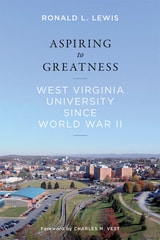
Aspiring to Greatness
West Virginia University Since World War IIRONALD L. LEWIS
West Virginia University Press, 2013
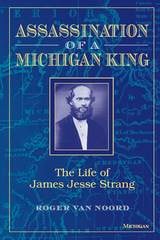
Assassination of a Michigan King
The Life of James Jesse StrangRoger Van Noord
University of Michigan Press, 1997
As a young man, Strang was a dreamer of grandiose dreams--dreams of power, of royalty, and of fame. For him, the dreams came true. But in his pursuit of those dreams, Strang walked a tightrope to avoid ever-impending doom. Strang's kingdom flourished despite perennial conflicts with non-Mormons, including a gun battle with mainlanders, and despite a major prosecution by the federal government. His kingdom was designed to be totally independent of the state and nation. And yet, he was a shrewd political tactician who took advantage of Michigan law to be twice elected to the state legislature and become what one Detroit newspaper called the most powerful politician in the state.
Here is Strang the man of contrasts and contradictions, the strident opponent of polygamy and the husband of five wives, the astute editor and the incendiary propagandist, the prophet and the scoundrel, the man who through the sheer force of his personality made his followers a group to be feared in his region.
Vast amount of fresh information, including contemporary journals, documents, and letters never before used by biographers help draw a portrait of one of the most complex and resourceful leaders in American history.
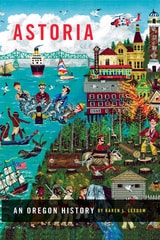
Astoria
An Oregon HistoryKaren L. Leedom
Oregon State University Press, 2021
Before Seattle, before Portland, there was Astoria.
The rest of the country is just beginning to discover Astoria, Oregon, that historic gem of a town at the mouth of the Columbia River west of Portland, and the oldest European-American settlement west of the Rockies.
The author provides a chronological look dating back to the 1500s, including European exploration, Native American life, logging, fishing, Chinese laborers in the salmon industry, a giant cheese in the Civil War, Oregon’s first female surgeon, Victorian architecture, and valiant Coast Guard rescues.
Published by Rivertide Publishing and distributed by Oregon State University Press
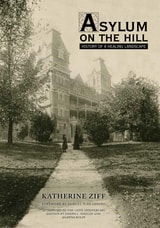
Asylum on the Hill
History of a Healing LandscapeKatherine Ziff
Ohio University Press, 2012
Asylum on the Hill is the story of a great American experiment in psychiatry, a revolution in care for those with mental illness, as seen through the example of the Athens Lunatic Asylum. Built in southeast Ohio after the Civil War, the asylum embodied the nineteenth-century “gold standard” specifications of moral treatment. Stories of patients and their families, politicians, caregivers, and community illustrate how a village in the coalfields of the Hocking River valley responded to a national movement to provide compassionate care based on a curative landscape, exposure to the arts, outdoor exercise, useful occupation, and personal attention from a physician.
Katherine Ziff’s compelling presentation of America’s nineteenth-century asylum movement shows how the Athens Lunatic Asylum accommodated political, economic, community, family, and individual needs and left an architectural legacy that has been uniquely renovated and repurposed. Incorporating rare photos, letters, maps, and records, Asylum on the Hill is a fascinating glimpse into psychiatric history.

Asylum, Prison, and Poorhouse
The Writings and Reform Work of Dorothea Dix in IllinoisDavid L. Lightner
Southern Illinois University Press, 1999
This illustrated collection of annotated newspaper articles and memorials by Dorothea Dix provides a forum for the great mid-nineteenth-century humanitarian and reformer to speak for herself.
Dorothea Lynde Dix (1802–87) was perhaps the most famous and admired woman in America for much of the nineteenth century. Beginning in the early 1840s, she launched a personal crusade to persuade the various states to provide humane care and effective treatment for the mentally ill by funding specialized hospitals for that purpose. The appalling conditions endured by most mentally ill inmates in prisons, jails, and poorhouses led her to take an active interest also in prison reform and in efforts to ameliorate poverty.
In 1846–47 Dix brought her crusade to Illinois. She presented two lengthy memorials to the legislature, the first describing conditions at the state penitentiary at Alton and the second discussing the sufferings of the insane and urging the establishment of a state hospital for their care. She also wrote a series of newspaper articles detailing conditions in the jails and poorhouses of many Illinois communities.
These long-forgotten documents, which appear in unabridged form in this book, contain a wealth of information on the living conditions of some of the most unfortunate inhabitants of Illinois. In his preface, David L. Lightner describes some of the vivid images that emerge from Dorothea Dix's descriptions of social conditions in Illinois a century and a half ago: "A helpless maniac confined throughout the bitter cold of winter to a dark and filthy pit. Prison inmates chained in hallways and cellars because no more men can be squeezed into the dank and airless cells. Aged paupers auctioned off by county officers to whoever will maintain them at the lowest cost."
Lightner provides an introduction to every document, placing each memorial and newspaper article in its proper social and historical context. He also furnishes detailed notes, making these documents readily accessible to readers a century and a half later. In his final chapter, Lightner assesses both the immediate and the continuing impact of Dix's work.
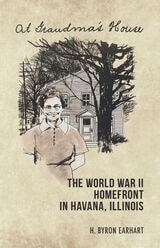
At Grandma's House
The World War II Homefront in Havana, IllinoisH. Byron Earhart with Illustrations by John Michael Downs
Southern Illinois University Press, 2020
When H. Byron Earhart’s father enlisted in the U.S. Navy in 1942, young Byron and his family moved into his grandparents' old-fashioned home with a coal-fired range and potbelly stove, and his mother took charge of the family business, a frozen food locker. Grandma was the undisputed head of the family. While his father served on the battleship USS Missouri, his grandparents and mother held the family and the business together. At Grandma’s House is a tribute to everyday Americans who provided the social glue for a country at war as they balanced fear and anxiety for loved ones with the challenges and pleasures of daily life. The experiences of the Earhart family and this Midwestern community, supplemented by contemporary documents, family photos, and professional illustrations, recount with vivid local color the drama that played out on the national and international stage.
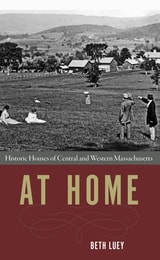
At Home
Historic Houses of Central and Western MassachusettsBeth Luey
University of Massachusetts Press, 2019
In At Home: Historic Houses of Central and Western Massachusetts, Beth Luey examines the lives and homes of acclaimed poets and writers, slaves who won their freedom, Civil War enlistees, socialites, and leading merchants. Drawing on architectural and genealogical texts, wills, correspondence, and diaries, Luey situates the stories of these notable homes and the people who inhabited them in the context of broader economic, social, and political transformations. Filled with vivid details and fresh perspectives, each chapter is sure to inspire first-time visitors and seasoned travelers alike. All the homes are open to the public.
At Home
Historic Houses of Eastern MassachusettsBeth Luey
University of Massachusetts Press, 2019
In At Home: Historic Houses of Eastern Massachusetts, Beth Luey uses architectural and genealogical texts, wills, correspondences, and diaries to craft delightful narratives of these notable abodes and the people who variously built, acquired, or renovated them. Filled with vivid details and fresh perspectives that will surprise even the most knowledgeable aficionados, each chapter is short enough to serve as an introduction for a visit to its house. All the homes are open to the public.
At Pyramid Lake
Bernard Mergen
University of Nevada Press, 2014
For the Paiute, it was a spiritual center that provided life-sustaining resources, such as the cui-ui, a fish unique to the lake and now endangered. For the ranchers and farmers who settled on tribal lands, the waters that flowed into it were necessary to raise cattle and crops. Mergen tells how these competing interests have interacted with the lake and with each other, from the Paiute War of 1860 to the present. The lake’s very existence was threatened by dams and water diversion; it was saved by tribal claims, favorable court decisions, improved water laws, and the rise of environmentalism.
At Pyramid Lake is about more than Indians and water wars, however. It is the story of railroads on the reservation and the role of federal, state, and private groups interested in sportfishing. It is about scientists, artists, and tourists who were captivated by the lake’s beauty. Finally, it is also a story of the lake as a place of spiritual renewal and celebration. Mergen grew up near its shores in the 1940s and returned frequently through the years. In this cultural history, he combines his personal remembrances with other source material, including novels, poetry, newspaper and magazine journalism, unpublished manuscripts, and private conversations, to paint a fascinating portrait of one of Nevada’s natural wonders.
At the Border of Empires
The Tohono O'odham, Gender, and Assimilation, 1880-1934Andrae M. Marak and Laura Tuennerman
University of Arizona Press, 2013
Beginning in the 1880s, the US government implemented programs to eliminate “vice” among the Tohono O’odham and to encourage the morals of the majority culture as the basis of a process of “Americanization.” During the next fifty years, tribal norms interacted with—sometimes conflicting with and sometimes reinforcing—those of the larger society in ways that significantly shaped both government policy and tribal experience. This book examines the mediation between cultures, the officials who sometimes developed policies based on personal beliefs and gender biases, and the native people whose lives were impacted as a result. These issues are brought into useful relief by comparing the experiences of the Tohono O’odham on two sides of a border that was, from a native perspective, totally arbitrary.
At the Glacier’s Edge
A Natural History of Long Island from the Narrows to Montauk PointBetsy McCully
Rutgers University Press, 2024
Combining science writing, environmental history, and first-hand accounts from a longtime resident, At the Glacier’s Edge offers a unique narrative natural history of Long Island. Betsy McCully tells the story of how the island was formed at the end of the last ice age, how its habitats evolved, and how humans in the last few hundred years have radically altered and degraded its landscape. Yet as she personally recounts the habitat losses and species declines she has witnessed over the past few decades, she describes the vital efforts that environmental activists are making to restore and reclaim this land—from replanting salt marshes, to preserving remaining grasslands and forests, to cleaning up the waters. At the Glacier’s Edge provides an in-depth look at the flora, fauna and geology that make Long Island so special.
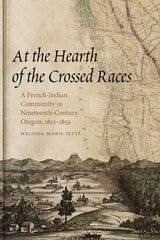
At the Hearth of the Crossed Races
A French-Indian Community in Nineteenth-Century Oregon, 1812-1859Melinda Marie Jetté
Oregon State University Press, 2015
Jetté’s study focuses on the “hearth” of this contact: French Prairie, so named for the French-Indian families who resettled the homeland of the Ahantchuyuk Kalapuyans. Although these families sought a middle course in their relations with their various neighbors, their presence ultimately contributed to the Anglo-American colonization of the region. By establishing farming and husbandry operations in the valley, the French-Indian settlers enhanced the Willamette Valley’s appeal as a destination of choice for the Anglo-Americans who later emigrated to the Pacific Northwest via the Oregon Trail.
Upon these emigrants’ arrival, the social space for the people of the “crossed races” diminished considerably, as the Anglo-Americans instituted a system of settler colonialism based on racial exclusion. Like their Native kin, the French-Indian families pursued various strategies to navigate the changing times and Jetté’s study of French Prairie takes on the relationships among all three: the French-Indian families, the indigenous peoples, and the Anglo-American settlers.
With At the Hearth of the Crossed Races, Jetté delivers a social history that deepens our understanding of the Oregon Country in the nineteenth century. This history of French Prairie provides a window into the multi-racial history of the Pacific Northwest and offers an alternative vision of early Oregon in the lives of the biracial French-Indian families whose community challenged notions of white supremacy, racial separation, and social exclusion.

Athens, Ohio
The Village YearsRobert L. Daniel
Ohio University Press, 1997
Two hundred years ago, Rufus Putnam, leader of the Ohio Company, sent eleven men west into the Ohio Country to found what is now the City of Athens. As one of the oldest communities in Ohio, Athens has a heritage rich in history and lore. Now, as Athens looks ahead to its third century, historian and raconteur Robert L. Daniel provides a timely assessment of the community’s past.
Drawing on reminiscences by Athens residents over the past two centuries, and on newspaper accounts, institutional archives, census records, and a host of historic photographs and drawings, Daniel illustrates how the Athens community grew, how it changed over the years, and what it was like to have lived in Athens in the past, from the times before white settlement to 1920. He identifies the problems the community faced and how it went about resolving them—its efforts to provide local government, the changing ways its people earned a living, the ways they worshipped, their efforts to establish Ohio University, how they coped during times of war, and what they did to amuse themselves.
In a lively style peppered with firsthand accounts by the people who made Athens, Daniel narrates his tale with wry humor and a sharp eye for detail. Always focusing on the people who lived there, he brings Athens to life during its village years.
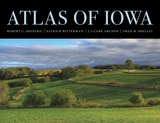
Atlas of Iowa
Robert C. Shepard
University of Iowa Press, 2024
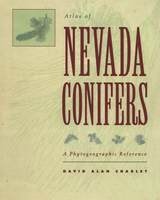
Atlas of Nevada Conifers
A Phytogeographic ReferenceDavid Alan Charlet
University of Nevada Press, 1996
Atlas of Nevada Conifers is a major scientific contribution to our understanding of the ecology of Nevada. It documents in great detail the distribution of all native conifer species in the state—critical information because of the primary ecological importance of conifers for all organisms and because of the lack of documentation of these distributions in the scientific literature before now. Charlet maps and documents the exact location of herbarium records for 1,600 individual trees. The data found in 23 tables and 22 range maps will serve as a primary reference for botanists, land managers, and conservation biologists for years to come.

Attack and Counterattack
The Texas-Mexican Frontier, 1842By Joseph Milton Nance
University of Texas Press, 1964
It is 1842—a dramatic year in the history of Texas-Mexican relations. After five years of uneasy peace, of futile negotiations, of border raids and temporary, unofficial truces, a series of military actions upsets the precarious balance between the two countries. Once more the Mexican Army marches on Texas soil; once more the frontier settlers strengthen their strongholds for defense or gather their belongings for flight. Twice San Antonio falls to Mexican generals; twice the Texans assemble armies for the invasion of Mexico. It is 1842—a year of attack and counterattack.
This is the story that Joseph Milton Nance relates, with a definitiveness and immediacy which come from many years of meticulous research. The exciting story of 1842 is a story of emotions which had simmered through the long, insecure years and which now boil out in blustery threats and demands for vengeance. The Texans threaten to march beyond the Sierra Madres and raise their flag at Monterrey; the Mexicans promise to subdue this upstart Texas and to teach its treacherous inhabitants their place. With communications poor and imaginations fertile, rumors magnify chance banditry into military raids, military raids into full-scale invasions. Newspapers incite their readers with superdramatic, intoxicating accounts of the events. Texans and Mexicans alike respond with a kind of madness that has little or no method. Texas solicits volunteers, calls out troops, plans invasions, and assembles her armies, completely disregarding the fact that her treasury is practically empty—there is little money to buy guns. Meanwhile, in Mexico, where gold and silver are needed for other purposes, “invasions” of Texas are launched—but they are only brief forays more suitable for impressive publicity than for permanent gains.
Still, the conflicts of threat and retaliation, so often futile, are frequently dignified by idealism, friendship, courage, and determination. Both Mexicans and Texans are fighting and dying for liberty, defending their homes against foreign invaders, establishing and maintaining friendships that cross racial and national boundaries, struggling with conflicting loyalties, and—all the while—striving to wrest a living for themselves and their families from the grudging frontier.
Attack and Counterattack, continuing the account which was begun in After San Jacinto, tells from original sources the full story of Texas-Mexican relations from the time of the Santa Fe Expedition through the return of the Somervell Expedition from the Rio Grande. These books examine in great detail and with careful accuracy a period of Texas history that had not heretofore been thoroughly studied and that had seldom been given unbiased treatment. The source materials compiled in the notes and bibliography—particularly the military reports, letters, diaries, contemporary newspapers, and broadsides—will be a valuable tool for any scholar who wishes to study this or related periods.
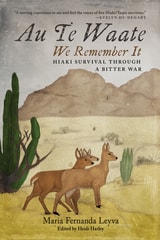
Au Te Waate / We Remember It
Hiaki Survival Through a Bitter WarMaria Fernanda Leyva; Edited by Heidi Harley
University of Arizona Press, 2025
This compelling work delves into the personal narratives of Hiaki (Yaqui) individuals who endured the tumultuous period from 1900 to 1930, when they faced systematic attacks, conscription, deportation, and enslavement under Mexican government policies. Presented in both the original Hiaki language and English translation, these accounts offer an unparalleled glimpse into the lives of those who resisted and survived the era’s harsh realities. The narratives describe military engagements, the struggles of refugee life, forced labor, and the resilience of families under extreme duress. This work provides a unique and unvarnished account of the impacts of Mexican colonialism and aggression on individuals and families, completely from the Hiaki perspective.
Au Te Waate / We Remember It is not just a historical account but a linguistic treasure, preserving the naturally produced speech of five Hiaki speakers from a previous era. Transcriptions of interviews recorded by author Maria Fernanda Leyva with family members and friends provide invaluable insights into the Hiaki language. The interviews document and preserve the narrative styles, vocabulary, and grammatical constructions of the time.
This work also serves as a crucial resource for scholars of linguistics and history alike, capturing dialect variation and illustrating the linguistic evolution of the Hiaki community. Additionally, for Hiaki people studying their own language, this book stands as a rich repository of cultural and linguistic heritage, meticulously maintained through side-by-side translations and contextual historical introductions.
The narratives in this book are anchored by the experiences of five Hiaki speakers, whose stories of displacement, survival, and resistance provide a deeply personal perspective on the broader historical events of the Porfirio Díaz dictatorship and the early years of the Mexican Revolution. Au Te Waate / We Remember It stands as an important record, preserving these critical voices for future generations and offering profound insights into the resilience of the Hiaki people.
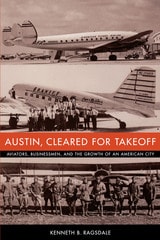
Austin, Cleared for Takeoff
Aviators, Businessmen, and the Growth of an American CityBy Kenneth B. Ragsdale
University of Texas Press, 2004
Austin, Texas, entered the aviation age on October 29, 1911, when Calbraith Perry Rodgers landed his Wright EX Flyer in a vacant field near the present-day intersection of Duval and 45th Streets. Some 3,000 excited people rushed out to see the pilot and his plane, much like the hundreds of thousands who mobbed Charles A. Lindbergh and The Spirit of St. Louis in Paris sixteen years later. Though no one that day in Austin could foresee all the changes that would result from manned flight, people here—as in cities and towns across the United States—realized that a new era was opening, and they greeted it with all-out enthusiasm.
This popularly written history tells the story of aviation in Austin from 1911 to the opening of Austin-Bergstrom International Airport in 1999. Kenneth Ragsdale covers all the significant developments, beginning with military aviation activities during World War I and continuing through the barnstorming era of the 1920s, the inauguration of airmail service in 1928 and airline service in 1929, and the dedication of the first municipal airport in 1930. He also looks at the University of Texas's role in training pilots during World War II, the growth of commercial and military aviation in the postwar period, and the struggle over airport expansion that occupied the last decades of the twentieth century. Throughout, he shows how aviation and the city grew together and supported each other, which makes the Austin aviation experience a case study of the impact of aviation on urban communities nationwide.
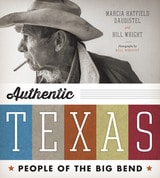
Authentic Texas
People of the Big BendBy Marcia Hatfield Daudistel and Bill Wright
University of Texas Press, 2013
Winner, Southwest Book Award, Border Regional Library Association, 2015
The Texas of vast open spaces inhabited by independent, self-reliant men and women may be more of a dream than a reality for the state’s largely urban population, but it still exists in the Big Bend. One of the most sparsely settled areas of the United States, the Big Bend attracts people who are willing to forego many modern conveniences for a lifestyle that proclaims “don’t fence me in.” Marcia Hatfield Daudistel and Bill Wright believe that the character traits exemplified by folks in the Big Bend—including self-sufficiency, friendliness, and neighborliness—go back to the founding of the state. In this book, they introduce us to several dozen Big Bend residents—old and young, long-settled and recently arrived, racially diverse—who show us what it means to be an authentic Texan.
Interviewing people in Marathon, Big Bend National Park, Terlingua, Redford, Presidio, Alpine, Marfa, Valentine, Balmorhea, Limpia Crossing, and Fort Davis, Daudistel and Wright discover the reasons why residents of the Big Bend make this remote area of Texas their permanent home. In talking to ranchers and writers, entrepreneurs and artists, people living off the grid and urban refugees, they find a common willingness to overcome difficulties through individual skill and initiative. As one interviewee remarks, you have to have a lot of “try” in you to make a life in the Big Bend. Bill Wright’s photographs of the people and landscapes are a perfect complement to the stories of these authentic Texans. Together, these voices and images offer the most complete, contemporary portrait of the Texas Big Bend.
Autobiography of Samuel S. Hildebrand
The Renowned Missouri BushwhackerKirby Ross
University of Arkansas Press, 2016
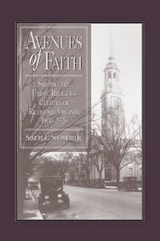
Avenues of Faith
Shaping the Urban Religious Culture of Richmond, Virginia, 1900–1929Samuel C. Shepherd Jr
University of Alabama Press, 2001
By examining six mainline white denominations—Episcopalians, Methodists, Presbyterians, Baptists, Disciples of Christ, and Lutherans—Samuel C. Shepherd Jr. emphasizes the extent to which the city fostered religious diversity, even as “blind spots” remained regarding Catholics, African Americans, Mormons, and Jews. Shepherd explores such topics as evangelism, interdenominational cooperation, the temperance campaign, the Sunday school movement, the international peace initiatives, and the expanding role of lay people of both sexes. He also notes the community’s widespread rejection of fundamentalism, a religious phenomenon almost automatically associated with the South, and shows how it nurtured social reform to combat a host of urban problems associated with public health, education, housing, women’s suffrage, prohibition, children, and prisons.
In lucid prose and with excellent use of primary sources, Shepherd delivers a fresh portrait of Richmond Protestants who embraced change and transformed their community, making it an active, progressive religious center of the New South.
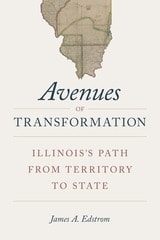
Avenues of Transformation
Illinois's Path from Territory to StateJames A. Edstrom
Southern Illinois University Press, 2022
A territory split by slavery, a state forged for union
Avenues of Transformation traces the surprising path, marked by shame, ambition, and will that led to Illinois’s admission to the Union in 1818. Historian James A. Edstrom guides the reader through this story by associating each stage of the narrative—the original statehood campaign, the passage of Illinois’s statehood-enabling act by Congress, and Illinois’s first constitutional convention—with the primary leaders in each of those episodes. The lives of these men—Daniel Pope Cook, Nathaniel Pope, and Elias Kent Kane—reflect the momentous tangle of politics, slavery, and geography. This history maps the drive for statehood in the conflict between nation and state, in the perpetuation of slavery, and in the sweep of water and commerce. It underscores the ways in which the Prairie State is uniquely intertwined—economically, socially, and politically—with every region of the Union: North, South, East, and West—and captures the compelling moment when Illinois statehood stood ready to more perfectly unify the nation.
This volume is the first full-length book in over a century to describe and analyze Illinois’s admission to the Union. It marks the first time that a historian has analyzed in detail the roll-call votes of the first state constitutional convention, seated evenly by pro- and antislavery delegates. Edstrom’s wit and prose weave a lively narrative of political ambition and human failure. Patiently crafted, Avenues of Transformation will be the first source for readers to turn to for gaining a better understanding of Illinois statehood.
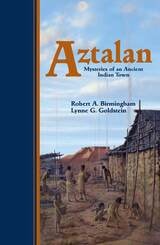
Aztalan
Mysteries of an Ancient Indian TownRobert A. Birmingham and Lynne Goldstein
Wisconsin Historical Society Press, 2006
Birmingham and Goldstein attempt to unlock some of the mysteries, providing insights and information about the group of people who first settled here in 1100 AD. Filled with maps, drawings, and photographs of artifacts, this small volume examines a time before modern Native American people settled in this area.
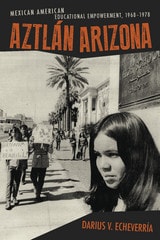
Aztlán Arizona
Mexican American Educational Empowerment, 1968–1978Darius V. Echeverría
University of Arizona Press, 2014
The word Aztlán, originally meaning the legendary ancestral home of the Nahua peoples of Mesoamerica, was adopted as a symbol of independence by Chicano/a activists during the movement of the 1960s and 1970s. In an era when poverty, prejudice, and considerable oppositional forces blighted the lives of roughly one-fifth of Arizonans, the author argues that understanding those societal realities is essential to defining the rise and power of the Chicano Movement.
The book illustrates how Mexican American communities fostered a togetherness that ultimately modified larger Arizona society by revamping the educational history of the region. The concluding chapter outlines key Mexican American individuals and organizations that became politically active in order to address Chicano educational concerns. This Chicano unity, reflected in student, parent, and community leadership organizations, helped break barriers, dispel the Mexican American inferiority concept, and create educational change that benefited all Arizonans.
No other scholar has examined the emergence of Chicano Movement politics and its related school reform efforts in Arizona. Echeverría’s thorough research, rich in scope and interpretation, is coupled with detailed and exact endnotes. The book helps readers understand the issues surrounding the Chicano Movement educational reform and ethnic identity. Equally important, the author shows how residual effects of these dynamics are still pertinent today in places such as Tucson.