Results by title
28167 books match the query 'History' and 1262 start with b
Brown in the Windy City
Mexicans and Puerto Ricans in Postwar ChicagoLilia Fernández
University of Chicago Press, 2012
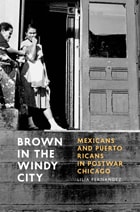
Brown in the Windy City is the first history to examine the migration and settlement of Mexicans and Puerto Ricans in postwar Chicago. Lilia Fernández reveals how the two populations arrived in Chicago in the midst of tremendous social and economic change and, in spite of declining industrial employment and massive urban renewal projects, managed to carve out a geographic and racial place in one of America’s great cities. Through their experiences in the city’s central neighborhoods over the course of these three decades, Fernández demonstrates how Mexicans and Puerto Ricans collectively articulated a distinct racial position in Chicago, one that was flexible and fluid, neither black nor white.

Brownie the War Dog
Veterans’ Best FriendKelly Nelson
Wisconsin Historical Society Press, 2024
During World War II, families all over the country volunteered their pet dogs to serve in the Dogs for Defense Program. This beautifully illustrated picture book tells the true story of a family and their beloved dog, Brownie, who served alongside the troops and returned home to become a companion to wounded vets.
At first Brownie's boy, Oren, isn’t sure he wants to send his boisterous best friend to war. But with the help of his parents, Oren decides that Brownie could do a lot of good. Brownie serves faithfully on the frontlines until an injury sends him home from the Pacific islands. His family welcomes him back with open arms. But Brownie is not content sitting around at home—he needs a job. He begins to accompany Oren's mother to the Veterans Home in King, Wisconsin, where she works. There, Brownie finds a way to serve his fellow veterans just as he served his fellow soldiers.
Lovingly illustrated by Aaron Boyd, this heartwarming story gives poignant new meaning to the phrase "man's best friend" and will be a favorite for children and their grownups.
Brownsville, Brooklyn
Blacks, Jews, and the Changing Face of the GhettoWendell E. Pritchett
University of Chicago Press, 2001
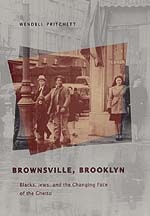
The story of these two different, but in many ways similar, Brownsvilles is compellingly told in this probing new work. Focusing on the interaction of Brownsville residents with New York's political and institutional elites, Wendell Pritchett shows how the profound economic and social changes of post-World War II America affected the area. He covers a number of pivotal episodes in Brownsville's history as well: the rise and fall of interracial organizations, the struggles to deal with deteriorating housing, and the battles over local schools that culminated in the famous 1968 Teachers Strike. Far from just a cautionary tale of failed policies and institutional neglect, the story of Brownsville's transformation, he finds, is one of mutual struggle and frustrated cooperation among whites, blacks, and Latinos.
Ultimately, Brownsville, Brooklyn reminds us how working-class neighborhoods have played, and continue to play, a central role in American history. It is a story that needs to be read by all those concerned with the many challenges facing America's cities today.
Brunei
From the Age of Commerce to the 21st CenturyMarie-Sybille de Vienne
National University of Singapore Press, 2015
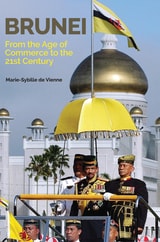
Today home to some 393,000 inhabitants and comprising 5,765 square kilometers in area, Brunei first appears in the historical record at the end of the 10th century. After the Spanish attack of 1578, Brunei struggled to regain and expand its control on coastal West Borneo and to remain within the trading networks of the South China Sea. It later fell under British sway, and a residency was established in 1906, but it took the discovery of oil in Seria in 1929 before the colonial power began to establish the bases of a modern state.
Governed by an absolute monarchy, Bruneians today nonetheless enjoy a high level of social protection and rule of law. Ranking second (after Singapore) in Southeast Asia in terms of standards of living, the sultanate is implementing an Islamic penal code for the first time of its history. Focusing on Brunei’s political economy, history and geography, this book aims to understand the forces behind Brunei’s to-and-fro of tradition and modernisation.

Bruno
Conversations with a Brazilian Drug DealerRobert Gay
Duke University Press, 2015
Brushed in Light
Calligraphy in East Asian CinemaMarkus Nornes
University of Michigan Press, 2021
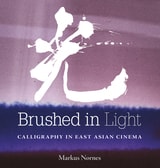
Drawing on a millennia of calligraphy theory and history, Brushed in Light examines how the brushed word appears in films and in film cultures of Korea, Japan, Taiwan, Hong Kong, and PRC cinemas. This includes silent era intertitles, subtitles, title frames, letters, graffiti, end titles, and props. Markus Nornes also looks at the role of calligraphy in film culture at large, from gifts to correspondence to advertising. The book begins with a historical dimension, tracking how calligraphy is initially used in early cinema and how it is continually rearticulated by transforming conventions and the integration of new technologies. These chapters ask how calligraphy creates new meaning in cinema and demonstrate how calligraphy, cinematography, and acting work together in a single film. The last part of the book moves to other regions of theory. Nornes explores the cinematization of the handwritten word and explores how calligraphers understand their own work.

Brutal Ephemerality
Migrant Temporalities on China's Urban FringeYang Zhan
University of Michigan Press, 2027
How do you build a hopeful future when your present is designed to be temporary? Brutal Ephemerality reveals that the sprawling urban villages on the edge of megacities such as Beijing aren’t slums that grew by accident. Instead, urban villages are intentionally kept in a state of uncertainty, allowing the city to have a ready supply of cheap land and flexible labor to fuel its rapid growth. Yang Zhan proposes the concept of “migrant venturers” (chuǎngdàng de rén) and argues that “venturing” (chuǎngdàng) represents a distinct survival strategy of mobility, risk-taking, and opportunity seeking, rather than rooting oneself in a specific place or profession. This strategy is an active practice of “future-making”—an effort to project a meaningful future from an uncertain present.
Brutal Ephemerality demonstrates how time is not a neutral backdrop, but the central arena for political struggle, ethical practice, and imaginative creation among marginalized groups. Zhan shows how hope and suffering are paradoxically intertwined, and how the very struggle for a better life can, itself, become a source of harm.
Brutal Fantasies
Imagining North Korea in the Long Cold WarChristine Kim
Duke University Press, 2025
Buckeye Rovers in the Gold Rush
An Edition of Two DiariesH. Lee Scamehorn
Ohio University Press, 1989
When “California Fever” raced through southeastern Ohio in the spring of 1849, a number of residents of Athens County organized a cooperative venture for traveling overland to the mines. Known as the “Buckeye Rovers,” the company began its trip westward in early April. The Buckeye Rovers, along with thousands who traveled the overland route to California, endured numerous hardships and the seemingly constant threat of attacks from hostile Indians. On reaching their destination, the Ohioans discovered that rich deposits of gold were extremely rare, and that except for a few lucky fortune–seekers, mining required hard physical labor and yielded small rewards. They persisted nonetheless and most of the company returned to Athens in late 1851 or early 1852 with modest fortunes.
The arduous experiences of the overland trek were recorded by two Buckeye Rover diarists. The more compete account was compiled by John Banks. He wrote effusively while on the trail and throughout his stay of more than two years in the gold regions. J. Elza Armstrong, by contrast, was brief, even laconic, and his journal ended upon reaching California. The contrast between the two brings into focus the divergent personalities who were drawn to California by the lure of gold.
A nine–month segment of Bank’s diary, from February to November, 1851, had been missing at the time the story of the Buckeye Rovers was first published in 1965. This revised and enlarged edition contains the complete diaries. They offer valuable record of the Buckeyes’ adventures from the time they left home until the time they departed California for the return trip to Ohio.
Buckeye Women
The History of Ohio’s DaughtersStephane Elise Booth
Ohio University Press, 2001
By the last two decades of the twentieth century, Ohio women had held positions as university presidents, chief executive officers, judges, superintendents of schools, and lieutenant governor. They had won Pulitzer Prizes and, in one case, the Nobel Prize for Literature.
But these women stood on the shoulders of those who came before: the pioneering women who helped tame the Ohio frontier, who filled the breach, who worked for reform, and who struggled for their own rights as citizens of one of the most prosperous states in the Union.
Buckeye Women is an accessible and comprehensive account of the role Ohio women have assumed in the history of the state and a narrative of their hardships and of the victories that have been won in the past two hundred years.
In this timely contribution to the Ohio Bicentennial Series, Professor Stephane Booth has written a rich and well-researched volume, providing for the first time a record of the vast and pivotal accomplishments shared by the women of Ohio over the last two centuries and documenting their contribution to the state’s remarkable heritage.
Budapest Blackout
A Holocaust Diaryby Máriá Mádi, edited by James W. Oberly
University of Wisconsin Press, 2023
Mádi’s family donated the entire collection of her diaries to the US Holocaust Memorial Museum. This edition transcribes a selection of Mádi’s writings focusing on the period of March 1944 to November 1945, from the Nazi invasion and occupation of Hungary, through the Battle of Budapest, to the ensuing Soviet occupation. While bearing witness to the catastrophe in Hungary, Mádi hid a Jewish family in her small flat from October 1944 to February 1945. She received a posthumous Righteous among Nations Medal from Yad Vashem, the World Holocaust Remembrance Center.
Editorial commentary by James W. Oberly situates Mádi’s observations, and a critical introduction by the Holocaust scholar András Lénárt outlines the wider sociopolitical context in which her diaries gain meaning.

Buddhism and Science
A Guide for the PerplexedDonald S. Lopez Jr.
University of Chicago Press, 2008
In Buddhism and Science, Donald S. Lopez Jr. is less interested in evaluating the accuracy of such claims than in exploring how and why these two seemingly disparate modes of understanding the inner and outer universe have been so persistently linked. Lopez opens with an account of the rise and fall of Mount Meru, the great peak that stands at the center of the flat earth of Buddhist cosmography—and which was interpreted anew once it proved incompatible with modern geography. From there, he analyzes the way in which Buddhist concepts of spiritual nobility were enlisted to support the notorious science of race in the nineteenth century. Bringing the story to the present, Lopez explores the Dalai Lama’s interest in scientific discoveries, as well as the implications of research on meditation for neuroscience.

Buddy Emmons
Steel Guitar IconSteve Fishell
University of Illinois Press, 2022
The acknowledged maestro of the pedal steel guitar, Buddy Emmons lent his unparalleled virtuosity to over five decades of hit recordings and set standards that remain the benchmark for musicians today.
Steve Fishell’s merger of biography and memoir draws extensively on in-depth interviews with Emmons and the artist's autobiographical writings. Emmons went from playing strip clubs to a Grand Ole Opry debut with Little Jimmy Dickens at age 18. His restless experimentation led to work with Ernest Tubb and Ray Price--and established him in a career that saw him play alongside a who’s who of American music. Fishell weaves in stories and anecdotes from Willie Nelson, Brenda Lee, Linda Ronstadt, Pat Martino, and many others to provide a fascinating musical and personal portrait of an innovator whose peerless playing and countless recordings recognized no boundaries.
A one-of-a-kind life story, Buddy Emmons expands our view of a groundbreaking artist and his impact on country music, jazz, and beyond.
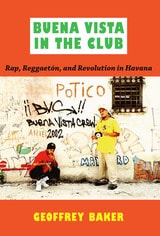
Buena Vista in the Club
Rap, Reggaetón, and Revolution in HavanaGeoffrey Baker
Duke University Press, 2011

Buenos Aires
400 YearsEdited by Stanley R. Ross and Thomas F. McGann
University of Texas Press, 1982
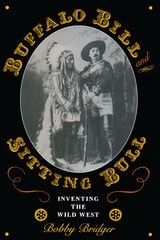
Buffalo Bill and Sitting Bull
Inventing the Wild WestBy Bobby Bridger
University of Texas Press, 2002
Army scout, buffalo hunter, Indian fighter, and impresario of the world-renowned "Wild West Show," William F. "Buffalo Bill" Cody lived the real American West and also helped create the "West of the imagination." Born in 1846, he took part in the great westward migration, hunted the buffalo, and made friends among the Plains Indians, who gave him the name Pahaska (long hair). But as the frontier closed and his role in "winning the West" passed into legend, Buffalo Bill found himself becoming the symbol of the destruction of the buffalo and the American Indian. Deeply dismayed, he spent the rest of his life working to save the remaining buffalo and to preserve Plains Indian culture through his Wild West shows.
This biography of William Cody focuses on his lifelong relationship with Plains Indians, a vital part of his life story that, surprisingly, has been seldom told. Bobby Bridger draws on many historical accounts and Cody's own memoirs to show how deeply intertwined Cody's life was with the Plains Indians. In particular, he demonstrates that the Lakota and Cheyenne were active cocreators of the Wild West shows, which helped them preserve the spiritual essence of their culture in the reservation era while also imparting something of it to white society in America and Europe. This dual story of Buffalo Bill and the Plains Indians clearly reveals how one West was lost, and another born, within the lifetime of one remarkable man.
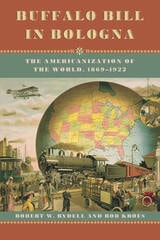
Buffalo Bill in Bologna
The Americanization of the World, 1869-1922Robert W. Rydell and Rob Kroes
University of Chicago Press, 2005
Buffalo Bill in Bologna reveals that the process of globalizing American mass culture began as early as the mid-nineteenth century. In fact, by the end of World War I, the United States already boasted an advanced network of culture industries that served to promote American values. Rydell and Kroes narrate how the circuses, amusement parks, vaudeville, mail-order catalogs, dime novels, and movies developed after the Civil War—tools central to hastening the reconstruction of the country—actually doubled as agents of American cultural diplomacy abroad. As symbols of America's version of the "good life," cultural products became a primary means for people around the world, especially in Europe, to reimagine both America and themselves in the context of America's growing global sphere of influence. Paying special attention to the role of the world's fairs, the exporting of Buffalo Bill's Wild West show to Europe, the release of The Birth of a Nation, and Woodrow Wilson's creation of the Committee on Public Information, Rydell and Kroes offer an absorbing tour through America's cultural expansion at the turn of the century. Buffalo Bill in Bologna is thus a tour de force that recasts what has been popularly understood about this period of American and global history.
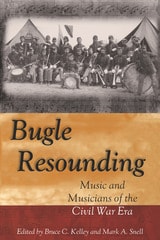
Bugle Resounding
Music and Musicians of the Civil War EraEdited by Bruce C. Kelley & Mark A. Snell
University of Missouri Press, 2004
Although numerous academic resources examine the music and musicians of the Civil War era, the research is spread across a variety of disciplines and is found in a wide array of scholarly journals, books, and papers. It is difficult to assimilate this diverse body of research, and few sources are dedicated solely to a rigorous and comprehensive investigation of the music and the musicians of this era. This anthology, which grew out of the first two National Conferences on Music of the Civil War Era, is an initial attempt to address that need.
Those conferences established the first academic setting solely devoted to exploring the effects of the Civil War on music and musicians. Bridging musicology and history, these essays represent the forefront of scholarship in music of the Civil War era. Each one makes a significant contribution to research in the music of this era and will ultimately encourage more interdisciplinary research on a subject that has relevance both for its own time and for ours. The result is a readable, understandable volume on one of the few understudied—yet fascinating—aspects of the Civil War era.
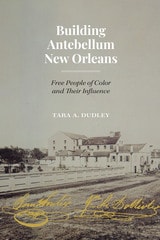
Building Antebellum New Orleans
Free People of Color and Their InfluenceBy Tara A. Dudley
University of Texas Press, 2021
2024 Spiro Kostof Book Award, Society of Architectural Historians
2022 PROSE Award in Architecture and Urban Planning
2022 Summerlee Book Prize in Nonfiction, Center for History and Culture of Southeast Texas and the Upper Gulf Coast
2022 Best Book Prize, Southeast Chapter of the Society of Architectural Historians
2022 On the Brinck Book Award, University of New Mexico School of Architecture + Planning
A significant and deeply researched examination of the free nineteenth-century Black developers who transformed the cultural and architectural legacy of New Orleans.
The Creole architecture of New Orleans is one of the city’s most-recognized features, but studies of it largely have focused on architectural typology. In Building Antebellum New Orleans, Tara A. Dudley examines the architectural activities and influence of gens de couleur libres—free people of color—in a city where the mixed-race descendants of whites and other free Blacks could own property.
Between 1820 and 1850 New Orleans became an urban metropolis and industrialized shipping center with a growing population. Amidst dramatic economic and cultural change in the mid-antebellum period, the gens de couleur libres thrived as property owners, developers, building artisans, and patrons. Dudley writes an intimate microhistory of two prominent families of Black developers, the Dollioles and Souliés, to explore how gens de couleur libres used ownership, engagement, and entrepreneurship to construct individual and group identity and stability. With deep archival research, Dudley re-creates in fine detail the material culture, business and social history, and politics of the built environment for free people of color and adds new, revelatory information to the canon on New Orleans architecture.
Building Character in the American Boy
The Boy Scouts, YMCA, and Their Forerunners, 1870-1920David Macleod
University of Wisconsin Press, 2004
Back in print; First paperback edition.
Building Domestic Liberty
Charlotte Perkins Gilman's Architectural FeminismPolly Wynn Allen
University of Massachusetts Press, 1988
Building Domestic Liberty offers a critical and admiring analysis of feminist philosopher Charlotte Perkins Gilman (1860–1935). Polly Allen examines Gilman's approach to architecture, landscape, and neighborhood design and discusses Gilman's case against prevailing household design and looks at her philosophy of world improvement.
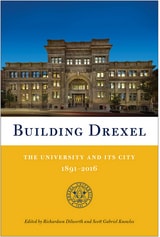
Building Drexel
The University and Its City 1891-2016Richardson Dilworth
Temple University Press, 2016
Published in conjunction with Drexel University’s 125th anniversary, Building Drexel chronicles the founding of the university by Anthony J. Drexel through to the present day. The editors and contributors create a prismatic discussion of the university and its evolution.
Richly illustrated chapters cover the architectural history of notable Drexel buildings; the role of Drexel in Philadelphia’s modern history; its Greek life; sports—particularly Drexel’s history in the Big 5; and each of the university’s schools and colleges. There is a history of the medical college and law school, plus the creation of new schools such as those of biomedical engineering, science and health systems.
Building Drexel also documents the civil rights history of Drexel and its urban planning history in relation to the racially diverse Powelton Village and Mantua neighborhoods it borders. This commemorative volume shows the development of the university both in the city and in the world.
Contributors include: Lloyd Ackert, Cordelia Frances Biddle, Paula Marantz Cohen, Donna Marie De Carolis, Roger Dennis, Gloria Donnelly, Kevin D. Egan, Alissa Falcone, David Fenske, John A. Fry, Stephen F. Gambescia, Marla J. Gold, Charles Haas, Kathy Harvatt, Daniel Johnson, Jeannine Keefer, Larry Keiser, Michael Kelley, Jason Ludwig, Jonson Miller, Julie Mostov, Danuta A. Nitecki, Anthony M. Noce, Steven J. Peitzman, David Raizman, Tiago Saraiva, Amy E. Slaton, Nathaniel Stanton, Virginia Theerman, Laura Valenti, James Wolfinger, Eric A. Zillmer, and the editors.
Building Filipino Hawai'i
Roderick Labrador
University of Illinois Press, 2015
In particular, Labrador speaks to the processes of identity making and the politics of representation among immigrant communities striving to resist marginalization in a globalized, transnational era. Critiquing the popular image of Hawai'i as a postracial paradise, he reveals how Filipino immigrants talk about their relationships to the place(s) they left and the place(s) where they've settled, and how these discourses shape their identities. He also shows how the struggle for community empowerment, identity territorialization, and the process of placing and boundary making continue to affect how minority groups construct the stories they tell about themselves, to themselves and others.
Building Ghosts
Past Lives and Lost Places in a Changing CityWritten by Molly Lester, Photographs by Michael Bixler
Temple University Press, 2024
Building Ghosts features more than 100 striking contemporary color photographs and a deeply researched narrative about Philadelphia’s buildings, neighborhoods, and the ghosts that reveal new truths and provocations about the changing city. The text and images in this lavish volume illuminate these lost buildings and found ghosts. Building Ghosts is an invitation to see the city differently, with the past clinging visibly to the present.
Building Globalization
Transnational Architecture Production in Urban ChinaXuefei Ren
University of Chicago Press, 2011
From the years 2004 to 2008, Beijing and Shanghai witnessed the construction of an extraordinary number of new buildings, many of which were designed by architectural firms overseas. Combining ethnographic fieldwork, historical research, and network analysis, Building Globalization closely scrutinizes the growing phenomenon of transnational architecture and its profound effect on the development of urban space.
Roaming from construction sites in Shanghai to architects’ offices in Paris, Xuefei Ren interviews hundreds of architects, developers, politicians, residents, and activists to explore this issue. She finds that in the rapidly transforming cities of modern China, iconic designs from prestigious international architects help private developers to distinguish their projects, government officials to advance their careers, and the Chinese state to announce the arrival of modern China on the world stage.
China leads the way in the globalization of architecture, a process whose ramifications can be felt from Beijing to Dubai to Basel. Connecting the dots between real estate speculation, megaproject construction, residential displacement, historical preservation, housing rights, and urban activism, Building Globalization reveals the contradictions and consequences of this new, global urban frontier.
Building Histories
The Archival and Affective Lives of Five Monuments in Modern DelhiMrinalini Rajagopalan
University of Chicago Press, 2016
Mrinalini Rajagopalan argues that the modern construction of the history of these monuments entailed the careful selection, manipulation, and regulation of the past by both the colonial and later postcolonial states. Although framed as objective “archival” truths, these histories were meant to erase or marginalize the powerful and persistent affective appropriations of the monuments by groups who often existed outside the center of power. By analyzing these archival and affective histories together, Rajagopalan works to redefine the historic monument—far from a symbol of a specific past, the monument is shown in Building Histories to be a culturally mutable object with multiple stories to tell.
Building Hoover Dam
An Oral History Of The Great DepressionAndrew J. Dunar
University of Nevada Press, 2001
Building Little Saigon
Refugee Urbanism in American Cities and SuburbsErica Allen-Kim
University of Texas Press, 2024
2026 Spiro Kostof Book Award, Society of Architectural Historians
An in-depth look at the diverging paths of Vietnamese American communities, or “Little Saigons,” in America’s built environment.
In the final days before the fall of Saigon in 1975, 125,000 Vietnamese who were evacuated or who made their own way out of the country resettled in the United States. Finding themselves in unfamiliar places yet still connected in exile, these refugees began building their own communities as memorials to a lost homeland. Known both officially and unofficially as Little Saigons, these built landscapes offer space for everyday activities as well as the staging of cultural heritage and political events.
Building Little Saigon examines nearly fifty years of city building by Vietnamese Americans—who number over 2.2 million today. Author Erica Allen-Kim highlights architecture and planning ideas adapted by the Vietnamese communities who, in turn, have influenced planning policies and mainstream practices. Allen-Kim traveled to ten Little Saigons in the United States to visit archives, buildings, and public art and to converse with developers, community planners, artists, business owners, and Vietnam veterans. By examining everyday buildings—who made them and what they mean for those who know them—Building Little Saigon shows us the complexities of migration unfolding across lifetimes and generations.
Building Momentum
A Decade of Construction, Renovation, and Renewal across the University of Illinois SystemUniversity of Illinois. Foreword by Timothy L. Killeen
University of Illinois Press, 2023
The University of Illinois System’s universities have undergone a dramatic transformation. This lavishly illustrated volume showcases the major capital projects and renovations dedicated to keeping facilities on the cutting edge while at the same time preserving history at the universities in Urbana-Champaign, Chicago, and Springfield. Fueled by an ambitious capital initiative launched in 2018, these essential and forward-looking changes include more than 500 projects valued at $4 billion over 10 years. The initiative harnesses a mix of innovative funding programs like public-private partnerships, thoughtful use of capital reserves and bonding authority, and generous state funding.
Covering completed and ongoing projects, Building Momentum offers a one- or two-page feature on each undertaking that covers its history and purpose while providing specific details about its unit, campus, architect, square footage or renovation size, budget, and LEED or other certifications. More than 100 architectural drawings and commissioned and historical photographs round out the descriptions.
Building Nature's Market
The Business and Politics of Natural FoodsLaura J. Miller
University of Chicago Press, 2017
Building Nature’s Market shows how the meaning of natural foods was transformed as they changed from a culturally marginal, religiously inspired set of ideas and practices valorizing asceticism to a bohemian lifestyle to a mainstream consumer choice. Laura J. Miller argues that the key to understanding this transformation is to recognize the leadership of the natural foods industry. Rather than a simple tale of cooptation by market forces, Miller contends the participation of business interests encouraged the natural foods movement to be guided by a radical skepticism of established cultural authority. She challenges assumptions that private enterprise is always aligned with social elites, instead arguing that profit-minded entities can make common cause with and even lead citizens in advocating for broad-based social and cultural change.
Building Nineteenth-Century Latin America
Re-Rooted Cultures, Identities, and NationsWilliam Garrett Acree
Vanderbilt University Press, 2009
Building Romanticism
Literature and Architecture in Nineteenth-Century BritainNicole Reynolds
University of Michigan Press, 2010
Building Socialism
The Afterlife of East German Architecture in Urban VietnamChristina Schwenkel
Duke University Press, 2020
Building Sustainable Worlds
Latinx Placemaking in the MidwestEdited by Theresa Delgadillo, Ramon H. Rivera-Servera, Geraldo L. Cadava, and Claire F. Fox
University of Illinois Press, 2022
A rare and crucial perspective on Latina/o/x people in the Midwest, Building Sustainable Worlds reveals how expressive culture contributes to, and sustains, a sense of place in an uncertain era.
Building Taliesin
Frank Lloyd Wright’s Home of Love and LossRon McCrea
Wisconsin Historical Society Press, 2012
Building The Goodly Fellowship Of Faith
A History of the Episcopal Church in Utah, 1867-1996Frederick Quinn
Utah State University Press, 2004
Frederick Quinn, an Episcopal priest and historian, is adjunct professor of history at Utah State University and adjunct professor of political science at the University of Utah. His previous books include Democracy at Dawn, Notes From Poland and Points East, a TLS International Book of the Year, and African Saints, Martyrs, and Holy People, a Black Catholic Congress Book of the Month. A former chaplain at Washington National Cathedral, he holds a doctorate in history from the University of California at Los Angeles.
Building Their Own Waldos
Emerson’s First Biographers and the Politics of Life-Writing in the Gilded AgeRobert D. Habich
University of Iowa Press, 2011
@font-face { font-family: "Calibri";}p.MsoNormal, li.MsoNormal, div.MsoNormal { margin: 0in 0in 0.0001pt; font-size: 12pt; font-family: "Times New Roman"; }h4 { margin: 12pt 0in 3pt; page-break-after: avoid; font-size: 14pt; font-family: "Times New Roman"; }span.Heading4Char { font-family: Calibri; font-weight: bold; }div.Section1 { page: Section1; }
By the end of the nineteenth century, Ralph Waldo Emerson was well on his way to becoming the “Wisest American” and the “Sage of Concord,” a literary celebrity and a national icon. With that fame came what Robert Habich describes as a blandly sanctified version of Emerson held widely by the reading public. Building Their Own Waldos sets out to understand the dilemma faced by Emerson’s early biographers: how to represent a figure whose subversive individualism had been eclipsed by his celebrity, making him less a representative of his age than a caricature of it.Drawing on never-before-published letters, diaries, drafts, business records, and private documents, Habich Emerson’s First Biographers explores the making of a cultural hero through the stories of Emerson’s first biographers—George Willis Cooke, a minister most recently from Indianapolis who considered himself a disciple; the English reformer and newspaper mogul Alexander Ireland, a friend for half a century; Moncure D. Conway, a Southern abolitionist then residing in London, who called Emerson his “spiritual father and intellectual teacher”; the poet and medical professor Oliver Wendell Holmes, with Emerson a member of Boston’s gathering of literary elite, the Saturday Club; James Elliot Cabot, the family’s authorized biographer, an architect and amateur philosopher with unlimited access to Emerson’s unpublished papers; and Emerson’s son Edward, a physician and painter whose father had passed over him as literary executor in favor of Cabot.
Just as their biographies reveal a complex, socially engaged Emerson, so too do the biographers’ own stories illustrate the real-world perils, challenges, and motives of life-writing in the late nineteenth century, when biographers were routinely vilified as ghoulish and disreputable and biography as a genre underwent a profound redefinition. Building Their Own Waldos is at once a revealing look at Emerson’s constructed reputation, a case study in the rewards and dangers of Victorian life-writing, and the story of six authors struggling amidst personal misfortunes and shifting expectations to capture the elusive character of America’s “representative man,” as they knew him and as they needed him to be.
Building Victorian Boston
The Architecture of Gridley J.F. BryantRoger G. Reed
University of Massachusetts Press, 2007
In Building Victorian Boston, Roger Reed focuses on representative projects by Bryant, presenting them in a chronological narrative that both illuminates the trajectory of his career and creates a portrait of the profession of architecture during a defining period of New England history. Bryant designed more major buildings in Boston from 1840 to 1880 than any other architect. He also undertook commissions throughout New
England, especially in towns linked to Boston by newly constructed railroad lines. In many ways, his practice presaged aspects of modern architectural firms. His ability to work with a variety of designers, his expertise in construction management, and his exceptional talent for self-promotion all contributed to his success. Although by the time of his death his work was no longer fashionable, newspaper accounts noted the passing of the "Famed Bostonian" and "Great Builder" whose career had had such a dramatic impact on the face of the city.
For this volume, Reed has tracked down hundreds of Bryant's drawings as well as specifications, letters, newspaper articles, published renderings, and historical photographs. These materials are amply represented in this book, the definitive study of a quintessential Victorian architect.
Building a House in Heaven
Pious Neoliberalism and Islamic Charity in EgyptMona Atia
University of Minnesota Press, 2013
Charity is an economic act. This premise underlies a societal transformation—the merging of religious and capitalist impulses that Mona Atia calls “pious neoliberalism.” Though the phenomenon spans religious lines, Atia makes the connection between Islam and capitalism to examine the surprising relations between charity and the economy, the state, and religion in the transition from Mubarak-era Egypt.
Mapping the landscape of charity and development in Egypt, Building a House in Heaven reveals the factors that changed the nature of Egyptian charitable practices—the state’s intervention in social care and religion, an Islamic revival, intensified economic pressures on the poor, and the subsequent emergence of the private sector as a critical actor in development. She shows how, when individuals from Egypt’s private sector felt it necessary to address poverty, they sought to make Islamic charities work as engines of development, a practice that changed the function of charity from distributing goods to empowering the poor. Drawing on interviews with key players, Atia explores the geography of Islamic charities through multiple neighborhoods, ideologies, sources of funding, projects, and wide social networks. Her work shifts between absorbing ethnographic stories of specific organizations and reflections on the patterns that appear across the sector.
An enlightening look at the simultaneous neoliberalization of Islamic charity work and Islamization of neoliberal development, the book also offers an insightful analysis of the political and socioeconomic movements leading up to the uprisings that ended Mubarak’s rule and that amplified the importance of not only the Muslim Brotherhood but also the broader forces of Islamic piety and charity.
Building a Market
The Rise of the Home Improvement Industry, 1914-1960Richard Harris
University of Chicago Press, 2012
Building a New Educational State
Foundations, Schools, and the American SouthJoan Malczewski
University of Chicago Press, 2016
Malczewski presents foundation leaders as self-conscious state builders and policy entrepreneurs who aimed to promote national ideals through a public system of education—efforts they believed were especially critical in the South. Black education was an important component of this national agenda. Through extensive efforts to create a more centralized and standard system of public education aimed at bringing isolated and rural black schools into the public system, schools became important places for expanding the capacity of state and local governance. Schooling provided opportunities to reorganize local communities and augment black agency in the process. When foundations realized they could not unilaterally impose their educational vision on the South, particularly in black communities, they began to collaborate with locals, thereby opening political opportunity in rural areas. Unfortunately, while foundations were effective at developing the institutional configurations necessary for education reform, they were less successful at implementing local programs consistently due to each state’s distinctive political and institutional context.
Building a Revolutionary State
The Legal Transformation of New York, 1776-1783Howard Pashman
University of Chicago Press, 2018
Building a Revolutionary State looks closely at one state, New York, to understand the broader question of how legal structures emerged from an insurgency. By examining law as New Yorkers experienced it in daily life during the war, Pashman reconstructs a world of revolutionary law that prevailed during America’s transition to independence. In doing so, Pashman explores a central paradox of the revolutionary era: aggressive enforcement of partisan property rules actually had stabilizing effects that allowed insurgents to build legal institutions that enjoyed popular support. Tracing the transformation from revolutionary disorder to legal order, Building a New Revolutionary State gives us a radically fresh way to understand the emergence of new states.
Building a Social Contract
Modern Workers' Houses in Early-Twentieth Century DetroitMcCulloch, Michael
Temple University Press, 2023
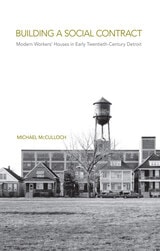
Through oral histories, letters, photographs, and period fiction, McCulloch traces wage earners’ agency in negotiating a new implicit social contract, one that rewarded hard work with upward mobility in modern houses. This promise reflected workers’ increased bargaining power but, at the same time, left them increasingly vulnerable to layoffs.
Building a Social Contract focuses on Detroit, the quintessential city of the era, where migrant workers came and were Americanized, and real estate agents and the speculative housebuilding industry thrived. The Motor City epitomized the struggle of Black workers in this period, who sought better lives through industrial labor but struggled to translate their wages into housing security amid racist segregation and violence. When Depression-era unemployment created an eviction crisis, the social contract unraveled, and workers rose up—at the polls and in the streets—to create a labor movement that reshaped American capitalism for decades.
Today, the lessons McCulloch provides from early twentieth-century Detroit are a necessary reminder that wages are not enough, and only working-class political power can secure affordable housing.
Building an Archaeology of Maya Urbanism
Planning and Flexibility in the American TropicsDamien B. Marken and M. Charlotte Arnauld
University Press of Colorado, 2023
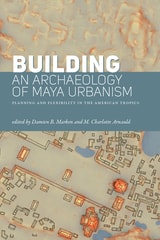
Integrating recent lidar survey data with more traditional excavation and artifact-based archaeological practices, chapters in this volume offer broadened perspectives on the patterns of Maya urban design and planning by viewing bottom-up and self-organizing processes as integral to the form, development, and dissolution of Classic lowland cities alongside potentially centralized civic designs. Full of innovative examples of how to build an archaeology of urbanism that can be applied not just to the lowland Maya and across the region, Building an Archaeology of Maya Urbanism simultaneously improves interpretations of lowland Maya culture history and contributes to empirical and comparative discussions of tropical, non-Western cities worldwide.
Contributors: Divina Perla Barrera, Arianna Campiani, Cyril Castanet, Adrian S. Z. Chase, Lydie Dussol, Sara Dzul Góngora, Keith Eppich, Thomas Garrison, María Rocio González de la Mata, Timothy Hare, Julien Hiquet, Takeshi Inomata, Eva Lemonnier, José Francisco Osorio León, Marilyn Masson, Elsa Damaris Menéndez, Timothy Murtha, Philippe Nondédéo, Keith M. Prufer, Louise Purdue, Francisco Pérez Ruíz, Julien Sion, Travis Stanton, Rodrigo Liendo Stuardo, Karl A. Taube, Marc Testé, Amy E. Thompson, Daniela Triadan

Building for the Army in the Age of Empires
Modern Military Infrastructure and the Urban ExperienceDragan Damjanovic
Central European University Press, 2027
Building on a Borrowed Past
Place and Identity in Pipestone, MinnesotaSally J. Southwick
Ohio University Press, 2005
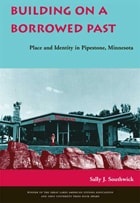
Why is there a national monument near a small town on the Minnesota prairie? Why do the town’s residents dress as Indians each summer and perform a historical pageant based on a Victorian-era poem? To answer such questions, Building on a Borrowed Past: Place and Identity in Pipestone, Minnesota shows what happens when one culture absorbs the heritage of another for civic advantage.
Founded in 1874, Pipestone was named for the quarries where regional tribes excavated soft stone for making pipes. George Catlin and Henry Wadsworth Longfellow described the place and its tribal history. Promotion by white residents of the quarries as central to America’s Indian heritage helped Pipestone obtain a federal Indian boarding school in the 1890s and a national monument in the 1930s. The annual “Song of Hiawatha” pageant attracted tourists after World War II. Sally J. Southwick’s prizewinning study demonstrates how average, small–town citizens contributed to the generic image of “the Indian” in American culture.
Examining oral histories, memoirs, newspapers, federal documents, civic group records, and promotional literature, Southwick focuses on the role of middle–class individuals in establishing a historical, place–based identity. Building on a Borrowed Past reveals how identities are formed through adaptation of cultural, spiritual, racial, and historical symbols.
Building the American Republic, Volume 1
A Narrative History to 1877Harry L. Watson
University of Chicago Press, 2018
Volume 1 starts at sea and ends on the battlefield. Beginning with the earliest Americans and the arrival of strangers on the eastern shore, it then moves through colonial society to the fight for independence and the construction of a federalist republic. From there, it explains the renegotiations and refinements that took place as a new nation found its footing, and it traces the actions that eventually rippled into the Civil War.
This volume goes beyond famous names and battles to incorporate politics, economics, science, arts, and culture. And it shows that issues that resonate today—immigration, race, labor, gender roles, and the power of technology—have been part of the American fabric since the very beginning.
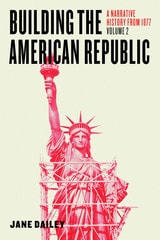
Building the American Republic, Volume 2
A Narrative History from 1877Jane Dailey
University of Chicago Press, 2018
The American nation came apart in a violent civil war less than a century after ratification of the Constitution. When it was reborn five years later, both the republic and its Constitution were transformed. Volume 2 opens as America struggles to regain its footing, reeling from a presidential assassination and facing massive economic growth, rapid demographic change, and combustive politics.
The next century and a half saw the United States enter and then dominate the world stage, even as the country struggled to live up to its own principles of liberty, justice, and equality. Volume 2 of Building the American Republic takes the reader from the Gilded Age to the present, as the nation becomes an imperial power, rethinks the Constitution, witnesses the rise of powerful new technologies, and navigates an always-shifting cultural landscape shaped by an increasingly diverse population. Ending with the 2016 election, this volume provides a needed reminder that the future of the American republic depends on a citizenry that understands—and can learn from—its history.
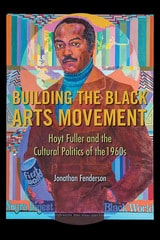
Building the Black Arts Movement
Hoyt Fuller and the Cultural Politics of the 1960sJonathan Fenderson
University of Illinois Press, 2019
Building the Black Metropolis
African American Entrepreneurship in ChicagoRobert Weems Jr., Jason Chambers
University of Illinois Press, 2017
Contributors: Jason P. Chambers, Marcia Chatelain, Will Cooley, Robert Howard, Christopher Robert Reed, Myiti Sengstacke Rice, Clovis E. Semmes, Juliet E. K. Walker, and Robert E. Weems Jr.