Results by title
622 books match the query 'Language Study' and 46 start with c
Caddoan Texts
Douglas R. Parks
University of Chicago Press Journals, 1977
Catalogus Translationum et Commentariorum, Volume 8
Virginia Brown
Catholic University of America Press, 1960
Catalogus Translationum et Commentariorum, Volume 9
Virginia Brown
Catholic University of America Press, 1960
Cato the Censor and the Beginnings of Latin Prose
From Poetic Translation to Elite TranscriptionEnrica Sciarrino
The Ohio State University Press, 2011
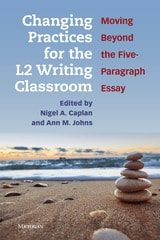
Changing Practices for the L2 Writing Classroom
Moving Beyond the Five-Paragraph EssayNigel A. Caplan and Ann M. Johns
University of Michigan Press, 2019
Part 1 discusses what the five-paragraph essay is not: it is not a very old, established form of writing; it is not a genre; and it is not universal.
Part 2 looks at writing practices to show the essay’s ineffectiveness in elementary schools, secondary schools, first-year writing classes, university writing courses, undergraduate discipline courses, and graduate school.
Part 3 looks beyond the classroom at testing. At the end of each chapter, the authors--all well-known in the field of second language writing--suggest changes to teaching practices based on their theoretical approach and classroom experience.
The book closes by reviewing some of the major questions raised in the book, by exploring which questions have been left unanswered, and by offering suggestions for teachers who want to move away from the five-paragraph essay. An assignment sequence for genre-aware writing instruction is included.
Clear Grammar 2, 2nd Edition
Keys to Grammar for English Language LearnersKeith S. Folse
University of Michigan Press, 2012
Clear Grammaris a four-level grammar series that features a unique combination of useful grammar information written in clear language with activities that promote more accurate and fluent vocabulary usage, writing, speaking, and reading.
Important features of all four new editions of Clear Grammarinclude:
- More user-friendly charts to accompany grammar explanations
- High-frequency, corpus-based vocabulary related to each grammar point
- Grammar discovery tasks using students’ inductive learning skills
- A greater variety and increased number of activities, including more practice online
- Many more activities at the longer discourse level
- The addition of reading practice at the end of the unit, as well a critical-reading task
- More writing practice, including one on editing student writing and another for original student writing
- Two vocabulary practice activities, including a focus on collocations, in each unit, as well as many one-minute mini lessons showing the connection between grammar and vocabulary
- More speaking practice, with activities that require students to speak and listen to each other while using the target grammar
Support for teachers in the form of indicators that reference how to teach the grammar points in the Clear Grammar series from Keys to Teaching Grammar for English Language Learners by Keith S. Folse (978-0-472-03220-4).
Clear Grammar 2offers students and teachers a solid introduction to low-intermediate grammar.
Clear Grammar 2, 2nd Ed., includes
* Articles
* Past tense of irregular verbs
* Present perfect tense
* Adverbs of frequency
* Nouns used as adjectives
* Object pronouns
* Past progressive tense
* One and Other
* Possessives
*Comparatives and superlatives
*Modals
The book's companion website includes the additional grammar/vocabulary activities that are referenced in the textbook.
Clear Grammar 3, 2nd Edition
Keys to Grammar for English Language LearnersKeith S. Folse
University of Michigan Press, 2015
Clear Grammar 3 introduces high-intermediate grammar. Clear Grammar 3, 2nd Ed., includes
- phrasal verbs
- infinitives and gerunds
- participial adjectives: -ing and -ed
- prepositions after verbs, adjectives, and nouns
- passive voice
- adjective clauses
- adverbs
- connectors
- review of verb tenses
Clear Grammar 3 concludes with a review of this volume’s contents of high-intermediate grammar points.
Clear Grammar is a four-level grammar series that features a unique combination of useful grammar information written inclearlanguage with activities that promote more accurate and fluent writing, speaking, reading, and vocabulary usage. Important features of the new editions of Clear Grammar include:
- More user-friendly charts to accompany grammar explanations
- High-frequency, corpus-informed vocabulary related to each grammar point
- Grammar discovery tasks using students’ inductive learning skills
- A greater variety and more activities, including practice online (www.press.umich.edu/esl/compsite/cleargrammar/)
- Many more activities at the longer discourse level
- The addition of reading practice at the end, plus a critical-reading task
- More writing practice, including one on editing student writing and another for original student writing
- Two vocabulary practice activities per unit, with one on collocations; plus many one-minute lessons showing the connection between grammar and vocabulary
- More speaking practice, with activities that require students to speak and listen to each other while using the target grammar
- Support for teachers in the form of indicators that reference how to teach the grammar points in the Clear Grammar series from Keys to Teaching Grammar for English Language Learners by Keith S. Folse (978-0-472-03220-4).
Clear Grammar 4, 2nd Edition
Keys to Advanced ESL GrammarKeith S. Folse, Deborah Mitchell, Barbara Smith-Palinkas, and Donna Tortorella
University of Michigan Press, 2013
Clear Grammar 4 introduces advanced grammar. Clear Grammar 4, 2nd Ed., includes
- Subject-verb agreement
- Word forms
- Past perfect tense
- Conditionals
- Adverb clauses
- Noun clauses
- Reduction of adjective and adverb clauses (including appositives)
- Past modals
- Review of verb tenses
Clear Grammar 4 concludes with a review of this volume’s contents of advanced grammar points.
Clear Grammar is a four-level grammar series that features a unique combination of useful grammar information written in clear language with activities that promote more accurate and fluent writing, speaking, reading, and vocabulary usage. Important features of the new editions of Clear Grammar include:
- More user-friendly charts to accompany grammar explanations
- High-frequency, corpus-informed vocabulary related to each grammar point
- Grammar discovery tasks using students’ inductive learning skills
- A greater variety and more activities, including practice online (www.press.umich.edu/esl/compsite/cleargrammar/)
- Many more activities at the longer discourse level
- The addition of reading practice at the end, plus a critical-reading task
- More writing practice, including one on editing student writing and another for original student writing
- Two vocabulary practice activities per unit, with one on collocations; plus many one-minute lessons showing the connection between grammar and vocabulary
- More speaking practice, with activities that require students to speak and listen to each other while using the target grammar
- Support for teachers in the form of indicators that reference how to teach the grammar points in the Clear Grammar series from Keys to Teaching Grammar for English Language Learners by Keith S. Folse (978-0-472-03220-4).
Collaborations & Innovations
Supporting Multilingual Writers across Campus UnitsNancy DeJoy and Beatrice Quarshie Smith
University of Michigan Press, 2017
The chapters in this volume demonstrate that teaching effective communication skills to all students in ways that recognize the needs of multiple language users requires a shift in perspective that approaches multilingualism as an opportunity that is enhanced by the internationalization of higher education because it makes transparent the problems of current structures and disciplinary approaches in accessing those opportunities. A goal of this collection is to address the economic, structural, disciplinary, and pedagogical challenges of making this type of shift in bold and compassionate ways.
Chapters are organized into these four parts--Program-Level Challenges and Opportunities, Opportunities for Enhancing Teacher Training, Multilingualism and the Revision of First-Year Writing, and Integrating Writing Center Insights—and reflect the perspectives of a variety of university language settings. The contributions feature collaborative models and illustrate the need to rethink structures, pedagogies, assessment/evaluation processes, and teacher training for graduate and undergraduate students who will teach writing and other forms of communication.
College Knowledge for the Community College Student
David Schoem and Lynn Dunlap
University of Michigan Press, 2011
Most students arrive at college not fully aware of just how different the college experience is from other prior experiences. The intellectual and social expectations, as well as the rules and regulations, are different, and not just different from high school.
While all college students must learn to negotiate the transition to college, the challenges for those who enroll in community colleges are unique. Many community college students work, and many work full-time. Many also have family responsibilities—children, partners, and aging parents. A majority of community college students are the first in their family to enroll in college. Some students—both from abroad and from the United States--do not speak English fluently. Some students are retired military personnel. and some are seeking to make a career change. This book strives to speak to this diversity as well as to situations specific to today’s U.S. community college students.
College Knowledge for the Community College Student is a road map and tour guide for a successful community college experience and education. Tips are based on research and the wisdom and advice of other community college students and are designed to help students learn, succeed, graduate, and have a rewarding and fulfilling community college experience.
College Knowledge for the Jewish Student
101 TipsDavid Schoem
University of Michigan Press, 2010
"Students and parents alike will benefit from reading David Schoem's well-written, lively, and documented guide."
---Elie Wiesel
“This is a wonderful sequel to Schoem’s very successful College Knowledge: 101 Tips. As I read through this new volume, I was constantly struck that the advice offered would help all students who approach the college experience with distinctive cultural backgrounds and commitments. Indeed all prospective college students, and their parents, can benefit from this serious yet delightful, well-written and incisive book of advice. I intend to buy one for each of my grandchildren.”
---Harold Shapiro, former president, Princeton University; former president, University of Michigan
For the individual Jewish student who enters college, it is critical that he or she come intellectually, emotionally, and spiritually prepared for the academic and social experience that awaits. College is a qualitatively different experience than high school, and students’ expectations need to be set appropriately. The transition from high school to college is so significant that it can be difficult for most without some preparation.
College Knowledgefor the Jewish Student: 101 Tips is the perfect guide for students heading off to college with high expectations for learning, academic success, personal growth, and independence. Through lively tips and compelling student stories about life at college, it offers thoughtful, practical information for every Jewish student who wants to make a successful transition.
College Knowledge for the Jewish Student includes tips on the academic aspects of college life, like communicating with faculty, learning what is where on campus, where to go for help with coursework, how to manage one’s time for a balanced experience, etc. In addition, it offers advice on dealing with family, finances, health, and safety, as well as the many social and emotional aspects of this important rite of passage.
College Knowledge for the Student Athlete
David Schoem and Shelly Kovacs
University of Michigan Press, 2011
This book was written to support the academic success of student athletes—whether at a large or small university or college, whether team or individual sport, whether women or men, whether on scholarship or not.
While all college students must learn to negotiate the complex transition from high school to college, student athletes face unique challenges, including the complicated set of regulations set out by the NCAA and individual conferences that determine eligibility. The current environment in college athletics makes it even more critical that student athletes understand what they need to do academically and how to avoid potential situations that could jeopardize their athletic careers.
College Knowledge for the Student Athlete is a road map and tour guide for a successful career as a student athlete. Tips are based on research and the authors’ experience, as well as the wisdom and advice of hundreds of former student athletes.
College Knowledge
101 TipsDavid Schoem
University of Michigan Press, 2005
What educators and students have to say about David Schoem's College Knowledge:
"David Schoem is a devoted teacher. He recognizes the challenges of preparing to be a responsible, compassionate, successful adult in the twenty-first century. He has written a book that can make a meaningful difference in the lives of its readers."
---Jeffrey Lehman, President, Cornell University
"College Knowledge is full of wise, straight-to-the-point guidance for success both in and out of the classroom. Every first-year student should read-a--nd heed---David Schoem's advice. Though written for students, parents of first-year students can learn from it, too!"
---Beverly Daniel Tatum, President, Spelman College
"College Knowledge is a deceptively straightforward guide appropriate for any student entering higher education. As both a parent and an educator, I highly recommend this sage, yet easy-to-digest guide as a must for the college-bound young adult."
---Pamela Horne, Director of Admissions, Michigan State University
"Professor Schoem's insights and encouragement helped me to create many of my most satisfying and lasting experiences during college. This book captures his infectious enthusiasm and will inspire readers to take risks in exploring all that college has to offer."
---Miriam Vogel, former Schoem student
Comanche Vocabulary
Trilingual EditionCompiled by Manuel García Rejón
University of Texas Press, 1995
The Comanche Vocabulary collected in Mexico during the years 1861-1864 by Manuel García Rejón is by far the most extensive Comanche word list compiled before the establishment of the Kiowa-Comanche-Apache Reservation in 1867. It preserves words and concepts that have since changed or even disappeared from the language, thus offering a unique historical window on earlier Comanche culture.
This translation adds the English equivalents to the original Spanish-Comanche list of 857 words, as well as a Comanche-English vocabulary and comparisons with later Comanche word lists. Daniel J. Gelo's introduction discusses the circumstances in which García Rejón gathered his material and annotates significant aspects of the vocabulary in light of current knowledge of Comanche language and culture. The book also includes information on pictography, preserving a rare sample of Comanche scapula drawing.
This information will help scholars understand the processes of language evolution and cultural change that occurred among all Native American peoples following European contact. The Comanche Vocabulary will also hold great interest for the large public fascinated by this once-dominant tribe.
Commentary for Academic Writing for Graduate Students, 2d ed.
Essential Tasks and SkillsJohn M. Swales and Christine B. Feak
University of Michigan Press, 2004
Like its predecessor, this edition of Academic Writing for Graduate Students
"explains understanding the intended audience, the purpose of the paper, and academic genres.
"includes the use of task-based methodology, analytic group discussion, and genre consciousness-raising.
"shows how to write summaries and critiques.
"features "language focus" sections that address linguistic elements as they affect the wider rhetorical objectives.
"helps students position themselves as junior scholars in their academic communities.
Commentary for Academic Writing for Graduate Students, 3rd Ed.
Essential Tasks and SkillsJohn M. Swales & Christine B. Feak
University of Michigan Press, 2012
The Commentary for the third edition of this successful guide to writing has been revised and expanded in many ways to provide more support for instructors; this includes additional tasks for Units Two and Four to supplement the main text. However, the collegial tone established in previous Commentaries between Swales & Feak and instructors has been retained.
This volume contains commentaries on each of the eight units plus the two appendixes. The format for each unit includes
- a summary of the main points of the unit along with a list of topics covered.
- a synopsis of activities, divided into Language Focus sections and description of tasks.
- some general notes designed to capture the character of the unit, to indicate alternative activities, or to anticipate problems that may arise.
- detailed commentary and discussion of individual tasks, including model or sample answers where possible.
Commentary for Academic Writing for Graduate Students
Essential Tasks and SkillsChristine B. Feak and John M. Swales
University of Michigan Press, 2027
Now in its 4th edition, the Commentary for Academic Writing for Graduate Students remains an important companion text. Useful for instructors as well as students and scholars using Academic Writing for Graduate Students for self-study, the Commentary includes a synopsis of what each unit attempts to achieve, further discussion of certain points, and sample responses to the more controlled tasks. Many of the responses or model texts come directly from class discussion or from submitted homework, which students generously offered for inclusion. In response to numerous requests, the authors have expanded the number of teaching suggestions included at the end of each unit for this edition.
Commentary on Thucydides, Book 3
Rachel Bruzzone
University of Michigan Press, 2025
Commentary on Thucydides, Book 3 remedies this situation by offering detailed linguistic explanations and grammatical clarifications designed to appeal both to seasoned Classicists and to a broader group of non-specialist readers who may still be developing their Greek language skills. Starting with 428 BCE, Book 3 covers a critical period of the Peloponnesian War in which the conflict began to manifest its extraordinary violence and scale. The book contains influential and controversial discussions, including Thucydides’ own analysis of the nature of war and the ways that it teaches “lessons of violence” to individuals and states. Book 3 also features the famous Mytilenean Debate, an argument premised on the thesis that all international relations are, or should be, fundamentally amoral. Educated readers have always looked to Thucydides in turbulent times, and this commentary will open up his text to a wider audience.
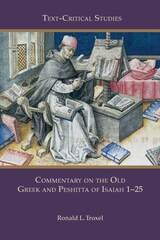
Commentary on the Old Greek and Peshitta of Isaiah 1–25
Ronald L. Troxel
SBL Press, 2020
The first thorough commentary on the Old Greek and Peshitta of Isaiah
Ronald L. Troxel’s new textual commentary on Isaiah focuses on the book’s Greek and Syriac translations and seeks to recover, as much as possible, the Hebrew texts on which these early translations relied. Troxel treats the Greek and Syriac together in order to present a detailed analysis of their relationship, devoting particular attention to whether the Syriac was directly or indirectly influenced by the Greek. This comparison sheds light on both the shared and distinct approaches that the translators took in rendering lexemes, phrases, verses, and even passages. In addition Troxel presents observations about the literary structures the translators created that differ from those implicit in their source texts (as we understand them), to produce coherent discourse in the target language.
Features:
- Textual commentary on the life of the text of Isaiah 1–25
- Use of the Dead Sea Scrolls to shed light on particular issues
- Detailed comparison of the Masoretic Text, the Old Greek, and the Peshitta
Complex Predicates in Japanese
A Syntactic and Semantic Study of the Notion 'Word'Yo Matsumoto
CSLI, 1996
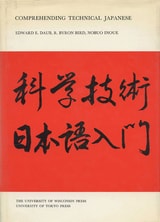
Comprehending Technical Japanese
Edward E. Daub
University of Wisconsin Press, 1975
Used for self-study or in the classroom, this text shows the reader how to read and translate technical Japanese texts by providing graded readings, explanatory notes, and translation aids.
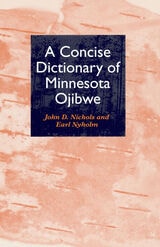
Concise Dictionary of Minnesota Ojibwe
John Nichols
University of Minnesota Press, 1994
The most up-to-date resource for those interested in the linguistic and cultural heritage of the Anishinaabe, A Concise Dictionary of Minnesota Ojibwe contains more than 7,000 of the most frequently used Ojibwe words. Presented in Ojibwe-English and English-Ojibwe sections, this dictionary spells words to reflect their actual pronunciation with a direct match between the letters used and the speech sounds of Ojibwe. It contains many ancient words and meanings as well as language added in the twentieth century.
Most entries give several sample inflected forms such as the plural, diminutive, and locative forms of nouns and first person and participle forms of verbs. The basic patterns of Ojibwe word structure and the organization of the dictionary entries are clearly explained in the introduction. The most widely used modern standard writing system for Ojibwe is used throughout, and some of the key objects of Ojibwe life are authentically illustrated by coauthor and artist Earl Nyholm.Acknowledged as one of the three largest Native American languages, Ojibwe is spoken in many local varieties in the Upper Midwest and across Central and Eastern Canada. Minnesota Ojibwe is spoken in Central and Northern Minnesota, and is very similar to the Ojibwe spoken in the Ontario-Minnesota border region, Wisconsin, and Michigan's Upper Peninsula. A Concise Dictionary of Minnesota Ojibwe is an essential reference for all students of Ojibwe culture, history, language, and literature.
Confessions of St. Augustine in Latin
Andrew Beer
Catholic University of America Press, 2026
Configuring Topic and Focus in Russian
Tracy Holloway King
CSLI, 1995
Conflict Resolution Training for the Classroom
What Every ESL Teacher Needs to KnowBarrie J. Roberts
University of Michigan Press, 2020
Connecting Reading & Writing in Second Language Writing Instruction
Alan Hirvela
University of Michigan Press, 2004
Although the integrated reading-writing model has gained popularity in recent years, many teachers have little more than an intuitive sense of the connections between these skills. As part of the popular Michigan Series on Teaching Multilingual Writers, Connecting Reading and Writing in Second Language Instruction will provide invaluable background knowledge on this issue to ESL teachers in training, as well as teachers who are already practicing.
Connecting Reading & Writing in Second Language Writing Instruction, Second Edition
Alan R. Hirvela
University of Michigan Press, 2016
The new edition features two new chapters. The first is a chapter on assessment because students are now being asked to connect reading and writing in the classroom and on formal assessments like the TOEFL®. The second new chapter is an argument for accounting for transfer elements in the teaching and researching of reading-writing connections.
The goals of this revised volume are to provide: resources for those wishing to pursue reading-writing connections, summaries of the beliefs underlying those connections, ideas for teaching the connections in the classroom, and information about the work others have done to develop this domain of L2 writing.
Constraint-Based Approaches to Germanic Syntax
Edited by W. Detmar Meurers and Tibor Kiss
CSLI, 2001
This volume begins with an introduction to the recent research performed on Germanic syntax using constraint-based frameworks. It then goes on to investigate the linguistic phenomena found in the grammar of the German and Danish languages. Using such approaches as Lexical-Functional Grammar and Head-Driven Phrase Structure Grammar, contributors shed a different light on theoretical issues addressed by past studies, including semi-free word order, partial front phenomena, and complex predicate formation. While alternative approaches have assumed that meaning (semantics) is dependent on form (syntax), various analyses presented in this volume explore the idea that both form and meaning are equally constitutive for grammatical descriptions.
Content-Based Instruction
What Every ESL Teacher Needs to KnowMarguerite Ann Snow and Donna M. Brinton
University of Michigan Press, 2019
This book introduces readers to the concept of Content-Based Instruction (CBI) through a brief history and countless examples of the many ways this approach can be applied across settings and programs. Whether readers want to deepen their understanding of CBI or get ideas for their own teaching situation, this book provides an overview of CBI and the process of implementing it. The book discusses the three prototype models (theme-based, sheltered, and adjunct), new models (sustained content language teaching, content and language-integrated learning, English-medium instruction, adjunct models, and other hybrid models), and a research-based rationale for using CBI in the classroom. Each section includes reflection questions designed to guide readers to consider how best to implement CBI in their course and program.
Content-Based Second Language Instruction
Michigan Classics EditionDonna M. Brinton, Marguerite Ann Snow, and Marjorie Wesche
University of Michigan Press, 2003
While the core of the book remains the same, new features discuss important CBI-related research and modifications to the pedagogy in the past many years.
Content-Based Second Language Instruction, Michigan Classics Edition, now includes:
a new preface
a glossary of key terms
an updated bibliography
an epilogue highlighting the major developments in the field since 1989.
Continuing Cooperative Development
A Discourse Framework for Individuals as ColleaguesJulian Edge
University of Michigan Press, 2002
Controversies in Second Language Writing, Second Edition
Dilemmas and Decisions in Research and InstructionChristine Pearson Casanave
University of Michigan Press, 2017
The second edition is a thorough revision with all chapters updated to refer to works written since the first edition was published. A few chapters have been added: one devoted to writing in a digital era (Chapter 3); one devoted to the debates about English as a lingua franca, "translingual literacy practices," and other hybrid uses of English that have been ongoing in the last ten years (Chapter 4); and one giving special attention to issues related to writing from sources and plagiarism (Chapter 6).
As with the first edition, the second edition of Controversies is not a book that will teach readers how to do things. Rather, it is a book designed to help readers think and to wrestle with issues in L2 writing that are not easily resolved by how-to prescriptions.
Controversies in Second Language Writing
Dilemmas and Decisions in Research and InstructionChristine Pearson Casanave
University of Michigan Press, 2003
To counteract some of the debates, Casanave explores the different sides of the arguments and provides examples of how other teachers have dealt with these issues. The book presents novice and seasoned teachers with thought-provoking issues and questions to consider when determining and reflecting on their own teaching strategies and criteria.
Topics discussed include:
contrastive rhetoric
product vs. process
fluency and accuracy
assessment of student work
audience
plagiarism
politics and ideology.
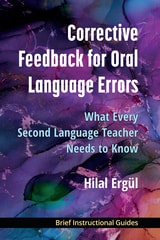
Corrective Feedback for Oral Language Errors
What Every Second Language Teacher Needs to KnowHilal Ergül
University of Michigan Press, 2027
Speaking activities are where language comes alive, and where teachers face the constant question of whether to correct errors on the spot or let communication flow. Correct too much and learners may shut down; correct too little and persistent errors can fossilize. Taking this everyday dilemma seriously, this book explains what research actually shows about correcting spoken errors, why timing and feedback type matter, and how learner factors like anxiety and attention shape what students take in. Most importantly, the book helps teachers make practical, confident choices about oral corrective feedback without turning interaction into interruption.
Extending beyond a grammar-dominant focus, Ergül addresses pragmatics and discourse intonation as consequential but often neglected correction targets, and frames pronunciation feedback around intelligibility and functional load rather than native-likeness. The book also examines technology-mediated corrective feedback (including synchronous computer-mediated communication, speech visualization, and AI-based tools) as options that can expand feedback opportunities when aligned with instructional goals. With concrete classroom guidance, reproducible student handouts, and reflection tools, Corrective Feedback for Oral Language Errors supports teachers who want learners to speak more, speak more accurately, and build long-term confidence.
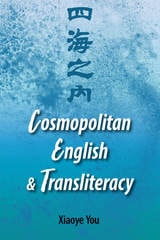
Cosmopolitan English and Transliteracy
Xiaoye You
Southern Illinois University Press, 2016
Despite the vast number of multilingual speakers in the United States and the pervasive influence of globalization, writing studies in this country is still inextricably linked to a nationalistic, monolingual English ideology. In Cosmopolitan English and Transliteracy, Xiaoye You addresses this issue by proposing that writing studies programs adopt a cosmopolitan perspective. Emphasizing local and global forms of citizenship and identification, You merges a humanistic vision with the rigor of social science, arguing that linguistic and cultural differences can be explored to recover human connections normally severed by geographical and semiotic borders.
You examines several areas of writing affected by globalization. He then turns to the composition classroom, highlighting the challenges and possibilities of crossing cultural boundaries in academic discourse before introducing a pedagogy aimed at fostering American students’ translingual and transcultural sensibilities. Included is a model for training writing teachers in the context of globalization, which aims to help instructors gain practical knowledge about the needs and resources of multilingual writers through communication technologies and cross-cultural partnerships.
By introducing cosmopolitan perspectives into the composition classroom, You challenges traditional assumptions about language, identity, and literacy as they relate to writing studies. Innovative and provocative, Cosmopolitan English and Transliteracy charts a new way forward for writing programs, with a call to focus on global rather than national identity.
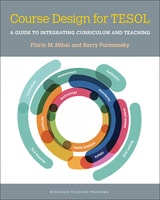
Course Design for TESOL
A Guide to Integrating Curriculum and TeachingFlorin M. Mihai and Kerry Purmensky
University of Michigan Press, 2016
Part I explores the basic language acquisition theories and their influences on current teaching practices in the field. Part II then moves on to the core elements of designing a curriculum or course: conducting the needs analysis, setting of course goals/objectives, designing the syllabus, and writing lesson plans.
Part III: Instructional Activities and Assessment Techniques features chapters on the teaching of listening, speaking, reading, writing, grammar, and culture. Within each of these chapters, the authors address the fundamental issues related to the teaching of each skill and then discuss the components of a good activity for that skill (and how to design one), and then offer four sample activities (one for each type of syllabus) and guidance on assessing that skill. The activities can be adapted for use in a variety of classrooms and settings.
Part IV addresses contemporary trends—curriculum issues in North America and Europe (standards and educational policy), practices in teaching in Asia (particularly China and Korea), and technology-enhanced learning.
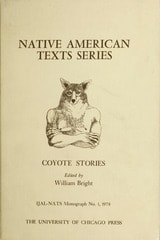
Coyote Stories
Edited by William Bright
University of Chicago Press Journals, 1978
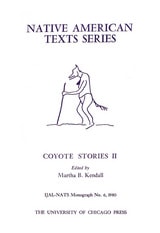
Coyote Stories II
Edited by Martha B. Kendall
University of Chicago Press Journals, 1980
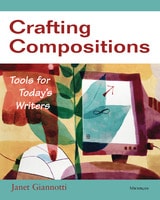
Crafting Compositions
Tools for Today's WritersJanet Giannotti
University of Michigan Press, 2004
The textbook features:
"Authentic readings to foster vocabulary development, show successful techniques, and serve as a jumping-off point for free writing.
"A "learning log" in which students write to practice the writing lessons and tips presented.
"A two-track system in which students simultaneously work with the writing of other students as they work on their own compositions.
"Toolbox mini-lessons to review common grammar trouble spots.
This mid-level writing text is appropriate for high school, community college, or university course
Creating Contexts
Writing Introductions across GenresChristine B. Feak & John M. Swales
University of Michigan Press, 2011
Research article introductions are central to Creating Contexts: Writing across Genres with the CaRS (creating a research space) model used as a starting point. This volume focuses on introductions for other kinds of texts that are also part of the graduate student writing experience such as course papers and critiques, proposals, and dissertations.
This volume represents a revision and expansion of the material on introductions that appeared in English in Today's Research World.
The material presented in this volume is appropriate for graduate students and others already working in their chosen academic fields. The material has, in fact, been used with each of these groups in both writing courses and writing workshops. We believe that the material would also be suitable for those wishing to pursue a course of self-study. To target these different possible uses, we have included a variety of topics and tasks that we hope will deepen users’ understanding of how to create a writing context for their work. Tasks range from evaluating text commentaries to open-ended questions and have been designed to generate lively classroom or workshop discussion as well as thoughtful consideration by an individual user.
Cree Legends and Narratives from the West Coast of James Bay
Simeon Scott
University of Manitoba Press, 1995
Critical Academic Writing and Multilingual Students
A. Suresh Canagarajah
University of Michigan Press, 2002
This volume facilitates teacher self-reflection and enables readers to better understand the motivations and pedagogical implications--especially for L2 writing--of a more openly pedagogical approach.
Critical Academic Writing and Multilingual Students explains what it means to commit to an academic pedagogy, in terms of form, self, content, and community--and what it can accomplish in the L2 writing classroom. It's a guide for writing teachers who wish to embark on a journey toward increased critical awareness of the role they play, or potentially could play, in the lives of their students.
Crossing Cultures in the Language Classroom, Second Edition
Andrea DeCapua, Ed.D., and Ann C. Wintergerst, Ed.D.
University of Michigan Press, 2016
Teachers are often in the forefront of today’s cross-cultural contact, whether in the language classroom or in the K–12 or university/college classroom, but they are not always prepared to handle the various issues that can arise in terms of cross-cultural communication. The intent of this book is to make education in cross-cultural awareness accessible to a broad range of teachers working in a variety of educational settings.
Crossing Cultures in the Language Classroom attempts to balance theory and practice for pre-service and in-service teachers in general education programs or in ESL/EFL, bilingual, and foreign language teacher training programs, as well as cross-cultural awareness workshops. This book is unique in that it combines theory with a wide range of experiential activities and projects designed to actively engage users in the process of understanding different aspects of cross-cultural awareness. The goals of the book are to help readers:
- expand cultural awareness of one’s own culture and that of others
- achieve a deeper understanding of what culture is and the relationship between culture and language
- acquire the ability to observe behaviors in order to draw conclusions based on observation rather than preconceptions
- understand and implement observations of cultural similarities and differences
- develop an attitude of tolerance toward cultural differences and move away from the “single story.”
Crow Texts
Dorothea Kaschube
University of Chicago Press Journals, 1978
Culture Myths
Applying Second Language Research to Classroom TeachingAndrea DeCapua
University of Michigan Press, 2018
A goal of this book is to help readers strike a balance between minimizing cultural differences and assuming similarities across cultures on one hand, and exoticizing other cultures or accentuating surface differences on the other.
The myths about culture as it relates to the classroom that are explored in this book are:
- We are all human beings, so how different can we really be?
- The goal of education is to develop each individual’s potential.
- Focusing on conversational skills in the classroom is overrated.
- Not looking at the teacher shows disrespect.
- How something is said is not as important as what is said.
- Everyone knows what a good instructional environment is.
- By the time students get to middle or high school, they know how to be a student.
Culture and Content in French
Frameworks for Innovative CurriculaAurélie Chevant-Aksoy
Lever Press, 2022