Results by title
18284 books match the query 'United States' and 1260 start with c
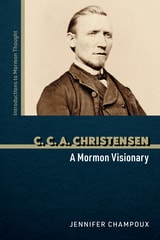
C. C. A. Christensen
A Mormon VisionaryJennifer Champoux
University of Illinois Press, 2026
Drawing on the artist’s voluminous writings, Jennifer Champoux illuminates Christensen’s influential art, including recently rediscovered works. Christensen received Church commissions and approval and helped shape Latter-day Saints’ vision of themselves. Over time the work of other artists eclipsed his achievements, but a twenty-first century revival of interest began to restore his reputation. Champoux also profiles how Christensen’s expansive activities outside of the art world gave him a unique vantage point for chronicling how the Latter-day Saint faith and culture evolved in Utah.
A revealing intellectual biography, C. C. A. Christensen offers a rare in-depth look at a major Latter-day Saint artist.
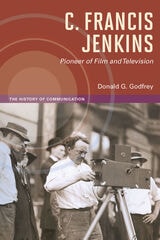
C. Francis Jenkins, Pioneer of Film and Television
Donald G. Godfrey
University of Illinois Press, 2014
This is the first biography of the important but long-forgotten American inventor Charles Francis Jenkins (1867-1934). Historian Donald G. Godfrey documents the life of Jenkins from his childhood in Indiana and early life in the West to his work as a prolific inventor whose productivity was cut short by an early death. Jenkins was an inventor who made a difference.
As one of America's greatest independent inventors, Jenkins's passion was to meet the needs of his day and the future. In 1895 he produced the first film projector able to show a motion picture on a large screen, coincidentally igniting the first film boycott among his Quaker viewers when the film he screened showed a woman's ankle. Jenkins produced the first American television pictures in 1923, and developed the only fully operating broadcast television station in Washington, D.C. transmitting to ham operators from coast to coast as well as programming for his local audience.
Godfrey's biography raises the profile of C. Francis Jenkins from his former place in the footnotes to his rightful position as a true pioneer of today's film and television. Along the way, it provides a window into the earliest days of both motion pictures and television as well as the now-vanished world of the independent inventor.
CHEAP SEATS
The Democratic Party’s Advantage in U.S. House ElectionsJames E. Campbell
The Ohio State University Press, 1996
The longest continuous majority in the history of the U.S. House of Representatives came to a dramatic close with the 1994 midterm elections. The Democratic Party had controlled the House for forty years—two and a half times as long as any previous majority. In Cheap Seats, James E. Campbell considers the reasons why the Democrats dominated House elections for four decades and why they ultimately lost that control.
Examining the structural advantages that helped congressional Democrats, Campbell finds that their unprecedented success in the House was due in no small measure to a favorable election system, an advantage in the way in which votes are translated into House seats. His straightforward analysis indicates that Democrats consistently win most of the very-low-turnout districts, or “cheap seats.” In fact, because of the party's continued hold on such districts, the new Democratic minority is considerably larger than it would otherwise have been.
Cheap Seats is a thorough and innovative investigation into the electoral system's impact on partisan politics and representation in Congress. Campbell presents an impressive array of evidence, including both quantitative analysis of election returns from 1936 to 1994 and in-depth studies of several cheap-seat districts. He also explores the important theoretical issues of representation that cheap seats raise and offers several proposals to reform the system. This well-written and provocative volume is accessible to anyone interested in American politics, in addition to scholars especially interested in the areas of Congress, elections, electoral systems, and political parties.
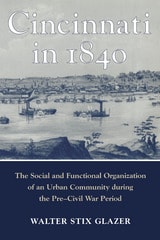
CINCINNATI IN 1840
The Social and Functional Organization of an Urban Community during the Pre-Civil War PeriodWALTER STIX GLAZER
The Ohio State University Press, 1999
During the pre-Civil War period, Cincinnati was the fastest growing and, according to many contemporary observers, most interesting city in America. This classic study, completed in the early 1970s, focuses on the community in 1840 to explain its success but also to suggest some broader patterns in the city’s development and American urbanization.
Using local census records, city directories, tax lists, newspapers, and other contemporary sources, Walter Stix Glazer describes the demographic, social, economic, and political structure of the adult white male population in 1840 and then develops a unified model of its social and functional organizations. This analysis (based on computerized records of thousands of Cincinnatians) also documents some broader trends between 1820 and 1860: the volatility of Cincinnati’s labor force, the career patterns of its homeowners, and the leadership of a small group of successful citizens active in a broad range of voluntary associations.
This statistical analysis is complemented with sections of traditional historical narrative and biographical profiles that illustrate the general themes of the book. Glazer argues that Cincinnati’s success up to 1840 was due to a unified booster vision and a cohesive community elite that gradually broke down, as a result of ethnic and economic division, over the next twenty years. This story has broader implications in terms of the character of Jacksonian democracy and American urbanization.
CITIZENS AS LEGISLATORS
DIRECT DEMOCRACY IN THE UNITED STATESSHAUN BOWLER
The Ohio State University Press, 1998
COMPUGIRLS
How Girls of Color Find and Define Themselves in the Digital AgeKimberly A. Scott
University of Illinois Press, 2021
Kimberly A. Scott explores this question and others as she details the National Science Foundation-funded enrichment project COMPUGIRLS. This groundbreaking initiative teaches tech skills to adolescent girls of color but, as importantly, offers a setting that emphasizes empowerment, community advancement, and self-discovery. Scott draws on her experience as an architect of COMPUGIRLS to detail the difficulties of translating participants' lives into a digital context while tracing how the program evolved. The dramatic stories of the participants show them blending newly developed technical and communication skills in ways designed to spark effective action and bring about important change.
A compelling merger of theory and storytelling, COMPUGIRLS provides a much-needed roadmap for understanding how girls of color can find and define their selves in today's digital age.
CONTROLLING VICE
REGULATING BROTHEL PROSTITUTION IN ST. PAUL, 1865–1883JOEL BEST
The Ohio State University Press, 1998
For eighteen years following the Civil War, the police in St. Paul, Minnesota, informally regulated brothel prostitution. Each month, the madams who ran the brothels were charged with keeping houses of ill fame and fined in the city’s municipal court. In effect, they were paying licensing fees in order to operate illegal enterprises. This arrangement was open; during this period, the city’s newspapers published hundreds of articles about vice and its regulation.
Joel Best claims that the sort of informal regulation in St. Paul was common in the late nineteenth century and was far more typical than the better known but brief experiment with legalization tried in St. Louis. With few exceptions, the usual approach to these issues of social control has been to treat informal regulation as a form of corruption, but Best’s view is that St. Paul’s arrangement exposes the assumption that the criminal justice system must seek to eradicate crime. He maintains that other policies are possible.
In a book that integrates history and sociology, the author has reconstructed the municipal court records for most of 1865–83, using newspaper articles, an arrest ledger kept by the St. Paul police, and municipal court dockets. He has been able to trace which madams operated brothels and the identities of many of the prostitutes who lived and worked in them.
COPS AND KIDS
Policing Juvenile Delinquency in Urban America, 1890–1940David B. Wolcott
The Ohio State University Press, 2005
Cops and Kids analyzes how police regulated juvenile behavior in turn-of-the-century America. Focusing on Los Angeles, Chicago, and Detroit, it examines how police saw their mission, how they dealt with public demands, and how they coped daily with kids. Whereas most scholarship in the field of delinquency has focused on progressive-era reformers who created a separate juvenile justice system, David B. Wolcott’s study looks instead at the complicated, sometimes coercive, relationship between police officers and young offenders. Indeed, Wolcott argues, police officers used their authority in a variety of ways to influence boys’ and girls’ behavior. Prior to the creation of juvenile courts, police officers often disciplined kids by warning and releasing them, keeping them out of courts. Establishing separate juvenile courts, however, encouraged the police to cast a wider net, pulling more young offenders into the new system. While some departments embraced “child-friendly” approaches to policing, others clung to rough-and-tumble methods. By the 1920s and 1930s, many police departments developed new strategies that combined progressive initiatives with tougher law enforcement targeted specifically at growing minority populations.
Cops and Kids illuminates conflicts between reformers and police over the practice of juvenile justice and sheds new light on the origins of lasting tensions between America’s police and urban communities.
COURTS AND COMMERCE
GENDER, LAW, AND THE MARKET ECONOMY IN COLONIAL NEW YORKDeborah A. Rosen
The Ohio State University Press, 1997
Illuminates the legal engine behind colonial America’s market economy, revealing how law and commerce intertwined to sideline women's participation and lay the groundwork for industrial capitalism.
In Courts and Commerce, Deborah A. Rosen offers a fresh, incisive look at the economic and legal foundations of colonial New York. Drawing on a wide array of 18th-century sources—probate inventories, court records, petitions, and more—Rosen uncovers how law and commerce intertwined to shape a market economy long before the rise of industrial capitalism.
Rosen challenges the romanticized view of colonial America as a bastion of communal values. Instead, she reveals a society already driven by arm’s-length transactions and legal mechanisms that empowered men to expand their economic reach while systematically limiting women’s participation. Her analysis spans both urban and rural settings, highlighting regional contrasts and the gendered impact of legal structures.
This book pushes back against the idea that the nineteenth century marked a sudden economic transformation. Rosen shows that many of the legal and economic patterns associated with industrialization were already in motion a century earlier. Engaging and deeply researched, Courts and Commerce is essential reading for scholars of colonial history, legal and economic development, and gender studies. It reframes our understanding of early American life—and the roots of inequality in the modern economy.

COVID and...
How to Do Rhetoric in a PandemicEmily Winderman
Michigan State University Press, 2023
CRIME, JUSTICE, HISTORY
ERIC MONKKONEN
The Ohio State University Press, 2002
Crime in the U.S. and the institutions for its control are deeply embedded in and shaped by history. The historical origins have often become invisible, and their recovery difficult, but any understanding of the contemporary situation requires historical context. For over twenty-five years Eric H. Monkkonen has worked on some of the puzzles and problems in recovering the history of crime and police.
Much of his work has appeared in articles, often in specialized journals or not in English, which this book collects for the first time. In addition to Monkkonen’s major published articles, this volume includes several new ones. The topics embrace violence, public disorder, policing, popular culture, and contrasts between the U.S. and Europe. Some articles illuminate special methodological and source issues that challenge historians of criminal justice. As well as dealing with serious crime, this book includes several articles on specifically urban problems and solutions associated with disorder, crime, and poverty.
In contrast to the more technical articles, several chapters, which originally appeared as op-ed pieces, show how historical understanding can help address current policy issues in crime and crime control. All too often, current policy debates occur without proper historical background. As a result, old ideas that have been tried and rejected are re-introduced, or new and sometimes simple ideas are ignored.
CROSS-CULTURAL VISIONS IN AFRICAN AMERICAN MODERNISM
FROM SPATIAL NARRATIVE TO JAZZ HAIKUYOSHINOBU HAKUTANI
The Ohio State University Press, 2006
In writing Black Boy, the centerpiece of the Chicago Renaissance, Wright was inspired by Theodore Dreiser. Because the European and African cultural visions that Wright, Ralph Ellison, Alice Walker, and Toni Morrison acquired were buttressed by the universal humanism that is common to all cultures, this ideology is shown to transcend the problems of society. Fascinated by Eastern thought and art, Wright, Walker, Sonia Sanchez, and James Emanuel wrote highly accomplished poetry and prose. Like Ezra Pound, Wright was drawn to classic haiku, as reflected in the 4,000 haiku he wrote at the end of his life. As W. B. Yeats’s symbolism was influenced by his cross-cultural visions of noh theatre and Irish folklore, so is James Emanuel’s jazz haiku energized by his cross-cultural rhythms of Japanese poetry and African American music.
The book demonstrates some of the most visible cultural exchanges in modern and postmodern African American literature. Such a study can be extended to other contemporary African American writers whose works also thrive on their cross-cultural visions, such as Amiri Baraka, Ishmael Reed, Charles Johnson, and haiku poet Lenard Moore.
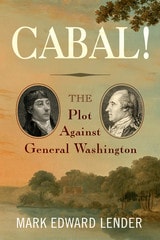
Cabal!
The Plot Against General Washington, The Conway Cabal ReconsideredMark Edward Lender
Westholme Publishing, 2024
In the spring of 1778, General George Washington wrote to his friend Landon Carter about a rumored “disposition in the Northern Officers to see me superceded in my Command.” This was as candid a statement as the general ever made about the so-called “Conway Cabal” of patriot officers and politicians critical of his leadership. Most early historians of the Revolution took the threat to Washington seriously, but by the mid-twentieth century interpretations had reversed, with the plot—if one existed—posing no real danger to the commander-in-chief. Yet, as historian Mark Edward Lender reveals in his compelling Cabal! The Plot Against General Washington, clues found in original new research provide a more comprehensive understanding of the personalities and political maneuverings of those involved in the Cabal, and the real nature of the challenge to Washington.
Rather than the “classic Cabal” of Generals Horatio Gates, Thomas Mifflin, and Thomas Conway in a plot to remove Washington quickly, the threat to Washington’s command was a gradual administrative attempt by the Board of War and political allies to take over the war effort. Reorganized in late 1777 under the leadership of Mifflin, with Gates assuming the board presidency in January 1778, the Board of War sought authority to determine military policy and strategic goals, all training, organizational, personnel, and logistical functions, and even the assignment of theater commanders. Had they succeeded, Washington’s title of commander-in-chief would have been utterly hollow. The Cabal tested Washington as few other things did during the war and perhaps tempered him into the man we remember today. Washington adroitly navigated the challenges to his leadership, meeting and defeating every attempt to curtail his authority. His response revealed a leadership style that saw him safely through the war, and gave him overwhelming support from his countrymen to become their first president.

Cafe Indiana Cookbook
Joanne Raetz Stuttgen
University of Wisconsin Press, 2010
Joanne Raetz Stuttgen’s cafe guides showcase popular regional diner traditions. In her companion book Cafe Indiana she introduces travelers to the state’s top mom-and-pop restaurants. Now, Cafe Indiana Cookbook allows you to whip up local cafe classics yourself. Breakfast dishes range from Swiss Mennonite eier datch (egg pancakes) to biscuits and gravy; entree highlights include chicken with noodles (or with dumplings) and the iconic Hoosier breaded pork tenderloin sandwich. For dessert, try such Indiana favorites as apple dapple cake or rhubarb, coconut cream, or sugar cream pie . All 130 recipes have been kitchen-tested by Jolene Ketzenberger, food writer for the Indianapolis Star.
Cafe Indiana Cookbook reveals the favorite recipes of Indiana’s Main Street eateries, including some rescued for publication before a diner’s sad closure, and documents old-fashioned delicacies now fading from the culinary landscape—like southern Indiana’s fried brain sandwiches.
Finalist, Cookbook, Midwest Book Awards

Cafe Indiana
A Guide to Indiana’s Down-Home CafesJoanne Raetz Stuttgen
University of Wisconsin Press, 2007
Over plates of chicken and noodles, fried bologna sandwiches, and sugar cream pie, folks are crafting community at the Main Street eatery. In Cafe Indiana, Hoosiers and out-of-staters alike are invited to pull out a chair and sit a spell.

Cafe Society
The wrong place for the Right peopleBarney Josephson with Terry Trilling-Josephson. Foreword by Dan Morgenstern.
University of Illinois Press, 2009
Set against the drama of the Great Depression, the conflict of American race relations, and the inquisitions of the House Un-American Activities Committee, Cafe Society tells the personal history of Barney Josephson, proprietor of the legendary interracial New York City night clubs Cafe Society Downtown and Cafe Society Uptown and their successor, The Cookery. Famously known as "the wrong place for the Right people," Cafe Society featured the cream of jazz and blues performers--among whom were Billie Holiday, boogie-woogie pianists, Big Joe Turner, Lester Young, Buck Clayton, Big Sid Catlett, and Mary Lou Williams--as well as comedy stars Imogene Coca, Zero Mostel, and Jack Gilford, and also gospel and folk singers. A trailblazer in many ways, Josephson welcomed black and white artists alike to perform for mixed audiences in a venue whose walls were festooned with artistic and satiric murals lampooning what was then called "high society."
Featuring scores of photographs that illustrate the vibrant cast of characters in Josephson's life, this exceptional book speaks richly about Cafe Society's revolutionary innovations and creativity, inspired by the vision of one remarkable man.

Cafe Wisconsin Cookbook
Joanne Raetz Stuttgen and Terese Allen
University of Wisconsin Press, 2007
Stuttgen tracked down Wisconsin's best small town cafes, from Boscobel to Sturgeon Bay, chatted with owners and customers, took notes, and recorded the history, anecdotes, and recipes behind the food. Tested and fine-tuned by Wisconsin food writer and former chef Terese Allen, these favorite recipes will bring an authentic slice of Wisconsin into your home kitchen.

Cafe Wisconsin
A Guide To Wisconsin's Down-Home CafesJoanne Raetz Stuttgen
University of Wisconsin Press, 2004
Featuring 133 cafes, with another 101 Next Best Bets alternatives, Cafe Wisconsin is every hungry traveler’s guide to real mashed potatoes, melt-in-your-mouth hot beef, from-scratch baked goods, and colorful coffee klatches. At the counter of aptly named cafes like the Coffee Cup, Main Street, and Chatterbox, you’ll laugh with owners, shake dice with customers, and find the authentic taste and flavor of Wisconsin.
Come on. Let’s go out to eat!
Cages of Reason
The Rise of the Rational State in France, Japan, the United States, and Great BritainBernard S. Silberman
University of Chicago Press, 1993
Whereas Weber contends that the administration of all modern nation-states would eventually converge in one form characterized by rationality and legal authority, Silberman argues that the process of bureaucratic rationalization took, in fact, two courses. One path is characterized by permeable organizational boundaries and the allocation of information by "professionals." The other features well-defined boundaries and the allocation of information by organizational rules. Through case studies of France, Japan, the United States, and Great Britain, Silberman demonstrates that this divergence stems from differences in leadership structure and in levels of uncertainty about leadership succession in the nineteenth century.
Silberman concludes that the rise of bureacratic rationality was primarily a response to political problems rather than social and economic concerns. Cages of Reason demonstrates how rationalization can have occurred over a wide range of cultures at various levels of economic development. It will be of considerable interest to readers in a number of disciplines: political science, sociology, history, and public administration.
"Silberman has produced an invaluable, densely packed work that those with deep knowledge of public administrative development will find extremely rewarding." —David H. Rosenbloom, American Political Science Review
"An erudite, incisive, and vibrant book, the product of intensive study and careful reflection. Given its innovative theoretical framework and the wealth of historical materials contained in it, this study will generate debate and stimulate research in sociology, political science, and organizational theory. It is undoubtedly the best book on the comparative evolution of the modern state published in the last decade."—Mauro F. Guillen, Contemporary Sociology
Cahaba Prison and the Sultana Disaster
William O. Bryant
University of Alabama Press, 1990
With a death rate of 5 percent, Alabama's Cahaba Federal Prison boasted a better survival rate than the notorious Confederate prisoner-of-war camps of Andersonville, Libby Prison, Elmira, Rock Island, Johnson's Island, and Camp Douglas. Yet it was a ghastly facility, a hastily converted agricultural warehouse so overcrowded that each man barely had space to lie down to sleep.
At the war's conclusion in 1865, however, in a harrowing reversal of the inmates' fates, captured Union soldiers were sent on a grueling overland march to the Mississippi River. Held there in camps at Vicksburg along with other prisoners of war, the soldiers embarked on the steamship Sultana for transportation north.
Traveling first to New Orleans and then heading north, the vessel held by some estimates six times more passengers than its safe limit, many of them ill, injured, or malnourished. The flow of the swollen Mississippi that April was wide, swift, and cold, and the Sultana struggled to make the journey. Then, on April 27, 1865, seven miles north of Memphis, a series of three boilers exploded within seconds of one another.
The lucky passengers were flung into the water as chunks of the Sultana blasted apart. The remaining wooden structure caught fire and the upper deck collapsed. Only an estimated one third of the passengers survived, hundreds of whom later died from their wounds.
First published in 1988, Bryant's account weaves together the many strands of the Cahaba story. Combining masterful storytelling and insightful analysis, he describes Civil War prisons, the history of the Cahaba Federal Prison and its construction, as well as the prison's commanders, prisoners, and local women who provided medical care and food to the prisoners. He tells of the violent struggles among Union inmates, a mutiny and flood that occurred during the final days of the camp, and the harrowing deaths of the liberated soldiers aboard the Sultana. Bryant's Cahaba Prison and the Sultana Disaster remains a vital part of any library of Civil War history.
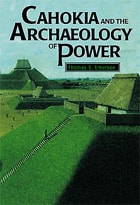
Cahokia and the Archaeology of Power
Thomas E. Emerson
University of Alabama Press, 1997
Examines the authority a ruling elite exercised over the surrounding countryside through a complex of social, political, and religious symbolism
This study uses the theoretical concepts of agency, power, and ideology to explore the development of cultural complexity within the hierarchically organized Cahokia Middle Mississippian society of the American Bottom from the 11th to the 13th centuries. By scrutinizing the available archaeological settlement and symbolic evidence, Emerson demonstrates that many sites previously identified as farmsteads were actually nodal centers with specialized political, religious, and economic functions integrated into a centralized administrative organization. These centers consolidated the symbolism of such 'artifacts of power' as figurines, ritual vessels, and sacred plants into a rural cult that marked the expropriation of the cosmos as part of the increasing power of the Cahokian rulers.
During the height of Cahokian centralized power, it is argued, the elites had convinced their subjects that they ruled both the physical and the spiritual worlds. Emerson concludes that Cahokian complexity differs significantly in degree and form from previously studied Eastern Woodlands chiefdoms and opens new discussion about the role of rural support for the Cahokian ceremonial center.

Cahokia, the Great Native American Metropolis
Biloine Whiting Young and Melvin L. Fowler
University of Illinois Press, 2000
Cahokia
Mirror of the CosmosSally A. Kitt Chappell
University of Chicago Press, 2002
Chappell seeks to answer fundamental questions about this unique, yet still relatively unknown space, which was designated a UNESCO World Heritage Site in 1982. How did this swampy land become so amenable to human life? Who were the remarkable people who lived here before the Europeans came? Why did the whole civilization disappear so rapidly? What became of the land in the centuries after the Mississippians abandoned it? And finally, what can we learn about ourselves as we look into the changing meaning of Cahokia through the ages?
To explore these questions, Chappell probes a wide range of sources, including the work of astronomers, geographers, geologists, anthropologists, and archaeologists. Archival photographs and newspaper accounts, as well as interviews with those who work at the site and Native Americans on their annual pilgrimage to the site, bring the story up to the present.
Tying together these many threads, Chappell weaves a rich tale of how different people conferred their values on the same piece of land and how the transformed landscape, in turn, inspired different values in them-cultural, spiritual, agricultural, economic, and humanistic.
Cahuilla Nation Activism and the Tribal Casino Movement
Theodor P. Gordon
University of Nevada Press, 2018
Cahuilla Nation Activism and the Tribal Casino Movement tells the bigger story of how the Cahuilla nations—including the Cabazon—have used self-reliance and determination to maintain their culture and independence against threats past and present. From California’s first governor’s “war of extermination” against native peoples through today’s legal and political challenges, Gordon shows that successful responses have depended on the Cahuilla’s ability to challenge non-natives’ assumptions and misconceptions.
Cajun Women and Mardi Gras
Reading the Rules BackwardCarolyn E. Ware
University of Illinois Press, 2006
Cajun Women and Mardi Gras is the first book to explore the importance of women’s contributions to the country Cajun Mardi Gras tradition, or Mardi Gras “run.” Most Mardi Gras runs--masked begging processions through the countryside, led by unmasked capitaines--have customarily excluded women. Male organizers explain that this rule protects not only the tradition’s integrity but also women themselves from the event’s rowdy, often drunken, play.
Throughout the past twentieth century, and especially in the past fifty years, women in some prairie communities have insisted on taking more active and public roles in the festivities. Carolyn E. Ware traces the history of women’s participation as it has expanded from supportive roles as cooks and costume makers to increasingly public performances as Mardi Gras clowns and (in at least one community) capitaines. Drawing on more than a decade of fieldwork interviews and observation in Mardi Gras communities, Ware focuses on the festive actions in Tee Mamou and Basile to reveal how women are reshaping the celebration as creative artists and innovative performers.
Calaveras Gold
The Impact Of Mining On A Mother Lode CountyRonald H. Limbaugh
University of Nevada Press, 2003
California’s Calaveras County—made famous by Mark Twain and his celebrated Jumping Frog—is the focus of this comprehensive study of Mother Lode mining. Most histories of the California Mother Lode have focused on the mines around the American and Yuba Rivers. However, the “Southern Mines”—those centered around Calaveras County in the central Sierra—were also important in the development of California’s mineral wealth. Calaveras Gold offers a detailed and meticulously researched history of mining and its economic impact in this region from the first discoveries in the 1840s until the present. Mining in Calaveras County covered the full spectrum of technology from the earliest placer efforts through drift and hydraulic mining to advanced hard-rock industrial mining. Subsidiary industries such as agriculture, transportation, lumbering, and water supply, as well as a complex social and political structure, developed around the mines. The authors examine the roles of race, gender, and class in this frontier society; the generation and distribution of capital; and the impact of the mines on the development of political and cultural institutions. They also look at the impact of mining on the Native American population, the realities of day-to-day life in the mining camps, the development of agriculture and commerce, the occurrence of crime and violence, and the cosmopolitan nature of the population. Calaveras County mining continued well into the twentieth century, and the authors examine the ways that mining practices changed as the ores were depleted and how the communities evolved from mining camps into permanent towns with new economic foundations and directions. Mining is no longer the basis of Calaveras’s economy, but memories of the great days of the Mother Lode still attract tourists who bring a new form of wealth to the region.
Calculating Visions
Kennedy, Johnson, and Civil RightsMark Stern
Rutgers University Press, 1992
Caldwell and Company
A Southern Financial EmpireJohn Berry McFerrin
Vanderbilt University Press, 1969
Caldwell and Company was founded in Nashville in 1917 by Rogers Caldwell, the son of a leading local banker and businessman. Beginning as a small underwriter and distributor of Southern municipal bonds, the firm soon branched out into real estate bonds and industrial securities as well. Control of important banks in Tennessee and Arkansas was acquired; newspapers, and even Nashville's professional baseball team, came under the firm’s ownership. Caldwell and Company was, truly, a pioneer conglomerate.
Caldwell and Company also ventured into the realm of politics, supporting certain politicians (notably Colonel Luke Lea) with questionable benefits accruing to the firm, including substantial state deposits in Caldwells Bank of Tennessee.
In November 1930 the firm went into receivership. Unethical practices, including overextension in the acquisition of banks, insurance companies, and other business, had already strain Caldwell and Company’s assets. With the 1929 collapse of stock prices. Rogers Caldwell could not meet the company’s obligations, and he began to squeeze all available cash from the various controlled firms. He also negotiated a merger between Caldwell and Company and Banco-Kentucky Company of Louisville—a transaction which must stand as one of the strangest deals in the annals of American business. Even the aforementioned State of Tennessee deposits, which helped float his empire for a while, could not prevent its collapse—a collapse which resulted in a multi-million dollar loss to Tennessee’s Treasury, public hysteria, and clamor for the impeachment of the Governor of Tennessee.
Originally Published in 1939, this edition includes a new introduction in which the author comments on the long-run implications of the Caldwell episode and reports the outcome of legal actions, both civil and criminal, still pending at the time the book was first published.
Calhoun and Popular Rule
The Political Theory of the Disquisition and DiscourseH. Lee Cheek, Jr.
University of Missouri Press, 2004
Although John C. Calhoun (1782-1850) remains one of the major figures in American political thought, many of his critics have tried to discredit him as merely a Southern partisan whose ideas were obsolete even during his lifetime. In Calhoun and Popular Rule, H. Lee Cheek, Jr., attempts to correct such misconceptions by presenting Calhoun as an original political thinker who devoted his life to the recovery of a "proper mode of popular rule." He argues that Calhoun had a coherent, systematic view of human nature and society and made a lasting contribution to the theory of constitutionalism and democracy.
Cheek suggests that Calhoun was not a political or philosophical aberration, but an authentic exponent of American constitutionalism. He contends that Calhoun's view of democracy forms part of a philosophy of humankind and politics that has relevance beyond the American experience. Although his idea of popular rule was original, it was also related to earlier attempts in America and elsewhere to limit the power of the majority and protect minority interests. According to Cheek, Calhoun stood in the American political tradition and attempted to rearticulate some of its central elements. He explains Calhoun's idea of the concurrent majority and examines how it has been presented by Calhoun's critics, as well as his followers.
As the first combined evaluation of Calhoun's most important treatises, The Disquisition and The Discourse, this work merges Calhoun's theoretical position with his endeavors to restore the need for popular rule. It also compares Calhoun's ideas with those of other great political thinkers such as Thomas Jefferson and James Madison--while explaining what is truly unique about Calhoun's political thought.
Calhoun's philosophy—his understanding of the need for ethical and political restraint and for institutional means for obtaining concurrence—is still relevant today, especially given the current growing ethnic and cultural conflict of the Western world. Scholars of government, American history, and political thought, as well as those interested in understanding "popular rule" and its theoretical and practical impact on modern American government, will find this groundbreaking work to be of great value.
Califia Women
Feminist Education against Sexism, Classism, and RacismBy Clark A. Pomerleau
University of Texas Press, 2013
A dynamic exploration of the Califia Community, a long-running Los Angeles based grassroots alternative education group formed in the mid-1970s, whose richly diverse membership offered a compelling array of responses to feminism’s key issues.
Launched in 1975, the Califia Community organized activist educational camps and other programs in southern California until its dissolution in 1987. An alternative to mainstream academia’s attempts to tie feminism to university courses, Califia blended aspects of feminism that spanned the labels “second wave” and “radical,” attracting women from a range of gender expressions, sexual orientations, class backgrounds, and races or ethnicities. Califia Women captures the history of the organization through oral history interviews, archives, and other forms of primary research. The result is a lens for re-reading trends in feminist and social justice activism of the time period, contextualized against a growing conservative backlash.
Throughout each chapter, readers learn about the triumphs and frictions feminists encountered as they attempted to build on the achievements of the postwar Civil Rights movement. With its backdrop of southern California, the book emphasizes a region that has often been overlooked in studies of East Coast or San Francisco Bay–area activism. Califia Women also counters the notions that radical and lesbian feminists were unwilling to address intersectional identities generally and that they withdrew from political activism after 1975. Instead, the Califia Community shows evidence that these and other feminists intentionally created an educational forum that embraced oppositional consciousness and sought to serve a variety of women, including radical Christian reformers, Wiccans, scholars of color, and GLBT activists.
California And The Fictions Of Capital
George Henderson
Temple University Press, 2003
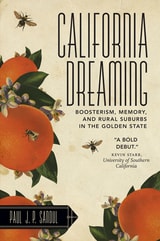
California Dreaming
Boosterism, Memory, and Rural Suburbs in the Golden StatePaul J. P. Sandul
West Virginia University Press, 2014
California Dreaming: Boosterism, Memory, and Rural Suburbs in the Golden State analyzes the growth, promotion, and agricultural colonization that fed this dream during the early 1900s. Through this analysis, Paul J. P. Sandul introduces a newly identified rural-suburban type: the agriburb, a rural suburb deliberately planned, developed, and promoted for profit. Sandul reconceptualizes California’s growth during this time period, establishing the agriburb as a suburban phenomenon that occurred long before the booms of the 1920s and 1950s.
Sandul’s analysis contributes to a new suburban history that includes diverse constituencies and geographies and focuses on the production and construction of place and memory. Boosters purposefully “harvested” suburbs with an eye toward direct profit and metropolitan growth. State boosters boasted of unsurpassable idyllic communities while local boosters bragged of communities that represented the best of the best, both using narratives of place, class, race, lifestyle, and profit to avow images of the rural and suburban ideal.
This suburban dream attracted people who desired a family home, nature, health, culture, refinement, and rural virtue. In the agriburb, a family could live on a small home grove while enjoying the perks of a progressive city. A home located within the landscape of natural California with access to urban amenities provided a good place to live and a way to gain revenue through farming.
To uncover and dissect the agriburb, Sandul focuses on local histories from California’s Central Valley and the Inland Empire of Southern California, including Ontario near Los Angeles and Orangevale and Fair Oaks outside Sacramento. His analysis closely operates between the intersections of history, anthropology, geography, sociology, and the rural and urban, while examining a metanarrative that exposes much about the nature and lasting influence of cultural memory and public history upon agriburban communities.
California Jews
Edited by Ava F. Kahn and Marc Dollinger
Brandeis University Press, 2011
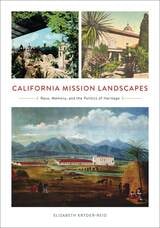
California Mission Landscapes
Race, Memory, and the Politics of HeritageElizabeth Kryder-Reid
University of Minnesota Press, 2016
“Nothing defines California and our nation’s heritage as significantly or emotionally,” says the California Mission Foundation, “as do the twenty-one missions that were founded along the coast from San Diego to Sonoma.” Indeed, the missions collectively represent the state’s most iconic tourist destinations and are touchstones for interpreting its history. Elementary school students today still make model missions evoking the romanticized versions of the 1930s. Does it occur to them or to the tourists that the missions have a dark history?
California Mission Landscapes is an unprecedented and fascinating history of California mission landscapes from colonial outposts to their reinvention as heritage sites through the late nineteenth and twentieth centuries. Illuminating the deeply political nature of this transformation, Elizabeth Kryder-Reid argues that the designed landscapes have long recast the missions from sites of colonial oppression to aestheticized and nostalgia-drenched monasteries. She investigates how such landscapes have been appropriated in social and political power struggles, particularly in the perpetuation of social inequalities across boundaries of gender, race, class, ethnicity, and religion. California Mission Landscapes demonstrates how the gardens planted in mission courtyards over the past 150 years are not merely anachronistic but have become potent ideological spaces. The transformation of these sites of conquest into physical and metaphoric gardens has reinforced the marginalization of indigenous agency and diminished the contemporary consequences of colonialism. And yet, importantly, this book also points to the potential to create very different visitor experiences than these landscapes currently do.
Despite the wealth of scholarship on California history, until now no book has explored the mission landscapes as an avenue into understanding the politics of the past, tracing the continuum between the Spanish colonial period, emerging American nationalism, and the contemporary heritage industry.
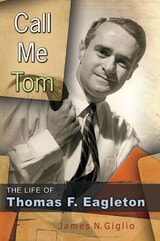
Call Me Tom
The Life of Thomas F. EagletonJames N. Giglio
University of Missouri Press, 2011
Born in St. Louis, Eagleton began his public career in 1956 as St. Louis Circuit Attorney. At 27, he was the youngest person in the history of the state to hold that position, and he duplicated the feat in his next two elected positions, attorney general in 1960 and lieutenant governor in 1964. In 1968, he was elected to the U.S. Senate, where he served until 1987. He was thrown into the national spotlight in 1972 when revelations regarding his mental health, particularly the shock treatments he received for depression, forced his resignation as a vice presidential nominee of the Democratic Party. All of that would overshadow his significant contributions as senator, especially on environmental and social legislation, as well as his defense of Congressional authority on war making and his role in the U. S. military disengagement from Southeast Asia in 1973.
Respected biographer James N. Giglio provides readers with an encompassing and nuanced portrait of Eagleton by placing the man and his career in the context of his times. Giglio allows readers to see his rumpled suits, smell the smoke of his Pall Mall cigarettes, hear his gravelly voice, and relish his sense of humor. At the same time, Giglio does not shy away from the personal torments that Eagleton had to overcome. A definitive examination of the senator’s career also reveals his unique ability to work with Republican counterparts, especially prior to the 1980s when bipartisanship was more possible.
Measuring the effect his mental illness had on his career, Giglio determines that the removal of aspirations for higher office in 1972 made Eagleton a better senator. He consistently took principled stands, with the ultimate goal of preserving and modernizing the agenda of Franklin D. Roosevelt, his favorite president.
Thoroughly researched using the Eagleton Papers and interviews with more than eighty-five people close to Eagleton, including family, friends, colleagues, subordinates, and former classmates, Call Me Tom offers an engaging and in-depth portrayal of a man who remained a devoted public servant throughout his life.
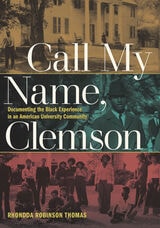
Call My Name, Clemson
Documenting the Black Experience in an American University CommunityRhondda Robinson Thomas
University of Iowa Press, 2020
Between 1890 and 1915, a predominately African American state convict crew built Clemson University on John C. Calhoun’s Fort Hill Plantation in upstate South Carolina. Calhoun’s plantation house still sits in the middle of campus. From the establishment of the plantation in 1825 through the integration of Clemson in 1963, African Americans have played a pivotal role in sustaining the land and the university. Yet their stories and contributions are largely omitted from Clemson’s public history.
This book traces “Call My Name: African Americans in Early Clemson University History,” a Clemson English professor’s public history project that helped convince the university to reexamine and reconceptualize the institution’s complete and complex story from the origins of its land as Cherokee territory to its transformation into an increasingly diverse higher-education institution in the twenty-first century. Threading together scenes of communal history and conversation, student protests, white supremacist terrorism, and personal and institutional reckoning with Clemson’s past, this story helps us better understand the inextricable link between the history and legacies of slavery and the development of higher education institutions in America.
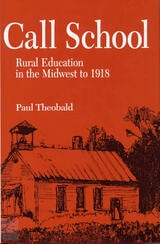
Call School
Rural Education in the Midwest to 1918Paul Theobald
Southern Illinois University Press, 1995
Paul Theobald chronicles the history of the one-room country schools that were spread throughout the rural Midwest during the nineteenth and early twentieth centuries.
Focusing on the region’s educational history in light of the religious, economic, and political atmosphere, Theobald explores the tight connection between educational preferences and religious views, between the economics of the countryside and the educational experiences of children, and between the politics of local power and the educational prospects of the powerless.
Basing his study on extensive archival research, including findings from eight midwestern states, Theobald neither condemns nor lauds the one-room school experience. Providing an objective evaluation, he examines rural school records, correspondence of early school officers, contemporary texts, and diaries and letters of rural students and teachers.
As he weaves together a contextualized account of the circumstances surrounding and within the one-room country schools of the Midwest, Theobald stresses that religion was of primary importance in nineteenth-century American life. Yet he also looks carefully at the shifting economic environment at work in the countryside, particularly in regard to the development of widespread farm tenancy and the consolidation of agricultural and related industries. He challenges readers to analyze how a national move from an agrarian to an industrial view caused conflict and confusion, thereby introducing irrevocable change into rural American life.
Theobald’s study illuminates the history of education on the plains and sheds light on the social foundations of the period.
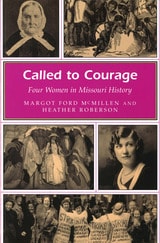
Called to Courage
Four Women in Missouri HistoryMargot Ford McMillen & Heather Roberson
University of Missouri Press, 2002
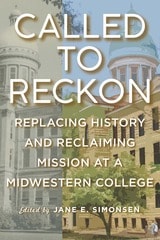
Called to Reckon
Replacing History and Reclaiming Mission at a Midwestern CollegeEdited by Jane E. Simonsen
Southern Illinois University Press, 2025

Calling All Cars
Radio Dragnets and the Technology of PolicingKathleen Battles
University of Minnesota Press, 2010
Calling State Power to Account
Reparations in Morality, Law, and PoliticsJennifer M. Page
University of Chicago Press, 2027
An incisive philosophical examination of reparations claims within today’s political and legal landscapes.
For generations, Black Americans have demanded reparations, and, for generations, the US government has ignored or denied these claims. In Calling State Power to Account, Jennifer M. Page puts forward a novel case for reparations owed to Black Americans for slavery, Jim Crow, and subsequent injustices.
Navigating conflicting insights that reparations are owed for blameworthy wrongdoing and that present iniquities to Black Americans are structural rather than the result of intentional offenses by a clearly identifiable party, Page theorizes how unredressed state-sponsored injustices can be the basis of present reparative duties. Split into two parts, the book first makes a philosophical case for reparations before then examining reparations from both legal and political perspectives. This analysis includes considering practical challenges to reparations, such as the limits of legal accountability in a system with formal barriers designed to shield the government from liability. Despite formidable obstacles, Page argues that there is deep moral and democratic significance to the pursuits of reparations claimants. The aim of reparations is not only monetary compensation but also a moral reckoning and assertion of equality against the backdrop of social and political inequalities.
Calvinists Incorporated
Welsh Immigrants on Ohio's Industrial FrontierAnne Kelly Knowles
University of Chicago Press, 1996
capitalist transformation, Anne Kelly Knowles traces a community of
Welsh immigrants to Jackson and Gallia counties in southern Ohio. After
reconstructing the gradual process of community-building, Knowles
focuses on the pivotal moment when the immigrants became involved with
the industrialization of their new region as workers and investors in
Welsh-owned charcoal iron companies. Setting the southern Ohio Welsh in
the context of Welsh immigration as a whole from 1795 to 1850, Knowles
explores how these strict Calvinists responded to the moral dilemmas
posed by leaving their native land and experiencing economic success in
the United States.
Knowles draws on a wide variety of sources, including obituaries and
community histories, to reconstruct the personal histories of over 1,700
immigrants. The resulting account will find appreciative readers not
only among historical geographers, but also among American economic
historians and historians of religion.
Came Men on Horses
The Conquistador Expeditions of Francisco Vázquez de Coronado and Don Juan de OñateStan Hoig
University Press of Colorado, 2013
Guided by myths of golden cities and worldly rewards, policy makers, conquistador leaders, and expeditionary aspirants alike came to the new world in the sixteenth century and left it a changed land. Came Men on Horses follows two conquistadors—Francisco Vázquez de Coronado and Don Juan de Oñate—on their journey across the southwest.
Driven by their search for gold and silver, both Coronado and Oñate committed atrocious acts of violence against the Native Americans, and fell out of favor with the Spanish monarchy. Examining the legacy of these two conquistadors Hoig attempts to balance their brutal acts and selfish motivations with the historical significance and personal sacrifice of their expeditions. Rich human details and superb story-telling make Came Men on Horses a captivating narrative scholars and general readers alike will appreciate.
Camp Chase and the Evolution of Union Prison Policy
Roger Pickenpaugh
University of Alabama Press, 2007
Camp Chase was a major Union POW camp and also served at various times as a Union military training facility and as quarters for Union soldiers who had been taken prisoner by the Confederacy and released on parole or exchanged. As such, this careful, thorough, and objective examination of the history and administration of the camp will be of true significance in the literature on the Civil War.
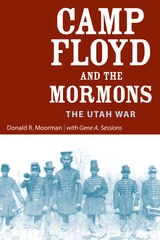
Camp Floyd and the Mormons
The Utah WarDonald R Moorman
University of Utah Press, 1992
Camp Floyd and the Mormons traces the history of the sojourn of “Johnston’s Army” in Utah Territory from the beginning of the Utah War in 1857 through the abandonment of Camp Floyd in Cedar Valley west of Utah Lake at the outbreak of the Civil War. The book describes the relationship between the invading army and the local Mormon population, gives an account of Indian affairs in Utah, and describes the activities of federal officials in Utah during that volatile period.
Completed posthumously by Gene Sessions, Moorman’s colleague at Weber State University, Camp Floyd and the Mormons is a comprehensive analysis of the history of frontier Utah as a decade of isolation ended and confrontations with the United States government began. Moorman had unprecedented access to materials in the LDS Church Archives on subjects ranging from the Mountain Meadows Massacre to the Mormon responses to the presence of the army in Utah from 1858 through 1861.
First published by the University of Utah Press in 1992, this reprint edition includes a new introduction by Gene Sessions in which he recounts Moorman’s research adventures during the 1960s "in the bowels of the old Church Administration Building, where Joseph Fielding Smith and A. Will Lund watched over the contents of the archives like wide-eyed mother hens."
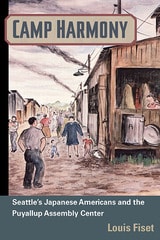
Camp Harmony
Japanese American Internment and the Puyallup Assembly CenterLouis Fiset
University of Illinois Press, 2009
This book is the first full portrait of a single assembly center--located at the Western Washington fairgrounds at Puyallup, outside Seattle--that held Japanese Americans for four months prior to their transfer to a relocation center during World War II. Gathering archival evidence and eyewitness accounts, Louis Fiset reconstructs the events leading up to the incarceration as they unfolded on a local level: arrests of Issei leaders, Nikkei response to the war dynamics, debates within the white community, and the forced evacuation of the Nikkei community from Bainbridge Island. The book explores the daily lives of the more than seven thousand inmates at "Camp Harmony," detailing how they worked, played, ate, and occasionally fought with each other and with their captors. Fiset also examines the inmates' community life, health care, and religious activities. He includes details on how army surveyors selected the center's site, oversaw its construction, and managed the transfer of inmates to the more permanent Minidoka Relocation Center in Idaho.

Camp Nine
A NovelVivienne Schiffer
University of Arkansas Press, 2011
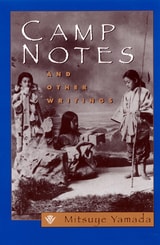
Camp Notes and Other Writings
Yamada, Mitsuye
Rutgers University Press, 1998
Honorable Mention of the 1999 Gustavus Myers Outstanding Book Awards
Two collections by an important Asian American writer -- Camp Notes and Other Poeems and Desert Run: Poems and Stories -- return to print in one volume.
Mitsuye Yamada was born in Kyushu, Japan, and raised in Seattle, Washington, until the outbreak of World War II when her family was removed to a concentration camp in Idaho. Camp Notes and Other Writings recounts this experience.
Yamada's poetry yields a terse blend of emotions and imagery. Her twist of words creates a twist of vision that make her poetry come alive. The weight of her cultural experience-the pain of being perceived as an outsider all of her life-permeates her work.
Yamada's strength as a poet stems from the fact that she has managed to integrate both individual and collective aspects of her background, giving her poems a double impact. Her strong portrayal of individual and collective life experience stands out as a distinct thread in the fabric of contemporary literature by women.
"The core poems of Camp Notes and the title come from the notes I had taken when I was in camp, and it wasn’t published until thirty years after most of it was written. I was simply describing what was happening to me, and my thoughts. But, in retrospect, the collection takes on a kind of expanded meaning about that period in our history. As invariably happens, because Japanese American internment became such an issue in American history, I suppose I will be forever identified as the author of Camp Notes. Of course, I try to show that it’s not the only thing I ever did in my whole life; I did other things besides go to an internment camp during World War II. So, in some ways I keep producing to counteract that one image that gets set in the public mind. At the time that I was writing it, I wasn’t necessarily a political person. Now, when I reread it, even to myself, I think it probably has a greater warning about the dangers of being not aware, not aware of one’s own rights, not aware of helping other people who may be in trouble. I think that it does speak to our present age very acutely." -- Mitsuye Yamada, "You should not be invisible”: An Interview with Mitsuye Yamada, Contemporary Women's Writing, March 2014, Vol. 8 Issue 1
Read the whole interview at: https://academic.oup.com/cww/article/8/1/1/414906/You-should-not-be-invisible-An-Interview-with

Camp TV
Trans Gender Queer Sitcom HistoryQuinlan Miller
Duke University Press, 2019
Campaign Advertising and American Democracy
Michael M. Franz, Paul B. Freedman, Kenneth M. Goldstein and Travis N. Ridout
Temple University Press, 2007
Were viewers turned off by political advertising to the extent that it disuaded them from voting, as some critics suggest? Did they feel more connected to political issues and the political system or were they alienated? These are the questions this book answers, based on a unique, robust, and extensive database dedicated to political advertising.
Confronting prevailing opinion, the authors of this carefully researched work find that political ads may actually educate, engage, and mobilize American voters. Only in the rarest of circumstances do they have negative impacts.