Results by title
3071 books match the query 'Business & Economics' and 254 start with c

Caring for Strangers
Filipino Medical Workers in AsiaMegah Amrith
National University of Singapore Press, 2017
Carrots, Sticks, and Ethnic Conflict
Rethinking Development AssistanceMilton J. Esman and Ronald J. Herring, Editors
University of Michigan Press, 2003

Carving Out the Commons
Tenant Organizing and Housing Cooperatives in Washington, D.C.Amanda Huron
University of Minnesota Press, 2018
An investigation of the practice of “commoning” in urban housing and its necessity for challenging economic injustice in our rapidly gentrifying cities
Provoked by mass evictions and the onset of gentrification in the 1970s, tenants in Washington, D.C., began forming cooperative organizations to collectively purchase and manage their apartment buildings. These tenants were creating a commons, taking a resource—housing—that had been used to extract profit from them and reshaping it as a resource that was collectively owned by them.
In Carving Out the Commons, Amanda Huron theorizes the practice of urban “commoning” through a close investigation of the city’s limited-equity housing cooperatives. Drawing on feminist and anticapitalist perspectives, Huron asks whether a commons can work in a city where land and other resources are scarce and how strangers who may not share a past or future come together to create and maintain commonly held spaces in the midst of capitalism. Arguing against the romanticization of the commons, she instead positions the urban commons as a pragmatic practice. Through the practice of commoning, she contends, we can learn to build communities to challenge capitalism’s totalizing claims over life.
Cash Flow
The Businesses of MenstruationCamilla Mørk Røstvik
University College London, 2022
The menstrual product industry has played a large role in shaping the past hundred years of menstrual culture, including technological innovation, creative advertising, and education in classrooms. How much do we know about this sector and how has it changed in later decades? What constitutes “the industry,” who works in it, and how is it adapting to the current menstrual equity movement?
Cash Flow provides a new academic study of the menstrual corporate landscape that links its twentieth-century origins to the current day. Drawing on a range of previously unexplored archival materials and interviews with industry insiders, each chapter examines one key company and brand: Saba in Norway, Essity in Sweden, Tambrands in the Soviet Union, Procter & Gamble in Britain and Europe, Kimberly-Clark in North America, and start-ups Clue and Thinx. The book provides timely insights into a secretive and largely unexamined corporate world and the ongoing political and industry-wide debate about the cost of menstrual products. Cash Flow will be of interest to a wide range of groups within and outside academia, including scholars in the emerging field of critical menstruation studies and menstrual activists.
Cash, Clothes, and Construction
Rethinking Value in Bolivia's Pluri-economyKate Maclean
University of Minnesota Press, 2023
A groundbreaking feminist perspective on Movimiento al Socialismo (MAS) rule in Bolivia and the country’s radical transformation under Evo Morales
The presidency of Evo Morales in Bolivia (2006–2019) has produced considerable academic scholarship, much of it focused on indigenous social movements or extractivism, and often triumphalist about the successes of Morales’s Movimiento al Socialismo (MAS). Turning a new lens on the movement, Cash, Clothes, and Construction presents the first gender-based analysis of “pluri-economy,” a central pillar of Bolivia’s program under Morales, evaluating the potential of this vision of “an economy where all economies fit” to embrace feminist critiques of capitalism and economic diversity.
Based on more than twelve years of empirical research exploring the remarkable transformations in Bolivia since 2006, this book focuses on three sectors—finance, clothing, and construction—in which indigenous women have defied gendered expectations. Kate Maclean presents detailed case studies of women selling secondhand high street clothes from the United States in the vast, peri-urban markets of Bolivian cities; Aymaran designers of new pollera (traditional Andean dress) fashions, one of whom exhibited her collection in New York City; and the powerful and rich chola paceña, whose real estate investments have transformed the cultural maps of La Paz and El Alto.
Cash, Clothes, and Construction offers a gendered analysis of the mission of MAS to dismantle neoliberalism and decolonize politics and economy from the perspective of the Indigenous women who have radically transformed Bolivia’s economy from the ground up.
Cash, Crisis, and Corporate Governance
The Role of National Financial Systems in Industrial RestructuringVictoria Marklew
University of Michigan Press, 1995
Casing a Promised Land, Expanded Edition
The Autobiography of an Organizational Detective as Cultural EthnographerH.L. Goodall, Jr.
Southern Illinois University Press, 1994
H. L. Goodall’s ground-breaking study of what people do with symbols and what symbols do to people explores the lives led by people in organizations. His narratives take on the form of six detective mysteries in which the narrator figures into the plot of the intrigue and then works out its essential patterns.
In the first mystery, "Notes on a Cultural Evolution: The Remaking of a Software Company," Goodall looks at the transition of a Huntsville regional office of a Boston-based computer software company where the lives and social dramas of the participants reflect the current state of high technology. The second essay and perhaps the most insightful, "The Way the World Ends: Inside Star Wars," penetrates the various defenses of the Star Wars command office in Huntsville to discover its secrets and surprises. Goodall shows how media, technology, fear of relationships, and symbolic images of the future unite into the day-to-day operations of people who believe they are responsible for the outer limits of our nation’s defense.
"Lost in Space: The Layers of Illusion Called Adult Space Camp" illustrates how a supposedly innocent theme park invites participation in rituals and ceremonies designed to influence a future generation of taxpayers. In "Articles of Faith," Goodall enters a super mall in Huntsville, noting how shopping centers provide consumers with far more than places to purchase goods and services. "How I Spent My Summer Vacation" finds Goodall back in an academic environment, at a conference of communication scholars, where he demonstrates the difficult task of translating cultural understandings from one context to another. "The Consultant as Organizational Detective" offers the sobering message that real-life mysteries may surprise even the most accomplished sleuth. A concluding chapter, "Notes on Method," and a new autobiographical afterword round out Goodall’s penetrating look at our symbol-making culture.

Casino Accounting and Financial Management
Second EditionE. Malcolm Greenlees
University of Nevada Press, 2008
Casino and Museum
Representing Mashantucket Pequot IdentityJohn J. Bodinger de Uriarte
University of Arizona Press, 2007
To some degree, both institutions offer Native representations yet create different strategies for attracting and engaging visitors. While the casino is crucial as an economic generator, the museum has an important role as the space for authentic Mashantucket Pequot images and narratives. The book’s focus is on how the casino and the museum successfully deploy different strategies to take control of the tribe’s identity, image, and cultural agency.
Photographs in the book provide a view of Mashantucket, allowing the reader to study the spaces of the book’s central arguments. They are a key methodology of the project and offer a non-textual opportunity to navigate the sites as well as one finely focused way to work through the representation and formation of the Native American photographic subject—the powerful popular imagining of Native Americans. Casino and Museum presents a unique understanding of the prodigious role that representation plays in the contemporary poetics and politics of Native America. It is essential reading for scholars of Native American studies, museum studies, cultural studies, and photography.
Cast Out
Vagrancy and Homelessness in Global and Historical PerspectiveA. L. Beier
Ohio University Press, 2008
Throughout history, those arrested for vagrancy have generally been poor men and women, often young, able-bodied, unemployed, and homeless. Most histories of vagrancy have focused on the European and American experiences. Cast Out: Vagrancy and Homelessness in Global and Historical Perspective is the first book to consider the shared global heritage of vagrancy laws, homelessness, and the historical processes they accompanied.
In this ambitious collection, vagrancy and homelessness are used to examine a vast array of phenomena, from the migration of labor to social and governmental responses to poverty through charity, welfare, and prosecution. The essays in Cast Out represent the best scholarship on these subjects and include discussions of the lives of the underclass, strategies for surviving and escaping poverty, the criminalization of poverty by the state, the rise of welfare and development programs, the relationship between imperial powers and colonized peoples, and the struggle to achieve independence after colonial rule. By juxtaposing these histories, the authors explore vagrancy as a common response to poverty, labor dislocation, and changing social norms, as well as how this strategy changed over time and adapted to regional peculiarities.
Part of a growing literature on world history, Cast Out offers fresh perspectives and new research in fields that have yet to fully investigate vagrancy and homelessness. This book by leading scholars in the field is for policy makers, as well as for courses on poverty, homelessness, and world history.
Contributors:
Richard B. Allen
David Arnold
A. L. Beier
Andrew Burton
Vincent DiGirolamo
Andrew A. Gentes
Robert Gordon
Frank Tobias Higbie
Thomas H. Holloway
Abby Margolis
Paul Ocobock
Aminda M. Smith
Linda Woodbridge
Castles, Battles, and Bombs
How Economics Explains Military HistoryJurgen Brauer and Hubert van Tuyll
University of Chicago Press, 2008
Castles, Battles, and Bombs reconsiders key episodes of military history from the point of view of economics—with dramatically insightful results. For example, when looked at as a question of sheer cost, the building of castles in the High Middle Ages seems almost inevitable: though stunningly expensive, a strong castle was far cheaper to maintain than a standing army. The authors also reexamine the strategic bombing of Germany in World War II and provide new insights into France’s decision to develop nuclear weapons. Drawing on these examples and more, Brauer and Van Tuyll suggest lessons for today’s military, from counterterrorist strategy and military manpower planning to the use of private military companies in Afghanistan and Iraq.
"In bringing economics into assessments of military history, [the authors] also bring illumination. . . . [The authors] turn their interdisciplinary lens on the mercenary arrangements of Renaissance Italy; the wars of Marlborough, Frederick the Great, and Napoleon; Grant's campaigns in the Civil War; and the strategic bombings of World War II. The results are invariably stimulating."—Martin Walker, Wilson Quarterly
"This study is serious, creative, important. As an economist I am happy to see economics so professionally applied to illuminate major decisions in the history of warfare."—Thomas C. Schelling, Winner of the 2005 Nobel Prize in Economics

Catastrophic Coastal Storms
Hazard Mitigation and Development ManagementDavid R. Godschalk, David J. Brower, and Timothy Beatley
Duke University Press, 1988
Catastrophic Coastal Storms offers a solution to the policy problem by proposing a merger of hazard mitigation with development management, basing this on extensive surveys of at-risk coastal locations and case studies of post-hurricane recovery. Starting with the local level of government and proceeding to state and federal levels, the authors propose a strategy for overcoming the formidable obstacles to safeguarding the shoreline population and its structures from hurricanes and other severe storms.

Catching Up with the Competition
Trade Opportunities and Challenges for Arab CountriesBernard Hoekman and Jamel Zarrouk, Editors
University of Michigan Press, 2000

Categorically Unequal
The American Stratification SystemDouglas S. Massey
Russell Sage Foundation, 2007
Central American Recovery and Development
William L. Ascher and Ann Hubbard, editors
Duke University Press, 1989
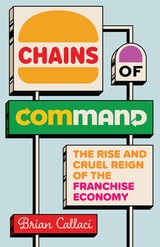
Chains of Command
The Rise and Cruel Reign of the Franchise EconomyBrian Callaci
University of Chicago Press, 2026
A surprising look at the big business of owning small businesses and what America’s franchise economy means for its workers.
Walk into a McDonald’s anywhere in the United States, and it will be identical to every other McDonald’s in the country. Yet, that particular store is almost certainly owned and operated by an “independent” franchisee. While McDonald’s presents an image of centralized uniformity to the consumer, it shows a different face to the small business owners operating its stores under its control and the workers preparing its product to its standards. How then does McDonald’s—and its big business peers—manage to be two things at once?
In this revelatory work, economist Brian Callaci shows how franchisors have altered the legal treatment of corporations in their favor through a decades-long crusade of lobbying and litigation. Their efforts subsequently unleashed a slew of legal and economic sins upon the US economy and labor force, allowing multinational corporations to control continent-spanning empires while outsourcing employment and scapegoating legal responsibilities onto small businesses. The result: the unfettered growth of some of America’s most recognizable businesses, at the aggregate expense of America’s workers.
Remarkable in both its scale and synthesis, Callaci’s story is the first chronicle of this business movement—initially resisted by US courts before experiencing a dramatic reversal of fortune after decades of campaigning by some of America’s most established entrepreneurs. An urgent and erudite history, Chains of Command reveals how the US labor market was tamed one small business at a time.
Challenges and Developments in Public Service Journalism
Edited by Alessandro D'Arma, Maria Michalis, Gregory Ferrell Lowe, and Michael-Bernhard Zita
University of Westminster Press, 2024
Challenges of Globalization in the Measurement of National Accounts
Edited by Nadim Ahmad, Brent R. Moulton, J. David Richardson, and Peter van de Ven
University of Chicago Press, 2023
An essential collection at the intersection of globalization, production supply chains, corporate finance regulation, and economic measurement.
The substantial increase in the complexity of global supply chains and other production arrangements over the past three decades has challenged some traditional measures of national income account aggregates and raised the potential for distortions in conventional calculations of GDP and productivity. This volume examines a variety of multinational business activities and assesses their impact on economic measurement. Several chapters consider how global supply chains complicate the interpretation of traditional trade statistics and how new measurement techniques can provide information about global production arrangements. Other chapters examine the role of intangible capital in global production, including the output of factoryless goods producers and the problems of measuring R&D in a globalized world. The studies in this volume also explore potential ways to enhance the quality of the national accounts by improving data collection and analysis and by updating the standards for measurement.
Challenges to Globalization
Analyzing the EconomicsEdited by Robert E. Baldwin and L. Alan Winters
University of Chicago Press, 2004
Challenges to Globalization evaluates the arguments of pro-globalists and anti-globalists regarding issues such as globalization's relationship to democracy, its impact on the environment and on labor markets including the brain drain, sweat shop labor, wage levels, and changes in production processes, and the associated expansion of trade and its effects on prices. Baldwin, Winters, and the contributors to this volume look at multinational firms, foreign investment, and mergers and acquisitions and present surprising findings that often run counter to the claim that multinational firms primarily seek countries with low wage labor. The book closes with papers on financial opening and on the relationship between international economic policies and national economic growth rates.
Challenging Inequality
Variation across Postindustrial SocietiesEvelyne Huber and John D. Stephens
University of Chicago Press, 2024
A wide-ranging examination of how policies, parties, and labor strength affect inequality in post-industrial societies.
Not all countries are unequal in the same ways or to the same degree. In Challenging Inequality, Evelyne Huber and John D. Stephens analyze different patterns of increasing income inequality in post-industrial societies since the 1980s, assessing the policies and social structures best able to mitigate against the worst effects of market inequality. Combining statistical data analysis from twenty-two countries with a comparative historical analysis of Germany, Spain, Sweden, and the United States, Huber and Stephens identify the factors that drive increases in inequality and shape persistent, marked differences between countries. Their statistical analysis confirms generalizable patterns and in-depth country studies help to further elucidate the processes at work.
Challenging Inequality shows how the combination of globalization and skill-biased technological change has led to both labor market dualization and rising unemployment levels, which in turn have had important effects on inequality and poverty. Labor strength—at both the society level and the enterprise level—has helped to counter rising market income inequality, as has a history of strong human capital spending. The generosity of the welfare state remains the most important factor shaping redistribution, while the consistent power of left parties is the common denominator behind both welfare state generosity and human capital investment.
Changes in Exchange Rates in Rapidly Developing Countries
Theory, Practice, and Policy IssuesEdited by Takatoshi Ito and Anne O. Krueger
University of Chicago Press, 1999
Historically, most developing nations have employed strict exchange rate controls and heavy protection of domestic industry-policies now thought to be at odds with sustainable and desirable rates of economic growth. By contrast, many East Asian nations maintained exchange rate regimes designed to achieve an attractive climate for exports and an "outer-oriented" development strategy. The result has been rapid and consistent economic growth over the past few decades.
Changes in Exchange Rates in Rapidly Developing Countries explores the impact of such diverse exchange control regimes in both historical and regional contexts, focusing particular attention on East Asia. This comprehensive, carefully researched volume will surely become a standard reference for scholars and policymakers.
Changing Forever
The Well-Kept Secrets of America's Leading CompaniesCarl F. Frost
Michigan State University Press, 1996
Do Motorola, Herman Miller, and the Donelly corporations all share a secret of business? Without a doubt, it is the ability to continually change—their "only hope for survival and success"—change based on a participatory management style, often referred to as the Scanlon Plan—identity, participation, equity, and managerial competence—these corporations have succeeded where others have failed.
Changing Forever builds on the forty years of research, experience, and development that have gone into the Scanlon Plan. Documenting fully the principles and processes of the Scanlon Plan, Carl Frost gives the reader a clear view of how the plan works and how it can be adapted to suit the needs of businesses large and small. The conclusions of his research are not surprising: with implementation of the four basic principles of the Scanlon Plan comes an optimal synergistic relationship between all employees and management.

Changing Paths
International Development and the New Politics of InclusionPeter P. Houtzager and Mick Moore, Editors
University of Michigan Press, 2005
The contributors suggest there is little basis for the radical polycentrism that colors so much contemporary development thought. They focus on how the political capabilities of different societal and state actors develop over time and how their development is influenced by state action and a variety of institutional and other factors. The final chapter draws insightful conclusions about the political limitations and opportunities presented by current international discourse on poverty.
Peter P. Houtzager is a Fellow at the Institute of Development Studies, University of Sussex. He has been a visiting scholar at the Center for Latin American Studies, University of California, Berkeley, visiting lecturer at Stanford University, and lecturer at St. Mary's College. A political scientist with broad training in comparative politics and historical-institutional analysis, he has written extensively on the institutional roots of collective action.
Mick Moore is a Fellow at the Institute of Development Studies, University of Sussex, as well as Director of the Centre for the Future State. He has been a visiting professor at the Massachusetts Institute of Technology. His professional interests include political and institutional aspects of poverty reduction and of economic policy and performance, the politics and administration of development, and good government.
Changing Poverty, Changing Policies
Maria Cancian
Russell Sage Foundation, 2009

Chaos On The Shop Floor
Tom Juravich
Temple University Press, 1988

Chaos Theory in the Social Sciences
Foundations and ApplicationsL. Douglas Kiel and Euel Elliott, Editors
University of Michigan Press, 1997

Charismatic Capitalism
Direct Selling Organizations in AmericaNicole Woolsey Biggart
University of Chicago Press, 1990
The first full-scale study of this industry, Charismatic Capitalism, revises the standard contention that the rationalization of social institutions is an inevitable consequence of advanced capitalism. Nicole Woolsey Biggart argues instead that less rational organizations built on social networks may actually be more economically viable.
Charles Johnson's "General History of the Pyrates" and Global Commerce
Noel Chevalier
Bucknell University Press, 2025
This study explores how General History of the Pyrates was at the heart of early eighteenth-century British debates about commerce, colonialism, and law. Examining how pirates are depicted as both monsters and Great Men, Noel Chevalier untangles the contradictions within a Britain emerging as a colonial superpower, where ruthlessness and ambition were both feared and praised. Traveling the high seas to plunder treasure from foreign lands, pirates were not so different from the British capitalists who built fortunes from resource extraction, the plantation economy, and the transatlantic slave trade. Connecting the work to later books like Gulliver’s Travels and The Beggar’s Opera that satirized the era and its power-hungry prime minister Robert Walpole, Chevalier shows how the pirate became an iconic figure in 1720s Britain, a time of cold-hearted capitalism and rapacious colonial expansion.
Charter School City
What the End of Traditional Public Schools in New Orleans Means for American EducationDouglas N. Harris
University of Chicago Press, 2020
New Orleans became the first US city ever to adopt a school system based on the principles of markets and economics. When the state took over all of the city’s public schools, it turned them over to non-profit charter school managers accountable under performance-based contracts. Students were no longer obligated to attend a specific school based upon their address, allowing families to act like consumers and choose schools in any neighborhood. The teacher union contract, tenure, and certification rules were eliminated, giving schools autonomy and control to hire and fire as they pleased.
In Charter School City, Douglas N. Harris provides an inside look at how and why these reform decisions were made and offers many surprising findings from one of the most extensive and rigorous evaluations of a district school reform ever conducted. Through close examination of the results, Harris finds that this unprecedented experiment was a noteworthy success on almost every measurable student outcome. But, as Harris shows, New Orleans was uniquely situated for these reforms to work well and that this market-based reform still required some specific and active roles for government. Letting free markets rule on their own without government involvement will not generate the kinds of changes their advocates suggest.
Combining the evidence from New Orleans with that from other cities, Harris draws out the broader lessons of this unprecedented reform effort. At a time when charter school debates are more based on ideology than data, this book is a powerful, evidence-based, and in-depth look at how we can rethink the roles for governments, markets, and nonprofit organizations in education to ensure that America’s schools fulfill their potential for all students.

Charting Your Path to Full
A Guide for Women Associate ProfessorsVicki L. Baker
Rutgers University Press, 2020
Chasing Success
The Challenge for NonprofitsJudith Van Ginkel
University of Minnesota Press, 2023
Chasing Success follows the first twenty years of the organization Every Child Succeeds under the leadership of their former Executive Director turned author, Judith Van Ginkel. Every Child Succeeds is a regional nonprofit located in Cincinnati, Ohio that focuses on home visitation and support for parents from pregnancy through the first one thousand days of their newborn’s life. The organization was born in the 1990s out of widespread scientific evidence about the impacts of early childhood on development across the lifespan.
Chasing Success uses the story of Every Child Succeeds as a case study for readers interested in the changing landscape of nonprofit administration. With the benefit of Van Ginkel’s years of experience in nonprofit management, this book offers concrete lessons about developing a new nonprofit, utilizing research and best practices, learning to be adaptable, and being accountable to stakeholders. Van Ginkel also explores how changing policies and funding priorities for larger national nonprofits and the state and federal governments can impact how regional nonprofits work to achieve their missions, an often underappreciated and under-discussed reality for many smaller organizations around the country.
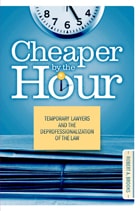
Cheaper by the Hour
Temporary Lawyers and the Deprofessionalization of the LawAuthored by Robert A. Brooks
Temple University Press, 2012
Recent law school graduates often work as temporary attorneys, but law firm layoffs and downsizing have strengthened the temporary attorney industry. Cheaper by the Hour is the first book-length account of these workers.
Drawing from participant observation and interviews, Robert A. Brooks provides a richly detailed ethnographic account of freelance attorneys in Washington, DC. He places their document review work in the larger context of the deprofessionalization of skilled labor and considers how professionals relegated to temporary jobs feel diminished, degraded, or demeaned by work that is often tedious, repetitive, and well beneath their abilities.
Brooks documents how firms break a lawyer's work into discrete components that require less skill to realize maximum profits. Moreover, he argues that information technology and efficiency demands are further stratifying the profession and creating a new underclass of lawyers who do low-end commodity work.
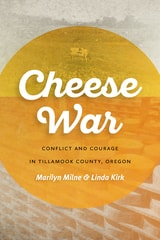
Cheese War
Conflict and Courage in Tillamook County, OregonMarilyn Milne
Oregon State University Press, 2022
On one side of the battle was Beale Dixon, head of Tillamook County Creamery Association. Dixon set up a scheme to offer low-interest, low-collateral loans from TCCA’s largest member cooperative, Tillamook Cheese & Dairy Association, to the supermarkets that stocked Tillamook products. Dixon argued it was a cheap, easy way to ensure good will—and continued purchases—in a tight market. On the other side was George Milne, a respected farmer and board president of the cooperative. Milne supported his board’s decision that loans would require board approval and bank oversight. Dixon mostly ignored those requirements.
The discovery of more financial irregularities soon spiraled into a community-wide dispute, exacerbated by a complex web of family and business relationships. The Cheese War raged for the better part of a decade across board meetings, courtrooms, and the community itself. While largely unknown outside of Tillamook County, the Cheese War was so divisive that some families remain fractured today.
Sisters Marilyn Milne and Linda Kirk, children of the Cheese War, saw how it absorbed their parents. As adults, they set out to learn more about what had happened. The authors conducted years of research and have integrated it with tales of their experiences as farm kids living through the all-consuming fight. As Americans become ever more interested in food supply chains and ethical consumption, here is the story of the very human factors behind one of Oregon’s most iconic brands.

Cheese
The Making of a Wisconsin TraditionJerry Apps
University of Wisconsin Press, 2020
In this updated edition of a classic, Apps examines tumultuous changes in the business over the past twenty years, including the impacts of corporate megafarms and the rise of artisanal producers. Vivid historical photographs and striking portraits of modern family-operated factories reveal the delicate balance between art and science that goes into the process of turning ordinary milk into a wide variety of flavors, from the ubiquitous cheddar to sublime delicacies. Through these stories, we can come to better appreciate the remarkable farmers and producers that shaped cheesemaking into the thriving industry it is today.

Cheffes de Cuisine
Women and Work in the Professional French KitchenRachel E. Black
University of Illinois Press, 2021
Works of Distinction, LDEI M.F.K. Fisher Prize for Excellence in Culinary Media Content, 2022
A rare woman’s-eye-view of working in the professional French kitchen
Though women enter France’s culinary professions at higher rates than ever, men still receive the lion’s share of the major awards and Michelin stars. Rachel E. Black looks at the experiences of women in Lyon to examine issues of gender inequality in France’s culinary industry. Known for its female-led kitchens, Lyon provides a unique setting for understanding the gender divide, as Lyonnais women have played a major role in maintaining the city’s culinary heritage and its status as a center for innovation. Voices from history combine with present-day interviews and participant observation to reveal the strategies women use to navigate male-dominated workplaces or, in many cases, avoid men in kitchens altogether. Black also charts how constraints imposed by French culture minimize the impact of #MeToo and other reform-minded movements.
Evocative and original, Cheffes de Cuisine celebrates the successes of women inside the professional French kitchen and reveals the obstacles women face in the culinary industry and other male-dominated professions.
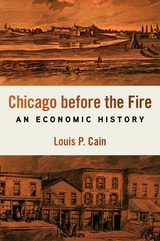
Chicago Before the Fire
An Economic HistoryLouis P. Cain
University of Illinois Press, 2025
An advantageous location and entrepreneurial passion helped fuel Chicago’s transformation from a fur trading post to a thriving city. Louis P. Cain’s economic history places pre-1871 Chicago within the narrative of national expansion and examines infrastructure, finance, and other areas of city life. Business histories tell the story of fortunes made with essential products like meat and grain. Sketches of titans like William Ogden and Cyrus McCormick reveal how real estate, farm equipment, and other industries became engines of local growth. Cain also details public health improvements that made Lake Michigan safe as a water supply while census data informs a portrait of Chicago’s population and the lives of the free Blacks and Irish immigrants at the bottom of the socioeconomic ladder.
Panoramic and up to date, Chicago before the Fire looks at how an intersection of geography, vision, and investment built a great American city.
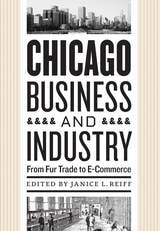
Chicago Business and Industry
From Fur Trade to E-CommerceEdited by Janice L. Reiff
University of Chicago Press, 2013
Drawing on the award-winning Encyclopedia of Chicago, Janice L. Reiff has compiled a unique history of work in the Windy City. Beginning with an overview of the city’s commercial development, Chicago Business and Industry considers how key industries shaped—and were shaped by—both the local and global economies. The city’s phenomenal population growth, its proximity to water, and its development of railroads made Chicago one of the most productive markets for lumber and grain throughout the nineteenth century. The region’s once-booming steel industry, on the other hand, suffered a dramatic decline in the second half of the twentieth century, when already weakened demand met with increasing international competition. Chicago Business and Industry chronicles the Chicago region’s changing fortunes from its beginning.
Reiff has compiled and updated essays from the Encyclopedia covering the city’s most historically famous—and infamous—companies, from the Union Stock Yard to Montgomery Ward to the Board of Trade. The book concludes with a historical account of labor types and issues in the city, with attention to such topics as health-care workers, unemployment, and unionization. Today, Groupon and a host of other high-tech firms have led some experts to christen Chicago the Silicon Valley of the Midwest. Reiff’s new introduction takes account of these and other recent trends.
Engaging, accessible, and packed with fascinating facts, Chicago Business and Industry invites readers into the history and diversity of work in the city, helping them understand how Chicago became Chicago.

Chicago Essays in Economic Development
David Wall
University of Chicago Press, 1972
These Chicago economists share a common intellectual framework universally recognized in the profession and derived from three beliefs: first, that theory is of fundamental importance; second, that theory is irrelevant unless set in a definite empirical context; and third, that in the absence of evidence to the contrary, the market works. Critics of the Chicago school tend to ignore the first two of these and to overlook the qualifying proviso of the third. This volume sets out to rectify that misunderstanding and to circulate more widely some of the best work produced by the Chicago school.
The essays in the opening "general" section clearly illustrate the characteristics of the Chicago school while also reflecting some well-known idiosyncrasies of four of its more prominent spokesmen. The other two sections, "Domestic Policy" and "Trade and Aid," cover topics on which Chicago authors have made a marked impact. Together, these essays will provide a basic reference book for students of the subject, illustrating one of the leading methods of analyzing economic development problems.

Chicago Studies in Political Economy
Edited by George J. Stigler
University of Chicago Press, 1988
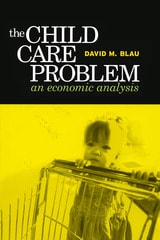
Child Care Problem
An Economic AnalysisDavid M. Blau
Russell Sage Foundation, 2001

Children and Drug Safety
Balancing Risk and Protection in Twentieth-Century AmericaConnolly, Cynthia A
Rutgers University Press, 2018
Children and Drug Safety traces the development, use, and marketing of drugs for children in the twentieth century, a history that sits at the interface of the state, business, health care providers, parents, and children. This book illuminates the historical dimension of a clinical and policy issue with great contemporary significance—many of the drugs administered to children today have never been tested for safety and efficacy in the pediatric population.
Each chapter of Children and Drug Safety engages with major turning points in pediatric drug development; themes of children’s risk, rights, protection and the evolving context of childhood; child-rearing; and family life in ways freighted with nuances of race, class, and gender. Cynthia A. Connolly charts the numerous attempts by Congress, the Food and Drug Administration, the American Academy of Pediatrics, and leading pediatric pharmacologists, scientists, clinicians, and parents to address a situation that all found untenable.
Open access edition funded by the National Endowment for the Humanities.
The text of this book is licensed under a Creative Commons Attribution NonCommercial-NoDerivatives 4.0 International License: https://creativecommons.org/licenses/by-nc-nd/4.0/
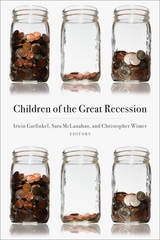
Children of the Great Recession
Irwin Garfinkel
Russell Sage Foundation, 2016
Several contributors examine the recession’s impact on the economic well-being of families, including changes to income, poverty levels, and economic insecurity. Irwin Garfinkel and Natasha Pilkauskas find that in cities with high unemployment rates during the recession, incomes for families with a college-educated mother fell by only about 5 percent, whereas families without college degrees experienced income losses three to four times greater. Garfinkel and Pilkauskas also show that the number of non-college-educated families enrolled in federal safety net programs—including Medicaid, the Earned Income Tax Credit, and the Supplemental Nutrition Assistance Program (or food stamps)—grew rapidly in response to the Great Recession.
Other researchers examine how parents’ physical and emotional health, relationship stability, and parenting behavior changed over the course of the recession. Janet Currie and Valentina Duque find that while mothers and fathers across all education groups experienced more health problems as a result of the downturn, health disparities by education widened. Daniel Schneider, Sara McLanahan and Kristin Harknett find decreases in marriage and cohabitation rates among less-educated families, and Ronald Mincy and Elia de la Cruz-Toledo show that as unemployment rates increased, nonresident fathers’ child support payments decreased. William Schneider, Jeanne Brooks-Gunn, and Jane Waldfogel show that fluctuations in unemployment rates negatively affected parenting quality and child well-being, particularly for families where the mother did not have a four-year college degree.
Although the recession affected most Americans, Children of the Great Recession reveals how vulnerable parents and children paid a higher price. The research in this volume suggests that policies that boost college access and reinforce the safety net could help protect disadvantaged families in times of economic crisis.
China and the Twenty-first-Century Crisis
Minqi Li
Pluto Press, 2015
By looking at the big questions of class struggle, global economic imbalances, peak oil, climate change and political power play, Minqi Li argues that by the time of the next crisis, China will be at the epicentre of these contradictions.
China is the last large region, and source of cheap labour, into which capital could expand: the system is at its limits. By combining this argument with issues surrounding the planet’s ecological limits and the internal politics of the Chinese Communist Party, Li commands a narrative of China at a pivotal, and possibly apocalyptic stage.

China's Economic Development
The Interplay of Scarcity and IdeologyAlexander Eckstein
University of Michigan Press, 1975
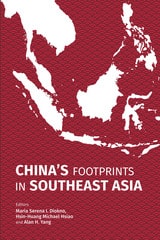
China's Footprints in Southeast Asia
Edited by Maria Serena I. Diokno, Hsin-Huang Michael Hsiao, and Alan H. Yang
National University of Singapore Press, 2018
This is the first book to survey China’s growing role in Southeast Asia along multiple dimensions. It looks closely and skeptically at the multitude of ways that China has built connections in the region, including through trade, foreign aid, and cultural diplomacy. It incorporates examples such as the operation of Confucius Institutes in Indonesia or the promotion of the concept of guangxi.China’s Footprints in Southeast Asia raises the question of whether the Chinese efforts are helpful or disruptive and explores who it is that really stands to benefit from these relationships. The answers differ from country to country, but, as this volume suggests, the footprint of hard and soft power always leaves a lasting mark on other countries’ institutions.
China's Growing Role in World Trade
Edited by Robert C. Feenstra and Shang-Jin Wei
University of Chicago Press, 2010
Bringing together an expert group of contributors, China's Growing Role in World Trade undertakes an empirical investigation of the effects of China's new status. The essays collected here provide detailed analyses of the microstructure of trade, the macroeconomic implications, sector-level issues, and foreign direct investment. This volume's careful examination of micro data in light of established economic theories clarifies a number of misconceptions, disproves some conventional wisdom, and documents data patterns that enhance our understanding of China's trade and what it may mean to the rest of the world.
China's Transition to Industrialism
Producer Goods and Economic Development in the Twentieth CenturyThomas G. Rawski
University of Michigan Press, 1980
China’s Allocation of Fixed Capital Investment, 1952–1957
Cheng Chu-yuan
University of Michigan Press, 1974
China’s Engine of Environmental Collapse
Richard Smith
Pluto Press, 2020
As the world hurtles towards environmental oblivion, China is leading the charge. The nation's CO2 emissions are more than twice those of the US with a GDP just two-thirds as large. China leads the world in renewable energy yet it is building new coal-fired power plants faster than renewables. The country's lakes, rivers, and farmlands are severely polluted yet China's police state can't suppress pollution, even from its own industries.
This is the first book to explain these contradictions. Richard Smith explains how the country's bureaucratic rulers are driven by nationalist-industrialist tendencies that are even more powerful than the drive for profit under 'normal' capitalism. In their race to overtake the US they must prioritise hyper-growth over the environment, even if this ends in climate collapse and eco-suicide.
Smith contends that nothing short of drastic shutdowns and the scaling back of polluting industries, especially in China and the US, will suffice to slash greenhouse gas emissions enough to prevent climate catastrophe.
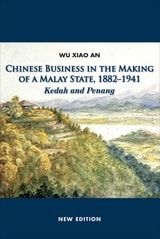
Chinese Business in the Making of a Malay State, 1882-1941
Kedah and PenangWu Xiao An
National University of Singapore Press, 2010
Using Penang and Kedah as a case study, Wu draws on archival sources, family histories and an examination of legal arrangements and the press to show that personal business and business networks were not bound by the territorial borders of traditional or modern states, but extended across much of Southeast Asia and into China. His demonstration of the complexity of interactions involving new migrants, sojourners and settlers, both Chinese and non-Chinese, challenges understandings of state formation and economic growth in colonial Malaya based on ethnic stereotypes and accounts of events limited by fixed political boundaries.